Objectives
 At the end of this chapter, 95% of
students are expected to learn and
to trace the history of development
of Educational Technology and
Information and Communication
Technology.
DEVELOPMENT
OF
EDUCATIONAL
TECHNOLOGY
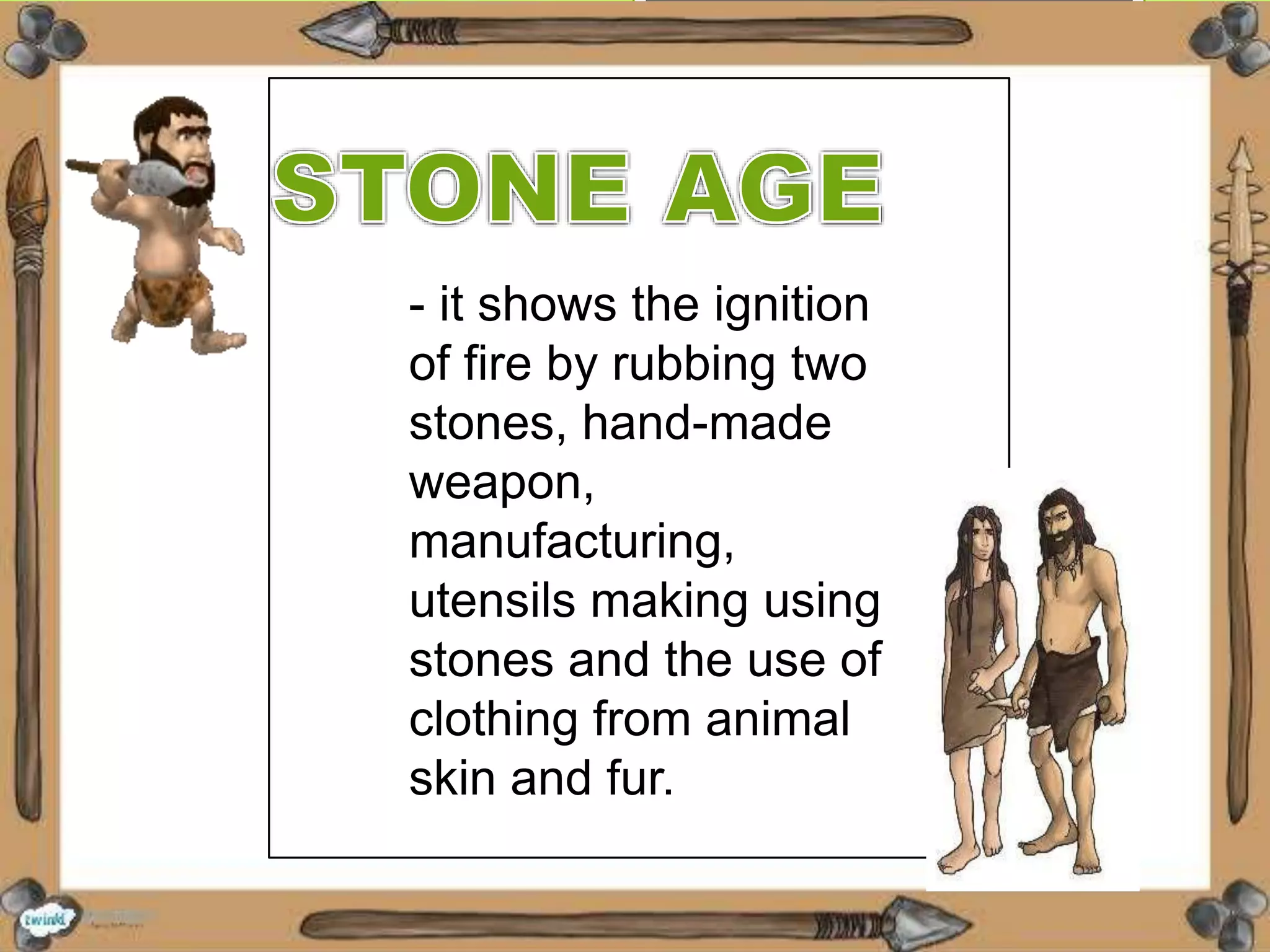
- it shows the ignition
of fire by rubbing two
stones, hand-made
weapon,
manufacturing,
utensils making using
stones and the use of
clothing from animal
skin and fur.
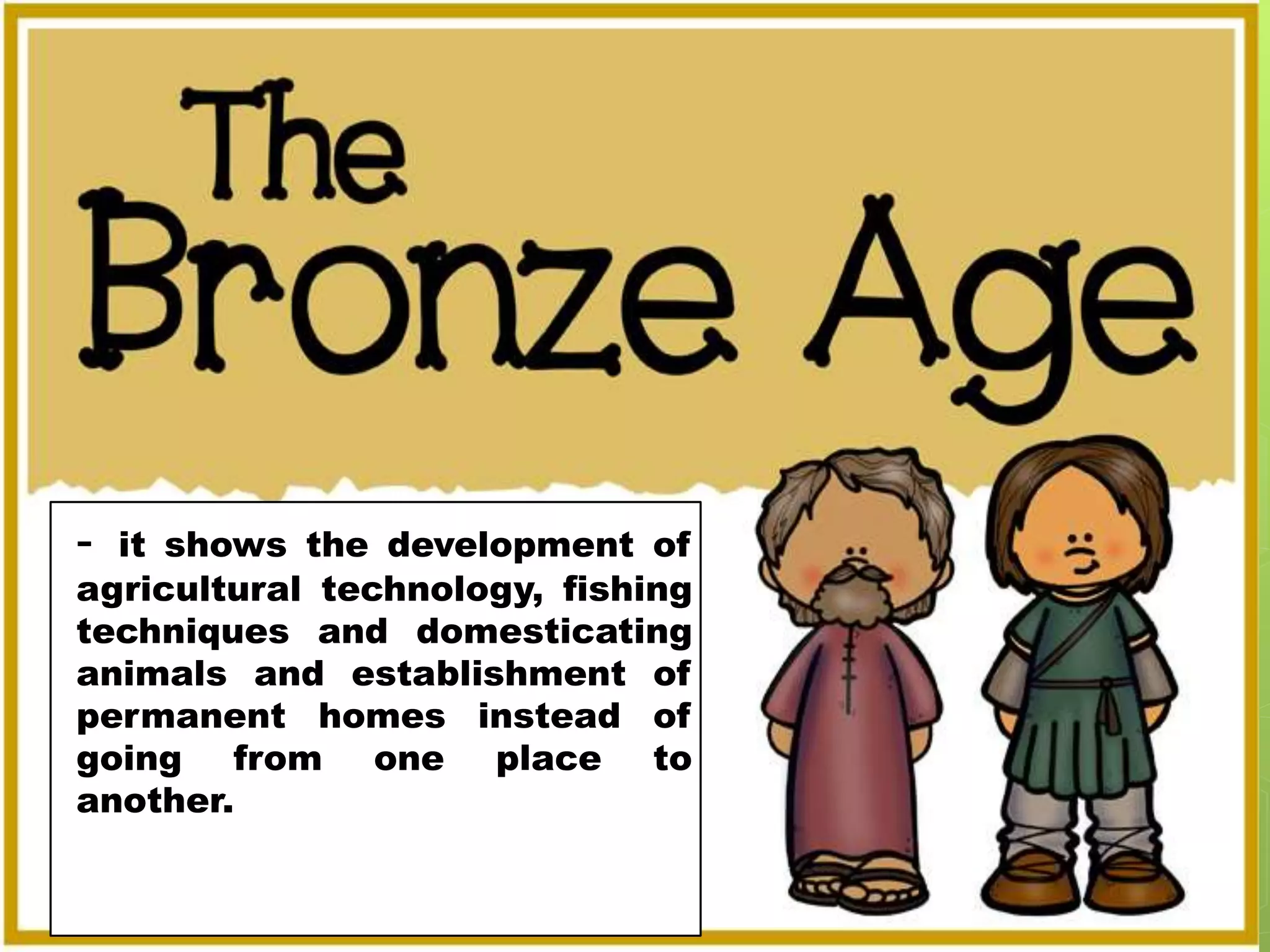
- it shows the development of
agricultural technology, fishing
techniques and domesticating
animals and establishment of
permanent homes instead of
going from one place to
another.
IIg
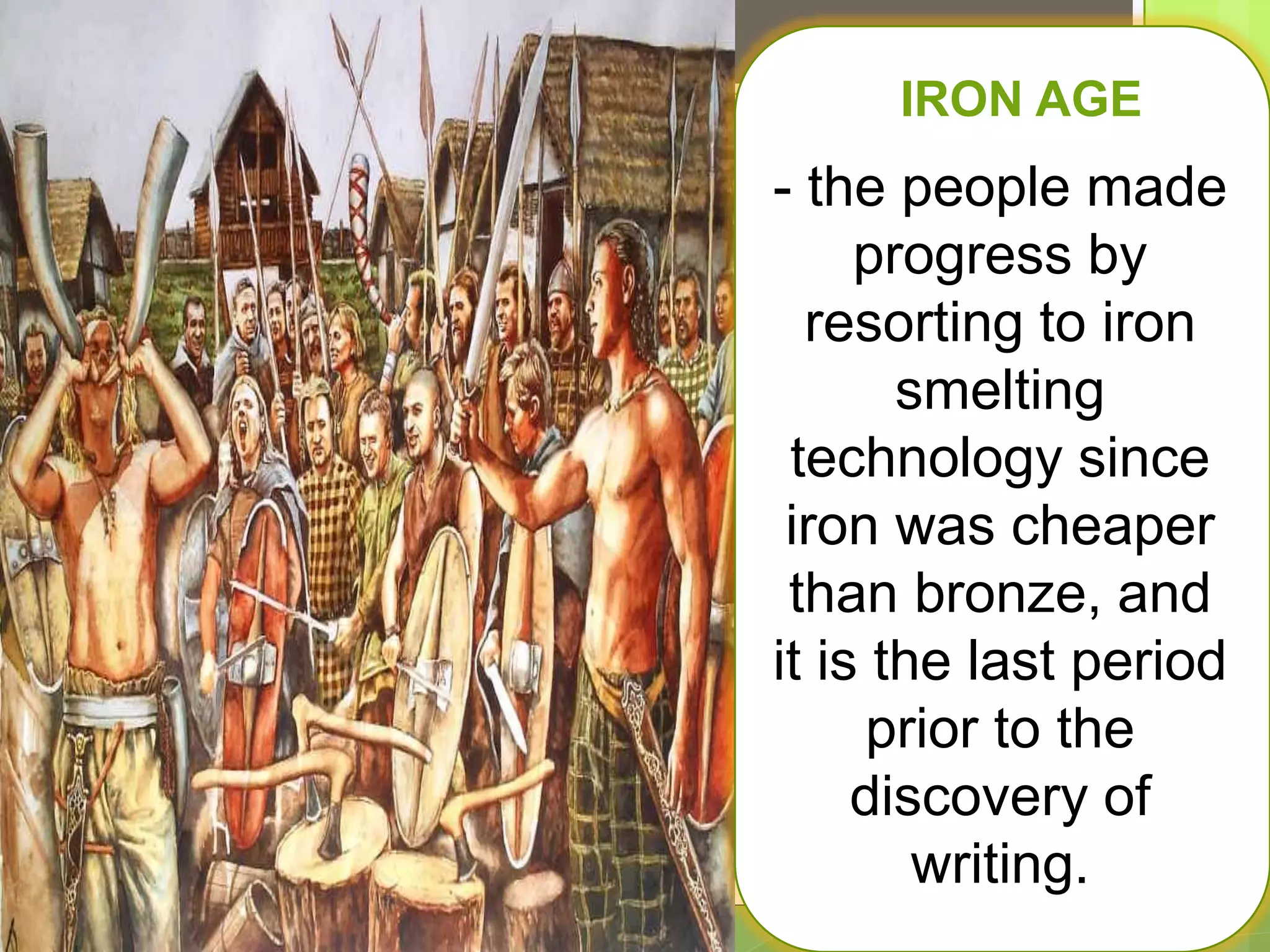
IRON AGE
- the people made
progress by
resorting to iron
smelting
technology since
iron was cheaper
than bronze, and
it is the last period
prior to the
discovery of
writing.
Educational Technology During
the Period of Ancient Civilizations
Paul Saettler (2004)
 Introduced bodies of knowledge and ancient culture
 Introduced sign writing or pictographs
 Technology of instruction was found to be more
complex in highly advanced cultures and social behaviour
 The greatest advances in technology and engineering came with the
rise of the ancient civilizations
 Pictographic script – contains 400 basic signs with variations, right to
left was found on seals used in trade and official and administrative
activities
 Measuring tools of length, mass and time
detectors toilet paper, matches, iron
plough, suspension bridge,
wheelbarrow, parachute, natural gas
as fuel, magnetic compass, elevated
relief map and gun powder
contributed technology like paper,
seismological detectors toilet paper,
matches, iron plough, suspension
bridge, wheelbarrow, parachute,
natural gas as fuel, magnetic
compass, elevated relief map and gun
powder
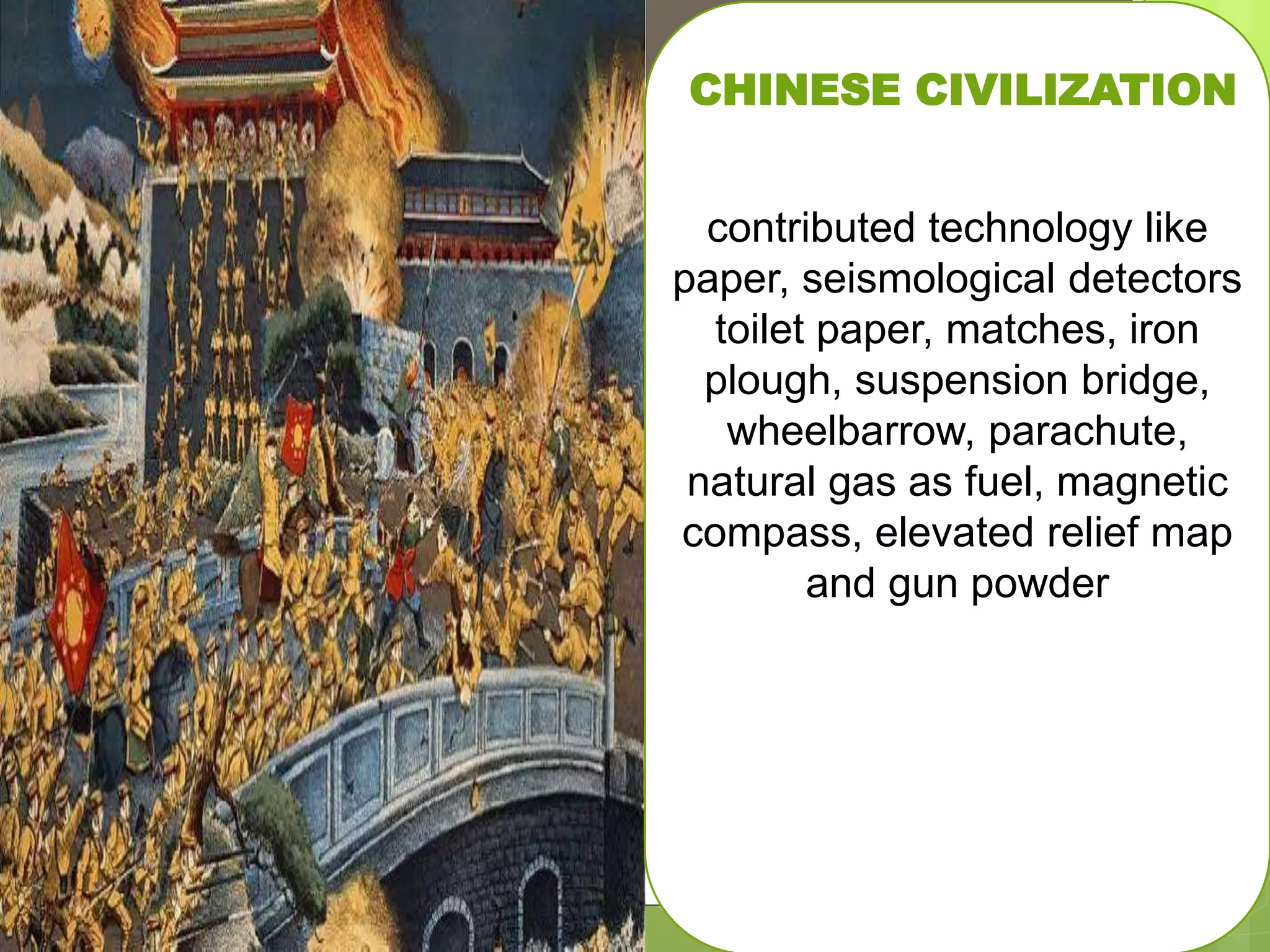
CHINESE CIVILIZATION
contributed technology like
paper, seismological detectors
toilet paper, matches, iron
plough, suspension bridge,
wheelbarrow, parachute,
natural gas as fuel, magnetic
compass, elevated relief map
and gun powder
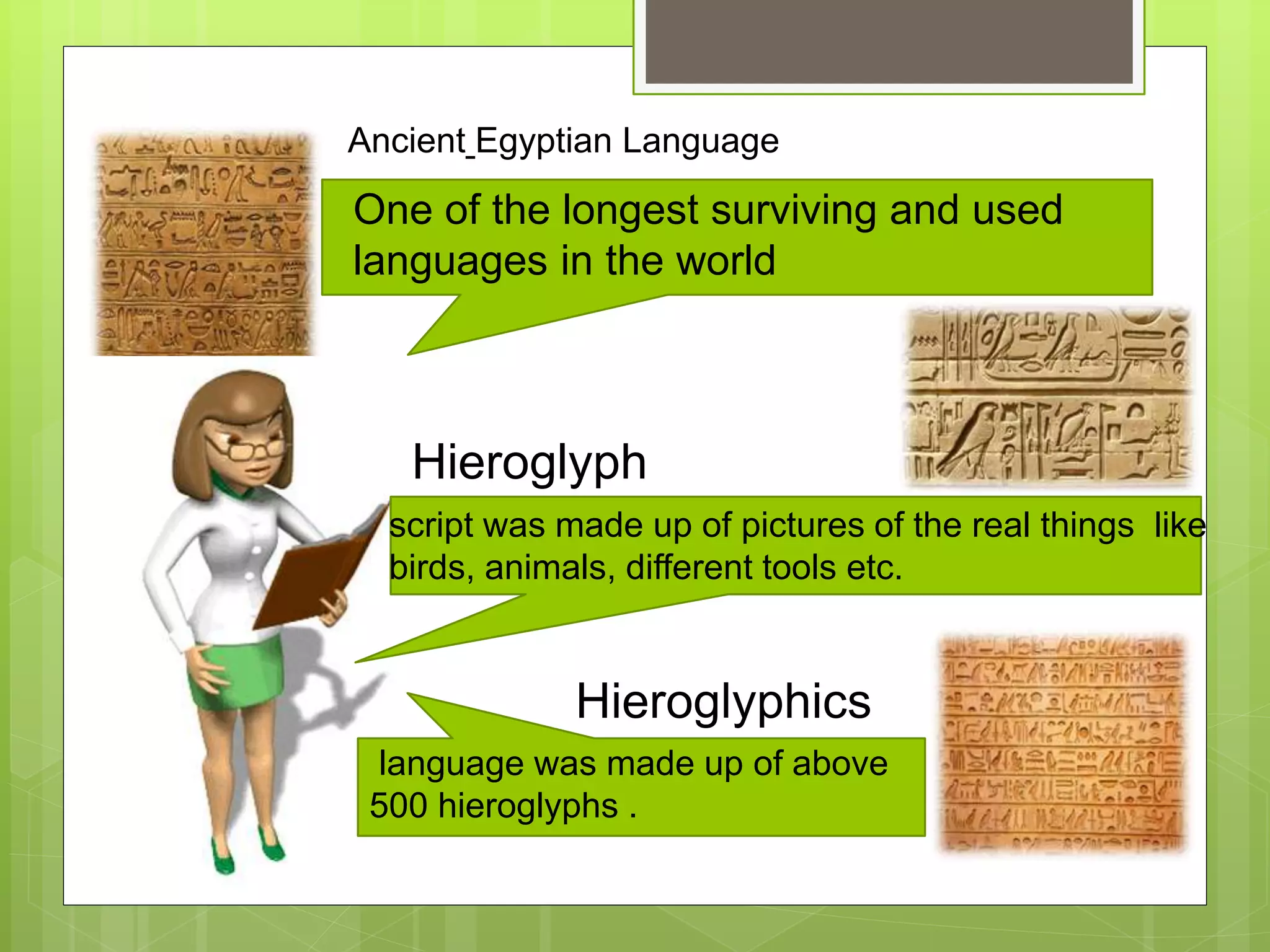
Ancient Egyptian Language
One of the longest surviving and used
languages in the world
script was made up of pictures of the real things like
birds, animals, different tools etc.
Hieroglyph
language was made up of above
500 hieroglyphs .
Hieroglyphics
Educational Technology During the
Medieval and Modern Period
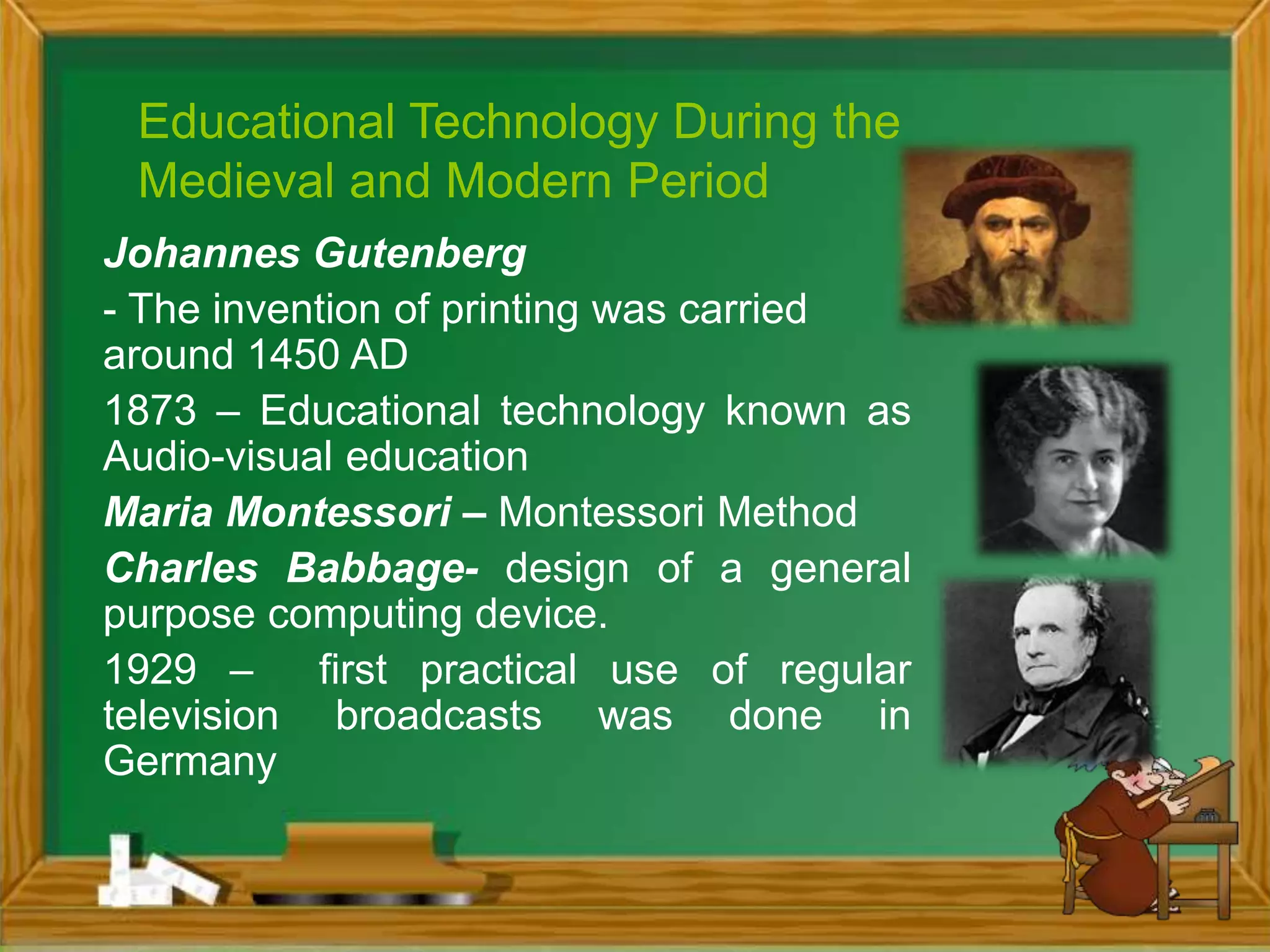
Johannes Gutenberg
- The invention of printing was carried
around 1450 AD
1873 – Educational technology known as
Audio-visual education
Maria Montessori – Montessori Method
Charles Babbage- design of a general
purpose computing device.
1929 – first practical use of regular
television broadcasts was done in
Germany
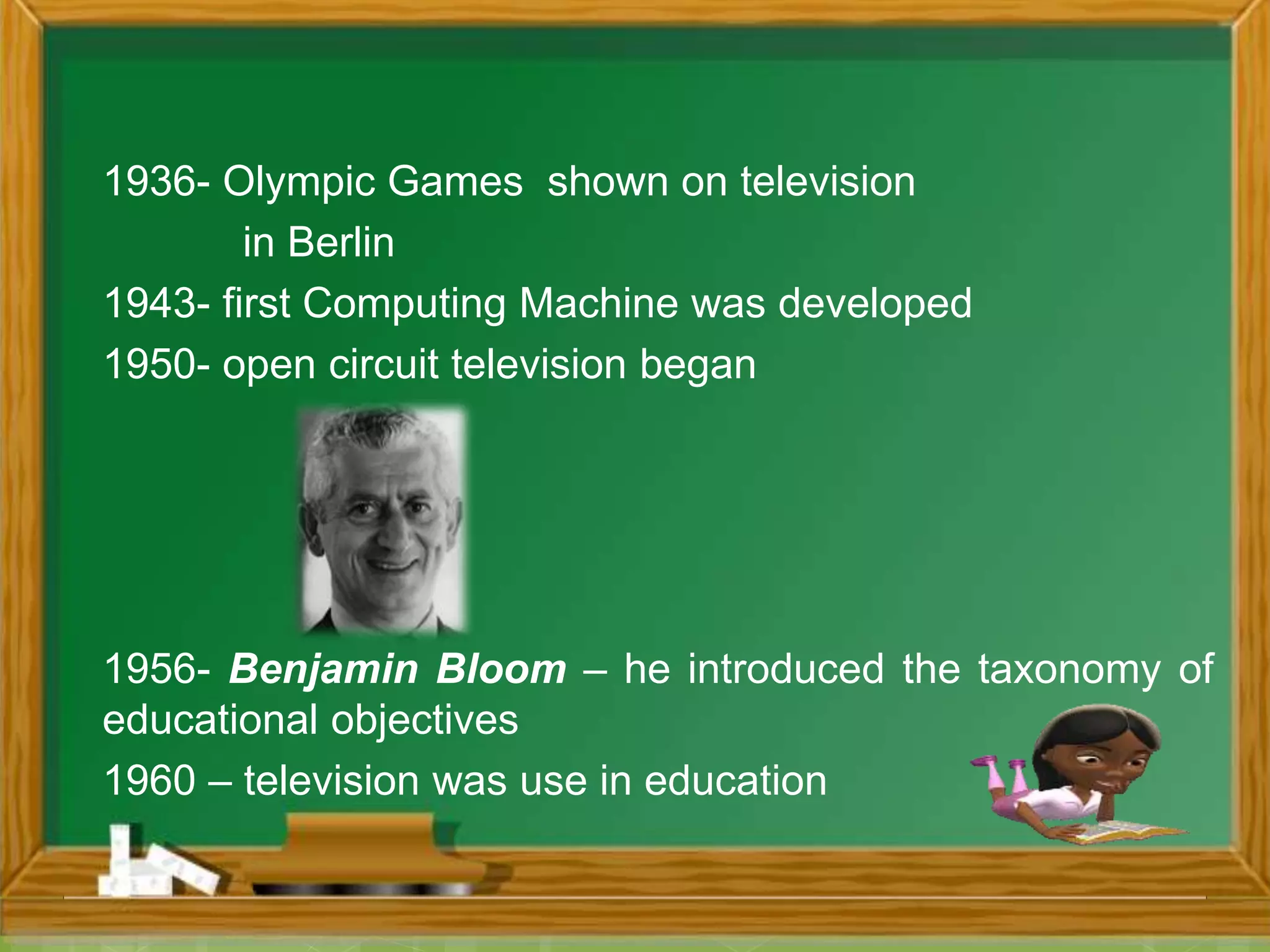
1936- Olympic Games shown on television
in Berlin
1943- first Computing Machine was developed
1950- open circuit television began
1956- Benjamin Bloom – he introduced the taxonomy of
educational objectives
1960 – television was use in education
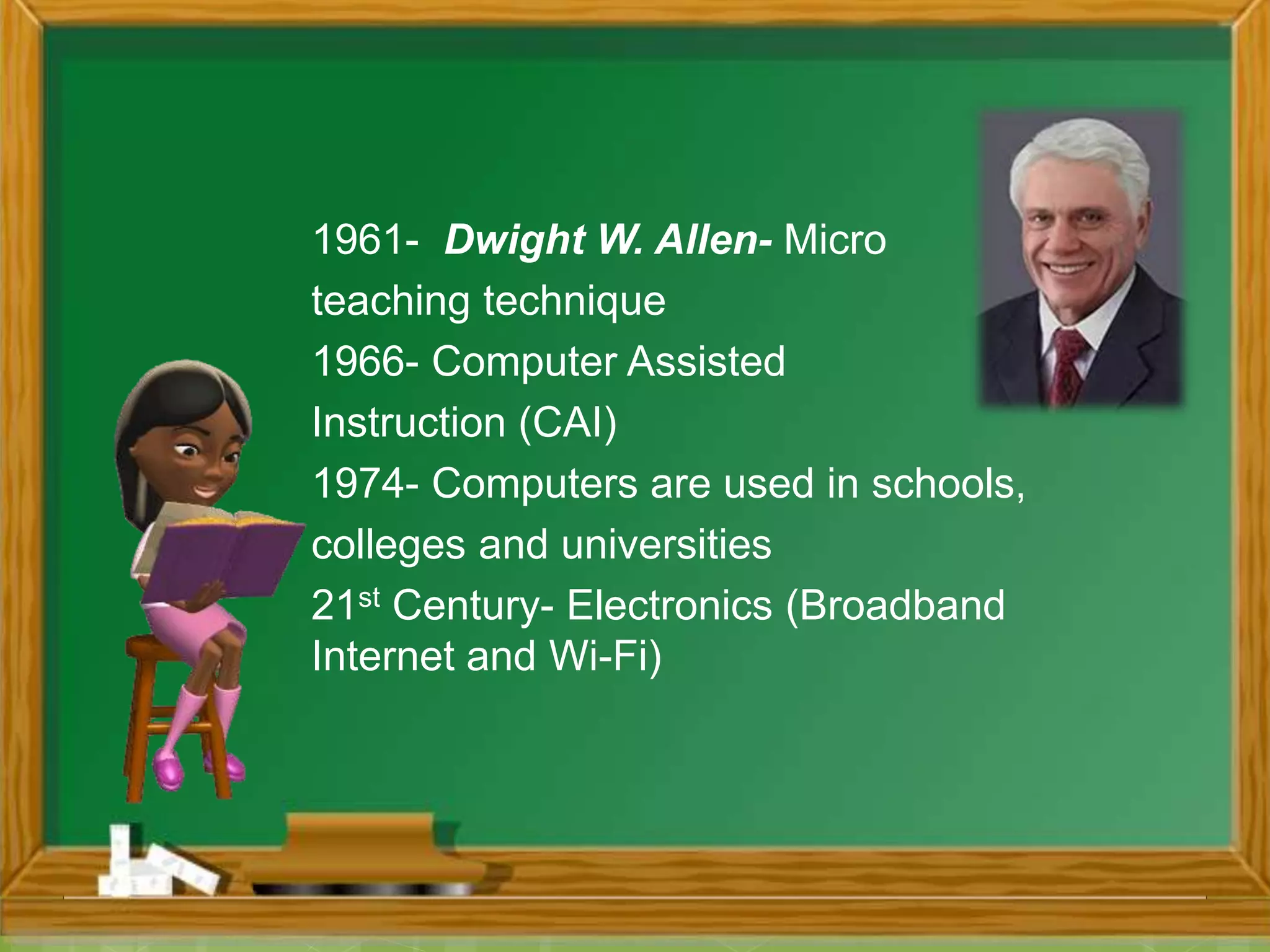
1961- Dwight W. Allen- Micro
teaching technique
1966- Computer Assisted
Instruction (CAI)
1974- Computers are used in schools,
colleges and universities
21st Century- Electronics (Broadband
Internet and Wi-Fi)
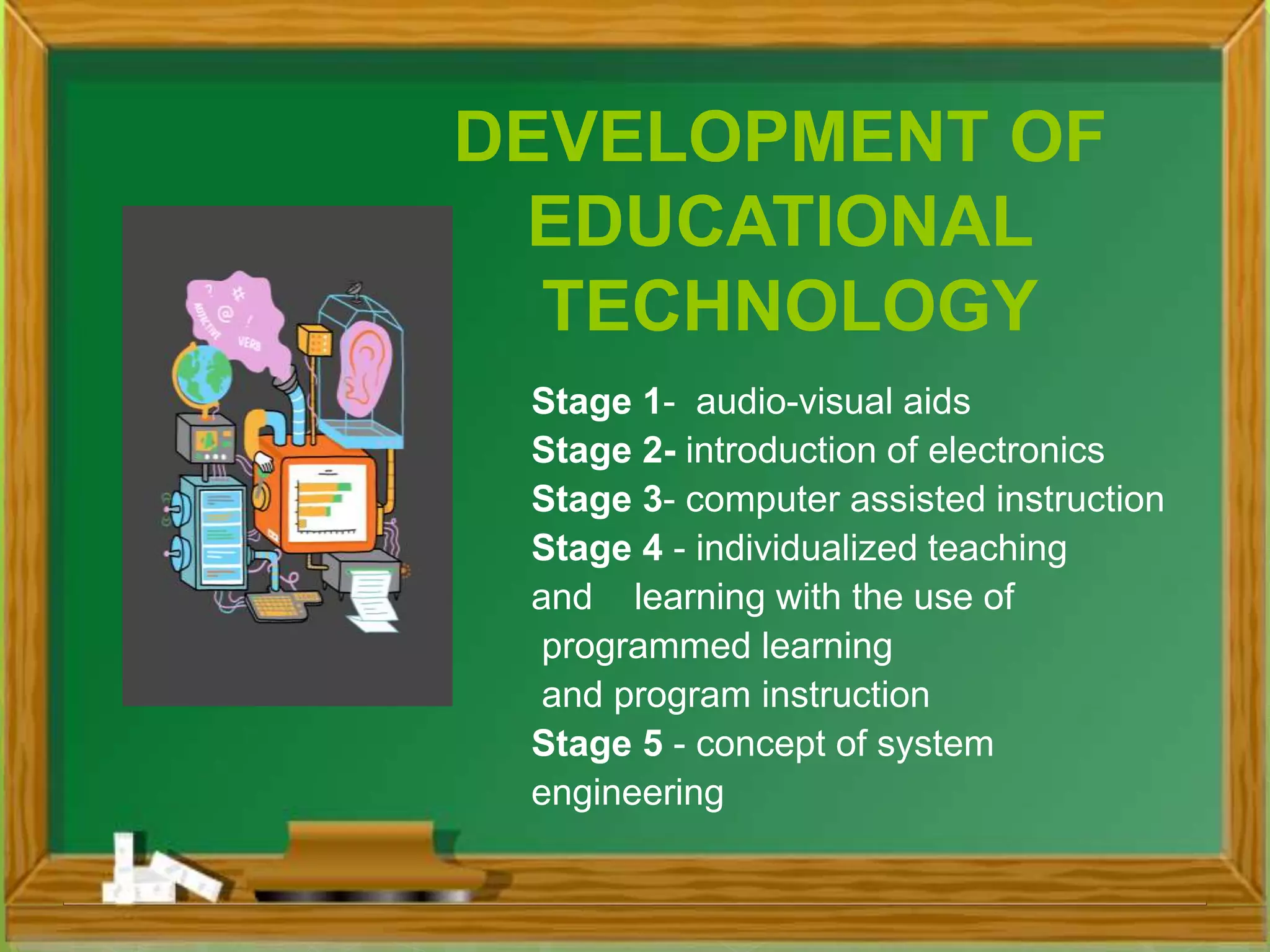
Stage 1- audio-visual aids
Stage 2- introduction of electronics
Stage 3- computer assisted instruction
Stage 4 - individualized teaching
and learning with the use of
programmed learning
and program instruction
Stage 5 - concept of system
engineering
DEVELOPMENT OF
EDUCATIONAL
TECHNOLOGY
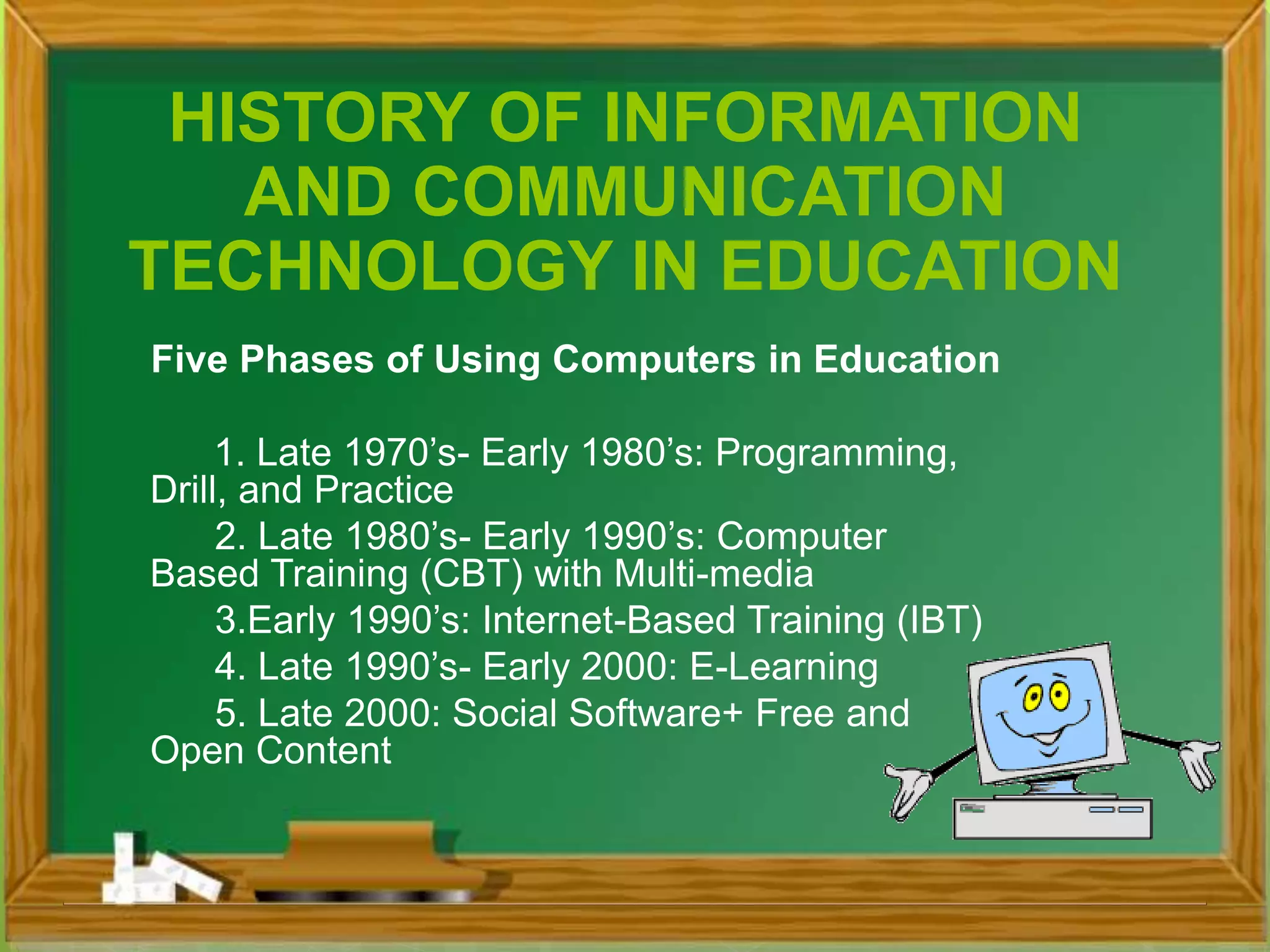
Five Phases of Using Computers in Education
1. Late 1970’s- Early 1980’s: Programming,
Drill, and Practice
2. Late 1980’s- Early 1990’s: Computer
Based Training (CBT) with Multi-media
3.Early 1990’s: Internet-Based Training (IBT)
4. Late 1990’s- Early 2000: E-Learning
5. Late 2000: Social Software+ Free and
Open Content
HISTORY OF INFORMATION
AND COMMUNICATION
TECHNOLOGY IN EDUCATION
-
REFERENC
ES
http://educationaltechnologyravi.blog
spot.com/2011/10/history-of-
technology.html
https://ezinearticles.com/?History-of-
Educational-
Technology&id=6097021

History of Educational Technology and Information and Communication Technology

  • 2.
    Objectives  At theend of this chapter, 95% of students are expected to learn and to trace the history of development of Educational Technology and Information and Communication Technology.
  • 3.
  • 4.
    - it showsthe ignition of fire by rubbing two stones, hand-made weapon, manufacturing, utensils making using stones and the use of clothing from animal skin and fur.
  • 5.
    - it showsthe development of agricultural technology, fishing techniques and domesticating animals and establishment of permanent homes instead of going from one place to another.
  • 6.
    IIg IRON AGE - thepeople made progress by resorting to iron smelting technology since iron was cheaper than bronze, and it is the last period prior to the discovery of writing.
  • 7.
    Educational Technology During thePeriod of Ancient Civilizations Paul Saettler (2004)  Introduced bodies of knowledge and ancient culture  Introduced sign writing or pictographs  Technology of instruction was found to be more complex in highly advanced cultures and social behaviour  The greatest advances in technology and engineering came with the rise of the ancient civilizations  Pictographic script – contains 400 basic signs with variations, right to left was found on seals used in trade and official and administrative activities  Measuring tools of length, mass and time
  • 8.
    detectors toilet paper,matches, iron plough, suspension bridge, wheelbarrow, parachute, natural gas as fuel, magnetic compass, elevated relief map and gun powder contributed technology like paper, seismological detectors toilet paper, matches, iron plough, suspension bridge, wheelbarrow, parachute, natural gas as fuel, magnetic compass, elevated relief map and gun powder CHINESE CIVILIZATION contributed technology like paper, seismological detectors toilet paper, matches, iron plough, suspension bridge, wheelbarrow, parachute, natural gas as fuel, magnetic compass, elevated relief map and gun powder
  • 9.
    Ancient Egyptian Language Oneof the longest surviving and used languages in the world script was made up of pictures of the real things like birds, animals, different tools etc. Hieroglyph language was made up of above 500 hieroglyphs . Hieroglyphics
  • 10.
    Educational Technology Duringthe Medieval and Modern Period Johannes Gutenberg - The invention of printing was carried around 1450 AD 1873 – Educational technology known as Audio-visual education Maria Montessori – Montessori Method Charles Babbage- design of a general purpose computing device. 1929 – first practical use of regular television broadcasts was done in Germany
  • 11.
    1936- Olympic Gamesshown on television in Berlin 1943- first Computing Machine was developed 1950- open circuit television began 1956- Benjamin Bloom – he introduced the taxonomy of educational objectives 1960 – television was use in education
  • 12.
    1961- Dwight W.Allen- Micro teaching technique 1966- Computer Assisted Instruction (CAI) 1974- Computers are used in schools, colleges and universities 21st Century- Electronics (Broadband Internet and Wi-Fi)
  • 13.
    Stage 1- audio-visualaids Stage 2- introduction of electronics Stage 3- computer assisted instruction Stage 4 - individualized teaching and learning with the use of programmed learning and program instruction Stage 5 - concept of system engineering DEVELOPMENT OF EDUCATIONAL TECHNOLOGY
  • 14.
    Five Phases ofUsing Computers in Education 1. Late 1970’s- Early 1980’s: Programming, Drill, and Practice 2. Late 1980’s- Early 1990’s: Computer Based Training (CBT) with Multi-media 3.Early 1990’s: Internet-Based Training (IBT) 4. Late 1990’s- Early 2000: E-Learning 5. Late 2000: Social Software+ Free and Open Content HISTORY OF INFORMATION AND COMMUNICATION TECHNOLOGY IN EDUCATION
  • 15.