







Information is Changing LearningA Vision for the FutureMEETING THE NEEDS OF 21ST CENTURY LEARNERSAdam Garry–  Manager of Global Professional Learning
Experience
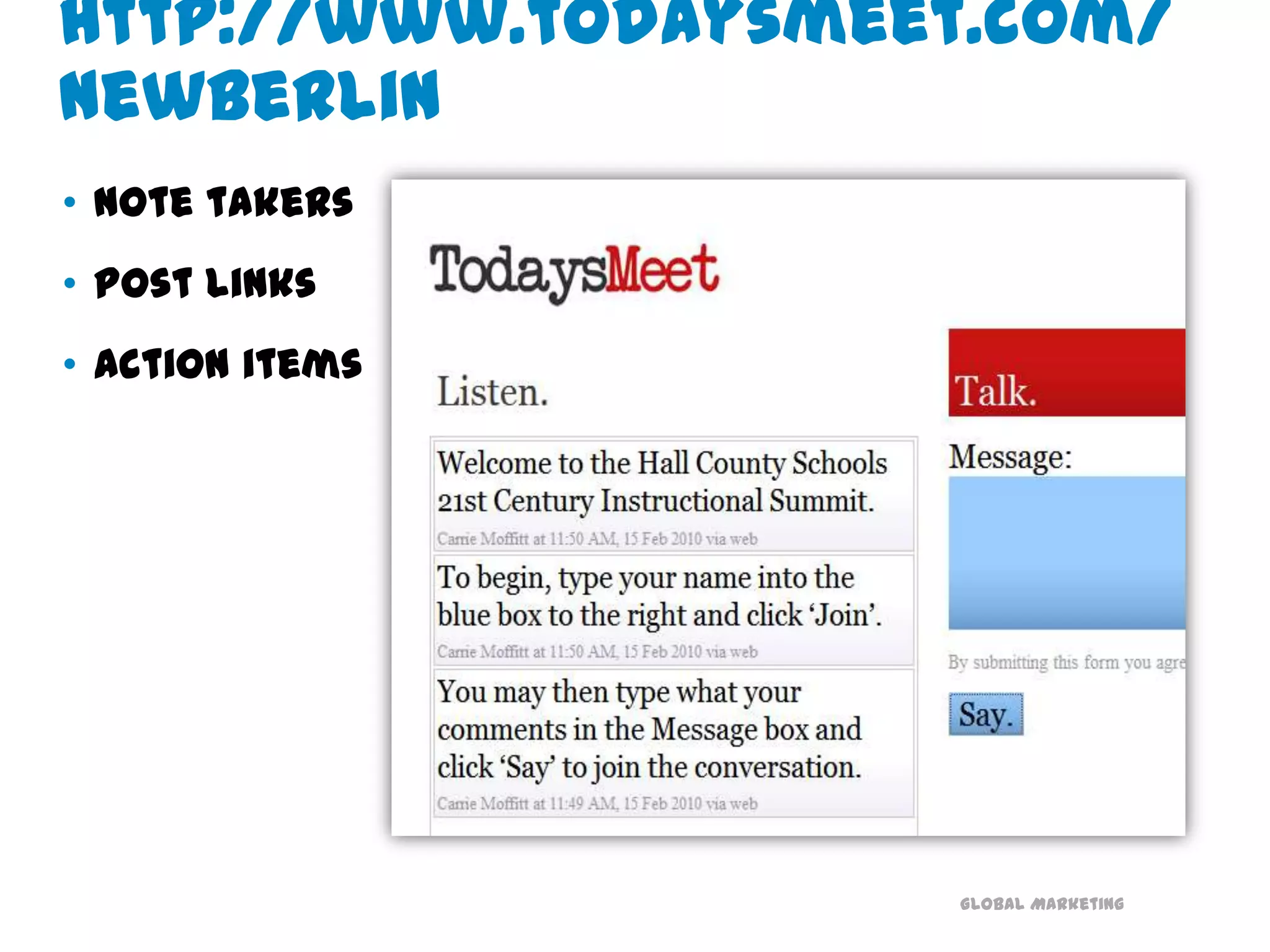
Back Channel:http://www.todaysmeet.com/newberlinNote takersPost linksAction items
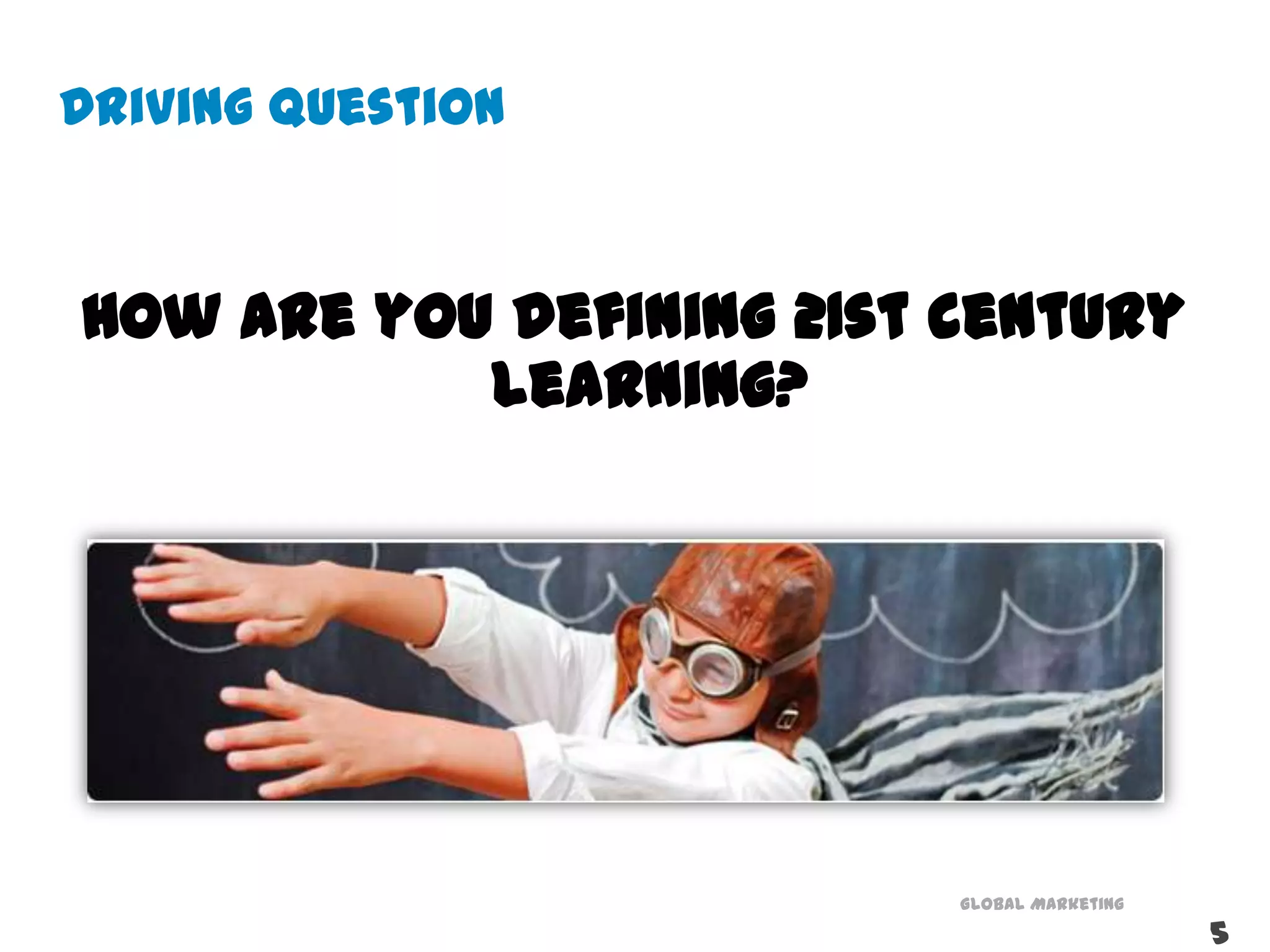
Driving QuestionHow are you defining 21st century learning?5
21st Century InquiryTeam 1- Create a 10-15 minute presentation to persuade why it is important to infuse 21st century skills into the curriculumTeam 2- Create a 10-15 minute presentation to persuade why 21st century skills should not be integrated into the curriculum. *Be ready to debate6
7
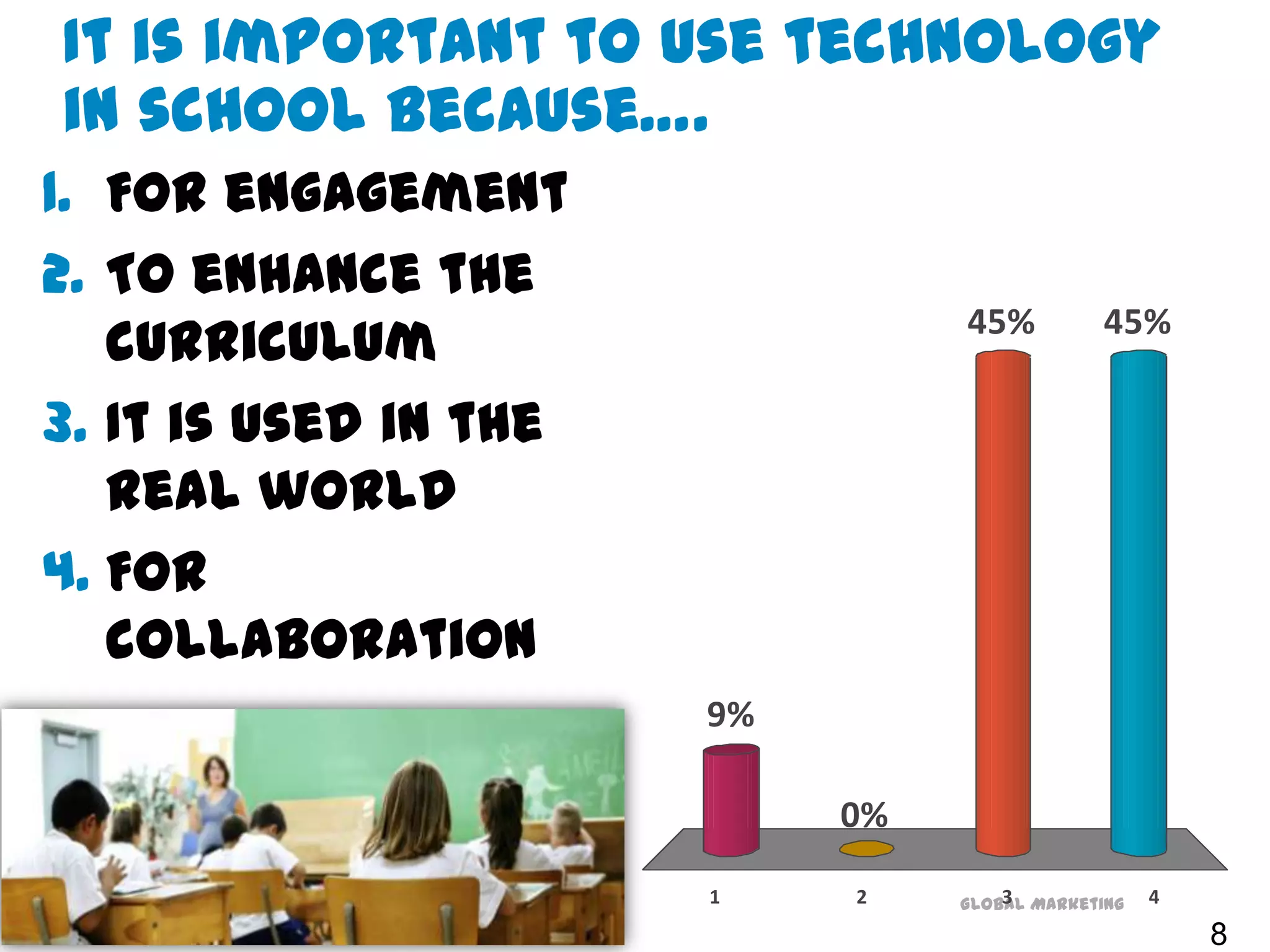
8It is important to use technology in school because….For engagementTo enhance the curriculumIt is used in the real worldFor collaboration10 of 30
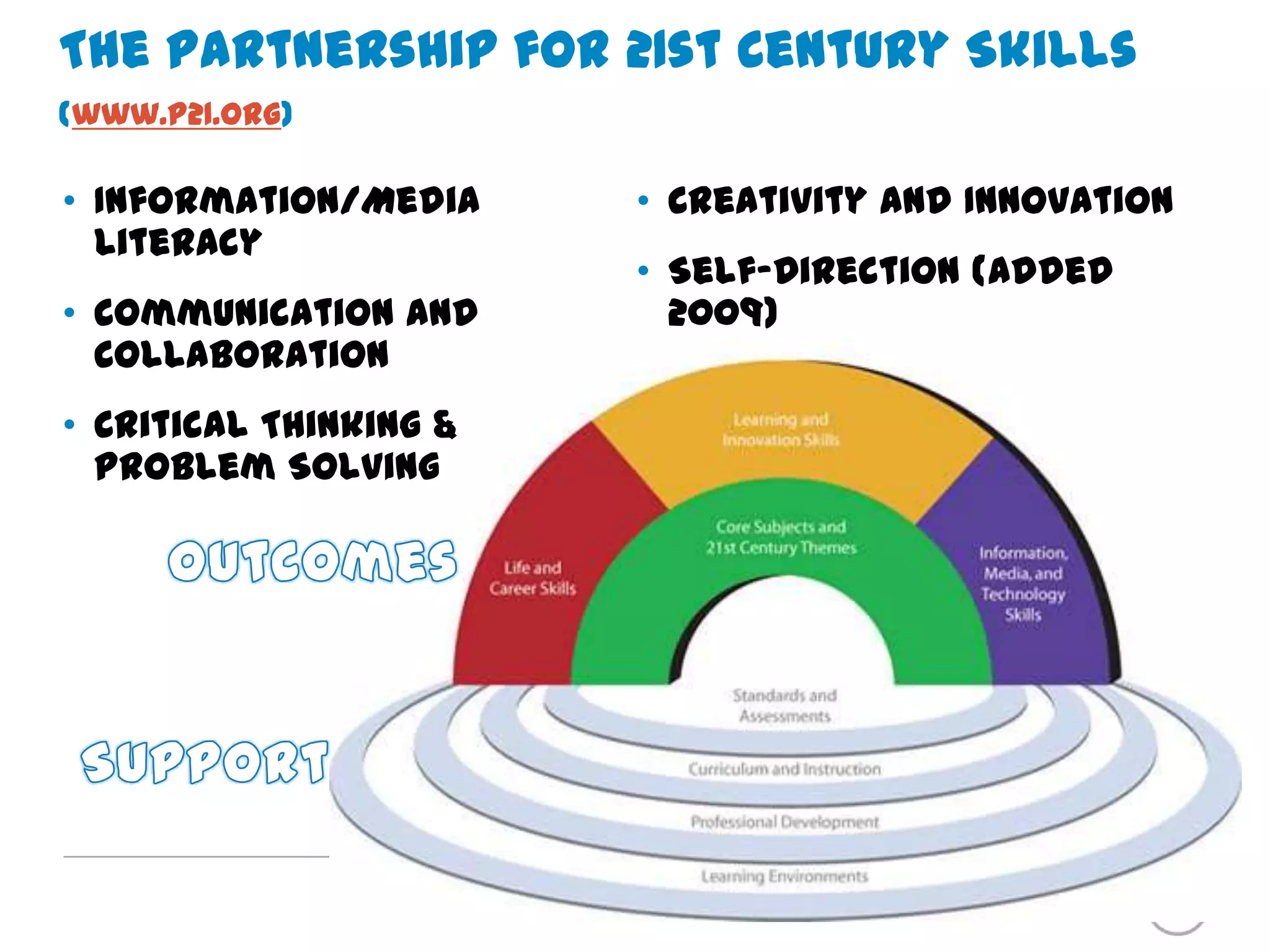
The Partnership for 21st Century Skills (www.P21.org)Information/Media LiteracyCommunication and CollaborationCritical Thinking & Problem SolvingCreativity and InnovationSelf-Direction (added 2009)OutcomesSupport
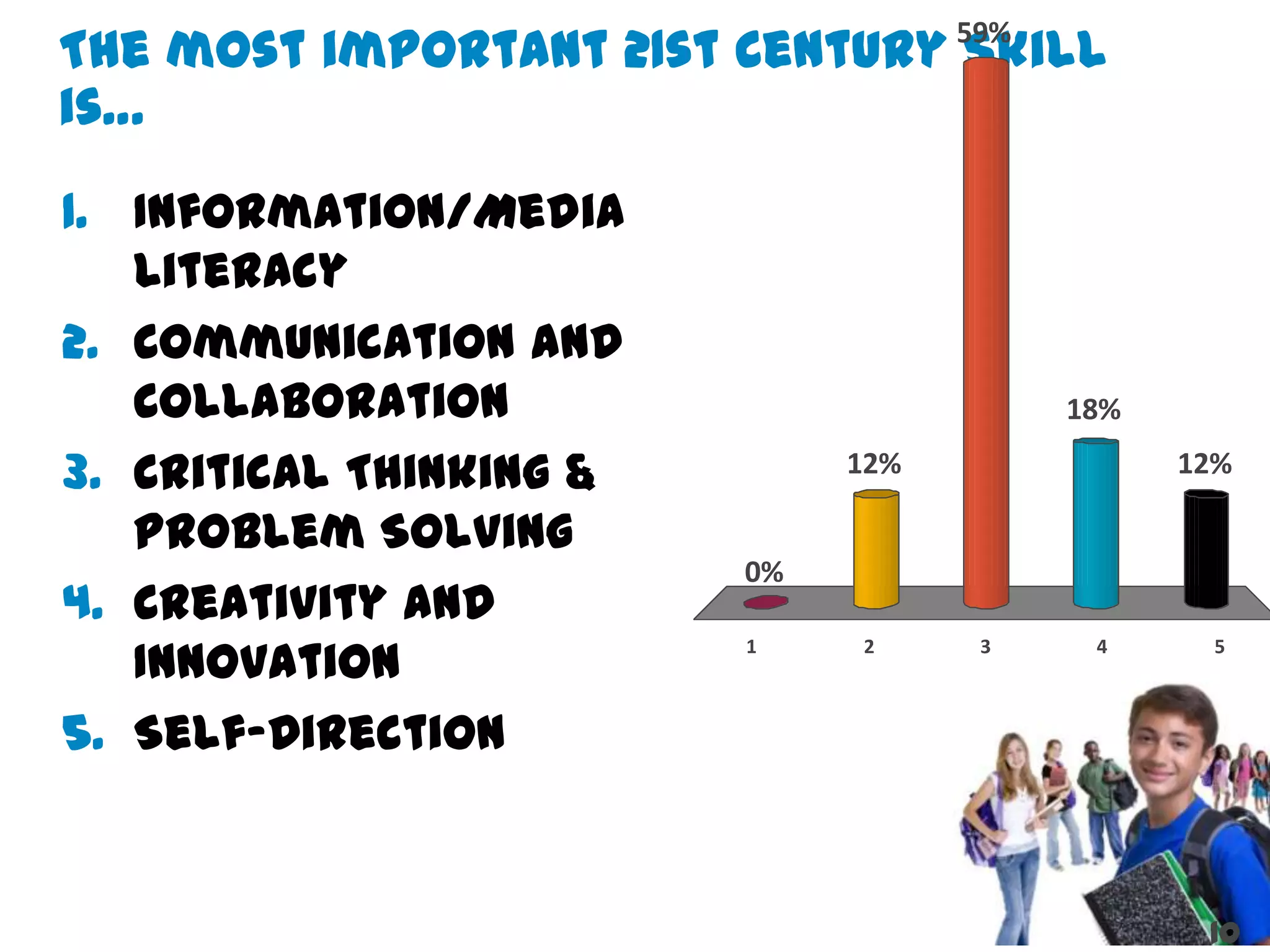
The most important 21st Century Skill is…10Information/Media LiteracyCommunication and CollaborationCritical Thinking & Problem SolvingCreativity and InnovationSelf-Direction17 of 30
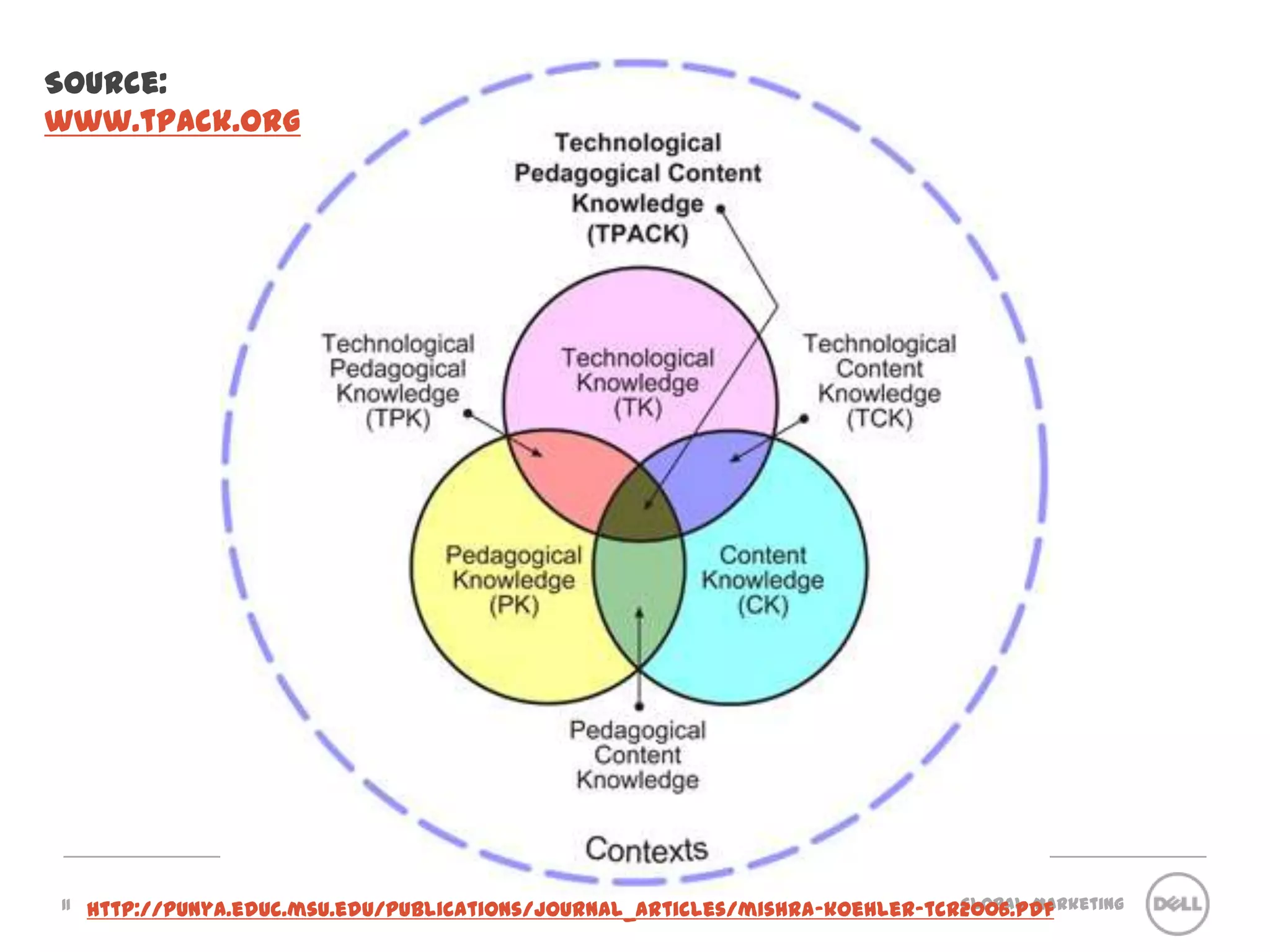
11Source: www.tpack.orghttp://punya.educ.msu.edu/publications/journal_articles/mishra-koehler-tcr2006.pdf
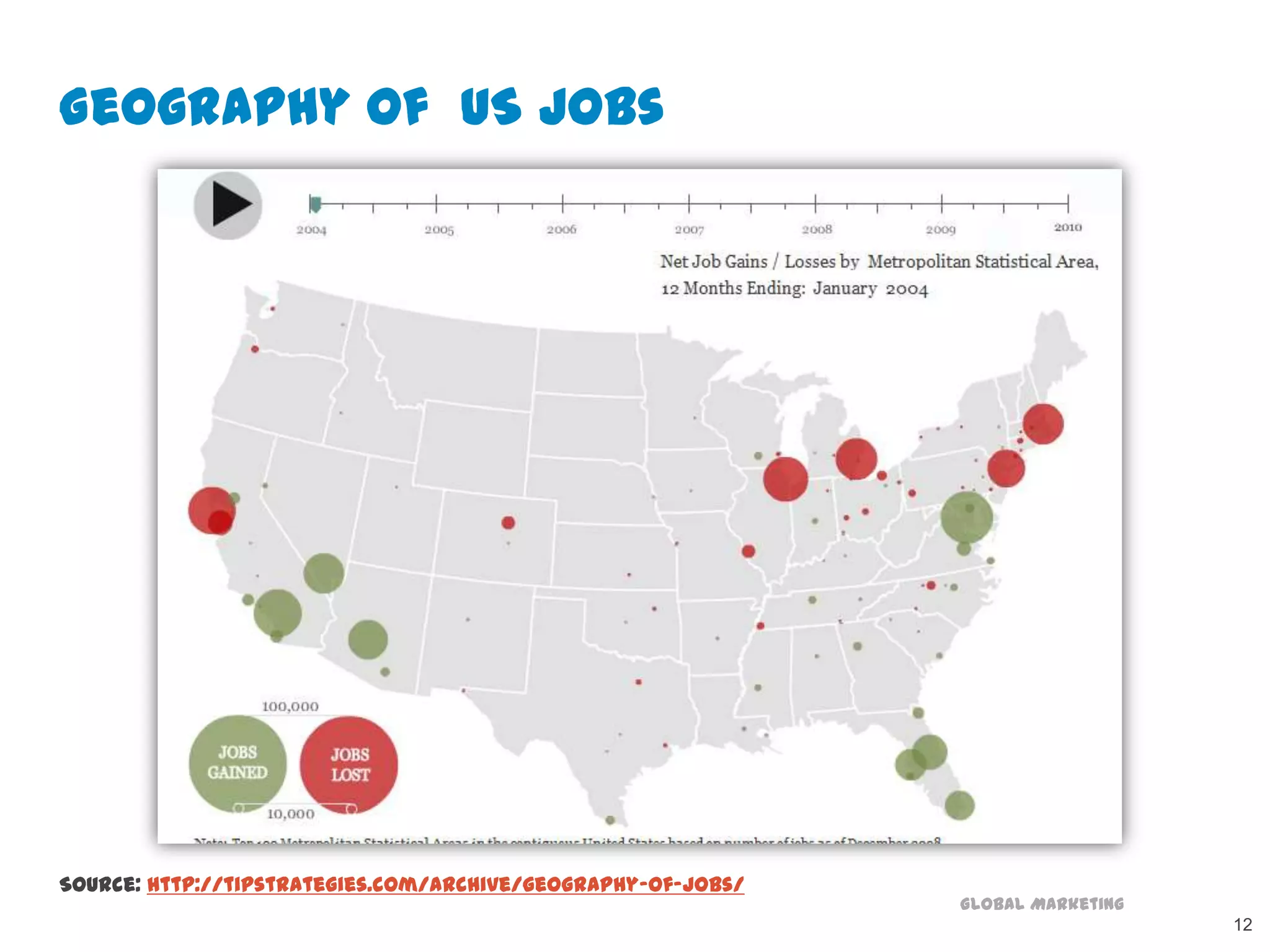
Geography of  US Jobs12Source: http://tipstrategies.com/archive/geography-of-jobs/
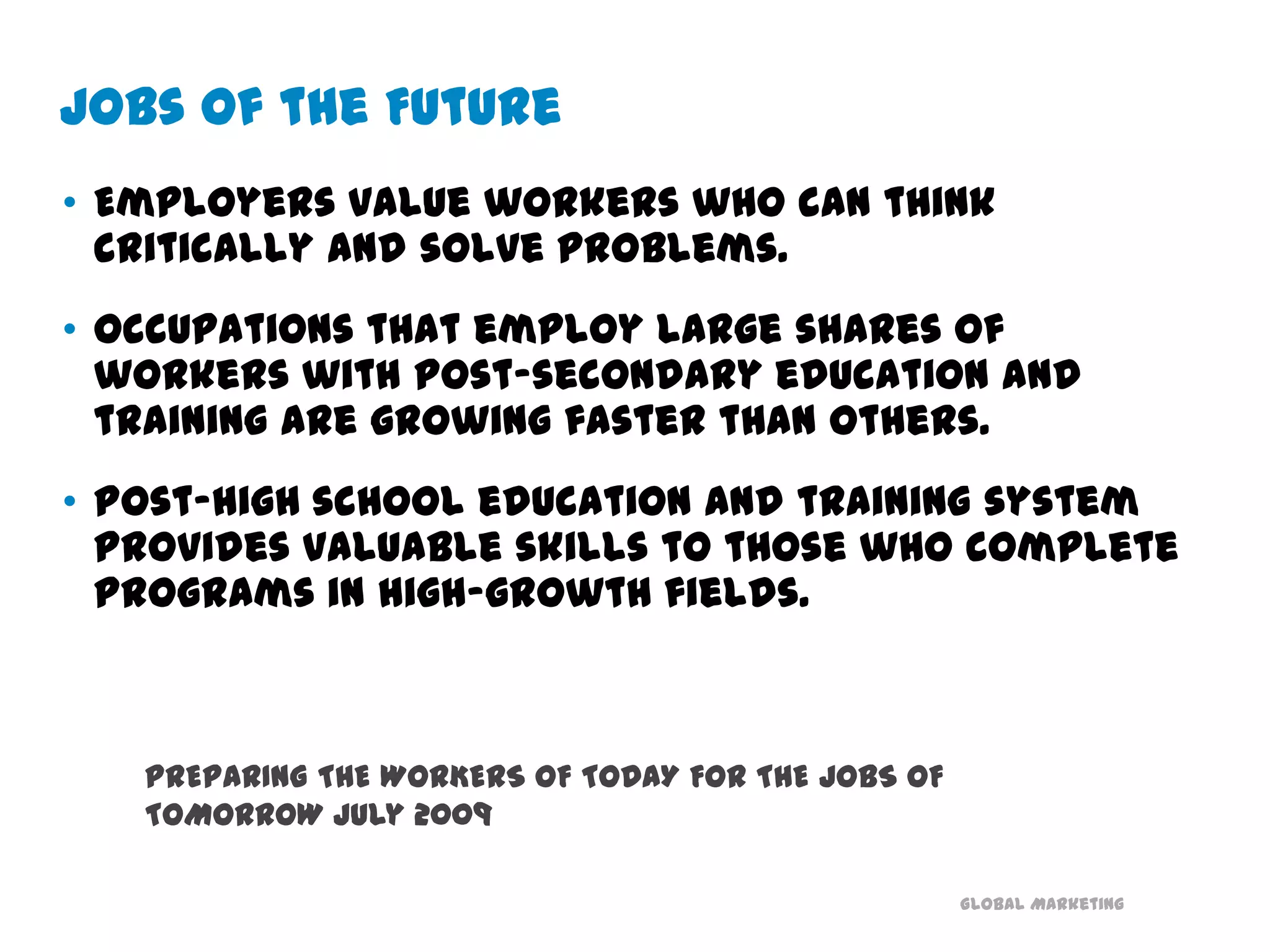
Jobs of the FutureEmployers value workers who can think critically and solve problems. Occupations that employ large shares of workers with post-secondary education and training are growing faster than others. Post-high school education and training system provides valuable skills to those who complete programs in high-growth fields.PREPARING THE WORKERS OF TODAY FOR THE JOBS OF TOMORROW July 2009
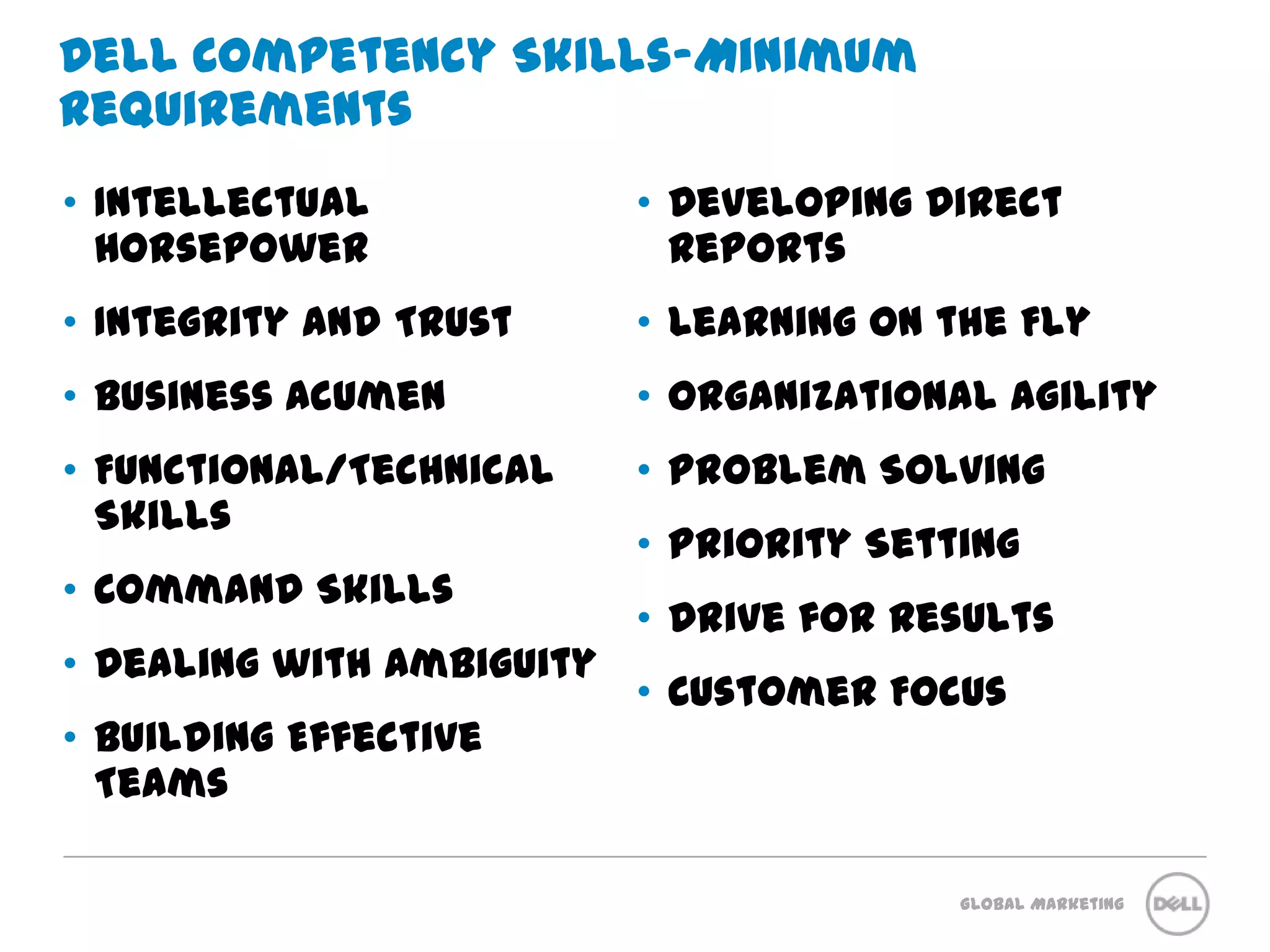
Dell Competency Skills-Minimum RequirementsDeveloping Direct ReportsLearning on the FlyOrganizational AgilityProblem Solving	Priority SettingDrive for Results Customer FocusIntellectual HorsepowerIntegrity and TrustBusiness AcumenFunctional/Technical SkillsCommand SkillsDealing with AmbiguityBuilding Effective Teams
INFORMATION IS CHANGINGLEARNING.
16ConfidentialUsing Storybird or Xtranormal , I want you to create a book that illustrates the role that information is playing in learning.  Be sure to provide some examples of how information has changed over the last five years.
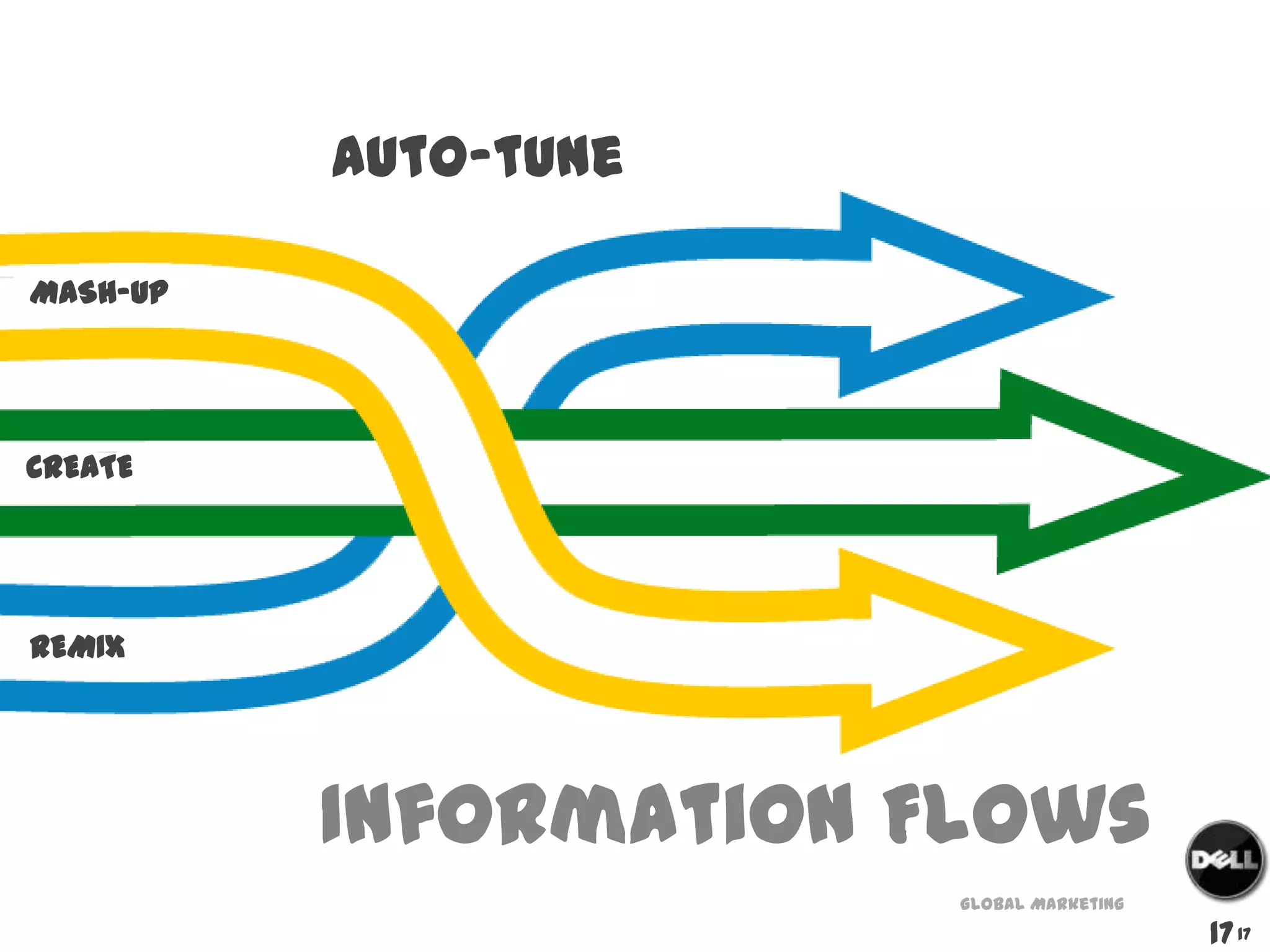
17Auto-tune MASH-UPCREATEREMIXInformation Flows17
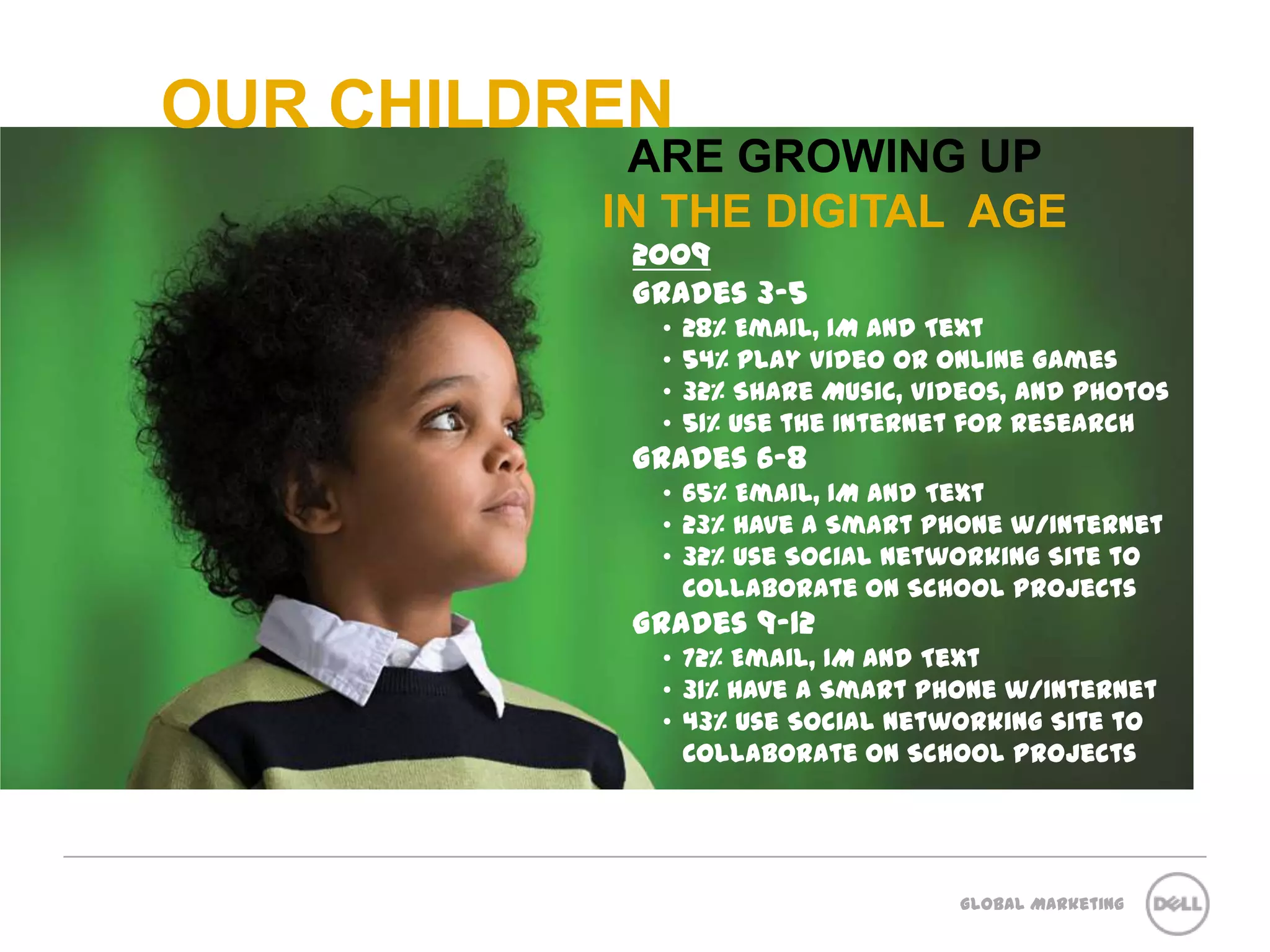
OUR CHILDRENARE GROWING UP IN THE DIGITAL  AGE2009Grades 3-528% Email, IM and Text
54% Play Video or Online Games
32% Share Music, Videos, and Photos
51% Use the Internet for ResearchGrades 6-865% Email, IM and Text
23% Have a Smart Phone w/Internet
32% Use Social Networking Site to Collaborate on School ProjectsGrades 9-1272% Email, IM and Text
31% Have a Smart Phone w/Internet
43% Use Social Networking Site to Collaborate on School Projects18
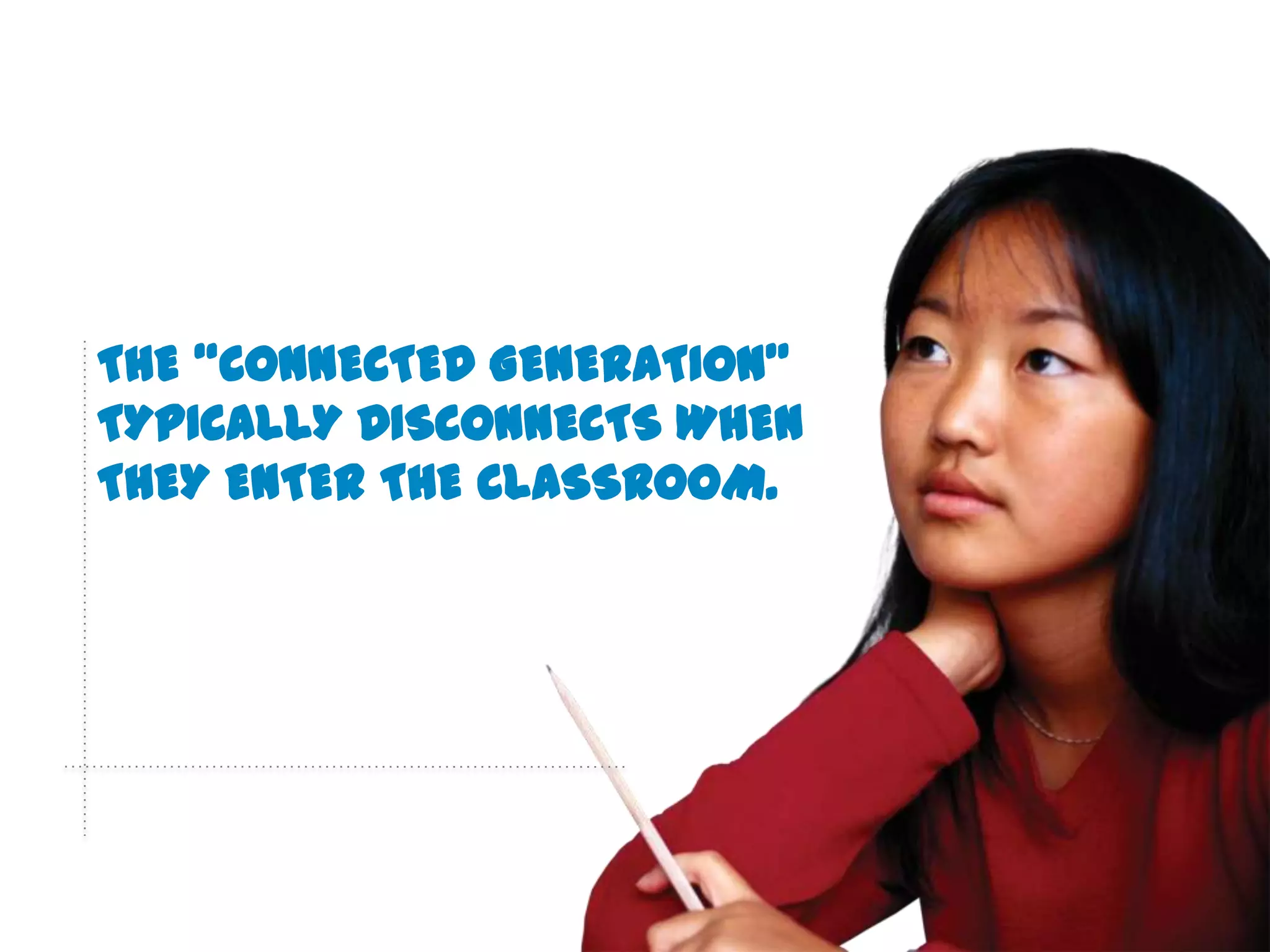
The “Connected Generation” typically disconnects when they enter the classroom.20
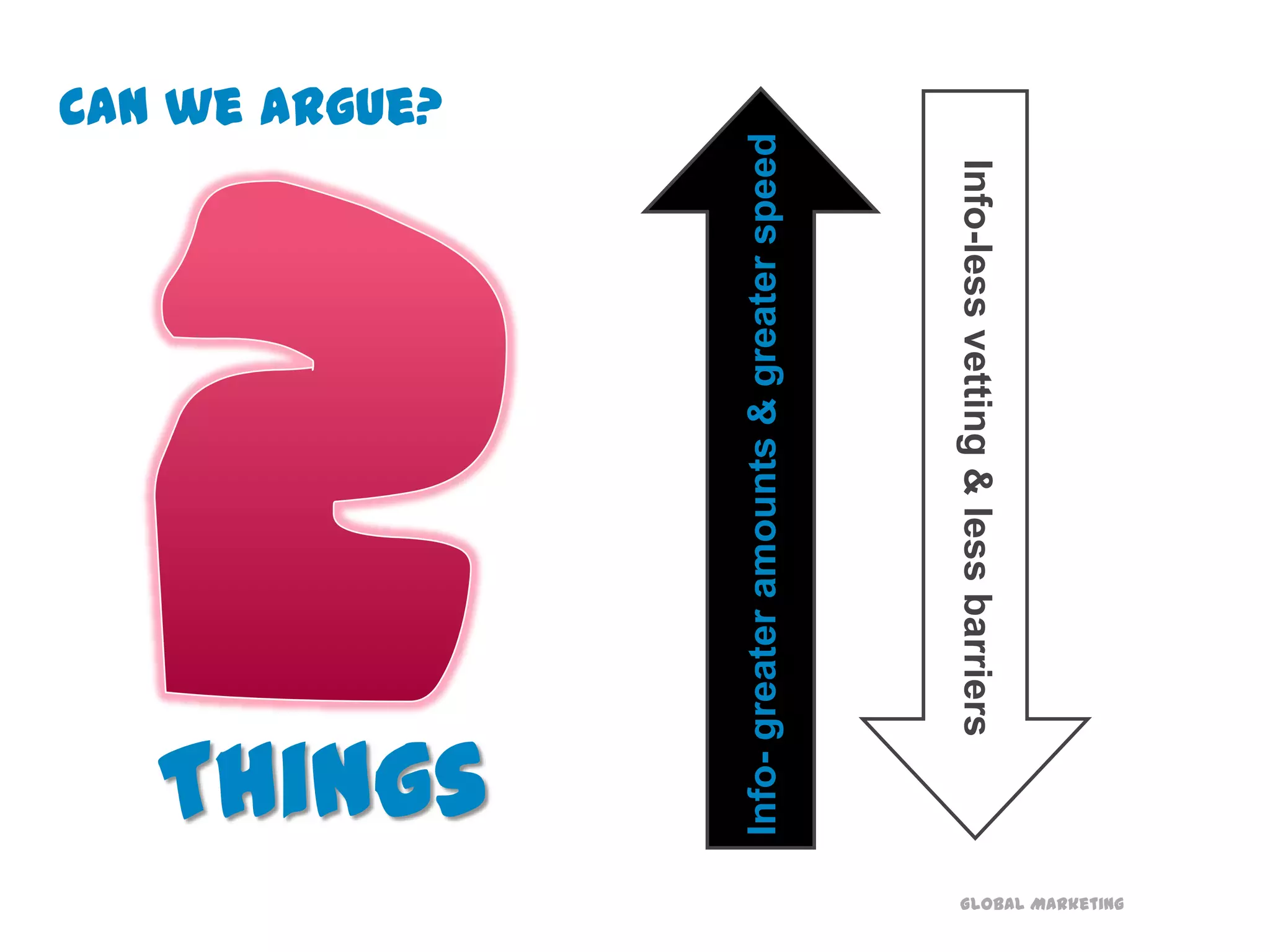
Can we argue?2Info- greater amounts & greater speedInfo-less vetting & less barriersThings
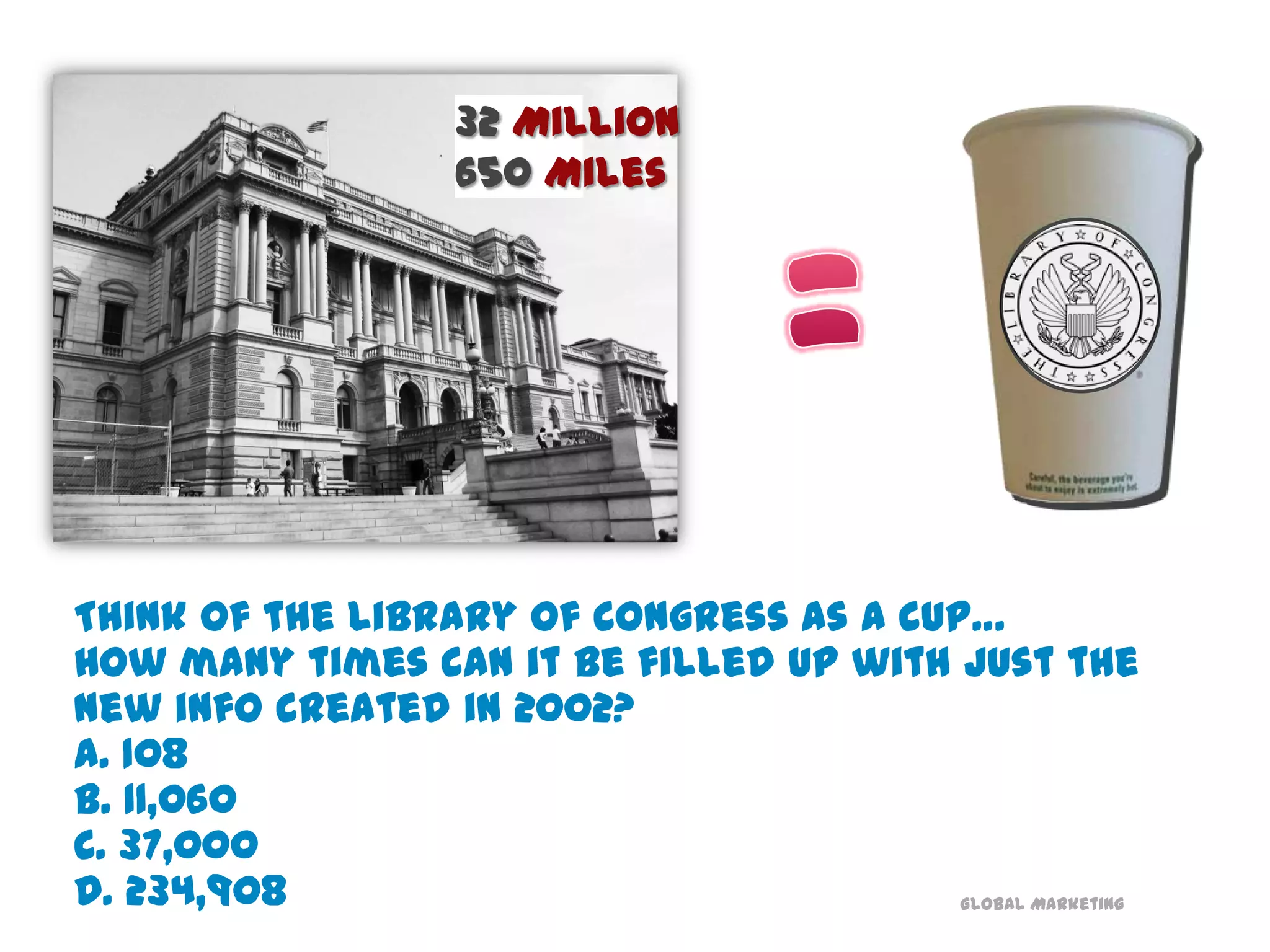
32 Million650 Mileshttp://upload.wikimedia.org/wikipedia/en/b/b4/Library_of_Congress_from_North.JPGLibrary of Congress
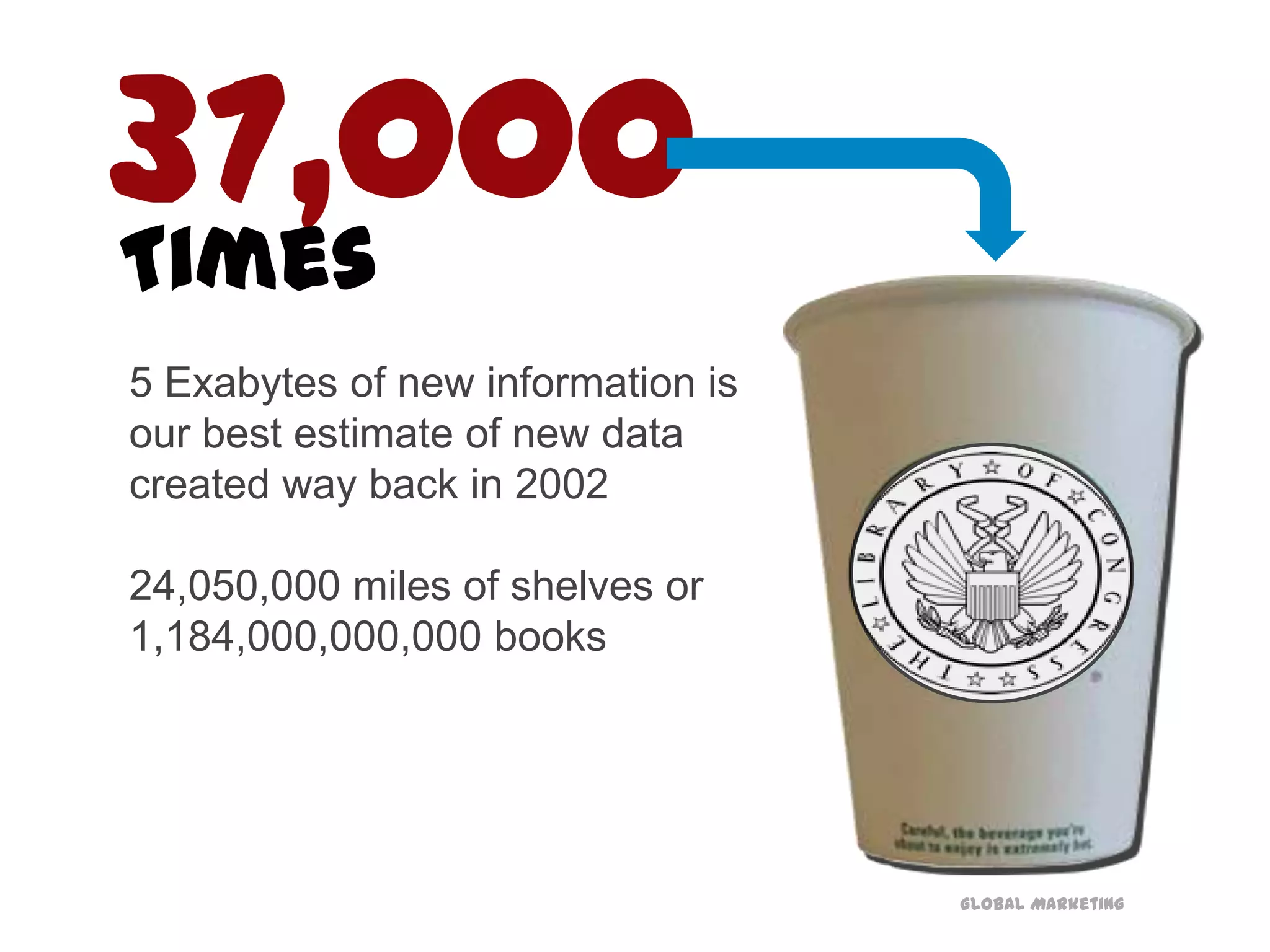
32 Million650 Miles=Think of the Library of Congress as a cup…How many times can it be filled up with just the new info created in 2002?A. 108B. 11,060C. 37,000D. 234,908
37,000Times5 Exabytes of new information is our best estimate of new data created way back in 200224,050,000 miles of shelves or 1,184,000,000,000 books
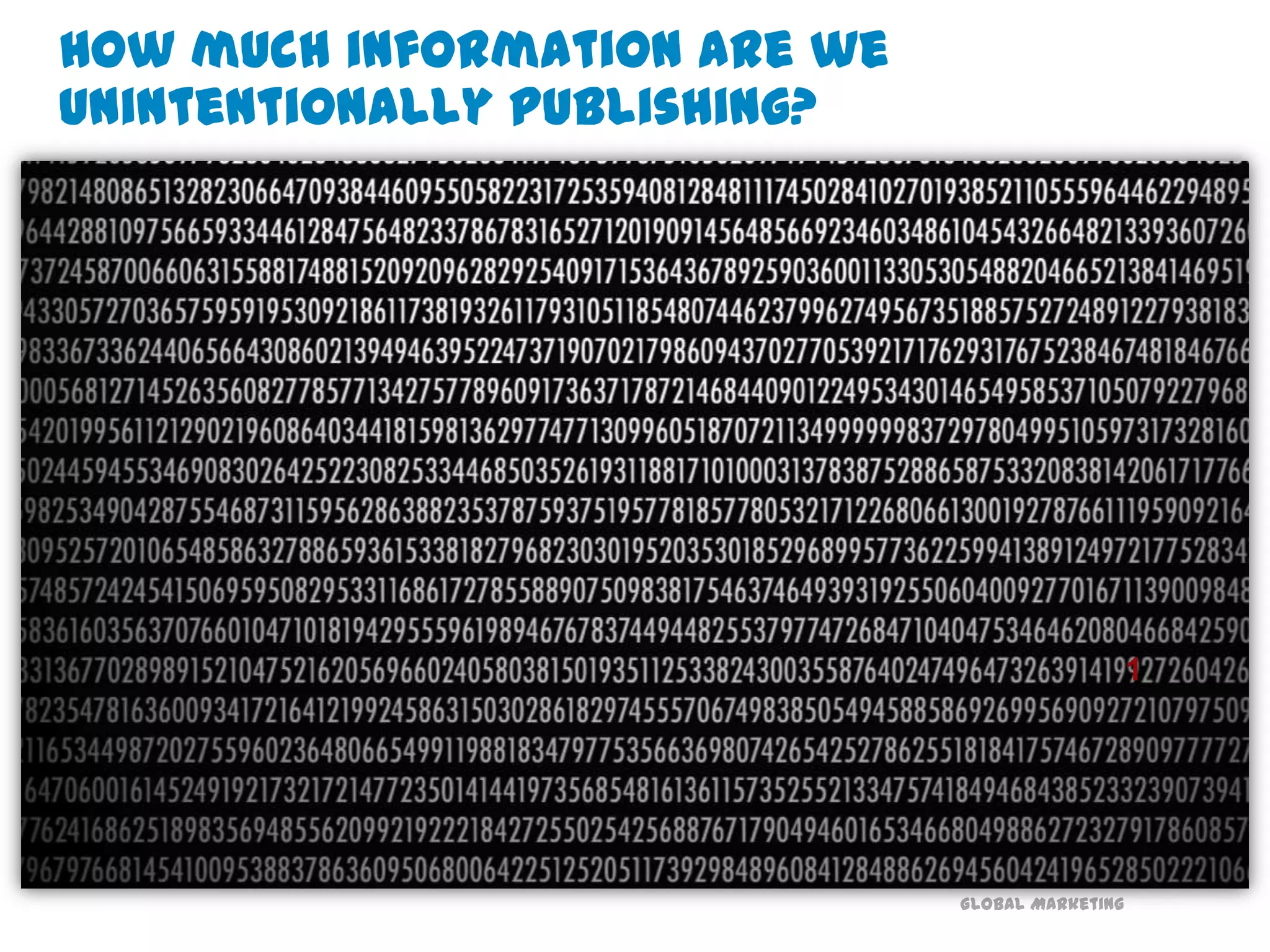
1How much information are we unintentionally publishing?
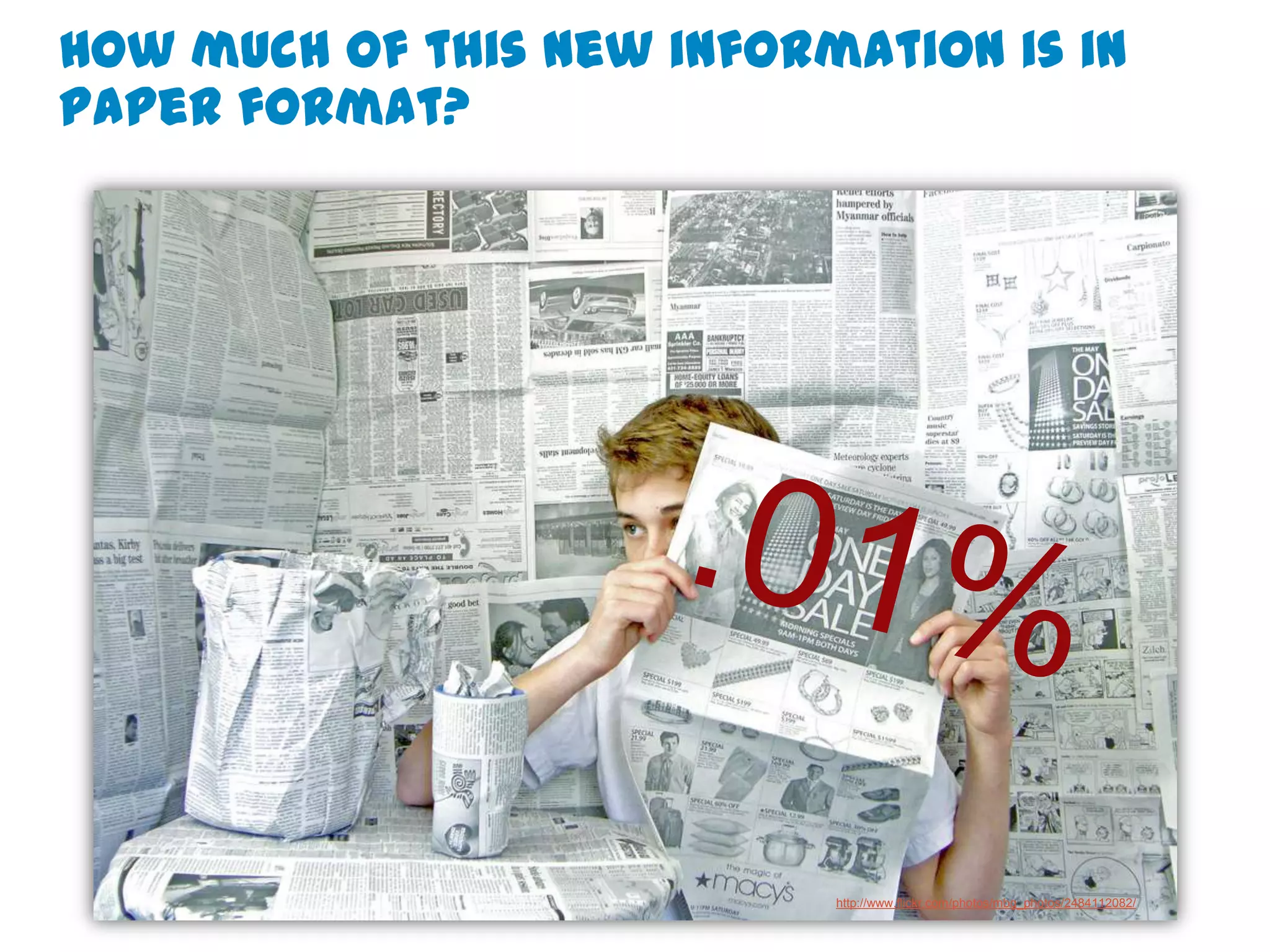
.01%http://www.flickr.com/photos/mbg_photos/2484112082/How much of this new information is in paper format?
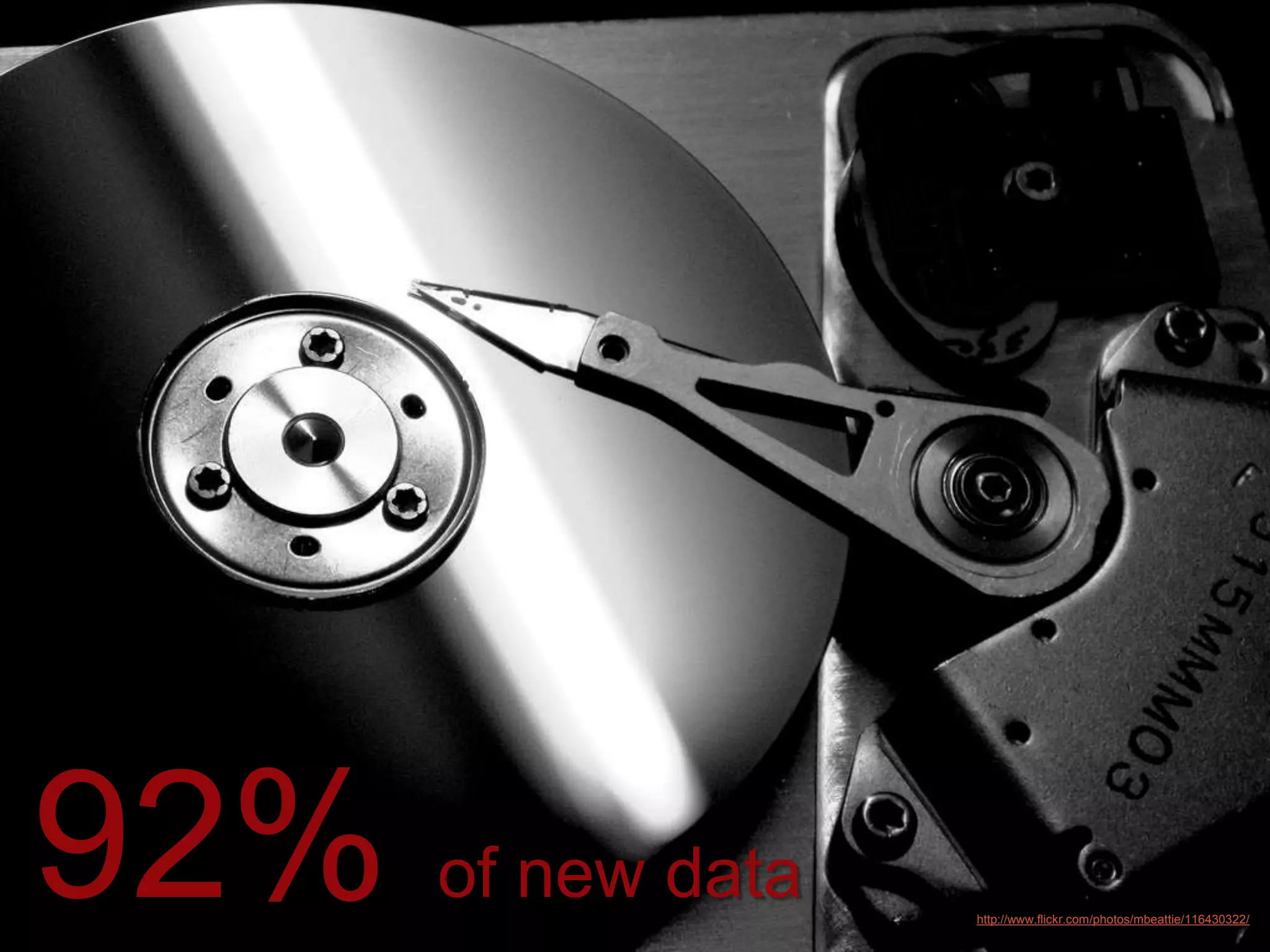
92% of new datahttp://www.flickr.com/photos/mbeattie/116430322/
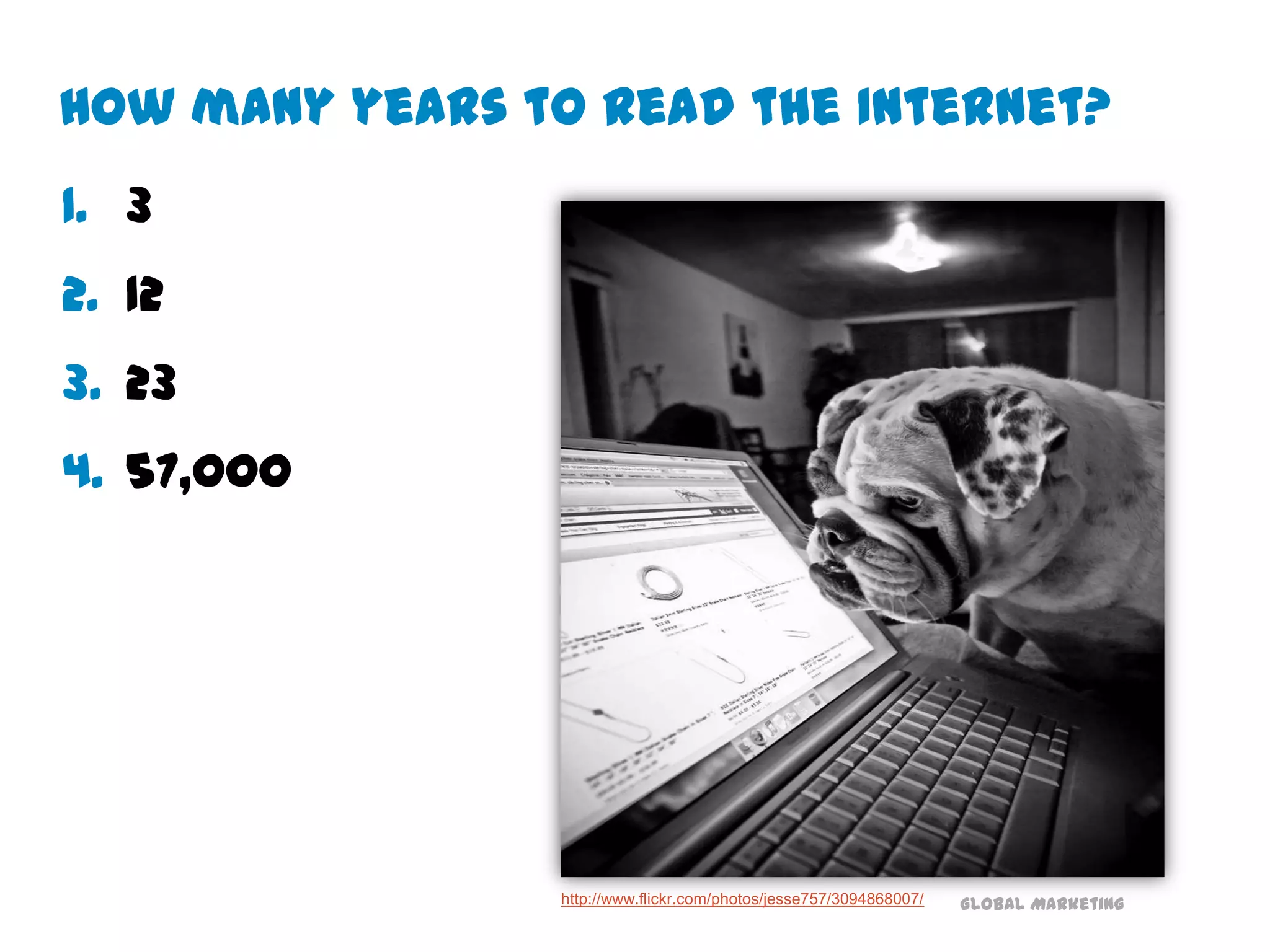
http://www.flickr.com/photos/jesse757/3094868007/How many years to read the Internet?3122357,000
57,000years
3,805YEARS
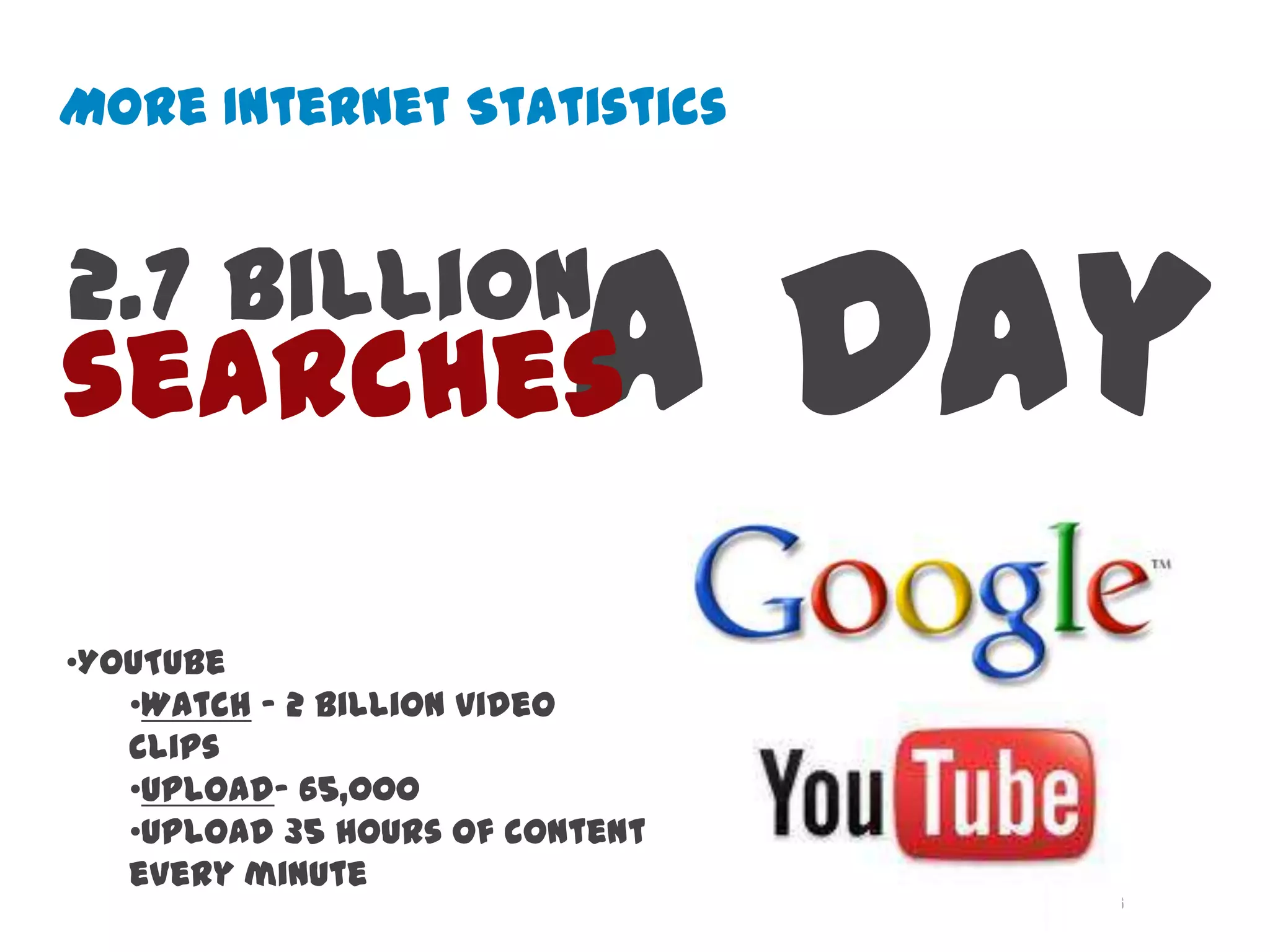
A Day2.7 BillionsearchesYouTube
Watch - 2billion video clips
Upload- 65,000
Upload 35 hours of content every minuteMore Internet Statistics
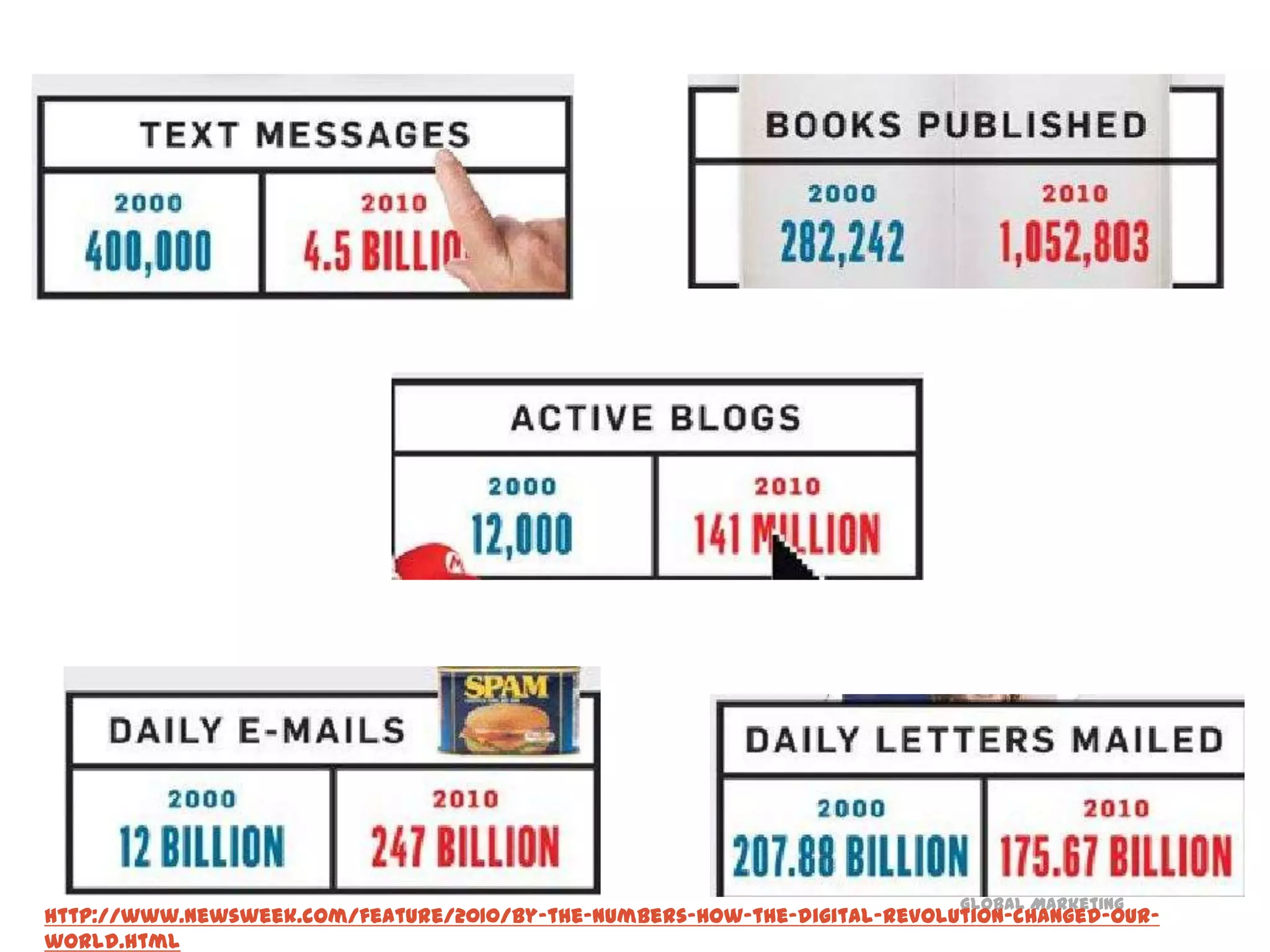
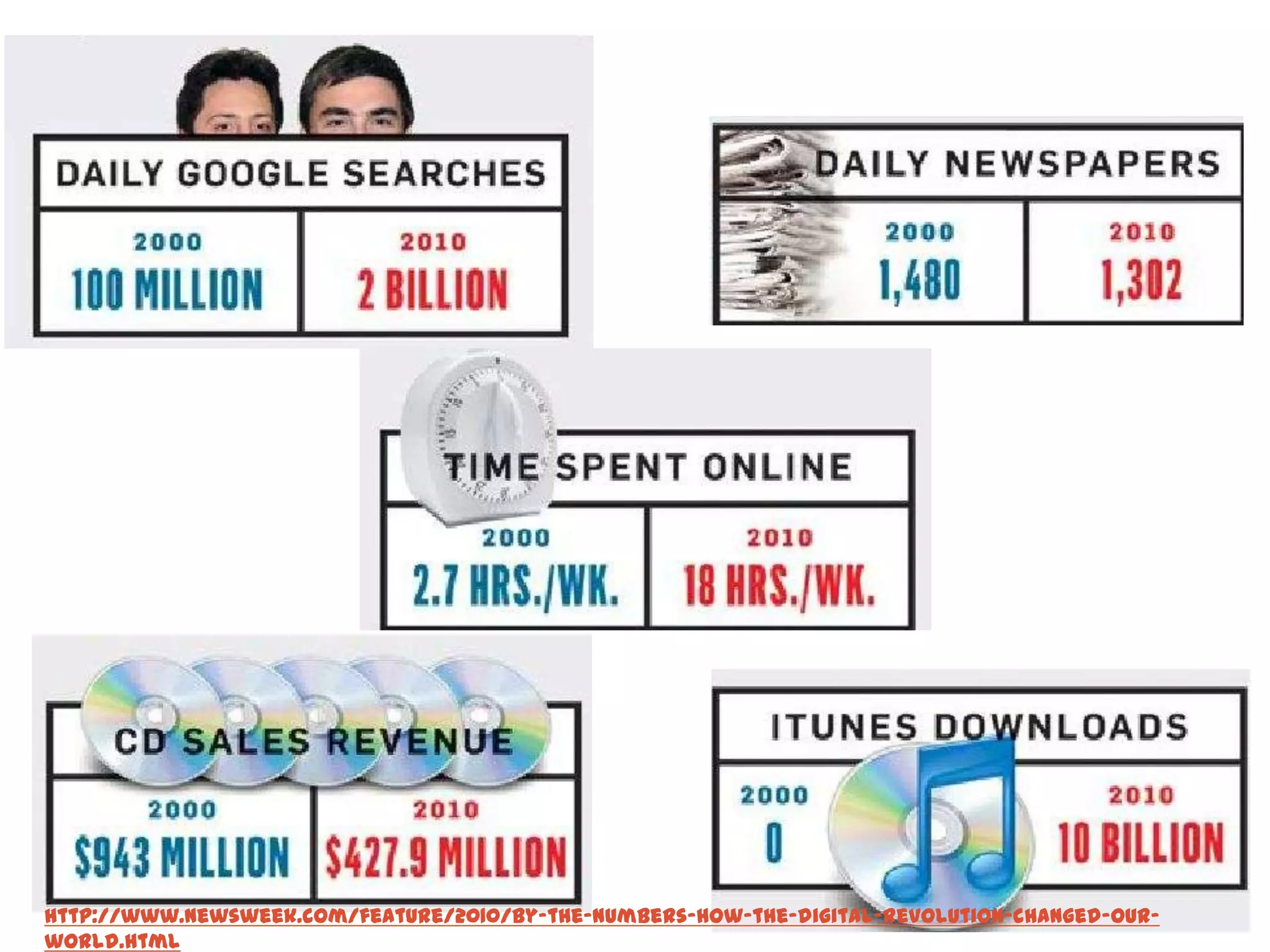
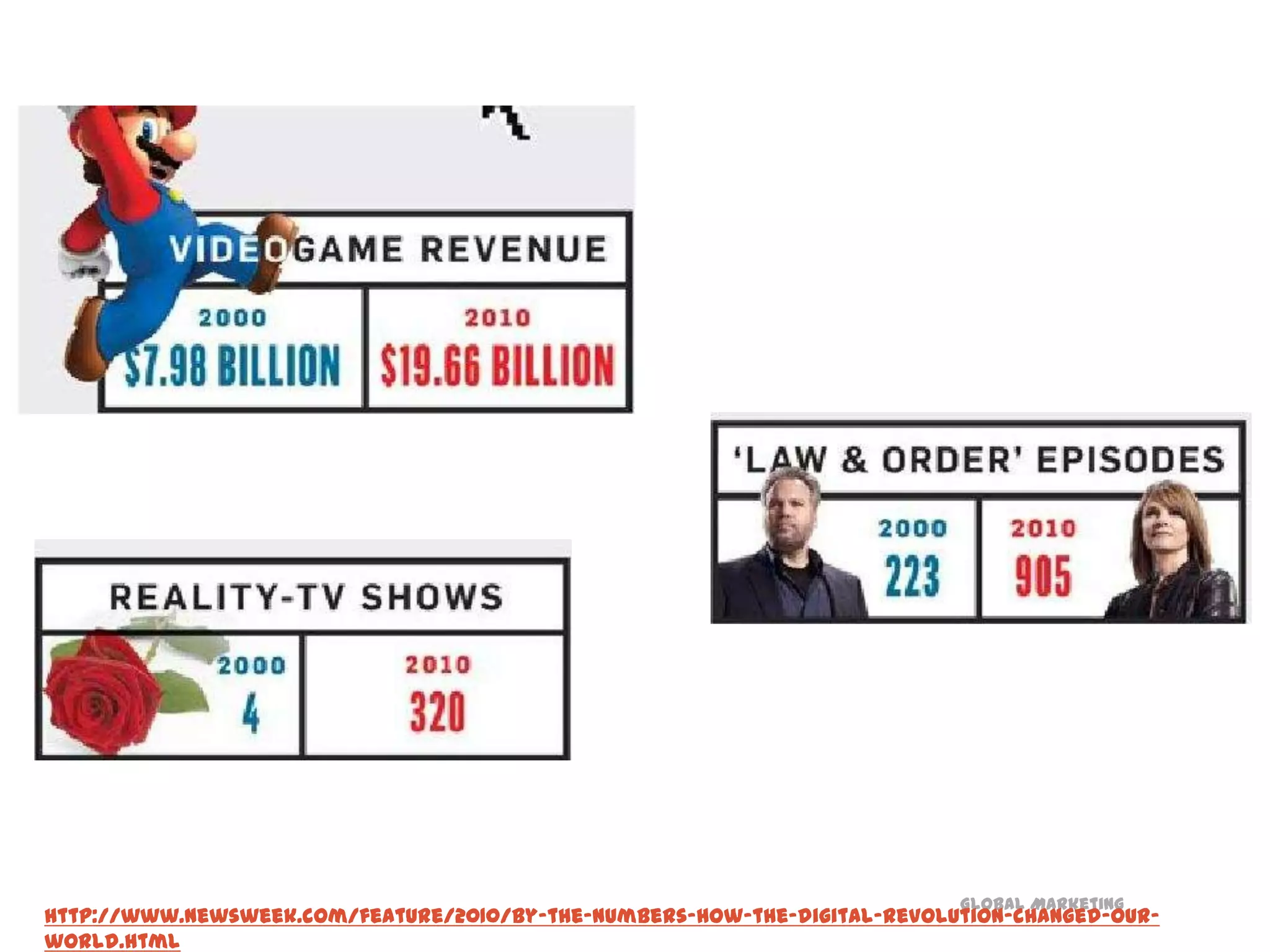
http://www.newsweek.com/feature/2010/by-the-numbers-how-the-digital-revolution-changed-our-world.html
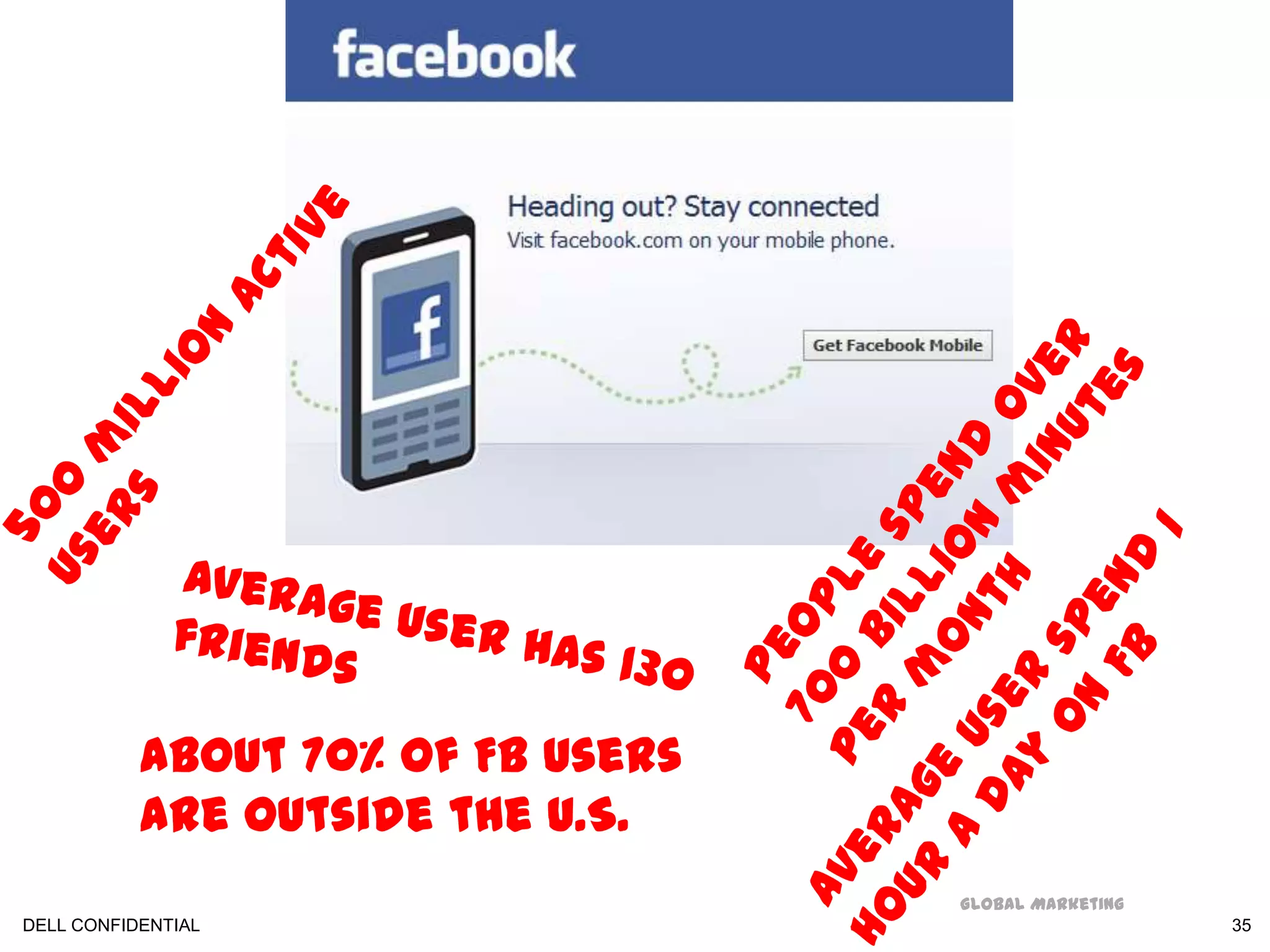
DELL CONFIDENTIAL35500 million active usersPeople spend over 700 billion minutes per monthAverage user has 130 friendsAverage user spend 1 hour a day on FBAbout 70% of FB users are outside the U.S.
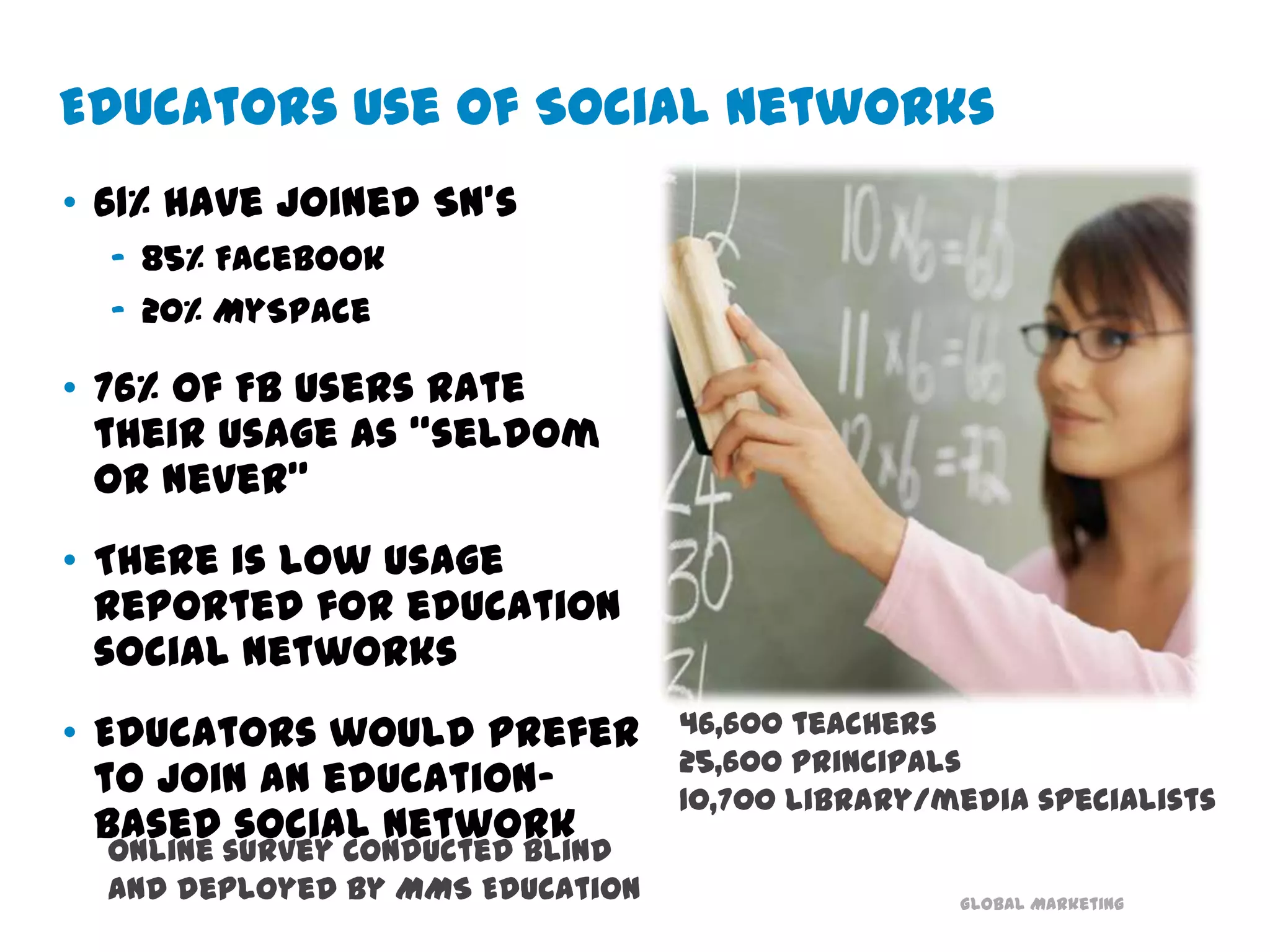
Educators Use of Social Networks61% have joined SN’s85% Facebook20% MySpace76% of FB users rate their usage as “seldom or never”There is low usage reported for education social networksEducators would prefer to join an education-based social network46,600 teachers25,600 principals10,700 library/media specialistsOnline survey conducted blind and deployed by MMS Education
1 in 200page views on the Internet(NY Times, 2007) Most Page Views on the InternetWikipedia, love it or hate it…
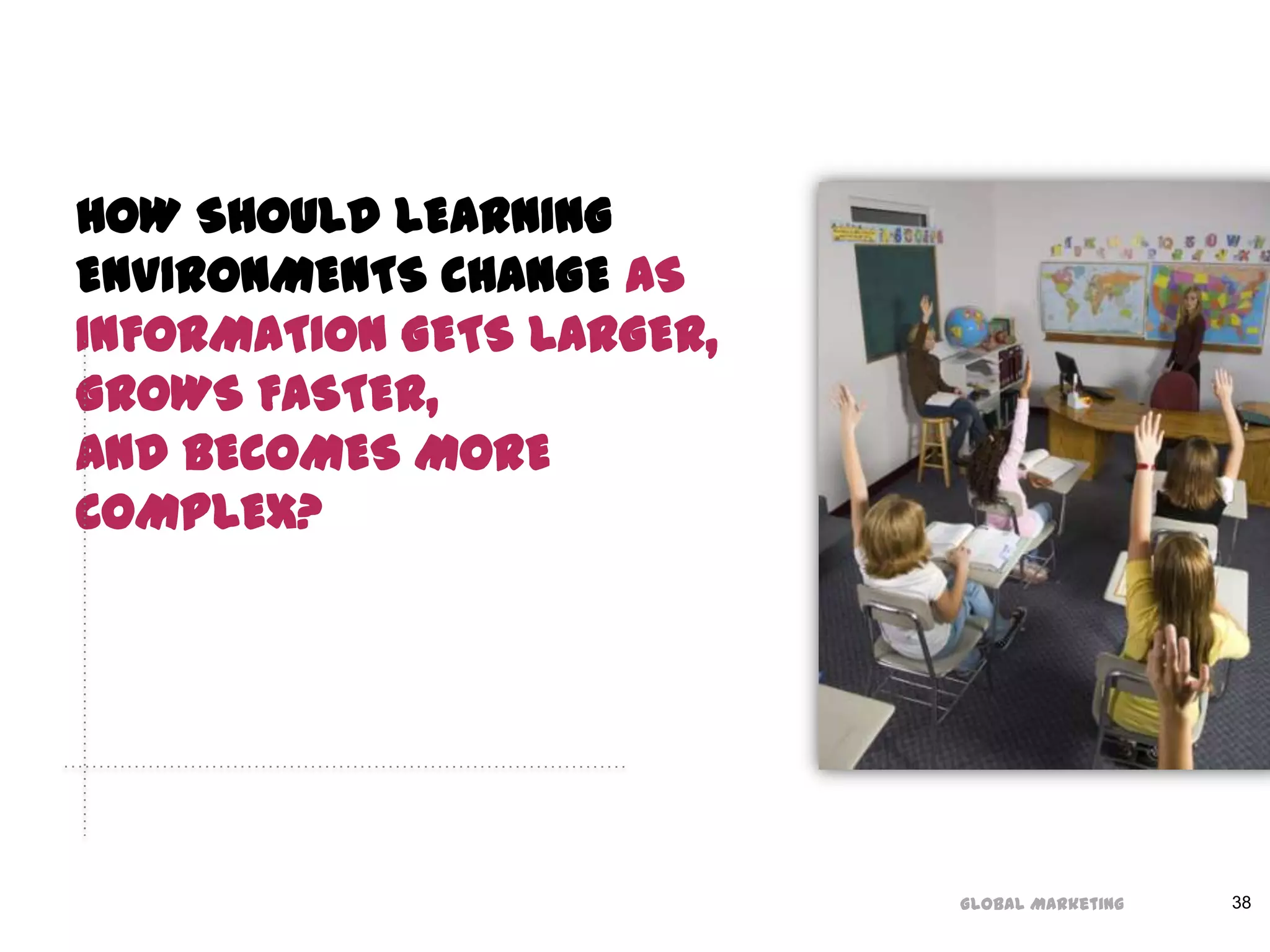
How should learning environments change as information gets larger, grows faster,and becomes more complex?38
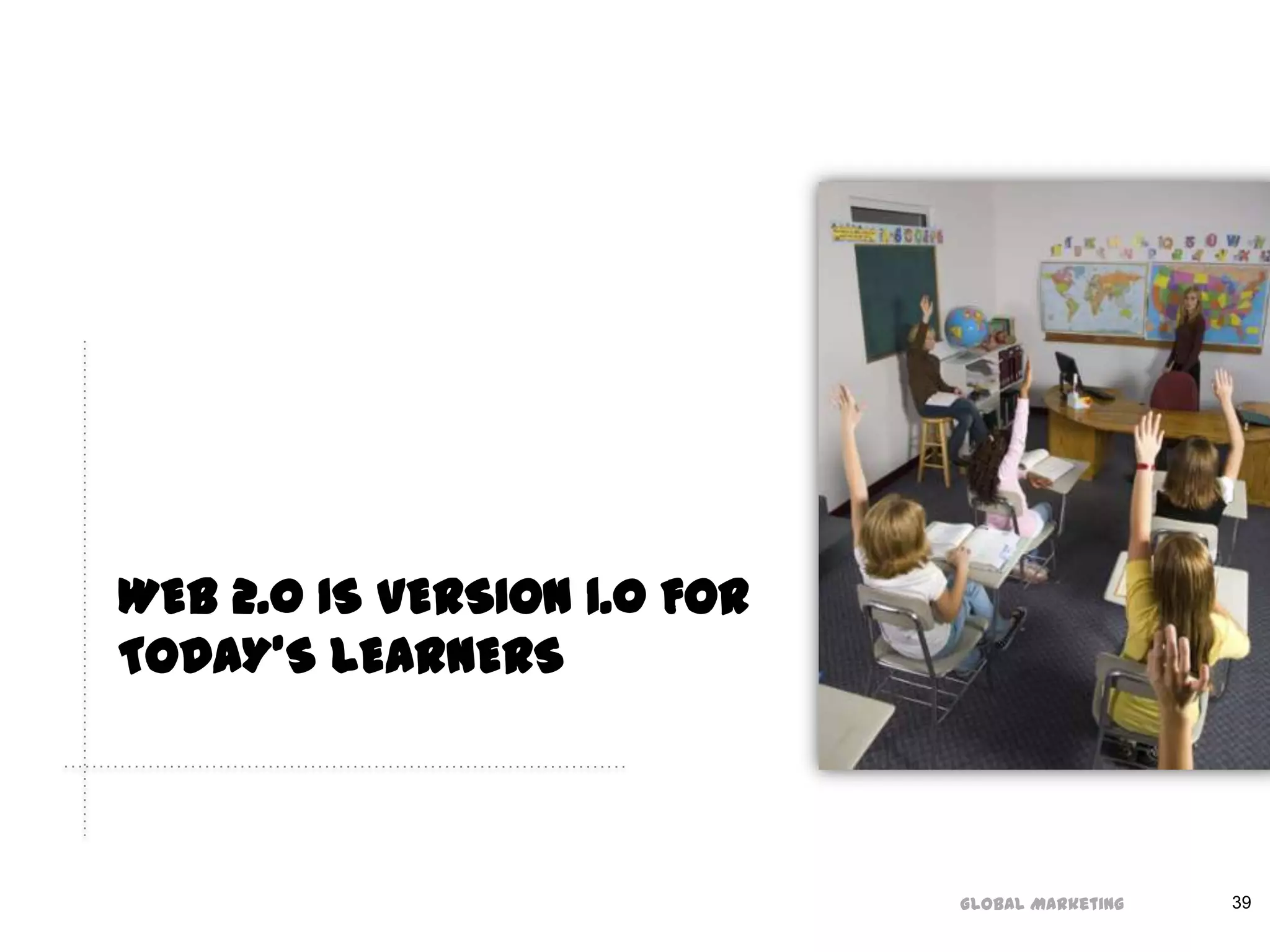
Web 2.0 is version 1.0 for today’s learners39
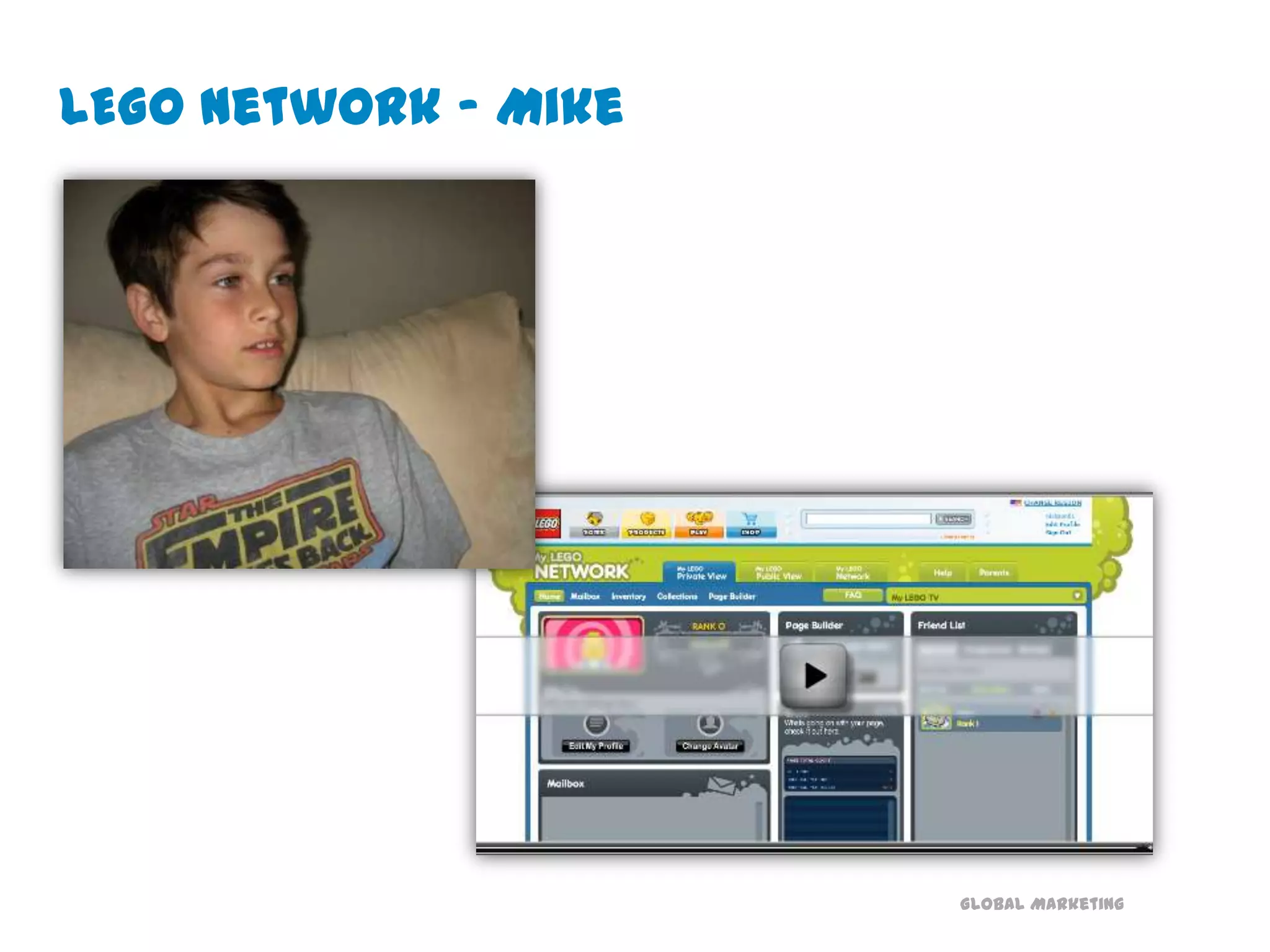
LEGO Network - Mike
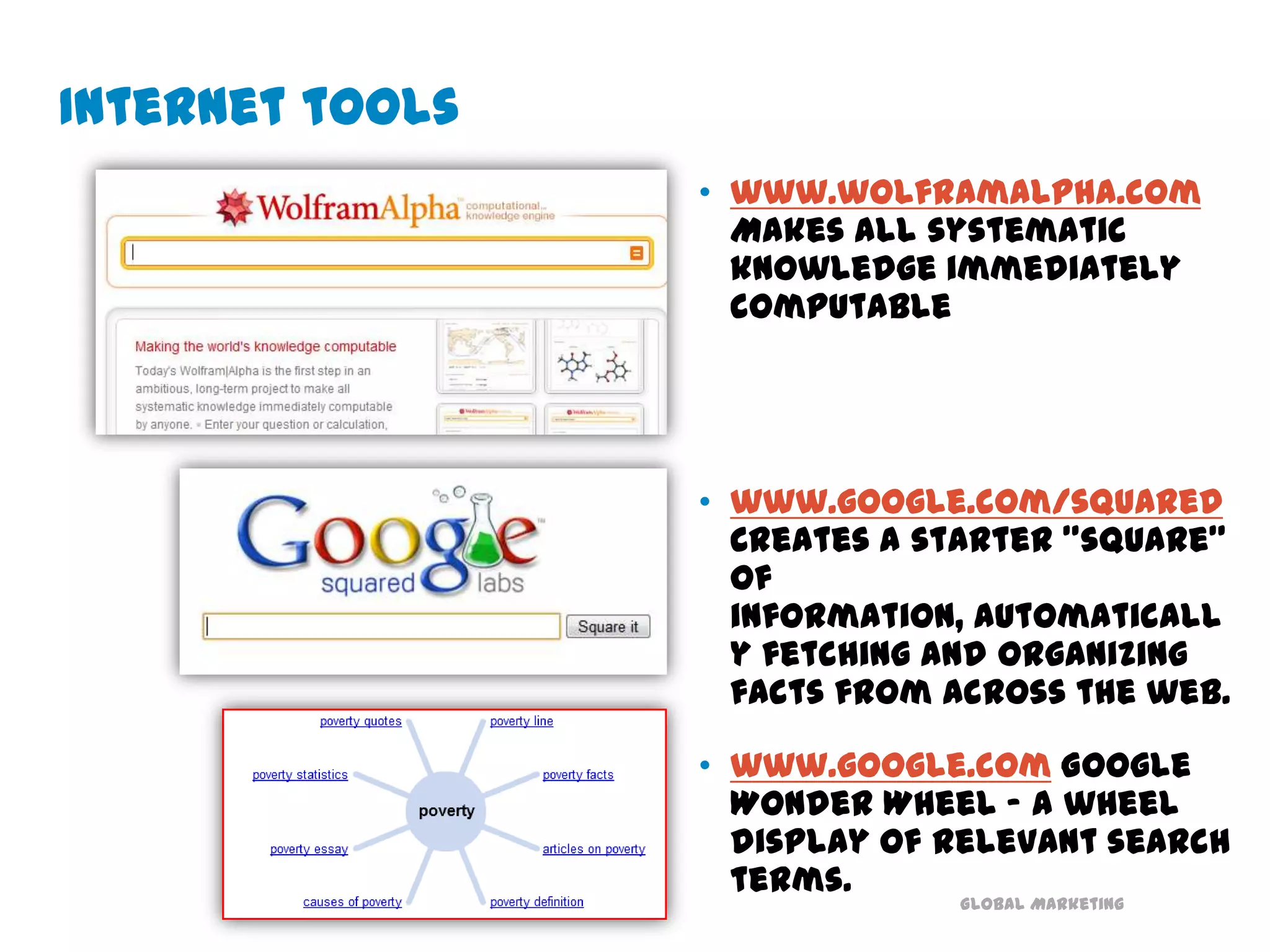
Internet toolswww.wolframalpha.com  Makes all systematic knowledge immediately computablewww.google.com/squared Creates a starter "square" of information, automatically fetching and organizing facts from across the web.www.google.com Google Wonder Wheel - a wheel display of relevant search terms.
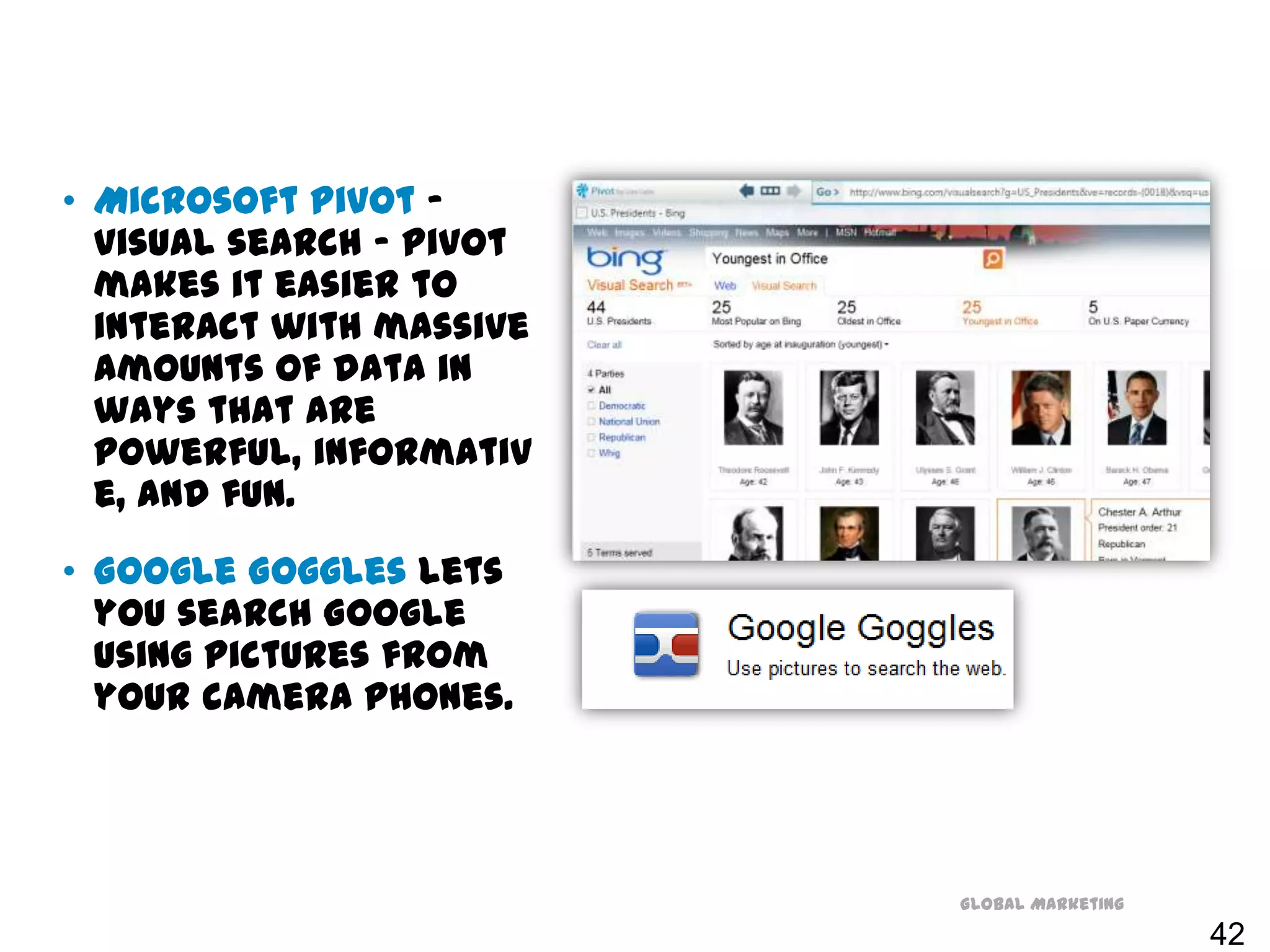
Microsoft Pivot – visual search - Pivot makes it easier to interact with massive amounts of data in ways that are powerful, informative, and fun.Google Goggles lets you search Google using pictures from your camera phones. 42
43Student as Producer
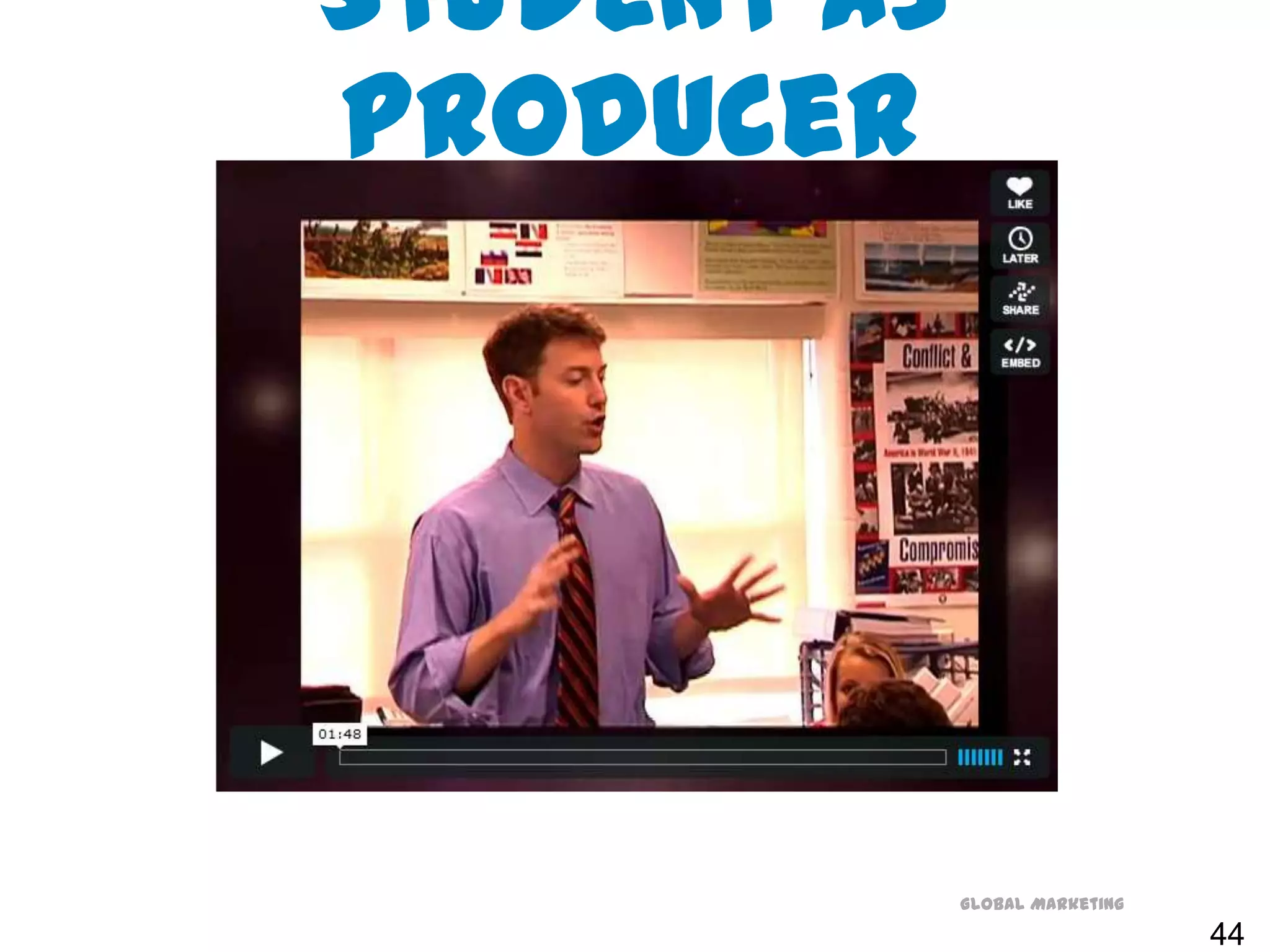
44Student as Producer
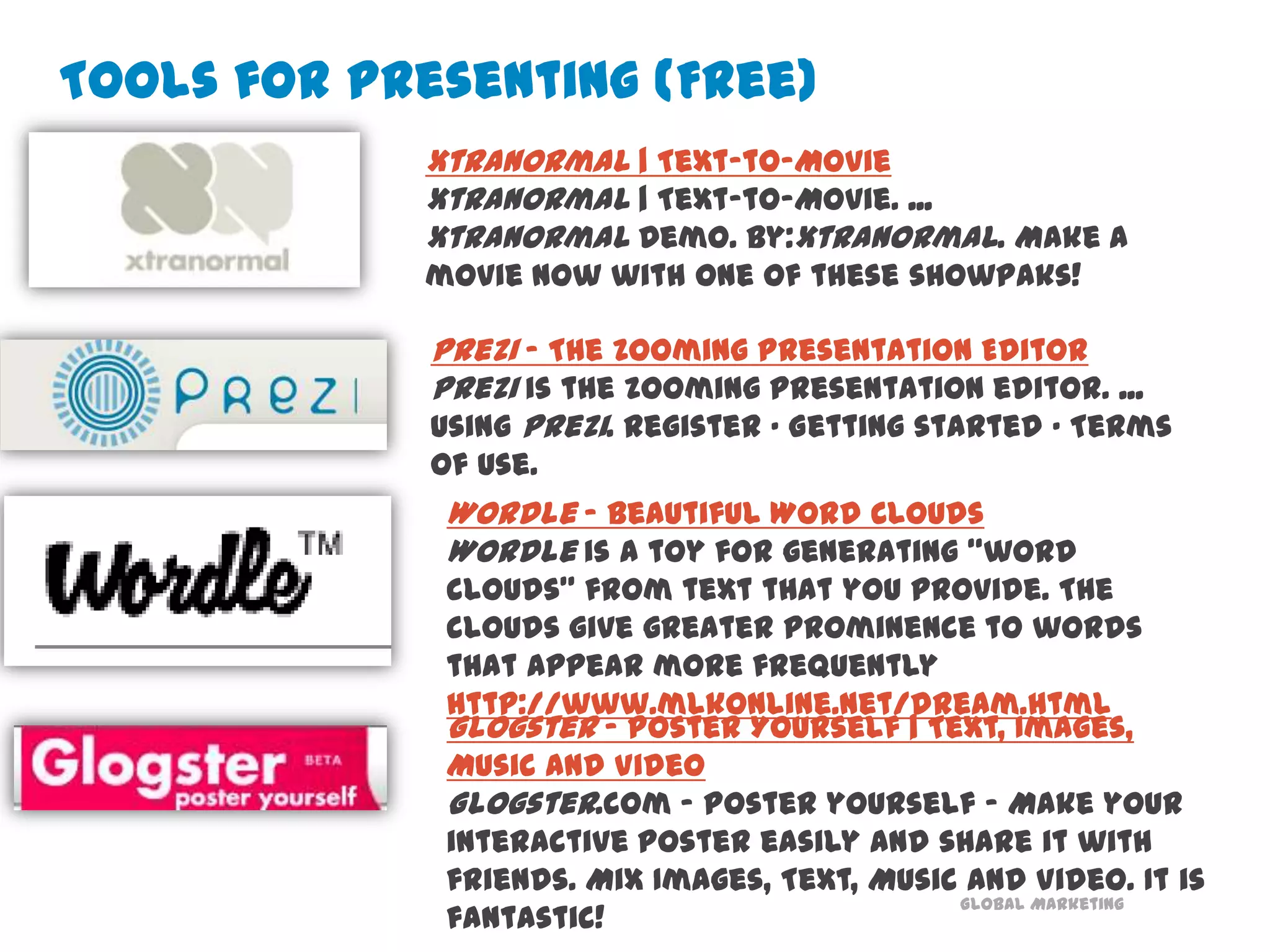
Tools for Presenting (Free)Xtranormal | Text-to-MovieXtranormal | Text-to-Movie. ...xtranormal Demo. By:xtranormal. Make a movie now with one of these showpaks!Prezi - The Zooming Presentation EditorPrezi is the zooming presentation editor. ... Using Prezi. Register · Getting started · Terms of Use.Wordle - Beautiful Word CloudsWordle is a toy for generating “word clouds” from text that you provide. The clouds give greater prominence to words that appear more frequentlyhttp://www.mlkonline.net/dream.htmlGlogster – Poster Yourself | Text, Images, Music and VideoGlogster.com - Poster yourself - Make your interactive poster easily and share it with friends. Mix Images, Text, Music and Video. It is fantastic!
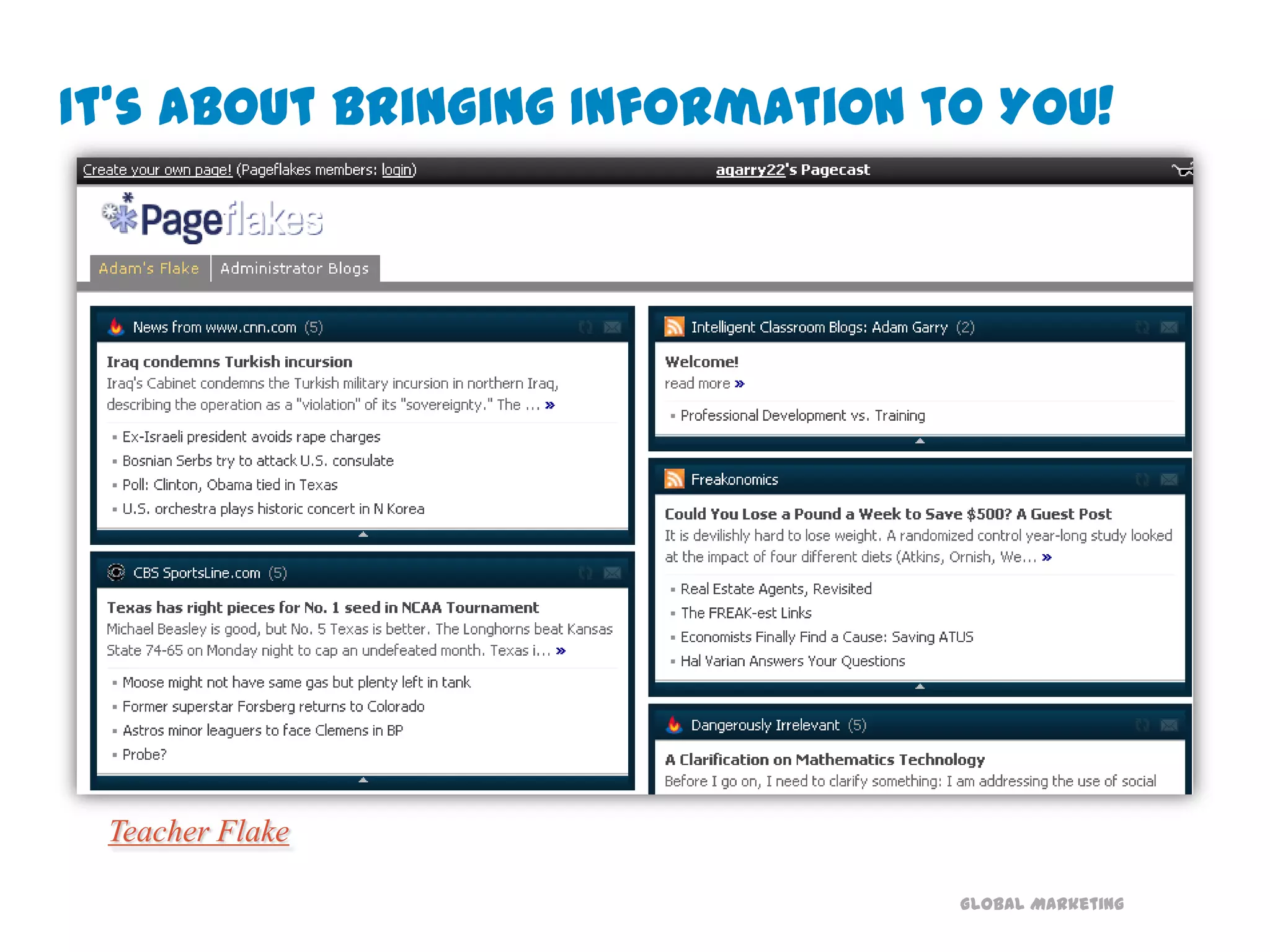
It’s About Bringing Information to You!Teacher Flake
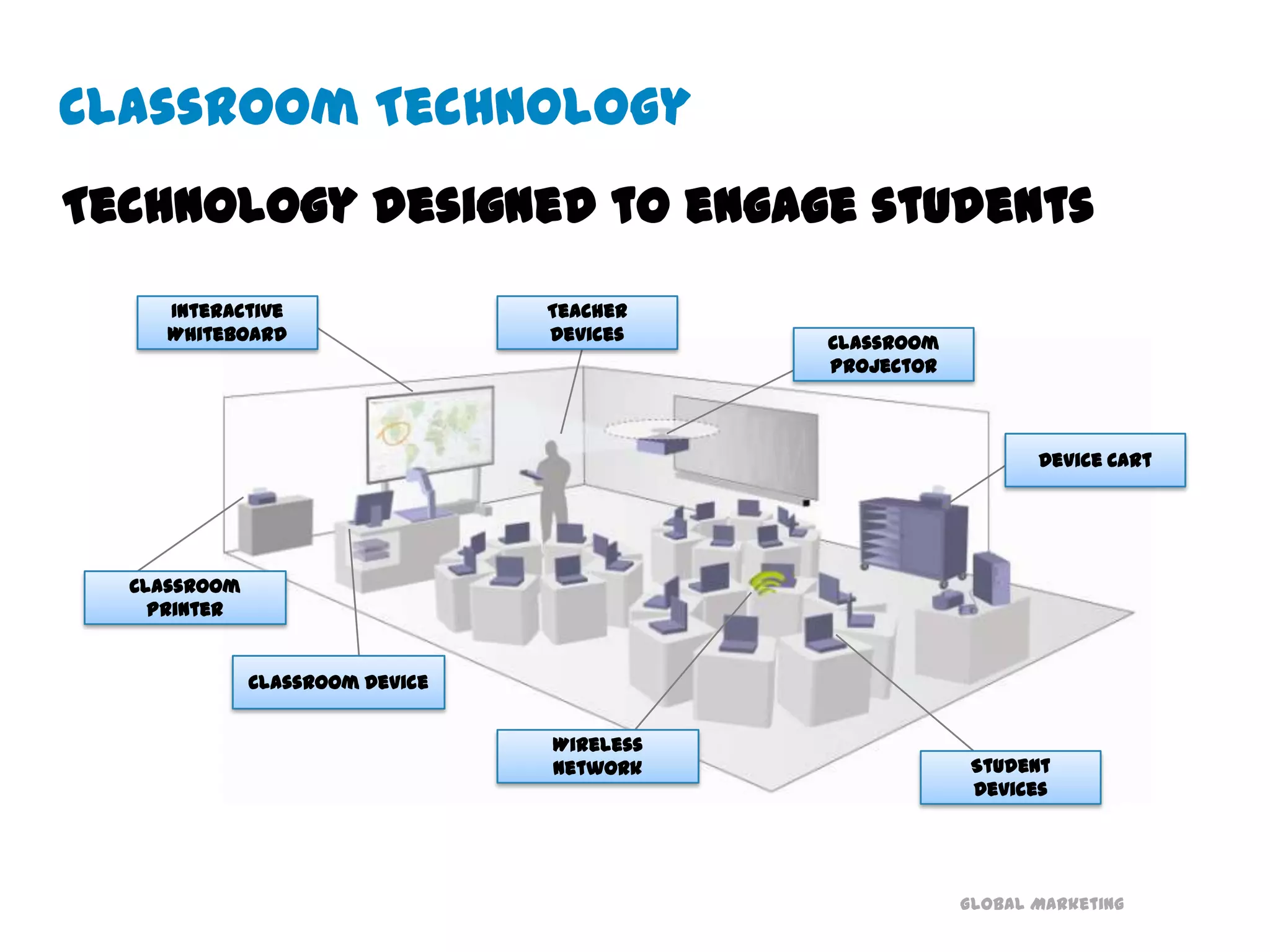
Classroom TechnologyTechnology designed to engage studentsTeacher DevicesInteractive WhiteboardClassroom ProjectorDevice CartClassroom PrinterClassroom DeviceWireless NetworkStudent Devices
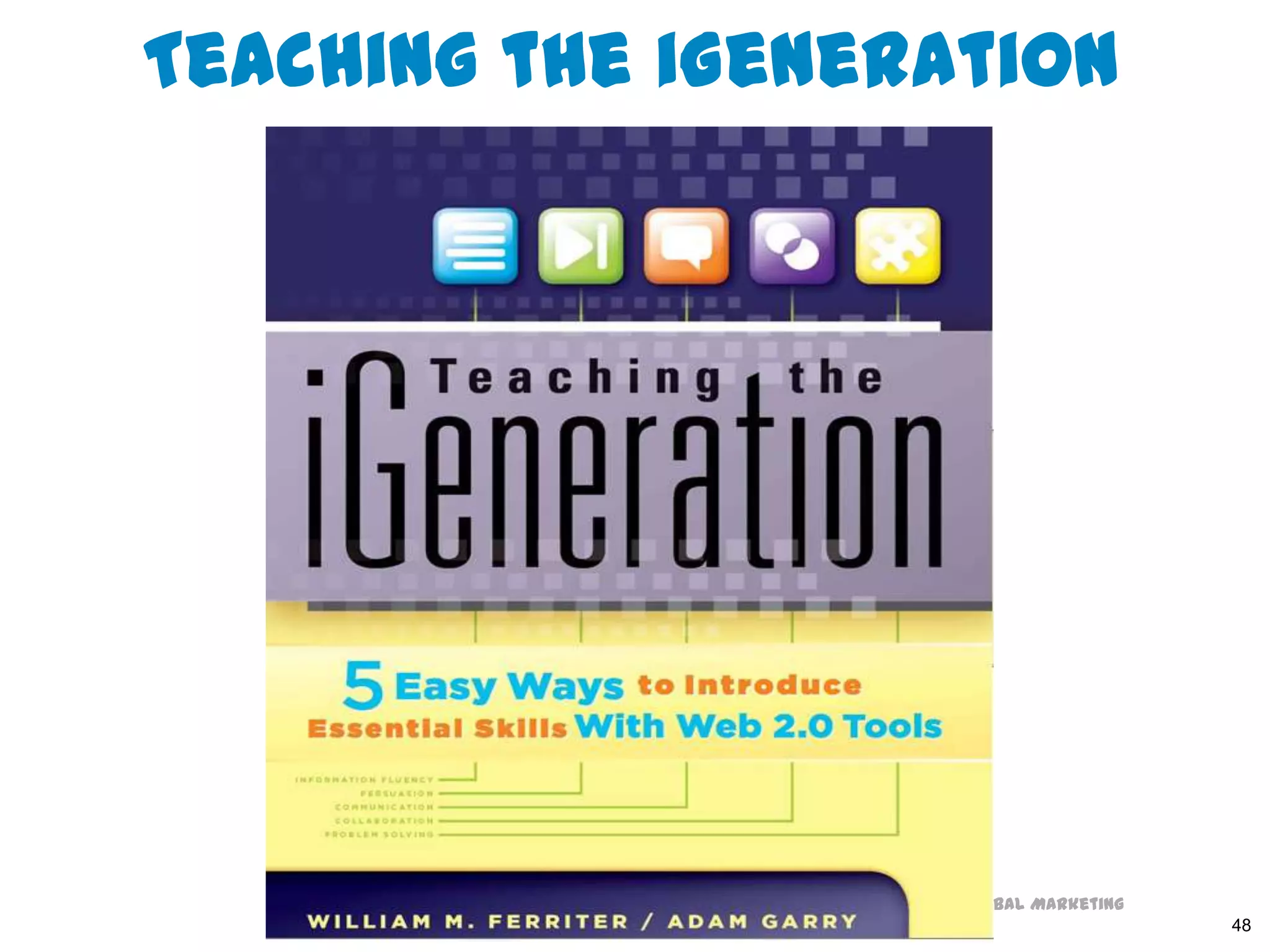
Teaching the iGeneration48
Twitter- agarry22E-mail- adam_garry@dell.comDelicious- http://del.icio.us/agarry/visionGlogster- http://agarry22.glogster.com/information/Wikihttp://nelsoncounty.pbworks.com
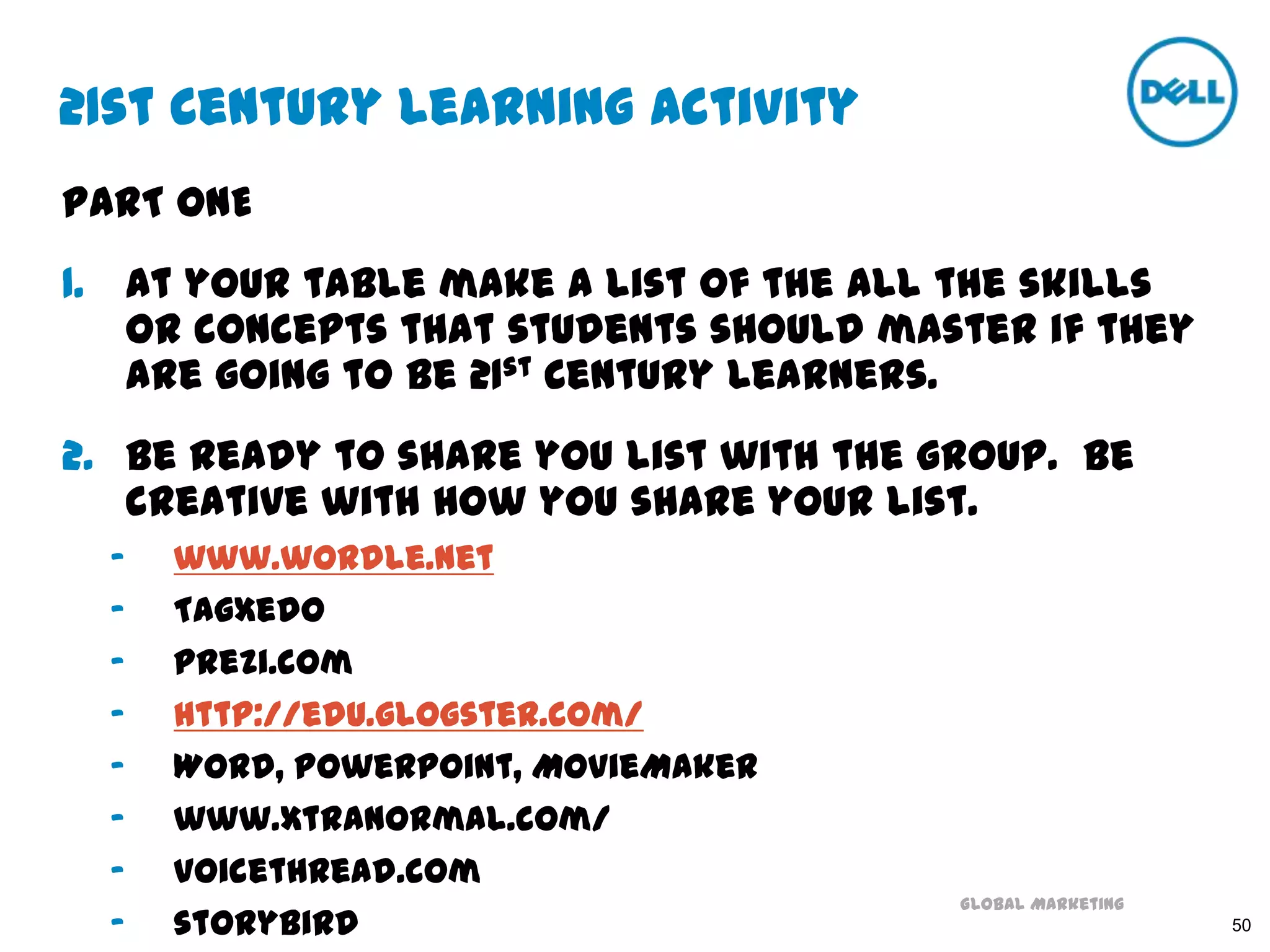
21st Century Learning ActivityPART ONEAt your table make a list of the all the skills or concepts that students should master if they are going to be 21st Century Learners.  Be ready to share you list with the group.  Be creative with how you share your list. www.wordle.netTagxedoprezi.comhttp://edu.glogster.com/Word, PowerPoint, MovieMakerwww.xtranormal.com/ voicethread.comstorybird50
XTRANORMAL51http://www.xtranormal.com/watchmovies/
Digital Story: MovieMaker52SAMPLEPRESENTATION
21st Century LearnersSkills to MasterConcepts to LearnSAMPLEPRESENTATION
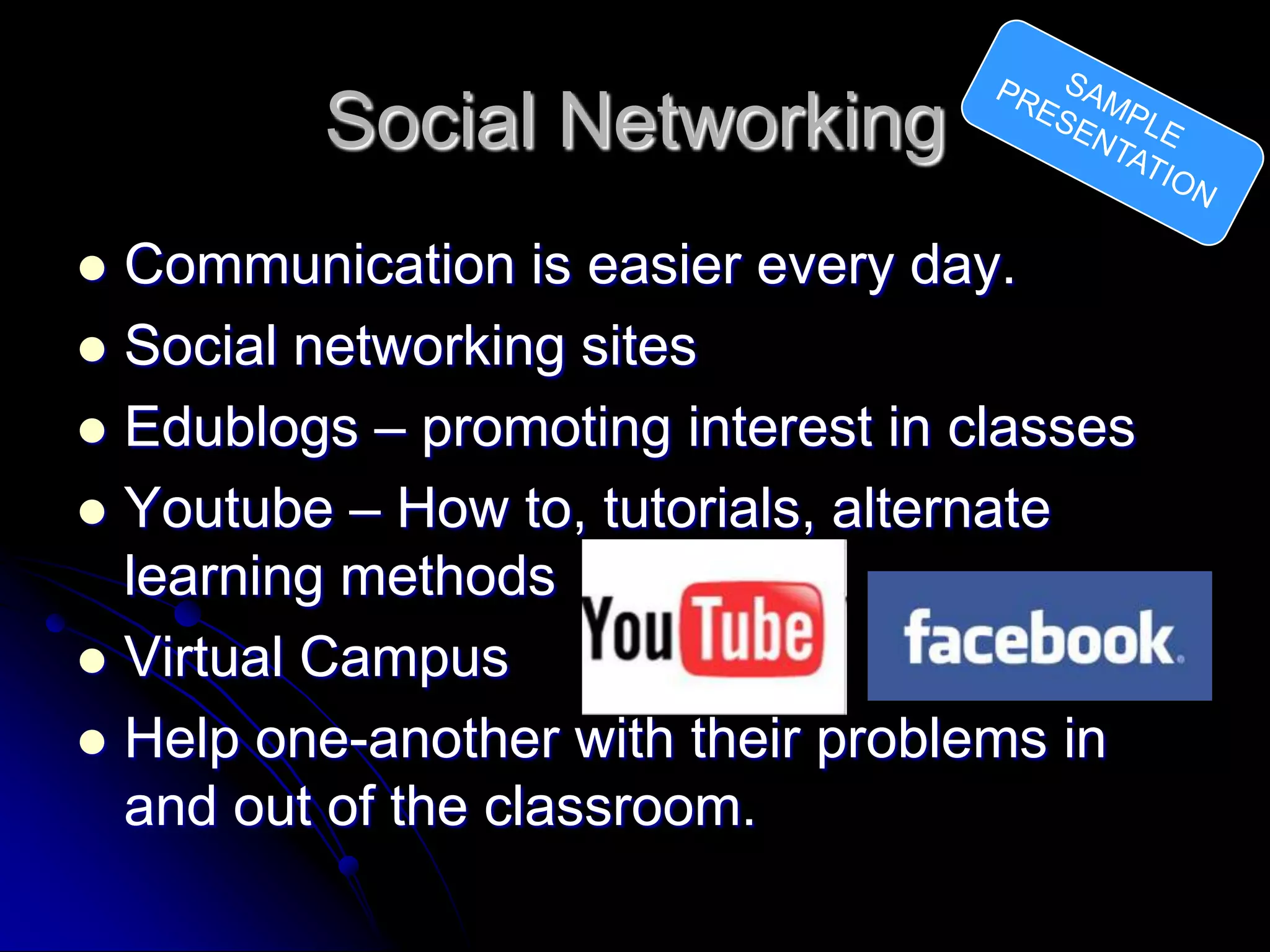
Social NetworkingCommunication is easier every day. Social networking sitesEdublogs – promoting interest in classesYoutube – How to, tutorials, alternate learning methodsVirtual CampusHelp one-another with their problems in and out of the classroom.SAMPLEPRESENTATION
SAMPLEPRESENTATION
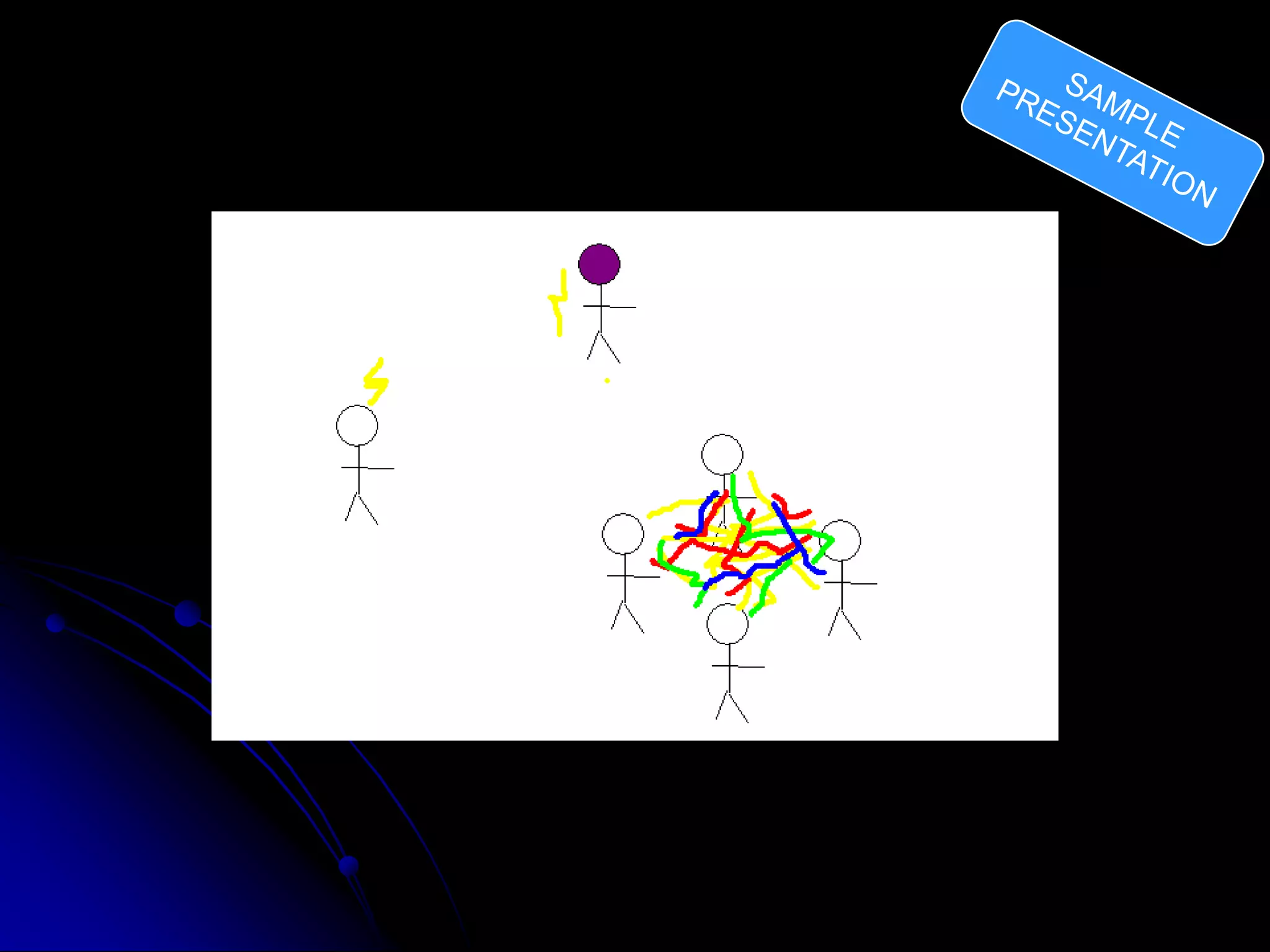
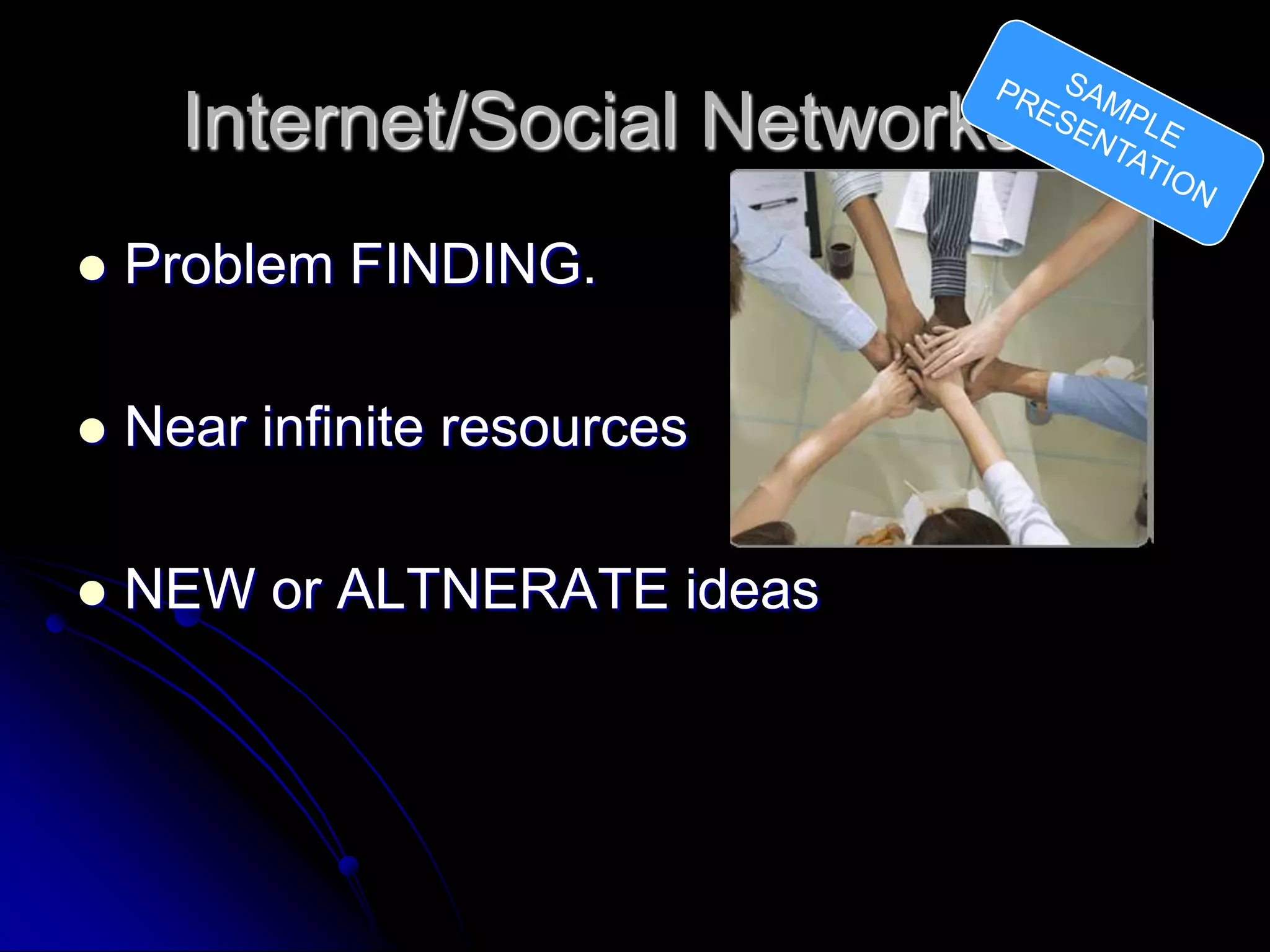
Internet/Social Networks =Problem FINDING.Near infinite resourcesNEW or ALTNERATE ideas              SAMPLEPRESENTATION
Classroom Example – ObservationFairfax County Public Schools Global Awareness 5 minute video (2009) 5th grade social studies/technology class -- Colvin Run Elem School http://www.fcps.edu/DIT/streaming/preview_socialstudies.asx57
21st Century Learning Activityhgipembina.pbworks.comPART TWOCompare the lists that you created to the TIPc document from Henrico, the 21st Century Skills website, Teaching Standards, LoTi.  Is there anything you left out? What would you add?  How will you assess these skills and concepts?To create a document for your district you can: Use one of the documents shared and make some edits Combine two documents to make one vision documentStart from scratch58
59
60
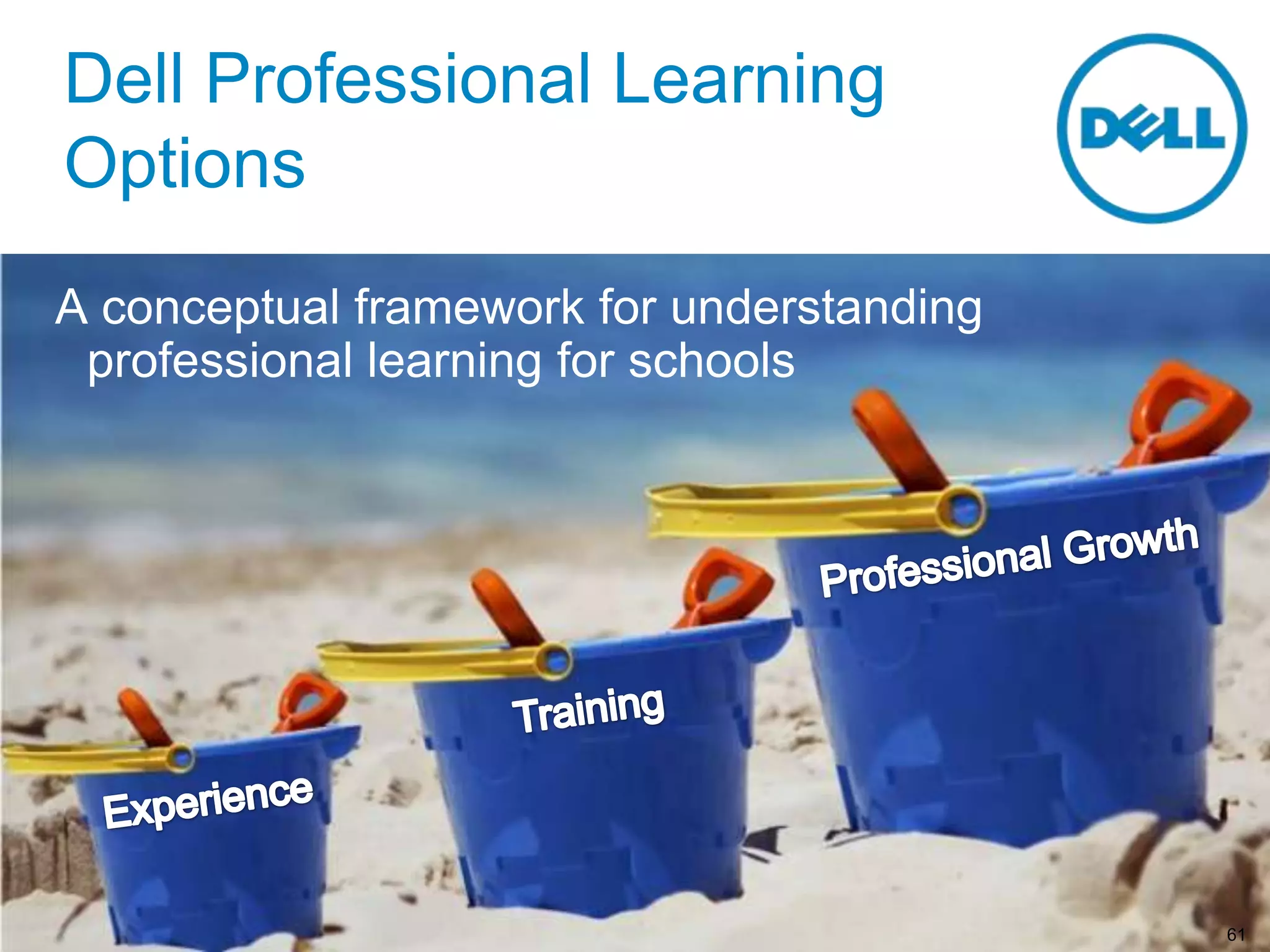
Dell Professional Learning OptionsA conceptual framework for understanding professional learning for schools Professional GrowthTrainingExperience61
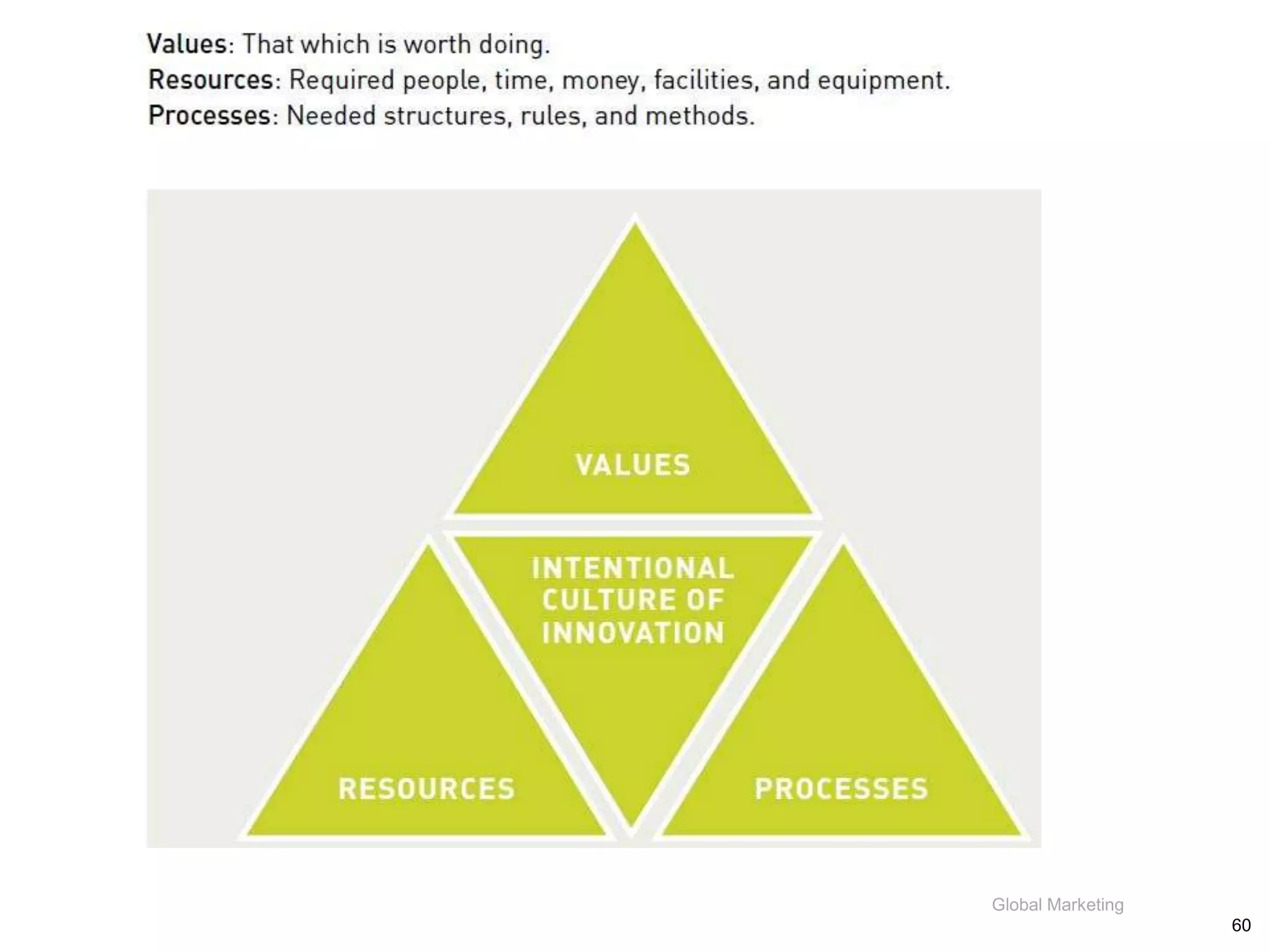
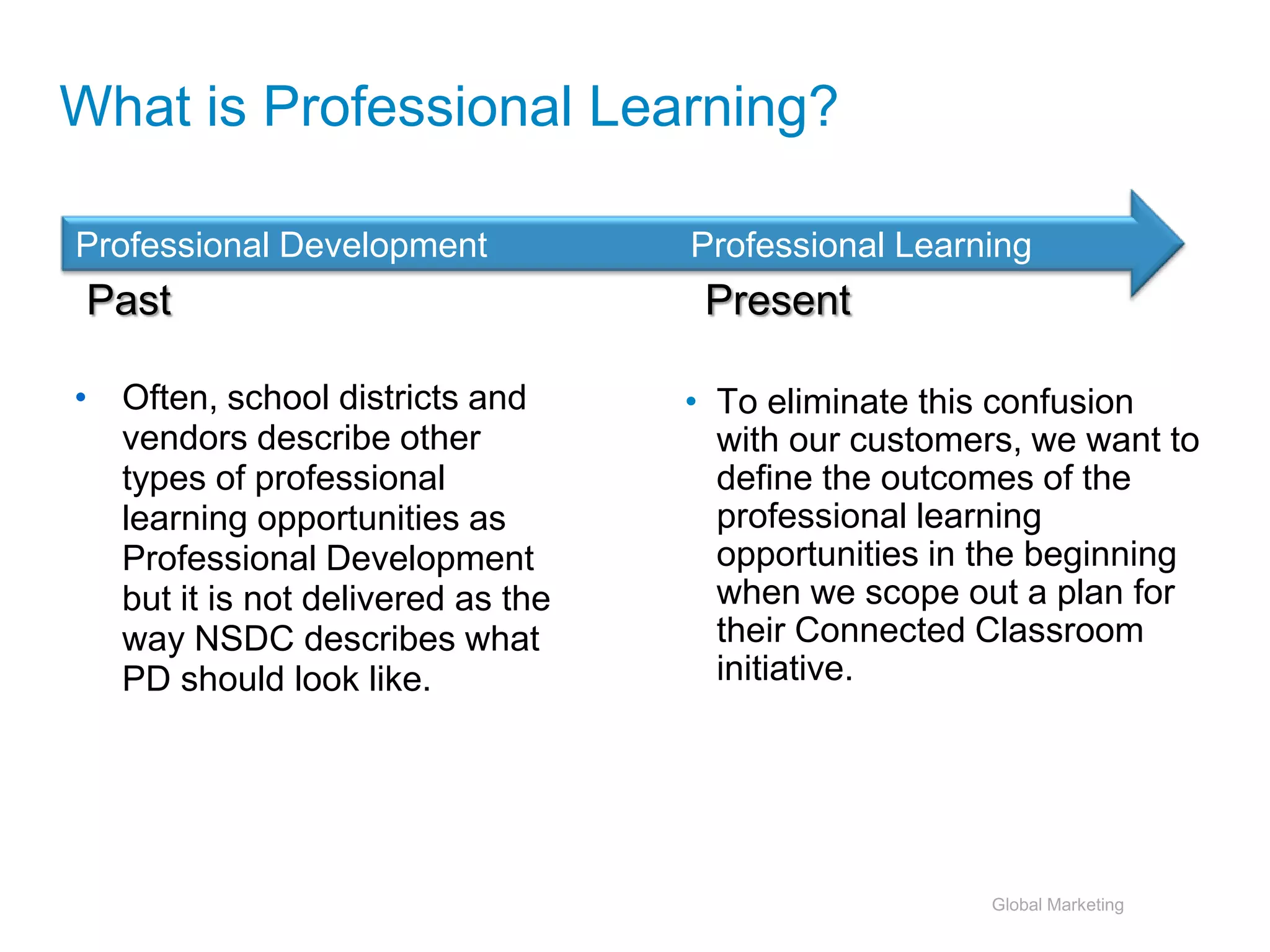
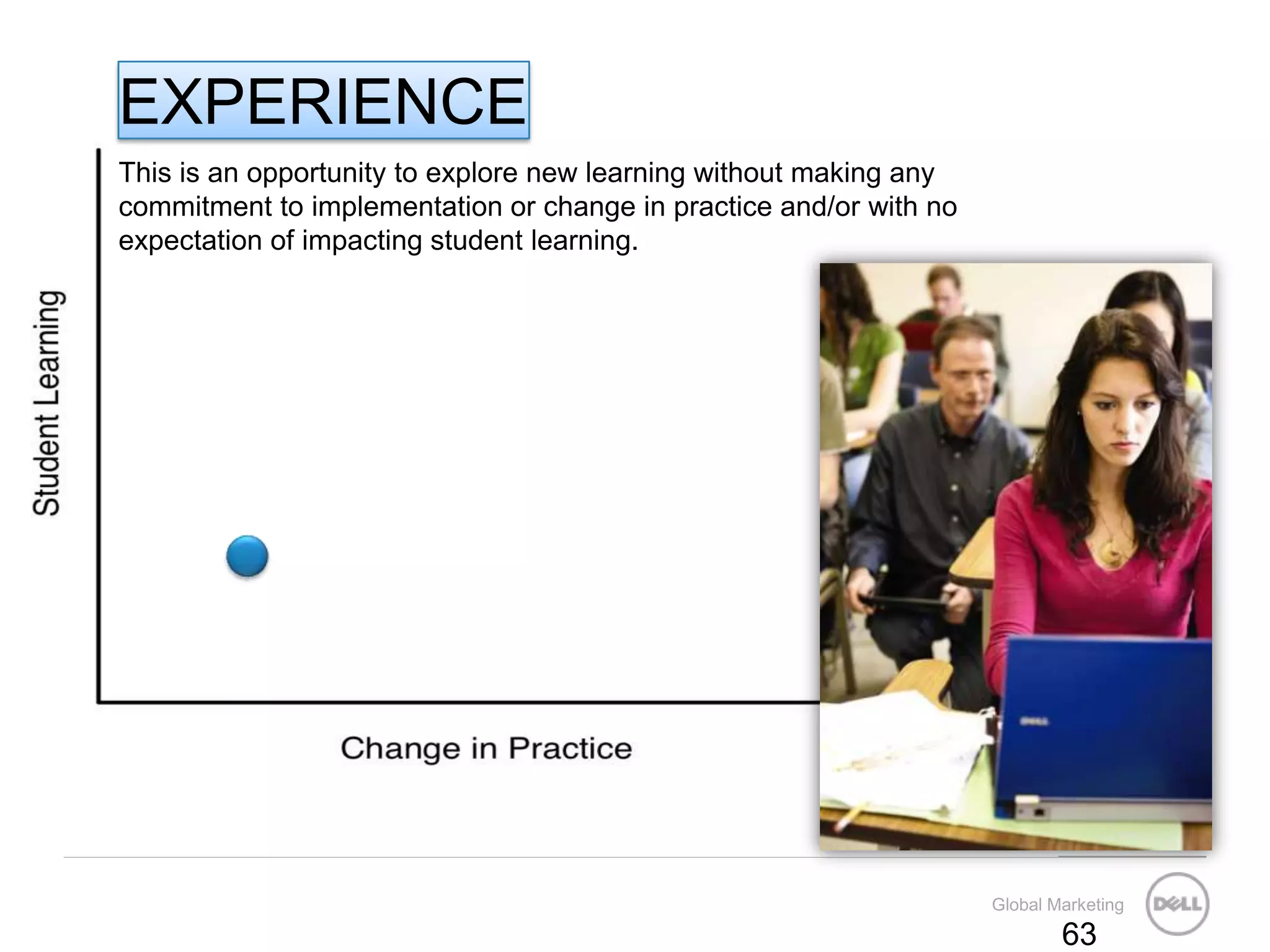
What is Professional Learning?Professional Development                     Professional LearningPastPresentTo eliminate this confusion with our customers, we want to define the outcomes of the professional learning opportunities in the beginning when we scope out a plan for their Connected Classroom initiative.Often, school districts and vendors describe other types of professional learning opportunities as Professional Development but it is not delivered as the way NSDC describes what PD should look like.EXPERIENCEThis is an opportunity to explore new learning without making any commitment to implementation or change in practice and/or with no expectation of impacting student learning.63
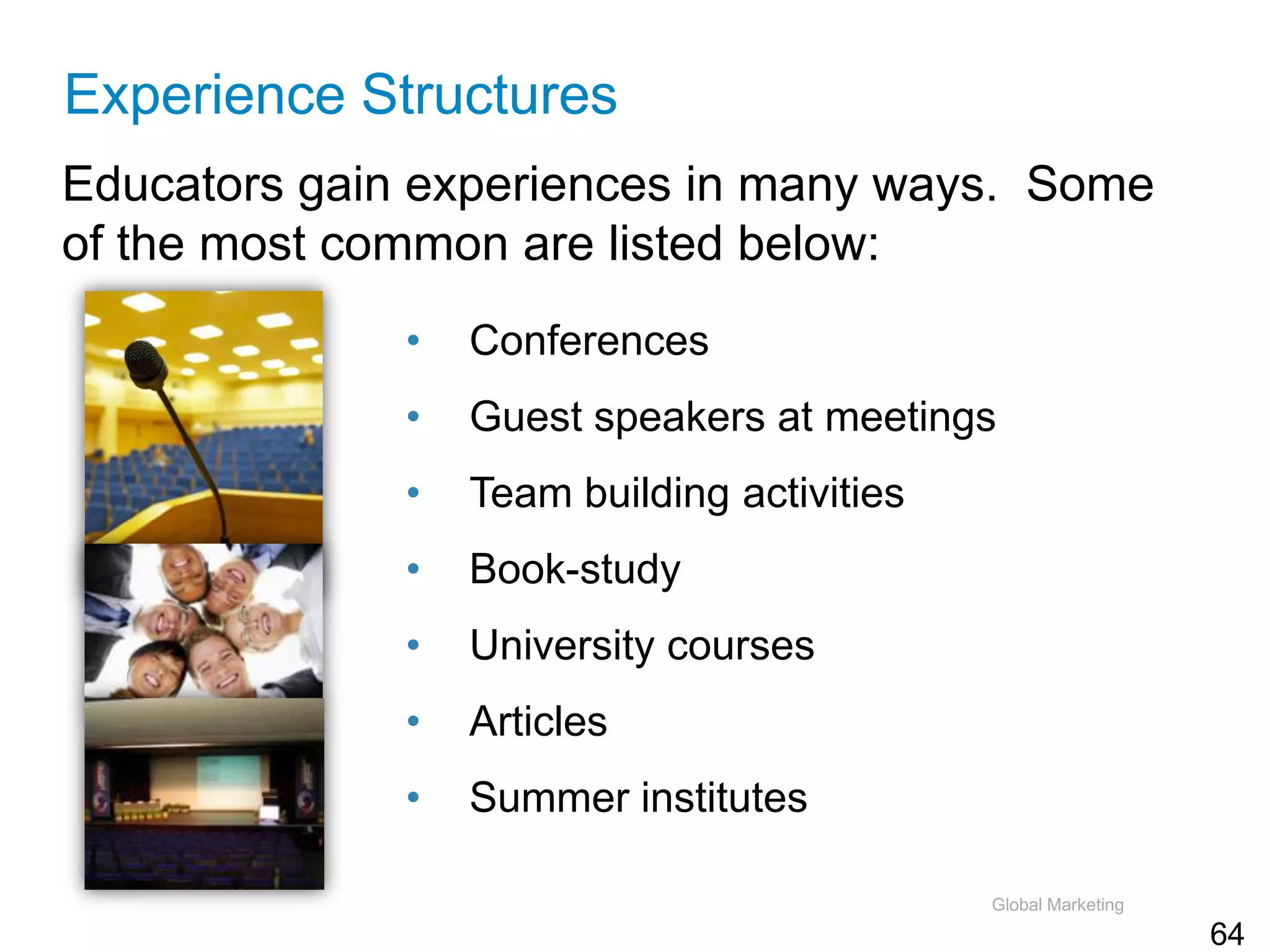
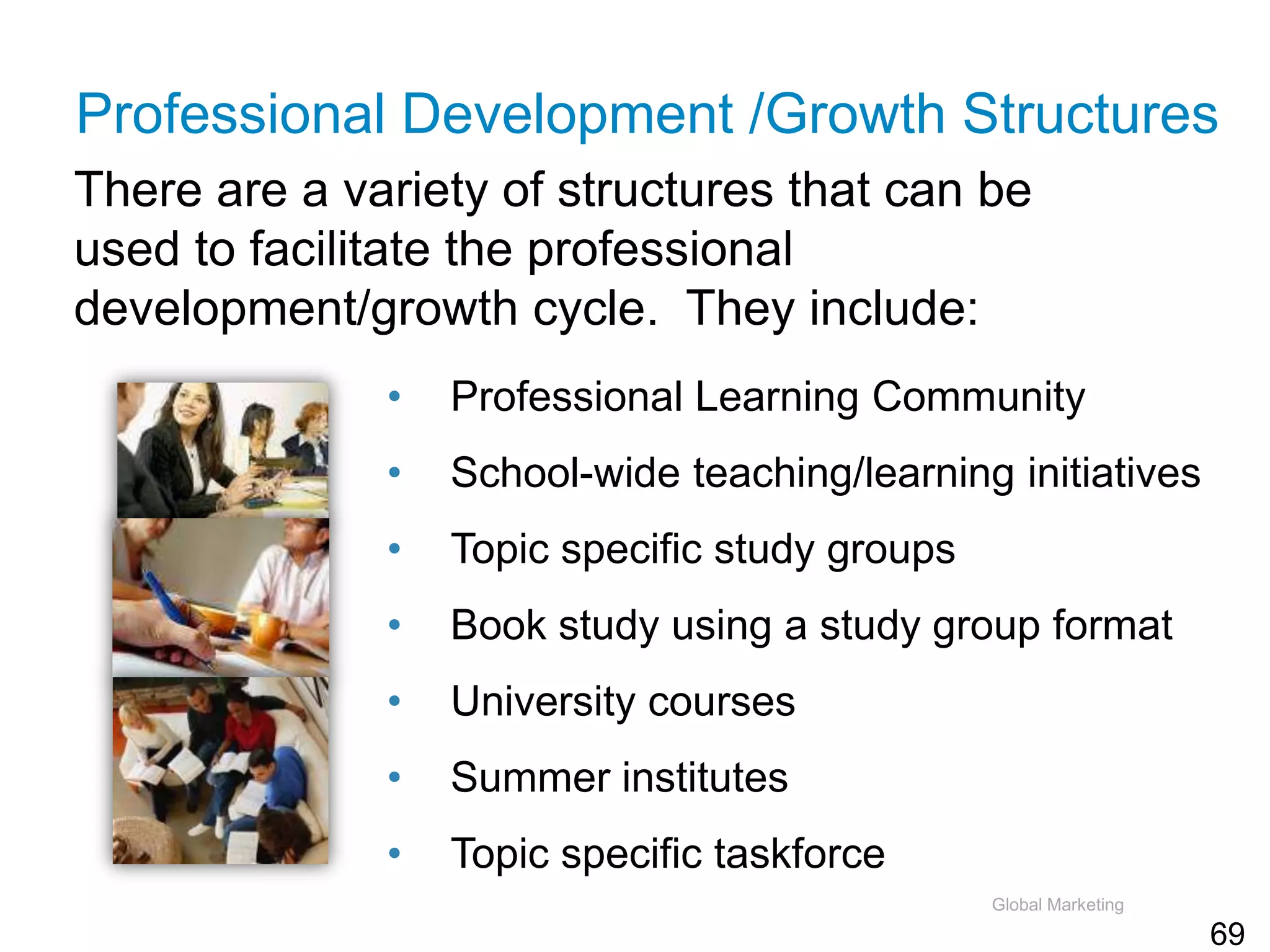
Experience StructuresEducators gain experiences in many ways.  Some of the most common are listed below:Conferences
Guest speakers at meetings
Team building activities
Book-study

Macul2

Editor's Notes

  • #5 Note takers use the back channel, post links
  • #6 K12 Education Point of View is research and background. Trends of what Dell is seeing in the marketplace.An Educational Blueprint helps us identify all the stakeholders within the teaching and learning environment, and is something we call the Learning Ecosystem. Connected Classroom Overview
  • #10 21st Century Skills slideP21 statesSkills for college and careers“Self-Direction” has been added in the last yearGreen is about core contentFramework is used by 15 statesCatalyst for the conversationProf development has fallen short because it’s at state level
  • #11 No correct answer
  • #12 What is TPACK?Technological Pedagogical Content Knowledge (TPACK) attempts to capture some of the essential qualities of knowledge required by teachers for technology integration in their teaching, while addressing the complex, multifaceted and situated nature of teacher knowledge. At the heart of the TPACK framework, is the complex interplay of three primary forms of knowledge: Content (CK), Pedagogy (PK), and Technology (TK).
  • #13 Auto industry example – laying off people but don’t have enough people to fill the future positions
  • #15 These are some of the basic and minimum skills Dell reviews for hiring employees
  • #18 You can link the mashup to the “Shining” video on trailer mashup.
  • #19 Our children are growing up in the digital age. They truly communicate and learn differently than past generations.The stats from Speak Up are striking:Students in Grades 3-5: regular use of technology outside of school  54% of both girls and boys play video or online games regularly 32% share music, videos and photos38% participate in virtual worlds (such as Webkinz, Club Penguin) 28% send emails, text messages or instant messages38% have a cell phone – 14% have smartphones Students in Grades 3-5: regular use of technology for schoolwork  34% take tests online7% have taken an online class52% play educational games24% check on their own grades51% use the Internet for research 33% practice writing   Students in Grades 6-12: regular use of technology outside of school  38% upload/download videos, podcasts and photos 23% create new work – mashup47% communicate via email/IM/Texting – additional 27% communicate through their social networking site40% update their social networking site20% use web tools to write collaboratively with others71% have a cell phone – 26% have a smartphone Students in Grades 6-12: regular use of technology for schoolwork 62% access grades and class information59% create slides shows, videos and web pages for assignments 32% take tests online15% use an online plagiarism checker 38% use their social networking site to collaborate with classmates on school projects 29% use online textbooks    Attribution: © Project TomorrowSpeak Up 2008 National Data Findings Speak Up is an annual research project of Project Tomorrow, a national education nonprofit organization (www.tomorrow.org) All rights reserved.    Yet, many of our schools are designed for the industrial age.-------------------Note: Re online games – includes portable and/or console players
  • #20 http://www.links999.net/utopia/education.htmlDon Knezek, chief executive officer of the International Society for Technology in Education (ISTE), says the “digital divide,” the gap between people with and without effective access to digital technology and its impact on their earnings, now also is seen as a “learning divide.” That means, he says, that “kids don’t have the opportunity to learn, as well as earn,” if they don’t have digital skills. While students formerly had the classroom teacher as their “sole guide,” they now can use those skills, as well as new digital tools, to connect and interact with experts around the world, and “that makes so much difference in helping kids learn and advance and stay engaged,” Knezek says.
  • #21 The impact is that the “Connected Generation” typically has to disconnect when they enter the classroom. This concept of disconnecting is a concern for many teachers, who want to meet children where they are – and they are digital learners.
  • #29 If you printed the internet it would take 57,000 years to read it and that is reading 24/7.Source: http://www.cartridgesave.co.uk/news/if-you-printed-the-internet/
  • #30 If you printed the internet it would take 57,000 years to read it and that is reading 24/7.Source: http://www.cartridgesave.co.uk/news/if-you-printed-the-internet/
  • #31 With a single ink jet printer it would take 3,805 years to print the internet.Source: http://www.cartridgesave.co.uk/news/if-you-printed-the-internet/
  • #33 By Number 17, NYC and Nayeli E. RodriguezSources: Blogpulse, Google Official History, Reality Blurred, The NPD Group, NBC, Bowker, USPS, The Radicati Group, Forbes, World Clown Association, Nielsen, Newspaper Association of America, Digital Music News, Apple, Itunes (launched in 2001)Image credits, top to bottom, left to right: courtesy of Nintendo, Boris Roessler—DPA-Corbis, Corbis, courtesy of Nintendo, Miranda Penn Turin—courtesy of USA Network (2), Chairman Ting Creative—Getty Images, no credit, Martin Lee—Alamy, Nation Wong—Getty Images, Laurent Davoust-Age Fotostock, Fox, Don Farrall—Getty Images, Winston Davidian—Getty Images, no credit (5), no credit, Michael Ochs Archives—Getty Images
  • #34 By Number 17, NYC and Nayeli E. RodriguezSources: Blogpulse, Google Official History, Reality Blurred, The NPD Group, NBC, Bowker, USPS, The Radicati Group, Forbes, World Clown Association, Nielsen, Newspaper Association of America, Digital Music News, Apple, Itunes (launched in 2001)Image credits, top to bottom, left to right: courtesy of Nintendo, Boris Roessler—DPA-Corbis, Corbis, courtesy of Nintendo, Miranda Penn Turin—courtesy of USA Network (2), Chairman Ting Creative—Getty Images, no credit, Martin Lee—Alamy, Nation Wong—Getty Images, Laurent Davoust-Age Fotostock, Fox, Don Farrall—Getty Images, Winston Davidian—Getty Images, no credit (5), no credit, Michael Ochs Archives—Getty Images
  • #35 By Number 17, NYC and Nayeli E. RodriguezSources: Blogpulse, Google Official History, Reality Blurred, The NPD Group, NBC, Bowker, USPS, The Radicati Group, Forbes, World Clown Association, Nielsen, Newspaper Association of America, Digital Music News, Apple, Itunes (launched in 2001)Image credits, top to bottom, left to right: courtesy of Nintendo, Boris Roessler—DPA-Corbis, Corbis, courtesy of Nintendo, Miranda Penn Turin—courtesy of USA Network (2), Chairman Ting Creative—Getty Images, no credit, Martin Lee—Alamy, Nation Wong—Getty Images, Laurent Davoust-Age Fotostock, Fox, Don Farrall—Getty Images, Winston Davidian—Getty Images, no credit (5), no credit, Michael Ochs Archives—Getty Images
  • #37 Online survey conducted blind and deployed by MMS Education to 82,900 randomly selected educators, emails provided by MCH:46,600 teachers25,600 principals10,700 library/media specialists•1.55% response rate or 1,284 total responses:601 Teachers (47% of responders) -1.29% response381 Principals (30% of responders) -1.49% response262 Librarians (20% of responders) -2.45 % responseDemographicsGenderFemale75%Male25%Age18-3414%35-5457%55+30%Years in education2-10 yrs23%11-20 yrs36%21+ yrs42%Grade levelElementary46%Middle School30%High School34%District metro-statusRural14%Suburban52%Urban25%Unknown9%States48 states + D
  • #39 The impact is that the “Connected Generation” typically has to disconnect when they enter the classroom. This concept of disconnecting is a concern for many teachers, who want to meet children where they are – and they are digital learners.
  • #40 The impact is that the “Connected Generation” typically has to disconnect when they enter the classroom. This concept of disconnecting is a concern for many teachers, who want to meet children where they are – and they are digital learners.
  • #42 Wouldn’t it be great to use the tech to go deeper?WolframAlpha(x-2)(x+3)FOILCould we start with the answer and where does if fit into the real world?Bing will have it built in, Office 2010 will have it built in 3DIs this cheating?
  • #64 This is an opportunity to explore new learning without making any commitment to implementation or change in practice and/or with no expectation of impacting student learning.
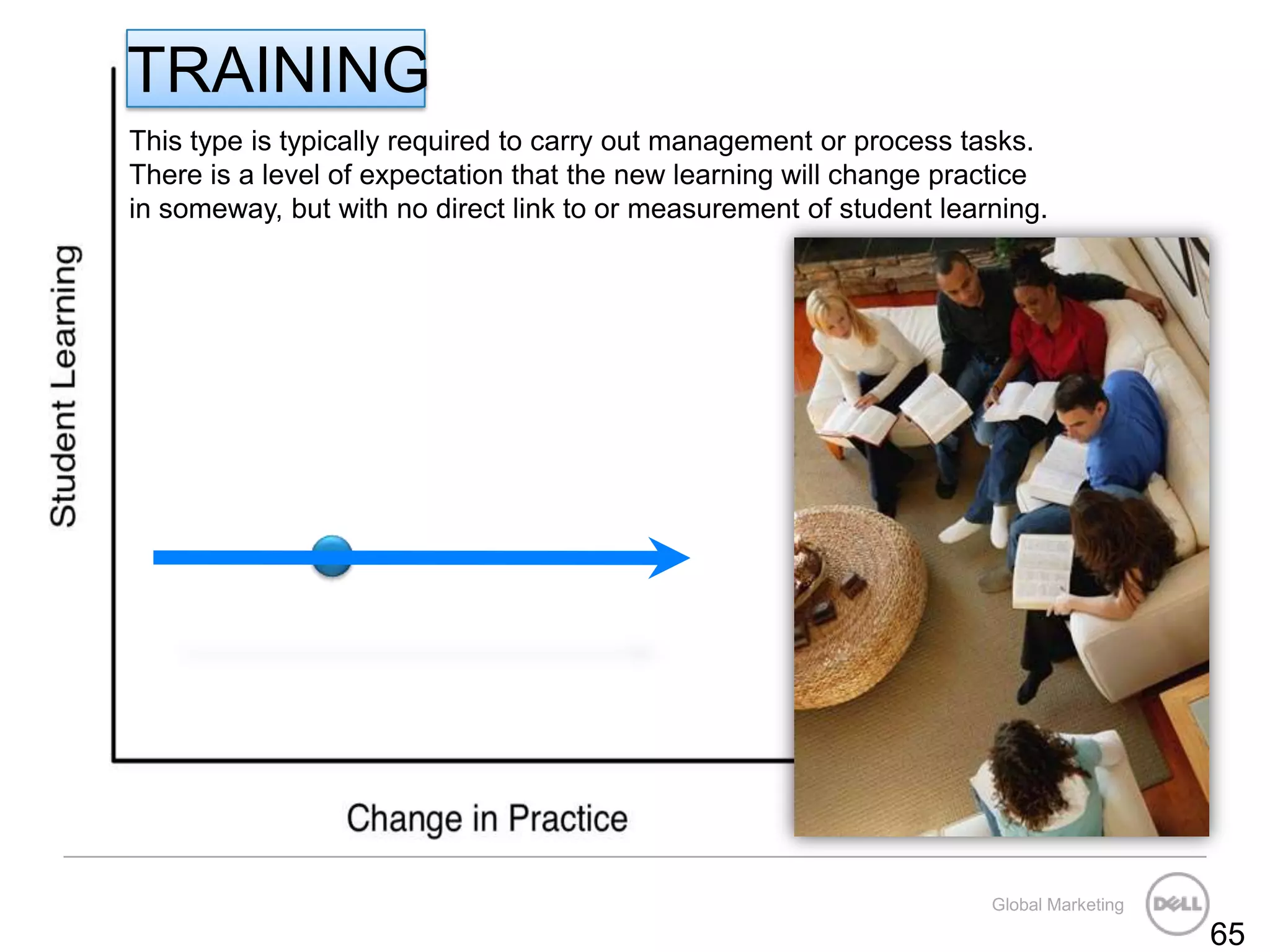
  • #66 This type is typically required to carry out management or process tasks. There is a level of expectation that the new learning will change practice in someway, but with no direct link to or measurement of student learning. 
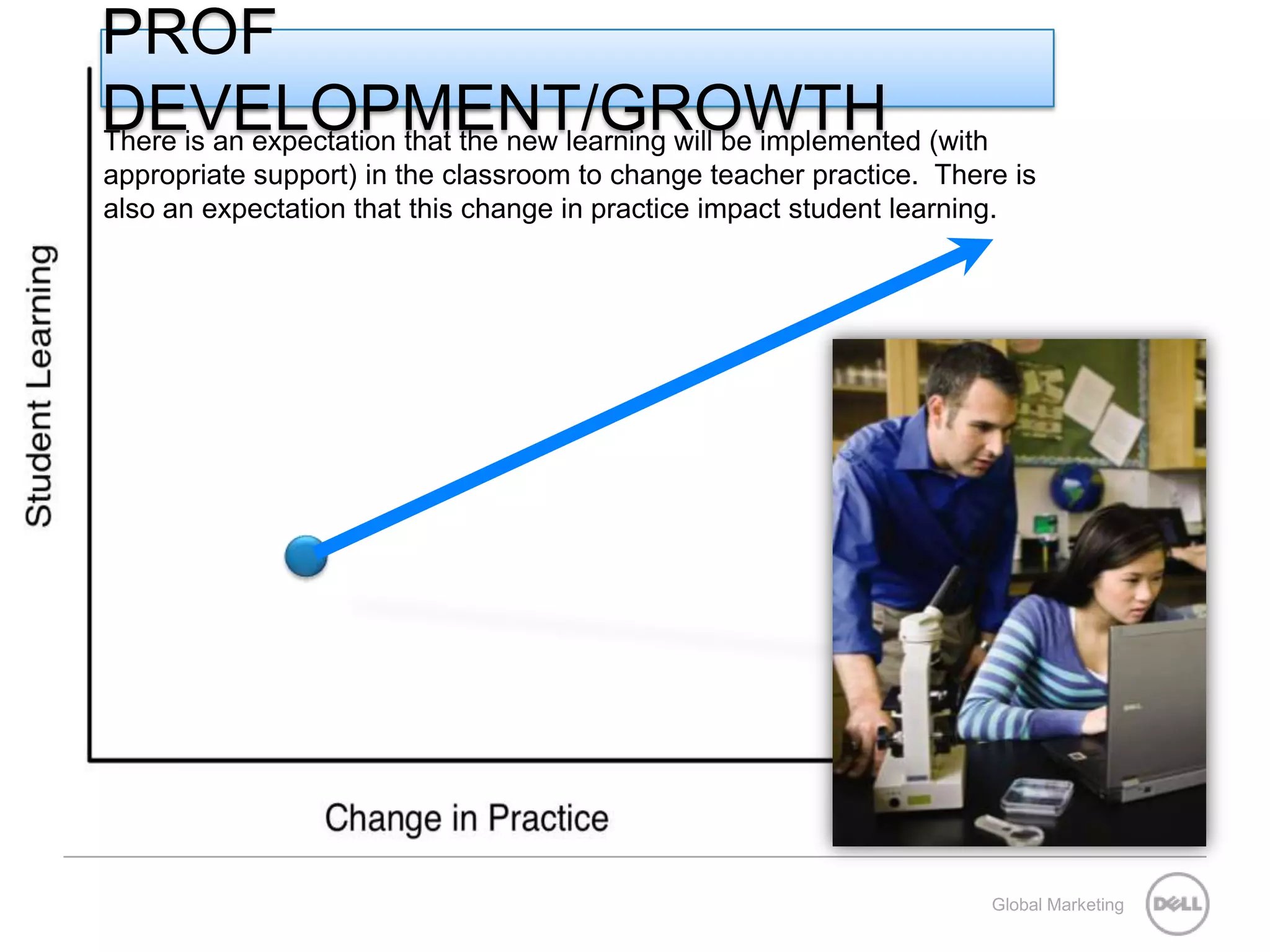
  • #68 There is an expectation that the new learning will be implemented (with appropriate support) in the classroom to change teacher practice. There is also an expectation that this change in practice impact student learning.
  • #69 NSDC-National Staff Development Council
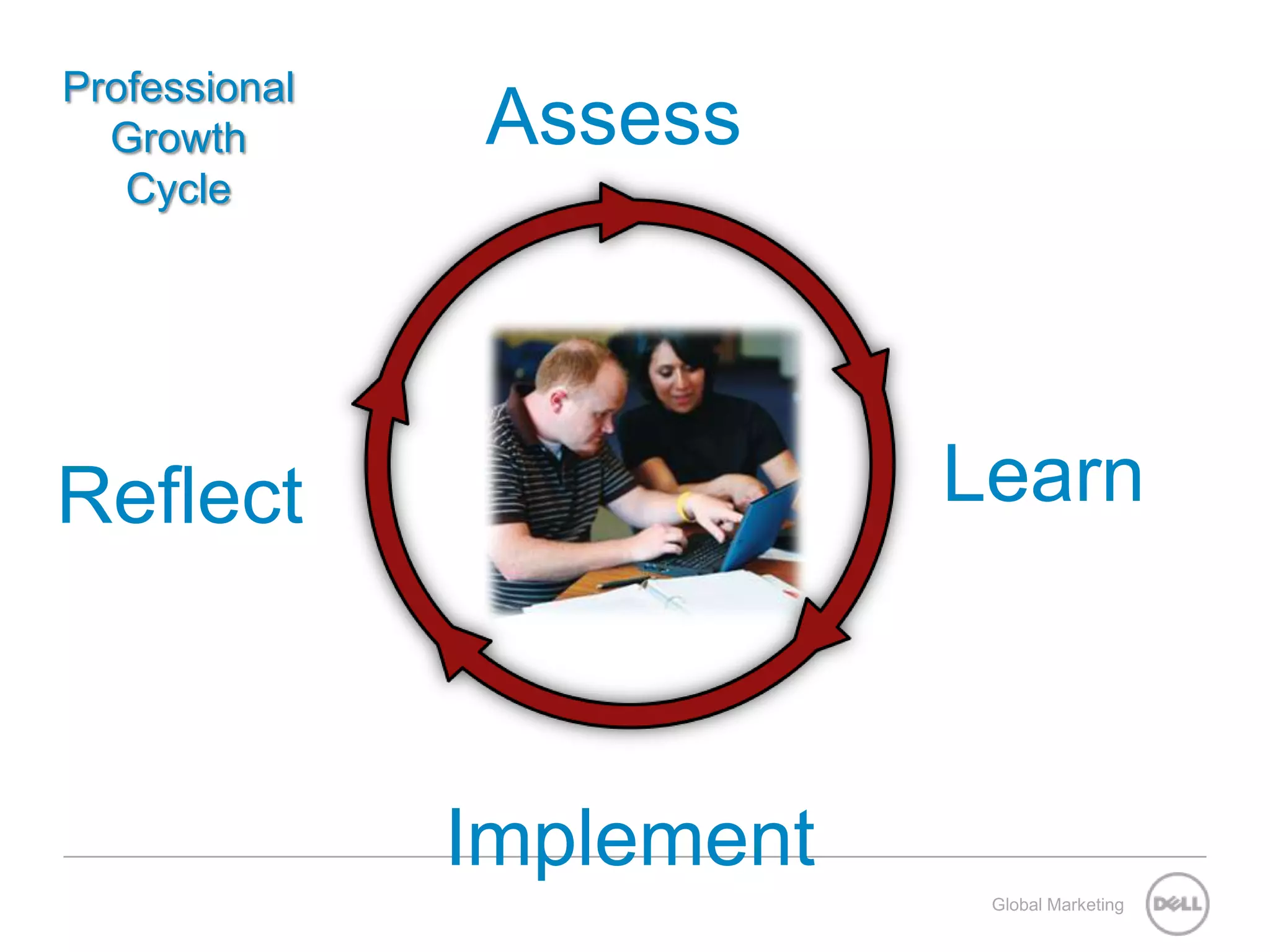
  • #71 Professional Growth Cycle-In order to both change practice and impact student learning, the following cycle should be implemented:Assess: Review of data to identify the need for improved student learning.Learn: Engage in new learning to meet the need.Implement: Receive support for implementing new learning.Reflect: Continually collect data and monitor outcomes of implementation of the new learning to determine if it is meeting the goal.Assess: Revisit the data to identify further need for improved student learning. 
  • #73 http://www.edweek.org/ew/articles/2010/11/10/11pd_overview.h30.html?tkn=LMPFsi7VIoV535kJzegnCBndz7r4AEl3Wvj9&intc=es
  • #74 http://www.edweek.org/ew/articles/2010/11/10/11pd_overview.h30.html?tkn=LMPFsi7VIoV535kJzegnCBndz7r4AEl3Wvj9&intc=es
  • #75 http://www.edweek.org/ew/articles/2010/11/10/11pd_overview.h30.html?tkn=LMPFsi7VIoV535kJzegnCBndz7r4AEl3Wvj9&intc=es