Insulin Therapy
Primary Care Challenges
and Solutions
Prof.
Ibrahim El Ebrashy
Head Of The Diabetes & Endocrinology Center
Cairo University
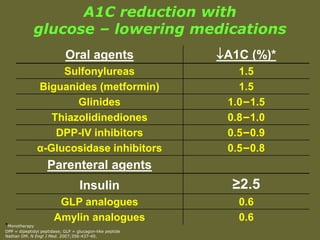
A1C reduction with
glucose – lowering medications
Oral agents A1C (%)*
Sulfonylureas 1.5
Biguanides (metformin) 1.5
Glinides 1.0–1.5
Thiazolidinediones 0.8–1.0
DPP-IV inhibitors 0.5–0.9
α-Glucosidase inhibitors 0.5–0.8
Parenteral agents
Insulin ≥2.5
GLP analogues 0.6
Amylin analogues 0.6
*Monotherapy
DPP = dipeptidyl peptidase; GLP = glucagon-like peptide
Nathan DM. N Engl J Med. 2007;356:437-40.
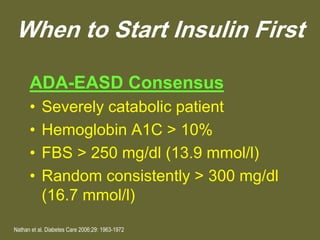
When to Start Insulin First
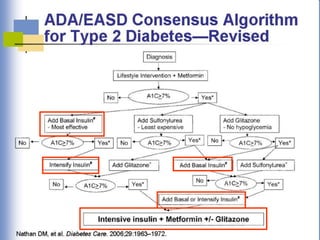
ADA-EASD Consensus
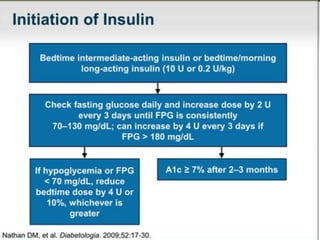
• Severely catabolic patient
• Hemoglobin A1C > 10%
• FBS > 250 mg/dl (13.9 mmol/l)
• Random consistently > 300 mg/dl
(16.7 mmol/l)
Nathan et al. Diabetes Care 2006;29: 1963-1972
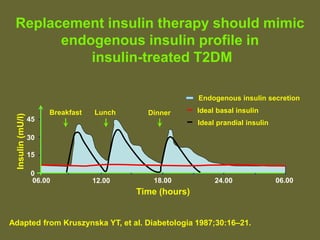
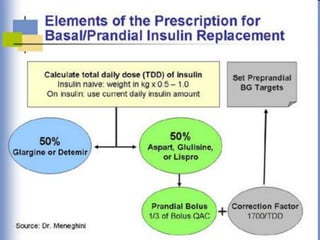
Replacement insulin therapy should mimic
endogenous insulin profile in
insulin-treated T2DM
Insulin(mU/l)
06.00 12.00 24.0018.00
0
15
30
45
06.00
Breakfast Lunch Dinner
Endogenous insulin secretion
Ideal basal insulin
Ideal prandial insulin
Adapted from Kruszynska YT, et al. Diabetologia 1987;30:16–21.
Time (hours)
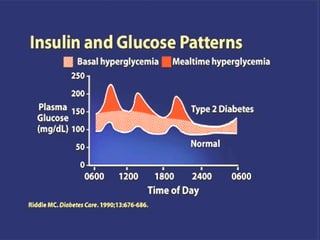
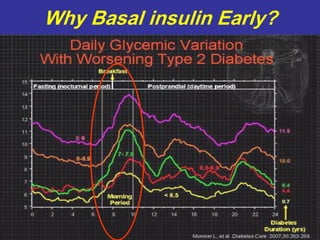
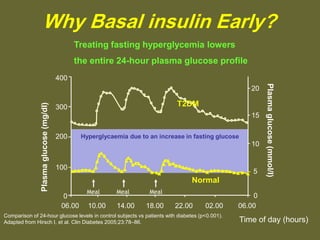
Why Basal insulin Early?
Comparison of 24-hour glucose levels in control subjects vs patients with diabetes (p<0.001).
Adapted from Hirsch I, et al. Clin Diabetes 2005;23:78–86. Time of day (hours)
400
300
200
100
0
06.00 06.0010.00 14.00 18.00 22.00 02.00
Plasmaglucose(mg/dl)
Normal
Meal Meal Meal
20
15
10
5
0
Plasmaglucose(mmol/l)
Why Basal insulin Early?
Hyperglycaemia due to an increase in fasting glucose
T2DM
Treating fasting hyperglycemia lowers
the entire 24-hour plasma glucose profile
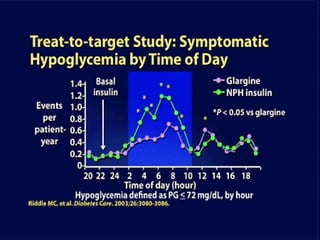
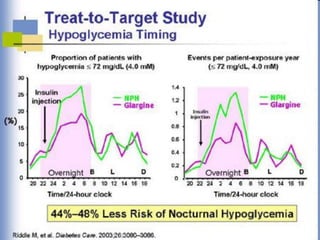
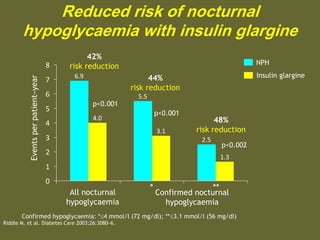
Reduced risk of nocturnal
hypoglycaemia with insulin glargine
NPH
Insulin glargine
p<0.001
p<0.002
Eventsperpatient–year
All nocturnal
hypoglycaemia
Confirmed nocturnal
hypoglycaemia
p<0.001
* **
Confirmed hypoglycaemia: *4 mmol/l (72 mg/dl); **3.1 mmol/l (56 mg/dl)
Riddle M. et al. Diabetes Care 2003;26:3080–6.
44%
risk reduction
42%
risk reduction
48%
risk reduction
6.9
5.5
2.5
4.0
3.1
1.3
0
1
2
3
4
5
6
7
8
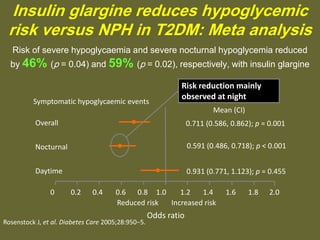
Risk of severe hypoglycaemia and severe nocturnal hypoglycemia reduced
by 46% (p = 0.04) and 59% (p = 0.02), respectively, with insulin glargine
Insulin glargine reduces hypoglycemic
risk versus NPH in T2DM: Meta analysis
0.931 (0.771, 1.123); p = 0.455
0.591 (0.486, 0.718); p < 0.001
0.711 (0.586, 0.862); p = 0.001
Odds ratio
0 0.2 0.4 0.6 0.8 1.0 1.2 1.4 1.6 1.8 2.0
Overall
Nocturnal
Daytime
Symptomatic hypoglycaemic events
Increased riskReduced risk
Risk reduction mainly
observed at night
Rosenstock J, et al. Diabetes Care 2005;28:950−5.
Mean (CI)
28
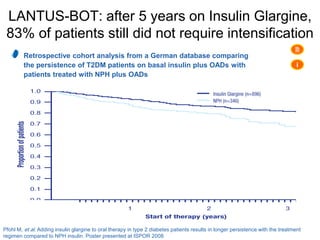
LANTUS-BOT: after 5 years on Insulin Glargine,
83% of patients still did not require intensification

Retrospective cohort analysis from a German database comparing
the persistence of T2DM patients on basal insulin plus OADs with
patients treated with NPH plus OADs
i
Pfohl M, et al. Adding insulin glargine to oral therapy in type 2 diabetes patients results in longer persistence with the treatment
regimen compared to NPH insulin. Poster presented at ISPOR 2008
29
Schreiber SA et al. Diabetes Obes Metab 2007;9(1):31–38; Schreiber SA, et al. Diabetes Technol Ther 2008;10(2):121–127
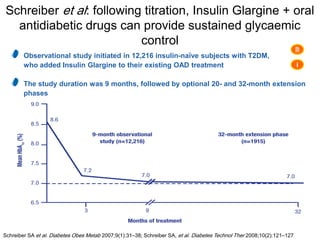
Schreiber et al: following titration, Insulin Glargine + oral
antidiabetic drugs can provide sustained glycaemic
control
Observational study initiated in 12,216 insulin-naïve subjects with T2DM,
who added Insulin Glargine to their existing OAD treatment
The study duration was 9 months, followed by optional 20- and 32-month extension
phases

i
30
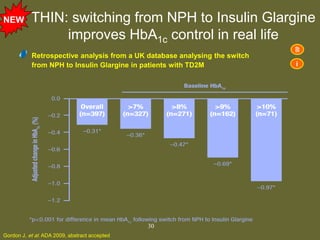
THIN: switching from NPH to Insulin Glargine
improves HbA1c control in real life
Gordon J, et al. ADA 2009, abstract accepted
Retrospective analysis from a UK database analysing the switch
from NPH to Insulin Glargine in patients with TD2M

i
NEW
At The End
Education For Our
Patients Is A Must
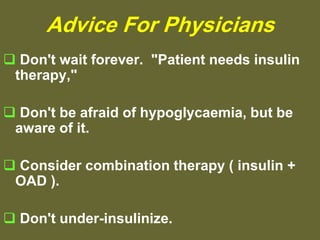
Advice For Physicians
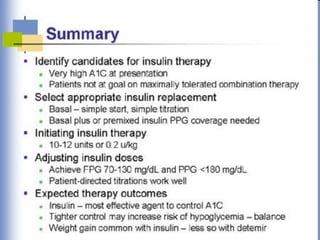
 Don't wait forever. "Patient needs insulin
therapy,"
 Don't be afraid of hypoglycaemia, but be
aware of it.
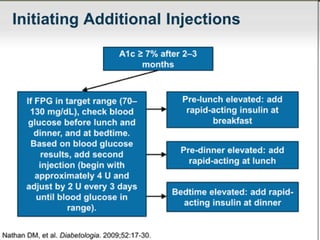
 Consider combination therapy ( insulin +
OAD ).
 Don't under-insulinize.
Thank You

ueda2012 insulin therapy-d.ibrahim

  • 1.
    Insulin Therapy Primary CareChallenges and Solutions Prof. Ibrahim El Ebrashy Head Of The Diabetes & Endocrinology Center Cairo University
  • 3.
    A1C reduction with glucose– lowering medications Oral agents A1C (%)* Sulfonylureas 1.5 Biguanides (metformin) 1.5 Glinides 1.0–1.5 Thiazolidinediones 0.8–1.0 DPP-IV inhibitors 0.5–0.9 α-Glucosidase inhibitors 0.5–0.8 Parenteral agents Insulin ≥2.5 GLP analogues 0.6 Amylin analogues 0.6 *Monotherapy DPP = dipeptidyl peptidase; GLP = glucagon-like peptide Nathan DM. N Engl J Med. 2007;356:437-40.
  • 11.
    When to StartInsulin First ADA-EASD Consensus • Severely catabolic patient • Hemoglobin A1C > 10% • FBS > 250 mg/dl (13.9 mmol/l) • Random consistently > 300 mg/dl (16.7 mmol/l) Nathan et al. Diabetes Care 2006;29: 1963-1972
  • 14.
    Replacement insulin therapyshould mimic endogenous insulin profile in insulin-treated T2DM Insulin(mU/l) 06.00 12.00 24.0018.00 0 15 30 45 06.00 Breakfast Lunch Dinner Endogenous insulin secretion Ideal basal insulin Ideal prandial insulin Adapted from Kruszynska YT, et al. Diabetologia 1987;30:16–21. Time (hours)
  • 17.
  • 18.
    Comparison of 24-hourglucose levels in control subjects vs patients with diabetes (p<0.001). Adapted from Hirsch I, et al. Clin Diabetes 2005;23:78–86. Time of day (hours) 400 300 200 100 0 06.00 06.0010.00 14.00 18.00 22.00 02.00 Plasmaglucose(mg/dl) Normal Meal Meal Meal 20 15 10 5 0 Plasmaglucose(mmol/l) Why Basal insulin Early? Hyperglycaemia due to an increase in fasting glucose T2DM Treating fasting hyperglycemia lowers the entire 24-hour plasma glucose profile
  • 26.
    Reduced risk ofnocturnal hypoglycaemia with insulin glargine NPH Insulin glargine p<0.001 p<0.002 Eventsperpatient–year All nocturnal hypoglycaemia Confirmed nocturnal hypoglycaemia p<0.001 * ** Confirmed hypoglycaemia: *4 mmol/l (72 mg/dl); **3.1 mmol/l (56 mg/dl) Riddle M. et al. Diabetes Care 2003;26:3080–6. 44% risk reduction 42% risk reduction 48% risk reduction 6.9 5.5 2.5 4.0 3.1 1.3 0 1 2 3 4 5 6 7 8
  • 27.
    Risk of severehypoglycaemia and severe nocturnal hypoglycemia reduced by 46% (p = 0.04) and 59% (p = 0.02), respectively, with insulin glargine Insulin glargine reduces hypoglycemic risk versus NPH in T2DM: Meta analysis 0.931 (0.771, 1.123); p = 0.455 0.591 (0.486, 0.718); p < 0.001 0.711 (0.586, 0.862); p = 0.001 Odds ratio 0 0.2 0.4 0.6 0.8 1.0 1.2 1.4 1.6 1.8 2.0 Overall Nocturnal Daytime Symptomatic hypoglycaemic events Increased riskReduced risk Risk reduction mainly observed at night Rosenstock J, et al. Diabetes Care 2005;28:950−5. Mean (CI)
  • 28.
    28 LANTUS-BOT: after 5years on Insulin Glargine, 83% of patients still did not require intensification  Retrospective cohort analysis from a German database comparing the persistence of T2DM patients on basal insulin plus OADs with patients treated with NPH plus OADs i Pfohl M, et al. Adding insulin glargine to oral therapy in type 2 diabetes patients results in longer persistence with the treatment regimen compared to NPH insulin. Poster presented at ISPOR 2008
  • 29.
    29 Schreiber SA etal. Diabetes Obes Metab 2007;9(1):31–38; Schreiber SA, et al. Diabetes Technol Ther 2008;10(2):121–127 Schreiber et al: following titration, Insulin Glargine + oral antidiabetic drugs can provide sustained glycaemic control Observational study initiated in 12,216 insulin-naïve subjects with T2DM, who added Insulin Glargine to their existing OAD treatment The study duration was 9 months, followed by optional 20- and 32-month extension phases  i
  • 30.
    30 THIN: switching fromNPH to Insulin Glargine improves HbA1c control in real life Gordon J, et al. ADA 2009, abstract accepted Retrospective analysis from a UK database analysing the switch from NPH to Insulin Glargine in patients with TD2M  i NEW
  • 41.
    At The End EducationFor Our Patients Is A Must
  • 42.
    Advice For Physicians Don't wait forever. "Patient needs insulin therapy,"  Don't be afraid of hypoglycaemia, but be aware of it.  Consider combination therapy ( insulin + OAD ).  Don't under-insulinize.
  • 47.