U4L4 Solving
Quadratic Equations by
the Quadratic Formula
1. Solve quadratic equations by
using the Quadratic Formula.
2. Use the discriminant to
determine the number and type
of roots of a quadratic equation.
Objectives
THE QUADRATIC FORMULA
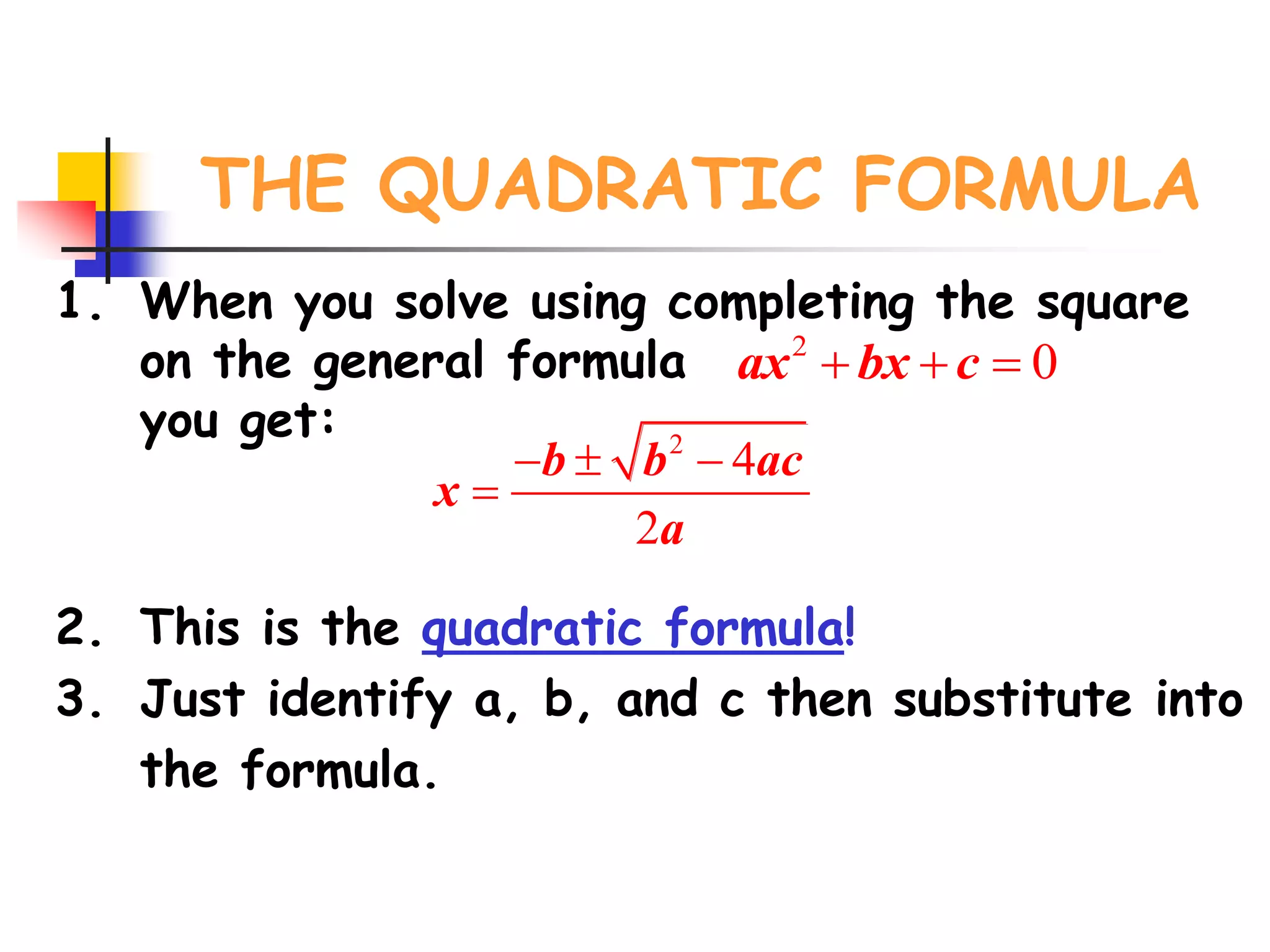
1. When you solve using completing the square
on the general formula
you get:
2. This is the quadratic formula!
3. Just identify a, b, and c then substitute into
the formula.
2
4
2
b b ac
x
a
  

2
0ax bx c  
WHY USE THE
QUADRATIC FORMULA?
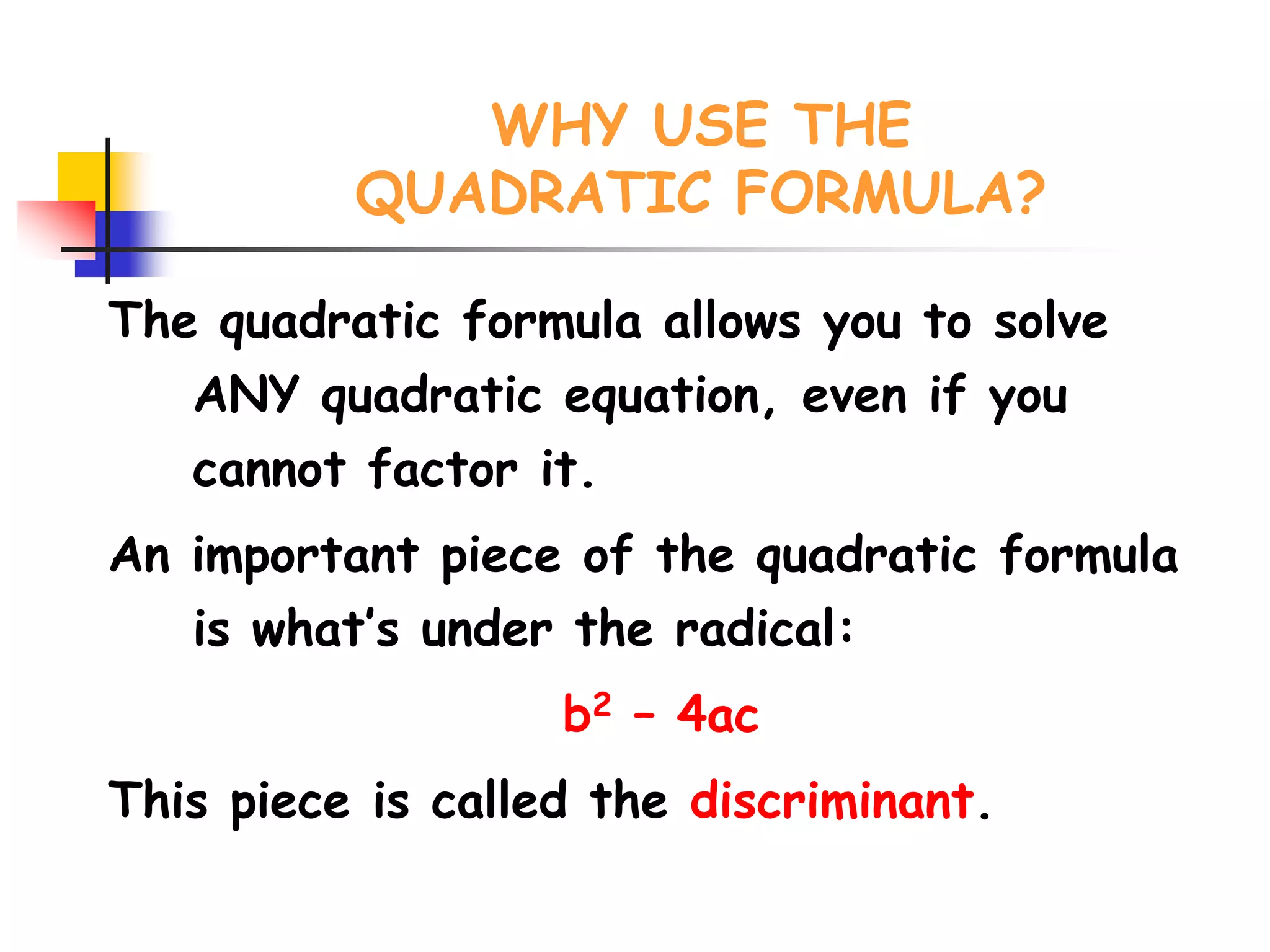
The quadratic formula allows you to solve
ANY quadratic equation, even if you
cannot factor it.
An important piece of the quadratic formula
is what’s under the radical:
b2 – 4ac
This piece is called the discriminant.
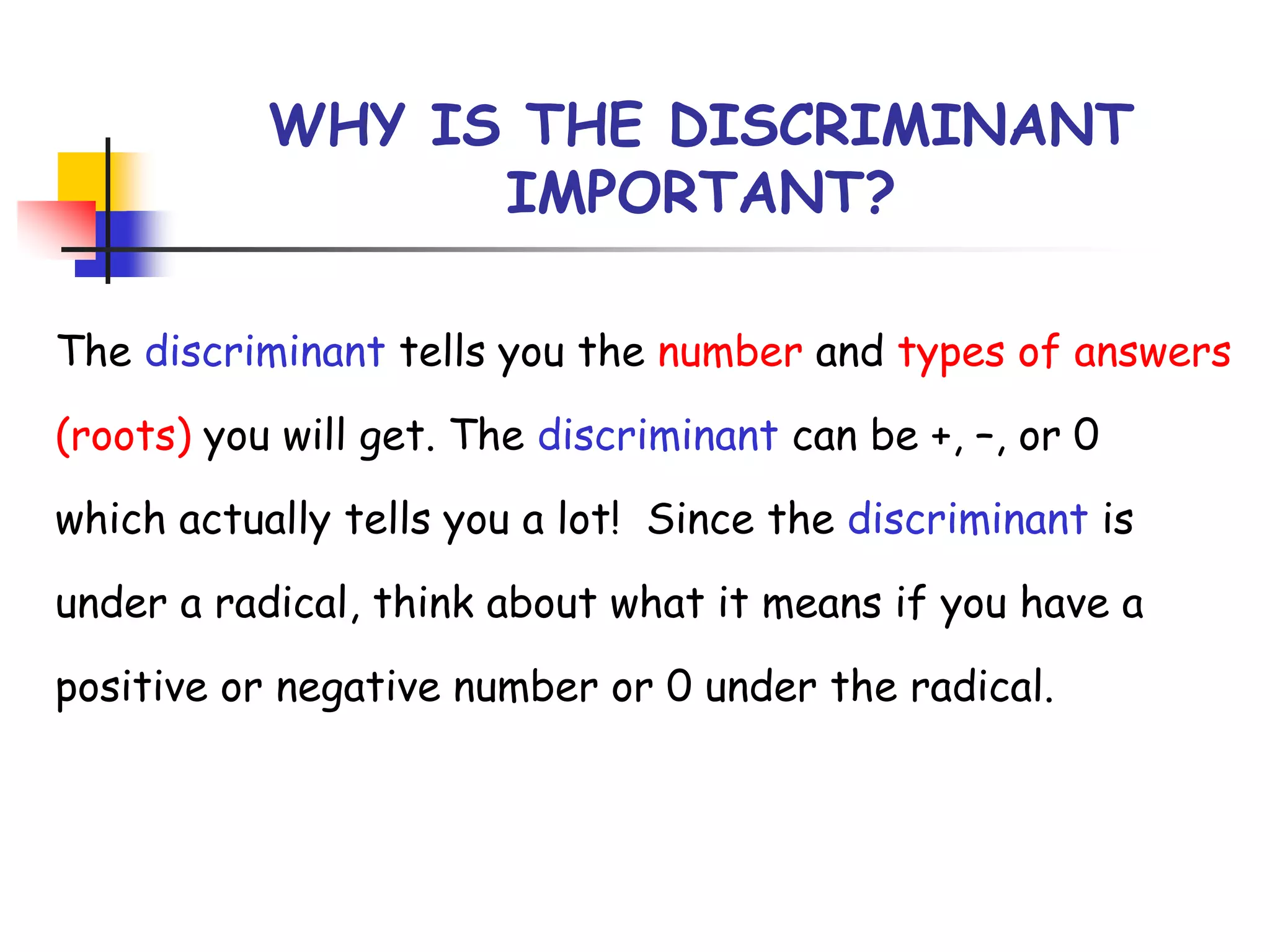
WHY IS THE DISCRIMINANT
IMPORTANT?
The discriminant tells you the number and types of answers
(roots) you will get. The discriminant can be +, –, or 0
which actually tells you a lot! Since the discriminant is
under a radical, think about what it means if you have a
positive or negative number or 0 under the radical.
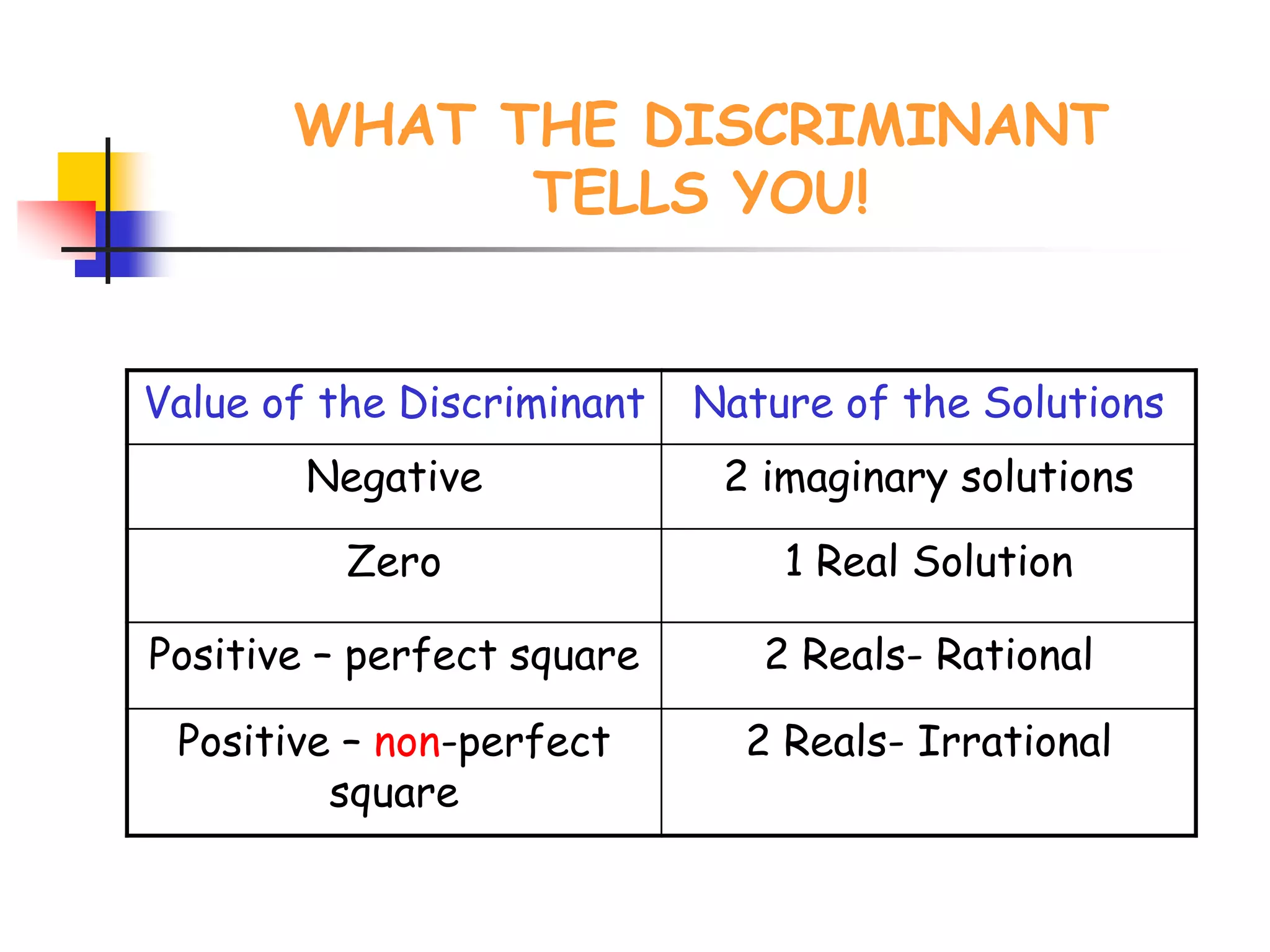
WHAT THE DISCRIMINANT
TELLS YOU!
Value of the Discriminant Nature of the Solutions
Negative 2 imaginary solutions
Zero 1 Real Solution
Positive – perfect square 2 Reals- Rational
Positive – non-perfect
square
2 Reals- Irrational
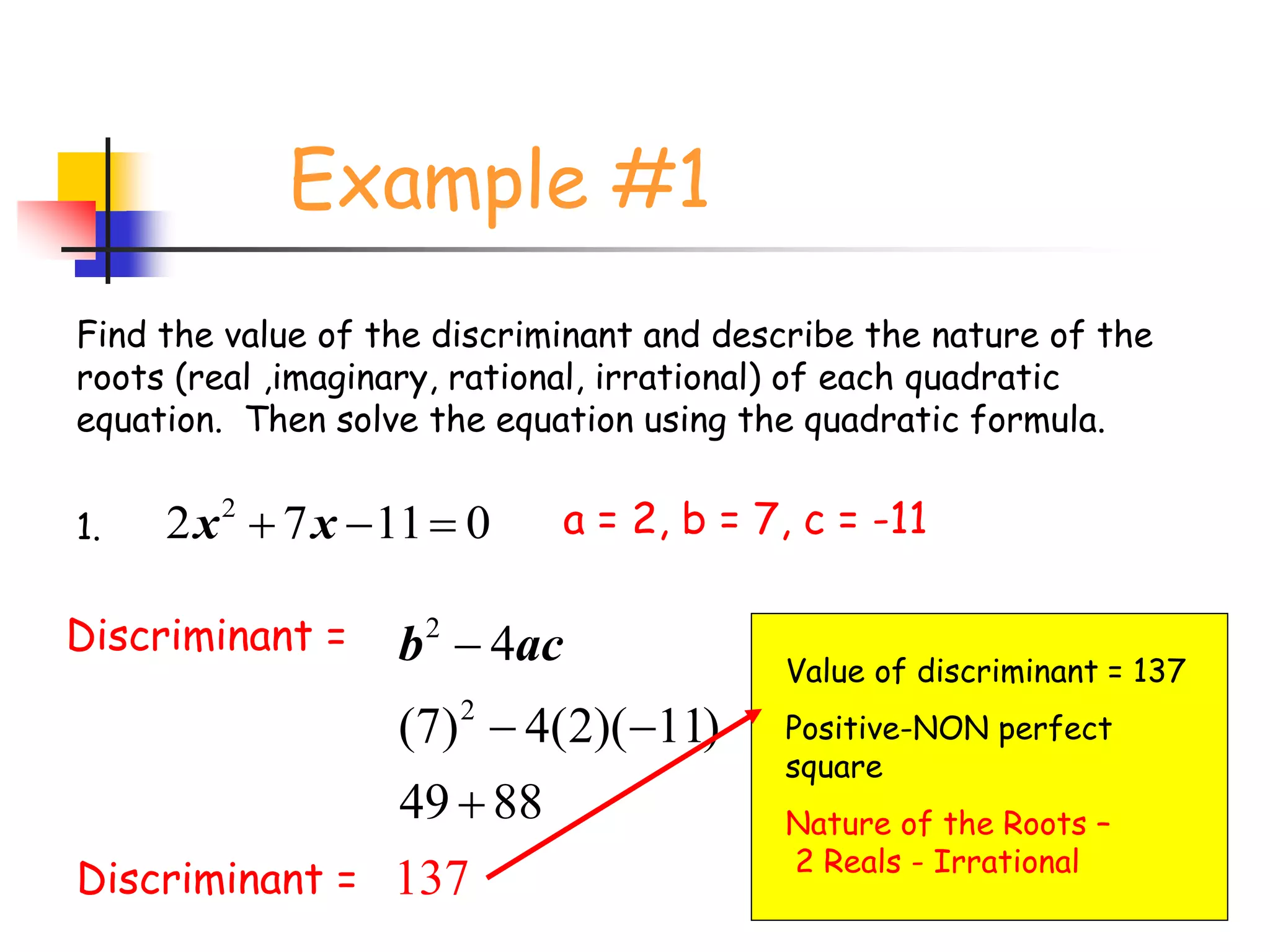
Example #1
2
2 7 11 0x x  
Find the value of the discriminant and describe the nature of the
roots (real ,imaginary, rational, irrational) of each quadratic
equation. Then solve the equation using the quadratic formula.
1. a = 2, b = 7, c = -11
Discriminant = 2
2
4
(7) 4(2)( 11)
49
137
88
b ac
 

Discriminant =
Value of discriminant = 137
Positive-NON perfect
square
Nature of the Roots –
2 Reals - Irrational
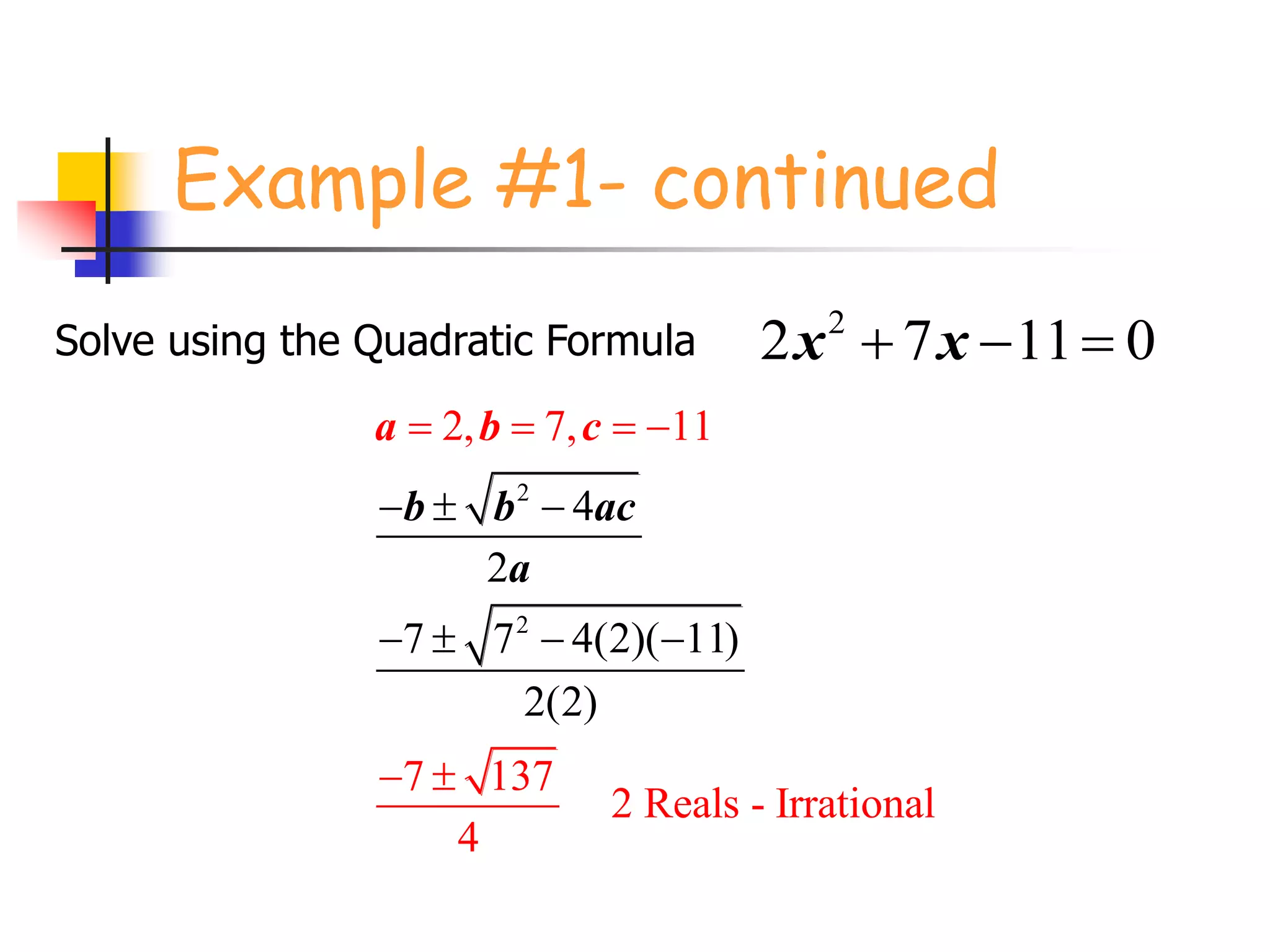
Example #1- continued
2
2 7 11 0x x  
2
2
4
2
7 7 4(2)( 11)
2(
2, 7, 11
7 137
2 Reals - Irrational
4
2)
a b
b ac
a
c
b
   
 
  
   
Solve using the Quadratic Formula
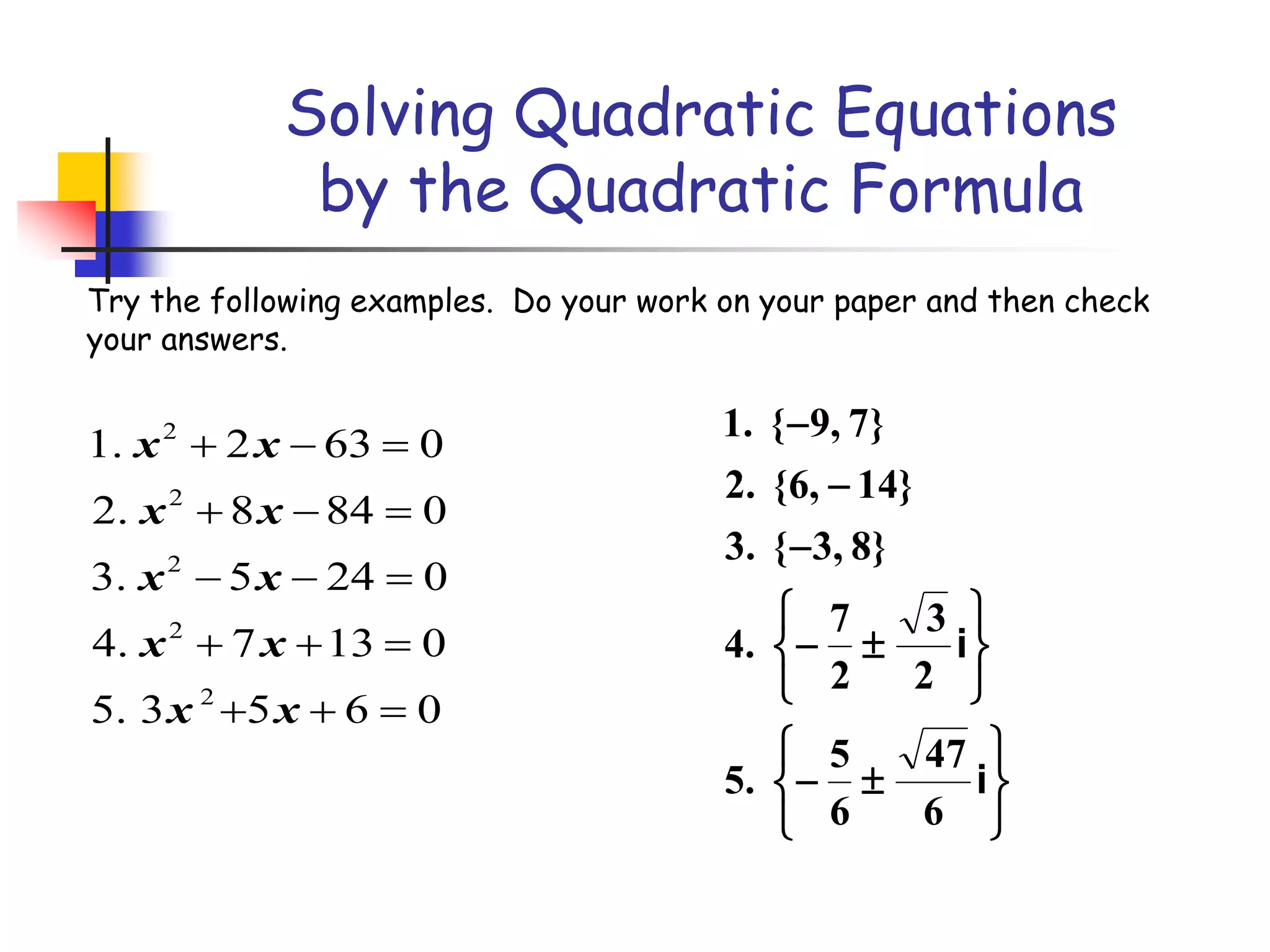
Solving Quadratic Equations
by the Quadratic Formula
2
2
2
2
2
1. 2 63 0
2. 8 84 0
3. 5 24 0
4. 7 13 0
5. 3 5 6 0
x x
x x
x x
x x
x x
  
  
  
  
  
Try the following examples. Do your work on your paper and then check
your answers.

















i
i
6
47
6
5
.5
2
3
2
7
.4
}8,3{.3
}14,6{.2
}7,9{.1

U4 l4 quadratic formula powerpoint

  • 1.
    U4L4 Solving Quadratic Equationsby the Quadratic Formula
  • 2.
    1. Solve quadraticequations by using the Quadratic Formula. 2. Use the discriminant to determine the number and type of roots of a quadratic equation. Objectives
  • 3.
    THE QUADRATIC FORMULA 1.When you solve using completing the square on the general formula you get: 2. This is the quadratic formula! 3. Just identify a, b, and c then substitute into the formula. 2 4 2 b b ac x a     2 0ax bx c  
  • 4.
    WHY USE THE QUADRATICFORMULA? The quadratic formula allows you to solve ANY quadratic equation, even if you cannot factor it. An important piece of the quadratic formula is what’s under the radical: b2 – 4ac This piece is called the discriminant.
  • 5.
    WHY IS THEDISCRIMINANT IMPORTANT? The discriminant tells you the number and types of answers (roots) you will get. The discriminant can be +, –, or 0 which actually tells you a lot! Since the discriminant is under a radical, think about what it means if you have a positive or negative number or 0 under the radical.
  • 6.
    WHAT THE DISCRIMINANT TELLSYOU! Value of the Discriminant Nature of the Solutions Negative 2 imaginary solutions Zero 1 Real Solution Positive – perfect square 2 Reals- Rational Positive – non-perfect square 2 Reals- Irrational
  • 7.
    Example #1 2 2 711 0x x   Find the value of the discriminant and describe the nature of the roots (real ,imaginary, rational, irrational) of each quadratic equation. Then solve the equation using the quadratic formula. 1. a = 2, b = 7, c = -11 Discriminant = 2 2 4 (7) 4(2)( 11) 49 137 88 b ac    Discriminant = Value of discriminant = 137 Positive-NON perfect square Nature of the Roots – 2 Reals - Irrational
  • 8.
    Example #1- continued 2 27 11 0x x   2 2 4 2 7 7 4(2)( 11) 2( 2, 7, 11 7 137 2 Reals - Irrational 4 2) a b b ac a c b              Solve using the Quadratic Formula
  • 9.
    Solving Quadratic Equations bythe Quadratic Formula 2 2 2 2 2 1. 2 63 0 2. 8 84 0 3. 5 24 0 4. 7 13 0 5. 3 5 6 0 x x x x x x x x x x                Try the following examples. Do your work on your paper and then check your answers.                  i i 6 47 6 5 .5 2 3 2 7 .4 }8,3{.3 }14,6{.2 }7,9{.1