PRESENTATION
• Submitted to :
Dr. Faiz Ullah
• Submitted by :
Talha Usman ( 19011556-054)
Hafiz Adeel (19011556-165)
Ali Shehroz (19011556-116)
Topic:
Types OF Propaganda
Types of Propaganda
•Name Calling
•Testimonial
•Glittering Generalities
•Plain Folks
•Transfer
•Bandwagon
•Name Calling
•Card Stacking
Name calling
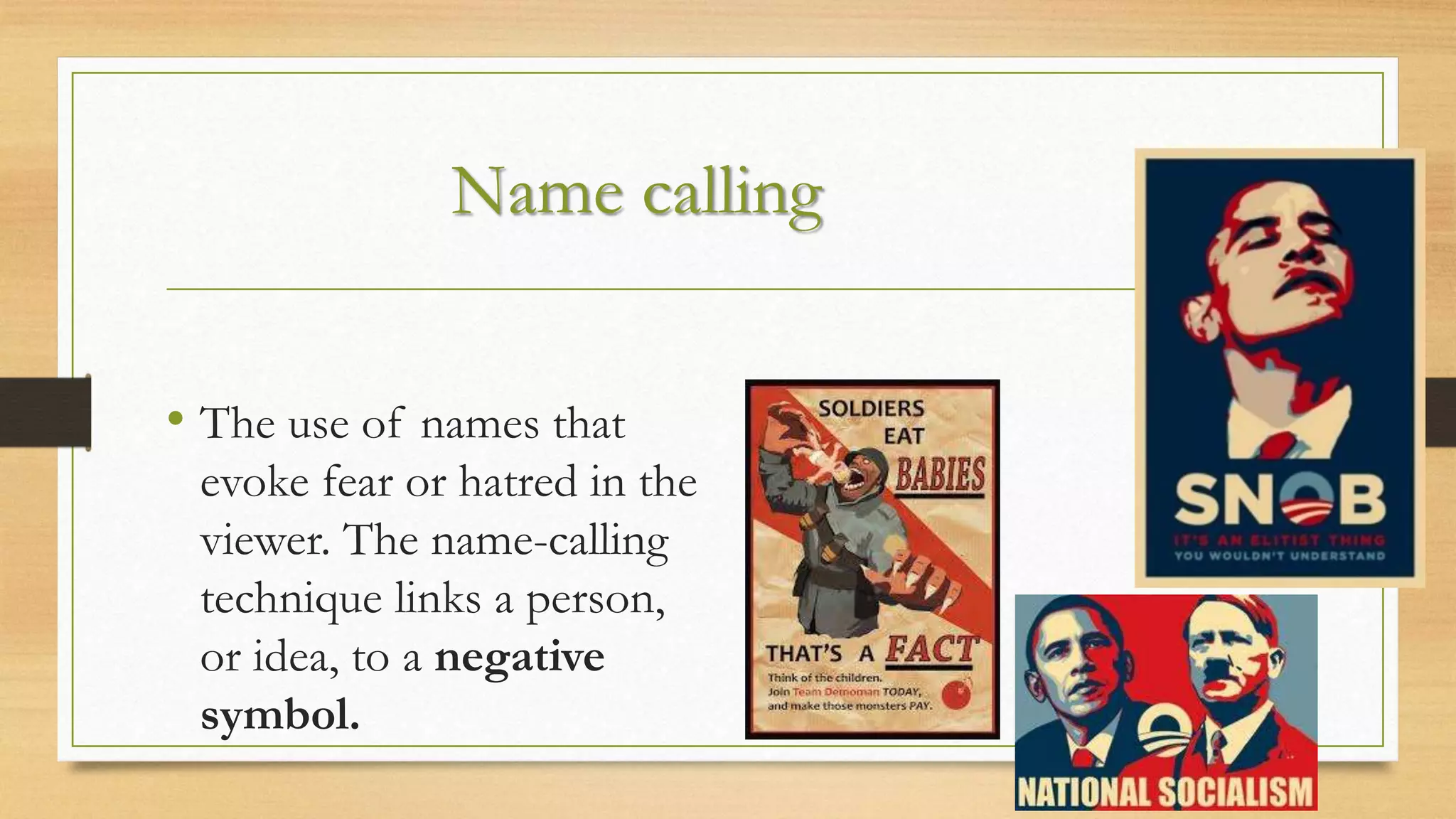
• The use of names that
evoke fear or hatred in the
viewer. The name-calling
technique links a person,
or idea, to a negative
symbol.
Testimonial
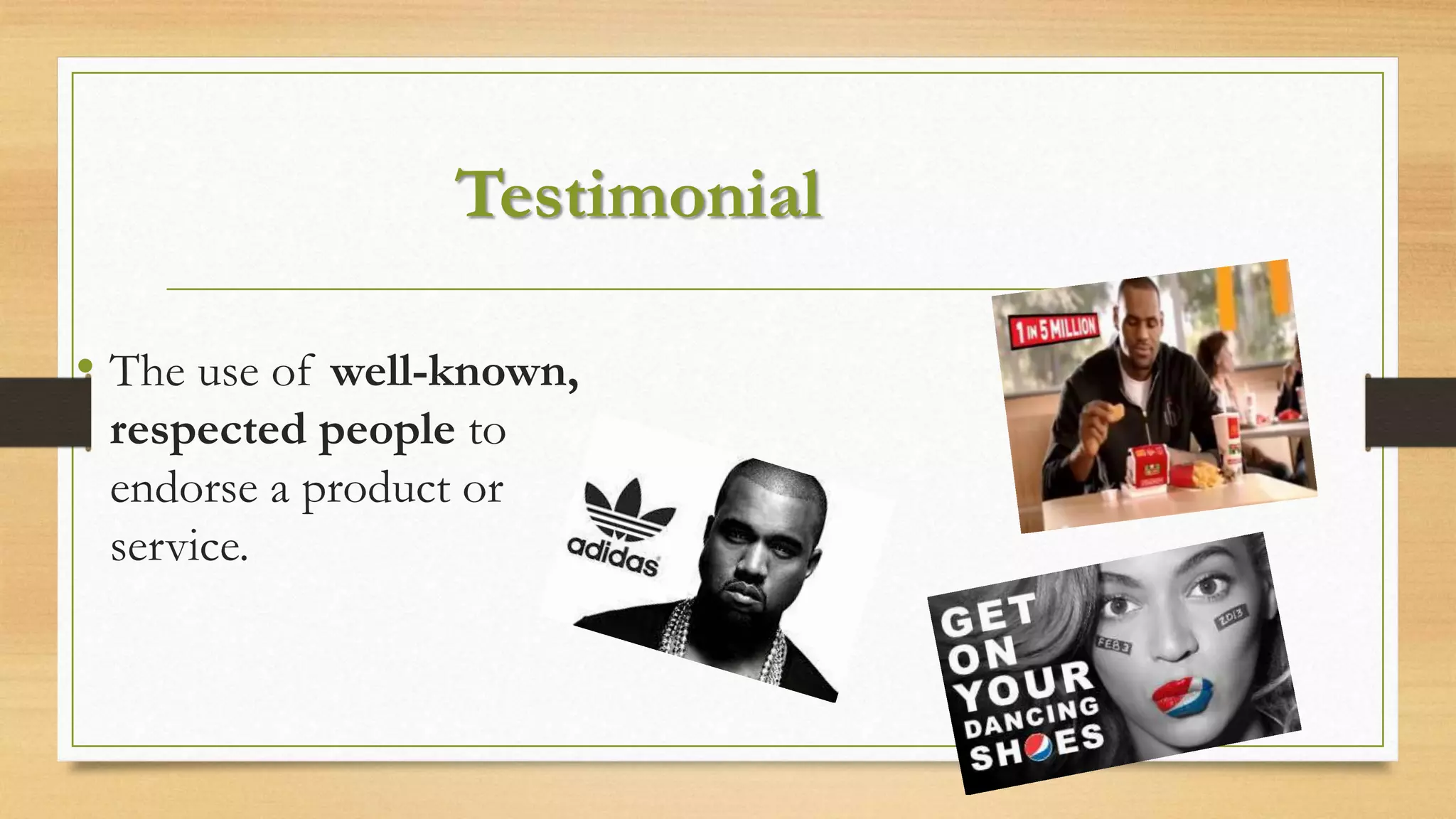
• The use of well-known,
respected people to
endorse a product or
service.
Glittering Generalities
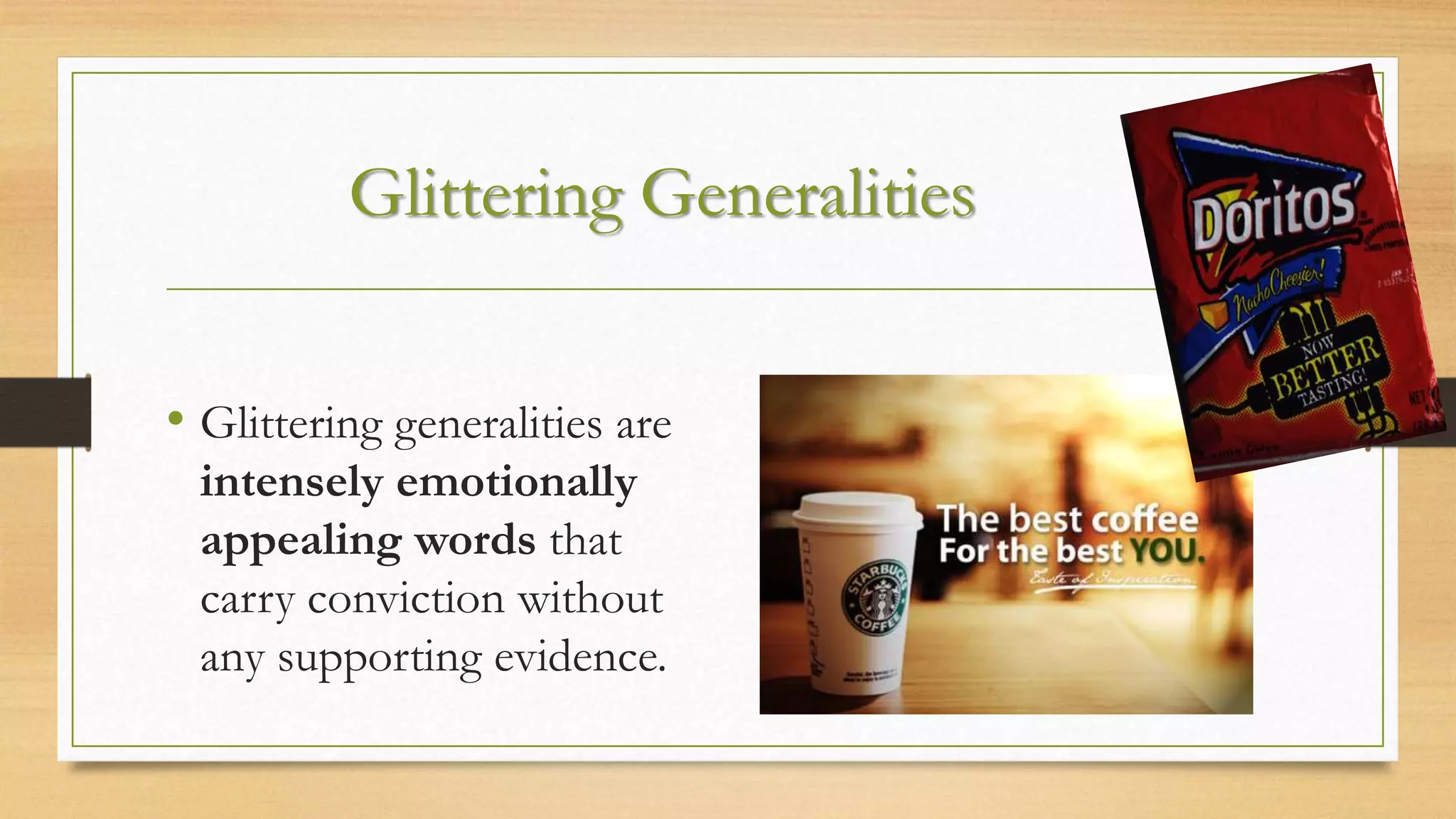
• Glittering generalities are
intensely emotionally
appealing words that
carry conviction without
any supporting evidence.
Plain Folks
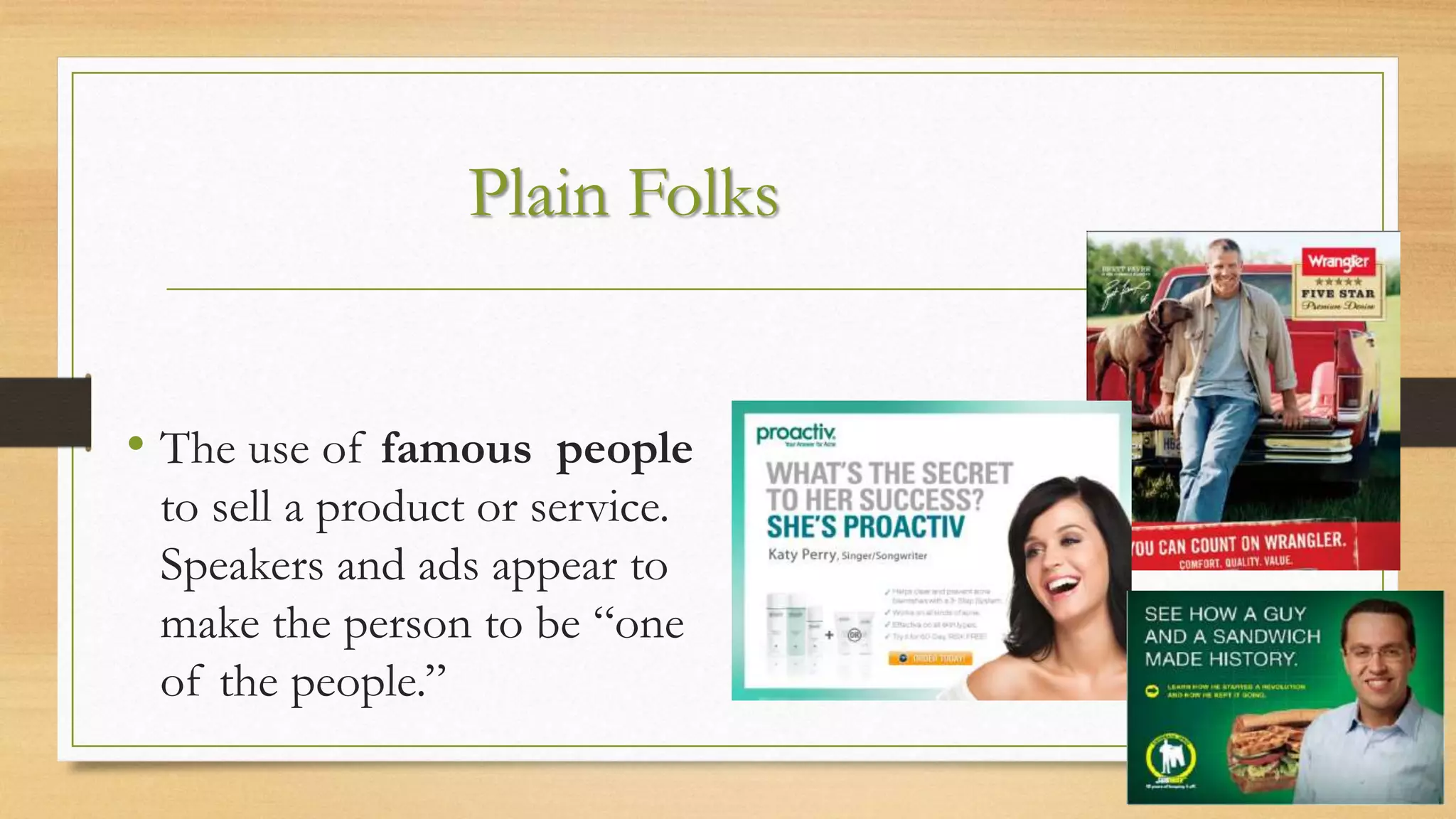
• The use of famous people
to sell a product or service.
Speakers and ads appear to
make the person to be “one
of the people.”
Transfer
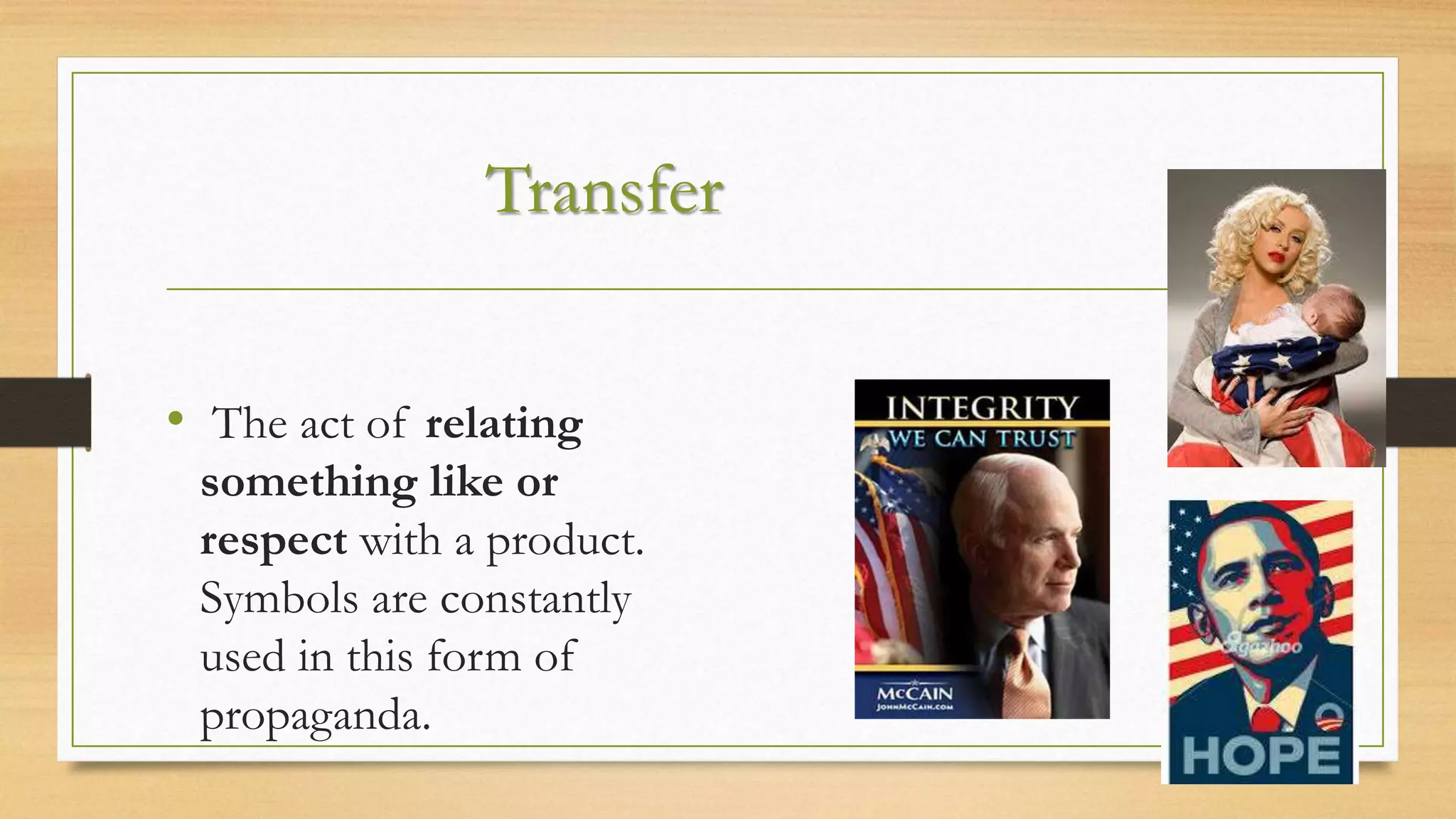
• The act of relating
something like or
respect with a product.
Symbols are constantly
used in this form of
propaganda.
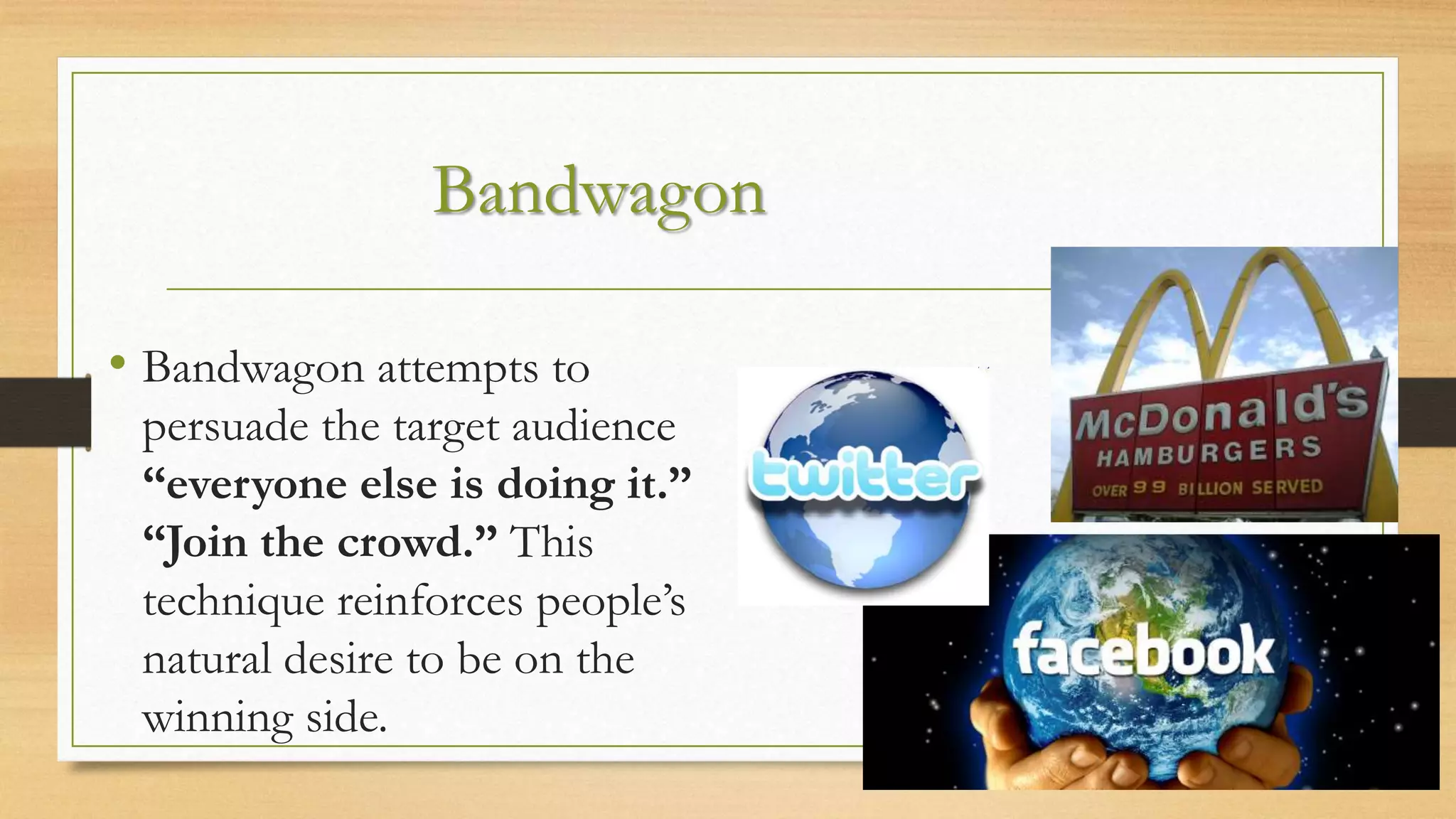
Bandwagon
• Bandwagon attempts to
persuade the target audience
“everyone else is doing it.”
“Join the crowd.” This
technique reinforces people’s
natural desire to be on the
winning side.
Card Stacking
• The strategy of showing
the product’s best
features, telling half-
truths, and omitting or
lying about its potential
problems.

Types of propaganda.pptx

  • 1.
    PRESENTATION • Submitted to: Dr. Faiz Ullah • Submitted by : Talha Usman ( 19011556-054) Hafiz Adeel (19011556-165) Ali Shehroz (19011556-116)
  • 2.
  • 3.
    Types of Propaganda •NameCalling •Testimonial •Glittering Generalities •Plain Folks •Transfer •Bandwagon •Name Calling •Card Stacking
  • 4.
    Name calling • Theuse of names that evoke fear or hatred in the viewer. The name-calling technique links a person, or idea, to a negative symbol.
  • 5.
    Testimonial • The useof well-known, respected people to endorse a product or service.
  • 6.
    Glittering Generalities • Glitteringgeneralities are intensely emotionally appealing words that carry conviction without any supporting evidence.
  • 7.
    Plain Folks • Theuse of famous people to sell a product or service. Speakers and ads appear to make the person to be “one of the people.”
  • 8.
    Transfer • The actof relating something like or respect with a product. Symbols are constantly used in this form of propaganda.
  • 9.
    Bandwagon • Bandwagon attemptsto persuade the target audience “everyone else is doing it.” “Join the crowd.” This technique reinforces people’s natural desire to be on the winning side.
  • 10.
    Card Stacking • Thestrategy of showing the product’s best features, telling half- truths, and omitting or lying about its potential problems.