PROPAGANDA
PROPAGANDA
• to promote and influence
• to manipulate the behavior of many instead of
telling them the truth
Different kinds of propaganda tactics are used in
advertisements to persuade people to buy the
products.
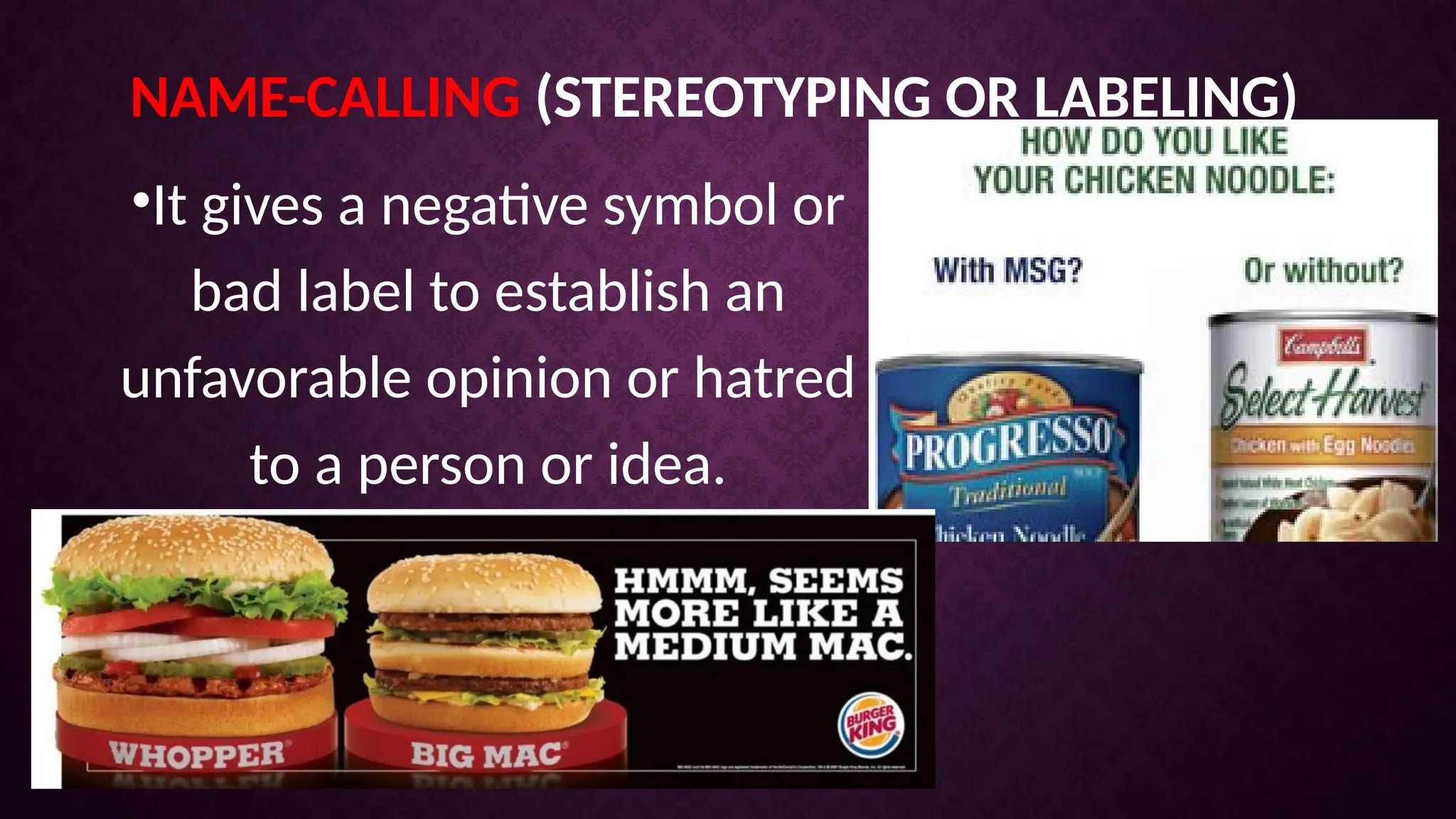
NAME-CALLING (STEREOTYPING OR LABELING)
•It gives a negative symbol or
bad label to establish an
unfavorable opinion or hatred
to a person or idea.
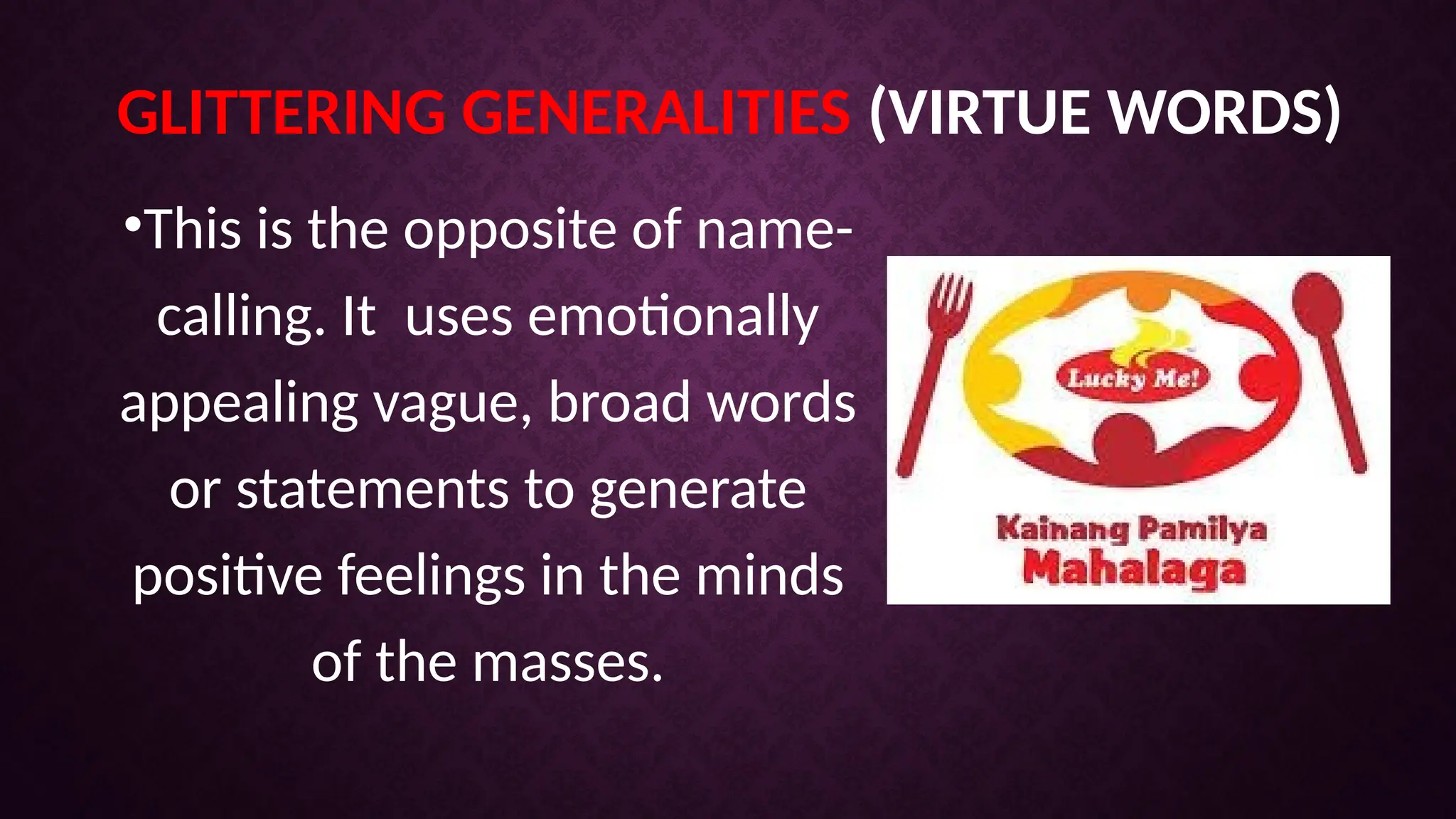
GLITTERING GENERALITIES (VIRTUE WORDS)
•This is the opposite of name-
calling. It uses emotionally
appealing vague, broad words
or statements to generate
positive feelings in the minds
of the masses.
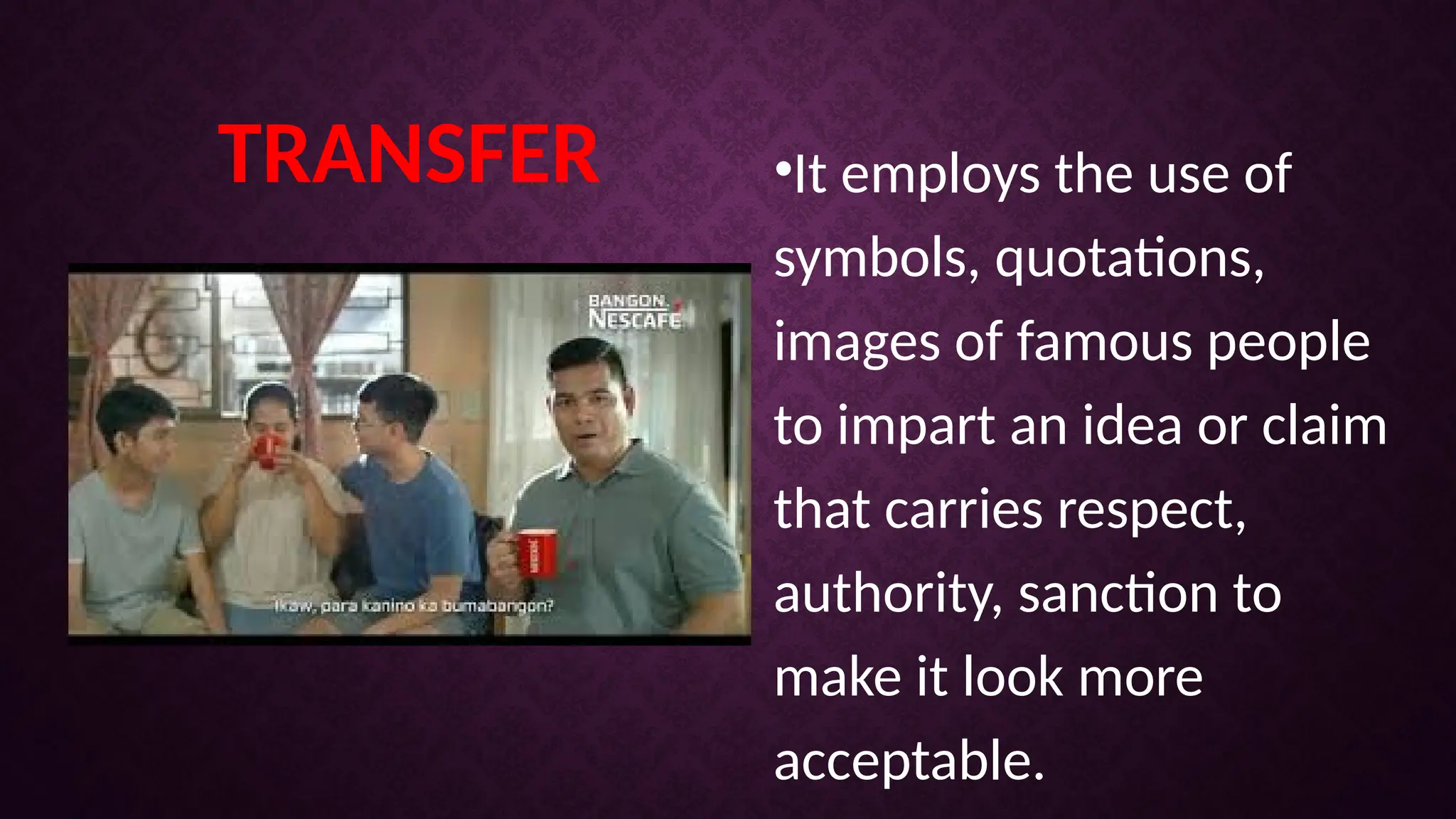
TRANSFER •It employs the use of
symbols, quotations,
images of famous people
to impart an idea or claim
that carries respect,
authority, sanction to
make it look more
acceptable.
TESTIMONIAL
•uses a famous individual or a celebrity to
endorse a product or an ideology or course
of action.
PLAIN FOLKS
•uses common people or ordinary people using
a product or doing an action. It creates appeal
to the masses, feeling they are of the same
status.
BANDWAGON
•influences people to be one of those majority who
is already using the product or already following or
believing a certain ideology. It touches the emotions
of those who do not like to be alone or somewhat
experiencing FOMO or fear of missing out.
CARD STACKING
•misleads the target clients because
only the favorable details of the
product or ideology are being
presented.

Propaganda techniques identified and expounded through examples

  • 1.
  • 2.
    PROPAGANDA • to promoteand influence • to manipulate the behavior of many instead of telling them the truth Different kinds of propaganda tactics are used in advertisements to persuade people to buy the products.
  • 3.
    NAME-CALLING (STEREOTYPING ORLABELING) •It gives a negative symbol or bad label to establish an unfavorable opinion or hatred to a person or idea.
  • 4.
    GLITTERING GENERALITIES (VIRTUEWORDS) •This is the opposite of name- calling. It uses emotionally appealing vague, broad words or statements to generate positive feelings in the minds of the masses.
  • 5.
    TRANSFER •It employsthe use of symbols, quotations, images of famous people to impart an idea or claim that carries respect, authority, sanction to make it look more acceptable.
  • 6.
    TESTIMONIAL •uses a famousindividual or a celebrity to endorse a product or an ideology or course of action.
  • 7.
    PLAIN FOLKS •uses commonpeople or ordinary people using a product or doing an action. It creates appeal to the masses, feeling they are of the same status.
  • 8.
    BANDWAGON •influences people tobe one of those majority who is already using the product or already following or believing a certain ideology. It touches the emotions of those who do not like to be alone or somewhat experiencing FOMO or fear of missing out.
  • 9.
    CARD STACKING •misleads thetarget clients because only the favorable details of the product or ideology are being presented.