VERMITECHNOLOGY
-- Types of Earthworms
K. Akalya
235117104
II B.sc Biotechnology
VERMITECHNOLOGY
 Vemitechnology is globally becoming a
popular solid waste management technique
 Vermitechnology is a process by which the
bioconversion of organic waste into a
biofertilizer due to earthworms activity. The
earthworms feed on the organic wastes and
the earthworms gut acts as bioreactor
whereby the vermicasts are produced.
TYPES OF EARTHWORMS
USED FOR COMPOSTING

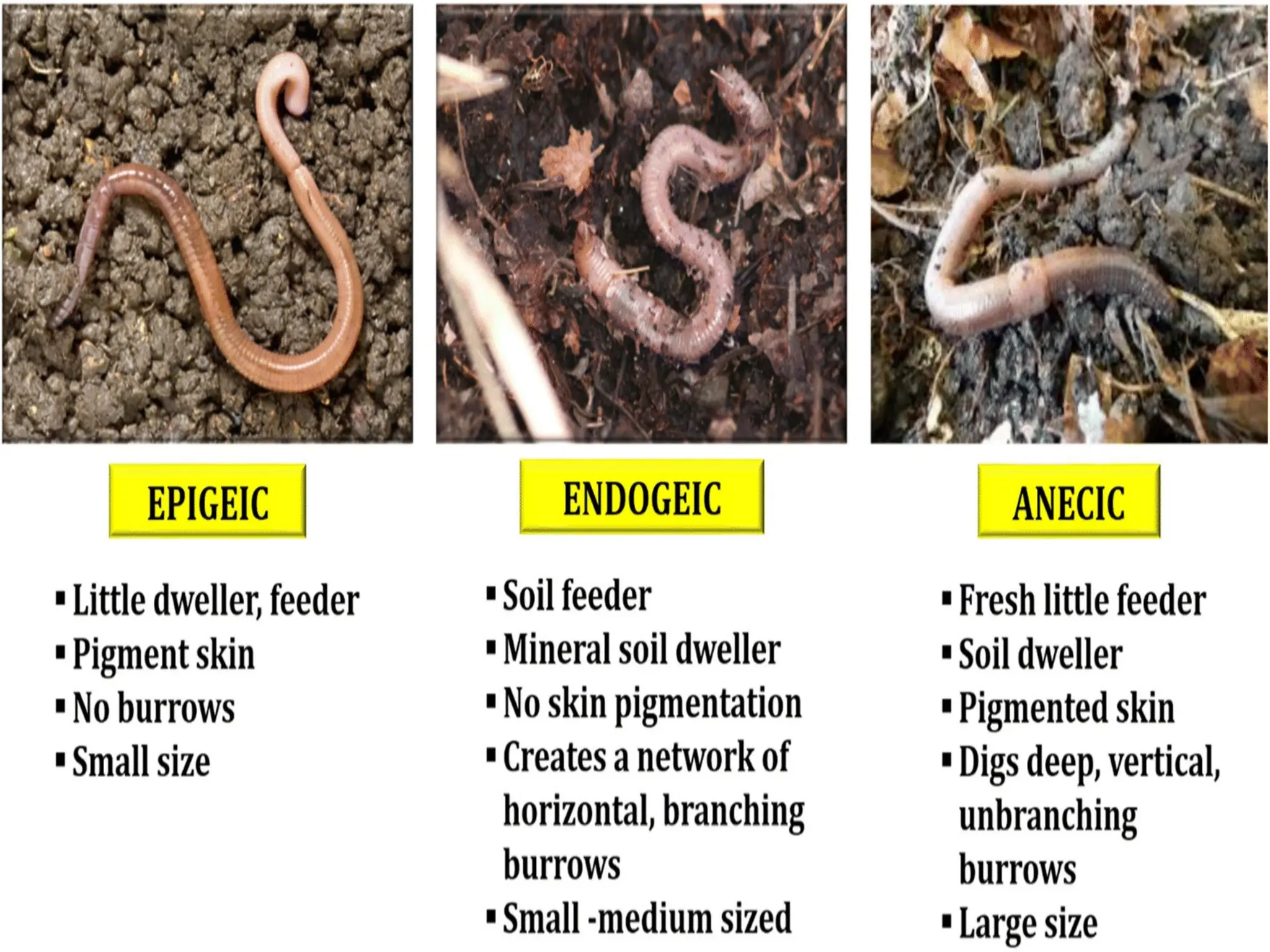
Anecic : Earthworms feed on decaying organic
matters. Which are responsible for cycling
organic debris into humus
 Endogeic: These worms spending their lives
deep in the soil where they feed on decayed
matter and mineral soil particle. These worms
build burrows.
 Epigeic species : These are found in the natural
environment in the top soil layer where they feed
on decaying organic matter
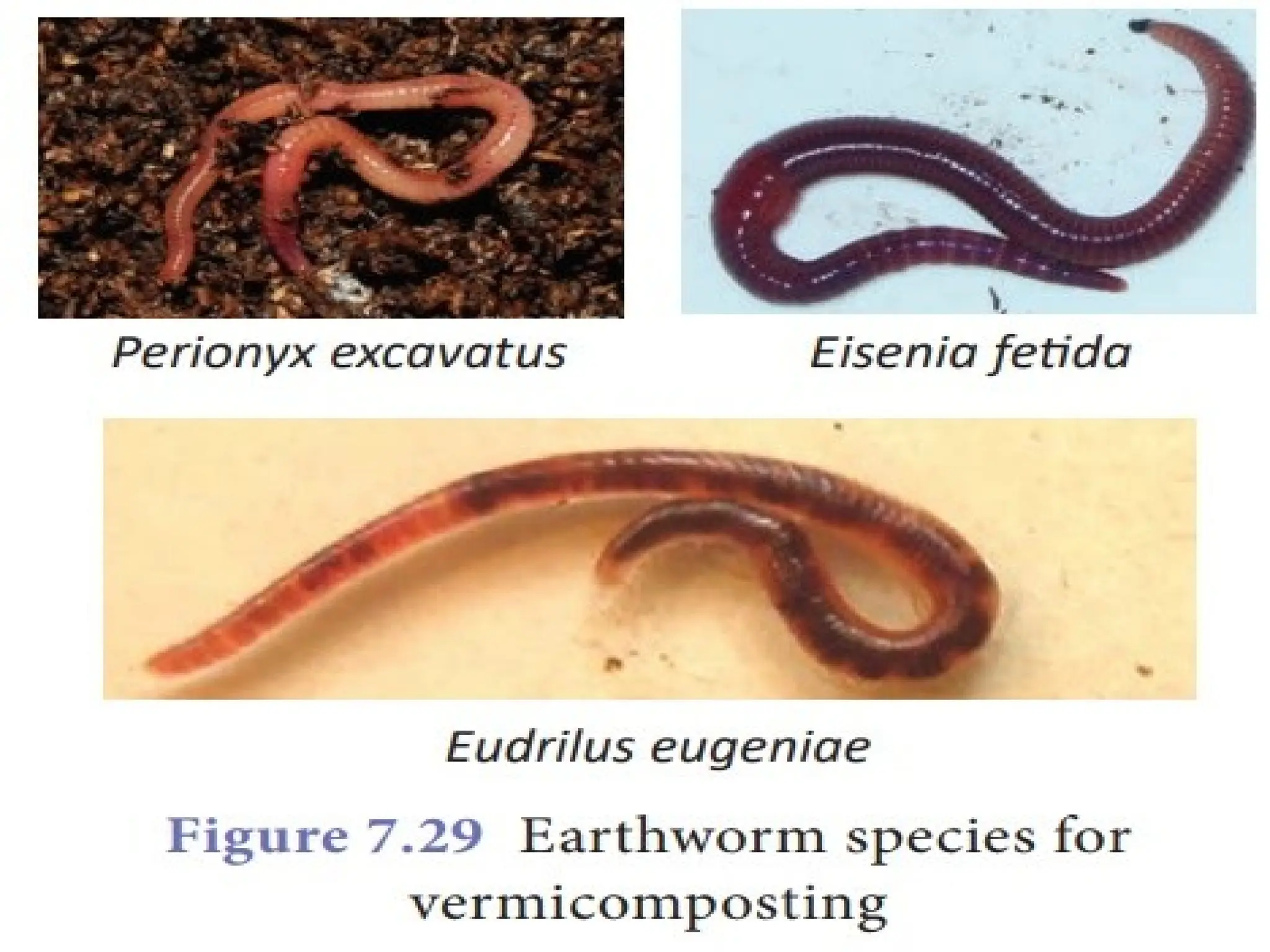
EPIGEIC EARTHWORM
Examples: Eisenia fetida (commonly used in
composting), Lumbricus rubellus.
ENDOGEIC EARTHWORMS
Examples: Aporrectodea caliginosa,
Allolobophora chlorotica.
ANECIC EARTHWORMS
Examples: Lumbricus terrestris (common
nightcrawler), Aporrectodea longa.
THANK YOU

Types of Earthworms in vermicomposting.pptx

  • 1.
    VERMITECHNOLOGY -- Types ofEarthworms K. Akalya 235117104 II B.sc Biotechnology
  • 2.
    VERMITECHNOLOGY  Vemitechnology isglobally becoming a popular solid waste management technique  Vermitechnology is a process by which the bioconversion of organic waste into a biofertilizer due to earthworms activity. The earthworms feed on the organic wastes and the earthworms gut acts as bioreactor whereby the vermicasts are produced.
  • 3.
    TYPES OF EARTHWORMS USEDFOR COMPOSTING  Anecic : Earthworms feed on decaying organic matters. Which are responsible for cycling organic debris into humus  Endogeic: These worms spending their lives deep in the soil where they feed on decayed matter and mineral soil particle. These worms build burrows.  Epigeic species : These are found in the natural environment in the top soil layer where they feed on decaying organic matter
  • 5.
    EPIGEIC EARTHWORM Examples: Eiseniafetida (commonly used in composting), Lumbricus rubellus.
  • 6.
    ENDOGEIC EARTHWORMS Examples: Aporrectodeacaliginosa, Allolobophora chlorotica.
  • 7.
    ANECIC EARTHWORMS Examples: Lumbricusterrestris (common nightcrawler), Aporrectodea longa.
  • 9.