Earthworms and their role in
vermicomposting
Dr. Sharanpreet Singh Kahlon (M.Sc., PhD)
Principal
Sahibzada Zorawar Singh Fateh Singh Sen. Sec.
Public School (Kalanaur, GSP)
Affiliated to CBSE, New Delhi
ABOUT
EARTHWORMS
What are Earthworms ?
❑ Tube-shaped, segmented worm found in the Phylum
Annelida
❑ Hermaphrodites–each individual carries both male
and female sex organs
Classification
Kingdom: Animalia
Phylum: Annelida
Class: Oligochaeta
Types of Earthworms
Epigeic : Eisenia fetida
Endogeic: Metaphire posthuma
Anecic: Lampito mauritti
Characteristics Epigeic Endogeic Anecic
Burrowing nature
and type
Surface dwelling Shallow burrowing and
horizontal
Deep burrowing and
vertical
Body size Small Medium Large
Body colour Uniform Weak pigmented Medium pigmented
Food Leaf litter, cattle
dung
Soil with high organic
matter
Leaf litter,
decomposed litter
Feeding behaviour Detritivores Geophagous Detritivores
Role Biodegraders Soil mixing and
aeration
Soil organic matter
decomposition
Vermicomposting
efficiency
High Low Low
Earthworm Species Eisenia fetida,
Perionyx excavatus,
Eudrilus eugeniae
Metaphire posthuma,
Octochaetona thurstoni,
Aporrectodea rosea,
Octolasion cyaneum
Lampito mauritii,
Aporrectodea longa,
Lumbricus terrestris
Comparative account of characteristics of earthworms species under
three ecological categories.
Life Cycle of Earthworms
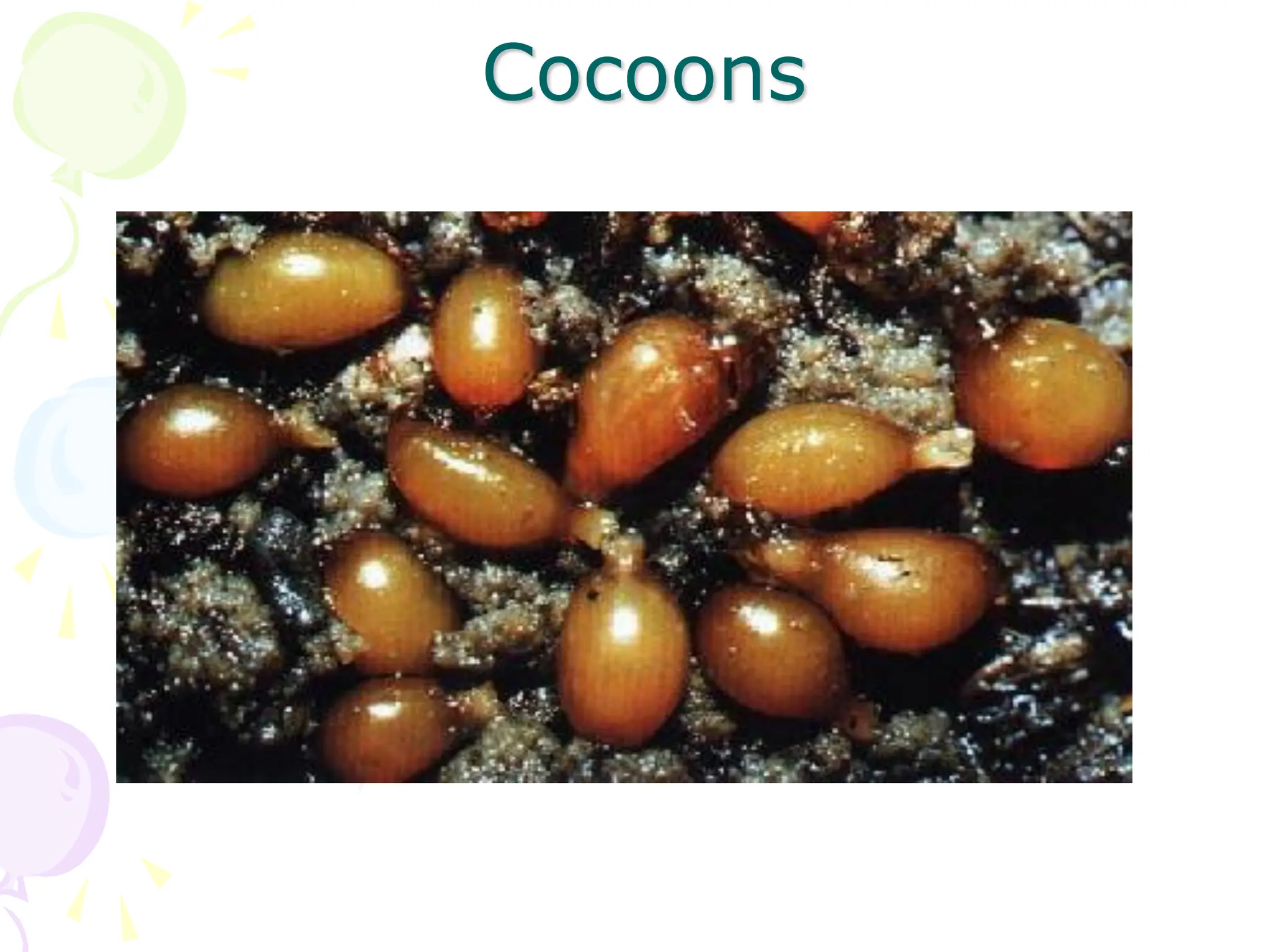
Cocoons
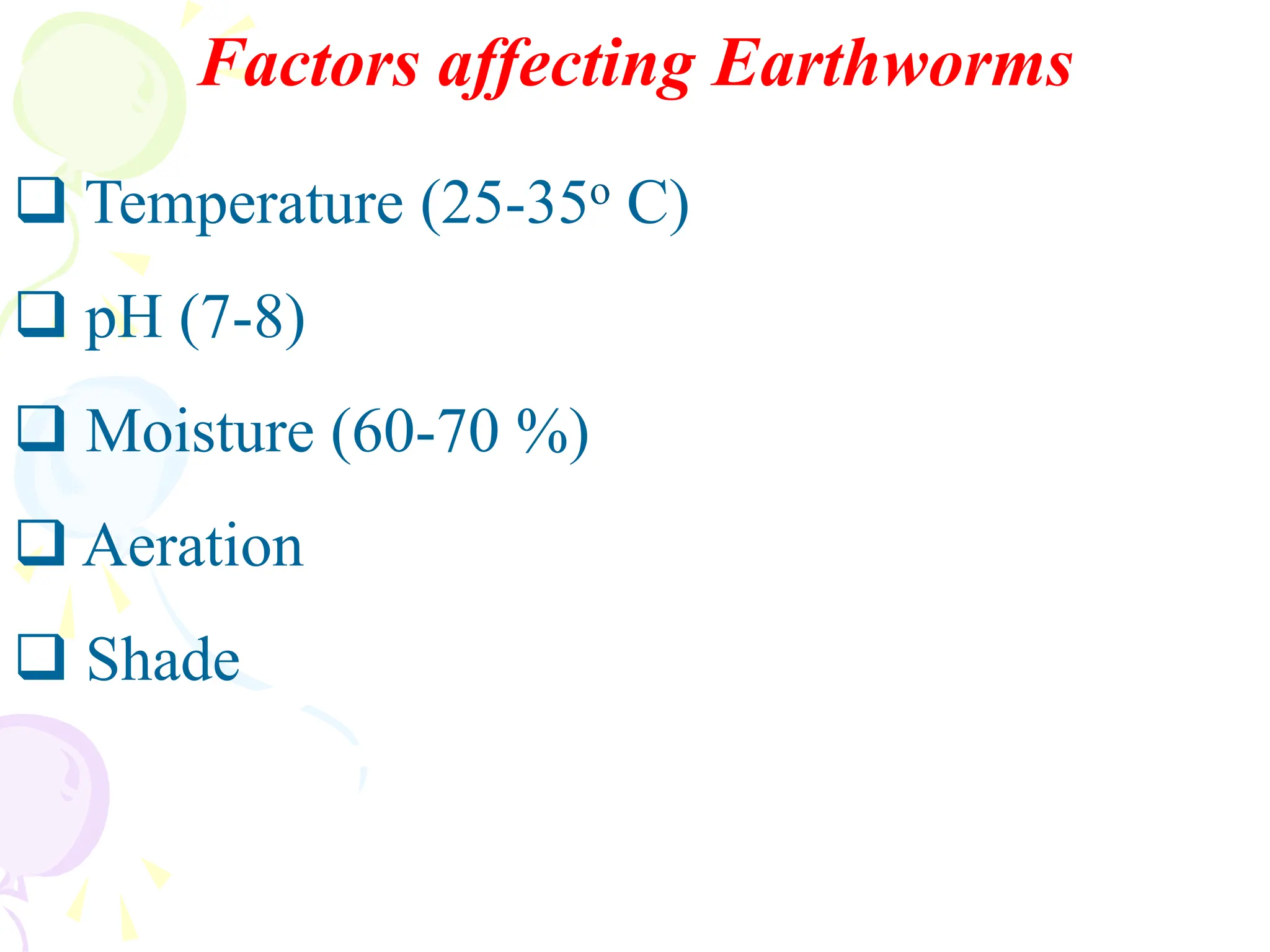
Factors affecting Earthworms
❑ Temperature (25-35o C)
❑ pH (7-8)
❑ Moisture (60-70 %)
❑ Aeration
❑ Shade
Agriculture activity and its effect on earthworm
❑ Cultivation
❑ Cropping
❑ Fertilizers
❑ Pesticides
❑ Heavy Metals
Sample Name
Site I (Botanical Garden) Site II (Agriculture Field)
Soil Vermicast Soil Vermicast
pH 9.15 ± 0.02 8.81 ± 0.075 8.87 ± 0.032 8.54 ± 0.02
EC (µS/cm) 163.23 ± 0.08 132.4 ± 0.06 86.8 ± 0.03 70.3 ± 0.04
TDS (mg/L) 98.19 ± 0.32 93.2 ± 0.05 61.65 ± 0.037 55.04 ± 0.03
N (g/Kg) 0.15 ± 0.006 0.224 ± 0.002 0.11 ± 0.014 0.14 ± 0.03
P (g/kg) 0.61 ± 0.01 13.455 ± 0.047 0.42 ± 0.03 8.48 ± 0.07
K (g/kg) 3.93 ± 0.01 1.348 ± 0.009 0.26 ± 0.033 0.19 ± 0.003
OC (%) 1.78 ± 0.001 1.97 ± 0.003 0.92 ± 0.02 2.55 ± 0.002
Na (g/kg) 1.47 ± 0.02 1.3005 ± 0.09 0.63 ± 0.032 0.52 ± 0.03
Ca (g/kg) 0.72 ± 0.03 0.64 ± 0.03 1.65 ± 0.025 1.43 ± 0.02
Li (g/kg) 2.39 ± 0.04 1.3045 ± 0.002 4.79 ± 0.049 3.87 ± 0.02
Fe (mg/Kg) 32.37 ± 0.14 1.61 ± 0.03 6.96 ± 0.032 3.92 ± 0.02
Ni (mg/Kg) 0.104 ± 0.001 <DL* <DL* <DL*
Zn (mg/Kg) 0.416 ± 0.001 0.113 ± 0.001 0.082 ± 0.003 0.062 ± 0.002
Pb (mg/Kg) 0.299 ± 0.002 0.061 ± 0.003 0.037 ± 0.003 0.023 ± 0.002
Cr (mg/Kg) 0.41 ± 0.02 0.395 ± 0.002 0.007 ± 0.002 <DL*
Comparative account of physico-chemical properties of Soil
and Vermicast
Source : Singh et al, 2016
Earthworm and Soil Fertility
❑ Effect on Soil Structure
1. Breakdown of soil particles
2. Turnover of soil
3. Formation of aggregates
4. Aeration, porosity
5. Drainage
❑ Indicator of soil type
❑ Effect on crop yield
Earthworm Enemies
❑ Mice & Rats
❑ Snakes
❑ Mole
❑ Birds
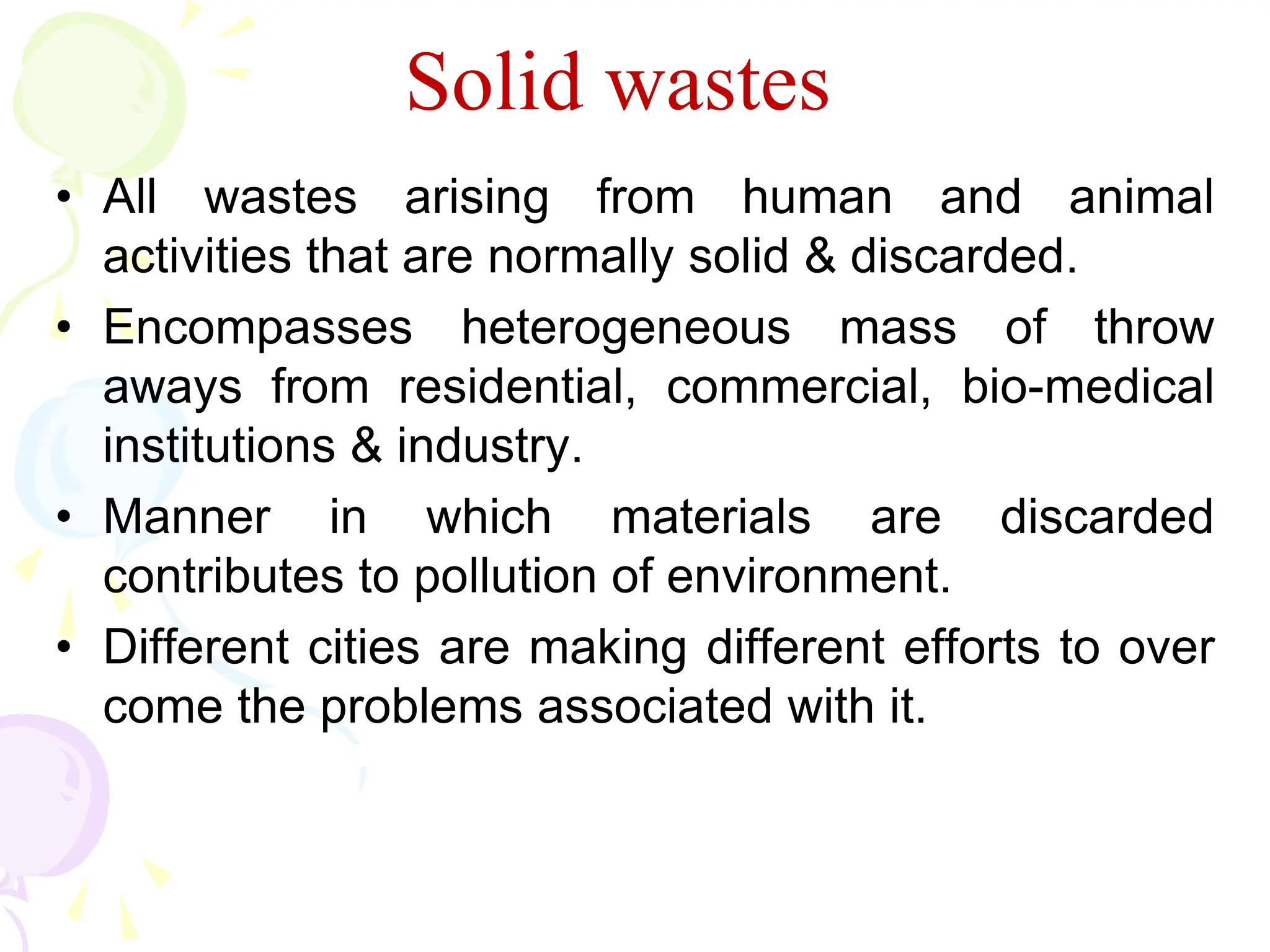
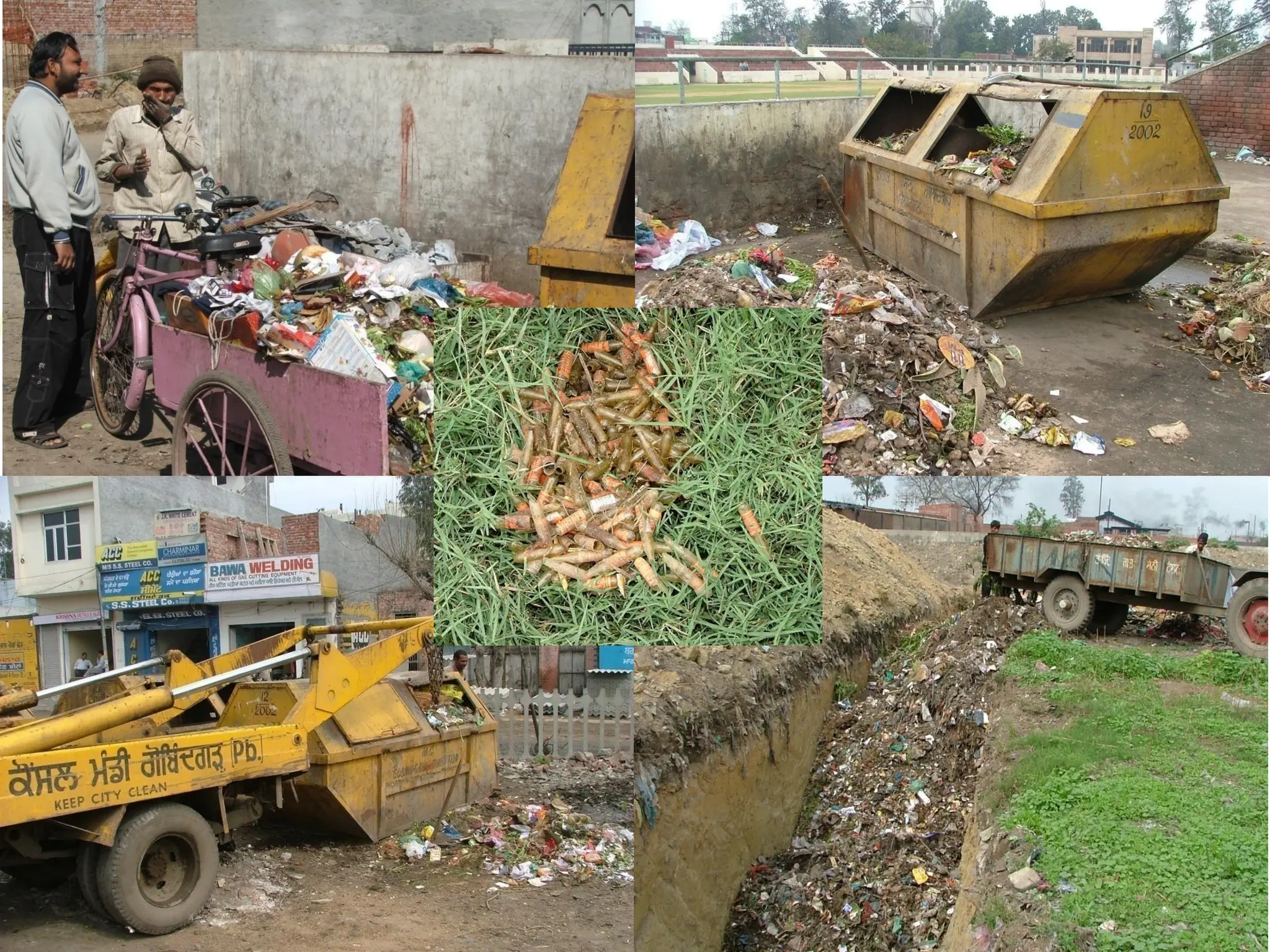
• All wastes arising from human and animal
activities that are normally solid & discarded.
• Encompasses heterogeneous mass of throw
aways from residential, commercial, bio-medical
institutions & industry.
• Manner in which materials are discarded
contributes to pollution of environment.
• Different cities are making different efforts to over
come the problems associated with it.
Solid wastes
Vermicomposting
Vermicomposting deals with
management of waste from
various sectors (Agricultural,
industrial, domestic and
municipal) to generate useful
products with the help of
earthworm.
Species of earthworms used
for vermicomposting
• Eisenia fetida
• Eudrilus euginae
• Perionyx excavatus
• Lumbricus rubellus
• Lampito mauritii
• Polypheretima elongata
• Pontoscolex corethrurus
• Drawida napalensis
• Dichogaster modigliani
Digestive System of Earthworm
Features for selection
• Tolerances to wide range of environmental
conditions
• Capable of inhabiting high percentage of
organic matter
• Prolific breeder
• High hatching rate
• Short life cycle
Vermicomposting Materials
• Animal dung
• Agricultural wastes
• Forestry wastes
• City garbage
• Kitchen wastes
• Industrial waste
Earthworm affect on waste
❑ Fragmentation and breakdown
❑ consumption, turnover and humification
❑ Nitrogen mineralization
❑ Effect on C:N ratio
❑ Effect on available nutrients
❑ Increase NPK content
❑ change pH, EC & TDS
❑ Heavy metal Bioremediation
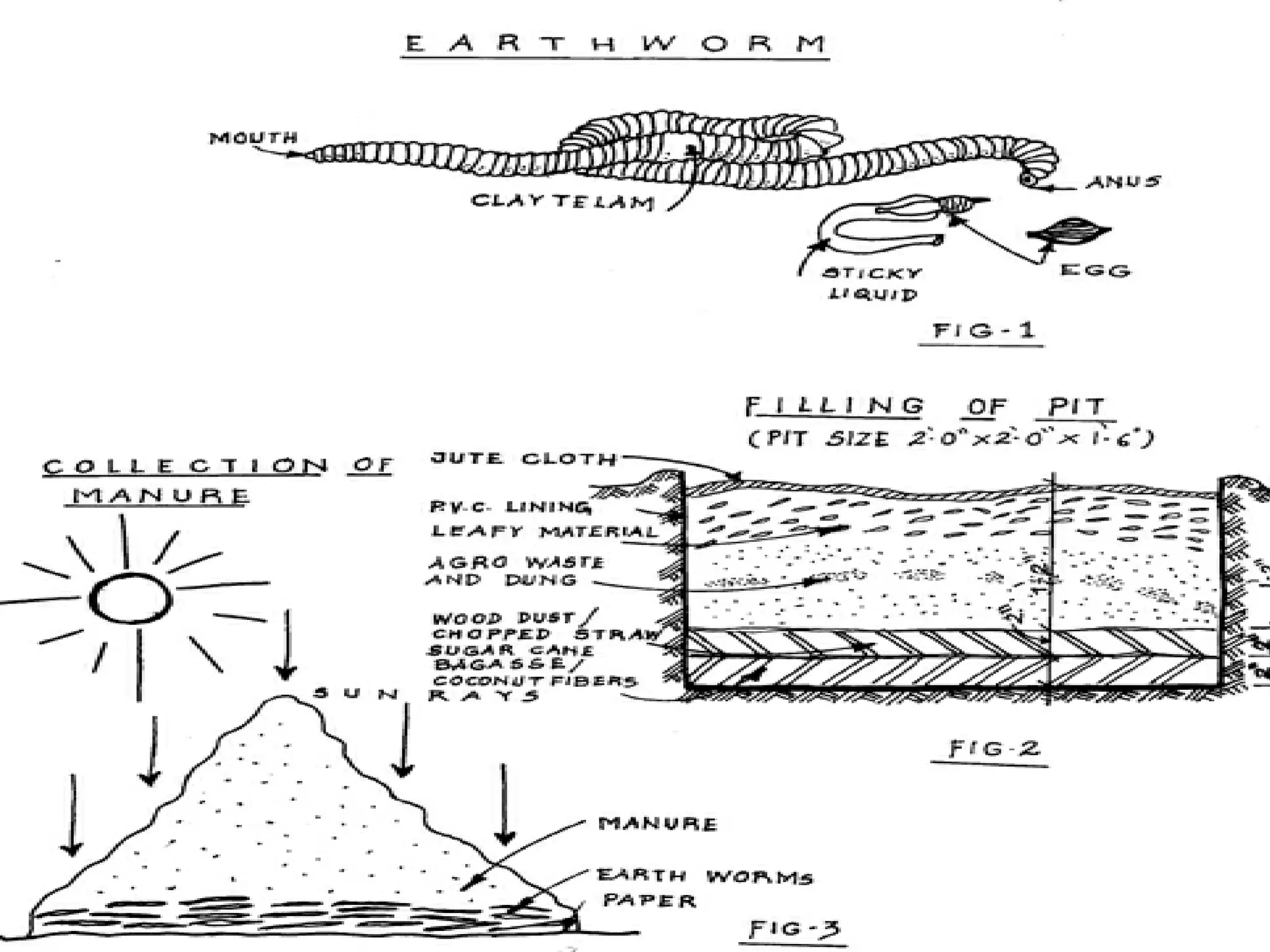
Methodology (small scale)
Non biodegradable containers having drain holes
Put cattle dung as layer
Release 400gms of earthworms
Sprinkle water and load cow dung if needed
Leave it for 20 days with regular sprinkling of
water & turning after every 10 days
Load approx. 300-500 gms (2-3 inch) of
kitchen/garden waste on alternate days by
mixing with upper 4” layer till tub is filled
After 45-50 days, the entire waste would be
converted into vermicompost, granular in
appearance and ready for harvesting
Stop sprinkling water, take out harvest from the
top, start reloading the waste in the tub
without disturbing the base
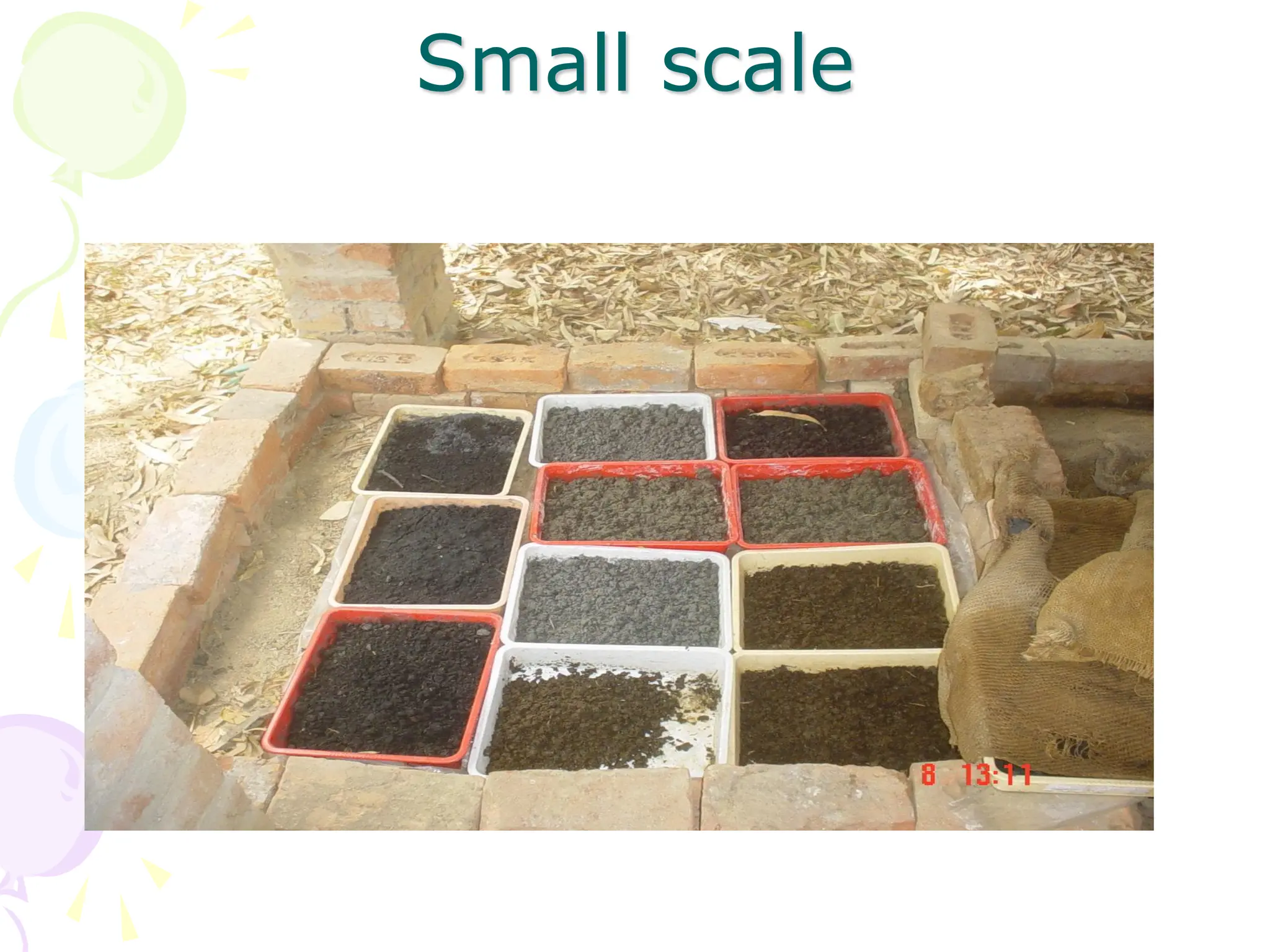
Small scale
Experimental Vermicomposting unit setup at
Guru Nanak Dev University Amritsar
Large scale
• Maximum width 3 feet.
• Maximum Height 1.5 feet.
• Length can be increased or decreased
according to the quantity of the waste
generated or space available.
Large scale
Requirement to setup Vermicomposting unit in College
• Shed : Wooden, Steel trusses, RCC Pillars,
Essential due to bed wetting due to rain
• Polythene sheets
• Bricks : To make vermibeds
• Cattle dung
• Jutemat
• Water supply
• One regular staff to take care
the vermibeds.
Schemes for Vermibed Preparation
Width 2ft
Length
10ft
1ft to 1.5 ft
Vermibed Vermibed Vermibed
Conversion of Bagasse waste into
manure
Pre vermicomposting Post vermicomposting
Advantages of
vermicompost
• Rich in NPK,micronutrients & growth
hormones
• Neutralizes highly acidic and basic soils
• Increase water retention power of the soil
• It is 100% organic, safe, non toxic and
odour free
• It generates employment
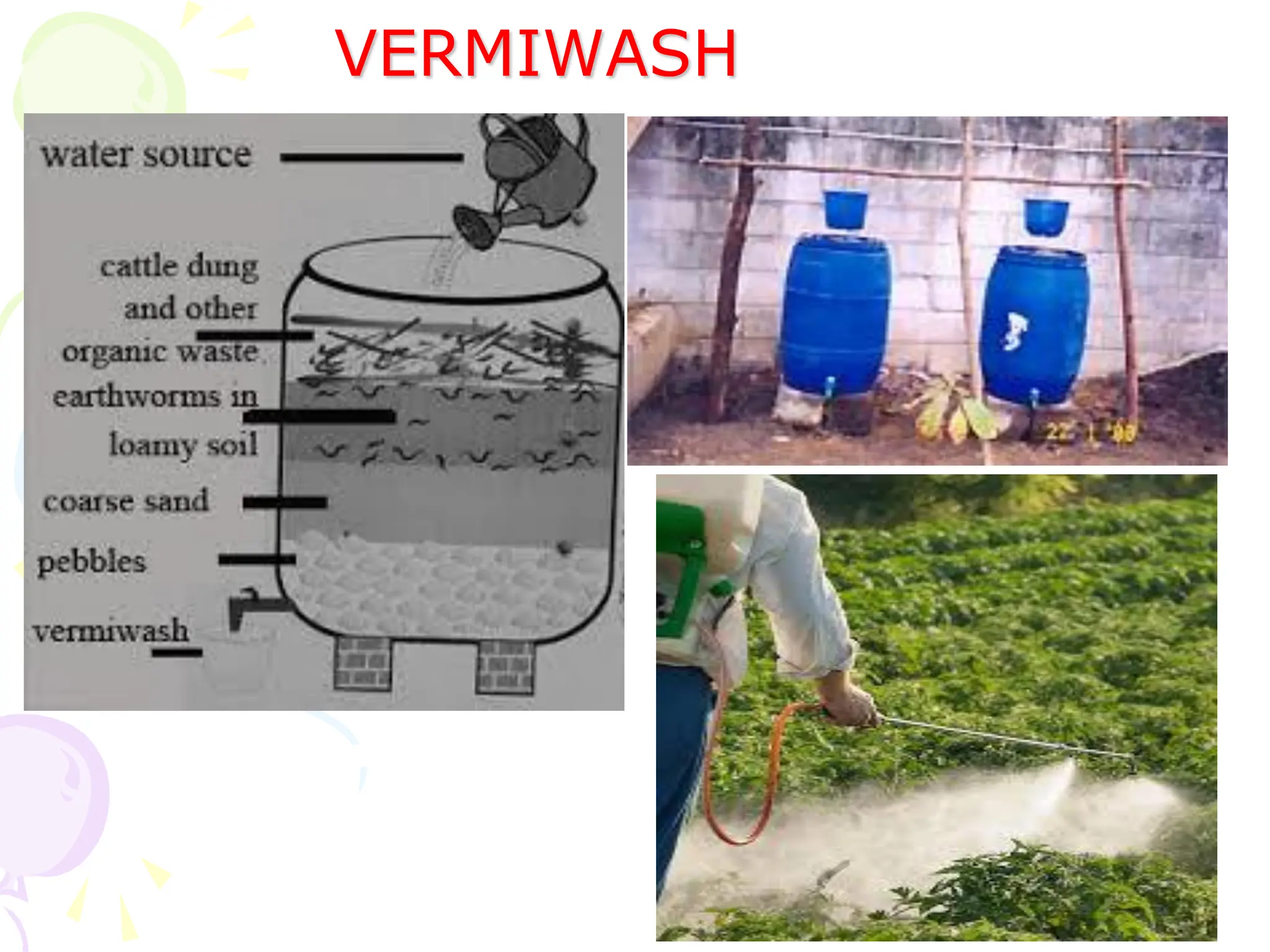
VERMIWASH
Use of earthworms in
medicines
Our ancestors used the native
earthworms in folkloric healings of
many sicknesses such as
inflammation of different parts of the
body, stomachaches and toothaches,
to cure mumps, measles and even to
help in making the birthing process
easier.
Precautions
• Avoid over watering, over loading &
addition of salt, citric, acidic and
cooked food
• Do not use fresh or completely
degraded cow dung for
vermicomposting
• Protects beds from
sunlight,ants,snakes,frog,rat etc
Team Members
1. Dr Adarsh Pal Vig, Professor,
Department of Botanical &
Environmental Sciences,
2. Dr. Sartaj Ahmad Bhat,
Post Doctoral Fellow, Gifu University,
Japan
3. Dr. Sharanpreet Singh
4. Bhawana
5. Soubham Indra Kumar
6. Jahangir Alam, Anu Bala, Rahil, Deachen
Guru Nanak Dev University
Amritsar
Khalsa College, Amritsar
1. Dr. Jaswinder Singh,
Associate Professor,
Department of Zoology,
Khalsa College, Amritsar
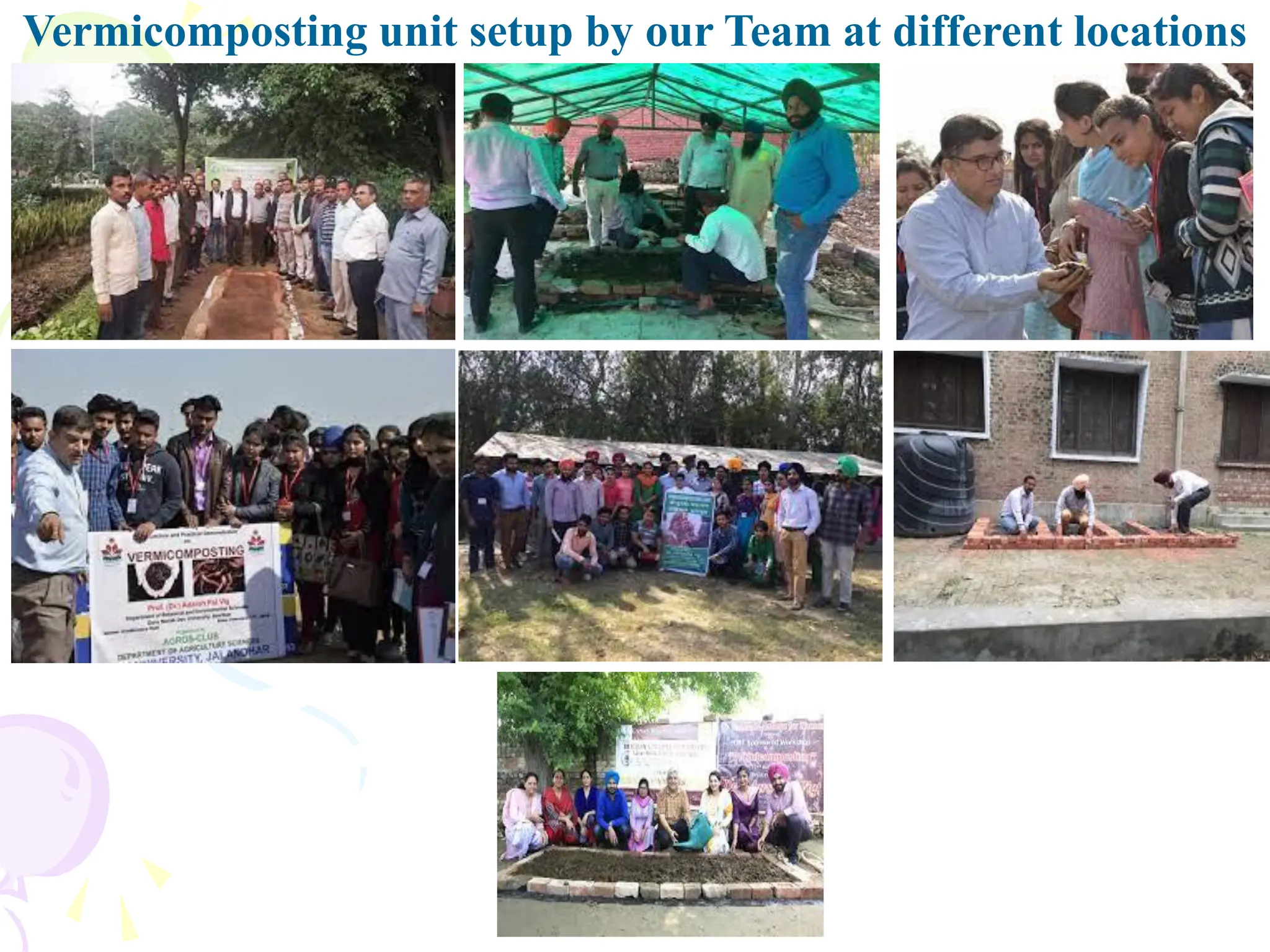
Vermicomposting unit setup by our Team at different locations
Thanks

Vermicomposting KCA.pdf

  • 1.
    Earthworms and theirrole in vermicomposting Dr. Sharanpreet Singh Kahlon (M.Sc., PhD) Principal Sahibzada Zorawar Singh Fateh Singh Sen. Sec. Public School (Kalanaur, GSP) Affiliated to CBSE, New Delhi
  • 2.
  • 3.
    What are Earthworms? ❑ Tube-shaped, segmented worm found in the Phylum Annelida ❑ Hermaphrodites–each individual carries both male and female sex organs Classification Kingdom: Animalia Phylum: Annelida Class: Oligochaeta
  • 4.
    Types of Earthworms Epigeic: Eisenia fetida Endogeic: Metaphire posthuma Anecic: Lampito mauritti
  • 5.
    Characteristics Epigeic EndogeicAnecic Burrowing nature and type Surface dwelling Shallow burrowing and horizontal Deep burrowing and vertical Body size Small Medium Large Body colour Uniform Weak pigmented Medium pigmented Food Leaf litter, cattle dung Soil with high organic matter Leaf litter, decomposed litter Feeding behaviour Detritivores Geophagous Detritivores Role Biodegraders Soil mixing and aeration Soil organic matter decomposition Vermicomposting efficiency High Low Low Earthworm Species Eisenia fetida, Perionyx excavatus, Eudrilus eugeniae Metaphire posthuma, Octochaetona thurstoni, Aporrectodea rosea, Octolasion cyaneum Lampito mauritii, Aporrectodea longa, Lumbricus terrestris Comparative account of characteristics of earthworms species under three ecological categories.
  • 7.
    Life Cycle ofEarthworms
  • 8.
  • 9.
    Factors affecting Earthworms ❑Temperature (25-35o C) ❑ pH (7-8) ❑ Moisture (60-70 %) ❑ Aeration ❑ Shade
  • 10.
    Agriculture activity andits effect on earthworm ❑ Cultivation ❑ Cropping ❑ Fertilizers ❑ Pesticides ❑ Heavy Metals
  • 11.
    Sample Name Site I(Botanical Garden) Site II (Agriculture Field) Soil Vermicast Soil Vermicast pH 9.15 ± 0.02 8.81 ± 0.075 8.87 ± 0.032 8.54 ± 0.02 EC (µS/cm) 163.23 ± 0.08 132.4 ± 0.06 86.8 ± 0.03 70.3 ± 0.04 TDS (mg/L) 98.19 ± 0.32 93.2 ± 0.05 61.65 ± 0.037 55.04 ± 0.03 N (g/Kg) 0.15 ± 0.006 0.224 ± 0.002 0.11 ± 0.014 0.14 ± 0.03 P (g/kg) 0.61 ± 0.01 13.455 ± 0.047 0.42 ± 0.03 8.48 ± 0.07 K (g/kg) 3.93 ± 0.01 1.348 ± 0.009 0.26 ± 0.033 0.19 ± 0.003 OC (%) 1.78 ± 0.001 1.97 ± 0.003 0.92 ± 0.02 2.55 ± 0.002 Na (g/kg) 1.47 ± 0.02 1.3005 ± 0.09 0.63 ± 0.032 0.52 ± 0.03 Ca (g/kg) 0.72 ± 0.03 0.64 ± 0.03 1.65 ± 0.025 1.43 ± 0.02 Li (g/kg) 2.39 ± 0.04 1.3045 ± 0.002 4.79 ± 0.049 3.87 ± 0.02 Fe (mg/Kg) 32.37 ± 0.14 1.61 ± 0.03 6.96 ± 0.032 3.92 ± 0.02 Ni (mg/Kg) 0.104 ± 0.001 <DL* <DL* <DL* Zn (mg/Kg) 0.416 ± 0.001 0.113 ± 0.001 0.082 ± 0.003 0.062 ± 0.002 Pb (mg/Kg) 0.299 ± 0.002 0.061 ± 0.003 0.037 ± 0.003 0.023 ± 0.002 Cr (mg/Kg) 0.41 ± 0.02 0.395 ± 0.002 0.007 ± 0.002 <DL* Comparative account of physico-chemical properties of Soil and Vermicast Source : Singh et al, 2016
  • 12.
    Earthworm and SoilFertility ❑ Effect on Soil Structure 1. Breakdown of soil particles 2. Turnover of soil 3. Formation of aggregates 4. Aeration, porosity 5. Drainage ❑ Indicator of soil type ❑ Effect on crop yield
  • 13.
    Earthworm Enemies ❑ Mice& Rats ❑ Snakes ❑ Mole ❑ Birds
  • 14.
    • All wastesarising from human and animal activities that are normally solid & discarded. • Encompasses heterogeneous mass of throw aways from residential, commercial, bio-medical institutions & industry. • Manner in which materials are discarded contributes to pollution of environment. • Different cities are making different efforts to over come the problems associated with it. Solid wastes
  • 16.
    Vermicomposting Vermicomposting deals with managementof waste from various sectors (Agricultural, industrial, domestic and municipal) to generate useful products with the help of earthworm.
  • 17.
    Species of earthwormsused for vermicomposting • Eisenia fetida • Eudrilus euginae • Perionyx excavatus • Lumbricus rubellus • Lampito mauritii • Polypheretima elongata • Pontoscolex corethrurus • Drawida napalensis • Dichogaster modigliani
  • 18.
  • 19.
    Features for selection •Tolerances to wide range of environmental conditions • Capable of inhabiting high percentage of organic matter • Prolific breeder • High hatching rate • Short life cycle
  • 20.
    Vermicomposting Materials • Animaldung • Agricultural wastes • Forestry wastes • City garbage • Kitchen wastes • Industrial waste
  • 21.
    Earthworm affect onwaste ❑ Fragmentation and breakdown ❑ consumption, turnover and humification ❑ Nitrogen mineralization ❑ Effect on C:N ratio ❑ Effect on available nutrients ❑ Increase NPK content ❑ change pH, EC & TDS ❑ Heavy metal Bioremediation
  • 23.
    Methodology (small scale) Nonbiodegradable containers having drain holes Put cattle dung as layer Release 400gms of earthworms Sprinkle water and load cow dung if needed Leave it for 20 days with regular sprinkling of water & turning after every 10 days
  • 24.
    Load approx. 300-500gms (2-3 inch) of kitchen/garden waste on alternate days by mixing with upper 4” layer till tub is filled After 45-50 days, the entire waste would be converted into vermicompost, granular in appearance and ready for harvesting Stop sprinkling water, take out harvest from the top, start reloading the waste in the tub without disturbing the base
  • 25.
  • 26.
    Experimental Vermicomposting unitsetup at Guru Nanak Dev University Amritsar
  • 27.
    Large scale • Maximumwidth 3 feet. • Maximum Height 1.5 feet. • Length can be increased or decreased according to the quantity of the waste generated or space available.
  • 28.
  • 29.
    Requirement to setupVermicomposting unit in College • Shed : Wooden, Steel trusses, RCC Pillars, Essential due to bed wetting due to rain • Polythene sheets • Bricks : To make vermibeds • Cattle dung • Jutemat • Water supply • One regular staff to take care the vermibeds.
  • 30.
    Schemes for VermibedPreparation Width 2ft Length 10ft 1ft to 1.5 ft Vermibed Vermibed Vermibed
  • 32.
    Conversion of Bagassewaste into manure Pre vermicomposting Post vermicomposting
  • 34.
    Advantages of vermicompost • Richin NPK,micronutrients & growth hormones • Neutralizes highly acidic and basic soils • Increase water retention power of the soil • It is 100% organic, safe, non toxic and odour free • It generates employment
  • 35.
  • 36.
    Use of earthwormsin medicines Our ancestors used the native earthworms in folkloric healings of many sicknesses such as inflammation of different parts of the body, stomachaches and toothaches, to cure mumps, measles and even to help in making the birthing process easier.
  • 37.
    Precautions • Avoid overwatering, over loading & addition of salt, citric, acidic and cooked food • Do not use fresh or completely degraded cow dung for vermicomposting • Protects beds from sunlight,ants,snakes,frog,rat etc
  • 40.
    Team Members 1. DrAdarsh Pal Vig, Professor, Department of Botanical & Environmental Sciences, 2. Dr. Sartaj Ahmad Bhat, Post Doctoral Fellow, Gifu University, Japan 3. Dr. Sharanpreet Singh 4. Bhawana 5. Soubham Indra Kumar 6. Jahangir Alam, Anu Bala, Rahil, Deachen Guru Nanak Dev University Amritsar Khalsa College, Amritsar 1. Dr. Jaswinder Singh, Associate Professor, Department of Zoology, Khalsa College, Amritsar
  • 41.
    Vermicomposting unit setupby our Team at different locations
  • 42.