Types of Dams
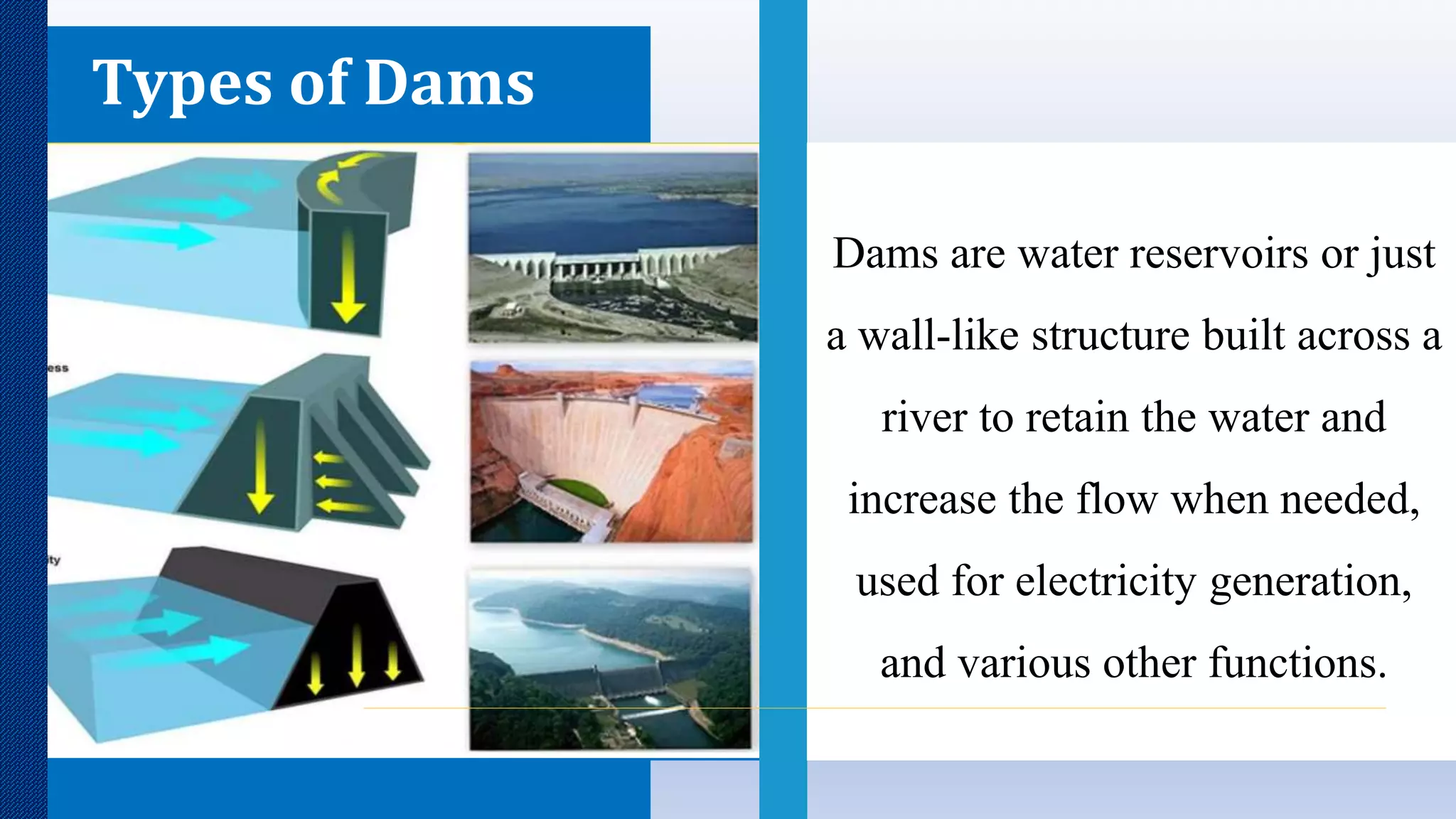
Dams are water reservoirs or just
a wall-like structure built across a
river to retain the water and
increase the flow when needed,
used for electricity generation,
and various other functions.
Arch dam
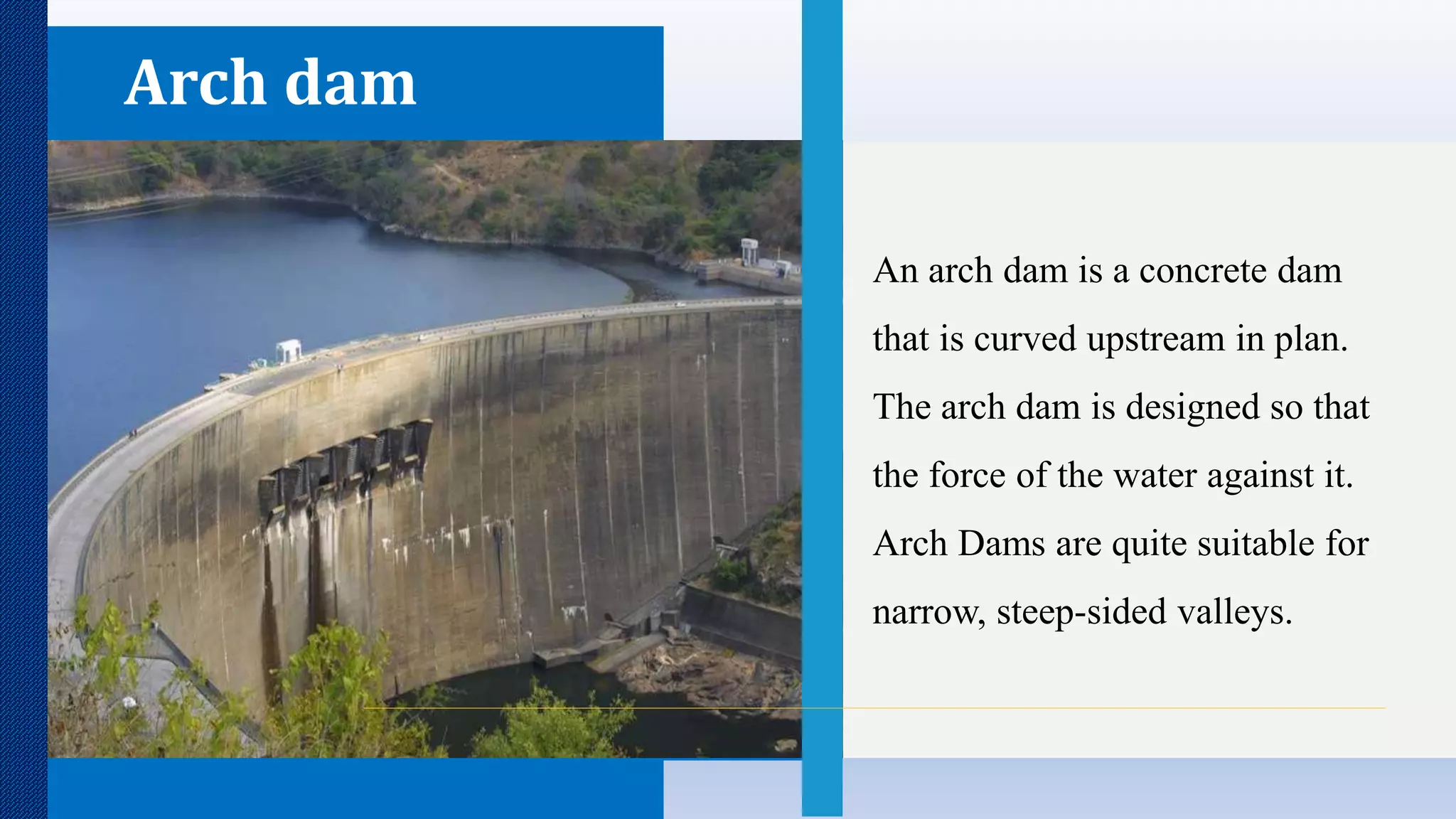
An arch dam is a concrete dam
that is curved upstream in plan.
The arch dam is designed so that
the force of the water against it.
Arch Dams are quite suitable for
narrow, steep-sided valleys.
Embankment dam
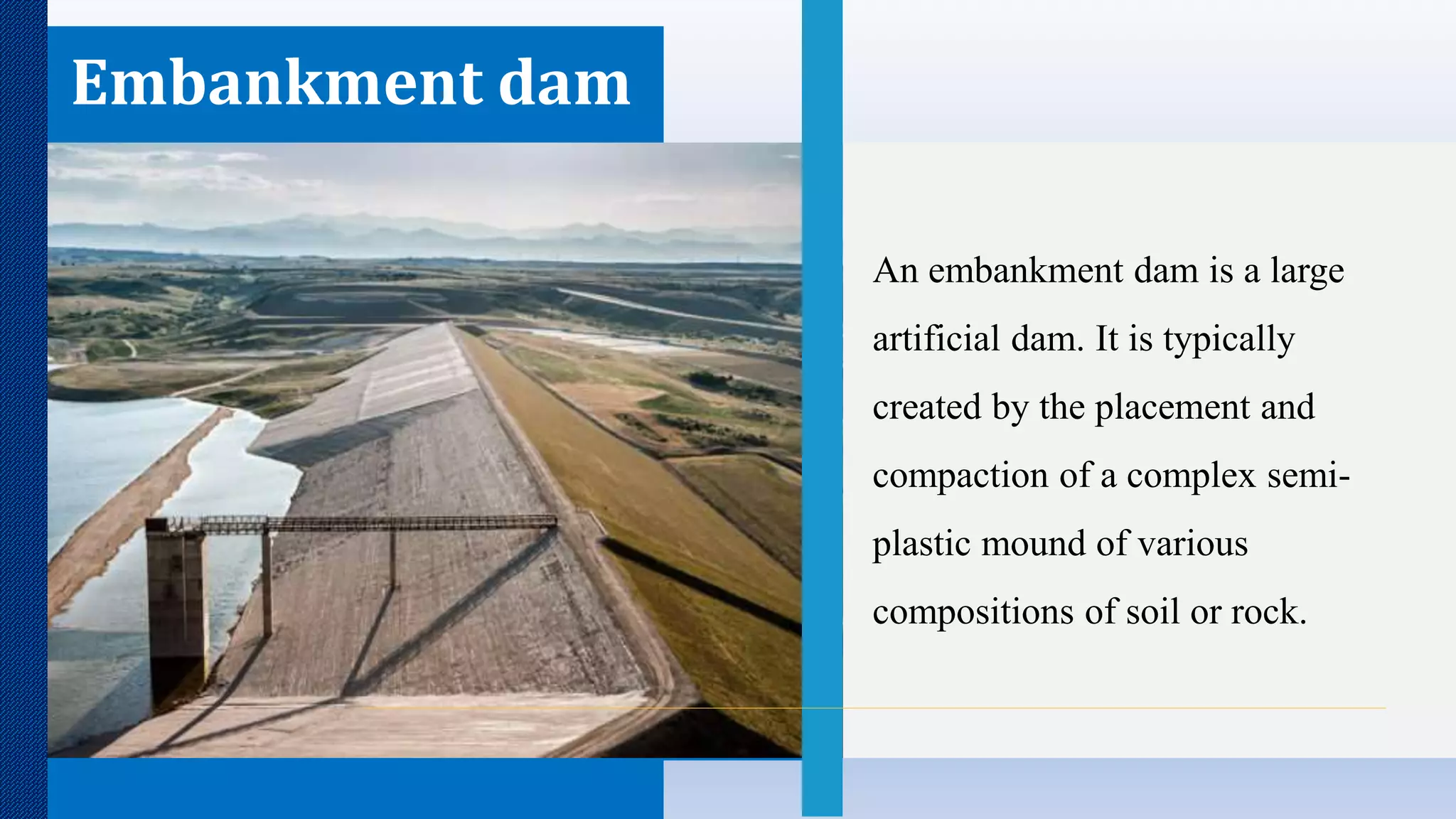
An embankment dam is a large
artificial dam. It is typically
created by the placement and
compaction of a complex semi-
plastic mound of various
compositions of soil or rock.
Gravity dam
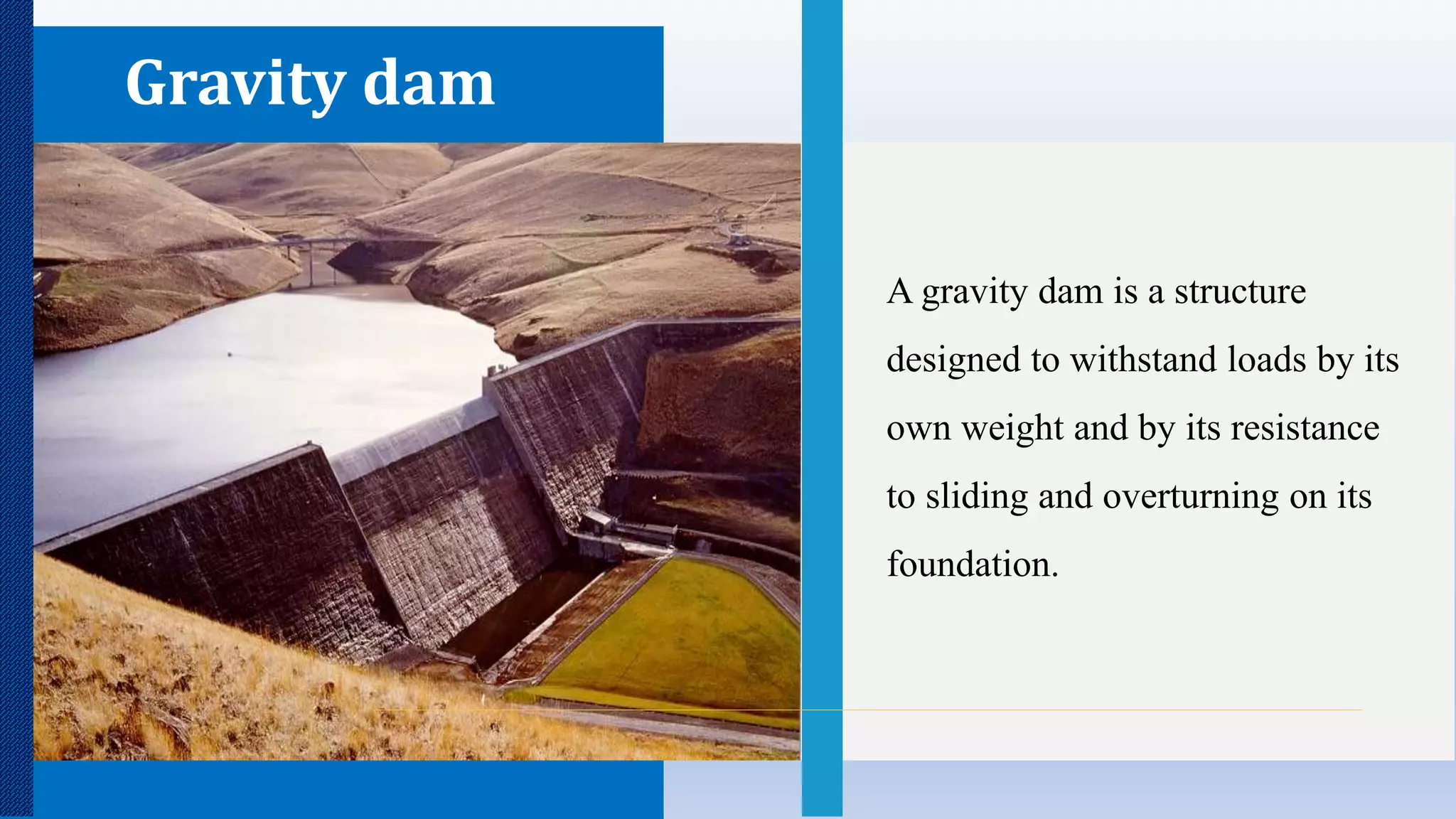
A gravity dam is a structure
designed to withstand loads by its
own weight and by its resistance
to sliding and overturning on its
foundation.
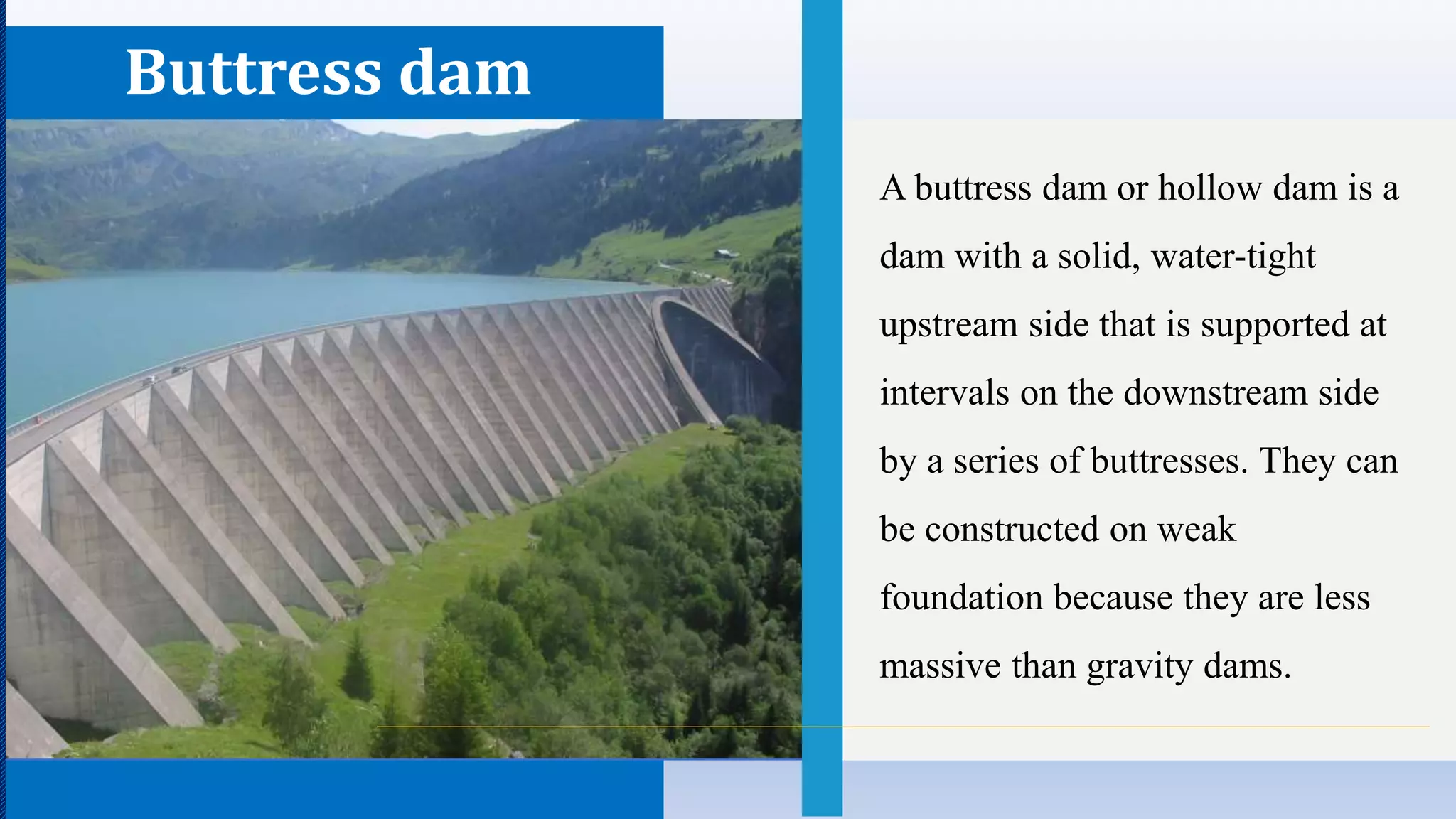
Buttress dam
A buttress dam or hollow dam is a
dam with a solid, water-tight
upstream side that is supported at
intervals on the downstream side
by a series of buttresses. They can
be constructed on weak
foundation because they are less
massive than gravity dams.
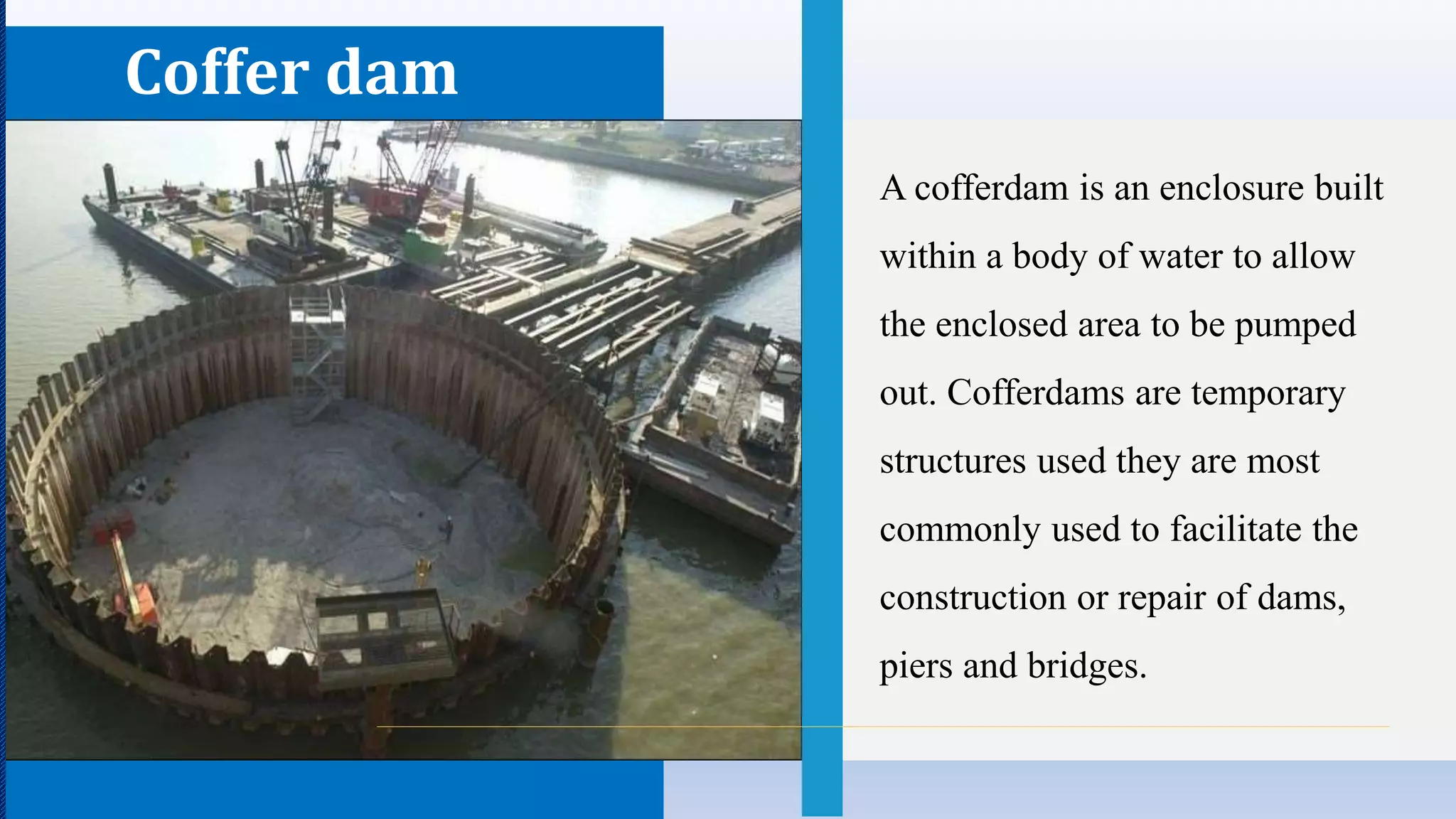
Coffer dam
A cofferdam is an enclosure built
within a body of water to allow
the enclosed area to be pumped
out. Cofferdams are temporary
structures used they are most
commonly used to facilitate the
construction or repair of dams,
piers and bridges.
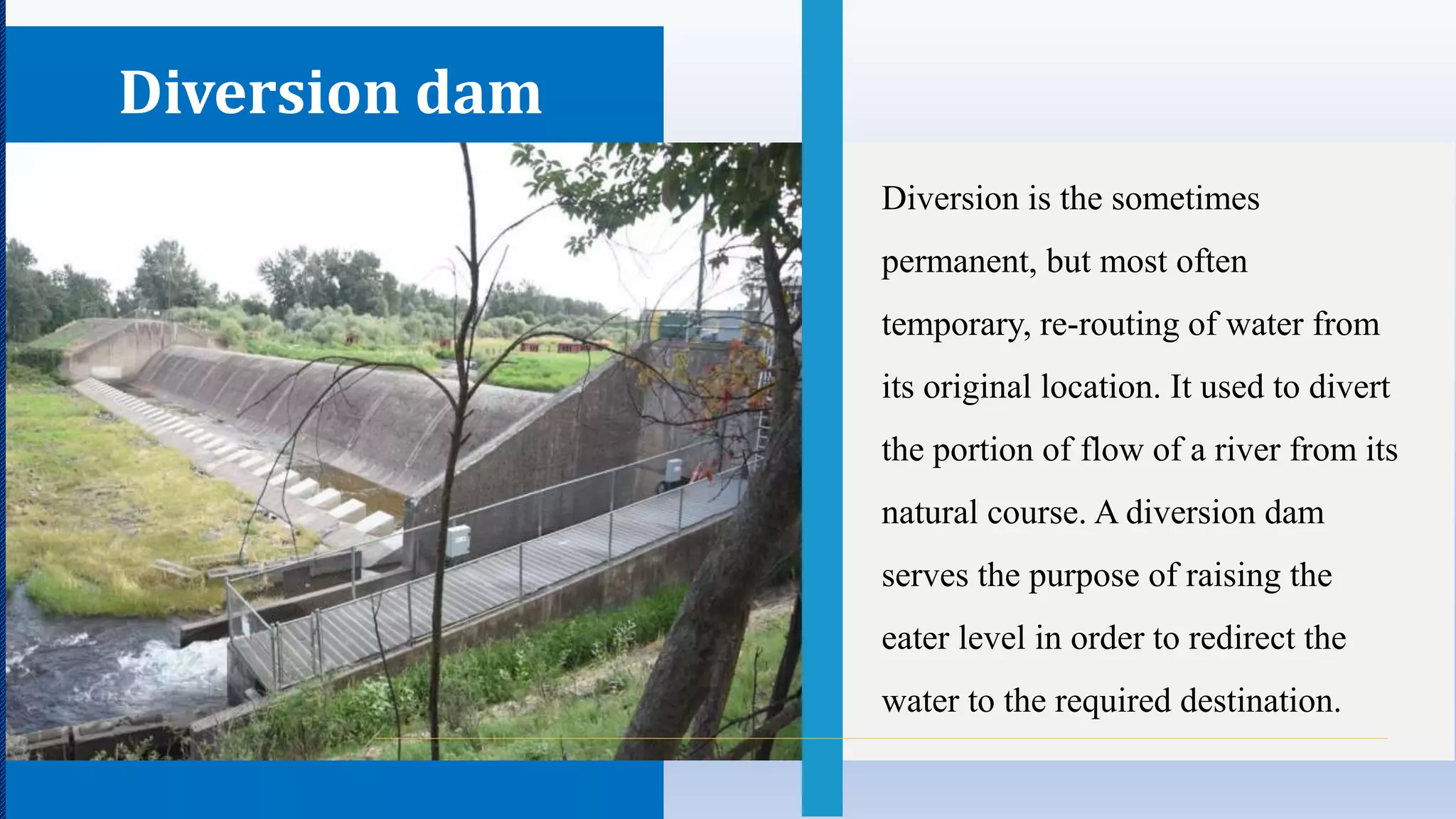
Diversion dam
Diversion is the sometimes
permanent, but most often
temporary, re-routing of water from
its original location. It used to divert
the portion of flow of a river from its
natural course. A diversion dam
serves the purpose of raising the
eater level in order to redirect the
water to the required destination.
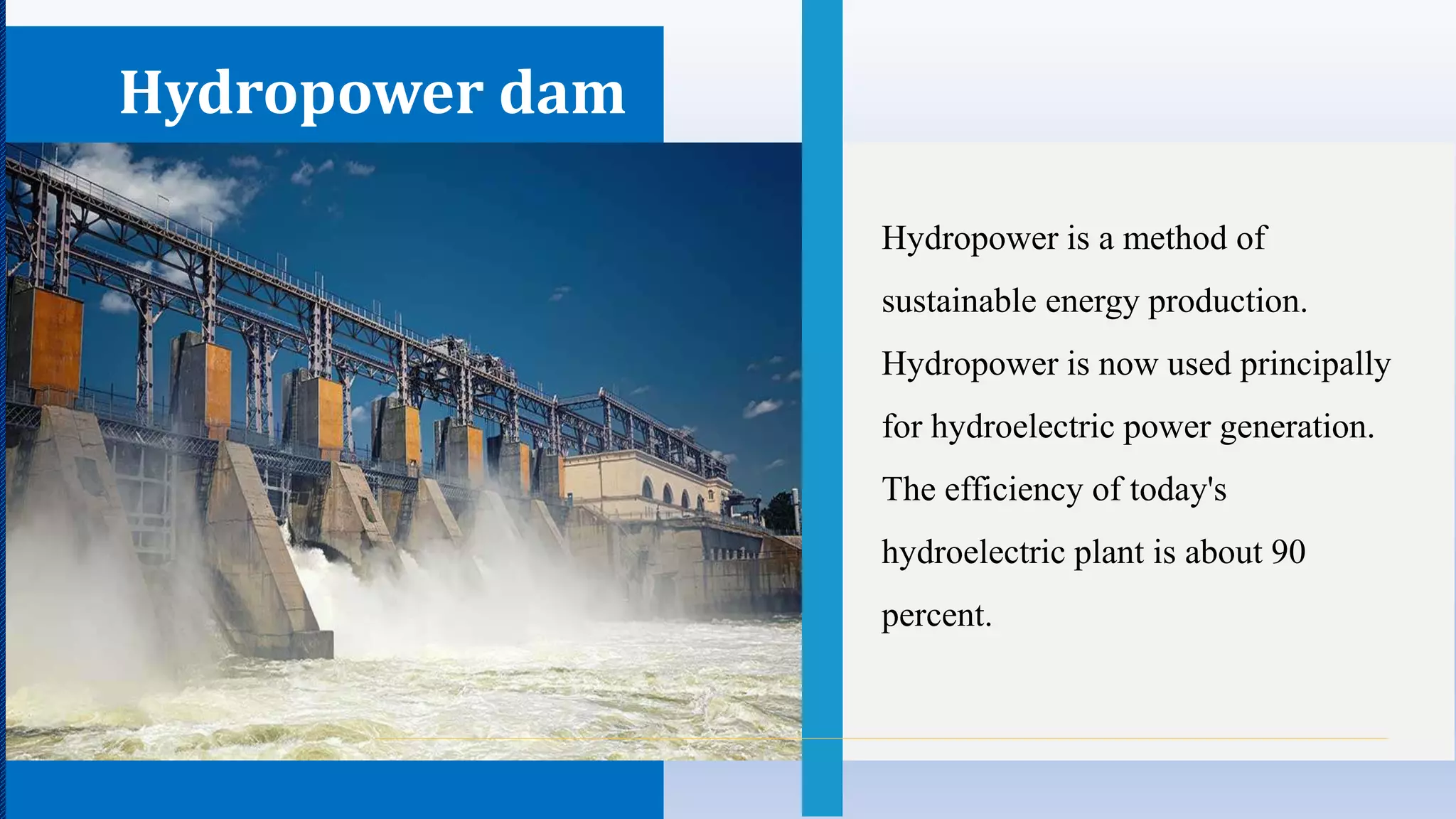
Hydropower dam
Hydropower is a method of
sustainable energy production.
Hydropower is now used principally
for hydroelectric power generation.
The efficiency of today's
hydroelectric plant is about 90
percent.
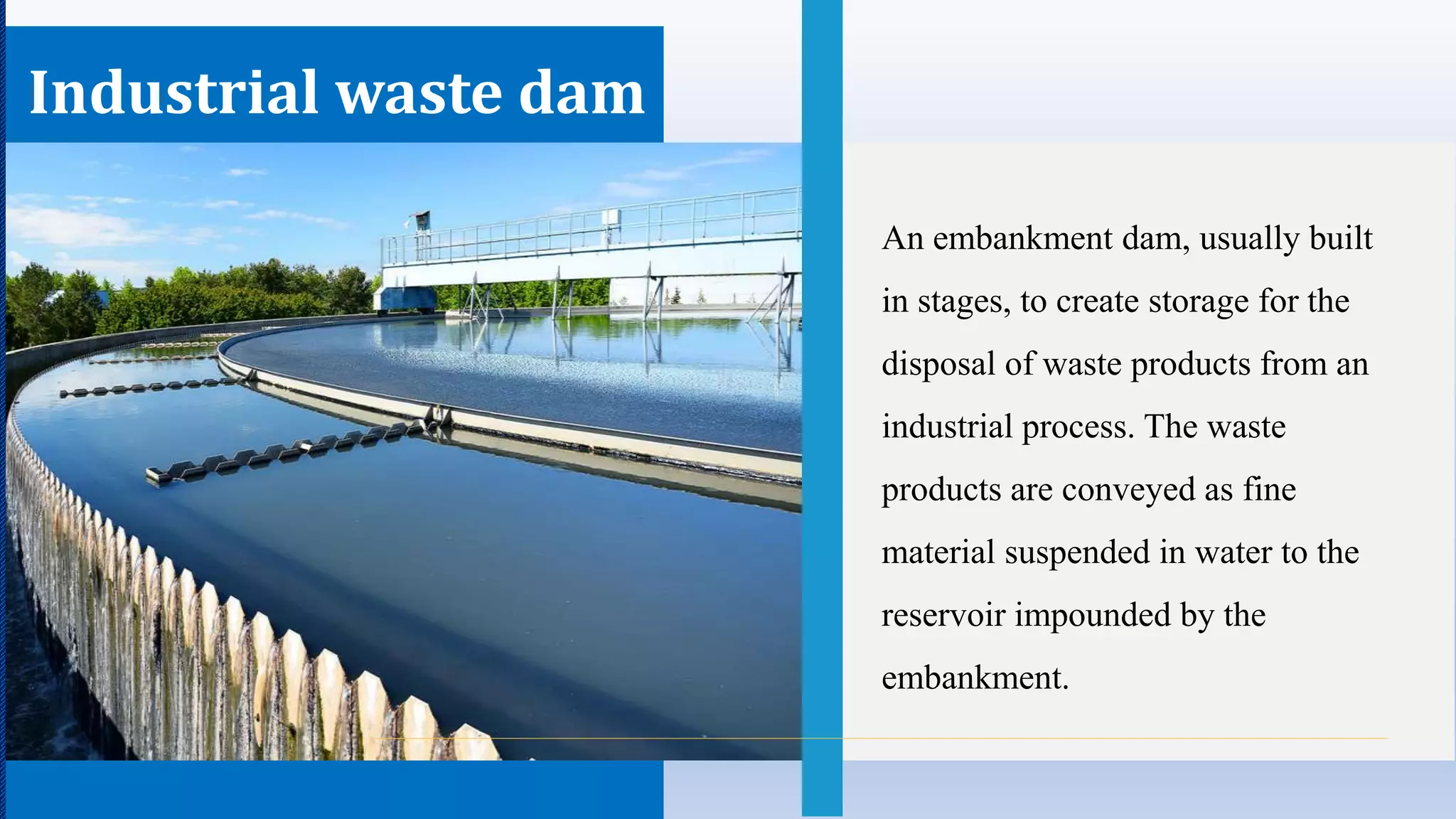
Industrial waste dam
An embankment dam, usually built
in stages, to create storage for the
disposal of waste products from an
industrial process. The waste
products are conveyed as fine
material suspended in water to the
reservoir impounded by the
embankment.
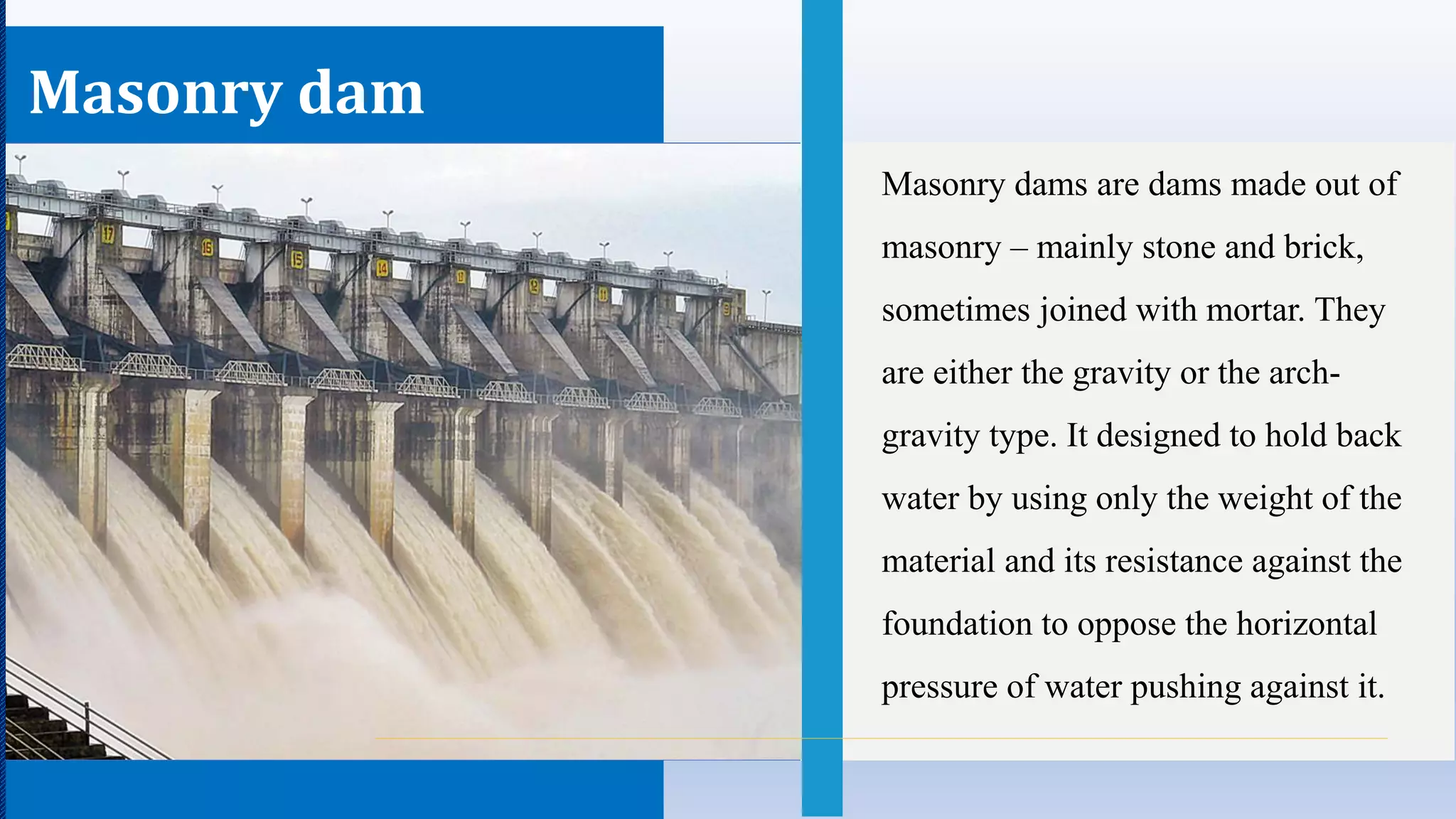
Masonry dam
Masonry dams are dams made out of
masonry – mainly stone and brick,
sometimes joined with mortar. They
are either the gravity or the arch-
gravity type. It designed to hold back
water by using only the weight of the
material and its resistance against the
foundation to oppose the horizontal
pressure of water pushing against it.
Overflow dam
The overflow dam is a dam that
allows surplus water over its crest to
flow downstream. In overflow dams,
the water flows over the top. It is
designed to store water and allow
surplus water to flow downstream
into the riverbed. The overflow dam
is a type of Hydraulic Dam.
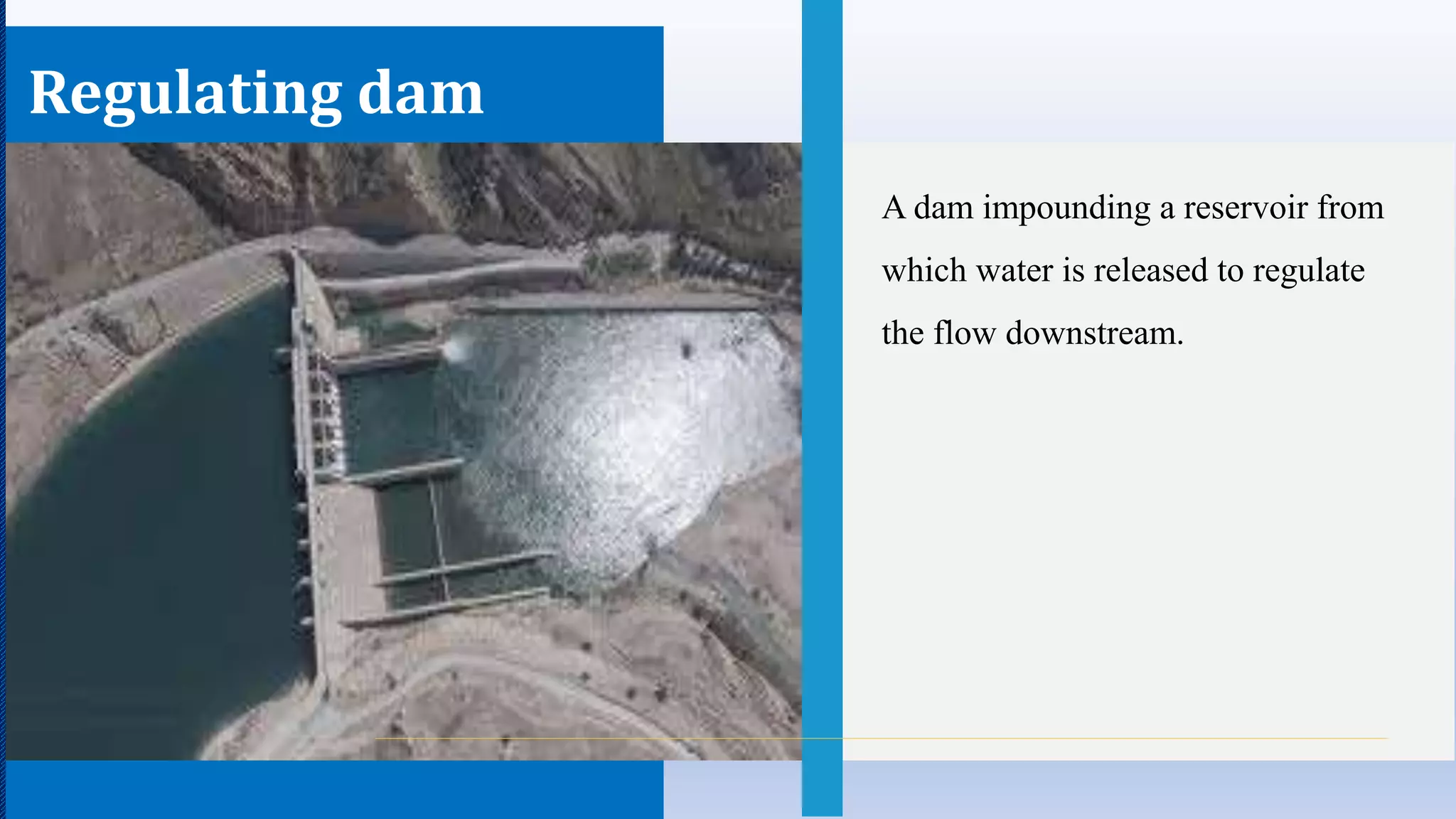
Regulating dam
A dam impounding a reservoir from
which water is released to regulate
the flow downstream.
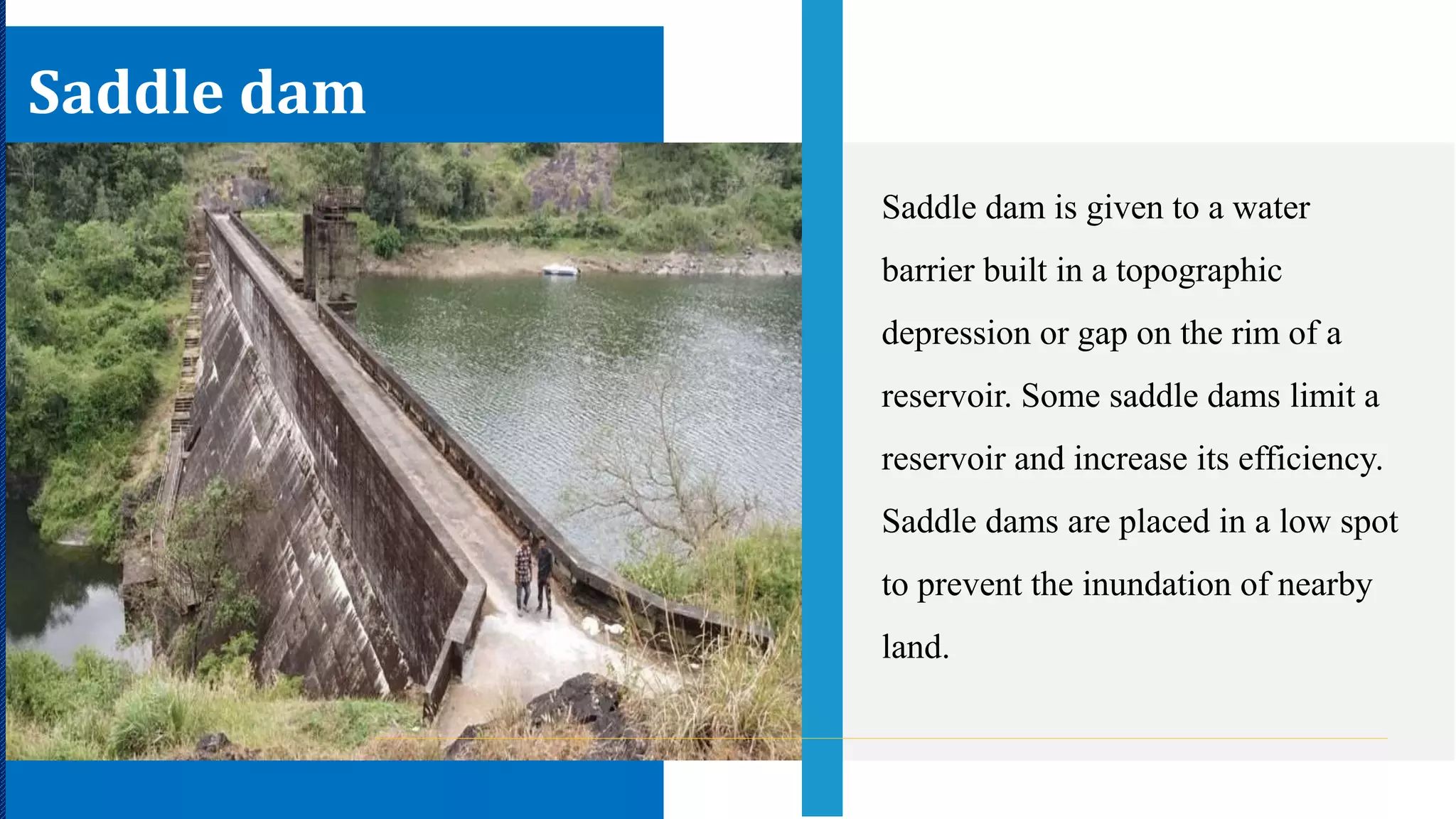
Saddle dam
Saddle dam is given to a water
barrier built in a topographic
depression or gap on the rim of a
reservoir. Some saddle dams limit a
reservoir and increase its efficiency.
Saddle dams are placed in a low spot
to prevent the inundation of nearby
land.
Thanks to:
RSR Rungta College of Engineering
& Technology, the best engineering
college in chhattisgarh offers 4-year
long-term course, affiliated with
CSVTU emerging as a seat of
learning with professional courses
being great job opportunity.

Types of dams

  • 1.
    Types of Dams Damsare water reservoirs or just a wall-like structure built across a river to retain the water and increase the flow when needed, used for electricity generation, and various other functions.
  • 2.
    Arch dam An archdam is a concrete dam that is curved upstream in plan. The arch dam is designed so that the force of the water against it. Arch Dams are quite suitable for narrow, steep-sided valleys.
  • 3.
    Embankment dam An embankmentdam is a large artificial dam. It is typically created by the placement and compaction of a complex semi- plastic mound of various compositions of soil or rock.
  • 4.
    Gravity dam A gravitydam is a structure designed to withstand loads by its own weight and by its resistance to sliding and overturning on its foundation.
  • 5.
    Buttress dam A buttressdam or hollow dam is a dam with a solid, water-tight upstream side that is supported at intervals on the downstream side by a series of buttresses. They can be constructed on weak foundation because they are less massive than gravity dams.
  • 6.
    Coffer dam A cofferdamis an enclosure built within a body of water to allow the enclosed area to be pumped out. Cofferdams are temporary structures used they are most commonly used to facilitate the construction or repair of dams, piers and bridges.
  • 7.
    Diversion dam Diversion isthe sometimes permanent, but most often temporary, re-routing of water from its original location. It used to divert the portion of flow of a river from its natural course. A diversion dam serves the purpose of raising the eater level in order to redirect the water to the required destination.
  • 8.
    Hydropower dam Hydropower isa method of sustainable energy production. Hydropower is now used principally for hydroelectric power generation. The efficiency of today's hydroelectric plant is about 90 percent.
  • 9.
    Industrial waste dam Anembankment dam, usually built in stages, to create storage for the disposal of waste products from an industrial process. The waste products are conveyed as fine material suspended in water to the reservoir impounded by the embankment.
  • 10.
    Masonry dam Masonry damsare dams made out of masonry – mainly stone and brick, sometimes joined with mortar. They are either the gravity or the arch- gravity type. It designed to hold back water by using only the weight of the material and its resistance against the foundation to oppose the horizontal pressure of water pushing against it.
  • 11.
    Overflow dam The overflowdam is a dam that allows surplus water over its crest to flow downstream. In overflow dams, the water flows over the top. It is designed to store water and allow surplus water to flow downstream into the riverbed. The overflow dam is a type of Hydraulic Dam.
  • 12.
    Regulating dam A damimpounding a reservoir from which water is released to regulate the flow downstream.
  • 13.
    Saddle dam Saddle damis given to a water barrier built in a topographic depression or gap on the rim of a reservoir. Some saddle dams limit a reservoir and increase its efficiency. Saddle dams are placed in a low spot to prevent the inundation of nearby land.
  • 14.
    Thanks to: RSR RungtaCollege of Engineering & Technology, the best engineering college in chhattisgarh offers 4-year long-term course, affiliated with CSVTU emerging as a seat of learning with professional courses being great job opportunity.

Editor's Notes

  • #2 Photo by Denniz Futalan from Pexels
  • #3 Photo by Denniz Futalan from Pexels
  • #4 Photo by Denniz Futalan from Pexels
  • #5 Photo by Denniz Futalan from Pexels
  • #6 Photo by Denniz Futalan from Pexels
  • #7 Photo by Denniz Futalan from Pexels
  • #8 Photo by Denniz Futalan from Pexels
  • #9 Photo by Denniz Futalan from Pexels
  • #10 Photo by Denniz Futalan from Pexels
  • #11 Photo by Denniz Futalan from Pexels
  • #12 Photo by Denniz Futalan from Pexels
  • #13 Photo by Denniz Futalan from Pexels
  • #14 Photo by Denniz Futalan from Pexels
  • #15 Photo by Denniz Futalan from Pexels