Submitted by: Submitted to:
Krishna Kumar Mrs. Sonam Pushkar
B. Pharm VII Sem (Assistant Professor)
Roll No. 168287365004
• When body temperature rises above 99
degree fahrenheit or 37 degree centigrade. It
is called pyrexia or fever.
• It is also caused by bacterial or viral
infection, and may be associated with
influenza, measles, chicken pox, meningitis
and local infection.
 A moderate fever is not harmful, but a temp. of
above 40degree C (104degree F) can be
dangerous, and may trigger fits in babies and
young children.
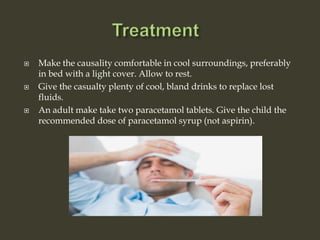
 Make the causality comfortable in cool surroundings, preferably
in bed with a light cover. Allow to rest.
 Give the casualty plenty of cool, bland drinks to replace lost
fluids.
 An adult make take two paracetamol tablets. Give the child the
recommended dose of paracetamol syrup (not aspirin).
 A headache may accompany of any illness,
particularly a feverish ailment such as ‘flu’ but
it may be the most prominent symptoms of a
serious condition, such as meningitis or stroke.
 Headaches may develop for no apparent
reason, but can often be traced to tiredness,
nervous tension, stress or emotional upset.
Always seeking urgent advice if the pain:
 Develops very suddenly;
 Is severe and incapacitating;
 Is recurrent or persistent;
 Is accompanied by loss of strength or sensation,
impaired consciousness;
 Is accompanied by a stiff neck;
 Follows a head injury.
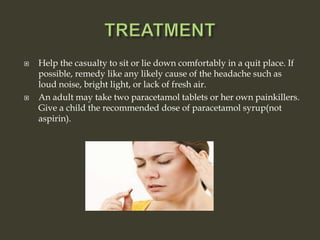
 Help the casualty to sit or lie down comfortably in a quit place. If
possible, remedy like any likely cause of the headache such as
loud noise, bright light, or lack of fresh air.
 An adult may take two paracetamol tablets or her own painkillers.
Give a child the recommended dose of paracetamol syrup(not
aspirin).
 Applying dressings and bandages is an
important part of good first-aid practice.
 Wounds usually require a dressing, and almost
all injuries will benefit from the support that
bandages can give.
Dressing are used to:
 Help control bleeding
.
 Cover a wound and
protect it, thereby
reducing the risk of
infection.
 Help to applying
medicines.
Bandages are used to:
 Maintain direct
pressure over a
dressing to control
bleeding.
 Hold dressings,
splints, and
compresses in place.
 Limit swelling.
 Provide support to an
injured or joint.
 Restrict movement.
Basic materials for a first-aid kit
 20 adhesives dressings
(plasters) in assorted sizes;
 Easily identifiable watertight
box;
 Six medium sterile dressings;
 Two large sterile dressings;
 Two extra-large sterile
dressings;
 Two sterile eye pads;
 Six triangular bandages;
 Six safety pins;
 Disposable gloves.
Useful additions
 Two crepe roller bandages;
 Scissors
 Tweezers;
 Cotton wool;
 Non-alcoholic wound
cleansing wipes;
 Adhesive tape;
 Notepad, pencil, and tags;
 Plastic face shield;
 For outdoor activities:
blanket, survival bag, torch,
and whistle
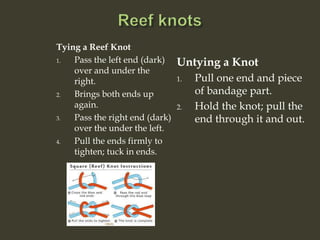
Tying a Reef Knot
1. Pass the left end (dark)
over and under the
right.
2. Brings both ends up
again.
3. Pass the right end (dark)
over the under the left.
4. Pull the ends firmly to
tighten; tuck in ends.
Untying a Knot
1. Pull one end and piece
of bandage part.
2. Hold the knot; pull the
end through it and out.
 When moving a casualty, it is important to be
aware of the dangers to yourself and to the
casualty.
 Incorrect handling and transport methods
could aggravate the causality's condition, and
cause you to injure yourself.
 You should not move a casualty unless you
have received comprehensive training, or the
casualty is in imminent danger and it is safe for
you to approach him or her.
 Move a casualty only if it is absolutely necessary and
you are not putting yourself in danger.
 Always explain to a casualty what is happening so
that he or she can co-operate as much as possible.
 Do not attempt to move a casualty by yourself if help
is available. Ensure that helpers understand what
they need to do, so that they can co-operate fully.
 When more than one person is moving a casualty,
always appoint someone to give verbal commands.
 Always use the correct lifting technique to avoid
injuring your back when lifting or carrying a
casualty.
Tutorial project

Tutorial project

  • 1.
    Submitted by: Submittedto: Krishna Kumar Mrs. Sonam Pushkar B. Pharm VII Sem (Assistant Professor) Roll No. 168287365004
  • 2.
    • When bodytemperature rises above 99 degree fahrenheit or 37 degree centigrade. It is called pyrexia or fever. • It is also caused by bacterial or viral infection, and may be associated with influenza, measles, chicken pox, meningitis and local infection.
  • 3.
     A moderatefever is not harmful, but a temp. of above 40degree C (104degree F) can be dangerous, and may trigger fits in babies and young children.
  • 4.
     Make thecausality comfortable in cool surroundings, preferably in bed with a light cover. Allow to rest.  Give the casualty plenty of cool, bland drinks to replace lost fluids.  An adult make take two paracetamol tablets. Give the child the recommended dose of paracetamol syrup (not aspirin).
  • 5.
     A headachemay accompany of any illness, particularly a feverish ailment such as ‘flu’ but it may be the most prominent symptoms of a serious condition, such as meningitis or stroke.  Headaches may develop for no apparent reason, but can often be traced to tiredness, nervous tension, stress or emotional upset.
  • 6.
    Always seeking urgentadvice if the pain:  Develops very suddenly;  Is severe and incapacitating;  Is recurrent or persistent;  Is accompanied by loss of strength or sensation, impaired consciousness;  Is accompanied by a stiff neck;  Follows a head injury.
  • 7.
     Help thecasualty to sit or lie down comfortably in a quit place. If possible, remedy like any likely cause of the headache such as loud noise, bright light, or lack of fresh air.  An adult may take two paracetamol tablets or her own painkillers. Give a child the recommended dose of paracetamol syrup(not aspirin).
  • 8.
     Applying dressingsand bandages is an important part of good first-aid practice.  Wounds usually require a dressing, and almost all injuries will benefit from the support that bandages can give.
  • 9.
    Dressing are usedto:  Help control bleeding .  Cover a wound and protect it, thereby reducing the risk of infection.  Help to applying medicines. Bandages are used to:  Maintain direct pressure over a dressing to control bleeding.  Hold dressings, splints, and compresses in place.  Limit swelling.  Provide support to an injured or joint.  Restrict movement.
  • 10.
    Basic materials fora first-aid kit  20 adhesives dressings (plasters) in assorted sizes;  Easily identifiable watertight box;  Six medium sterile dressings;  Two large sterile dressings;  Two extra-large sterile dressings;  Two sterile eye pads;  Six triangular bandages;  Six safety pins;  Disposable gloves. Useful additions  Two crepe roller bandages;  Scissors  Tweezers;  Cotton wool;  Non-alcoholic wound cleansing wipes;  Adhesive tape;  Notepad, pencil, and tags;  Plastic face shield;  For outdoor activities: blanket, survival bag, torch, and whistle
  • 11.
    Tying a ReefKnot 1. Pass the left end (dark) over and under the right. 2. Brings both ends up again. 3. Pass the right end (dark) over the under the left. 4. Pull the ends firmly to tighten; tuck in ends. Untying a Knot 1. Pull one end and piece of bandage part. 2. Hold the knot; pull the end through it and out.
  • 12.
     When movinga casualty, it is important to be aware of the dangers to yourself and to the casualty.  Incorrect handling and transport methods could aggravate the causality's condition, and cause you to injure yourself.  You should not move a casualty unless you have received comprehensive training, or the casualty is in imminent danger and it is safe for you to approach him or her.
  • 13.
     Move acasualty only if it is absolutely necessary and you are not putting yourself in danger.  Always explain to a casualty what is happening so that he or she can co-operate as much as possible.  Do not attempt to move a casualty by yourself if help is available. Ensure that helpers understand what they need to do, so that they can co-operate fully.  When more than one person is moving a casualty, always appoint someone to give verbal commands.  Always use the correct lifting technique to avoid injuring your back when lifting or carrying a casualty.