Tree ring analysis
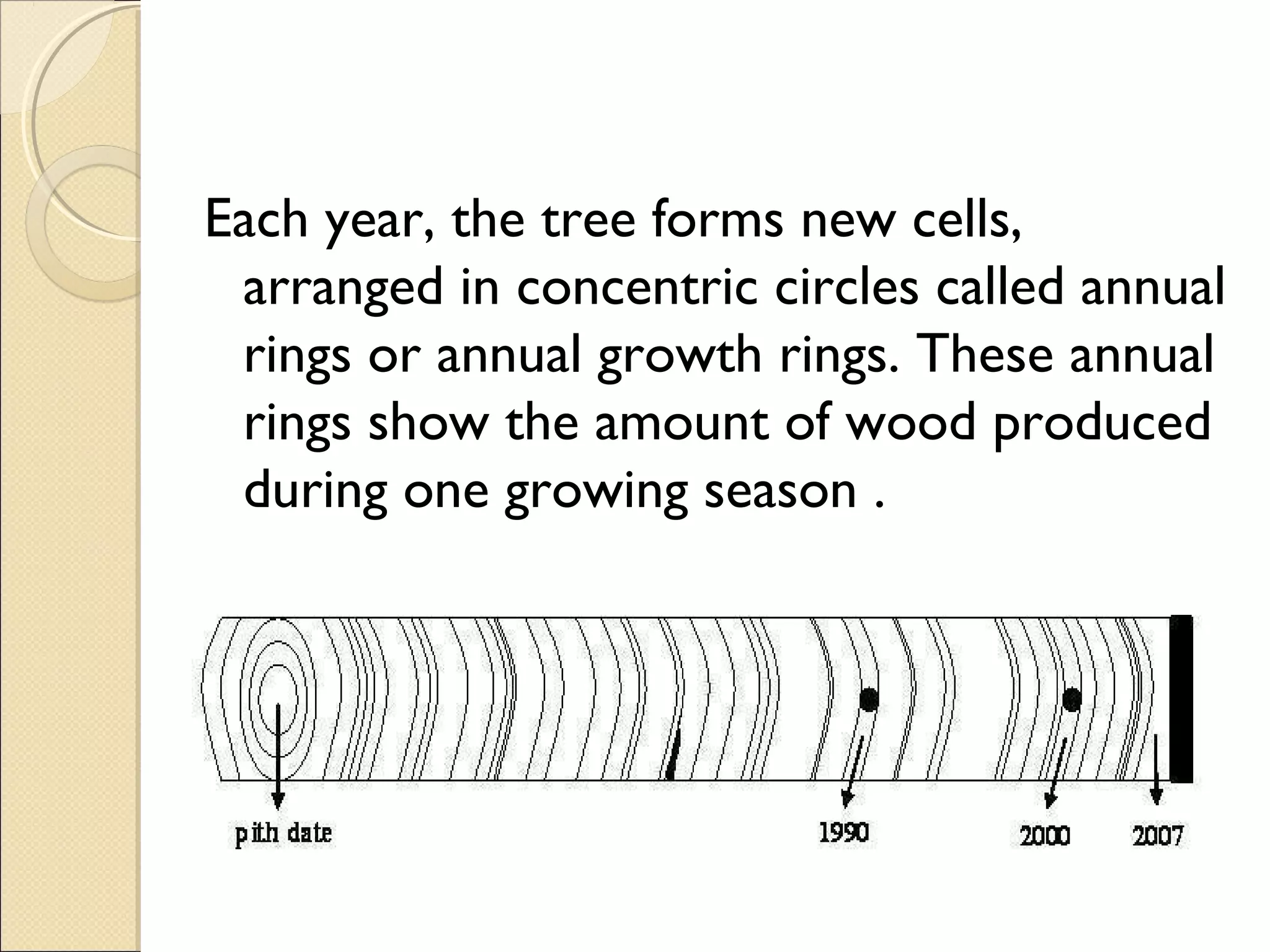
Each year, the tree forms new cells,
arranged in concentric circles called annual
rings or annual growth rings. These annual
rings show the amount of wood produced
during one growing season .
A cross section of a tree shows much
more than its age!
Diameter growth is particularly sensitive to
fluctuations in the environment:
1. moisture in the soil and air
2. temperature
3. sunlight
Very broad rings generally indicate a good
growing year.
Similar patterns occur in the rings of
different tree species over a large
geographic area due to variations in the
amount of annual perception .
Years in which adequate precipitation
occurs produce wider rings of growth ,
but years of drought produce much
narrower rings .
The inner portion of a growth ring is
formed early in the growing season, when
growth is comparatively rapid (hence the
wood is less dense) and is known as “early
wood”.
The outer portion is the “late wood” (and
has sometimes been termed “summer
wood”, often being produced in the
summer, though sometimes in the
autumn) and is denser .
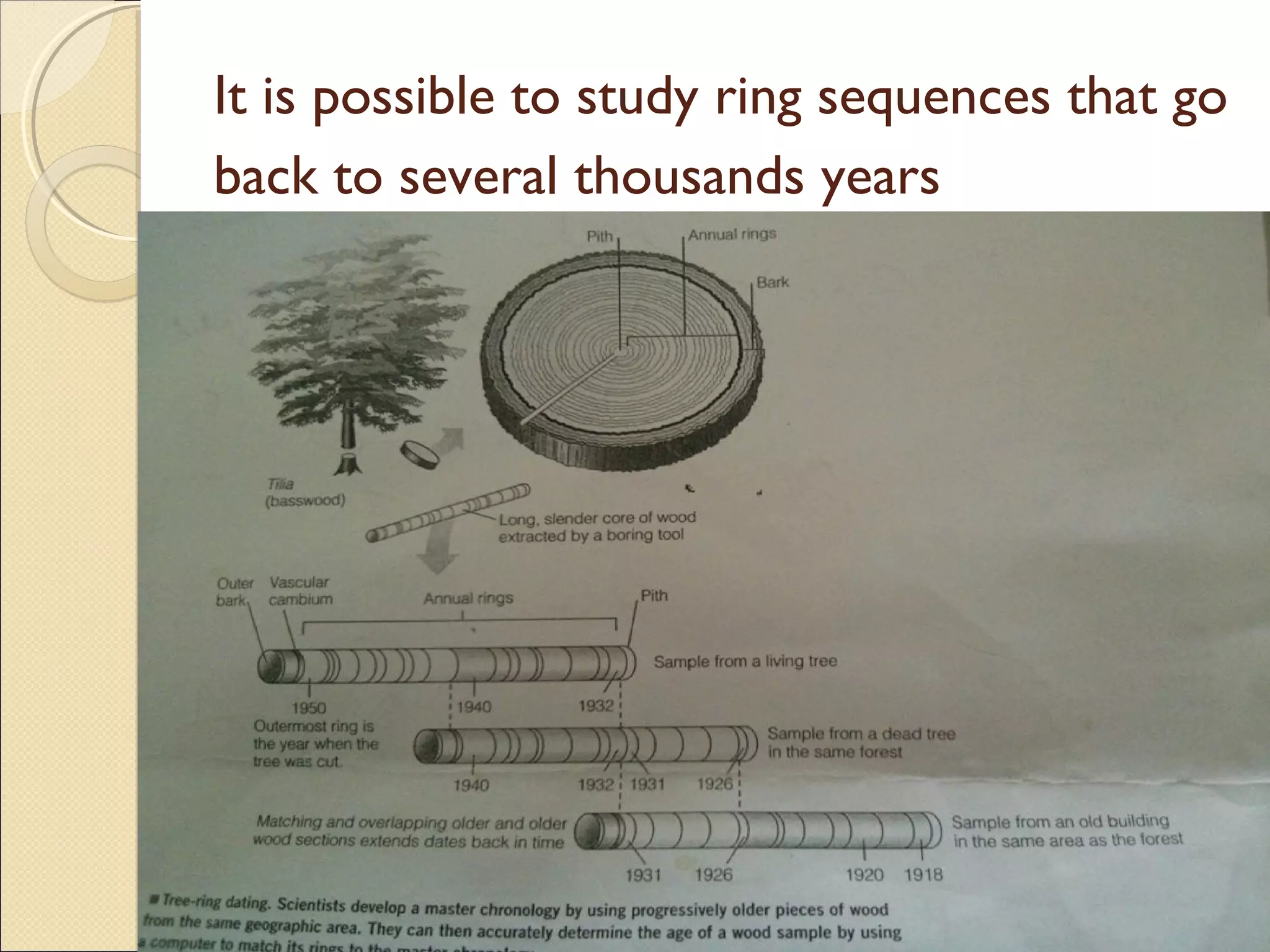
It is possible to study ring sequences that go
back to several thousands years
1.master chronology:
An average tree-ring chronology for a particular
region, or one derived locally from a number of
closely matching individual tree-ring
chronologies. The master chronology forms the
reference against which new ring series may be
compared and dated.
2.Dendrochronology :
(dendron= tree, chronos = time) is a scientific
method that uses tree-ring sequences to date
annual growth rings of plant to their exact year
of formation. It is applied in several scientific
fields, namely archaeology, climatology,
geomorphology, glaciology, hydrology, fire
history, entomology.
 Dendrochronology it is the study of bot visible and
microscopic details of tree rings.
 Uses :
 1 tree ring analysis has been extremly useful in
investigation of prehistoric sites of native Americans in
the southeast
 2.tree ring data are also useful in other disciptions
including ecology to study changes in forest community
over time
 3. Environmental science to study the effects of air
pollution on tree growth
 4. ecology to date the earthquakes and volcanic
eruptions

tree ring analysis ( master chronology , Dendrochronology)

  • 1.
  • 2.
    Each year, thetree forms new cells, arranged in concentric circles called annual rings or annual growth rings. These annual rings show the amount of wood produced during one growing season .
  • 3.
    A cross sectionof a tree shows much more than its age! Diameter growth is particularly sensitive to fluctuations in the environment: 1. moisture in the soil and air 2. temperature 3. sunlight
  • 4.
    Very broad ringsgenerally indicate a good growing year.
  • 5.
    Similar patterns occurin the rings of different tree species over a large geographic area due to variations in the amount of annual perception . Years in which adequate precipitation occurs produce wider rings of growth , but years of drought produce much narrower rings .
  • 6.
    The inner portionof a growth ring is formed early in the growing season, when growth is comparatively rapid (hence the wood is less dense) and is known as “early wood”. The outer portion is the “late wood” (and has sometimes been termed “summer wood”, often being produced in the summer, though sometimes in the autumn) and is denser .
  • 7.
    It is possibleto study ring sequences that go back to several thousands years
  • 8.
    1.master chronology: An averagetree-ring chronology for a particular region, or one derived locally from a number of closely matching individual tree-ring chronologies. The master chronology forms the reference against which new ring series may be compared and dated.
  • 9.
    2.Dendrochronology : (dendron= tree,chronos = time) is a scientific method that uses tree-ring sequences to date annual growth rings of plant to their exact year of formation. It is applied in several scientific fields, namely archaeology, climatology, geomorphology, glaciology, hydrology, fire history, entomology.
  • 10.
     Dendrochronology itis the study of bot visible and microscopic details of tree rings.  Uses :  1 tree ring analysis has been extremly useful in investigation of prehistoric sites of native Americans in the southeast  2.tree ring data are also useful in other disciptions including ecology to study changes in forest community over time  3. Environmental science to study the effects of air pollution on tree growth  4. ecology to date the earthquakes and volcanic eruptions