Technology
and Independent
  Distribution in
   the European
  Travel Industry
2
3


                   This study has been researched, written, and edited by
                                      Diane Merlino,
                                      Douglas Quinby,
                                      Patricia Rasore,
                                    and Lorraine Sileo,
                                   of PhoCusWright Inc.


It has been commissioned by the European Technology & Travel Services Association (ETTSA).
               The authors wish to acknowledge the contribution of ECTAA,
   the association grouping the European Travel Agents’ and Tour Operators’ Associations,
                                      to the research.
4
5


Table of contents


        01 — Introduction from the Chairman & Secretary General	                   8

        02 — Executive Summary	
                                                                                 10
             Key Figures 	                                                        10

        03 — Study Background	
                                                                                 12
             Methodology	                                                         13

        04 —  hat Is Travel Distribution?	
             W                                                                    14
             Key Points	                                                          14
             Introduction	                                                        15
             Travel Distribution : A Bit of History	                              16
             Direct vs. Intermediated Travel Distribution	                        17
             The Role of Technology	                                              20
             The Emergence of Online Travel Sales  OTAs	                         20
             Travel Distribution Chain in Detail : How Flights Are Distributed	   23

        05 —  he European Travel Distribution Value Chain	
             T                                                                    26
             Key Points	                                                          26
             The Size of the European  Online Travel Industries	                 27
             The Role of the GDSs	                                                29
             The Role of Online Travel Agencies	                                  31
             GDSs  Online Travel	                                                32
             Travel Distribution Dynamics	                                        33
             The Economic Impact of Independent Travel Distribution	              35

        06 — Independent Distribution : Benefits  Challenges	
                                                                                 36
             Key Points	                                                          36
             Consumer Benefits	                                                   37
             Travel Supplier Benefits	                                            39
             Travel Agency Benefits	                                              43
             Threats to Intermediary Distribution	                                43

        Appendix 01 : Glossary	                                                   48

        Appendix 02 : European Travel Market – Detail by Country  Segment	       52
        Introduction	                                                             53
        Analysis by Travel Segment	                                               53
        Market Analysis : Germany, Poland, and the United Kingdom	                55

        Appendix 03 : Key Segments of Online Travel	                              58
6
7


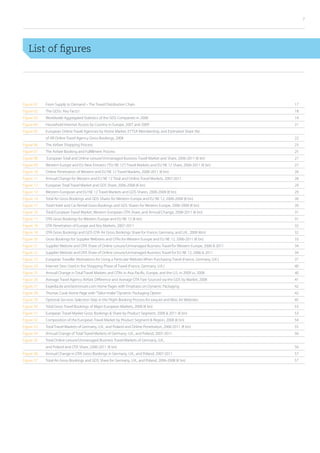
    List of figures


Figure 01 	   From Supply to Demand – The Travel Distribution Chain		                                                         17
Figure 02 	   The GDSs : Key Facts1	                                                                                          18
Figure 03 	   Worldwide Aggregated Statistics of the GDS Companies in 2008		                                                  19
Figure 04 	   Household Internet Access by Country in Europe, 2007 and 2009		                                                 21
Figure 05	    European Online Travel Agencies by Home Market, ETTSA Membership, and Estimated Share (%)
	             of All Online Travel Agency Gross Bookings, 2008		                                                              22
Figure 06 	   The Airfare Shopping Process		                                                                                  23
Figure 07	    The Airfare Booking and Fulfillment Process		                                                                   25
Figure 08	    European Total and Online Leisure/Unmanaged Business Travel Market and Share, 2006-2011 (€ bn)	                 27
Figure 09 	   Western Europe and EU New Entrants (“EU NE 12”) Travel Markets and EU NE 12 Share, 2006-2011 (€ bn)	            27
Figure 10	    Online Penetration of Western and EU NE 12 Travel Markets, 2006-2011 (€ bn)		                                   28
Figure 11 	   Annual Change for Western and EU NE 12 Total and Online Travel Markets, 2007-2011		                             28
Figure 12 	   European Total Travel Market and GDS Share, 2006-2008 (€ bn)		                                                  29
Figure 13 	   Western European and EU NE 12 Travel Markets and GDS Shares, 2006-2008 (€ bn)		                                 29
Figure 14 	   Total Air Gross Bookings and GDS Shares for Western Europe and EU NE 12, 2006-2008 (€ bn)		                     30
Figure 15 	   Total Hotel and Car Rental Gross Bookings and GDS Shares for Western Europe, 2006-2008 (€ bn)	                  30
Figure 16 	   Total European Travel Market, Western European OTA Share, and Annual Change, 2006-2011 (€ bn)	                  31
Figure 17 	   OTA Gross Bookings for Western Europe and EU NE 12 (€ bn)		                                                     31
Figure 18 	   OTA Penetration of Europe and Key Markets, 2007-2011		                                                          32
Figure 19 	   OTA Gross Bookings and GDS OTA Air Gross Bookings Share for France, Germany, and U.K., 2008 (€m)	               32
Figure 20	    Gross Bookings for Supplier Websites and OTAs for Western Europe and EU NE 12, 2006-2011 (€ bn)	                33
Figure 21 	   Supplier Website and OTA Share of Online Leisure/Unmanaged Business Travel for Western Europe, 2006  2011	     34
Figure 22	    Supplier Website and OTA Share of Online Leisure/Unmanaged Business Travel for EU NE 12, 2006  2011	           34
Figure 23 	   European Traveller Motivations for Using a Particular Website When Purchasing Travel (France, Germany, U.K.)	   37
Figure 24 	   Internet Sites Used in the Shopping Phase of Travel (France, Germany, U.K.)		                                   40
Figure 25	    Annual Change in Total Travel Markets and OTAs in Asia Pacific, Europe, and the U.S. in 2009 vs. 2008	          40
Figure 26	    Average Travel Agency Airfare Difference and Average OTA Fare Sourced via the GDS by Market, 2008	              41
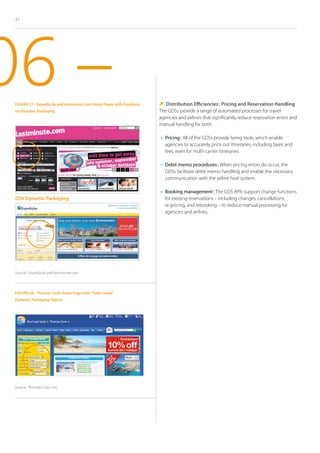
Figure 27	    Expedia.de and lastminute.com Home Pages with Emphasis on Dynamic Packaging		                                   42
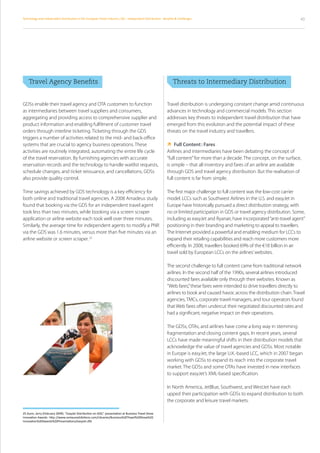
Figure 28 	   Thomas Cook Home Page with “Tailor-make” Dynamic Packaging Option		                                             42
Figure 29 	   Optional Services Selection Step in the Flight Booking Process for easyJet and Wizz Air Websites	               45
Figure 30 	   Total Gross Travel Bookings of Major European Markets, 2008 (€ bn)		                                            53
Figure 31 	   European Travel Market Gross Bookings  Share by Product Segment, 2008  2011 (€ bn)		                          53
Figure 32 	   Composition of the European Travel Market by Product Segment  Region, 2008 (€ bn)		                            54
Figure 33 	   Total Travel Markets of Germany, U.K., and Poland and Online Penetration, 2006-2011 (€ bn)		                    55
Figure 34 	   Annual Change of Total Travel Markets of Germany, U.K., and Poland, 2007-2011		                                 56
Figure 35 	   Total Online Leisure/Unmanaged Business Travel Markets of Germany, U.K.,
	             and Poland and OTA Share, 2006-2011 (€ bn)	                                                                     56
Figure 36 	   Annual Change in OTA Gross Bookings in Germany, U.K., and Poland, 2007-2011		                                   57
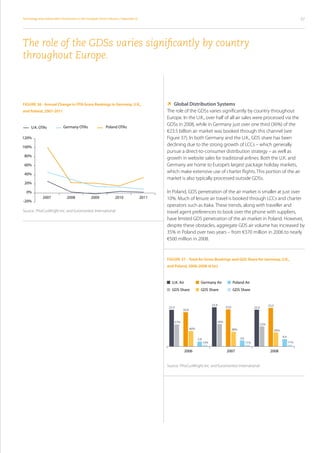
Figure 37 	   Total Air Gross Bookings and GDS Share for Germany, U.K., and Poland, 2006-2008 (€ bn)		                        57
8


01 –     Intro


 The European
 Technology  Travel
 Services Association
 (ETTSA) brings together
 the key players in
 independent travel
 distribution
Technology and Independent Distribution in the European Travel Industry / 01 – Introduction from the Chairman and Secreatry General   9


    01 — Introduction from the Chairman
         
          Secretary General


Dear Reader,

Independent travel distribution includes sellers and distributors of products from travel suppliers, such as traditional
and online travel agencies, travel management companies, global distribution systems, tour operators, and others.
Independent travel distribution is a vital element of the travel and tourism industry and brings substantial benefits
to millions of consumers – both business and leisure travellers – across the European Union. Independent travel
distribution also plays a significant role in promoting tourism, creating high-quality employment, increasing social
mobility and cohesion (especially in the newest Member States), enabling rail to take a prominent place in European
cross-border transport alongside airlines, and advancing Europe’s digital capabilities and footprint. Our industry is
therefore supporting and actively contributing to a number of key long-term European Union policy objectives.

The European Technology  Travel Services Association (ETTSA) brings together the key players in independent travel
distribution – both the global distribution systems (Amadeus, Sabre, and Travelport) and major online travel agents
(Expedia, ebookers, Opodo, lastminute.com, Booking.com, and eDreams). These key players give tens of thousands of
travel agents and travel management companies access to a vast range of travel products – flights, rail journeys, hotel
rooms, rental cars, cruises, and travel packages – all with one key objective : to provide transparency and choice to
consumers across Europe. By bringing these players together, we actively support the entire travel community – not
only suppliers, intermediaries, and agents, but also destinations, local economies, and European regions. The first of its
kind, this study paints a picture of the size and importance of the independent travel distribution industry in Europe
by measuring its contribution to economic growth, social mobility, and employment. It also presents and explains
many of the key benefits independent travel distribution brings to suppliers and consumers alike.

Independent travel distribution is an indispensable part of the wider travel and tourism industry in Europe.
Our industry provides great benefits to consumers by creating a marketplace where travel and tourism products
are displayed in a neutral manner. In this marketplace, online and conventional travel agents are able to continuously
compare the offerings of all providers, so that consumers and businesses know at all times exactly what is available
and how much it costs. In addition, the reach and sophistication of the global distribution systems and online travel
agents give travel professionals and consumers access to very creative and attractive travel packages and an almost
endless range of combinations.

Our industry also offers unique value to suppliers. By constantly investing in high-end technology, in our people,
and in marketing, the industry provides unmatched market access for travel and tourism providers in a neutral,
non-discriminatory, and efficient manner. Typically, close to three quarters of the bookings a European airline receives
from outside its home market are made through a global distribution system. This access promotes competition,
and particularly helps new entrants and small and medium-sized suppliers. It also provides European travel suppliers
with easy, efficient, immediate access to a global market that they could not otherwise reach. Independent travel
distribution can and will also play an important role in realizing the full potential of the European rail system,
facilitating choice and supporting its competitiveness by offering rail operators the same reach and benefits it offers
airlines. This will allow European rail to fully deploy its environmental and societal benefits and support intermodal
transportation across Europe. As the recent volcanic ash crisis has shown us, rail will also guarantee that in case
of natural disasters or severe travel disruptions, Europe can keep moving. Independent travel distribution is an
indispensable tool for making travel and tourism accessible to European citizens and businesses. Without it,
a growing, prosperous, and sustainable European transport and travel industry is simply unthinkable.


Tomás Lopez Fernebrand	                                                                               Tom Parker
Chairman	                                                                                             Secretary General
10


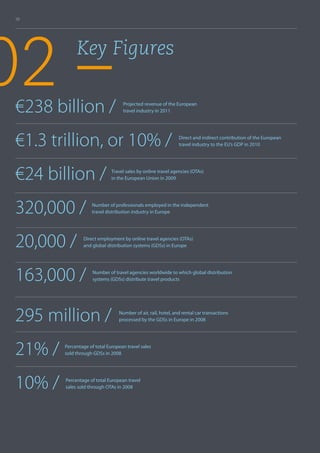
02 –          Key Figures


 €238 billion /                     Projected revenue of the European
                                    travel industry in 2011


 €1.3 trillion, or 10% /                                        Direct and indirect contribution of the European
                                                                travel industry to the EU’s GDP in 2010


 €24 billion /                 Travel sales by online travel agencies (OTAs)
                               in the European Union in 2009


 320,000 /           Number of professionals employed in the independent
                     travel distribution industry in Europe


 20,000 /        Direct employment by online travel agencies (OTAs)
                 and global distribution systems (GDSs) in Europe


 163,000 /            Number of travel agencies worldwide to which global distribution
                      systems (GDSs) distribute travel products


 295 million /                    Number of air, rail, hotel, and rental car transactions
                                  processed by the GDSs in Europe in 2008


 21% /   Percentage of total European travel sales
         sold through GDSs in 2008


 10% /   Percentage of total European travel
         sales sold through OTAs in 2008
Technology and Independent Distribution in the European Travel Industry / 02 – Executive Summary                                                                     11


    02 — Executive Summary


Travel and tourism plays a major role in the                          Technologies and services offered by              The introduction of airline ancillary services,
European economy, providing direct and                                independent travel distribution provide low       fare families, and fees has added another
indirect contributions totalling €1.3 trillion,                       barriers of entry for all types of suppliers      dimension to the debate over full content.
or roughly 10%, of the EU’s GDP in 2010. The                          and intermediaries, including small and           This change represents a dramatic and
industry provides direct employment to                                independent travel agencies, as well as           sweeping shift in distribution for the
8.4 million European citizens, representing                           new entrants to the market. This enables          airline industry and introduces uncertainty
nearly 4% of EU employment. The European                              suppliers to sell into global markets at a        into the outlook for pricing transparency
travel industry itself achieved €258 billion                          low, variable cost, and allows travel retailers   for consumers. As independent travel
in revenues in 2008. The travel economy                               to access and book an expansive array of          distribution companies work toward
relies on a sophisticated, efficient, and                             travel content – thousands of suppliers and       solutions to provide access to this content
technology-driven travel distribution eco-                            billions of potential products and prices –       via travel intermediaries, efficient consumer
system that ties together travel suppliers,                           for their customers.                              access to full fare information will become
global distribution systems (GDSs), online                                                                              an increasingly important and complex
travel agencies (OTAs), traditional travel                            Independent travel distribution provides          challenge across the EU.
agencies, travel management companies                                 a marketplace where this expansive array
(TMCs), and tour operators. This complex                              of travel and tourism products is available       The European Technology and Travel
network enables suppliers of travel services                          to travellers transparently. Consumers can        Services Association (ETTSA) commissioned
– airlines, rail operators, hotels, car rental                        shop, compare, and make choices based             PhoCusWright to undertake this socio-
companies, cruise lines, and others – to                              on their tastes and budgets. The GDSs and         economic study to assess the role and
make available to travellers billions of                              OTAs provide a level playing field, where         impact of independent travel distribution
options, combinations, and prices almost                              suppliers, including new entrants and small       services and technology across Europe.
instantaneously. The travel distribution                              and medium-sized players, can compete             The influence of GDSs, OTAs, and other
industry enables travellers to efficiently                            fairly and effectively with each other and        intermediaries throughout Europe varies
shop and book travel products, complete                               with larger, more established players.            by market. By understanding key trends
payment, and manage their travel itineraries.                         Ongoing technology investments by the             throughout the region, this paper aims to
                                                                      independent travel distribution industry          shed light on the current and future impact
Independent travel distribution on                                    have made travel shopping and booking             of travel distribution and its benefits to
aggregate accounts for more than 320,000                              increasingly easy and transparent.                Europe’s economy. With a focus on GDSs
people in direct employment in Europe                                 One of the key challenges for independent         and OTAs, this paper examines marketplace
and a significant share of the European                               travel distribution remains access to the         risks and challenges to intermediaries
travel economy. The GDSs accounted for                                complete range of fares and services –            that could change the travel distribution
more than one fifth of total European                                 known in the industry as “full content” –         landscape in years to come.
travel sales in 2008, while the OTAs on                               from airlines. While the GDSs have made
aggregate represented nearly 10%.                                     significant headway in closing content
The Internet has reshaped travel                                      gaps, the goal of full content remains
distribution and consumer shopping and                                elusive. Travel intermediaries who want
buying behaviour. One third of all travel in                          to offer the full spectrum of content to
Europe will be booked online in 2010, and                             their customers must source both GDSs
online travel is growing especially quickly                           and other channels. There is the threat
in Central and Eastern Europe. As online                              that airlines will seek ways to restrict their
travel continues to grow across Europe, so                            content to intermediaries or increase the
too will its contribution to the economy                              cost to independent travel distribution to
and employment.                                                       access such content. This trend could add
                                                                      inefficiency into the distribution chain and
                                                                      increase costs for both intermediaries and
                                                                      the end consumer.
12


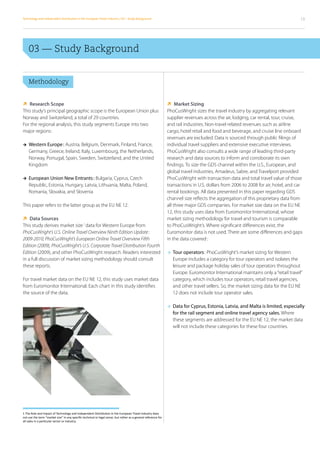
03 –                              Study Background

 The European Technology and Travel Services Association
 (ETTSA) commissioned PhoCusWright to undertake a socio-
 economic study to assess the role and impact of independent
 travel distribution services and technology across Europe.

 This paper examines the following :

 	 he size of the European travel industry and its role
   T
      in the European economy

 	 ey trends in travel distribution and online travel
   K
      across Europe

 	 he position and function of GDSs and OTAs in the travel
   T
      distribution eco-system

 	 he role played by the GDSs and OTAs across various
   T
      segments of the travel industry, such as air, car, hotel,
      online travel, leisure travel, and corporate travel

 	 egional analysis of key travel distribution trends and
   R
      segments within the European Union

 	 he impact of the GDSs and OTAs on the European travel
   T
      marketplace and the benefits for consumers and travel
      companies
Technology and Independent Distribution in the European Travel Industry / 03 – Study Background                                                                                       13


    03 — Study Background


	 Methodology


  Research Scope                                                                                                    Market Sizing
This study’s principal geographic scope is the European Union plus                                               PhoCusWright sizes the travel industry by aggregating relevant
Norway and Switzerland, a total of 29 countries.                                                                 supplier revenues across the air, lodging, car rental, tour, cruise,
For the regional analysis, this study segments Europe into two                                                   and rail industries. Non-travel related revenues such as airline
major regions :                                                                                                  cargo, hotel retail and food and beverage, and cruise line onboard
                                                                                                                 revenues are excluded. Data is sourced through public filings of
	 Western Europe : Austria, Belgium, Denmark, Finland, France,                                                  individual travel suppliers and extensive executive interviews.
	 Germany, Greece, Ireland, Italy, Luxembourg, the Netherlands,                                                  PhoCusWright also consults a wide range of leading third-party
	 Norway, Portugal, Spain, Sweden, Switzerland, and the United                                                   research and data sources to inform and corroborate its own
	 Kingdom                                                                                                        findings. To size the GDS channel within the U.S., European, and
                                                                                                                 global travel industries, Amadeus, Sabre, and Travelport provided
	 uropean Union New Entrants : Bulgaria, Cyprus, Czech
  E                                                                                                              PhoCusWright with transaction data and total travel value of those
    Republic, Estonia, Hungary, Latvia, Lithuania, Malta, Poland,                                                transactions in U.S. dollars from 2006 to 2008 for air, hotel, and car
    Romania, Slovakia, and Slovenia                                                                              rental bookings. All data presented in this paper regarding GDS
                                                                                                                 channel size reflects the aggregation of this proprietary data from
This paper refers to the latter group as the EU NE 12.                                                           all three major GDS companies. For market size data on the EU NE
                                                                                                                 12, this study uses data from Euromonitor International, whose
   Data Sources                                                                                                 market sizing methodology for travel and tourism is comparable
This study derives market size 1 data for Western Europe from                                                    to PhoCusWright’s. Where significant differences exist, the
PhoCusWright’s U.S. Online Travel Overview Ninth Edition Update :                                                Euromonitor data is not used. There are some differences and gaps
2009-2010, PhoCusWright’s European Online Travel Overview Fifth                                                  in the data covered :
Edition (2009), PhoCusWright’s U.S. Corporate Travel Distribution Fourth
Edition (2009), and other PhoCusWright research. Readers interested                                              	 our operators : PhoCusWright’s market sizing for Western
                                                                                                                   T
in a full discussion of market sizing methodology should consult                                                   Europe includes a category for tour operators and isolates the
these reports.                                                                                                     leisure and package holiday sales of tour operators throughout
                                                                                                                   Europe. Euromonitor International maintains only a “retail travel”
For travel market data on the EU NE 12, this study uses market data                                                category, which includes tour operators, retail travel agencies,
from Euromonitor International. Each chart in this study identifies                                                and other travel sellers. So, the market sizing data for the EU NE
the source of the data.                                                                                            12 does not include tour operator sales.

                                                                                                                 	 ata for Cyprus, Estonia, Latvia, and Malta is limited, especially
                                                                                                                   D
                                                                                                                   for the rail segment and online travel agency sales. Where
                                                                                                                   these segments are addressed for the EU NE 12, the market data
                                                                                                                   will not include these categories for these four countries.


1 The Role and Impact of Technology and Independent Distribution in the European Travel Industry does
not use the term “market size” in any specific technical or legal sense, but rather as a general reference for
all sales in a particular sector or industry.
14


04 –                             Travel Distribution
                                 Key points


 	 here are two types of distribution : direct and intermediated.
   T
      Direct distribution is when suppliers, or owners of the
      product (airlines, hotels, etc.), sell their products directly to
      consumers, whether on the phone, in person, or over the
      Internet. Intermediated distribution involves a third party,
      such as a travel agency, tour operator, travel management
      company, or OTA, which sells the travel product to the
      consumer on behalf of the supplier. Travel agencies, OTAs, and
      other intermediaries often (although not always) access that
      supplier content via one of the GDSs.

 	 he foundations for today’s sophisticated travel distribution
   T
      industry were laid in the 1960s, with the development of the
      first computerized reservation systems by the airline industry.

 	  ravel distribution has reinvented itself many times since
    T
      then, driven largely by both technical and commercial
      innovations. Technology is now critical to ensuring an efficient
      independent travel distribution system. GDS technology
      enables travel agencies and OTAs to offer expansive travel
      options and competitive prices across thousands of suppliers
      to a global customer base.

 	 he last decade has seen explosive growth in online travel
   T
      sales in Europe, and online is now a predominant form of
      travel shopping and purchasing. OTAs are investing heavily in
      bringing travel services to online consumers across Europe,
      and the EU’s clear priority to boost citizens’ online access will
      help this effort.
Technology and Independent Distribution in the European Travel Industry / 04 – What is Travel Distribution ?   15


    04 —  hat Is Travel Distribution?
         W


	 Introduction


The travel and tourism industry is critical to the global economy.
The industry is projected to have a direct and indirect contribution
of €4.3 trillion in 2010, accounting for 9.2% of worldwide GDP. The
industry holds similar importance in the European Union economy,
producing nearly 8.4 million jobs and providing €1.3 trillion in direct
and indirect contribution to regional GDP in 2010 2.

A significant part of travel, as with many industries, is distribution :
how suppliers of travel products and services deliver them to their
end customers. But distribution in travel is also a distinct industry
in its own right, and is highly specialized to meet the unique
requirements of travel. For most industries – from automobiles to
consumer packaged goods – distribution is about the delivery of
physical goods, and extensive transportation networks and storage
facilities governed by logistics management processes are needed
to ensure efficient distribution.

But travel distribution is different. Rarely do physical goods change
hands. It is fundamentally an exchange of information about
the promise of a service to be delivered in the future – a flight,
an accommodation, an experience to enjoy, an expectation to
fulfil. This section endeavours to explain distribution in the travel
industry, provide historical context, illuminate the critical role
of technology in travel distribution, and identify the types of
organizations principally responsible for driving commerce in
the world’s largest industry.


2 World Travel  Tourism Council
16


04 –
 	Travel Distribution :
   A Bit of History

 The seeds of today’s electronic travel marketplace were planted
 more than four decades ago in 1964 3, when the Semi-Automated
 Business Research Environment (SABRE) first came “online.” The
                                                                             A period of intense growth and transformation ensued. By the late
                                                                             1990s, four major GDS companies ran the world’s five major global
                                                                             travel distribution systems :
 joint creation of American Airlines and IBM, SABRE was the first of
 what were to be many airline-owned and -operated computerized               	 Amadeus was formed through a consortium of major European
 reservation systems (CRSs) designed for use in the airlines’ own            	 airlines and System One, the original CRS of Eastern Airlines.
 internal reservations centres.
                                                                             	 Galileo evolved from the merger of the Apollo CRS (created by
 The airlines soon realized that deploying their systems in travel           	 United Airlines) and the Galileo CRS (founded by a competing
 agencies would deliver accurate schedules, fares, availability, and         	 consortium of European airlines) ; it is now a part of Travelport.
 booking capability instantly at the point of sale, thus extending
 the same CRS efficiencies gained internally to the travel agency            	 Sabre emerged from the original SABRE CRS and other
 distribution channel. Airlines gained desktop influence with their          	 technology divisions within American Airlines.
 primary distribution channel, and agents gained a powerful new
 electronic booking tool.                                                    	 Worldspan resulted from the merger of the TWA PARS CRS and
                                                                             	 the Delta Air Lines DATAS II system ; it is now a part of Travelport.
 By the mid 1980s, the technology systems powering the early era
 of electronic travel commerce had evolved from CRSs into larger,            The GDSs expanded significantly beyond their airline founders’
 more complex companies known as global distribution systems                 original mandate of enabling distribution for their owner airlines.
 (GDSs). The emergence of electronic data interchange (EDI) standards        By the 1990s, they provided travel agents with access to content
 promoted real-time communications between GDSs and airlines’                from nearly all major airlines and from other supplier segments
 internal reservation systems, enabling the GDSs to offer content            including hotels, car rentals, package tours, and cruises. The GDSs
 from multiple airlines in a single system. This enabled travel agents       defined electronic travel distribution and served as a central nexus
 to access and compare fares and schedules across multiple suppliers         of supply (thousands of travel suppliers) and demand (hundreds of
 and get near real-time confirmation and availability for seats.             thousands of travel agents).

                                                                             The Internet unleashed a revolution in travel distribution,
                                                                             spawning a period of unrivalled innovation in technology, retailing,
                                                                             and commercial models that continue to transform the travel
                                                                             industry today. New OTAs emerged, such as Expedia, Preview
                                                                             Travel, Travelocity and TravelWeb, among others, aiming to bring
                                                                             a 24/7/365 electronic travel marketplace to the Internet. Travel
                                                                             suppliers – airlines and hotels in particular – quickly got into the
                                                                             act, recognising both the pending shift in consumer behaviour and
                                                                             the opportunity to interact directly with customers online.

                                                                             The explosive growth in e-commerce, initially in the U.S. in the
                                                                             second half of the 1990s, quickly caught on in Europe. While U.S.-
                                                                             born OTAs began eyeing international expansion, home-grown
                                                                             start-ups such as lastminute.com and ebookers began to make
                                                                             their mark in the European travel distribution landscape. By 2009,
                                                                             more than one third of all travel sold in Europe was booked online 4
                                                                             – quite an achievement for a distribution channel that in Europe is
                                                                             barely 10 years old.


 3 McDonald, Michele (May 1, 2004). “Selling Seats,” Air Transport World .   4 PhoCusWright’s European Online Travel Overview Fifth Edition (2009)
Technology and Independent Distribution in the European Travel Industry / 04 – What is Travel Distribution ?                                                                           17


	 Direct vs. Intermediated
	 Travel Distribution

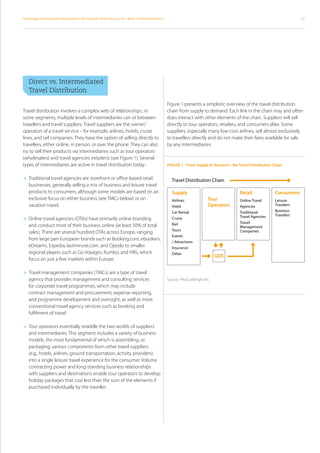
                                                                                                               Figure 1 presents a simplistic overview of the travel distribution
Travel distribution involves a complex web of relationships ; in                                               chain from supply to demand. Each link in the chain may and often
some segments, multiple levels of intermediaries can sit between                                               does interact with other elements of the chain. Suppliers will sell
travellers and travel suppliers. Travel suppliers are the owner/                                               directly to tour operators, retailers, and consumers alike. Some
operators of a travel service – for example, airlines, hotels, cruise                                          suppliers, especially many low-cost airlines, sell almost exclusively
lines, and rail companies. They have the option of selling directly to                                         to travellers directly and do not make their fares available for sale
travellers, either online, in person, or over the phone. They can also                                         by any intermediaries.
try to sell their products via intermediaries such as tour operators
(wholesalers) and travel agencies (retailers) (see Figure 1). Several
types of intermediaries are active in travel distribution today :                                              FIGURE 1 - From Supply to Demand – the Travel Distribution Chain


	 Traditional travel agencies are storefront or office-based retail
                                                                                                                 Travel Distribution Chain
	   businesses, generally selling a mix of business and leisure travel
	   products to consumers, although some models are based on an                                                  Supply                                Retail              Consumers
	   exclusive focus on either business (see TMCs below) or on                                                    Airlines              Tour            Online Travel       Leisure
	   vacation travel.                                                                                             Hotel                 Operators       Agencies            Travelers
                                                                                                                 Car Rental                            Traditional         Business
                                                                                                                                                       Travel Agencies     Travelers
	 nline travel agencies (OTAs) have primarily online branding
  O                                                                                                              Cruise
                                                                                                                 Rail                                  Travel
    and conduct most of their business online (at least 50% of total                                                                                   Management
                                                                                                                 Tours                                 Companies
    sales). There are several hundred OTAs across Europe, ranging
                                                                                                                 Events
    from large pan-European brands such as Booking.com, ebookers,
                                                                                                                 / Attractions
    eDreams, Expedia, lastminute.com, and Opodo to smaller                                                       Insurance
    regional players such as Go Voyages, Rumbo, and HRS, which                                                   Other
                                                                                                                                            GDS
    focus on just a few markets within Europe.

	 Travel management companies (TMCs) are a type of travel
	   agency that provides management and consulting services                                                    Source : PhoCusWright Inc.
	   for corporate travel programmes, which may include
	   contract management and procurement, expense reporting,
	   and programme development and oversight, as well as more
	   conventional travel agency services such as booking and
	   fulfilment of travel.

	 our operators essentially straddle the two worlds of suppliers
  T
    and intermediaries. This segment includes a variety of business
    models, the most fundamental of which is assembling, or
    packaging, various components from other travel suppliers
    (e.g., hotels, airlines, ground transportation, activity providers)
    into a single leisure travel experience for the consumer. Volume
    contracting power and long-standing business relationships
    with suppliers and destinations enable tour operators to develop
    holiday packages that cost less than the sum of the elements if
    purchased individually by the traveller.
18


04 –
   Global Distribution Systems
     The
 What Figure 1 does not show, however, is the critical functions
 GDSs perform for a significant part of the travel distribution chain.
                                                                                        There are currently six major global distribution systems and three
                                                                                        GDS parent companies, each owned by private equity investors (see
                                                                                        Figure 2). Today’s GDSs generate and process an extraordinary volume
 GDSs are the key technology infrastructure connecting suppliers,                       of business, in both transactions and revenue. Globally, the GDSs
 tour operators, and retailers. Just as travel intermediaries play a                    processed more than 1.1 billion transactions 5 in 2008. That equates to
 key role in travel distribution, GDSs play an important role for                       just over 2,100 transactions per minute (although the infrastructure of
 intermediaries. The GDSs aggregate the billions of possible airfares,                  each GDS can support volumes far greater), representing more than
 schedules, hotel and car rental rates, availability information, and                   €183 billion in total travel transaction value and 8% of the €2,195 billion
 other content, and present these options in a real-time shopping                       in total personal and business travel consumption in 2008, according
 and booking environment for travel intermediaries.                                     to the World Travel  Tourism Council. 6

                                                                                        In Europe – the world’s largest regional travel market in gross bookings
 Figure 2 - The GDSs  : Key Facts 1                                                     – GDS companies processed nearly 295 million air, hotel, and car rental
                                                                                        transactions and €55 billion in gross travel bookings in 2008. This
                                                                                        accounts for more than one fifth of the total European travel market.
 		                   Amadeus	               Sabre	                  Travelport
 Owned                                                                                 Today’s GDSs also function as the primary distribution source for
 Operated	 Amadeus	                          Sabre 	                 Apollo             inventory across all major travel supplier segments. Airlines remain
 GDSs		                                      (Ownership	             Galileo            a core product : More than 550 airlines and the overwhelming
 			                                         stake in	               Worldspan
                                                                                        majority of airline fares and inventory are accessible via the GDSs.
 			                                         Abacus,
 			                                         GDS in Asia)	                              However, GDSs also deliver an ever-expanding array of content to
                                                                                        travel agencies through their agency software solutions. More than
 Net Revenue	 €2,461	                        N/A	                    €1,616             90,000 hotel properties, the world’s largest car rental companies,
 2009
                                                                                        hundreds of tour operators, and the major cruise lines all distribute
 (millions)1		
                                                                                        their products to travel agencies via the GDSs.
 Employees	 9000	 9,000	                                             5,300
 (approx.)2			                                                                          The GDSs have become central to travel distribution because they
 Ownership	           BC Partners	      Silver Lake,	                Blackstone         enable travel suppliers to reach an expansive global marketplace
 		                   Cinven	           Texas Pacific	               Group,             of retailers and their millions of customers more efficiently than if
 		                   Air France	       Group	                       One Equity         retailers had to do so on their own. The GDSs place the products
 		                   Iberia		                                       Partners,
                                                                                        of thousands of suppliers on the desktops of nearly half a million
 		                   Lufthansa,		                                   Technology
 		                   and publicly		                                 Crossover          travel agents almost instantaneously for shopping and booking.
 		                   listed on select		                             Ventures,          In effect, the GDSs function as an efficient gateway to new points
 		                   European		                                     and Travelport     of sale. Travel suppliers do not need to open sales offices or invest
 		                   exchanges 		                                   management		       in expansive technical infrastructures in each market to receive
 		                   (AMS)                                                             bookings from travel agents. Instead, the GDSs charge a variable fee
                                                                                        per transaction.
 1
  Information sourced from company websites and public financial filings.
 There are other, regional GDSs, including Axess, Infini, Topas and TravelSky,          Nor do suppliers necessarily need to maintain commercial relationships
 which operate principally in Asia and the Middle East. Since this paper is primarily   with all travel agents. The GDSs manage contractual, commercial,
 concerned with Europe, it does not address the regional GDS companies.                 and technical relationships with travel agencies – the vast majority of
 2
  Figures for the three GDS companies include revenues and headcount for
                                                                                        which are small businesses. If an agent has a technical problem with a
 all business units and not just the GDS business.                                      booking via a GDS, it is the GDS’s support line she calls and it is the GDS
                                                                                        that ensures the booking is completed successfully.


                                                                                        5 Total global transactions of 1,103,918,338 for 2008 refer only to air, hotel, and car rental segments,
                                                                                        and do not include tour, cruise, rail, and other transactions.
                                                                                        6 Travel  Tourism Economic Impact 2009 : European Union ; WTTC ; PhoCusWright Inc ; US$3,212B
                                                                                        converted at 0.68341 based on aggregate average exchange rate for the full year 2008 (OANDA).
Technology and Independent Distribution in the European Travel Industry / 04 – What is Travel Distribution ?                                                                    19


As more and more travel is booked online, the GDSs
also act as technological “buffers” for suppliers.


As more and more travel is booked online, the GDSs also act as                                                  Many OTAs also depend on GDSs for access to shopping, pricing,
technological “buffers” for suppliers. The rise of online travel and                                            booking, and ticketing services. Today, each of the three GDS
increased ease for consumers to check prices and options has led                                                companies owns or has an ownership stake in one or more online
to an exponential increase in the volume of queries on reservation                                              travel agencies, provides one or more online booking tools to
systems. The GDSs have invested significantly in caching                                                        the corporate travel market, and offers a range of e-commerce
technology to manage the stress this would otherwise place on                                                   services (from booking engines to fulfilment processes) to travel
supplier reservations systems.                                                                                  intermediaries and suppliers alike.

In addition to providing access to travel content, the GDSs equip
travel agencies with a range of technology and services, including
front- and back-office technology to handle the reservation life
cycle (search, quote, book, support, fulfil), settlement processing for
suppliers and agencies, and marketing and data services. The three
major GDS companies together power the critical reservations
and technology infrastructure of more than 163,000 travel agency
locations and enable bookings by nearly half a million travel
agents 7 around the globe.

As a result, the GDSs significantly lower the barriers to entry
into the retail travel business and enable the commercial
activity of thousands of travel agencies large and small. The
GDSs are indirectly responsible for the important economic
benefits travel agencies provide through employment and
other economic contributions. The GDSs’ efficient, cost-effective
technologies provide travel agencies with instantaneous access
to comprehensive travel supplier content, which enables these
agencies to offer competitive retail travel services to consumers.


Figure 3 - Worldwide Aggregated Statistics
of the GDS Companies in 2008

	                                                      Worldwide
Transactions  	      1
                                                       1.104 bn
Travel Agency Locations 2	                             c. 163,000
Users 2	                                               c. 490,000
Airlines	                                              More than 550
Hotel Properties	                                      More than 90,000
Car Rental Locations	                                  More than 30,000

1
 Includes air, hotel, and car rental transactions only
2
 Data provided by Amadeus, Sabre, and Travelport
Source : PhoCusWright Inc.


7 The term “travel agents” throughout this paper refers to professional travel agents who sell and book
travel, and does not include those who do not directly sell travel or use a GDS (e.g., administrative staff).
20


04 –
 	 The Role of Technology


 Travel distribution is fundamentally about the exchange of

                                                       
 information, and technology enables this exchange. Indeed,
 advancements in information technology have gone hand-in-hand
                                                                           	The Emergence of Online
                                                                             Travel Sales  OTAs

                                                                           The remarkable growth in online travel sales has given rise to a
                                                                           new era in travel technology that enables travellers to shop for
                                                                           and purchase travel online. And booking travel online starts with
 with the growth of the travel industry. As airlines expanded from         online access. The number of households with Internet access has
 simple, line-based route structures (inspired by the railways) to         continued to grow steadily across the 27 EU member states, an
 large operations with multi-jet fleets and complex flight schedules       extremely positive indicator for the expansion of the online travel
 over the course of the 20th century, reservation management               industry. In 1Q09, two thirds of Europeans (65%) could access Internet
 shifted from manually processed ledgers to automated, mainframe-          from their homes, compared with 60% in 1Q08, according to Eurostat
 based computer systems. Indeed, airlines that adopted new                 (December 2009). Almost 40% of individuals age 16-74 in the EU27
 technology quickly outperformed competitors that did not. 8               purchased something over the Internet in the last 12 months.

 When the airlines first placed their CRSs on travel agent desktops        Household Internet access varies significantly by region and
 in the U.S. in the mid-1960s, they strengthened their position            country within the European Union, ranging from just 30% in
 to influence flight selection and move market share. But CRS              Bulgaria to 90% in the Netherlands in 2009. As Figure 4 shows, there
 technology also boosted travel agents’ prosperity dramatically.           are clear regional trends in Internet access – countries in Northern
 By 1985, U.S. travel agency sales had risen to $54 billion. More than     and Western Europe have much higher Internet penetration,
 nine in 10 agencies with sales greater than $1 million had a CRS          while countries in Eastern and Southern Europe have far lower
 (versus just 6% less than a decade earlier). Agency revenue surged        penetration rates.
 400% over the same period, while agency employment increased
 by only 20%. 9                                                            Online travel penetration of the total travel markets across Europe
                                                                           display a similar pattern to that of general Internet access. The
 Another major innovation was yield management – the idea                  Scandinavian and U.K. travel markets have the highest online
 of offering different types of fares with different conditions and        penetration rates (at or near 50%), while online travel comprises
 restrictions for seats on the very same flight. Decisions about how       a much smaller share of travel sold in countries in Southern and
 to price those fares and how much inventory to make available             Eastern Europe, such as Spain, Italy, and Poland. (See “The European
 for sale for each fare class were based on sophisticated computer         Travel Distribution Value Chain,” page 27, for more information.)
 modelling that analyzed historical reservation data. When American
 Airlines first introduced this in 1985, it wreaked havoc on the airline   The Internet is now the predominant means of travel shopping
 industry – but it eventually heralded a new standard for pricing          in the three largest national markets in the EU. More than 70%
 and inventory management that is now widely adopted across all            of French travellers and nearly 80% of German and U.K. travellers
 sectors of the industry, including aviation, hotels, car rental, cruise   typically use the Internet (at least as a source of information)
 lines, and tour operators. 10                                             when shopping for travel, according to PhoCusWright’s European
                                                                           Consumer Travel Report (2010). The second most common source
 Today, technology forms the backbone of every major travel                of information in travel shopping, personal recommendations from
 organization. The acronym CRS, once synonymous with airline               family and friends, is cited by far fewer travellers (just over 40% in
 reservations systems, is now the common term for central reservation      Germany and the U.K., and under 40% in France).
 systems for hotels and car rental companies. These systems manage
 inventory, reservations, and often yield. Technology is now central
 to travel agencies. GDS technology enables travel agencies and
 OTAs to offer expansive travel options and competitive prices across
 thousands of suppliers to their customers. GDSs also commonly
 use complementary technologies, such as back-office accounting
 systems, to manage all financial records of transactions and generate
 invoices and other documents.


                                                                           8 Petzinger, Thomas, Jr. (1996). “Network Warriors,” Hard Landing, Three Rivers Press.
                                                                           9 Fitzgerald, Chicke (2000). Global Distribution Systems : Outlook for the 21st Century,
                                                                           Garrett Communications Inc., MTech Strategies Inc.
                                                                           10 Petzinger, Thomas, Jr. (1996). “Nosedive,” Hard Landing, Three Rivers Press.
Technology and Independent Distribution in the European Travel Industry / 04 – What is Travel Distribution ?                                                                       21


Figure 4 - Household Internet Access by Country in Europe,                                                     The Internet is now critical to the travel industry, as it provides
2007 and 2009                                                                                                  essential infrastructure and is a principal information source during
                                                                                                               travel planning, research, shopping, and booking for travellers
                                                                                                               across Europe. More than one third of all travel in Western Europe
Percent of Households                       2007        2009
                                                                                                               and one fifth of travel in the EU NE 12 will be sold online in 2010
                                                                                                               (see Figure 10).
                 0      10      20     30      40      50      60     70      80      90     100

Netherlands                                                                                                      Online Travel Agencies
                                                                                                                 The
Luxembourg                                                                                                     Online travel agencies have been key drivers in the growth of
Sweden                                                                                                         online travel in both Europe and North America and represent
Norway                                                                                                         a diverse mix of pan-European and local market brands across
Denmark                                                                                                        the region. OTAs have grown their total gross bookings from less
Germany                                                                                                        than €3.6 billion in 2002 11 to more than €22 billion in 2008, 12
Finland                                                                                                        representing 7% of the €258 billion European travel market.
United K.
Austria                                                                                                        The six largest OTAs in Europe (Expedia, Travelocity, Priceline,
Belgium                                                                                                        Opodo, Orbitz/ebookers and eDreams), all members of ETTSA,
Ireland                                                                                                        account for just over half of all OTA gross bookings in Western
Malta                                                                                                          Europe (see Figure 5). However, the OTA landscape is still very
Slovenia                                                                                                       fragmented, with a large number of regional and local market
Estonia                                                                                                        players that command a significant share of the segment.
France
Slovakia
Lithuania
Poland
Latvia
Hungary
Czech Rep.
Spain
Italy
Cyprus
Portugal
Greece
Romania


Source : Eurostat


11 PhoCusWright’s European Online Travel Marketplace (2003)
12 PhoCusWright’s European Online Travel Overview Fifth Edition (2009)
22


04 –
 Figure 5 - European Online Travel Agencies by Home Market, ETTSA Member-
 ship, and Estimated Share (%) of All Online Travel Agency Gross Bookings, 2008
                                                                                  Like the GDSs, which provide efficient access for suppliers to travel
                                                                                  agents worldwide, the OTAs enable suppliers to present their
                                                                                  products and services to millions of travellers without investing
                                                                                  heavily in local market advertising and selling infrastructures. The
 ETTSA Member OTAs	                   Country	      2008                          OTAs provide a consumer-friendly online environment for shopping
 Expedia / Hotels.com / Venere 	      U.S.	                                       and comparing travel options – schedules, airfares, hotels, rates,
 Priceline Europe (Booking.com)	      U.S./Holland		
                                                                                  etc. – across thousands of suppliers. Travel suppliers pay a fee or
 Travelocity Europe (lastminute.com)	 U.S./U.K.	     51%
 Opodo 	                              Spain	                                      commission to the OTA for each sale, or they may provide a lower net
 Orbitz Worldwide Europe (ebookers)	 U.S./U.K.	                                   rate and allow the OTA to add a mark-up for resale to the consumer.
 eDreams 	                            Spain	
 Other OTAs	                          Country	
 Go Voyages	                          France	
 Karavel/Promovacances 	              France	
 Rumbo 	                              Spain	
 HRS	                                 Germany	
 ab-in-den-urlaub.de 	                Germany	
 ETI (Seat24)	                        Scandinavia	
 Schmetterling	                       Germany	
 (schmetterling24.de, buche24.de)
 Voyages-SNCF.fr (excl. rail)	        France	
 Travelzest 	                         U.K.	
 HolidayCheck 	                       Germany	
 Terminal A	                          Spain	
 RTK-Gruppe 	                         Germany	
 Atrapalo 	                           Spain	
 weg.de (ferien.de, fly.pl, ...)	     Germany	
 Travelstart 	                        Scandinavia	   49%
 Muchoviaje 	                         Spain	
 L’TUR	                               Germany	
 Viajes ECI	                          Spain	
 hotel.de 	                           Germany	
 youtravel	                           U.K.	
 Switch/Partir Pas Cher 	             France	
 VIA Travel (Gotogate, Flybillet)	    Scandinavia	
 Travelchannel 	                      Germany	
 Onlineweg (TSS)	                     Germany	
 Logitravel 	                         Spain	
 Marsans.com	                         Spain	
 TravelPartner 	                      Scandinavia	
 Viajar.com	                          Spain	
 Barcelo Viajes 	                     Spain	
 Travianet/Touristikboerse 	          Germany	
 fly.de 	                             Germany	
 Todomondo 	                          Italy	
 Others 		
 Gross Bookings		                                  €21.8B


 Source : PhoCusWright’s European Online Travel Overview Fifth Edition (2009)
Technology and Independent Distribution in the European Travel Industry / 04 – What is Travel Distribution ?                                                                        23


	Travel Distribution Chain in Detail :
  How Flights Are Distributed

With the plethora of online travel agencies and other services                                                 Routing for an itinerary is no simple matter. While most travellers
that make shopping for and booking flights so easy today,                                                      may prefer a direct, nonstop flight, it may be far less expensive to
most travellers take this convenience for granted. But as anyone                                               connect or to change airlines (an “interline” ticket). Airfare shopping
with experience in the travel distribution industry knows, flight                                              systems must sort through an almost limitless number of possible
distribution is anything but simple.                                                                           routing combinations to serve up the most logical option for a
                                                                                                               specific search request. Then there is pricing, which is determined
Consider that well over 500 airlines participate in global electronic                                          by a number of factors, such as competitor fares on the same route,
distribution, many offering thousands of flights each day. Flights are                                         the number of days before departure, the amount of available
usually bookable up to one year in advance, and with thousands                                                 inventory on the flight, and the point of sale.
of transactions happening every day – even every hour – airline
reservation systems and the distribution systems must continually                                              One fares specialist at a GDS company estimated that there are
update availability information.                                                                               some 4.3 billion possible fares available within the GDS. This section
                                                                                                               briefly describes the distribution process from a traveller’s initial
                                                                                                               flight query to booking.


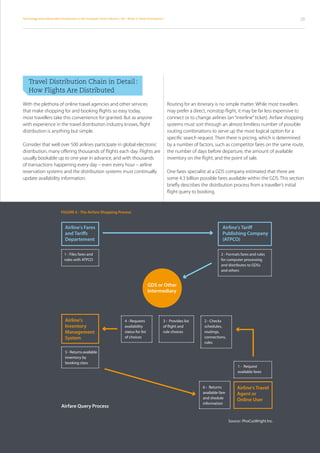
                             Figure 6 - The Airfare Shopping Process


                                Airline's Fares                                                                                              Airline's Tariff
                                and Tariffs                                                                                                  Publishing Company
                                Departement                                                                                                  (ATPCO)

                               1 - Files fares and                                                                                          2 - Formats fares and rules
                               rules with ATPCO                                                                                             for computer processing
                                                                                                                                            and distributes to GDSs
                                                                                                                                            and others


                                                                                               GDS or Other
                                                                                               Intermediary


                                Airline's                                    4 - Requests                  3 - Provides list      2 - Checks
                                Inventory                                    availability                  of flight and          schedules,
                                Management                                   status for list               rule choices           routings,
                                System                                       of choices                                           connections,
                                                                                                                                  rules

                                5 - Returns available
                                inventory by
                                booking class
                                                                                                                                                       1 - Request
                                                                                                                                                       available fares


                                                                                                                                 6 - Returns           Airline's Travel
                                                                                                                                 available fare        Agent or
                                                                                                                                 and shedule           Online User
                                                                                                                                 information
                             Airfare Query Process

                                                                                                                                                  Source : PhoCusWright Inc.
24


04 –
 The process begins when an airline originates fare rules and
 conditions of service, and then distributes these to the various
 faring systems (e.g., the GDSs and select third parties such as ITA
                                                                             Once a product is selected, the supplier or OTA quotes a price
                                                                             and the traveller makes a reservation, removing the product from
                                                                             inventory. This begins the fulfilment process (see Figure 7). Usually
 Software) through the Airline Tariff Publishing Company (ATPCO)             booking involves prepayment to secure the reservation : Funds are
 (see Figure 6). Fares are loaded from an airline’s CRS into each            validated and distributed. Afterward, the trip itinerary, as well as all
 GDS several times per day. While innovation in GDS and online               relevant information about the trip (including payment information),
 technology has simplified this procedure over the last three                is stored in the passenger name record (PNR), which is effectively the
 decades, there are still more than 500 airlines and millions of             “purchase order” for the trip. This reservation record is shared across
 possible flights, each with multiple fare classes and fares that can        all parts of the distribution chain (agency, GDS, and airline).
 change several times a day.
                                                                             Post-booking begins when the booking is “ticketed.” This step
 The GDSs and other electronic intermediaries make these fares               triggers a series of procedures that are collectively referred to as
 available via their agency desktop applications and interfaces to           “mid-office.” These processes may vary among travel agencies and
 online points of sale, so travel agents can shop for fares on their         can be especially complex in the managed corporate travel market,
 desktops and online travel shoppers can query websites. This is             but in effect, they verify the accuracy of reservation records, handle
 the heart of the network that allows a traveller to access an OTA           any waitlist requests to suppliers, ensure validation of the booking
 or supplier website to shop and book up-to-date information                 with any specific supplier-contractor compliance, and initiate the
 according to airline preference, destination, schedule, fare, and/or        production and distribution of documents (or communications) to
 flight availability. A traveller enters search data criteria according to   the traveller and travel supplier.
 needs and preferences, evaluates the first-screen results, and either
 proceeds to booking or enters additional search parameters to
 continue shopping.
Technology and Independent Distribution in the European Travel Industry / 04 – What is Travel Distribution ?                                                          25


                                    Figure 7 - The Airfare Booking and Fulfilment Process


                                         POINT OF SALE                                   MID-OFFICE                          FULFILLMENT
                                         Booking                                                                             BACK OFFICE
                                         Payment                                                                                                          TRAVELERS
                                         Reservation
                                         Changes


                                         OTA / Agency                                     OTA / Agency                            OTA / Agency
                                         Traveler makes                                   File finishing,                         Payment
                                         reservation via                                  quality control,                        accounting,
                                         OTA or travel                                    waitlist                                customer
                                         agent                                                                                    documents


                                                                  GDS                                          GDS
                                                                  PNR is created,                              Ticketing,
                                                                  inventory is                                 settlement
                                                                  decremented,                                 (payment to                   Settlement
                                                                  Changes                                      airline, agency)              Agency
                                                                  recorded                                                                   Payment,
                                                                                                                                             commission


                                                                                                  AIRLINE SYSTEM


                                    Source : PhoCusWright Inc.
26


05 –                            The Value Chain
                                Key points


 	 ndependent travel distribution provides substantial high-
   I
      quality employment across the European Union. The GDSs
      employ about 6,000 people in Europe, and the OTAs about
                                                                      	 nline travel sales have grown significantly in the last decade,
                                                                        O
                                                                        and their market share is now one third of all travel sales in
                                                                        the EU.
      13,000. Traditional travel agencies, which rely on GDSs for
      accessing and booking travel products, employ approximately     	 he GDSs represent one fifth of total travel sales in Europe.
                                                                        T
      300,000 travel professionals across the 27 member states. At      This is a slight decrease over recent years, mainly attributable
      the GDSs and OTAs, one quarter of employment qualifies as         to the growth in direct sales on airline websites.
      high-tech.
                                                                      	 TAs have been star performers, with 6% growth in 2009
                                                                        O
 	  he economic impact of independent travel distribution
    T                                                                   despite the recession. They are expected to nearly double their
      extends far beyond direct employment and reaches across           share of total travel sales to 11% by 2011 (from 6% in 2006).
      the European travel economy. Independent travel distribution
      indirectly supports growth and employment in airlines,          	 he OTAs are growing particularly fast in the emerging
                                                                        T
      railways, hotels and resorts, car rental companies, and the       economies of Central and Eastern Europe, and will become
      wider European tourism industry.                                  even more important as travellers broaden their demand for
                                                                        regional and international travel.
 	 estern Europe represents about 90% of total travel sales in
   W
      the EU, and the EU NE12 (Member States that joined in 2005      	  he GDSs are integral to the OTA business model. Most OTAs
                                                                         T
      and 2007) represent 10%. Central and Eastern Europe have          today rely on a GDS to access and book flights, rail, hotels,
      experienced stronger growth than Western Europe, however,         cars, packages, and cruises.
      in both total travel sales and online travel sales.
                                                                      This section examines the size of the travel industry in Europe
 	 lthough the European travel industry saw a 10% decline
   A                                                                  and the role of independent travel distribution. It also examines
      in revenues in 2009 due to the global economic recession,       key trends in travel distribution and potential implications for
      a restrained recovery is expected for the years to come, with   the broader European travel economy.
      1-2% growth predicted for 2010 and 2011.
Technology and Independent Distribution in the European Travel Industry / 05 – The European Travel Distribution Value Chain                                                                        27


    05 —  he European Travel Distribution Value Chain
         T


	 The Size of the European
	  Online Travel Industries

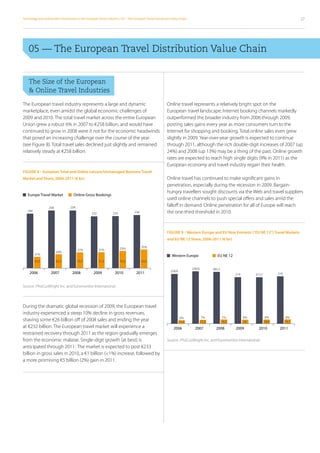
The European travel industry represents a large and dynamic                                                 Online travel represents a relatively bright spot on the
marketplace, even amidst the global economic challenges of                                                  European travel landscape. Internet booking channels markedly
2009 and 2010. The total travel market across the entire European                                           outperformed the broader industry from 2006 through 2009,
Union grew a robust 6% in 2007 to €258 billion, and would have                                              posting sales gains every year as more consumers turn to the
continued to grow in 2008 were it not for the economic headwinds                                            Internet for shopping and booking. Total online sales even grew
that posed an increasing challenge over the course of the year                                              slightly in 2009. Year-over-year growth is expected to continue
(see Figure 8). Total travel sales declined just slightly and remained                                      through 2011, although the rich double-digit increases of 2007 (up
relatively steady at €258 billion.                                                                          24%) and 2008 (up 13%) may be a thing of the past. Online growth
                                                                                                            rates are expected to reach high single digits (9% in 2011) as the
                                                                                                            European economy and travel industry regain their health.
Figure 8 - European Total and Online Leisure/Unmanaged Business Travel
Market and Share, 2006-2011 (€ bn)                                                                          Online travel has continued to make significant gains in
                                                                                                            penetration, especially during the recession in 2009. Bargain-
                                                                                                            hungry travellers sought discounts via the Web and travel suppliers
   Europe Travel Market               Online Gross Bookings
                                                                                                            used online channels to push special offers and sales amid the
                   258             258
                                                                                                            falloff in demand. Online penetration for all of Europe will reach
   244
                                                   232             233             238                      the one-third threshold in 2010.


                                                                                                            Figure 9 - Western Europe and EU New Entrants (“EU NE 12”) Travel Markets
                                                                                                            and EU NE 12 Share, 2006-2011 (€ bn)
                                                                                         35%
                                         27%             31%             33%
                         24%
         21%                                                                                                   Western Europe                   EU NE 12
         50,5            62,5            70,7            71,2            76,9            83,6

                                                                                                                              240,8          283,3
                                                                                                               228,8
     2006            2007            2008            2009            2010            2011                                                                   214        213,7          218


Source : PhoCusWright Inc. and Euromonitor International


During the dramatic global recession of 2009, the European travel
industry experienced a steep 10% decline in gross revenues,
                                                                                                                       6%              7%            7%           8%            8%           8%
shaving some €26 billion off of 2008 sales and ending the year                                                         15,3           17,3           19,2         18           18,9         19,7
at €232 billion. The European travel market will experience a                                                    2006           2007           2008         2009         2010          2011
restrained recovery through 2011 as the region gradually emerges
from the economic malaise. Single-digit growth (at best) is                                                 Source : PhoCusWright Inc. and Euromonitor International
anticipated through 2011 : The market is expected to post €233
billion in gross sales in 2010, a €1 billion (1%) increase, followed by
a more promising €5 billion (2%) gain in 2011.
28


05 –
 There are significant differences in market share, growth rates, and
 trends among the more mature travel markets of the 17 Western
 European countries and the emerging travel markets of the EU NE
                                                                               Figure 11 - Annual Change for Western and EU NE 12 Total and Online
                                                                               Travel Markets, 2007-2011


 12. Western Europe represents well over 90% of the total European
                                                                                      Total Westren Europe          Total EU NE 12
 travel market in terms of supplier revenues – its regional travel
 market posted gross sales of €214 billion in 2009, versus the EU NE                  Online Western Europe         Online EU NE 12
 12’s €18 billion (see Figure 9).
                                                                                30%
                                                                                25%
 The travel market of the EU NE 12 may be relatively small compared             20%
 to that of Western Europe, but it has been growing at a faster pace            15%
                                                                                10%
 (or, in 2009, declining at a slower pace). The EU NE 12 is steadily             5%
 gaining share of the total European travel market, from 6% in                   0%
                                                                                -5%
 2006 to a projected 8% in 2011, reflecting the faster growth rate             -10%
                                                                               -15%
 expected in an emerging market. While travel in Western Europe                          2007            2008           2009              2010   2011
 is expected to slip slightly to €213.7 billion in 2010, the EU NE 12 is
 projected to see a 5% increase in gross travel sales to €18.9 billion.        Source : PhoCusWright Inc. and Euromonitor International


 Online travel is making steady and significant gains across the
 European travel landscape. Online penetration will surge from just
 21% of all travel in Western Europe in 2006 to 36% in 2011 (see
 Figure 10). Online penetration in the EU NE 12, while much lower
 at just 18% in 2009 (versus 32% for Western Europe), is also making
 steady gains. In 2010, one fifth of all travel sold in the EU NE 12 will
 be sold online. Growth of online travel sales in both regions will
 continue to outperform the total travel markets through 2011
 (see Figure 11).


 Figure 10 - Online Penetration of Western and EU NE 12 Travel Markets,
 2006-2011 (€ bn)


      Western Europe            EU NE 12                           36%
                                                       34%
                                           32%
                              28%
                  25%
      21%                                                                21%
                                                             20%
                                                 18%
                                    17%
                        15%
            13%


       2006        2007        2008         2009        2010       2011


 Source : PhoCusWright Inc. and Euromonitor International
Technology and Independent Distribution in the European Travel Industry / 05 – The European Travel Distribution Value Chain                                                                        29


	 The Role of the GDSs


The GDSs are a critical part of the European travel and tourism                                             GDS penetration varies significantly by region within Europe. In
marketplace. In 2008, the three major GDS companies together                                                Western Europe, GDS share was 22% in 2008, representing €52.4
processed nearly 295 million air, hotel, and rental car transactions. 13                                    billion in total travel value (see Figure 13). In 2008, GDS air share
And this does not include other product segments distributed                                                of the EU NE 12 total travel market stood at 11%, or €2.1 billion.
by the GDSs, such as tour operator packages, cruises, and other                                             The GDS data available for the EU NE 12 includes only total gross
services. However, air still represents a significant majority of                                           bookings value of air transactions, while the GDS share for Western
the travel processed by the GDSs in Western Europe – 95% of                                                 Europe includes air, hotel, and car rental.
transactions and 93% of total travel value.
                                                                                                            The much lower GDS penetration in the EU NE 12 market reflects
Those 295 million transactions amounted to €54.8 billion in 2008 –                                          the very different market dynamics in Eastern Europe and other
more than one fifth of the total European travel industry (see Figure                                       member nations of the region :
12) and 6% of the €857 billion in total personal and business travel
consumption in Europe. 14 GDS share has slipped three percentage                                            	 ower penetration of credit cards and electronic payment methods
                                                                                                              L
points since 2006, when it accounted for 24% of the total market.                                               inhibit electronic commerce, as consumers in emerging markets
This is attributed to an increase in direct bookings, principally with                                          are still more comfortable using cash. Although use of electronic
airlines via their websites (see Travel Distribution Dynamics, page 33).                                      payment cards is growing fast, there are still less than half as many
                                                                                                                cards per adult in Eastern and Central Europe as there are in Western
                                                                                                                Europe, and only 15% of those cards are credit cards 15.
Figure 12 - European Total Travel Market and GDS Share,
2006-2008 (€ bn)                                                                                            	ncidence of direct supplier bookings via phone (by both
                                                                                                              I
                                                                                                                travellers and travel agents) is higher, especially for domestic
                                                                                                                travel and hotel bookings.
   GDS Share*                       Europe

                                       258,1                           257,5
       244,1                                                                                                	 significant amount of air travel in the EU NE 12 is booked
                                                                                                              A
                                                                                                                through tour operators, which primarily use charter air, and low-
                                                                                                                cost carriers (LCCs), which have grown dramatically in Eastern
                                                                                                                Europe. Most charter and LCC bookings are not made through
                                                                                                                GDSs, but directly with tour operators and airlines.

                   24%                              22%                            21%

                   57,4                             56,9                           54,8                     Figure 13 - Western European and EU NE 12 Travel Markets
                                                                                                            and GDS Shares, 2006-2008 (€ bn)
            2006                             2007                              2008


                                                                                                                Western Europe              GDS Western Europe
* GDS share for EU NE 12 includes only total gross bookings value of air segments.
Non-air travel value data not available. GDS share for Western Europe includes air,                             EU NE 12                    GDS EU NE 12
hotel, and car rental only.                                                                                                               241                       238
                                                                                                                229
Source : PhoCusWright Inc. and Euromonitor International


                                                                                                                      24%                       23%                       22%

                                                                                                                               15                        17                        19
                                                                                                                                    11%                       10%                       11%

                                                                                                                        2006                      2007                          2008

                                                                                                            * GDS share for EU NE 12 includes only total gross bookings value of air segments.
13 Transactions = segments
14 World Travel  Tourism Council                                                                           Non-air travel value data not available. GDS share for Western Europe includes air,
15 “Payment Cards Central and Eastern Europe 2010” (October 2009). Retail Banking Research.                 hotel, and car rental only. Source : PhoCusWright Inc. and Euromonitor International
30


05 –
 GDSs processed €48.9 billion in flight bookings in Western Europe
 in 2008, representing half of the total air market (see Figure 14). This
 is down from 52% in 2007 and 58% in 2006, principally due to the
                                                                             Figure 14 - Total Air Gross Bookings and GDS Shares for Western Europe
                                                                             and EU NE 12, 2006-2008 (€ bn)


 growth in LCCs and traveller direct online bookings with traditional
                                                                                Air Western Europe                  GDS Share
 carriers. GDS share of the total air market in EU NE 12 is much                Air EU NE 12                        GDS Share
 smaller at 21% and has remained relatively stable, growing with the                                           98                            98
                                                                                91
 overall air market in that region.

 As the economies of the EU NE 12 mature and the spending power
                                                                                      58%                            52%
 of their citizens increases, longer-term opportunities will emerge                                                                                50%

 in the European travel industry. Increased Internet access and an
 expanding appetite and capacity for travel – especially abroad – will
 increase demand for providers of independent travel distribution                                  7,5                            9                         10,4
                                                                                                         22%                           20%                           21%
 services. GDSs, OTAs and travel agencies will serve as important
                                                                                            2006                           2007                          2008
 points of entry as travel suppliers seek to capture the opportunity
 in these growing markets.
                                                                             Source : PhoCusWright Inc. and Euromonitor International
 The GDS share of the total hotel and car rental markets in Western
 Europe is well below that of air. The hotel market is relatively
 fragmented across the region, with a majority of hotels operating           Figure 15 - Total Hotel and Car Rental Gross Bookings and GDS Shares
 as independent and not affiliated with a chain. Independent hotels          for Western Europe, 2006-2008 (€ bn)
 are less likely to participate in the global distribution eco-system,
 and as a result, most hotel bookings throughout Europe take place
                                                                                Hotel + Car Gross Bookings                  GDS Share
 with individual hotel properties.
                                                                                     91,6                           94,4
                                                                                                                                                  90,9
 However, this is changing as online travel grows and hotels
 increasingly perceive the value of participating in electronic
 distribution systems (mostly driven by corporate demand). The
 volume of hotel and car rental bookings handled by the GDSs
 increased significantly from 2006 to 2008. The GDSs processed
 nearly 15.5 million hotel and car transactions in 2008, representing
 €3.6 billion in sales. This is up from 13.8 million transactions, or €2.8                          3%                            4%                            4%
 billion, in 2006. GDS hotel and rental bookings represented 4% of
                                                                                            2006                           2007                          2008
 sales for those combined markets in 2008 (see Figure 15).


                                                                             Source : PhoCusWright Inc.
Technology and Independent Distribution in the European Travel Industry / 05 – The European Travel Distribution Value Chain                                                                         31


	 The Role of Online Travel Agencies


OTAs have been star performers in the European travel market –                                              OTA revenues in the EU NE 12 are modest compared with OTA
both contributing to and benefiting from growing consumer use of                                            sales in Western Europe markets. At just €500,000 in 2009, online
the Internet for travel planning and booking. While OTA growth has                                          intermediary sales represent 2% of the total travel market in that
slowed from the marked double-digit upticks earlier in the decade                                           region (see Figures 17 and 18). While the segment is growing
(the segment grew 26% in 2007), OTAs continue to outperform the                                             faster than the overall EU NE 12 travel industry, it faces obstacles
broader European travel market. OTAs grew a still impressive 17% in                                         to online adoption, including lack of online payment handling,
2008 while the total travel market was essentially flat. They recorded                                      low penetration of credit card use, and low overall Internet use
6% growth in 2009, a remarkable performance considering the                                                 compared to Western Europe. Most travel in the EU NE 12 markets
recession forced a 10% contraction in the travel market overall                                             is domestic or intra-regional, and OTA penetration is also hampered
(see Figure 16).                                                                                            by the fragmented hotel marketplace dominated by independent
                                                                                                            hotels that are accustomed to direct-to-property bookings and do
OTAs will continue to gain overall market share. Their share of all                                         not participate in OTA distribution.
travel sales will double to 11% by 2011, versus 6% in 2006. Total OTA
gross bookings are expected to reach €29 billion by 2011, up from                                           But the smaller, less mature economies of the EU NE 12 are also
€24 billion in 2009 and €15 billion in 2006.                                                                expected to grow more robustly than Western Europe, creating
                                                                                                            an important longer-term opportunity for growth. OTAs will play
                                                                                                            a more important role in these markets as travellers broaden their
Figure 16 - Total European Travel Market, Western European OTA Share                                        demand for regional and international travel and migrate toward
and Annual Change, 2006-2011 (€ bn)                                                                         the Internet for travel planning and shopping.

                                                                                                            Within Western Europe, OTA penetration and growth rates vary
       Total Market                             OTA Western Europe
                                                                                                            significantly. In more mature markets where penetration has
       Total Market Annual Change               OTA Annual Change
                                                                                                            reached or is near 15%, such as France, Scandinavia, and the U.K.,
                                                                                                            growth has slowed, although the OTA category has enjoyed a
300                                                                                          50%            significant countercyclical lift in penetration due to recessionary
                        258          258
250       244
                                                   232          233           238            40%            forces in 2009. Spain is experiencing the most rapid growth in OTA
200
                                                                                             30%            penetration, from 7% in 2006 to 16% by 2011.
                                                                                             20%
150
                                                                                             10%
100                                                                                          0%             Figure 17 - OTA Gross Bookings for Western Europe and EU NE 12 (€ bn)
 50                                                                    26           29       -10%
                              19           22            24
                15
   0                                                                                         -20%               OTA Western Europe           OTA EU NE 12
           2006         2007          2008          2009          2010          2011                                                                                                28,3
                                                                                                                                                                       25,9
                                                                                                                                                         23,1
Note : Data for OTA bookings are not available for Estonia, Latvia, Lithuania,                                                             21,8
Cyprus, or Malta.                                                                                                             18,6
Source : PhoCusWright Inc. and Euromonitor International                                                       14,7


                                                                                                                      0,2            0,3          0,4           0,5           0,5          0,7

                                                                                                                 2006          2007         2008          2009           2010         2011


                                                                                                            Note : Data for OTA bookings is not available for Estonia, Latvia, Lithuania, Cyprus,
                                                                                                            or Malta.
                                                                                                            Source : PhoCusWright Inc. and Euromonitor International
32


05 –
 Figure 18 - OTA Penetration of Europe and Key Markets, 2007-2011
                                                                                          	 GDSs  Online Travel


                                                                                          While the GDSs are commonly associated with traditional travel
                                                                                          agencies, their role in online travel distribution and with OTAs
                                                                                          is less well known. The GDSs are an important part of the OTA
 Region	           2007	           2008	          2009	            2010	          2011    business model. Most OTAs today rely on a GDS to access and
 Country                                                                                  book flights, rail, hotels, cars, packages, and cruise. A quarter of
 Europe	              6%	            7%	            9%	             10%	           11%    OTA gross travel bookings in the U.K. in 2008 were processed by a
 France 	      11%	                 12%	           14%	             15%	            16%   GDS ; in France the GDSs handled nearly 30% (see Figure 19). Each
 U.K.	         11%	                 12%	           14%	             15%	            15%   GDS also has an ownership interest in one or more OTAs. Sabre
 Scandinavia 	 8%	                  10%	           12%	             14%	            15%   Holdings owns Travelocity and lastminute, Travelport has a stake in
 Germany 	      7%	                  9%	           11%	             12%	            13%   Orbitz Worldwide and, by extension, ebookers, and Amadeus has a
 Spain 	        7%	                 10%	           12%	             14%	            16%   majority position in Opodo.
 Italy 	        4%	                  5%	            6%	              7%	             8%
 EU NE 12	            1%	            2%	            2%	               3%	            3%
                                                                                          Figure 19 - OTA Gross Bookings and GDS OTA Air Gross Bookings Share
                                                                                          for France, Germany, and U.K., 2008 (€m)
 Note : Data for OTA bookings is not available for Estonia, Latvia, Lithuania, Cyprus,
 or Malta.
 Source : PhoCusWright Inc. and Euromonitor International                                   GDS OTA Air Gross Bookings           OTA Gross Bookings

                                                                                               6,101

                                                                                                                         5,053
                                                                                                                                                  4,342


                                                                                                                                    29%
                                                                                                              25%
                                                                                                                                                          15%


                                                                                                       U.K.                  France                   Germany


                                                                                          Source : PhoCusWright Inc
Technology and Independent Distribution in the European Travel Industry / 05 – The European Travel Distribution Value Chain                                                                                                                      33


	 Travel Distribution Dynamics


Travel suppliers are constantly grappling with the competitive                                              In the emerging markets of EU NE 12, gross bookings from supplier
struggle of selling directly to consumers versus supporting                                                 sites stood at €2.8 billion, versus a comparatively modest €399
intermediary channels, such as traditional and online travel                                                million in online intermediary bookings.
agencies, tour operators, and travel management companies.
Today’s global travel industry demands that most suppliers have
a diversified distribution strategy in which they leverage a mix of                                         Figure 20 - Gross Bookings for Supplier Websites and OTAs for Western Europe
direct and indirect channels.                                                                               and EU NE 12, 2006-2011 (€ bn)


This section examines travel distribution dynamics in Europe and
                                                                                                                Western Europe Supplier Sites                                  Western Europe OTAs
the role of direct and indirect distribution channels with a focus on
                                                                                                                EU NE 12 Supplier Sites                                        EU NE 12 OTAs
the growing online travel market.
                                                                                                                                                                                                                           51
For decades, travel suppliers could sell their products in one of two                                                                                    46                    45
                                                                                                                                                                                                     47
                                                                                                                                   41
ways : directly to consumers through sales offices or call centres, or
                                                                                                             34
via traditional retail travel agencies, to whom they historically paid
                                                                                                                                                                                                                                28
a commission on each sale. Both points of sale are still important                                                                                                                                        26
                                                                                                                                                              22                    23
in travel today, but the Internet and ensuing rush of technology                                                                        19
                                                                                                                  15
and commercial innovation ushered in a new world in travel
distribution.                                                                                                                                                                                                                        3,5
                                                                                                                       1,8                   2,3                   2,8                   2,8                   3,2
                                                                                                                             0,2                   0,3                   0,4                   0,5                   0,5                   0,7

First out of the starting gate in online travel were OTAs, which took                                             2006                  2007                  2008              2009                      2010                  2011
the lead in enabling booking via the Internet and set the standard
for the online customer experience, or travel “e-tailing.” But travel
                                                                                                            Note : EU NE 12 data does not include tour operators ; EU NE 12 OTA bookings do not
suppliers hardly sat still. As the online travel revolution unfolded,                                       include Estonia, Latvia, Lithuania, Cyprus, or Malta.
travel suppliers – led largely by airlines – saw in the Web a much                                          Source : PhoCusWright Inc. and Euromonitor International
more cost-effective means of serving their customers directly. They
could greatly expand their volume of direct sales without adding
significantly to call centres and sales offices. Indeed, the Internet
has enabled most travel suppliers to reduce their call centre and
sales office operations significantly.

OTAs were also growing rapidly and were poised to capture
significant market share of leisure travel distribution. Travel suppliers
certainly pursued direct online distribution as a counterweight
to the potential competition of large OTAs. In fact, consortia of
airlines in the U.S. and Europe established joint ventures to create
airline-owned OTAs (Orbitz and Opodo) to compete against – and
hence diminish the market power of – the leading OTAs of the time.
Travel suppliers also saw an opportunity to reduce their distribution
costs through direct distribution. By encouraging travellers to book
directly with them as opposed to booking via an intermediary, they
could avoid paying commissions and other distribution fees.

Supplier-direct distribution has grown significantly in both the
mature and emerging European travel markets. By 2008, gross
bookings from supplier sites in Western Europe reached nearly €46
billion, more than twice the gross travel sales of OTAs at €22 billion
(see Figure 20).
34


05 –
 The OTA channel may be smaller than supplier websites in
 aggregate, but it is also growing faster. OTA share of online travel
 in Western Europe is projected to grow from 30% in 2006 to 36%
                                                                          Figure 22 - Supplier Website and OTA Share of Online Leisure/Unmanaged
                                                                          Business Travel for EU NE 12, 2006  2011


 by 2011 (see Figure 21). In the EU NE 12, OTA share is projected to
                                                                             EU NE 12 OTAs            EU NE 12 Supplier Sites
 climb from 11% to 16% over the same period (see Figure 22). The
 key drivers behind this shift are the countercyclical lift from the                   89%
                                                                                                                                 84%
 recession (when demand falls, suppliers provide more content and
 lower rates to larger intermediaries) and removal or reduction of
 booking fees for flights and hotels in several markets. The larger,
 pan-European OTA brands are also expanding their presence in less
 penetrated markets.
                                                                                                                                              16%
                                                                                                    11%

 Figure 21 - Supplier Website and OTA Share of Online Leisure/Unmanaged
                                                                                             2006                                      2011
 Business Travel for Western Europe, 2006  2011


                                                                          Note : Data for OTA bookings is not available for Estonia, Latvia, Lithuania, Cyprus,
      Western Europe OTAs        Western Europe Supplier Sites            or Malta.
                                                                          Source : PhoCusWright Inc. and Euromonitor International
              70%
                                                   64%


                                                                36%
                           30%


                    2006                                 2011


 Source : PhoCusWright Inc.
Technology and Independent Distribution in the European Travel Industry / 05 – The European Travel Distribution Value Chain                                                                                     35


	The Economic Impact of Independent
	 Travel Distribution

   Direct Employment                                                                                       In 2009, the Association of European Airlines (AEA) – with 36
There is currently no comprehensive and definitive resource of                                              European scheduled network carriers – transported 246 million
statistics on employment at GDSs, OTAs, travel agencies, TMCs and                                           passengers within Europe and 326 million over a worldwide
tour operators across Europe. However, extensive – albeit partial                                           network spanning 162 countries. For the year ending June 2009,
– evidence gathered for this study suggests that the impact is                                              member airlines of the European Low Fares Airlines Association
significant. The GDS companies currently employ more than 6,000                                             (ELFAA) carried 149.1 million passengers.
people in Europe. Interviews with several OTAs indicate that larger
OTAs have one employee for every €1.7 million in gross bookings.                                            An economic impact study by the Air Transport Action Group
This would indicate direct employment of at least 13,000, but                                               estimated that the aviation industry contributed to the
probably significantly greater, as the employee-to-gross bookings                                           employment of some 3.2 million people in Europe in 2006 and
ratio would likely rise among smaller OTAs. 16                                                              made a €110 billion (direct, indirect, and induced) contribution to
                                                                                                            the GDP. 18 By facilitating nearly half of all airline distribution (47%
The retail travel agency, TMC, and tour operator sectors of the                                             across Europe in 2008, or €51.1 billion), the GDSs, travel agencies,
independent travel distribution industry are highly fragmented and                                          and OTAs play a major role in the massive economic engine of
difficult to measure accurately. ECTAA, the association grouping the                                        commercial aviation.
European Travel Agents’  Tour Operators’ Associations, tracks some
figures for travel agents on a national level. ECTAA estimates that                                           Direct Tourism Promotion
there are nearly 50,000 travel agencies and tour operators in Europe                                        The OTAs are also significant contributors to tourism marketing
as of 2008. 17 However, this does not include some major national                                           and promotion. PhoCusWright estimates that average OTA direct
markets, such as France, Greece, Poland, and some Scandinavian                                              spend on marketing and advertising to promote travel and related
countries, so the final number is likely to be substantially higher.                                        services is equivalent to 2% to 3% of gross travel bookings. OTAs’
ECTAA tallies total employment across travel agencies and tours in                                          gross travel bookings in Europe for 2009 exceeded €23.5 billion ;
excess of 300,000. However, this statistic also lacks agency and tour                                       assuming a marketing-to-gross booking ratio of 2.5%, OTAs would
operator employment data for some key European markets.                                                     have directly spent nearly €600 million on the promotion of travel
                                                                                                            and tourism in Europe in that year.
This data, while incomplete, shows that the independent travel
distribution landscape contributes significantly to employment in
Europe, providing at least 320,000 jobs, and likely far more. The GDS
and OTA industries in particular also offer a significant amount of
higher-paying positions in technology. Interviews with several GDSs
and OTAs indicate that at least one quarter of the nearly 20,000
employees are in “high-tech” positions. These positions involve
software development and design, management of technology
hardware and infrastructure, and related responsibilities.

   Other Indirect Impacts
The economic impact of independent travel distribution extends
far beyond its direct employment and reaches across the European
travel economy. Independent travel distribution is responsible
for a significant portion of travel sales, especially flights, holiday
packages, and corporate travel.

   Airlines
Air transport is, of course, indispensable for tourism, and indeed a                                        16 PhoCusWright assembled this estimate from interviews with several of the larger OTAs and believes
                                                                                                            it to be very conservative. The employee-to-gross bookings ratio is based on the largest OTAs, which
critical linchpin facilitating commerce across virtually every industry                                     also likely have a higher degree of automation. For smaller and regional OTAs that may be more active
                                                                                                            in countries in Southern and Eastern Europe, where more bookings are handled over the phone, the
in the global economy.                                                                                      employee-to-gross bookings ratio may be significantly higher.
                                                                                                            17 http ://www.ectaa.org/Home/FactsFigures/tabid/68/language/en-US/Default.aspx
                                                                                                            18 Air Transport Action Group (2008). The Economic and Social Benefits of Air Transport. Converted from
                                                                                                            US$ by average historical exchange rate for 2006 via OANDA.
36


06 –                             Independent Distribution
                                 Key points


 	 key consumer benefit of independent travel distribution
   A
      is multi-supplier shopping. Travel agencies (including OTAs),
      leveraging GDS technology, enable consumers to shop and
                                                                        	 irlines are pursuing a new product model : unbundling the
                                                                          A
                                                                          component services of airfares and offering them as fee-
                                                                          based ancillary services separate from the base fare. If GDSs,
      compare products, schedules, and prices across the full range       OTAs, travel agencies, and travel management companies do
      of travel suppliers and product options available.                  not have access to this ancillary content, the true cost of a
                                                                          flight will not be transparent to consumers.
 	 key supplier benefit of independent travel distribution is
   A
      efficient access to global markets with thousands of travel       Not infrequently, some airlines and media cast intermediaries in
      agents and millions of consumers. Independent travel              the travel industry – such as travel agencies and the GDSs – in
      distribution enables new entrants to compete on a level           a negative light. From the outspoken CEO of Ryanair to travel
      playing field with established players.                           insurance provider iTrek’s “The Travel Agent is Dead” online
                                                                        video contest, more than a few travel providers have suggested
 	 TAs are clearly a preferred channel for online travel
   O                                                                    that the value intermediaries add in the distribution chain is not
      shopping. PhoCusWright’s European Consumer Travel                 commensurate with their compensation. The CEOs of two of the
      Report (2010) reveals that European online travel buyers are      world’s largest airlines, Delta Air Lines and American Airlines,
      significantly more likely to shop for travel via an OTA versus    intimated in analyst calls in 2009 that a day may come when
      any other type of website, with the exception of general          travel intermediaries would be paying airlines for access
      search engines.                                                   to content.

 	 he increase in travellers who book holidays and dynamic
   T                                                                    However, comparatively little mention is made of the inherent
      packages directly with travel suppliers has raised new            value and benefits provided by effective travel intermediaries.
      questions about the consumer protection currently afforded        This section examines some of the important – if lesser
      under Air Travel Organisers’ Licensing (ATOL) bonding in the      acknowledged – efficiencies that intermediaries have introduced
      U.K. and the Package Travel Directive across the EU. Travellers   into travel distribution, the benefits that GDSs and OTAs provide
      who book travel components directly with suppliers or             to the European travel economy, the potential threats to those
      unlicensed resellers may not have comparable protection.          channels and the risks those threats pose to consumers.
      ETTSA has proposed expanding the consumer protection
      currently afforded under the Package Travel Directive.

 	 ome airlines have either never supplied or have withheld
   S
      content from GDSs or added fees to certain fares booked via
      GDS. This can reduce the ability of OTAs, traditional travel
      agencies, and travel management companies to present
      consumers with a comprehensive view of available travel
      offerings. Constraints and added costs on content present
      a potential threat to transparency and could increase cost
      for consumers.
Technology and Independent Distribution in the European Travel Industry / 06 – Independent Distribution  : Benefits  Challenges                                                                                 37


    06 — Independent Distribution : Benefits  Challenges


	 Consumer Benefits


  The Leisure Traveller                                                                                     OTAs have also introduced several major innovations in online
Intermediaries and OTAs offer travellers an obvious benefit : the ability                                    travel retailing that have significantly improved convenience and
to shop products, schedules, and prices across many suppliers and to                                         efficiency for travellers and quickly become standard. 19 These
efficiently compare all the different options. This dynamic helps drive                                      innovations, some of the most important of which are listed below,
competition and enables consumers to shop efficiently by their most                                          have been successful and widely adopted for one simple reason :
important purchasing criterion : price. Not surprisingly, consumers                                          consumers like them. The developments have enabled travellers
value access to lower prices and comprehensive product information                                           to compare and choose travel options more efficiently, as in the
in the travel shopping and booking process (see Figure 23).                                                  case of the matrix display, or provided access to lower prices, as in
                                                                                                             dynamic packaging and opaque fares.

Figure 23 - European Traveller Motivations for Using a Particular Website                                    	 irfare matrix display : First introduced by Orbitz (based on
                                                                                                               A
When Purchasing Travel (France, Germany, U.K.)                                                                   technology from ITA Software) and now standard throughout
                                                                                                                 online travel, the matrix display allows consumers to click on any
                                                                                                                 cell within the matrix to sort airfare search results by price, airline,
I have had a good experience with this website before                         France
                                                                                                                 and number of stops.
                                                                              Germany
It has the best price/offers                                                  U.K.                           	 ynamic packaging : This allows travellers to shop for multiple
                                                                                                               D
                                                                                                                 components in a single search, such as “Flight + Hotel.” This
I trust this brand
                                                                                                                 feature generally provides a lower overall price than if the two
                                                                                                                 components are purchased independently.
It gives me good trip ideas and options to consider

                                                                                                             	 lexible and alternative date search : This feature allows
                                                                                                               F
It provides the most information and photography
                                                                                                                 travellers to compare flight options across multiple departure
                                                                                                                 and return dates to find the lowest possible fare. Some have
It offers the widest selection of travel option
                                                                                                                 also expanded this concept to calendar-based search, enabling
                                                                                                                 travellers to compare product prices over a range of dates in a
It was the official websitefor the brand or destination
                                                                                                                 calendar window.
It has no booking fees
                                                                                                             Other innovations include alternative airport search, low-fare
                                                                                                             notifications, and major improvements in hotel searches and results
It has my personal information on stored
                                                                                                             display, such as map- and address-based searches and the ability
                                                                                                             to sort results by price, brand, proximity to specific address, hotel
I am a member of the company's frequent traveler program
                                                                                                             features, and other criteria.
I can access it via my mobile device
                                                                                                             Widespread consumer interest in accessing and comparing travel
                                                                                                             product and pricing information, particularly for air travel, is also
Other
                                                                                                             driving the growing popularity of travel metasearch. Introduced
                                                                                                             initially in the U.S. through entities such as SideStep and Kayak,
Not sure
                                                                                                             travel metasearch sites search across multiple websites – in some
                                                                                                             cases hundreds – to deliver results in a single, consolidated display
%        10%         20%        30%        40%        50%         60%
                                                                                                             for convenient comparison.

Base : Online travel shoppers in France (N=638), Germany (N=598),
and the U.K. (N=638)
Source : PhoCusWright’s European Consumer Travel Report (2010)


                                                                                                             19 Quinby, Douglas (Jan. 18, 2010). “The Best OTA Innovations,” PhoCusWright Connect : http ://connect.
                                                                                                             phocuswright.com/2010/01/the-best-ota-innovations/
38


06 –
 Metasearch is gaining ground in Europe with Kayak’s expansion into
 the market and the introduction of several new entrants such as
 Dohop, Skyscanner (which reported triple-digit growth in 2009), and
                                                                                                         Business Traveller  Corporate Travel Manager
                                                                                                          The
                                                                                                       Travel agencies and the GDSs are essential to the distribution
                                                                                                       and management of business travel. Although exact figures are
 Travelsupermarket. Some established online travel entities such as                                    unavailable, PhoCusWright estimates that the GDSs account for a
 Travelzoo and TripAdvisor have also joined this trend by establishing                                 significant share of managed corporate travel in Europe, and GDSs
 new metasearch engines in North America and the U.K. in 2009.                                         power much of the air, hotel, and car rental content for online
                                                                                                       corporate self-booking tools like Amadeus’ e-Travel Management,
 Another important consumer benefit is ATOL bonding on                                                 KDS, Sabre’s GetThere, Travelport’s Traversa, and others.
 packaged travel in the U.K. Many tour operators and OTAs that sell
 packages in the U.K. comply with ATOL bonding requirements,                                           But the GDSs represent far more than a booking mechanism for
 a financial protection scheme administered by the Civil Aviation                                      corporate travel. They perform other valuable functions across
 Authority to protect customers should the firm fail. ATOL has                                         the reservation life cycle of most corporate travel transactions
 become an important consumer protection service in the U.K.                                           and assist with the complex eco-system of technology services
 because of the extreme volatility of the tour operator marketplace                                    among corporate agencies and corporate travel departments.
 and the relatively high incidence of failures, some of which have left                                Travel managers within corporations must often grapple with
 thousands of travellers stranded while on holiday.                                                    a complex array of issues, business rules and processes, and
                                                                                                       disparate technology systems to manage their company’s travel
 The Package Travel Directive (Council Directive 90/314/EEC) also                                      programmes effectively.
 provides a set of protections across the EU. The Directive delineates
 the obligations of package travel providers with regards to                                           For example :
 presenting information and pricing to consumers. It also imposes
 rules on price changes and cancellation terms and establishes a                                       	  upplier contracts and corporate policies
                                                                                                          S
 measure of consumer protection against provider insolvency. 20                                          A corporate booking system or travel agent desktop application
                                                                                                         must be able to search for available products, just as a leisure
 Changes in travel distribution and in the ways U.K. and EU travellers                                   booking engine would. But it must also take into account the
 organize their holidays have raised new questions about bonding                                         complex business rules of the company’s travel policy, such as
 and consumer protection. As more travellers arrange their holidays                                      preferred suppliers, policies on allowed classes of service for
 independently through dynamic packages self-booked directly                                             different types of flights (e.g., by flight length) and for different
 with travel suppliers – which are not bonded under ATOL and not                                         levels of employees (e.g., seniority), and policies about when it
 covered under the current Package Travel Directive – the volume of                                      is permissible to book outside these rules. So, corporate travel
 consumers taking holidays abroad without coverage has increased.                                        management systems must serve not necessarily the lowest fare,
 ETTSA has supported proposals to the European Commission,                                               but what is often referred to as the “lowest logical fare” for that trip.
 including the expansion of the consumer protection currently
 afforded under the Package Travel Directive, to include self-booked                                   	 uality control (mid office)
                                                                                                         Q
 dynamic packages. 21                                                                                    Corporate travel agencies and TMCs typically have extensive
                                                                                                         mid-office processes to ensure the accuracy of each reservation,
                                                                                                         compliance with corporate travel policies, and attention to the
                                                                                                         lowest logical fare. GDS integration with mid-office systems (by
                                                                                                         passing reservation data to them in an automated process) is
                                                                                                         critical to efficient corporate travel management.

                                                                                                       	 ecurity and risk
                                                                                                         S
                                                                                                         An increasingly important issue in corporate travel programmes
                                                                                                         is risk management, whereby companies can track the locations
                                                                                                         of their employees or ensure that too many critical employees
 20 “Overhauling EU Rules on Package Travel : Frequently Asked Questions” (Nov. 26, 2009). Europa :
 http ://europa.eu/rapid/pressReleasesAction.do?reference=MEMO/09/523
                                                                                                         are not traveling on the same flight. Tracking employee travel in
 21 “ETTSA Offers Solutions for Package Travel Dilemmas” (Feb. 10, 2010), ETTSA : http ://www.ettsa.     real time requires tight integration between GDS profile systems,
 eu/index.php?mact=NewsEvents,cntnt01,detail,0cntnt01orderby=date%20DESCcntnt01item_
 id=11cntnt01returnid=59                                                                                booking systems, and company employee databases.
Technology and Independent Distribution in the European Travel Industry / 06 – Independent Distribution  : Benefits  Challenges                                                       39


                                                                                                             	 Travel Supplier Benefits


	 xpense
  E            management and reporting (back office)                                                            Efficient Market Reach
    Comprehensive and efficient expense management is                                                        The reach of independent travel distribution is global and
    becoming more important for corporations, and that translates                                            significant. Online travel agencies accounted for more than €59
    into tighter integration of purchasing, accounting, and                                                  billion 22 in 2008 global travel sales (North America, Europe, and Asia
    reporting systems. In travel, the TMC and even the online                                                Pacific). PhoCusWright projects that by 2011, OTAs will account for
    self-booking tool provide essential reporting of their corporate                                         16% of the total North American travel market, 12% in Asia Pacific,
    clients’ purchasing. Increasingly, corporate travel systems are                                          and 11% in Europe.
    providing data feeds directly to client expense management
    and accounting systems, depending on the level of integration.                                           Although comprehensive data on global sales of traditional travel
    This process improves visibility into travel expenses, reduces                                           agencies is not available, the GDSs provide some indication of the
    the chance that errors might occur with manual reporting,                                                likely scope. As previously discussed in this paper, GDSs maintain
    and improves employee productivity.                                                                      contractual and technical relationships with some 163,000 travel
                                                                                                             agencies worldwide. GDSs mitigate the impact of rising online
These functions help optimize travel programmes, maximize                                                    searching and queries from consumers on supplier reservations
use of corporate contracts and preferred suppliers, ensure                                                   systems through their investments in shopping, caching, and other
policy compliance, and maximize the amount of spend under                                                    technology. Collectively, the GDSs handled more than 1.1 billion
management control. Bookings that fall outside the GDS have                                                  transactions for airlines, hotels, and car rental firms (over €183 billion).
a higher likelihood of going uncaptured or requiring manual                                                  These figures do not include the substantial volume of travel agency
intervention to push through mid- and back-office processes.                                                 business that is not booked via the GDSs, such as hotels, holiday
This detracts from efficiency in the corporate travel programme                                              packages, cruises, and other products.
and adds cost to the TMC and the corporation.
                                                                                                             Independent travel distribution enables suppliers to make their
                                                                                                             products available globally ; suppliers can reach markets where they
                                                                                                             might not otherwise be able to achieve cost-effective penetration
                                                                                                             through direct marketing efforts. For example, say a GDS enables a
                                                                                                             European airline to have its flights, fares, and availability presented
                                                                                                             for shopping and booking on travel agency desktops as far flung as
                                                                                                             Cape Town, Chicago, and Chennai. Travel agents with GDS access
                                                                                                             can book flights and issue tickets on the carriers at a variable per-
                                                                                                             transaction cost to the airline.

                                                                                                             OTAs perform a similar function. Europe is home to many strong
                                                                                                             national airline brands, including Air France, KLM, Lufthansa and
                                                                                                             British Airways. While these airlines each have a strong brand
                                                                                                             presence and traveller awareness in their home countries, marketing
                                                                                                             their products in other countries can be more expensive on a
                                                                                                             per-customer basis – for example, persuading a German traveller
                                                                                                             to consider BA when flying to London. OTAs, leveraging GDS
                                                                                                             technology, present multiple carriers to customers based on price,
                                                                                                             schedule, and other criteria as selected by the traveller, enabling
                                                                                                             suppliers to compete more efficiently on price and other services.

                                                                                                             In Europe, OTAs are clearly the preferred channel for shopping (along
                                                                                                             with general search engines). PhoCusWright’s European Consumer
                                                                                                             Travel Report (2010) reveals that European online travellers are
                                                                                                             significantly more likely to shop for travel on an OTA than on any
                                                                                                             other type of website, with the exception of general search engines.
22 PhoCusWright Inc.
40


06 –
 More than 40% of French travellers and 50% of German and U.K.
 travellers cite OTAs as the type of website they typically use
 (see Figure 24).
                                                                            OTAs have also shown themselves to be a potent countercyclical
                                                                            force amid the recession. Expert in marketing to budget-conscious
                                                                            travellers who are increasingly shopping online for lower rates
                                                                            and deals, OTAs have helped deliver demand to suppliers during
                                                                            an unprecedented falloff in leisure and business travel demand
 Figure 24 - Internet Sites Used in the Shopping Phase of Travel (France,   in 2009. While the total travel markets in Asia Pacific, Europe, and
 Germany, U.K.)                                                             the U.S. experienced double-digit declines, OTAs were the best-
                                                                            performing channels in each region (see Figure 25).
 General search engines

                                                                            Figure 25 - Annual Change in Total Travel Markets and OTAs
 Online travel agency websites
                                                                            in Asia Pacific, Europe, and the U.S. in 2009 vs. 2008

 Travel provider websites
                                                                               Total Travel Market       OTAs
 Destination website                                                                        6%                        6%


 Traveler review websites


 Travel search engines                                                                                                                             -3%


 Travel guide websites
                                                                                  -10%                     -10%


 Deals newsletters/websites                                                                                                          -16%
                                                                                   Asia Pacific                   Europe                    U.S.
 Magazine/newspaper websites

                                                                            Source : PhoCusWright Inc.
 No specific website


 Social networking websites


 Other


 %       10%      20%       30%     40%     50%       60%      70%

      France   Germany       U.K.

 Base : Online travel shoppers in France (N=638), Germany (N=598),
 and the U.K. (N=638)
 Source : PhoCusWright’s European Consumer Travel Report (2010)
Technology and Independent Distribution in the European Travel Industry / 06 – Independent Distribution  : Benefits  Challenges                                                                                      41


   Market Value : Corporate Travel                                                                          Poland, the largest individual market in the EU NE 12, is the exception
Business travel is a major contributor to the European economy,                                              to the rule – the average GDS fare booked via an OTA is higher than the
projected to account for some €175 billion 23 in 2010 despite the                                            average travel agency fare. Travellers in Poland are more likely to book
recession in 2009 and the consequent downturn in corporate                                                   through travel agencies or directly with suppliers, while OTAs cater
travel. Travel agencies and TMCs play a major role in corporate travel                                       more to Poland’s more affluent travellers (who are flying internationally
distribution, and so by extension do GDSs, which provide a significant                                       and are more comfortable using credit cards). In this instance, and
source of corporate travel demand for suppliers.                                                             in what could be a short-lived characteristic of the emerging travel
                                                                                                             markets of the EU NE 12, OTAs are delivering (slightly) higher-yield
The corporate travel market is fundamentally different from the leisure                                      travellers to suppliers.
travel market in several ways. For personal and holiday travel, the
primary drivers of product and channel selection for travellers is price.                                       Opaque Distribution
But for business travel, other considerations factor in, such as schedule                                    Airlines and hotels are in a constant quest for perfect yield
(a business traveller will not risk missing a meeting for a lower fare),                                     management (i.e., charging the optimal price for each flight and hotel
convenience, and the company’s travel policy.                                                                room booked). The GDSs and OTAs both contribute to supplier yield
                                                                                                             management by offering opaque distribution, where the price of the
As a result, the corporate travel market has more complex demands                                            product is concealed within a package or in a stand-alone opaque
of travel suppliers, but also provides a higher yield. Business travellers                                   offer. Hiding the price of a flight or hotel room within a package or
are willing to pay higher airfares and hotel rates for booking at the                                        other opaque channel enables the supplier to further segment the
last minute, and will purchase additional services and benefits, such                                        market and sell the exact same inventory to different markets at
premium classes of service, flexible travel plans, lounge access, and                                        different prices. This also provides suppliers with some brand insulation
preferred seating and boarding. These travellers also require much                                           with their higher-paying customers, who do not see the same
higher levels of service for their reservations, since they may change                                       inventory available for a lower price.
their travel plans more frequently, have more complex requirements,
and need additional servicing that many price-sensitive leisure                                              The classic opaque distribution channel is tour operators. Tour
travellers would do without.                                                                                 operators create travel packages from wholesale hotel rates and
                                                                                                             net fares 24 from airlines. OTAs have also become extremely active in
Travel agencies and TMCs account for a significant portion of business                                       packaged travel and have, in effect, become “online tour operators”
travel bookings. Corporations turn to corporate agencies and TMCs                                            as much as they are online travel agencies. OTAs, led by Expedia,
to manage their travel programmes and service their travellers. This is                                      introduced dynamic packaging, whereby travellers can choose their
clearly evident in the significant discrepancy between the average fare                                      own flight, hotel, and/or rental car to create their own package with
booked through traditional travel agencies (includes TMCs) and that                                          a price that would be lower than booking each of the components
booked through OTAs. As shown in Figure 26, the average price of an                                          separately (see Figure 27). In fact, OTAs have been so successful with
air ticket booked through a travel agency in the U.K. in 2008 was 83%                                        dynamic packaging that many tour operators have tried to implement
higher than a ticket booked via an OTA. The travel agency ticket was                                         a similar type of product and user experience (see Figure 28).
66% higher in Germany and 50% higher in France.
                                                                                                             Priceline introduced an innovative, bidding-based “Name Your Own
                                                                                                             Price” product that hides the name of the hotel until the traveller books.
Figure 26 - Average Travel Agency Airfare Difference and Average OTA Fare                                    Other sites such as Hotwire and Travelocity (“Top Secret Hotels”) offer
Sourced via the GDS by Market, 2008                                                                          similar opaque models. However, while tours and packages are major
                                                                                                             parts of the European travel market (€51 billion in 2009), the opaque
Country 	                           Difference                                                               models made popular by Priceline and Hotwire in the U.S. have not
	                                   (Average OTA Fare equals 100%)                                           penetrated the European online travel landscape to the same degree.
UK 	                                183%
Germany 	                           166%
France 	                            150%
                                                                                                             23 Travel  Tourism Economic Impact 2010 : European Union ; WTTC. Converted from US$226B.
Poland 	                            95%                                                                      24 Airlines load their net fares via ATPCO (with unique designations). The GDSs facilitate the distribution
                                                                                                             of these fares (a “net” fare is a fare that the seller may mark-up, as opposed to a published fare, where
                                                                                                             the retailer must display the full published fare) through their platforms. Tour operators or travel
Source : PhoCusWright Inc.                                                                                   agencies must have a contract in place with the airline to book those particular fares.
42


06 –
 Figure 27 - Expedia.de and lastminute.com Home Pages with Emphasis
 on Dynamic Packaging
                                                                        Distribution Efficiencies : Pricing and Reservation Handling
                                                                      The GDSs provide a range of automated processes for travel
                                                                      agencies and airlines that significantly reduce reservation errors and
                                                                      manual handling for both.

                                                                      	 ricing : All of the GDSs provide faring tools, which enable
                                                                        P
                                                                        agencies to accurately price out itineraries, including taxes and
                                                                        fees, even for multi-carrier itineraries.

                                                                      	  ebit memo procedures : When pricing errors do occur, the
                                                                         D
                                                                        GDSs facilitate debit memo handling and enable the necessary
                                                                        communication with the airline host system.

                                                                      	  ooking management : The GDS APIs support change functions
                                                                         B
 OTA Dynamic Packaging                                                  for existing reservations – including changes, cancellations,
                                                                        re-pricing, and rebooking – to reduce manual processing for
                                                                        agencies and airlines.


 Source : Expedia.de and lastminute.com


 Figure 28 - Thomas Cook Home Page with “Tailor-make”
 Dynamic Packaging Option


 Source : ThomasCook.com
Technology and Independent Distribution in the European Travel Industry / 06 – Independent Distribution  : Benefits  Challenges                                                 43


	 Travel Agency Benefits                                                                                     	 Threats to Intermediary Distribution


GDSs enable their travel agency and OTA customers to function                                                Travel distribution is undergoing constant change amid continuous
as intermediaries between travel suppliers and consumers,                                                    advances in technology and commercial models. This section
aggregating and providing access to comprehensive supplier and                                               addresses key threats to independent travel distribution that have
product information and enabling fulfilment of customer travel                                               emerged from this evolution and the potential impact of these
orders through interline ticketing. Ticketing through the GDS                                                threats on the travel industry and travellers.
triggers a number of activities related to the mid- and back-office
systems that are crucial to agency business operations. These                                                  Content : Fares
                                                                                                                  Full
activities are routinely integrated, automating the entire life cycle                                        Airlines and intermediaries have been debating the concept of
of the travel reservation. By furnishing agencies with accurate                                              “full content” for more than a decade. The concept, on the surface,
reservation records and the technology to handle waitlist requests,                                          is simple – that all inventory and fares of an airline are available
schedule changes, and ticket reissuance, and cancellations, GDSs                                             through GDS and travel agency distribution. But the realisation of
also provide quality control.                                                                                full content is far from simple.

Time savings achieved by GDS technology is a key efficiency for                                              The first major challenge to full content was the low-cost carrier
both online and traditional travel agencies. A 2008 Amadeus study                                            model. LCCs such as Southwest Airlines in the U.S. and easyJet in
found that booking via the GDS for an independent travel agent                                               Europe have historically pursued a direct distribution strategy, with
took less than two minutes, while booking via a screen scraper                                               no or limited participation in GDS or travel agency distribution. Some,
application or airline website each took well over three minutes.                                            including as easyJet and Ryanair, have incorporated “anti-travel agent”
Similarly, the average time for independent agents to modify a PNR                                           positioning in their branding and marketing to appeal to travellers.
via the GDS was 1.6 minutes, versus more than five minutes via an                                            The Internet provided a powerful and enabling medium for LCCs to
airline website or screen scraper. 25                                                                        expand their retailing capabilities and reach more customers more
                                                                                                             efficiently. In 2008, travellers booked 69% of the €18 billion in air
                                                                                                             travel sold by European LCCs on the airlines’ websites.

                                                                                                             The second challenge to full content came from traditional network
                                                                                                             airlines. In the second half of the 1990s, several airlines introduced
                                                                                                             discounted fares available only through their websites. Known as
                                                                                                             “Web fares,” these fares were intended to drive travellers directly to
                                                                                                             airlines to book and caused havoc across the distribution chain. Travel
                                                                                                             agencies, TMCs, corporate travel managers, and tour operators found
                                                                                                             that Web fares often undercut their negotiated discounted rates and
                                                                                                             had a significant, negative impact on their operations.

                                                                                                             The GDSs, OTAs, and airlines have come a long way in stemming
                                                                                                             fragmentation and closing content gaps. In recent years, several
                                                                                                             LCCs have made meaningful shifts in their distribution models that
                                                                                                             acknowledge the value of travel agencies and GDSs. Most notable
                                                                                                             in Europe is easyJet, the large U.K.-based LCC, which in 2007 began
                                                                                                             working with GDSs to expand its reach into the corporate travel
                                                                                                             market. The GDSs and some OTAs have invested in new interfaces
                                                                                                             to support easyJet’s XML-based specification.

                                                                                                             In North America, JetBlue, Southwest, and WestJet have each
                                                                                                             upped their participation with GDSs to expand distribution to both
                                                                                                             the corporate and leisure travel markets.

25 Dunn, Jerry (February 2009). “EasyJet Distribution on GDS,” presentation at Business Travel Show
Innovation Awards : http ://www.centaurexhibitions.com/Libraries/Business%20Travel%20Show%20
Innovation%20Awards%20Presentations/easyJet.sflb
44


06 –
 The GDSs, OTAs, and airlines have also closed some gaps in content
 through new financial models. Widely implemented in 2006 and
 known as GDS “opt-in” agreements, these new models ensure GDS
                                                                          Content : Ancillary Services
                                                                            Full
                                                                        Schedules and fares are not the only considerations in the full
                                                                        content debate. The introduction of airline ancillary services, fare
 access to full airline content in return for a significant reduction   families, and fees has added another dimension to the discussion.
 in the distribution costs paid by airlines to GDSs. While these        Indeed, the changes playing out in airline product merchandising
 agreements have ensured travel agencies access to all participating    are forcing a complete reconsideration by suppliers and
 airlines’ fares and inventory, they have come at a price : GDSs have   intermediaries of the very meaning of “full content.”
 reduced the incentive payments they have historically made to
 travel agencies, and agencies have seen a continued decline in         Earlier this decade, airlines began introducing new product
 what had been a meaningful revenue stream.                             strategies to increase revenues :

 These agreements are not industry-wide and do not necessarily          1 –  nbundling services within the airline offering, such as baggage
                                                                            U
 cover all content. Southwest and easyJet do restrict which fares           fees, preferred seating (e.g., exit rows), and in-flight services (e.g.,
 are available via GDSs, and in some cases limit which agencies             pillows, blankets, food) and selling them on an à la carte basis.
 may book them. Ireland-based LCC Ryanair, one of Europe’s largest          Ryanair is certainly the most aggressive and flamboyant in its
 airlines, does not participate in any GDS channel. The goal of truly       pursuit of ancillary service fees, even proposing fees for access
 full content remains elusive, and travel intermediaries that want          to the lavatory while in flight.
 to offer the full spectrum of content for their customers must
 source both GDS and online channels, adding inefficiency into the      2 –  undling services, or grouping products and services into
                                                                            B
 distribution chain for intermediaries and consumers.                       a package-like shopping and purchasing experience (fare
                                                                            families). Air Canada was among the first to pursue this model
                                                                            when it introduced its Tango and Latitude fares, which offered
                                                                            different options (e.g., seating, onboard services, schedule
                                                                            changes) for each fare class.
Technology and Independent Distribution in the European Travel Industry / 06 – Independent Distribution  : Benefits  Challenges                                                                          45


This evolution in airline retailing poses
significant challenges to independent
distribution channels.


                                                                                                             This evolution in airline retailing poses significant challenges to
This change represents a dramatic and sweeping shift in
                                                                                                             independent distribution channels. Ancillary services require
distribution for the airline industry, but it is clearly here to stay. Most                                  entirely new ways to display and sell products, and this change
travellers have already been introduced to ancillary services, and                                           touches every link in the travel distribution chain, from shopping
these services have since become the airline industry’s grand new                                            and booking to payment and day-of-travel fulfillment (see Figures
product and revenue model. Globally, airlines generated some €7.7                                            5 and 6) :
billion in ancillary revenue in 2008, up from €1.7 billion just two
years earlier. 26 Figure 29 shows how two LCCs in Europe are offering                                        	 DSs and travel agencies must have new interfaces to access,
                                                                                                               G
these services on their website shopping paths.                                                                  book, and display the content.

                                                                                                             	 ettlement systems and agencies must implement new
                                                                                                               S
Figure 29 - Optional Services Selection Step in the Flight Booking Process                                       standards to facilitate payment across agencies and suppliers.
for easyJet and Wizz Air Websites`
                                                                                                             	 ravel agency mid- and back-office systems, as well as corporate
                                                                                                               T
                                                                                                                 expense management tools, must have new capabilities to
                                                                                                                 capture and report on these products.


Source : easyJet.com, WizzAir.com

                                                                                                             26 Sorenson, Jay (2009). The Guide to Ancillary Revenue and a la Carte Pricing, IdeaWorks.
46


06 –
   Content : The Challenges
     Full
 The threats of withheld content and the rise of airline ancillary
 products and services present two major risks to independent
                                                                                Response of the Independent Distribution System
                                                                              The incorporation of ancillary services into the independent travel
                                                                              distribution system requires three things :
 travel distribution and travellers :
                                                                              1 –  tandards
                                                                                  S
 1 – Price-driven comparison shopping
                                                                                 Common standards that would enable airline and distribution
     First is the serious potential for the erosion of a consumer’s               systems to communicate about the shopping, booking, and
     ability to derive an apples-to-apples comparison of prices                   fulfilment of ancillary services.
     and services. Travellers clearly value the ability to comparison
     shop across the widest possible range of products and options            2 –  echnology innovation
                                                                                  T
     (see Figure 23). However, having less content available within               Advances in technology across the distribution chain to enable
     the distribution system limits travellers’ ability to shop for and           the efficient display, booking, fulfilment, and reporting of
     compare fares across multiple airlines in a single, convenient               ancillary services.
     online display. The expanding array of ancillary services that
     are excluded from the base fare (the base fare is typically what         3 –  ooperation
                                                                                  C
     travellers see in initial fare search results) also limits travellers’       Agreement among suppliers and distributors about the
     ability to make comparisons and evaluate prices. At worst, this              technical and economic models that facilitate independent
     lack of access could result in a scenario where the consumer                 distribution of airline ancillary services.
     does not know the full price until the day of travel. Additional
     fees – which can be considerable, and even more than the base            There has been some development in each of these areas. ATPCO
     fare – are often not presented until after the initial fare quote.       has introduced new messaging sets to facilitate the distribution
                                                                              of ancillary services between airlines and distributors, which, if
 Through multi-supplier shopping, OTAs and GDSs enable real-time              broadly adopted by the GDSs and airlines, could address consumer
 price arbitrage and empower consumers to source their preferred              demand for an apples-to-apples comparison shopping process.
 product at the lowest possible cost. Fares and ancillary services            Some settlement services have introduced new options to enable
 excluded from the distribution system pose a risk to the consumer-           settlement of ancillary services. However, it is unclear to what
 oriented efficacy of multi-supplier shopping and, by extension,              extent airlines will adopt them. Some airlines have indicated that
 result in higher costs for consumers.                                        these standards do not meet all of their needs.

 2 – Corporate Travel Inefficiency
                                                                            The GDSs are doing extensive work on enabling the distribution
     This development also poses a serious risk to the business travel        of bundled fares and ancillary services. Amadeus, Sabre, and
     market, which is a source of significant demand not only for             Travelport have all introduced new travel agency desktop tools to
     airlines’ higher-yield full and business class fares, but also for       facilitate agency shopping and booking of ancillary services, and
     many of the now unbundled ancillary services. If these services          these GDSs are continuously introducing enhancements. 27
     are not available through the intermediary channels that
     service corporate travel managers and TMCs, spend may not                However, advances in technology can only go so far without
     be visible in advance (during the shopping process) and may              cooperation among travel suppliers and distributors. Airlines have
     not be efficiently captured in the corporate travel programme’s          adopted a range of approaches with regard to cooperation around
     expense management processes. Lack of full content also                  ancillary services and making these new products available to
     erodes the ability of TMCs and corporate travel managers to              downstream points of sale. But without full participation across
     accurately assess their organization’s full travel spend and             the travel distribution chain, the independent travel distribution
     manage their travel programme effectively.                               industry will have difficulty making the full range of travel options
                                                                              and costs easily accessible to its consumers ; this could mean
                                                                              travellers will not have efficient, convenient access to all suppliers
                                                                              and products.


                                                                              27 PhoCusWright’s Ancillary Services Report (2010)
Technology and Independent Distribution in the European Travel Industry / 06 – Independent Distribution  : Benefits  Challenges   47


The incorporation of ancillary services into the
independent travel distribution system requires
three things : standards, technology innovation, cooperation.
48


Appen-
dix 01 –
      Glossary
Technology and Independent Distribution in the European Travel Industry / Appendix 01                                                                              49


    Appendix 01 : Glossary


   ADR (average daily rate)                                                              Global distribution systems (GDSs)
A statistical metric used in the lodging industry to measure the daily                  Electronic travel distribution networks that facilitate connectivity,
rate per room. The ADR is calculated by dividing the room revenue                       shopping, and booking among thousands of travel suppliers and
by the number of rooms sold.                                                            more than 163,000 travel agencies around the world.

   Ancillary services (for airlines)                                                      Interline ticket
Services sold by airlines to generate revenue in addition to the                        In its simplest form, this refers to a multi-carrier ticket, or a flight
airplane ticket, such as frequent flyer or loyalty programmes, baggage                  itinerary where two or more carriers operate different segments.
fees, change or cancel fees, preferred seating, onboard sales, and                      Interline or “interlining” also refers to code sharing among airlines,
complementary travel products (e.g., hotels, rental cars, trip insurance).              which enables airlines to cross-sell other airlines’ flights.
Ancillary services have taken two forms : unbundled and bundled.
Unbundled content (referred to as à la carte or ancillary services) are                    Intermediary
services or products offered separately from the base fare, such as                     An entity such as a traditional retail travel agency, tour operator, or
separate baggage fees, onboard Wi-Fi, etc. Bundled content (referred                    online travel agency that sits between supply and demand in the
to as fare families or branded fares) refers to the recombining or                      travel distribution value chain and aggregates, markets, and sells
packaging of an airline ticket with select airline services, such as                    content from travel suppliers to travellers.
advanced seat assignment, ticket change flexibility or refundability, etc.
                                                                                           Lowest logical fare
 ATPCO                                                                                 A concept in the corporate travel market whereby travel agents
Airline Tariff Publishing Company. Owned by 24 airlines, ATPCO                          and corporate travel booking systems must calculate which flights
provides the standard structure and process for collecting airfares                     and fares to offer a business traveller based not only on the lowest
and the rules and conditions of service for airlines. ATPCO adds in                     available fare, but also on business rules of the company’s travel
local charges such as airport taxes and distributes the resulting fare to               policy, such as preferred suppliers and allowed classes of service for
GDSs and other intermediaries.                                                          different types of flights (e.g., flight length) and different levels of
                                                                                        employees (e.g., seniority).
   Back-office
The financial accounting functions and processes of travel                                 Low-cost carrier (LCC)
intermediaries, which include tracking commissions, managing                            Also referred to as no-frills or budget carriers, LCCs have
the disbursement of funds, provisioning management reports,                             historically offered lower fares than traditional network carriers,
reconciling accounts with accounts receivable, and printing tickets,                    but they also offered fewer services. The term originated within
invoices, and itineraries.                                                              the airline industry to refer to airlines with a lower operating
                                                                                        cost structure than their competitors, including lower labor
  Computerized reservation system (CRS)                                                costs, single-aircraft model fleets (to streamline crew training
A computerized system originally developed for airlines to manage                       and maintenance), the use of secondary airports on routes,
reservations and inventory and later adapted for use by travel                          high seat density, limited travel agency distribution, and fast
agencies. CRSs are the precursors of GDSs and also became widely                        “at-gate” aircraft turnaround time. Today, airline business models
adopted by hotels, car rental firms, and other travel companies.                        are blurring. Low-cost carriers are adding more “network carrier”
                                                                                        features, while traditional airlines are trying to strike a balance by
  Dynamic packaging                                                                    maintaining select service offerings.
The dynamic or “on the fly” bundling of two or more travel
components to create a customized package with a single price.                             Managed business travel (corporate travel)
                                                                                        Managed or corporate travel refers to all air, car, and hotel expenses
  NE 12 European Union New Entrants
    EU                                                                                  where purchases are governed by a formal corporate travel
This paper uses the term “EU NE 12” to refer to the group of 12                         policy. A travel policy can include a preferred travel management
nations that joined the European Union after the original formation                     company, supplier, online booking tool, negotiated rates, and/
of the EU15. These 12 countries are Bulgaria, Cyprus, Czech Republic,                   or booking channel. Managed travel also includes rogue, or
Estonia, Hungary, Latvia, Lithuania, Malta, Poland, Romania, Slovakia,                  out-of-policy, purchases that are captured as part of a company’s
and Slovenia.                                                                           corporate travel budget.
50


01 –
    Mid-office
 Ticketing triggers a number of activities known as “mid-office.”
 Directly related to the booking, these processes ensure the accuracy
                                                                              Segment
                                                                           The base component of a booked transaction as measured by a
                                                                           GDS, a segment represents a flight from point A to point B for a
 of reservation records, enable handling of waitlist requests, support     single passenger. For example, a roundtrip plane ticket where each
 customer service initiatives, manage supplier-contractor compliance,      leg of the flight was nonstop would consist of two segments if only
 and provide overall quality control. The processes that support the       one passenger was included in the itinerary ; if the flight legs each
 entire travel distribution value chain, customer data, and customer       included one stop, the flight would have four segments. GDSs charge
 marketing programmes are also considered mid-office.                      suppliers a “segment fee” for each segment booked.

   Online corporate booking tool                                             Supplier (or travel supplier)
 Also referred to as a self-booking tool, SBT, or CBT, corporate self-     An owner/operator of a travel service, such as an airline, hotel, car
 booking tools are online reservation tools for business travellers that   rental company, or cruise line (as opposed to an intermediary or
 automate the booking of corporate travel reservations for travellers      retailer, such as a travel agency, that resells suppliers’ products).
 and traveller assistants within a managed travel programme.
                                                                            Transaction
    Online travel agency (OTA)                                            A transaction in travel distribution can have several meanings
 An entity whose branding is oriented online and that principally          depending on context. Transaction generally refers to a booking
 conducts business online. There are several hundred online travel         – when a traveller reserves a travel product, such as a flight, and
 agencies in the U.S. and Europe (defined as a travel agency for which     submits payment. Transactions can also refer to GDS segments.
 at least 50% of sales are derived online).                                Where this paper refers to “transactions” as a measurement of volume
                                                                           processed by the GDSs, a transaction is equivalent to a segment.
    Opaque distribution
 Opaque distribution shields certain information about a travel             Travel agency
 product from a traveller. It generally takes two forms : 1) packaging,    A retail storefront or office-based travel agency business.
 where the price of the product is concealed within the total price of     PhoCusWright uses this term to the exclusion of online
 a package, or 2) a stand-alone opaque offer where some information,       travel agencies.
 such as a hotel name and location or flight schedule and airline, is
 withheld from the traveller until after the purchase. The benefit to         Travel “e-tailing”
 travellers is typically deep discounting – opaque offers enable the       The selling of retail goods on the Internet. Short for “electronic
 supplier to sell the exact same inventory to different markets at         retailing,” e-tailing refers to the creation of a rich and engaging
 different prices. This provides suppliers with some brand insulation      consumer shopping experience online, just as physical retail stores
 with their higher-paying customers, who do not see the same               invest in the atmosphere and design of their stores to deliver a high-
 inventory available for a lower price.                                    quality experience that fosters consumer purchasing.

    PNR                                                                      Travel management company (TMC)
 The passenger name record is the file stored in the GDS and airline       A type of travel agency that provides management and consulting
 reservation systems that contains the essential information about a       services for corporate travel programmes, including contract
 travel itinerary. The standard PNR format was developed to facilitate     management and procurement, expense reporting, and programme
 sharing among airlines and GDSs. PNRs typically contain traveller         development and oversight, as well as more conventional travel
 information and flight and ticketing details, but may also include        agency services, such as booking and fulfillment of travel.
 a range of other information, including different travel components
 on the same itinerary, frequent flier data, special requests, and
 other details.
Technology and Independent Distribution in the European Travel Industry / Appendix 01   51


   Tour operator
Tour operators procure inventory from travel suppliers, such as
flights, hotel rooms, and other services, and create travel packages
for resale to travellers directly or via travel agents. Most tour operators
also add their own value or service into a package, such as a travel
guide, receptive services in destination, or premium access to events
and attractions. There are a wide variety of tour operators and tour
operating models, from price-driven packagers offering many
destinations and packages to highly specialized operators that may
specialize in distinct destinations or types of travel.

   Unmanaged business travel
All air, car and hotel expenses associated with business travel in
firms that do not have a travel policy dictating the channel, type
of travel, supplier or fare/rate used. PhoCusWright’s sizing of the
online leisure travel market includes unmanaged business travel.

   Western Europe 
This paper uses “Western Europe” to refer to the following
17 countries as a single region : Austria, Belgium, Denmark,
Finland, France, Germany, Greece, Ireland, Italy, Luxembourg, the
Netherlands, Norway, Portugal, Spain, Sweden, Switzerland, and the
United Kingdom.
52


Appen-
dix 02 –
      Market
Technology and Independent Distribution in the European Travel Industry / Appendix 02                                                                                                 53


    Appendix 02 : European Travel Market
    – Detail by Country  Segment
	 Introduction                                                                                     	 Analysis by Travel Segment


The United Kingdom, Germany, and France are the three largest                                      No segment of the travel industry – airlines, hotels and lodging,
travel markets in Europe, accounting for more than half (56%) of                                   rail, or tour – escaped recessionary declines in 2009. However, the
gross travel sales. In 2008, the United Kingdom generated €51.9                                    pace of recovery will vary by segment. Gross sales for air, hotel, and
billion in travel sales (20% of the market) ; Germany accounted for                                tour verticals will not regain their 2008 levels by 2011, while rail and
€48.1 billion (19% of the market) ; and the French travel market                                   car rental sales are expected to increase only slightly from 2008
reached €43 billion, (17% of the market) (see Figure 30).                                          through 2011 (see Figure 31).

Poland is the largest market in EU NE 12, with €7.6 billion in gross
sales in 2008. While the Polish travel market is three times as large                              Figure 31 - European Travel Market Gross Bookings  Share by Product
as the Czech Republic’s and Bulgaria’s, it is still relatively small                               Segment, 2008  2011 (€ bn)
compared to those of Western countries, accounting for just 3% of
the total European travel market. Gross travel sales in all the EU NE
                                                                                                        Air    Hotel        Tour 1      Rail 2    Car Rental
12 countries totalled €19.2 billion in 2008, equivalent to the entire
Italian travel market.
                                                                                                   120
                                                                                                              42%                                42%

                                                                                                   100
Figure 30 - Total Gross Travel Bookings of Major European Markets, 2008 (€ bn)                                      34%
                                                                                                                                                       32%
                                                                                                       80
   51,9
             48,1                                                                                      60                 21%                                  22%
                        43
                                                                       39,7                                                                                           16%
                                                                                                       40                        14%


                                  23,3                                                                 20                                                                   5%
                                            19,2                                                                                       4%

                                                       13,1                              11,6          0
                                                                               7,6                                        2008                                 2011
                                                                                                   1
                                                                                                     Tour figures do not include tour sales from EU NE 12 ; percentages exceed 100%
                                                                                                   because of tour operator overlap with air, hotel, and car rental bookings.
  Kingdom
  United

              Germany


                        France


                                   Spain


                                             Italy


                                                       Scandinavia

                                                                     Other
                                                                     Europe
                                                                     Western

                                                                               Poland

                                                                                        Other
                                                                                        EU NE 12


                                                                                                   2
                                                                                                     Rail data not available for Estonia, Latvia, Lithuania, Cyprus, or Malta.
                                                                                                   Source : PhoCusWright Inc. and Euromonitor International


Source : PhoCusWright Inc. and Euromonitor International
54


02 –
 	 irlines
    A
      The last few years have been brutal for airlines worldwide.
      Astronomical fuel prices in 2007 and 2008 pushed many carriers
                                                                              Figure 32 - Composition of the European Travel Market by Product Segment 
                                                                              Region, 2008 (€ bn)


      to the brink (and several over it), while the sharp falloff in
                                                                                 Western Europe        EU NE 12
      demand from the global economic recession was simply salt
      on an already deep wound. Western Europe’s traditional airline
                                                                                  98,1
      passenger revenues sank 14% in 2009 to €68.5 billion. LCCs, by
      comparison, fared relatively well. Far less reliant on the premium                              80,2

      business travel market (whose pullback was especially far-
      reaching in this recession), LCC passenger revenues in aggregate
      declined just 3% to €17.9 billion and are projected to grow faster                                                35,7
      than the total airline market in 2010.
                                                                                               10,4                                         10,7
                                                                                                                6,9
                                                                                                                                      1,5
      In the EU NE 12, airline declines were milder. The region’s carriers                                                                         0,3

      saw a 5% drop in 2009 to €9.9 billion, accounting for 10% of the                   Air            Hotel                  Rail          Car Rental
      total European air market. The near-term outlook is positive, as
      EU NE 12 gross air sales in 2010 are projected to surpass 2008          Source : PhoCusWright Inc. and Euromonitor International

      levels and to grow by another 6% in 2011, reaching €11.2 billion.

 	 otels
   H
      The fragmentation and lack of supplier concentration in Europe’s
      hotel industry makes it difficult for hotels to hold their rates amid
      a downturn. Consequently, recovery for hotels will be slower
      than for other verticals. The damage of the recessionary declines
      will be deep and long-lasting for the European hotel industry
      overall. In aggregate, hotel share will drop from 34% in 2008 to
      32% as the hotel industry struggles with expected pressure on
      ADR and demand through 2010 and possibly into 2011.

      There are considerable structural differences between the travel
      markets of Western Europe and the EU NE 12 (see Figure 32). At
      €10.4 billion in 2008, air comprises a much larger share of the EU
      NE 12 travel market (54%) (excluding tour operators) than of the
      Western European market (44%). Hotel share (36%) is consistent
      across both regions, while rail and car rental play a much smaller
      role in the EU NE 12. Rail and car account for just 8% and 2% of the
      region’s market, respectively, versus 15% and 5% for Western Europe.
Technology and Independent Distribution in the European Travel Industry / Appendix 02                                                                                      55


	Market Analysis : Germany, Poland,
  and the United Kingdom

The U.K. travel market grew by a healthy 6% in 2008 to £41.3 billion                      Online Travel
(€51.9 billion), driven by strong performance in the early part of the                  The U.K. is home to the largest online travel market in Europe and
year. The recession began to take its toll in the latter part of the year,              one of the most mature online travel markets in the world. Nearly
and in 2009, the total market declined 9% to £37.6 billion (€42.4                       €21 billion in travel was booked online in 2008, accounting for
billion), due in part to the devaluation of the pound.                                  40% of the total market (see Figure 33). Despite the strength of the
                                                                                        online channel in the U.K., the country continues to represent less
Germany was better off than many of its neighbours in 2008 ; total                      and less of the total European online market as other countries
gross book¬ings grew by 4%, reaching €48.1 billion for the year.                        catch up in online adoption.
In 2009, German travel companies suffered the least compared
to other European nations, with a decline of 6%. A combination                          Online travel got off to a slow start in Germany but has been
of factors helped keep demand from plummeting, including                                gaining ground in recent years. Online travel sales increased 25% in
Germany’s relatively small reliance on inbound tourism, its cultural                    2008 to €11.8 billion. Both supplier sites and OTAs are maintaining
appreciation for travel, and its labour programmes and social                           solid gains and grew another 9% and 13%, respectively, in 2009.
policies that protected jobs during the recession. Germany is                           Poland’s online penetration is relatively high within the EU NE
expected to overtake the U.K. in gross travel bookings in 2009 and                      12, but moderate relative to Western European markets. Online
to see continued growth through 2011 and beyond, putting it                             travel in Poland grew 29% and 22% in 2007 and 2008, respectively,
ahead of the U.K. in total market size for the foreseeable future.                      reflecting the strong growth of a younger, less penetrated market.
                                                                                        Online channels outperformed the market in Poland as in other
Poland’s travel market grew by an extraordinary 17% in 2007 and 16%                     countries, falling just 4% versus the 15% decline for the total Poland
in 2008 amid strong overall economic growth for the country. But the                    travel market in 2009.
economies in the EU NE 12 also suffered more during the recession,
and travel demand fell more sharply. Gains were erased by the
recession in 2009, when gross travel bookings dropped 15% to €6.4                       Figure 33 - Total Travel Markets of Germany, U.K., and Poland and Online
billion. The country experienced a significant rise in unemployment                     Penetration, 2006-2011 (€ bn)
and an erosion in consumer confidence that led to cancellation
of vacation plans and a shift away from long-haul travel to shorter
                                                                                             United Kingdom (€B)           Germany (€B)               Poland (€B)
domestic trips. The Polish travel market is projected to show a strong
                                                                                             U.K. Online                   Germany Online             Poland Online
recovery through 2011, growing by 14% to €7.3 billion in 2010 and
by a more modest 7% in 2011 to reach €7.8 billion.
                                                                                        60                                                                          100%
                                                                                                                                                                    90%
                                                                                        50                                                                          80%
                                                                                                                                                                    70%
                                                                                        40
                                                                                                                                                                    60%
                                                                                        30                                                                          50%
                                                                                                                                                                    40%
                                                                                        20                                                                          30%
                                                                                        10                                                                          20%
                                                                                                                                                                    10%
                                                                                         0                                                                          0%
                                                                                               2006        2007       2008        2009        2010       2011
                                                                                        €B                                                                      Online
                                                                                                                                                           Presentation

                                                                                        Note : Poland data does not include tour operators ; Poland and U.K. currencies
                                                                                        converted to Euros based on OANDA annual conversion rate averages.
                                                                                        Source : PhoCusWright Inc. and Euromonitor International
56


02 –
 Figure 34 - Annual Change of Total Travel Markets of Germany, U.K.,
 nd Poland, 2007-2011
                                                                                       OTA performance in Germany has been exceptionally strong.
                                                                                       Gross bookings grew by 28% in 2008, reaching €4.3 billion.
                                                                                       The channel also grew a striking 13% to €4.9 billion in 2009, a
                                  Germany (€B)         Poland (€B)
                                                                                       remarkable showing of the countercyclical strength of OTAs as
      United Kingdom (€B)
                                                                                       the total German travel market declined 6%. OTA penetration has
       17%              16%                                                            been experiencing significant gains as a result, reaching 11% in
                                                      13%
                                                                                       2009 from 7% just two years earlier. German OTAs like HRS and
       7%                                                              7%
                                                                                       ab-in-den-urlaub.de are giving global heavyweights like Expedia
                                                                       3%
       5%              4%                             0%                               and Priceline (Booking) stiff competition, which is creating a less
                                       -6%                             2%              concentrated OTA landscape.
                       -8%

                                       -15%                                            OTAs represent just a small piece – less than 10% – of the relatively
                                                                                       young online travel market in Poland. While some global OTAs
                                       -18%
                                                                                       such as Booking.com and Hotels.com offer Polish language sites
       2007           2008            2009            2010           2011              for the market, providing local-language reservation centres and
                                                                                       even physical retail shops remains key in EU NE 12 countries, where
                                                                                       consumers still prefer to pay in cash and in person, especially with
                                                                                       larger leisure travel expenditures. Local players such as travelplanet.
 Note : Annual change for U.K. and Poland based upon market size in local currencies
 (pounds and zloty) to reflect real growth rates.                                      pl and eSKY.pl have the upper hand in the market today.
 Source : PhoCusWright Inc. and Euromonitor International


                                                                                       Figure 35 - Total Online Leisure/Unmanaged Business Travel Markets
                                                                                       of Germany, U.K., and Poland and OTA Share, 2006-2011 (€ bn)
    Online Travel Agencies
 OTAs in the U.K. generated gross bookings of £4.8 billion
                                                                                            U. K. Online (€B)        Germany Online (€B)            Poland Online (€B)
 (€6.1 billion) in 2008, representing 29% of the total U.K. online
                                                                                            U.K. OTA Share           Germany OTA Share              Poland OTA Share
 travel market (see Figure 35). Five major OTAs – Booking.com
 (Priceline), ebookers (Orbitz Worldwide), Expedia, lastminute.com
                                                                                       25                                                                          100%
 (Travelocity), and Opodo – collectively control nearly 70% of OTA                                                                                                 90%
 sales. As in other markets, OTAs have leveraged their strong reach                    20                                                                          80%
 among price-conscious leisure travellers and have significantly                                                                                                   70%
                                                                                       15                                                                          60%
 outperformed the broader market amid the recession. The OTA
                                                                                                                                                                   50%
 channel in aggregate declined just 3% in 2009 versus an 8% decline                    10                                                                          40%
 for the total U.K. travel market.                                                                                                                                 30%
                                                                                        5                                                                          20%
                                                                                                                                                                   10%
                                                                                        0                                                                          0%
                                                                                              2006        2007        2008       2009        2010       2011
                                                                                       €B                                                                         OTA
                                                                                                                                                                 Share


                                                                                       Note : Poland data does not include tour operators ; Poland and U.K. currencies
                                                                                       converted to Euros based on OANDA annual conversion rate averages.
                                                                                       Source : PhoCusWright Inc. and Euromonitor International
Technology and Independent Distribution in the European Travel Industry / Appendix 02                                                                                                                         57


The role of the GDSs varies significantly by country
throughout Europe.


Figure 36 - Annual Change in OTA Gross Bookings in Germany, U.K.,                                Global Distribution Systems
and Poland, 2007-2011                                                                          The role of the GDSs varies significantly by country throughout
                                                                                               Europe. In the U.K., over half of all air sales were processed via the
                             Germany OTAs                    Poland OTAs
                                                                                               GDSs in 2008, while in Germany just over one third (36%) of the
      U.K. OTAs
                                                                                               €23.5 billion air market was booked through this channel (see
120%                                                                                           Figure 37). In both Germany and the U.K., GDS share has been
100%
                                                                                               declining due to the strong growth of LCCs – which generally
                                                                                               pursue a direct-to-consumer distribution strategy – as well as
 80%
                                                                                               growth in website sales for traditional airlines. Both the U.K. and
 60%                                                                                           Germany are home to Europe’s largest package holiday markets,
 40%
                                                                                               which make extensive use of charter flights. This portion of the air
                                                                                               market is also typically processed outside GDSs.
 20%

  0%                                                                                           In Poland, GDS penetration of the air market is smaller at just over
              2007              2008              2009              2010                2011   10%. Much of leisure air travel is booked through LCCs and charter
-20%
                                                                                               operators such as Itaka. These trends, along with traveller and
Source : PhoCusWright Inc. and Euromonitor International                                       travel agent preferences to book over the phone with suppliers,
                                                                                               have limited GDS penetration of the air market in Poland. However,
                                                                                               despite these obstacles, aggregate GDS air volume has increased by
                                                                                               35% in Poland over two years – from €370 million in 2006 to nearly
                                                                                               €500 million in 2008.


                                                                                               Figure 37 - Total Air Gross Bookings and GDS Share for Germany, U.K.,
                                                                                               and Poland, 2006-2008 (€ bn)


                                                                                                  U.K. Air                  Germany Air               Poland Air
                                                                                                  GDS Share                 GDS Share                 GDS Share


                                                                                                                                      23,9                                           23,5
                                                                                                22,3                                           22,6                     22,4
                                                                                                             20,9


                                                                                                       57%                               58%
                                                                                                                                                                               52%
                                                                                                                    40%                               38%                                   36%

                                                                                                                                                            3,6                                   4,4
                                                                                                                          2,9
                                                                                                                                13%                               11%                                   11%

                                                                                                             2006                              2007                                   2008


                                                                                               Source : PhoCusWright Inc. and Euromonitor International
58


Appen-Key

dix 03 –
      Segments
Technology and Independent Distribution in the European Travel Industry / Appendix 03                                                                                             59


    Appendix 03 : Key Segments of Online Travel


The Internet is now essential infrastructure in the travel industry.                                           Supplier direct websites
It is a principal source for travel planning, research, shopping, and                                       The travel industry in Europe is nothing if not competitive, and
booking for travellers across Europe. More than one third of travel in                                      travel suppliers – airlines (both traditional and low-cost carriers),
Western Europe and one fifth of travel in the EU NE 12 will be sold                                         hotels, car rental companies, rail companies, and traditional
online in 2010 (see Figure 10).                                                                             tour operators – are aggressive competitors in the online travel
                                                                                                            marketplace. Direct sales via travel supplier websites have evolved
The following major domains of online travel are described                                                  differently in each segment : Low-cost carriers have been among
briefly below :                                                                                             the most aggressive, and as a category booked more than 70% of
                                                                                                            their passenger revenue via their own websites in 2009. 28

	 Online travel agencies (OTAs)                                                                            Other segments, such as hotels and car rentals, are more fragmented
                                                                                                            and have historically relied on decentralized distribution (i.e., direct
	 Supplier websites                                                                                        to an individual hotel property or car rental location). Consequently,
                                                                                                            these segments have achieved lower rates of online direct sales (7%
	 Online tour operators                                                                                    and 16% for hotels and car rentals, respectively, in Western Europe
                                                                                                            in 2009). 29 Suppliers and OTAs will continue to compete for their
	 Online corporate booking tools                                                                           shares of the online travel market. PhoCusWright projects that both
                                                                                                            channels will continue to grow faster than the total European travel
	 Non-transactional / media travel sites                                                                   market for the foreseeable future.

	 Emerging media and channels                                                                              Independent travel distribution through GDSs, OTAs, and travel
                                                                                                            agencies provides a counterweight to supplier-direct distribution.
                                                                                                            By creating an environment where travellers can shop and compare
  Online travel agencies                                                                                   options and prices in unbiased displays, GDSs and travel retailers
OTAs are online retailers, typically offering a range of travel                                             foster a competitive landscape where suppliers must compete
products for purchase, including flights, hotels, car rentals, tours                                        aggressively on price to capture travellers’ business.
and packages, cruise, activities, and other services. OTAs led the
evolution of online travel from its infancy and today represent a                                              Tour operators
significant portion of the total European travel market (see “The                                           Tour operators play a distinct and significant role in the European
European Travel Distribution Value Chain” on page XXX for more                                              travel marketplace, especially in Northern European countries,
detail). Types of OTAs vary significantly in Europe, from large pan-                                        where an annual or semi-annual vacation to warmer destinations
regional brands to small, local market players.                                                             is part of the cultural fabric. Tour operator gross packaged travel
                                                                                                            revenue reached nearly €60 billion in 2009 30 in Western Europe
Commercial and product models also vary. Some offer a full range                                            (more than half of which was generated in Germany and the U.K.),
of travel services, such as Expedia and lastminute.com, while                                               and 17% of that revenue was booked online.
others, such as Booking.com and Hotels.com, focus on hotels and
accommodation. Most OTAs, like traditional travel agencies, rely on                                         Tour operators in particular compete head-to-head with online
GDSs for access to travel supplier content.                                                                 travel agencies for vacation travellers, as well as with suppliers, which
                                                                                                            are increasingly offering city breaks and packaged travel options
                                                                                                            via their own websites. Although tour operators’ online bookings
                                                                                                            amounted to just over a quarter of the aggregate OTA market in
                                                                                                            2009, 31 some operators are attempting to position themselves
                                                                                                            strategically as competitors to OTAs in the online arena. 32


30 PhoCusWright excludes tour operator airline revenues here ; these are assigned to the airline segment.
31 PhoCusWright’s European Online Travel Overview Fifth Edition (2009)
32 May, Kevin (Apr. 27, 2010). “How Will Thomas Cook Become a Top European Online Travel Agency?”
Tnooz : http ://www.tnooz.com/2010/04/27/news/how-will-thomas-cook-become-a-top-european-
online-travel-agency/
60


03 –
    Online corporate booking tools
 Also referred to as corporate self-booking tools, these solutions
 deliver online booking services within a corporate intranet to help
 corporations and corporate travel agencies manage travel more
 efficiently. Solutions from companies such as Amadeus, Concur,
 Egencia, KDS, Sabre, Travelport, and others offer an OTA-like travel
 shopping and booking experience for company employees
 within a private booking site. Typically corporations and their
 travel management companies implement these solutions with
 customized business rules to align employee travel arrangements
 with the corporation’s preferred suppliers and company travel
 policies. Online corporate travel bookings represent a relatively
 small piece of the total European travel market (estimated at just
 3% in 2009), but this channel is expected to grow significantly as
 online adoption increases within corporate travel programmes
 across Europe.

    Non-transactional / media travel sites
 The last several years have seen an explosion in innovation in non-
 transactional services, with the goal of facilitating and enriching the
 online travel planning, shopping, and sharing experience.

 	 eview and trip planning – Sites such as Lonely Planet,
   R
      NileGuide, TripAdvisor, and WAYN (Where Are You Now) enable
      travellers to explore destinations, read and create traveller
      reviews and opinions, and share trip experiences and ideas.

 	 etasearch and lead generation – Sites such as Cheapflights,
   M
      Kayak, Skyscanner, and Travelsupermarket offer comparison
      searching and shopping across hundreds of other websites,
      including suppliers and OTAs, and are gaining ground in some
      European markets, such as the U.K. and Scandinavia.

    Emerging media and channels
 Online travel continues to evolve. The growing use of social
 networking services such as Facebook and Twitter, increased
 consumption of online video, and expanding adoption of smart
 phones are fostering new ways for travel companies – whether
 suppliers or retailers – to connect with travellers. This is prompting
 innovation in electronic travel marketing and distribution, from
 booking engines on the Facebook application platform to mobile
 applications that allow travellers to change a reservation or find
 the perfect hotel nearby. As technologies and commercial models
 continue to change, all players in the travel distribution chain will
 be challenged to innovate and meet the changing demands of
 travellers in Europe and around the globe.
Technology and Independent Distribution in the European Travel Industry / Appendix 3   61
62
63
ETTSA / European Technology  Travel Services Association
Rue Defacqz 52 / 1050 Brussels / Belgium
T +32 2 645 79 91 / F +32 2 645 79 99
E-mail  : secretariat@ettsa.eu / Website  : www.ettsa.eu

Travel distribution

  • 1.
    Technology and Independent Distribution in the European Travel Industry
  • 2.
  • 3.
    3 This study has been researched, written, and edited by Diane Merlino, Douglas Quinby, Patricia Rasore, and Lorraine Sileo, of PhoCusWright Inc. It has been commissioned by the European Technology & Travel Services Association (ETTSA). The authors wish to acknowledge the contribution of ECTAA, the association grouping the European Travel Agents’ and Tour Operators’ Associations, to the research.
  • 4.
  • 5.
    5 Table of contents 01 — Introduction from the Chairman & Secretary General 8 02 — Executive Summary 10 Key Figures 10 03 — Study Background 12 Methodology 13 04 — hat Is Travel Distribution? W 14 Key Points 14 Introduction 15 Travel Distribution : A Bit of History 16 Direct vs. Intermediated Travel Distribution 17 The Role of Technology 20 The Emergence of Online Travel Sales OTAs 20 Travel Distribution Chain in Detail : How Flights Are Distributed 23 05 — he European Travel Distribution Value Chain T 26 Key Points 26 The Size of the European Online Travel Industries 27 The Role of the GDSs 29 The Role of Online Travel Agencies 31 GDSs Online Travel 32 Travel Distribution Dynamics 33 The Economic Impact of Independent Travel Distribution 35 06 — Independent Distribution : Benefits Challenges 36 Key Points 36 Consumer Benefits 37 Travel Supplier Benefits 39 Travel Agency Benefits 43 Threats to Intermediary Distribution 43 Appendix 01 : Glossary 48 Appendix 02 : European Travel Market – Detail by Country Segment 52 Introduction 53 Analysis by Travel Segment 53 Market Analysis : Germany, Poland, and the United Kingdom 55 Appendix 03 : Key Segments of Online Travel 58
  • 6.
  • 7.
    7 List of figures Figure 01 From Supply to Demand – The Travel Distribution Chain 17 Figure 02 The GDSs : Key Facts1 18 Figure 03 Worldwide Aggregated Statistics of the GDS Companies in 2008 19 Figure 04 Household Internet Access by Country in Europe, 2007 and 2009 21 Figure 05 European Online Travel Agencies by Home Market, ETTSA Membership, and Estimated Share (%) of All Online Travel Agency Gross Bookings, 2008 22 Figure 06 The Airfare Shopping Process 23 Figure 07 The Airfare Booking and Fulfillment Process 25 Figure 08 European Total and Online Leisure/Unmanaged Business Travel Market and Share, 2006-2011 (€ bn) 27 Figure 09 Western Europe and EU New Entrants (“EU NE 12”) Travel Markets and EU NE 12 Share, 2006-2011 (€ bn) 27 Figure 10 Online Penetration of Western and EU NE 12 Travel Markets, 2006-2011 (€ bn) 28 Figure 11 Annual Change for Western and EU NE 12 Total and Online Travel Markets, 2007-2011 28 Figure 12 European Total Travel Market and GDS Share, 2006-2008 (€ bn) 29 Figure 13 Western European and EU NE 12 Travel Markets and GDS Shares, 2006-2008 (€ bn) 29 Figure 14 Total Air Gross Bookings and GDS Shares for Western Europe and EU NE 12, 2006-2008 (€ bn) 30 Figure 15 Total Hotel and Car Rental Gross Bookings and GDS Shares for Western Europe, 2006-2008 (€ bn) 30 Figure 16 Total European Travel Market, Western European OTA Share, and Annual Change, 2006-2011 (€ bn) 31 Figure 17 OTA Gross Bookings for Western Europe and EU NE 12 (€ bn) 31 Figure 18 OTA Penetration of Europe and Key Markets, 2007-2011 32 Figure 19 OTA Gross Bookings and GDS OTA Air Gross Bookings Share for France, Germany, and U.K., 2008 (€m) 32 Figure 20 Gross Bookings for Supplier Websites and OTAs for Western Europe and EU NE 12, 2006-2011 (€ bn) 33 Figure 21 Supplier Website and OTA Share of Online Leisure/Unmanaged Business Travel for Western Europe, 2006 2011 34 Figure 22 Supplier Website and OTA Share of Online Leisure/Unmanaged Business Travel for EU NE 12, 2006 2011 34 Figure 23 European Traveller Motivations for Using a Particular Website When Purchasing Travel (France, Germany, U.K.) 37 Figure 24 Internet Sites Used in the Shopping Phase of Travel (France, Germany, U.K.) 40 Figure 25 Annual Change in Total Travel Markets and OTAs in Asia Pacific, Europe, and the U.S. in 2009 vs. 2008 40 Figure 26 Average Travel Agency Airfare Difference and Average OTA Fare Sourced via the GDS by Market, 2008 41 Figure 27 Expedia.de and lastminute.com Home Pages with Emphasis on Dynamic Packaging 42 Figure 28 Thomas Cook Home Page with “Tailor-make” Dynamic Packaging Option 42 Figure 29 Optional Services Selection Step in the Flight Booking Process for easyJet and Wizz Air Websites 45 Figure 30 Total Gross Travel Bookings of Major European Markets, 2008 (€ bn) 53 Figure 31 European Travel Market Gross Bookings Share by Product Segment, 2008 2011 (€ bn) 53 Figure 32 Composition of the European Travel Market by Product Segment Region, 2008 (€ bn) 54 Figure 33 Total Travel Markets of Germany, U.K., and Poland and Online Penetration, 2006-2011 (€ bn) 55 Figure 34 Annual Change of Total Travel Markets of Germany, U.K., and Poland, 2007-2011 56 Figure 35 Total Online Leisure/Unmanaged Business Travel Markets of Germany, U.K., and Poland and OTA Share, 2006-2011 (€ bn) 56 Figure 36 Annual Change in OTA Gross Bookings in Germany, U.K., and Poland, 2007-2011 57 Figure 37 Total Air Gross Bookings and GDS Share for Germany, U.K., and Poland, 2006-2008 (€ bn) 57
  • 8.
    8 01 – Intro The European Technology Travel Services Association (ETTSA) brings together the key players in independent travel distribution
  • 9.
    Technology and IndependentDistribution in the European Travel Industry / 01 – Introduction from the Chairman and Secreatry General 9 01 — Introduction from the Chairman Secretary General Dear Reader, Independent travel distribution includes sellers and distributors of products from travel suppliers, such as traditional and online travel agencies, travel management companies, global distribution systems, tour operators, and others. Independent travel distribution is a vital element of the travel and tourism industry and brings substantial benefits to millions of consumers – both business and leisure travellers – across the European Union. Independent travel distribution also plays a significant role in promoting tourism, creating high-quality employment, increasing social mobility and cohesion (especially in the newest Member States), enabling rail to take a prominent place in European cross-border transport alongside airlines, and advancing Europe’s digital capabilities and footprint. Our industry is therefore supporting and actively contributing to a number of key long-term European Union policy objectives. The European Technology Travel Services Association (ETTSA) brings together the key players in independent travel distribution – both the global distribution systems (Amadeus, Sabre, and Travelport) and major online travel agents (Expedia, ebookers, Opodo, lastminute.com, Booking.com, and eDreams). These key players give tens of thousands of travel agents and travel management companies access to a vast range of travel products – flights, rail journeys, hotel rooms, rental cars, cruises, and travel packages – all with one key objective : to provide transparency and choice to consumers across Europe. By bringing these players together, we actively support the entire travel community – not only suppliers, intermediaries, and agents, but also destinations, local economies, and European regions. The first of its kind, this study paints a picture of the size and importance of the independent travel distribution industry in Europe by measuring its contribution to economic growth, social mobility, and employment. It also presents and explains many of the key benefits independent travel distribution brings to suppliers and consumers alike. Independent travel distribution is an indispensable part of the wider travel and tourism industry in Europe. Our industry provides great benefits to consumers by creating a marketplace where travel and tourism products are displayed in a neutral manner. In this marketplace, online and conventional travel agents are able to continuously compare the offerings of all providers, so that consumers and businesses know at all times exactly what is available and how much it costs. In addition, the reach and sophistication of the global distribution systems and online travel agents give travel professionals and consumers access to very creative and attractive travel packages and an almost endless range of combinations. Our industry also offers unique value to suppliers. By constantly investing in high-end technology, in our people, and in marketing, the industry provides unmatched market access for travel and tourism providers in a neutral, non-discriminatory, and efficient manner. Typically, close to three quarters of the bookings a European airline receives from outside its home market are made through a global distribution system. This access promotes competition, and particularly helps new entrants and small and medium-sized suppliers. It also provides European travel suppliers with easy, efficient, immediate access to a global market that they could not otherwise reach. Independent travel distribution can and will also play an important role in realizing the full potential of the European rail system, facilitating choice and supporting its competitiveness by offering rail operators the same reach and benefits it offers airlines. This will allow European rail to fully deploy its environmental and societal benefits and support intermodal transportation across Europe. As the recent volcanic ash crisis has shown us, rail will also guarantee that in case of natural disasters or severe travel disruptions, Europe can keep moving. Independent travel distribution is an indispensable tool for making travel and tourism accessible to European citizens and businesses. Without it, a growing, prosperous, and sustainable European transport and travel industry is simply unthinkable. Tomás Lopez Fernebrand Tom Parker Chairman Secretary General
  • 10.
    10 02 – Key Figures €238 billion / Projected revenue of the European travel industry in 2011 €1.3 trillion, or 10% / Direct and indirect contribution of the European travel industry to the EU’s GDP in 2010 €24 billion / Travel sales by online travel agencies (OTAs) in the European Union in 2009 320,000 / Number of professionals employed in the independent travel distribution industry in Europe 20,000 / Direct employment by online travel agencies (OTAs) and global distribution systems (GDSs) in Europe 163,000 / Number of travel agencies worldwide to which global distribution systems (GDSs) distribute travel products 295 million / Number of air, rail, hotel, and rental car transactions processed by the GDSs in Europe in 2008 21% / Percentage of total European travel sales sold through GDSs in 2008 10% / Percentage of total European travel sales sold through OTAs in 2008
  • 11.
    Technology and IndependentDistribution in the European Travel Industry / 02 – Executive Summary 11 02 — Executive Summary Travel and tourism plays a major role in the Technologies and services offered by The introduction of airline ancillary services, European economy, providing direct and independent travel distribution provide low fare families, and fees has added another indirect contributions totalling €1.3 trillion, barriers of entry for all types of suppliers dimension to the debate over full content. or roughly 10%, of the EU’s GDP in 2010. The and intermediaries, including small and This change represents a dramatic and industry provides direct employment to independent travel agencies, as well as sweeping shift in distribution for the 8.4 million European citizens, representing new entrants to the market. This enables airline industry and introduces uncertainty nearly 4% of EU employment. The European suppliers to sell into global markets at a into the outlook for pricing transparency travel industry itself achieved €258 billion low, variable cost, and allows travel retailers for consumers. As independent travel in revenues in 2008. The travel economy to access and book an expansive array of distribution companies work toward relies on a sophisticated, efficient, and travel content – thousands of suppliers and solutions to provide access to this content technology-driven travel distribution eco- billions of potential products and prices – via travel intermediaries, efficient consumer system that ties together travel suppliers, for their customers. access to full fare information will become global distribution systems (GDSs), online an increasingly important and complex travel agencies (OTAs), traditional travel Independent travel distribution provides challenge across the EU. agencies, travel management companies a marketplace where this expansive array (TMCs), and tour operators. This complex of travel and tourism products is available The European Technology and Travel network enables suppliers of travel services to travellers transparently. Consumers can Services Association (ETTSA) commissioned – airlines, rail operators, hotels, car rental shop, compare, and make choices based PhoCusWright to undertake this socio- companies, cruise lines, and others – to on their tastes and budgets. The GDSs and economic study to assess the role and make available to travellers billions of OTAs provide a level playing field, where impact of independent travel distribution options, combinations, and prices almost suppliers, including new entrants and small services and technology across Europe. instantaneously. The travel distribution and medium-sized players, can compete The influence of GDSs, OTAs, and other industry enables travellers to efficiently fairly and effectively with each other and intermediaries throughout Europe varies shop and book travel products, complete with larger, more established players. by market. By understanding key trends payment, and manage their travel itineraries. Ongoing technology investments by the throughout the region, this paper aims to independent travel distribution industry shed light on the current and future impact Independent travel distribution on have made travel shopping and booking of travel distribution and its benefits to aggregate accounts for more than 320,000 increasingly easy and transparent. Europe’s economy. With a focus on GDSs people in direct employment in Europe One of the key challenges for independent and OTAs, this paper examines marketplace and a significant share of the European travel distribution remains access to the risks and challenges to intermediaries travel economy. The GDSs accounted for complete range of fares and services – that could change the travel distribution more than one fifth of total European known in the industry as “full content” – landscape in years to come. travel sales in 2008, while the OTAs on from airlines. While the GDSs have made aggregate represented nearly 10%. significant headway in closing content The Internet has reshaped travel gaps, the goal of full content remains distribution and consumer shopping and elusive. Travel intermediaries who want buying behaviour. One third of all travel in to offer the full spectrum of content to Europe will be booked online in 2010, and their customers must source both GDSs online travel is growing especially quickly and other channels. There is the threat in Central and Eastern Europe. As online that airlines will seek ways to restrict their travel continues to grow across Europe, so content to intermediaries or increase the too will its contribution to the economy cost to independent travel distribution to and employment. access such content. This trend could add inefficiency into the distribution chain and increase costs for both intermediaries and the end consumer.
  • 12.
    12 03 – Study Background The European Technology and Travel Services Association (ETTSA) commissioned PhoCusWright to undertake a socio- economic study to assess the role and impact of independent travel distribution services and technology across Europe. This paper examines the following :  he size of the European travel industry and its role T in the European economy  ey trends in travel distribution and online travel K across Europe  he position and function of GDSs and OTAs in the travel T distribution eco-system  he role played by the GDSs and OTAs across various T segments of the travel industry, such as air, car, hotel, online travel, leisure travel, and corporate travel  egional analysis of key travel distribution trends and R segments within the European Union  he impact of the GDSs and OTAs on the European travel T marketplace and the benefits for consumers and travel companies
  • 13.
    Technology and IndependentDistribution in the European Travel Industry / 03 – Study Background 13 03 — Study Background Methodology   Research Scope   Market Sizing This study’s principal geographic scope is the European Union plus PhoCusWright sizes the travel industry by aggregating relevant Norway and Switzerland, a total of 29 countries. supplier revenues across the air, lodging, car rental, tour, cruise, For the regional analysis, this study segments Europe into two and rail industries. Non-travel related revenues such as airline major regions : cargo, hotel retail and food and beverage, and cruise line onboard revenues are excluded. Data is sourced through public filings of  Western Europe : Austria, Belgium, Denmark, Finland, France, individual travel suppliers and extensive executive interviews. Germany, Greece, Ireland, Italy, Luxembourg, the Netherlands, PhoCusWright also consults a wide range of leading third-party Norway, Portugal, Spain, Sweden, Switzerland, and the United research and data sources to inform and corroborate its own Kingdom findings. To size the GDS channel within the U.S., European, and global travel industries, Amadeus, Sabre, and Travelport provided  uropean Union New Entrants : Bulgaria, Cyprus, Czech E PhoCusWright with transaction data and total travel value of those Republic, Estonia, Hungary, Latvia, Lithuania, Malta, Poland, transactions in U.S. dollars from 2006 to 2008 for air, hotel, and car Romania, Slovakia, and Slovenia rental bookings. All data presented in this paper regarding GDS channel size reflects the aggregation of this proprietary data from This paper refers to the latter group as the EU NE 12. all three major GDS companies. For market size data on the EU NE 12, this study uses data from Euromonitor International, whose   Data Sources market sizing methodology for travel and tourism is comparable This study derives market size 1 data for Western Europe from to PhoCusWright’s. Where significant differences exist, the PhoCusWright’s U.S. Online Travel Overview Ninth Edition Update : Euromonitor data is not used. There are some differences and gaps 2009-2010, PhoCusWright’s European Online Travel Overview Fifth in the data covered : Edition (2009), PhoCusWright’s U.S. Corporate Travel Distribution Fourth Edition (2009), and other PhoCusWright research. Readers interested  our operators : PhoCusWright’s market sizing for Western T in a full discussion of market sizing methodology should consult Europe includes a category for tour operators and isolates the these reports. leisure and package holiday sales of tour operators throughout Europe. Euromonitor International maintains only a “retail travel” For travel market data on the EU NE 12, this study uses market data category, which includes tour operators, retail travel agencies, from Euromonitor International. Each chart in this study identifies and other travel sellers. So, the market sizing data for the EU NE the source of the data. 12 does not include tour operator sales.  ata for Cyprus, Estonia, Latvia, and Malta is limited, especially D for the rail segment and online travel agency sales. Where these segments are addressed for the EU NE 12, the market data will not include these categories for these four countries. 1 The Role and Impact of Technology and Independent Distribution in the European Travel Industry does not use the term “market size” in any specific technical or legal sense, but rather as a general reference for all sales in a particular sector or industry.
  • 14.
    14 04 – Travel Distribution Key points  here are two types of distribution : direct and intermediated. T Direct distribution is when suppliers, or owners of the product (airlines, hotels, etc.), sell their products directly to consumers, whether on the phone, in person, or over the Internet. Intermediated distribution involves a third party, such as a travel agency, tour operator, travel management company, or OTA, which sells the travel product to the consumer on behalf of the supplier. Travel agencies, OTAs, and other intermediaries often (although not always) access that supplier content via one of the GDSs.  he foundations for today’s sophisticated travel distribution T industry were laid in the 1960s, with the development of the first computerized reservation systems by the airline industry.  ravel distribution has reinvented itself many times since T then, driven largely by both technical and commercial innovations. Technology is now critical to ensuring an efficient independent travel distribution system. GDS technology enables travel agencies and OTAs to offer expansive travel options and competitive prices across thousands of suppliers to a global customer base.  he last decade has seen explosive growth in online travel T sales in Europe, and online is now a predominant form of travel shopping and purchasing. OTAs are investing heavily in bringing travel services to online consumers across Europe, and the EU’s clear priority to boost citizens’ online access will help this effort.
  • 15.
    Technology and IndependentDistribution in the European Travel Industry / 04 – What is Travel Distribution ? 15 04 — hat Is Travel Distribution? W Introduction The travel and tourism industry is critical to the global economy. The industry is projected to have a direct and indirect contribution of €4.3 trillion in 2010, accounting for 9.2% of worldwide GDP. The industry holds similar importance in the European Union economy, producing nearly 8.4 million jobs and providing €1.3 trillion in direct and indirect contribution to regional GDP in 2010 2. A significant part of travel, as with many industries, is distribution : how suppliers of travel products and services deliver them to their end customers. But distribution in travel is also a distinct industry in its own right, and is highly specialized to meet the unique requirements of travel. For most industries – from automobiles to consumer packaged goods – distribution is about the delivery of physical goods, and extensive transportation networks and storage facilities governed by logistics management processes are needed to ensure efficient distribution. But travel distribution is different. Rarely do physical goods change hands. It is fundamentally an exchange of information about the promise of a service to be delivered in the future – a flight, an accommodation, an experience to enjoy, an expectation to fulfil. This section endeavours to explain distribution in the travel industry, provide historical context, illuminate the critical role of technology in travel distribution, and identify the types of organizations principally responsible for driving commerce in the world’s largest industry. 2 World Travel Tourism Council
  • 16.
    16 04 – TravelDistribution : A Bit of History The seeds of today’s electronic travel marketplace were planted more than four decades ago in 1964 3, when the Semi-Automated Business Research Environment (SABRE) first came “online.” The A period of intense growth and transformation ensued. By the late 1990s, four major GDS companies ran the world’s five major global travel distribution systems : joint creation of American Airlines and IBM, SABRE was the first of what were to be many airline-owned and -operated computerized  Amadeus was formed through a consortium of major European reservation systems (CRSs) designed for use in the airlines’ own airlines and System One, the original CRS of Eastern Airlines. internal reservations centres.  Galileo evolved from the merger of the Apollo CRS (created by The airlines soon realized that deploying their systems in travel United Airlines) and the Galileo CRS (founded by a competing agencies would deliver accurate schedules, fares, availability, and consortium of European airlines) ; it is now a part of Travelport. booking capability instantly at the point of sale, thus extending the same CRS efficiencies gained internally to the travel agency  Sabre emerged from the original SABRE CRS and other distribution channel. Airlines gained desktop influence with their technology divisions within American Airlines. primary distribution channel, and agents gained a powerful new electronic booking tool.  Worldspan resulted from the merger of the TWA PARS CRS and the Delta Air Lines DATAS II system ; it is now a part of Travelport. By the mid 1980s, the technology systems powering the early era of electronic travel commerce had evolved from CRSs into larger, The GDSs expanded significantly beyond their airline founders’ more complex companies known as global distribution systems original mandate of enabling distribution for their owner airlines. (GDSs). The emergence of electronic data interchange (EDI) standards By the 1990s, they provided travel agents with access to content promoted real-time communications between GDSs and airlines’ from nearly all major airlines and from other supplier segments internal reservation systems, enabling the GDSs to offer content including hotels, car rentals, package tours, and cruises. The GDSs from multiple airlines in a single system. This enabled travel agents defined electronic travel distribution and served as a central nexus to access and compare fares and schedules across multiple suppliers of supply (thousands of travel suppliers) and demand (hundreds of and get near real-time confirmation and availability for seats. thousands of travel agents). The Internet unleashed a revolution in travel distribution, spawning a period of unrivalled innovation in technology, retailing, and commercial models that continue to transform the travel industry today. New OTAs emerged, such as Expedia, Preview Travel, Travelocity and TravelWeb, among others, aiming to bring a 24/7/365 electronic travel marketplace to the Internet. Travel suppliers – airlines and hotels in particular – quickly got into the act, recognising both the pending shift in consumer behaviour and the opportunity to interact directly with customers online. The explosive growth in e-commerce, initially in the U.S. in the second half of the 1990s, quickly caught on in Europe. While U.S.- born OTAs began eyeing international expansion, home-grown start-ups such as lastminute.com and ebookers began to make their mark in the European travel distribution landscape. By 2009, more than one third of all travel sold in Europe was booked online 4 – quite an achievement for a distribution channel that in Europe is barely 10 years old. 3 McDonald, Michele (May 1, 2004). “Selling Seats,” Air Transport World . 4 PhoCusWright’s European Online Travel Overview Fifth Edition (2009)
  • 17.
    Technology and IndependentDistribution in the European Travel Industry / 04 – What is Travel Distribution ? 17 Direct vs. Intermediated Travel Distribution Figure 1 presents a simplistic overview of the travel distribution Travel distribution involves a complex web of relationships ; in chain from supply to demand. Each link in the chain may and often some segments, multiple levels of intermediaries can sit between does interact with other elements of the chain. Suppliers will sell travellers and travel suppliers. Travel suppliers are the owner/ directly to tour operators, retailers, and consumers alike. Some operators of a travel service – for example, airlines, hotels, cruise suppliers, especially many low-cost airlines, sell almost exclusively lines, and rail companies. They have the option of selling directly to to travellers directly and do not make their fares available for sale travellers, either online, in person, or over the phone. They can also by any intermediaries. try to sell their products via intermediaries such as tour operators (wholesalers) and travel agencies (retailers) (see Figure 1). Several types of intermediaries are active in travel distribution today : FIGURE 1 - From Supply to Demand – the Travel Distribution Chain  Traditional travel agencies are storefront or office-based retail Travel Distribution Chain businesses, generally selling a mix of business and leisure travel products to consumers, although some models are based on an Supply Retail Consumers exclusive focus on either business (see TMCs below) or on Airlines Tour Online Travel Leisure vacation travel. Hotel Operators Agencies Travelers Car Rental Traditional Business Travel Agencies Travelers  nline travel agencies (OTAs) have primarily online branding O Cruise Rail Travel and conduct most of their business online (at least 50% of total Management Tours Companies sales). There are several hundred OTAs across Europe, ranging Events from large pan-European brands such as Booking.com, ebookers, / Attractions eDreams, Expedia, lastminute.com, and Opodo to smaller Insurance regional players such as Go Voyages, Rumbo, and HRS, which Other GDS focus on just a few markets within Europe.  Travel management companies (TMCs) are a type of travel agency that provides management and consulting services Source : PhoCusWright Inc. for corporate travel programmes, which may include contract management and procurement, expense reporting, and programme development and oversight, as well as more conventional travel agency services such as booking and fulfilment of travel.  our operators essentially straddle the two worlds of suppliers T and intermediaries. This segment includes a variety of business models, the most fundamental of which is assembling, or packaging, various components from other travel suppliers (e.g., hotels, airlines, ground transportation, activity providers) into a single leisure travel experience for the consumer. Volume contracting power and long-standing business relationships with suppliers and destinations enable tour operators to develop holiday packages that cost less than the sum of the elements if purchased individually by the traveller.
  • 18.
    18 04 –  Global Distribution Systems The What Figure 1 does not show, however, is the critical functions GDSs perform for a significant part of the travel distribution chain. There are currently six major global distribution systems and three GDS parent companies, each owned by private equity investors (see Figure 2). Today’s GDSs generate and process an extraordinary volume GDSs are the key technology infrastructure connecting suppliers, of business, in both transactions and revenue. Globally, the GDSs tour operators, and retailers. Just as travel intermediaries play a processed more than 1.1 billion transactions 5 in 2008. That equates to key role in travel distribution, GDSs play an important role for just over 2,100 transactions per minute (although the infrastructure of intermediaries. The GDSs aggregate the billions of possible airfares, each GDS can support volumes far greater), representing more than schedules, hotel and car rental rates, availability information, and €183 billion in total travel transaction value and 8% of the €2,195 billion other content, and present these options in a real-time shopping in total personal and business travel consumption in 2008, according and booking environment for travel intermediaries. to the World Travel Tourism Council. 6 In Europe – the world’s largest regional travel market in gross bookings Figure 2 - The GDSs  : Key Facts 1 – GDS companies processed nearly 295 million air, hotel, and car rental transactions and €55 billion in gross travel bookings in 2008. This accounts for more than one fifth of the total European travel market. Amadeus Sabre Travelport Owned Today’s GDSs also function as the primary distribution source for Operated Amadeus Sabre Apollo inventory across all major travel supplier segments. Airlines remain GDSs (Ownership Galileo a core product : More than 550 airlines and the overwhelming stake in Worldspan majority of airline fares and inventory are accessible via the GDSs. Abacus, GDS in Asia) However, GDSs also deliver an ever-expanding array of content to travel agencies through their agency software solutions. More than Net Revenue €2,461 N/A €1,616 90,000 hotel properties, the world’s largest car rental companies, 2009 hundreds of tour operators, and the major cruise lines all distribute (millions)1 their products to travel agencies via the GDSs. Employees 9000 9,000 5,300 (approx.)2 The GDSs have become central to travel distribution because they Ownership BC Partners Silver Lake, Blackstone enable travel suppliers to reach an expansive global marketplace Cinven Texas Pacific Group, of retailers and their millions of customers more efficiently than if Air France Group One Equity retailers had to do so on their own. The GDSs place the products Iberia Partners, of thousands of suppliers on the desktops of nearly half a million Lufthansa, Technology and publicly Crossover travel agents almost instantaneously for shopping and booking. listed on select Ventures, In effect, the GDSs function as an efficient gateway to new points European and Travelport of sale. Travel suppliers do not need to open sales offices or invest exchanges management in expansive technical infrastructures in each market to receive (AMS) bookings from travel agents. Instead, the GDSs charge a variable fee per transaction. 1 Information sourced from company websites and public financial filings. There are other, regional GDSs, including Axess, Infini, Topas and TravelSky, Nor do suppliers necessarily need to maintain commercial relationships which operate principally in Asia and the Middle East. Since this paper is primarily with all travel agents. The GDSs manage contractual, commercial, concerned with Europe, it does not address the regional GDS companies. and technical relationships with travel agencies – the vast majority of 2 Figures for the three GDS companies include revenues and headcount for which are small businesses. If an agent has a technical problem with a all business units and not just the GDS business. booking via a GDS, it is the GDS’s support line she calls and it is the GDS that ensures the booking is completed successfully. 5 Total global transactions of 1,103,918,338 for 2008 refer only to air, hotel, and car rental segments, and do not include tour, cruise, rail, and other transactions. 6 Travel Tourism Economic Impact 2009 : European Union ; WTTC ; PhoCusWright Inc ; US$3,212B converted at 0.68341 based on aggregate average exchange rate for the full year 2008 (OANDA).
  • 19.
    Technology and IndependentDistribution in the European Travel Industry / 04 – What is Travel Distribution ? 19 As more and more travel is booked online, the GDSs also act as technological “buffers” for suppliers. As more and more travel is booked online, the GDSs also act as Many OTAs also depend on GDSs for access to shopping, pricing, technological “buffers” for suppliers. The rise of online travel and booking, and ticketing services. Today, each of the three GDS increased ease for consumers to check prices and options has led companies owns or has an ownership stake in one or more online to an exponential increase in the volume of queries on reservation travel agencies, provides one or more online booking tools to systems. The GDSs have invested significantly in caching the corporate travel market, and offers a range of e-commerce technology to manage the stress this would otherwise place on services (from booking engines to fulfilment processes) to travel supplier reservations systems. intermediaries and suppliers alike. In addition to providing access to travel content, the GDSs equip travel agencies with a range of technology and services, including front- and back-office technology to handle the reservation life cycle (search, quote, book, support, fulfil), settlement processing for suppliers and agencies, and marketing and data services. The three major GDS companies together power the critical reservations and technology infrastructure of more than 163,000 travel agency locations and enable bookings by nearly half a million travel agents 7 around the globe. As a result, the GDSs significantly lower the barriers to entry into the retail travel business and enable the commercial activity of thousands of travel agencies large and small. The GDSs are indirectly responsible for the important economic benefits travel agencies provide through employment and other economic contributions. The GDSs’ efficient, cost-effective technologies provide travel agencies with instantaneous access to comprehensive travel supplier content, which enables these agencies to offer competitive retail travel services to consumers. Figure 3 - Worldwide Aggregated Statistics of the GDS Companies in 2008 Worldwide Transactions  1 1.104 bn Travel Agency Locations 2 c. 163,000 Users 2 c. 490,000 Airlines More than 550 Hotel Properties More than 90,000 Car Rental Locations More than 30,000 1 Includes air, hotel, and car rental transactions only 2 Data provided by Amadeus, Sabre, and Travelport Source : PhoCusWright Inc. 7 The term “travel agents” throughout this paper refers to professional travel agents who sell and book travel, and does not include those who do not directly sell travel or use a GDS (e.g., administrative staff).
  • 20.
    20 04 – The Role of Technology Travel distribution is fundamentally about the exchange of  information, and technology enables this exchange. Indeed, advancements in information technology have gone hand-in-hand The Emergence of Online Travel Sales OTAs The remarkable growth in online travel sales has given rise to a new era in travel technology that enables travellers to shop for and purchase travel online. And booking travel online starts with with the growth of the travel industry. As airlines expanded from online access. The number of households with Internet access has simple, line-based route structures (inspired by the railways) to continued to grow steadily across the 27 EU member states, an large operations with multi-jet fleets and complex flight schedules extremely positive indicator for the expansion of the online travel over the course of the 20th century, reservation management industry. In 1Q09, two thirds of Europeans (65%) could access Internet shifted from manually processed ledgers to automated, mainframe- from their homes, compared with 60% in 1Q08, according to Eurostat based computer systems. Indeed, airlines that adopted new (December 2009). Almost 40% of individuals age 16-74 in the EU27 technology quickly outperformed competitors that did not. 8 purchased something over the Internet in the last 12 months. When the airlines first placed their CRSs on travel agent desktops Household Internet access varies significantly by region and in the U.S. in the mid-1960s, they strengthened their position country within the European Union, ranging from just 30% in to influence flight selection and move market share. But CRS Bulgaria to 90% in the Netherlands in 2009. As Figure 4 shows, there technology also boosted travel agents’ prosperity dramatically. are clear regional trends in Internet access – countries in Northern By 1985, U.S. travel agency sales had risen to $54 billion. More than and Western Europe have much higher Internet penetration, nine in 10 agencies with sales greater than $1 million had a CRS while countries in Eastern and Southern Europe have far lower (versus just 6% less than a decade earlier). Agency revenue surged penetration rates. 400% over the same period, while agency employment increased by only 20%. 9 Online travel penetration of the total travel markets across Europe display a similar pattern to that of general Internet access. The Another major innovation was yield management – the idea Scandinavian and U.K. travel markets have the highest online of offering different types of fares with different conditions and penetration rates (at or near 50%), while online travel comprises restrictions for seats on the very same flight. Decisions about how a much smaller share of travel sold in countries in Southern and to price those fares and how much inventory to make available Eastern Europe, such as Spain, Italy, and Poland. (See “The European for sale for each fare class were based on sophisticated computer Travel Distribution Value Chain,” page 27, for more information.) modelling that analyzed historical reservation data. When American Airlines first introduced this in 1985, it wreaked havoc on the airline The Internet is now the predominant means of travel shopping industry – but it eventually heralded a new standard for pricing in the three largest national markets in the EU. More than 70% and inventory management that is now widely adopted across all of French travellers and nearly 80% of German and U.K. travellers sectors of the industry, including aviation, hotels, car rental, cruise typically use the Internet (at least as a source of information) lines, and tour operators. 10 when shopping for travel, according to PhoCusWright’s European Consumer Travel Report (2010). The second most common source Today, technology forms the backbone of every major travel of information in travel shopping, personal recommendations from organization. The acronym CRS, once synonymous with airline family and friends, is cited by far fewer travellers (just over 40% in reservations systems, is now the common term for central reservation Germany and the U.K., and under 40% in France). systems for hotels and car rental companies. These systems manage inventory, reservations, and often yield. Technology is now central to travel agencies. GDS technology enables travel agencies and OTAs to offer expansive travel options and competitive prices across thousands of suppliers to their customers. GDSs also commonly use complementary technologies, such as back-office accounting systems, to manage all financial records of transactions and generate invoices and other documents. 8 Petzinger, Thomas, Jr. (1996). “Network Warriors,” Hard Landing, Three Rivers Press. 9 Fitzgerald, Chicke (2000). Global Distribution Systems : Outlook for the 21st Century, Garrett Communications Inc., MTech Strategies Inc. 10 Petzinger, Thomas, Jr. (1996). “Nosedive,” Hard Landing, Three Rivers Press.
  • 21.
    Technology and IndependentDistribution in the European Travel Industry / 04 – What is Travel Distribution ? 21 Figure 4 - Household Internet Access by Country in Europe, The Internet is now critical to the travel industry, as it provides 2007 and 2009 essential infrastructure and is a principal information source during travel planning, research, shopping, and booking for travellers across Europe. More than one third of all travel in Western Europe Percent of Households 2007 2009 and one fifth of travel in the EU NE 12 will be sold online in 2010 (see Figure 10). 0 10 20 30 40 50 60 70 80 90 100 Netherlands   Online Travel Agencies The Luxembourg Online travel agencies have been key drivers in the growth of Sweden online travel in both Europe and North America and represent Norway a diverse mix of pan-European and local market brands across Denmark the region. OTAs have grown their total gross bookings from less Germany than €3.6 billion in 2002 11 to more than €22 billion in 2008, 12 Finland representing 7% of the €258 billion European travel market. United K. Austria The six largest OTAs in Europe (Expedia, Travelocity, Priceline, Belgium Opodo, Orbitz/ebookers and eDreams), all members of ETTSA, Ireland account for just over half of all OTA gross bookings in Western Malta Europe (see Figure 5). However, the OTA landscape is still very Slovenia fragmented, with a large number of regional and local market Estonia players that command a significant share of the segment. France Slovakia Lithuania Poland Latvia Hungary Czech Rep. Spain Italy Cyprus Portugal Greece Romania Source : Eurostat 11 PhoCusWright’s European Online Travel Marketplace (2003) 12 PhoCusWright’s European Online Travel Overview Fifth Edition (2009)
  • 22.
    22 04 – Figure5 - European Online Travel Agencies by Home Market, ETTSA Member- ship, and Estimated Share (%) of All Online Travel Agency Gross Bookings, 2008 Like the GDSs, which provide efficient access for suppliers to travel agents worldwide, the OTAs enable suppliers to present their products and services to millions of travellers without investing heavily in local market advertising and selling infrastructures. The ETTSA Member OTAs Country 2008 OTAs provide a consumer-friendly online environment for shopping Expedia / Hotels.com / Venere U.S. and comparing travel options – schedules, airfares, hotels, rates, Priceline Europe (Booking.com) U.S./Holland etc. – across thousands of suppliers. Travel suppliers pay a fee or Travelocity Europe (lastminute.com) U.S./U.K. 51% Opodo Spain commission to the OTA for each sale, or they may provide a lower net Orbitz Worldwide Europe (ebookers) U.S./U.K. rate and allow the OTA to add a mark-up for resale to the consumer. eDreams Spain Other OTAs Country Go Voyages France Karavel/Promovacances France Rumbo Spain HRS Germany ab-in-den-urlaub.de Germany ETI (Seat24) Scandinavia Schmetterling Germany (schmetterling24.de, buche24.de) Voyages-SNCF.fr (excl. rail) France Travelzest U.K. HolidayCheck Germany Terminal A Spain RTK-Gruppe Germany Atrapalo Spain weg.de (ferien.de, fly.pl, ...) Germany Travelstart Scandinavia 49% Muchoviaje Spain L’TUR Germany Viajes ECI Spain hotel.de Germany youtravel U.K. Switch/Partir Pas Cher France VIA Travel (Gotogate, Flybillet) Scandinavia Travelchannel Germany Onlineweg (TSS) Germany Logitravel Spain Marsans.com Spain TravelPartner Scandinavia Viajar.com Spain Barcelo Viajes Spain Travianet/Touristikboerse Germany fly.de Germany Todomondo Italy Others Gross Bookings €21.8B Source : PhoCusWright’s European Online Travel Overview Fifth Edition (2009)
  • 23.
    Technology and IndependentDistribution in the European Travel Industry / 04 – What is Travel Distribution ? 23 Travel Distribution Chain in Detail : How Flights Are Distributed With the plethora of online travel agencies and other services Routing for an itinerary is no simple matter. While most travellers that make shopping for and booking flights so easy today, may prefer a direct, nonstop flight, it may be far less expensive to most travellers take this convenience for granted. But as anyone connect or to change airlines (an “interline” ticket). Airfare shopping with experience in the travel distribution industry knows, flight systems must sort through an almost limitless number of possible distribution is anything but simple. routing combinations to serve up the most logical option for a specific search request. Then there is pricing, which is determined Consider that well over 500 airlines participate in global electronic by a number of factors, such as competitor fares on the same route, distribution, many offering thousands of flights each day. Flights are the number of days before departure, the amount of available usually bookable up to one year in advance, and with thousands inventory on the flight, and the point of sale. of transactions happening every day – even every hour – airline reservation systems and the distribution systems must continually One fares specialist at a GDS company estimated that there are update availability information. some 4.3 billion possible fares available within the GDS. This section briefly describes the distribution process from a traveller’s initial flight query to booking. Figure 6 - The Airfare Shopping Process Airline's Fares Airline's Tariff and Tariffs Publishing Company Departement (ATPCO) 1 - Files fares and 2 - Formats fares and rules rules with ATPCO for computer processing and distributes to GDSs and others GDS or Other Intermediary Airline's 4 - Requests 3 - Provides list 2 - Checks Inventory availability of flight and schedules, Management status for list rule choices routings, System of choices connections, rules 5 - Returns available inventory by booking class 1 - Request available fares 6 - Returns Airline's Travel available fare Agent or and shedule Online User information Airfare Query Process Source : PhoCusWright Inc.
  • 24.
    24 04 – Theprocess begins when an airline originates fare rules and conditions of service, and then distributes these to the various faring systems (e.g., the GDSs and select third parties such as ITA Once a product is selected, the supplier or OTA quotes a price and the traveller makes a reservation, removing the product from inventory. This begins the fulfilment process (see Figure 7). Usually Software) through the Airline Tariff Publishing Company (ATPCO) booking involves prepayment to secure the reservation : Funds are (see Figure 6). Fares are loaded from an airline’s CRS into each validated and distributed. Afterward, the trip itinerary, as well as all GDS several times per day. While innovation in GDS and online relevant information about the trip (including payment information), technology has simplified this procedure over the last three is stored in the passenger name record (PNR), which is effectively the decades, there are still more than 500 airlines and millions of “purchase order” for the trip. This reservation record is shared across possible flights, each with multiple fare classes and fares that can all parts of the distribution chain (agency, GDS, and airline). change several times a day. Post-booking begins when the booking is “ticketed.” This step The GDSs and other electronic intermediaries make these fares triggers a series of procedures that are collectively referred to as available via their agency desktop applications and interfaces to “mid-office.” These processes may vary among travel agencies and online points of sale, so travel agents can shop for fares on their can be especially complex in the managed corporate travel market, desktops and online travel shoppers can query websites. This is but in effect, they verify the accuracy of reservation records, handle the heart of the network that allows a traveller to access an OTA any waitlist requests to suppliers, ensure validation of the booking or supplier website to shop and book up-to-date information with any specific supplier-contractor compliance, and initiate the according to airline preference, destination, schedule, fare, and/or production and distribution of documents (or communications) to flight availability. A traveller enters search data criteria according to the traveller and travel supplier. needs and preferences, evaluates the first-screen results, and either proceeds to booking or enters additional search parameters to continue shopping.
  • 25.
    Technology and IndependentDistribution in the European Travel Industry / 04 – What is Travel Distribution ? 25 Figure 7 - The Airfare Booking and Fulfilment Process POINT OF SALE MID-OFFICE FULFILLMENT Booking BACK OFFICE Payment TRAVELERS Reservation Changes OTA / Agency OTA / Agency OTA / Agency Traveler makes File finishing, Payment reservation via quality control, accounting, OTA or travel waitlist customer agent documents GDS GDS PNR is created, Ticketing, inventory is settlement decremented, (payment to Settlement Changes airline, agency) Agency recorded Payment, commission AIRLINE SYSTEM Source : PhoCusWright Inc.
  • 26.
    26 05 – The Value Chain Key points  ndependent travel distribution provides substantial high- I quality employment across the European Union. The GDSs employ about 6,000 people in Europe, and the OTAs about  nline travel sales have grown significantly in the last decade, O and their market share is now one third of all travel sales in the EU. 13,000. Traditional travel agencies, which rely on GDSs for accessing and booking travel products, employ approximately  he GDSs represent one fifth of total travel sales in Europe. T 300,000 travel professionals across the 27 member states. At This is a slight decrease over recent years, mainly attributable the GDSs and OTAs, one quarter of employment qualifies as to the growth in direct sales on airline websites. high-tech.  TAs have been star performers, with 6% growth in 2009 O  he economic impact of independent travel distribution T despite the recession. They are expected to nearly double their extends far beyond direct employment and reaches across share of total travel sales to 11% by 2011 (from 6% in 2006). the European travel economy. Independent travel distribution indirectly supports growth and employment in airlines,  he OTAs are growing particularly fast in the emerging T railways, hotels and resorts, car rental companies, and the economies of Central and Eastern Europe, and will become wider European tourism industry. even more important as travellers broaden their demand for regional and international travel.  estern Europe represents about 90% of total travel sales in W the EU, and the EU NE12 (Member States that joined in 2005  he GDSs are integral to the OTA business model. Most OTAs T and 2007) represent 10%. Central and Eastern Europe have today rely on a GDS to access and book flights, rail, hotels, experienced stronger growth than Western Europe, however, cars, packages, and cruises. in both total travel sales and online travel sales. This section examines the size of the travel industry in Europe  lthough the European travel industry saw a 10% decline A and the role of independent travel distribution. It also examines in revenues in 2009 due to the global economic recession, key trends in travel distribution and potential implications for a restrained recovery is expected for the years to come, with the broader European travel economy. 1-2% growth predicted for 2010 and 2011.
  • 27.
    Technology and IndependentDistribution in the European Travel Industry / 05 – The European Travel Distribution Value Chain 27 05 — he European Travel Distribution Value Chain T The Size of the European Online Travel Industries The European travel industry represents a large and dynamic Online travel represents a relatively bright spot on the marketplace, even amidst the global economic challenges of European travel landscape. Internet booking channels markedly 2009 and 2010. The total travel market across the entire European outperformed the broader industry from 2006 through 2009, Union grew a robust 6% in 2007 to €258 billion, and would have posting sales gains every year as more consumers turn to the continued to grow in 2008 were it not for the economic headwinds Internet for shopping and booking. Total online sales even grew that posed an increasing challenge over the course of the year slightly in 2009. Year-over-year growth is expected to continue (see Figure 8). Total travel sales declined just slightly and remained through 2011, although the rich double-digit increases of 2007 (up relatively steady at €258 billion. 24%) and 2008 (up 13%) may be a thing of the past. Online growth rates are expected to reach high single digits (9% in 2011) as the European economy and travel industry regain their health. Figure 8 - European Total and Online Leisure/Unmanaged Business Travel Market and Share, 2006-2011 (€ bn) Online travel has continued to make significant gains in penetration, especially during the recession in 2009. Bargain- hungry travellers sought discounts via the Web and travel suppliers Europe Travel Market Online Gross Bookings used online channels to push special offers and sales amid the 258 258 falloff in demand. Online penetration for all of Europe will reach 244 232 233 238 the one-third threshold in 2010. Figure 9 - Western Europe and EU New Entrants (“EU NE 12”) Travel Markets and EU NE 12 Share, 2006-2011 (€ bn) 35% 27% 31% 33% 24% 21% Western Europe EU NE 12 50,5 62,5 70,7 71,2 76,9 83,6 240,8 283,3 228,8 2006 2007 2008 2009 2010 2011 214 213,7 218 Source : PhoCusWright Inc. and Euromonitor International During the dramatic global recession of 2009, the European travel industry experienced a steep 10% decline in gross revenues, 6% 7% 7% 8% 8% 8% shaving some €26 billion off of 2008 sales and ending the year 15,3 17,3 19,2 18 18,9 19,7 at €232 billion. The European travel market will experience a 2006 2007 2008 2009 2010 2011 restrained recovery through 2011 as the region gradually emerges from the economic malaise. Single-digit growth (at best) is Source : PhoCusWright Inc. and Euromonitor International anticipated through 2011 : The market is expected to post €233 billion in gross sales in 2010, a €1 billion (1%) increase, followed by a more promising €5 billion (2%) gain in 2011.
  • 28.
    28 05 – Thereare significant differences in market share, growth rates, and trends among the more mature travel markets of the 17 Western European countries and the emerging travel markets of the EU NE Figure 11 - Annual Change for Western and EU NE 12 Total and Online Travel Markets, 2007-2011 12. Western Europe represents well over 90% of the total European Total Westren Europe Total EU NE 12 travel market in terms of supplier revenues – its regional travel market posted gross sales of €214 billion in 2009, versus the EU NE Online Western Europe Online EU NE 12 12’s €18 billion (see Figure 9). 30% 25% The travel market of the EU NE 12 may be relatively small compared 20% to that of Western Europe, but it has been growing at a faster pace 15% 10% (or, in 2009, declining at a slower pace). The EU NE 12 is steadily 5% gaining share of the total European travel market, from 6% in 0% -5% 2006 to a projected 8% in 2011, reflecting the faster growth rate -10% -15% expected in an emerging market. While travel in Western Europe 2007 2008 2009 2010 2011 is expected to slip slightly to €213.7 billion in 2010, the EU NE 12 is projected to see a 5% increase in gross travel sales to €18.9 billion. Source : PhoCusWright Inc. and Euromonitor International Online travel is making steady and significant gains across the European travel landscape. Online penetration will surge from just 21% of all travel in Western Europe in 2006 to 36% in 2011 (see Figure 10). Online penetration in the EU NE 12, while much lower at just 18% in 2009 (versus 32% for Western Europe), is also making steady gains. In 2010, one fifth of all travel sold in the EU NE 12 will be sold online. Growth of online travel sales in both regions will continue to outperform the total travel markets through 2011 (see Figure 11). Figure 10 - Online Penetration of Western and EU NE 12 Travel Markets, 2006-2011 (€ bn) Western Europe EU NE 12 36% 34% 32% 28% 25% 21% 21% 20% 18% 17% 15% 13% 2006 2007 2008 2009 2010 2011 Source : PhoCusWright Inc. and Euromonitor International
  • 29.
    Technology and IndependentDistribution in the European Travel Industry / 05 – The European Travel Distribution Value Chain 29 The Role of the GDSs The GDSs are a critical part of the European travel and tourism GDS penetration varies significantly by region within Europe. In marketplace. In 2008, the three major GDS companies together Western Europe, GDS share was 22% in 2008, representing €52.4 processed nearly 295 million air, hotel, and rental car transactions. 13 billion in total travel value (see Figure 13). In 2008, GDS air share And this does not include other product segments distributed of the EU NE 12 total travel market stood at 11%, or €2.1 billion. by the GDSs, such as tour operator packages, cruises, and other The GDS data available for the EU NE 12 includes only total gross services. However, air still represents a significant majority of bookings value of air transactions, while the GDS share for Western the travel processed by the GDSs in Western Europe – 95% of Europe includes air, hotel, and car rental. transactions and 93% of total travel value. The much lower GDS penetration in the EU NE 12 market reflects Those 295 million transactions amounted to €54.8 billion in 2008 – the very different market dynamics in Eastern Europe and other more than one fifth of the total European travel industry (see Figure member nations of the region : 12) and 6% of the €857 billion in total personal and business travel consumption in Europe. 14 GDS share has slipped three percentage  ower penetration of credit cards and electronic payment methods L points since 2006, when it accounted for 24% of the total market. inhibit electronic commerce, as consumers in emerging markets This is attributed to an increase in direct bookings, principally with are still more comfortable using cash. Although use of electronic airlines via their websites (see Travel Distribution Dynamics, page 33). payment cards is growing fast, there are still less than half as many cards per adult in Eastern and Central Europe as there are in Western Europe, and only 15% of those cards are credit cards 15. Figure 12 - European Total Travel Market and GDS Share, 2006-2008 (€ bn)  ncidence of direct supplier bookings via phone (by both I travellers and travel agents) is higher, especially for domestic travel and hotel bookings. GDS Share* Europe 258,1 257,5 244,1  significant amount of air travel in the EU NE 12 is booked A through tour operators, which primarily use charter air, and low- cost carriers (LCCs), which have grown dramatically in Eastern Europe. Most charter and LCC bookings are not made through GDSs, but directly with tour operators and airlines. 24% 22% 21% 57,4 56,9 54,8 Figure 13 - Western European and EU NE 12 Travel Markets and GDS Shares, 2006-2008 (€ bn) 2006 2007 2008 Western Europe GDS Western Europe * GDS share for EU NE 12 includes only total gross bookings value of air segments. Non-air travel value data not available. GDS share for Western Europe includes air, EU NE 12 GDS EU NE 12 hotel, and car rental only. 241 238 229 Source : PhoCusWright Inc. and Euromonitor International 24% 23% 22% 15 17 19 11% 10% 11% 2006 2007 2008 * GDS share for EU NE 12 includes only total gross bookings value of air segments. 13 Transactions = segments 14 World Travel Tourism Council Non-air travel value data not available. GDS share for Western Europe includes air, 15 “Payment Cards Central and Eastern Europe 2010” (October 2009). Retail Banking Research. hotel, and car rental only. Source : PhoCusWright Inc. and Euromonitor International
  • 30.
    30 05 – GDSsprocessed €48.9 billion in flight bookings in Western Europe in 2008, representing half of the total air market (see Figure 14). This is down from 52% in 2007 and 58% in 2006, principally due to the Figure 14 - Total Air Gross Bookings and GDS Shares for Western Europe and EU NE 12, 2006-2008 (€ bn) growth in LCCs and traveller direct online bookings with traditional Air Western Europe GDS Share carriers. GDS share of the total air market in EU NE 12 is much Air EU NE 12 GDS Share smaller at 21% and has remained relatively stable, growing with the 98 98 91 overall air market in that region. As the economies of the EU NE 12 mature and the spending power 58% 52% of their citizens increases, longer-term opportunities will emerge 50% in the European travel industry. Increased Internet access and an expanding appetite and capacity for travel – especially abroad – will increase demand for providers of independent travel distribution 7,5 9 10,4 22% 20% 21% services. GDSs, OTAs and travel agencies will serve as important 2006 2007 2008 points of entry as travel suppliers seek to capture the opportunity in these growing markets. Source : PhoCusWright Inc. and Euromonitor International The GDS share of the total hotel and car rental markets in Western Europe is well below that of air. The hotel market is relatively fragmented across the region, with a majority of hotels operating Figure 15 - Total Hotel and Car Rental Gross Bookings and GDS Shares as independent and not affiliated with a chain. Independent hotels for Western Europe, 2006-2008 (€ bn) are less likely to participate in the global distribution eco-system, and as a result, most hotel bookings throughout Europe take place Hotel + Car Gross Bookings GDS Share with individual hotel properties. 91,6 94,4 90,9 However, this is changing as online travel grows and hotels increasingly perceive the value of participating in electronic distribution systems (mostly driven by corporate demand). The volume of hotel and car rental bookings handled by the GDSs increased significantly from 2006 to 2008. The GDSs processed nearly 15.5 million hotel and car transactions in 2008, representing €3.6 billion in sales. This is up from 13.8 million transactions, or €2.8 3% 4% 4% billion, in 2006. GDS hotel and rental bookings represented 4% of 2006 2007 2008 sales for those combined markets in 2008 (see Figure 15). Source : PhoCusWright Inc.
  • 31.
    Technology and IndependentDistribution in the European Travel Industry / 05 – The European Travel Distribution Value Chain 31 The Role of Online Travel Agencies OTAs have been star performers in the European travel market – OTA revenues in the EU NE 12 are modest compared with OTA both contributing to and benefiting from growing consumer use of sales in Western Europe markets. At just €500,000 in 2009, online the Internet for travel planning and booking. While OTA growth has intermediary sales represent 2% of the total travel market in that slowed from the marked double-digit upticks earlier in the decade region (see Figures 17 and 18). While the segment is growing (the segment grew 26% in 2007), OTAs continue to outperform the faster than the overall EU NE 12 travel industry, it faces obstacles broader European travel market. OTAs grew a still impressive 17% in to online adoption, including lack of online payment handling, 2008 while the total travel market was essentially flat. They recorded low penetration of credit card use, and low overall Internet use 6% growth in 2009, a remarkable performance considering the compared to Western Europe. Most travel in the EU NE 12 markets recession forced a 10% contraction in the travel market overall is domestic or intra-regional, and OTA penetration is also hampered (see Figure 16). by the fragmented hotel marketplace dominated by independent hotels that are accustomed to direct-to-property bookings and do OTAs will continue to gain overall market share. Their share of all not participate in OTA distribution. travel sales will double to 11% by 2011, versus 6% in 2006. Total OTA gross bookings are expected to reach €29 billion by 2011, up from But the smaller, less mature economies of the EU NE 12 are also €24 billion in 2009 and €15 billion in 2006. expected to grow more robustly than Western Europe, creating an important longer-term opportunity for growth. OTAs will play a more important role in these markets as travellers broaden their Figure 16 - Total European Travel Market, Western European OTA Share demand for regional and international travel and migrate toward and Annual Change, 2006-2011 (€ bn) the Internet for travel planning and shopping. Within Western Europe, OTA penetration and growth rates vary Total Market OTA Western Europe significantly. In more mature markets where penetration has Total Market Annual Change OTA Annual Change reached or is near 15%, such as France, Scandinavia, and the U.K., growth has slowed, although the OTA category has enjoyed a 300 50% significant countercyclical lift in penetration due to recessionary 258 258 250 244 232 233 238 40% forces in 2009. Spain is experiencing the most rapid growth in OTA 200 30% penetration, from 7% in 2006 to 16% by 2011. 20% 150 10% 100 0% Figure 17 - OTA Gross Bookings for Western Europe and EU NE 12 (€ bn) 50 26 29 -10% 19 22 24 15 0 -20% OTA Western Europe OTA EU NE 12 2006 2007 2008 2009 2010 2011 28,3 25,9 23,1 Note : Data for OTA bookings are not available for Estonia, Latvia, Lithuania, 21,8 Cyprus, or Malta. 18,6 Source : PhoCusWright Inc. and Euromonitor International 14,7 0,2 0,3 0,4 0,5 0,5 0,7 2006 2007 2008 2009 2010 2011 Note : Data for OTA bookings is not available for Estonia, Latvia, Lithuania, Cyprus, or Malta. Source : PhoCusWright Inc. and Euromonitor International
  • 32.
    32 05 – Figure18 - OTA Penetration of Europe and Key Markets, 2007-2011 GDSs Online Travel While the GDSs are commonly associated with traditional travel agencies, their role in online travel distribution and with OTAs is less well known. The GDSs are an important part of the OTA Region 2007 2008 2009 2010 2011 business model. Most OTAs today rely on a GDS to access and Country book flights, rail, hotels, cars, packages, and cruise. A quarter of Europe 6% 7% 9% 10% 11% OTA gross travel bookings in the U.K. in 2008 were processed by a France 11% 12% 14% 15% 16% GDS ; in France the GDSs handled nearly 30% (see Figure 19). Each U.K. 11% 12% 14% 15% 15% GDS also has an ownership interest in one or more OTAs. Sabre Scandinavia 8% 10% 12% 14% 15% Holdings owns Travelocity and lastminute, Travelport has a stake in Germany 7% 9% 11% 12% 13% Orbitz Worldwide and, by extension, ebookers, and Amadeus has a Spain 7% 10% 12% 14% 16% majority position in Opodo. Italy 4% 5% 6% 7% 8% EU NE 12 1% 2% 2% 3% 3% Figure 19 - OTA Gross Bookings and GDS OTA Air Gross Bookings Share for France, Germany, and U.K., 2008 (€m) Note : Data for OTA bookings is not available for Estonia, Latvia, Lithuania, Cyprus, or Malta. Source : PhoCusWright Inc. and Euromonitor International GDS OTA Air Gross Bookings OTA Gross Bookings 6,101 5,053 4,342 29% 25% 15% U.K. France Germany Source : PhoCusWright Inc
  • 33.
    Technology and IndependentDistribution in the European Travel Industry / 05 – The European Travel Distribution Value Chain 33 Travel Distribution Dynamics Travel suppliers are constantly grappling with the competitive In the emerging markets of EU NE 12, gross bookings from supplier struggle of selling directly to consumers versus supporting sites stood at €2.8 billion, versus a comparatively modest €399 intermediary channels, such as traditional and online travel million in online intermediary bookings. agencies, tour operators, and travel management companies. Today’s global travel industry demands that most suppliers have a diversified distribution strategy in which they leverage a mix of Figure 20 - Gross Bookings for Supplier Websites and OTAs for Western Europe direct and indirect channels. and EU NE 12, 2006-2011 (€ bn) This section examines travel distribution dynamics in Europe and Western Europe Supplier Sites Western Europe OTAs the role of direct and indirect distribution channels with a focus on EU NE 12 Supplier Sites EU NE 12 OTAs the growing online travel market. 51 For decades, travel suppliers could sell their products in one of two 46 45 47 41 ways : directly to consumers through sales offices or call centres, or 34 via traditional retail travel agencies, to whom they historically paid 28 a commission on each sale. Both points of sale are still important 26 22 23 in travel today, but the Internet and ensuing rush of technology 19 15 and commercial innovation ushered in a new world in travel distribution. 3,5 1,8 2,3 2,8 2,8 3,2 0,2 0,3 0,4 0,5 0,5 0,7 First out of the starting gate in online travel were OTAs, which took 2006 2007 2008 2009 2010 2011 the lead in enabling booking via the Internet and set the standard for the online customer experience, or travel “e-tailing.” But travel Note : EU NE 12 data does not include tour operators ; EU NE 12 OTA bookings do not suppliers hardly sat still. As the online travel revolution unfolded, include Estonia, Latvia, Lithuania, Cyprus, or Malta. travel suppliers – led largely by airlines – saw in the Web a much Source : PhoCusWright Inc. and Euromonitor International more cost-effective means of serving their customers directly. They could greatly expand their volume of direct sales without adding significantly to call centres and sales offices. Indeed, the Internet has enabled most travel suppliers to reduce their call centre and sales office operations significantly. OTAs were also growing rapidly and were poised to capture significant market share of leisure travel distribution. Travel suppliers certainly pursued direct online distribution as a counterweight to the potential competition of large OTAs. In fact, consortia of airlines in the U.S. and Europe established joint ventures to create airline-owned OTAs (Orbitz and Opodo) to compete against – and hence diminish the market power of – the leading OTAs of the time. Travel suppliers also saw an opportunity to reduce their distribution costs through direct distribution. By encouraging travellers to book directly with them as opposed to booking via an intermediary, they could avoid paying commissions and other distribution fees. Supplier-direct distribution has grown significantly in both the mature and emerging European travel markets. By 2008, gross bookings from supplier sites in Western Europe reached nearly €46 billion, more than twice the gross travel sales of OTAs at €22 billion (see Figure 20).
  • 34.
    34 05 – TheOTA channel may be smaller than supplier websites in aggregate, but it is also growing faster. OTA share of online travel in Western Europe is projected to grow from 30% in 2006 to 36% Figure 22 - Supplier Website and OTA Share of Online Leisure/Unmanaged Business Travel for EU NE 12, 2006 2011 by 2011 (see Figure 21). In the EU NE 12, OTA share is projected to EU NE 12 OTAs EU NE 12 Supplier Sites climb from 11% to 16% over the same period (see Figure 22). The key drivers behind this shift are the countercyclical lift from the 89% 84% recession (when demand falls, suppliers provide more content and lower rates to larger intermediaries) and removal or reduction of booking fees for flights and hotels in several markets. The larger, pan-European OTA brands are also expanding their presence in less penetrated markets. 16% 11% Figure 21 - Supplier Website and OTA Share of Online Leisure/Unmanaged 2006 2011 Business Travel for Western Europe, 2006 2011 Note : Data for OTA bookings is not available for Estonia, Latvia, Lithuania, Cyprus, Western Europe OTAs Western Europe Supplier Sites or Malta. Source : PhoCusWright Inc. and Euromonitor International 70% 64% 36% 30% 2006 2011 Source : PhoCusWright Inc.
  • 35.
    Technology and IndependentDistribution in the European Travel Industry / 05 – The European Travel Distribution Value Chain 35 The Economic Impact of Independent Travel Distribution   Direct Employment In 2009, the Association of European Airlines (AEA) – with 36 There is currently no comprehensive and definitive resource of European scheduled network carriers – transported 246 million statistics on employment at GDSs, OTAs, travel agencies, TMCs and passengers within Europe and 326 million over a worldwide tour operators across Europe. However, extensive – albeit partial network spanning 162 countries. For the year ending June 2009, – evidence gathered for this study suggests that the impact is member airlines of the European Low Fares Airlines Association significant. The GDS companies currently employ more than 6,000 (ELFAA) carried 149.1 million passengers. people in Europe. Interviews with several OTAs indicate that larger OTAs have one employee for every €1.7 million in gross bookings. An economic impact study by the Air Transport Action Group This would indicate direct employment of at least 13,000, but estimated that the aviation industry contributed to the probably significantly greater, as the employee-to-gross bookings employment of some 3.2 million people in Europe in 2006 and ratio would likely rise among smaller OTAs. 16 made a €110 billion (direct, indirect, and induced) contribution to the GDP. 18 By facilitating nearly half of all airline distribution (47% The retail travel agency, TMC, and tour operator sectors of the across Europe in 2008, or €51.1 billion), the GDSs, travel agencies, independent travel distribution industry are highly fragmented and and OTAs play a major role in the massive economic engine of difficult to measure accurately. ECTAA, the association grouping the commercial aviation. European Travel Agents’ Tour Operators’ Associations, tracks some figures for travel agents on a national level. ECTAA estimates that   Direct Tourism Promotion there are nearly 50,000 travel agencies and tour operators in Europe The OTAs are also significant contributors to tourism marketing as of 2008. 17 However, this does not include some major national and promotion. PhoCusWright estimates that average OTA direct markets, such as France, Greece, Poland, and some Scandinavian spend on marketing and advertising to promote travel and related countries, so the final number is likely to be substantially higher. services is equivalent to 2% to 3% of gross travel bookings. OTAs’ ECTAA tallies total employment across travel agencies and tours in gross travel bookings in Europe for 2009 exceeded €23.5 billion ; excess of 300,000. However, this statistic also lacks agency and tour assuming a marketing-to-gross booking ratio of 2.5%, OTAs would operator employment data for some key European markets. have directly spent nearly €600 million on the promotion of travel and tourism in Europe in that year. This data, while incomplete, shows that the independent travel distribution landscape contributes significantly to employment in Europe, providing at least 320,000 jobs, and likely far more. The GDS and OTA industries in particular also offer a significant amount of higher-paying positions in technology. Interviews with several GDSs and OTAs indicate that at least one quarter of the nearly 20,000 employees are in “high-tech” positions. These positions involve software development and design, management of technology hardware and infrastructure, and related responsibilities.   Other Indirect Impacts The economic impact of independent travel distribution extends far beyond its direct employment and reaches across the European travel economy. Independent travel distribution is responsible for a significant portion of travel sales, especially flights, holiday packages, and corporate travel.   Airlines Air transport is, of course, indispensable for tourism, and indeed a 16 PhoCusWright assembled this estimate from interviews with several of the larger OTAs and believes it to be very conservative. The employee-to-gross bookings ratio is based on the largest OTAs, which critical linchpin facilitating commerce across virtually every industry also likely have a higher degree of automation. For smaller and regional OTAs that may be more active in countries in Southern and Eastern Europe, where more bookings are handled over the phone, the in the global economy. employee-to-gross bookings ratio may be significantly higher. 17 http ://www.ectaa.org/Home/FactsFigures/tabid/68/language/en-US/Default.aspx 18 Air Transport Action Group (2008). The Economic and Social Benefits of Air Transport. Converted from US$ by average historical exchange rate for 2006 via OANDA.
  • 36.
    36 06 – Independent Distribution Key points  key consumer benefit of independent travel distribution A is multi-supplier shopping. Travel agencies (including OTAs), leveraging GDS technology, enable consumers to shop and  irlines are pursuing a new product model : unbundling the A component services of airfares and offering them as fee- based ancillary services separate from the base fare. If GDSs, compare products, schedules, and prices across the full range OTAs, travel agencies, and travel management companies do of travel suppliers and product options available. not have access to this ancillary content, the true cost of a flight will not be transparent to consumers.  key supplier benefit of independent travel distribution is A efficient access to global markets with thousands of travel Not infrequently, some airlines and media cast intermediaries in agents and millions of consumers. Independent travel the travel industry – such as travel agencies and the GDSs – in distribution enables new entrants to compete on a level a negative light. From the outspoken CEO of Ryanair to travel playing field with established players. insurance provider iTrek’s “The Travel Agent is Dead” online video contest, more than a few travel providers have suggested  TAs are clearly a preferred channel for online travel O that the value intermediaries add in the distribution chain is not shopping. PhoCusWright’s European Consumer Travel commensurate with their compensation. The CEOs of two of the Report (2010) reveals that European online travel buyers are world’s largest airlines, Delta Air Lines and American Airlines, significantly more likely to shop for travel via an OTA versus intimated in analyst calls in 2009 that a day may come when any other type of website, with the exception of general travel intermediaries would be paying airlines for access search engines. to content.  he increase in travellers who book holidays and dynamic T However, comparatively little mention is made of the inherent packages directly with travel suppliers has raised new value and benefits provided by effective travel intermediaries. questions about the consumer protection currently afforded This section examines some of the important – if lesser under Air Travel Organisers’ Licensing (ATOL) bonding in the acknowledged – efficiencies that intermediaries have introduced U.K. and the Package Travel Directive across the EU. Travellers into travel distribution, the benefits that GDSs and OTAs provide who book travel components directly with suppliers or to the European travel economy, the potential threats to those unlicensed resellers may not have comparable protection. channels and the risks those threats pose to consumers. ETTSA has proposed expanding the consumer protection currently afforded under the Package Travel Directive.  ome airlines have either never supplied or have withheld S content from GDSs or added fees to certain fares booked via GDS. This can reduce the ability of OTAs, traditional travel agencies, and travel management companies to present consumers with a comprehensive view of available travel offerings. Constraints and added costs on content present a potential threat to transparency and could increase cost for consumers.
  • 37.
    Technology and IndependentDistribution in the European Travel Industry / 06 – Independent Distribution  : Benefits Challenges 37 06 — Independent Distribution : Benefits Challenges Consumer Benefits   The Leisure Traveller OTAs have also introduced several major innovations in online Intermediaries and OTAs offer travellers an obvious benefit : the ability travel retailing that have significantly improved convenience and to shop products, schedules, and prices across many suppliers and to efficiency for travellers and quickly become standard. 19 These efficiently compare all the different options. This dynamic helps drive innovations, some of the most important of which are listed below, competition and enables consumers to shop efficiently by their most have been successful and widely adopted for one simple reason : important purchasing criterion : price. Not surprisingly, consumers consumers like them. The developments have enabled travellers value access to lower prices and comprehensive product information to compare and choose travel options more efficiently, as in the in the travel shopping and booking process (see Figure 23). case of the matrix display, or provided access to lower prices, as in dynamic packaging and opaque fares. Figure 23 - European Traveller Motivations for Using a Particular Website  irfare matrix display : First introduced by Orbitz (based on A When Purchasing Travel (France, Germany, U.K.) technology from ITA Software) and now standard throughout online travel, the matrix display allows consumers to click on any cell within the matrix to sort airfare search results by price, airline, I have had a good experience with this website before France and number of stops. Germany It has the best price/offers U.K.  ynamic packaging : This allows travellers to shop for multiple D components in a single search, such as “Flight + Hotel.” This I trust this brand feature generally provides a lower overall price than if the two components are purchased independently. It gives me good trip ideas and options to consider  lexible and alternative date search : This feature allows F It provides the most information and photography travellers to compare flight options across multiple departure and return dates to find the lowest possible fare. Some have It offers the widest selection of travel option also expanded this concept to calendar-based search, enabling travellers to compare product prices over a range of dates in a It was the official websitefor the brand or destination calendar window. It has no booking fees Other innovations include alternative airport search, low-fare notifications, and major improvements in hotel searches and results It has my personal information on stored display, such as map- and address-based searches and the ability to sort results by price, brand, proximity to specific address, hotel I am a member of the company's frequent traveler program features, and other criteria. I can access it via my mobile device Widespread consumer interest in accessing and comparing travel product and pricing information, particularly for air travel, is also Other driving the growing popularity of travel metasearch. Introduced initially in the U.S. through entities such as SideStep and Kayak, Not sure travel metasearch sites search across multiple websites – in some cases hundreds – to deliver results in a single, consolidated display % 10% 20% 30% 40% 50% 60% for convenient comparison. Base : Online travel shoppers in France (N=638), Germany (N=598), and the U.K. (N=638) Source : PhoCusWright’s European Consumer Travel Report (2010) 19 Quinby, Douglas (Jan. 18, 2010). “The Best OTA Innovations,” PhoCusWright Connect : http ://connect. phocuswright.com/2010/01/the-best-ota-innovations/
  • 38.
    38 06 – Metasearchis gaining ground in Europe with Kayak’s expansion into the market and the introduction of several new entrants such as Dohop, Skyscanner (which reported triple-digit growth in 2009), and   Business Traveller Corporate Travel Manager The Travel agencies and the GDSs are essential to the distribution and management of business travel. Although exact figures are Travelsupermarket. Some established online travel entities such as unavailable, PhoCusWright estimates that the GDSs account for a Travelzoo and TripAdvisor have also joined this trend by establishing significant share of managed corporate travel in Europe, and GDSs new metasearch engines in North America and the U.K. in 2009. power much of the air, hotel, and car rental content for online corporate self-booking tools like Amadeus’ e-Travel Management, Another important consumer benefit is ATOL bonding on KDS, Sabre’s GetThere, Travelport’s Traversa, and others. packaged travel in the U.K. Many tour operators and OTAs that sell packages in the U.K. comply with ATOL bonding requirements, But the GDSs represent far more than a booking mechanism for a financial protection scheme administered by the Civil Aviation corporate travel. They perform other valuable functions across Authority to protect customers should the firm fail. ATOL has the reservation life cycle of most corporate travel transactions become an important consumer protection service in the U.K. and assist with the complex eco-system of technology services because of the extreme volatility of the tour operator marketplace among corporate agencies and corporate travel departments. and the relatively high incidence of failures, some of which have left Travel managers within corporations must often grapple with thousands of travellers stranded while on holiday. a complex array of issues, business rules and processes, and disparate technology systems to manage their company’s travel The Package Travel Directive (Council Directive 90/314/EEC) also programmes effectively. provides a set of protections across the EU. The Directive delineates the obligations of package travel providers with regards to For example : presenting information and pricing to consumers. It also imposes rules on price changes and cancellation terms and establishes a  upplier contracts and corporate policies S measure of consumer protection against provider insolvency. 20 A corporate booking system or travel agent desktop application must be able to search for available products, just as a leisure Changes in travel distribution and in the ways U.K. and EU travellers booking engine would. But it must also take into account the organize their holidays have raised new questions about bonding complex business rules of the company’s travel policy, such as and consumer protection. As more travellers arrange their holidays preferred suppliers, policies on allowed classes of service for independently through dynamic packages self-booked directly different types of flights (e.g., by flight length) and for different with travel suppliers – which are not bonded under ATOL and not levels of employees (e.g., seniority), and policies about when it covered under the current Package Travel Directive – the volume of is permissible to book outside these rules. So, corporate travel consumers taking holidays abroad without coverage has increased. management systems must serve not necessarily the lowest fare, ETTSA has supported proposals to the European Commission, but what is often referred to as the “lowest logical fare” for that trip. including the expansion of the consumer protection currently afforded under the Package Travel Directive, to include self-booked  uality control (mid office) Q dynamic packages. 21 Corporate travel agencies and TMCs typically have extensive mid-office processes to ensure the accuracy of each reservation, compliance with corporate travel policies, and attention to the lowest logical fare. GDS integration with mid-office systems (by passing reservation data to them in an automated process) is critical to efficient corporate travel management.  ecurity and risk S An increasingly important issue in corporate travel programmes is risk management, whereby companies can track the locations of their employees or ensure that too many critical employees 20 “Overhauling EU Rules on Package Travel : Frequently Asked Questions” (Nov. 26, 2009). Europa : http ://europa.eu/rapid/pressReleasesAction.do?reference=MEMO/09/523 are not traveling on the same flight. Tracking employee travel in 21 “ETTSA Offers Solutions for Package Travel Dilemmas” (Feb. 10, 2010), ETTSA : http ://www.ettsa. real time requires tight integration between GDS profile systems, eu/index.php?mact=NewsEvents,cntnt01,detail,0cntnt01orderby=date%20DESCcntnt01item_ id=11cntnt01returnid=59 booking systems, and company employee databases.
  • 39.
    Technology and IndependentDistribution in the European Travel Industry / 06 – Independent Distribution  : Benefits Challenges 39 Travel Supplier Benefits  xpense E management and reporting (back office)   Efficient Market Reach Comprehensive and efficient expense management is The reach of independent travel distribution is global and becoming more important for corporations, and that translates significant. Online travel agencies accounted for more than €59 into tighter integration of purchasing, accounting, and billion 22 in 2008 global travel sales (North America, Europe, and Asia reporting systems. In travel, the TMC and even the online Pacific). PhoCusWright projects that by 2011, OTAs will account for self-booking tool provide essential reporting of their corporate 16% of the total North American travel market, 12% in Asia Pacific, clients’ purchasing. Increasingly, corporate travel systems are and 11% in Europe. providing data feeds directly to client expense management and accounting systems, depending on the level of integration. Although comprehensive data on global sales of traditional travel This process improves visibility into travel expenses, reduces agencies is not available, the GDSs provide some indication of the the chance that errors might occur with manual reporting, likely scope. As previously discussed in this paper, GDSs maintain and improves employee productivity. contractual and technical relationships with some 163,000 travel agencies worldwide. GDSs mitigate the impact of rising online These functions help optimize travel programmes, maximize searching and queries from consumers on supplier reservations use of corporate contracts and preferred suppliers, ensure systems through their investments in shopping, caching, and other policy compliance, and maximize the amount of spend under technology. Collectively, the GDSs handled more than 1.1 billion management control. Bookings that fall outside the GDS have transactions for airlines, hotels, and car rental firms (over €183 billion). a higher likelihood of going uncaptured or requiring manual These figures do not include the substantial volume of travel agency intervention to push through mid- and back-office processes. business that is not booked via the GDSs, such as hotels, holiday This detracts from efficiency in the corporate travel programme packages, cruises, and other products. and adds cost to the TMC and the corporation. Independent travel distribution enables suppliers to make their products available globally ; suppliers can reach markets where they might not otherwise be able to achieve cost-effective penetration through direct marketing efforts. For example, say a GDS enables a European airline to have its flights, fares, and availability presented for shopping and booking on travel agency desktops as far flung as Cape Town, Chicago, and Chennai. Travel agents with GDS access can book flights and issue tickets on the carriers at a variable per- transaction cost to the airline. OTAs perform a similar function. Europe is home to many strong national airline brands, including Air France, KLM, Lufthansa and British Airways. While these airlines each have a strong brand presence and traveller awareness in their home countries, marketing their products in other countries can be more expensive on a per-customer basis – for example, persuading a German traveller to consider BA when flying to London. OTAs, leveraging GDS technology, present multiple carriers to customers based on price, schedule, and other criteria as selected by the traveller, enabling suppliers to compete more efficiently on price and other services. In Europe, OTAs are clearly the preferred channel for shopping (along with general search engines). PhoCusWright’s European Consumer Travel Report (2010) reveals that European online travellers are significantly more likely to shop for travel on an OTA than on any other type of website, with the exception of general search engines. 22 PhoCusWright Inc.
  • 40.
    40 06 – Morethan 40% of French travellers and 50% of German and U.K. travellers cite OTAs as the type of website they typically use (see Figure 24). OTAs have also shown themselves to be a potent countercyclical force amid the recession. Expert in marketing to budget-conscious travellers who are increasingly shopping online for lower rates and deals, OTAs have helped deliver demand to suppliers during an unprecedented falloff in leisure and business travel demand Figure 24 - Internet Sites Used in the Shopping Phase of Travel (France, in 2009. While the total travel markets in Asia Pacific, Europe, and Germany, U.K.) the U.S. experienced double-digit declines, OTAs were the best- performing channels in each region (see Figure 25). General search engines Figure 25 - Annual Change in Total Travel Markets and OTAs Online travel agency websites in Asia Pacific, Europe, and the U.S. in 2009 vs. 2008 Travel provider websites Total Travel Market OTAs Destination website 6% 6% Traveler review websites Travel search engines -3% Travel guide websites -10% -10% Deals newsletters/websites -16% Asia Pacific Europe U.S. Magazine/newspaper websites Source : PhoCusWright Inc. No specific website Social networking websites Other % 10% 20% 30% 40% 50% 60% 70% France Germany U.K. Base : Online travel shoppers in France (N=638), Germany (N=598), and the U.K. (N=638) Source : PhoCusWright’s European Consumer Travel Report (2010)
  • 41.
    Technology and IndependentDistribution in the European Travel Industry / 06 – Independent Distribution  : Benefits Challenges 41   Market Value : Corporate Travel Poland, the largest individual market in the EU NE 12, is the exception Business travel is a major contributor to the European economy, to the rule – the average GDS fare booked via an OTA is higher than the projected to account for some €175 billion 23 in 2010 despite the average travel agency fare. Travellers in Poland are more likely to book recession in 2009 and the consequent downturn in corporate through travel agencies or directly with suppliers, while OTAs cater travel. Travel agencies and TMCs play a major role in corporate travel more to Poland’s more affluent travellers (who are flying internationally distribution, and so by extension do GDSs, which provide a significant and are more comfortable using credit cards). In this instance, and source of corporate travel demand for suppliers. in what could be a short-lived characteristic of the emerging travel markets of the EU NE 12, OTAs are delivering (slightly) higher-yield The corporate travel market is fundamentally different from the leisure travellers to suppliers. travel market in several ways. For personal and holiday travel, the primary drivers of product and channel selection for travellers is price.   Opaque Distribution But for business travel, other considerations factor in, such as schedule Airlines and hotels are in a constant quest for perfect yield (a business traveller will not risk missing a meeting for a lower fare), management (i.e., charging the optimal price for each flight and hotel convenience, and the company’s travel policy. room booked). The GDSs and OTAs both contribute to supplier yield management by offering opaque distribution, where the price of the As a result, the corporate travel market has more complex demands product is concealed within a package or in a stand-alone opaque of travel suppliers, but also provides a higher yield. Business travellers offer. Hiding the price of a flight or hotel room within a package or are willing to pay higher airfares and hotel rates for booking at the other opaque channel enables the supplier to further segment the last minute, and will purchase additional services and benefits, such market and sell the exact same inventory to different markets at premium classes of service, flexible travel plans, lounge access, and different prices. This also provides suppliers with some brand insulation preferred seating and boarding. These travellers also require much with their higher-paying customers, who do not see the same higher levels of service for their reservations, since they may change inventory available for a lower price. their travel plans more frequently, have more complex requirements, and need additional servicing that many price-sensitive leisure The classic opaque distribution channel is tour operators. Tour travellers would do without. operators create travel packages from wholesale hotel rates and net fares 24 from airlines. OTAs have also become extremely active in Travel agencies and TMCs account for a significant portion of business packaged travel and have, in effect, become “online tour operators” travel bookings. Corporations turn to corporate agencies and TMCs as much as they are online travel agencies. OTAs, led by Expedia, to manage their travel programmes and service their travellers. This is introduced dynamic packaging, whereby travellers can choose their clearly evident in the significant discrepancy between the average fare own flight, hotel, and/or rental car to create their own package with booked through traditional travel agencies (includes TMCs) and that a price that would be lower than booking each of the components booked through OTAs. As shown in Figure 26, the average price of an separately (see Figure 27). In fact, OTAs have been so successful with air ticket booked through a travel agency in the U.K. in 2008 was 83% dynamic packaging that many tour operators have tried to implement higher than a ticket booked via an OTA. The travel agency ticket was a similar type of product and user experience (see Figure 28). 66% higher in Germany and 50% higher in France. Priceline introduced an innovative, bidding-based “Name Your Own Price” product that hides the name of the hotel until the traveller books. Figure 26 - Average Travel Agency Airfare Difference and Average OTA Fare Other sites such as Hotwire and Travelocity (“Top Secret Hotels”) offer Sourced via the GDS by Market, 2008 similar opaque models. However, while tours and packages are major parts of the European travel market (€51 billion in 2009), the opaque Country Difference models made popular by Priceline and Hotwire in the U.S. have not (Average OTA Fare equals 100%) penetrated the European online travel landscape to the same degree. UK 183% Germany 166% France 150% 23 Travel Tourism Economic Impact 2010 : European Union ; WTTC. Converted from US$226B. Poland 95% 24 Airlines load their net fares via ATPCO (with unique designations). The GDSs facilitate the distribution of these fares (a “net” fare is a fare that the seller may mark-up, as opposed to a published fare, where the retailer must display the full published fare) through their platforms. Tour operators or travel Source : PhoCusWright Inc. agencies must have a contract in place with the airline to book those particular fares.
  • 42.
    42 06 – Figure27 - Expedia.de and lastminute.com Home Pages with Emphasis on Dynamic Packaging   Distribution Efficiencies : Pricing and Reservation Handling The GDSs provide a range of automated processes for travel agencies and airlines that significantly reduce reservation errors and manual handling for both.  ricing : All of the GDSs provide faring tools, which enable P agencies to accurately price out itineraries, including taxes and fees, even for multi-carrier itineraries.  ebit memo procedures : When pricing errors do occur, the D GDSs facilitate debit memo handling and enable the necessary communication with the airline host system.  ooking management : The GDS APIs support change functions B OTA Dynamic Packaging for existing reservations – including changes, cancellations, re-pricing, and rebooking – to reduce manual processing for agencies and airlines. Source : Expedia.de and lastminute.com Figure 28 - Thomas Cook Home Page with “Tailor-make” Dynamic Packaging Option Source : ThomasCook.com
  • 43.
    Technology and IndependentDistribution in the European Travel Industry / 06 – Independent Distribution  : Benefits Challenges 43 Travel Agency Benefits Threats to Intermediary Distribution GDSs enable their travel agency and OTA customers to function Travel distribution is undergoing constant change amid continuous as intermediaries between travel suppliers and consumers, advances in technology and commercial models. This section aggregating and providing access to comprehensive supplier and addresses key threats to independent travel distribution that have product information and enabling fulfilment of customer travel emerged from this evolution and the potential impact of these orders through interline ticketing. Ticketing through the GDS threats on the travel industry and travellers. triggers a number of activities related to the mid- and back-office systems that are crucial to agency business operations. These   Content : Fares Full activities are routinely integrated, automating the entire life cycle Airlines and intermediaries have been debating the concept of of the travel reservation. By furnishing agencies with accurate “full content” for more than a decade. The concept, on the surface, reservation records and the technology to handle waitlist requests, is simple – that all inventory and fares of an airline are available schedule changes, and ticket reissuance, and cancellations, GDSs through GDS and travel agency distribution. But the realisation of also provide quality control. full content is far from simple. Time savings achieved by GDS technology is a key efficiency for The first major challenge to full content was the low-cost carrier both online and traditional travel agencies. A 2008 Amadeus study model. LCCs such as Southwest Airlines in the U.S. and easyJet in found that booking via the GDS for an independent travel agent Europe have historically pursued a direct distribution strategy, with took less than two minutes, while booking via a screen scraper no or limited participation in GDS or travel agency distribution. Some, application or airline website each took well over three minutes. including as easyJet and Ryanair, have incorporated “anti-travel agent” Similarly, the average time for independent agents to modify a PNR positioning in their branding and marketing to appeal to travellers. via the GDS was 1.6 minutes, versus more than five minutes via an The Internet provided a powerful and enabling medium for LCCs to airline website or screen scraper. 25 expand their retailing capabilities and reach more customers more efficiently. In 2008, travellers booked 69% of the €18 billion in air travel sold by European LCCs on the airlines’ websites. The second challenge to full content came from traditional network airlines. In the second half of the 1990s, several airlines introduced discounted fares available only through their websites. Known as “Web fares,” these fares were intended to drive travellers directly to airlines to book and caused havoc across the distribution chain. Travel agencies, TMCs, corporate travel managers, and tour operators found that Web fares often undercut their negotiated discounted rates and had a significant, negative impact on their operations. The GDSs, OTAs, and airlines have come a long way in stemming fragmentation and closing content gaps. In recent years, several LCCs have made meaningful shifts in their distribution models that acknowledge the value of travel agencies and GDSs. Most notable in Europe is easyJet, the large U.K.-based LCC, which in 2007 began working with GDSs to expand its reach into the corporate travel market. The GDSs and some OTAs have invested in new interfaces to support easyJet’s XML-based specification. In North America, JetBlue, Southwest, and WestJet have each upped their participation with GDSs to expand distribution to both the corporate and leisure travel markets. 25 Dunn, Jerry (February 2009). “EasyJet Distribution on GDS,” presentation at Business Travel Show Innovation Awards : http ://www.centaurexhibitions.com/Libraries/Business%20Travel%20Show%20 Innovation%20Awards%20Presentations/easyJet.sflb
  • 44.
    44 06 – TheGDSs, OTAs, and airlines have also closed some gaps in content through new financial models. Widely implemented in 2006 and known as GDS “opt-in” agreements, these new models ensure GDS   Content : Ancillary Services Full Schedules and fares are not the only considerations in the full content debate. The introduction of airline ancillary services, fare access to full airline content in return for a significant reduction families, and fees has added another dimension to the discussion. in the distribution costs paid by airlines to GDSs. While these Indeed, the changes playing out in airline product merchandising agreements have ensured travel agencies access to all participating are forcing a complete reconsideration by suppliers and airlines’ fares and inventory, they have come at a price : GDSs have intermediaries of the very meaning of “full content.” reduced the incentive payments they have historically made to travel agencies, and agencies have seen a continued decline in Earlier this decade, airlines began introducing new product what had been a meaningful revenue stream. strategies to increase revenues : These agreements are not industry-wide and do not necessarily 1 – nbundling services within the airline offering, such as baggage U cover all content. Southwest and easyJet do restrict which fares fees, preferred seating (e.g., exit rows), and in-flight services (e.g., are available via GDSs, and in some cases limit which agencies pillows, blankets, food) and selling them on an à la carte basis. may book them. Ireland-based LCC Ryanair, one of Europe’s largest Ryanair is certainly the most aggressive and flamboyant in its airlines, does not participate in any GDS channel. The goal of truly pursuit of ancillary service fees, even proposing fees for access full content remains elusive, and travel intermediaries that want to the lavatory while in flight. to offer the full spectrum of content for their customers must source both GDS and online channels, adding inefficiency into the 2 – undling services, or grouping products and services into B distribution chain for intermediaries and consumers. a package-like shopping and purchasing experience (fare families). Air Canada was among the first to pursue this model when it introduced its Tango and Latitude fares, which offered different options (e.g., seating, onboard services, schedule changes) for each fare class.
  • 45.
    Technology and IndependentDistribution in the European Travel Industry / 06 – Independent Distribution  : Benefits Challenges 45 This evolution in airline retailing poses significant challenges to independent distribution channels. This evolution in airline retailing poses significant challenges to This change represents a dramatic and sweeping shift in independent distribution channels. Ancillary services require distribution for the airline industry, but it is clearly here to stay. Most entirely new ways to display and sell products, and this change travellers have already been introduced to ancillary services, and touches every link in the travel distribution chain, from shopping these services have since become the airline industry’s grand new and booking to payment and day-of-travel fulfillment (see Figures product and revenue model. Globally, airlines generated some €7.7 5 and 6) : billion in ancillary revenue in 2008, up from €1.7 billion just two years earlier. 26 Figure 29 shows how two LCCs in Europe are offering  DSs and travel agencies must have new interfaces to access, G these services on their website shopping paths. book, and display the content.  ettlement systems and agencies must implement new S Figure 29 - Optional Services Selection Step in the Flight Booking Process standards to facilitate payment across agencies and suppliers. for easyJet and Wizz Air Websites`  ravel agency mid- and back-office systems, as well as corporate T expense management tools, must have new capabilities to capture and report on these products. Source : easyJet.com, WizzAir.com 26 Sorenson, Jay (2009). The Guide to Ancillary Revenue and a la Carte Pricing, IdeaWorks.
  • 46.
    46 06 –  Content : The Challenges Full The threats of withheld content and the rise of airline ancillary products and services present two major risks to independent   Response of the Independent Distribution System The incorporation of ancillary services into the independent travel distribution system requires three things : travel distribution and travellers : 1 – tandards S 1 – Price-driven comparison shopping Common standards that would enable airline and distribution First is the serious potential for the erosion of a consumer’s systems to communicate about the shopping, booking, and ability to derive an apples-to-apples comparison of prices fulfilment of ancillary services. and services. Travellers clearly value the ability to comparison shop across the widest possible range of products and options 2 – echnology innovation T (see Figure 23). However, having less content available within Advances in technology across the distribution chain to enable the distribution system limits travellers’ ability to shop for and the efficient display, booking, fulfilment, and reporting of compare fares across multiple airlines in a single, convenient ancillary services. online display. The expanding array of ancillary services that are excluded from the base fare (the base fare is typically what 3 – ooperation C travellers see in initial fare search results) also limits travellers’ Agreement among suppliers and distributors about the ability to make comparisons and evaluate prices. At worst, this technical and economic models that facilitate independent lack of access could result in a scenario where the consumer distribution of airline ancillary services. does not know the full price until the day of travel. Additional fees – which can be considerable, and even more than the base There has been some development in each of these areas. ATPCO fare – are often not presented until after the initial fare quote. has introduced new messaging sets to facilitate the distribution of ancillary services between airlines and distributors, which, if Through multi-supplier shopping, OTAs and GDSs enable real-time broadly adopted by the GDSs and airlines, could address consumer price arbitrage and empower consumers to source their preferred demand for an apples-to-apples comparison shopping process. product at the lowest possible cost. Fares and ancillary services Some settlement services have introduced new options to enable excluded from the distribution system pose a risk to the consumer- settlement of ancillary services. However, it is unclear to what oriented efficacy of multi-supplier shopping and, by extension, extent airlines will adopt them. Some airlines have indicated that result in higher costs for consumers. these standards do not meet all of their needs. 2 – Corporate Travel Inefficiency The GDSs are doing extensive work on enabling the distribution This development also poses a serious risk to the business travel of bundled fares and ancillary services. Amadeus, Sabre, and market, which is a source of significant demand not only for Travelport have all introduced new travel agency desktop tools to airlines’ higher-yield full and business class fares, but also for facilitate agency shopping and booking of ancillary services, and many of the now unbundled ancillary services. If these services these GDSs are continuously introducing enhancements. 27 are not available through the intermediary channels that service corporate travel managers and TMCs, spend may not However, advances in technology can only go so far without be visible in advance (during the shopping process) and may cooperation among travel suppliers and distributors. Airlines have not be efficiently captured in the corporate travel programme’s adopted a range of approaches with regard to cooperation around expense management processes. Lack of full content also ancillary services and making these new products available to erodes the ability of TMCs and corporate travel managers to downstream points of sale. But without full participation across accurately assess their organization’s full travel spend and the travel distribution chain, the independent travel distribution manage their travel programme effectively. industry will have difficulty making the full range of travel options and costs easily accessible to its consumers ; this could mean travellers will not have efficient, convenient access to all suppliers and products. 27 PhoCusWright’s Ancillary Services Report (2010)
  • 47.
    Technology and IndependentDistribution in the European Travel Industry / 06 – Independent Distribution  : Benefits Challenges 47 The incorporation of ancillary services into the independent travel distribution system requires three things : standards, technology innovation, cooperation.
  • 48.
  • 49.
    Technology and IndependentDistribution in the European Travel Industry / Appendix 01 49 Appendix 01 : Glossary   ADR (average daily rate)   Global distribution systems (GDSs) A statistical metric used in the lodging industry to measure the daily Electronic travel distribution networks that facilitate connectivity, rate per room. The ADR is calculated by dividing the room revenue shopping, and booking among thousands of travel suppliers and by the number of rooms sold. more than 163,000 travel agencies around the world.   Ancillary services (for airlines)   Interline ticket Services sold by airlines to generate revenue in addition to the In its simplest form, this refers to a multi-carrier ticket, or a flight airplane ticket, such as frequent flyer or loyalty programmes, baggage itinerary where two or more carriers operate different segments. fees, change or cancel fees, preferred seating, onboard sales, and Interline or “interlining” also refers to code sharing among airlines, complementary travel products (e.g., hotels, rental cars, trip insurance). which enables airlines to cross-sell other airlines’ flights. Ancillary services have taken two forms : unbundled and bundled. Unbundled content (referred to as à la carte or ancillary services) are   Intermediary services or products offered separately from the base fare, such as An entity such as a traditional retail travel agency, tour operator, or separate baggage fees, onboard Wi-Fi, etc. Bundled content (referred online travel agency that sits between supply and demand in the to as fare families or branded fares) refers to the recombining or travel distribution value chain and aggregates, markets, and sells packaging of an airline ticket with select airline services, such as content from travel suppliers to travellers. advanced seat assignment, ticket change flexibility or refundability, etc.   Lowest logical fare  ATPCO A concept in the corporate travel market whereby travel agents Airline Tariff Publishing Company. Owned by 24 airlines, ATPCO and corporate travel booking systems must calculate which flights provides the standard structure and process for collecting airfares and fares to offer a business traveller based not only on the lowest and the rules and conditions of service for airlines. ATPCO adds in available fare, but also on business rules of the company’s travel local charges such as airport taxes and distributes the resulting fare to policy, such as preferred suppliers and allowed classes of service for GDSs and other intermediaries. different types of flights (e.g., flight length) and different levels of employees (e.g., seniority).   Back-office The financial accounting functions and processes of travel   Low-cost carrier (LCC) intermediaries, which include tracking commissions, managing Also referred to as no-frills or budget carriers, LCCs have the disbursement of funds, provisioning management reports, historically offered lower fares than traditional network carriers, reconciling accounts with accounts receivable, and printing tickets, but they also offered fewer services. The term originated within invoices, and itineraries. the airline industry to refer to airlines with a lower operating cost structure than their competitors, including lower labor   Computerized reservation system (CRS) costs, single-aircraft model fleets (to streamline crew training A computerized system originally developed for airlines to manage and maintenance), the use of secondary airports on routes, reservations and inventory and later adapted for use by travel high seat density, limited travel agency distribution, and fast agencies. CRSs are the precursors of GDSs and also became widely “at-gate” aircraft turnaround time. Today, airline business models adopted by hotels, car rental firms, and other travel companies. are blurring. Low-cost carriers are adding more “network carrier” features, while traditional airlines are trying to strike a balance by   Dynamic packaging maintaining select service offerings. The dynamic or “on the fly” bundling of two or more travel components to create a customized package with a single price.   Managed business travel (corporate travel) Managed or corporate travel refers to all air, car, and hotel expenses   NE 12 European Union New Entrants EU where purchases are governed by a formal corporate travel This paper uses the term “EU NE 12” to refer to the group of 12 policy. A travel policy can include a preferred travel management nations that joined the European Union after the original formation company, supplier, online booking tool, negotiated rates, and/ of the EU15. These 12 countries are Bulgaria, Cyprus, Czech Republic, or booking channel. Managed travel also includes rogue, or Estonia, Hungary, Latvia, Lithuania, Malta, Poland, Romania, Slovakia, out-of-policy, purchases that are captured as part of a company’s and Slovenia. corporate travel budget.
  • 50.
    50 01 –   Mid-office Ticketing triggers a number of activities known as “mid-office.” Directly related to the booking, these processes ensure the accuracy   Segment The base component of a booked transaction as measured by a GDS, a segment represents a flight from point A to point B for a of reservation records, enable handling of waitlist requests, support single passenger. For example, a roundtrip plane ticket where each customer service initiatives, manage supplier-contractor compliance, leg of the flight was nonstop would consist of two segments if only and provide overall quality control. The processes that support the one passenger was included in the itinerary ; if the flight legs each entire travel distribution value chain, customer data, and customer included one stop, the flight would have four segments. GDSs charge marketing programmes are also considered mid-office. suppliers a “segment fee” for each segment booked.   Online corporate booking tool   Supplier (or travel supplier) Also referred to as a self-booking tool, SBT, or CBT, corporate self- An owner/operator of a travel service, such as an airline, hotel, car booking tools are online reservation tools for business travellers that rental company, or cruise line (as opposed to an intermediary or automate the booking of corporate travel reservations for travellers retailer, such as a travel agency, that resells suppliers’ products). and traveller assistants within a managed travel programme.  Transaction   Online travel agency (OTA) A transaction in travel distribution can have several meanings An entity whose branding is oriented online and that principally depending on context. Transaction generally refers to a booking conducts business online. There are several hundred online travel – when a traveller reserves a travel product, such as a flight, and agencies in the U.S. and Europe (defined as a travel agency for which submits payment. Transactions can also refer to GDS segments. at least 50% of sales are derived online). Where this paper refers to “transactions” as a measurement of volume processed by the GDSs, a transaction is equivalent to a segment.   Opaque distribution Opaque distribution shields certain information about a travel  Travel agency product from a traveller. It generally takes two forms : 1) packaging, A retail storefront or office-based travel agency business. where the price of the product is concealed within the total price of PhoCusWright uses this term to the exclusion of online a package, or 2) a stand-alone opaque offer where some information, travel agencies. such as a hotel name and location or flight schedule and airline, is withheld from the traveller until after the purchase. The benefit to   Travel “e-tailing” travellers is typically deep discounting – opaque offers enable the The selling of retail goods on the Internet. Short for “electronic supplier to sell the exact same inventory to different markets at retailing,” e-tailing refers to the creation of a rich and engaging different prices. This provides suppliers with some brand insulation consumer shopping experience online, just as physical retail stores with their higher-paying customers, who do not see the same invest in the atmosphere and design of their stores to deliver a high- inventory available for a lower price. quality experience that fosters consumer purchasing.   PNR   Travel management company (TMC) The passenger name record is the file stored in the GDS and airline A type of travel agency that provides management and consulting reservation systems that contains the essential information about a services for corporate travel programmes, including contract travel itinerary. The standard PNR format was developed to facilitate management and procurement, expense reporting, and programme sharing among airlines and GDSs. PNRs typically contain traveller development and oversight, as well as more conventional travel information and flight and ticketing details, but may also include agency services, such as booking and fulfillment of travel. a range of other information, including different travel components on the same itinerary, frequent flier data, special requests, and other details.
  • 51.
    Technology and IndependentDistribution in the European Travel Industry / Appendix 01 51   Tour operator Tour operators procure inventory from travel suppliers, such as flights, hotel rooms, and other services, and create travel packages for resale to travellers directly or via travel agents. Most tour operators also add their own value or service into a package, such as a travel guide, receptive services in destination, or premium access to events and attractions. There are a wide variety of tour operators and tour operating models, from price-driven packagers offering many destinations and packages to highly specialized operators that may specialize in distinct destinations or types of travel.   Unmanaged business travel All air, car and hotel expenses associated with business travel in firms that do not have a travel policy dictating the channel, type of travel, supplier or fare/rate used. PhoCusWright’s sizing of the online leisure travel market includes unmanaged business travel.   Western Europe  This paper uses “Western Europe” to refer to the following 17 countries as a single region : Austria, Belgium, Denmark, Finland, France, Germany, Greece, Ireland, Italy, Luxembourg, the Netherlands, Norway, Portugal, Spain, Sweden, Switzerland, and the United Kingdom.
  • 52.
  • 53.
    Technology and IndependentDistribution in the European Travel Industry / Appendix 02 53 Appendix 02 : European Travel Market – Detail by Country Segment Introduction Analysis by Travel Segment The United Kingdom, Germany, and France are the three largest No segment of the travel industry – airlines, hotels and lodging, travel markets in Europe, accounting for more than half (56%) of rail, or tour – escaped recessionary declines in 2009. However, the gross travel sales. In 2008, the United Kingdom generated €51.9 pace of recovery will vary by segment. Gross sales for air, hotel, and billion in travel sales (20% of the market) ; Germany accounted for tour verticals will not regain their 2008 levels by 2011, while rail and €48.1 billion (19% of the market) ; and the French travel market car rental sales are expected to increase only slightly from 2008 reached €43 billion, (17% of the market) (see Figure 30). through 2011 (see Figure 31). Poland is the largest market in EU NE 12, with €7.6 billion in gross sales in 2008. While the Polish travel market is three times as large Figure 31 - European Travel Market Gross Bookings Share by Product as the Czech Republic’s and Bulgaria’s, it is still relatively small Segment, 2008 2011 (€ bn) compared to those of Western countries, accounting for just 3% of the total European travel market. Gross travel sales in all the EU NE Air Hotel Tour 1 Rail 2 Car Rental 12 countries totalled €19.2 billion in 2008, equivalent to the entire Italian travel market. 120 42% 42% 100 Figure 30 - Total Gross Travel Bookings of Major European Markets, 2008 (€ bn) 34% 32% 80 51,9 48,1 60 21% 22% 43 39,7 16% 40 14% 23,3 20 5% 19,2 4% 13,1 11,6 0 7,6 2008 2011 1 Tour figures do not include tour sales from EU NE 12 ; percentages exceed 100% because of tour operator overlap with air, hotel, and car rental bookings. Kingdom United Germany France Spain Italy Scandinavia Other Europe Western Poland Other EU NE 12 2 Rail data not available for Estonia, Latvia, Lithuania, Cyprus, or Malta. Source : PhoCusWright Inc. and Euromonitor International Source : PhoCusWright Inc. and Euromonitor International
  • 54.
    54 02 –  irlines A The last few years have been brutal for airlines worldwide. Astronomical fuel prices in 2007 and 2008 pushed many carriers Figure 32 - Composition of the European Travel Market by Product Segment Region, 2008 (€ bn) to the brink (and several over it), while the sharp falloff in Western Europe EU NE 12 demand from the global economic recession was simply salt on an already deep wound. Western Europe’s traditional airline 98,1 passenger revenues sank 14% in 2009 to €68.5 billion. LCCs, by comparison, fared relatively well. Far less reliant on the premium 80,2 business travel market (whose pullback was especially far- reaching in this recession), LCC passenger revenues in aggregate declined just 3% to €17.9 billion and are projected to grow faster 35,7 than the total airline market in 2010. 10,4 10,7 6,9 1,5 In the EU NE 12, airline declines were milder. The region’s carriers 0,3 saw a 5% drop in 2009 to €9.9 billion, accounting for 10% of the Air Hotel Rail Car Rental total European air market. The near-term outlook is positive, as EU NE 12 gross air sales in 2010 are projected to surpass 2008 Source : PhoCusWright Inc. and Euromonitor International levels and to grow by another 6% in 2011, reaching €11.2 billion.  otels H The fragmentation and lack of supplier concentration in Europe’s hotel industry makes it difficult for hotels to hold their rates amid a downturn. Consequently, recovery for hotels will be slower than for other verticals. The damage of the recessionary declines will be deep and long-lasting for the European hotel industry overall. In aggregate, hotel share will drop from 34% in 2008 to 32% as the hotel industry struggles with expected pressure on ADR and demand through 2010 and possibly into 2011. There are considerable structural differences between the travel markets of Western Europe and the EU NE 12 (see Figure 32). At €10.4 billion in 2008, air comprises a much larger share of the EU NE 12 travel market (54%) (excluding tour operators) than of the Western European market (44%). Hotel share (36%) is consistent across both regions, while rail and car rental play a much smaller role in the EU NE 12. Rail and car account for just 8% and 2% of the region’s market, respectively, versus 15% and 5% for Western Europe.
  • 55.
    Technology and IndependentDistribution in the European Travel Industry / Appendix 02 55 Market Analysis : Germany, Poland, and the United Kingdom The U.K. travel market grew by a healthy 6% in 2008 to £41.3 billion   Online Travel (€51.9 billion), driven by strong performance in the early part of the The U.K. is home to the largest online travel market in Europe and year. The recession began to take its toll in the latter part of the year, one of the most mature online travel markets in the world. Nearly and in 2009, the total market declined 9% to £37.6 billion (€42.4 €21 billion in travel was booked online in 2008, accounting for billion), due in part to the devaluation of the pound. 40% of the total market (see Figure 33). Despite the strength of the online channel in the U.K., the country continues to represent less Germany was better off than many of its neighbours in 2008 ; total and less of the total European online market as other countries gross book¬ings grew by 4%, reaching €48.1 billion for the year. catch up in online adoption. In 2009, German travel companies suffered the least compared to other European nations, with a decline of 6%. A combination Online travel got off to a slow start in Germany but has been of factors helped keep demand from plummeting, including gaining ground in recent years. Online travel sales increased 25% in Germany’s relatively small reliance on inbound tourism, its cultural 2008 to €11.8 billion. Both supplier sites and OTAs are maintaining appreciation for travel, and its labour programmes and social solid gains and grew another 9% and 13%, respectively, in 2009. policies that protected jobs during the recession. Germany is Poland’s online penetration is relatively high within the EU NE expected to overtake the U.K. in gross travel bookings in 2009 and 12, but moderate relative to Western European markets. Online to see continued growth through 2011 and beyond, putting it travel in Poland grew 29% and 22% in 2007 and 2008, respectively, ahead of the U.K. in total market size for the foreseeable future. reflecting the strong growth of a younger, less penetrated market. Online channels outperformed the market in Poland as in other Poland’s travel market grew by an extraordinary 17% in 2007 and 16% countries, falling just 4% versus the 15% decline for the total Poland in 2008 amid strong overall economic growth for the country. But the travel market in 2009. economies in the EU NE 12 also suffered more during the recession, and travel demand fell more sharply. Gains were erased by the recession in 2009, when gross travel bookings dropped 15% to €6.4 Figure 33 - Total Travel Markets of Germany, U.K., and Poland and Online billion. The country experienced a significant rise in unemployment Penetration, 2006-2011 (€ bn) and an erosion in consumer confidence that led to cancellation of vacation plans and a shift away from long-haul travel to shorter United Kingdom (€B) Germany (€B) Poland (€B) domestic trips. The Polish travel market is projected to show a strong U.K. Online Germany Online Poland Online recovery through 2011, growing by 14% to €7.3 billion in 2010 and by a more modest 7% in 2011 to reach €7.8 billion. 60 100% 90% 50 80% 70% 40 60% 30 50% 40% 20 30% 10 20% 10% 0 0% 2006 2007 2008 2009 2010 2011 €B Online Presentation Note : Poland data does not include tour operators ; Poland and U.K. currencies converted to Euros based on OANDA annual conversion rate averages. Source : PhoCusWright Inc. and Euromonitor International
  • 56.
    56 02 – Figure34 - Annual Change of Total Travel Markets of Germany, U.K., nd Poland, 2007-2011 OTA performance in Germany has been exceptionally strong. Gross bookings grew by 28% in 2008, reaching €4.3 billion. The channel also grew a striking 13% to €4.9 billion in 2009, a Germany (€B) Poland (€B) remarkable showing of the countercyclical strength of OTAs as United Kingdom (€B) the total German travel market declined 6%. OTA penetration has 17% 16% been experiencing significant gains as a result, reaching 11% in 13% 2009 from 7% just two years earlier. German OTAs like HRS and 7% 7% ab-in-den-urlaub.de are giving global heavyweights like Expedia 3% 5% 4% 0% and Priceline (Booking) stiff competition, which is creating a less -6% 2% concentrated OTA landscape. -8% -15% OTAs represent just a small piece – less than 10% – of the relatively young online travel market in Poland. While some global OTAs -18% such as Booking.com and Hotels.com offer Polish language sites 2007 2008 2009 2010 2011 for the market, providing local-language reservation centres and even physical retail shops remains key in EU NE 12 countries, where consumers still prefer to pay in cash and in person, especially with larger leisure travel expenditures. Local players such as travelplanet. Note : Annual change for U.K. and Poland based upon market size in local currencies (pounds and zloty) to reflect real growth rates. pl and eSKY.pl have the upper hand in the market today. Source : PhoCusWright Inc. and Euromonitor International Figure 35 - Total Online Leisure/Unmanaged Business Travel Markets of Germany, U.K., and Poland and OTA Share, 2006-2011 (€ bn)   Online Travel Agencies OTAs in the U.K. generated gross bookings of £4.8 billion U. K. Online (€B) Germany Online (€B) Poland Online (€B) (€6.1 billion) in 2008, representing 29% of the total U.K. online U.K. OTA Share Germany OTA Share Poland OTA Share travel market (see Figure 35). Five major OTAs – Booking.com (Priceline), ebookers (Orbitz Worldwide), Expedia, lastminute.com 25 100% (Travelocity), and Opodo – collectively control nearly 70% of OTA 90% sales. As in other markets, OTAs have leveraged their strong reach 20 80% among price-conscious leisure travellers and have significantly 70% 15 60% outperformed the broader market amid the recession. The OTA 50% channel in aggregate declined just 3% in 2009 versus an 8% decline 10 40% for the total U.K. travel market. 30% 5 20% 10% 0 0% 2006 2007 2008 2009 2010 2011 €B OTA Share Note : Poland data does not include tour operators ; Poland and U.K. currencies converted to Euros based on OANDA annual conversion rate averages. Source : PhoCusWright Inc. and Euromonitor International
  • 57.
    Technology and IndependentDistribution in the European Travel Industry / Appendix 02 57 The role of the GDSs varies significantly by country throughout Europe. Figure 36 - Annual Change in OTA Gross Bookings in Germany, U.K.,   Global Distribution Systems and Poland, 2007-2011 The role of the GDSs varies significantly by country throughout Europe. In the U.K., over half of all air sales were processed via the Germany OTAs Poland OTAs GDSs in 2008, while in Germany just over one third (36%) of the U.K. OTAs €23.5 billion air market was booked through this channel (see 120% Figure 37). In both Germany and the U.K., GDS share has been 100% declining due to the strong growth of LCCs – which generally pursue a direct-to-consumer distribution strategy – as well as 80% growth in website sales for traditional airlines. Both the U.K. and 60% Germany are home to Europe’s largest package holiday markets, 40% which make extensive use of charter flights. This portion of the air market is also typically processed outside GDSs. 20% 0% In Poland, GDS penetration of the air market is smaller at just over 2007 2008 2009 2010 2011 10%. Much of leisure air travel is booked through LCCs and charter -20% operators such as Itaka. These trends, along with traveller and Source : PhoCusWright Inc. and Euromonitor International travel agent preferences to book over the phone with suppliers, have limited GDS penetration of the air market in Poland. However, despite these obstacles, aggregate GDS air volume has increased by 35% in Poland over two years – from €370 million in 2006 to nearly €500 million in 2008. Figure 37 - Total Air Gross Bookings and GDS Share for Germany, U.K., and Poland, 2006-2008 (€ bn) U.K. Air Germany Air Poland Air GDS Share GDS Share GDS Share 23,9 23,5 22,3 22,6 22,4 20,9 57% 58% 52% 40% 38% 36% 3,6 4,4 2,9 13% 11% 11% 2006 2007 2008 Source : PhoCusWright Inc. and Euromonitor International
  • 58.
  • 59.
    Technology and IndependentDistribution in the European Travel Industry / Appendix 03 59 Appendix 03 : Key Segments of Online Travel The Internet is now essential infrastructure in the travel industry.   Supplier direct websites It is a principal source for travel planning, research, shopping, and The travel industry in Europe is nothing if not competitive, and booking for travellers across Europe. More than one third of travel in travel suppliers – airlines (both traditional and low-cost carriers), Western Europe and one fifth of travel in the EU NE 12 will be sold hotels, car rental companies, rail companies, and traditional online in 2010 (see Figure 10). tour operators – are aggressive competitors in the online travel marketplace. Direct sales via travel supplier websites have evolved The following major domains of online travel are described differently in each segment : Low-cost carriers have been among briefly below : the most aggressive, and as a category booked more than 70% of their passenger revenue via their own websites in 2009. 28  Online travel agencies (OTAs) Other segments, such as hotels and car rentals, are more fragmented and have historically relied on decentralized distribution (i.e., direct  Supplier websites to an individual hotel property or car rental location). Consequently, these segments have achieved lower rates of online direct sales (7%  Online tour operators and 16% for hotels and car rentals, respectively, in Western Europe in 2009). 29 Suppliers and OTAs will continue to compete for their  Online corporate booking tools shares of the online travel market. PhoCusWright projects that both channels will continue to grow faster than the total European travel  Non-transactional / media travel sites market for the foreseeable future.  Emerging media and channels Independent travel distribution through GDSs, OTAs, and travel agencies provides a counterweight to supplier-direct distribution. By creating an environment where travellers can shop and compare   Online travel agencies options and prices in unbiased displays, GDSs and travel retailers OTAs are online retailers, typically offering a range of travel foster a competitive landscape where suppliers must compete products for purchase, including flights, hotels, car rentals, tours aggressively on price to capture travellers’ business. and packages, cruise, activities, and other services. OTAs led the evolution of online travel from its infancy and today represent a   Tour operators significant portion of the total European travel market (see “The Tour operators play a distinct and significant role in the European European Travel Distribution Value Chain” on page XXX for more travel marketplace, especially in Northern European countries, detail). Types of OTAs vary significantly in Europe, from large pan- where an annual or semi-annual vacation to warmer destinations regional brands to small, local market players. is part of the cultural fabric. Tour operator gross packaged travel revenue reached nearly €60 billion in 2009 30 in Western Europe Commercial and product models also vary. Some offer a full range (more than half of which was generated in Germany and the U.K.), of travel services, such as Expedia and lastminute.com, while and 17% of that revenue was booked online. others, such as Booking.com and Hotels.com, focus on hotels and accommodation. Most OTAs, like traditional travel agencies, rely on Tour operators in particular compete head-to-head with online GDSs for access to travel supplier content. travel agencies for vacation travellers, as well as with suppliers, which are increasingly offering city breaks and packaged travel options via their own websites. Although tour operators’ online bookings amounted to just over a quarter of the aggregate OTA market in 2009, 31 some operators are attempting to position themselves strategically as competitors to OTAs in the online arena. 32 30 PhoCusWright excludes tour operator airline revenues here ; these are assigned to the airline segment. 31 PhoCusWright’s European Online Travel Overview Fifth Edition (2009) 32 May, Kevin (Apr. 27, 2010). “How Will Thomas Cook Become a Top European Online Travel Agency?” Tnooz : http ://www.tnooz.com/2010/04/27/news/how-will-thomas-cook-become-a-top-european- online-travel-agency/
  • 60.
    60 03 –   Online corporate booking tools Also referred to as corporate self-booking tools, these solutions deliver online booking services within a corporate intranet to help corporations and corporate travel agencies manage travel more efficiently. Solutions from companies such as Amadeus, Concur, Egencia, KDS, Sabre, Travelport, and others offer an OTA-like travel shopping and booking experience for company employees within a private booking site. Typically corporations and their travel management companies implement these solutions with customized business rules to align employee travel arrangements with the corporation’s preferred suppliers and company travel policies. Online corporate travel bookings represent a relatively small piece of the total European travel market (estimated at just 3% in 2009), but this channel is expected to grow significantly as online adoption increases within corporate travel programmes across Europe.   Non-transactional / media travel sites The last several years have seen an explosion in innovation in non- transactional services, with the goal of facilitating and enriching the online travel planning, shopping, and sharing experience.  eview and trip planning – Sites such as Lonely Planet, R NileGuide, TripAdvisor, and WAYN (Where Are You Now) enable travellers to explore destinations, read and create traveller reviews and opinions, and share trip experiences and ideas.  etasearch and lead generation – Sites such as Cheapflights, M Kayak, Skyscanner, and Travelsupermarket offer comparison searching and shopping across hundreds of other websites, including suppliers and OTAs, and are gaining ground in some European markets, such as the U.K. and Scandinavia.   Emerging media and channels Online travel continues to evolve. The growing use of social networking services such as Facebook and Twitter, increased consumption of online video, and expanding adoption of smart phones are fostering new ways for travel companies – whether suppliers or retailers – to connect with travellers. This is prompting innovation in electronic travel marketing and distribution, from booking engines on the Facebook application platform to mobile applications that allow travellers to change a reservation or find the perfect hotel nearby. As technologies and commercial models continue to change, all players in the travel distribution chain will be challenged to innovate and meet the changing demands of travellers in Europe and around the globe.
  • 61.
    Technology and IndependentDistribution in the European Travel Industry / Appendix 3 61
  • 62.
  • 63.
  • 64.
    ETTSA / EuropeanTechnology Travel Services Association Rue Defacqz 52 / 1050 Brussels / Belgium T +32 2 645 79 91 / F +32 2 645 79 99 E-mail  : secretariat@ettsa.eu / Website  : www.ettsa.eu