Nucleoside transporters
� Nucleoside transporters (NTs) are a group of membrane transport proteins which
transport nucleoside substrates like adenosine across
the membranes of cells and/or vesicles.There are two known types of nucleoside
transporters, concentrative nucleoside transporters (CNTs; SLC28) and equilibrative
nucleoside transporters (ENTs; SLC29), as well as possibly a yet-unidentified vesicular
transporter
� Nucleoside transporters transport both naturally occurring nucleoside and synthetic
nucleoside analogs that are used as anticancer drugs anti viral drugs.
� There are various types of nucleoside transporter, including concentrative nucleoside
transporter (CNT1 CNT2 CNT3) and equilibrative nucleoside transporter (ENT1 ENT2
ENT3) Each have different substrate specificity.
� ENT have broad affinity, low selectivity and are ubiquitously located
� CNT have high affinity, selective located in epithelia of intestine kidney, liver and brain,
indicating their involvement in drug disposition, distribution and excretion.
Membrane transport proteins
� A membrane transport protein (or simply transporter) is a membrane
protein involved in the movement of ions, small molecules, and
macromolecules, such as another protein, across a biological membrane.
Transport proteins are integral transmembrane protein; that is they exist
permanently within and span the membrane across which they transport
substances. The proteins may assist in the movement of substances by
facilitated diffusion or active transport. The two main types of proteins
involved in such transport are broadly categorized as either channels or
carriers.
� A carrier is not open simultaneously to both the extracellular and
intracellular environments. Either its inner gate is open, or outer gate is
open. In contrast, a channel can be open to both environments at the
same time, allowing the molecules to diffuse without interruption. Carriers
have binding sites, but pores and channels do not.
Concentrative nucleoside transporters
� Human concentrative nucleoside transporters include SLC28A1, SLC28A2 and
SLC28A3 proteins. SLC28A2 is a purine-specific Na+-nucleoside cotransporter
localised to the bile canalicular membrane. SLC28A1 is a Na+-dependent
nucleoside transporter selective for pyrimidine nucleosides and adenosine. It also
transports the anti-viral nucleoside analogues Zidovudine and Zalcitabine.
� CNTs mediate the unidirectional uptake of nucleosides coupled to the influx of
sodium ions, albeit CNT3 can also accept protons. The sodium/nucleoside coupling
ratio is 1:1 for CNT1 and CNT2 and 2:1 for CNT3. The three members also differ
among them in their substrate selectivity, except for uridine, which can be
transported by all subtypes. CNT1 transports pyrimidines and CNT2 carries purines,
whereas CNT3 mediates the uptake of both purines and pyrimidines
� CNT1 also acts as a tranceptor i.e transporter and receptor.
Transceptor
� The transceptor concept was presented for the first time by Johan Thevelein back in
1999 in the course of the 14th Small Meeting of Yeast Transport and Energetics
(SMYTE) held in Cordoba (Spain)
� The coexistence of these two functions within the same protein led to coin the word
“transceptor” (from transporter and receptor contraction). Since then, several high
affinity solute transporter proteins have been demonstrated to fit under the transceptor
concept. In this context, considering the overlapping selectivity and the frequent
redundant localization of Equilibrative and Concentrative Nucleoside Transporters, the
high affinity CNTs seemed good candidates to be classified as transceptors.
� Considering NTs have a major role in determining the bioavailability of several
anticancer drugs, various studies have been performed to analyze their expression in
cancer. In particular, it has been shown that hCNT1 expression is highly reduced or
even lost in different types of tumors
hCNT1 as a transceptor
� Accordingly, hCNT1 biological function (hCNT1-related transport activity) is almost
undetectable or null and its expression at the protein and mRNA level is often lost or
dramatically reduced in cancer derived cell lines. Actually, CNT1 is a highly regulated
protein and its expression has been associated with differentiation
� Interestingly, restitution of hCNT1 in cancer cell lines provoked unexpected effects that
could not be explained by the mere increase in the uptake of pyrimidine nucleosides.
Although purine/pyrimidine unbalance can by itself induce a variety of genotoxic effects
the biological impact of hCNT1 restitution, was mimicked by the polymorphic variant
hCNT1S546P which is unable to translocate its substrates but appears to be properly
folded and inserted into the plasma membrane
hCNT1 restoration in pancreatic cancer derived cell lines significantly altered the
phosphorylation status of signal-transducing kinases related to different pathways,
reduced cell migration, cell cycle progression and induced non-apoptotic cell death.
Moreover, restoration of hCNT1 significantly reduced tumor growth
hCNT2 and hCNT3 as Putative
Transceptors
� The two other members of the SLC28 gene family, hCNT2 and hCNT3, have not been
assigned yet as transceptors, although it can be hypothesized they might be.
� The study of the hCNT2 interactome allowed the identification of two proteins
related to energy metabolism. Glucose-Regulated Protein 58 (GRP58) and
aldolase B were identified as hCNT2 partners using the N-terminus tail of hCNT2
as bait. The biological functions of these partners could anticipate a regulatory
model dependent on cell nutrient bioavailability.
� In this sense, GRP58 expression increased in low glucose conditions, whereas
hCNT2 expression and activity decreased. Moreover, glucose and fructose
availability increased the glycolytic flux and induced transient interactions
between aldolase B and hCNT2, which in turn were associated with increased
transport activity by a mechanism compatible with transporter conformational
changes. Moreover, purinergic modulation of CNT2 in hepatocytes is
dependent upon glucose availability and KATP channel function.
� These observations suggest that hCNT2 function is dependent upon energy metabolism,
although the possibility of hCNT2 function regulating aldolase B activity by protein–
protein interactions cannot be ruled out. To some extent this would be consistent with a
putative transceptor role for hCNT2.
� On the other hand, the purine nucleoside adenosine is a multifaceted signaling molecule
implicated in a variety of physiological and pathophysiological processes. Both hCNT2
and hCNT3 can also modulate cell biology by means of their ability to regulate
extracellular adenosine levels and consequently, purinergic signaling.
� Although this role mainly relies on their transporter activity, a sort of sensor function
cannot be ruled out in order to trigger the activation of specific signaling
pathways to regulate cell physiology.
� Adenosine transported by CNT2 is able to trigger AMPK activation in intestinal
epithelial, liver parenchymal, and neuronal cell models
� The possibility of a single transporter protein mediating both adenosine removal
from the extracellular milieu and AMPK signaling is consistent with the view that
CNT2 is playing a regulatory role in cell physiology beyond the mere salvage of
extracellular nucleosides.
� Aside from CNT2, the other high affinity adenosine transporter, CNT3, also
contributes to the crosstalk regulation between adenosine transporters and
receptors. hCNT3 shows broad expression in epithelial tissues albeit in some
cases presents a differential expression pattern to that reported for hCNT2.
hCNT3 is poorly expressed in normal hepatocytes, although it is well represented
in biliary epithelia, where it appears to be the major player in extracellular
adenosine levels regulation. In cholangiocytes CNT3 is under purinergic regulation
via the Adenosine receptor 2A (A2AR), thereby contributing to complete
purinergic control of bile flow started by ATP secretion into the bile.
Equilibrative nucleoside transporter
� In humans ENT are also known as SLC29, a group of plasmalemmal
transport proteins which transport nucleoside substrates like adenosine into
cells. There are four known human ENTs, designated ENT1, ENT2, ENT3, and
ENT4. They are blocked by adenosine reuptake inhibitors like dipyridamole
and dilazep, drugs used clinically for their vasodilatory properties.
� ENTs mediate the facilitative transport of nucleosides and some of them
also transport nucleobases, albeit with different specificity. Except for ENT4,
ENT proteins have a broad permeant selectivity and are able to transport
high purines and pyrimidines . These three transporters differ among them
by nucleoside specificity although, in general, ENTs present lower affinity for
their substrates than the CNT family members. ENT1-3 are widely distributed
in different cell types and tissues, even though ENT3 is located at
intracellular membranes, mostly in lysosomes but also in mitochondria .
� ENT4 is evolutionarily divergent from ENT1-3 and it cannot be considered a
conventional nucleoside transporter. In fact, it was originally described as a
polyspecific organic cation transporter , even though it transports
adenosine at low extracellular pH . The possibility of intracellular pH
regulating adenosine transport via hENT1 and hENT2 proteins has been
recently reported in HUVECs(Human Umbilical Vein Endothelial Cells)
ENT2 in Cell Cycle Progression
� The broad selectivity transporters ENTs, contrary to CNTs, are widely distributed
in all tissues. This feature could suggest a main role of ENTs in salvage pathways
required to maintain the nucleoside and nucleotide pools.
� In this regard, the role of these membrane proteins (ENTs) would better fit
with the classical roles assumed to be played by most transporters. This is
the provision of substrates for either metabolic or structural needs.
Nevertheless, regulation of nucleoside and nucleotide pools may also have
regulatory relevance.
� Nucleos(-t)ides are compartmentalized within cells into cytoplasmic and
nuclear pools, such amounts being different and dependent on cell
requirements. Moreover, abnormalities in dNTP pool sizes determine DNA
replication fidelity and may contribute to mutagenic processes related to
carcinogenesis.
� Interestingly, ENTs appeared later in the evolution, being only restricted to
eukaryotes which are defined by the presence of nucleus and organelles
surrounded by cell membranes. NTs were initially considered to be
predominantly plasma membrane proteins.
� However, hENT2 and two novel nuclear smaller hENT2 isoforms generated
by differential splicing have recently been identified as key elements
controlling the nucleoside and nucleotide pool for effective DNA synthesis
and cell cycle progression.
� This new evidence clearly points to a model where hENT2 and their
isoforms are responsible for the rapid supply of nucleotides required into the
nucleus during DNA replication.
ENT1 and Adenosine Signaling in
Physiological and Pathophysiological
Conditions
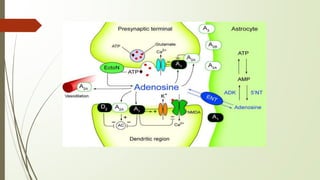
� Adenosine is an important component of the purinergic signaling
machinery. Considering that ENTs are present in all tissues, including the
Central Nervous System (CNS), it is possible that they are members and
potential pharmacological targets of purinergic signaling in physiological
conditions.
� Adenosine signaling has been implicated in the pathophysiology of many
diseases and psychiatric disorders. Alterations in the function of ENT
subtypes able to transport adenosine (mainly ENT1), have been associated
with altered adenosine levels thereby resulting in abnormal signaling likely
to contribute to several pathophysiological conditions.
� Mice lacking ENT1 have been a very useful model to study the association
of this transporter with adenosine signaling.kely
� In the CNS, diminished ENT1, with regards to addictive disorders has been directly
associated with increased vulnerability to both goal-directed behavior and
excessive ethanol drinking.
� Furthermore, impaired ENT1 expression and thus adenosine homeostasis results
in a reduction in glial fibrillary acidic protein (GFAP), excitatory amino acid
transporter type 2 (EAAT2) and aquaporin type 4 (AQP4) expression, and alters
astrocyte function .
� Additionally, either low levels or pharmacological inhibition of ENT1
contribute to cardioprotection due to elevated adenosine circulating
levels.
� ENT1 has also been associated to biomineralization disorders, its loss
contributing to reduced bone density and to ectopic mineralization of soft
tissues.
� Regarding CNS, animal models and patient samples have revealed that ENT1 and
adenosine constitute biomarkers of the initial stages of neurodegeneration in
Huntington disease with ENT1 transcript being significantly upregulated in those
patients. Thus, ENT1 inhibition could be a potential therapeutic target for treating
Huntington disease
� Concentrative nucleoside transporters (CNT; SLC28) and equilibrative nucleoside
transporters (ENT; SLC29) mediate the uptake of natural nucleosides and a variety of
nucleoside-derived drugs, mostly used in anticancer therapy.
� SLC28 and SLC29 families consist in three and four members, respectively, which
differ in their substrate selectivity and their energy requirements.
� Tissue distribution of these transporters is not homogeneous among tissues, and their
expression can be regulated.
� In epithelia, CNT and ENT proteins are mostly localized in the apical and basolateral
membranes, respectively, which results in nucleoside and nucleoside-derived drugs
vectorial flux.
� Nucleoside transporters can play physiological roles other than salvages, such as the
modulation of extracellular and intracellular adenosine concentrations.
Similarities and differences
� Moreover, these transporters also have clinical significance. ENT proteins
are target of dipyridamole and dilazep, used as vasodilatory drugs in the
treatment of heart and vascular diseases.
� On the other hand, nucleoside transporters are responsible for the cellular
uptake of currently used anticancer nucleoside-derived drugs, thus these
membrane proteins might play a significant role in nucleoside-based
chemotherapy.
� Finally, several polymorphisms have been described in CNT and ENT
proteins that could affect nucleoside homeostasis, adenosine signalling
events or nucleoside-derived drug cytotoxicity or pharmacokinetics.
� Both nucleoside transporter families share common features and are often
expressed in the same cell types and tissues. It is worth mentioning that ENTs
are bidirectional transporters whereas CNTs are not.
� Moreover, their different substrate specificity and mode of action might
support different and probably complementary roles in modulating
nucleoside bioavailability.
� Nevertheless, it also appears that there might be some apparent biological
redundancy. This could be associated with additional specific functions
and/or diverse regulatory roles for the different NT protein subtypes.
� In this sense, it can be hypothesized that ENTs might be related to
metabolic homeostasis whereas CNTs may be associated with more
specialized functions, such as nucleoside sensing and signal transduction.
NTs and Disease
� NTs are crucial to ensure nucleoside and nucleotide homeostasis and due to the importance of these
molecules in many physiological processes it is easy to envisage that their alteration may be behind
some pathological conditions.
� Cancer is the paradigm of a pathophysiological condition characterized by abnormal high
requirement of nucleotides to support DNA synthesis associated to cell proliferation and this may
rely upon nucleoside salvage and, accordingly, transport across the plasma membrane. Thus,
changes in NTs profile to fulfill nucleotide demand may be expected. However, the situation seems
to be more complex. Indeed, expression of hCNT-type transporters is commonly associated with
differentiated cell lines and at least for hCNT1, oncogenesis is often related to down-regulation of
its expression
In contrast, nucleoside influx in cancer cells seems to rely on ENT-type transporters. High levels of
hENT2 expression have been correlated with advanced stages in diverse tumor types including
hepatocellular carcinoma, mantle cell lymphoma, and ovarian carcinoma
� Nucleosides are semi-essential nutrients that can be absorbed from the diet and in this
sense the intestine is the first step in their absorption. Inflammatory bowel diseases, such as
Crohn’s, show an altered pattern of several transporters, including NT . The pyrimidine-
and purine-preferring transporters, hCNT1 and hCNT2 are downregulated, whereas hENT1
is upregulated. Moreover, other purinome members are also altered, reinforcing again the
crucial role of NTs in physiological networks

Nucleoside transporters

  • 1.
  • 2.
    � Nucleoside transporters(NTs) are a group of membrane transport proteins which transport nucleoside substrates like adenosine across the membranes of cells and/or vesicles.There are two known types of nucleoside transporters, concentrative nucleoside transporters (CNTs; SLC28) and equilibrative nucleoside transporters (ENTs; SLC29), as well as possibly a yet-unidentified vesicular transporter � Nucleoside transporters transport both naturally occurring nucleoside and synthetic nucleoside analogs that are used as anticancer drugs anti viral drugs. � There are various types of nucleoside transporter, including concentrative nucleoside transporter (CNT1 CNT2 CNT3) and equilibrative nucleoside transporter (ENT1 ENT2 ENT3) Each have different substrate specificity. � ENT have broad affinity, low selectivity and are ubiquitously located � CNT have high affinity, selective located in epithelia of intestine kidney, liver and brain, indicating their involvement in drug disposition, distribution and excretion.
  • 4.
    Membrane transport proteins �A membrane transport protein (or simply transporter) is a membrane protein involved in the movement of ions, small molecules, and macromolecules, such as another protein, across a biological membrane. Transport proteins are integral transmembrane protein; that is they exist permanently within and span the membrane across which they transport substances. The proteins may assist in the movement of substances by facilitated diffusion or active transport. The two main types of proteins involved in such transport are broadly categorized as either channels or carriers. � A carrier is not open simultaneously to both the extracellular and intracellular environments. Either its inner gate is open, or outer gate is open. In contrast, a channel can be open to both environments at the same time, allowing the molecules to diffuse without interruption. Carriers have binding sites, but pores and channels do not.
  • 5.
    Concentrative nucleoside transporters �Human concentrative nucleoside transporters include SLC28A1, SLC28A2 and SLC28A3 proteins. SLC28A2 is a purine-specific Na+-nucleoside cotransporter localised to the bile canalicular membrane. SLC28A1 is a Na+-dependent nucleoside transporter selective for pyrimidine nucleosides and adenosine. It also transports the anti-viral nucleoside analogues Zidovudine and Zalcitabine. � CNTs mediate the unidirectional uptake of nucleosides coupled to the influx of sodium ions, albeit CNT3 can also accept protons. The sodium/nucleoside coupling ratio is 1:1 for CNT1 and CNT2 and 2:1 for CNT3. The three members also differ among them in their substrate selectivity, except for uridine, which can be transported by all subtypes. CNT1 transports pyrimidines and CNT2 carries purines, whereas CNT3 mediates the uptake of both purines and pyrimidines � CNT1 also acts as a tranceptor i.e transporter and receptor.
  • 7.
    Transceptor � The transceptorconcept was presented for the first time by Johan Thevelein back in 1999 in the course of the 14th Small Meeting of Yeast Transport and Energetics (SMYTE) held in Cordoba (Spain) � The coexistence of these two functions within the same protein led to coin the word “transceptor” (from transporter and receptor contraction). Since then, several high affinity solute transporter proteins have been demonstrated to fit under the transceptor concept. In this context, considering the overlapping selectivity and the frequent redundant localization of Equilibrative and Concentrative Nucleoside Transporters, the high affinity CNTs seemed good candidates to be classified as transceptors. � Considering NTs have a major role in determining the bioavailability of several anticancer drugs, various studies have been performed to analyze their expression in cancer. In particular, it has been shown that hCNT1 expression is highly reduced or even lost in different types of tumors
  • 8.
    hCNT1 as atransceptor � Accordingly, hCNT1 biological function (hCNT1-related transport activity) is almost undetectable or null and its expression at the protein and mRNA level is often lost or dramatically reduced in cancer derived cell lines. Actually, CNT1 is a highly regulated protein and its expression has been associated with differentiation � Interestingly, restitution of hCNT1 in cancer cell lines provoked unexpected effects that could not be explained by the mere increase in the uptake of pyrimidine nucleosides. Although purine/pyrimidine unbalance can by itself induce a variety of genotoxic effects the biological impact of hCNT1 restitution, was mimicked by the polymorphic variant hCNT1S546P which is unable to translocate its substrates but appears to be properly folded and inserted into the plasma membrane hCNT1 restoration in pancreatic cancer derived cell lines significantly altered the phosphorylation status of signal-transducing kinases related to different pathways, reduced cell migration, cell cycle progression and induced non-apoptotic cell death. Moreover, restoration of hCNT1 significantly reduced tumor growth
  • 10.
    hCNT2 and hCNT3as Putative Transceptors � The two other members of the SLC28 gene family, hCNT2 and hCNT3, have not been assigned yet as transceptors, although it can be hypothesized they might be. � The study of the hCNT2 interactome allowed the identification of two proteins related to energy metabolism. Glucose-Regulated Protein 58 (GRP58) and aldolase B were identified as hCNT2 partners using the N-terminus tail of hCNT2 as bait. The biological functions of these partners could anticipate a regulatory model dependent on cell nutrient bioavailability. � In this sense, GRP58 expression increased in low glucose conditions, whereas hCNT2 expression and activity decreased. Moreover, glucose and fructose availability increased the glycolytic flux and induced transient interactions between aldolase B and hCNT2, which in turn were associated with increased transport activity by a mechanism compatible with transporter conformational changes. Moreover, purinergic modulation of CNT2 in hepatocytes is dependent upon glucose availability and KATP channel function.
  • 11.
    � These observationssuggest that hCNT2 function is dependent upon energy metabolism, although the possibility of hCNT2 function regulating aldolase B activity by protein– protein interactions cannot be ruled out. To some extent this would be consistent with a putative transceptor role for hCNT2. � On the other hand, the purine nucleoside adenosine is a multifaceted signaling molecule implicated in a variety of physiological and pathophysiological processes. Both hCNT2 and hCNT3 can also modulate cell biology by means of their ability to regulate extracellular adenosine levels and consequently, purinergic signaling. � Although this role mainly relies on their transporter activity, a sort of sensor function cannot be ruled out in order to trigger the activation of specific signaling pathways to regulate cell physiology. � Adenosine transported by CNT2 is able to trigger AMPK activation in intestinal epithelial, liver parenchymal, and neuronal cell models � The possibility of a single transporter protein mediating both adenosine removal from the extracellular milieu and AMPK signaling is consistent with the view that CNT2 is playing a regulatory role in cell physiology beyond the mere salvage of extracellular nucleosides.
  • 12.
    � Aside fromCNT2, the other high affinity adenosine transporter, CNT3, also contributes to the crosstalk regulation between adenosine transporters and receptors. hCNT3 shows broad expression in epithelial tissues albeit in some cases presents a differential expression pattern to that reported for hCNT2. hCNT3 is poorly expressed in normal hepatocytes, although it is well represented in biliary epithelia, where it appears to be the major player in extracellular adenosine levels regulation. In cholangiocytes CNT3 is under purinergic regulation via the Adenosine receptor 2A (A2AR), thereby contributing to complete purinergic control of bile flow started by ATP secretion into the bile.
  • 13.
    Equilibrative nucleoside transporter �In humans ENT are also known as SLC29, a group of plasmalemmal transport proteins which transport nucleoside substrates like adenosine into cells. There are four known human ENTs, designated ENT1, ENT2, ENT3, and ENT4. They are blocked by adenosine reuptake inhibitors like dipyridamole and dilazep, drugs used clinically for their vasodilatory properties. � ENTs mediate the facilitative transport of nucleosides and some of them also transport nucleobases, albeit with different specificity. Except for ENT4, ENT proteins have a broad permeant selectivity and are able to transport high purines and pyrimidines . These three transporters differ among them by nucleoside specificity although, in general, ENTs present lower affinity for their substrates than the CNT family members. ENT1-3 are widely distributed in different cell types and tissues, even though ENT3 is located at intracellular membranes, mostly in lysosomes but also in mitochondria .
  • 14.
    � ENT4 isevolutionarily divergent from ENT1-3 and it cannot be considered a conventional nucleoside transporter. In fact, it was originally described as a polyspecific organic cation transporter , even though it transports adenosine at low extracellular pH . The possibility of intracellular pH regulating adenosine transport via hENT1 and hENT2 proteins has been recently reported in HUVECs(Human Umbilical Vein Endothelial Cells)
  • 15.
    ENT2 in CellCycle Progression � The broad selectivity transporters ENTs, contrary to CNTs, are widely distributed in all tissues. This feature could suggest a main role of ENTs in salvage pathways required to maintain the nucleoside and nucleotide pools. � In this regard, the role of these membrane proteins (ENTs) would better fit with the classical roles assumed to be played by most transporters. This is the provision of substrates for either metabolic or structural needs. Nevertheless, regulation of nucleoside and nucleotide pools may also have regulatory relevance. � Nucleos(-t)ides are compartmentalized within cells into cytoplasmic and nuclear pools, such amounts being different and dependent on cell requirements. Moreover, abnormalities in dNTP pool sizes determine DNA replication fidelity and may contribute to mutagenic processes related to carcinogenesis.
  • 16.
    � Interestingly, ENTsappeared later in the evolution, being only restricted to eukaryotes which are defined by the presence of nucleus and organelles surrounded by cell membranes. NTs were initially considered to be predominantly plasma membrane proteins. � However, hENT2 and two novel nuclear smaller hENT2 isoforms generated by differential splicing have recently been identified as key elements controlling the nucleoside and nucleotide pool for effective DNA synthesis and cell cycle progression. � This new evidence clearly points to a model where hENT2 and their isoforms are responsible for the rapid supply of nucleotides required into the nucleus during DNA replication.
  • 17.
    ENT1 and AdenosineSignaling in Physiological and Pathophysiological Conditions � Adenosine is an important component of the purinergic signaling machinery. Considering that ENTs are present in all tissues, including the Central Nervous System (CNS), it is possible that they are members and potential pharmacological targets of purinergic signaling in physiological conditions. � Adenosine signaling has been implicated in the pathophysiology of many diseases and psychiatric disorders. Alterations in the function of ENT subtypes able to transport adenosine (mainly ENT1), have been associated with altered adenosine levels thereby resulting in abnormal signaling likely to contribute to several pathophysiological conditions. � Mice lacking ENT1 have been a very useful model to study the association of this transporter with adenosine signaling.kely
  • 18.
    � In theCNS, diminished ENT1, with regards to addictive disorders has been directly associated with increased vulnerability to both goal-directed behavior and excessive ethanol drinking. � Furthermore, impaired ENT1 expression and thus adenosine homeostasis results in a reduction in glial fibrillary acidic protein (GFAP), excitatory amino acid transporter type 2 (EAAT2) and aquaporin type 4 (AQP4) expression, and alters astrocyte function . � Additionally, either low levels or pharmacological inhibition of ENT1 contribute to cardioprotection due to elevated adenosine circulating levels. � ENT1 has also been associated to biomineralization disorders, its loss contributing to reduced bone density and to ectopic mineralization of soft tissues.
  • 20.
    � Regarding CNS,animal models and patient samples have revealed that ENT1 and adenosine constitute biomarkers of the initial stages of neurodegeneration in Huntington disease with ENT1 transcript being significantly upregulated in those patients. Thus, ENT1 inhibition could be a potential therapeutic target for treating Huntington disease
  • 21.
    � Concentrative nucleosidetransporters (CNT; SLC28) and equilibrative nucleoside transporters (ENT; SLC29) mediate the uptake of natural nucleosides and a variety of nucleoside-derived drugs, mostly used in anticancer therapy. � SLC28 and SLC29 families consist in three and four members, respectively, which differ in their substrate selectivity and their energy requirements. � Tissue distribution of these transporters is not homogeneous among tissues, and their expression can be regulated. � In epithelia, CNT and ENT proteins are mostly localized in the apical and basolateral membranes, respectively, which results in nucleoside and nucleoside-derived drugs vectorial flux. � Nucleoside transporters can play physiological roles other than salvages, such as the modulation of extracellular and intracellular adenosine concentrations. Similarities and differences
  • 22.
    � Moreover, thesetransporters also have clinical significance. ENT proteins are target of dipyridamole and dilazep, used as vasodilatory drugs in the treatment of heart and vascular diseases. � On the other hand, nucleoside transporters are responsible for the cellular uptake of currently used anticancer nucleoside-derived drugs, thus these membrane proteins might play a significant role in nucleoside-based chemotherapy. � Finally, several polymorphisms have been described in CNT and ENT proteins that could affect nucleoside homeostasis, adenosine signalling events or nucleoside-derived drug cytotoxicity or pharmacokinetics.
  • 23.
    � Both nucleosidetransporter families share common features and are often expressed in the same cell types and tissues. It is worth mentioning that ENTs are bidirectional transporters whereas CNTs are not. � Moreover, their different substrate specificity and mode of action might support different and probably complementary roles in modulating nucleoside bioavailability. � Nevertheless, it also appears that there might be some apparent biological redundancy. This could be associated with additional specific functions and/or diverse regulatory roles for the different NT protein subtypes. � In this sense, it can be hypothesized that ENTs might be related to metabolic homeostasis whereas CNTs may be associated with more specialized functions, such as nucleoside sensing and signal transduction.
  • 24.
    NTs and Disease �NTs are crucial to ensure nucleoside and nucleotide homeostasis and due to the importance of these molecules in many physiological processes it is easy to envisage that their alteration may be behind some pathological conditions. � Cancer is the paradigm of a pathophysiological condition characterized by abnormal high requirement of nucleotides to support DNA synthesis associated to cell proliferation and this may rely upon nucleoside salvage and, accordingly, transport across the plasma membrane. Thus, changes in NTs profile to fulfill nucleotide demand may be expected. However, the situation seems to be more complex. Indeed, expression of hCNT-type transporters is commonly associated with differentiated cell lines and at least for hCNT1, oncogenesis is often related to down-regulation of its expression In contrast, nucleoside influx in cancer cells seems to rely on ENT-type transporters. High levels of hENT2 expression have been correlated with advanced stages in diverse tumor types including hepatocellular carcinoma, mantle cell lymphoma, and ovarian carcinoma
  • 25.
    � Nucleosides aresemi-essential nutrients that can be absorbed from the diet and in this sense the intestine is the first step in their absorption. Inflammatory bowel diseases, such as Crohn’s, show an altered pattern of several transporters, including NT . The pyrimidine- and purine-preferring transporters, hCNT1 and hCNT2 are downregulated, whereas hENT1 is upregulated. Moreover, other purinome members are also altered, reinforcing again the crucial role of NTs in physiological networks