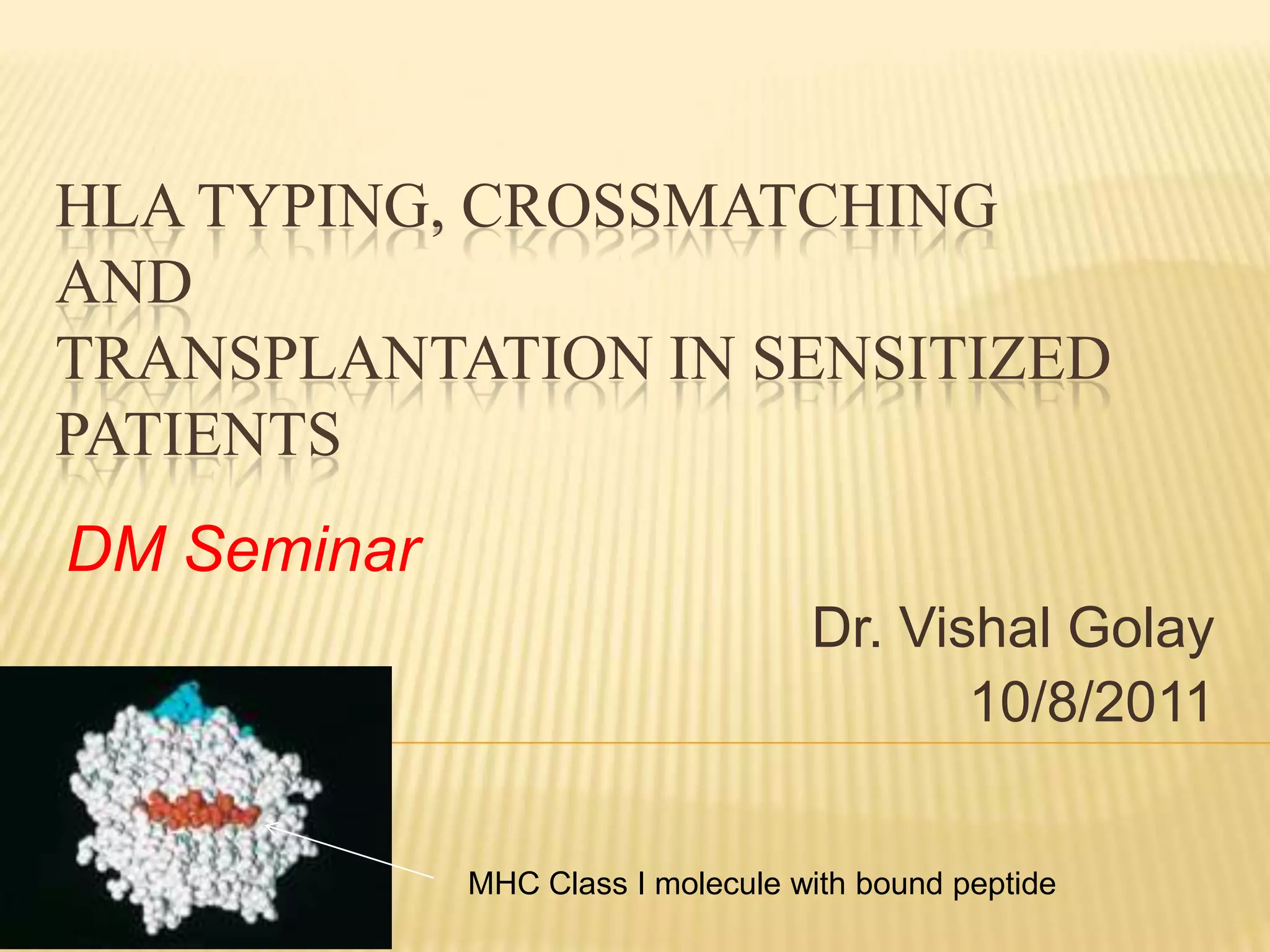
HLA Typing, Crossmatchingand transplantation in sensitized patientsDM SeminarDr. Vishal Golay10/8/2011MHC Class I molecule with bound peptide
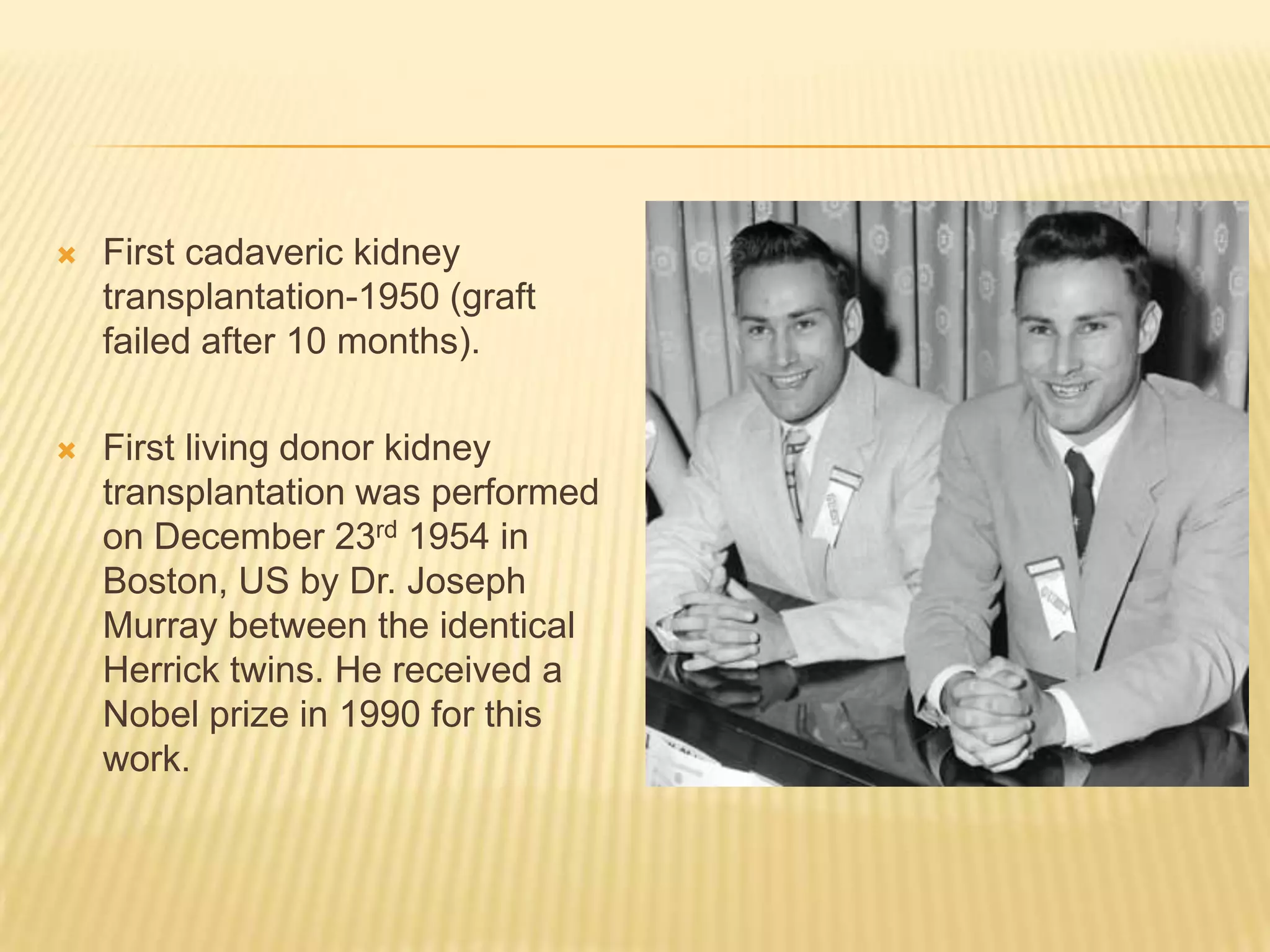
First cadaveric kidney transplantation-1950 (graft failed after 10 months).First living donor kidney transplantation was performed on December 23rd 1954 in Boston, US by Dr. Joseph Murray between the identical Herrick twins. He received a Nobel prize in 1990 for this work.
Topic overviewBasic concepts about the MHC.Methods of HLA typing.Cross matching and detecting sensitization.Transplantation in sensitized patients.
MHC and HLA TYPING
The Human mhcLocated on chromosome 6p21.31Divided in three regions: Class I, II & IIIClassic genesClassic genesHSPNon-classic genes: E,F,GMICA, MICBPseudogenesNon-classic genes: DM, DOPseudogenes
HLA class I and class II antigens Monomer with non-covalently associated subunit (b2m)
 Presents antigenic peptides to CD8+ T cells
 Expressed by most somatic cells
 Level of expression varies between tissues
High expression on lymphocytes, inducible on somatic cells
 Heterodimer
 Presents antigenic peptides to CD4+ T cells
 Restricted expression on antigen  presenting cells (B cells, monocytes/ macrophages, dendritic cells)
 Inducible on other cells (epithelium, endothelium)Structure of MHC moleculeMHC Class IBinds to 9-11 amino acidsMHC Class IIBinds to 13-30 amino acidsPeptide binding clefts
Alloantigen presentation by MHC Direct Antigen Presentation:                    Donor APC                                            +                                     TCR of Recipient T cell                    Donor MHCIndirect Antigen Presentation:                Recipient APC                             +                                     TCR of Recipient T cell  Processed Donor MHCIndirect pathway generally activates CD4 T cells.Acute rejection of allograft is primarily dependent on direct allorecognition
HLA NomenclatureIn case of renal transplantation, if only HLA-A, B & DR are taken, there are 88 recognized antigens encoded by >2200 distinct alleles.The genes are prefixed by the letter HLA followed by the loci.HLA typing can be done by two methods:Serological typingDNA typing
Serological HLA typingDeveloped by Terasaki and McClelland in 1964Based on the detection of expressed HLA molecules on the surface of separated T cells (HLA class I) and B cells (HLA class II) using panels of antisera, usually obtained from multiparous women in a complement dependent cytotoxicity test.Requires sufficient live lymphocytes and panel of seraHLA antigen identified by serological methods were named in the order in which they were recognized. Eg: A1, A2, A3 and so on
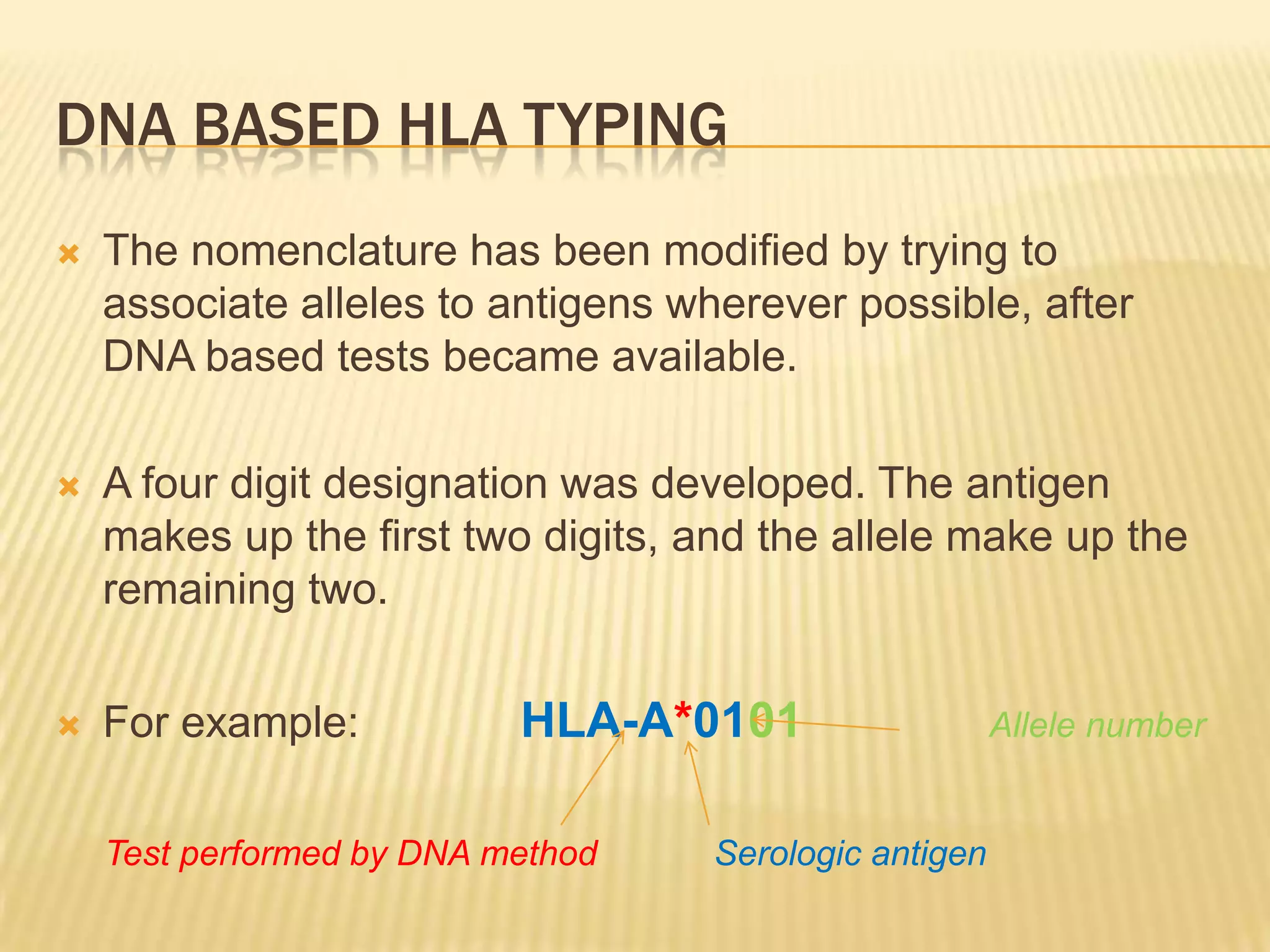
DNA based HLA typingThe nomenclature has been modified by trying to associate alleles to antigens wherever possible, after DNA based tests became available.A four digit designation was developed. The antigen makes up the first two digits, and the allele make up the remaining two.For example:             HLA-A*0101Allele numberTest performed by DNA method  Serologic antigen
Hla nomenclatureIn case of the HLA-DR antigen, they are distinguished by their β1 subunit. Therefore, the 1st allele of DR1 will be HLA-DRB1*0101The most common HLA antigen is A2 (50% of world population) with allelic variations. HLA-B 54 is almost exclusively found in Japan and neighboring areas and HLA-A36 is common in blacks.BMT requires allele level matching to prevent development of GVHD. However, allele level mismatches have no substantial effect on renal graft survival rates.
DNA based HLA typing methodsPCR-Sequence Specific Probes(SSP):DNA amplification using group specific primers and detecting the amplified product by gel electrophoresis.Cumbersome and unsuited for typing large number of samples.PCR-Sequence Specific Oligonucleotide Probes (SSOP):Amplification using group/allele specific primers and then detecting the hybridization of oligo probes with enzymatic or fluorescent markers.Useful for typing samples in batchesSequence Based typing:Uses gene-specific primers and so is used for allelic level typing for SCT and also to type new alleles
Advantages of the dna based testsGreater accuracy and reproducibility of the reagents.Viable lymphocytes are not required and typing can be performed on any tissue.The oligonucleotide reagents are more easily standardized and controlled.Greater accuracy of the test.Difficult HLA specificities against whom antisera is not available can also be identified using DNA based tests.
Interpretation of an hla typing reportHaplotypes are combination of alleles in different loci that are inherited together. Occasionally (in 2% cases) crossover occurs between the A and B locus resulting in a new haplotype.                                     Mother		FatherA BDRABDR1       8       17               3      13      112       44     4 29    44       7    Sibling 1                           Sibling 2                       Sibling3                      Sibling4ABDRABDRABDRABDR2      44	       4                2      44	4 1       8       17              1       8        173       13       11              29     44       7               3       13   11               29     44       7Mendelianinheritence25%-two haplotype match25%-one haplotype match25%-zero haplotypematch
Interpretation of an hla typing reportExample:                HLA phenotypeIndividual 1   ->   A1,A24;   B8, B44;    DR4, DR15Individual 2   ->   A1, A3;    B7, B8;       DR4, DR12Common  Alleles: A1, B8, DR4If the two individuals are related(siblings, parent-child), these three shared alleles is most probably the common shared haplotype and thus this should be interpreted as: “ONE HAPLOTYPE MATCH”If they are unrelated then there are three shared alleles. This should then be interpreted as : “THREE ANTIGEN MATCH or THREE NATIGEN MISMATCH”
Practical issues in hla typingIncomplete HLA specificity;Example:1. A2, ---;   B27, B13; DR17, DR42. A2, A3;  B8, B14;   DR17, ----In particular situation,This commonly means that the individual is homozygous in the A and DR loci.If 1 is donor for 2, this should be described as zero A, two B and one DR mismatch.If 2 is donor for 1, this should be described as one A, two B and zero DR mismatch. A2 DR 17
Hla and transplantationHLA matched kidneys with longer cold ischemia time fared better than HLA mismatched with lesser ischemia time.However, it was found that HLA matched kidneys from an ECD fared poorly compared to unmatched standard criteria donor putting the issue of achieving an identical match in doubt.It was also found that unmatched living kidneys had longer graft survival than a fully matched cadaveric kidney.The survival of grafts from an unrelated donor was comparable to grafts from a one-haplotype matched sibling/parent to child (64% at 10 years).Please refer to figure in Danovitch
ANTI HLA ANTIBODIES
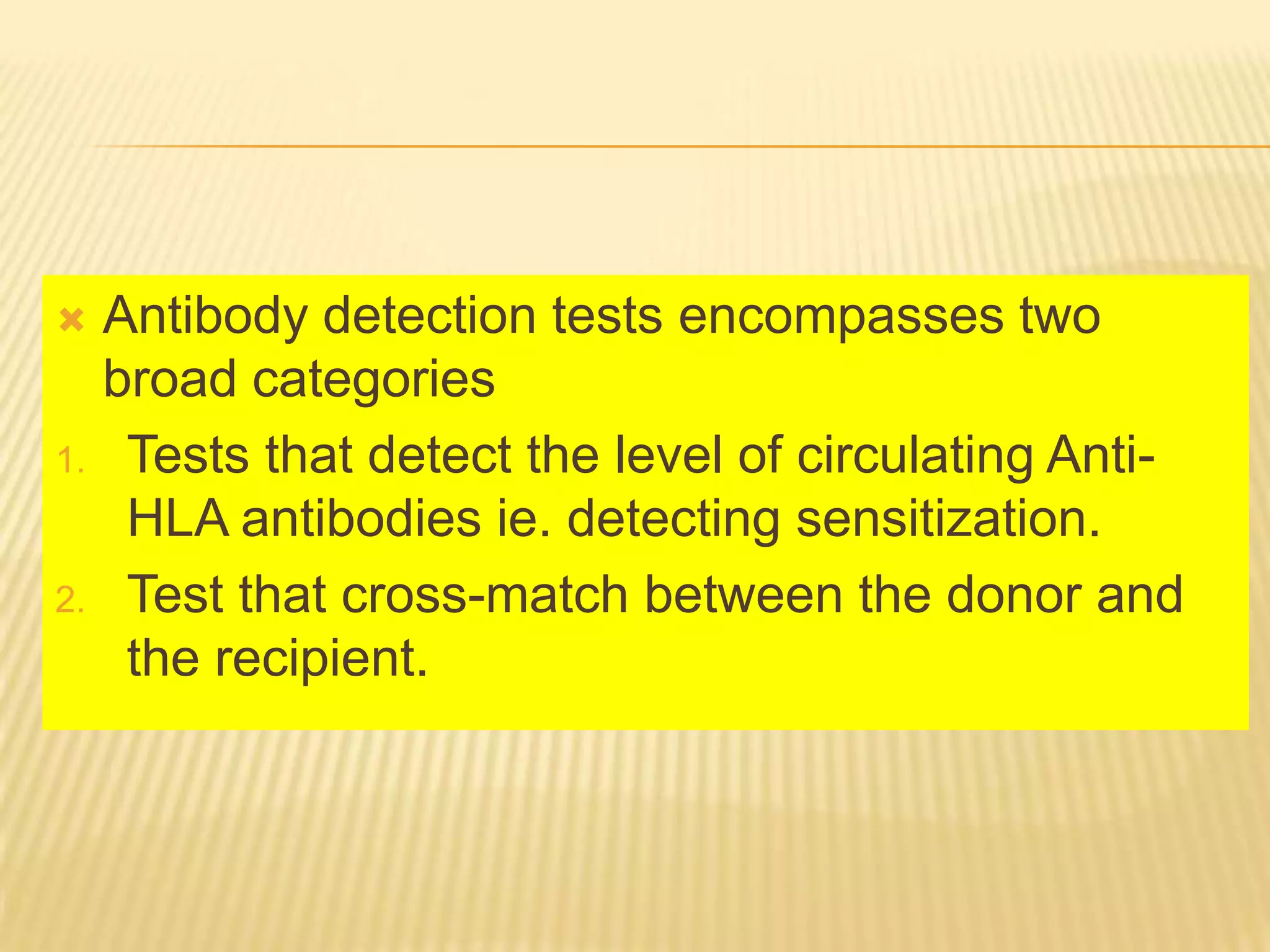
Antibody detection tests encompasses two broad categoriesTests that detect the level of circulating Anti-HLA antibodies ie. detecting sensitization.Test that cross-match between the donor and the recipient.
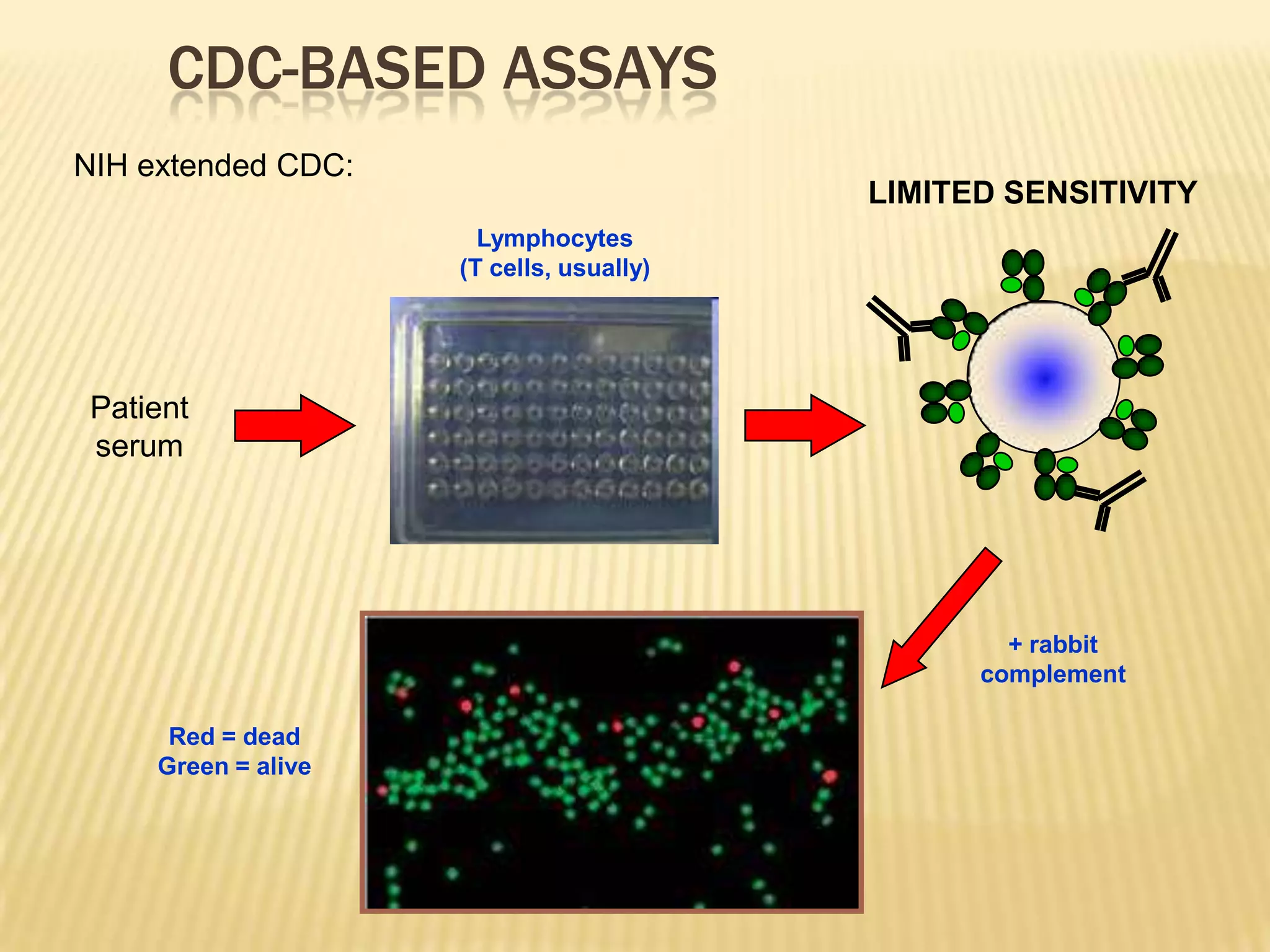
CDC-based assaysNIH extended CDC:LIMITED SENSITIVITYLymphocytes (T cells, usually)Patient serum+ rabbit complementRed = deadGreen = alive
Enhanced CDC-based assaysLymphocytesPatient serumEnhance with anti-human globulin (AHG)+ rabbit complement
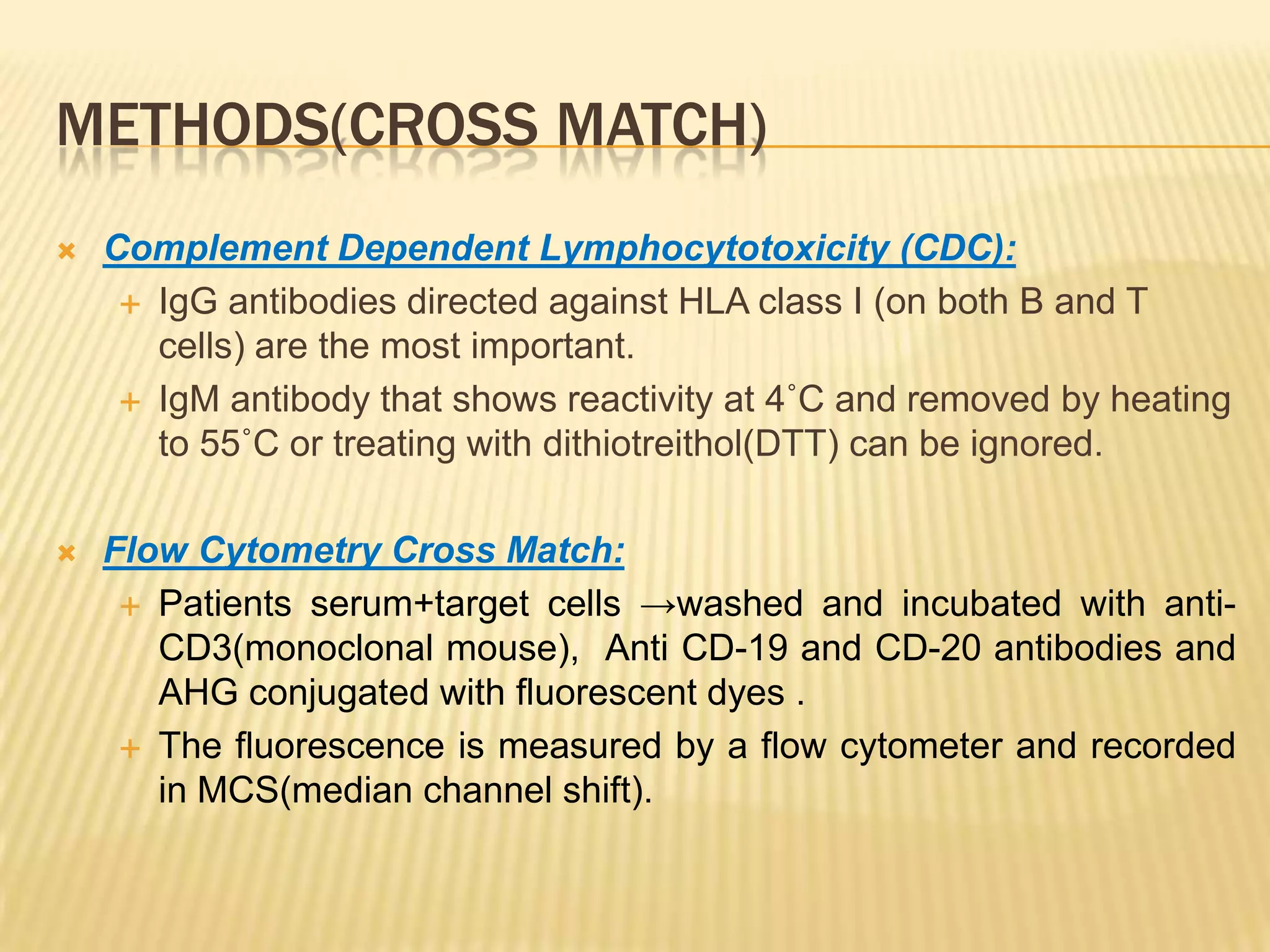
Methods(cross match)Complement Dependent Lymphocytotoxicity (CDC):IgGantibodies directed against HLA class I (on both B and T cells) are the most important.IgM antibody that shows reactivity at 4˚C and removed by heating to 55˚C or treating with dithiotreithol(DTT) can be ignored.Flow Cytometry Cross Match:Patients serum+target cells ->washed and incubated with anti-CD3(monoclonal mouse),  Anti CD-19 and CD-20 antibodies and AHG conjugated with fluorescent dyes .The fluorescence is measured by a flow cytometerand recorded in MCS(median channel shift).
Solid phase assaysThese assays use HLA antigens on various platforms. The tests fall into three general categories: Using mixture of the HLA class I or class II antigens from several individuals. Using class I or class II HLA antigens for a single individual.Using a single HLA antigen produced through recombinant DNA technology.
Anti-IgGHLA alloantibodyAnti-IgG-PEAnti-IgG-FITCSOLID PHASE ASSAYSPurified HLA molecules are immobilized onto the surface of the solid surfaces:	higher sensitivity than CDC-based assaysFlow Cytometry(Latex beads)ELISALuminex Array(Polystyrene beads)Used in HLA ab screening and identification of donor specific antibodyGebel and Bray.  Transplantation Reviews 20: 189-194, 2006
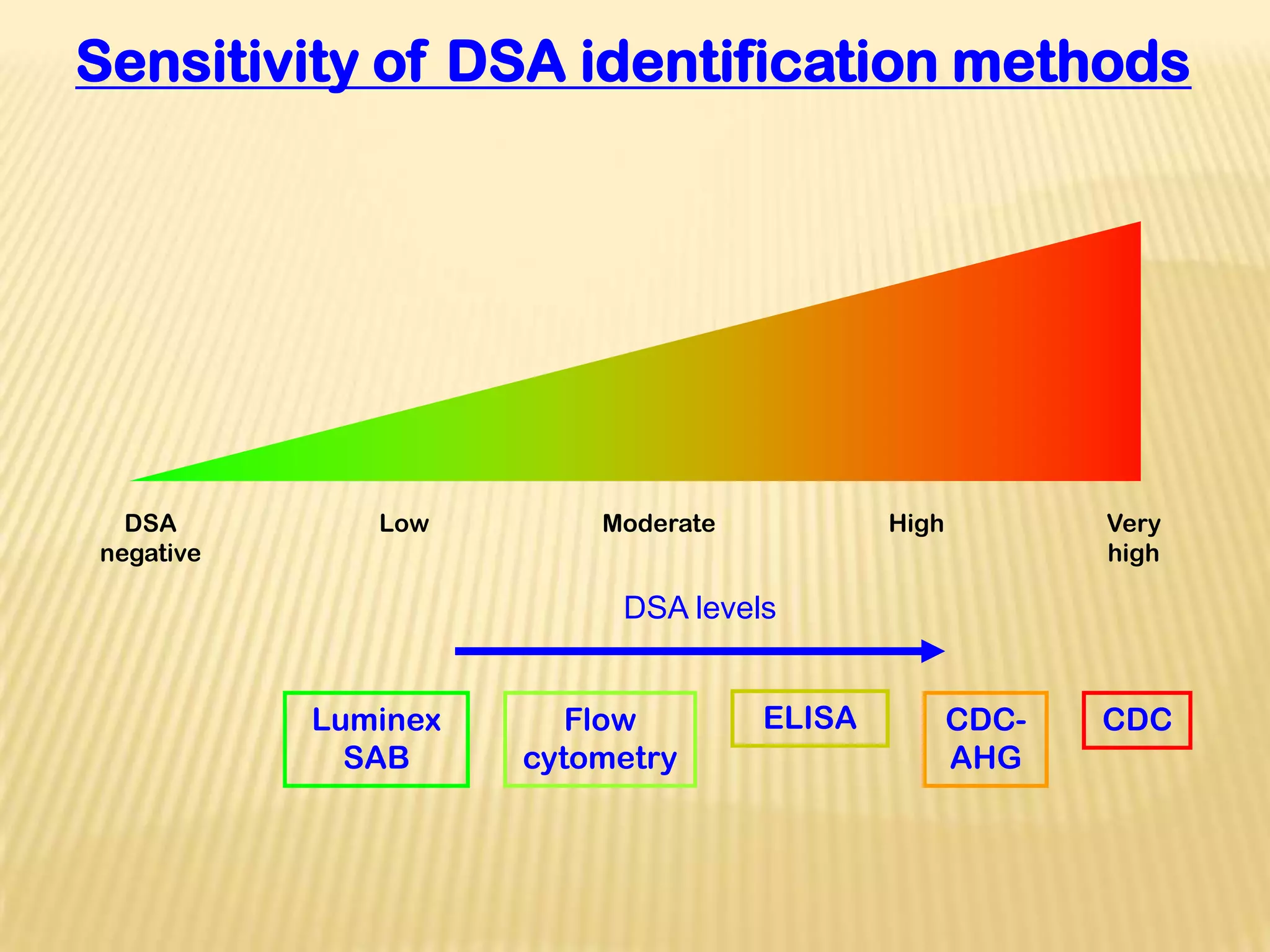
Sensitivity of DSA identification methodsVery highHighModerateLowDSA negativeDSA levelsELISALuminex SABFlow cytometryCDC-AHGCDC
TRANSPLANTATION IN SENSITIZED PATIENTS
The definition of sensitization is variable. One definition defines it as moderately sensitized when PRA is >20% and highly sensitized when the PRA >80%. This is however variable between centres.The definition of sensitization has undergone a paradigm shift after the adoption of a new concept called CPRA(calculated panel reactive antibodies) by the UNOS in 2009.
IntroductionSensitization to HLA antigens occurs mainly through-PregnancyBlood transfusionsPrevious organ transplantationsSensitization significantly increases the waiting time for kidney transplantation.This significantly increases the number of patients dying each year in want of a transplant (15-20% mortality/yr on HD)Approx. 35% of patients have PRA>0% and 15% have PRA >80%.Approx 17% of patients on waiting list have had a previous transplant.
IntroductionPreviously, a positive DSA or a positive cross match was considered a contraindication to transplantation.In the last decade, advances in diagnostics, pathology and therapeutics  have made transplantation in sensitized patients possible.Most of the current protocols are a modification of high-dose intravenous Ig (IVIG) initiated at Cedars Sinai Medical Center or plasmapheresis (PP) with low-dose IVIG initiated at Johns Hopkins Hospital.
Anti-A2Anti-B7A single sensitizing event can lead to multiple antibody specificitiesRecipient typing: A1,A3 B8, B52Donor typing:A1,A2 B7,B8+
B57A68A23A28A69A24B58B42B55B13B48B27B47B60B61B54B41Sensitization to multiple HLA antigens from a single transplantAnti A2+Anti B7Due to shared epitopes with donor HLA
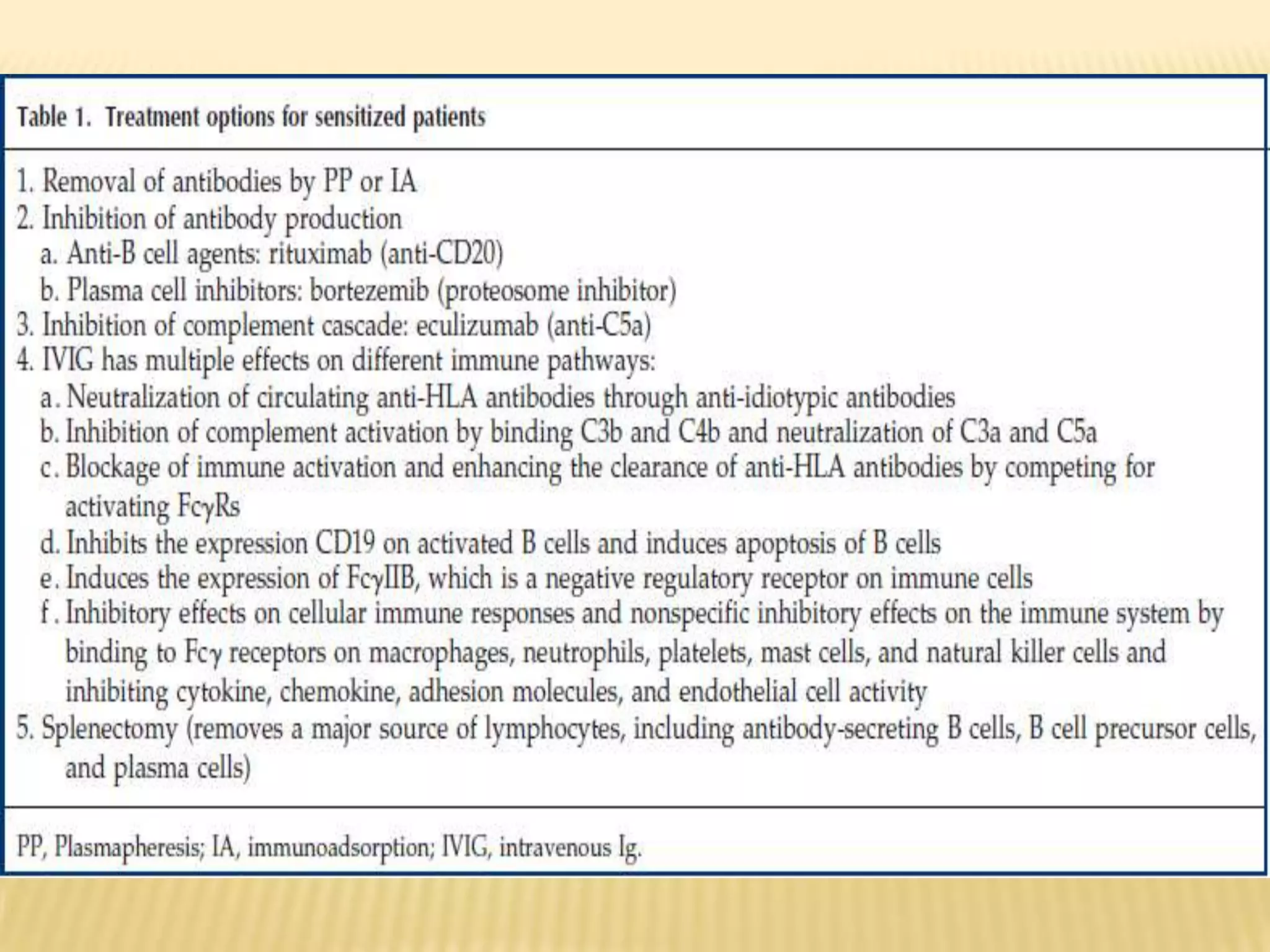
Plasmapheresis and immunoadsorptionBoth these techniques are aimed at removing alloantibodies.PP removes all plasma proteins including  Ig.IA includes a sepharose-bound staphylococcal protein A column with a high affinity for binding IgG and developed to remove IgG antibodies. The advantages of IA over PP include specificity, a greater amount of antibody removal, and the elimination of the need to replace large volumes of plasma.
Plasmapheresis and immunoadsorptionOne 3- to 4-hour treatment course with IA results in a 15% to 20% reduction and three to six courses of treatment result in 90% reduction in plasma IgG levels. However, anti- HLA antibody titers rebound and return to baseline levels within a few weeks after the completion of PP or IA.Most of the IA columns manufactured in USA and Japan are not approved by the FDA
Inhibition of antibody production & complement inhibitorsBased on inhibiting antibody production by B-cells and plasma cells.Rituximab (Anti-CD 20): off label use in desensitization protocol/treatment of AMR as a single dose of 375mg/m².Plasma cells and pro-B cells do not have surface CD-20 decreasing the efficacy.B-cell recovery takes 6-12 months.Bortezomib (Proteasomal Inhibitor):Induces apoptosis of plasma cells.Given in dosage of 1.3 mg/m² and repeated on days 4, 8, and 11 intravenously over 3 to 5 seconds.Eculizumab:It is a monoclonal antibody against C5.Binds to C5 protein with high affinity, thereby inhibiting its cleavage to C5a and C5b and preventing generation of the terminal complement complex C5b-9.
Ivig & splenectomyIVIg:Multiple effects on the immune system.Has been a part of the desensitization protocols for ABO incompatible and cross-match positive patients and also for the Rx of AMR.The dose of IVIG varies among protocols from 100 mg/kg to 2.0 g/kg and is usually given during a hemodialysis session or as a slow infusion in nondialysis patients.Splenectomy:It has been used in desensitization protocols of ABO-incompatible kidney transplant recipients. Splenectomy removes a major source of lymphocytes, including antibody-secreting B cells, B cell precursor cells, and plasma cells. It has also been used in the treatment of refractory AMR
DESENSITIZATION PROTOCOLS
PP with low dose ivigThis protocol was first used in 1998 at Johns Hopkins Hospital in cross-match incompatible living-donor kidney transplant candidatesPatients received PP and CMVIg at 100 mg/kg after each PP along with tacrolimus and MMF treatment for desensitization starting 2 to 3 weeks before transplantation. The start of therapy depended on the DSA titers so that patients with low titers (<1:8) required two to three sessions of PP, whereas patients with higher titers (1:128) had six to 10 sessions. Patients received transplantation if the cross-match became negative with the use of daclizumab induction therapy and continued for two to five sessions of PP after transplantation depending on the titers of DSA.Pediatr Transplant 8: 535–542, 2004
PP with low dose ivigJohns Hopkins Hospital used this protocol but all 4 patients had AMR which responded to Rx and had 100% 1 yr graft survival.This was slightly modified by using OKT3 induction. Lower AMR (36%) and 100 % I yr graft survival                                                          Transplantation 70: 1531–1536, 2000Mayo Clinic used ATG induction with rituximab and splenectomy with not so favorable outcomes.Brigham and Women’s Hospital Transplant Center & Univ of Illinois also used this protocol but the AMR rate was high.The latest report is from Univ of Maryland. Their patients, with this protocol and ATG/OKT3 induction had lower acute AMR (12%) compared with the studies discussed above, but patient survival and graft survival at 4 years were only 78% and 66%, respectively.                                                                               Am J Transplant 9: 536–542, 2009
High-Dose IVIGFirst pioneered in Cedars Sinai Medical Centre, IVIg @2g/kg was given till the crossmatch was negative and then transplanted.  The primary advantage was its applicability in deseased-donor kidney transplant.This group also compared ATG +IVIgvs those without these, in CDC- but low level DSA+ pts and   found significantly lower AMR when agents were used

Transplantation in sensitized patients(seminar)

  • 1.
    HLA Typing, Crossmatchingandtransplantation in sensitized patientsDM SeminarDr. Vishal Golay10/8/2011MHC Class I molecule with bound peptide
  • 2.
    First cadaveric kidneytransplantation-1950 (graft failed after 10 months).First living donor kidney transplantation was performed on December 23rd 1954 in Boston, US by Dr. Joseph Murray between the identical Herrick twins. He received a Nobel prize in 1990 for this work.
  • 3.
    Topic overviewBasic conceptsabout the MHC.Methods of HLA typing.Cross matching and detecting sensitization.Transplantation in sensitized patients.
  • 4.
  • 5.
    The Human mhcLocatedon chromosome 6p21.31Divided in three regions: Class I, II & IIIClassic genesClassic genesHSPNon-classic genes: E,F,GMICA, MICBPseudogenesNon-classic genes: DM, DOPseudogenes
  • 6.
    HLA class Iand class II antigens Monomer with non-covalently associated subunit (b2m)
  • 7.
    Presents antigenicpeptides to CD8+ T cells
  • 8.
    Expressed bymost somatic cells
  • 9.
    Level ofexpression varies between tissues
  • 10.
    High expression onlymphocytes, inducible on somatic cells
  • 11.
  • 12.
    Presents antigenicpeptides to CD4+ T cells
  • 13.
    Restricted expressionon antigen presenting cells (B cells, monocytes/ macrophages, dendritic cells)
  • 14.
    Inducible onother cells (epithelium, endothelium)Structure of MHC moleculeMHC Class IBinds to 9-11 amino acidsMHC Class IIBinds to 13-30 amino acidsPeptide binding clefts
  • 15.
    Alloantigen presentation byMHC Direct Antigen Presentation: Donor APC + TCR of Recipient T cell Donor MHCIndirect Antigen Presentation: Recipient APC + TCR of Recipient T cell Processed Donor MHCIndirect pathway generally activates CD4 T cells.Acute rejection of allograft is primarily dependent on direct allorecognition
  • 16.
    HLA NomenclatureIn caseof renal transplantation, if only HLA-A, B & DR are taken, there are 88 recognized antigens encoded by >2200 distinct alleles.The genes are prefixed by the letter HLA followed by the loci.HLA typing can be done by two methods:Serological typingDNA typing
  • 17.
    Serological HLA typingDevelopedby Terasaki and McClelland in 1964Based on the detection of expressed HLA molecules on the surface of separated T cells (HLA class I) and B cells (HLA class II) using panels of antisera, usually obtained from multiparous women in a complement dependent cytotoxicity test.Requires sufficient live lymphocytes and panel of seraHLA antigen identified by serological methods were named in the order in which they were recognized. Eg: A1, A2, A3 and so on
  • 18.
    DNA based HLAtypingThe nomenclature has been modified by trying to associate alleles to antigens wherever possible, after DNA based tests became available.A four digit designation was developed. The antigen makes up the first two digits, and the allele make up the remaining two.For example: HLA-A*0101Allele numberTest performed by DNA method Serologic antigen
  • 19.
    Hla nomenclatureIn caseof the HLA-DR antigen, they are distinguished by their β1 subunit. Therefore, the 1st allele of DR1 will be HLA-DRB1*0101The most common HLA antigen is A2 (50% of world population) with allelic variations. HLA-B 54 is almost exclusively found in Japan and neighboring areas and HLA-A36 is common in blacks.BMT requires allele level matching to prevent development of GVHD. However, allele level mismatches have no substantial effect on renal graft survival rates.
  • 20.
    DNA based HLAtyping methodsPCR-Sequence Specific Probes(SSP):DNA amplification using group specific primers and detecting the amplified product by gel electrophoresis.Cumbersome and unsuited for typing large number of samples.PCR-Sequence Specific Oligonucleotide Probes (SSOP):Amplification using group/allele specific primers and then detecting the hybridization of oligo probes with enzymatic or fluorescent markers.Useful for typing samples in batchesSequence Based typing:Uses gene-specific primers and so is used for allelic level typing for SCT and also to type new alleles
  • 21.
    Advantages of thedna based testsGreater accuracy and reproducibility of the reagents.Viable lymphocytes are not required and typing can be performed on any tissue.The oligonucleotide reagents are more easily standardized and controlled.Greater accuracy of the test.Difficult HLA specificities against whom antisera is not available can also be identified using DNA based tests.
  • 22.
    Interpretation of anhla typing reportHaplotypes are combination of alleles in different loci that are inherited together. Occasionally (in 2% cases) crossover occurs between the A and B locus resulting in a new haplotype. Mother FatherA BDRABDR1 8 17 3 13 112 44 4 29 44 7 Sibling 1 Sibling 2 Sibling3 Sibling4ABDRABDRABDRABDR2 44 4 2 44 4 1 8 17 1 8 173 13 11 29 44 7 3 13 11 29 44 7Mendelianinheritence25%-two haplotype match25%-one haplotype match25%-zero haplotypematch
  • 23.
    Interpretation of anhla typing reportExample: HLA phenotypeIndividual 1 -> A1,A24; B8, B44; DR4, DR15Individual 2 -> A1, A3; B7, B8; DR4, DR12Common Alleles: A1, B8, DR4If the two individuals are related(siblings, parent-child), these three shared alleles is most probably the common shared haplotype and thus this should be interpreted as: “ONE HAPLOTYPE MATCH”If they are unrelated then there are three shared alleles. This should then be interpreted as : “THREE ANTIGEN MATCH or THREE NATIGEN MISMATCH”
  • 24.
    Practical issues inhla typingIncomplete HLA specificity;Example:1. A2, ---; B27, B13; DR17, DR42. A2, A3; B8, B14; DR17, ----In particular situation,This commonly means that the individual is homozygous in the A and DR loci.If 1 is donor for 2, this should be described as zero A, two B and one DR mismatch.If 2 is donor for 1, this should be described as one A, two B and zero DR mismatch. A2 DR 17
  • 25.
    Hla and transplantationHLAmatched kidneys with longer cold ischemia time fared better than HLA mismatched with lesser ischemia time.However, it was found that HLA matched kidneys from an ECD fared poorly compared to unmatched standard criteria donor putting the issue of achieving an identical match in doubt.It was also found that unmatched living kidneys had longer graft survival than a fully matched cadaveric kidney.The survival of grafts from an unrelated donor was comparable to grafts from a one-haplotype matched sibling/parent to child (64% at 10 years).Please refer to figure in Danovitch
  • 26.
  • 27.
    Antibody detection testsencompasses two broad categoriesTests that detect the level of circulating Anti-HLA antibodies ie. detecting sensitization.Test that cross-match between the donor and the recipient.
  • 28.
    CDC-based assaysNIH extendedCDC:LIMITED SENSITIVITYLymphocytes (T cells, usually)Patient serum+ rabbit complementRed = deadGreen = alive
  • 29.
    Enhanced CDC-based assaysLymphocytesPatientserumEnhance with anti-human globulin (AHG)+ rabbit complement
  • 30.
    Methods(cross match)Complement DependentLymphocytotoxicity (CDC):IgGantibodies directed against HLA class I (on both B and T cells) are the most important.IgM antibody that shows reactivity at 4˚C and removed by heating to 55˚C or treating with dithiotreithol(DTT) can be ignored.Flow Cytometry Cross Match:Patients serum+target cells ->washed and incubated with anti-CD3(monoclonal mouse), Anti CD-19 and CD-20 antibodies and AHG conjugated with fluorescent dyes .The fluorescence is measured by a flow cytometerand recorded in MCS(median channel shift).
  • 31.
    Solid phase assaysTheseassays use HLA antigens on various platforms. The tests fall into three general categories: Using mixture of the HLA class I or class II antigens from several individuals. Using class I or class II HLA antigens for a single individual.Using a single HLA antigen produced through recombinant DNA technology.
  • 32.
    Anti-IgGHLA alloantibodyAnti-IgG-PEAnti-IgG-FITCSOLID PHASEASSAYSPurified HLA molecules are immobilized onto the surface of the solid surfaces: higher sensitivity than CDC-based assaysFlow Cytometry(Latex beads)ELISALuminex Array(Polystyrene beads)Used in HLA ab screening and identification of donor specific antibodyGebel and Bray. Transplantation Reviews 20: 189-194, 2006
  • 33.
    Sensitivity of DSAidentification methodsVery highHighModerateLowDSA negativeDSA levelsELISALuminex SABFlow cytometryCDC-AHGCDC
  • 35.
  • 36.
    The definition ofsensitization is variable. One definition defines it as moderately sensitized when PRA is >20% and highly sensitized when the PRA >80%. This is however variable between centres.The definition of sensitization has undergone a paradigm shift after the adoption of a new concept called CPRA(calculated panel reactive antibodies) by the UNOS in 2009.
  • 37.
    IntroductionSensitization to HLAantigens occurs mainly through-PregnancyBlood transfusionsPrevious organ transplantationsSensitization significantly increases the waiting time for kidney transplantation.This significantly increases the number of patients dying each year in want of a transplant (15-20% mortality/yr on HD)Approx. 35% of patients have PRA>0% and 15% have PRA >80%.Approx 17% of patients on waiting list have had a previous transplant.
  • 38.
    IntroductionPreviously, a positiveDSA or a positive cross match was considered a contraindication to transplantation.In the last decade, advances in diagnostics, pathology and therapeutics have made transplantation in sensitized patients possible.Most of the current protocols are a modification of high-dose intravenous Ig (IVIG) initiated at Cedars Sinai Medical Center or plasmapheresis (PP) with low-dose IVIG initiated at Johns Hopkins Hospital.
  • 39.
    Anti-A2Anti-B7A single sensitizingevent can lead to multiple antibody specificitiesRecipient typing: A1,A3 B8, B52Donor typing:A1,A2 B7,B8+
  • 40.
    B57A68A23A28A69A24B58B42B55B13B48B27B47B60B61B54B41Sensitization to multipleHLA antigens from a single transplantAnti A2+Anti B7Due to shared epitopes with donor HLA
  • 42.
    Plasmapheresis and immunoadsorptionBoththese techniques are aimed at removing alloantibodies.PP removes all plasma proteins including Ig.IA includes a sepharose-bound staphylococcal protein A column with a high affinity for binding IgG and developed to remove IgG antibodies. The advantages of IA over PP include specificity, a greater amount of antibody removal, and the elimination of the need to replace large volumes of plasma.
  • 43.
    Plasmapheresis and immunoadsorptionOne3- to 4-hour treatment course with IA results in a 15% to 20% reduction and three to six courses of treatment result in 90% reduction in plasma IgG levels. However, anti- HLA antibody titers rebound and return to baseline levels within a few weeks after the completion of PP or IA.Most of the IA columns manufactured in USA and Japan are not approved by the FDA
  • 44.
    Inhibition of antibodyproduction & complement inhibitorsBased on inhibiting antibody production by B-cells and plasma cells.Rituximab (Anti-CD 20): off label use in desensitization protocol/treatment of AMR as a single dose of 375mg/m².Plasma cells and pro-B cells do not have surface CD-20 decreasing the efficacy.B-cell recovery takes 6-12 months.Bortezomib (Proteasomal Inhibitor):Induces apoptosis of plasma cells.Given in dosage of 1.3 mg/m² and repeated on days 4, 8, and 11 intravenously over 3 to 5 seconds.Eculizumab:It is a monoclonal antibody against C5.Binds to C5 protein with high affinity, thereby inhibiting its cleavage to C5a and C5b and preventing generation of the terminal complement complex C5b-9.
  • 45.
    Ivig & splenectomyIVIg:Multipleeffects on the immune system.Has been a part of the desensitization protocols for ABO incompatible and cross-match positive patients and also for the Rx of AMR.The dose of IVIG varies among protocols from 100 mg/kg to 2.0 g/kg and is usually given during a hemodialysis session or as a slow infusion in nondialysis patients.Splenectomy:It has been used in desensitization protocols of ABO-incompatible kidney transplant recipients. Splenectomy removes a major source of lymphocytes, including antibody-secreting B cells, B cell precursor cells, and plasma cells. It has also been used in the treatment of refractory AMR
  • 46.
  • 47.
    PP with lowdose ivigThis protocol was first used in 1998 at Johns Hopkins Hospital in cross-match incompatible living-donor kidney transplant candidatesPatients received PP and CMVIg at 100 mg/kg after each PP along with tacrolimus and MMF treatment for desensitization starting 2 to 3 weeks before transplantation. The start of therapy depended on the DSA titers so that patients with low titers (<1:8) required two to three sessions of PP, whereas patients with higher titers (1:128) had six to 10 sessions. Patients received transplantation if the cross-match became negative with the use of daclizumab induction therapy and continued for two to five sessions of PP after transplantation depending on the titers of DSA.Pediatr Transplant 8: 535–542, 2004
  • 48.
    PP with lowdose ivigJohns Hopkins Hospital used this protocol but all 4 patients had AMR which responded to Rx and had 100% 1 yr graft survival.This was slightly modified by using OKT3 induction. Lower AMR (36%) and 100 % I yr graft survival Transplantation 70: 1531–1536, 2000Mayo Clinic used ATG induction with rituximab and splenectomy with not so favorable outcomes.Brigham and Women’s Hospital Transplant Center & Univ of Illinois also used this protocol but the AMR rate was high.The latest report is from Univ of Maryland. Their patients, with this protocol and ATG/OKT3 induction had lower acute AMR (12%) compared with the studies discussed above, but patient survival and graft survival at 4 years were only 78% and 66%, respectively. Am J Transplant 9: 536–542, 2009
  • 49.
    High-Dose IVIGFirst pioneeredin Cedars Sinai Medical Centre, IVIg @2g/kg was given till the crossmatch was negative and then transplanted. The primary advantage was its applicability in deseased-donor kidney transplant.This group also compared ATG +IVIgvs those without these, in CDC- but low level DSA+ pts and found significantly lower AMR when agents were used
  • 50.
    Comparison of pp/lowdose Ivigvs high dose ivigPP/low-dose IVIG and rituximab demonstrated more success in abrogating positive cross-match and lower acute rejection rates, but no regimen was completely effective in preventing AMR.CDC T cell CXM+CDC T cell CXM-CDC B cell and/or flow cytometry T and/or B cell CXM+The acute rejection rate decreased to 7% from 44% in the following 14 patients receiving PP.
  • 51.
    High Amr rate(problem with desensitization protocols)According to a recent review of studies published between 2000-2010,The patient and graft survival were 95% and 86%, respectively, at a 2-year median follow-up. Despite acceptable short term patient and graft survivals, the AMR was 36% and acute AMR was 28%, which is significantly higher than in nonsensitized patients (<10%).The acute AMR rate was high regardless of which PP/low-dose IVIG or high-dose IVIG was applied or which types of induction agents were used (daclizumab, ATG, or alemtuzumab). The addition of rituximab or splenectomy did not appear to decrease the acute AMR rate.Clin J Am Soc Nephrol 6: 922–936, 2011
  • 53.
    Summary and messageAcute,subclinical, and chronic AMR rates are unacceptably high with current desensitization protocols despite acceptable short time graft survival. There is also a concern about lower long term graft survival compared with nonsensitized patients.The strongest predictor for development of AMR is the pretransplant strength of DSAs and those patients should be evaluated by Luminex single-antigen beads MFI and flow cytometry MCS values.Patients with strong DSA’s should not be considered for transplantation
  • 54.
    Summary and messageThereare presently no clear scientific data to recommend a certain protocol, but PP should be used in patients with strong DSAs to decrease the titers, and higher dose IVIG might have more immunomodulatory effect.All cross-match incompatible living-donor candidates should be considered first for paired exchange programs.Patients with low level DSA’s can be Tx with IVIg and induction with ATG/CampathThe role that novel agents such as bortezomib and eculizumab will play is not clear and requires more clinical experience
  • 55.
    So is desensitizationreally helpful?
  • 56.

Editor's Notes

  • #6 Class G in involved in protection of fetus from rejection by the mother when exposed to paternal derived genes.
  • #8 Class I-blocked at both ends, Class II open at both ends
  • #13 01 allele in Europeans and 06 in Northern Chinese and Hispanics
  • #25 Does not require complement and lymphocytes and the test is quite robust.
  • #44 Only 5 of 13 patients achieved neg CXM with HDIVIg alone, 84 and 88% acheved CXM neg in Group 2 and 3.
  • #46 MSF-median channel shift,