

Transition   Issues for Secondary Science Teachers Where DO they  come from? WHAT do they know?
Workshop Overview   DEFINE TRANSITION:   What happens and When? SITUATION ANALYSIS  - Exploring your experiences of Transition WHERE DO THEY COME FROM ?   An overview of Science  L&T in Primary schools TRANSITION  – What works and what doesn’t BEST PRACTICE  in learning in Science Classrooms in Stage 4
Co-operative Learning   Cooperative learning is a successful teaching strategy in which  : small teams of mixed ability students use a variety of learning activities to improve their understanding of a subject.  Each member of a team is responsible  not only for learning what is taught  but also for helping teammates learn,  thus creating an atmosphere  of achievement.
Puzzled People
Defining Transition   What do  you  understand by the following terms: Transfer? Induction? Transition?
Defining Transition   The term transition covers  the broad period of time from preparing to move from primary school until successful settlement of the student in secondary school. Transition may begin as early as Year 5
4 Phases of Transition   Four identifiable PHASES describe  what  happens and  when . Preparation Transfer Induction Consolidation
Defining Transition  _  How?  Administrative Formal liaison and  information exchange  occurs between primary schools and secondary schools. (procedural) Social and personal Students' social and personal needs are addressed to  reduce their concerns  and possible anxiety about changing schools. Curriculum Teachers  in primary and secondary schools  share information  and plans about curriculum and content to be taught in the final stages of primary school and the beginning of secondary school . Pedagogy Teachers  in primary and secondary schools  develop a shared understanding  of how students learn and what constitutes effective teaching practice . Management of learning All  students  are encouraged to manage their transition into secondary school and to  develop independent learning  and reflection skills. Galton, Gray and Ruddock 1999
Situation Analysis   Research Evidence suggests : Most transition programs focus primarily on personal and social aspects of transition at the point of “transfer” Students report a gap between their expectations of secondary schooling and the “reality”  By end of Yr7 up to 40% of students experience a significant “achievement dip”  a decline in motivation  Cooper et al (1996) Barber, (1999)
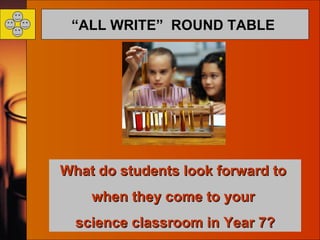
“ ALL WRITE”  ROUND TABLE   What do students look forward to  when they come to your  science classroom in Year 7? Instant  Star!!
Possible Student expectations   Learning in science will be enjoyable and “active” Different teachers with in depth knowledge of their discipline Use of the labs and specialist equipment   Being given greater independence/autonomy as a learner Opportunities to pursue areas of personal interest
“ ALL WRITE”  ROUND TABLE   What issues/disappointments might students report  about their experiences during the first year of secondary school? Instant  Star!!
Student Issues/Disappointments  Little or no recognition of prior learning  Low challenge – an emphasis on “content” and assessment of knowledge vs application  Learning is “passive” – tchr directed and group work limited Frustration at timetable constraints esp with practical work Low autonomy – limited choices in what and how they will learn.
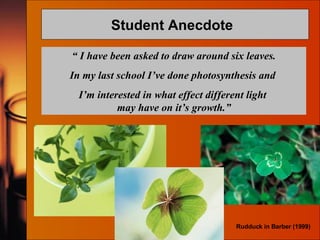
Student Anecdote  “  I have been asked to draw around six leaves. In my last school I’ve done photosynthesis and  I’m interested in what effect different light  may have on it’s growth.” Rudduck in Barber (1999)
Where DO they come from?   Nature and Scope of the current Primary Science & Technology KLA & Syllabus Current Issues in teaching Science in Primary Schools Best practice approaches in Primary School Science
K-6 Key Learning Area   The KLA includes both  Science Education  and  Technology Education  Students develop :  Knowledge and understandings  about the  Natural Environment  and the  Made Environment   Skills and Processes  in  Investigating Scientifically  and  Designing and Making  Positive and informed values  about themselves, towards others and towards science and technology
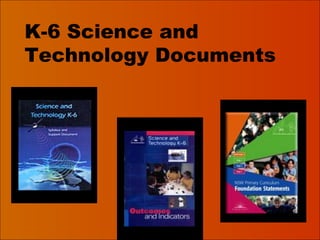
K-6 Science and Technology Documents
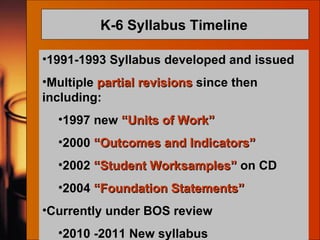
K-6 Syllabus Timeline   1991-1993 Syllabus developed and issued Multiple  partial revisions  since then including: 1997 new  “Units of Work” 2000  “Outcomes and Indicators” 2002  “Student Worksamples”  on CD 2004  “Foundation Statements” Currently under BOS review  2010 -2011 New syllabus
Foundation Statements Read and discuss the Foundation Statements (Mandatory) How useful would they be to Primary Teachers? What concerns (if any) do you have?
Principles of Quality Science & Technology Teaching & Learning in Primary schools Students learn by “doing”   ie investigating, designing,  making, using technology Teachers scaffold and model   the ways of science and technology Teachers & students use the language   of science and technology Students will develop as life long learners   of science and technology
Everyday Literacies and Scientific Literacies Age-appropriate Scientific Literacy is achieved thru an investigative approach which: explicitly  links to everyday Literacy  Using  scientific vocabulary  to describe and discuss everyday phenomena orally and in writing Communicating using a variety  of multimodal  explanatory and procedural texts and explicitly  links to everyday Numeracy   Making  accurate measurements  & calculations,  Recording & organising data  using tallies, charts, photos  critically analysing findings and constructing data displays (tables, graphs and diagrams) to communicate findings Incorporates the safe and appropriate use of  tools including ICT
Issues   for Primary Teachers Teachers confused re syllabus – especially prescribed content Teacher Knowledge, Confidence and Competence limited Lack of good models of how science can be productively taught in Primary Schools Lack of access to scientific equipment /specialist teachers Fuzzy ideas about the term “Investigating” Curriculum INTEGRATION  especially with HSIE
Curriculum Integration Curriculum Integration IS the  purposeful planning, by teachers,  of strategies and learning experiences to facilitate and enhance learning across KLAs Curriculum Integration : A guiding Statement _LINKAGES, BOS NSW Curriculum Integration should NOT be a loosely linked set of activities around a “THEME”.
Primary Connections Questioning Minds DVD
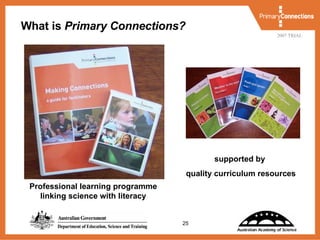
What is  Primary Connections? Professional learning programme linking science with literacy supported by  quality curriculum resources
Purpose of  Primary Connections To   improve learning outcomes for primary students in science and literacy  by   developing a professional learning program supported with curriculum resources  that will   improve teachers’ confidence and competence for teaching  science through developing their science pedagogical content  knowledge.
Scientific literacy   is a high priority for all citizens, helping them to be interested in, and understand the world around them, to engage in the discourses of and about science, to be sceptical and questioning of claims made by others about scientific matters, to be able to identify questions, investigate and draw evidence-based conclusions, and to make informed decisions about the environment and their own health and well-being. (Goodrum, Hackling & Rennie,2001, p. 7) Scientific literacy
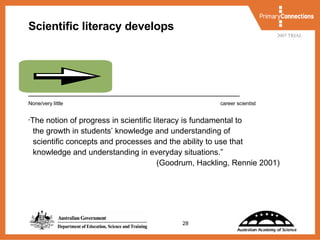
Scientific literacy develops _____________________________________________ None/very little career scientist “ The notion of progress in scientific literacy is fundamental to the growth in students’ knowledge and understanding of  scientific concepts and processes and the ability to use that knowledge and understanding in everyday situations.” (Goodrum, Hackling, Rennie 2001)
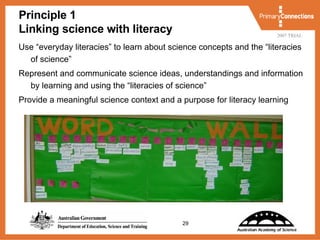
Principle 1 Linking science with literacy Use “everyday literacies” to learn about science concepts and the “literacies of science” Represent and communicate science ideas, understandings and information by learning and using the “literacies of science” Provide a meaningful science  context and a purpose for literacy learning
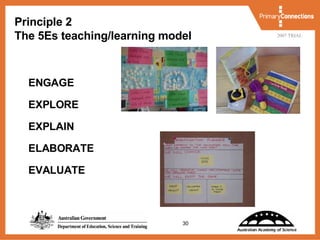
Principle 2 The 5Es teaching/learning model ENGAGE EXPLORE EXPLAIN ELABORATE EVALUATE
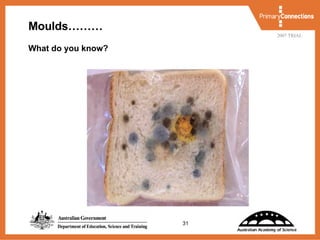
Moulds……… What do you know?
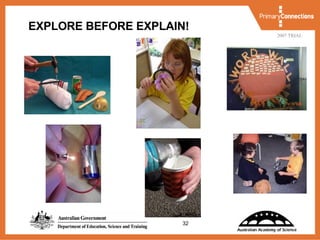
EXPLORE BEFORE EXPLAIN!
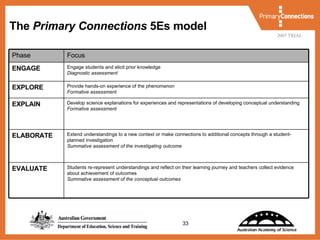
The  Primary Connections  5Es model Students re-represent understandings and reflect on their learning journey and teachers collect evidence about achievement of outcomes Summative assessment of the conceptual outcomes EVALUATE Extend understandings to a new context or make connections to additional concepts through a student-planned investigation Summative assessment of the investigating outcome ELABORATE Develop science explanations for experiences and representations of developing conceptual understanding Formative assessment EXPLAIN Provide hands-on experience of the phenomenon Formative assessment EXPLORE Engage students and elicit prior knowledge Diagnostic assessment ENGAGE Focus Phase
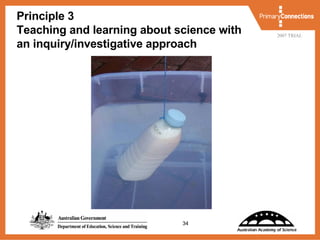
Principle 3 Teaching and learning about science with an inquiry/investigative approach
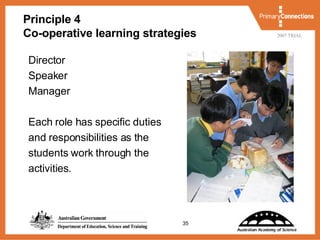
Principle 4 Co-operative learning strategies Director Speaker Manager Each role has specific duties and responsibilities as the students work through the activities.
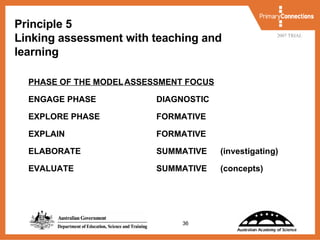
Principle 5 Linking assessment with teaching and learning PHASE OF THE MODEL ASSESSMENT FOCUS ENGAGE PHASE DIAGNOSTIC EXPLORE PHASE FORMATIVE EXPLAIN FORMATIVE ELABORATE SUMMATIVE  (investigating) EVALUATE SUMMATIVE  (concepts)
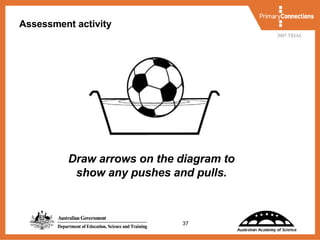
  Assessment activity  Draw arrows on the diagram to show any pushes and pulls.
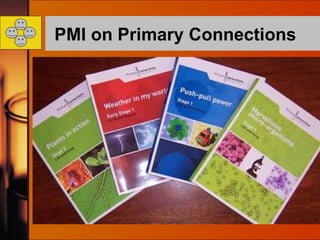
PMI on Primary Connections
Research findings Primary Connections  was trialled by 106 teachers in 56 schools across all states and territories in 2005 and 2006. Primary Connections improved teachers’ confidence, self-efficacy and practice increased the amount of science taught had students responding positively to the activities and learning approach  made a positive contribution to literacy learning and students used a wider range of forms of representation improved the status of science within the school  (Hackling & Prain, 2005)
In summary, Primary Connections : links science with literacy is based on the 5Es teaching and learning model uses an inquiry/investigative approach  uses co-operative learning strategies embeds the assessment processes in the teaching and learning model provides exemplary curriculum units and other resources AND all of these contribute to the development of scientific literacy in primary age students!
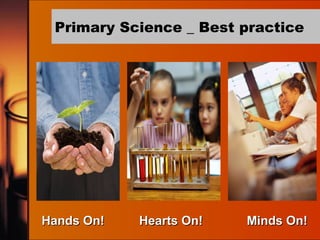
Primary Science _ Best practice Hands On! Minds On! Hearts On!
“ Building Bridges” to Secondary School active learners curious & questioning critical thinkers computer literate able to work cooperatively able to articulate ideas demonstrate a level of general knowledge in the discipline of science use the language of the discipline At the conclusion of Stage 3 (Year 6)  our students SHOULD be:
Identified Issues relating to Effective Transition to Stage 4   programs which focus on smooth "transfer"  - especially meeting the personal and social needs of the learner  (rather than sustaining student academic progress  and engagement with their learning) “ Induction”  - the principle of the ‘fresh start’/tabula rasa???? A focus on "meeting standards" vs striving for  “learning gains”  ( a 6-8 year gap may be present –therefore it is futile to expect all students to reach same standard) low expectations of what pupils in the first years of secondary school can achieve
What works?
What works? Our school has an effective Transition Program especially in Science? Strongly agree Strongly Disagree
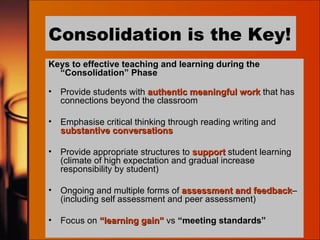
Consolidation is the Key! Keys to effective teaching and learning during the “Consolidation” Phase Provide students with  authentic meaningful work  that has connections beyond the classroom Emphasise critical thinking through reading writing and  substantive conversations Provide appropriate structures to  support  student learning (climate of high expectation and gradual increase responsibility by student) Ongoing and multiple forms of  assessment and feedback – (including self assessment and peer assessment) Focus on  “learning gain”  vs  “meeting standards”
Case Study Consider the student learning and engagement in the two classrooms in terms of the “Keys to Consolidation”  Construct a T Chart to compare them Take some “snapshots” of practice and record your responses on the post it notes.
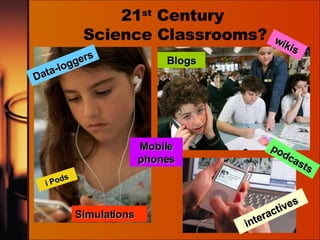
21 st  Century  Science Classrooms? i Pods wikis podcasts Data-loggers Mobile phones Simulations interactives Blogs

Transition

  • 1.
    Transition Issues for Secondary Science Teachers Where DO they come from? WHAT do they know?
  • 2.
    Workshop Overview DEFINE TRANSITION: What happens and When? SITUATION ANALYSIS - Exploring your experiences of Transition WHERE DO THEY COME FROM ? An overview of Science L&T in Primary schools TRANSITION – What works and what doesn’t BEST PRACTICE in learning in Science Classrooms in Stage 4
  • 3.
    Co-operative Learning Cooperative learning is a successful teaching strategy in which : small teams of mixed ability students use a variety of learning activities to improve their understanding of a subject. Each member of a team is responsible not only for learning what is taught but also for helping teammates learn, thus creating an atmosphere of achievement.
  • 4.
  • 5.
    Defining Transition What do you understand by the following terms: Transfer? Induction? Transition?
  • 6.
    Defining Transition The term transition covers the broad period of time from preparing to move from primary school until successful settlement of the student in secondary school. Transition may begin as early as Year 5
  • 7.
    4 Phases ofTransition Four identifiable PHASES describe what happens and when . Preparation Transfer Induction Consolidation
  • 8.
    Defining Transition _ How? Administrative Formal liaison and information exchange occurs between primary schools and secondary schools. (procedural) Social and personal Students' social and personal needs are addressed to reduce their concerns and possible anxiety about changing schools. Curriculum Teachers in primary and secondary schools share information and plans about curriculum and content to be taught in the final stages of primary school and the beginning of secondary school . Pedagogy Teachers in primary and secondary schools develop a shared understanding of how students learn and what constitutes effective teaching practice . Management of learning All students are encouraged to manage their transition into secondary school and to develop independent learning and reflection skills. Galton, Gray and Ruddock 1999
  • 9.
    Situation Analysis Research Evidence suggests : Most transition programs focus primarily on personal and social aspects of transition at the point of “transfer” Students report a gap between their expectations of secondary schooling and the “reality” By end of Yr7 up to 40% of students experience a significant “achievement dip” a decline in motivation Cooper et al (1996) Barber, (1999)
  • 10.
    “ ALL WRITE” ROUND TABLE What do students look forward to when they come to your science classroom in Year 7? Instant Star!!
  • 11.
    Possible Student expectations Learning in science will be enjoyable and “active” Different teachers with in depth knowledge of their discipline Use of the labs and specialist equipment Being given greater independence/autonomy as a learner Opportunities to pursue areas of personal interest
  • 12.
    “ ALL WRITE” ROUND TABLE What issues/disappointments might students report about their experiences during the first year of secondary school? Instant Star!!
  • 13.
    Student Issues/Disappointments Little or no recognition of prior learning Low challenge – an emphasis on “content” and assessment of knowledge vs application Learning is “passive” – tchr directed and group work limited Frustration at timetable constraints esp with practical work Low autonomy – limited choices in what and how they will learn.
  • 14.
    Student Anecdote “ I have been asked to draw around six leaves. In my last school I’ve done photosynthesis and I’m interested in what effect different light may have on it’s growth.” Rudduck in Barber (1999)
  • 15.
    Where DO theycome from? Nature and Scope of the current Primary Science & Technology KLA & Syllabus Current Issues in teaching Science in Primary Schools Best practice approaches in Primary School Science
  • 16.
    K-6 Key LearningArea The KLA includes both Science Education and Technology Education Students develop : Knowledge and understandings about the Natural Environment and the Made Environment Skills and Processes in Investigating Scientifically and Designing and Making Positive and informed values about themselves, towards others and towards science and technology
  • 17.
    K-6 Science andTechnology Documents
  • 18.
    K-6 Syllabus Timeline 1991-1993 Syllabus developed and issued Multiple partial revisions since then including: 1997 new “Units of Work” 2000 “Outcomes and Indicators” 2002 “Student Worksamples” on CD 2004 “Foundation Statements” Currently under BOS review 2010 -2011 New syllabus
  • 19.
    Foundation Statements Readand discuss the Foundation Statements (Mandatory) How useful would they be to Primary Teachers? What concerns (if any) do you have?
  • 20.
    Principles of QualityScience & Technology Teaching & Learning in Primary schools Students learn by “doing” ie investigating, designing, making, using technology Teachers scaffold and model the ways of science and technology Teachers & students use the language of science and technology Students will develop as life long learners of science and technology
  • 21.
    Everyday Literacies andScientific Literacies Age-appropriate Scientific Literacy is achieved thru an investigative approach which: explicitly links to everyday Literacy Using scientific vocabulary to describe and discuss everyday phenomena orally and in writing Communicating using a variety of multimodal explanatory and procedural texts and explicitly links to everyday Numeracy Making accurate measurements & calculations, Recording & organising data using tallies, charts, photos critically analysing findings and constructing data displays (tables, graphs and diagrams) to communicate findings Incorporates the safe and appropriate use of tools including ICT
  • 22.
    Issues for Primary Teachers Teachers confused re syllabus – especially prescribed content Teacher Knowledge, Confidence and Competence limited Lack of good models of how science can be productively taught in Primary Schools Lack of access to scientific equipment /specialist teachers Fuzzy ideas about the term “Investigating” Curriculum INTEGRATION especially with HSIE
  • 23.
    Curriculum Integration CurriculumIntegration IS the purposeful planning, by teachers, of strategies and learning experiences to facilitate and enhance learning across KLAs Curriculum Integration : A guiding Statement _LINKAGES, BOS NSW Curriculum Integration should NOT be a loosely linked set of activities around a “THEME”.
  • 24.
  • 25.
    What is Primary Connections? Professional learning programme linking science with literacy supported by quality curriculum resources
  • 26.
    Purpose of Primary Connections To improve learning outcomes for primary students in science and literacy by developing a professional learning program supported with curriculum resources that will improve teachers’ confidence and competence for teaching science through developing their science pedagogical content knowledge.
  • 27.
    Scientific literacy is a high priority for all citizens, helping them to be interested in, and understand the world around them, to engage in the discourses of and about science, to be sceptical and questioning of claims made by others about scientific matters, to be able to identify questions, investigate and draw evidence-based conclusions, and to make informed decisions about the environment and their own health and well-being. (Goodrum, Hackling & Rennie,2001, p. 7) Scientific literacy
  • 28.
    Scientific literacy develops_____________________________________________ None/very little career scientist “ The notion of progress in scientific literacy is fundamental to the growth in students’ knowledge and understanding of scientific concepts and processes and the ability to use that knowledge and understanding in everyday situations.” (Goodrum, Hackling, Rennie 2001)
  • 29.
    Principle 1 Linkingscience with literacy Use “everyday literacies” to learn about science concepts and the “literacies of science” Represent and communicate science ideas, understandings and information by learning and using the “literacies of science” Provide a meaningful science context and a purpose for literacy learning
  • 30.
    Principle 2 The5Es teaching/learning model ENGAGE EXPLORE EXPLAIN ELABORATE EVALUATE
  • 31.
  • 32.
  • 33.
    The PrimaryConnections 5Es model Students re-represent understandings and reflect on their learning journey and teachers collect evidence about achievement of outcomes Summative assessment of the conceptual outcomes EVALUATE Extend understandings to a new context or make connections to additional concepts through a student-planned investigation Summative assessment of the investigating outcome ELABORATE Develop science explanations for experiences and representations of developing conceptual understanding Formative assessment EXPLAIN Provide hands-on experience of the phenomenon Formative assessment EXPLORE Engage students and elicit prior knowledge Diagnostic assessment ENGAGE Focus Phase
  • 34.
    Principle 3 Teachingand learning about science with an inquiry/investigative approach
  • 35.
    Principle 4 Co-operativelearning strategies Director Speaker Manager Each role has specific duties and responsibilities as the students work through the activities.
  • 36.
    Principle 5 Linkingassessment with teaching and learning PHASE OF THE MODEL ASSESSMENT FOCUS ENGAGE PHASE DIAGNOSTIC EXPLORE PHASE FORMATIVE EXPLAIN FORMATIVE ELABORATE SUMMATIVE (investigating) EVALUATE SUMMATIVE (concepts)
  • 37.
    Assessmentactivity Draw arrows on the diagram to show any pushes and pulls.
  • 38.
    PMI on PrimaryConnections
  • 39.
    Research findings PrimaryConnections was trialled by 106 teachers in 56 schools across all states and territories in 2005 and 2006. Primary Connections improved teachers’ confidence, self-efficacy and practice increased the amount of science taught had students responding positively to the activities and learning approach made a positive contribution to literacy learning and students used a wider range of forms of representation improved the status of science within the school (Hackling & Prain, 2005)
  • 40.
    In summary, PrimaryConnections : links science with literacy is based on the 5Es teaching and learning model uses an inquiry/investigative approach uses co-operative learning strategies embeds the assessment processes in the teaching and learning model provides exemplary curriculum units and other resources AND all of these contribute to the development of scientific literacy in primary age students!
  • 41.
    Primary Science _Best practice Hands On! Minds On! Hearts On!
  • 42.
    “ Building Bridges”to Secondary School active learners curious & questioning critical thinkers computer literate able to work cooperatively able to articulate ideas demonstrate a level of general knowledge in the discipline of science use the language of the discipline At the conclusion of Stage 3 (Year 6) our students SHOULD be:
  • 43.
    Identified Issues relatingto Effective Transition to Stage 4 programs which focus on smooth "transfer" - especially meeting the personal and social needs of the learner (rather than sustaining student academic progress and engagement with their learning) “ Induction” - the principle of the ‘fresh start’/tabula rasa???? A focus on "meeting standards" vs striving for “learning gains” ( a 6-8 year gap may be present –therefore it is futile to expect all students to reach same standard) low expectations of what pupils in the first years of secondary school can achieve
  • 44.
  • 45.
    What works? Ourschool has an effective Transition Program especially in Science? Strongly agree Strongly Disagree
  • 46.
    Consolidation is theKey! Keys to effective teaching and learning during the “Consolidation” Phase Provide students with authentic meaningful work that has connections beyond the classroom Emphasise critical thinking through reading writing and substantive conversations Provide appropriate structures to support student learning (climate of high expectation and gradual increase responsibility by student) Ongoing and multiple forms of assessment and feedback – (including self assessment and peer assessment) Focus on “learning gain” vs “meeting standards”
  • 47.
    Case Study Considerthe student learning and engagement in the two classrooms in terms of the “Keys to Consolidation” Construct a T Chart to compare them Take some “snapshots” of practice and record your responses on the post it notes.
  • 48.
    21 st Century Science Classrooms? i Pods wikis podcasts Data-loggers Mobile phones Simulations interactives Blogs