A D E W I J A Y A , M D
S E P T E M B E R 2 0 2 3
Transient Epileptic Amnesia
Outline:
 Introduction
 Symptoms
 Diagnostic Criteria
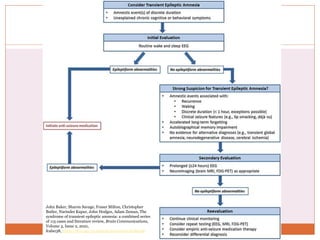
 Diagnostic Algorhytm
 Differential Diagnosis
 Neuroimaging
 Summary
Introduction
 The term ‘transient epileptic amnesia’ (TEA) was
coined in 1990
 A clinical presentation of focal epilepsy of presumed
temporal origin which is characterized by self-
resolving episodes of retrograde and/or anterograde
amnesia
Butler CR, Graham KS, Hodges JR, Kapur N, Wardlaw JM, Zeman AZ. The syndrome of transient epileptic amnesia. Ann Neurol. (2007) 61:587–98. doi: 10.1002/ana.21111
Kapur N. Transient epileptic amnesia: A clinically distinct form of neurological memory disorder. In: Markowitsch HJ (ed), Transient global amnesia and related
disorders. Hogrefe & Huber Publishers; 1990 , pp.140–151.
Kapur N. Transient epileptic amnesia–a clinical update and a reformulation . J Neurol Neurosurg Psychiatry. 1993;56 (11 ):1184–1190.
Symptoms
 During episodes, patients may exhibit repetitive
questioning and appear confused, disoriented, or
anxious, but typically have otherwise preserved
neurologic function.
 Memory for the events themselves can be partially to
completely absent, heightening the importance of
having witnesses to recount symptoms.
 Associated with waking, and responsive to anti-
seizure medications (ASMs)
 Similar to Transient Global Amnesia (TGA) but with
shorter duration, often 1 hour or less
Bartsch T, Butler C. Transient amnesic syndromes. Nat Rev Neurol. (2013) 9:86–97. doi: 10.1038/nrneurol.2012.264
Asadi-Pooya AA. Transient epileptic amnesia: a concise review. Epilepsy Behav. (2014) 31:243–5. doi: 10.1016/j.yebeh.2013.10.021
Symptoms
 Chronic memory difficulties
 Loss over days to weeks of recently learned
information (known as accelerated long-term
forgetting)
 Loss of memories of remote life events (known as
autobiographical memory impairment)
 Less specific cognitive and behavioral complaints can
also be present
Butler CR, Zeman AZ. Recent insights into the impairment of memory in epilepsy: transient epileptic amnesia, accelerated long-term forgetting and remote memory
impairment. Brain. (2008) 131(Pt 9):2243–63. doi: 10.1093/brain/awn127
Butler CR, Zeman A. The causes and consequences of transient epileptic amnesia. Behav Neurol. (2011) 24:299–305. doi: 10.1155/2011/602965
Mosbah A, Tramoni E, Guedj E, Aubert S, Daquin G, Ceccaldi M, et al. Clinical, neuropsychological, and metabolic characteristics of transient epileptic amnesia
syndrome. Epilepsia. (2014) 55:699–706. doi: 10.1111/epi.12565
Diagnostic Criteria
 (1) recurrent witnessed episodes of transient amnesia
 (2) cognitive functions other than memory judged to be
intact during typical episodes
 (3) evidence for a diagnosis of epilepsy, based on
epileptiform abnormalities (spikes, sharp waves, or
temporal intermittent rhythmic delta activity) on EEG,
clinical features of seizures (e.g., olfactory hallucinations,
premonitory déjà vu, lip-smacking), or a clear-cut
symptomatic response (reduction in spell frequency
and/or subjective improvement in interictal
cognitive/behavioral complaints) to ASMs.
Zeman AZ, Boniface SJ, Hodges JR. Transient epileptic amnesia: a description of the clinical and neuropsychological features in 10 cases and a review of the literature. J
Neurol Neurosurg Psychiatry. (1998) 64:435–43. doi: 10.1136/jnnp.64.4.435
John Baker, Sharon Savage, Fraser Milton, Christopher
Butler, Narinder Kapur, John Hodges, Adam Zeman, The
syndrome of transient epileptic amnesia: a combined series
of 115 cases and literature review, Brain Communications,
Volume 3, Issue 2, 2021,
fcab038, https://doi.org/10.1093/braincomms/fcab038
Differential Diagnosis
 TGA
 Migraine variant
 Psychogenic Amnesia
 Neurodegenerative disease
Fouchard AA, Biberon J, Mondon K, de Toffol B. Transient epileptic amnesia secondary to hippocampal dysplasia mimicking transient global amnesia. Seizure. (2016)
43:23–5. doi: 10.1016/j.seizure.2016.10.009
Del Felice A, Broggio E, Valbusa V, Gambina G, Arcaro C, Manganotti P. Transient epileptic amnesia mistaken for mild cognitive impairment? A high-density EEG
study. Epilepsy Behav. (2014) 36:41–6. doi: 10.1016/j.yebeh.2014.04.014
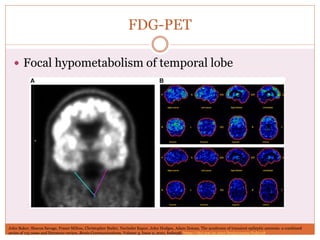
FDG-PET
 Focal hypometabolism of temporal lobe
John Baker, Sharon Savage, Fraser Milton, Christopher Butler, Narinder Kapur, John Hodges, Adam Zeman, The syndrome of transient epileptic amnesia: a combined
series of 115 cases and literature review, Brain Communications, Volume 3, Issue 2, 2021, fcab038, https://doi.org/10.1093/braincomms/fcab038
Summary
 TEA is a treatable cause of amnestic seizures in older
adults
 Frequently associated with interictal
cognitive/behavioral complaints in older adults
 Often has a significant lag time to diagnosis
 Diagnosis: Clinical + EEG/FDG-PET
THANK YOU

Transient Epileptic Amnesia.pptx

  • 1.
    A D EW I J A Y A , M D S E P T E M B E R 2 0 2 3 Transient Epileptic Amnesia
  • 2.
    Outline:  Introduction  Symptoms Diagnostic Criteria  Diagnostic Algorhytm  Differential Diagnosis  Neuroimaging  Summary
  • 3.
    Introduction  The term‘transient epileptic amnesia’ (TEA) was coined in 1990  A clinical presentation of focal epilepsy of presumed temporal origin which is characterized by self- resolving episodes of retrograde and/or anterograde amnesia Butler CR, Graham KS, Hodges JR, Kapur N, Wardlaw JM, Zeman AZ. The syndrome of transient epileptic amnesia. Ann Neurol. (2007) 61:587–98. doi: 10.1002/ana.21111 Kapur N. Transient epileptic amnesia: A clinically distinct form of neurological memory disorder. In: Markowitsch HJ (ed), Transient global amnesia and related disorders. Hogrefe & Huber Publishers; 1990 , pp.140–151. Kapur N. Transient epileptic amnesia–a clinical update and a reformulation . J Neurol Neurosurg Psychiatry. 1993;56 (11 ):1184–1190.
  • 4.
    Symptoms  During episodes,patients may exhibit repetitive questioning and appear confused, disoriented, or anxious, but typically have otherwise preserved neurologic function.  Memory for the events themselves can be partially to completely absent, heightening the importance of having witnesses to recount symptoms.  Associated with waking, and responsive to anti- seizure medications (ASMs)  Similar to Transient Global Amnesia (TGA) but with shorter duration, often 1 hour or less Bartsch T, Butler C. Transient amnesic syndromes. Nat Rev Neurol. (2013) 9:86–97. doi: 10.1038/nrneurol.2012.264 Asadi-Pooya AA. Transient epileptic amnesia: a concise review. Epilepsy Behav. (2014) 31:243–5. doi: 10.1016/j.yebeh.2013.10.021
  • 5.
    Symptoms  Chronic memorydifficulties  Loss over days to weeks of recently learned information (known as accelerated long-term forgetting)  Loss of memories of remote life events (known as autobiographical memory impairment)  Less specific cognitive and behavioral complaints can also be present Butler CR, Zeman AZ. Recent insights into the impairment of memory in epilepsy: transient epileptic amnesia, accelerated long-term forgetting and remote memory impairment. Brain. (2008) 131(Pt 9):2243–63. doi: 10.1093/brain/awn127 Butler CR, Zeman A. The causes and consequences of transient epileptic amnesia. Behav Neurol. (2011) 24:299–305. doi: 10.1155/2011/602965 Mosbah A, Tramoni E, Guedj E, Aubert S, Daquin G, Ceccaldi M, et al. Clinical, neuropsychological, and metabolic characteristics of transient epileptic amnesia syndrome. Epilepsia. (2014) 55:699–706. doi: 10.1111/epi.12565
  • 6.
    Diagnostic Criteria  (1)recurrent witnessed episodes of transient amnesia  (2) cognitive functions other than memory judged to be intact during typical episodes  (3) evidence for a diagnosis of epilepsy, based on epileptiform abnormalities (spikes, sharp waves, or temporal intermittent rhythmic delta activity) on EEG, clinical features of seizures (e.g., olfactory hallucinations, premonitory déjà vu, lip-smacking), or a clear-cut symptomatic response (reduction in spell frequency and/or subjective improvement in interictal cognitive/behavioral complaints) to ASMs. Zeman AZ, Boniface SJ, Hodges JR. Transient epileptic amnesia: a description of the clinical and neuropsychological features in 10 cases and a review of the literature. J Neurol Neurosurg Psychiatry. (1998) 64:435–43. doi: 10.1136/jnnp.64.4.435
  • 7.
    John Baker, SharonSavage, Fraser Milton, Christopher Butler, Narinder Kapur, John Hodges, Adam Zeman, The syndrome of transient epileptic amnesia: a combined series of 115 cases and literature review, Brain Communications, Volume 3, Issue 2, 2021, fcab038, https://doi.org/10.1093/braincomms/fcab038
  • 8.
    Differential Diagnosis  TGA Migraine variant  Psychogenic Amnesia  Neurodegenerative disease Fouchard AA, Biberon J, Mondon K, de Toffol B. Transient epileptic amnesia secondary to hippocampal dysplasia mimicking transient global amnesia. Seizure. (2016) 43:23–5. doi: 10.1016/j.seizure.2016.10.009 Del Felice A, Broggio E, Valbusa V, Gambina G, Arcaro C, Manganotti P. Transient epileptic amnesia mistaken for mild cognitive impairment? A high-density EEG study. Epilepsy Behav. (2014) 36:41–6. doi: 10.1016/j.yebeh.2014.04.014
  • 9.
    FDG-PET  Focal hypometabolismof temporal lobe John Baker, Sharon Savage, Fraser Milton, Christopher Butler, Narinder Kapur, John Hodges, Adam Zeman, The syndrome of transient epileptic amnesia: a combined series of 115 cases and literature review, Brain Communications, Volume 3, Issue 2, 2021, fcab038, https://doi.org/10.1093/braincomms/fcab038
  • 10.
    Summary  TEA isa treatable cause of amnestic seizures in older adults  Frequently associated with interictal cognitive/behavioral complaints in older adults  Often has a significant lag time to diagnosis  Diagnosis: Clinical + EEG/FDG-PET
  • 11.