
Transforming Competitive Advantage with Social MediaPrepared for the CIO Year Ahead Summit – Palm Springs, Nov 8th, 2010@fgossieaux
OverviewUnderstanding the true drivers of Social MediaHow do Hyper-Social Organizations think about their business?What do Hyper-Social Organizations do Differently, and WHY?5 ways to think differently about IT
Let’s start off with a little example Human 1.0 vs. Web 2.0The SAP Developer Community
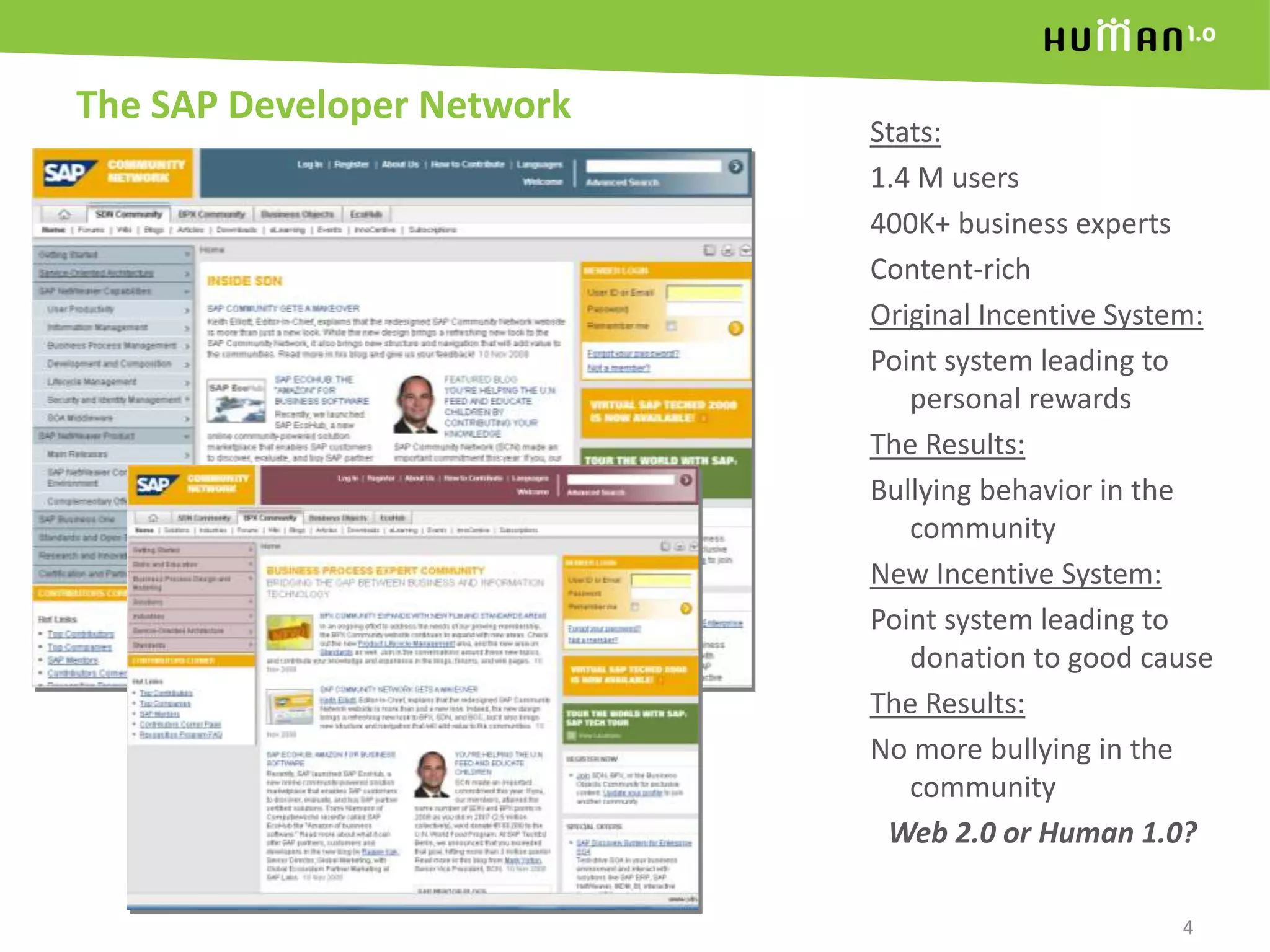
The SAP Developer Network4Stats:1.4 M users400K+ business expertsContent-richOriginal Incentive System:Point system leading to personal rewardsThe Results:Bullying behavior in the communityNew Incentive System:Point system leading to donation to good causeThe Results:No more bullying in the communityWeb 2.0 or Human 1.0?
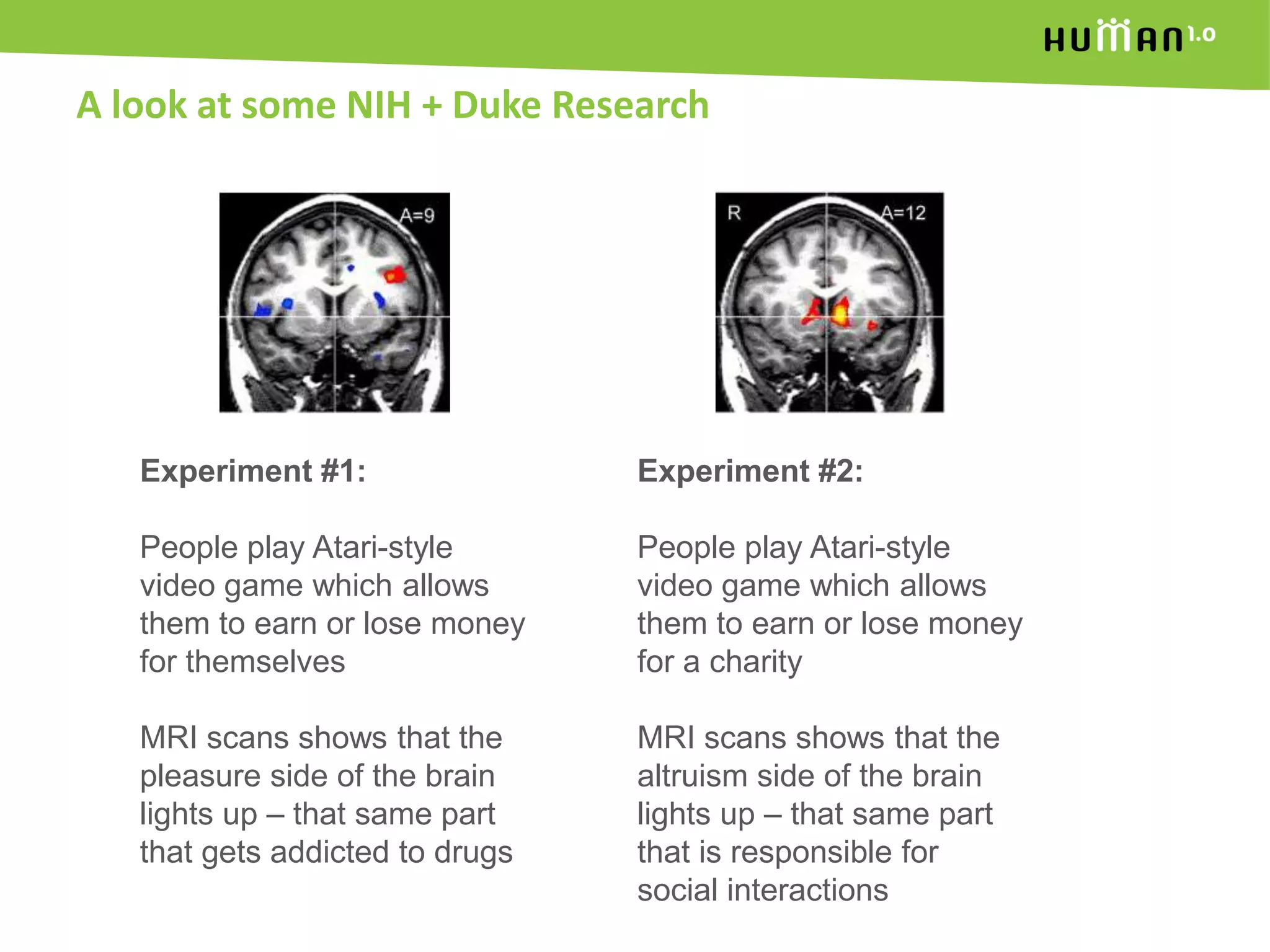
A look at some NIH + Duke ResearchExperiment #1:People play Atari-style video game which allows them to earn or lose money for themselvesMRI scans shows that the pleasure side of the brain lights up – that same part that gets addicted to drugsExperiment #2:People play Atari-style video game which allows them to earn or lose money for a charityMRI scans shows that the altruism side of the brain lights up – that same part that is responsible for social interactions
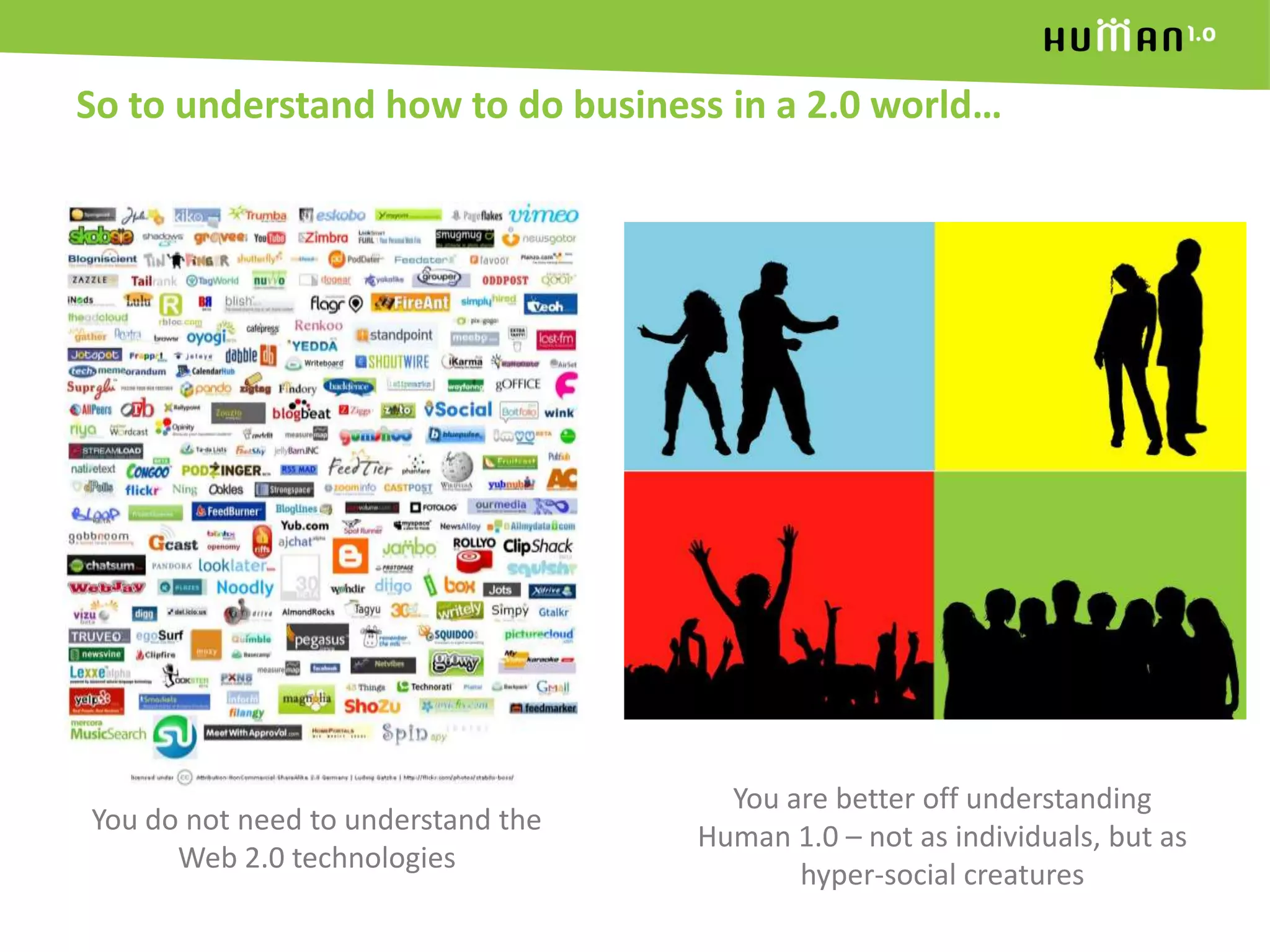
So to understand how to do business in a 2.0 world…You are better off understanding Human 1.0 – not as individuals, but as hyper-social creaturesYou do not need to understand the Web 2.0 technologies
Let’s get a level deeper on the Human 1.0…
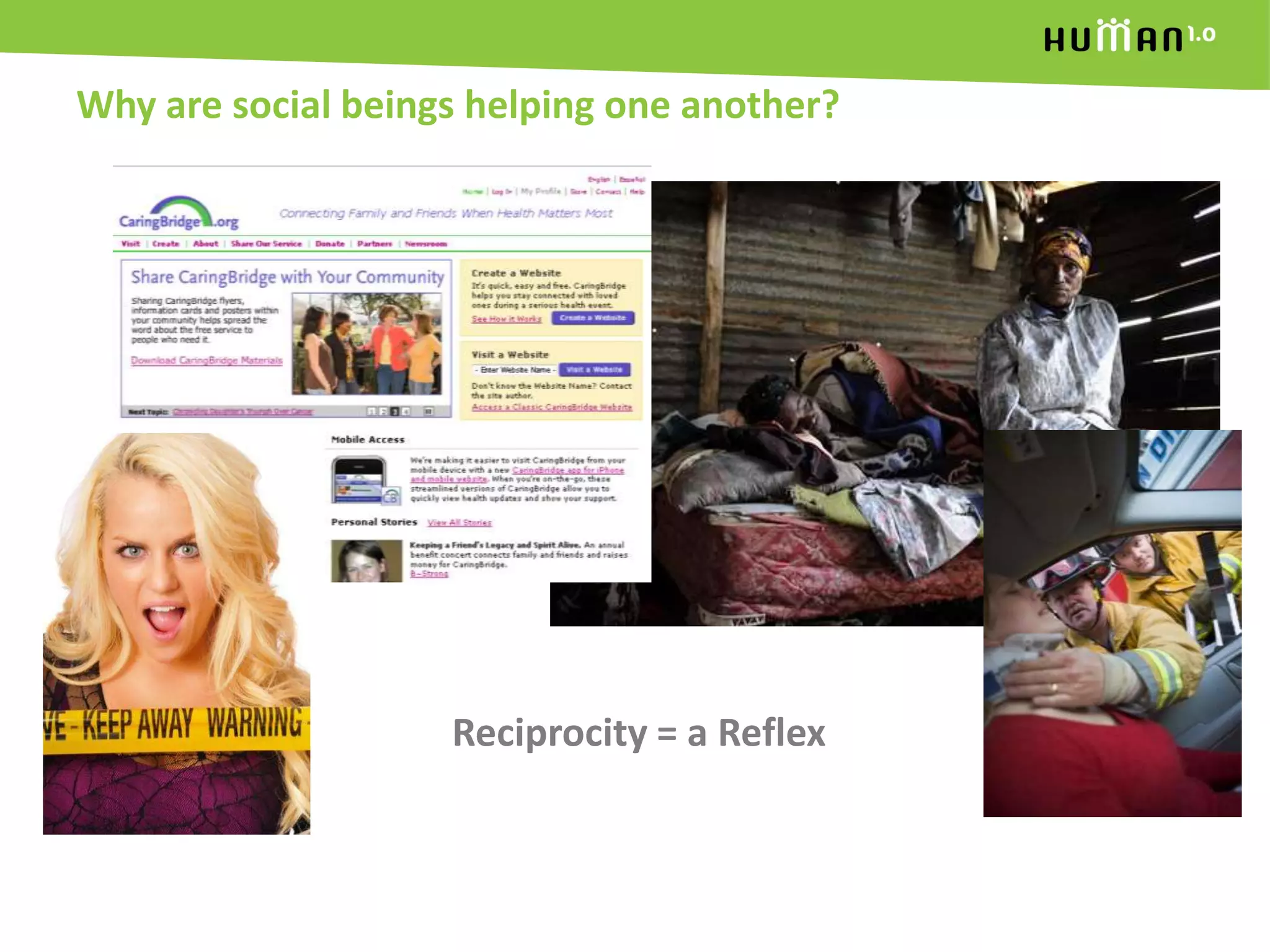
Why are social beings helping one another?Reciprocity = a Reflex
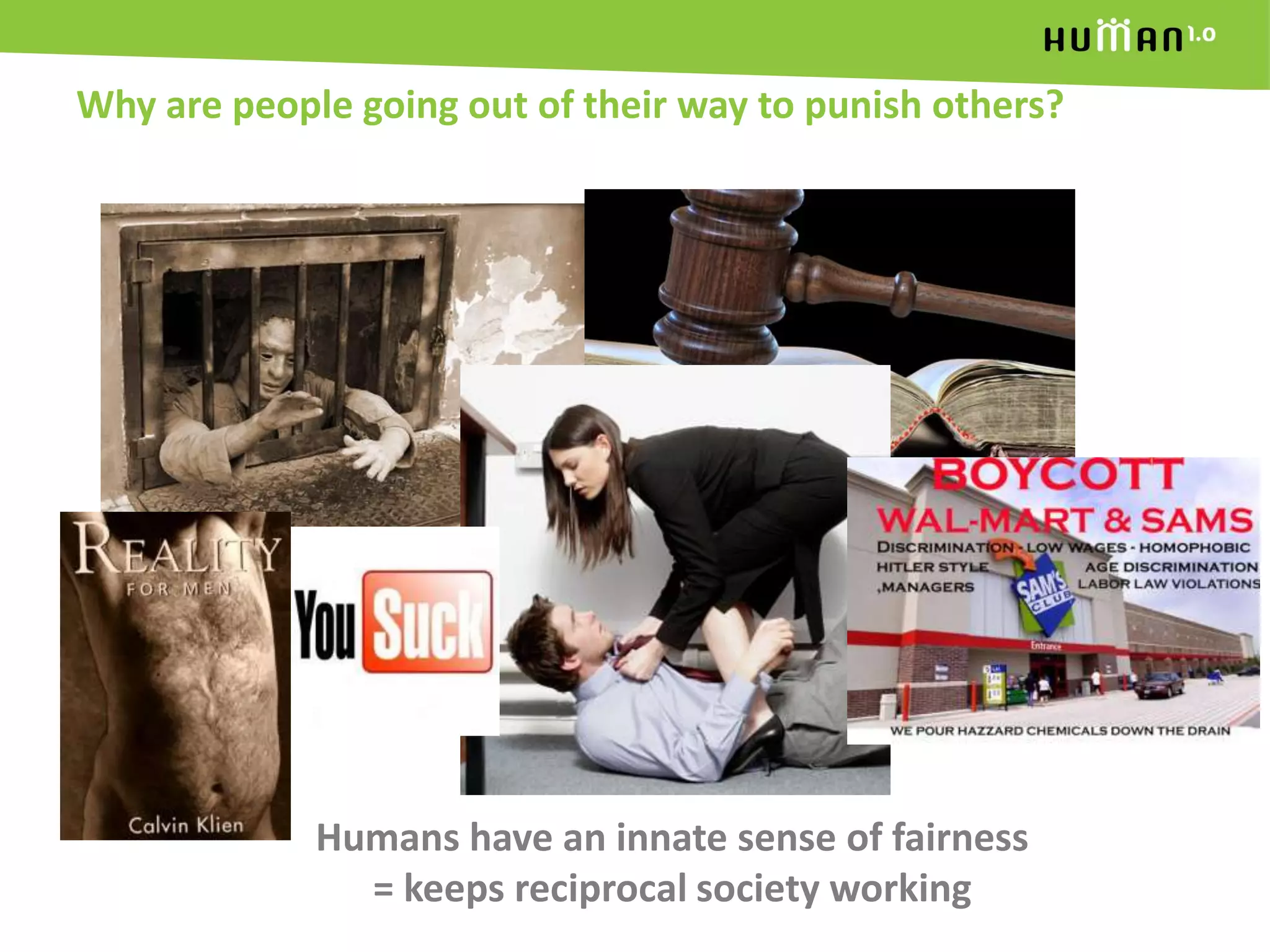
Why are people going out of their way to punish others?Humans have an innate sense of fairness = keeps reciprocal society working
How do we make decisions?Market FrameworkSocial Framework
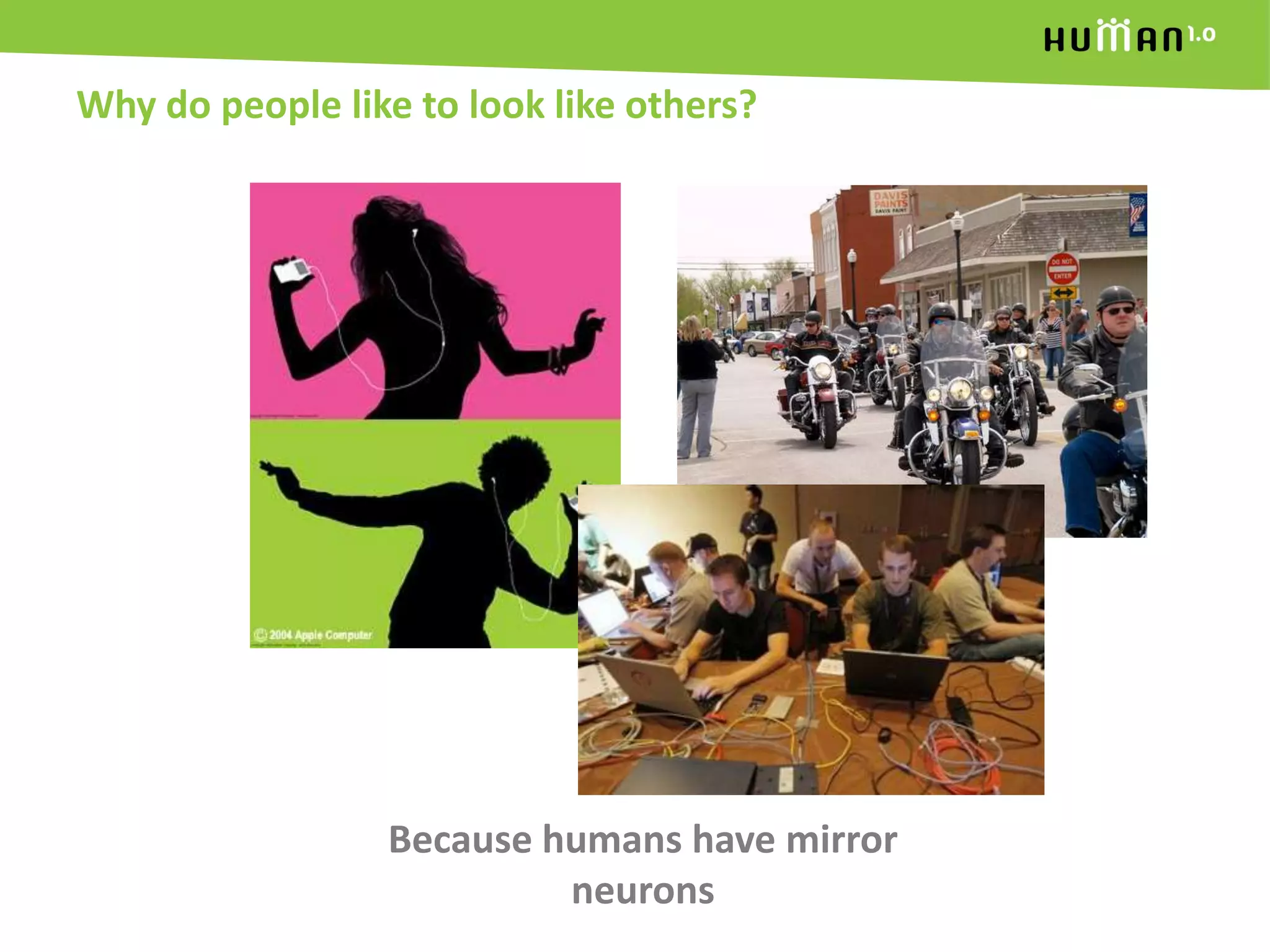
Why do people like to look like others?Because humans have mirror neurons
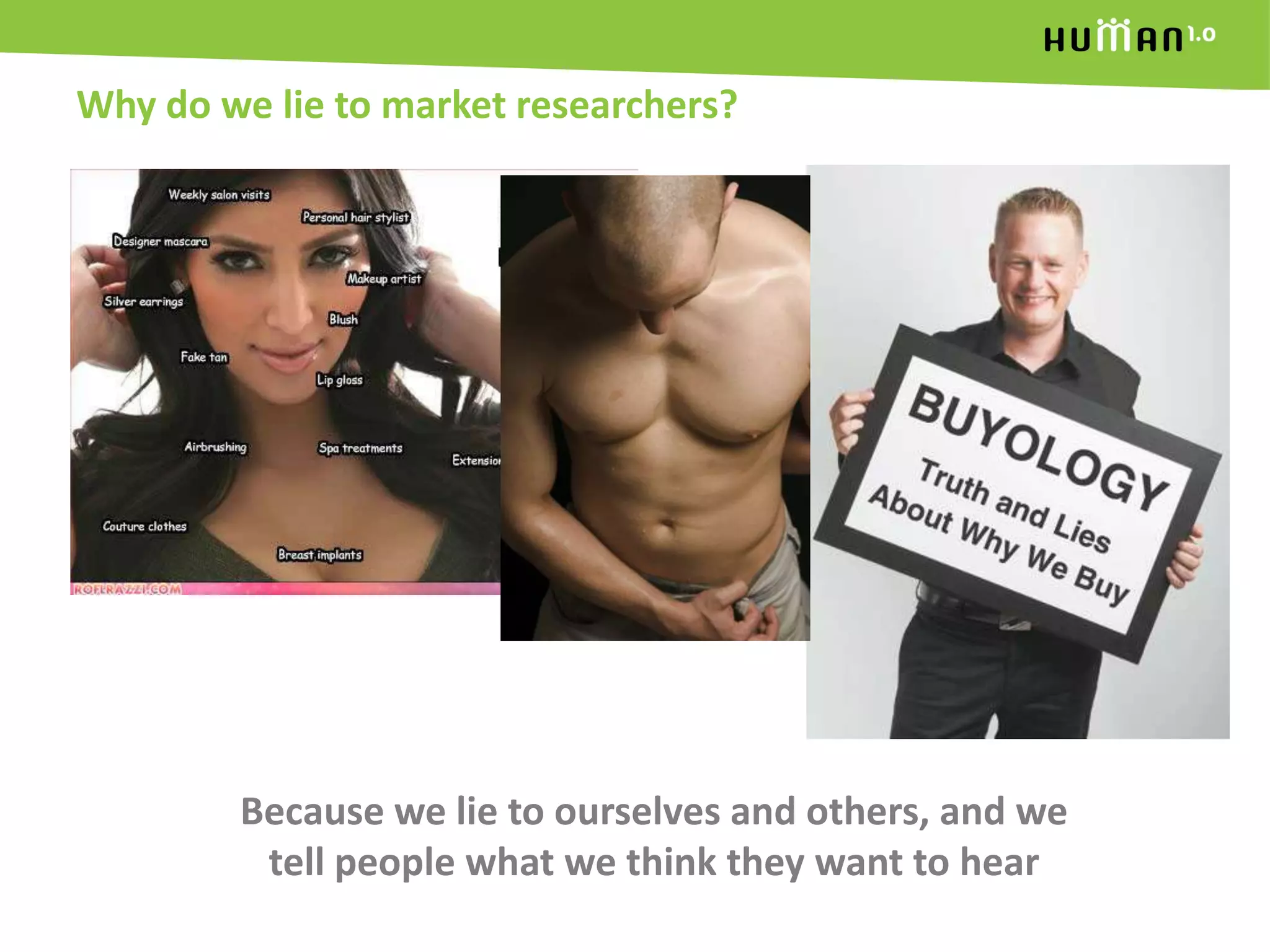
Why do we lie to market researchers?Because we lie to ourselves and others, and we tell people what we think they want to hear
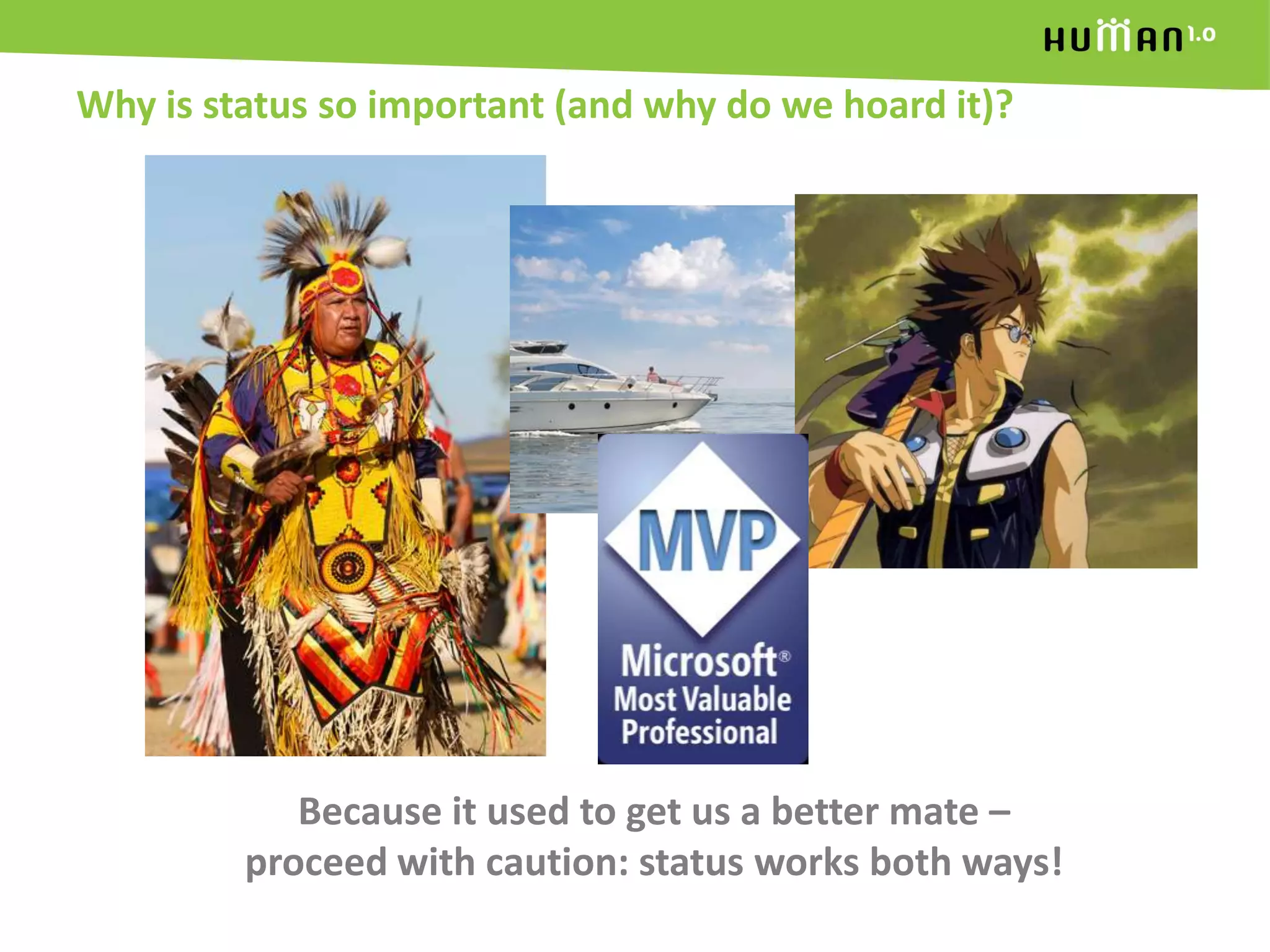
Why is status so important (and why do we hoard it)?Because it used to get us a better mate – proceed with caution: status works both ways!
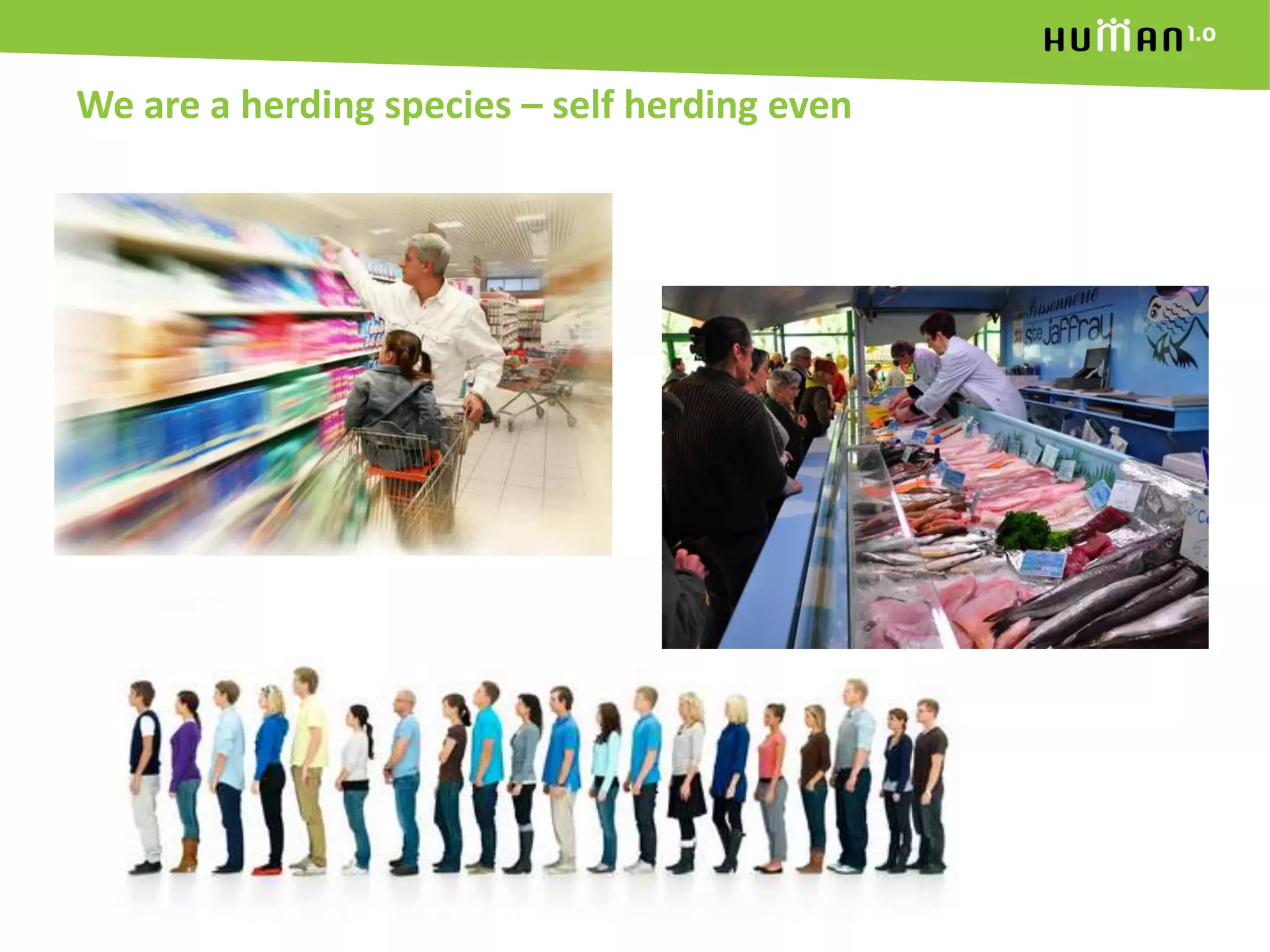
We are a herding species – self herding even
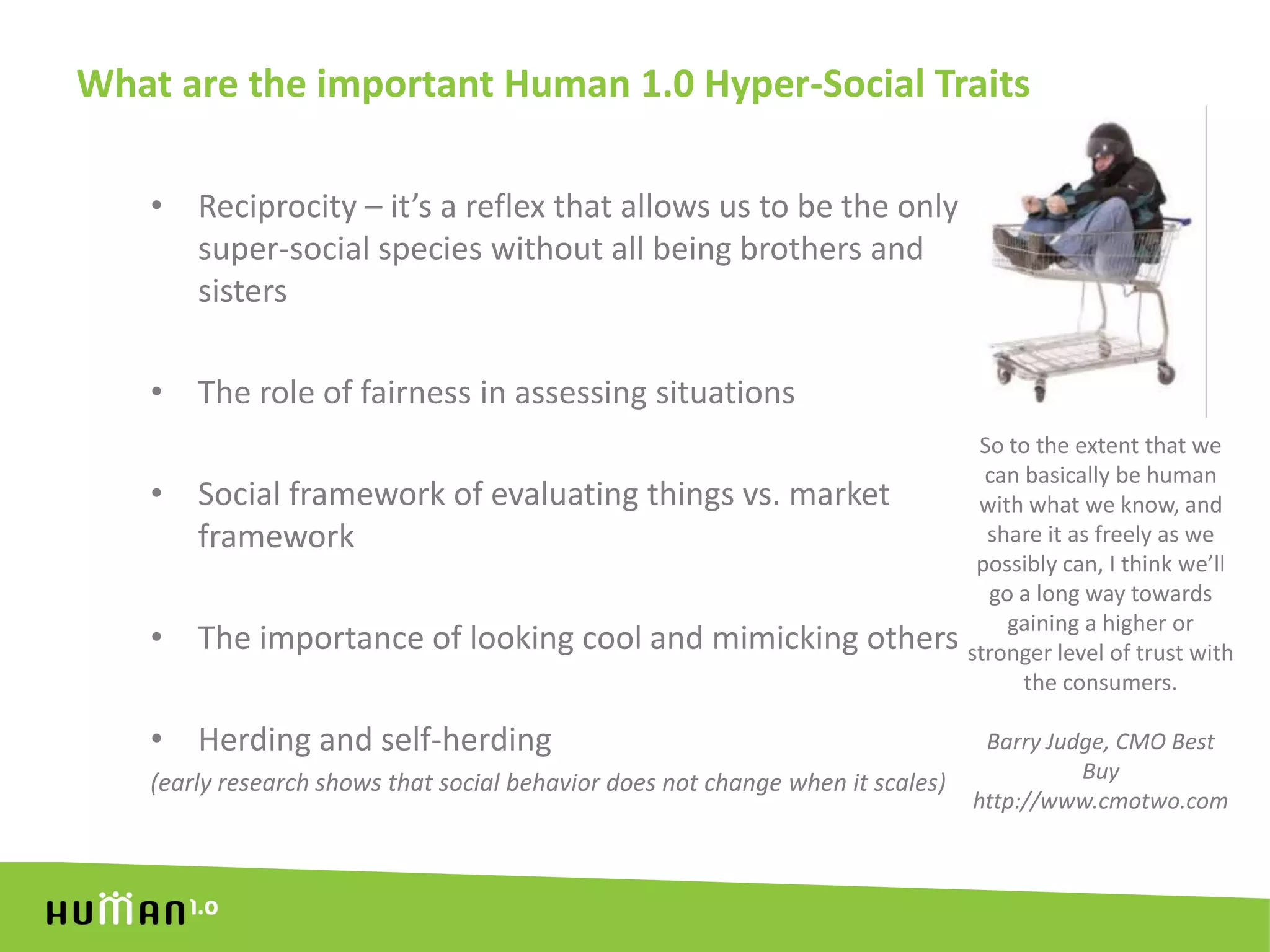
What are the important Human 1.0 Hyper-Social TraitsReciprocity – it’s a reflex that allows us to be the only super-social species without all being brothers and sistersThe role of fairness in assessing situationsSocial framework of evaluating things vs. market frameworkThe importance of looking cool and mimicking othersHerding and self-herding(early research shows that social behavior does not change when it scales)So to the extent that we can basically be human with what we know, and share it as freely as we possibly can, I think we’ll go a long way towards gaining a higher or stronger level of trust with the consumers.Barry Judge, CMO Best Buyhttp://www.cmotwo.com
How they think differently about their businessSuccessful Hyper-Social OrganizationsInformed by Tribalization of Business Study:2008-2010 – 1,000+ companies took the survey
Hyper-Social companies think differentlyThink tribe – not market segmentWe need to find groups of people who have something in common based on their behavior, not their market characteristicsThink knowledge network – not information channelThe most important conversations in communities happen in networks of people, not between the company and the community.Think human-centricity – not company-centricityThe human has to be at the center of everything you do, not the companyThink emergent messiness – not hierarchical fixed processesPeople will want to see responses to their suggestions, even if it does not fit your community goals – FAST“…affinity groups will quickly become the dominant social force in the emerging world economy, changing how we think about markets, fads, social movements, and, ultimately, power” - Tom Hayes, Jump Point: How Network Culture is Revolutionizing Business – 2008
What is it that they do differently?Hyper-Social Organizations
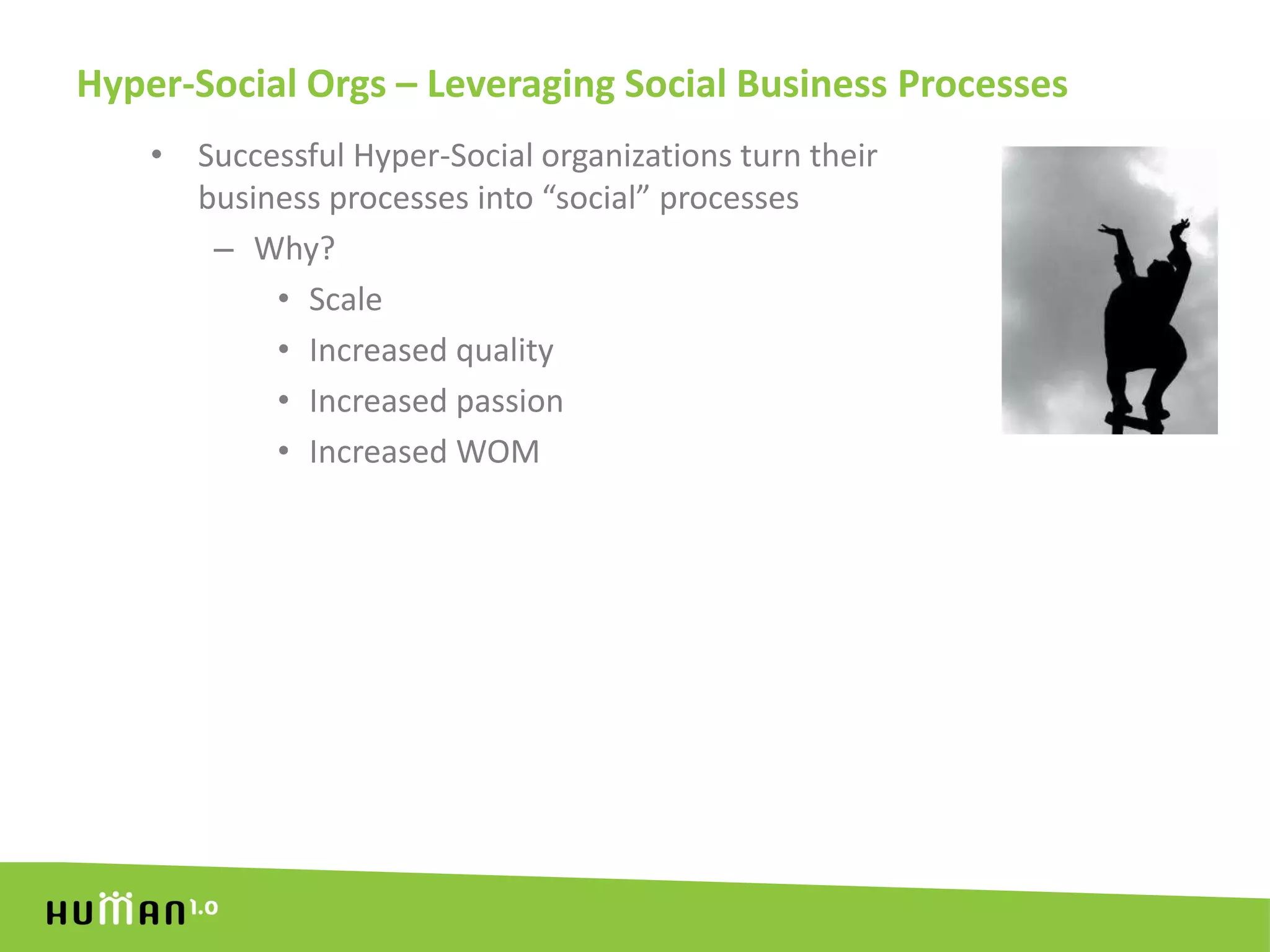
Hyper-Social Orgs – Leveraging Social Business ProcessesSuccessful Hyper-Social organizations turn their business processes into “social” processesWhy?ScaleIncreased qualityIncreased passionIncreased WOM
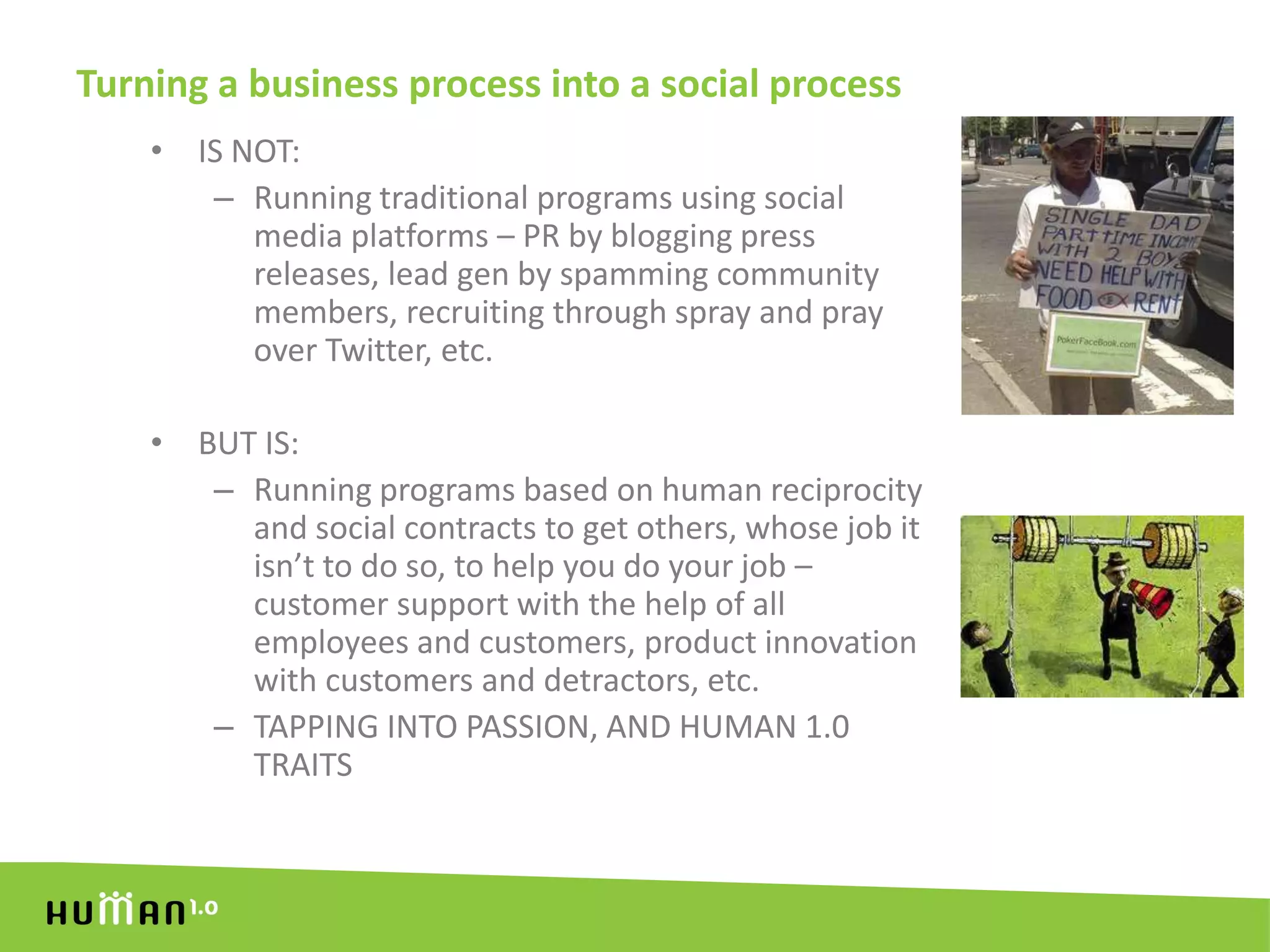
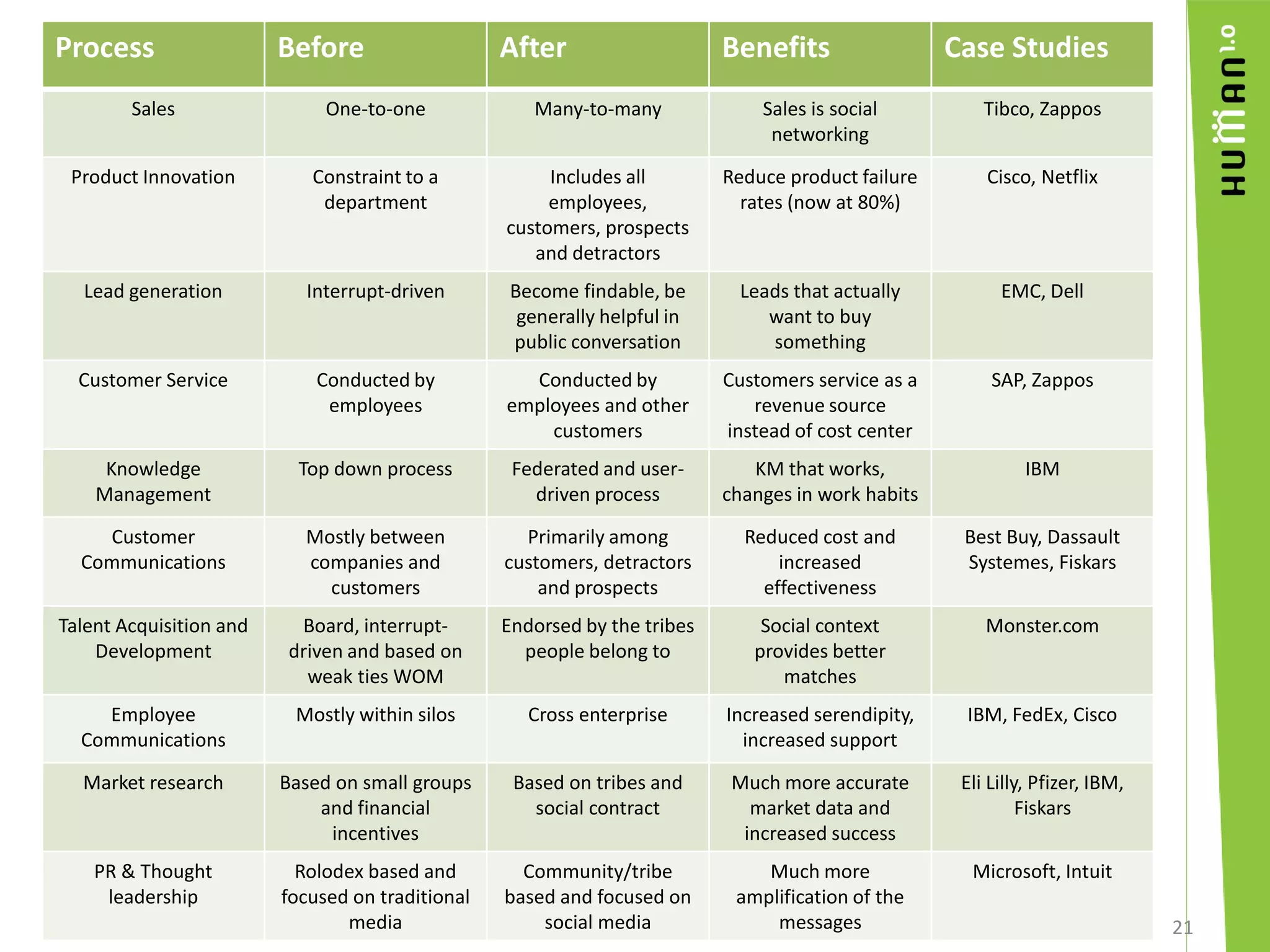
Turning a business process into a social processIS NOT:Running traditional programs using social media platforms – PR by blogging press releases, lead gen by spamming community members, recruiting through spray and pray over Twitter, etc.BUT IS:Running programs based on human reciprocity and social contracts to get others, whose job it isn’t to do so, to help you do your job – customer support with the help of all employees and customers, product innovation with customers and detractors, etc.TAPPING INTO PASSION, AND HUMAN 1.0 TRAITS
21
…In a Hyper-Social World5 ways to think differently about IT
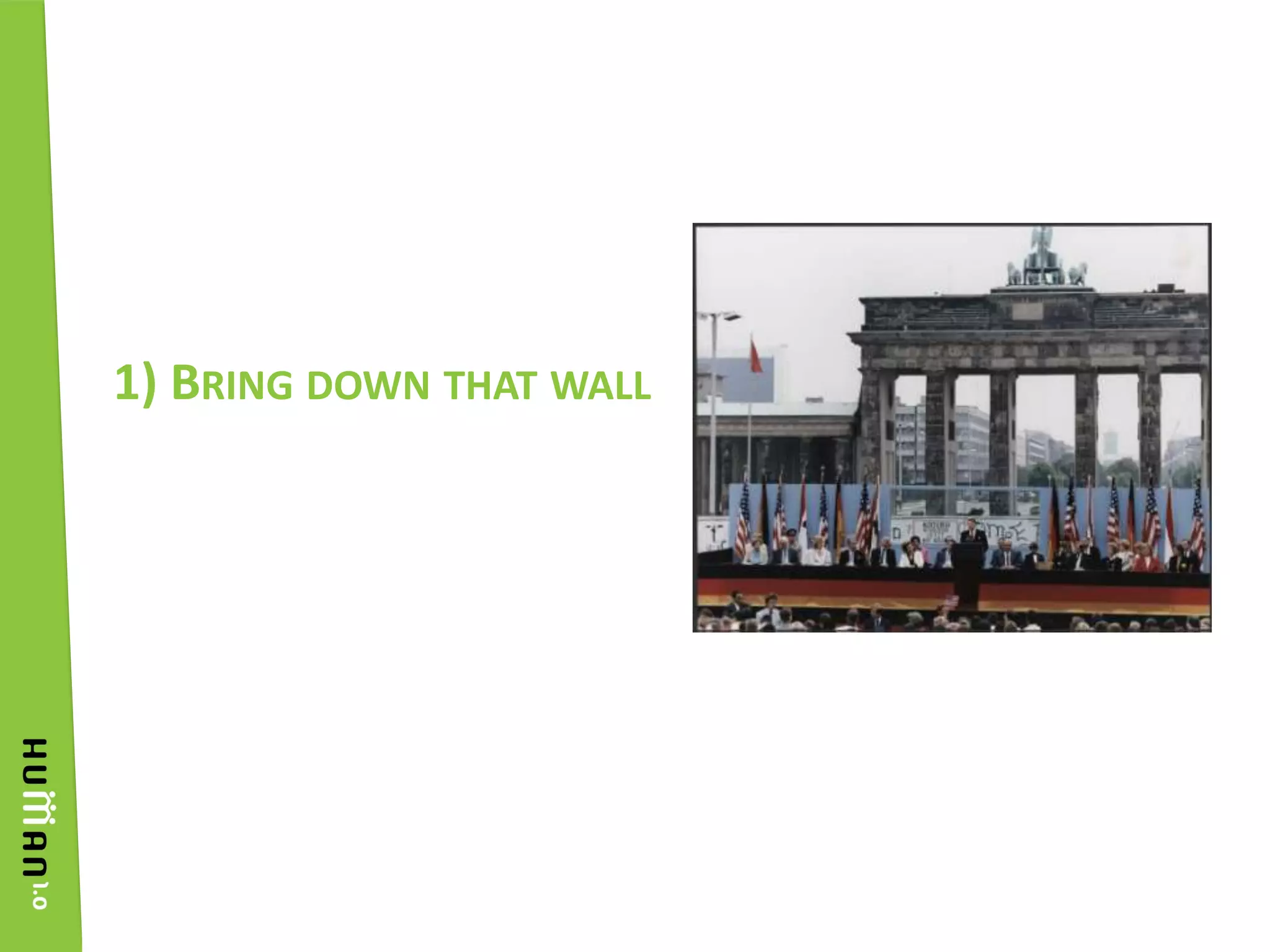
1) Bring down that wall
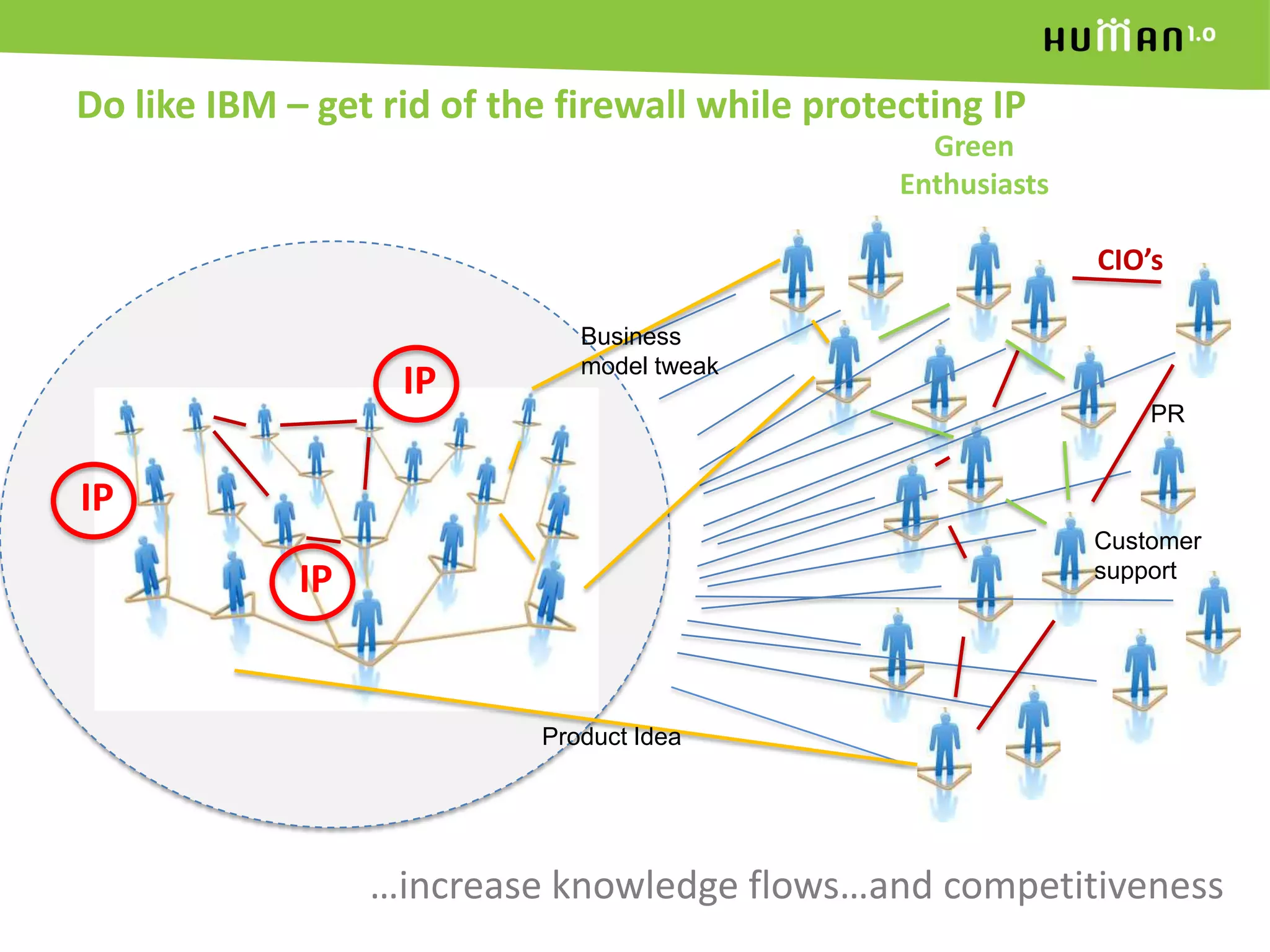
Do like IBM – get rid of the firewall while protecting IPGreen EnthusiastsCIO’sBusiness model tweakPRCustomer supportIPIPIPProduct Idea…increase knowledge flows…and competitiveness
2) Don’t build new walls
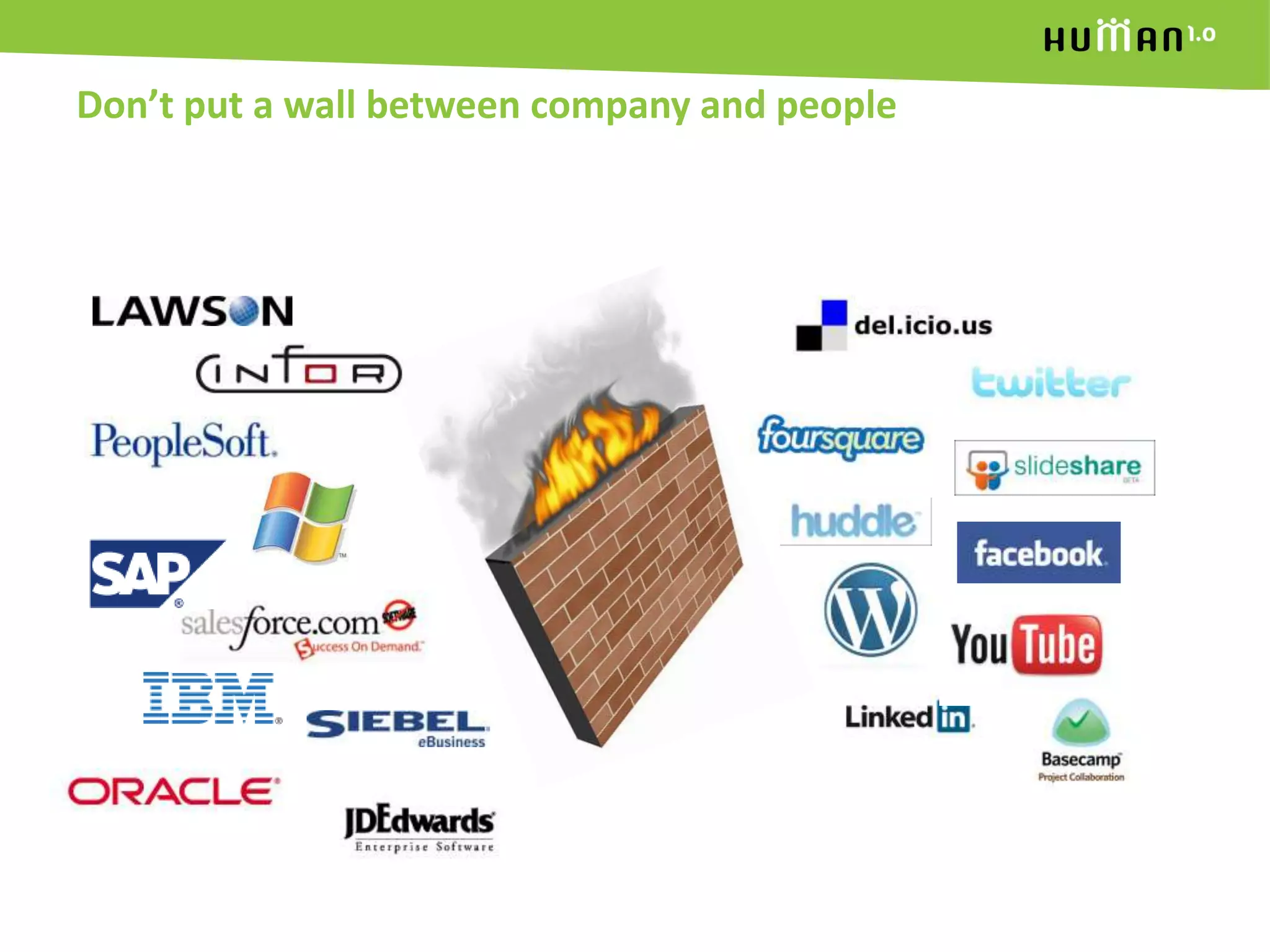
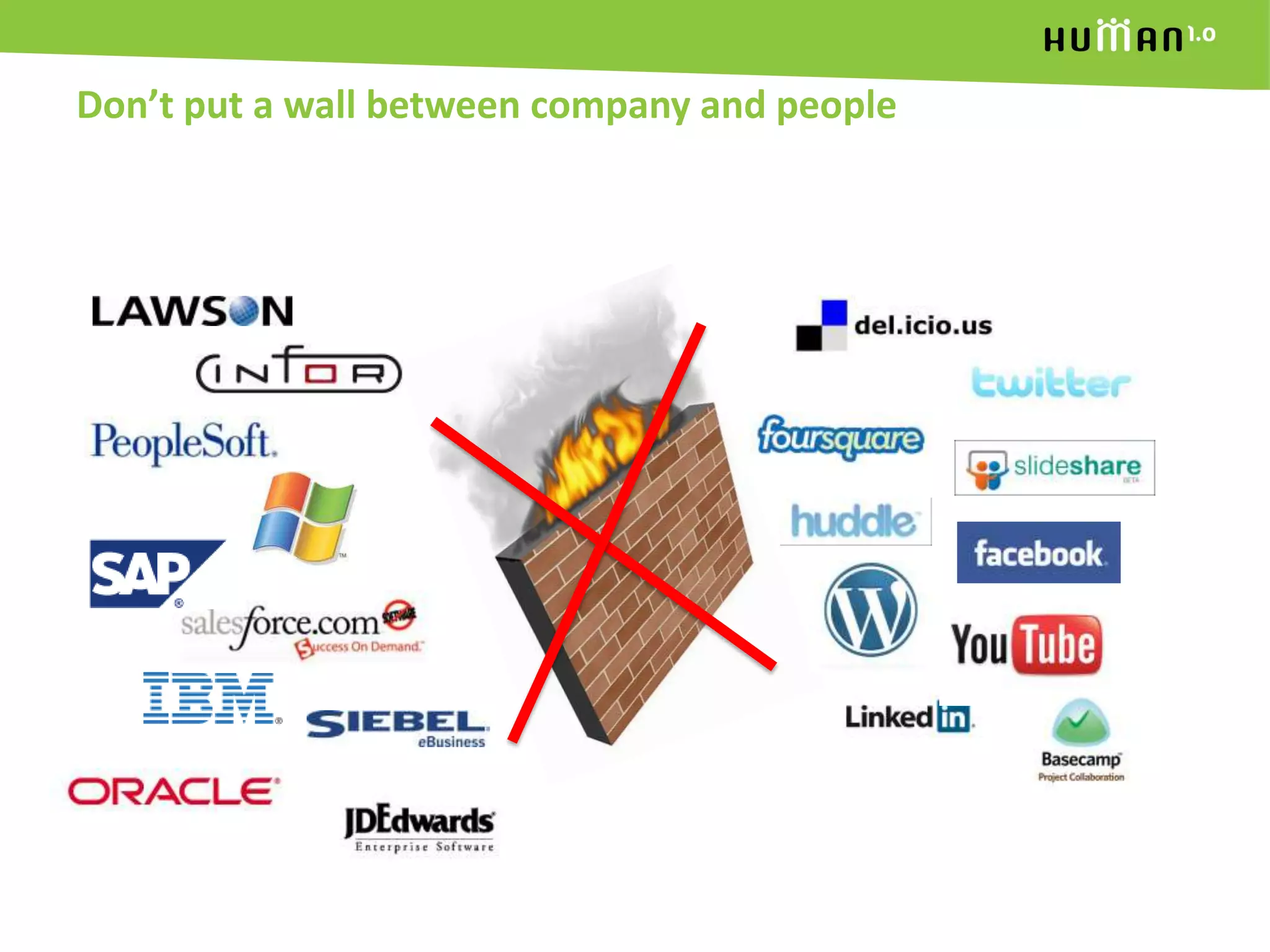
Don’t put a wall between company and people
Embrace what people want…and give them access…it will increase passion & productivity!
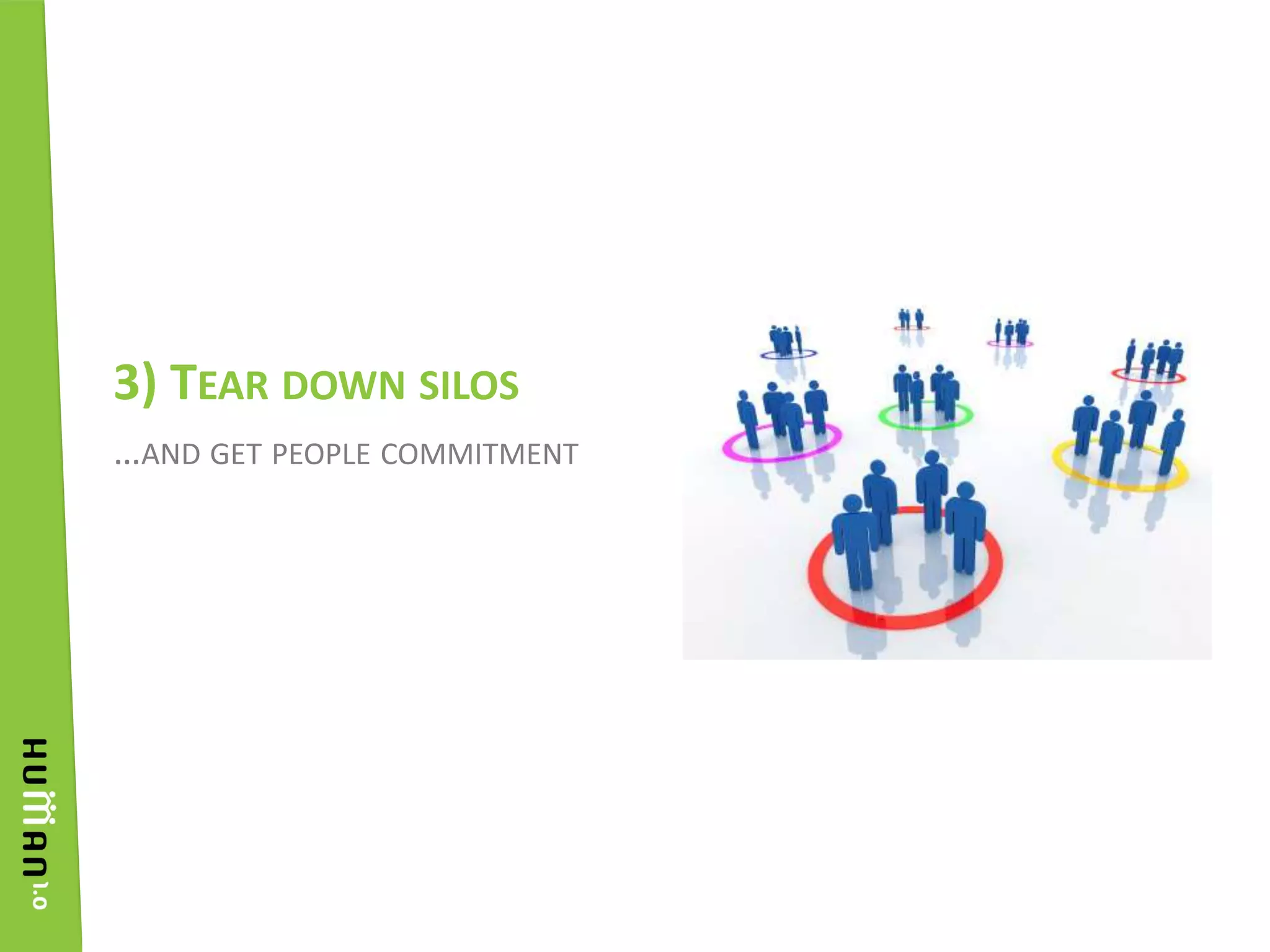
…and get people commitment3) Tear down silos
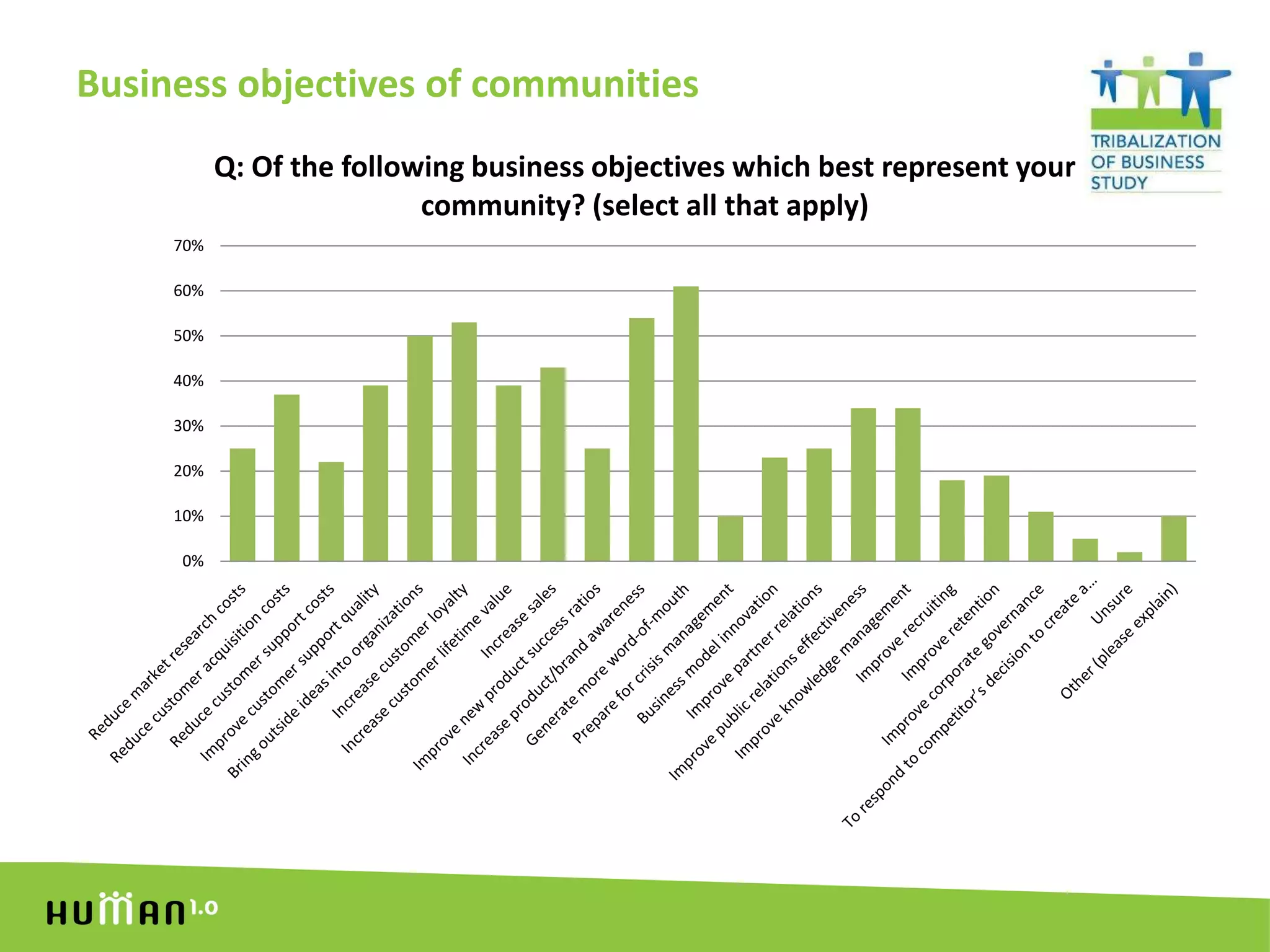
Business objectives of communities
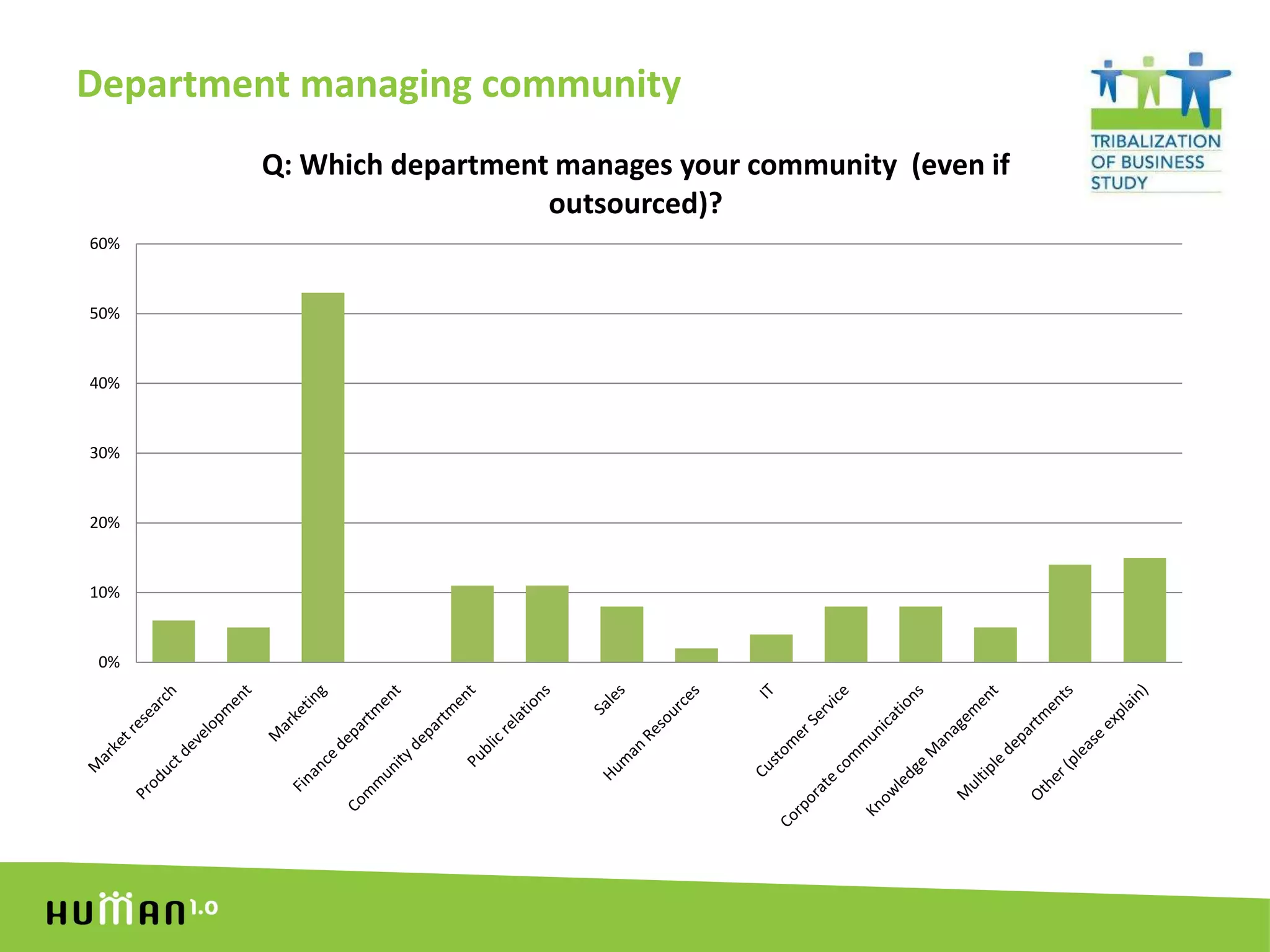
Department managing community
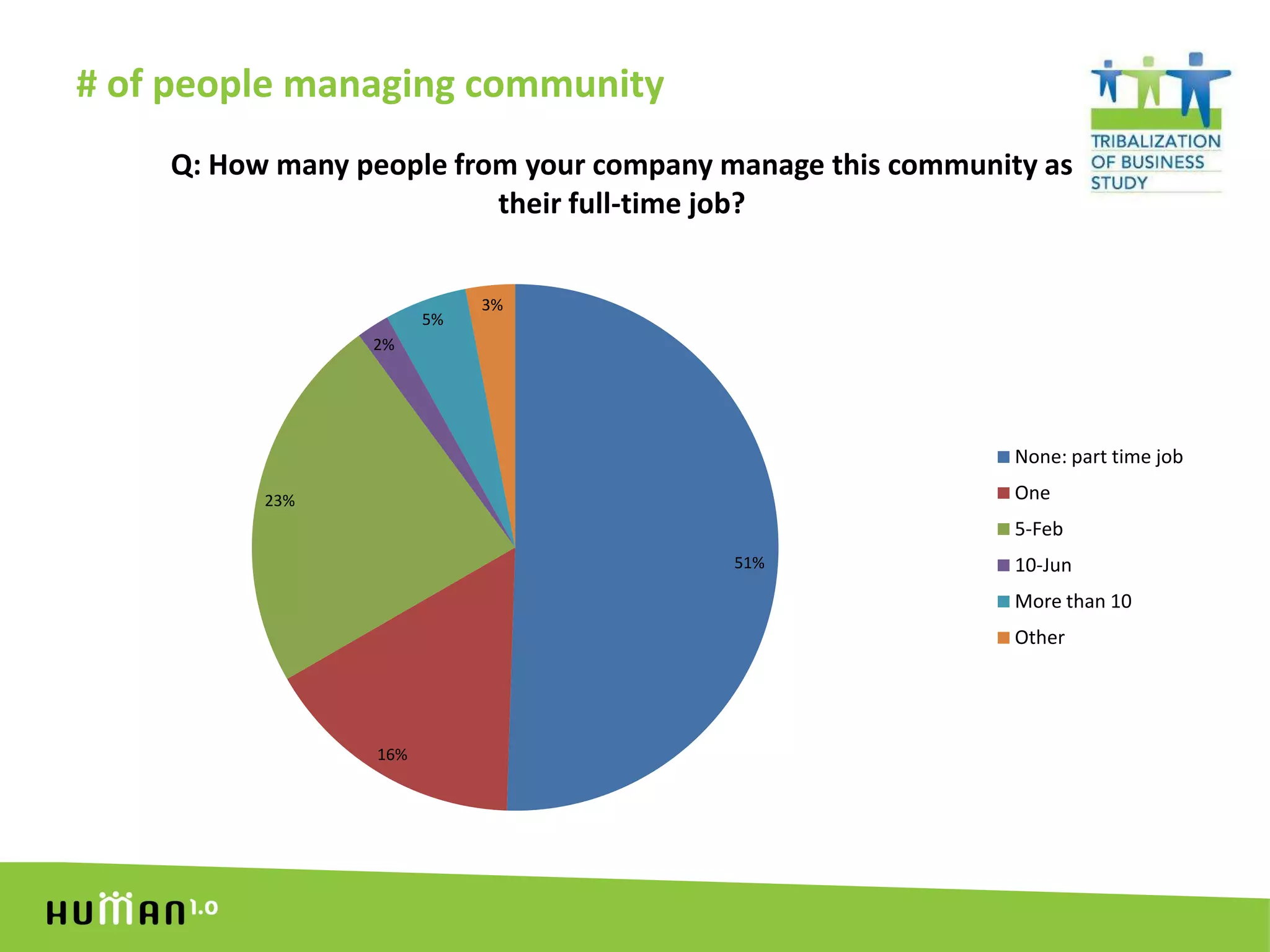
# of people managing community
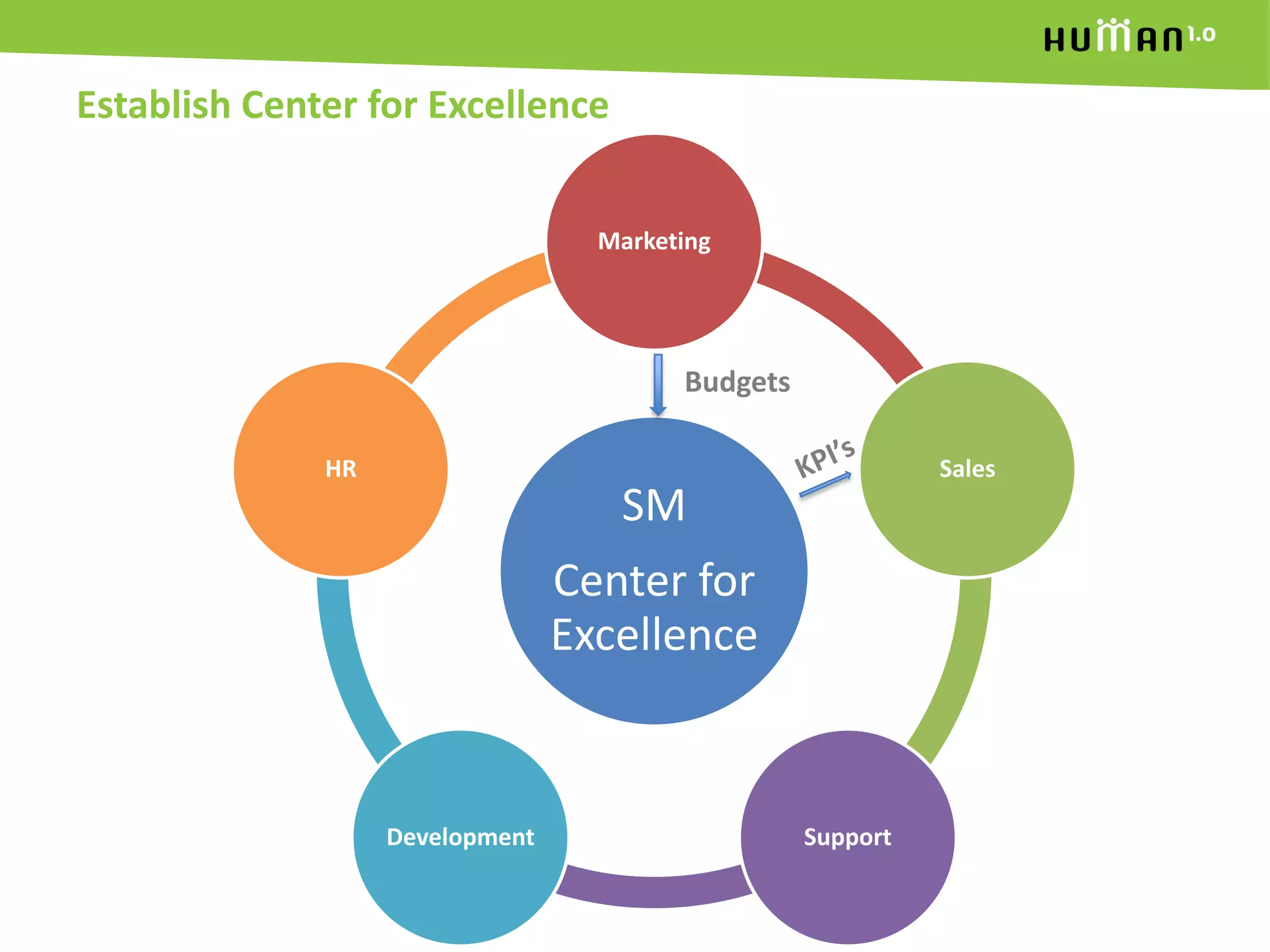
Establish Center for ExcellenceBudgetsKPI’s
…or don’t let history repeat itself4) Don’t build what you built before
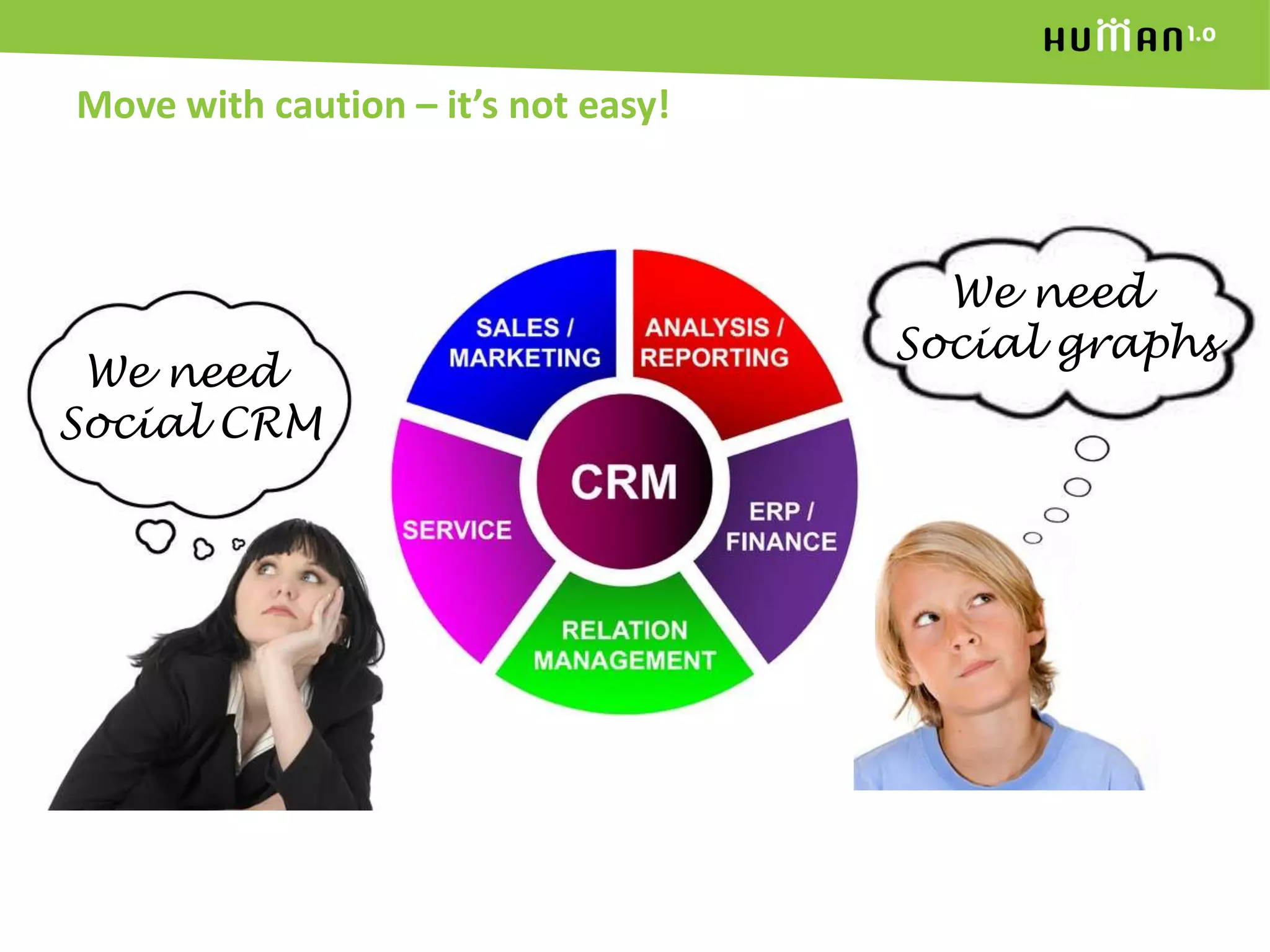
Move with caution – it’s not easy!We need Social graphsWe need Social CRM
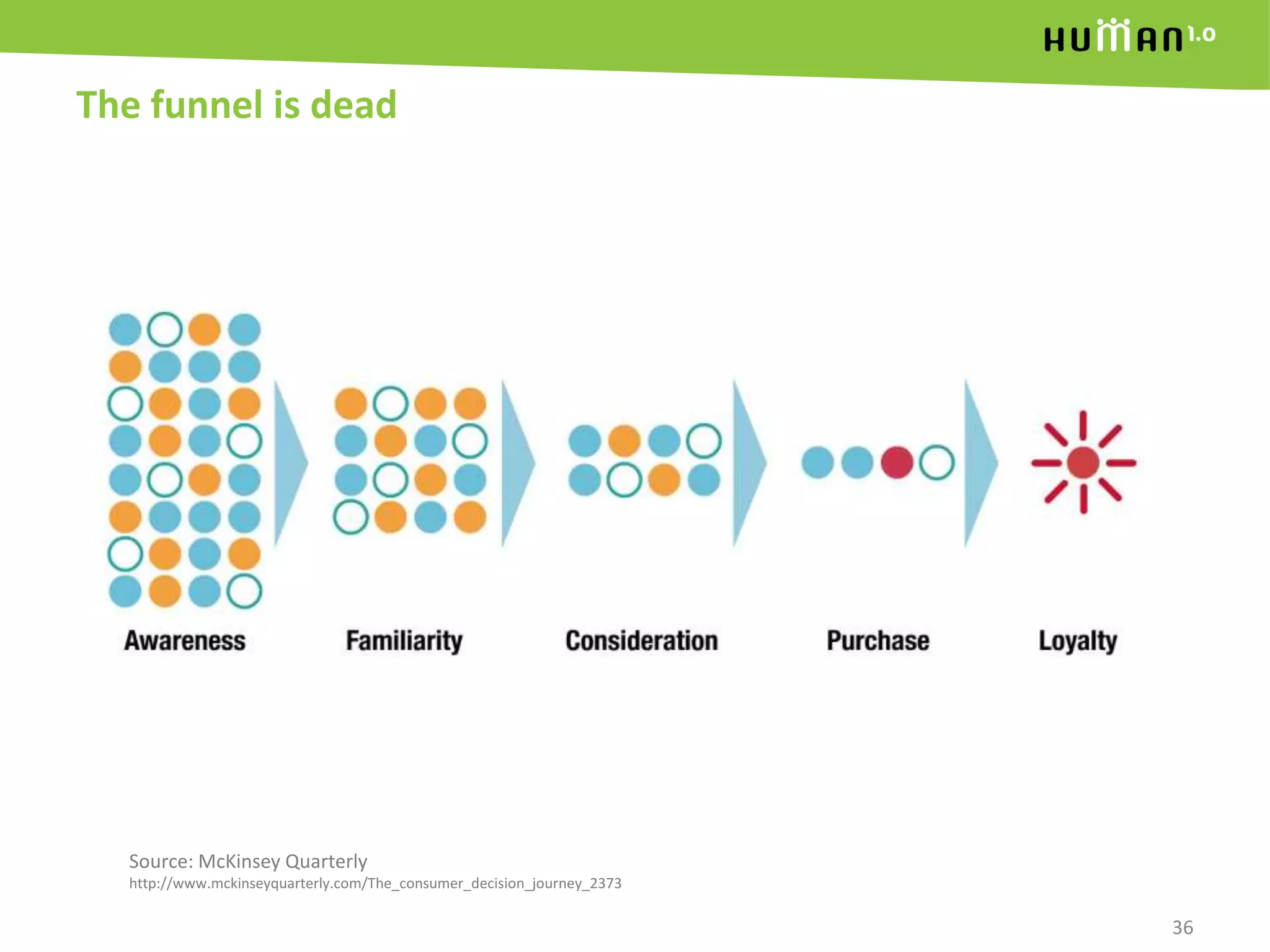
36The funnel is deadSource: McKinsey Quarterly http://www.mckinseyquarterly.com/The_consumer_decision_journey_2373
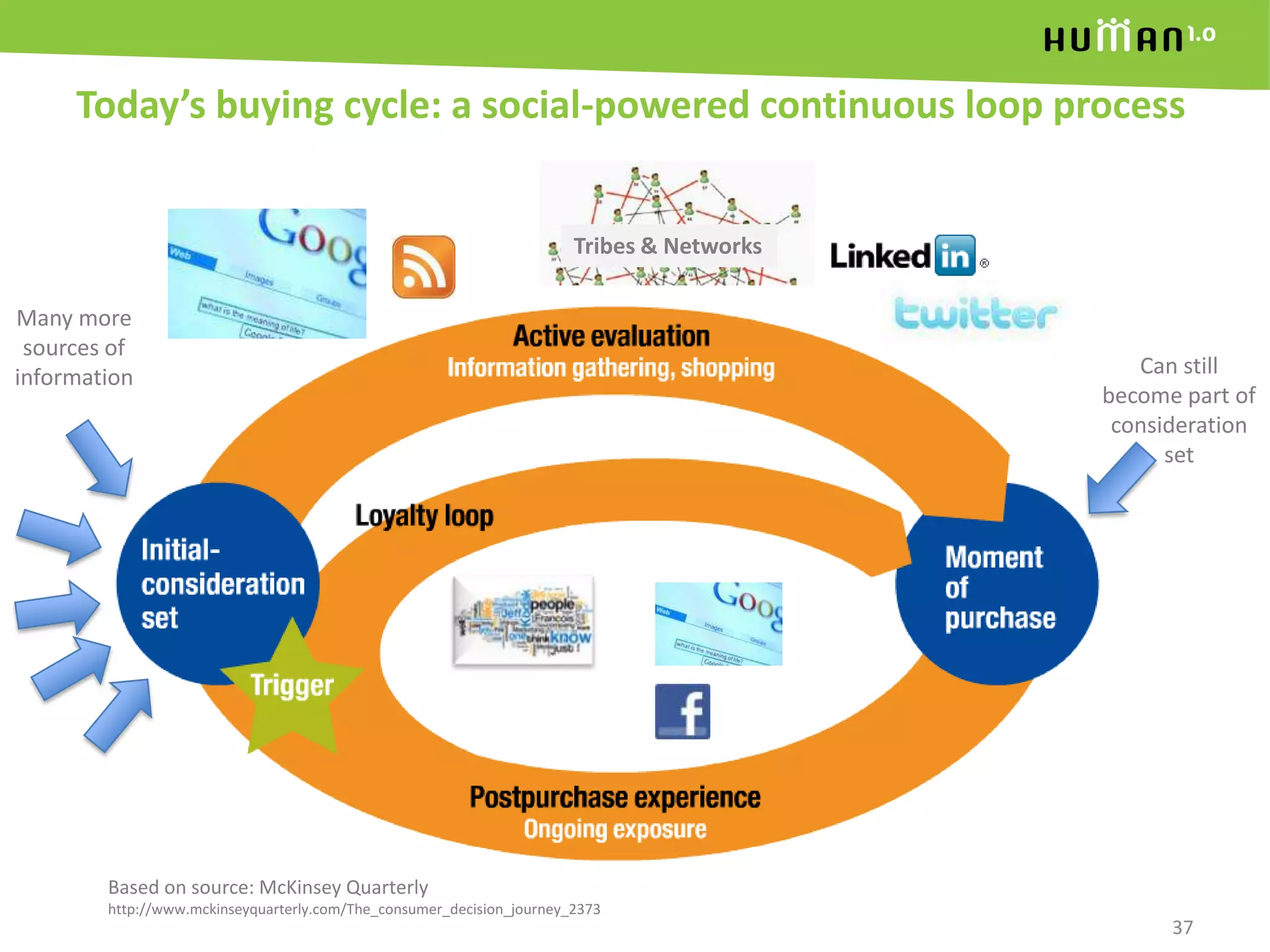
37Today’s buying cycle: a social-powered continuous loop processMany more sources of informationCan still become part of consideration setTribes & NetworksBased on source: McKinsey Quarterly http://www.mckinseyquarterly.com/The_consumer_decision_journey_2373
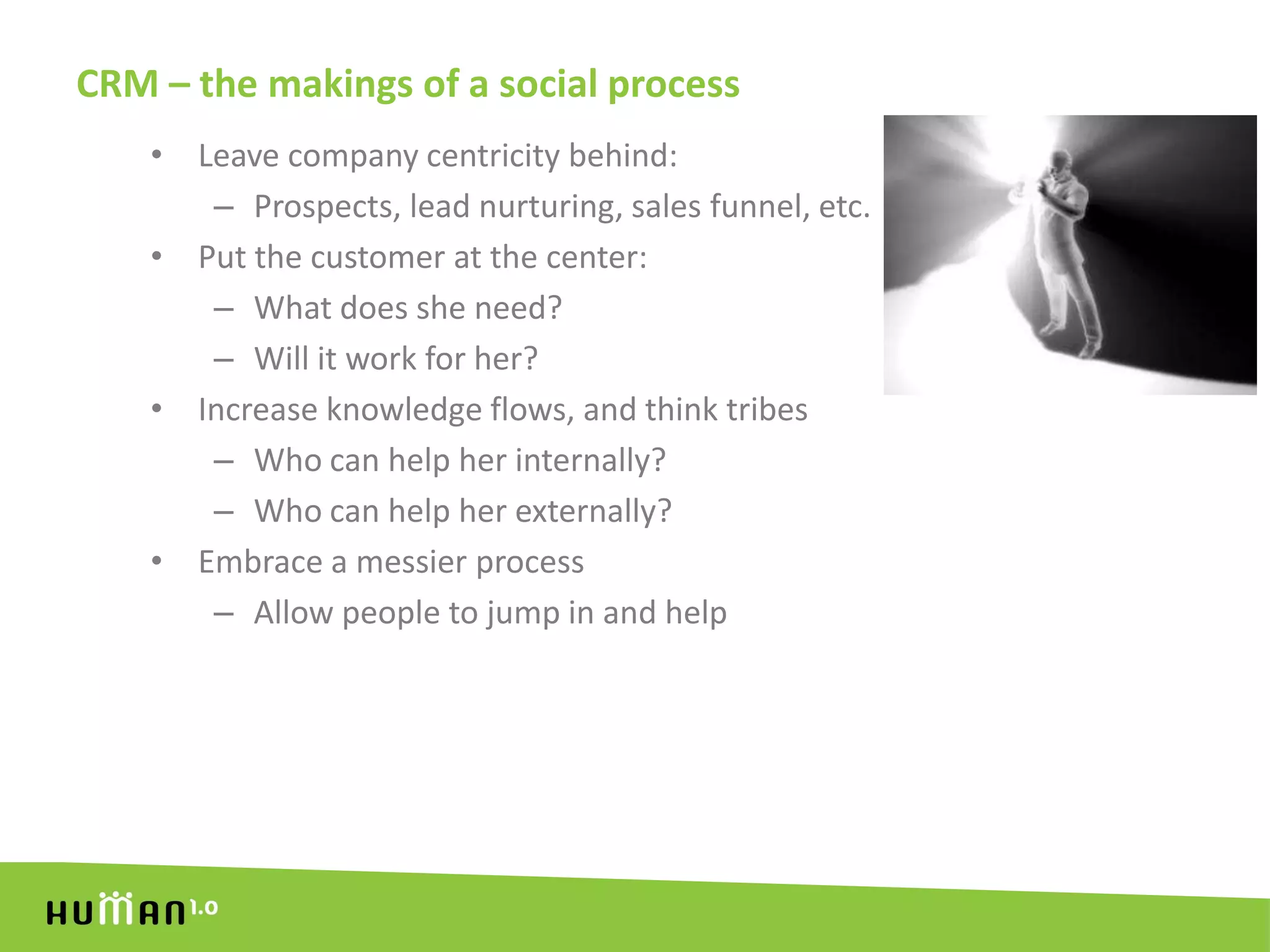
CRM – the makings of a social processLeave company centricity behind:Prospects, lead nurturing, sales funnel, etc.Put the customer at the center:What does she need?Will it work for her?Increase knowledge flows, and think tribesWho can help her internally?Who can help her externally?Embrace a messier processAllow people to jump in and help
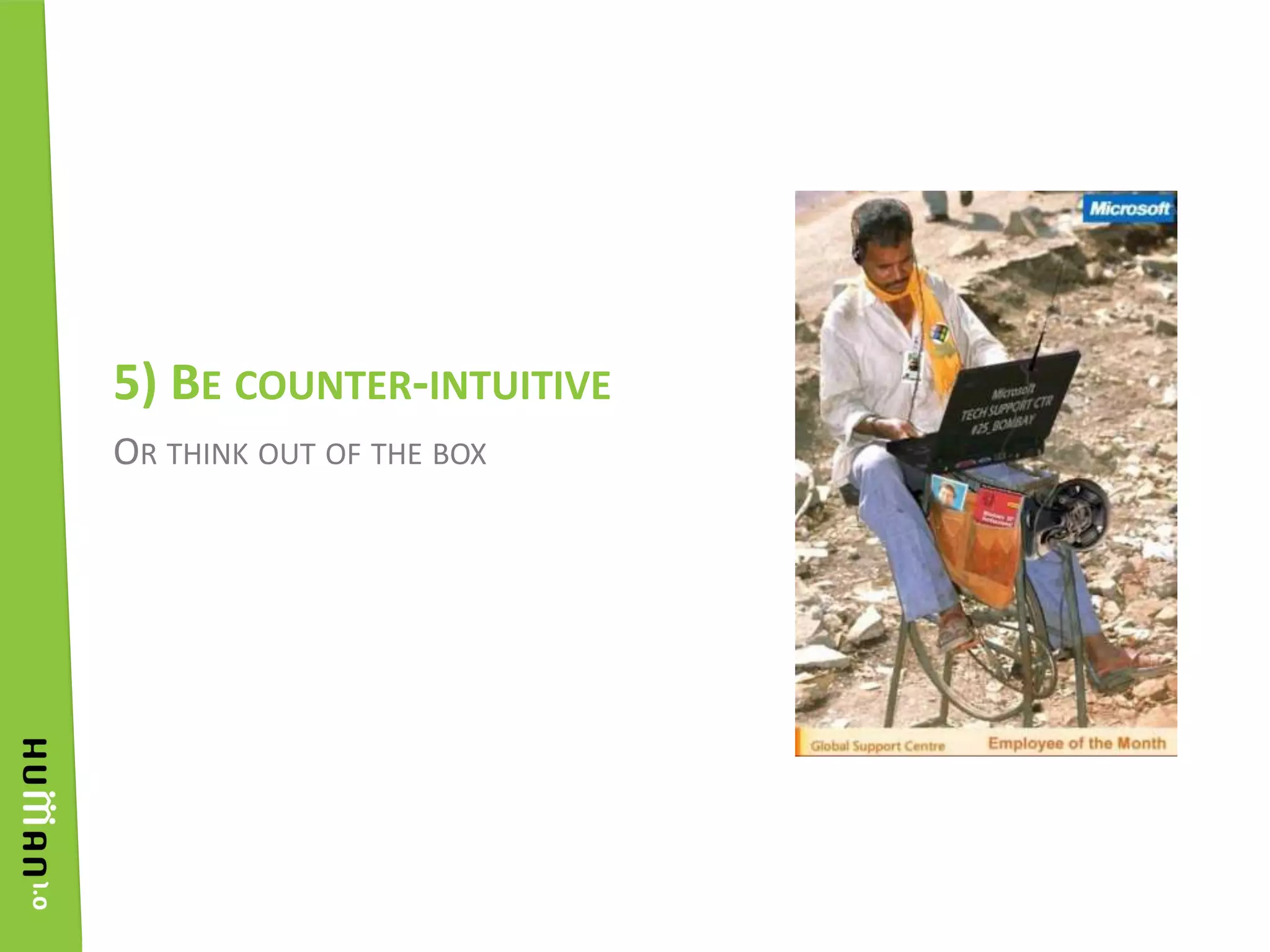
Or think out of the box5) Be counter-intuitive
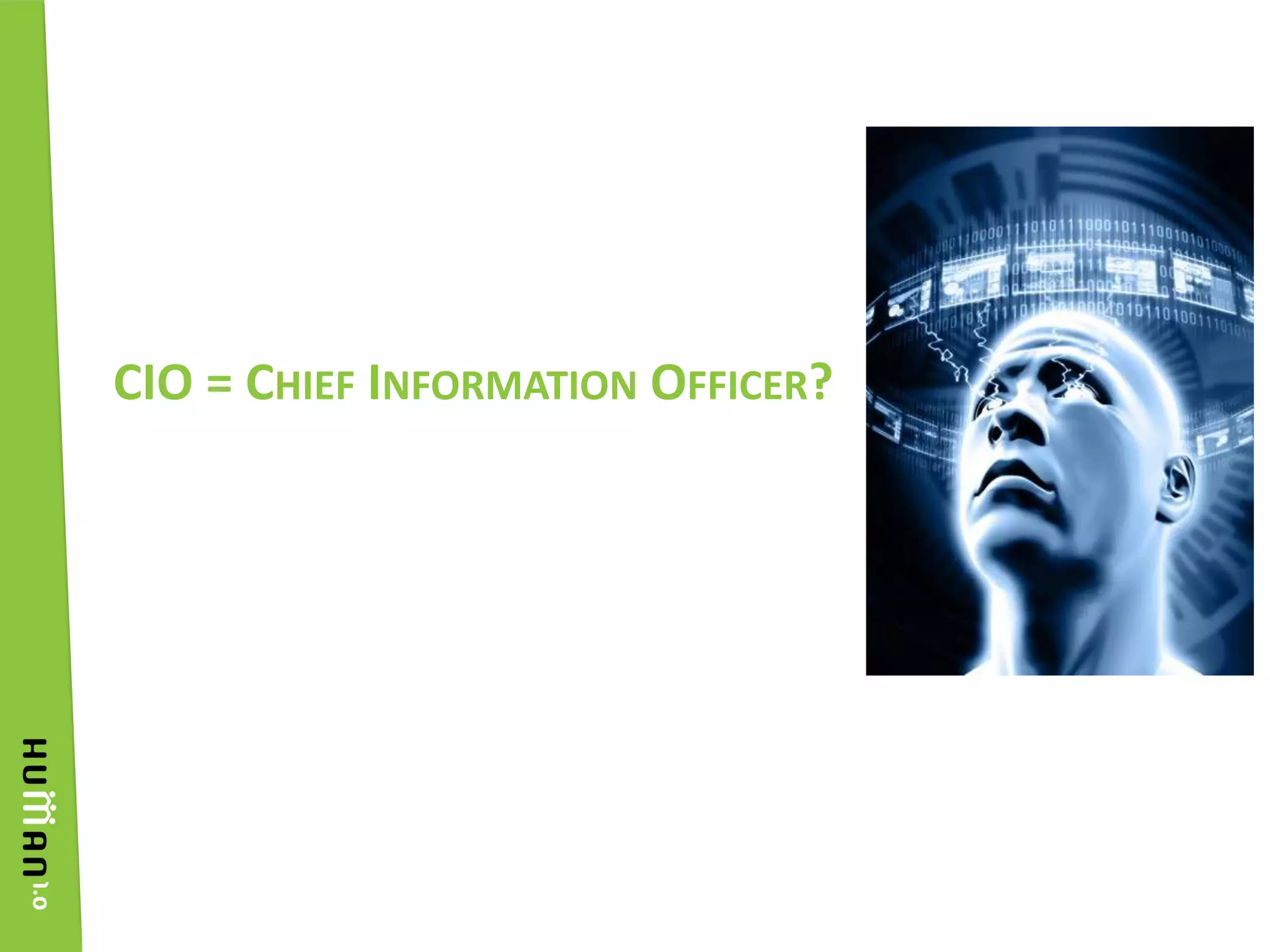
CIO = Chief Information Officer?
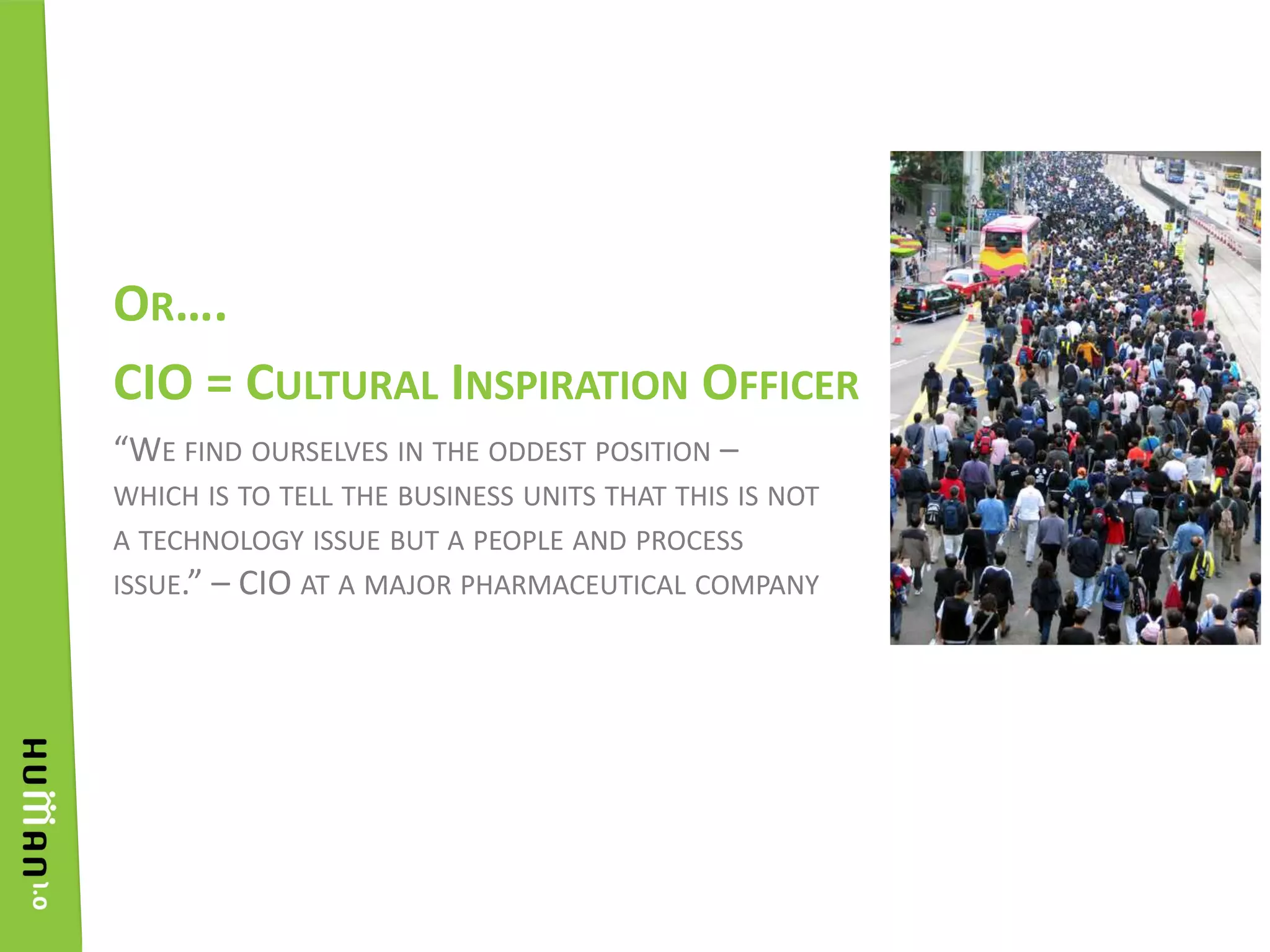
“We find ourselves in the oddest position – which is to tell the business units that this is not a technology issue but a people and process issue.” – CIO at a major pharmaceutical companyOr….CIO = Cultural Inspiration Officer
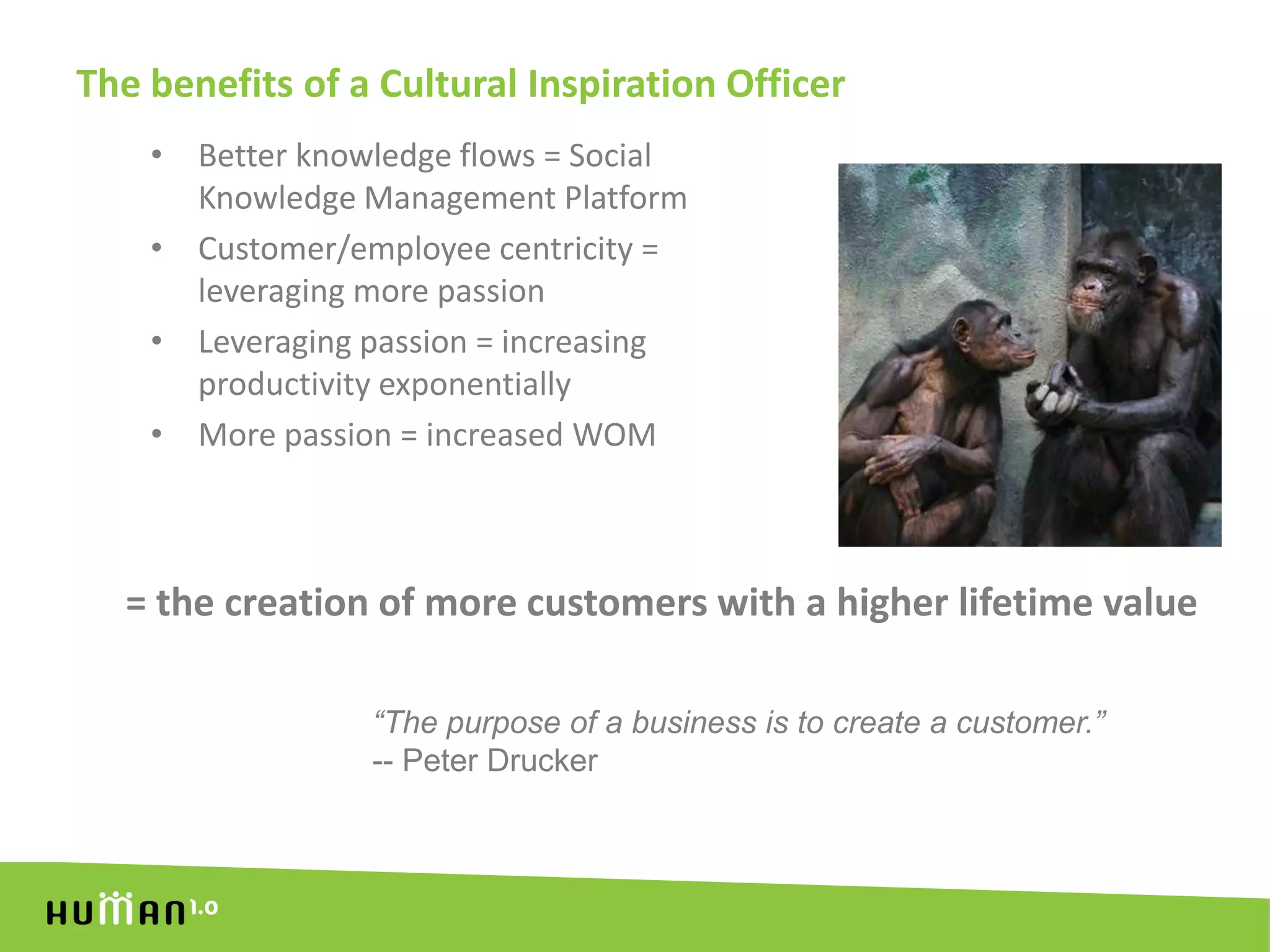
The benefits of a Cultural Inspiration OfficerBetter knowledge flows = Social Knowledge Management PlatformCustomer/employee centricity = leveraging more passionLeveraging passion = increasing productivity exponentiallyMore passion = increased WOM = the creation of more customers with a higher lifetime value“The purpose of a business is to create a customer.”-- Peter Drucker
Any questions?	Francois GossieauxPresident, Human 1.0e. francois@human1.comw. http://www.human1.comb. http://www.emergencemarketing.comc. http://www.marketingtwo.netp. http://www.cmotwo.comt. http://twitter.com/fgossieauxOur new book: The Hyper-Social Organizationhttp://www.facebook.com/hypersocialorg43
Transforming Competitive Advantage with Social Media

Transforming Competitive Advantage with Social Media

  • 1.
    Transforming Competitive Advantagewith Social MediaPrepared for the CIO Year Ahead Summit – Palm Springs, Nov 8th, 2010@fgossieaux
  • 2.
    OverviewUnderstanding the truedrivers of Social MediaHow do Hyper-Social Organizations think about their business?What do Hyper-Social Organizations do Differently, and WHY?5 ways to think differently about IT
  • 3.
    Let’s start offwith a little example Human 1.0 vs. Web 2.0The SAP Developer Community
  • 4.
    The SAP DeveloperNetwork4Stats:1.4 M users400K+ business expertsContent-richOriginal Incentive System:Point system leading to personal rewardsThe Results:Bullying behavior in the communityNew Incentive System:Point system leading to donation to good causeThe Results:No more bullying in the communityWeb 2.0 or Human 1.0?
  • 5.
    A look atsome NIH + Duke ResearchExperiment #1:People play Atari-style video game which allows them to earn or lose money for themselvesMRI scans shows that the pleasure side of the brain lights up – that same part that gets addicted to drugsExperiment #2:People play Atari-style video game which allows them to earn or lose money for a charityMRI scans shows that the altruism side of the brain lights up – that same part that is responsible for social interactions
  • 6.
    So to understandhow to do business in a 2.0 world…You are better off understanding Human 1.0 – not as individuals, but as hyper-social creaturesYou do not need to understand the Web 2.0 technologies
  • 7.
    Let’s get alevel deeper on the Human 1.0…
  • 8.
    Why are socialbeings helping one another?Reciprocity = a Reflex
  • 9.
    Why are peoplegoing out of their way to punish others?Humans have an innate sense of fairness = keeps reciprocal society working
  • 10.
    How do wemake decisions?Market FrameworkSocial Framework
  • 11.
    Why do peoplelike to look like others?Because humans have mirror neurons
  • 12.
    Why do welie to market researchers?Because we lie to ourselves and others, and we tell people what we think they want to hear
  • 13.
    Why is statusso important (and why do we hoard it)?Because it used to get us a better mate – proceed with caution: status works both ways!
  • 14.
    We are aherding species – self herding even
  • 15.
    What are theimportant Human 1.0 Hyper-Social TraitsReciprocity – it’s a reflex that allows us to be the only super-social species without all being brothers and sistersThe role of fairness in assessing situationsSocial framework of evaluating things vs. market frameworkThe importance of looking cool and mimicking othersHerding and self-herding(early research shows that social behavior does not change when it scales)So to the extent that we can basically be human with what we know, and share it as freely as we possibly can, I think we’ll go a long way towards gaining a higher or stronger level of trust with the consumers.Barry Judge, CMO Best Buyhttp://www.cmotwo.com
  • 16.
    How they thinkdifferently about their businessSuccessful Hyper-Social OrganizationsInformed by Tribalization of Business Study:2008-2010 – 1,000+ companies took the survey
  • 17.
    Hyper-Social companies thinkdifferentlyThink tribe – not market segmentWe need to find groups of people who have something in common based on their behavior, not their market characteristicsThink knowledge network – not information channelThe most important conversations in communities happen in networks of people, not between the company and the community.Think human-centricity – not company-centricityThe human has to be at the center of everything you do, not the companyThink emergent messiness – not hierarchical fixed processesPeople will want to see responses to their suggestions, even if it does not fit your community goals – FAST“…affinity groups will quickly become the dominant social force in the emerging world economy, changing how we think about markets, fads, social movements, and, ultimately, power” - Tom Hayes, Jump Point: How Network Culture is Revolutionizing Business – 2008
  • 18.
    What is itthat they do differently?Hyper-Social Organizations
  • 19.
    Hyper-Social Orgs –Leveraging Social Business ProcessesSuccessful Hyper-Social organizations turn their business processes into “social” processesWhy?ScaleIncreased qualityIncreased passionIncreased WOM
  • 20.
    Turning a businessprocess into a social processIS NOT:Running traditional programs using social media platforms – PR by blogging press releases, lead gen by spamming community members, recruiting through spray and pray over Twitter, etc.BUT IS:Running programs based on human reciprocity and social contracts to get others, whose job it isn’t to do so, to help you do your job – customer support with the help of all employees and customers, product innovation with customers and detractors, etc.TAPPING INTO PASSION, AND HUMAN 1.0 TRAITS
  • 21.
  • 22.
    …In a Hyper-SocialWorld5 ways to think differently about IT
  • 23.
    1) Bring downthat wall
  • 24.
    Do like IBM– get rid of the firewall while protecting IPGreen EnthusiastsCIO’sBusiness model tweakPRCustomer supportIPIPIPProduct Idea…increase knowledge flows…and competitiveness
  • 25.
  • 26.
    Don’t put awall between company and people
  • 27.
    Don’t put awall between company and people
  • 28.
    Embrace what peoplewant…and give them access…it will increase passion & productivity!
  • 29.
    …and get peoplecommitment3) Tear down silos
  • 30.
  • 31.
  • 32.
    # of peoplemanaging community
  • 33.
    Establish Center forExcellenceBudgetsKPI’s
  • 34.
    …or don’t lethistory repeat itself4) Don’t build what you built before
  • 35.
    Move with caution– it’s not easy!We need Social graphsWe need Social CRM
  • 36.
    36The funnel isdeadSource: McKinsey Quarterly http://www.mckinseyquarterly.com/The_consumer_decision_journey_2373
  • 37.
    37Today’s buying cycle:a social-powered continuous loop processMany more sources of informationCan still become part of consideration setTribes & NetworksBased on source: McKinsey Quarterly http://www.mckinseyquarterly.com/The_consumer_decision_journey_2373
  • 38.
    CRM – themakings of a social processLeave company centricity behind:Prospects, lead nurturing, sales funnel, etc.Put the customer at the center:What does she need?Will it work for her?Increase knowledge flows, and think tribesWho can help her internally?Who can help her externally?Embrace a messier processAllow people to jump in and help
  • 39.
    Or think outof the box5) Be counter-intuitive
  • 40.
    CIO = ChiefInformation Officer?
  • 41.
    “We find ourselvesin the oddest position – which is to tell the business units that this is not a technology issue but a people and process issue.” – CIO at a major pharmaceutical companyOr….CIO = Cultural Inspiration Officer
  • 42.
    The benefits ofa Cultural Inspiration OfficerBetter knowledge flows = Social Knowledge Management PlatformCustomer/employee centricity = leveraging more passionLeveraging passion = increasing productivity exponentiallyMore passion = increased WOM = the creation of more customers with a higher lifetime value“The purpose of a business is to create a customer.”-- Peter Drucker
  • 43.
    Any questions? Francois GossieauxPresident,Human 1.0e. francois@human1.comw. http://www.human1.comb. http://www.emergencemarketing.comc. http://www.marketingtwo.netp. http://www.cmotwo.comt. http://twitter.com/fgossieauxOur new book: The Hyper-Social Organizationhttp://www.facebook.com/hypersocialorg43

Editor's Notes

  • #31 Top 4 have not changed – 5 and 6 swapped – Reduce customer acquisition cost almost doubledImprove knowledge management was not asked in earlier years
  • #32 Big disconnects here between key processes supported and who is actually running the community. There’s a lot of learning about tribes that needs to take place during these community encounters, and critical functions are being excluded from the learning.
  • #33 2/3 of respondents report having 1 or fewer full-time people managing their communities!