POST TRAINING SUPPORT FOR
IMPROVing PERFORMANCE
Presented By:- Purnendu Shekhar.
16MBA010 .
Why Post Training support is required?
• In order to align the learning outcome with the
business objective we are specialised in incorporating
a series of Post Training interventions.
• It will ensure a better learning retention and
applicability of the learning outcome.
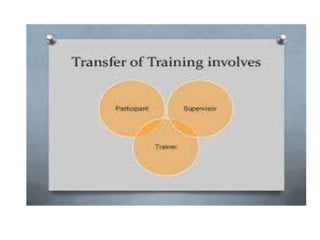
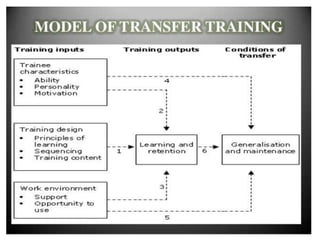
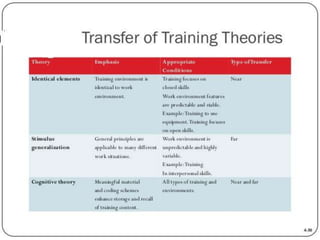
Transfer Of Training
• Trainees effectively and continually applying what
they learned in training on their jobs.
• Transfer of Training means, when trainees actually
use on the job, what knowledge and information they
learned in training.
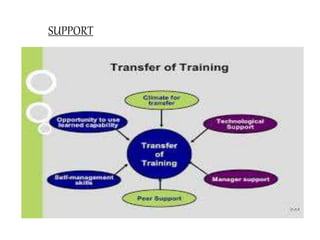
SUPPORT
Peer Support
• Group of two or more trainees who agree to meet and
discuss their progress in using learned capabilities on
the job which may involve face-to-face meetings or
communications via e-mail.
• The more peer meetings that trainees attend, the more
learning transferred to the workplace.
Technological Supports
Trainers can monitor trainees’ use of EPSS, which
provides the trainer with valuable information
about the transfer of training problems that trainees
are encountering.
These problems might relate to the training design
or work environment.
Management Supports
Managers pay attention to the development of their
staff because part of their incentive plan is based on
training and development.
The incentive plan comprises fiscal, productivity,
and strategic goals.
Opportunities to use learned capabilities:-
• It refers to the extent to which the trainee is provided
with or actively seeks experiences that allow for
application of the newly learned knowledge, skill, and
behaviors from the training program.
• It is influenced by the work environment and trainee
motivation.
• Opportunity to perform is determined by breadth,
activity level, and task type.
• Low levels of opportunity to perform may indicate
that:-
1. The work environment is interfering with using
new skills.
2. Training content is not important for the
employee’s job.
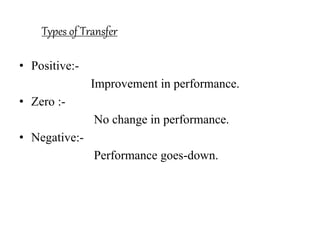
Types of Transfer
• Positive:-
Improvement in performance.
• Zero :-
No change in performance.
• Negative:-
Performance goes-down.
THANK-YOU

Training Support

  • 1.
    POST TRAINING SUPPORTFOR IMPROVing PERFORMANCE Presented By:- Purnendu Shekhar. 16MBA010 .
  • 2.
    Why Post Trainingsupport is required? • In order to align the learning outcome with the business objective we are specialised in incorporating a series of Post Training interventions. • It will ensure a better learning retention and applicability of the learning outcome.
  • 3.
    Transfer Of Training •Trainees effectively and continually applying what they learned in training on their jobs. • Transfer of Training means, when trainees actually use on the job, what knowledge and information they learned in training.
  • 4.
  • 5.
    Peer Support • Groupof two or more trainees who agree to meet and discuss their progress in using learned capabilities on the job which may involve face-to-face meetings or communications via e-mail. • The more peer meetings that trainees attend, the more learning transferred to the workplace.
  • 6.
    Technological Supports Trainers canmonitor trainees’ use of EPSS, which provides the trainer with valuable information about the transfer of training problems that trainees are encountering. These problems might relate to the training design or work environment.
  • 7.
    Management Supports Managers payattention to the development of their staff because part of their incentive plan is based on training and development. The incentive plan comprises fiscal, productivity, and strategic goals.
  • 8.
    Opportunities to uselearned capabilities:- • It refers to the extent to which the trainee is provided with or actively seeks experiences that allow for application of the newly learned knowledge, skill, and behaviors from the training program. • It is influenced by the work environment and trainee motivation.
  • 9.
    • Opportunity toperform is determined by breadth, activity level, and task type. • Low levels of opportunity to perform may indicate that:- 1. The work environment is interfering with using new skills. 2. Training content is not important for the employee’s job.
  • 12.
    Types of Transfer •Positive:- Improvement in performance. • Zero :- No change in performance. • Negative:- Performance goes-down.
  • 14.