Content
• What is Quality

• Quality in an organization
• What got us here?
• Deming – 14 points
• Dr. Juran – Trilogy
• Quality Improvement
• Quality Professional
• How can you make a difference?
What is Quality?
 Webster’s Dictionary
 degree of excellence of a thing
 American Society for Quality
 totality of features and characteristics that satisfy needs
 Consumer’s and Producer’s Perspective
 Fitness for use
• how well product or service does what it is supposed to
 Quality of design
• designing quality characteristics into a product or service
 A Mercedes and a Ford are equally “fit for use,” but with different design
dimensions
What is Quality?
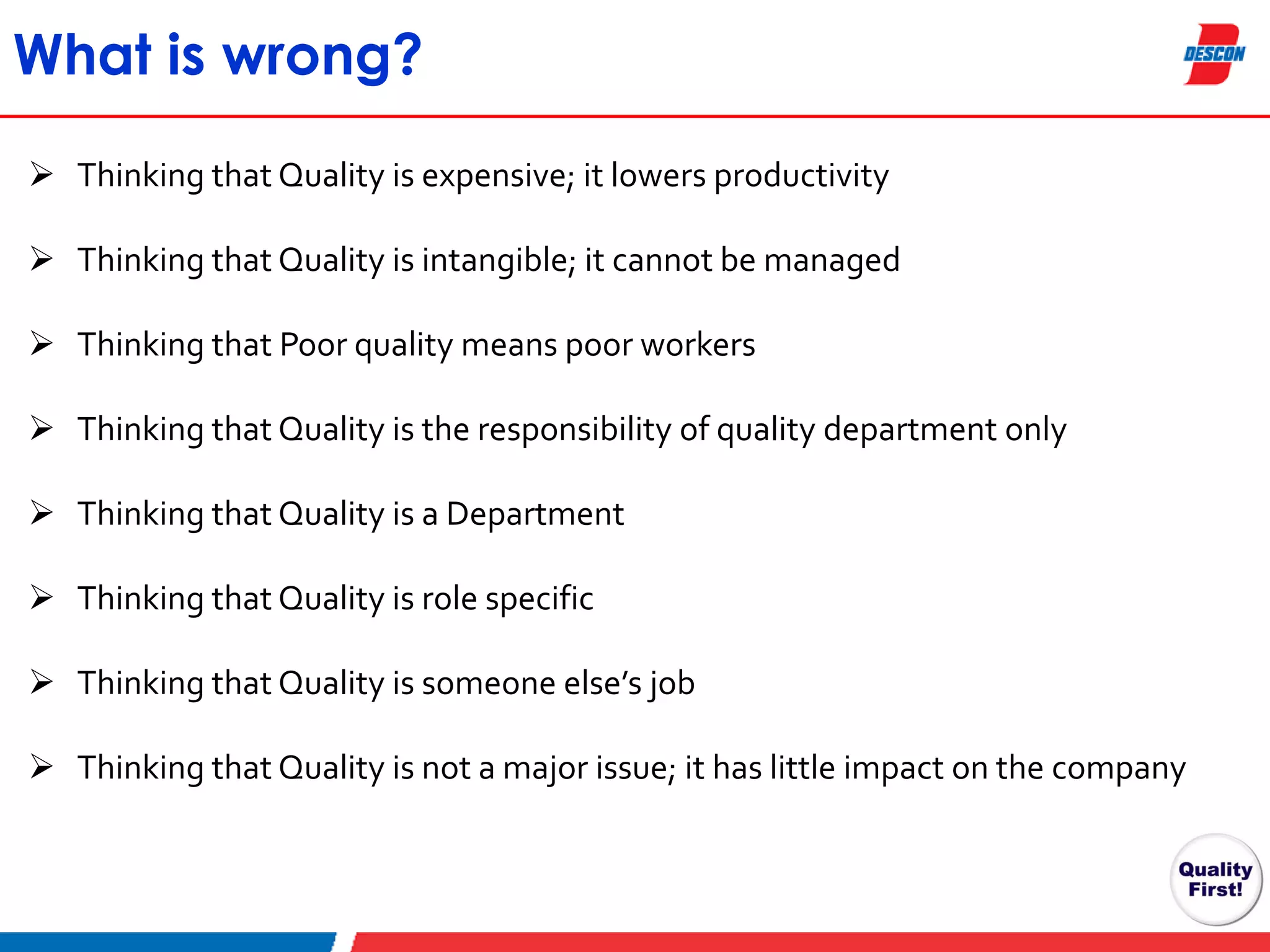
What is wrong?
 Thinking that Quality is expensive; it lowers productivity
 Thinking that Quality is intangible; it cannot be managed
 Thinking that Poor quality means poor workers
 Thinking that Quality is the responsibility of quality department only
 Thinking that Quality is a Department

 Thinking that Quality is role specific
 Thinking that Quality is someone else’s job
 Thinking that Quality is not a major issue; it has little impact on the company
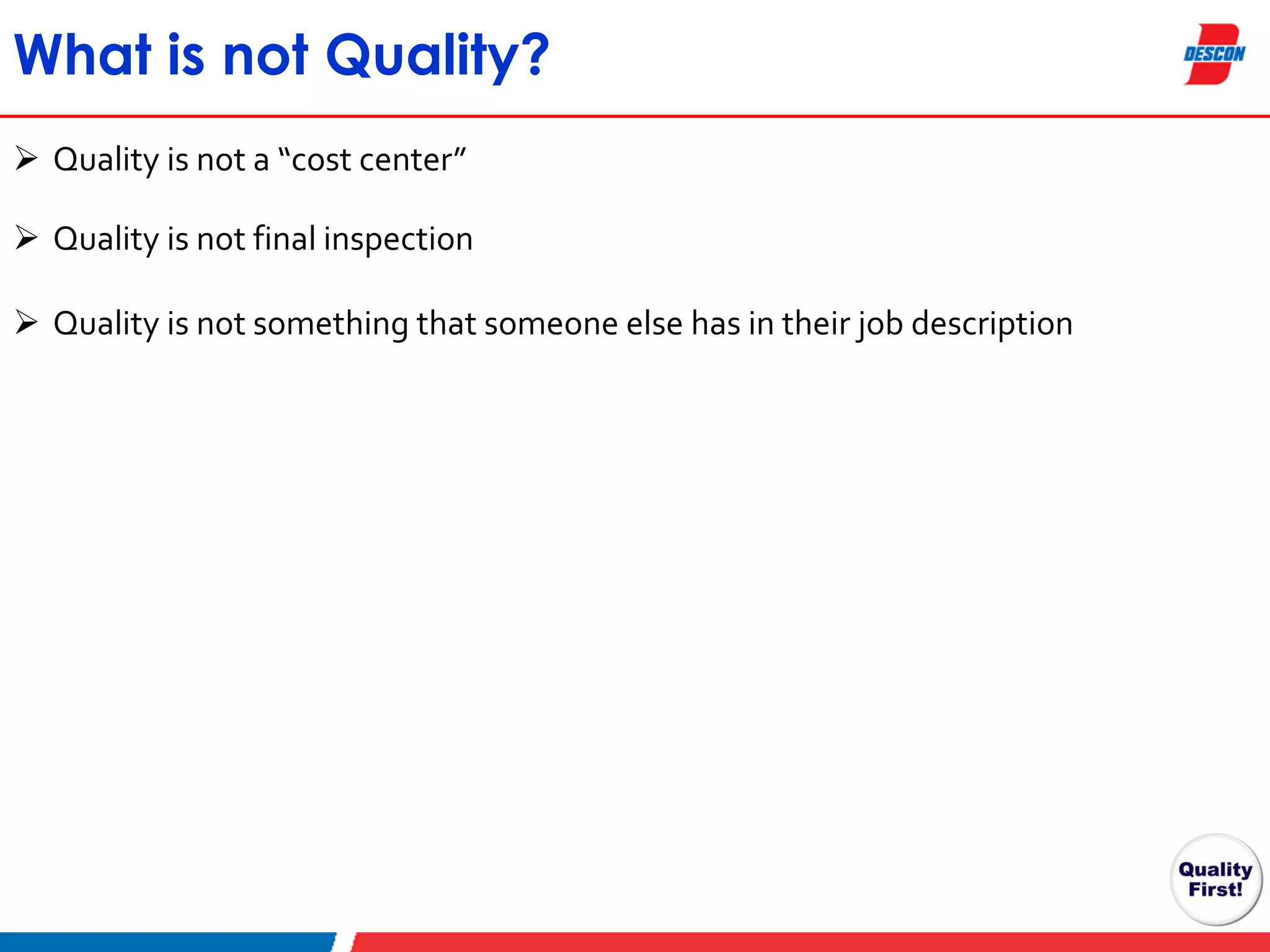
What is not Quality?
 Quality is not a “cost center”
 Quality is not final inspection
 Quality is not something that someone else has in their job description
Where do we go from here?

We must go back to the past………. Back to the basics

Basics …………..

Which Quality leaders have been advocating from many years
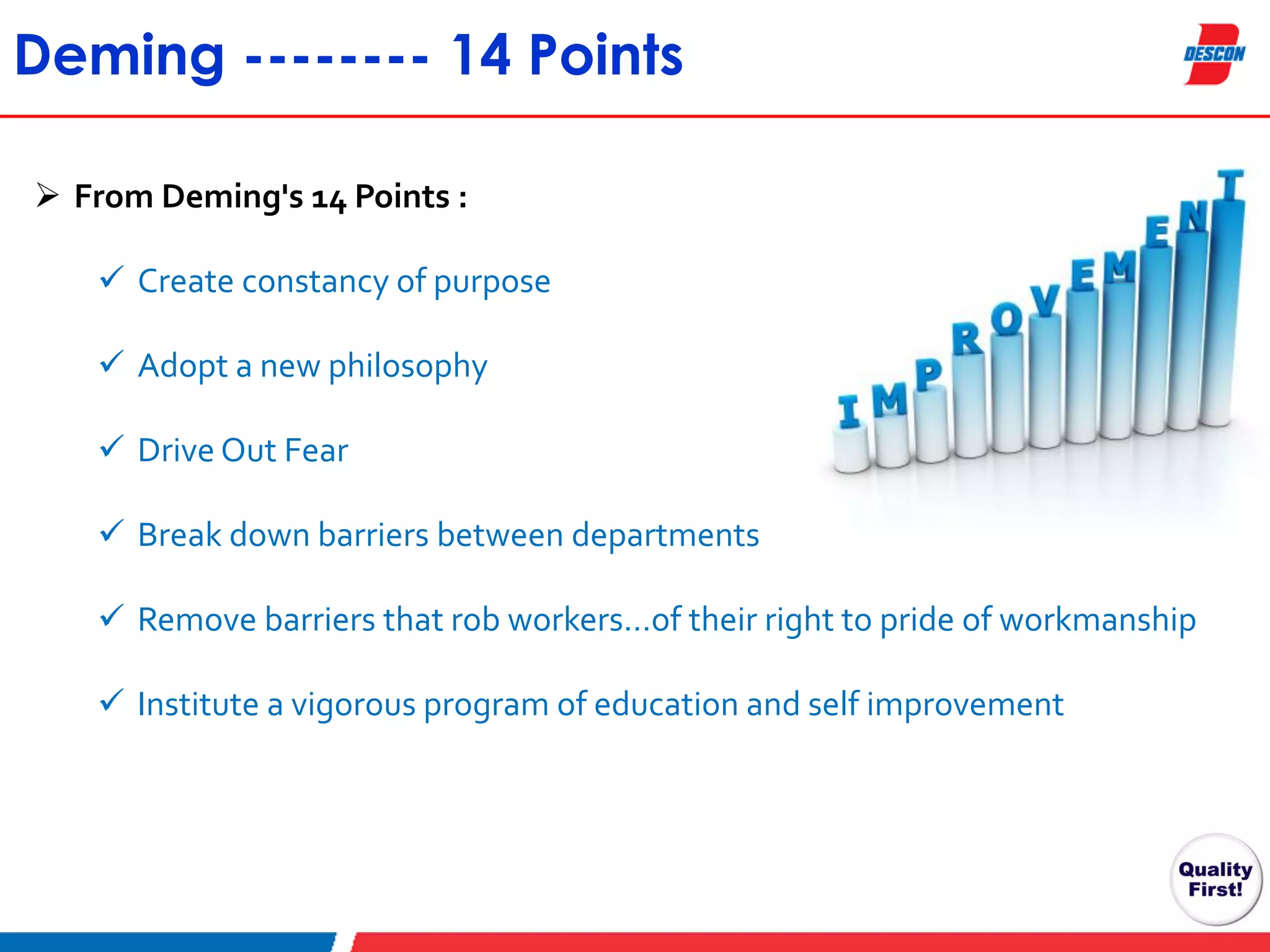
Deming -------- 14 Points
 From Deming's 14 Points :
 Create constancy of purpose
 Adopt a new philosophy
 Drive Out Fear
 Break down barriers between departments

 Remove barriers that rob workers…of their right to pride of workmanship
 Institute a vigorous program of education and self improvement
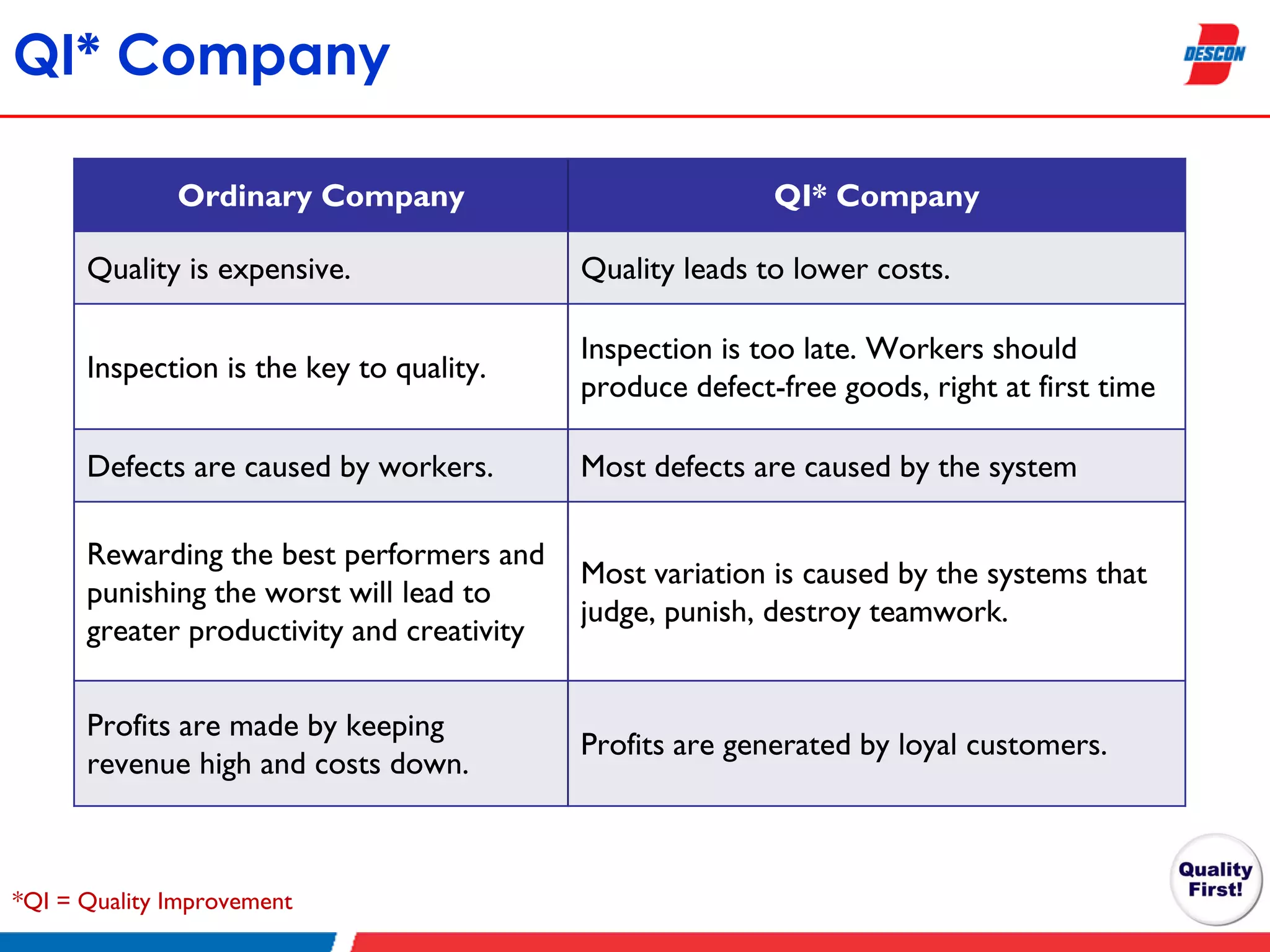
QI* Company
Ordinary Company

QI* Company

Quality is expensive.

Quality leads to lower costs.

Inspection is the key to quality.

Inspection is too late. Workers should
produce defect-free goods, right at first time

Defects are caused by workers.

Most defects are caused by the system

Rewarding the best performers and
punishing the worst will lead to
greater productivity and creativity

Most variation is caused by the systems that
judge, punish, destroy teamwork.

Profits are made by keeping
revenue high and costs down.

Profits are generated by loyal customers.

*QI = Quality Improvement
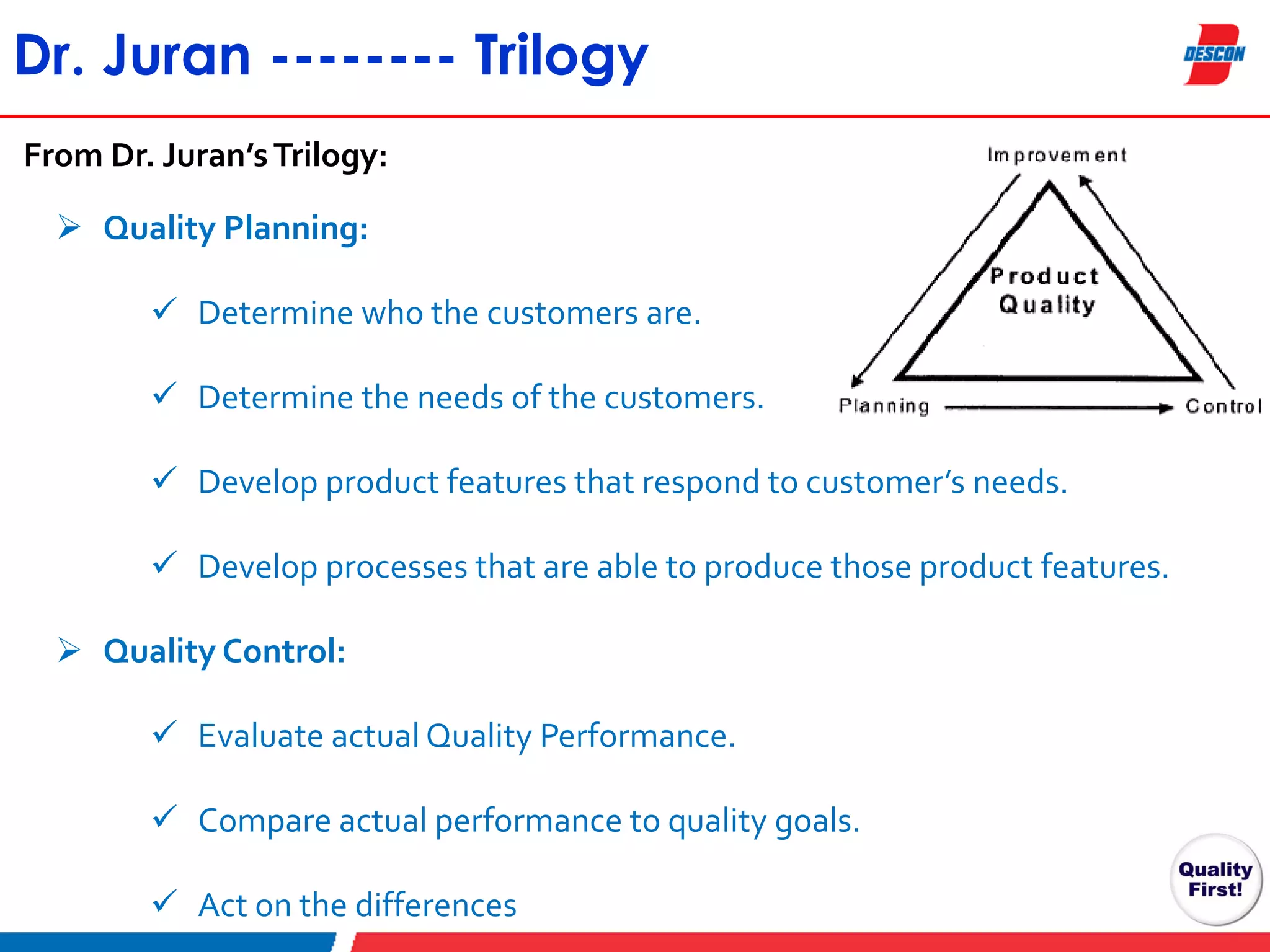
Dr. Juran -------- Trilogy
From Dr. Juran’s Trilogy:

 Quality Planning:
 Determine who the customers are.
 Determine the needs of the customers.
 Develop product features that respond to customer’s needs.
 Develop processes that are able to produce those product features.
 Quality Control:
 Evaluate actual Quality Performance.
 Compare actual performance to quality goals.
 Act on the differences
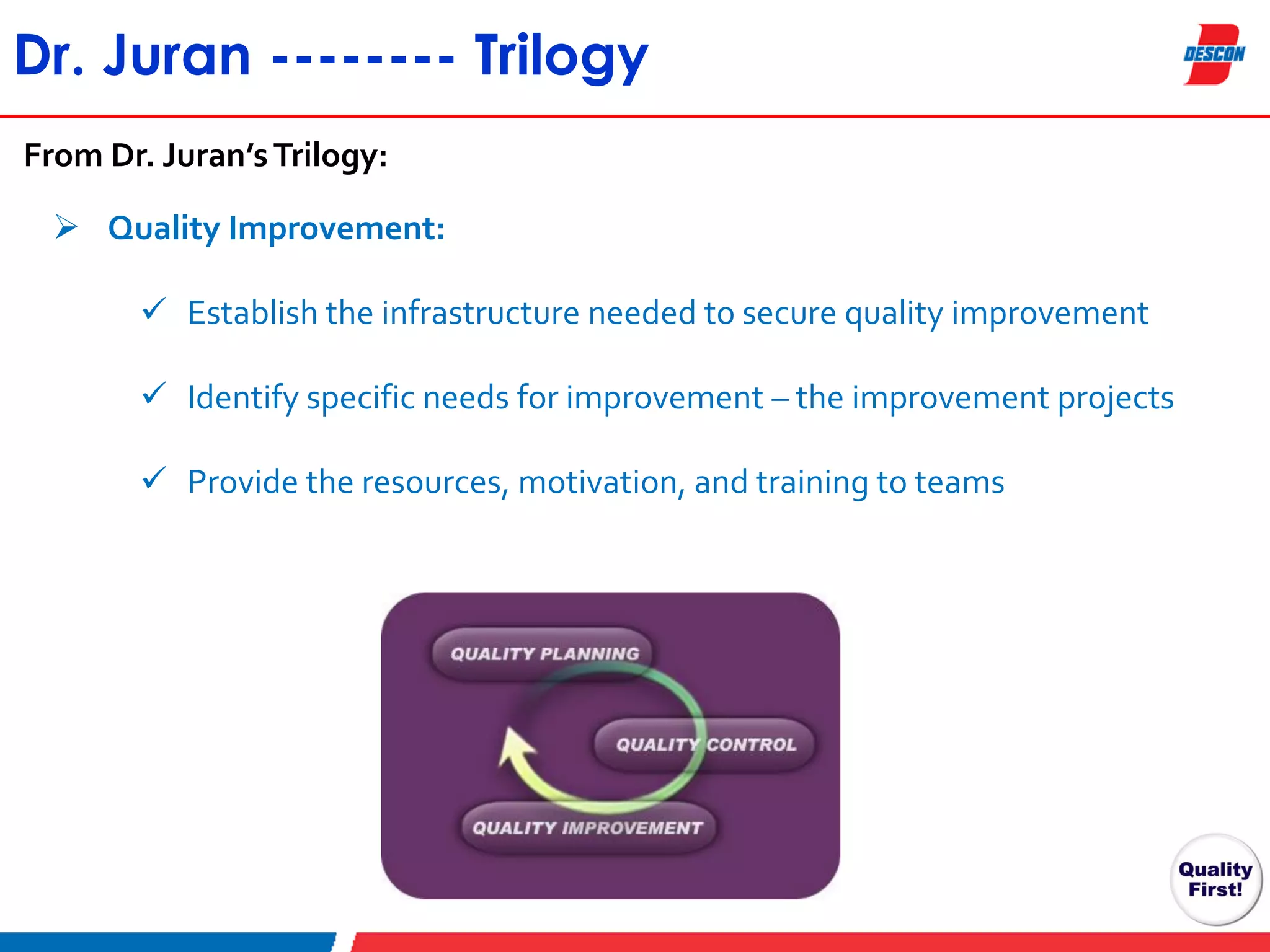
Dr. Juran -------- Trilogy
From Dr. Juran’s Trilogy:

 Quality Improvement:
 Establish the infrastructure needed to secure quality improvement
 Identify specific needs for improvement – the improvement projects
 Provide the resources, motivation, and training to teams
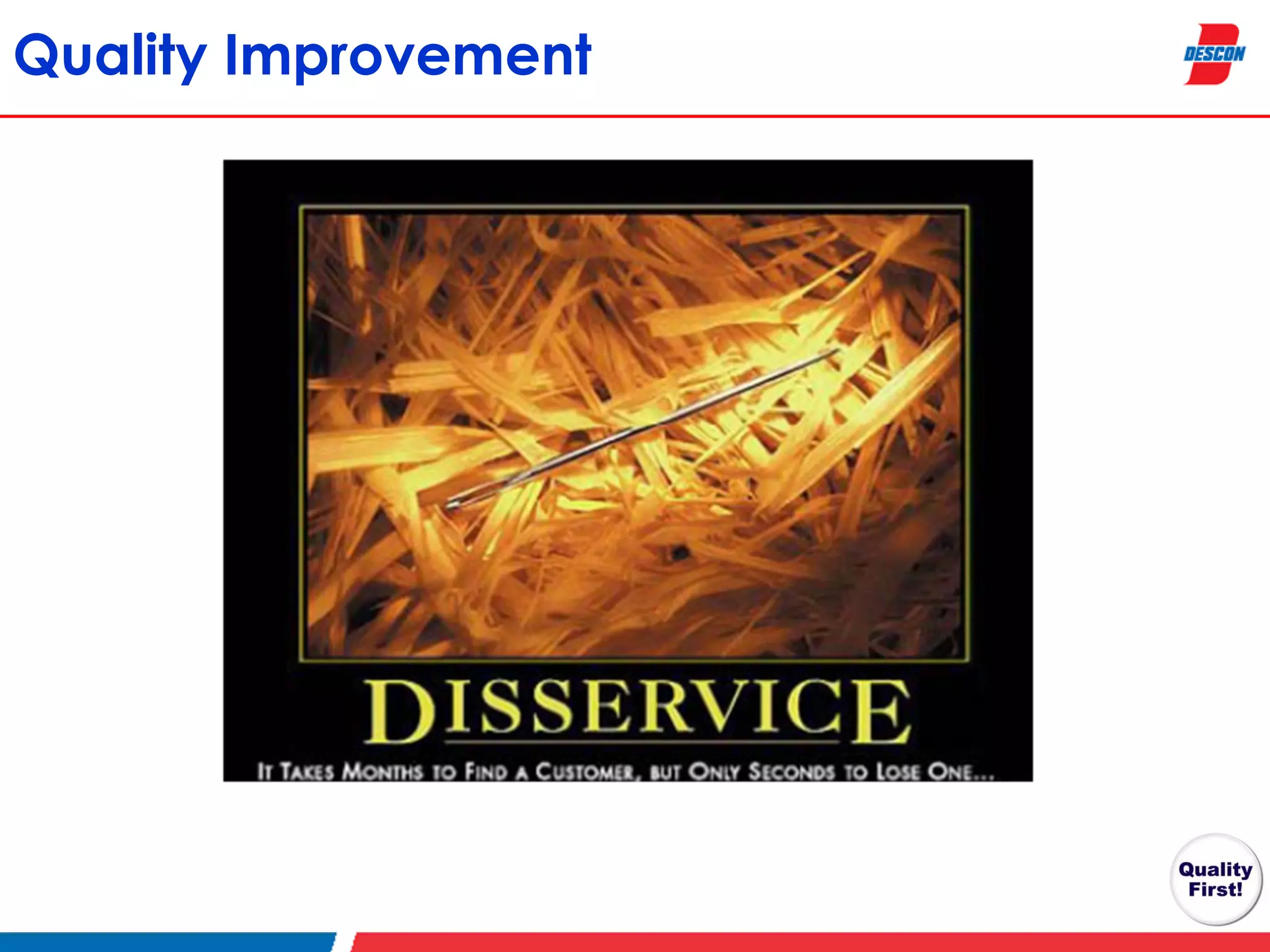
Quality Improvement
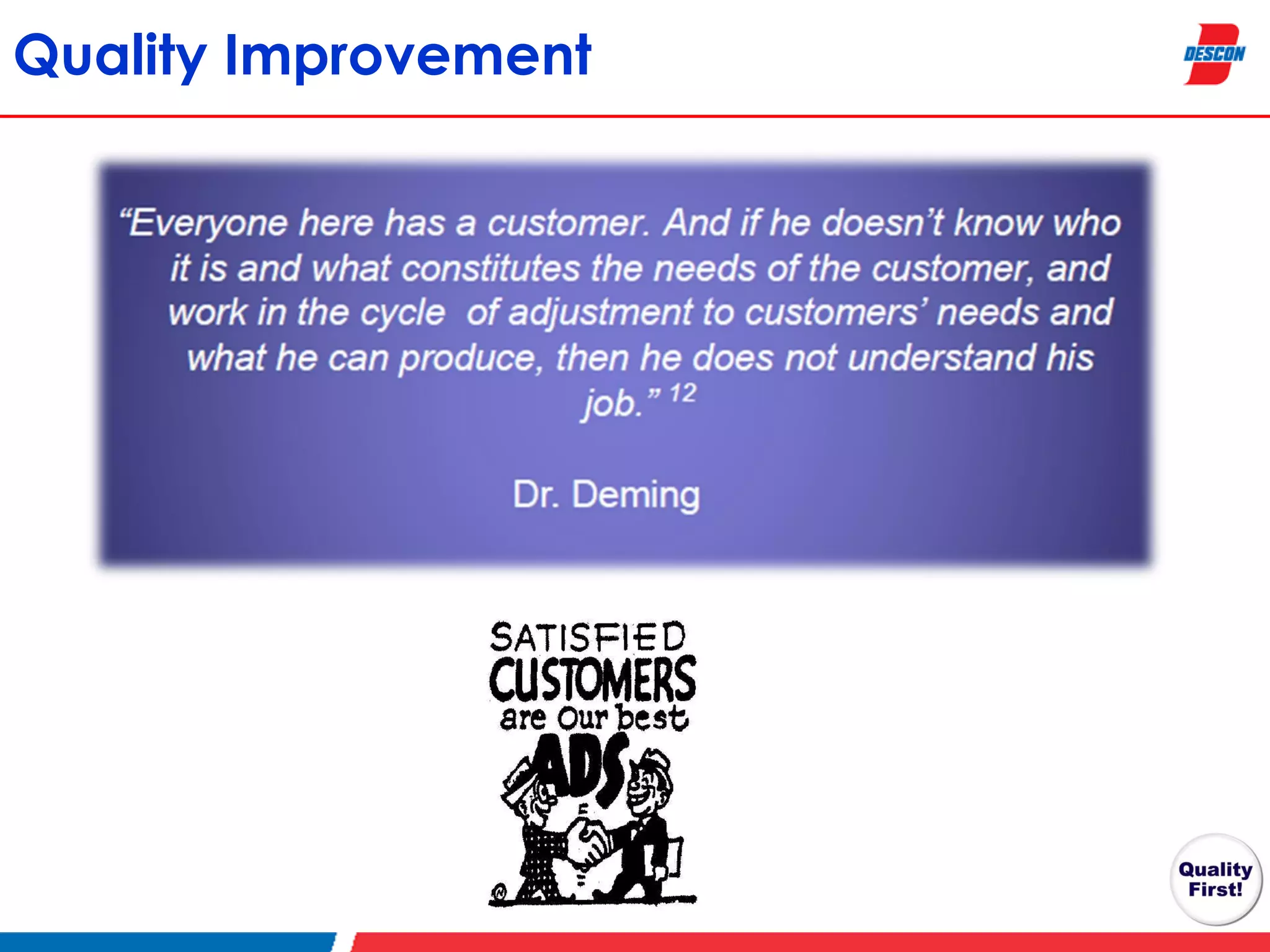
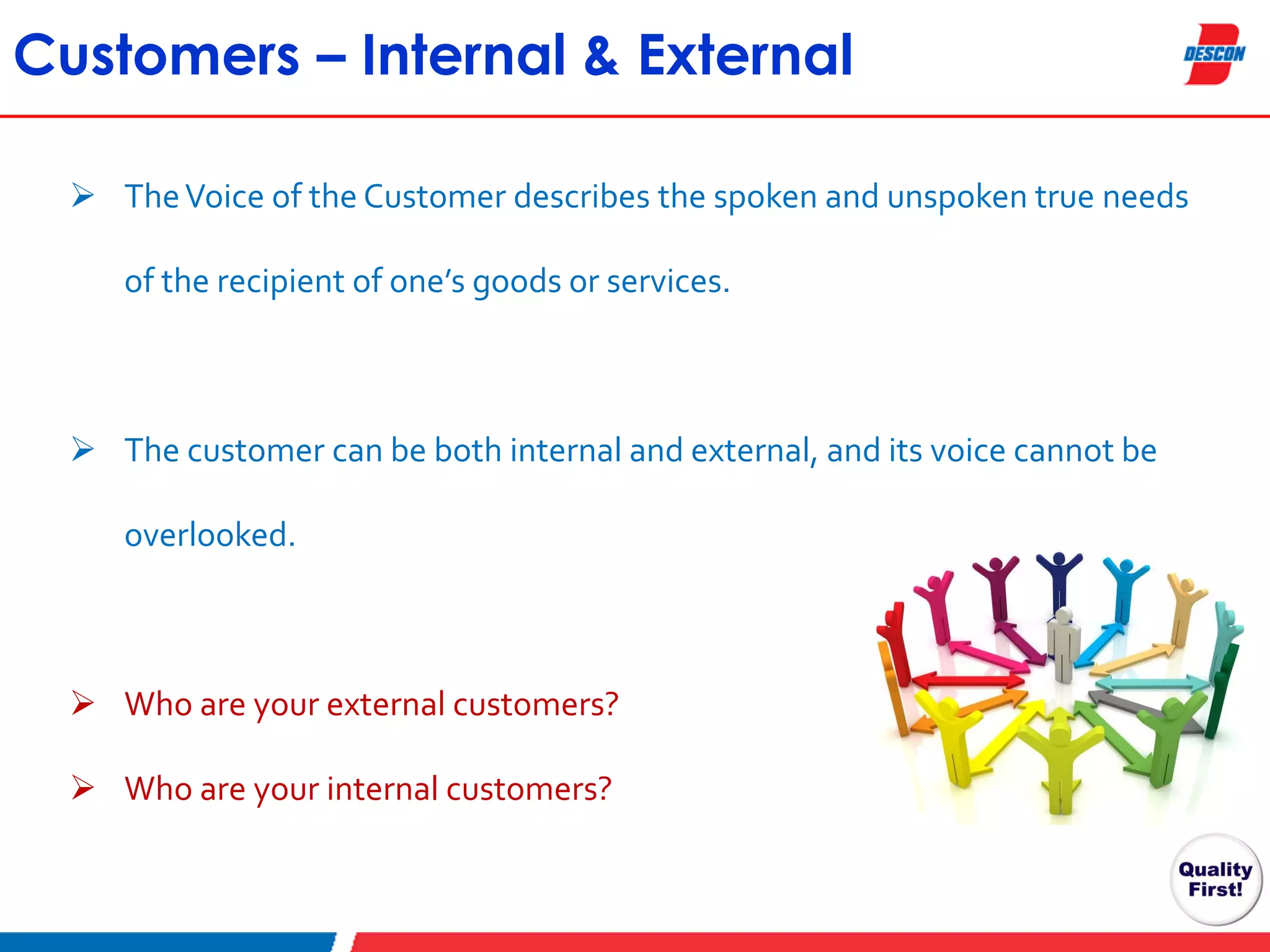
Customers – Internal & External
 The Voice of the Customer describes the spoken and unspoken true needs
of the recipient of one’s goods or services.

 The customer can be both internal and external, and its voice cannot be
overlooked.

 Who are your external customers?
 Who are your internal customers?
Quality Improvement
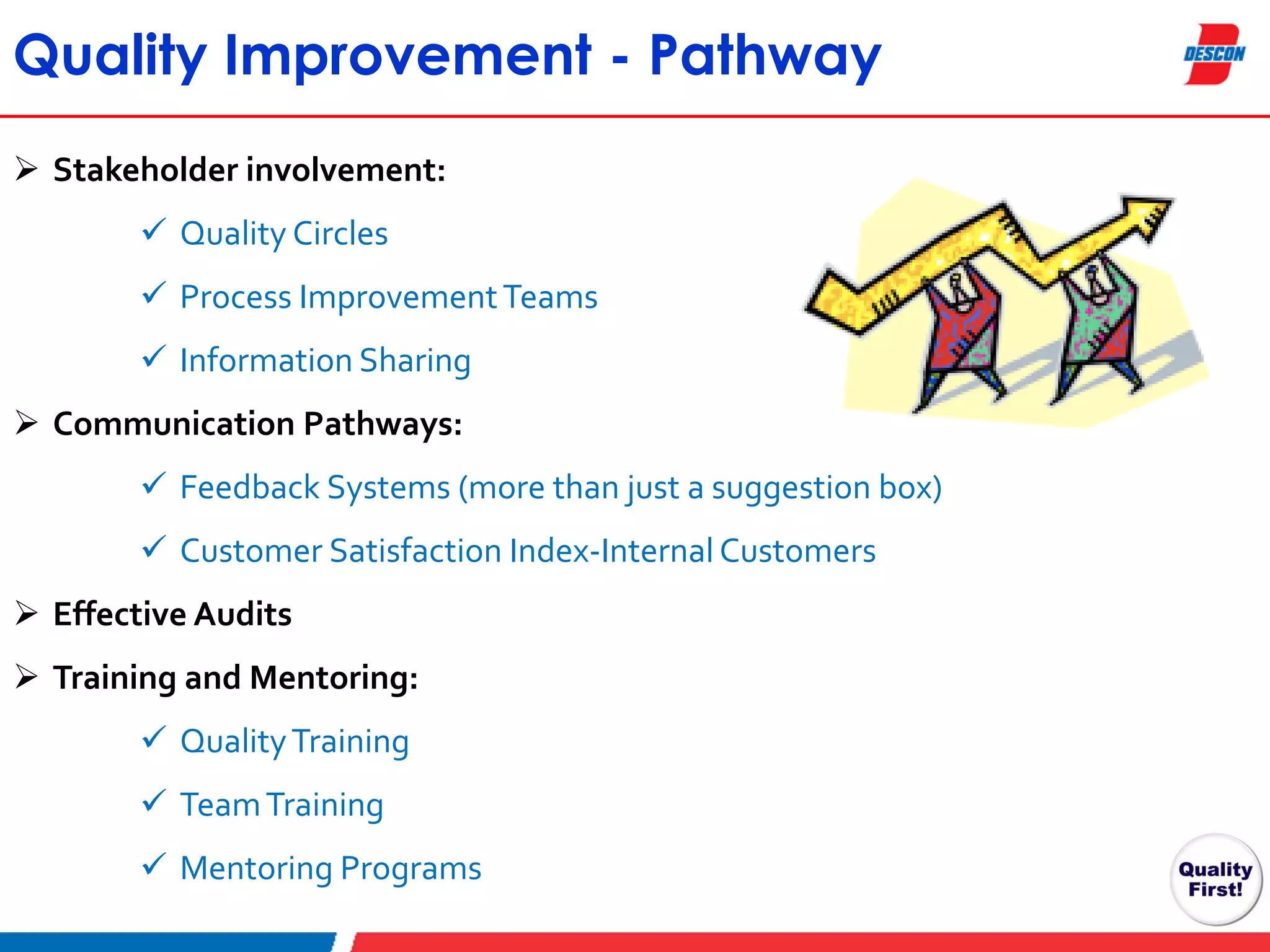
Quality Improvement - Pathway
 Stakeholder involvement:
 Quality Circles
 Process Improvement Teams
 Information Sharing
 Communication Pathways:
 Feedback Systems (more than just a suggestion box)
 Customer Satisfaction Index-Internal Customers
 Effective Audits
 Training and Mentoring:
 Quality Training
 Team Training
 Mentoring Programs
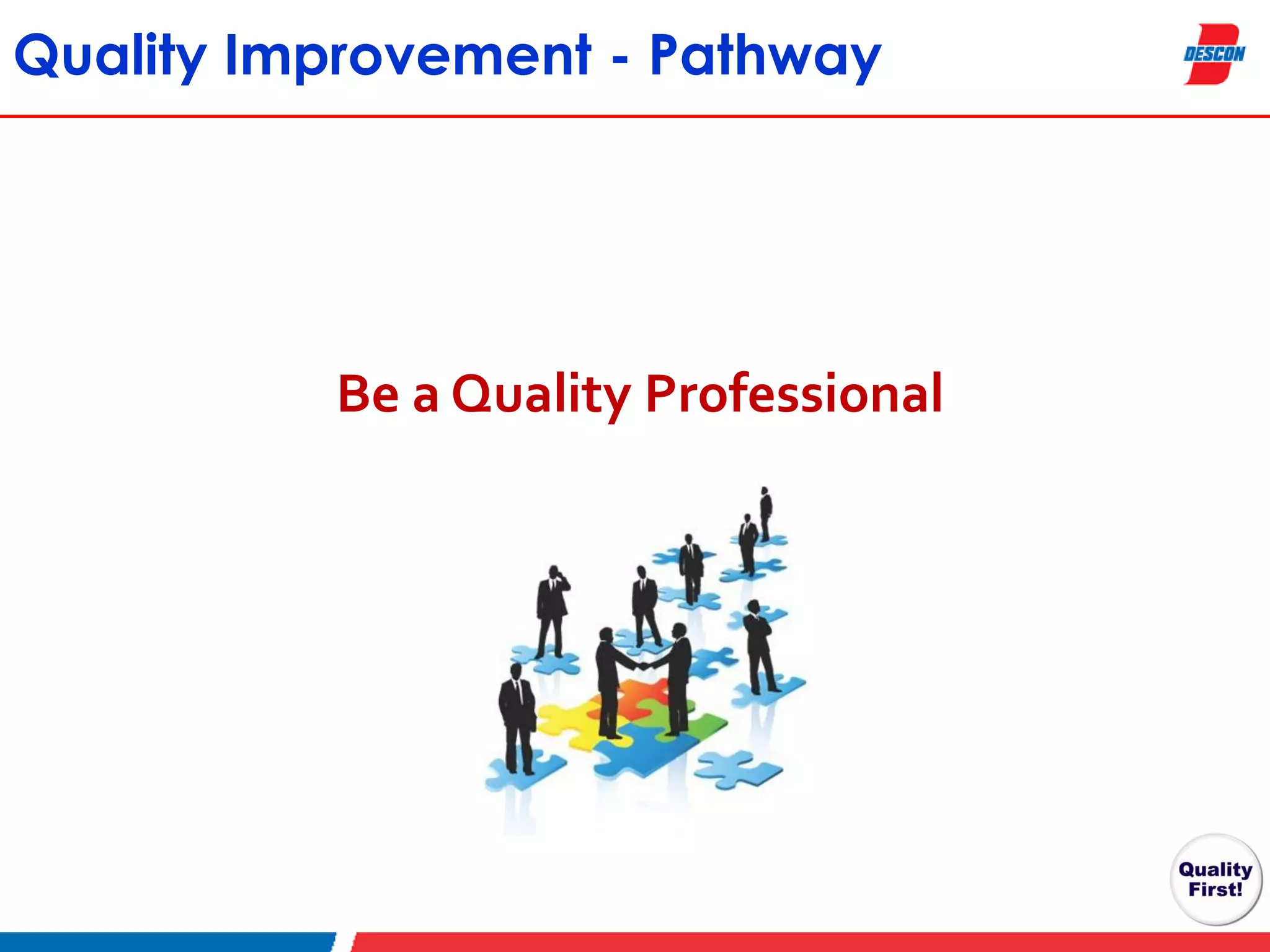
Quality Improvement - Pathway

Be a Quality Professional
Quality Improvement
What is a Quality Professional?
 A Quality Professional is ANY person that has a passion, zeal, and
discipline for:
 Doing the right things at the right times…for the right reasons.
 Empowering others through training, communication, better tools,
and mentorship.
 Focused on improving systems, processes, and performance as a
result of heeding the Voice Of the Customer.
Quality Improvement
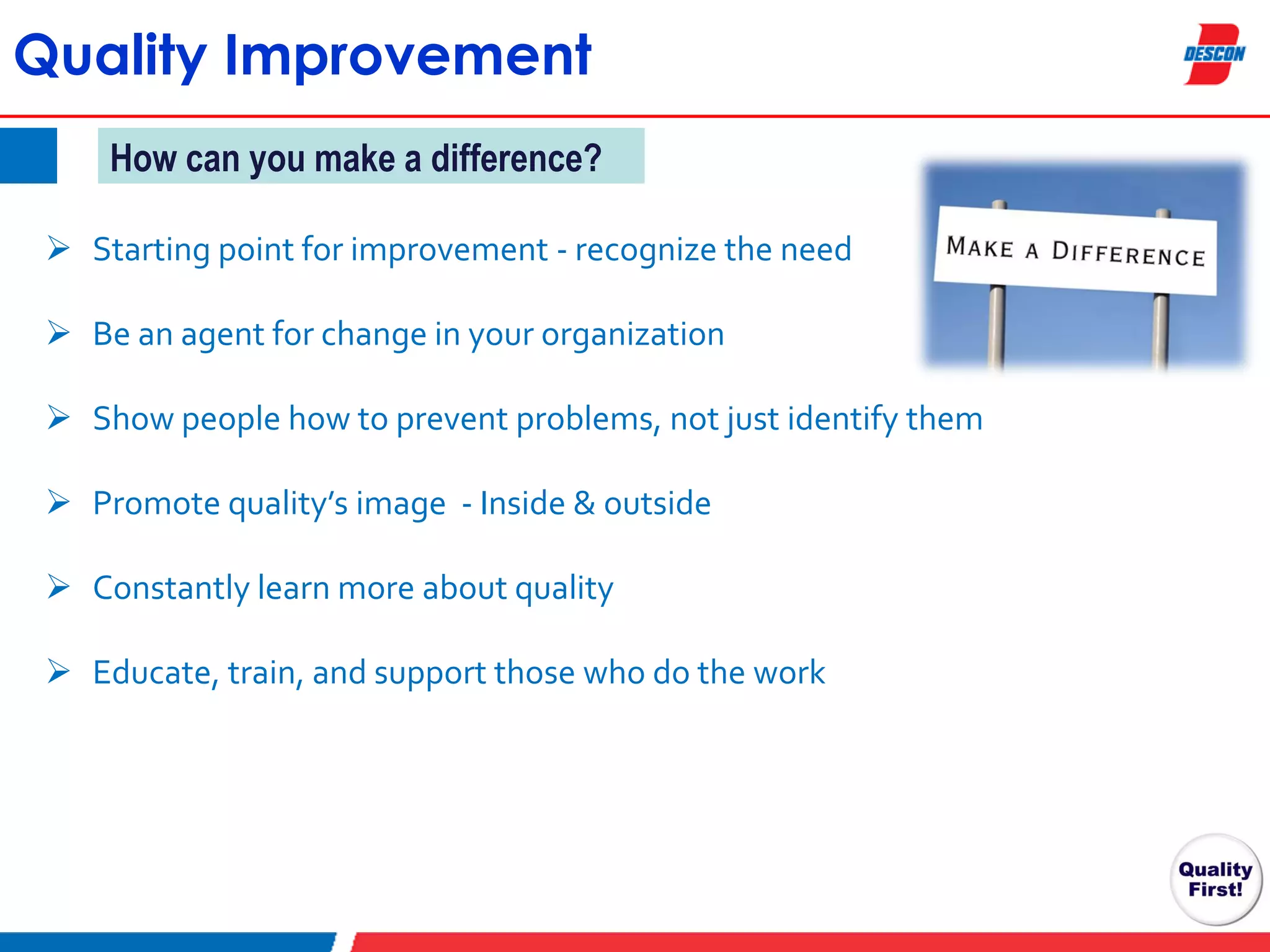
How can you make a difference?
 Starting point for improvement - recognize the need
 Be an agent for change in your organization
 Show people how to prevent problems, not just identify them
 Promote quality’s image - Inside & outside
 Constantly learn more about quality
 Educate, train, and support those who do the work

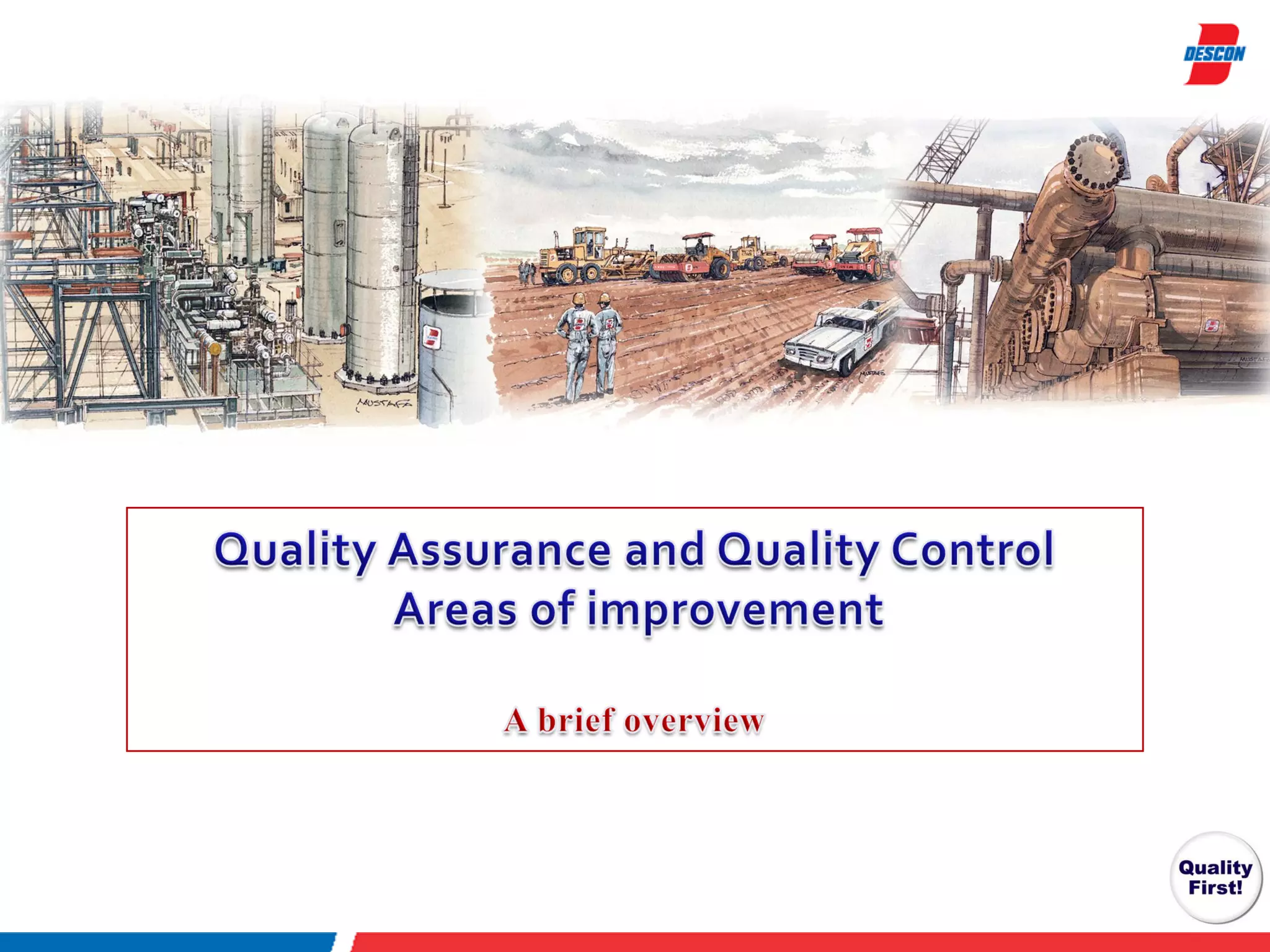
Quality Assurance and Quality Control - Areas of Improvement

  • 2.
    Content • What isQuality • Quality in an organization • What got us here? • Deming – 14 points • Dr. Juran – Trilogy • Quality Improvement • Quality Professional • How can you make a difference?
  • 3.
    What is Quality? Webster’s Dictionary  degree of excellence of a thing  American Society for Quality  totality of features and characteristics that satisfy needs  Consumer’s and Producer’s Perspective  Fitness for use • how well product or service does what it is supposed to  Quality of design • designing quality characteristics into a product or service  A Mercedes and a Ford are equally “fit for use,” but with different design dimensions
  • 4.
  • 5.
    What is wrong? Thinking that Quality is expensive; it lowers productivity  Thinking that Quality is intangible; it cannot be managed  Thinking that Poor quality means poor workers  Thinking that Quality is the responsibility of quality department only  Thinking that Quality is a Department  Thinking that Quality is role specific  Thinking that Quality is someone else’s job  Thinking that Quality is not a major issue; it has little impact on the company
  • 6.
    What is notQuality?  Quality is not a “cost center”  Quality is not final inspection  Quality is not something that someone else has in their job description
  • 7.
    Where do wego from here? We must go back to the past………. Back to the basics Basics ………….. Which Quality leaders have been advocating from many years
  • 8.
    Deming -------- 14Points  From Deming's 14 Points :  Create constancy of purpose  Adopt a new philosophy  Drive Out Fear  Break down barriers between departments  Remove barriers that rob workers…of their right to pride of workmanship  Institute a vigorous program of education and self improvement
  • 9.
    QI* Company Ordinary Company QI*Company Quality is expensive. Quality leads to lower costs. Inspection is the key to quality. Inspection is too late. Workers should produce defect-free goods, right at first time Defects are caused by workers. Most defects are caused by the system Rewarding the best performers and punishing the worst will lead to greater productivity and creativity Most variation is caused by the systems that judge, punish, destroy teamwork. Profits are made by keeping revenue high and costs down. Profits are generated by loyal customers. *QI = Quality Improvement
  • 10.
    Dr. Juran --------Trilogy From Dr. Juran’s Trilogy:  Quality Planning:  Determine who the customers are.  Determine the needs of the customers.  Develop product features that respond to customer’s needs.  Develop processes that are able to produce those product features.  Quality Control:  Evaluate actual Quality Performance.  Compare actual performance to quality goals.  Act on the differences
  • 11.
    Dr. Juran --------Trilogy From Dr. Juran’s Trilogy:  Quality Improvement:  Establish the infrastructure needed to secure quality improvement  Identify specific needs for improvement – the improvement projects  Provide the resources, motivation, and training to teams
  • 12.
  • 13.
    Customers – Internal& External  The Voice of the Customer describes the spoken and unspoken true needs of the recipient of one’s goods or services.  The customer can be both internal and external, and its voice cannot be overlooked.  Who are your external customers?  Who are your internal customers?
  • 14.
  • 15.
    Quality Improvement -Pathway  Stakeholder involvement:  Quality Circles  Process Improvement Teams  Information Sharing  Communication Pathways:  Feedback Systems (more than just a suggestion box)  Customer Satisfaction Index-Internal Customers  Effective Audits  Training and Mentoring:  Quality Training  Team Training  Mentoring Programs
  • 16.
    Quality Improvement -Pathway Be a Quality Professional
  • 17.
    Quality Improvement What isa Quality Professional?  A Quality Professional is ANY person that has a passion, zeal, and discipline for:  Doing the right things at the right times…for the right reasons.  Empowering others through training, communication, better tools, and mentorship.  Focused on improving systems, processes, and performance as a result of heeding the Voice Of the Customer.
  • 18.
    Quality Improvement How canyou make a difference?  Starting point for improvement - recognize the need  Be an agent for change in your organization  Show people how to prevent problems, not just identify them  Promote quality’s image - Inside & outside  Constantly learn more about quality  Educate, train, and support those who do the work