Not Information Technology …Information Solutions
How To Understand What
Your In-Service Training
Program Really Costs You
Augury Network Advisors, LLC
As a provider of support or care services, you know that your
entire Direct Support staff requires continual training.
First-year employees
need critical training in
their first 90 - 180 days.
Veteran employees must
be recertified annually or
biannually.
New employees need to
be oriented on their first
day.
How do you
meet all
those
training
needs?
Most care provider agencies conduct In-Service
programs using conventional training methods.
Classroom-based
Instructor-led
At corporate headquarters
During non-prime working
hours: late afternoon, early
evening
Every aspect
of this
approach
has a cost.
= Mileage, Travel time
= Facilities costs, space
= Trainer salary, prep
= Salary, overtime, substitutes’
salary, meals
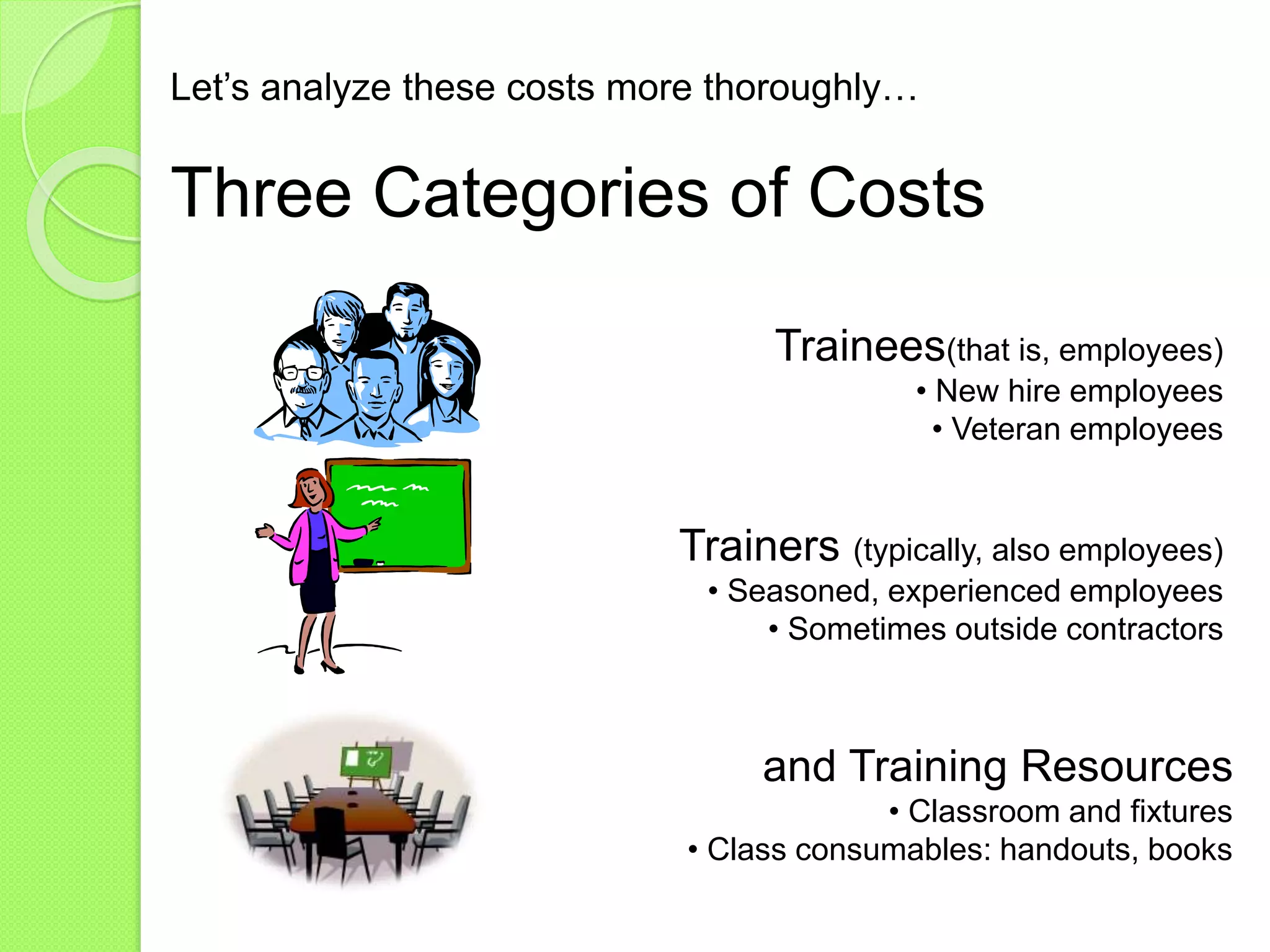
Let’s analyze these costs more thoroughly…
Trainees(that is, employees)
• New hire employees
• Veteran employees
Trainers (typically, also employees)
• Seasoned, experienced employees
• Sometimes outside contractors
and Training Resources
• Classroom and fixtures
• Class consumables: handouts, books
Three Categories of Costs
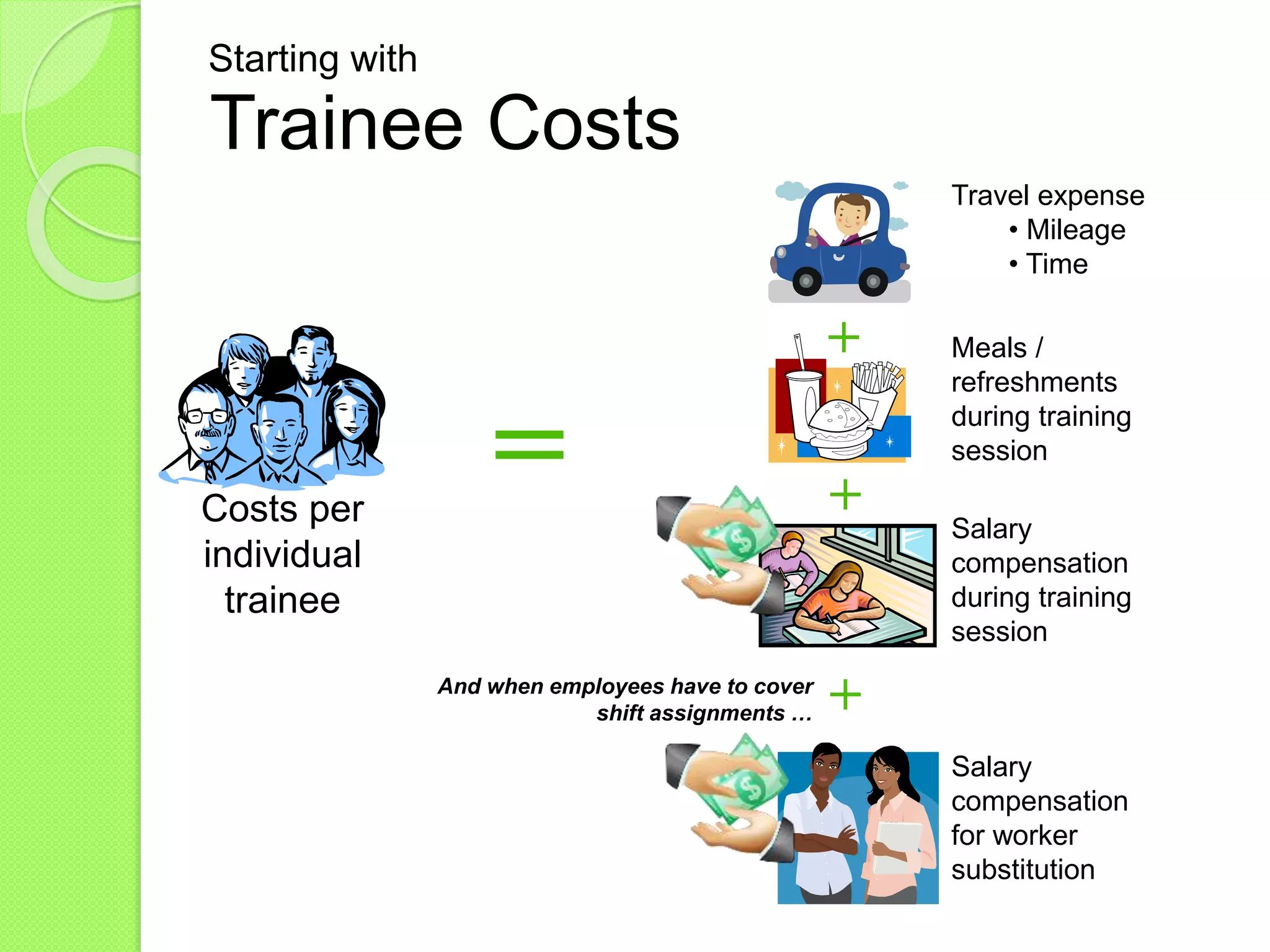
Trainee Costs
Costs per
individual
trainee
Travel expense
• Mileage
• Time
Meals /
refreshments
during training
session
Salary
compensation
during training
session
Salary
compensation
for worker
substitution
And when employees have to cover
shift assignments …
+
+=
+
Starting with
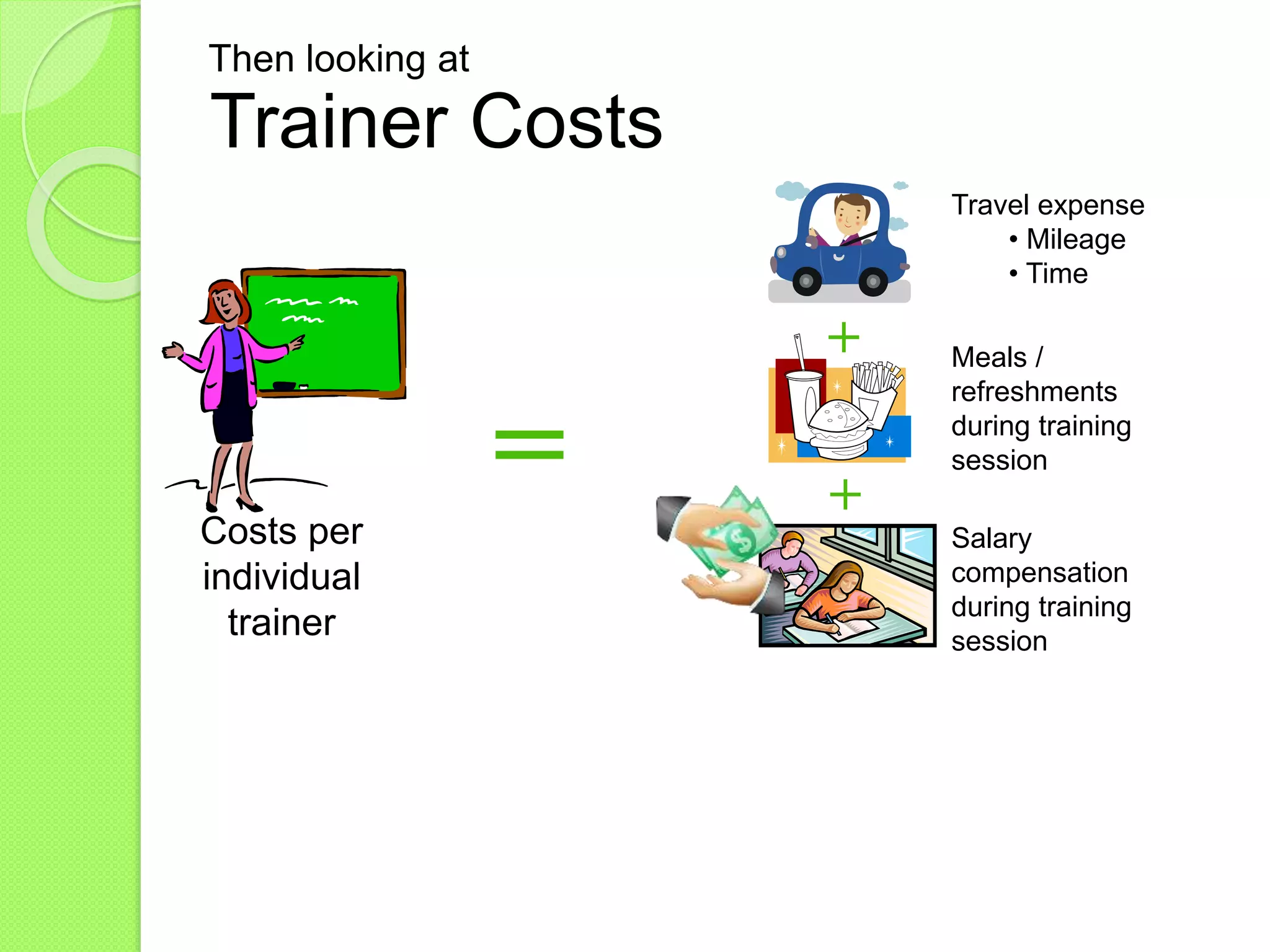
Costs per
individual
trainer
Trainer Costs
Then looking at
=
Travel expense
• Mileage
• Time
Meals /
refreshments
during training
session
Salary
compensation
during training
session
+
+
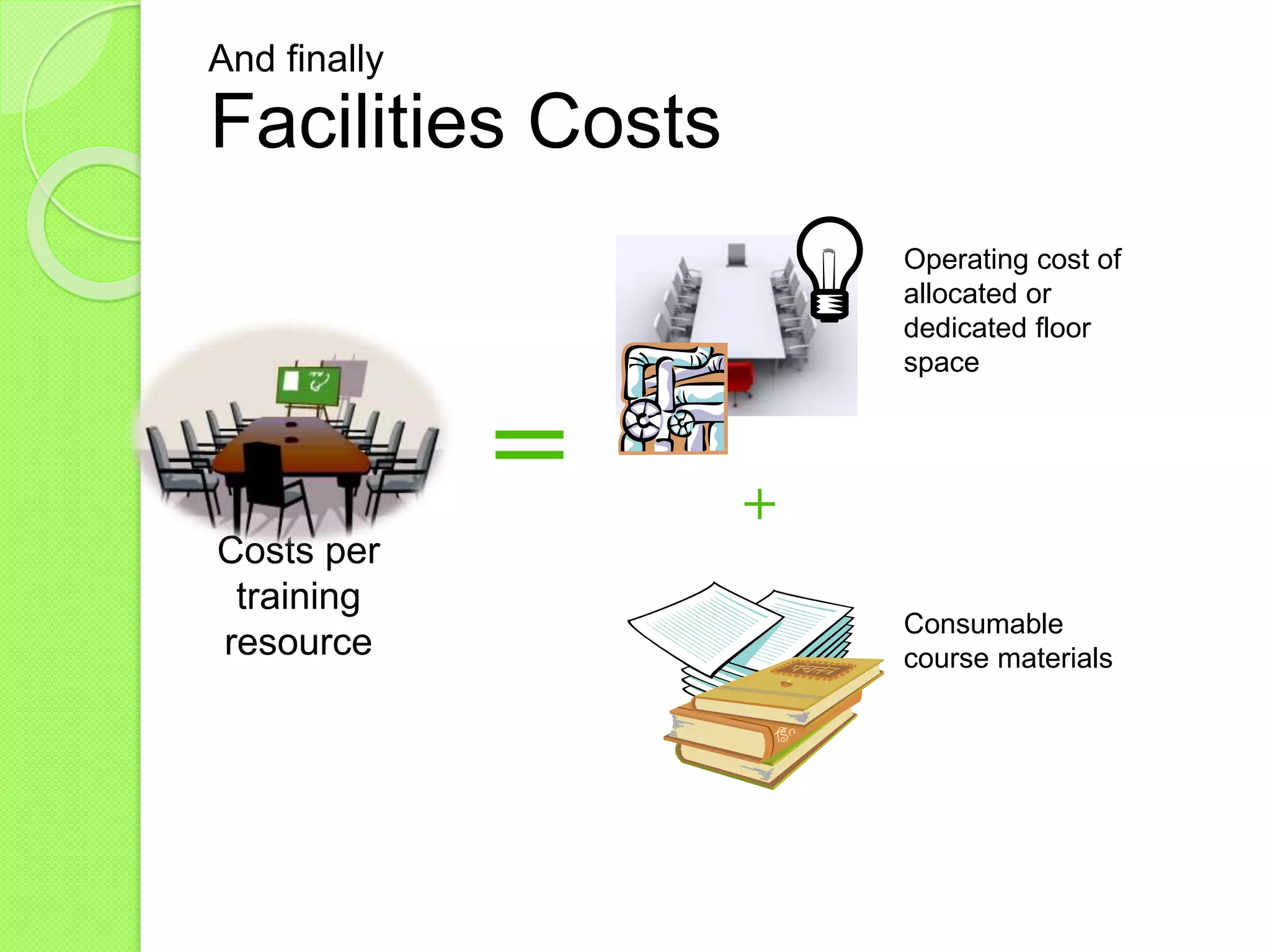
Costs per
training
resource
Operating cost of
allocated or
dedicated floor
space
Consumable
course materials
+
Facilities Costs
And finally
=
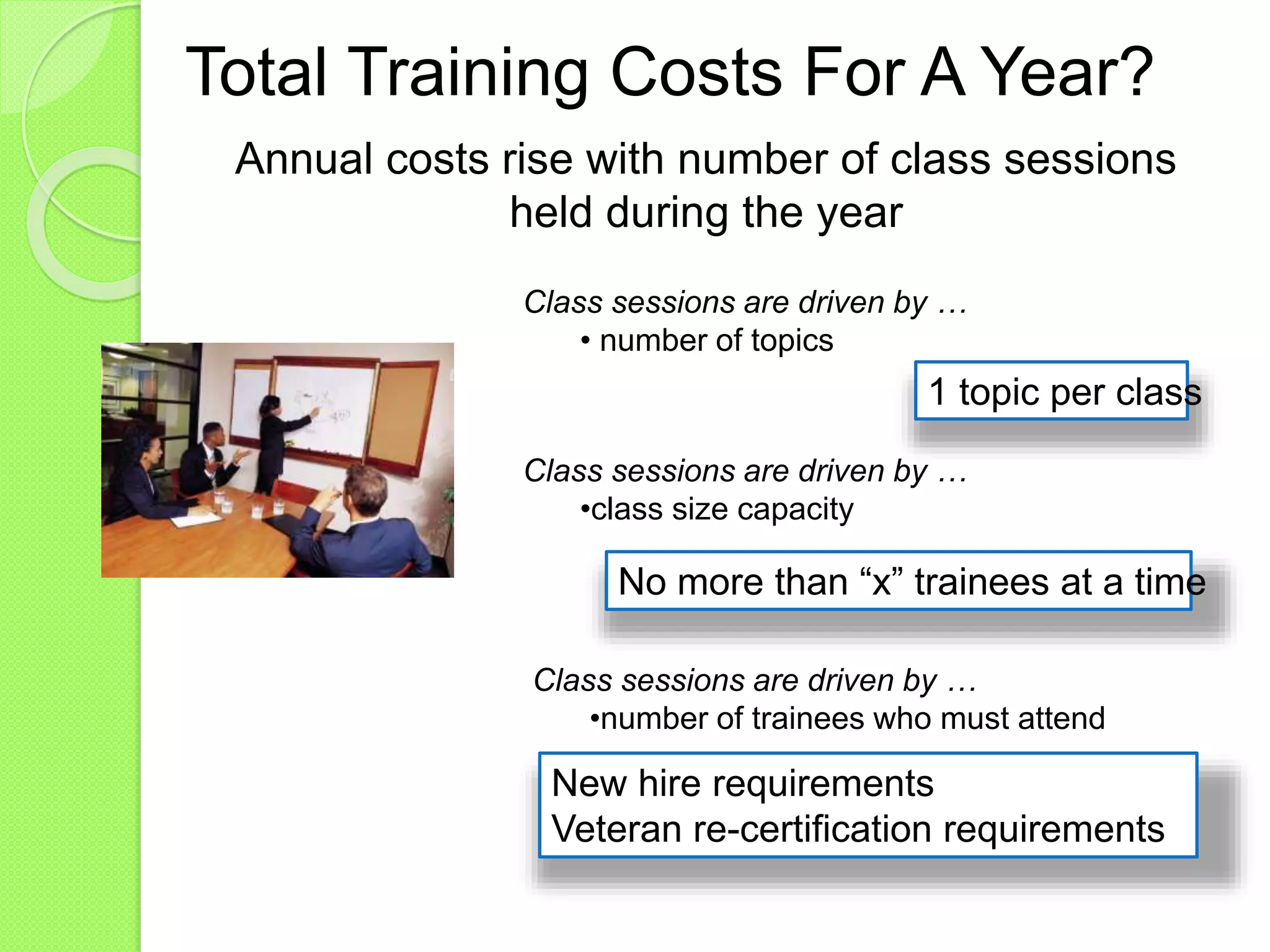
Total Training Costs For A Year?
Annual costs rise with number of class sessions
held during the year
Class sessions are driven by …
• number of topics
Class sessions are driven by …
•class size capacity
Class sessions are driven by …
•number of trainees who must attend
1 topic per class
No more than “x” trainees at a time
New hire requirements
Veteran re-certification requirements
employees Number of sessions
mileage
meals
Covered salary
Overtime
Shift coverage hours
Training hours New hires
Turnover rate
compensation
Classroom capacity
Attendance rate
Repeat classroom sessions
Unit cost
Extended cost
With so many
contributing factors,
how can you
calculate a complete
picture of costs?
By using a model…
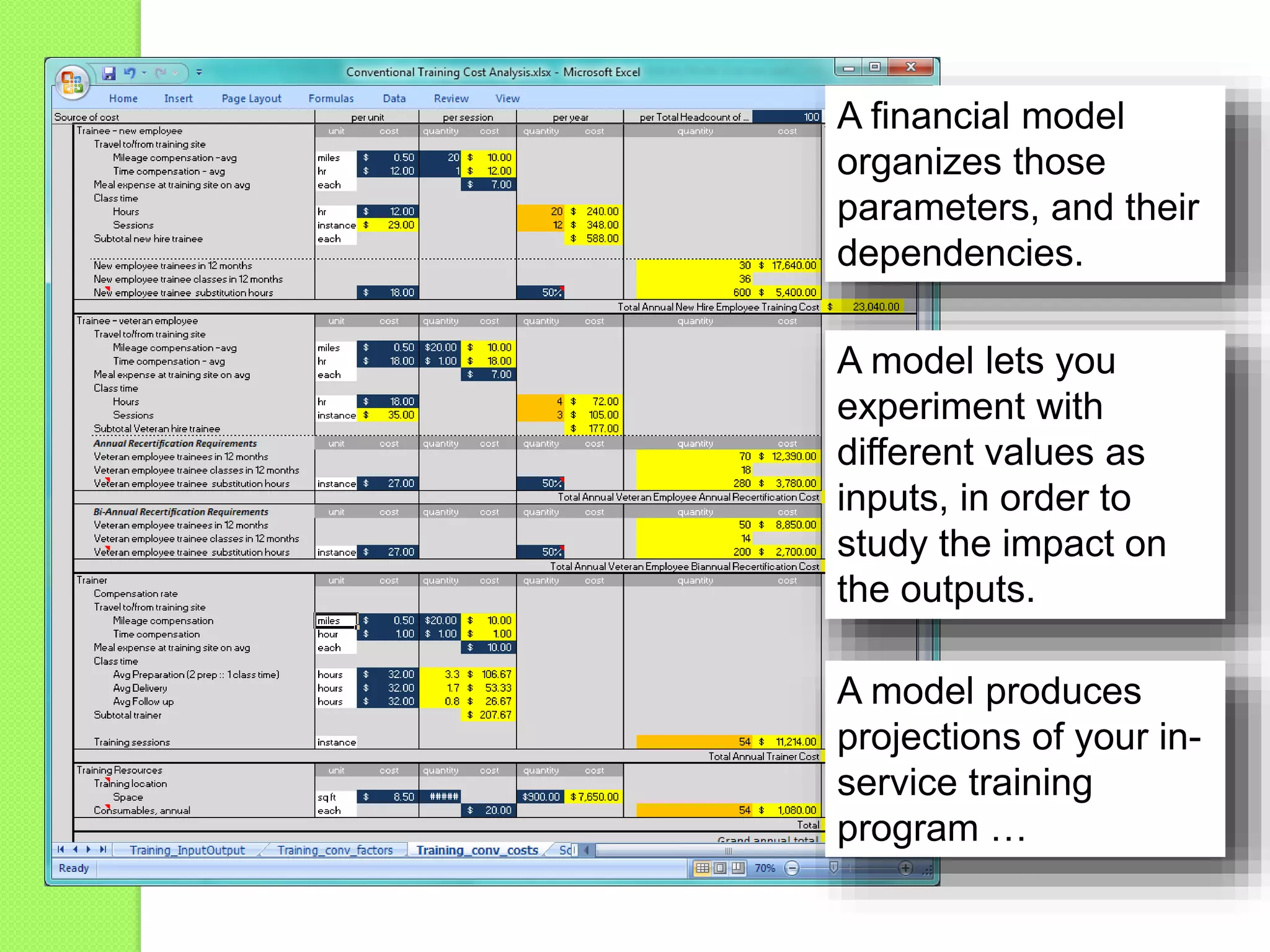
A financial model
organizes those
parameters, and their
dependencies.
A model lets you
experiment with
different values as
inputs, in order to
study the impact on
the outputs.
A model produces
projections of your in-
service training
program …
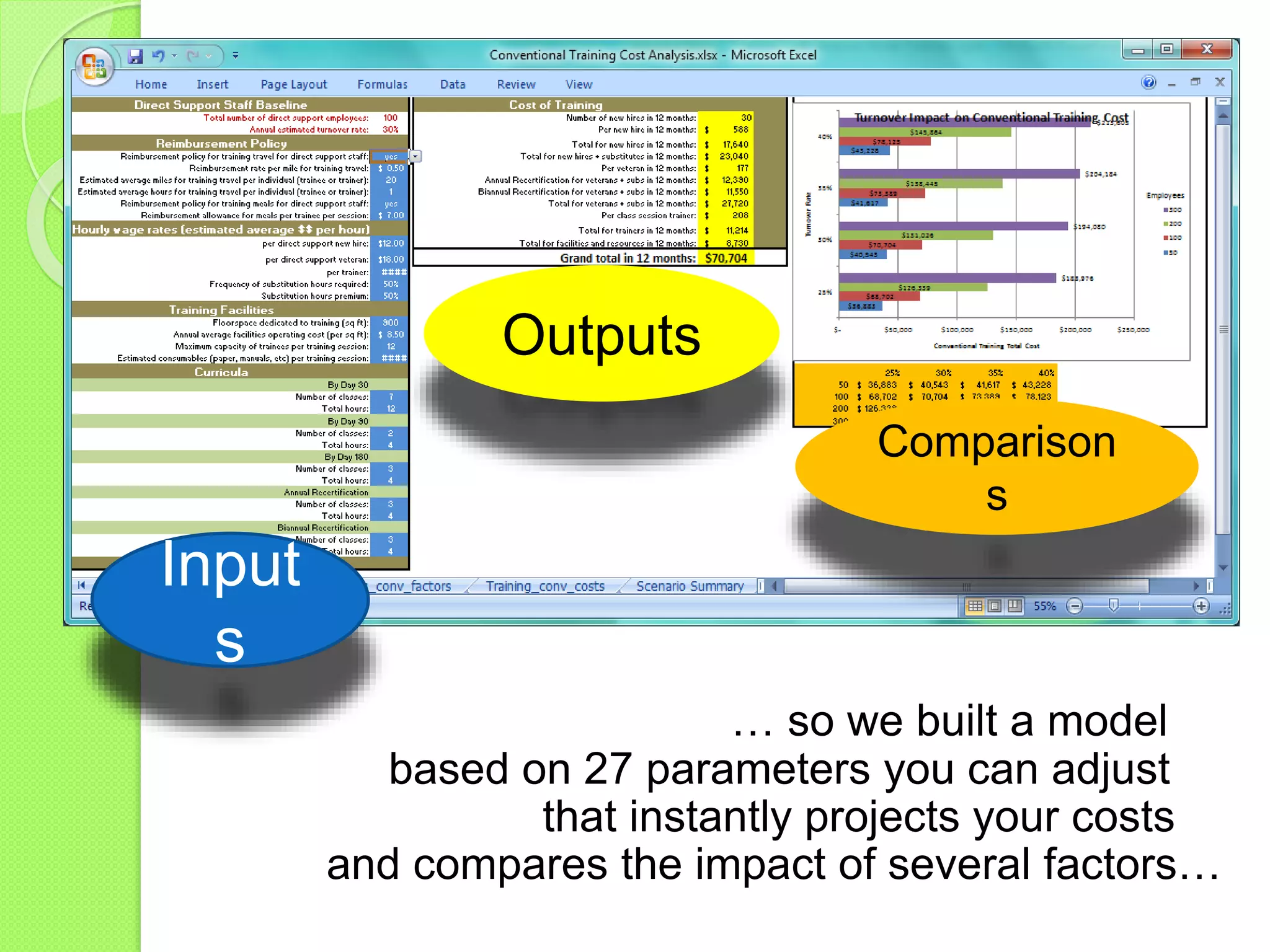
… so we built a model
Input
s
Outputs
Comparison
s
based on 27 parameters you can adjust
that instantly projects your costs
and compares the impact of several factors…
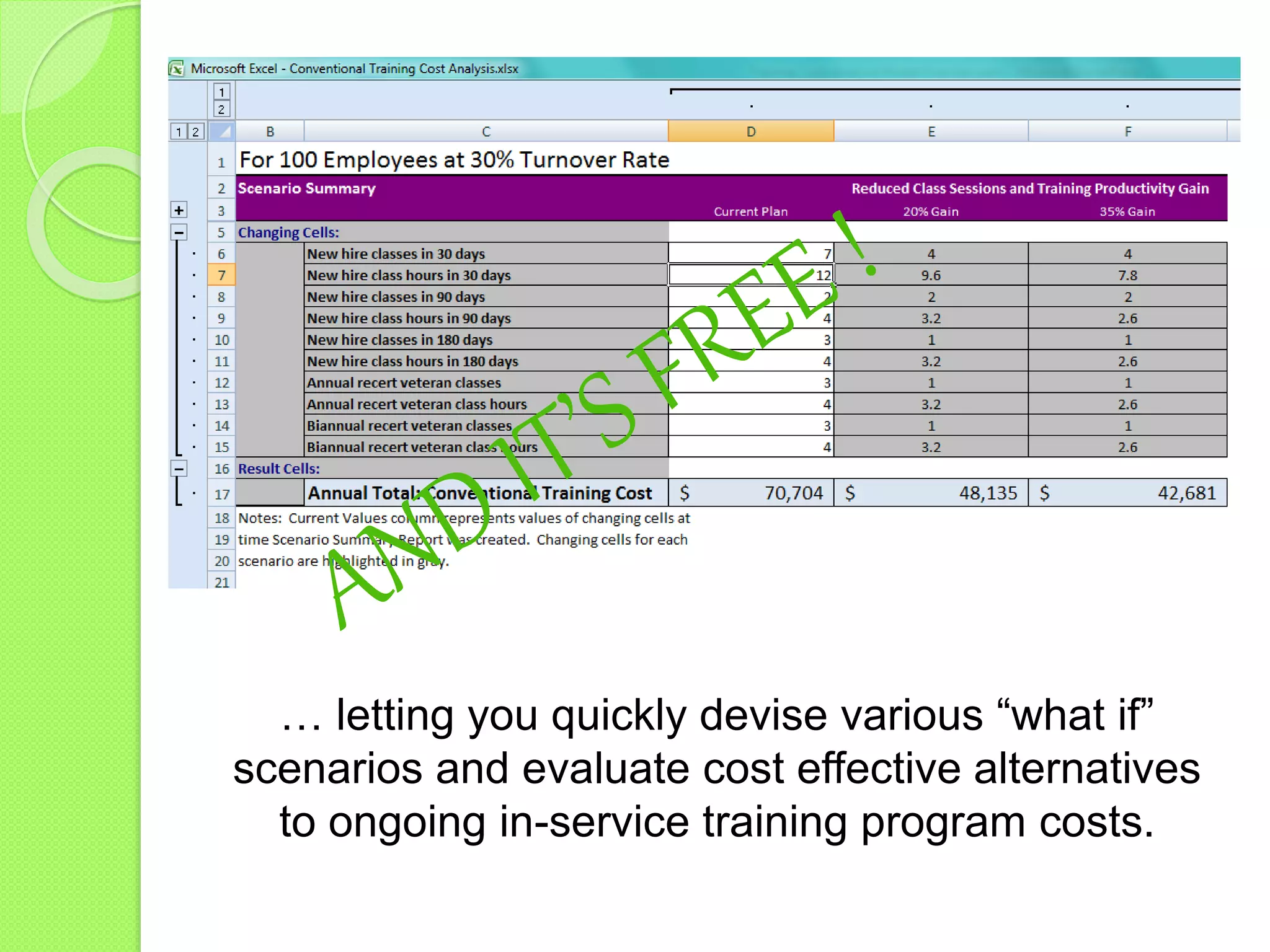
… letting you quickly devise various “what if”
scenarios and evaluate cost effective alternatives
to ongoing in-service training program costs.
Visit www.augurynet.com/training to download a
free copy of our Conventional Training Costs
Analysis, and simply open it on your own
computer as a Microsoft Excel workbook. Enter
the details from your own enterprise and see
what your in-service training programs really
cost.
And keep in mind, it could cost less.
Augury knows.
Not Information Technology …Information Solutions
Augury Network Advisors, LLC
[ www.augurynet.com ]

Training Costs Analysis Model Overview

  • 1.
    Not Information Technology…Information Solutions How To Understand What Your In-Service Training Program Really Costs You Augury Network Advisors, LLC
  • 2.
    As a providerof support or care services, you know that your entire Direct Support staff requires continual training. First-year employees need critical training in their first 90 - 180 days. Veteran employees must be recertified annually or biannually. New employees need to be oriented on their first day. How do you meet all those training needs?
  • 3.
    Most care provideragencies conduct In-Service programs using conventional training methods. Classroom-based Instructor-led At corporate headquarters During non-prime working hours: late afternoon, early evening Every aspect of this approach has a cost. = Mileage, Travel time = Facilities costs, space = Trainer salary, prep = Salary, overtime, substitutes’ salary, meals
  • 4.
    Let’s analyze thesecosts more thoroughly… Trainees(that is, employees) • New hire employees • Veteran employees Trainers (typically, also employees) • Seasoned, experienced employees • Sometimes outside contractors and Training Resources • Classroom and fixtures • Class consumables: handouts, books Three Categories of Costs
  • 5.
    Trainee Costs Costs per individual trainee Travelexpense • Mileage • Time Meals / refreshments during training session Salary compensation during training session Salary compensation for worker substitution And when employees have to cover shift assignments … + += + Starting with
  • 6.
    Costs per individual trainer Trainer Costs Thenlooking at = Travel expense • Mileage • Time Meals / refreshments during training session Salary compensation during training session + +
  • 7.
    Costs per training resource Operating costof allocated or dedicated floor space Consumable course materials + Facilities Costs And finally =
  • 8.
    Total Training CostsFor A Year? Annual costs rise with number of class sessions held during the year Class sessions are driven by … • number of topics Class sessions are driven by … •class size capacity Class sessions are driven by … •number of trainees who must attend 1 topic per class No more than “x” trainees at a time New hire requirements Veteran re-certification requirements
  • 9.
    employees Number ofsessions mileage meals Covered salary Overtime Shift coverage hours Training hours New hires Turnover rate compensation Classroom capacity Attendance rate Repeat classroom sessions Unit cost Extended cost With so many contributing factors, how can you calculate a complete picture of costs? By using a model…
  • 10.
    A financial model organizesthose parameters, and their dependencies. A model lets you experiment with different values as inputs, in order to study the impact on the outputs. A model produces projections of your in- service training program …
  • 11.
    … so webuilt a model Input s Outputs Comparison s based on 27 parameters you can adjust that instantly projects your costs and compares the impact of several factors…
  • 12.
    … letting youquickly devise various “what if” scenarios and evaluate cost effective alternatives to ongoing in-service training program costs.
  • 13.
    Visit www.augurynet.com/training todownload a free copy of our Conventional Training Costs Analysis, and simply open it on your own computer as a Microsoft Excel workbook. Enter the details from your own enterprise and see what your in-service training programs really cost. And keep in mind, it could cost less. Augury knows. Not Information Technology …Information Solutions Augury Network Advisors, LLC [ www.augurynet.com ]