© 2002, Educational Institute
Chapter 2
Training and Development as
an Investment
Training and Development for the Hospitality Industry
First Edition
(354T or 354)
2
© 2002, Educational Institute
Competencies for
Training and Development
as an Investment
1. Explain how training is an investment in an organization.
2. Differentiate the budgeting process for training in today’s
organizations from the past.
3. Identify the variables to consider when calculating the
costs of training and the costs of not training.
4. Describe how training directors develop cost-benefit
analyses for training and development activities.
5. Explain how training directors calculate an ROI (return on
investment) for training and development activities.
3
© 2002, Educational Institute
Labor Shortage Factors
Demographics
 Competition from better paying industries
 Low perception of service culture
 Perceived lack of education needed
 Perceived lack of advancement opportunities
4
© 2002, Educational Institute
Absenteeism Causes
Management’s insensitivity
 Management’s lack of response to the critical
needs of employees
 Low morale, prompting lack of motivation
 Low morale, causing increased levels of stress
 Low morale, causing increased accidents and
illnesses
5
© 2002, Educational Institute
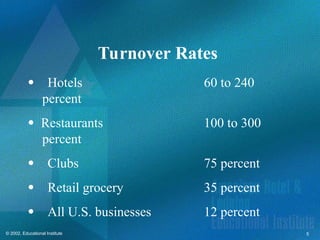
Turnover Rates
Hotels 60 to 240
percent
 Restaurants 100 to 300
percent
Clubs 75 percent
Retail grocery 35 percent
All U.S. businesses 12 percent
6
© 2002, Educational Institute
Reducing Turnover Through Training
Increased job satisfaction
 Involvement in corporate culture
 Involvement in decision making
 Information about their jobs and the organization
 Organizational stability
 Predictable work environments
7
© 2002, Educational Institute
Types of Turnover Costs
Separation costs
 Replacement costs
Training costs
8
© 2002, Educational Institute
Recruitment Costs
Advertising
 Management’s time in selection
Application forms
Testing
 Interviewing
Reference checks
Management’s time in hiring
decisions
(continued)
9
© 2002, Educational Institute
Recruitment Costs
Maintaining legal advice
 Management’s time working the floor filling in
Human resource knowledge
Record keeping
(continued)
10
© 2002, Educational Institute
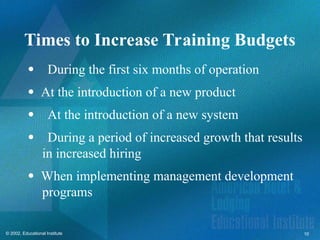
Times to Increase Training Budgets
During the first six months of operation
 At the introduction of a new product
At the introduction of a new system
During a period of increased growth that results
in increased hiring
 When implementing management development
programs
11
© 2002, Educational Institute
Elements of Proposals
 Clear
Concise
Professional
 Organized
Objective
Complete
12
© 2002, Educational Institute
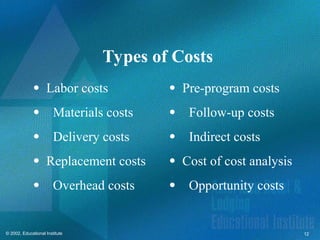
Types of Costs
 Labor costs
Materials costs
Delivery costs
 Replacement costs
Overhead costs
 Pre-program costs
Follow-up costs
Indirect costs
 Cost of cost analysis
Opportunity costs
13
© 2002, Educational Institute
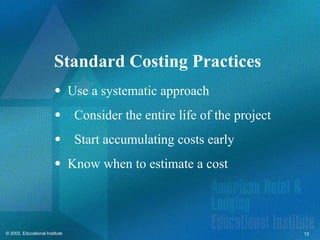
Standard Costing Practices
 Use a systematic approach
Consider the entire life of the project
Start accumulating costs early
 Know when to estimate a cost
14
© 2002, Educational Institute
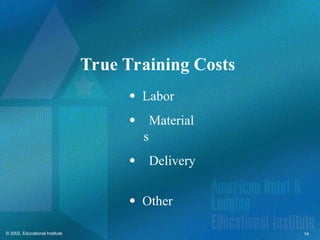
True Training Costs
 Labor
Material
s
Delivery
 Other
15
© 2002, Educational Institute
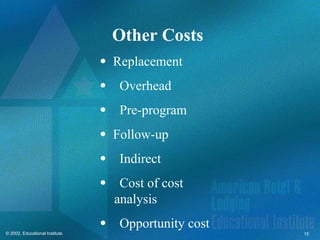
Other Costs
 Replacement
Overhead
Pre-program
 Follow-up
Indirect
Cost of cost
analysis
Opportunity cost
16
© 2002, Educational Institute
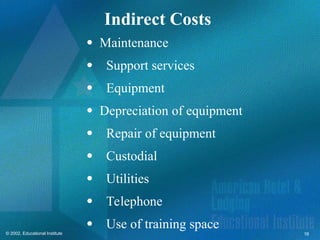
Indirect Costs
 Maintenance
Support services
Equipment
 Depreciation of equipment
Repair of equipment
Custodial
Utilities
Telephone
Use of training space
17
© 2002, Educational Institute
Intangible Costs of Not Training
 Opportunity costs
Development of ineffective training
18
© 2002, Educational Institute
Sources of Benefits
 Guest comments
Time cards
Check-in-time efficiency data
 Rooms cleaned per hour data
Plate waste analysis
On-the-job accident reports
Employee turnover rates
Employee absenteeism rates
Other productivity records
19
© 2002, Educational Institute
Cost Savings Areas
 Labor
Materials
Equipment
20
© 2002, Educational Institute
Intangible Benefits to Training
 Increased guest satisfaction
Increased employee motivation
Increased employee
achievement
 Employee recognition
Employee interest
Employee responsibility
Reduced tardiness
Reduced alcoholism
(continued)
21
© 2002, Educational Institute
Intangible Benefits to Training
(continued)
 Reduced unacceptable behavior
Reduced drug abuse
Increased potential value of the employee
 Increased payback to the profession
Increased level of advancement
22
© 2002, Educational Institute
Benefits of Cost-Benefit Analyses
 Calculate whether a program is financially beneficial
Determine whether a program is worth its cost
Demonstrate return on investment
 Help justify the program to top management
Identify what priorities exist in developing training
Determine whether training will be the solution to
the problem
Determine if benefits are consistent over time
(continued)
23
© 2002, Educational Institute
Benefits of Cost-Benefit Analyses
 Avoid inefficient training methods
Produce better objectives and goals
Define clear goals and objectives
 Identify overly costly training methods
(continued)
24
© 2002, Educational Institute
Cost-Benefit Analysis Steps
1. Calculate costs
2. Calculate benefits
3. Calculate results
25
© 2002, Educational Institute
Measuring the Impact of Training
 Profit
Productivity
Performance
26
© 2002, Educational Institute
ROI Tools
 Cost-benefit analysis
Cost-effectiveness
ratios
Cost-feasibility analysis
27
© 2002, Educational Institute
Measurements of Effectiveness
 Dollars
Time
Productivity
 Injuries per month
Rooms prepared per hour
28
© 2002, Educational Institute
When NOT to Measure
 Performance standards are not clearly defined
Training problem is not clearly defined
It is uncertain that the performance problem is a
training problem
 It is only a performance problem of the person doing
the job
The problem is not worth trying to fix
Nothing would change in workplace performance

A Case for Training and Development ch 2.ppt.ppt

  • 1.
    © 2002, EducationalInstitute Chapter 2 Training and Development as an Investment Training and Development for the Hospitality Industry First Edition (354T or 354)
  • 2.
    2 © 2002, EducationalInstitute Competencies for Training and Development as an Investment 1. Explain how training is an investment in an organization. 2. Differentiate the budgeting process for training in today’s organizations from the past. 3. Identify the variables to consider when calculating the costs of training and the costs of not training. 4. Describe how training directors develop cost-benefit analyses for training and development activities. 5. Explain how training directors calculate an ROI (return on investment) for training and development activities.
  • 3.
    3 © 2002, EducationalInstitute Labor Shortage Factors Demographics  Competition from better paying industries  Low perception of service culture  Perceived lack of education needed  Perceived lack of advancement opportunities
  • 4.
    4 © 2002, EducationalInstitute Absenteeism Causes Management’s insensitivity  Management’s lack of response to the critical needs of employees  Low morale, prompting lack of motivation  Low morale, causing increased levels of stress  Low morale, causing increased accidents and illnesses
  • 5.
    5 © 2002, EducationalInstitute Turnover Rates Hotels 60 to 240 percent  Restaurants 100 to 300 percent Clubs 75 percent Retail grocery 35 percent All U.S. businesses 12 percent
  • 6.
    6 © 2002, EducationalInstitute Reducing Turnover Through Training Increased job satisfaction  Involvement in corporate culture  Involvement in decision making  Information about their jobs and the organization  Organizational stability  Predictable work environments
  • 7.
    7 © 2002, EducationalInstitute Types of Turnover Costs Separation costs  Replacement costs Training costs
  • 8.
    8 © 2002, EducationalInstitute Recruitment Costs Advertising  Management’s time in selection Application forms Testing  Interviewing Reference checks Management’s time in hiring decisions (continued)
  • 9.
    9 © 2002, EducationalInstitute Recruitment Costs Maintaining legal advice  Management’s time working the floor filling in Human resource knowledge Record keeping (continued)
  • 10.
    10 © 2002, EducationalInstitute Times to Increase Training Budgets During the first six months of operation  At the introduction of a new product At the introduction of a new system During a period of increased growth that results in increased hiring  When implementing management development programs
  • 11.
    11 © 2002, EducationalInstitute Elements of Proposals  Clear Concise Professional  Organized Objective Complete
  • 12.
    12 © 2002, EducationalInstitute Types of Costs  Labor costs Materials costs Delivery costs  Replacement costs Overhead costs  Pre-program costs Follow-up costs Indirect costs  Cost of cost analysis Opportunity costs
  • 13.
    13 © 2002, EducationalInstitute Standard Costing Practices  Use a systematic approach Consider the entire life of the project Start accumulating costs early  Know when to estimate a cost
  • 14.
    14 © 2002, EducationalInstitute True Training Costs  Labor Material s Delivery  Other
  • 15.
    15 © 2002, EducationalInstitute Other Costs  Replacement Overhead Pre-program  Follow-up Indirect Cost of cost analysis Opportunity cost
  • 16.
    16 © 2002, EducationalInstitute Indirect Costs  Maintenance Support services Equipment  Depreciation of equipment Repair of equipment Custodial Utilities Telephone Use of training space
  • 17.
    17 © 2002, EducationalInstitute Intangible Costs of Not Training  Opportunity costs Development of ineffective training
  • 18.
    18 © 2002, EducationalInstitute Sources of Benefits  Guest comments Time cards Check-in-time efficiency data  Rooms cleaned per hour data Plate waste analysis On-the-job accident reports Employee turnover rates Employee absenteeism rates Other productivity records
  • 19.
    19 © 2002, EducationalInstitute Cost Savings Areas  Labor Materials Equipment
  • 20.
    20 © 2002, EducationalInstitute Intangible Benefits to Training  Increased guest satisfaction Increased employee motivation Increased employee achievement  Employee recognition Employee interest Employee responsibility Reduced tardiness Reduced alcoholism (continued)
  • 21.
    21 © 2002, EducationalInstitute Intangible Benefits to Training (continued)  Reduced unacceptable behavior Reduced drug abuse Increased potential value of the employee  Increased payback to the profession Increased level of advancement
  • 22.
    22 © 2002, EducationalInstitute Benefits of Cost-Benefit Analyses  Calculate whether a program is financially beneficial Determine whether a program is worth its cost Demonstrate return on investment  Help justify the program to top management Identify what priorities exist in developing training Determine whether training will be the solution to the problem Determine if benefits are consistent over time (continued)
  • 23.
    23 © 2002, EducationalInstitute Benefits of Cost-Benefit Analyses  Avoid inefficient training methods Produce better objectives and goals Define clear goals and objectives  Identify overly costly training methods (continued)
  • 24.
    24 © 2002, EducationalInstitute Cost-Benefit Analysis Steps 1. Calculate costs 2. Calculate benefits 3. Calculate results
  • 25.
    25 © 2002, EducationalInstitute Measuring the Impact of Training  Profit Productivity Performance
  • 26.
    26 © 2002, EducationalInstitute ROI Tools  Cost-benefit analysis Cost-effectiveness ratios Cost-feasibility analysis
  • 27.
    27 © 2002, EducationalInstitute Measurements of Effectiveness  Dollars Time Productivity  Injuries per month Rooms prepared per hour
  • 28.
    28 © 2002, EducationalInstitute When NOT to Measure  Performance standards are not clearly defined Training problem is not clearly defined It is uncertain that the performance problem is a training problem  It is only a performance problem of the person doing the job The problem is not worth trying to fix Nothing would change in workplace performance