University of
Agriculture
Faisalabad Pakistan
Sohail17@hotmail.com
 T &V is a unique approach bringing
professional subject matter specialist and
farmers together to learn and facilitate
farming operations to help farmers produce
more
 TheTraining andVisit system in Agricultural
Extension Education is designed for building
a lined professional extension service that is
capable of guiding the farmers in agricultural
production and raising their income by
providing appropriate plans for country
development
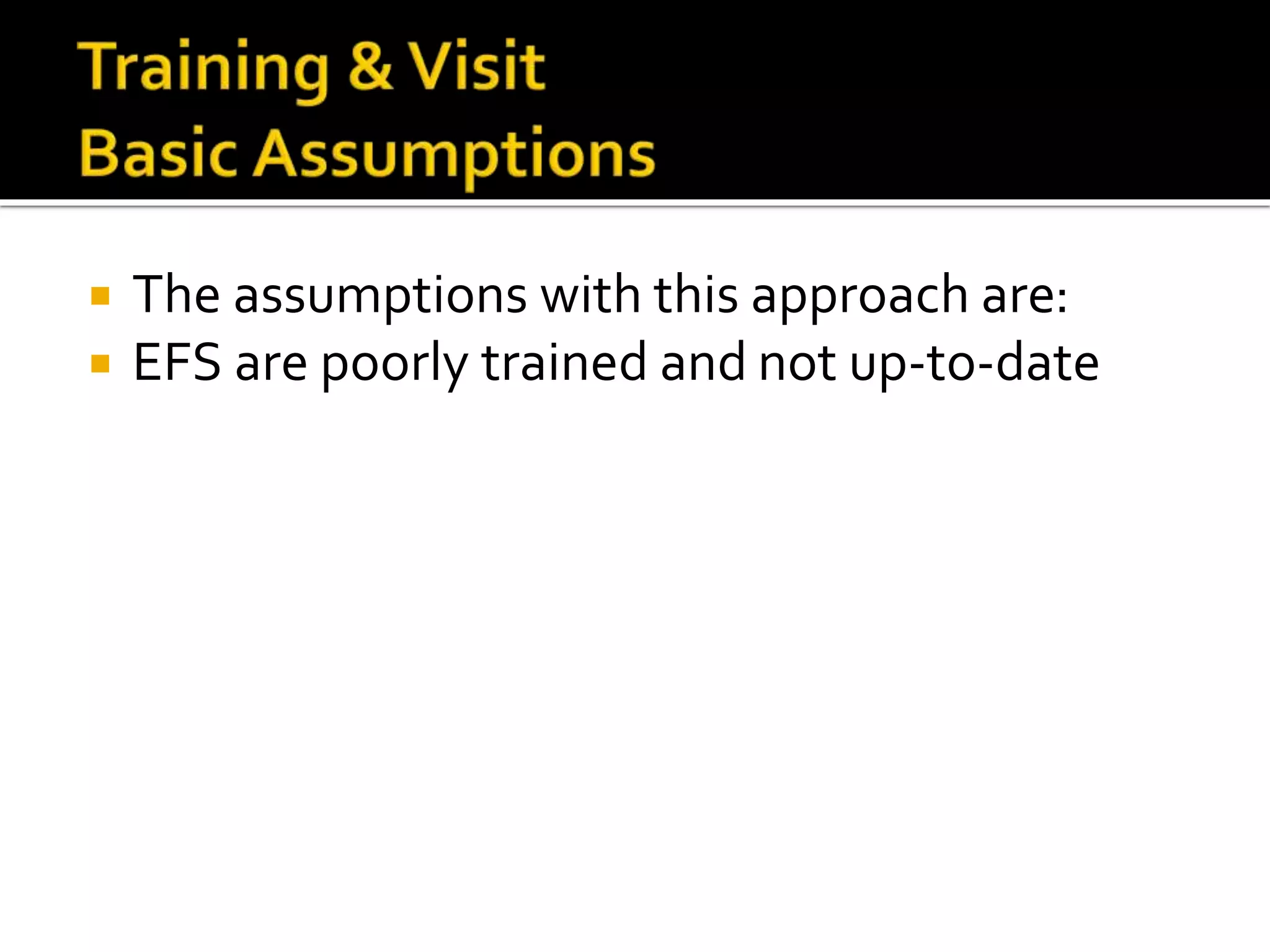
 The assumptions with this approach are:
 EFS are poorly trained and not up-to-date
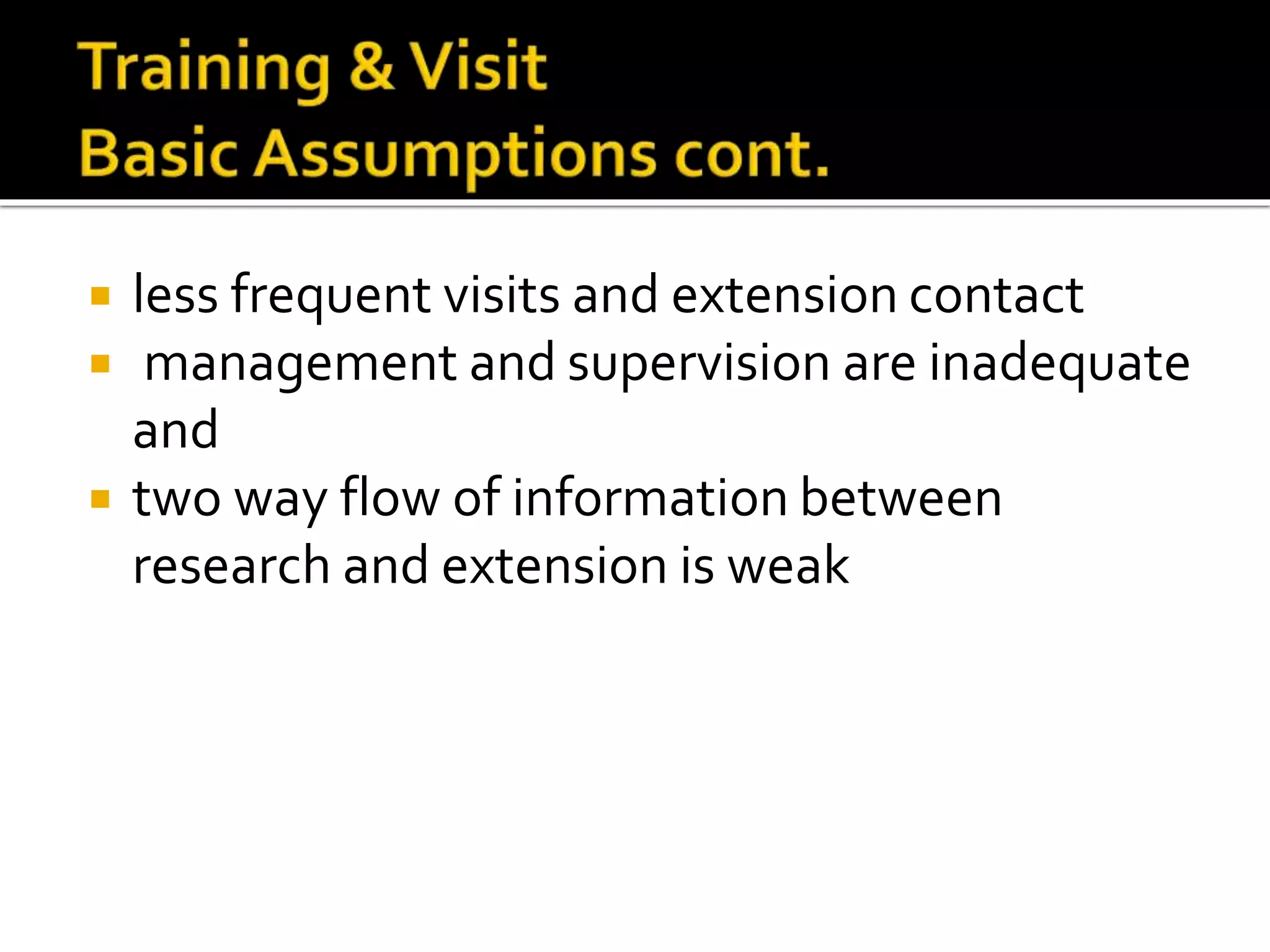
 less frequent visits and extension contact
 management and supervision are inadequate
and
 two way flow of information between
research and extension is weak
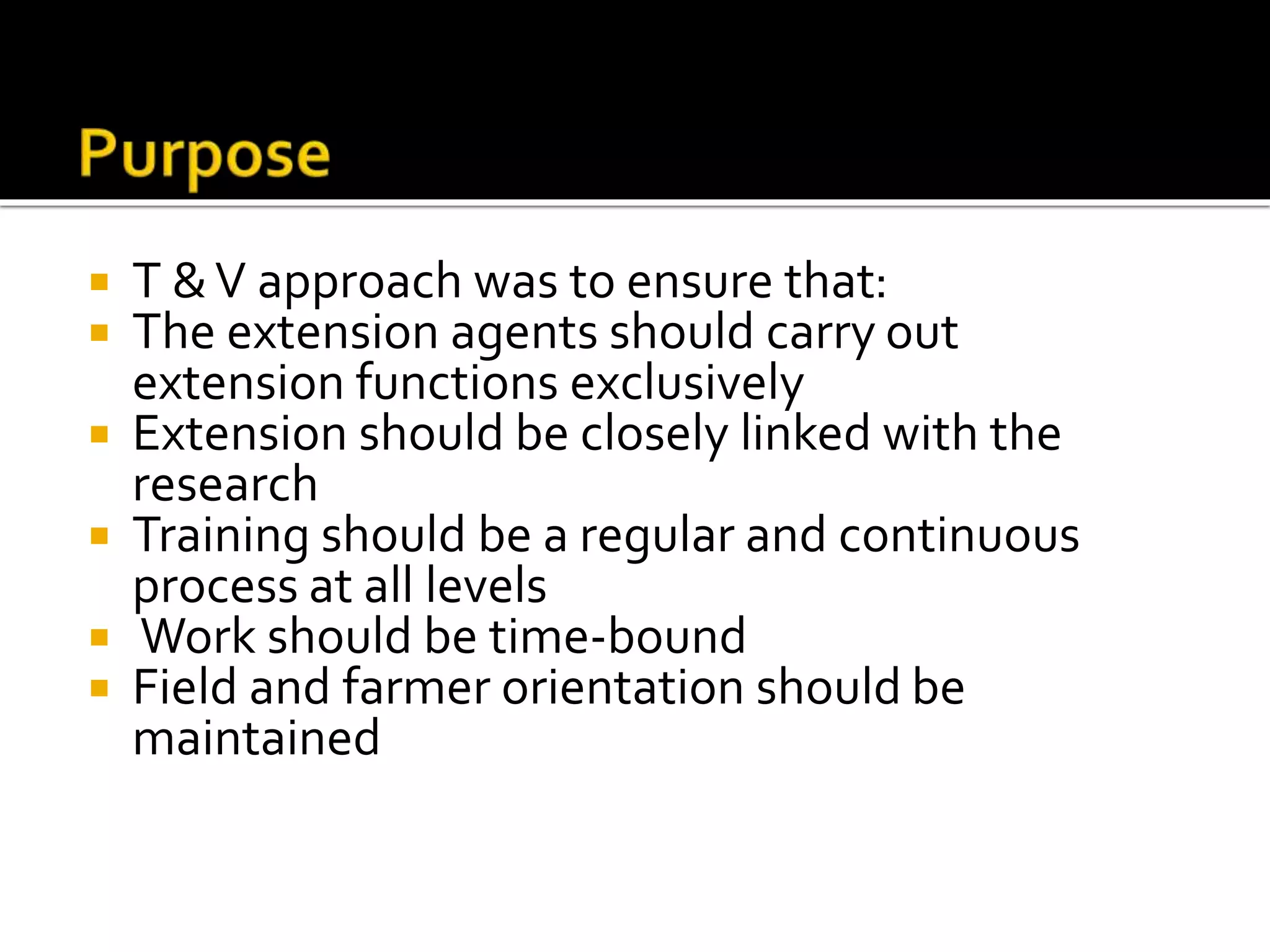
 T &V approach was to ensure that:
 The extension agents should carry out
extension functions exclusively
 Extension should be closely linked with the
research
 Training should be a regular and continuous
process at all levels
 Work should be time-bound
 Field and farmer orientation should be
maintained
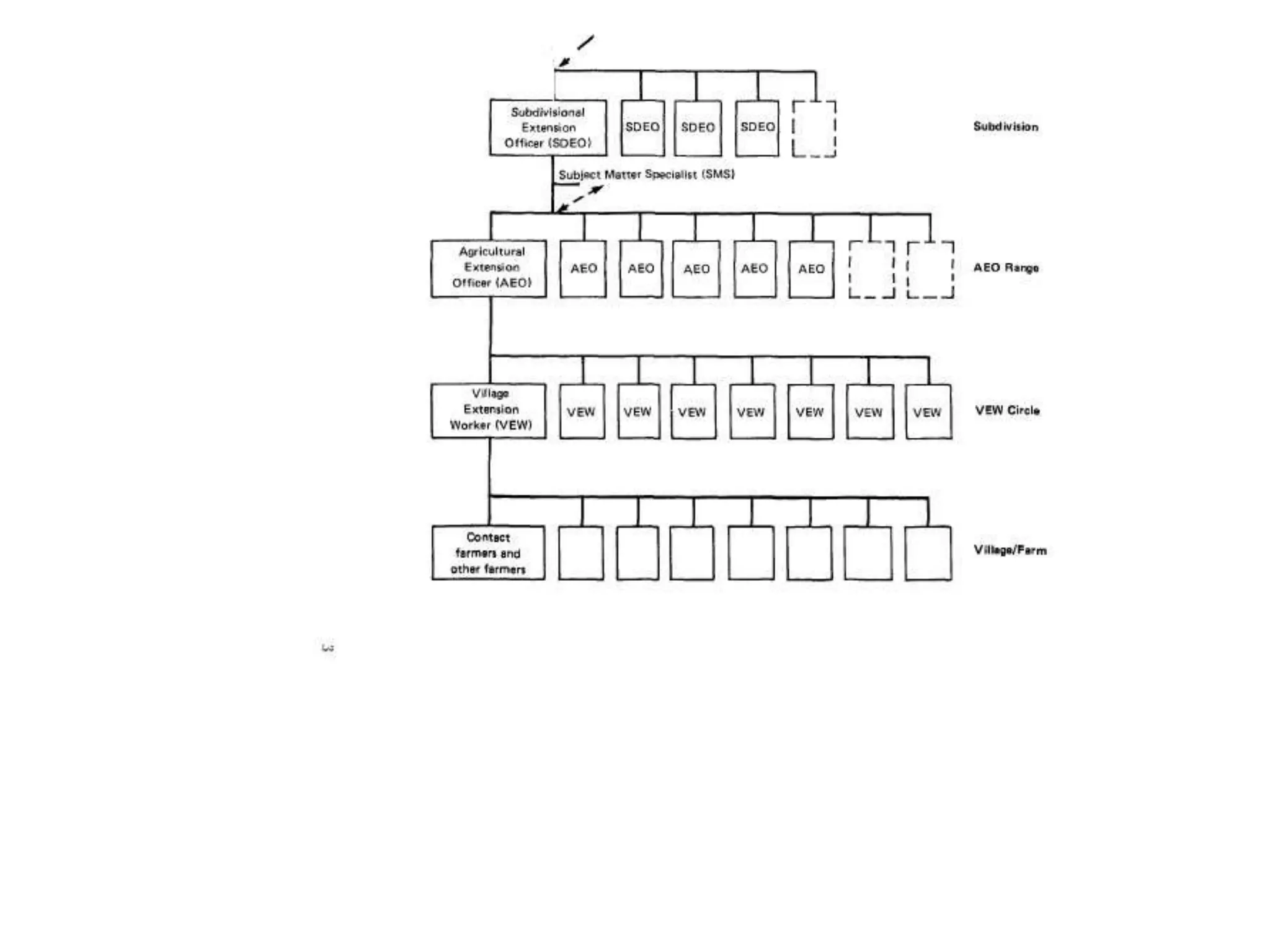
 Top-down approach to planning
 Decisions are taken at the top
 Production recommendation send down to
farmers for adoption
 Rural people are usually not involve
 Farmers problems and challenges are
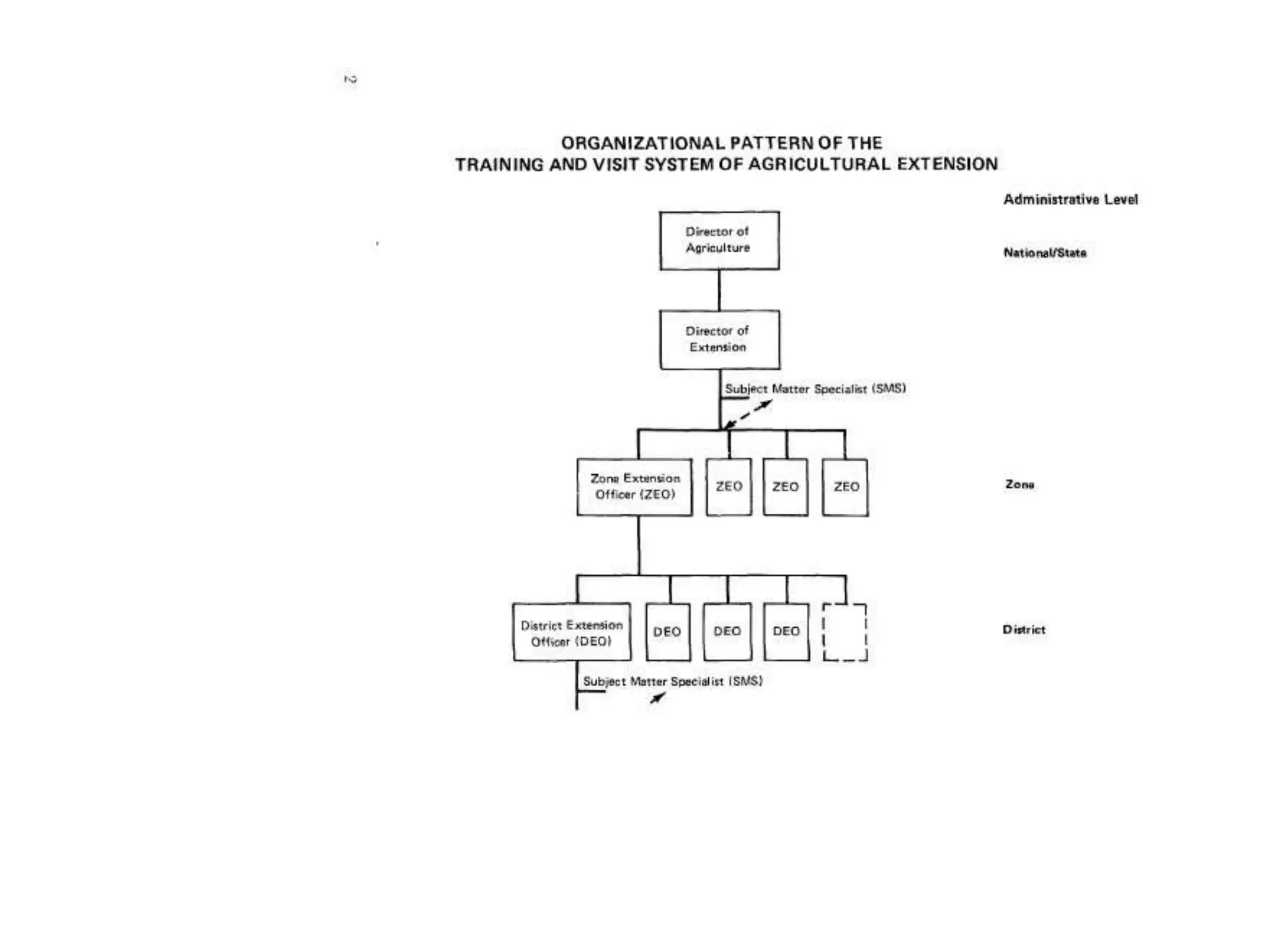
suppose to be conveyed to SMS by EFS
 Contact farmer approach
Field demonstration
Farm visits and tours
Group and individual meetings
Telephone calls
 Fortnightly visit by agent
 Fortnightly regular of EFS by SMS
 Evaluation by EFS and SMS
 Evaluation and review by RELC at the zonal
level
 Reduction of operational areas
 Regular and continue training of EFS
 Provision of logistics eg. motorbikes,
teaching materials etc
 Better and improve emolument of EFS
(Extension Field staff)
 Level of adoption of innovation
 Farmers KAPS
 Productivity
 This system/approach had provided an
effective way for improving knowledge and
efficiency of the extension staff.
 Improvement in extension coverage
 Fixed schedule of visits to farmers, which
helped farmers to have contact with EFS on
the one hand and helped the supervisory
staff to know the whereabouts of the EFS
 Regular training of the staff which helped
to develop technical competence and
effective delivery.
 The extension workers were assigned specific
job
 Provision of logistic support in terms of
providing mobility etc
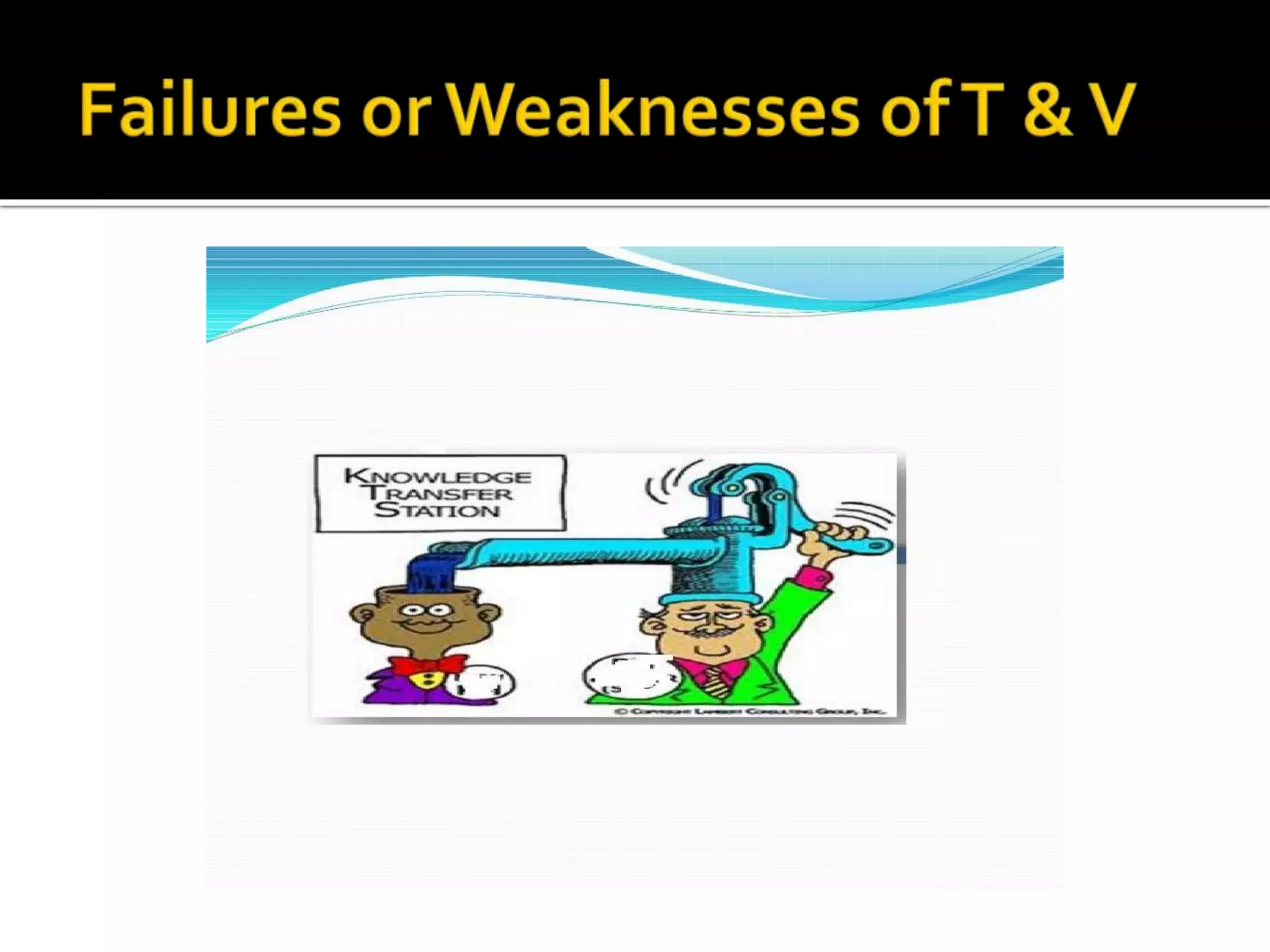
 It was a top-down approach (expert know all)
 So called expert
transfer technology to solve rural people
problems
 It was also criticized as too rigid in terms
of fortnightly visits
especially during the slack seasons
 Its main focus was on procedural aspects
rather than other essential aspects like the
message and its dissemination
 It is an expensive approach as it involves high
level of recurrent expenditure in developing
countries like Pakistan & India
 It is too labor intensive which a poor country
like Pakistan may not be able to afford
 This approach did not make effective use
of mass media
 The selection ofCFs was biased as they were
not representatives of the resource
poor farmers
Thank You

Training and visit (T & V) in Agriculture Extension

  • 1.
  • 2.
     T &Vis a unique approach bringing professional subject matter specialist and farmers together to learn and facilitate farming operations to help farmers produce more
  • 3.
     TheTraining andVisitsystem in Agricultural Extension Education is designed for building a lined professional extension service that is capable of guiding the farmers in agricultural production and raising their income by providing appropriate plans for country development
  • 6.
     The assumptionswith this approach are:  EFS are poorly trained and not up-to-date
  • 7.
     less frequentvisits and extension contact  management and supervision are inadequate and  two way flow of information between research and extension is weak
  • 8.
     T &Vapproach was to ensure that:  The extension agents should carry out extension functions exclusively  Extension should be closely linked with the research  Training should be a regular and continuous process at all levels  Work should be time-bound  Field and farmer orientation should be maintained
  • 9.
     Top-down approachto planning  Decisions are taken at the top  Production recommendation send down to farmers for adoption  Rural people are usually not involve  Farmers problems and challenges are suppose to be conveyed to SMS by EFS
  • 10.
     Contact farmerapproach Field demonstration Farm visits and tours Group and individual meetings Telephone calls
  • 11.
     Fortnightly visitby agent  Fortnightly regular of EFS by SMS  Evaluation by EFS and SMS  Evaluation and review by RELC at the zonal level
  • 12.
     Reduction ofoperational areas  Regular and continue training of EFS  Provision of logistics eg. motorbikes, teaching materials etc  Better and improve emolument of EFS (Extension Field staff)
  • 13.
     Level ofadoption of innovation  Farmers KAPS  Productivity
  • 14.
     This system/approachhad provided an effective way for improving knowledge and efficiency of the extension staff.  Improvement in extension coverage  Fixed schedule of visits to farmers, which helped farmers to have contact with EFS on the one hand and helped the supervisory staff to know the whereabouts of the EFS
  • 15.
     Regular trainingof the staff which helped to develop technical competence and effective delivery.  The extension workers were assigned specific job  Provision of logistic support in terms of providing mobility etc
  • 16.
     It wasa top-down approach (expert know all)  So called expert transfer technology to solve rural people problems  It was also criticized as too rigid in terms of fortnightly visits especially during the slack seasons
  • 18.
     Its mainfocus was on procedural aspects rather than other essential aspects like the message and its dissemination  It is an expensive approach as it involves high level of recurrent expenditure in developing countries like Pakistan & India
  • 19.
     It istoo labor intensive which a poor country like Pakistan may not be able to afford  This approach did not make effective use of mass media  The selection ofCFs was biased as they were not representatives of the resource poor farmers
  • 20.