06 SEPTEMBER 2016© DR ANAMIKA RAY MEMORIAL TRUST, 2016; CC-BY-SA 1
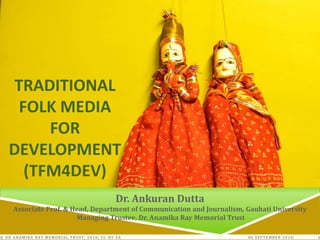
TRADITIONAL
FOLK MEDIA
FOR
DEVELOPMENT
(TFM4DEV)
Dr. Ankuran Dutta
Associate Prof. & Head, Department of Communication and Journalism, Gauhati University
Managing Trustee, Dr. Anamika Ray Memorial Trust
this presentation is dedicated to
DR ANAMIKA RAY
UNDERSTANDING TRADITIONAL FOLK MEDIA
 Traditional folk media is a term used to denote ‘people’s
performances’. This term refers to the performing arts which
can be described as the cultural DIACRITICS of the people.
 Traditional folk media are cultural resources that accumulate
indigenous knowledge, experiences and expressions passed
down from generation to generation. Woven into proverbs and
poems, songs and dances, puppet plays and stories, rhythms
and beats, they are embedded with a strong sense of cultural
identity which can be a potent force for development. In many
cases, these media are the traditional conduits of indigenous
knowledge, experience and culture. Creative use of these
cultural resources in communities where they are popular and
well entrenched can be a subtle and effective way of
introducing development ideas and messages (FAO).
06 SEPTEMBER 2016© DR ANAMIKA RAY MEMORIAL TRUST, 2015; CC -BY-SA 3
“DIACRITICAL”
CHARACTERISTICS OF
TFM
06 SEPTEMBER 2016© DR ANAMIKA RAY MEMORIAL TRUST, 2015; CC -BY-SA 4
“DIACRITICAL” CHARACTERISTICS OF TFM
 Direct communication for development
 Intimate media , Impact is much deeper
 Acceptability is high and the appeal is at personal and intimate
level
 Community based media for community development
 Rapport is direct
 Immediate feedback
 Two-way and Horizontal Communication form
 Interference is less (Free from political or commercial
interference); irrespective of diversity , it is for all
 Cross-cultural communication hurdles are not encountered here
 Automatic Appeal: it is spontaneous
 Local media– Local communication; localized message and local
language
06 SEPTEMBER 2016© DR ANAMIKA RAY MEMORIAL TRUST, 2015; CC -BY-SA 5
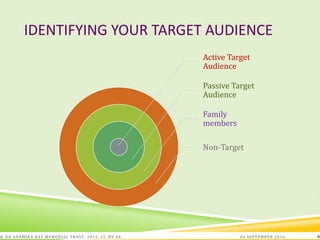
IDENTIFYING YOUR TARGET AUDIENCE
06 SEPTEMBER 2016© DR ANAMIKA RAY MEMORIAL TRUST, 2015; CC -BY-SA 6
Active Target
Audience
Passive Target
Audience
Family
members
Non-Target
EFFECTIVE WAYS TO REACH YOUR TARGET
AUDIENCE:: PARTICIPATORY APPROACH
06 SEPTEMBER 2016© DR ANAMIKA RAY MEMORIAL TRUST, 2015; CC -BY-SA 7
• One way communication
• Vertical communication
• No Feedback mechanism
• Knowledge & Information throw
• Entry to Celebrities and experts
Non
Participatory
Approach
• Two way communication
• Horizontal Communication
• Well managed feedback mechanism
• Learning through experience sharing
• Entry to common people
Participatory
Approach
EFFECTIVE COMMUNICATION STRATEGY FOR
YOUR TARGET AUDIENCE
06 SEPTEMBER 2016© DR ANAMIKA RAY MEMORIAL TRUST, 2015; CC -BY-SA 8
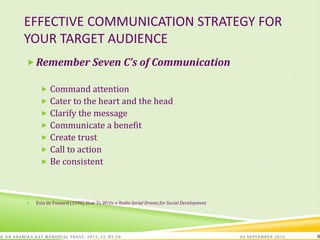
Remember Seven C’s of Communication
 Command attention
 Cater to the heart and the head
 Clarify the message
 Communicate a benefit
 Create trust
 Call to action
 Be consistent
 Esta de Fossard (1996) How To Write a Radio Serial Drama for Social Development
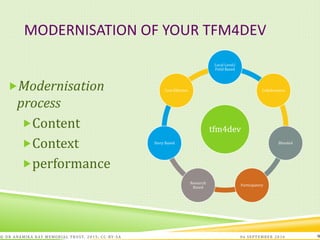
MODERNISATION OF YOUR TFM4DEV
06 SEPTEMBER 2016© DR ANAMIKA RAY MEMORIAL TRUST, 2015; CC -BY-SA 9
Modernisation
process
Content
Context
performance
tfm4dev
Local Level/
Field Based
Collaborative
Blended
Participatory
Research
Based
Story Based
Cost Effective
Contact
E-mail: ankurandutta@gmail.com
Blog: www.comcomm.org
Website: www.armt.in
Presentations: http://www.slideshare.net/ankurandutta
Ph: 91-9910115696
06 SEPTEMBER 2016© DR ANAMIKA RAY MEMORIAL TRUST, 2015; CC -BY-SA 10

Traditional Folk Media for Development

  • 1.
    06 SEPTEMBER 2016©DR ANAMIKA RAY MEMORIAL TRUST, 2016; CC-BY-SA 1 TRADITIONAL FOLK MEDIA FOR DEVELOPMENT (TFM4DEV) Dr. Ankuran Dutta Associate Prof. & Head, Department of Communication and Journalism, Gauhati University Managing Trustee, Dr. Anamika Ray Memorial Trust
  • 2.
    this presentation isdedicated to DR ANAMIKA RAY
  • 3.
    UNDERSTANDING TRADITIONAL FOLKMEDIA  Traditional folk media is a term used to denote ‘people’s performances’. This term refers to the performing arts which can be described as the cultural DIACRITICS of the people.  Traditional folk media are cultural resources that accumulate indigenous knowledge, experiences and expressions passed down from generation to generation. Woven into proverbs and poems, songs and dances, puppet plays and stories, rhythms and beats, they are embedded with a strong sense of cultural identity which can be a potent force for development. In many cases, these media are the traditional conduits of indigenous knowledge, experience and culture. Creative use of these cultural resources in communities where they are popular and well entrenched can be a subtle and effective way of introducing development ideas and messages (FAO). 06 SEPTEMBER 2016© DR ANAMIKA RAY MEMORIAL TRUST, 2015; CC -BY-SA 3
  • 4.
    “DIACRITICAL” CHARACTERISTICS OF TFM 06 SEPTEMBER2016© DR ANAMIKA RAY MEMORIAL TRUST, 2015; CC -BY-SA 4
  • 5.
    “DIACRITICAL” CHARACTERISTICS OFTFM  Direct communication for development  Intimate media , Impact is much deeper  Acceptability is high and the appeal is at personal and intimate level  Community based media for community development  Rapport is direct  Immediate feedback  Two-way and Horizontal Communication form  Interference is less (Free from political or commercial interference); irrespective of diversity , it is for all  Cross-cultural communication hurdles are not encountered here  Automatic Appeal: it is spontaneous  Local media– Local communication; localized message and local language 06 SEPTEMBER 2016© DR ANAMIKA RAY MEMORIAL TRUST, 2015; CC -BY-SA 5
  • 6.
    IDENTIFYING YOUR TARGETAUDIENCE 06 SEPTEMBER 2016© DR ANAMIKA RAY MEMORIAL TRUST, 2015; CC -BY-SA 6 Active Target Audience Passive Target Audience Family members Non-Target
  • 7.
    EFFECTIVE WAYS TOREACH YOUR TARGET AUDIENCE:: PARTICIPATORY APPROACH 06 SEPTEMBER 2016© DR ANAMIKA RAY MEMORIAL TRUST, 2015; CC -BY-SA 7 • One way communication • Vertical communication • No Feedback mechanism • Knowledge & Information throw • Entry to Celebrities and experts Non Participatory Approach • Two way communication • Horizontal Communication • Well managed feedback mechanism • Learning through experience sharing • Entry to common people Participatory Approach
  • 8.
    EFFECTIVE COMMUNICATION STRATEGYFOR YOUR TARGET AUDIENCE 06 SEPTEMBER 2016© DR ANAMIKA RAY MEMORIAL TRUST, 2015; CC -BY-SA 8 Remember Seven C’s of Communication  Command attention  Cater to the heart and the head  Clarify the message  Communicate a benefit  Create trust  Call to action  Be consistent  Esta de Fossard (1996) How To Write a Radio Serial Drama for Social Development
  • 9.
    MODERNISATION OF YOURTFM4DEV 06 SEPTEMBER 2016© DR ANAMIKA RAY MEMORIAL TRUST, 2015; CC -BY-SA 9 Modernisation process Content Context performance tfm4dev Local Level/ Field Based Collaborative Blended Participatory Research Based Story Based Cost Effective
  • 10.
    Contact E-mail: ankurandutta@gmail.com Blog: www.comcomm.org Website:www.armt.in Presentations: http://www.slideshare.net/ankurandutta Ph: 91-9910115696 06 SEPTEMBER 2016© DR ANAMIKA RAY MEMORIAL TRUST, 2015; CC -BY-SA 10