 The circulatory system
  takes oxygen and
  nutrients to all the tissues
  of carbon dioxide.Then it
  takes them to organs that
  eliminate them.
 The circulatory system
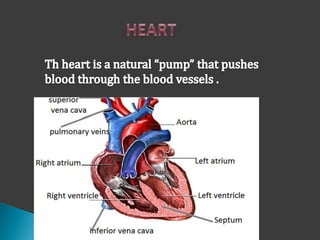
  includes the heart,the
  blood vessels and the
  blood.
BLOOD VESSELS:are special tubes that carry blood all
    around the body.There are three tyoes of blood
               vessels:arteries,veins and capillaries.
        ARTERIES:carry blood aways from the heart
           VEINS:carry the blood back to the heart.
 CAPILLARIES:are tiny blood vessels that connect the
             smallest arteries to the smallest veins.
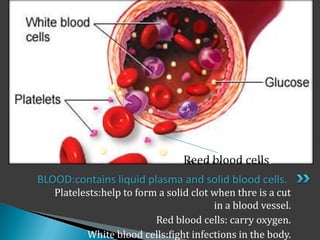
Reed blood cells.
BLOOD:contains liquid plasma and solid blood cells.
   Platelests:help to form a solid clot when thre is a cut
                                        in a blood vessel.
                          Red blood cells: carry oxygen.
          White blood cells:fight infections in the body.
PULMONARY CIRCULATION.                    GENERAL CIRCULATION.


                                       Oxegenated blood flows from the heart to
Blood fows from the heart to the
                                       the rest of the body.The oxygen goes into
lungs.Inthe lung, the blood releases
                                       tissues of the body and the blood picks up
carbon dioxide and picks up oxygen.    carbon dioxide.
Exercise: Walk or do sport for 30
minutes or more every day.
Eat healthy food:Eat lots of fresh
fruit, vegetables,
, beans and fish.
Stay away from cigarette
smoke.Smoking is very bad for
your respiratory and circulation
systems.
The sweat glands and
the urinary tract.
They produce sweat- a liquid that contains water,
              waste products and mineral salts.
THE URINARY TRACT:
The main parts of the urinary
         tract are kidneys,the
 urethers,the bladder and the
                      urethra.

Trabajo de science

  • 2.
     The circulatorysystem takes oxygen and nutrients to all the tissues of carbon dioxide.Then it takes them to organs that eliminate them.  The circulatory system includes the heart,the blood vessels and the blood.
  • 4.
    BLOOD VESSELS:are specialtubes that carry blood all around the body.There are three tyoes of blood vessels:arteries,veins and capillaries. ARTERIES:carry blood aways from the heart VEINS:carry the blood back to the heart. CAPILLARIES:are tiny blood vessels that connect the smallest arteries to the smallest veins.
  • 5.
    Reed blood cells. BLOOD:containsliquid plasma and solid blood cells. Platelests:help to form a solid clot when thre is a cut in a blood vessel. Red blood cells: carry oxygen. White blood cells:fight infections in the body.
  • 6.
    PULMONARY CIRCULATION.  GENERAL CIRCULATION. Oxegenated blood flows from the heart to Blood fows from the heart to the the rest of the body.The oxygen goes into lungs.Inthe lung, the blood releases tissues of the body and the blood picks up carbon dioxide and picks up oxygen. carbon dioxide.
  • 7.
    Exercise: Walk ordo sport for 30 minutes or more every day. Eat healthy food:Eat lots of fresh fruit, vegetables, , beans and fish. Stay away from cigarette smoke.Smoking is very bad for your respiratory and circulation systems.
  • 8.
    The sweat glandsand the urinary tract.
  • 9.
    They produce sweat-a liquid that contains water, waste products and mineral salts.
  • 10.
    THE URINARY TRACT: Themain parts of the urinary tract are kidneys,the urethers,the bladder and the urethra.