Circulatory System
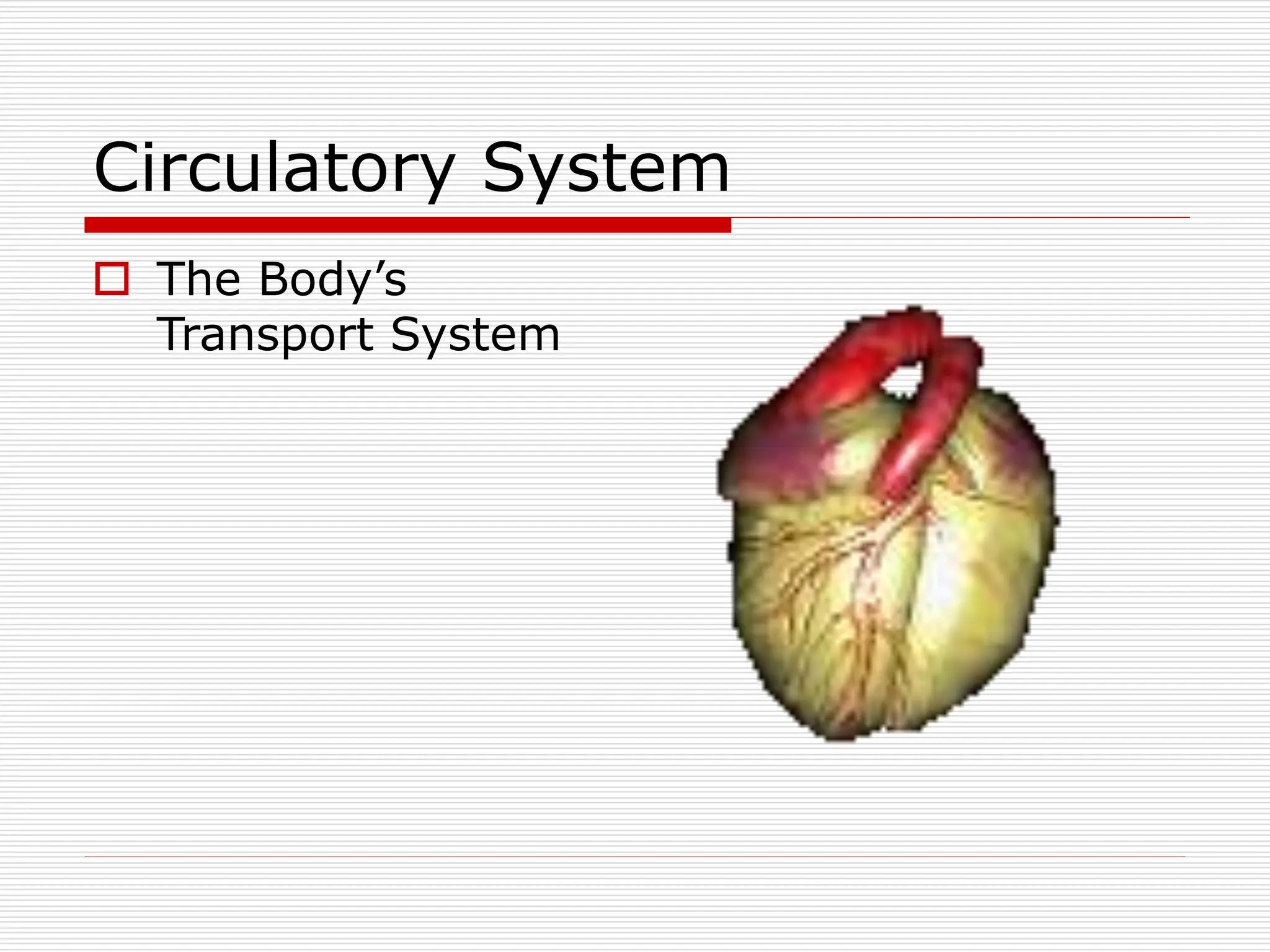
 The Body’s
Transport System
The Circulatory System
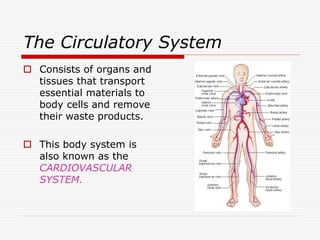
 Consists of organs and
tissues that transport
essential materials to
body cells and remove
their waste products.
 This body system is
also known as the
CARDIOVASCULAR
SYSTEM.
How the Circulatory System Works
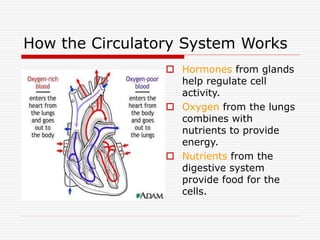
 Hormones from glands
help regulate cell
activity.
 Oxygen from the lungs
combines with
nutrients to provide
energy.
 Nutrients from the
digestive system
provide food for the
cells.
How the Circulatory System Works
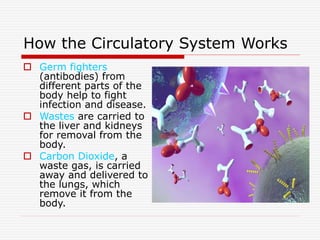
 Germ fighters
(antibodies) from
different parts of the
body help to fight
infection and disease.
 Wastes are carried to
the liver and kidneys
for removal from the
body.
 Carbon Dioxide, a
waste gas, is carried
away and delivered to
the lungs, which
remove it from the
body.
Parts of the Circulatory System
 Heart: your heart
pumps blood
through two major
pathways.
 Blood Vessels
 Blood
 Pulmonary
Circulation: the
flow blood from the
heart to the lungs
and back to the
heart.
 Systemic
Circulation: is the
flow of blood to all
the body tissues
except the lungs.
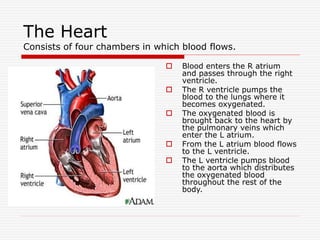
The Heart
Consists of four chambers in which blood flows.
 Blood enters the R atrium
and passes through the right
ventricle.
 The R ventricle pumps the
blood to the lungs where it
becomes oxygenated.
 The oxygenated blood is
brought back to the heart by
the pulmonary veins which
enter the L atrium.
 From the L atrium blood flows
to the L ventricle.
 The L ventricle pumps blood
to the aorta which distributes
the oxygenated blood
throughout the rest of the
body.
Blood Vessels
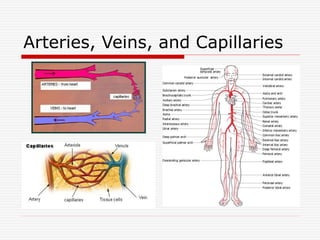
Over 80,000 miles of blood vessels transport your blood throughout your
body. There are 3 types of blood vessels.
 Arteries: Blood
vessels that carry
blood away from
the heart to other
parts of the body.
 Veins: Blood
vessels that carry
blood from the
body back to the
heart.
 Capillaries: Tiny
tubes that carry
blood from the
arteries to the
body’s cells, and
then back to the
veins.
Arteries, Veins, and Capillaries
Blood: a mixture of solids in a large
amount of liquid called plasma.
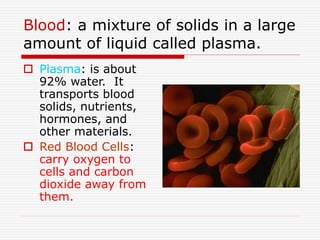
 Plasma: is about
92% water. It
transports blood
solids, nutrients,
hormones, and
other materials.
 Red Blood Cells:
carry oxygen to
cells and carbon
dioxide away from
them.
Blood: a mixture of solids in a large
amount of liquid called plasma.
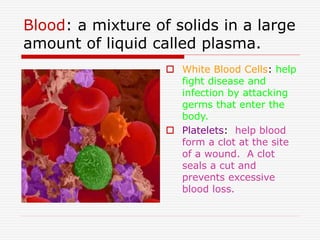
 White Blood Cells: help
fight disease and
infection by attacking
germs that enter the
body.
 Platelets: help blood
form a clot at the site
of a wound. A clot
seals a cut and
prevents excessive
blood loss.
Pulmonary Circulation
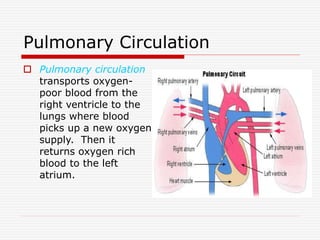
 Pulmonary circulation
transports oxygen-
poor blood from the
right ventricle to the
lungs where blood
picks up a new oxygen
supply. Then it
returns oxygen rich
blood to the left
atrium.
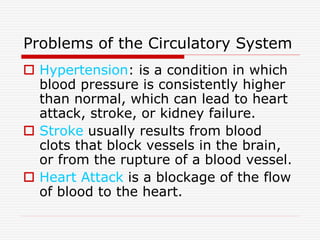
Systemic Circulation
 Systemic
circulation provides
a functional blood
supply to all body
tissue.
 It carries oxygen
and nutrients to
the cells.
 It picks up carbon
dioxide and waste
products.
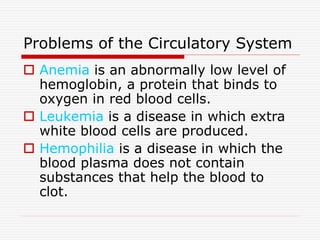
Blood Pressure
As blood is moved through your body, it exerts pressure against
the walls of blood vessels.
 Systolic Pressure: as
your heart contracts to
push blood into your
arteries, your blood
pressure is at its
highest point.
 Diastolic Pressure: As
your heart relaxes to
refill, blood pressure is
at its lowest point.
Problems of the Circulatory System
 Hypertension: is a condition in which
blood pressure is consistently higher
than normal, which can lead to heart
attack, stroke, or kidney failure.
 Stroke usually results from blood
clots that block vessels in the brain,
or from the rupture of a blood vessel.
 Heart Attack is a blockage of the flow
of blood to the heart.
Problems of the Circulatory System
 Anemia is an abnormally low level of
hemoglobin, a protein that binds to
oxygen in red blood cells.
 Leukemia is a disease in which extra
white blood cells are produced.
 Hemophilia is a disease in which the
blood plasma does not contain
substances that help the blood to
clot.
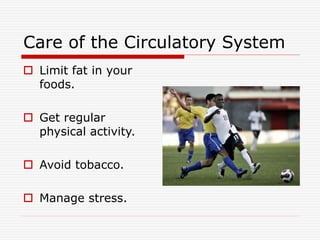
Care of the Circulatory System
 Limit fat in your
foods.
 Get regular
physical activity.
 Avoid tobacco.
 Manage stress.
Critical Thinking
 Compare and
contrast. What are
systemic circulation
and pulmonary
circulation?
 Which one carries
newly oxygenated
blood?

Circulatory_System_7-8.ppt

  • 1.
    Circulatory System  TheBody’s Transport System
  • 2.
    The Circulatory System Consists of organs and tissues that transport essential materials to body cells and remove their waste products.  This body system is also known as the CARDIOVASCULAR SYSTEM.
  • 3.
    How the CirculatorySystem Works  Hormones from glands help regulate cell activity.  Oxygen from the lungs combines with nutrients to provide energy.  Nutrients from the digestive system provide food for the cells.
  • 4.
    How the CirculatorySystem Works  Germ fighters (antibodies) from different parts of the body help to fight infection and disease.  Wastes are carried to the liver and kidneys for removal from the body.  Carbon Dioxide, a waste gas, is carried away and delivered to the lungs, which remove it from the body.
  • 5.
    Parts of theCirculatory System  Heart: your heart pumps blood through two major pathways.  Blood Vessels  Blood  Pulmonary Circulation: the flow blood from the heart to the lungs and back to the heart.  Systemic Circulation: is the flow of blood to all the body tissues except the lungs.
  • 6.
    The Heart Consists offour chambers in which blood flows.  Blood enters the R atrium and passes through the right ventricle.  The R ventricle pumps the blood to the lungs where it becomes oxygenated.  The oxygenated blood is brought back to the heart by the pulmonary veins which enter the L atrium.  From the L atrium blood flows to the L ventricle.  The L ventricle pumps blood to the aorta which distributes the oxygenated blood throughout the rest of the body.
  • 7.
    Blood Vessels Over 80,000miles of blood vessels transport your blood throughout your body. There are 3 types of blood vessels.  Arteries: Blood vessels that carry blood away from the heart to other parts of the body.  Veins: Blood vessels that carry blood from the body back to the heart.  Capillaries: Tiny tubes that carry blood from the arteries to the body’s cells, and then back to the veins.
  • 8.
  • 9.
    Blood: a mixtureof solids in a large amount of liquid called plasma.  Plasma: is about 92% water. It transports blood solids, nutrients, hormones, and other materials.  Red Blood Cells: carry oxygen to cells and carbon dioxide away from them.
  • 10.
    Blood: a mixtureof solids in a large amount of liquid called plasma.  White Blood Cells: help fight disease and infection by attacking germs that enter the body.  Platelets: help blood form a clot at the site of a wound. A clot seals a cut and prevents excessive blood loss.
  • 11.
    Pulmonary Circulation  Pulmonarycirculation transports oxygen- poor blood from the right ventricle to the lungs where blood picks up a new oxygen supply. Then it returns oxygen rich blood to the left atrium.
  • 12.
    Systemic Circulation  Systemic circulationprovides a functional blood supply to all body tissue.  It carries oxygen and nutrients to the cells.  It picks up carbon dioxide and waste products.
  • 13.
    Blood Pressure As bloodis moved through your body, it exerts pressure against the walls of blood vessels.  Systolic Pressure: as your heart contracts to push blood into your arteries, your blood pressure is at its highest point.  Diastolic Pressure: As your heart relaxes to refill, blood pressure is at its lowest point.
  • 14.
    Problems of theCirculatory System  Hypertension: is a condition in which blood pressure is consistently higher than normal, which can lead to heart attack, stroke, or kidney failure.  Stroke usually results from blood clots that block vessels in the brain, or from the rupture of a blood vessel.  Heart Attack is a blockage of the flow of blood to the heart.
  • 15.
    Problems of theCirculatory System  Anemia is an abnormally low level of hemoglobin, a protein that binds to oxygen in red blood cells.  Leukemia is a disease in which extra white blood cells are produced.  Hemophilia is a disease in which the blood plasma does not contain substances that help the blood to clot.
  • 16.
    Care of theCirculatory System  Limit fat in your foods.  Get regular physical activity.  Avoid tobacco.  Manage stress.
  • 17.
    Critical Thinking  Compareand contrast. What are systemic circulation and pulmonary circulation?  Which one carries newly oxygenated blood?