Introduction
•Executive summary
•Description of business
•Financials
•Market Analysis
•Explore political and economic risks
•Marketing Strategy and solutions
Toyota
Executive Summary
•“Since Toyota’s founding we adhered to the core
principle of contributing to society through the
practice of manufacturing high-quality products and
services. Our business practices and activities based
on this core principle created values, beliefs and
business methods that over the years have become
a source of competitive advantage. These are the
managerial values and business methods that are
known collectively as the Toyota Way” (The fourteen
principles of the Toyota Way, 2003).”
Toyota
Description of business
•Toyota Motor Corporation designs,
manufactures, assembles, and sells passenger
cars, minivans, commercial vehicles, and
accessories in Japan, North America, Europe,
Asia, and globally.
•mini-sized cars, passenger vehicles, commercial
vehicles, and auto parts under the Toyota brand
name; mid-size cars
Toyota
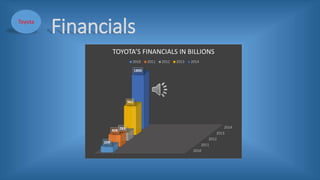
FinancialsToyota
2010
2011
2012
2013
2014
209
408
283
962
1800
TOYOTA’S FINANCIALS IN BILLIONS
2010 2011 2012 2013 2014
Market Analysis
•Target Brazil
•Economic infrastructure
•GDP 2.253 trillion
•Consistent economic growth, relatively low inflation
rates and improvements in overall living conditions
•Vast amount of resources
•Rise of the middle class
Toyota
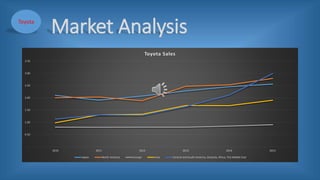
-
0.50
1.00
1.50
2.00
2.50
3.00
3.50
2010 2011 2012 2013 2014 2015
Toyota Sales
Japan North America Europe Asia Central and South America, Oceania, Africa, The Middle East
Market AnalysisToyota
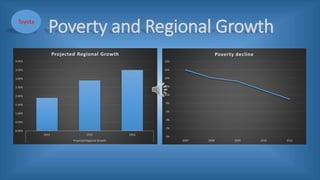
Poverty and Regional Growth
0.00%
0.50%
1.00%
1.50%
2.00%
2.50%
3.00%
3.50%
4.00%
2014 2015 2016
Projected Regional Growth
0%
2%
4%
6%
8%
10%
12%
14%
16%
18%
2007 2008 2009 2010 2012
Poverty decline
Toyota
Systematical approach
•Utilizing a systematical approach by defining and
solving the following:
• Economical risks
• Political risks
• Limits Toyota will face with expansion in Brazil
Toyota
Define
•Marketing vision: To increase sales and
productivity
•Target Market: Brazil
•Ideal customer: Middle Class
•Product: Compact automobiles which exceed
100mpg
Toyota
Political Risks
•Defined
•High costs due to labor laws(CLT)
• 16,000 labor unions
• Working hours may not exceed 48 hours a week
• Every employee is entitled to 30 days PTO every 12
months; If dismissed must pay back 1/3 of vacation
earned
• Annual bonus equal to one months salary
• 120 days of leave for pregnant women
• Transportation and meals
Toyota
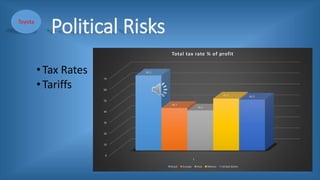
Political Risks
•Tax Rates
•Tariffs
0
10
20
30
40
50
60
70
1
68.3
38.7
36.5
47.3 46.3
Total tax rate % of profit
Brazil Europe Asia Mexico United States
Toyota
Economical Risks
•Inflation continues to rise
•Interest rates on the rise
•Foreign exchange and capital inflows
•Fiscal policies
Toyota
Specific Limitations
•Threats
•Cultural differences
• Values and norms
• Social structure
• Groups
• Religious and ethical systems
• Language
• Education
Toyota
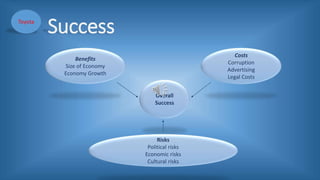
Success
Benefits
Size of Economy
Economy Growth
Costs
Corruption
Advertising
Legal Costs
Overall
Success
Risks
Political risks
Economic risks
Cultural risks
Toyota
Strategies and Solutions
•Localization strategy
• Introducing affordable fuel economy cars
• Will stabilize the costs
• Will create a demand due to lower fuel costs
• Continue to reduce labor and material costs will help
fight economic and political risks
• This strategy will help fight continued inflation rates
Toyota
Localized Production
•Opening factories throughout Brazil will help
create:
• Trust
• Loyalty
• Build rapport
• Create jobs and better cost of living
Toyota
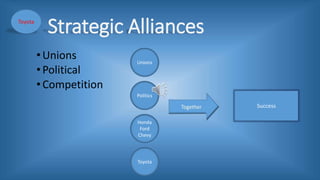
Strategic Alliances
•Unions
•Political
•Competition
Unions
Politics
Honda
Ford
Chevy
Toyota
Success
Toyota
Cultural Strategy
•Hiring managers and executives within the culture
•Giving back to the community by
• Fixing roads and housing
• Setting up committees to feed the poor
• Implementing tuition reimbursement for employees
going to college within the community
• Only buying products from Brazil for manufacturing
Toyota
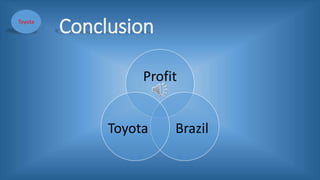
ConclusionToyota
Profit
BrazilToyota
References
2014 Index of Economic Freedom, Brazil. (2014, July 13). Retrieved from
The Heritage Foundation: http://www.heritage.org/index/country/brazil
Brazil. (2014, August 8). Retrieved from The World Bank:
http://data.worldbank.org/country/brazil
Brazil's surging auto industry tries to keep up with demand.
(2012, January 27). Retrieved from Cars Direct:
http://www.carsdirect.com/automotive-news/brazils-surging-auto-
industry-tries-to-keep-up-with-demand
De Sainte Croix, S. (2012, March 23). Middle Class Growth in Brazil: Daily.
Retrieved from The Rio Times: http://riotimesonline.com/brazil-news/rio-
business/middle-class-growth-in-brazil/
Toyota
References
Jordan, L. (2012, September 21). Brazil says over 50% in Middle Class:
Daily. Retrieved from The Rio Times:
http://riotimesonline.com/brazil-news/rio-politics/brazil-says-over-
50-in-middle-class/#
Malinowski, M. (2009, August 13). Tax Laws discourage firms from
outsourcing abroad. Retrieved from Business insights in Latin
America:
http://www.bnamericas.com/news/technology/Tax_laws_discourag
Menghani, J. (2013). Marketing Strategies and Plans of Toyota Motors.
Vile Parle: M.L. Dahanukar College of Commerce.
Toyota
References
Muller, J. (2012, October 22). Why The World's Automakers Love Brazil.
Retrieved from Forbes:
http://www.forbes.com/sites/joannmuller/2012/10/05/why-the-
worlds-automakers-are-loving-brazil/
Paying taxes. (2014, August 9). Retrieved from The World Bank:
http://www.doingbusiness.org/data/exploretopics/paying-taxes
Toyota

Toyota Final Power Point

  • 2.
    Introduction •Executive summary •Description ofbusiness •Financials •Market Analysis •Explore political and economic risks •Marketing Strategy and solutions Toyota
  • 3.
    Executive Summary •“Since Toyota’sfounding we adhered to the core principle of contributing to society through the practice of manufacturing high-quality products and services. Our business practices and activities based on this core principle created values, beliefs and business methods that over the years have become a source of competitive advantage. These are the managerial values and business methods that are known collectively as the Toyota Way” (The fourteen principles of the Toyota Way, 2003).” Toyota
  • 4.
    Description of business •ToyotaMotor Corporation designs, manufactures, assembles, and sells passenger cars, minivans, commercial vehicles, and accessories in Japan, North America, Europe, Asia, and globally. •mini-sized cars, passenger vehicles, commercial vehicles, and auto parts under the Toyota brand name; mid-size cars Toyota
  • 5.
  • 6.
    Market Analysis •Target Brazil •Economicinfrastructure •GDP 2.253 trillion •Consistent economic growth, relatively low inflation rates and improvements in overall living conditions •Vast amount of resources •Rise of the middle class Toyota
  • 7.
    - 0.50 1.00 1.50 2.00 2.50 3.00 3.50 2010 2011 20122013 2014 2015 Toyota Sales Japan North America Europe Asia Central and South America, Oceania, Africa, The Middle East Market AnalysisToyota
  • 8.
    Poverty and RegionalGrowth 0.00% 0.50% 1.00% 1.50% 2.00% 2.50% 3.00% 3.50% 4.00% 2014 2015 2016 Projected Regional Growth Projected Regional Growth 0% 2% 4% 6% 8% 10% 12% 14% 16% 18% 2007 2008 2009 2010 2012 Poverty decline Toyota
  • 9.
    Systematical approach •Utilizing asystematical approach by defining and solving the following: • Economical risks • Political risks • Limits Toyota will face with expansion in Brazil Toyota
  • 10.
    Define •Marketing vision: Toincrease sales and productivity •Target Market: Brazil •Ideal customer: Middle Class •Product: Compact automobiles which exceed 100mpg Toyota
  • 11.
    Political Risks •Defined •High costsdue to labor laws(CLT) • 16,000 labor unions • Working hours may not exceed 48 hours a week • Every employee is entitled to 30 days PTO every 12 months; If dismissed must pay back 1/3 of vacation earned • Annual bonus equal to one months salary • 120 days of leave for pregnant women • Transportation and meals Toyota
  • 12.
    Political Risks •Tax Rates •Tariffs 0 10 20 30 40 50 60 70 1 68.3 38.7 36.5 47.346.3 Total tax rate % of profit Brazil Europe Asia Mexico United States Toyota
  • 13.
    Economical Risks •Inflation continuesto rise •Interest rates on the rise •Foreign exchange and capital inflows •Fiscal policies Toyota
  • 14.
    Specific Limitations •Threats •Cultural differences •Values and norms • Social structure • Groups • Religious and ethical systems • Language • Education Toyota
  • 15.
    Success Benefits Size of Economy EconomyGrowth Costs Corruption Advertising Legal Costs Overall Success Risks Political risks Economic risks Cultural risks Toyota
  • 16.
    Strategies and Solutions •Localizationstrategy • Introducing affordable fuel economy cars • Will stabilize the costs • Will create a demand due to lower fuel costs • Continue to reduce labor and material costs will help fight economic and political risks • This strategy will help fight continued inflation rates Toyota
  • 17.
    Localized Production •Opening factoriesthroughout Brazil will help create: • Trust • Loyalty • Build rapport • Create jobs and better cost of living Toyota
  • 18.
  • 19.
    Cultural Strategy •Hiring managersand executives within the culture •Giving back to the community by • Fixing roads and housing • Setting up committees to feed the poor • Implementing tuition reimbursement for employees going to college within the community • Only buying products from Brazil for manufacturing Toyota
  • 20.
  • 21.
    References 2014 Index ofEconomic Freedom, Brazil. (2014, July 13). Retrieved from The Heritage Foundation: http://www.heritage.org/index/country/brazil Brazil. (2014, August 8). Retrieved from The World Bank: http://data.worldbank.org/country/brazil Brazil's surging auto industry tries to keep up with demand. (2012, January 27). Retrieved from Cars Direct: http://www.carsdirect.com/automotive-news/brazils-surging-auto- industry-tries-to-keep-up-with-demand De Sainte Croix, S. (2012, March 23). Middle Class Growth in Brazil: Daily. Retrieved from The Rio Times: http://riotimesonline.com/brazil-news/rio- business/middle-class-growth-in-brazil/ Toyota
  • 22.
    References Jordan, L. (2012,September 21). Brazil says over 50% in Middle Class: Daily. Retrieved from The Rio Times: http://riotimesonline.com/brazil-news/rio-politics/brazil-says-over- 50-in-middle-class/# Malinowski, M. (2009, August 13). Tax Laws discourage firms from outsourcing abroad. Retrieved from Business insights in Latin America: http://www.bnamericas.com/news/technology/Tax_laws_discourag Menghani, J. (2013). Marketing Strategies and Plans of Toyota Motors. Vile Parle: M.L. Dahanukar College of Commerce. Toyota
  • 23.
    References Muller, J. (2012,October 22). Why The World's Automakers Love Brazil. Retrieved from Forbes: http://www.forbes.com/sites/joannmuller/2012/10/05/why-the- worlds-automakers-are-loving-brazil/ Paying taxes. (2014, August 9). Retrieved from The World Bank: http://www.doingbusiness.org/data/exploretopics/paying-taxes Toyota