Total Quality Parameters – New Ventures Venkatesh Sarvasiddhi Head-Direct Marketing HCL Technologies
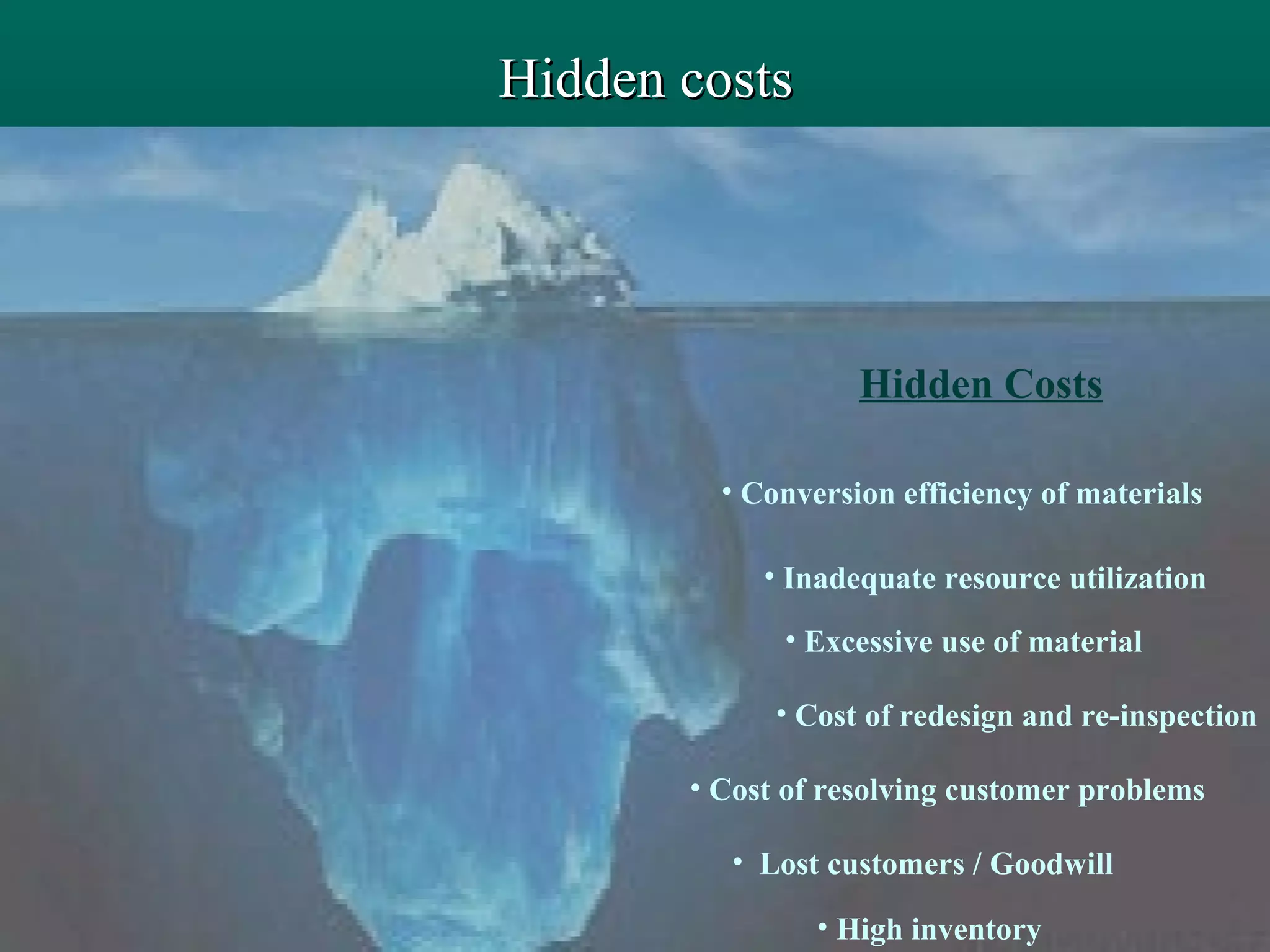
Hidden costs Hidden Costs Excessive use of material High inventory Inadequate resource utilization Cost of redesign and re-inspection Cost of resolving customer problems Lost customers / Goodwill Conversion efficiency of materials
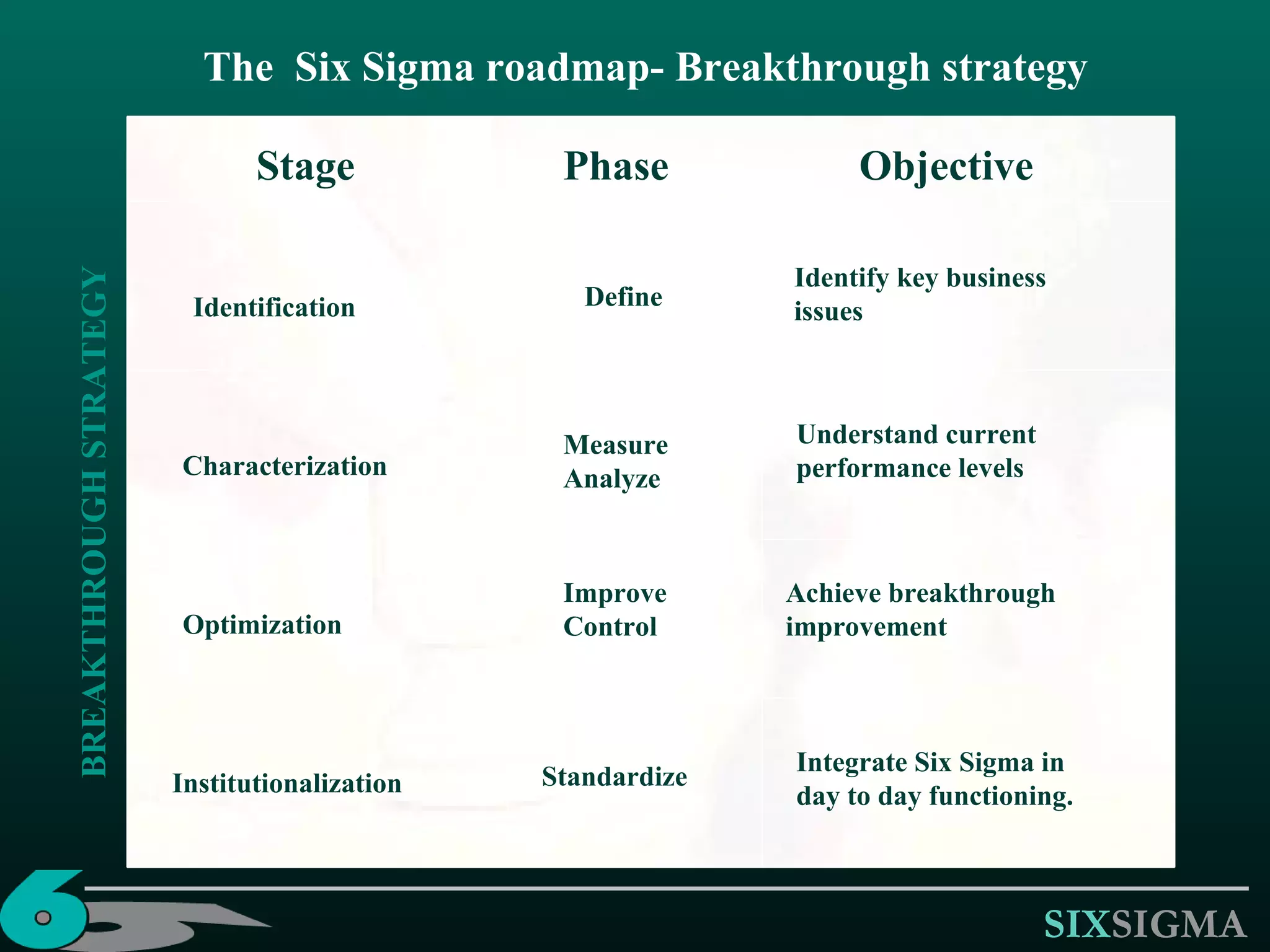
BREAKTHROUGH STRATEGY Identification Characterization Optimization Institutionalization Define  Measure Analyze Improve Control Standardize Identify key business issues Understand current  performance levels Achieve breakthrough improvement Integrate Six Sigma in  day to day functioning. Stage Phase Objective The  Six Sigma roadmap- Breakthrough strategy
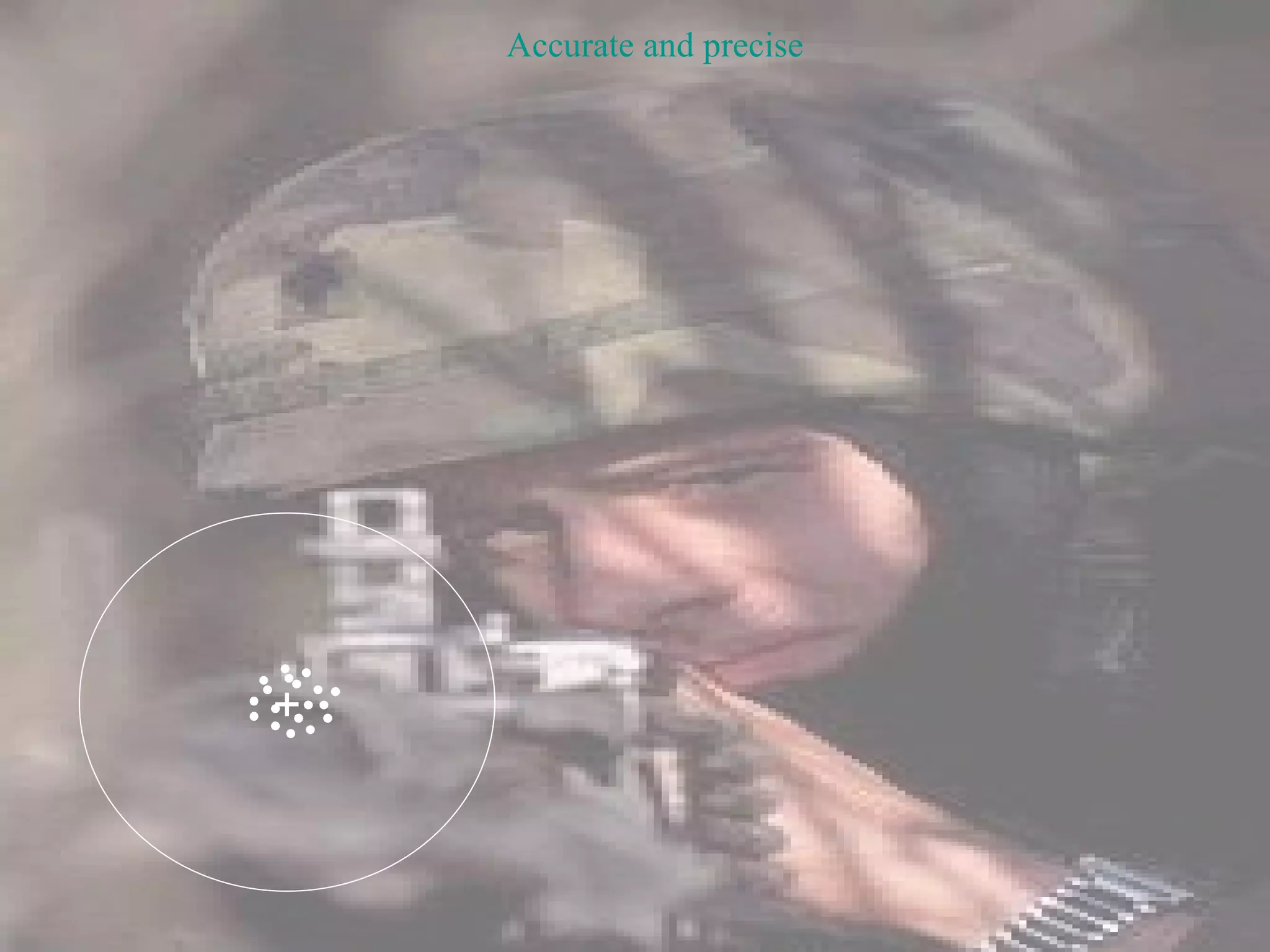
Accurate and Precision Accuracy & precision of a process can be best explained by using the analogy of a rifle firing at a target.
Accurate and precise +
What is it? creating value for our customers
“ Six Sigma” :  What is it? “ A comprehensive and flexible system for achieving, sustaining and maximizing business success.  Six Sigma is uniquely driven by close understanding of customer needs, disciplined use of facts, data and statistical analysis, and diligent attention to managing, improving and reinventing business processes.” --  The Six Sigma Way , by Pande, Newman and Cavanaugh creating value for our customers
Six Sigma :  What is it? Specifically – Customer-focused, fact and data-based decision making driving out waste and defects which creates value for our customers. It is just NOT Supply Chain or Manufacturing creating value for our customers
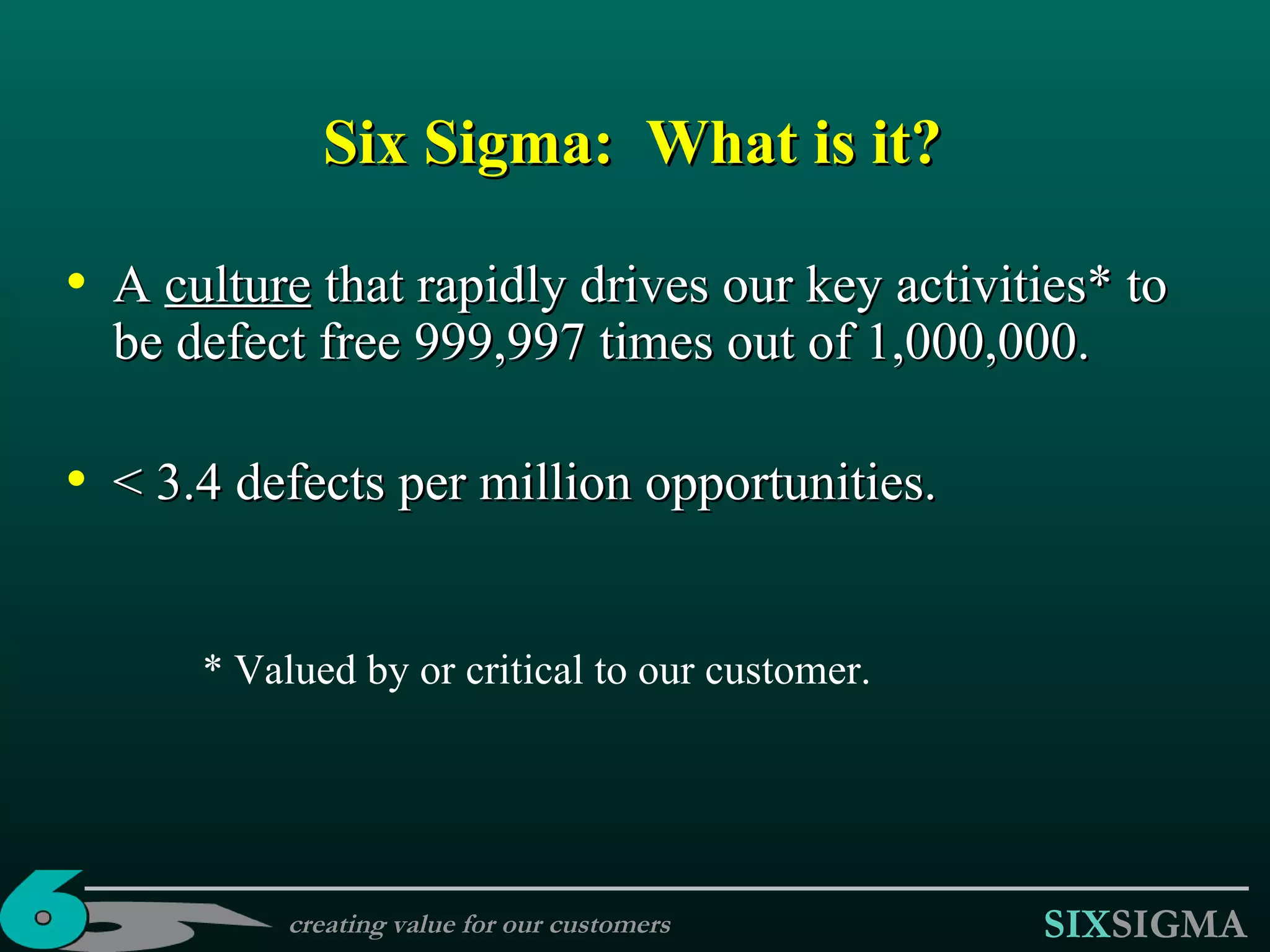
A  culture  that rapidly drives our key activities* to be defect free 999,997 times out of 1,000,000. < 3.4 defects per million opportunities. Six Sigma :  What is it? * Valued by or critical to our customer. creating value for our customers
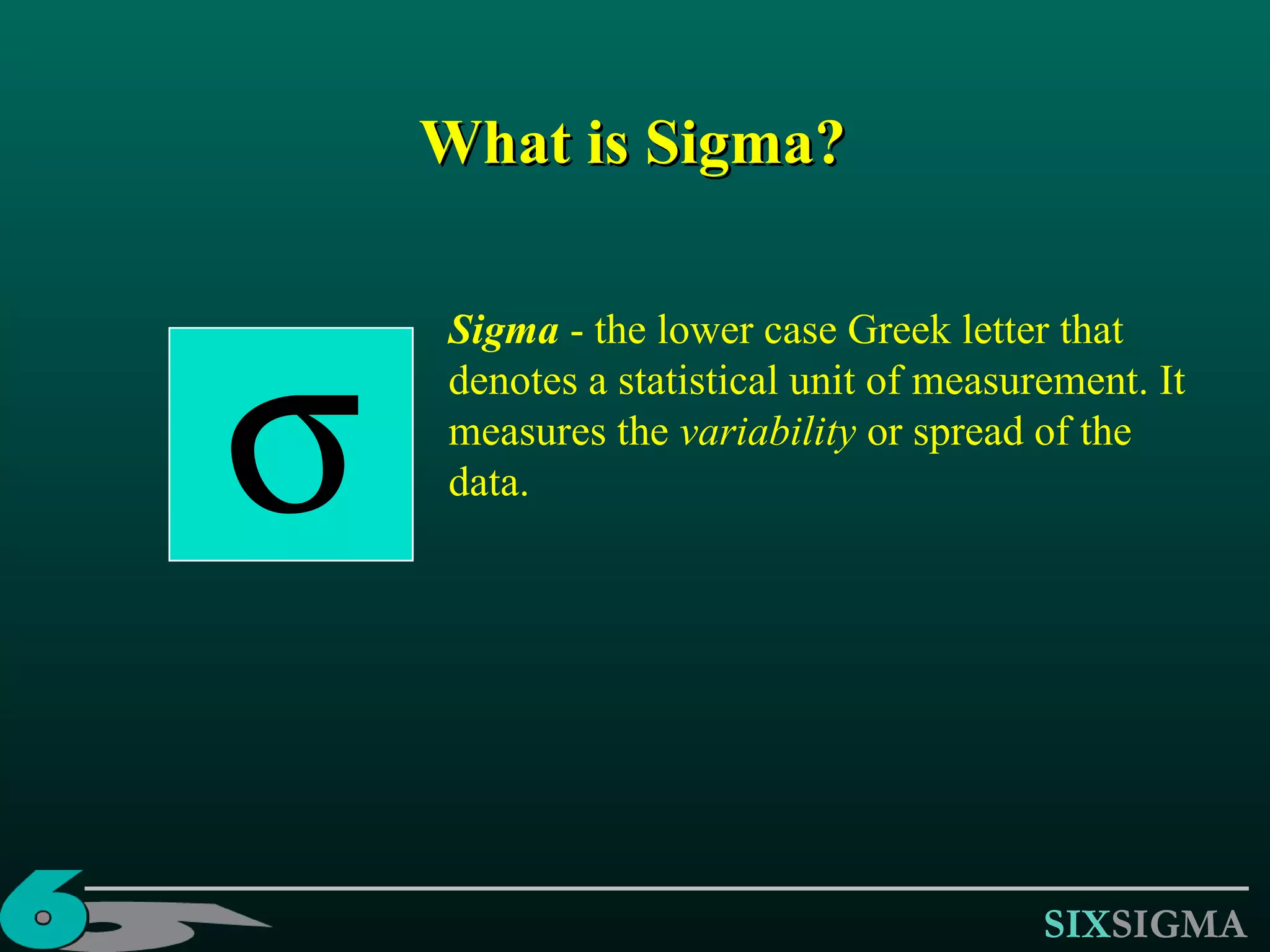
Sigma  - the lower case Greek letter that denotes a statistical unit of measurement. It measures the  variability  or spread of the data. What is Sigma? 
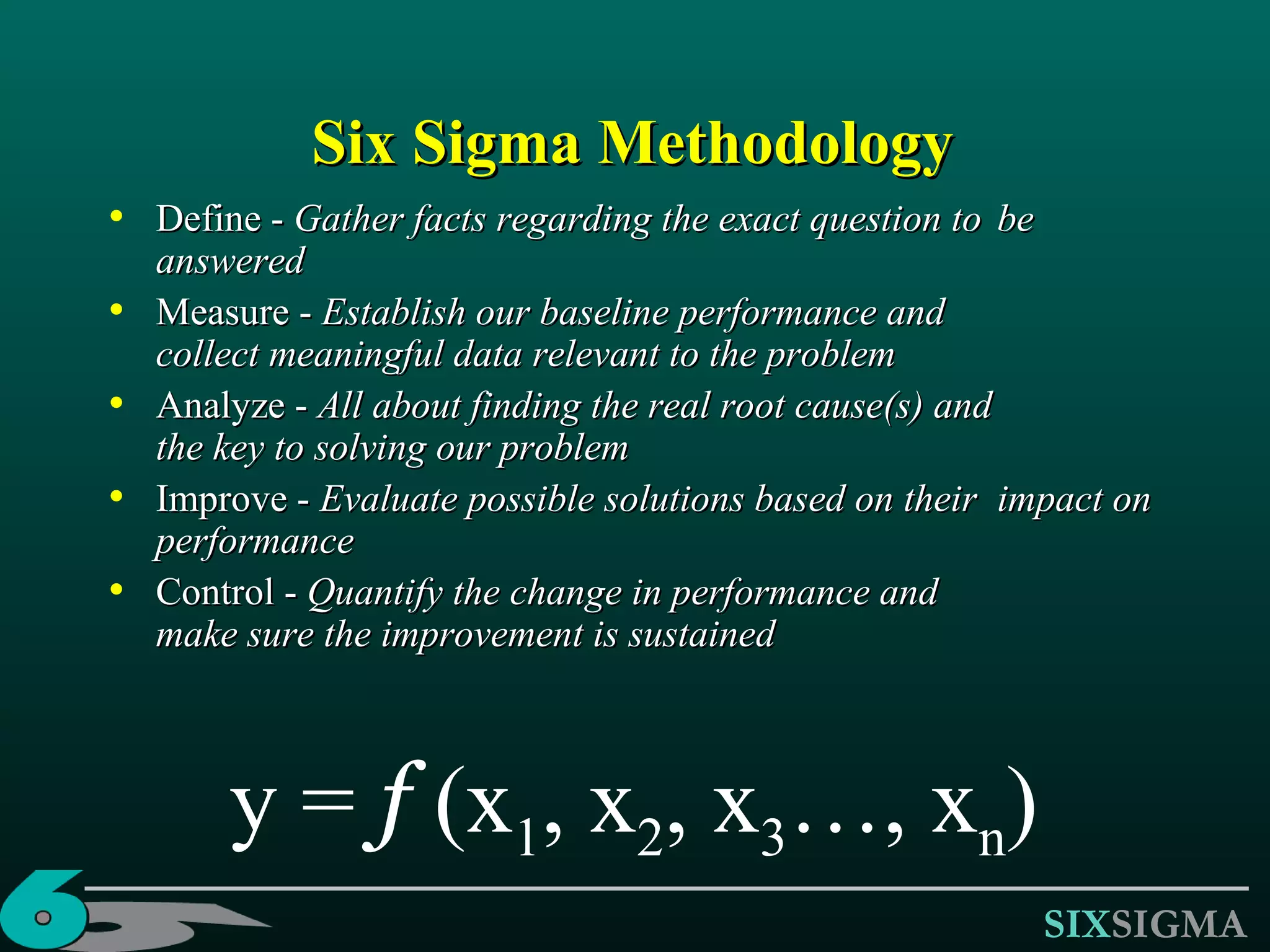
Six Sigma Methodology Define -  Gather facts regarding the exact question to  be answered Measure -  Establish our baseline performance and  collect meaningful data relevant to the problem Analyze -  All about finding the real root cause(s) and  the key to solving our problem Improve -  Evaluate possible solutions based on their  impact on performance Control -  Quantify the change in performance and  make sure the improvement is sustained y =  f  (x 1 , x 2 , x 3 …, x n )
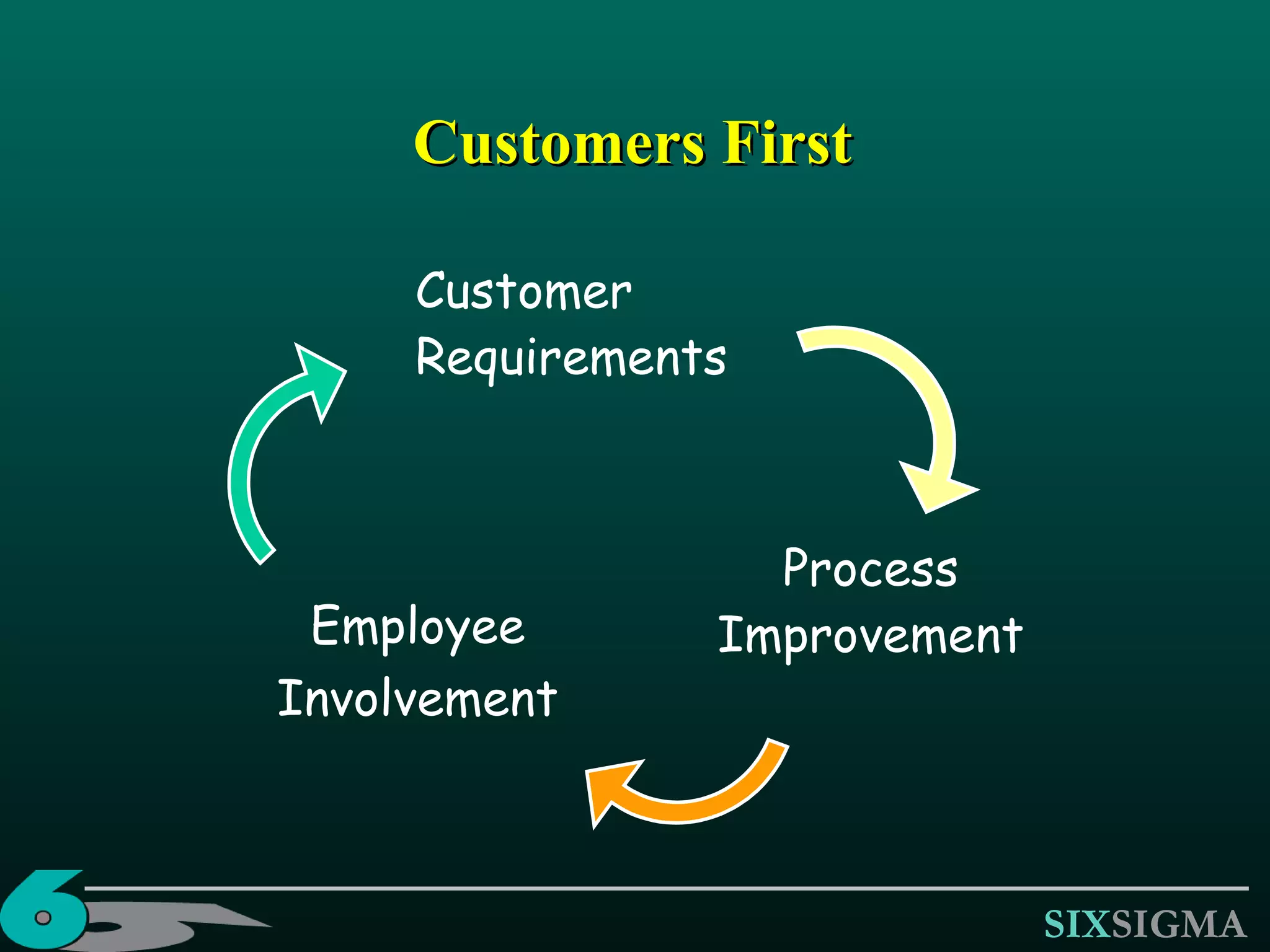
Customers First Customer Requirements Process Improvement Employee Involvement
Customer Retention Acquiring a new customer costs more than retaining an existing customer It can take years to sign a new customer and only minutes to lose one Standing still is not an option Companies measure customer retention
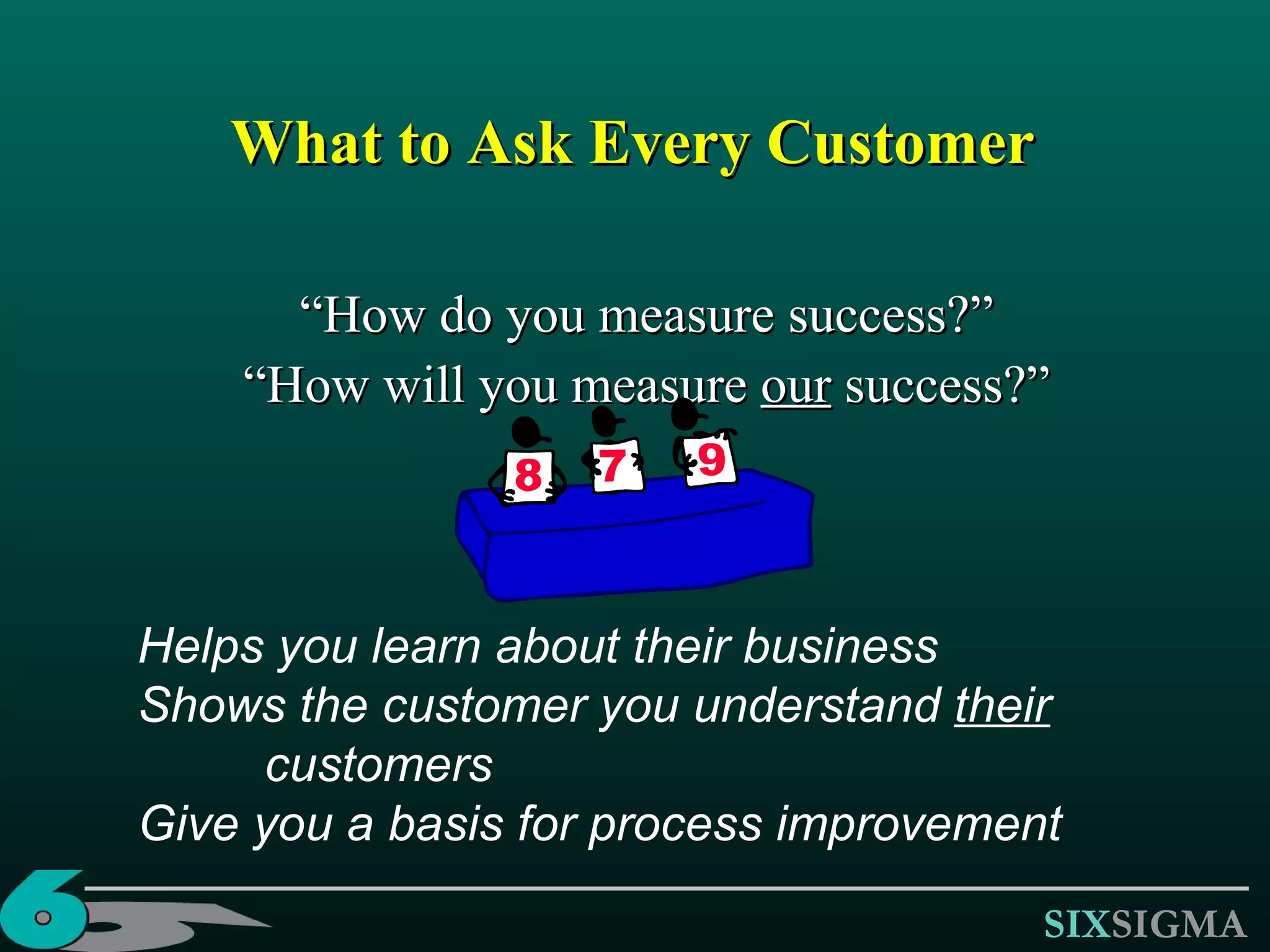
What to Ask Every Customer “How do you measure success?” “How will you measure  our  success?” Helps you learn about their business Shows the customer you understand  their   customers Give you a basis for process improvement
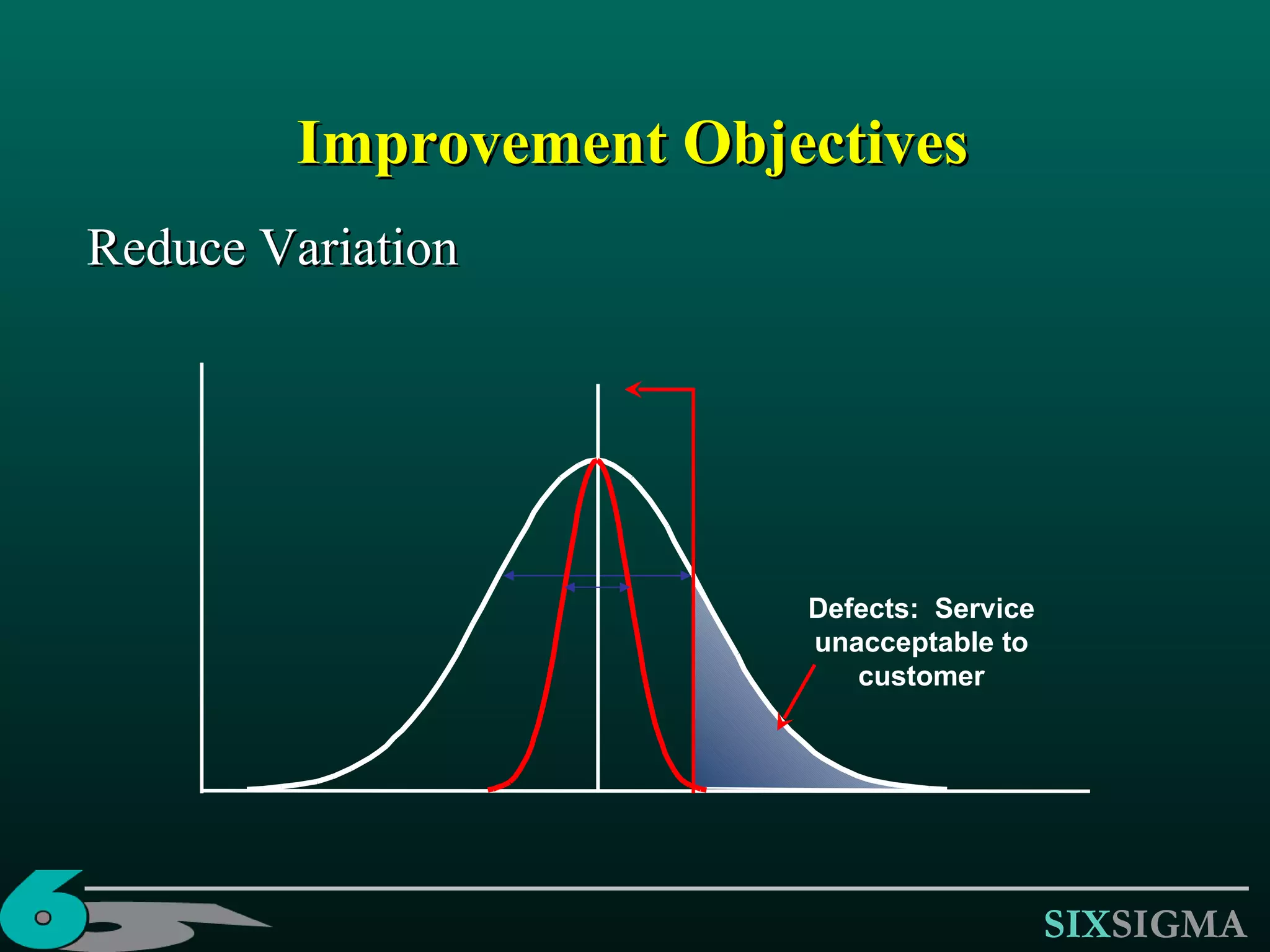
Reduce Variation Improvement Objectives Defects:  Service unacceptable to customer
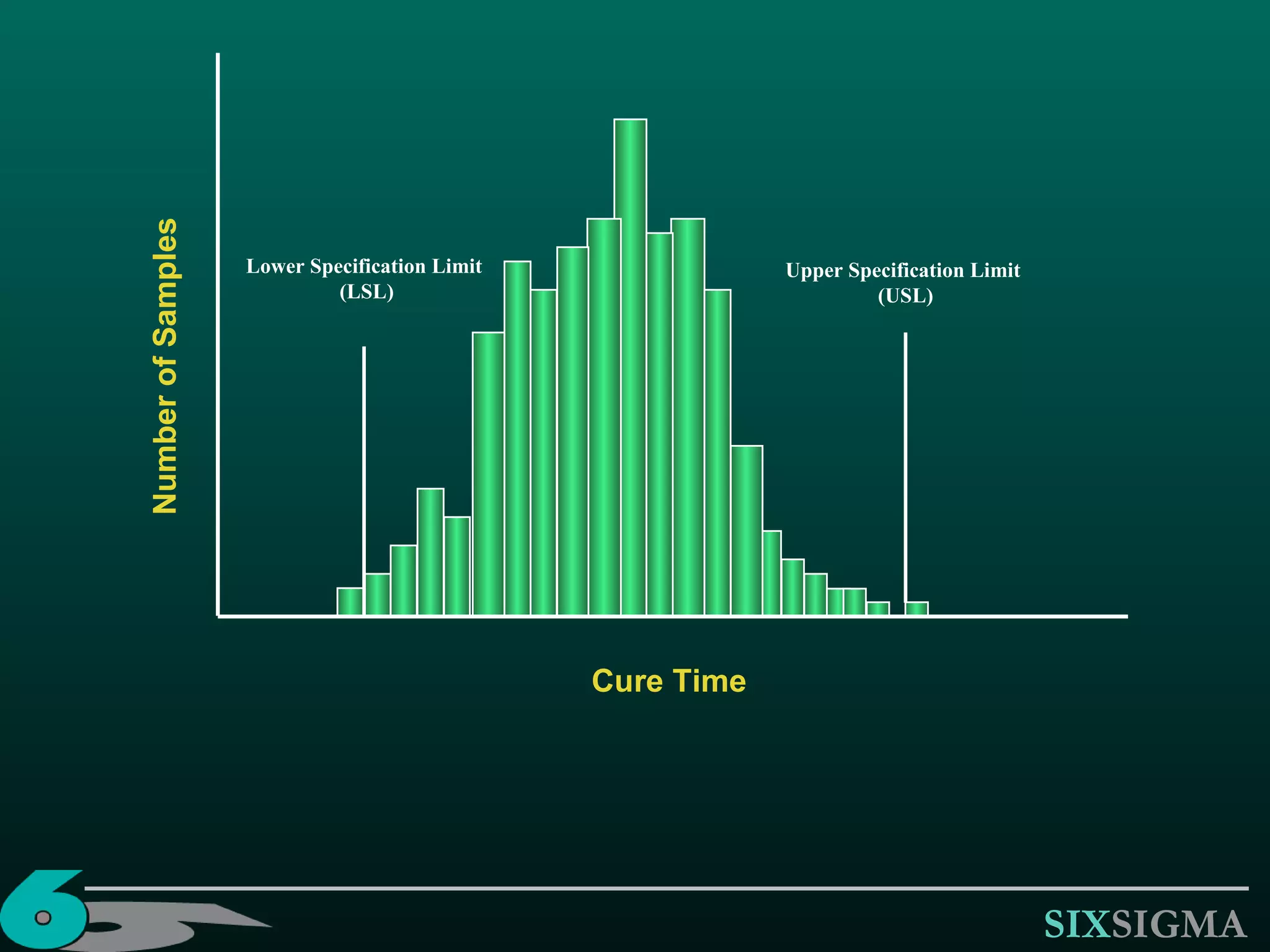
Cure Time Number of Samples Lower Specification Limit (LSL) Upper Specification Limit  (USL)
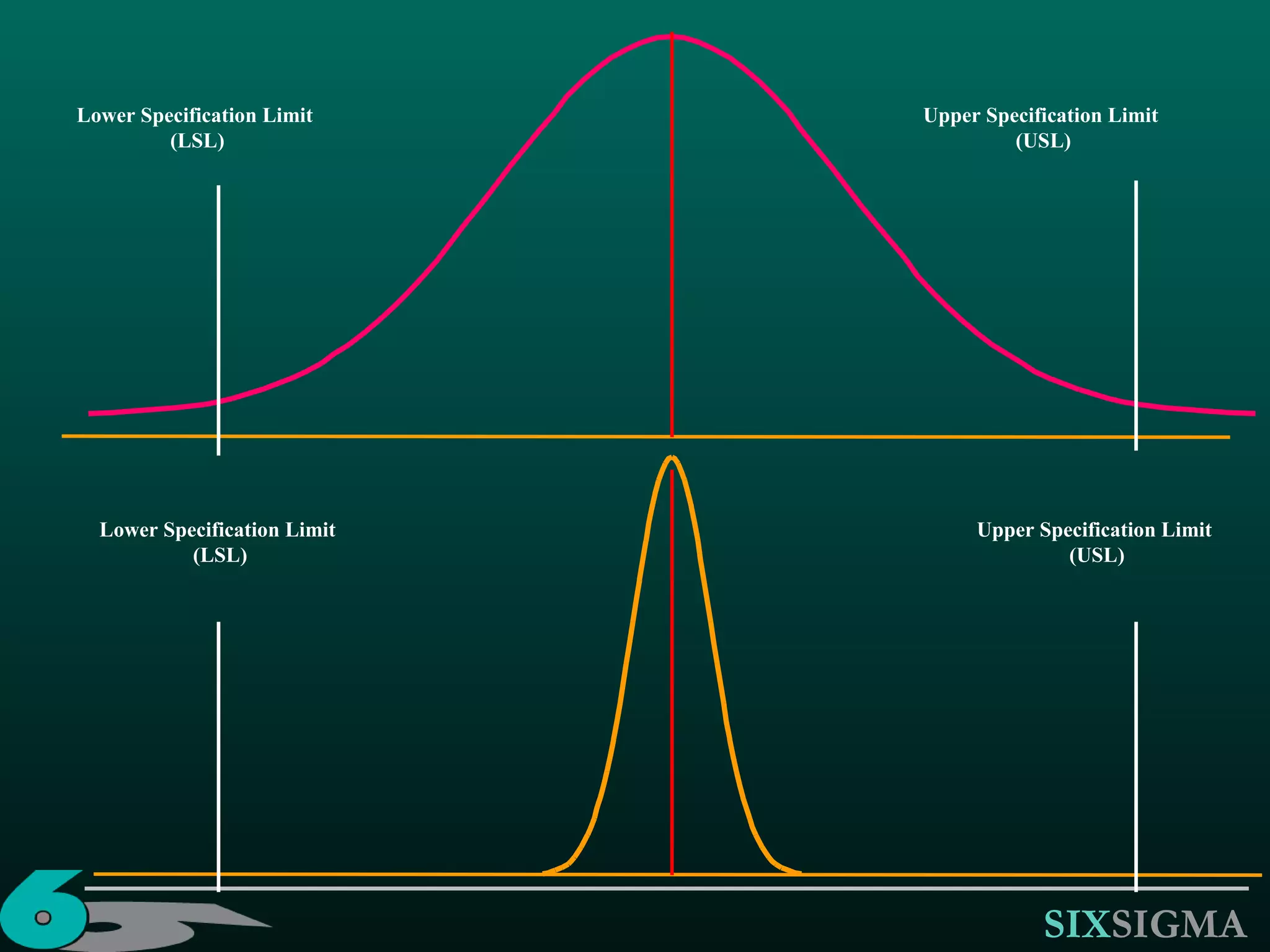
Upper Specification Limit  (USL) Lower Specification Limit (LSL) Lower Specification Limit (LSL) Upper Specification Limit  (USL)
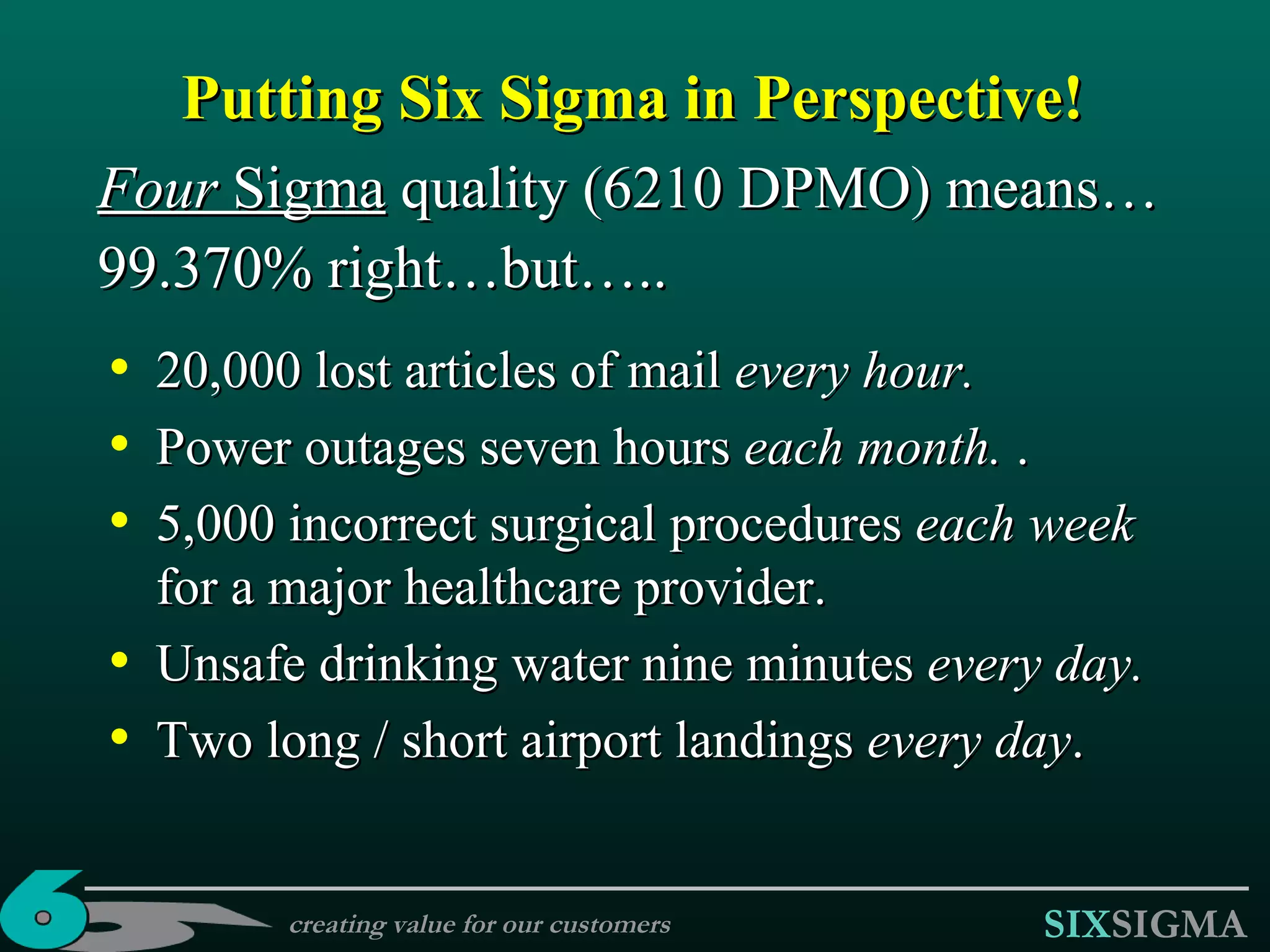
Putting Six Sigma in Perspective! 20,000 lost articles of mail  every hour.   Power outages seven hours  each month.  . 5,000 incorrect surgical procedures  each week  for a major healthcare provider. Unsafe drinking water nine minutes  every day. Two long / short airport landings  every day .  Four  Sigma  quality ( 6210 DPMO)  means… 99.370% right…but….. creating value for our customers
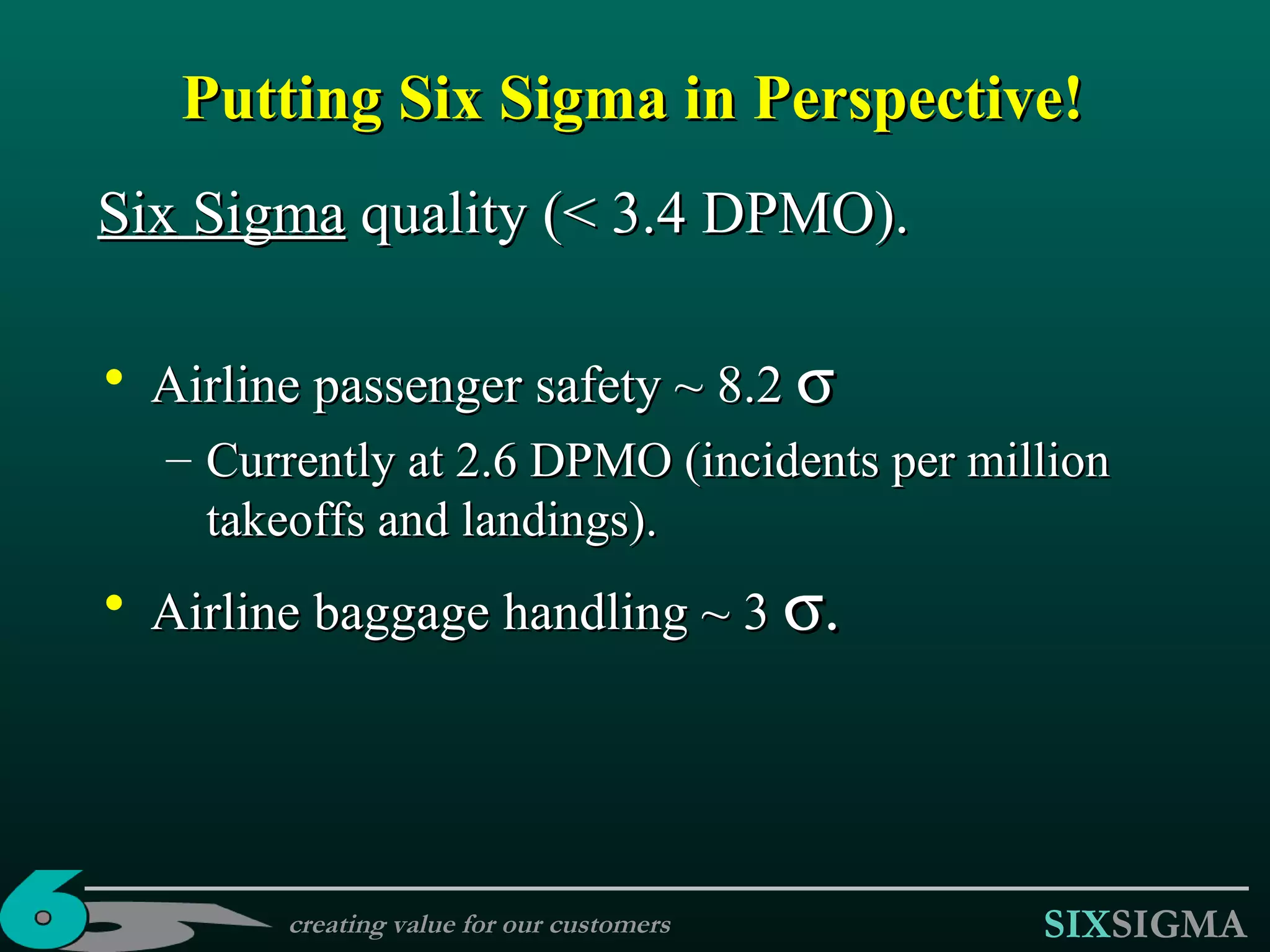
Putting Six Sigma in Perspective! Airline passenger safety ~ 8.2   Currently at 2.6 DPMO (incidents per million takeoffs and landings). Airline baggage handling ~ 3   Six  Sigma  quality ( < 3.4 DPMO). creating value for our customers
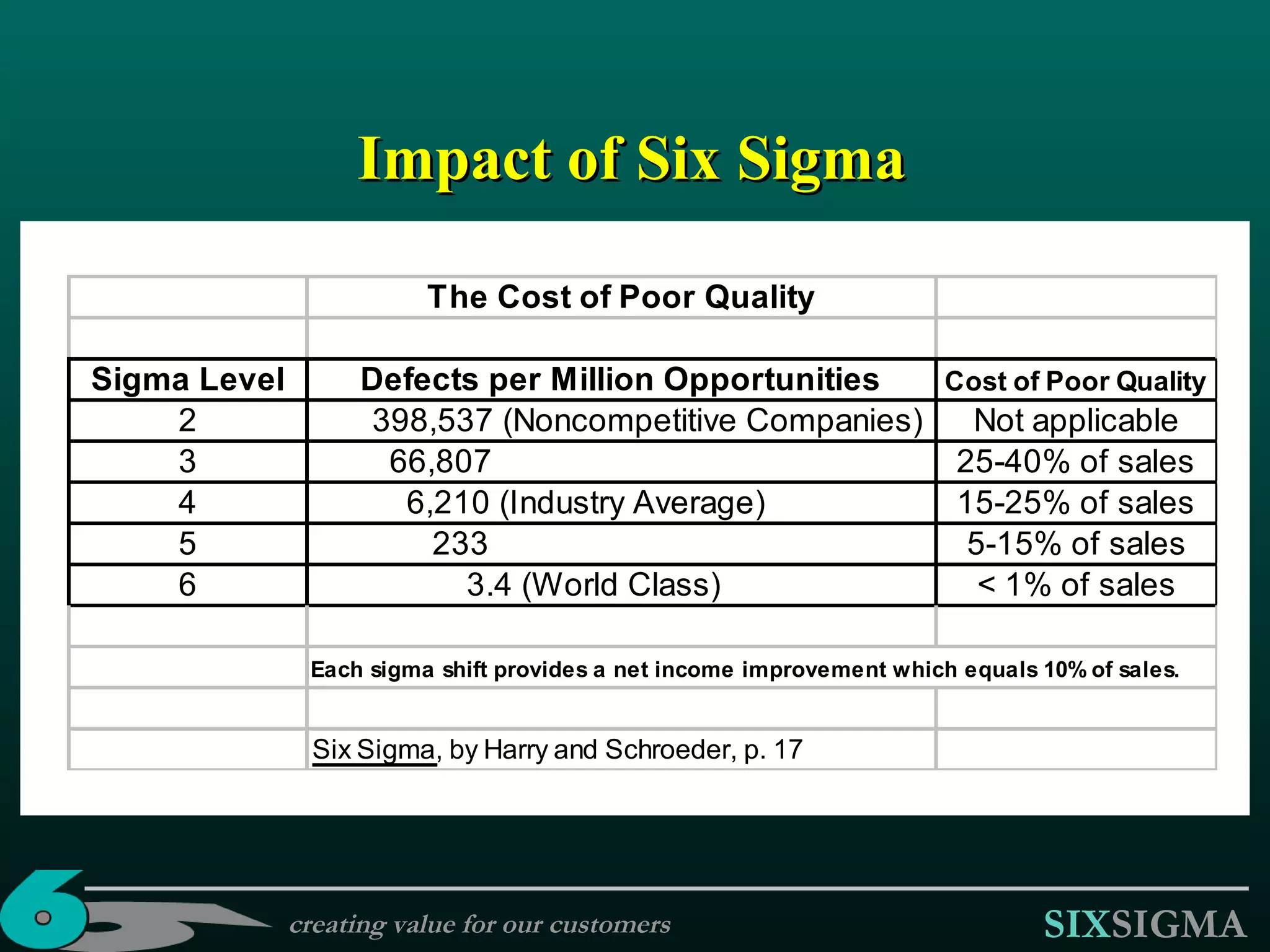
Impact of Six Sigma creating value for our customers
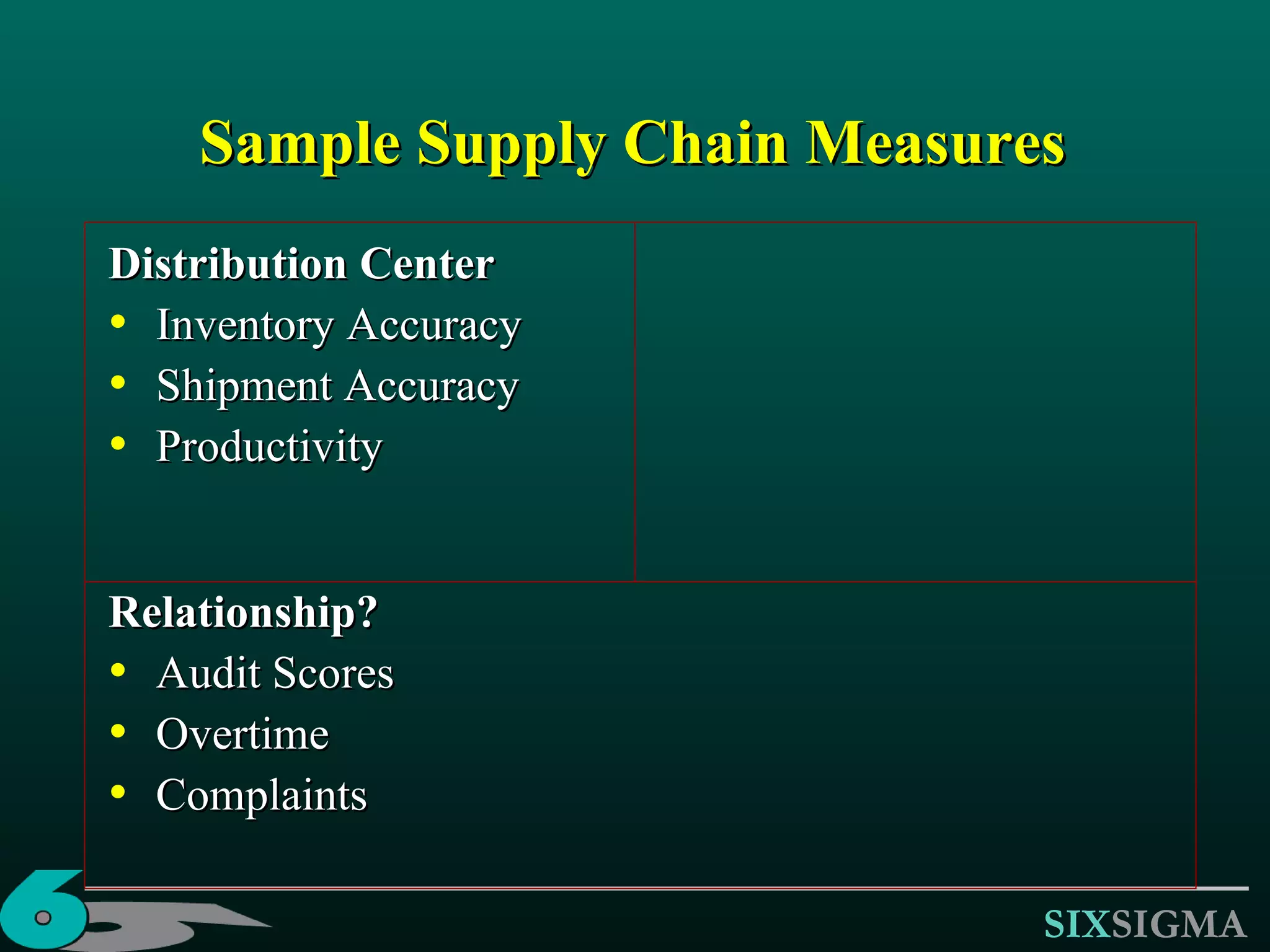
Sample Supply Chain Measures Distribution Center Inventory Accuracy Shipment Accuracy Productivity Relationship? Audit Scores Overtime Complaints
1987 Motorola introduced Quality Program now known as Six Sigma  (Bill Smith) Allied Signal picked it up.   G.E. Success…. Capital Services Medical Systems (CAT Scan) Dozens of others…... Learned the h ighest  q uality  p roducer is also the  l owest  c ost  p roducer. Learned customer loyalty  of a Six Sigma company is  ~3X  that of the  average  company . It all began at…..Motorola…not G.E. creating value for our customers
Who else is doing Six Sigma? Avery Dennison Dow DuPont Foxboro Sony Deere & Co.  (John Deere) Delphi Allied Signal Ford Johnson & Johnson Caterpillar Lockheed Martin IBM CitiGroup (Visa/MasterCard) G . E . J.P. Morgan ServiceMaster creating value for our customers
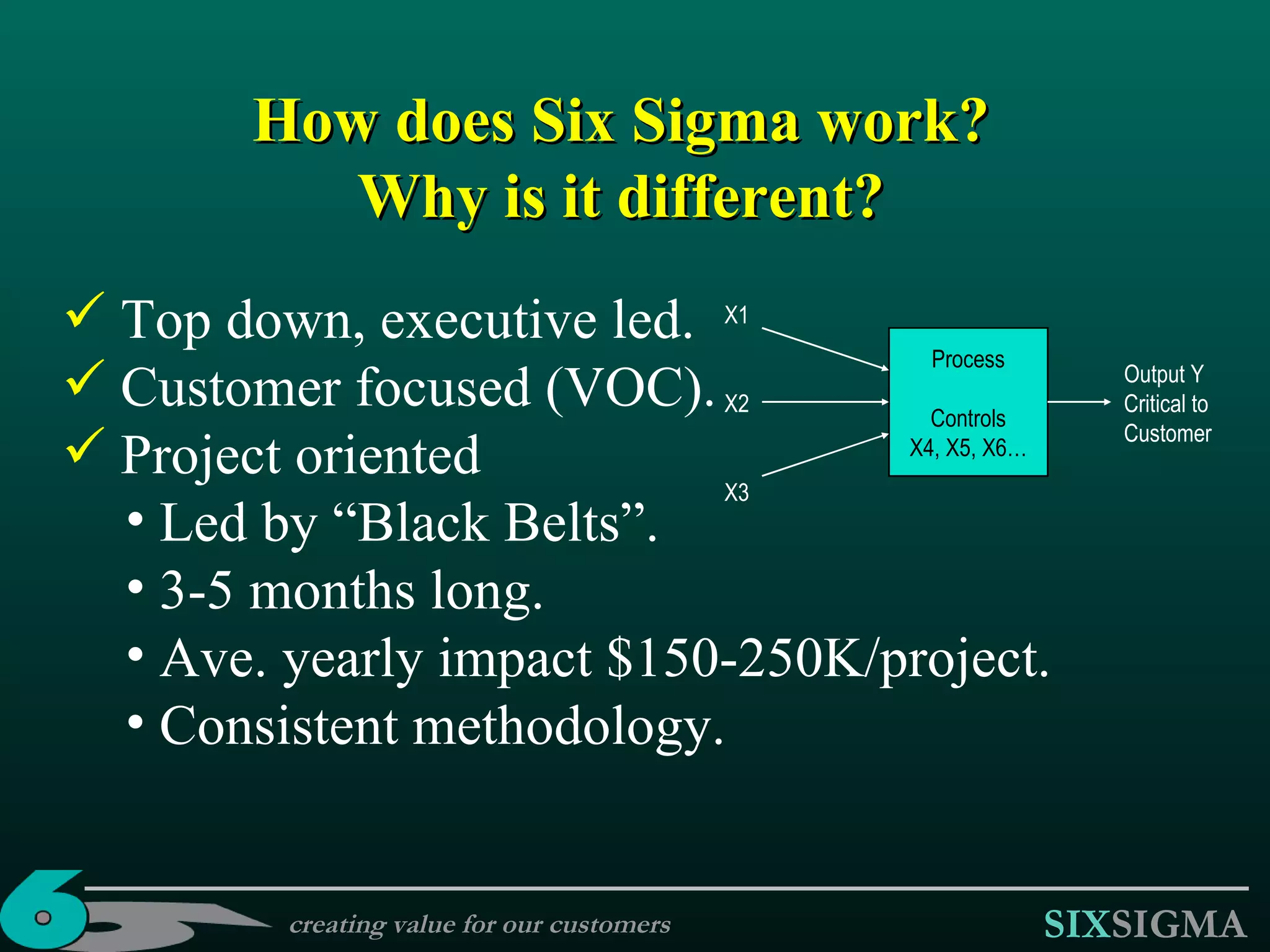
How does Six Sigma work? Why is it different? Top down, executive led. Customer focused (VOC). Project oriented Led by “Black Belts”. 3-5 months long. Ave. yearly impact $150-250K/project. Consistent methodology.  creating value for our customers Process Controls X4, X5, X6… X1 X2 X3 Output Y Critical to  Customer
What is the “Methodology”? D efine M easure A nalyze I mprove C ontrol D   M   A   I   C creating value for our customers
What are the “The Tools”? Six Sigma is a  discipline   using these tools:  Advanced analysis tools (Design of Experiment, Linear Regression, etc.) Re-engineering Lean manufacturing Supply chain improvements Design for Six Sigma (DFSS) For development of new products, new services, new processes, and new workflows. creating value for our customers
Who are the other “Key Players”? Senior Champion  – Owns Six Sigma for the Business. Champion  – Identifies  and resources  project s. Master  B lack  B elt  – Serves as coach  to the Black Belt and project team. Black  B elt  – Leads the project team, full time .   Green  B elts  – Team members (part-time) from the organization sponsoring the project Project Sponsors  – Team leaders. Process Owners  – Owns the process / workflow. Executive Six Sigma Steering Committee  – Oversees progress, resolves issues, ensures success enterprise-wide. creating value for our customers
Your Team All associates must look for improvement opportunities They must be rewarded for finding them !! You must train them to understand how to investigate Training in a classroom setting is not sufficient
Summary “take aways” Customer focused….Driven by the Voice of the Customer. Strong top management leadership, commitment, and involvement. Very Key! Project orientation with measurable financial results. Consistent methodology for all work.  Time driven. Time driven….more accountable.  Six Sigma - is a  discipline  not an “add on” or “program”. -  NOT  a supply chain/manufacturing activity. -  No new tools ….new ways to apply them!   Goals Value for the Customer (i.e. no defects or waste & low cost) Improved productivity = profitability. Customer success and satisfaction + Profitability = Growth creating value for our customers
creating value for our customers References…… The Six Sigma Way  (ISBN 0-07-135806-4) by Pande, Neuman, and Cavanaugh The Power of Six Sigma  (ISBN 0-7931-4434-5) by Subir Chowdhury Six Sigma  (ISBN 0-385-49437-8) by Harry and Schroeder.  The Six Sigma Handbook  (ISBN 0-07-137233-4) by Pyzdek is more technical and becoming the 'handbook' for Black Belts.
creating value for our customers References…… Also...you might consider: www.6-sigma.com www.sixsigma.co.uk www.sixsigmasystems.com www.isixsigma.com

Total quality parameters - new ventures

  • 1.
    Total Quality Parameters– New Ventures Venkatesh Sarvasiddhi Head-Direct Marketing HCL Technologies
  • 2.
    Hidden costs HiddenCosts Excessive use of material High inventory Inadequate resource utilization Cost of redesign and re-inspection Cost of resolving customer problems Lost customers / Goodwill Conversion efficiency of materials
  • 3.
    BREAKTHROUGH STRATEGY IdentificationCharacterization Optimization Institutionalization Define Measure Analyze Improve Control Standardize Identify key business issues Understand current performance levels Achieve breakthrough improvement Integrate Six Sigma in day to day functioning. Stage Phase Objective The Six Sigma roadmap- Breakthrough strategy
  • 4.
    Accurate and PrecisionAccuracy & precision of a process can be best explained by using the analogy of a rifle firing at a target.
  • 5.
  • 6.
    What is it?creating value for our customers
  • 7.
    “ Six Sigma”: What is it? “ A comprehensive and flexible system for achieving, sustaining and maximizing business success. Six Sigma is uniquely driven by close understanding of customer needs, disciplined use of facts, data and statistical analysis, and diligent attention to managing, improving and reinventing business processes.” -- The Six Sigma Way , by Pande, Newman and Cavanaugh creating value for our customers
  • 8.
    Six Sigma : What is it? Specifically – Customer-focused, fact and data-based decision making driving out waste and defects which creates value for our customers. It is just NOT Supply Chain or Manufacturing creating value for our customers
  • 9.
    A culture that rapidly drives our key activities* to be defect free 999,997 times out of 1,000,000. < 3.4 defects per million opportunities. Six Sigma : What is it? * Valued by or critical to our customer. creating value for our customers
  • 10.
    Sigma -the lower case Greek letter that denotes a statistical unit of measurement. It measures the variability or spread of the data. What is Sigma? 
  • 11.
    Six Sigma MethodologyDefine - Gather facts regarding the exact question to be answered Measure - Establish our baseline performance and collect meaningful data relevant to the problem Analyze - All about finding the real root cause(s) and the key to solving our problem Improve - Evaluate possible solutions based on their impact on performance Control - Quantify the change in performance and make sure the improvement is sustained y = f (x 1 , x 2 , x 3 …, x n )
  • 12.
    Customers First CustomerRequirements Process Improvement Employee Involvement
  • 13.
    Customer Retention Acquiringa new customer costs more than retaining an existing customer It can take years to sign a new customer and only minutes to lose one Standing still is not an option Companies measure customer retention
  • 14.
    What to AskEvery Customer “How do you measure success?” “How will you measure our success?” Helps you learn about their business Shows the customer you understand their customers Give you a basis for process improvement
  • 15.
    Reduce Variation ImprovementObjectives Defects: Service unacceptable to customer
  • 16.
    Cure Time Numberof Samples Lower Specification Limit (LSL) Upper Specification Limit (USL)
  • 17.
    Upper Specification Limit (USL) Lower Specification Limit (LSL) Lower Specification Limit (LSL) Upper Specification Limit (USL)
  • 18.
    Putting Six Sigmain Perspective! 20,000 lost articles of mail every hour. Power outages seven hours each month. . 5,000 incorrect surgical procedures each week for a major healthcare provider. Unsafe drinking water nine minutes every day. Two long / short airport landings every day . Four Sigma quality ( 6210 DPMO) means… 99.370% right…but….. creating value for our customers
  • 19.
    Putting Six Sigmain Perspective! Airline passenger safety ~ 8.2  Currently at 2.6 DPMO (incidents per million takeoffs and landings). Airline baggage handling ~ 3  Six Sigma quality ( < 3.4 DPMO). creating value for our customers
  • 20.
    Impact of SixSigma creating value for our customers
  • 21.
    Sample Supply ChainMeasures Distribution Center Inventory Accuracy Shipment Accuracy Productivity Relationship? Audit Scores Overtime Complaints
  • 22.
    1987 Motorola introducedQuality Program now known as Six Sigma (Bill Smith) Allied Signal picked it up. G.E. Success…. Capital Services Medical Systems (CAT Scan) Dozens of others…... Learned the h ighest q uality p roducer is also the l owest c ost p roducer. Learned customer loyalty of a Six Sigma company is ~3X that of the average company . It all began at…..Motorola…not G.E. creating value for our customers
  • 23.
    Who else isdoing Six Sigma? Avery Dennison Dow DuPont Foxboro Sony Deere & Co. (John Deere) Delphi Allied Signal Ford Johnson & Johnson Caterpillar Lockheed Martin IBM CitiGroup (Visa/MasterCard) G . E . J.P. Morgan ServiceMaster creating value for our customers
  • 24.
    How does SixSigma work? Why is it different? Top down, executive led. Customer focused (VOC). Project oriented Led by “Black Belts”. 3-5 months long. Ave. yearly impact $150-250K/project. Consistent methodology. creating value for our customers Process Controls X4, X5, X6… X1 X2 X3 Output Y Critical to Customer
  • 25.
    What is the“Methodology”? D efine M easure A nalyze I mprove C ontrol D M A I C creating value for our customers
  • 26.
    What are the“The Tools”? Six Sigma is a discipline using these tools: Advanced analysis tools (Design of Experiment, Linear Regression, etc.) Re-engineering Lean manufacturing Supply chain improvements Design for Six Sigma (DFSS) For development of new products, new services, new processes, and new workflows. creating value for our customers
  • 27.
    Who are theother “Key Players”? Senior Champion – Owns Six Sigma for the Business. Champion – Identifies and resources project s. Master B lack B elt – Serves as coach to the Black Belt and project team. Black B elt – Leads the project team, full time . Green B elts – Team members (part-time) from the organization sponsoring the project Project Sponsors – Team leaders. Process Owners – Owns the process / workflow. Executive Six Sigma Steering Committee – Oversees progress, resolves issues, ensures success enterprise-wide. creating value for our customers
  • 28.
    Your Team Allassociates must look for improvement opportunities They must be rewarded for finding them !! You must train them to understand how to investigate Training in a classroom setting is not sufficient
  • 29.
    Summary “take aways”Customer focused….Driven by the Voice of the Customer. Strong top management leadership, commitment, and involvement. Very Key! Project orientation with measurable financial results. Consistent methodology for all work. Time driven. Time driven….more accountable. Six Sigma - is a discipline not an “add on” or “program”. - NOT a supply chain/manufacturing activity. - No new tools ….new ways to apply them! Goals Value for the Customer (i.e. no defects or waste & low cost) Improved productivity = profitability. Customer success and satisfaction + Profitability = Growth creating value for our customers
  • 30.
    creating value forour customers References…… The Six Sigma Way (ISBN 0-07-135806-4) by Pande, Neuman, and Cavanaugh The Power of Six Sigma (ISBN 0-7931-4434-5) by Subir Chowdhury Six Sigma (ISBN 0-385-49437-8) by Harry and Schroeder. The Six Sigma Handbook (ISBN 0-07-137233-4) by Pyzdek is more technical and becoming the 'handbook' for Black Belts.
  • 31.
    creating value forour customers References…… Also...you might consider: www.6-sigma.com www.sixsigma.co.uk www.sixsigmasystems.com www.isixsigma.com

Editor's Notes

  • #8 Sustained performance!!! Customer needs!!
  • #17  Notes:None
  • #19 We are currently operating at between 3.0 – 3.5 Sigma. Given this information, how satisfied are we at operating at this level?
  • #20 Airline fatalities are at 6.2 sigma.
  • #21 Six Sigma is 20,000 times better than 3 sigma.
  • #24 Key customers and key competitors……and shareholders.