Strategic Quality Planning
Definition
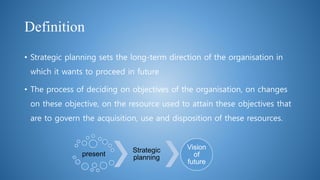
• Strategic planning sets the long-term direction of the organisation in
which it wants to proceed in future
• The process of deciding on objectives of the organisation, on changes
on these objective, on the resource used to attain these objectives that
are to govern the acquisition, use and disposition of these resources.
present
Strategic
planning
Vision
of
future
Seven steps to strategic planning
1. Identification of customer needs
2. Determination of customer positioning
3. Predict the future
4. Gap analysis
5. Closing the gap
6. Align the plan with the mission and vision
7. Implementation of the plan
Customer
needs
Customer
positioning
Predict the
future
Gap analysis
Closing gap
Alignment
Implementation
Reevaluate and
review
Difference between goals, objectives, and
plans
• Goals:
goals are attempts to improve organisation’s performance by making
mission statements concrete.
• The goals could be,
• Improving customer satisfaction target
• Cost reduction targets in a year
• Improving shareholder’s value
• Improving market share
Objectives
Objectives represent the operational definition of goals
Plans:
Typically describe specific tactics, assign responsibilities, identify how
sources can be allotted, schedule activities and efforts and specify vision targets
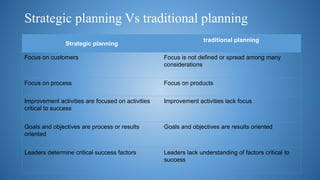
Strategic planning Vs traditional planning
Strategic planning
traditional planning
Focus on customers Focus is not defined or spread among many
considerations
Focus on process Focus on products
Improvement activities are focused on activities
critical to success
Improvement activities lack focus
Goals and objectives are process or results
oriented
Goals and objectives are results oriented
Leaders determine critical success factors Leaders lack understanding of factors critical to
success
THANK YOU

Strategic quality planning

  • 1.
  • 2.
    Definition • Strategic planningsets the long-term direction of the organisation in which it wants to proceed in future • The process of deciding on objectives of the organisation, on changes on these objective, on the resource used to attain these objectives that are to govern the acquisition, use and disposition of these resources. present Strategic planning Vision of future
  • 3.
    Seven steps tostrategic planning 1. Identification of customer needs 2. Determination of customer positioning 3. Predict the future 4. Gap analysis 5. Closing the gap 6. Align the plan with the mission and vision 7. Implementation of the plan Customer needs Customer positioning Predict the future Gap analysis Closing gap Alignment Implementation Reevaluate and review
  • 4.
    Difference between goals,objectives, and plans • Goals: goals are attempts to improve organisation’s performance by making mission statements concrete. • The goals could be, • Improving customer satisfaction target • Cost reduction targets in a year • Improving shareholder’s value • Improving market share Objectives Objectives represent the operational definition of goals Plans: Typically describe specific tactics, assign responsibilities, identify how sources can be allotted, schedule activities and efforts and specify vision targets
  • 5.
    Strategic planning Vstraditional planning Strategic planning traditional planning Focus on customers Focus is not defined or spread among many considerations Focus on process Focus on products Improvement activities are focused on activities critical to success Improvement activities lack focus Goals and objectives are process or results oriented Goals and objectives are results oriented Leaders determine critical success factors Leaders lack understanding of factors critical to success
  • 6.