Welcome	
  to
Implementing	
  Management	
  
Development	
  Program
Dyah Pramanik,	
  MM
TRAINING	
  AND	
  
DEVELOPING	
  EMPLOYEES
Implementing	
  Management	
  
Development	
  Program
Dyah Pramanik,	
  MM
[ ]
Copyright © 2011 PearsonEducation, Inc.
publishing as Prentice Hall
8–2
PPT 5_1_d
TRAINING AND DEVELOPING EMPLOYEES:
Implementing Management Development
Program
8–3
LEARNING OUTCOMES
1. List and briefly discuss four
management development
programs.
8–4
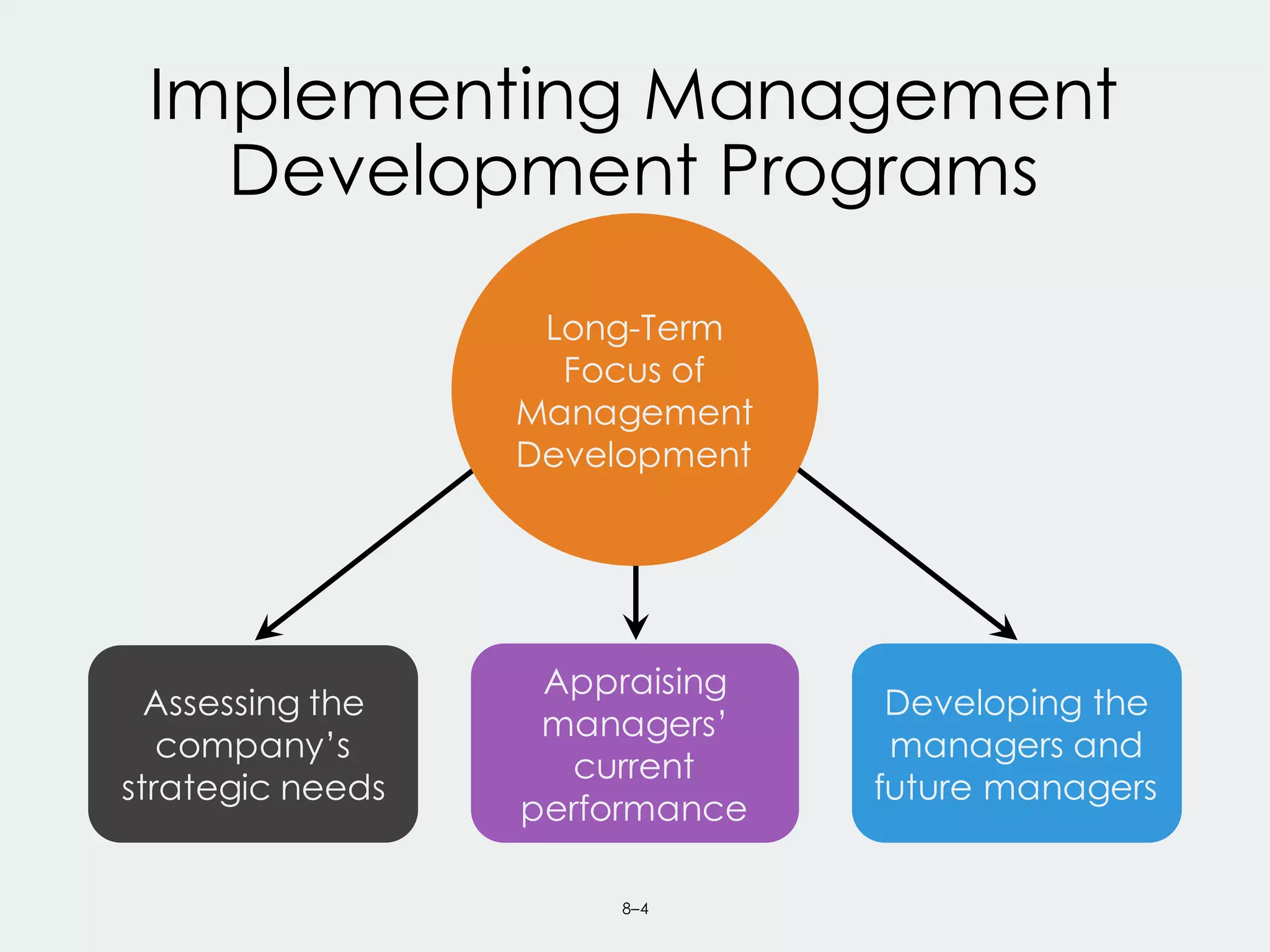
Implementing Management
Development Programs
Assessing the
company’s
strategic needs
Developing the
managers and
future managers
Appraising
managers’
current
performance
Long-Term
Focus of
Management
Development
8–5
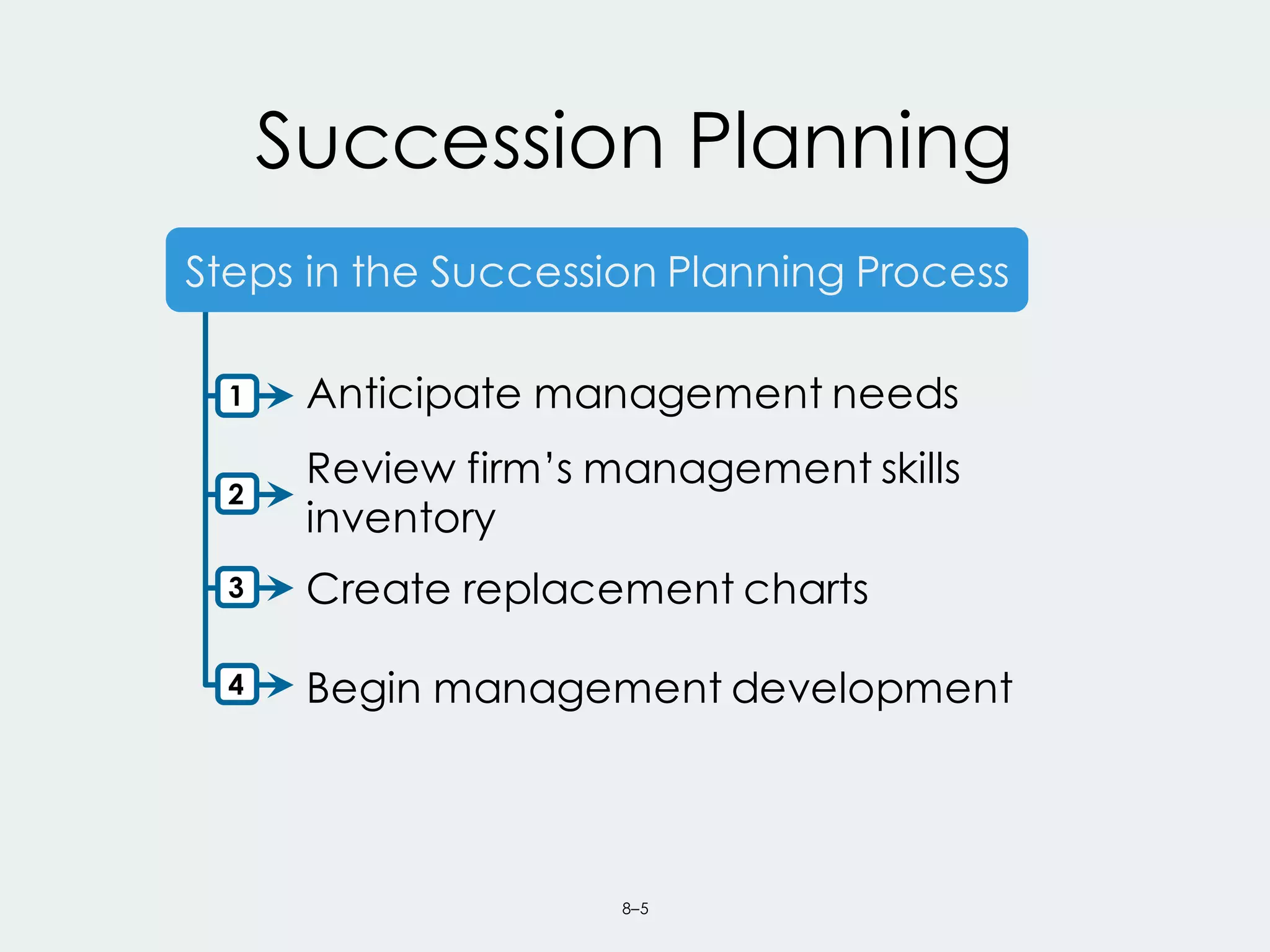
Succession Planning
1
Begin management development
Review firm’s management skills
inventory
Steps in the Succession Planning Process
Anticipate management needs
Create replacement charts
2
3
4
8–6
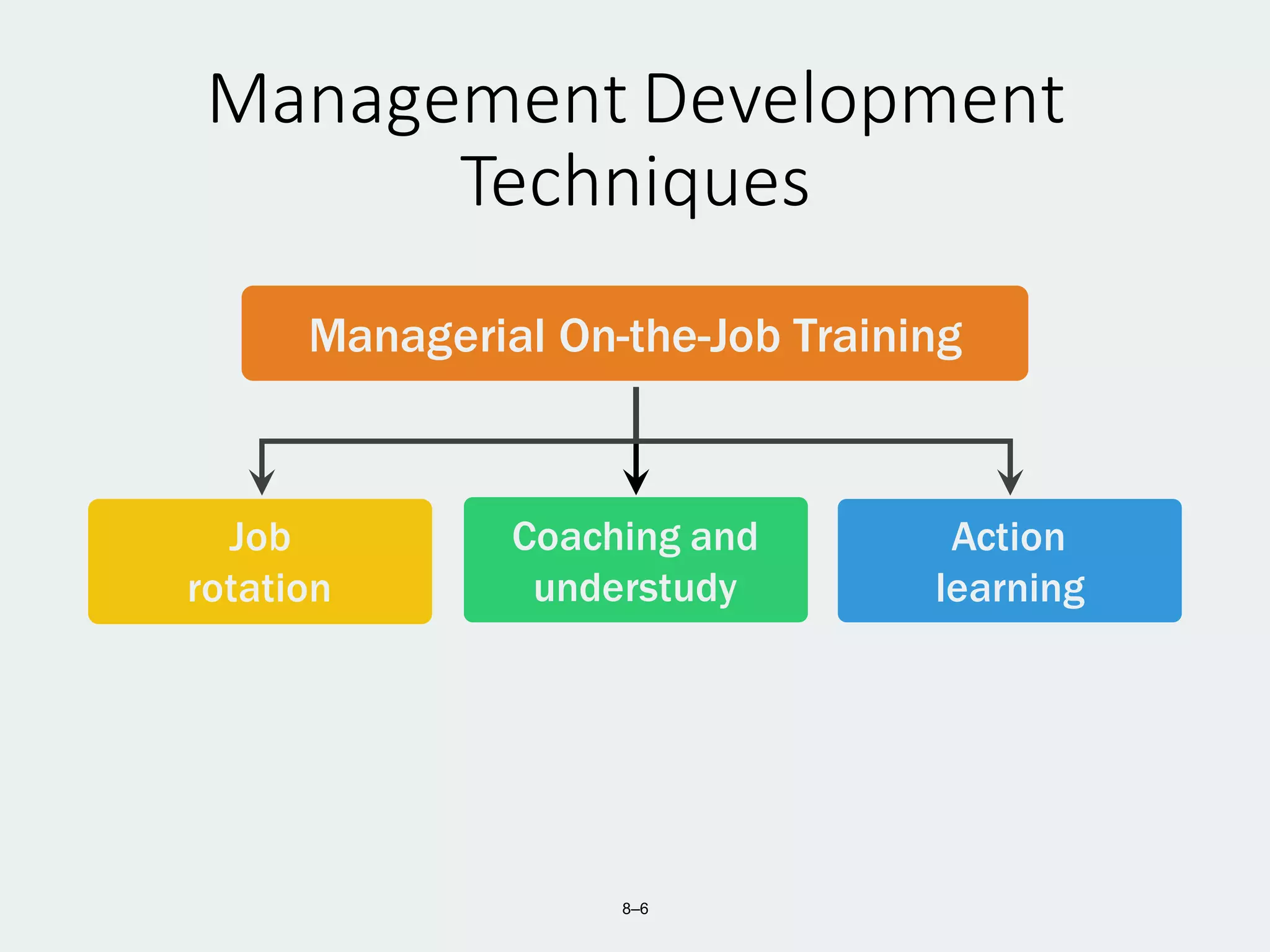
Management	
  Development	
  
Techniques
Job
rotation
Coaching and
understudy
Managerial On-the-Job Training
Action
learning
8–7
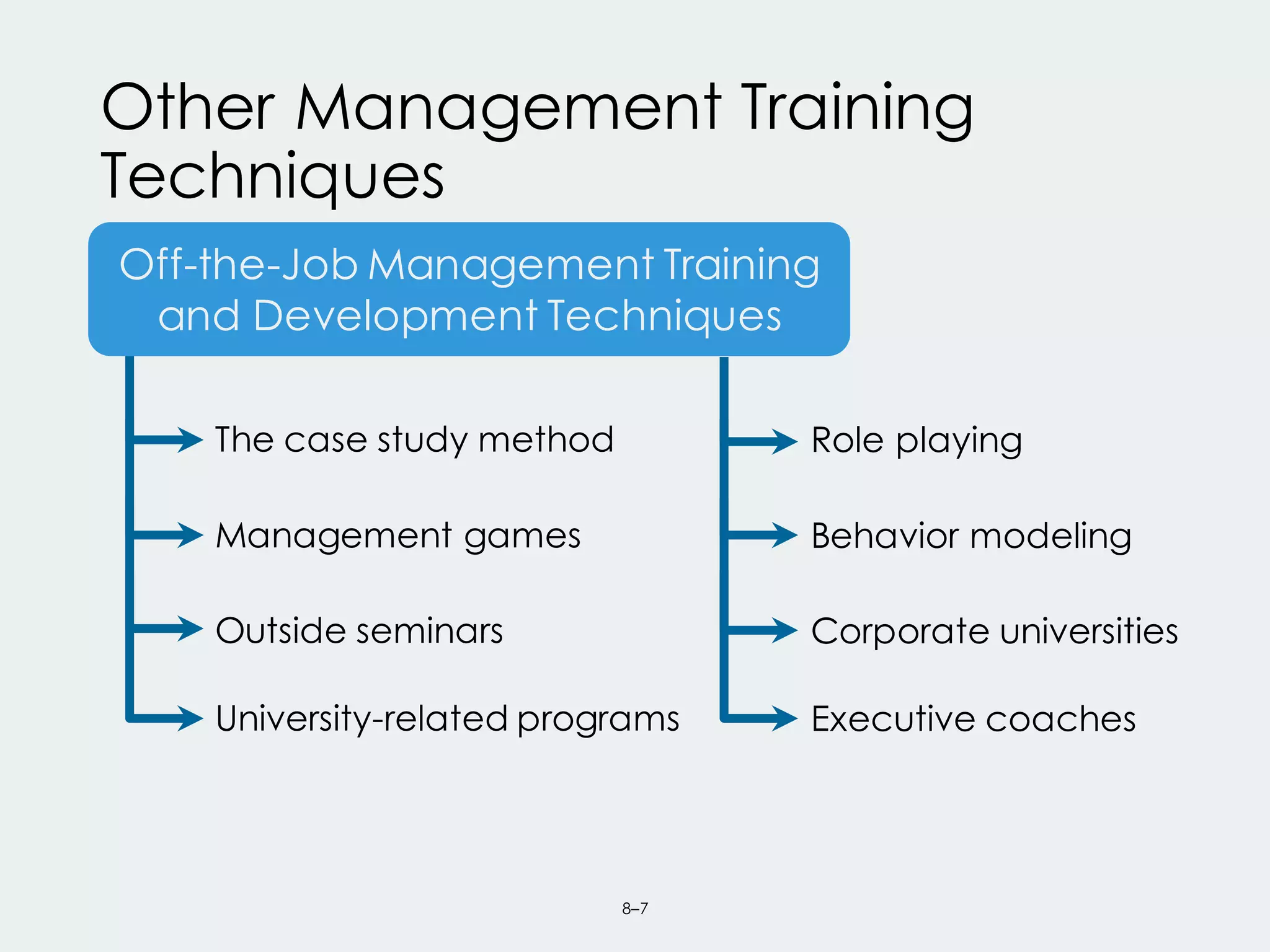
University-related programs
Management games
Off-the-Job Management Training
and Development Techniques
The case study method
Outside seminars
Executive coaches
Behavior modeling
Role playing
Corporate universities
Other Management Training
Techniques
8–8
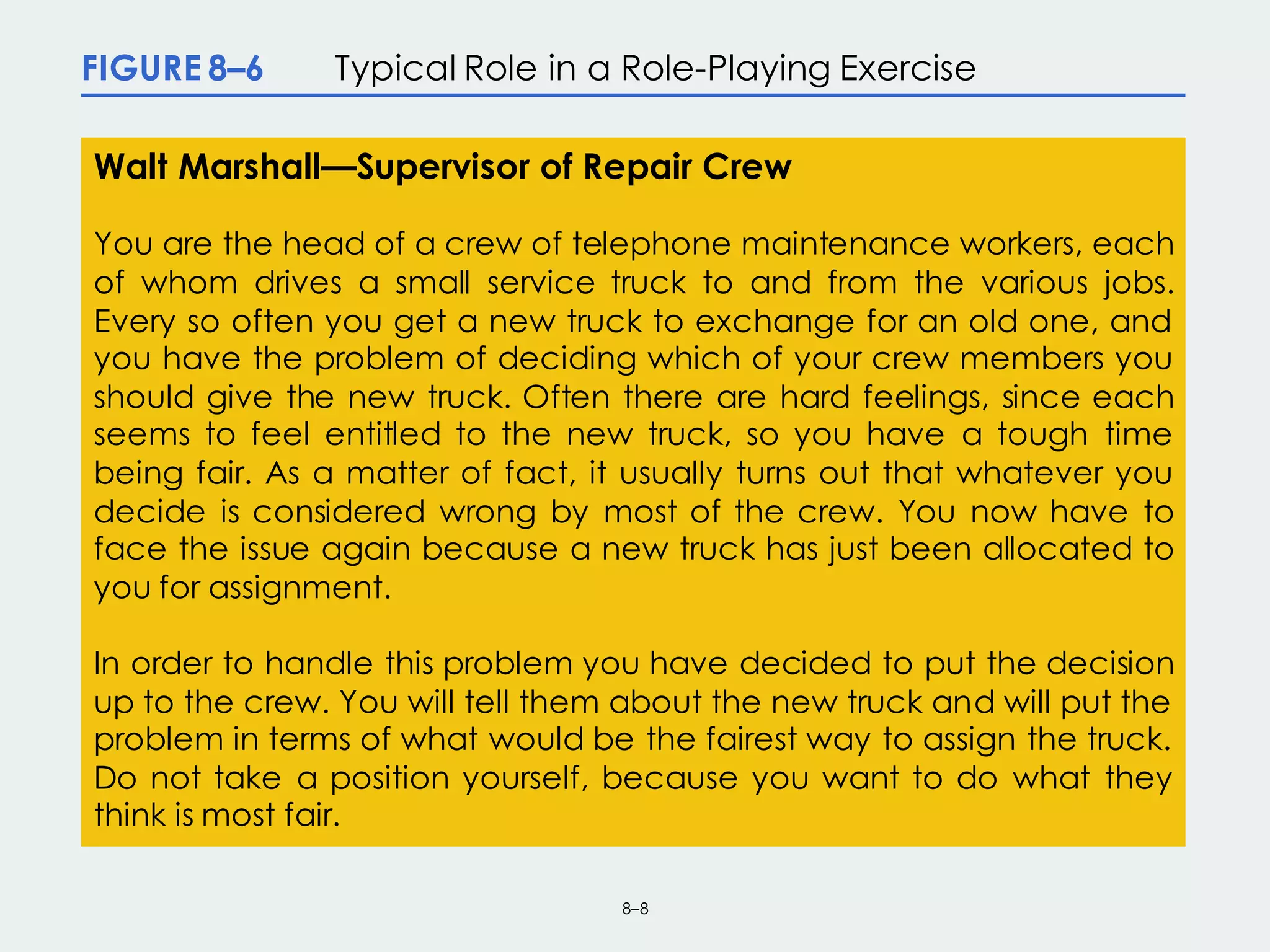
FIGURE 8–6 Typical Role in a Role-Playing Exercise
Walt Marshall—Supervisor of Repair Crew
You are the head of a crew of telephone maintenance workers, each
of whom drives a small service truck to and from the various jobs.
Every so often you get a new truck to exchange for an old one, and
you have the problem of deciding which of your crew members you
should give the new truck. Often there are hard feelings, since each
seems to feel entitled to the new truck, so you have a tough time
being fair. As a matter of fact, it usually turns out that whatever you
decide is considered wrong by most of the crew. You now have to
face the issue again because a new truck has just been allocated to
you for assignment.
In order to handle this problem you have decided to put the decision
up to the crew. You will tell them about the new truck and will put the
problem in terms of what would be the fairest way to assign the truck.
Do not take a position yourself, because you want to do what they
think is most fair.
8–9
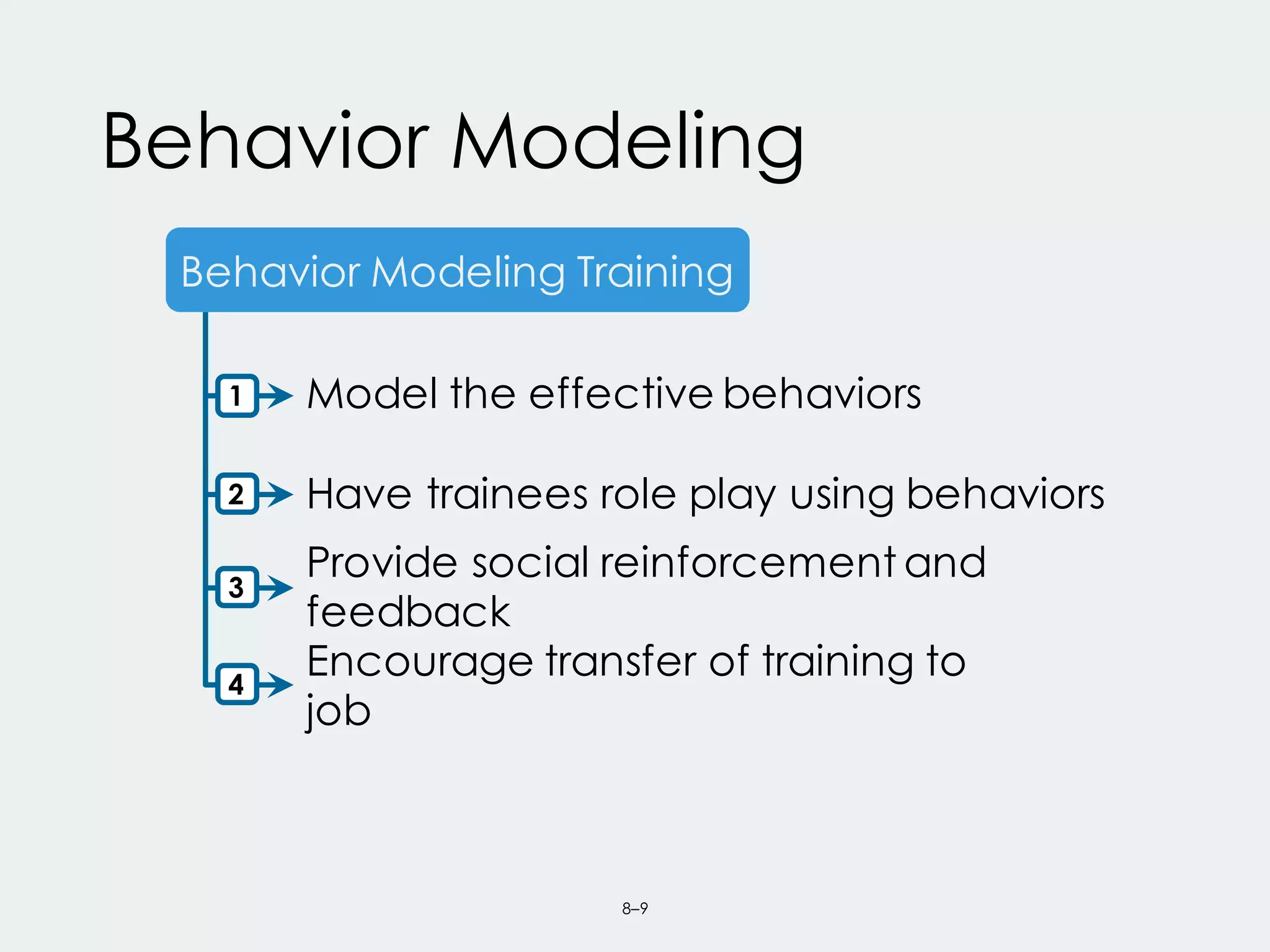
Behavior Modeling
1
Encourage transfer of training to
job
Have trainees role play using behaviors
Behavior Modeling Training
Model the effective behaviors
Provide social reinforcement and
feedback
2
3
4
8–10
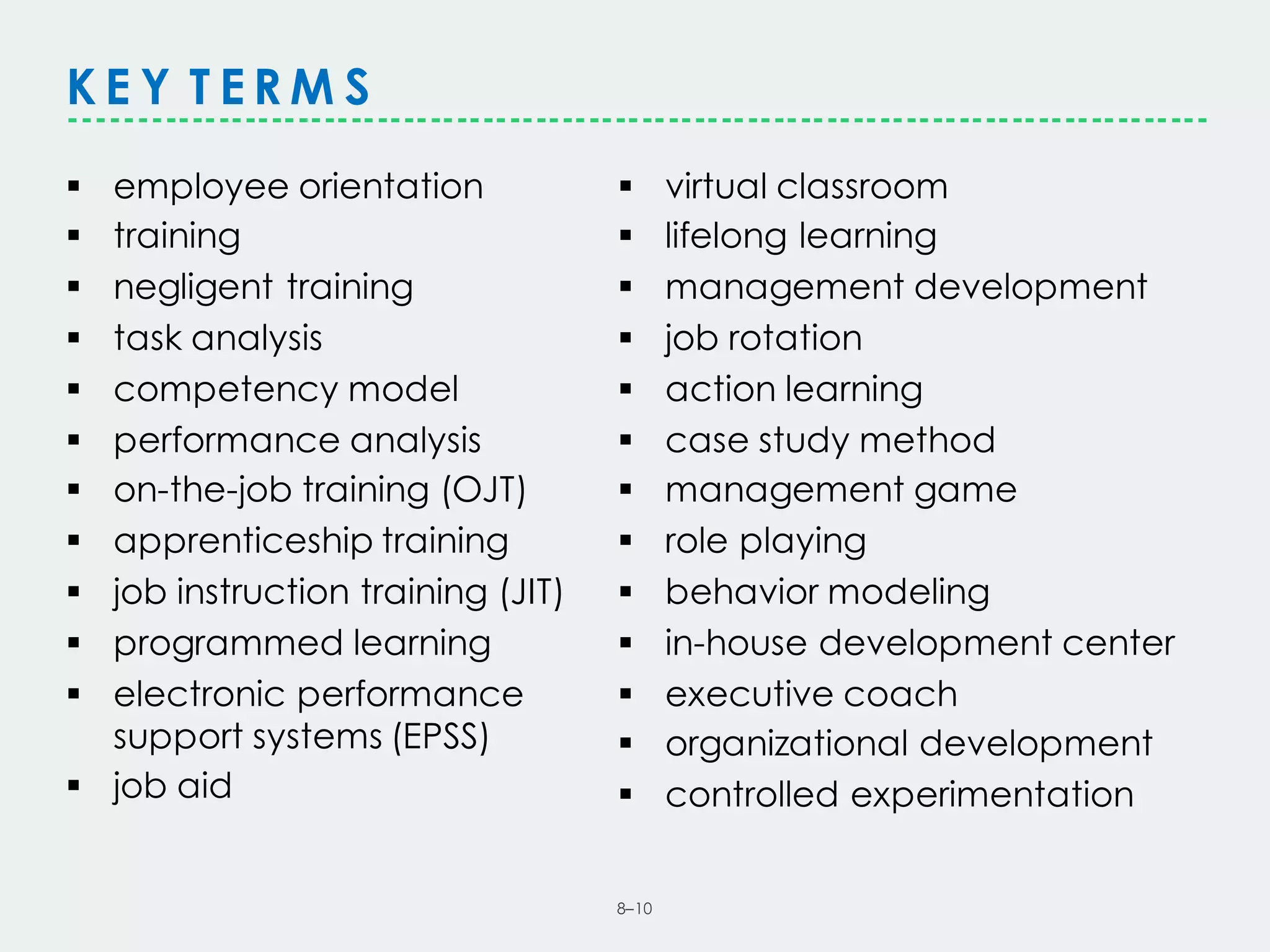
K E Y T E R M S
§ employee orientation
§ training
§ negligent training
§ task analysis
§ competency model
§ performance analysis
§ on-the-job training (OJT)
§ apprenticeship training
§ job instruction training (JIT)
§ programmed learning
§ electronic performance
support systems (EPSS)
§ job aid
§ virtual classroom
§ lifelong learning
§ management development
§ job rotation
§ action learning
§ case study method
§ management game
§ role playing
§ behavior modeling
§ in-house development center
§ executive coach
§ organizational development
§ controlled experimentation
--------------------------------------------------------------------------------------
8–11
All  rights  reserved.  No  part  of  this  publication  may  be  reproduced,  
stored  in  a  retrieval  system,  or  transmitted,  in  any  form  or  by  any  
means,  electronic,  mechanical,  photocopying,  recording,  or  
otherwise,  without  the  prior  written  permission  of  the  publisher.  
Printed  in  the  United  States  of  America.
Copyright © 2011 PearsonEducation, Inc.
publishing as Prentice Hall

Topic5 1 d_implementing_managementdevelopmentprogram_traininganddevelopingemployees-rev

  • 1.
    Welcome  to Implementing  Management   Development  Program Dyah Pramanik,  MM TRAINING  AND   DEVELOPING  EMPLOYEES Implementing  Management   Development  Program Dyah Pramanik,  MM [ ] Copyright © 2011 PearsonEducation, Inc. publishing as Prentice Hall
  • 2.
    8–2 PPT 5_1_d TRAINING ANDDEVELOPING EMPLOYEES: Implementing Management Development Program
  • 3.
    8–3 LEARNING OUTCOMES 1. Listand briefly discuss four management development programs.
  • 4.
    8–4 Implementing Management Development Programs Assessingthe company’s strategic needs Developing the managers and future managers Appraising managers’ current performance Long-Term Focus of Management Development
  • 5.
    8–5 Succession Planning 1 Begin managementdevelopment Review firm’s management skills inventory Steps in the Succession Planning Process Anticipate management needs Create replacement charts 2 3 4
  • 6.
    8–6 Management  Development   Techniques Job rotation Coachingand understudy Managerial On-the-Job Training Action learning
  • 7.
    8–7 University-related programs Management games Off-the-JobManagement Training and Development Techniques The case study method Outside seminars Executive coaches Behavior modeling Role playing Corporate universities Other Management Training Techniques
  • 8.
    8–8 FIGURE 8–6 TypicalRole in a Role-Playing Exercise Walt Marshall—Supervisor of Repair Crew You are the head of a crew of telephone maintenance workers, each of whom drives a small service truck to and from the various jobs. Every so often you get a new truck to exchange for an old one, and you have the problem of deciding which of your crew members you should give the new truck. Often there are hard feelings, since each seems to feel entitled to the new truck, so you have a tough time being fair. As a matter of fact, it usually turns out that whatever you decide is considered wrong by most of the crew. You now have to face the issue again because a new truck has just been allocated to you for assignment. In order to handle this problem you have decided to put the decision up to the crew. You will tell them about the new truck and will put the problem in terms of what would be the fairest way to assign the truck. Do not take a position yourself, because you want to do what they think is most fair.
  • 9.
    8–9 Behavior Modeling 1 Encourage transferof training to job Have trainees role play using behaviors Behavior Modeling Training Model the effective behaviors Provide social reinforcement and feedback 2 3 4
  • 10.
    8–10 K E YT E R M S § employee orientation § training § negligent training § task analysis § competency model § performance analysis § on-the-job training (OJT) § apprenticeship training § job instruction training (JIT) § programmed learning § electronic performance support systems (EPSS) § job aid § virtual classroom § lifelong learning § management development § job rotation § action learning § case study method § management game § role playing § behavior modeling § in-house development center § executive coach § organizational development § controlled experimentation --------------------------------------------------------------------------------------
  • 11.
    8–11 All  rights  reserved. No  part  of  this  publication  may  be  reproduced,   stored  in  a  retrieval  system,  or  transmitted,  in  any  form  or  by  any   means,  electronic,  mechanical,  photocopying,  recording,  or   otherwise,  without  the  prior  written  permission  of  the  publisher.   Printed  in  the  United  States  of  America. Copyright © 2011 PearsonEducation, Inc. publishing as Prentice Hall