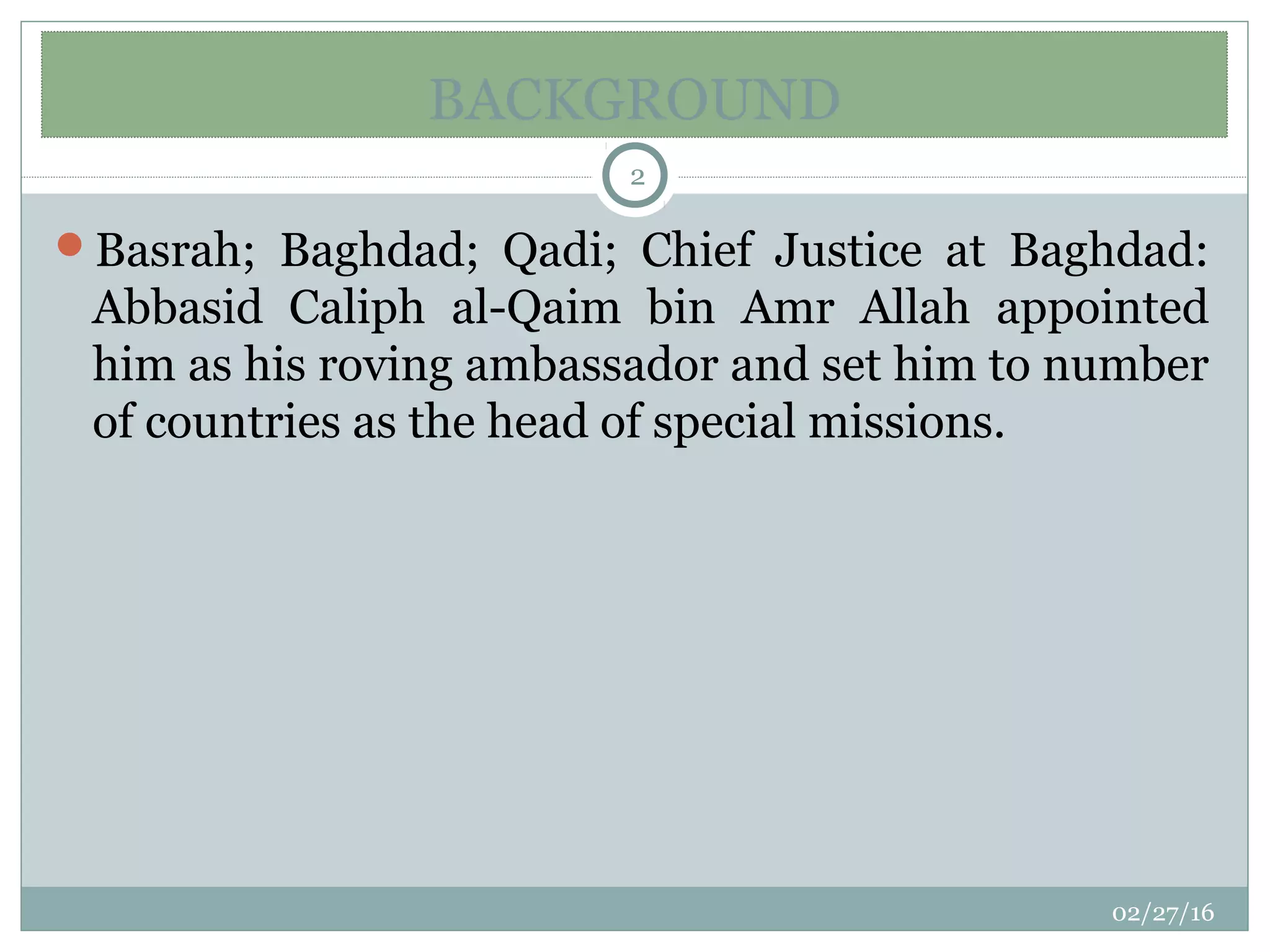
ABU AL-HASSAN AL-MAWARDI
972-1058 C.E
364-450 H
Al-Ahkam al-Sultaniyyah
02/27/16
1
BACKGROUND
02/27/16
2
Basrah; Baghdad; Qadi; Chief Justice at Baghdad:
Abbasid Caliph al-Qaim bin Amr Allah appointed
him as his roving ambassador and set him to number
of countries as the head of special missions.
BACKGROUND
02/27/16
3
Was considered as great jurist, muhaddith,
sociologist and political scientist.
Promote the doctrine of necessity in politics.
 He favoured s strong caliphate and discouraged unlimited
powers delegated to the governors, which tended to create
chaos. He laid down clear principles for election of the caliph
and qualities of voters.
Basic Idea
02/27/16
4
Nature of human being:
 Madani…..they need each others…Allah created human being
with some weaknesses….they need Him and each other more
than the animals…..men are provided with aqal…..to guide
him to happiness….here and hereafter.
Basic idea
02/27/16
5
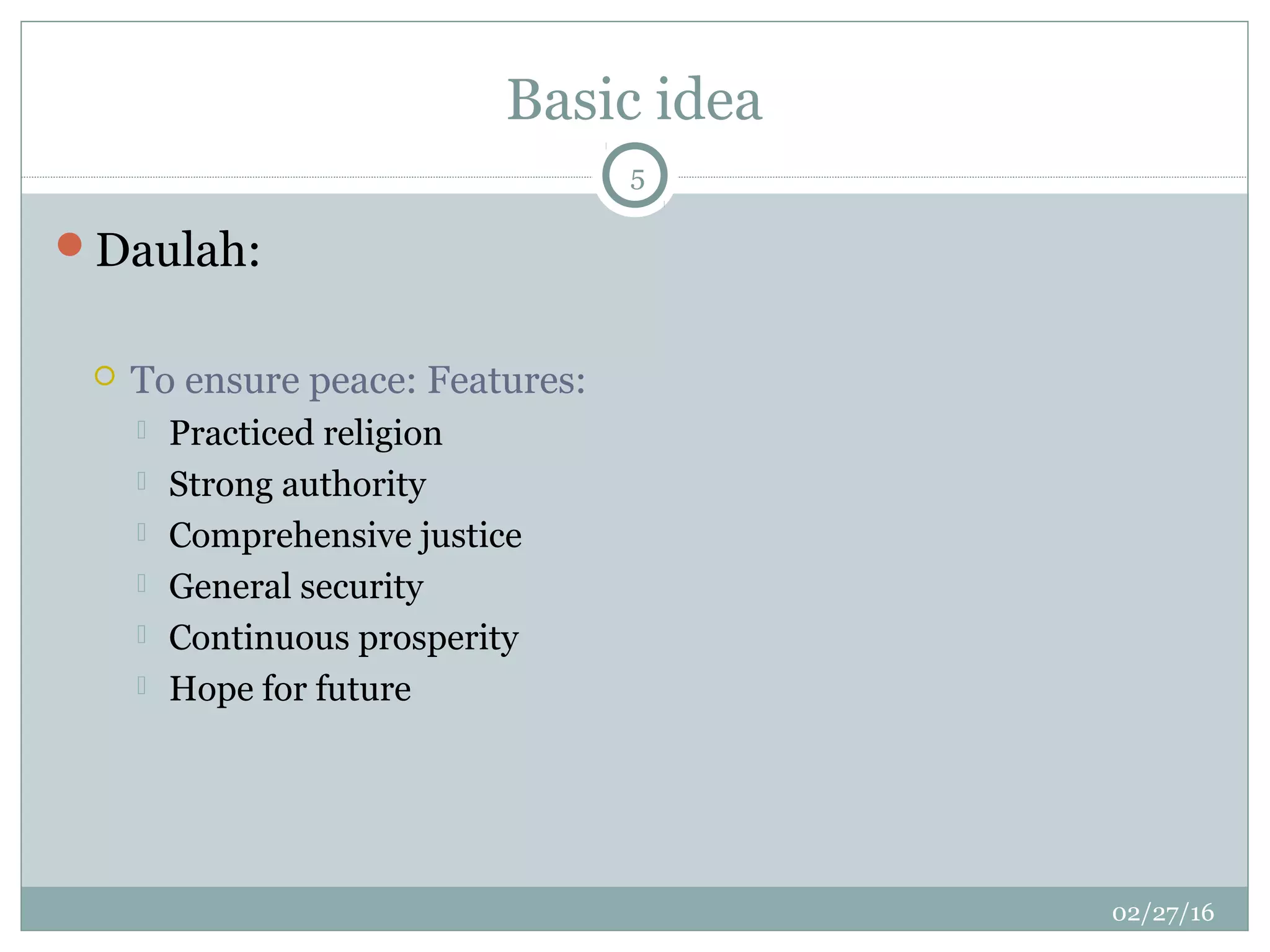
Daulah:
 To ensure peace: Features:
 Practiced religion
 Strong authority
 Comprehensive justice
 General security
 Continuous prosperity
 Hope for future
Institution of Caliphate or Imamate
02/27/16
6
Definition of Imam:
 The succession to the Prophet in the defense of the faith and the
administration of the world
Institution of Caliphate or Imamate
02/27/16
7
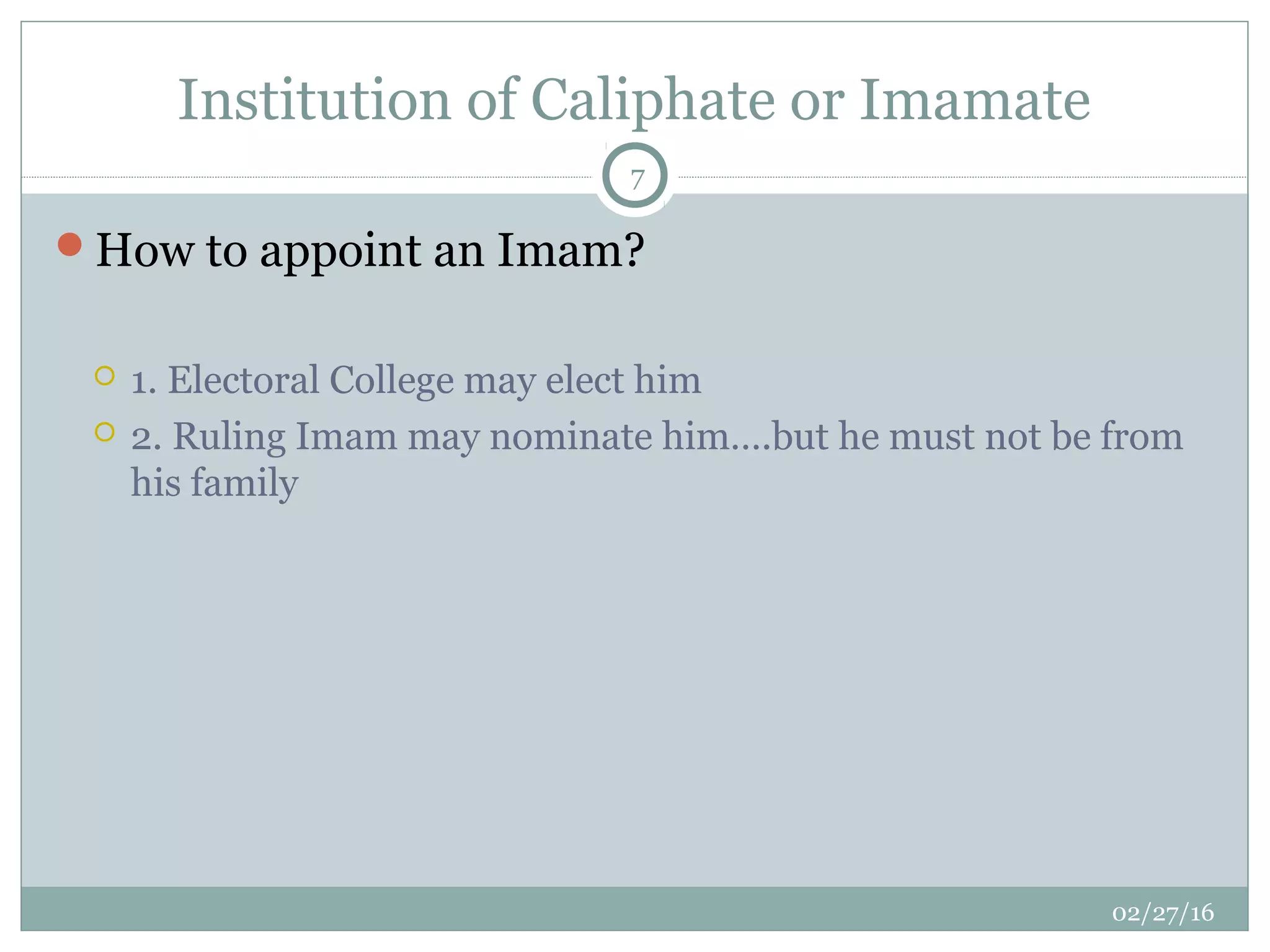
How to appoint an Imam?
 1. Electoral College may elect him
 2. Ruling Imam may nominate him….but he must not be from
his family
Institution of Caliphate or Imamate
02/27/16
8
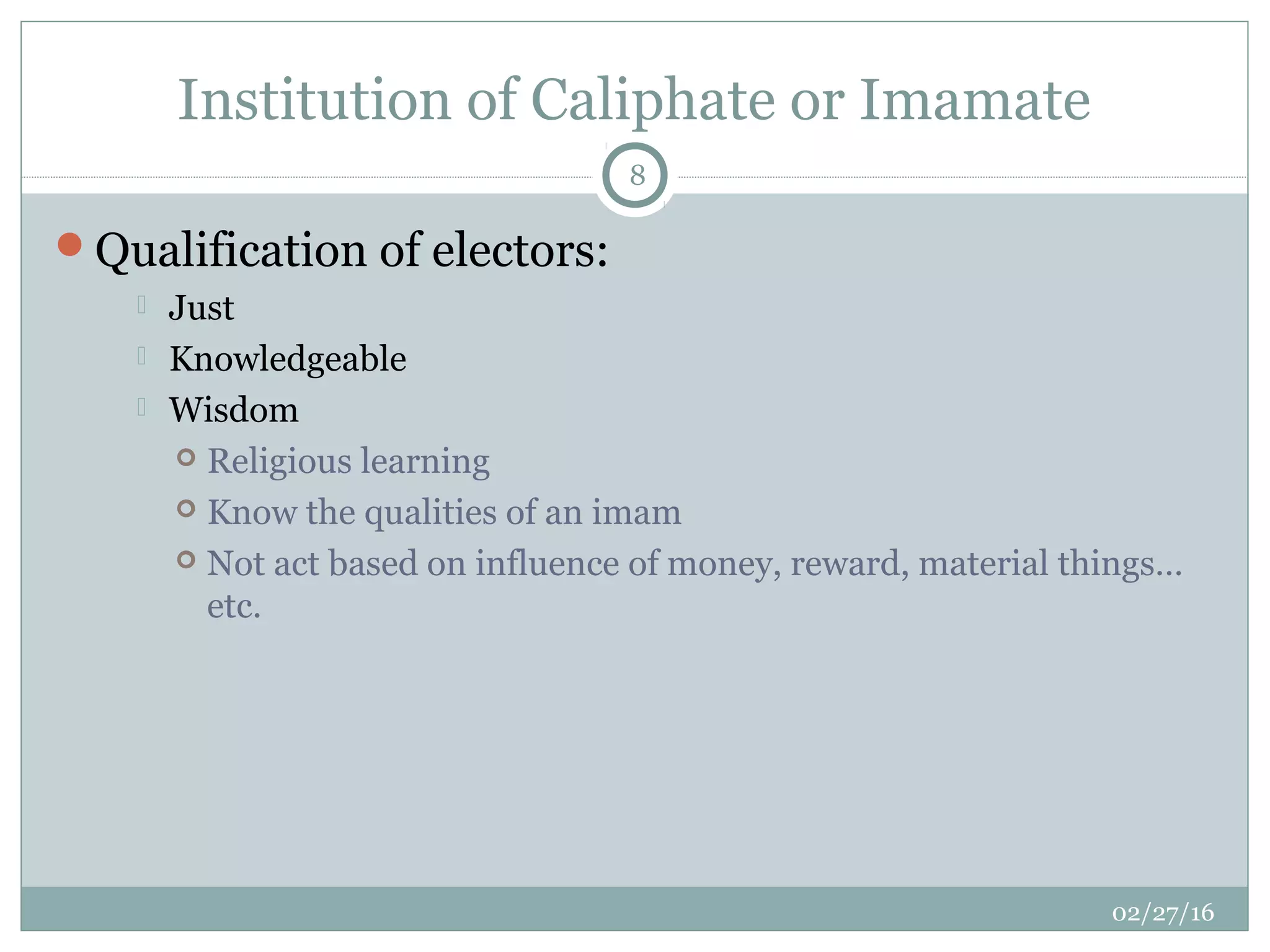
Qualification of electors:
 Just
 Knowledgeable
 Wisdom
 Religious learning
 Know the qualities of an imam
 Not act based on influence of money, reward, material things…
etc.
Institution of Caliphate or Imamate
02/27/16
9
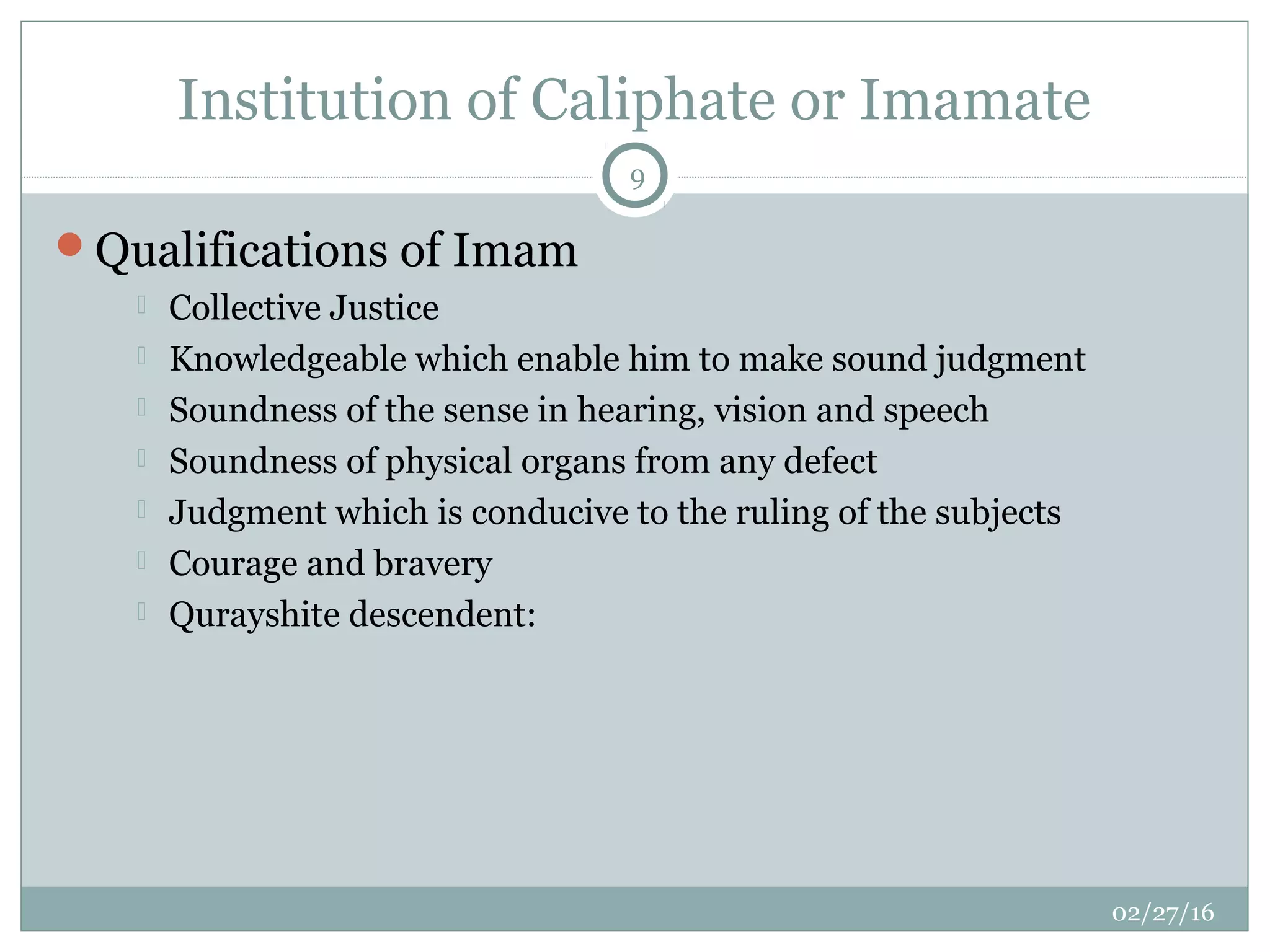
Qualifications of Imam
 Collective Justice
 Knowledgeable which enable him to make sound judgment
 Soundness of the sense in hearing, vision and speech
 Soundness of physical organs from any defect
 Judgment which is conducive to the ruling of the subjects
 Courage and bravery
 Qurayshite descendent:
Institution of Caliphate or Imamate
02/27/16
10
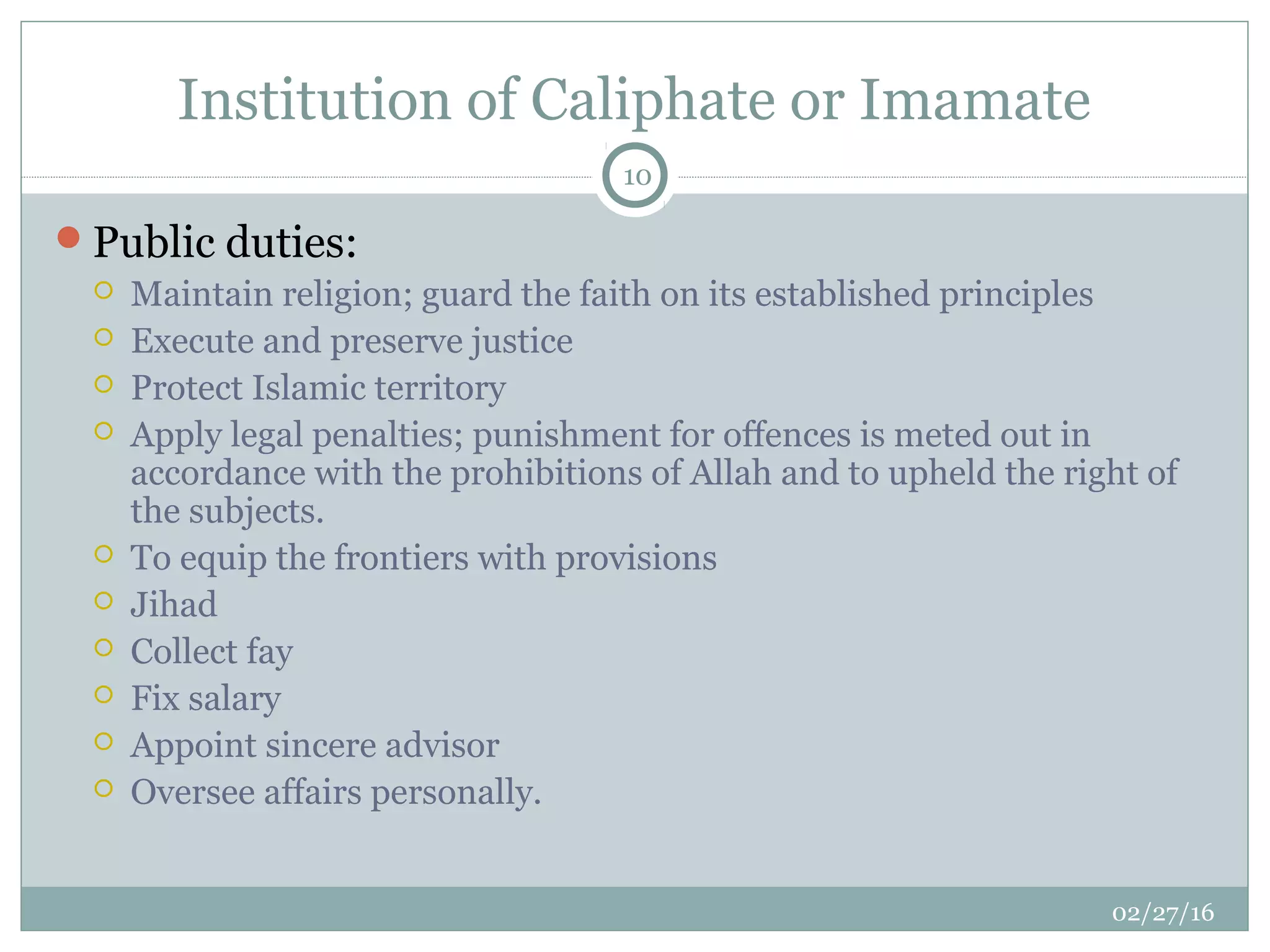
Public duties:
 Maintain religion; guard the faith on its established principles
 Execute and preserve justice
 Protect Islamic territory
 Apply legal penalties; punishment for offences is meted out in
accordance with the prohibitions of Allah and to upheld the right of
the subjects.
 To equip the frontiers with provisions
 Jihad
 Collect fay
 Fix salary
 Appoint sincere advisor
 Oversee affairs personally.
Institution of Caliphate or Imamate
02/27/16
11
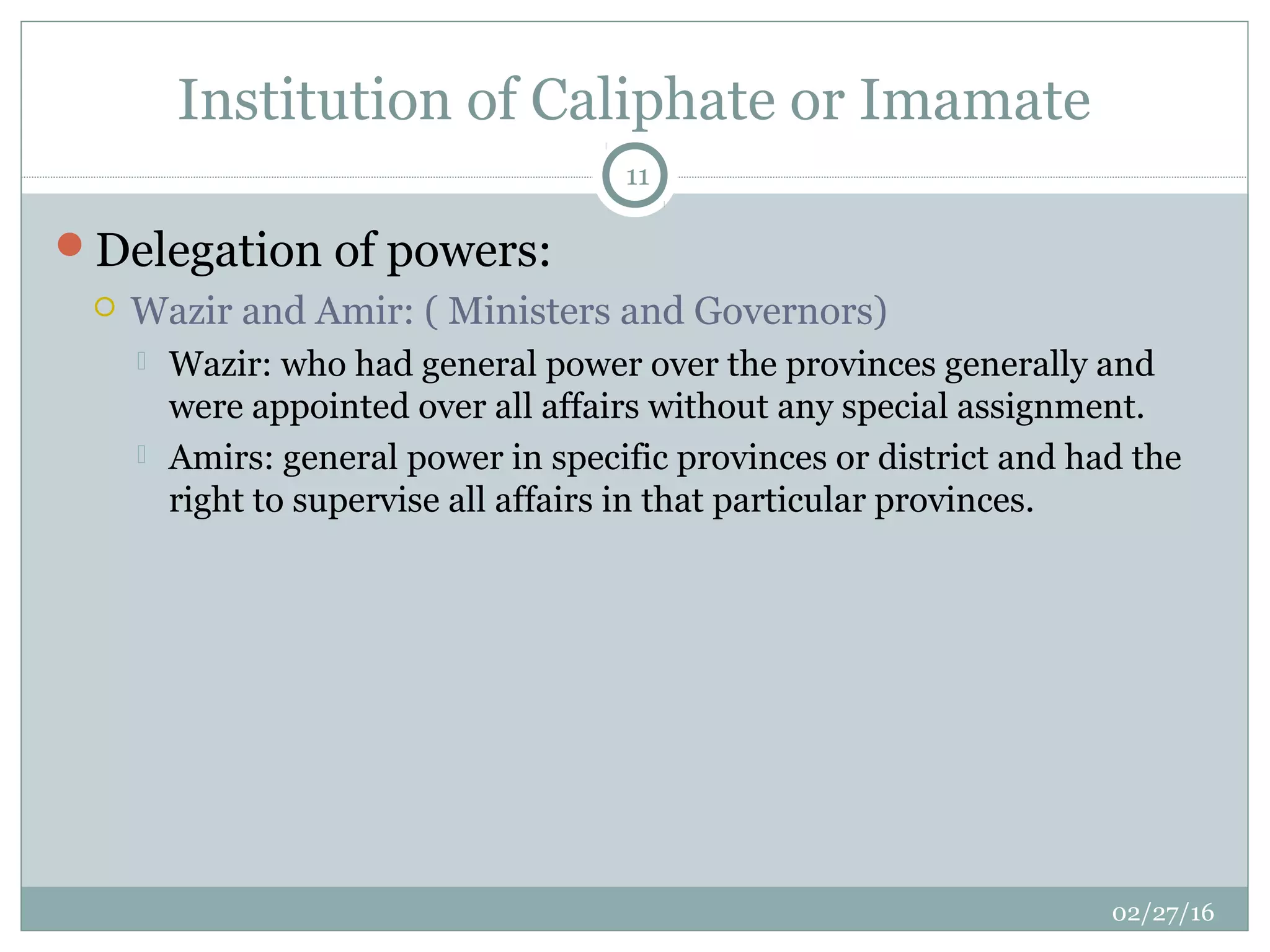
Delegation of powers:
 Wazir and Amir: ( Ministers and Governors)
 Wazir: who had general power over the provinces generally and
were appointed over all affairs without any special assignment.
 Amirs: general power in specific provinces or district and had the
right to supervise all affairs in that particular provinces.
Institution of Caliphate or Imamate
02/27/16
12
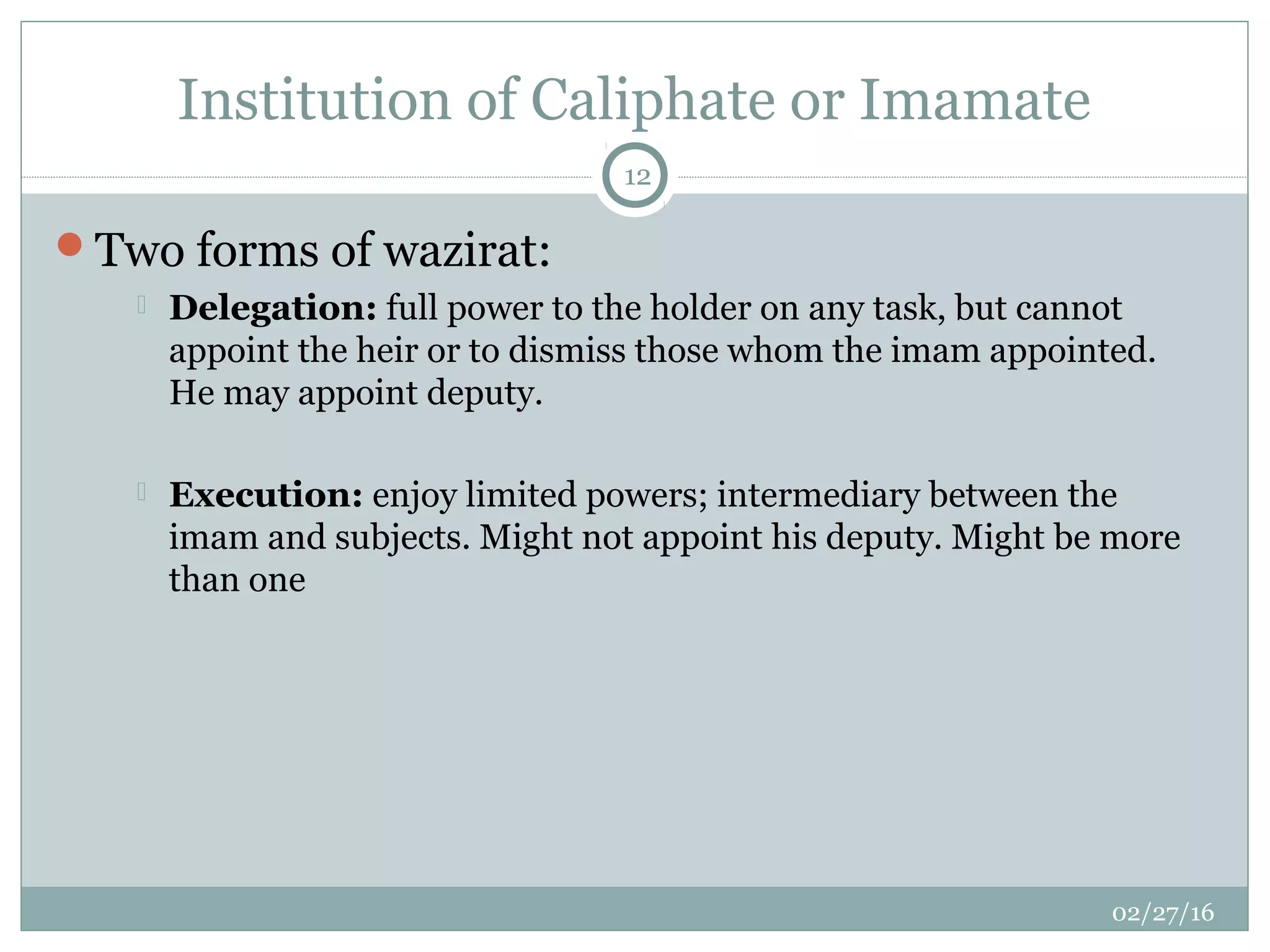
Two forms of wazirat:
 Delegation: full power to the holder on any task, but cannot
appoint the heir or to dismiss those whom the imam appointed.
He may appoint deputy.
 Execution: enjoy limited powers; intermediary between the
imam and subjects. Might not appoint his deputy. Might be more
than one
Institution of Caliphate or Imamate
02/27/16
13
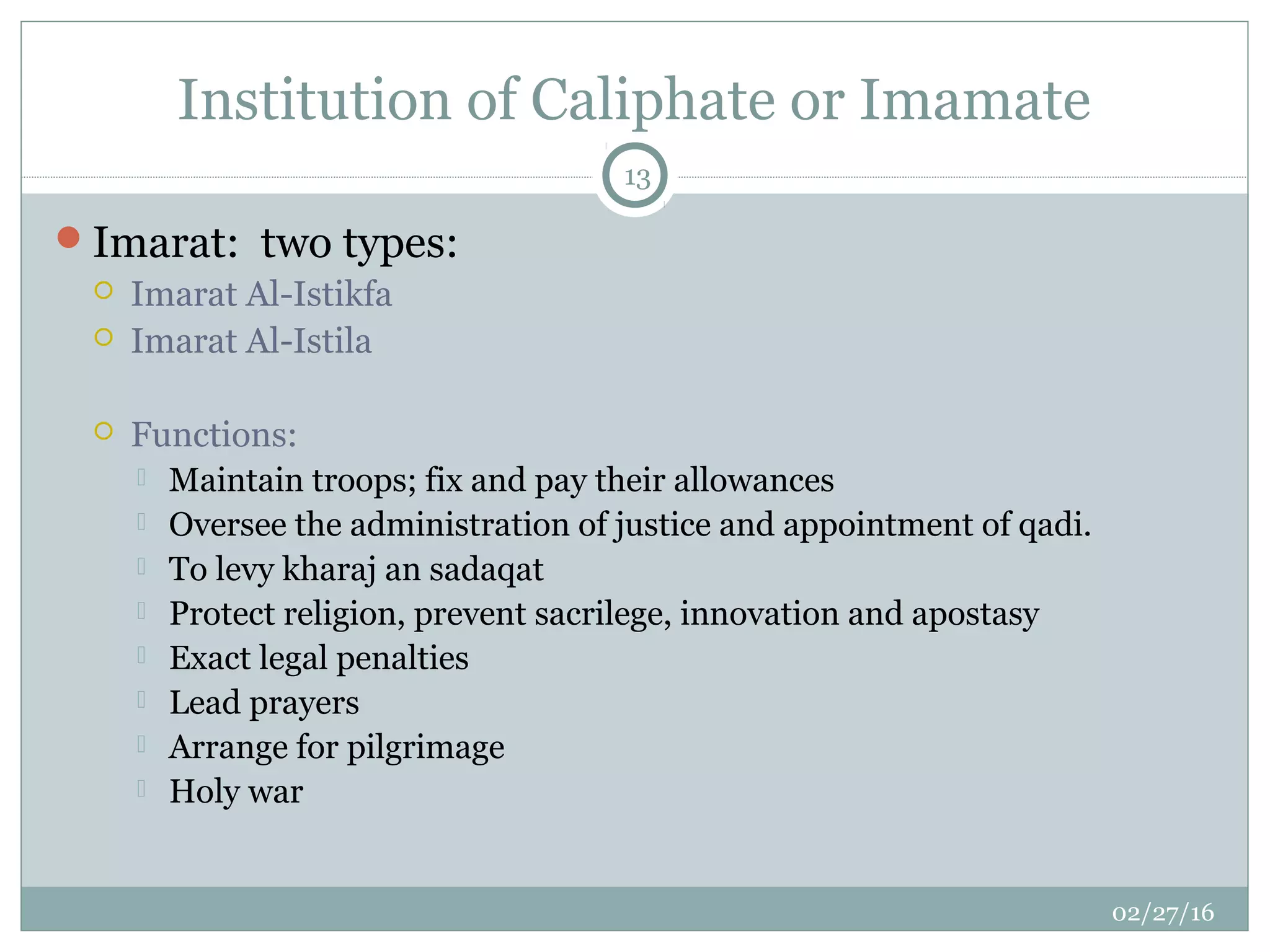
Imarat: two types:
 Imarat Al-Istikfa
 Imarat Al-Istila
 Functions:
 Maintain troops; fix and pay their allowances
 Oversee the administration of justice and appointment of qadi.
 To levy kharaj an sadaqat
 Protect religion, prevent sacrilege, innovation and apostasy
 Exact legal penalties
 Lead prayers
 Arrange for pilgrimage
 Holy war
Institution of Caliphate or Imamate
02/27/16
14
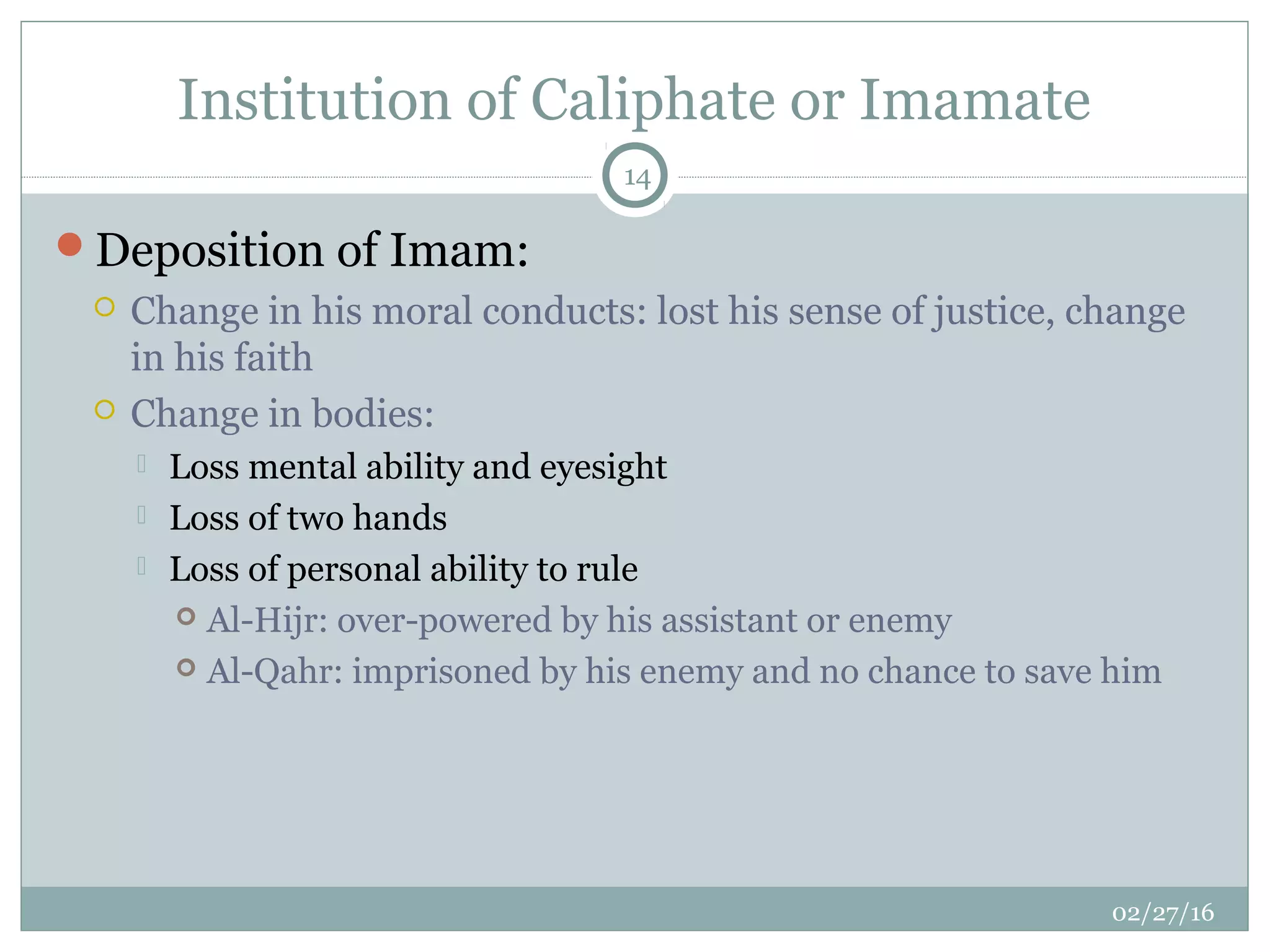
Deposition of Imam:
 Change in his moral conducts: lost his sense of justice, change
in his faith
 Change in bodies:
 Loss mental ability and eyesight
 Loss of two hands
 Loss of personal ability to rule
 Al-Hijr: over-powered by his assistant or enemy
 Al-Qahr: imprisoned by his enemy and no chance to save him
Conclusion
02/27/16
15
Supporter of the doctrine of necessity
Institution of Caliphate or Imamate is very
important and required by Syariah.

Topic 6 - Al-Mawardi

  • 1.
    ABU AL-HASSAN AL-MAWARDI 972-1058C.E 364-450 H Al-Ahkam al-Sultaniyyah 02/27/16 1
  • 2.
    BACKGROUND 02/27/16 2 Basrah; Baghdad; Qadi;Chief Justice at Baghdad: Abbasid Caliph al-Qaim bin Amr Allah appointed him as his roving ambassador and set him to number of countries as the head of special missions.
  • 3.
    BACKGROUND 02/27/16 3 Was considered asgreat jurist, muhaddith, sociologist and political scientist. Promote the doctrine of necessity in politics.  He favoured s strong caliphate and discouraged unlimited powers delegated to the governors, which tended to create chaos. He laid down clear principles for election of the caliph and qualities of voters.
  • 4.
    Basic Idea 02/27/16 4 Nature ofhuman being:  Madani…..they need each others…Allah created human being with some weaknesses….they need Him and each other more than the animals…..men are provided with aqal…..to guide him to happiness….here and hereafter.
  • 5.
    Basic idea 02/27/16 5 Daulah:  Toensure peace: Features:  Practiced religion  Strong authority  Comprehensive justice  General security  Continuous prosperity  Hope for future
  • 6.
    Institution of Caliphateor Imamate 02/27/16 6 Definition of Imam:  The succession to the Prophet in the defense of the faith and the administration of the world
  • 7.
    Institution of Caliphateor Imamate 02/27/16 7 How to appoint an Imam?  1. Electoral College may elect him  2. Ruling Imam may nominate him….but he must not be from his family
  • 8.
    Institution of Caliphateor Imamate 02/27/16 8 Qualification of electors:  Just  Knowledgeable  Wisdom  Religious learning  Know the qualities of an imam  Not act based on influence of money, reward, material things… etc.
  • 9.
    Institution of Caliphateor Imamate 02/27/16 9 Qualifications of Imam  Collective Justice  Knowledgeable which enable him to make sound judgment  Soundness of the sense in hearing, vision and speech  Soundness of physical organs from any defect  Judgment which is conducive to the ruling of the subjects  Courage and bravery  Qurayshite descendent:
  • 10.
    Institution of Caliphateor Imamate 02/27/16 10 Public duties:  Maintain religion; guard the faith on its established principles  Execute and preserve justice  Protect Islamic territory  Apply legal penalties; punishment for offences is meted out in accordance with the prohibitions of Allah and to upheld the right of the subjects.  To equip the frontiers with provisions  Jihad  Collect fay  Fix salary  Appoint sincere advisor  Oversee affairs personally.
  • 11.
    Institution of Caliphateor Imamate 02/27/16 11 Delegation of powers:  Wazir and Amir: ( Ministers and Governors)  Wazir: who had general power over the provinces generally and were appointed over all affairs without any special assignment.  Amirs: general power in specific provinces or district and had the right to supervise all affairs in that particular provinces.
  • 12.
    Institution of Caliphateor Imamate 02/27/16 12 Two forms of wazirat:  Delegation: full power to the holder on any task, but cannot appoint the heir or to dismiss those whom the imam appointed. He may appoint deputy.  Execution: enjoy limited powers; intermediary between the imam and subjects. Might not appoint his deputy. Might be more than one
  • 13.
    Institution of Caliphateor Imamate 02/27/16 13 Imarat: two types:  Imarat Al-Istikfa  Imarat Al-Istila  Functions:  Maintain troops; fix and pay their allowances  Oversee the administration of justice and appointment of qadi.  To levy kharaj an sadaqat  Protect religion, prevent sacrilege, innovation and apostasy  Exact legal penalties  Lead prayers  Arrange for pilgrimage  Holy war
  • 14.
    Institution of Caliphateor Imamate 02/27/16 14 Deposition of Imam:  Change in his moral conducts: lost his sense of justice, change in his faith  Change in bodies:  Loss mental ability and eyesight  Loss of two hands  Loss of personal ability to rule  Al-Hijr: over-powered by his assistant or enemy  Al-Qahr: imprisoned by his enemy and no chance to save him
  • 15.
    Conclusion 02/27/16 15 Supporter of thedoctrine of necessity Institution of Caliphate or Imamate is very important and required by Syariah.