INTERNATIONAL ISLAMIC UNIVERSITY MALAYSIA
COURSE OUTLINE
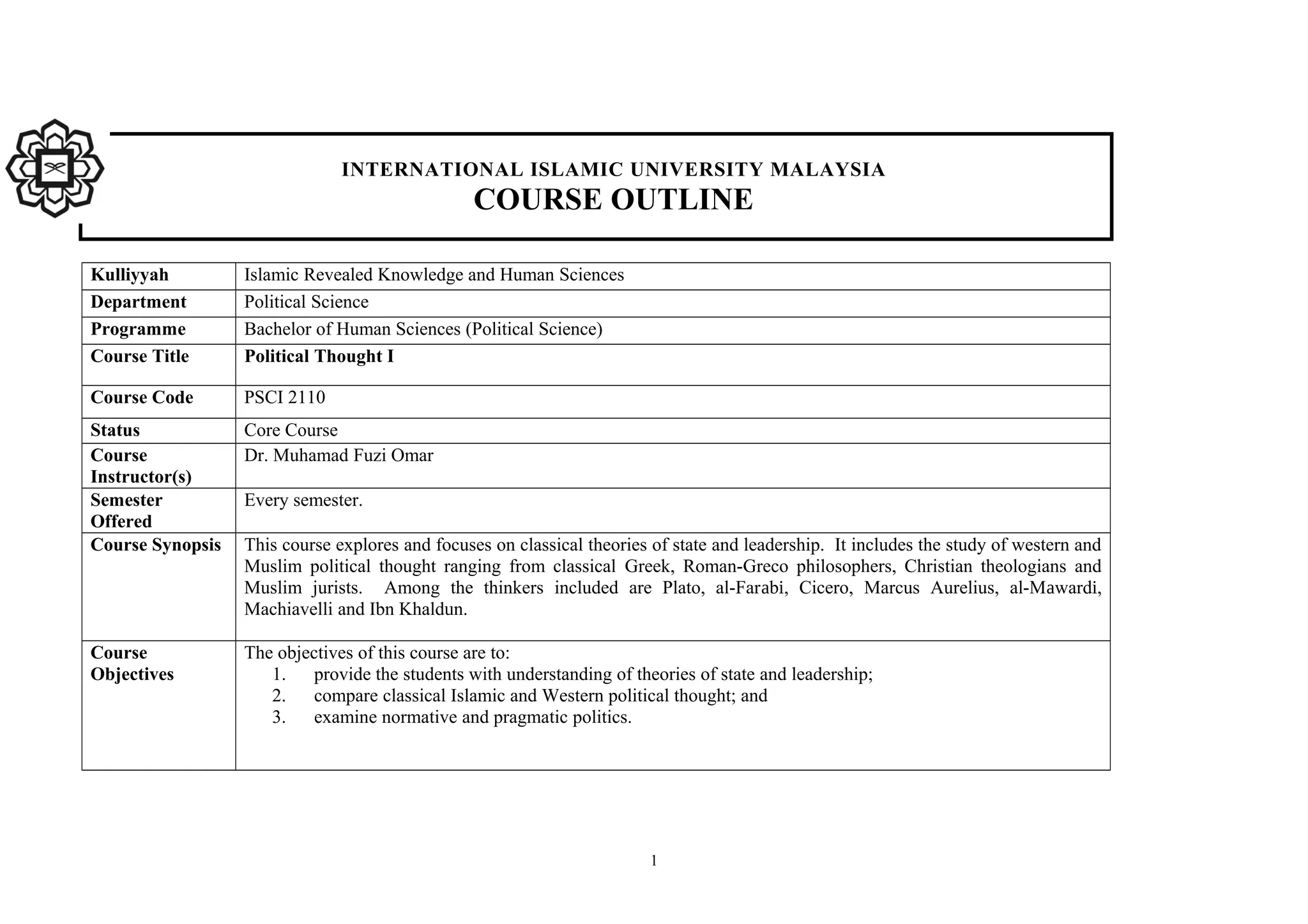
Kulliyyah Islamic Revealed Knowledge and Human Sciences
Department Political Science
Programme Bachelor of Human Sciences (Political Science)
Course Title Political Thought I
Course Code PSCI 2110
Status Core Course
Course
Instructor(s)
Dr. Muhamad Fuzi Omar
Semester
Offered
Every semester.
Course Synopsis This course explores and focuses on classical theories of state and leadership. It includes the study of western and
Muslim political thought ranging from classical Greek, Roman-Greco philosophers, Christian theologians and
Muslim jurists. Among the thinkers included are Plato, al-Farabi, Cicero, Marcus Aurelius, al-Mawardi,
Machiavelli and Ibn Khaldun.
Course
Objectives
The objectives of this course are to:
1. provide the students with understanding of theories of state and leadership;
2. compare classical Islamic and Western political thought; and
3. examine normative and pragmatic politics.
1
Learning
Outcomes
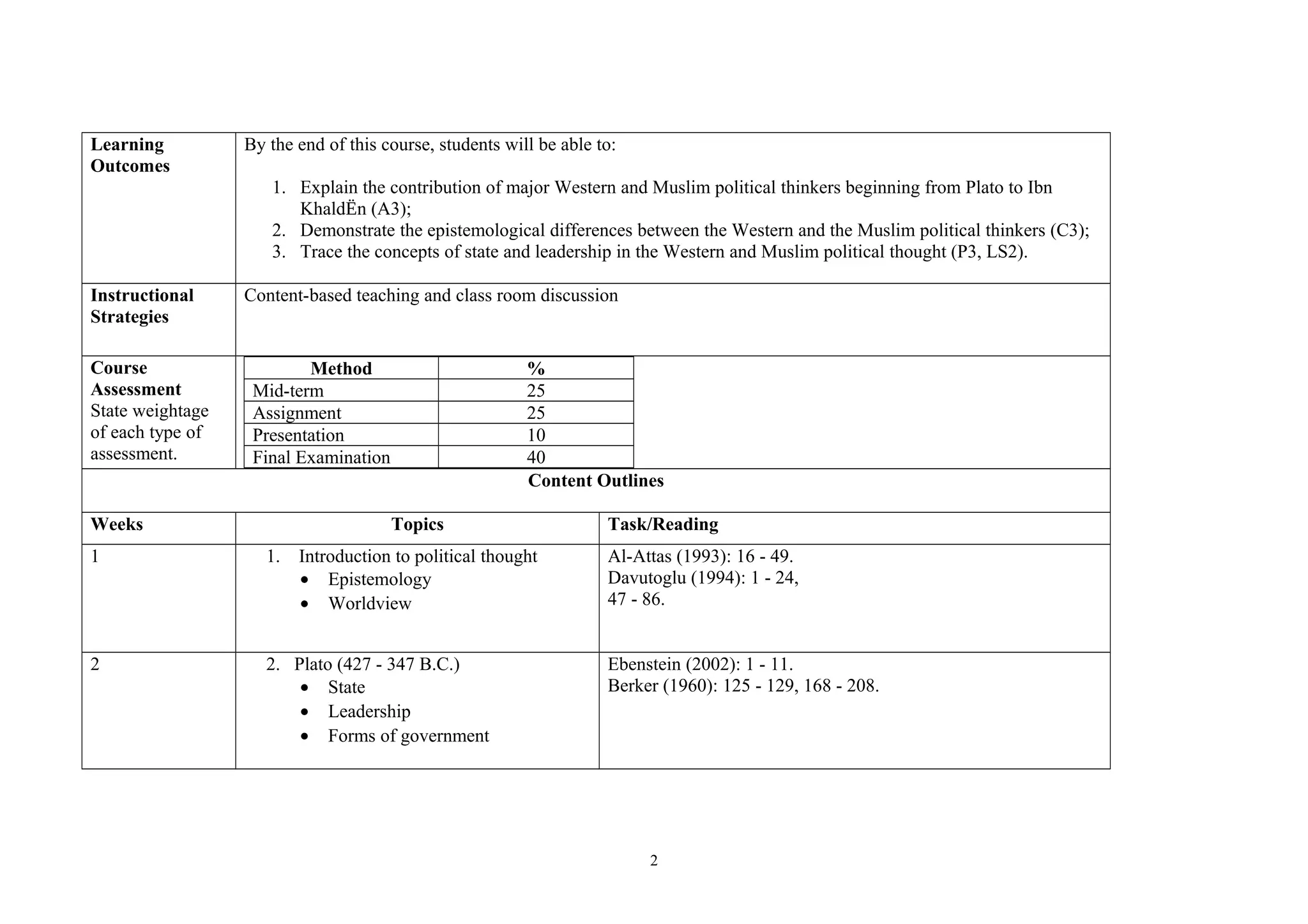
By the end of this course, students will be able to:
1. Explain the contribution of major Western and Muslim political thinkers beginning from Plato to Ibn
KhaldËn (A3);
2. Demonstrate the epistemological differences between the Western and the Muslim political thinkers (C3);
3. Trace the concepts of state and leadership in the Western and Muslim political thought (P3, LS2).
Instructional
Strategies
Content-based teaching and class room discussion
Course
Assessment
State weightage
of each type of
assessment.
Method %
Mid-term 25
Assignment 25
Presentation 10
Final Examination 40
Content Outlines
Weeks Topics Task/Reading
1 1. Introduction to political thought
• Epistemology
• Worldview
Al-Attas (1993): 16 - 49.
Davutoglu (1994): 1 - 24,
47 - 86.
2 2. Plato (427 - 347 B.C.)
• State
• Leadership
• Forms of government
Ebenstein (2002): 1 - 11.
Berker (1960): 125 - 129, 168 - 208.
2
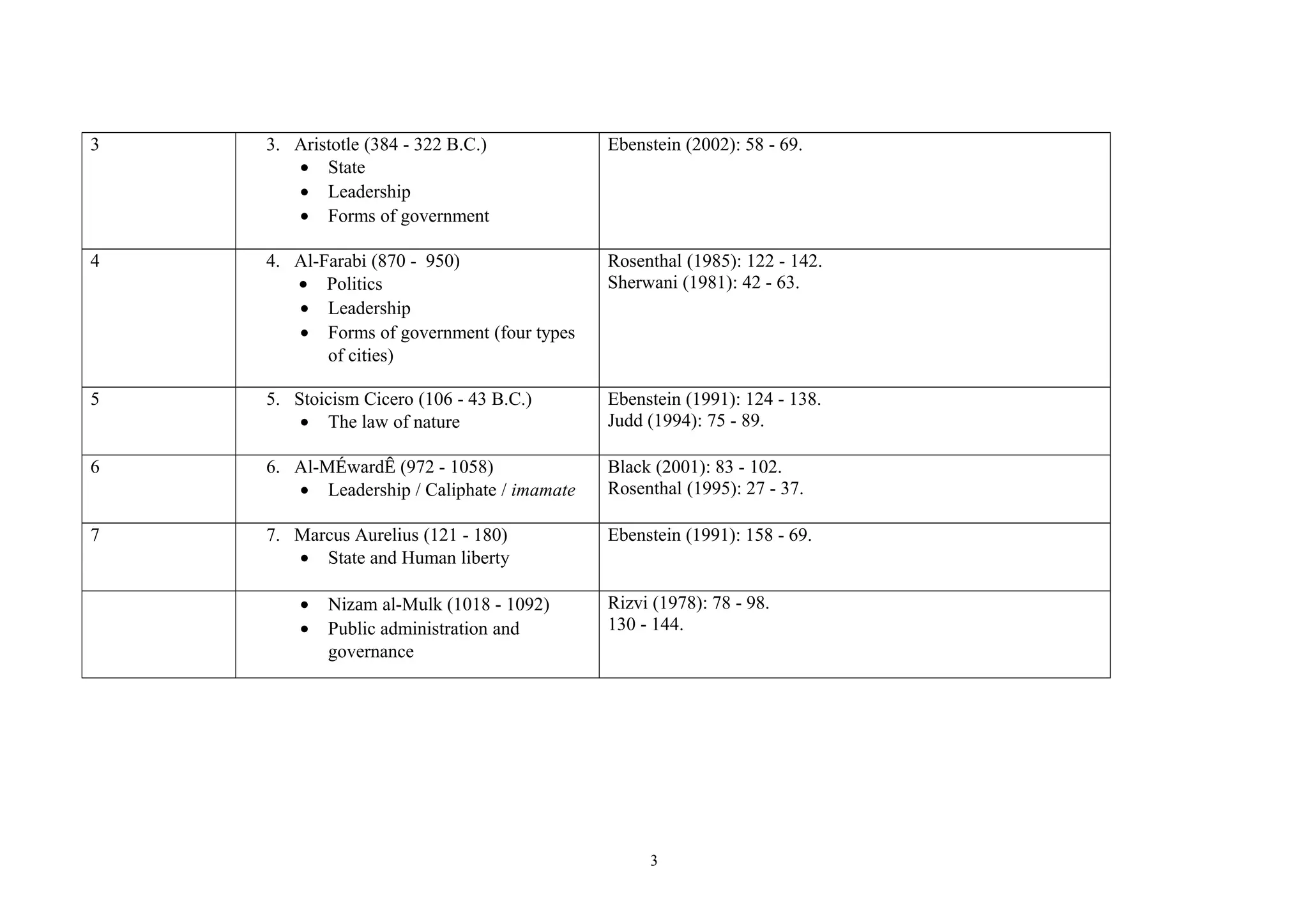
3 3. Aristotle (384 - 322 B.C.)
• State
• Leadership
• Forms of government
Ebenstein (2002): 58 - 69.
4 4. Al-Farabi (870 - 950)
• Politics
• Leadership
• Forms of government (four types
of cities)
Rosenthal (1985): 122 - 142.
Sherwani (1981): 42 - 63.
5 5. Stoicism Cicero (106 - 43 B.C.)
• The law of nature
Ebenstein (1991): 124 - 138.
Judd (1994): 75 - 89.
6 6. Al-MÉwardÊ (972 - 1058)
• Leadership / Caliphate / imamate
Black (2001): 83 - 102.
Rosenthal (1995): 27 - 37.
7 7. Marcus Aurelius (121 - 180)
• State and Human liberty
Ebenstein (1991): 158 - 69.
• Nizam al-Mulk (1018 - 1092)
• Public administration and
governance
Rizvi (1978): 78 - 98.
130 - 144.
3
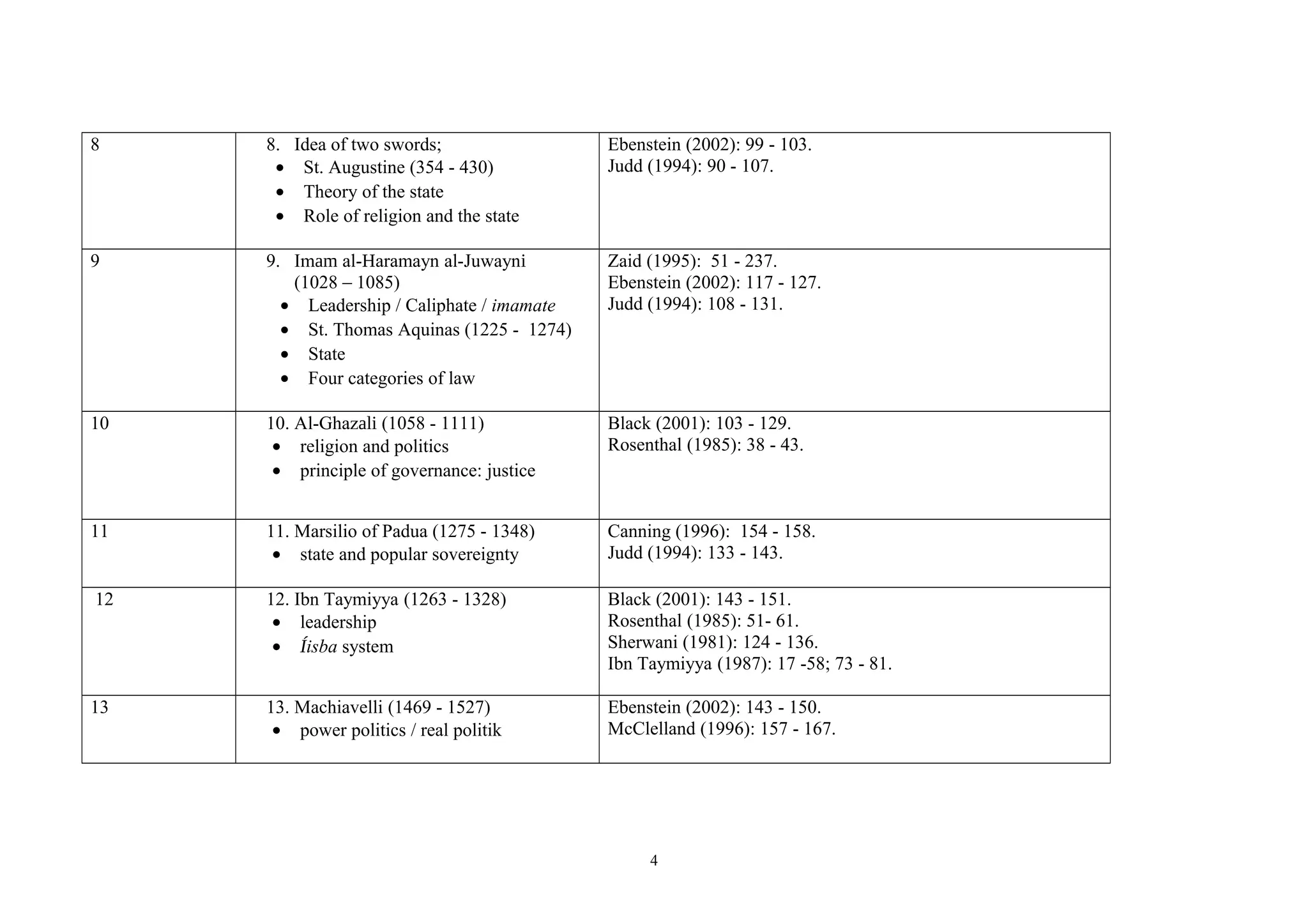
8 8. Idea of two swords;
• St. Augustine (354 - 430)
• Theory of the state
• Role of religion and the state
Ebenstein (2002): 99 - 103.
Judd (1994): 90 - 107.
9 9. Imam al-Haramayn al-Juwayni
(1028 – 1085)
• Leadership / Caliphate / imamate
• St. Thomas Aquinas (1225 - 1274)
• State
• Four categories of law
Zaid (1995): 51 - 237.
Ebenstein (2002): 117 - 127.
Judd (1994): 108 - 131.
10 10. Al-Ghazali (1058 - 1111)
• religion and politics
• principle of governance: justice
Black (2001): 103 - 129.
Rosenthal (1985): 38 - 43.
11 11. Marsilio of Padua (1275 - 1348)
• state and popular sovereignty
Canning (1996): 154 - 158.
Judd (1994): 133 - 143.
12 12. Ibn Taymiyya (1263 - 1328)
• leadership
• Íisba system
Black (2001): 143 - 151.
Rosenthal (1985): 51- 61.
Sherwani (1981): 124 - 136.
Ibn Taymiyya (1987): 17 -58; 73 - 81.
13 13. Machiavelli (1469 - 1527)
• power politics / real politik
Ebenstein (2002): 143 - 150.
McClelland (1996): 157 - 167.
4
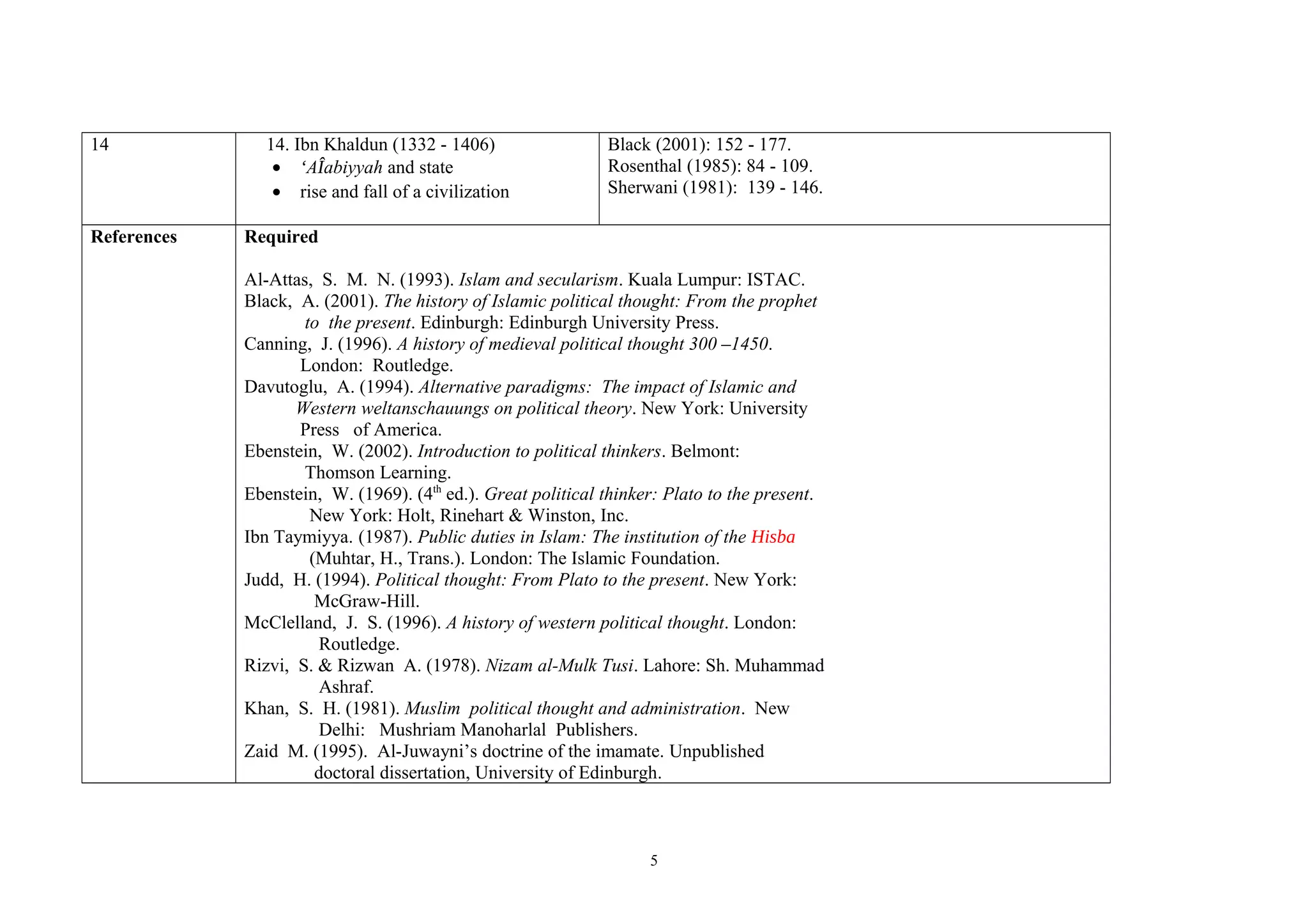
14 14. Ibn Khaldun (1332 - 1406)
• ‘AÎabiyyah and state
• rise and fall of a civilization
Black (2001): 152 - 177.
Rosenthal (1985): 84 - 109.
Sherwani (1981): 139 - 146.
References Required
Al-Attas, S. M. N. (1993). Islam and secularism. Kuala Lumpur: ISTAC.
Black, A. (2001). The history of Islamic political thought: From the prophet
to the present. Edinburgh: Edinburgh University Press.
Canning, J. (1996). A history of medieval political thought 300 –1450.
London: Routledge.
Davutoglu, A. (1994). Alternative paradigms: The impact of Islamic and
Western weltanschauungs on political theory. New York: University
Press of America.
Ebenstein, W. (2002). Introduction to political thinkers. Belmont:
Thomson Learning.
Ebenstein, W. (1969). (4th
ed.). Great political thinker: Plato to the present.
New York: Holt, Rinehart & Winston, Inc.
Ibn Taymiyya. (1987). Public duties in Islam: The institution of the Hisba
(Muhtar, H., Trans.). London: The Islamic Foundation.
Judd, H. (1994). Political thought: From Plato to the present. New York:
McGraw-Hill.
McClelland, J. S. (1996). A history of western political thought. London:
Routledge.
Rizvi, S. & Rizwan A. (1978). Nizam al-Mulk Tusi. Lahore: Sh. Muhammad
Ashraf.
Khan, S. H. (1981). Muslim political thought and administration. New
Delhi: Mushriam Manoharlal Publishers.
Zaid M. (1995). Al-Juwayni’s doctrine of the imamate. Unpublished
doctoral dissertation, University of Edinburgh.
5
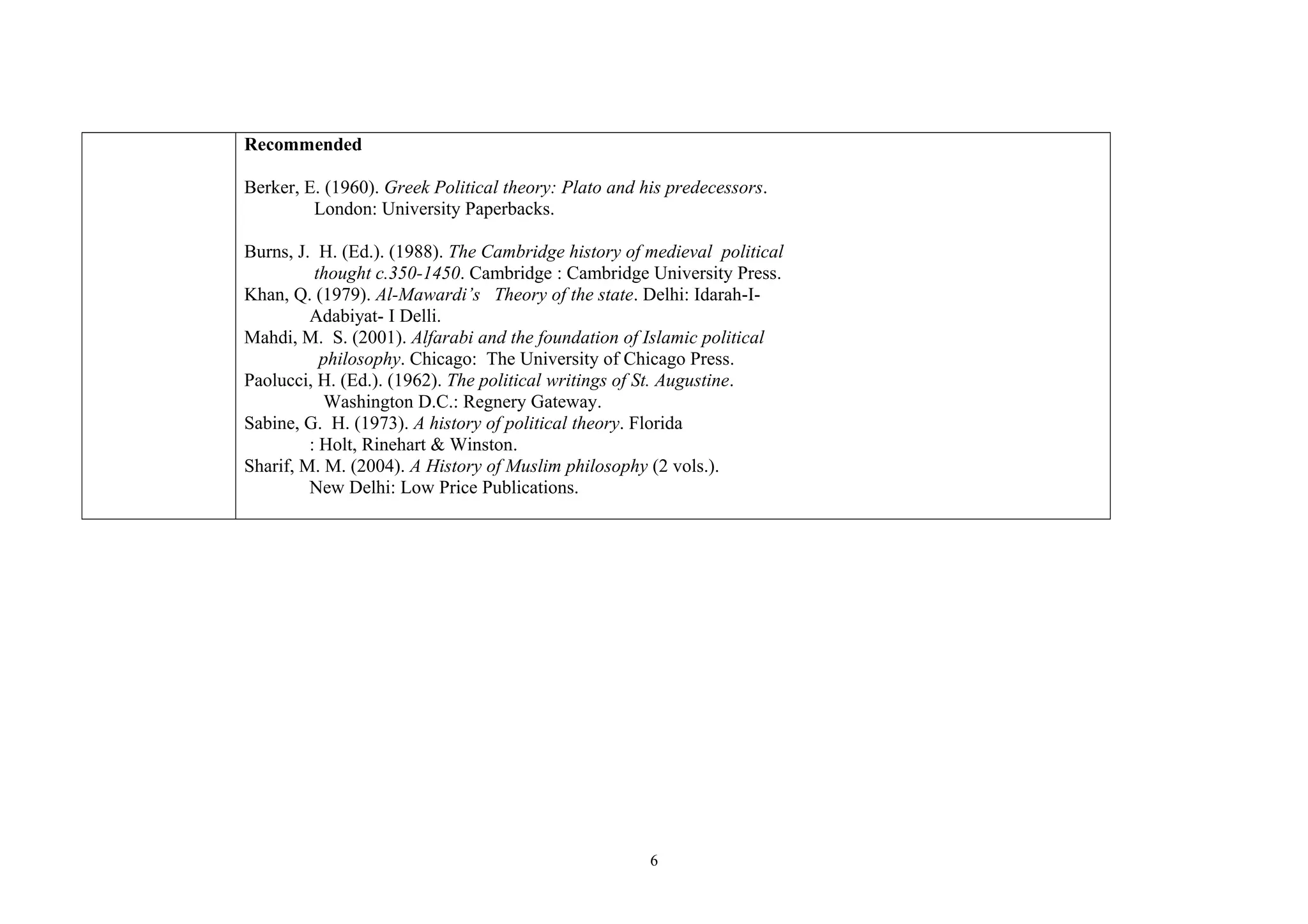
Recommended
Berker, E. (1960). Greek Political theory: Plato and his predecessors.
London: University Paperbacks.
Burns, J. H. (Ed.). (1988). The Cambridge history of medieval political
thought c.350-1450. Cambridge : Cambridge University Press.
Khan, Q. (1979). Al-Mawardi’s Theory of the state. Delhi: Idarah-I-
Adabiyat- I Delli.
Mahdi, M. S. (2001). Alfarabi and the foundation of Islamic political
philosophy. Chicago: The University of Chicago Press.
Paolucci, H. (Ed.). (1962). The political writings of St. Augustine.
Washington D.C.: Regnery Gateway.
Sabine, G. H. (1973). A history of political theory. Florida
: Holt, Rinehart & Winston.
Sharif, M. M. (2004). A History of Muslim philosophy (2 vols.).
New Delhi: Low Price Publications.
6
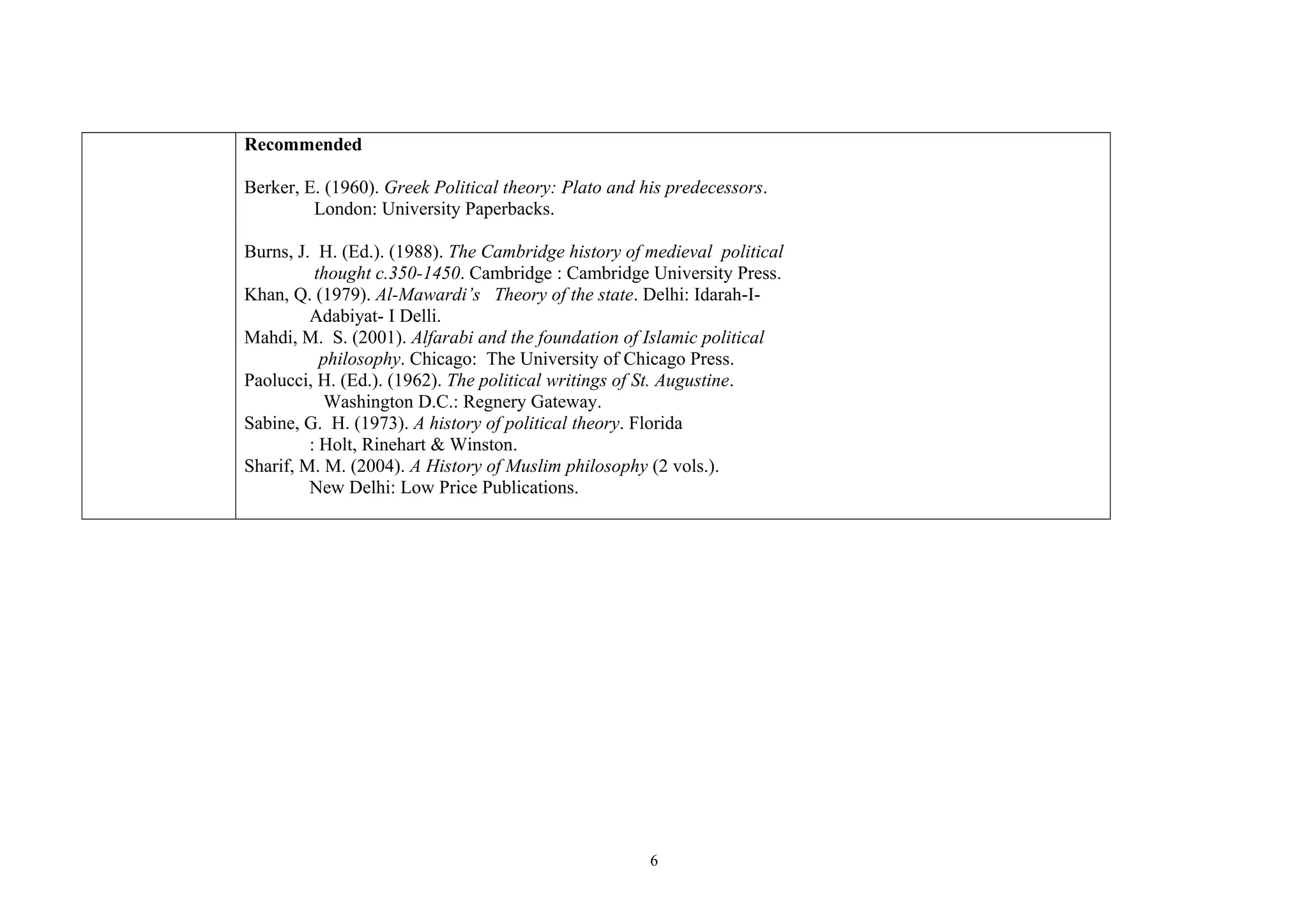
Recommended
Berker, E. (1960). Greek Political theory: Plato and his predecessors.
London: University Paperbacks.
Burns, J. H. (Ed.). (1988). The Cambridge history of medieval political
thought c.350-1450. Cambridge : Cambridge University Press.
Khan, Q. (1979). Al-Mawardi’s Theory of the state. Delhi: Idarah-I-
Adabiyat- I Delli.
Mahdi, M. S. (2001). Alfarabi and the foundation of Islamic political
philosophy. Chicago: The University of Chicago Press.
Paolucci, H. (Ed.). (1962). The political writings of St. Augustine.
Washington D.C.: Regnery Gateway.
Sabine, G. H. (1973). A history of political theory. Florida
: Holt, Rinehart & Winston.
Sharif, M. M. (2004). A History of Muslim philosophy (2 vols.).
New Delhi: Low Price Publications.
6

PSCI 2210 - Course outline

  • 1.
    INTERNATIONAL ISLAMIC UNIVERSITYMALAYSIA COURSE OUTLINE Kulliyyah Islamic Revealed Knowledge and Human Sciences Department Political Science Programme Bachelor of Human Sciences (Political Science) Course Title Political Thought I Course Code PSCI 2110 Status Core Course Course Instructor(s) Dr. Muhamad Fuzi Omar Semester Offered Every semester. Course Synopsis This course explores and focuses on classical theories of state and leadership. It includes the study of western and Muslim political thought ranging from classical Greek, Roman-Greco philosophers, Christian theologians and Muslim jurists. Among the thinkers included are Plato, al-Farabi, Cicero, Marcus Aurelius, al-Mawardi, Machiavelli and Ibn Khaldun. Course Objectives The objectives of this course are to: 1. provide the students with understanding of theories of state and leadership; 2. compare classical Islamic and Western political thought; and 3. examine normative and pragmatic politics. 1
  • 2.
    Learning Outcomes By the endof this course, students will be able to: 1. Explain the contribution of major Western and Muslim political thinkers beginning from Plato to Ibn KhaldËn (A3); 2. Demonstrate the epistemological differences between the Western and the Muslim political thinkers (C3); 3. Trace the concepts of state and leadership in the Western and Muslim political thought (P3, LS2). Instructional Strategies Content-based teaching and class room discussion Course Assessment State weightage of each type of assessment. Method % Mid-term 25 Assignment 25 Presentation 10 Final Examination 40 Content Outlines Weeks Topics Task/Reading 1 1. Introduction to political thought • Epistemology • Worldview Al-Attas (1993): 16 - 49. Davutoglu (1994): 1 - 24, 47 - 86. 2 2. Plato (427 - 347 B.C.) • State • Leadership • Forms of government Ebenstein (2002): 1 - 11. Berker (1960): 125 - 129, 168 - 208. 2
  • 3.
    3 3. Aristotle(384 - 322 B.C.) • State • Leadership • Forms of government Ebenstein (2002): 58 - 69. 4 4. Al-Farabi (870 - 950) • Politics • Leadership • Forms of government (four types of cities) Rosenthal (1985): 122 - 142. Sherwani (1981): 42 - 63. 5 5. Stoicism Cicero (106 - 43 B.C.) • The law of nature Ebenstein (1991): 124 - 138. Judd (1994): 75 - 89. 6 6. Al-MÉwardÊ (972 - 1058) • Leadership / Caliphate / imamate Black (2001): 83 - 102. Rosenthal (1995): 27 - 37. 7 7. Marcus Aurelius (121 - 180) • State and Human liberty Ebenstein (1991): 158 - 69. • Nizam al-Mulk (1018 - 1092) • Public administration and governance Rizvi (1978): 78 - 98. 130 - 144. 3
  • 4.
    8 8. Ideaof two swords; • St. Augustine (354 - 430) • Theory of the state • Role of religion and the state Ebenstein (2002): 99 - 103. Judd (1994): 90 - 107. 9 9. Imam al-Haramayn al-Juwayni (1028 – 1085) • Leadership / Caliphate / imamate • St. Thomas Aquinas (1225 - 1274) • State • Four categories of law Zaid (1995): 51 - 237. Ebenstein (2002): 117 - 127. Judd (1994): 108 - 131. 10 10. Al-Ghazali (1058 - 1111) • religion and politics • principle of governance: justice Black (2001): 103 - 129. Rosenthal (1985): 38 - 43. 11 11. Marsilio of Padua (1275 - 1348) • state and popular sovereignty Canning (1996): 154 - 158. Judd (1994): 133 - 143. 12 12. Ibn Taymiyya (1263 - 1328) • leadership • Íisba system Black (2001): 143 - 151. Rosenthal (1985): 51- 61. Sherwani (1981): 124 - 136. Ibn Taymiyya (1987): 17 -58; 73 - 81. 13 13. Machiavelli (1469 - 1527) • power politics / real politik Ebenstein (2002): 143 - 150. McClelland (1996): 157 - 167. 4
  • 5.
    14 14. IbnKhaldun (1332 - 1406) • ‘AÎabiyyah and state • rise and fall of a civilization Black (2001): 152 - 177. Rosenthal (1985): 84 - 109. Sherwani (1981): 139 - 146. References Required Al-Attas, S. M. N. (1993). Islam and secularism. Kuala Lumpur: ISTAC. Black, A. (2001). The history of Islamic political thought: From the prophet to the present. Edinburgh: Edinburgh University Press. Canning, J. (1996). A history of medieval political thought 300 –1450. London: Routledge. Davutoglu, A. (1994). Alternative paradigms: The impact of Islamic and Western weltanschauungs on political theory. New York: University Press of America. Ebenstein, W. (2002). Introduction to political thinkers. Belmont: Thomson Learning. Ebenstein, W. (1969). (4th ed.). Great political thinker: Plato to the present. New York: Holt, Rinehart & Winston, Inc. Ibn Taymiyya. (1987). Public duties in Islam: The institution of the Hisba (Muhtar, H., Trans.). London: The Islamic Foundation. Judd, H. (1994). Political thought: From Plato to the present. New York: McGraw-Hill. McClelland, J. S. (1996). A history of western political thought. London: Routledge. Rizvi, S. & Rizwan A. (1978). Nizam al-Mulk Tusi. Lahore: Sh. Muhammad Ashraf. Khan, S. H. (1981). Muslim political thought and administration. New Delhi: Mushriam Manoharlal Publishers. Zaid M. (1995). Al-Juwayni’s doctrine of the imamate. Unpublished doctoral dissertation, University of Edinburgh. 5
  • 6.
    Recommended Berker, E. (1960).Greek Political theory: Plato and his predecessors. London: University Paperbacks. Burns, J. H. (Ed.). (1988). The Cambridge history of medieval political thought c.350-1450. Cambridge : Cambridge University Press. Khan, Q. (1979). Al-Mawardi’s Theory of the state. Delhi: Idarah-I- Adabiyat- I Delli. Mahdi, M. S. (2001). Alfarabi and the foundation of Islamic political philosophy. Chicago: The University of Chicago Press. Paolucci, H. (Ed.). (1962). The political writings of St. Augustine. Washington D.C.: Regnery Gateway. Sabine, G. H. (1973). A history of political theory. Florida : Holt, Rinehart & Winston. Sharif, M. M. (2004). A History of Muslim philosophy (2 vols.). New Delhi: Low Price Publications. 6
  • 7.
    Recommended Berker, E. (1960).Greek Political theory: Plato and his predecessors. London: University Paperbacks. Burns, J. H. (Ed.). (1988). The Cambridge history of medieval political thought c.350-1450. Cambridge : Cambridge University Press. Khan, Q. (1979). Al-Mawardi’s Theory of the state. Delhi: Idarah-I- Adabiyat- I Delli. Mahdi, M. S. (2001). Alfarabi and the foundation of Islamic political philosophy. Chicago: The University of Chicago Press. Paolucci, H. (Ed.). (1962). The political writings of St. Augustine. Washington D.C.: Regnery Gateway. Sabine, G. H. (1973). A history of political theory. Florida : Holt, Rinehart & Winston. Sharif, M. M. (2004). A History of Muslim philosophy (2 vols.). New Delhi: Low Price Publications. 6