INTRODUCTION TO TEACHING
Teaching
 A process in which one individual makes something known to individual
 Teaching is a system of action intended to produce learning
 Teaching is a form of inter-personal influence aimed at changing the
behavior potential of another
Effective Teaching
 Effective teaching refers to the extent to which the teacher employed
learning outcomes successfully to bring about the intended outcomes for
…the program of study’.
EFFECTIVE TEACHER
 Provides appropriate time, opportunity, and
pacing for instruction
 Communicates student high expectations
 Involves all students in learning activities
 Adapts instruction to all student learning needs and abilities
 Fairness and consistency
 Flexible
 Creative
 Use of verbal ,visual vocal tools
 Ensures student success
Characteristics of an Effective
Teacher
 Pedagogical skill to implement teaching strategies…and
pedagogical content knowledge
 Reflective skills to analyze and act of teacher-generated
data
 Communication and collaboration skills to build
relationships
 Management skills to arrange successful learning
environments
 Technological skills
Characteristics of an Effective
Teacher
 Designs lessons to reach mastery
 Has positive expectations that students will be successful
“Each student comes to school
with an unlit candle
with the expectation for you to light it.”
_Harry Wong
BASIC QUESTIOS
 What to teach?
 Why to teach?
 How to teach?
Learning modes
 Formal
 Non- Formal
 Informal
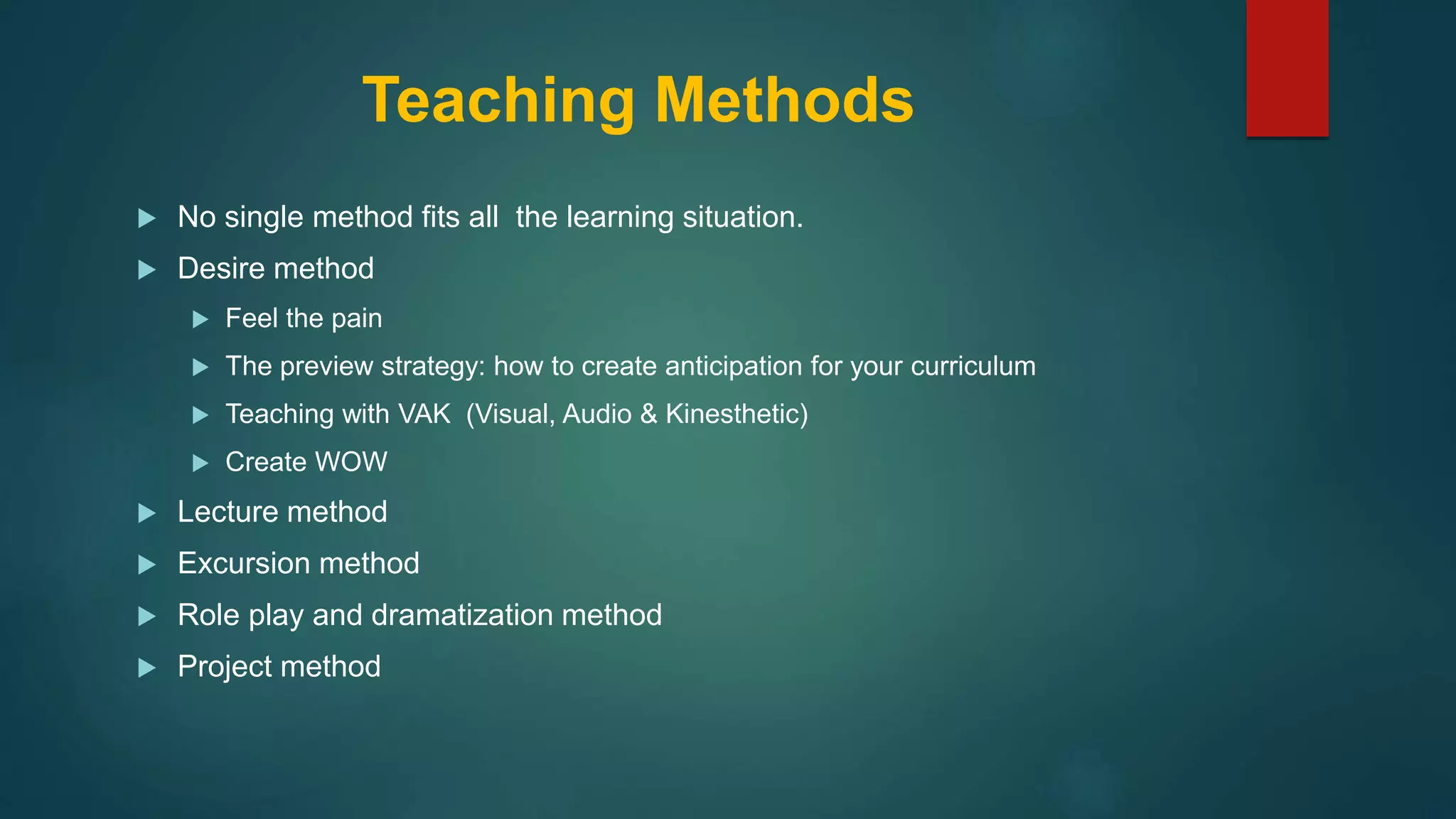
Teaching Methods
 No single method fits all the learning situation.
 Desire method
 Feel the pain
 The preview strategy: how to create anticipation for your curriculum
 Teaching with VAK (Visual, Audio & Kinesthetic)
 Create WOW
 Lecture method
 Excursion method
 Role play and dramatization method
 Project method
… Teaching Methods
 Inquiry based learning
 Cooperative learning
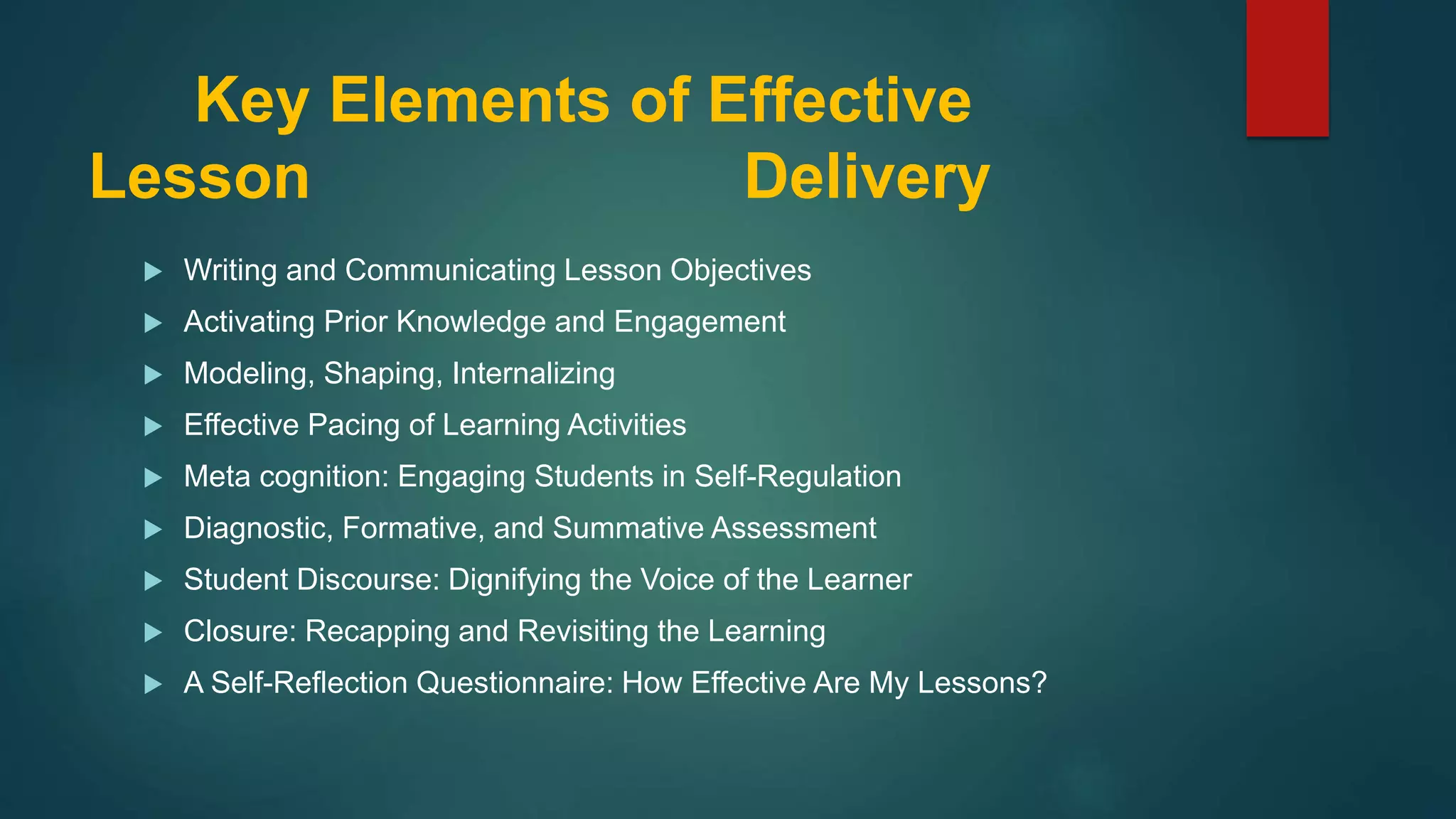
Key Elements of Effective
Lesson Delivery
 Writing and Communicating Lesson Objectives
 Activating Prior Knowledge and Engagement
 Modeling, Shaping, Internalizing
 Effective Pacing of Learning Activities
 Meta cognition: Engaging Students in Self-Regulation
 Diagnostic, Formative, and Summative Assessment
 Student Discourse: Dignifying the Voice of the Learner
 Closure: Recapping and Revisiting the Learning
 A Self-Reflection Questionnaire: How Effective Are My Lessons?
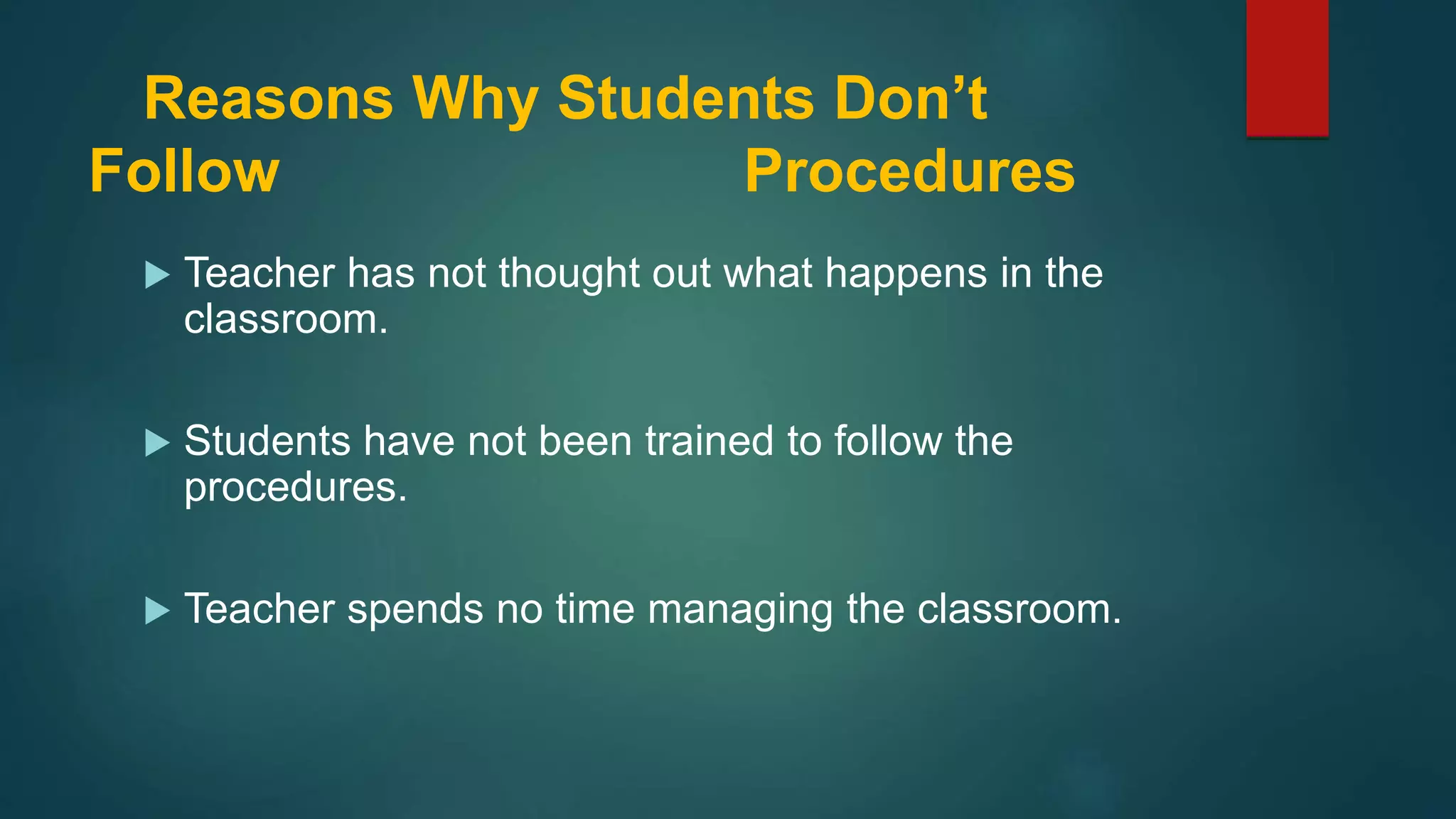
Reasons Why Students Don’t
Follow Procedures
 Teacher has not thought out what happens in the
classroom.
 Students have not been trained to follow the
procedures.
 Teacher spends no time managing the classroom.
Memorable Quote
 “Perhaps the most valuable result of all education is the ability to make
yourself do the thing you have to do, when it ought to be done, whether
you like it or not.”
-Thomas Huxley
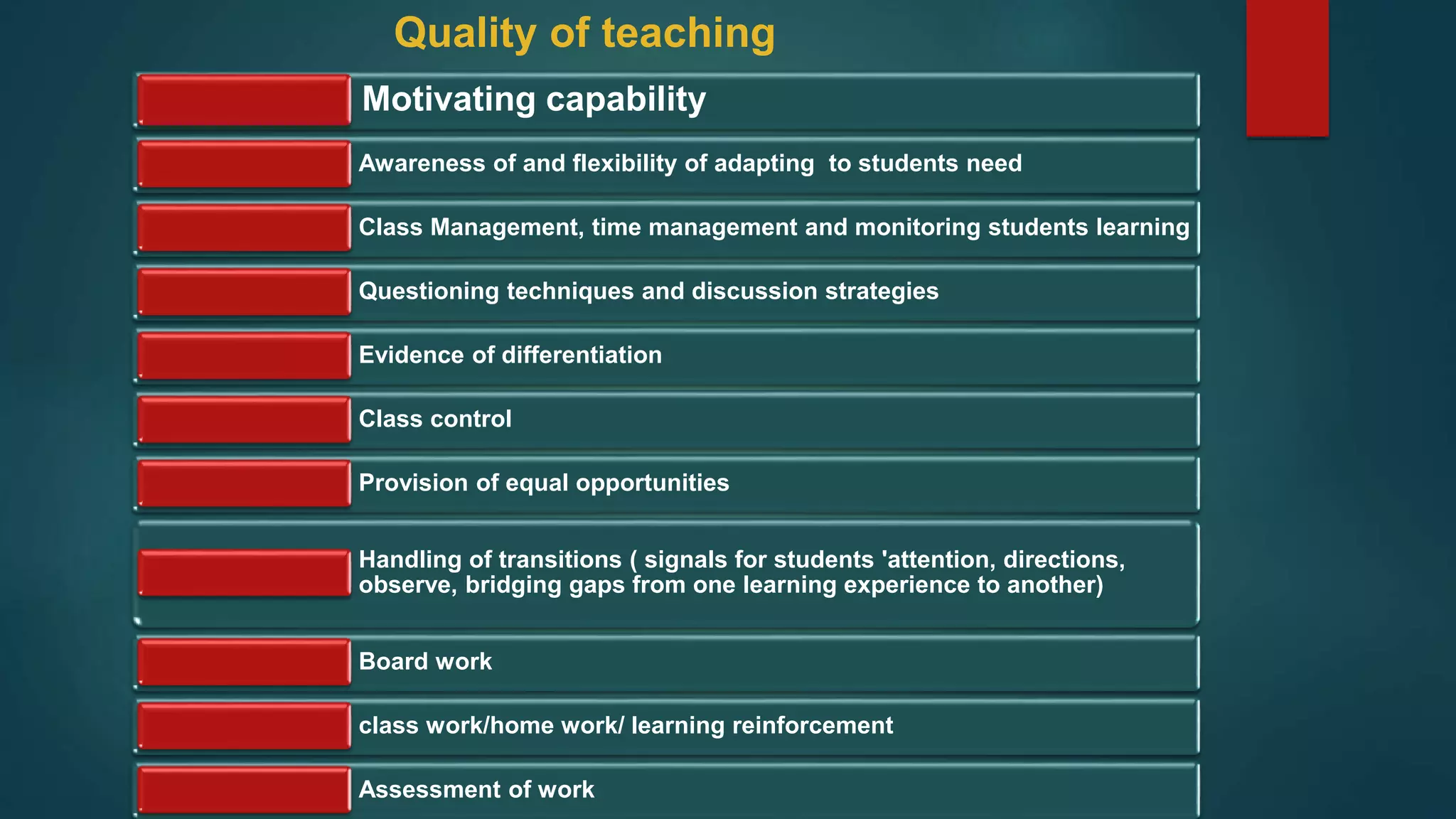
Quality of teaching
Motivating capability
Awareness of and flexibility of adapting to students need
Class Management, time management and monitoring students learning
Questioning techniques and discussion strategies
Evidence of differentiation
Class control
Provision of equal opportunities
Handling of transitions ( signals for students 'attention, directions,
observe, bridging gaps from one learning experience to another)
Board work
class work/home work/ learning reinforcement
Assessment of work
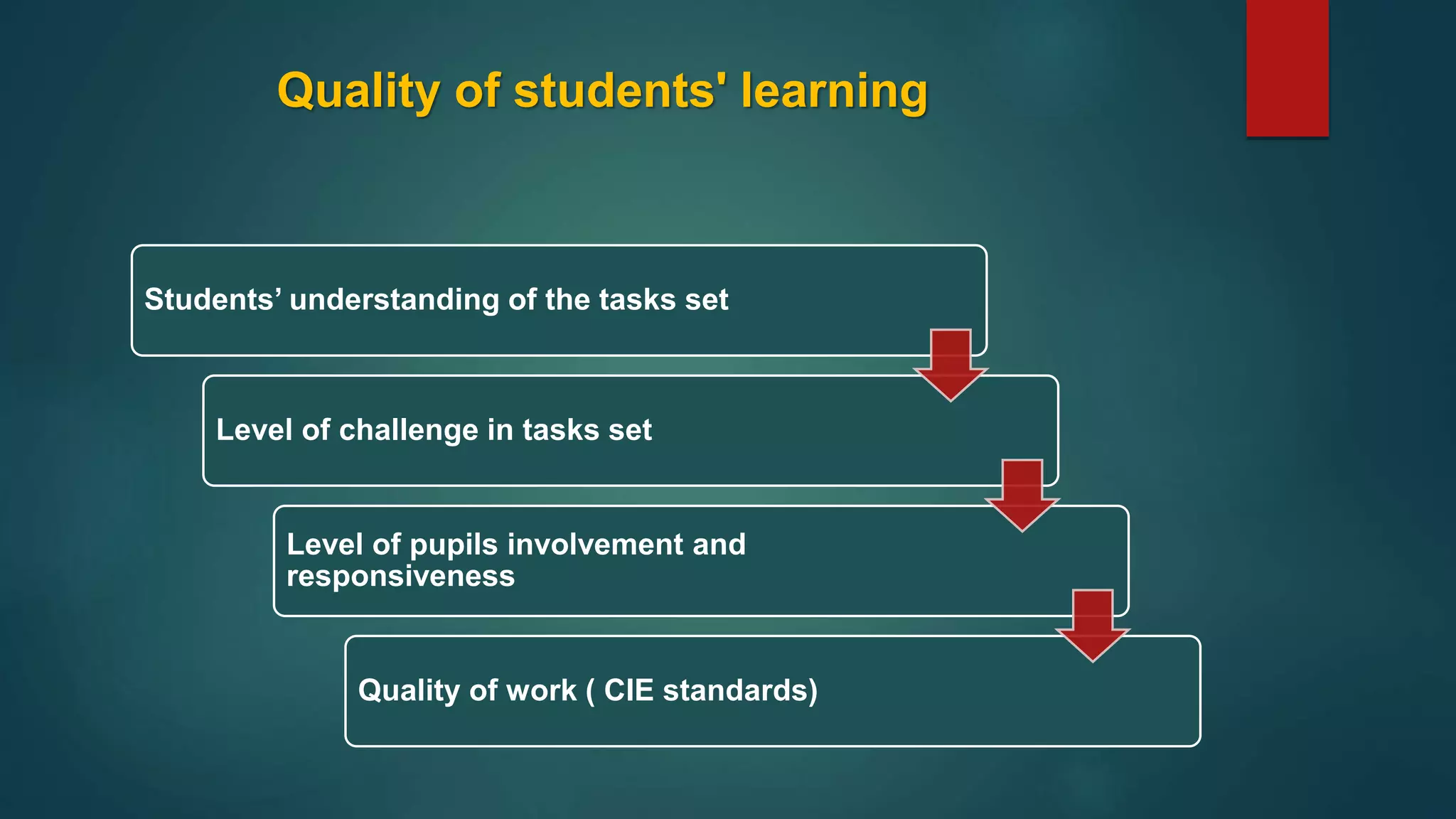
Quality of students' learning
Students’ understanding of the tasks set
Level of challenge in tasks set
Level of pupils involvement and
responsiveness
Quality of work ( CIE standards)
Role of Teacher for Conducive
Learning Environment
 Managing the physical environment
 Planning and arranging the physical set-up of the classroom is a logical
starting point for classroom management
 he physical environment reflects the expectations of the teacher of how the
room should be used
 Well-organized classroom can stimulate learning, help building a
classroom community and will help students to be self-motivated,
disciplined and responsible
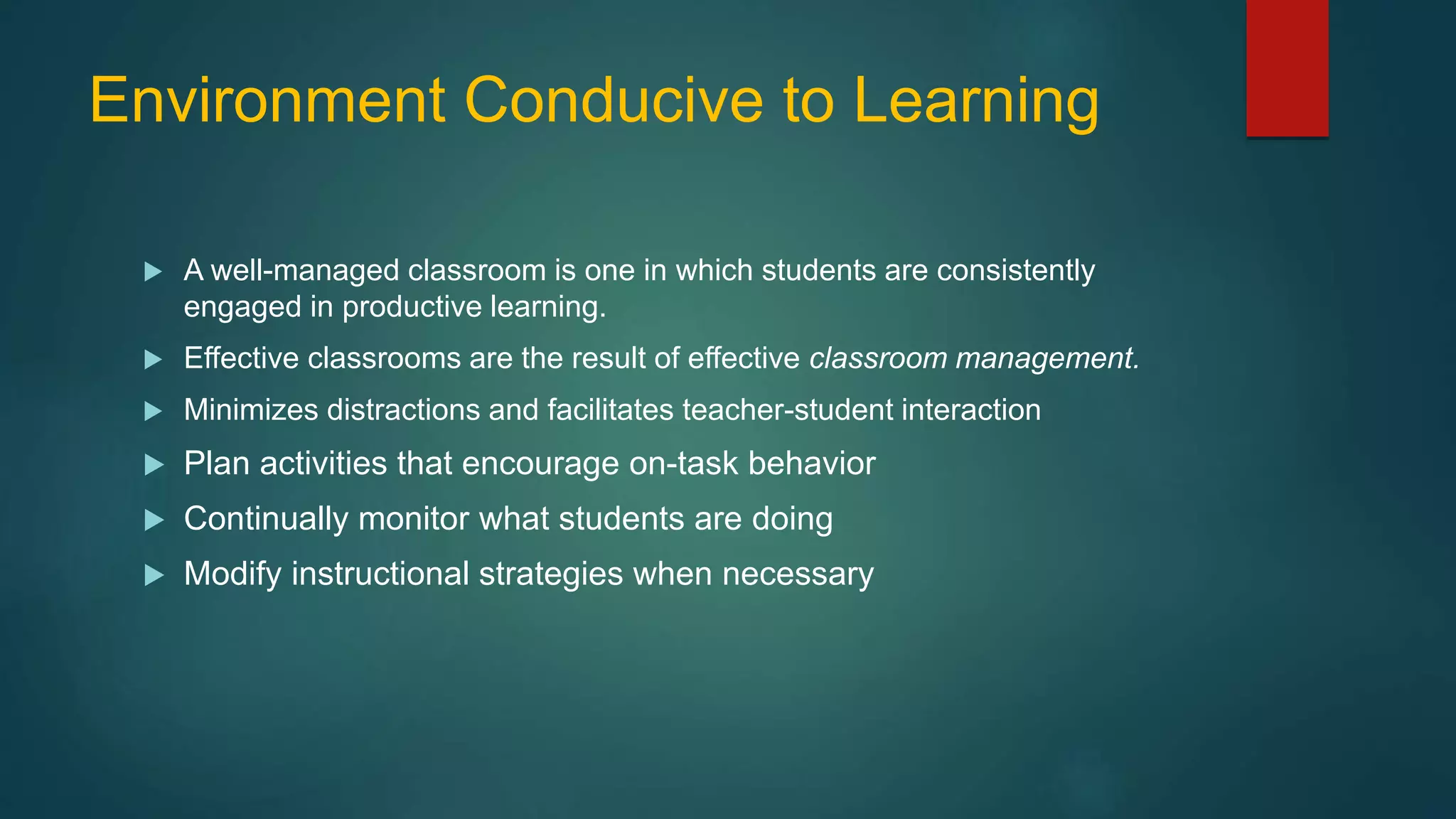
Environment Conducive to Learning
 A well-managed classroom is one in which students are consistently
engaged in productive learning.
 Effective classrooms are the result of effective classroom management.
 Minimizes distractions and facilitates teacher-student interaction
 Plan activities that encourage on-task behavior
 Continually monitor what students are doing
 Modify instructional strategies when necessary
Physical conditions to consider
 Cleanliness, light and temperature of the room
 Bulletin board, white board display
 Seating arrangement

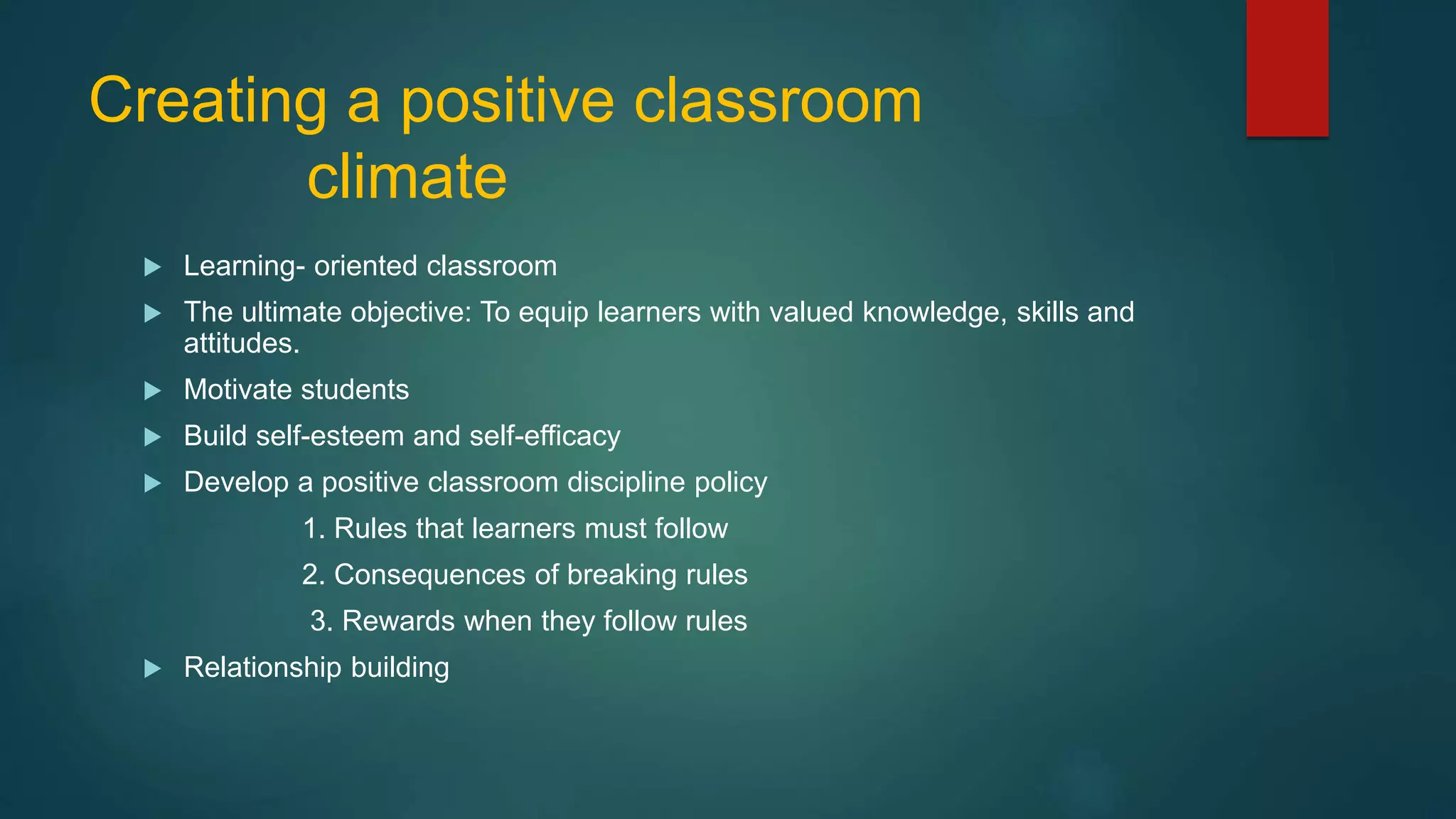
Creating a positive classroom
climate
 Learning- oriented classroom
 The ultimate objective: To equip learners with valued knowledge, skills and
attitudes.
 Motivate students
 Build self-esteem and self-efficacy
 Develop a positive classroom discipline policy
1. Rules that learners must follow
2. Consequences of breaking rules
3. Rewards when they follow rules
 Relationship building
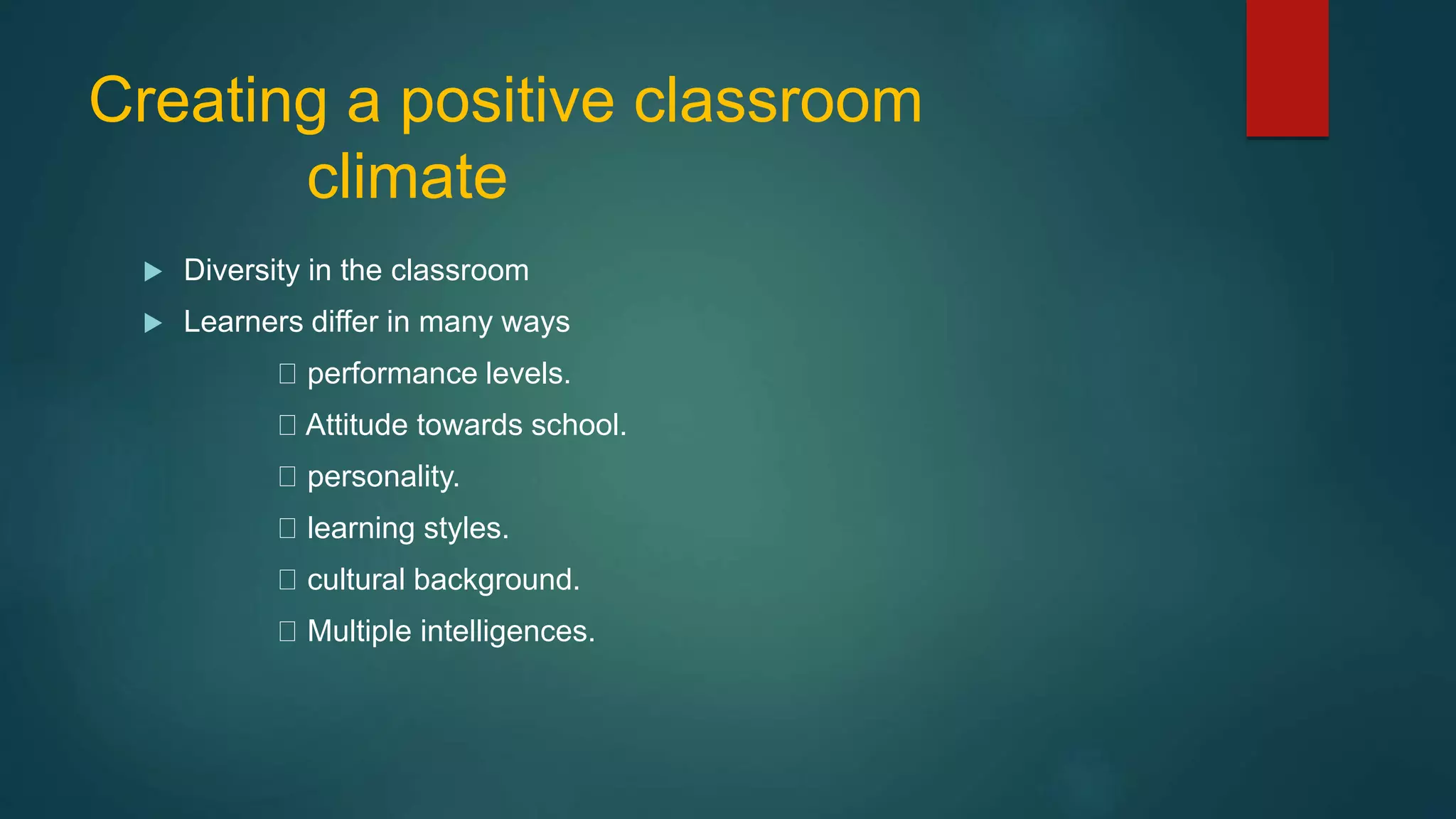
Creating a positive classroom
climate
 Diversity in the classroom
 Learners differ in many ways
performance levels.
Attitude towards school.
personality.
learning styles.
cultural background.
Multiple intelligences.
Motivation
 Any influence that triggers, directs or maintains behavior
 The processes that account for an individual’s intensity, direction, and
persistence of effort toward attaining a goal.
 Key Elements
1. Intensity: how hard a person tries
2. Direction: toward beneficial goal
3. Persistence: how long a person tries
Motivation Factors
 Achievement
 Recognition
 Work itself
 Responsibility
 Advancement
 Growth
Communication Skills
 Teaching is generally considered –
– 50% knowledge and
– 50% interpersonal or communication skills.
Communication Skills
Aspects of communication
 Listening & Expressing
The cornerstone of effective communication is the ability to listen
and to accomplish this in an active manner
Expressing refers to the ability to effectively say what we want to
say.
 Verbal & non Verbal
Verbal refers to what we say with words
Non-verbal refers to all the other ways we communicate, via
body language, tone etc.
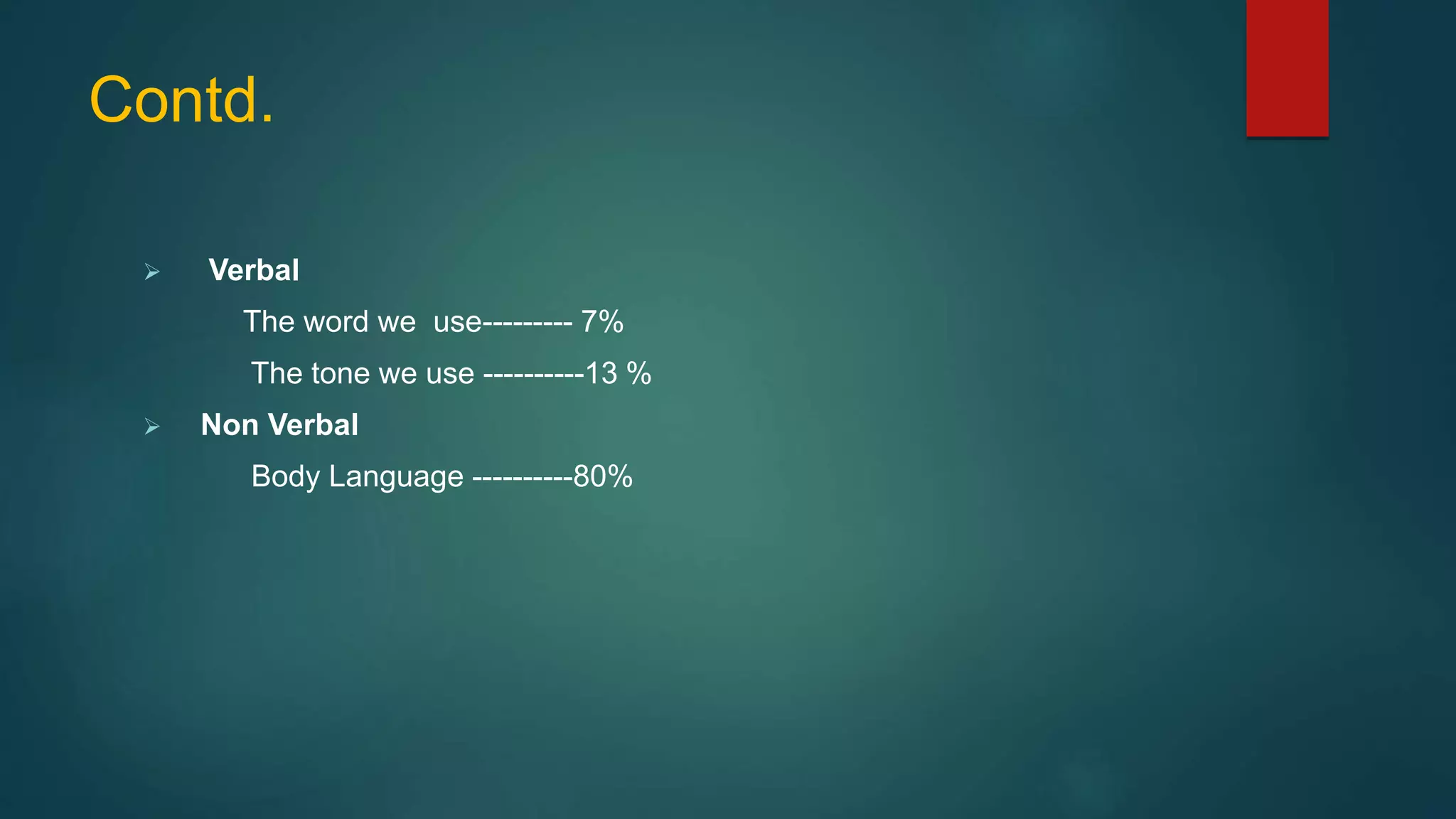
Contd.
 Verbal
The word we use--------- 7%
The tone we use ----------13 %
 Non Verbal
Body Language ----------80%
Body Language
 Posture : head up and alert ,leaning forward
 Gesture keeping arms un crossed
 Facial Expression
 Active movement
 Physical distance
 Eye contact
 Volume of voice
 Tone of voice
What the teacher is, is more important than what he teaches
Good Communication Involves
 Positive Motivation
 Congruence between what we think , say and do
 A willingness to listen
 A level of openness
 Sense of humor
 Respect for other person
 Giving and receiving constructive feed back
Contd.
EFFECTIVE TEACHERS:
 Provide appropriate time, opportunity, and
pacing for instruction
 Communicate high student expectations
 Involve all students in learning activities
 Adapt instruction to all student learning needs and abilities
 Ensure student success
Introduction to teaching

Introduction to teaching

  • 1.
  • 2.
    Teaching  A processin which one individual makes something known to individual  Teaching is a system of action intended to produce learning  Teaching is a form of inter-personal influence aimed at changing the behavior potential of another
  • 3.
    Effective Teaching  Effectiveteaching refers to the extent to which the teacher employed learning outcomes successfully to bring about the intended outcomes for …the program of study’.
  • 4.
    EFFECTIVE TEACHER  Providesappropriate time, opportunity, and pacing for instruction  Communicates student high expectations  Involves all students in learning activities  Adapts instruction to all student learning needs and abilities  Fairness and consistency  Flexible  Creative  Use of verbal ,visual vocal tools  Ensures student success
  • 5.
    Characteristics of anEffective Teacher  Pedagogical skill to implement teaching strategies…and pedagogical content knowledge  Reflective skills to analyze and act of teacher-generated data  Communication and collaboration skills to build relationships  Management skills to arrange successful learning environments  Technological skills
  • 6.
    Characteristics of anEffective Teacher  Designs lessons to reach mastery  Has positive expectations that students will be successful “Each student comes to school with an unlit candle with the expectation for you to light it.” _Harry Wong
  • 7.
    BASIC QUESTIOS  Whatto teach?  Why to teach?  How to teach?
  • 8.
    Learning modes  Formal Non- Formal  Informal
  • 9.
    Teaching Methods  Nosingle method fits all the learning situation.  Desire method  Feel the pain  The preview strategy: how to create anticipation for your curriculum  Teaching with VAK (Visual, Audio & Kinesthetic)  Create WOW  Lecture method  Excursion method  Role play and dramatization method  Project method
  • 10.
    … Teaching Methods Inquiry based learning  Cooperative learning
  • 11.
    Key Elements ofEffective Lesson Delivery  Writing and Communicating Lesson Objectives  Activating Prior Knowledge and Engagement  Modeling, Shaping, Internalizing  Effective Pacing of Learning Activities  Meta cognition: Engaging Students in Self-Regulation  Diagnostic, Formative, and Summative Assessment  Student Discourse: Dignifying the Voice of the Learner  Closure: Recapping and Revisiting the Learning  A Self-Reflection Questionnaire: How Effective Are My Lessons?
  • 12.
    Reasons Why StudentsDon’t Follow Procedures  Teacher has not thought out what happens in the classroom.  Students have not been trained to follow the procedures.  Teacher spends no time managing the classroom.
  • 13.
    Memorable Quote  “Perhapsthe most valuable result of all education is the ability to make yourself do the thing you have to do, when it ought to be done, whether you like it or not.” -Thomas Huxley
  • 14.
    Quality of teaching Motivatingcapability Awareness of and flexibility of adapting to students need Class Management, time management and monitoring students learning Questioning techniques and discussion strategies Evidence of differentiation Class control Provision of equal opportunities Handling of transitions ( signals for students 'attention, directions, observe, bridging gaps from one learning experience to another) Board work class work/home work/ learning reinforcement Assessment of work
  • 15.
    Quality of students'learning Students’ understanding of the tasks set Level of challenge in tasks set Level of pupils involvement and responsiveness Quality of work ( CIE standards)
  • 16.
    Role of Teacherfor Conducive Learning Environment  Managing the physical environment  Planning and arranging the physical set-up of the classroom is a logical starting point for classroom management  he physical environment reflects the expectations of the teacher of how the room should be used  Well-organized classroom can stimulate learning, help building a classroom community and will help students to be self-motivated, disciplined and responsible
  • 17.
    Environment Conducive toLearning  A well-managed classroom is one in which students are consistently engaged in productive learning.  Effective classrooms are the result of effective classroom management.  Minimizes distractions and facilitates teacher-student interaction  Plan activities that encourage on-task behavior  Continually monitor what students are doing  Modify instructional strategies when necessary
  • 18.
    Physical conditions toconsider  Cleanliness, light and temperature of the room  Bulletin board, white board display  Seating arrangement 
  • 19.
    Creating a positiveclassroom climate  Learning- oriented classroom  The ultimate objective: To equip learners with valued knowledge, skills and attitudes.  Motivate students  Build self-esteem and self-efficacy  Develop a positive classroom discipline policy 1. Rules that learners must follow 2. Consequences of breaking rules 3. Rewards when they follow rules  Relationship building
  • 20.
    Creating a positiveclassroom climate  Diversity in the classroom  Learners differ in many ways performance levels. Attitude towards school. personality. learning styles. cultural background. Multiple intelligences.
  • 21.
    Motivation  Any influencethat triggers, directs or maintains behavior  The processes that account for an individual’s intensity, direction, and persistence of effort toward attaining a goal.  Key Elements 1. Intensity: how hard a person tries 2. Direction: toward beneficial goal 3. Persistence: how long a person tries
  • 22.
    Motivation Factors  Achievement Recognition  Work itself  Responsibility  Advancement  Growth
  • 23.
    Communication Skills  Teachingis generally considered – – 50% knowledge and – 50% interpersonal or communication skills.
  • 24.
    Communication Skills Aspects ofcommunication  Listening & Expressing The cornerstone of effective communication is the ability to listen and to accomplish this in an active manner Expressing refers to the ability to effectively say what we want to say.  Verbal & non Verbal Verbal refers to what we say with words Non-verbal refers to all the other ways we communicate, via body language, tone etc.
  • 25.
    Contd.  Verbal The wordwe use--------- 7% The tone we use ----------13 %  Non Verbal Body Language ----------80%
  • 26.
    Body Language  Posture: head up and alert ,leaning forward  Gesture keeping arms un crossed  Facial Expression  Active movement  Physical distance  Eye contact  Volume of voice  Tone of voice What the teacher is, is more important than what he teaches
  • 27.
    Good Communication Involves Positive Motivation  Congruence between what we think , say and do  A willingness to listen  A level of openness  Sense of humor  Respect for other person  Giving and receiving constructive feed back
  • 28.
    Contd. EFFECTIVE TEACHERS:  Provideappropriate time, opportunity, and pacing for instruction  Communicate high student expectations  Involve all students in learning activities  Adapt instruction to all student learning needs and abilities  Ensure student success