Questioning
If you change one thing this week
– increase the amount of wait
time you allow when questioning
your class
Why is this important?
• Wait-time 1 –
amount of time
teacher allows to
elapse before a
student begins to
speak after asking
a question
• Wait-time 2 –
amount of time a
teacher waits after
a student has
stopped speaking
before saying
anything
Research has shown:
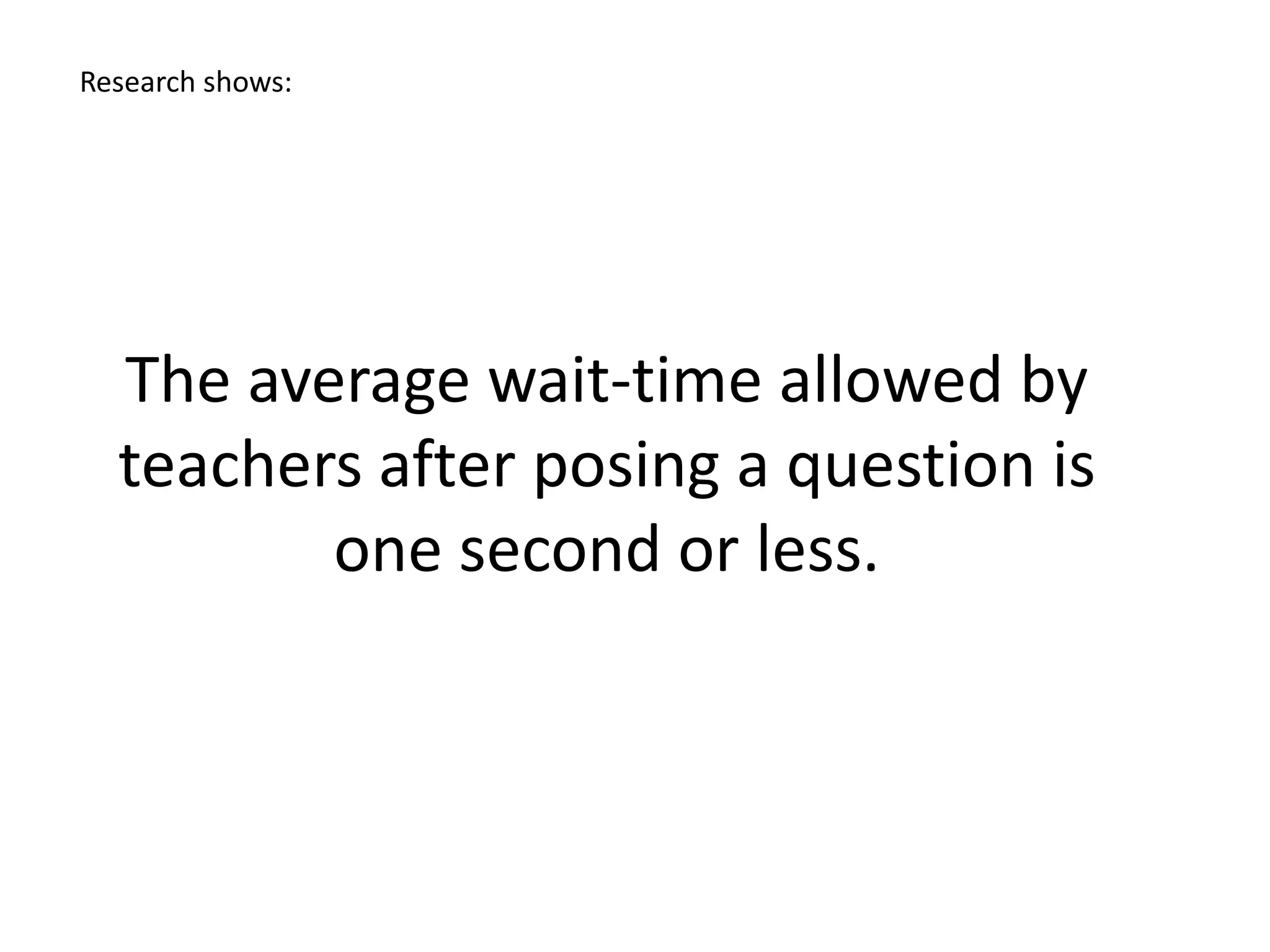
The average wait-time allowed by
teachers after posing a question is
one second or less.
Research shows:
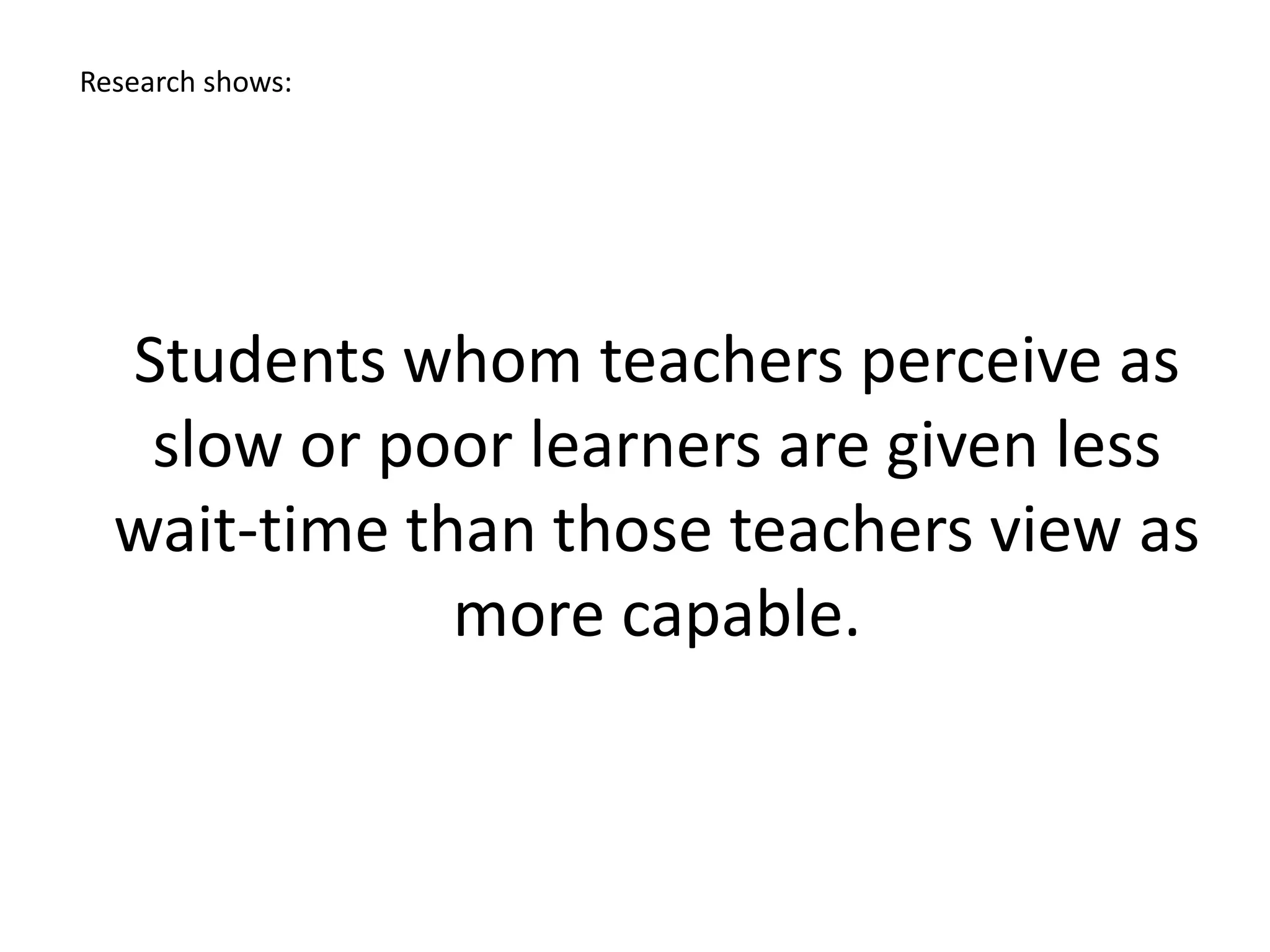
Students whom teachers perceive as
slow or poor learners are given less
wait-time than those teachers view as
more capable.
Research shows:
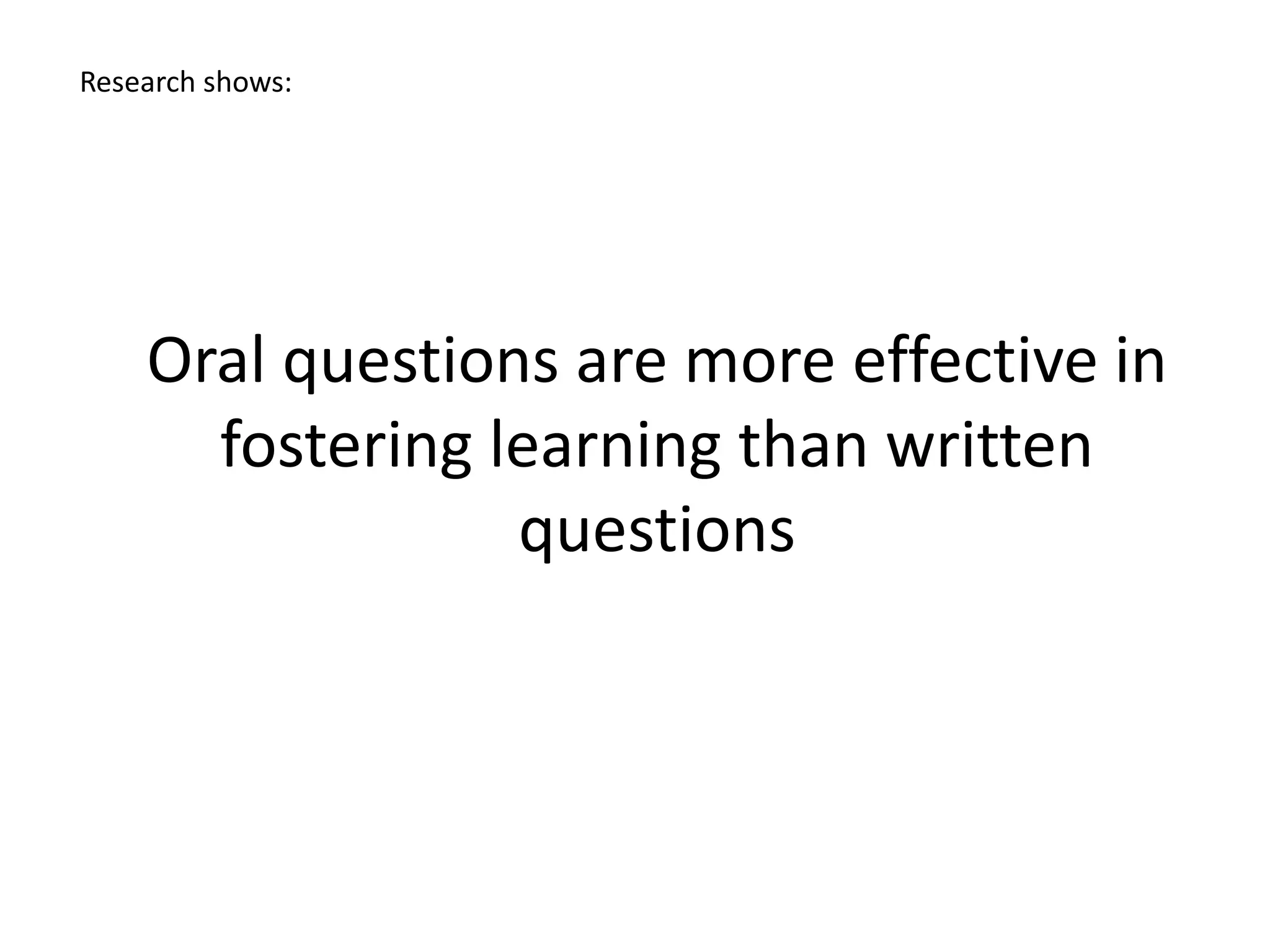
Oral questions are more effective in
fostering learning than written
questions
Research shows:
Lower vs Higher cognitive questions
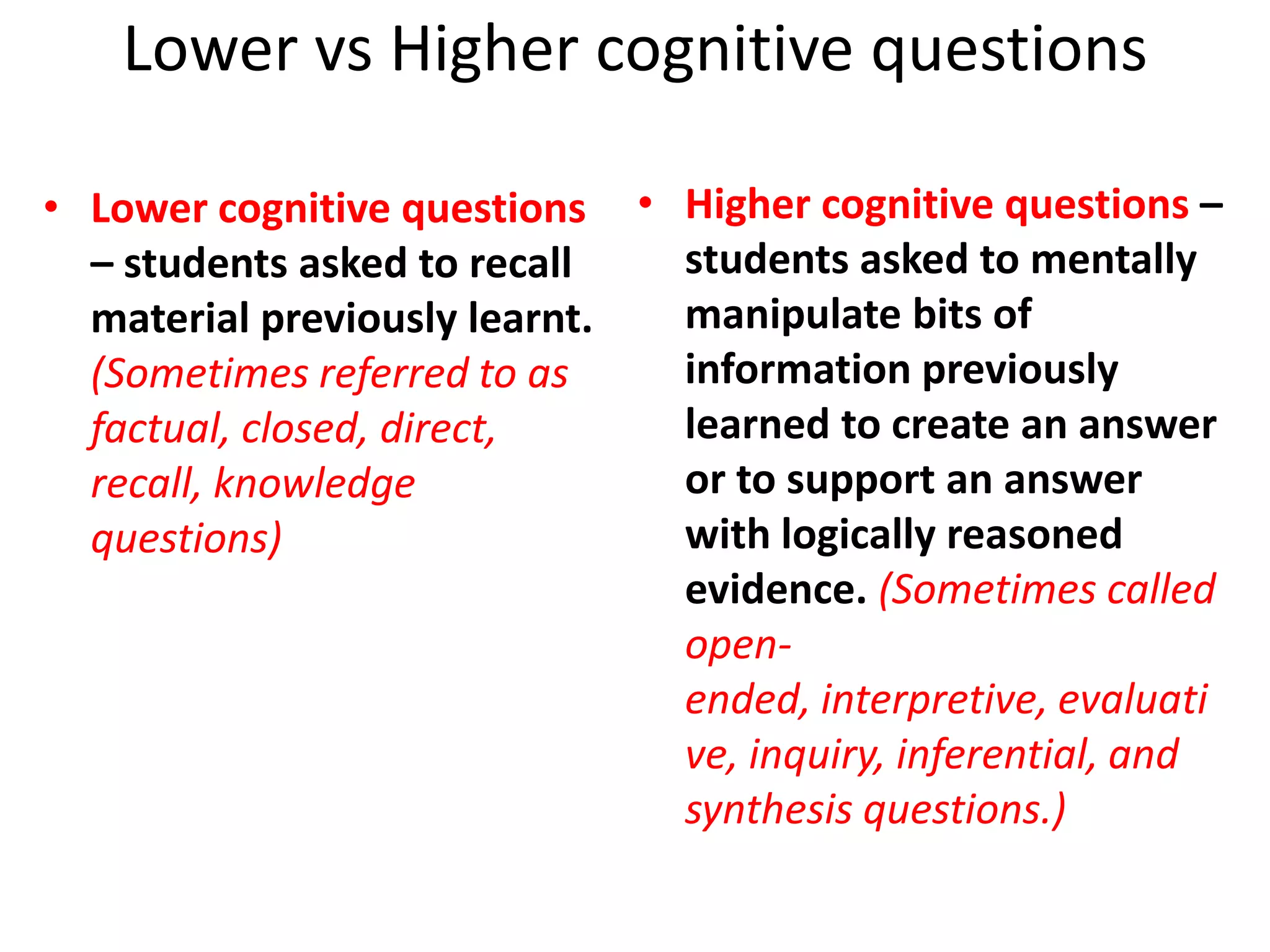
• Lower cognitive questions
– students asked to recall
material previously learnt.
(Sometimes referred to as
factual, closed, direct,
recall, knowledge
questions)
• Higher cognitive questions –
students asked to mentally
manipulate bits of
information previously
learned to create an answer
or to support an answer
with logically reasoned
evidence. (Sometimes called
open-
ended, interpretive, evaluati
ve, inquiry, inferential, and
synthesis questions.)
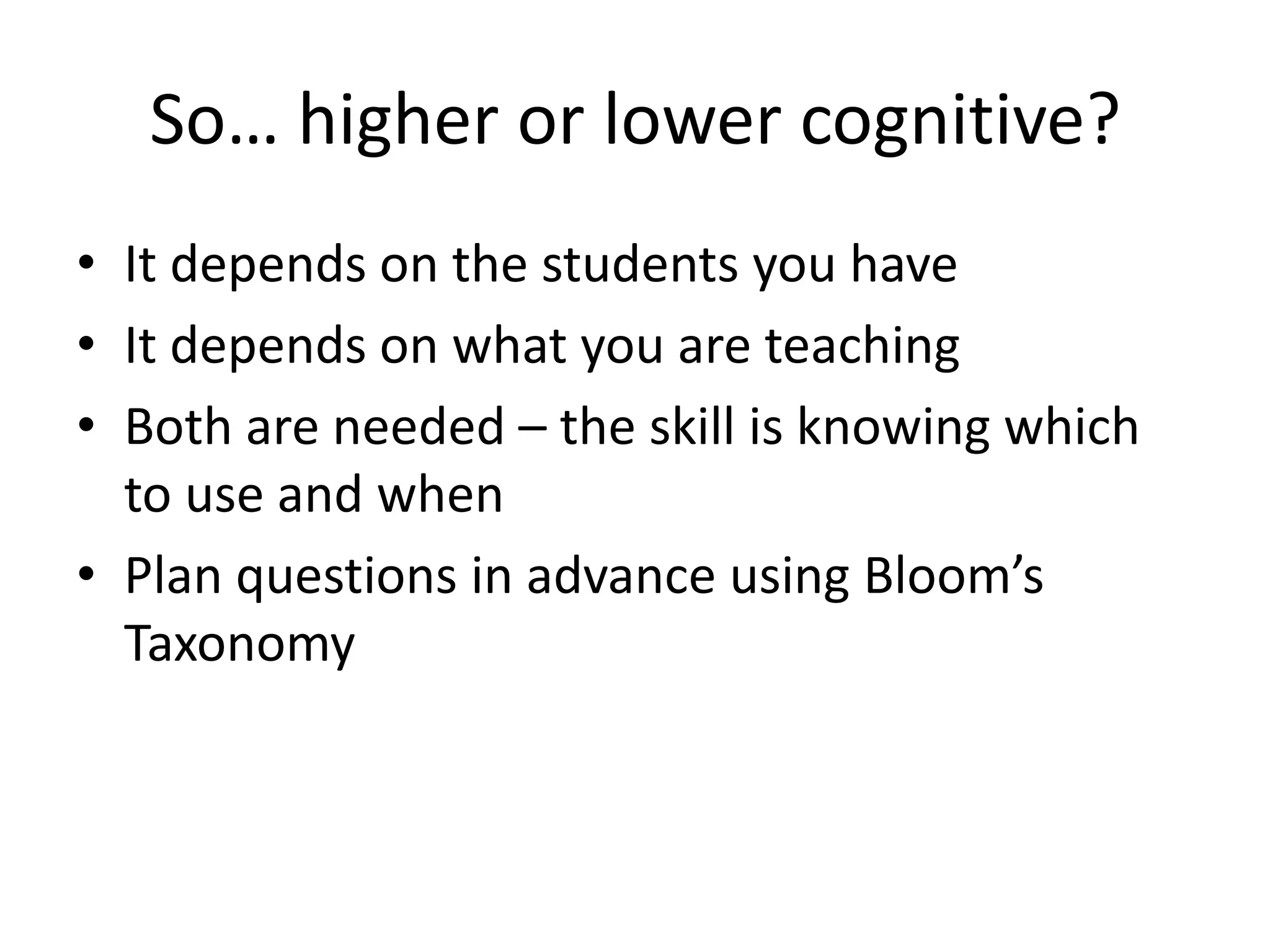
So… higher or lower cognitive?
• It depends on the students you have
• It depends on what you are teaching
• Both are needed – the skill is knowing which
to use and when
• Plan questions in advance using Bloom’s
Taxonomy
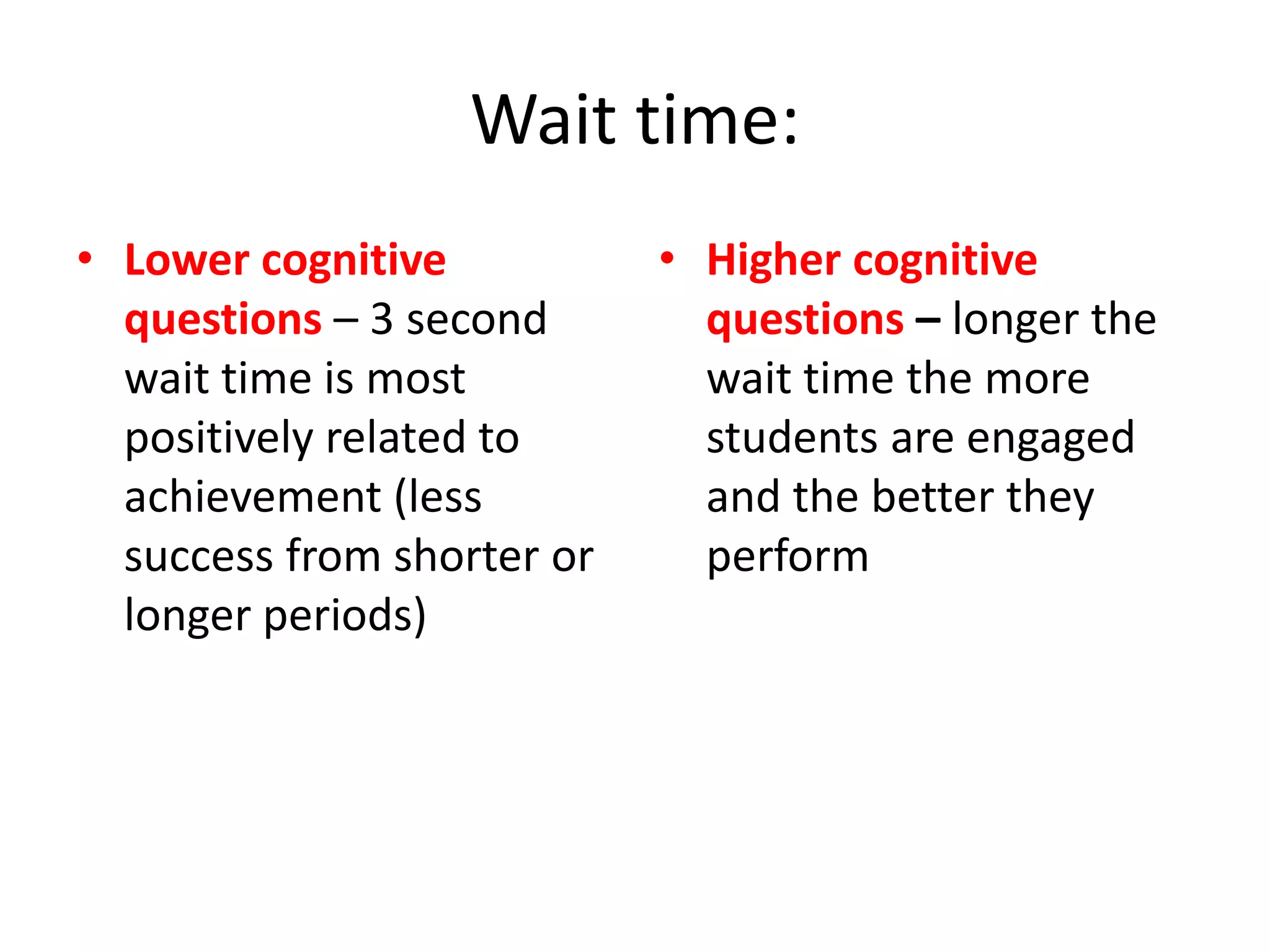
Wait time:
• Lower cognitive
questions – 3 second
wait time is most
positively related to
achievement (less
success from shorter or
longer periods)
• Higher cognitive
questions – longer the
wait time the more
students are engaged
and the better they
perform
Increasing wait time has the following
student outcomes:
Improvements in:
• Student achievement
• Student retention of information
Increases in:
• Number of higher cognitive responses
• Length of student responses
• Contributions by those students who don’t
usually contribute
• Number of questions asked by students
• Student to student interactions
Decreases in:
• Student interruptions
• Student failure to respond
Increasing wait time beyond 3 seconds
has the following teacher outcomes:
• Teachers listen more and engage in more
discussions
• Increases in teacher expectations of those
usually thought of as lower ability
• Expansion of the variety of questions asked by
teachers
• Increases in the number of higher cognitive
questions asked by teachers
Strategies to use:
• Use a 3 second wait time when using lower
cognitive questions
• Increase wait time beyond 3 seconds for
higher cognitive questions
• Combine with other strategies (e.g. no hands;
pose, pause, pounce and bounce)
• Know your students – and plan a suitable
range of lower and higher cognitive questions
• Will you have a ‘three second’ rule that you
share with the class?
• Or will you build the three second rule into
your own method of questioning?

Top tips questioning - wait time

  • 1.
  • 2.
    If you changeone thing this week – increase the amount of wait time you allow when questioning your class
  • 3.
    Why is thisimportant? • Wait-time 1 – amount of time teacher allows to elapse before a student begins to speak after asking a question • Wait-time 2 – amount of time a teacher waits after a student has stopped speaking before saying anything
  • 4.
  • 5.
    The average wait-timeallowed by teachers after posing a question is one second or less. Research shows:
  • 6.
    Students whom teachersperceive as slow or poor learners are given less wait-time than those teachers view as more capable. Research shows:
  • 7.
    Oral questions aremore effective in fostering learning than written questions Research shows:
  • 8.
    Lower vs Highercognitive questions • Lower cognitive questions – students asked to recall material previously learnt. (Sometimes referred to as factual, closed, direct, recall, knowledge questions) • Higher cognitive questions – students asked to mentally manipulate bits of information previously learned to create an answer or to support an answer with logically reasoned evidence. (Sometimes called open- ended, interpretive, evaluati ve, inquiry, inferential, and synthesis questions.)
  • 10.
    So… higher orlower cognitive? • It depends on the students you have • It depends on what you are teaching • Both are needed – the skill is knowing which to use and when • Plan questions in advance using Bloom’s Taxonomy
  • 11.
    Wait time: • Lowercognitive questions – 3 second wait time is most positively related to achievement (less success from shorter or longer periods) • Higher cognitive questions – longer the wait time the more students are engaged and the better they perform
  • 12.
    Increasing wait timehas the following student outcomes:
  • 13.
    Improvements in: • Studentachievement • Student retention of information
  • 14.
    Increases in: • Numberof higher cognitive responses • Length of student responses • Contributions by those students who don’t usually contribute • Number of questions asked by students • Student to student interactions
  • 15.
    Decreases in: • Studentinterruptions • Student failure to respond
  • 16.
    Increasing wait timebeyond 3 seconds has the following teacher outcomes: • Teachers listen more and engage in more discussions • Increases in teacher expectations of those usually thought of as lower ability • Expansion of the variety of questions asked by teachers • Increases in the number of higher cognitive questions asked by teachers
  • 17.
    Strategies to use: •Use a 3 second wait time when using lower cognitive questions • Increase wait time beyond 3 seconds for higher cognitive questions • Combine with other strategies (e.g. no hands; pose, pause, pounce and bounce) • Know your students – and plan a suitable range of lower and higher cognitive questions
  • 18.
    • Will youhave a ‘three second’ rule that you share with the class? • Or will you build the three second rule into your own method of questioning?