How can associational life through
volunteering best be funded and
managed?
Toby Lowe
Newcastle Business School
@tobyjlowe
Overview
• Complexity and outcomes
• Human Learning Systems
Caveat – seeking to apply experience from other places and sectors. Not
claiming this is true for you. Only you can say whether any of this has
relevance or resonance.
Complexity
Why is complexity relevant?
Our assertion:
Complexity is important because it describes the fundamental
processes by which the outcomes we care about are made.
If we fail to understand and embrace complexity, we will not be
able to create the outcomes we seek.
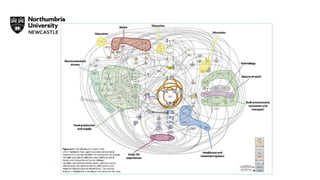
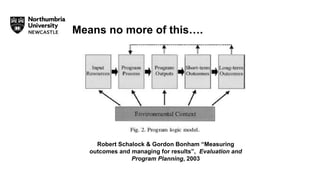
Means no more of this….
Robert Schalock & Gordon Bonham “Measuring
outcomes and managing for results”, Evaluation and
Program Planning, 2003
Implications for Performance
Management
OUTCOMES ARE NOT DELIVERED BY
ORGANISATIONS!
The outcomes we desire are emergent
properties of complex systems
What does complexity require of us?
• The capacity to respond to variety – each
person’s/community’s strengths and needs are different
• The ability to adapt to change – the context in which
social interventions are undertaken constantly changes
• The ability to shape systems whose behaviour can’t be
reliably predicted, and which no one controls.
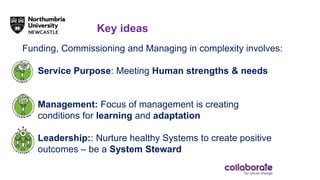
Key ideas
Funding, Commissioning and Managing in complexity involves:
Service Purpose: Meeting Human strengths & needs
Management: Focus of management is creating
conditions for learning and adaptation
Leadership:: Nurture healthy Systems to create positive
outcomes – be a System Steward
Human
To be Human, put on your VEST:
• Respond to Variety of human need and
experience
• Use Empathy to understand the life of others
• View people from a Strengths-based
perspective
• Trust people with decision-making
Human
= Social action is Bespoke by Default
Each human being is recognised as having their own strengths and
needs.
The job of social interventions is to:
• Hear and understand those strengths and needs through forming
relationships with people
• Respond appropriately to those strengths and needs
“liberating” workers from attempts to proceduralise what happens in
good human relationships, and instead focus on the capabilities and
contexts which help enable these relationships”
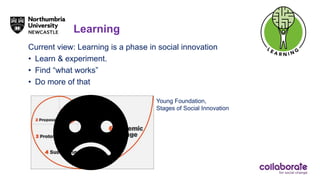
Learning
Young Foundation,
Stages of Social Innovation
Current view: Learning is a phase in social innovation
• Learn & experiment.
• Find “what works”
• Do more of that
Learning
In a complex environment, learning is a continuous
process
There is no such thing as “what works” – because “what
works” is always changing.
“What works” is a continuous process of learning and
adaption.
= funders and commissioners are “purchasing” the
capacity for organisations to learn and adapt.
Learning
Learning is enabled by:
• Funding for learning, not ‘results’
• Creating a learning culture:
• Removing competition
• Creating a positive error culture
• Formal and informal spaces for learning
• Using data to learn
Learning
“intended learning”
(we know what ‘good’ looks like, we want you to know it too)
vs
“emergent learning”
(what ‘good’ looks like keeps changing, we all need to keep up)
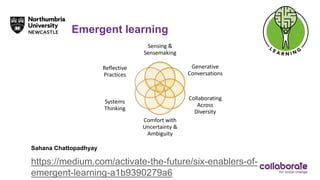
Emergent learning
Sahana Chattopadhyay
https://medium.com/activate-the-future/six-enablers-of-
emergent-learning-a1b9390279a6
Systems
Hypothesis: Healthy systems produce better
outcomes
Who looks after the health of a system?
Role of System Stewards
Systems
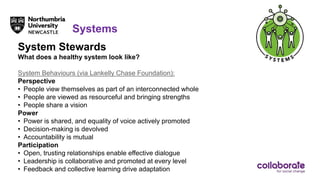
System Stewards
What does a healthy system look like?
System Behaviours (via Lankelly Chase Foundation):
Perspective
• People view themselves as part of an interconnected whole
• People are viewed as resourceful and bringing strengths
• People share a vision
Power
• Power is shared, and equality of voice actively promoted
• Decision-making is devolved
• Accountability is mutual
Participation
• Open, trusting relationships enable effective dialogue
• Leadership is collaborative and promoted at every level
• Feedback and collective learning drive adaptation
Is “a healthy system” another way of describing
a community with strong associational life?
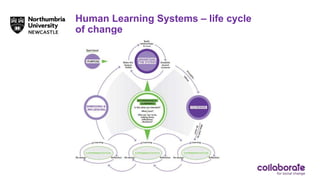
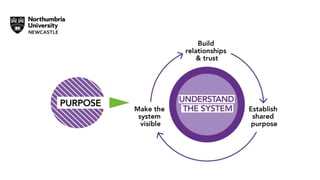
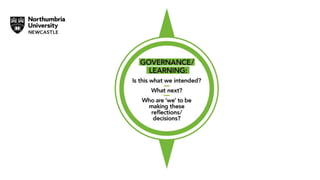
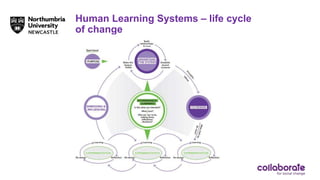
Human Learning Systems – life cycle
of change
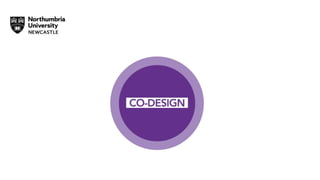
Human Learning Systems – life cycle
of change
How are you helping the actors in systems that support
associational life to understand the system? To build
relationships and trust?
How are you enabling co-design processes?
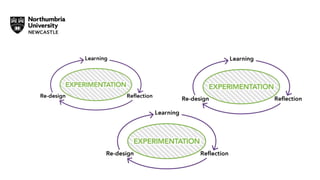
How will you support on-going learning and
experimentation?
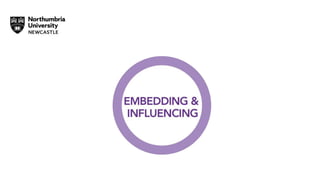
If you’re Government – how do you fund for learning,
not for “results”?
Being systems stewards
The development of trust is crucial to enabling a different way
of thinking about public service and role of Government.
Trust enables autonomy and experimentation. The public
servant is trusted to make a judgement about what the person
in front of them needs.
From a Government’s perspective, we have seen that building
trust starts by being trusting.
Trust is contagious. The more you trust people, the more
people are trustworthy.
What would you do to build trust?
Trust
Thanks for listening
toby.lowe@northumbria.ac.uk
@tobyjlowe

Toby lowe - The Gathering Feb 2020

  • 1.
    How can associationallife through volunteering best be funded and managed? Toby Lowe Newcastle Business School @tobyjlowe
  • 2.
    Overview • Complexity andoutcomes • Human Learning Systems Caveat – seeking to apply experience from other places and sectors. Not claiming this is true for you. Only you can say whether any of this has relevance or resonance.
  • 3.
    Complexity Why is complexityrelevant? Our assertion: Complexity is important because it describes the fundamental processes by which the outcomes we care about are made. If we fail to understand and embrace complexity, we will not be able to create the outcomes we seek.
  • 5.
    Means no moreof this…. Robert Schalock & Gordon Bonham “Measuring outcomes and managing for results”, Evaluation and Program Planning, 2003
  • 6.
    Implications for Performance Management OUTCOMESARE NOT DELIVERED BY ORGANISATIONS! The outcomes we desire are emergent properties of complex systems
  • 7.
    What does complexityrequire of us? • The capacity to respond to variety – each person’s/community’s strengths and needs are different • The ability to adapt to change – the context in which social interventions are undertaken constantly changes • The ability to shape systems whose behaviour can’t be reliably predicted, and which no one controls.
  • 9.
    Key ideas Funding, Commissioningand Managing in complexity involves: Service Purpose: Meeting Human strengths & needs Management: Focus of management is creating conditions for learning and adaptation Leadership:: Nurture healthy Systems to create positive outcomes – be a System Steward
  • 10.
    Human To be Human,put on your VEST: • Respond to Variety of human need and experience • Use Empathy to understand the life of others • View people from a Strengths-based perspective • Trust people with decision-making
  • 11.
    Human = Social actionis Bespoke by Default Each human being is recognised as having their own strengths and needs. The job of social interventions is to: • Hear and understand those strengths and needs through forming relationships with people • Respond appropriately to those strengths and needs “liberating” workers from attempts to proceduralise what happens in good human relationships, and instead focus on the capabilities and contexts which help enable these relationships”
  • 12.
    Learning Young Foundation, Stages ofSocial Innovation Current view: Learning is a phase in social innovation • Learn & experiment. • Find “what works” • Do more of that
  • 13.
    Learning In a complexenvironment, learning is a continuous process There is no such thing as “what works” – because “what works” is always changing. “What works” is a continuous process of learning and adaption. = funders and commissioners are “purchasing” the capacity for organisations to learn and adapt.
  • 14.
    Learning Learning is enabledby: • Funding for learning, not ‘results’ • Creating a learning culture: • Removing competition • Creating a positive error culture • Formal and informal spaces for learning • Using data to learn
  • 15.
    Learning “intended learning” (we knowwhat ‘good’ looks like, we want you to know it too) vs “emergent learning” (what ‘good’ looks like keeps changing, we all need to keep up)
  • 16.
  • 17.
    Systems Hypothesis: Healthy systemsproduce better outcomes Who looks after the health of a system? Role of System Stewards
  • 18.
    Systems System Stewards What doesa healthy system look like? System Behaviours (via Lankelly Chase Foundation): Perspective • People view themselves as part of an interconnected whole • People are viewed as resourceful and bringing strengths • People share a vision Power • Power is shared, and equality of voice actively promoted • Decision-making is devolved • Accountability is mutual Participation • Open, trusting relationships enable effective dialogue • Leadership is collaborative and promoted at every level • Feedback and collective learning drive adaptation
  • 19.
    Is “a healthysystem” another way of describing a community with strong associational life?
  • 20.
    Human Learning Systems– life cycle of change
  • 26.
    Human Learning Systems– life cycle of change
  • 27.
    How are youhelping the actors in systems that support associational life to understand the system? To build relationships and trust? How are you enabling co-design processes? How will you support on-going learning and experimentation? If you’re Government – how do you fund for learning, not for “results”? Being systems stewards
  • 28.
    The development oftrust is crucial to enabling a different way of thinking about public service and role of Government. Trust enables autonomy and experimentation. The public servant is trusted to make a judgement about what the person in front of them needs. From a Government’s perspective, we have seen that building trust starts by being trusting. Trust is contagious. The more you trust people, the more people are trustworthy. What would you do to build trust? Trust
  • 29.