TOBACCO

Wellness
Tobacco – Facts
 Numbers = Facts:
 6,000 teens light up first cig everyday
 3,000 become regular smokers
 Approximately 9 in 10 adult smokers start as
  teens
 1/3 will eventually die from smoking related
  causes.
 About 2.6 million packs are illegally sold to
  minors everyday.
 420,000 Americans die from smoking per year
Tobacco – What’s Inside
 What is Nicotine: addictive drug in cigs and a
  stimulant which increases action of the CNS.
 It is used in insecticide
 What is Tar: thick, sticky dark fluid produced when
  tobacco burns.
 Contains carcinogens: cancer-causing substances.
Tobacco – What’s Happening
 Tar & drying effect of smoking paralyzes or
  destroys cilia that work to keep respiratory
  tract clear
 Carbon Monoxide:
  Colorless, odorless, poisonous gas in
  cigarette smoke. Auto fumes.
 Contain formaldehyde, paint, toilet
  cleaner, antifreeze chemicals
Tobacco – Smokeless
 Smokeless Tobacco
  Tobacco sniffed through nose or chewed
  Over 12 million Americans use regularly
  Start at age 13-15
  Addictive drug is nicotine
  Mouth sores, cancer of lip, mouth or throat
  Damage to teeth and gums
  Damage to digestive system
Tobacco – Smokeless
 Smokeless Tobacco
  7,800 oral cancer deaths per year
  Leukoplakia: Thickened, white leathery spots on inside of
   mouth
  30,200 new cases per year
  Discovered too late = only 50% survive 5 yrs or more
Tobacco – Diseases
 Respiratory Diseases
 Chronic Bronchitis: Bronchi irritated
 Emphysema: Destruction of tiny air sacs in lungs
  that allow gas exchange (O2 vs. CO2)
 Lung Cancer: direct link to smoking
   Leading cause cancer death in males
   Over 157,000 deaths 2003
   Over 171,900 new cases reported per year
Tobacco – Diseases
 Circulatory Diseases
 Nicotine = Plaque buildup in blood vessels
 Increased risk of arteriosclerosis/atherosclerosis
   Hardened arteries
 Increased risk of heart attack and stroke
 Smoking during Pregnancy =
   Small fetal growth, spontaneous abortion/prenatal
    death, and stillbirths
   Growth, developmental, intellectual and behavioral
    problems
Tobacco – Nonsmoker
 Effects to nonsmoker
 Passive smoke: Smoke inhaled by nonsmoker
  and that remains in area after smoker done
 Includes mainstream and sidestream smoke
 Mainstream smoke: Smoke the smoker blows off
 Sidestream smoke: Smoke from burning tobacco
Tobacco – Rights
 Rights of Nonsmoker
 Ask others not to smoke around you
 Choose places that are smoke free
 Ask people not to smoke in your home
 Ask people not to smoke at public meetings or
 events you attend
Tobacco – “JUST SAY NO”
 Be tobacco free!!!!!!!!
 FIRST OF ALL:    DON’T START!!!!!
 Nicotine Withdrawal: Occurs when nicotine no
  longer used
 Nervous, moody, difficulty sleeping


 Not long lasting
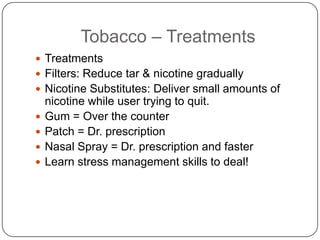
Tobacco – Treatments
 Treatments
 Filters: Reduce tar & nicotine gradually
 Nicotine Substitutes: Deliver small amounts of
    nicotine while user trying to quit.
   Gum = Over the counter
   Patch = Dr. prescription
   Nasal Spray = Dr. prescription and faster
   Learn stress management skills to deal!

Tobacco

  • 1.
  • 2.
    Tobacco – Facts Numbers = Facts:  6,000 teens light up first cig everyday  3,000 become regular smokers  Approximately 9 in 10 adult smokers start as teens  1/3 will eventually die from smoking related causes.  About 2.6 million packs are illegally sold to minors everyday.  420,000 Americans die from smoking per year
  • 3.
    Tobacco – What’sInside  What is Nicotine: addictive drug in cigs and a stimulant which increases action of the CNS.  It is used in insecticide  What is Tar: thick, sticky dark fluid produced when tobacco burns.  Contains carcinogens: cancer-causing substances.
  • 4.
    Tobacco – What’sHappening  Tar & drying effect of smoking paralyzes or destroys cilia that work to keep respiratory tract clear  Carbon Monoxide: Colorless, odorless, poisonous gas in cigarette smoke. Auto fumes.  Contain formaldehyde, paint, toilet cleaner, antifreeze chemicals
  • 5.
    Tobacco – Smokeless Smokeless Tobacco  Tobacco sniffed through nose or chewed  Over 12 million Americans use regularly  Start at age 13-15  Addictive drug is nicotine  Mouth sores, cancer of lip, mouth or throat  Damage to teeth and gums  Damage to digestive system
  • 6.
    Tobacco – Smokeless Smokeless Tobacco  7,800 oral cancer deaths per year  Leukoplakia: Thickened, white leathery spots on inside of mouth  30,200 new cases per year  Discovered too late = only 50% survive 5 yrs or more
  • 7.
    Tobacco – Diseases Respiratory Diseases  Chronic Bronchitis: Bronchi irritated  Emphysema: Destruction of tiny air sacs in lungs that allow gas exchange (O2 vs. CO2)  Lung Cancer: direct link to smoking  Leading cause cancer death in males  Over 157,000 deaths 2003  Over 171,900 new cases reported per year
  • 8.
    Tobacco – Diseases Circulatory Diseases  Nicotine = Plaque buildup in blood vessels  Increased risk of arteriosclerosis/atherosclerosis  Hardened arteries  Increased risk of heart attack and stroke  Smoking during Pregnancy =  Small fetal growth, spontaneous abortion/prenatal death, and stillbirths  Growth, developmental, intellectual and behavioral problems
  • 9.
    Tobacco – Nonsmoker Effects to nonsmoker  Passive smoke: Smoke inhaled by nonsmoker and that remains in area after smoker done  Includes mainstream and sidestream smoke  Mainstream smoke: Smoke the smoker blows off  Sidestream smoke: Smoke from burning tobacco
  • 10.
    Tobacco – Rights Rights of Nonsmoker  Ask others not to smoke around you  Choose places that are smoke free  Ask people not to smoke in your home  Ask people not to smoke at public meetings or events you attend
  • 11.
    Tobacco – “JUSTSAY NO”  Be tobacco free!!!!!!!!  FIRST OF ALL: DON’T START!!!!!  Nicotine Withdrawal: Occurs when nicotine no longer used  Nervous, moody, difficulty sleeping  Not long lasting
  • 12.
    Tobacco – Treatments Treatments  Filters: Reduce tar & nicotine gradually  Nicotine Substitutes: Deliver small amounts of nicotine while user trying to quit.  Gum = Over the counter  Patch = Dr. prescription  Nasal Spray = Dr. prescription and faster  Learn stress management skills to deal!