Welcome
Training & Consultancy Services
to
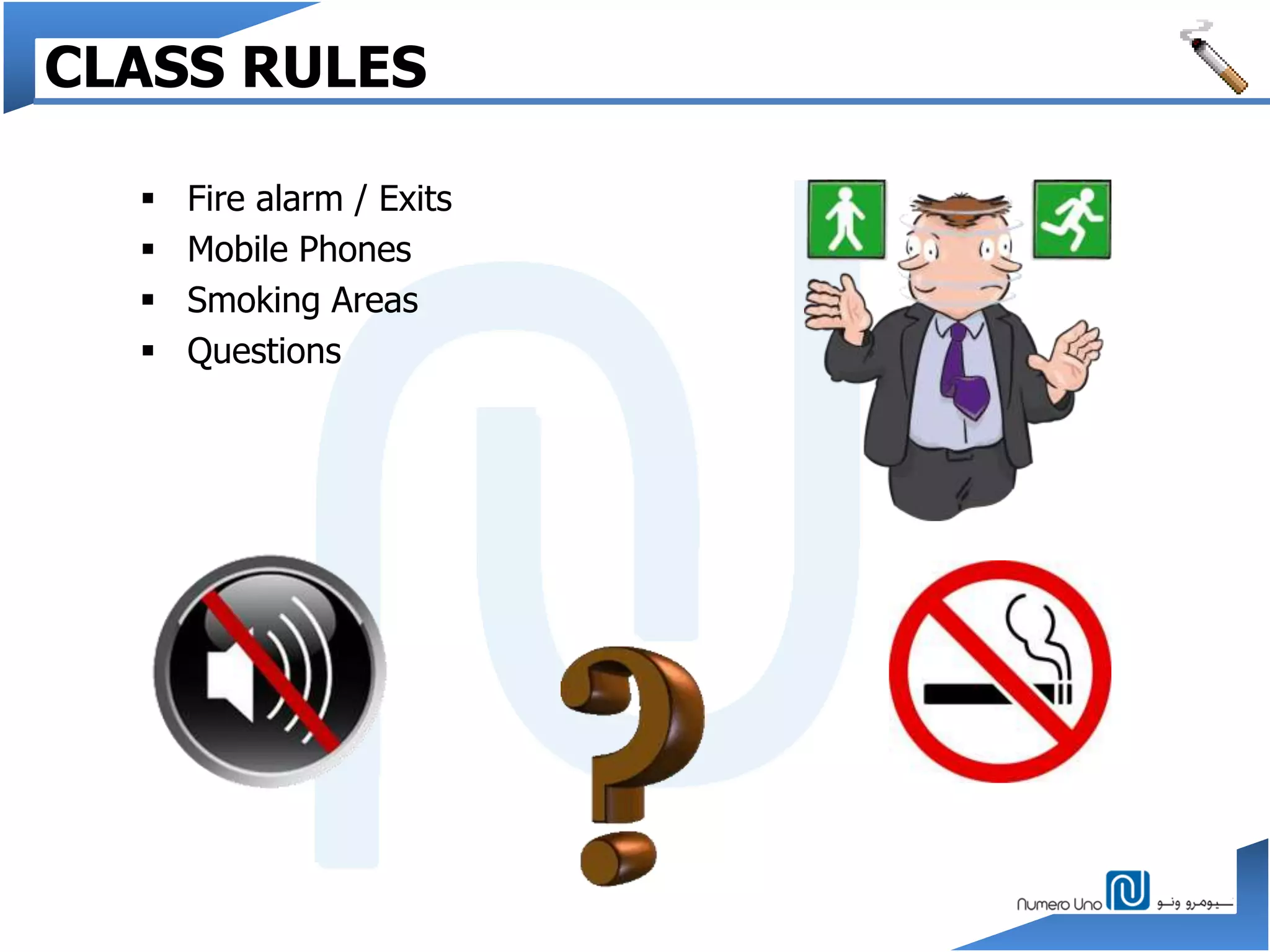
 Fire alarm / Exits
 Mobile Phones
 Smoking Areas
 Questions
CLASS RULES
NO SMOKING AWARENESS
INSTRUCTOR NAME: SHAHZAD HASSAN
(TechIOSH)
INTRODUCTION
The U.S. Surgeon General has called cigarette smoking
“the chief preventable cause of death in our society”
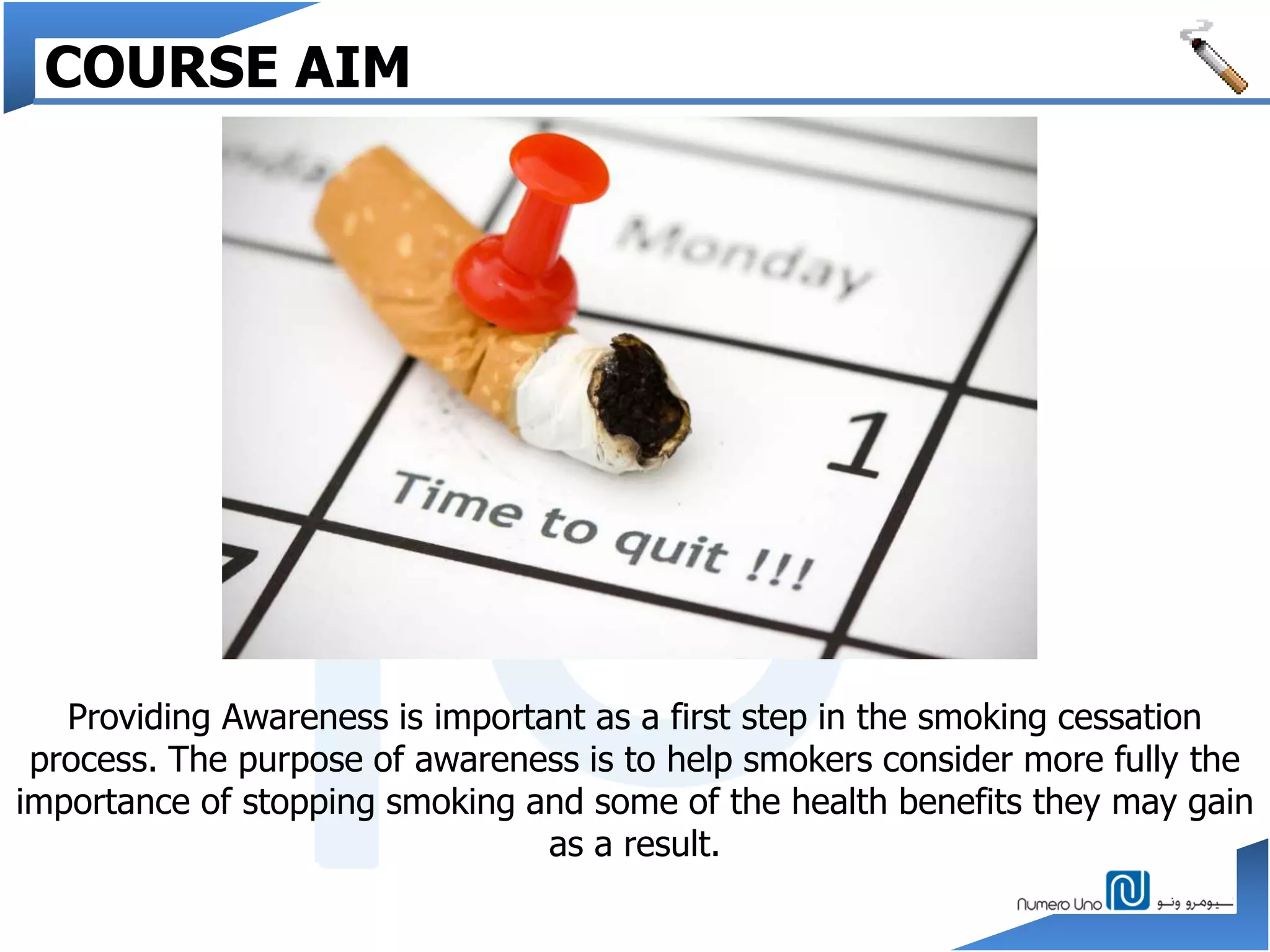
Providing Awareness is important as a first step in the smoking cessation
process. The purpose of awareness is to help smokers consider more fully the
importance of stopping smoking and some of the health benefits they may gain
as a result.
COURSE AIM
CONTENTS
1. Introduction
 Ugly Facts About Smoking
 Ingredients of a cigarette
 Why do you Smoke?
 Good Feelings about it
 Hidden Truth
2. Why Smoking is BAD?
 Health
 Safety
 Environmental
3. Quitting Smoking
 Recognize your Smoking Triggers
 Make a Plan, and Stick to It.
 Positive changes in your body
 Summary
MODULE 1
INTRODUCTION
UGLY FACTS ABOUT SMOKING
 Tobacco users loose an average of 20-25 years of Non-Tobacco Life
expectancy
 Lung cancer risk increases 50% for each cigarette you smoke per
day.
 Heart disease risk increases 100% for each pack of cigarettes you
smoke per day.
 Switching to filter tip cigarettes decreases your risk of lung cancer
about 20% but NOT heart disease.
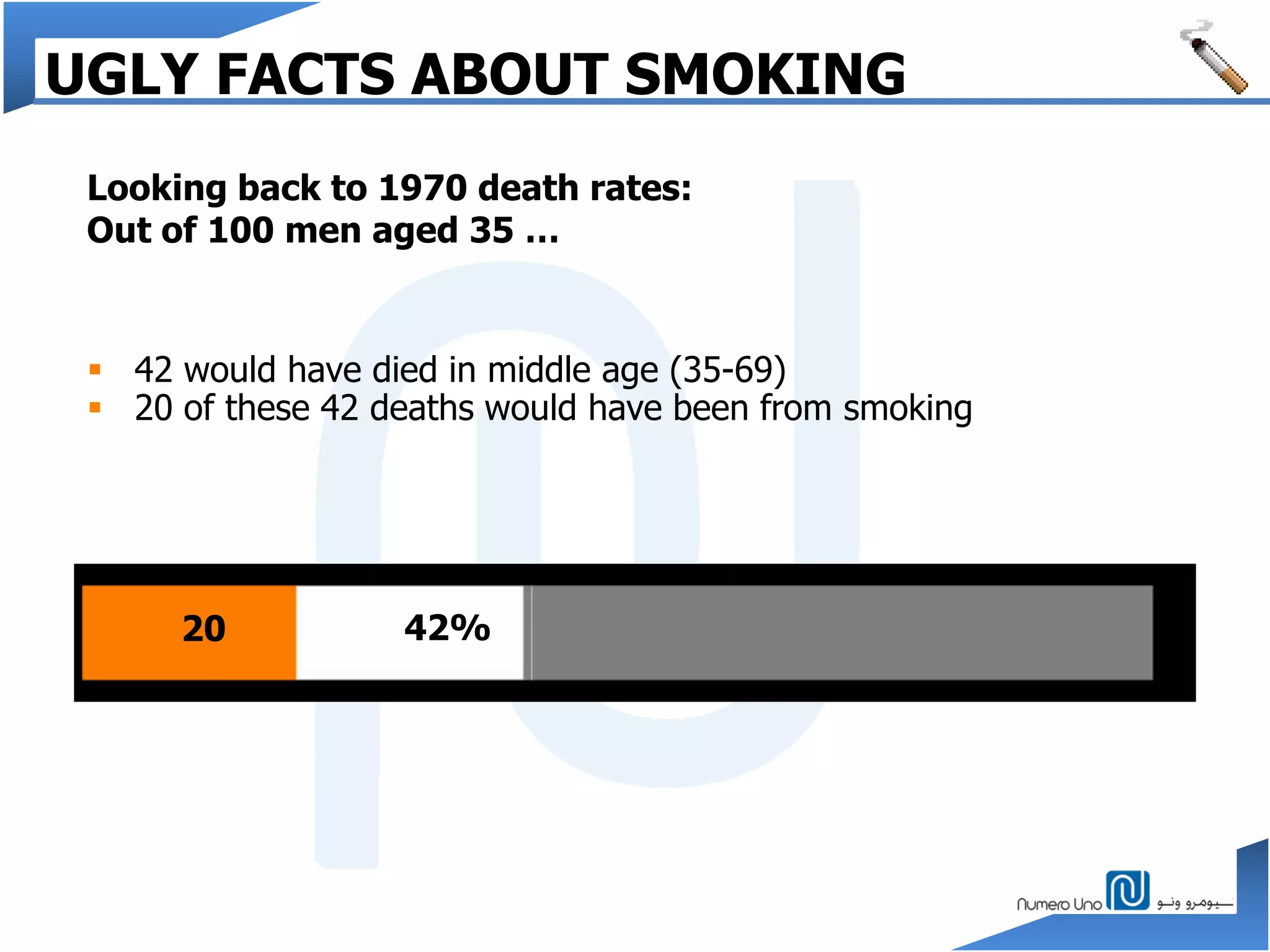
Looking back to 1970 death rates:
Out of 100 men aged 35 …
 42 would have died in middle age (35-69)
 20 of these 42 deaths would have been from smoking
42%20
UGLY FACTS ABOUT SMOKING
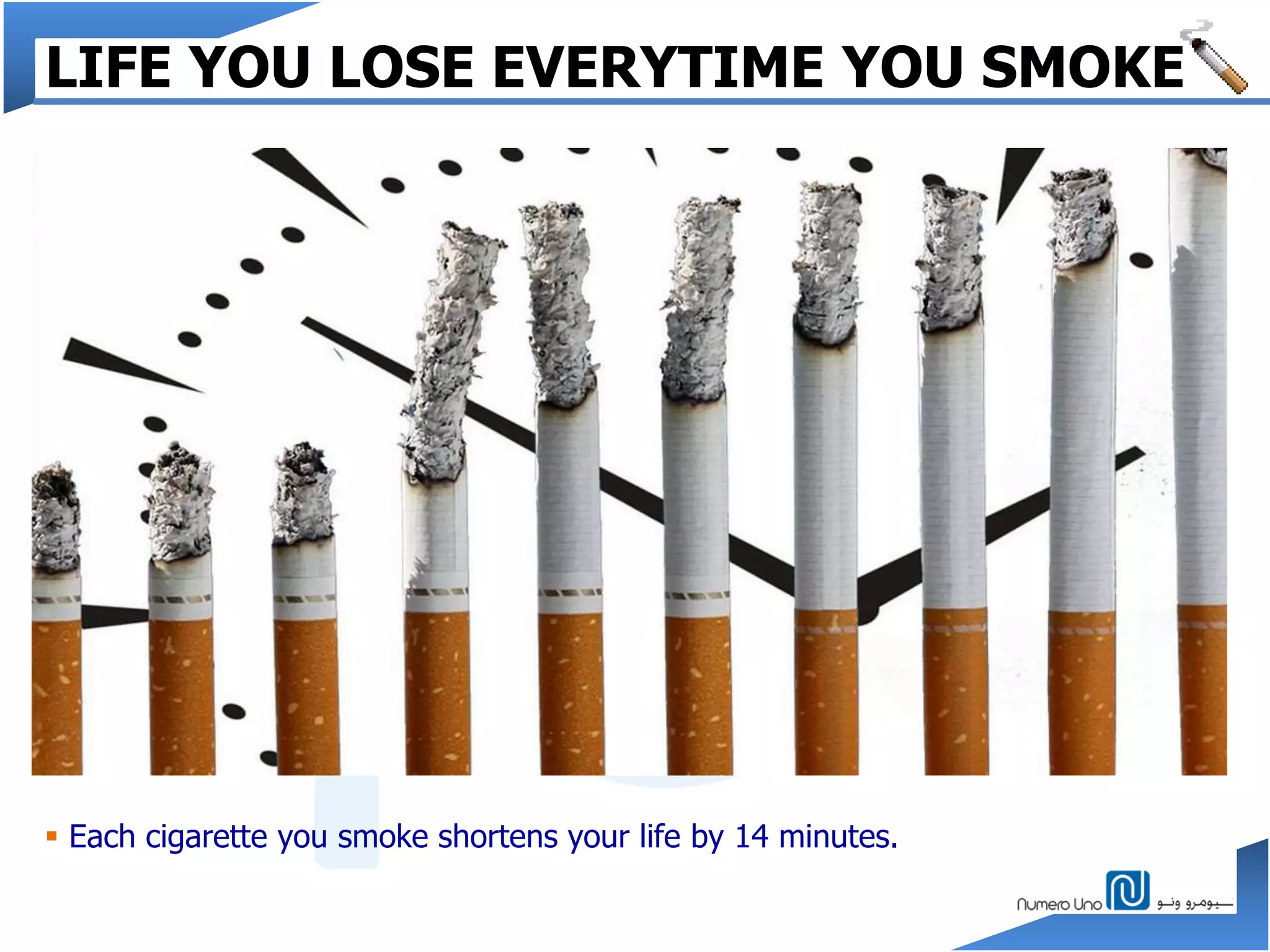
LIFE YOU LOSE EVERYTIME YOU SMOKE
 Each cigarette you smoke shortens your life by 14 minutes.
 Even in early middle age, those who stop (before they
have lung cancer or some other fatal disease) avoid most
of their risk of being killed by tobacco
 Those killed in middle age lose many years
 Stopping smoking works
UGLY FACTS ABOUT SMOKING
TOXIC TO THE BODY
OBNOXIOUS
BAD FOR HEALTH
ADDICTIVE
CAUSES CANCER
CAUSES SEVERAL DISEASES
OPPRESSIVE TO MIND
UGLY FACTS ABOUT SMOKING
Smokers Have:
 Limited sense of smell
 Greater risk of chest infections
 Greater risk of developing cancer
 Greater risk of blindness
 Greater risk of periodontal or gum disease
 More wrinkles
 Pale gray skin
 Greater risk of Impotency
INGREDIENTS OF A CIGARETTE
DIFFERENT KINDS OF SMOKES
WHY DO YOU SMOKE?
 Nicotine is the only known psychoactive ingredient in tobacco smoke.
 Addicted smokers smoke for one principal reason---to get their
accustomed doses of nicotine.
 When you stop smoking you will likely experience unpleasant side
effects.
 Research shows that nicotine provides a variety of desirable
psychological effects.
GOOD FEELINGS ABOUT IT
 The average smoker takes ten puffs per cigarette.
 If you smoke a pack of cigarettes a day, this is about 200 puffs
 Each puff of nicotine reaches the smokers brain within 7 seconds
Twice as fast as a syringe full of heroin injected into a vein!
 Once nicotine enters the brain, it begins to mimic the brain’s most
powerful chemical messengers.
 The result: enhanced pleasure, decreased anxiety and a state of
alert relaxation.
 Because of this positive reinforcement many times a day (each time
a cigarette is smoked) smoking becomes a part of every aspect of a
smokers life.
Most smokers say that smoking:
 Helps with concentration
 Helps reduce tension
 Helps them relax
 Decreases feelings of distress
 Helps keep their weight down
 Increases energy levels
GOOD FEELINGS ABOUT IT
With all these rewards, No wonder it is so hard to quit!!!!
 The rewards of smoking go a long way toward minimizing the
negative consequences and an even longer way toward ensuring
that the act of smoking is repeated again and again
 Until it becomes a habit so well ingrained that you do it without
even thinking about it!
BUT…THE HIDDEN TRUTH IS…
 But, smoking is not just a habit---
 It is an addiction.
 Nicotine in cigarettes is a powerful addictive drug that makes
smokers feel good.
 Each time you smoke, the positive biological effects of nicotine add
to all the other positive rewards of smoking making the habit even
stronger!
BUT…THE HIDDEN TRUTH IS…
MODULE 2
WHY SMOKING IS BAD?
HEALTH
SAFETY
ENVIRONMENT
FACTORS AFFECTING SMOKER’S HEALTH
NUMBER OF CIGARETTES PER DAY
HOW STRONG IT IS
FACTORS AFFECTING SMOKER’S HEALTH
TIME OF SMOKING
HOW MANY PUFFS YOU INHALE
HOW MANY YEARS YOU SMOKED?
FACTORS AFFECTING SMOKER’S HEALTH
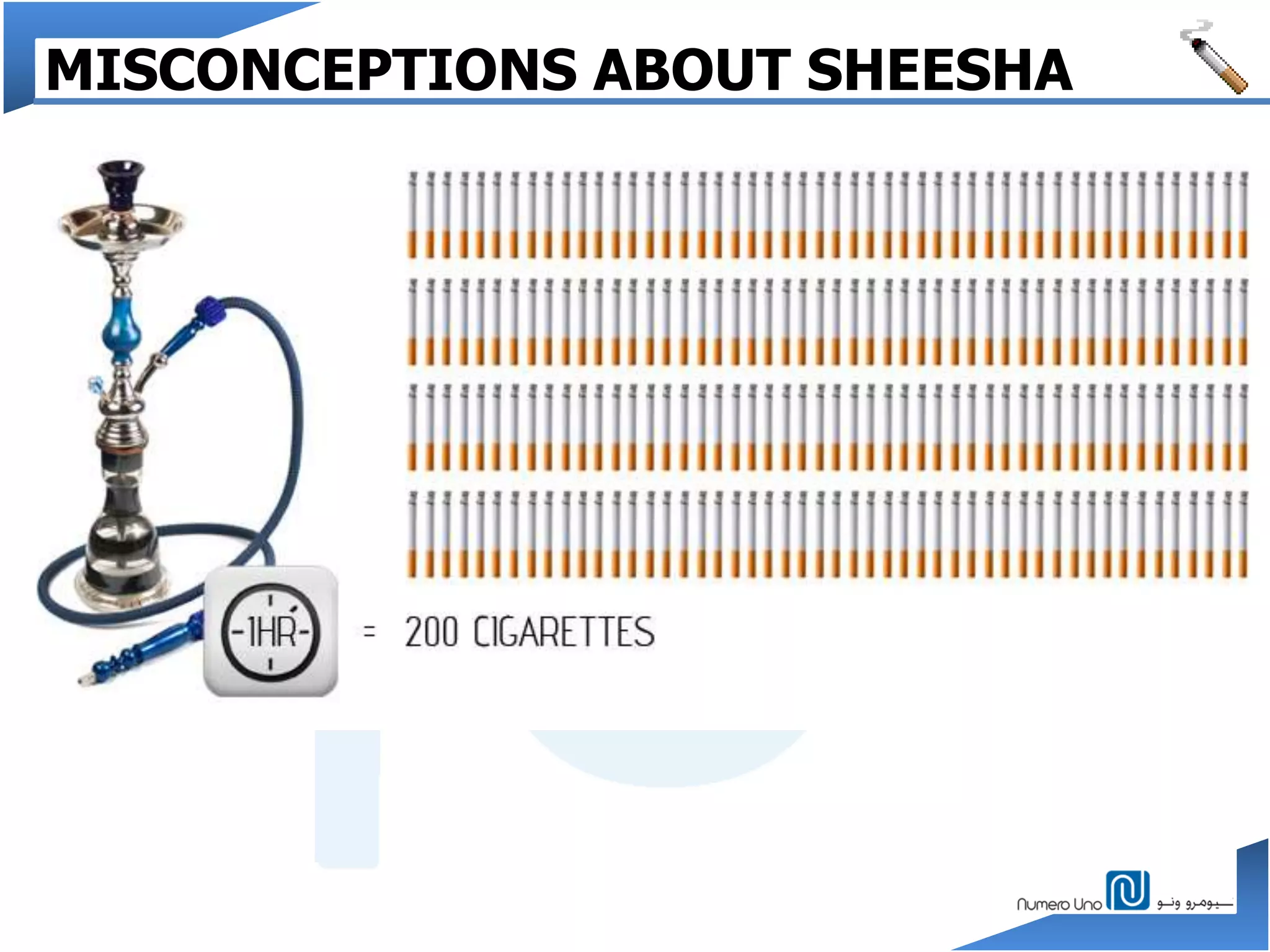
MISCONCEPTIONS ABOUT SHEESHA
HEALTH EFFECTS OF SMOKING
ACCUTE EFFECTS
 Your heart beats faster
 Veins constrict
 Blood pressure increases
 Smooth muscles relax
 Metabolic rate increases
 Even the electrical activity in the brain changes!
Beginning smokers usually experience:
 Nausea
 Dizziness
 Headache
 Coughing
 Along with other unpleasant symptoms.
Psychologically, tolerance to the unpleasant effects of nicotine allows the smoker to
focus on the pleasurable physiological effects associated with smoking. (relaxation,
alertness, stress relief etc.)
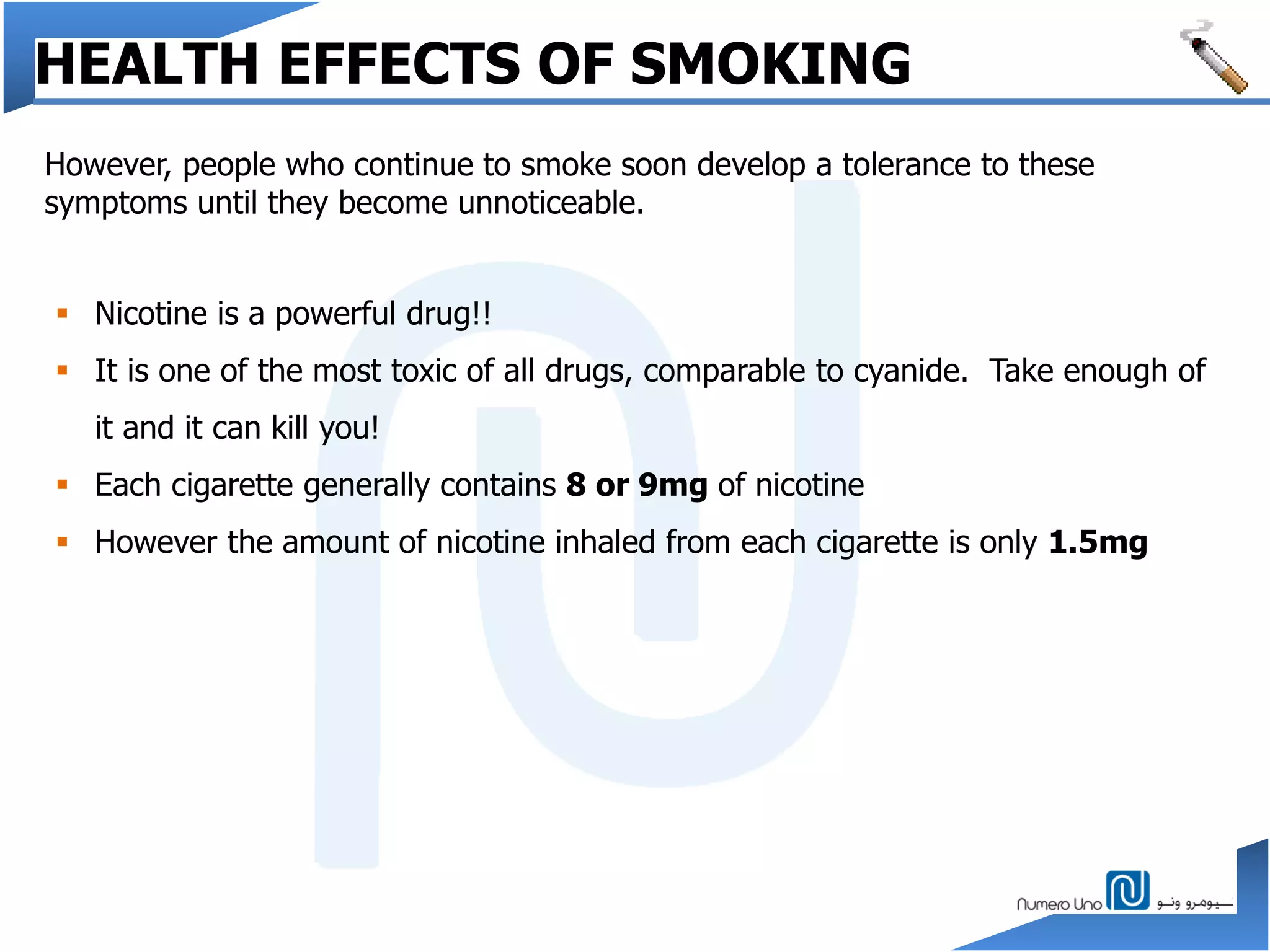
However, people who continue to smoke soon develop a tolerance to these
symptoms until they become unnoticeable.
HEALTH EFFECTS OF SMOKING
 Nicotine is a powerful drug!!
 It is one of the most toxic of all drugs, comparable to cyanide. Take enough of
it and it can kill you!
 Each cigarette generally contains 8 or 9mg of nicotine
 However the amount of nicotine inhaled from each cigarette is only 1.5mg
CHRONIC EFFECTS
HEALTH EFFECTS OF SMOKING
HEALTH
SAFETY
ENVIRONMENT
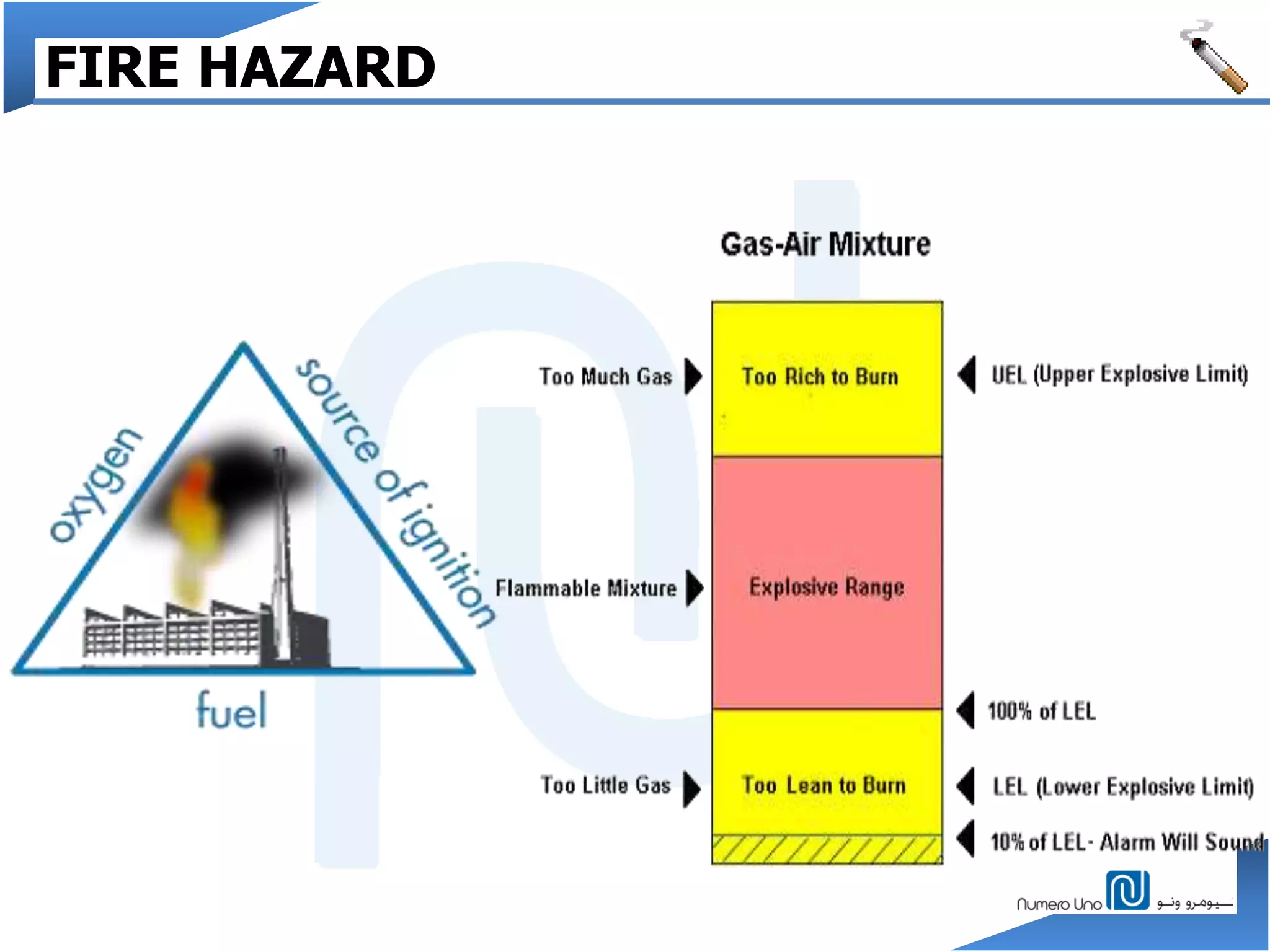
FIRE HAZARD
DESIGNATED SMOKING AREAS
Avoid smoking in garages, workshops and other places that may bear these
hazards, and always obey "No Smoking" signs wherever you go.
It is unsafe to smoke in places where combustible or flammable materials are kept
or in places with a large amount of sawdust, plastic or metal powders that may
explode when ignited.
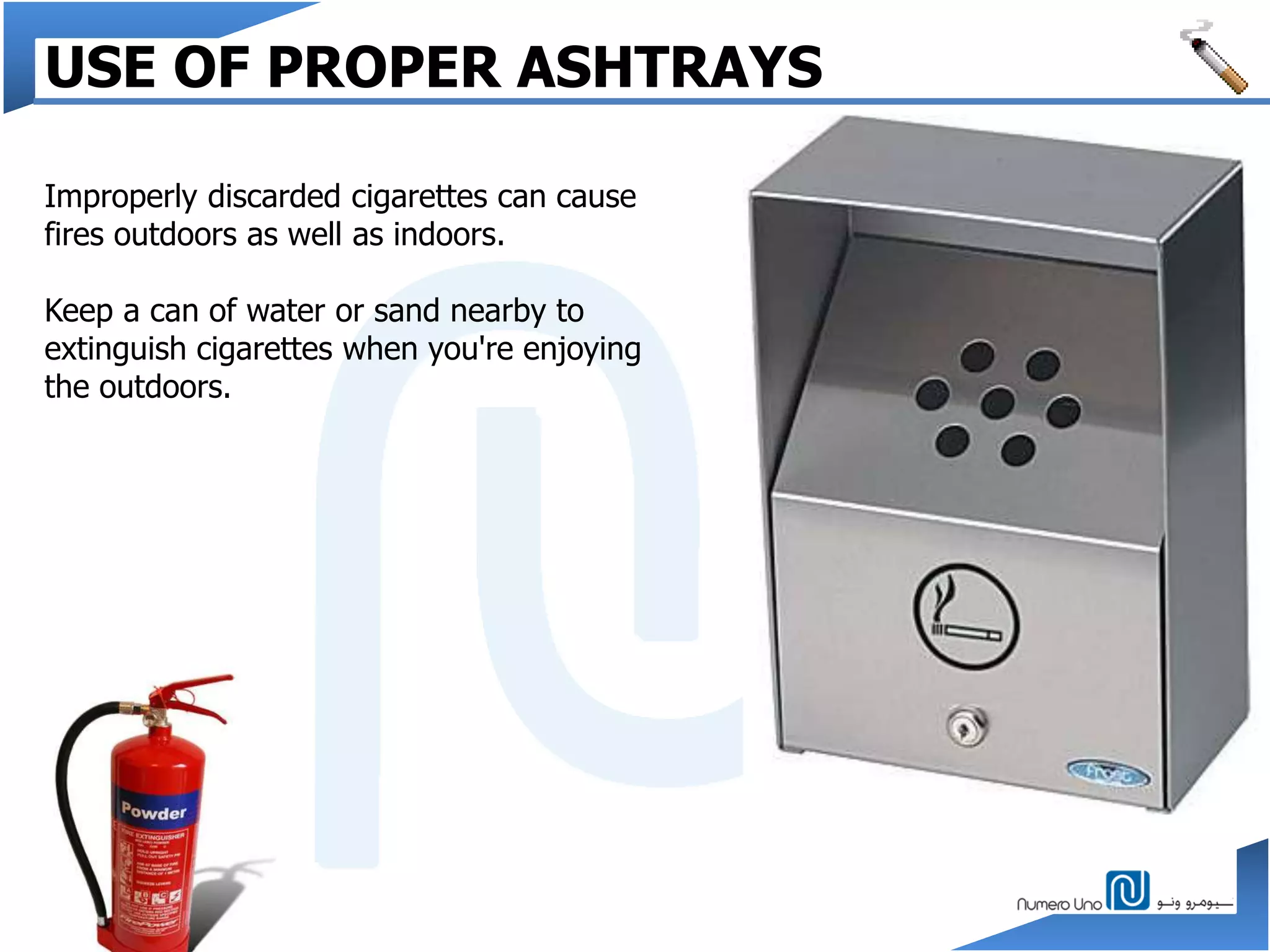
USE OF PROPER ASHTRAYS
Improperly discarded cigarettes can cause
fires outdoors as well as indoors.
Keep a can of water or sand nearby to
extinguish cigarettes when you're enjoying
the outdoors.
WARNING SIGNS & NOTICE BOARDS
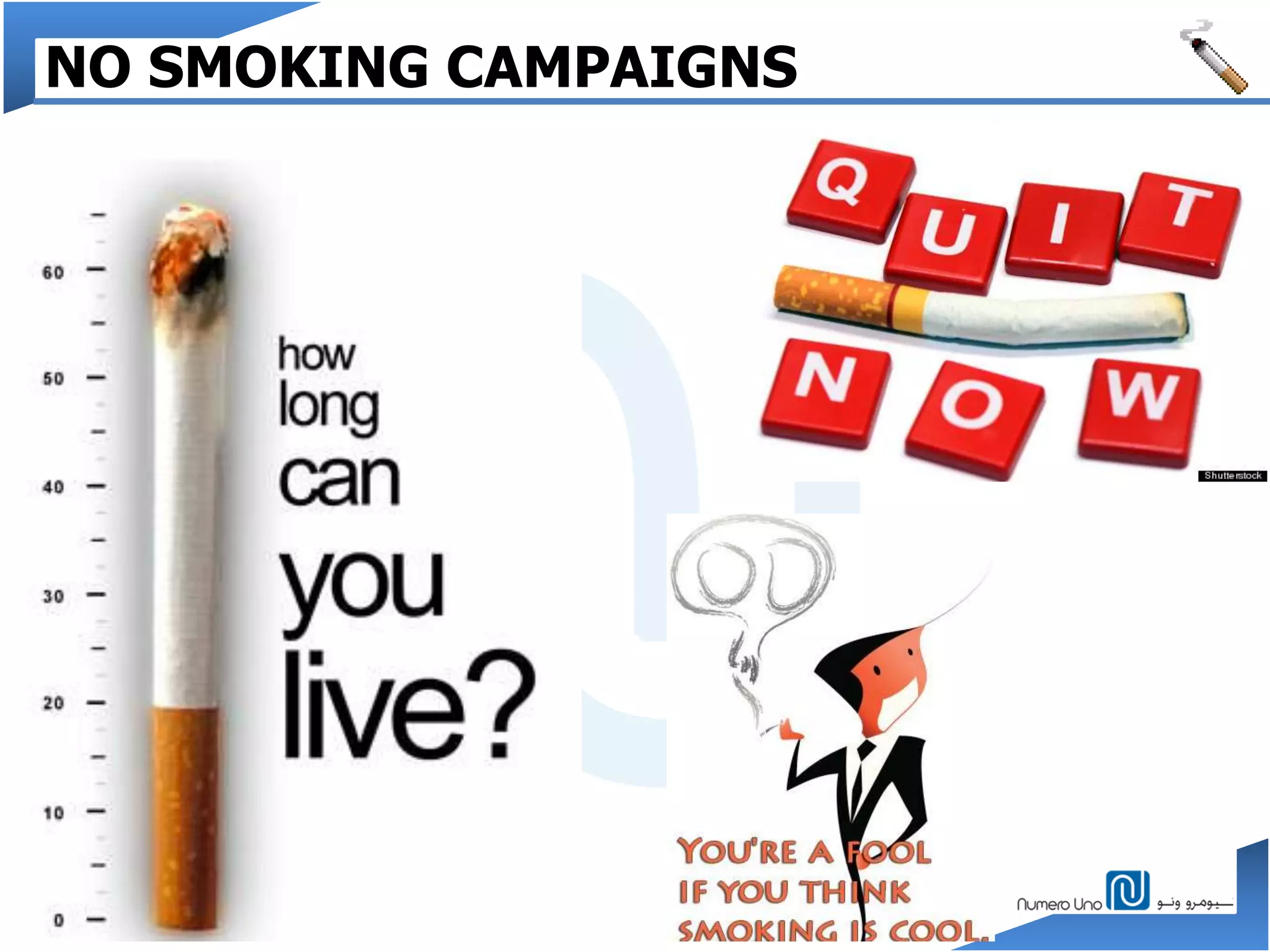
NO SMOKING CAMPAIGNS
HEALTH
SAFETY
ENVIRONMENT
Smoke occurs when there is
incomplete combustion
(not enough oxygen to burn the
fuel completely).
SMOKE
PASSIVE SMOKING
 Also known as ENVIRONMENTAL TOBACCO SMOKE (ETS)
 Involuntary Inhalation of Tobacco Smoke by a Non-Smoker
 ETS is of Two types:
 Side Stream Smoke - Left out Smoke by a Smoker
 Main Stream Smoke - Original Smoke by a burning Cigarette
3 Times more Nicotine and Tar
50 Times more Cancer causing substances
Main Stream SmokeSide Stream Smoke
PASSIVE SMOKING
DAMAGE TO THE NATURE
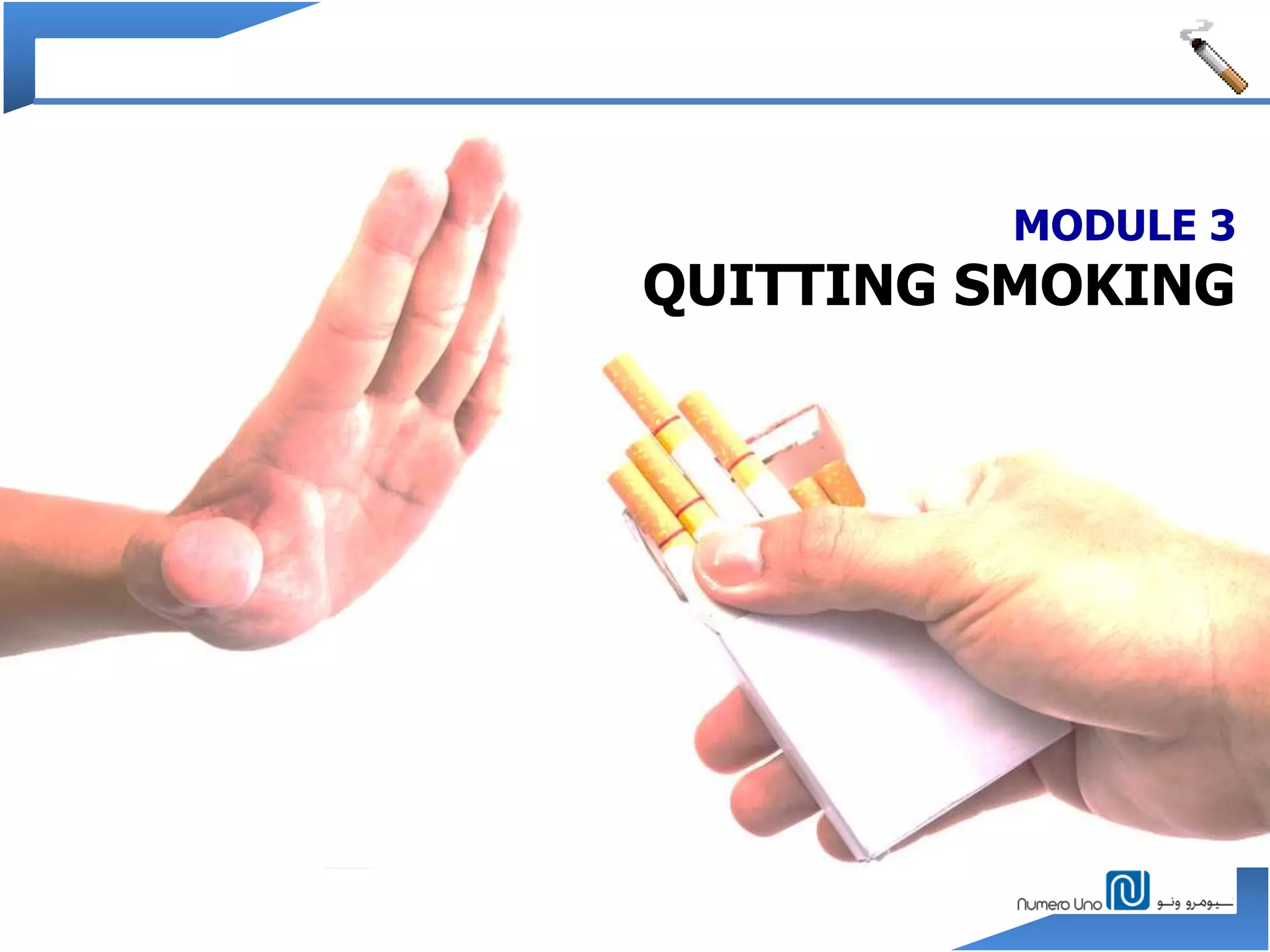
MODULE 3
QUITTING SMOKING
IDENTIFY
REASONS TO
QUIT
SET A QUIT
DATE
INFORM
OTHERS
GET RID OFF
THINGS
AVOID
COMPANY
WALK /
EXERCISES
HEALTHY DIET
BE PREPARED
FOR WORST
AVOID STRESS
ALTERNATIVE
TREATMENTS
TRY AGAIN IF
UNSUCCESSFUL
CONGRATULATIONS

MAKE A PLAN & STICK TO IT !
REASONS TO QUIT
SET A QUIT DATE
INFORM OTHERS
GET RID OFF SMOKING ACCESSORIES
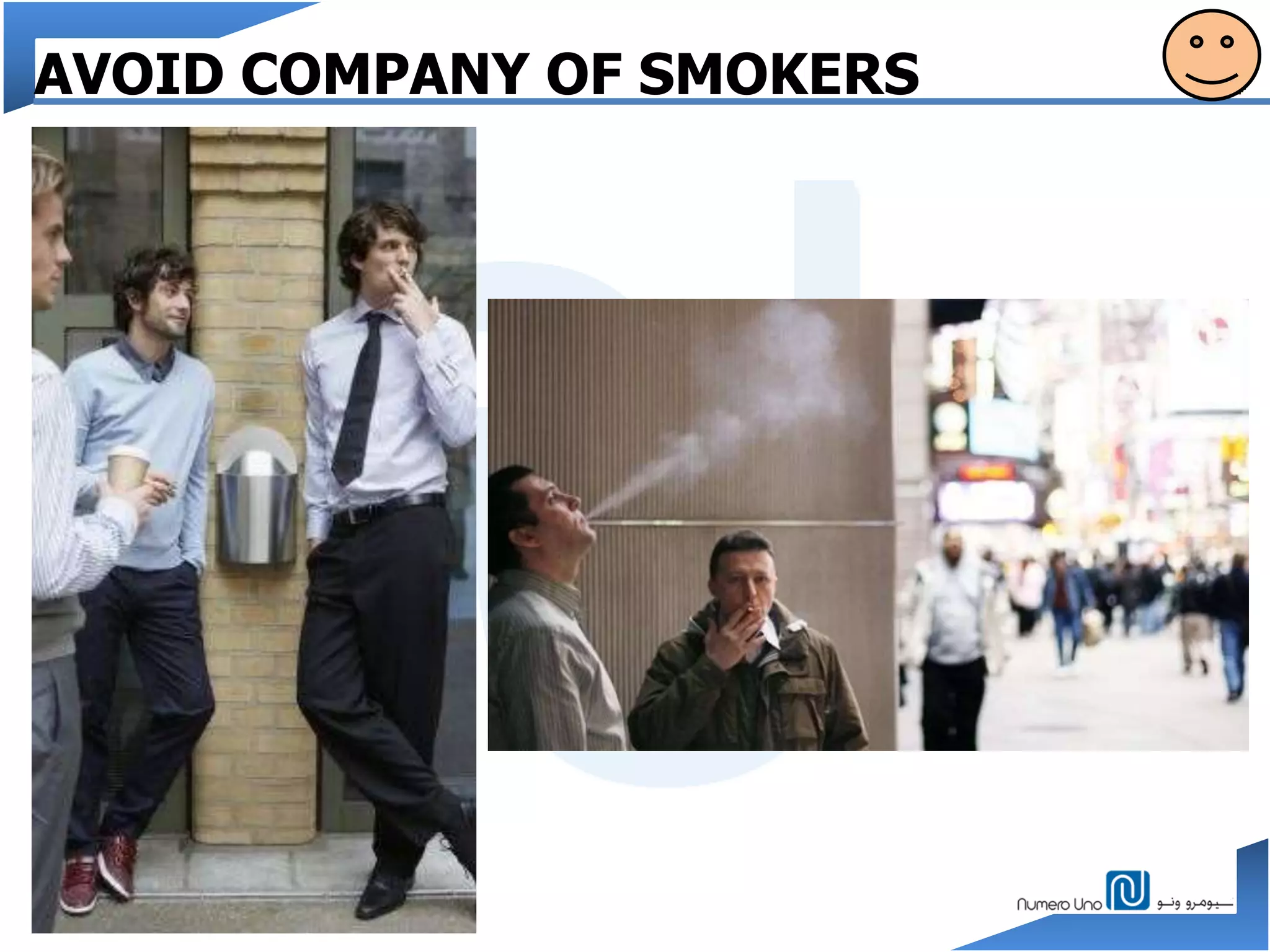
AVOID COMPANY OF SMOKERS
WALK / EXERCISE
HEALTHY DIET
BE PREPARED FOR WORST
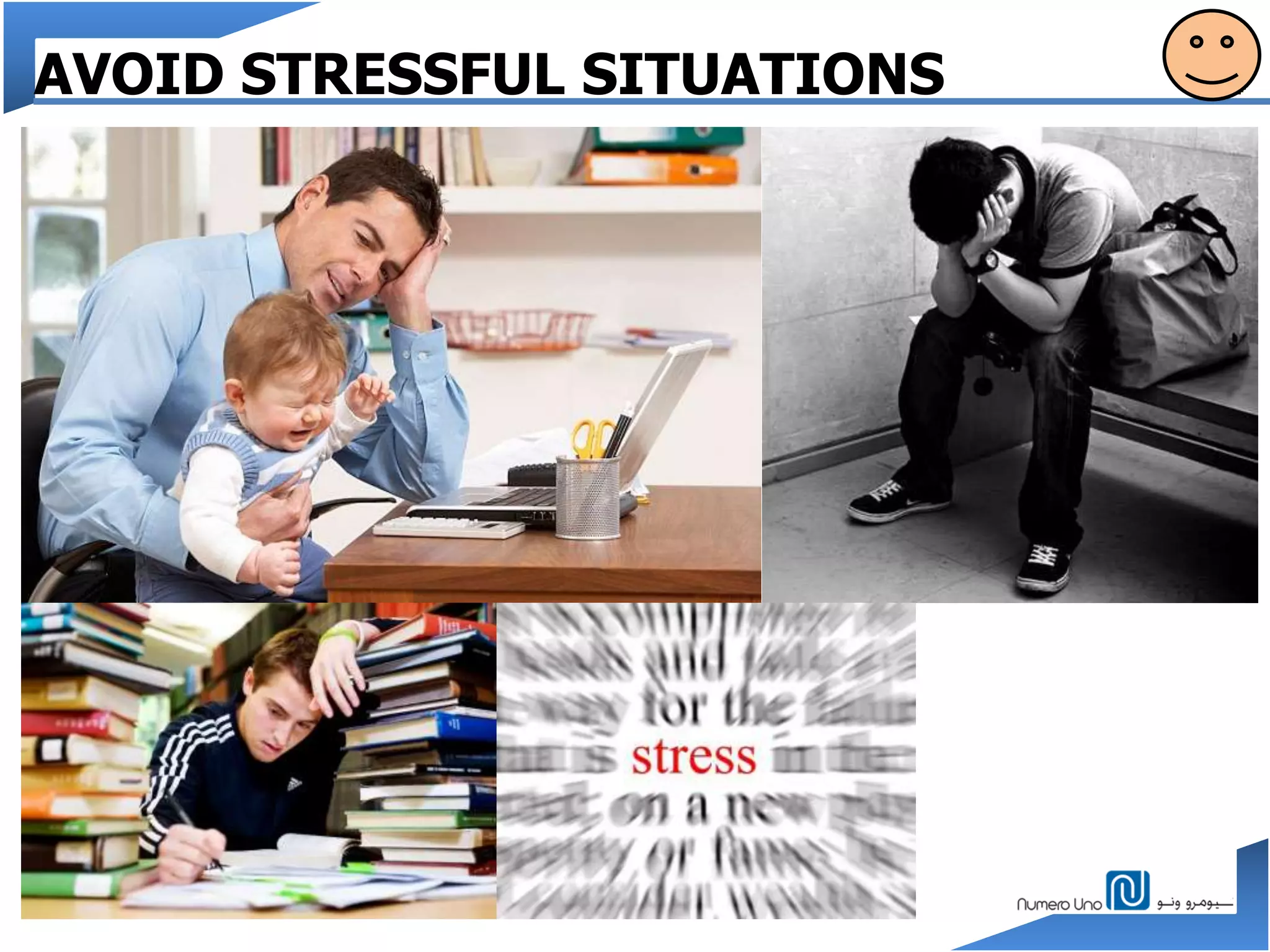
AVOID STRESSFUL SITUATIONS
ALTERNATIVE TREATMENTS
TRY AGAIN, IF IT DOESN’T WORK
AFTER EFFECTS
NUTC - No Smoking Awareness - without Videos

NUTC - No Smoking Awareness - without Videos

  • 1.
  • 2.
     Fire alarm/ Exits  Mobile Phones  Smoking Areas  Questions CLASS RULES
  • 3.
    NO SMOKING AWARENESS INSTRUCTORNAME: SHAHZAD HASSAN (TechIOSH)
  • 4.
    INTRODUCTION The U.S. SurgeonGeneral has called cigarette smoking “the chief preventable cause of death in our society”
  • 5.
    Providing Awareness isimportant as a first step in the smoking cessation process. The purpose of awareness is to help smokers consider more fully the importance of stopping smoking and some of the health benefits they may gain as a result. COURSE AIM
  • 6.
    CONTENTS 1. Introduction  UglyFacts About Smoking  Ingredients of a cigarette  Why do you Smoke?  Good Feelings about it  Hidden Truth 2. Why Smoking is BAD?  Health  Safety  Environmental 3. Quitting Smoking  Recognize your Smoking Triggers  Make a Plan, and Stick to It.  Positive changes in your body  Summary
  • 7.
  • 8.
    UGLY FACTS ABOUTSMOKING  Tobacco users loose an average of 20-25 years of Non-Tobacco Life expectancy  Lung cancer risk increases 50% for each cigarette you smoke per day.  Heart disease risk increases 100% for each pack of cigarettes you smoke per day.  Switching to filter tip cigarettes decreases your risk of lung cancer about 20% but NOT heart disease.
  • 9.
    Looking back to1970 death rates: Out of 100 men aged 35 …  42 would have died in middle age (35-69)  20 of these 42 deaths would have been from smoking 42%20 UGLY FACTS ABOUT SMOKING
  • 10.
    LIFE YOU LOSEEVERYTIME YOU SMOKE  Each cigarette you smoke shortens your life by 14 minutes.
  • 11.
     Even inearly middle age, those who stop (before they have lung cancer or some other fatal disease) avoid most of their risk of being killed by tobacco  Those killed in middle age lose many years  Stopping smoking works UGLY FACTS ABOUT SMOKING
  • 12.
    UGLY FACTS ABOUTSMOKING TOXIC TO THE BODY OBNOXIOUS BAD FOR HEALTH ADDICTIVE CAUSES CANCER CAUSES SEVERAL DISEASES OPPRESSIVE TO MIND
  • 13.
    UGLY FACTS ABOUTSMOKING Smokers Have:  Limited sense of smell  Greater risk of chest infections  Greater risk of developing cancer  Greater risk of blindness  Greater risk of periodontal or gum disease  More wrinkles  Pale gray skin  Greater risk of Impotency
  • 14.
  • 15.
  • 16.
    WHY DO YOUSMOKE?  Nicotine is the only known psychoactive ingredient in tobacco smoke.  Addicted smokers smoke for one principal reason---to get their accustomed doses of nicotine.  When you stop smoking you will likely experience unpleasant side effects.  Research shows that nicotine provides a variety of desirable psychological effects.
  • 17.
    GOOD FEELINGS ABOUTIT  The average smoker takes ten puffs per cigarette.  If you smoke a pack of cigarettes a day, this is about 200 puffs  Each puff of nicotine reaches the smokers brain within 7 seconds Twice as fast as a syringe full of heroin injected into a vein!  Once nicotine enters the brain, it begins to mimic the brain’s most powerful chemical messengers.  The result: enhanced pleasure, decreased anxiety and a state of alert relaxation.  Because of this positive reinforcement many times a day (each time a cigarette is smoked) smoking becomes a part of every aspect of a smokers life.
  • 18.
    Most smokers saythat smoking:  Helps with concentration  Helps reduce tension  Helps them relax  Decreases feelings of distress  Helps keep their weight down  Increases energy levels GOOD FEELINGS ABOUT IT
  • 19.
    With all theserewards, No wonder it is so hard to quit!!!!  The rewards of smoking go a long way toward minimizing the negative consequences and an even longer way toward ensuring that the act of smoking is repeated again and again  Until it becomes a habit so well ingrained that you do it without even thinking about it! BUT…THE HIDDEN TRUTH IS…
  • 20.
     But, smokingis not just a habit---  It is an addiction.  Nicotine in cigarettes is a powerful addictive drug that makes smokers feel good.  Each time you smoke, the positive biological effects of nicotine add to all the other positive rewards of smoking making the habit even stronger! BUT…THE HIDDEN TRUTH IS…
  • 21.
  • 22.
  • 23.
    FACTORS AFFECTING SMOKER’SHEALTH NUMBER OF CIGARETTES PER DAY HOW STRONG IT IS
  • 24.
    FACTORS AFFECTING SMOKER’SHEALTH TIME OF SMOKING HOW MANY PUFFS YOU INHALE
  • 25.
    HOW MANY YEARSYOU SMOKED? FACTORS AFFECTING SMOKER’S HEALTH
  • 26.
  • 27.
    HEALTH EFFECTS OFSMOKING ACCUTE EFFECTS  Your heart beats faster  Veins constrict  Blood pressure increases  Smooth muscles relax  Metabolic rate increases  Even the electrical activity in the brain changes! Beginning smokers usually experience:  Nausea  Dizziness  Headache  Coughing  Along with other unpleasant symptoms. Psychologically, tolerance to the unpleasant effects of nicotine allows the smoker to focus on the pleasurable physiological effects associated with smoking. (relaxation, alertness, stress relief etc.)
  • 28.
    However, people whocontinue to smoke soon develop a tolerance to these symptoms until they become unnoticeable. HEALTH EFFECTS OF SMOKING  Nicotine is a powerful drug!!  It is one of the most toxic of all drugs, comparable to cyanide. Take enough of it and it can kill you!  Each cigarette generally contains 8 or 9mg of nicotine  However the amount of nicotine inhaled from each cigarette is only 1.5mg
  • 29.
  • 30.
  • 31.
  • 32.
    DESIGNATED SMOKING AREAS Avoidsmoking in garages, workshops and other places that may bear these hazards, and always obey "No Smoking" signs wherever you go. It is unsafe to smoke in places where combustible or flammable materials are kept or in places with a large amount of sawdust, plastic or metal powders that may explode when ignited.
  • 33.
    USE OF PROPERASHTRAYS Improperly discarded cigarettes can cause fires outdoors as well as indoors. Keep a can of water or sand nearby to extinguish cigarettes when you're enjoying the outdoors.
  • 34.
    WARNING SIGNS &NOTICE BOARDS
  • 35.
  • 36.
  • 37.
    Smoke occurs whenthere is incomplete combustion (not enough oxygen to burn the fuel completely). SMOKE
  • 38.
    PASSIVE SMOKING  Alsoknown as ENVIRONMENTAL TOBACCO SMOKE (ETS)  Involuntary Inhalation of Tobacco Smoke by a Non-Smoker  ETS is of Two types:  Side Stream Smoke - Left out Smoke by a Smoker  Main Stream Smoke - Original Smoke by a burning Cigarette 3 Times more Nicotine and Tar 50 Times more Cancer causing substances Main Stream SmokeSide Stream Smoke
  • 39.
  • 40.
  • 41.
  • 43.
    IDENTIFY REASONS TO QUIT SET AQUIT DATE INFORM OTHERS GET RID OFF THINGS AVOID COMPANY WALK / EXERCISES HEALTHY DIET BE PREPARED FOR WORST AVOID STRESS ALTERNATIVE TREATMENTS TRY AGAIN IF UNSUCCESSFUL CONGRATULATIONS  MAKE A PLAN & STICK TO IT !
  • 44.
  • 45.
  • 46.
  • 47.
    GET RID OFFSMOKING ACCESSORIES
  • 48.
  • 49.
  • 50.
  • 51.
  • 52.
  • 53.
  • 54.
    TRY AGAIN, IFIT DOESN’T WORK
  • 55.