James M. Eddy
Texas A&M University
The Health Effects
of Smoking
Introduction
• Substance Abuse includes tobacco and
alcohol as well as illicit drugs.
• Sidestream smoke (from end of
cigarette) causes cancer and heart
disease.
• Nicotine in tobacco and ethyl alcohol in
alcohol are addictive drugs.
Why People Smoke
• Addiction to Nicotine
• Nicotine addiction: the state of being physically
and emotionally dependent on nicotine.
• Withdrawal symptoms are experienced when
trying to quit after being addicted.
• Tolerance: increased doses are needed to
achieve desired effects.
• Dependence: when a person cannot live
comfortably without a drug.
Why People Smoke
• Addiction to Nicotine
• Primary characteristics of tobacco, alcohol,
and drug addiction:
• The individual displays a highly controlled or
compulsive pattern of use.
• The individual experiences psychoactive or mood-
altering effects from use.
• The individual finds that use leads to further use.
Why People Smoke
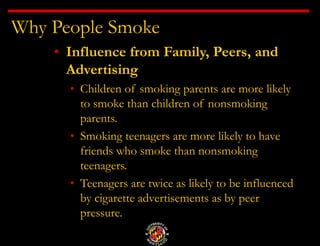
• Influence from Family, Peers, and
Advertising
• Children of smoking parents are more likely
to smoke than children of nonsmoking
parents.
• Smoking teenagers are more likely to have
friends who smoke than nonsmoking
teenagers.
• Teenagers are twice as likely to be influenced
by cigarette advertisements as by peer
pressure.
The Components of Cigarette Smoke
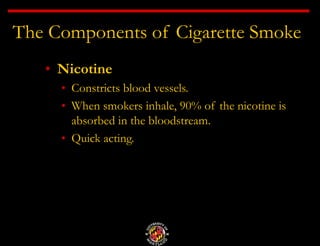
• Nicotine
• Constricts blood vessels.
• When smokers inhale, 90% of the nicotine is
absorbed in the bloodstream.
• Quick acting.
The Components of Cigarette Smoke
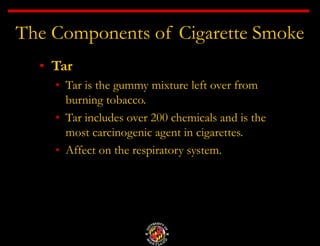
• Tar
• Tar is the gummy mixture left over from
burning tobacco.
• Tar includes over 200 chemicals and is the
most carcinogenic agent in cigarettes.
• Affect on the respiratory system.
The Components of Cigarette Smoke
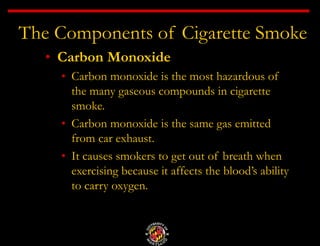
• Carbon Monoxide
• Carbon monoxide is the most hazardous of
the many gaseous compounds in cigarette
smoke.
• Carbon monoxide is the same gas emitted
from car exhaust.
• It causes smokers to get out of breath when
exercising because it affects the blood’s ability
to carry oxygen.
Why Smoking Is Dangerous to Your Health
• Links to Cancer
• Cigarette smoking is the leading cause of
cancer deaths in the U.S.
• After 20 years of not smoking, a former
smoker’s risk of dying of lung cancer is almost
equal to that of someone who has never
smoked.
• Increases risk of cancer of the mouth, larynx,
esophagus, kidney, bladder, pancreas, stomach
and cervix
Why Smoking Is Dangerous to Your Health
• Heart Disease and Stroke
• Increased blood pressure.
• Increased heart rate.
• 20% of all coronary heart disease deaths is
attributable to smoking.
Why Smoking Is Dangerous to Your Health
• Lung Damage
• Emphysema: a disease that results in the loss of
surface area in the lung.
• Chronic bronchitis is an inflammation of the
bronchial tubes due to irritation, e.g. smoking.
Why Smoking Is Dangerous to Your Health
• Complications During Pregnancy
• Smoking causes serious harm to a growing
fetus.
• Carbon monoxide crossing the placenta slows
fetal growth
• Slow growth increases risk of problems such as
stillbirth, etc.
Why Smoking Is Dangerous to Your Health
• Other Health Effects of Smoking
• Smoking is associated with increased upper
respiratory infections, such as colds.
• Smoking contributes to allergy symptoms, such
as coughing and sneezing.
• Smoking reduces the effects of medications.
• Smoking damages cells and tissues which delays
healing.
• Smoking wrinkles the skin.
Noncigarette Exposure to Tobacco
• Passive Smoking
• Passive smoking: inhaling environmental
tobacco smoke.
• Young children are especially affected by
sidestream smoke.
• Environmental tobacco smoke.
Noncigarette Exposure to Tobacco
• Cigar and Pipe Smoking
• Greater risk for cancer of mouth, lip, and
tongue than cigarette smokers
• Lower risk of lung cancer than cigarette
smokers
Noncigarette Exposure to Tobacco
• Smokeless Tobacco
• Smokeless tobacco (chewing tobacco or snuff)
increases the risk of oral cancer.
• Leukoplakia is white patches on the oral mucosa
that can become cancerous.
• Inter-individual differences.
Kicking the Habit: How to Stop
• Cessation Approaches
• Behavior modification: learning to change
smoking behavior patterns.
• Smoking-cessation is another term for
breaking a smoking habit.
• Nicotine replacement is getting nicotine
through means other than tobacco.
• Nicotine gum
• Transdermal nicotine patch
• Nasal spray
The Changing Climate of Public
Acceptance of Tobacco Use
• Smoking has been banned in many areas
where people congregate, e.g. restaurants.
• Numerous lawsuits against tobacco
companies by states and individuals
• It is against the law in all states to sell or
distribute tobacco products to minors.

5161796.ppt

  • 1.
    James M. Eddy TexasA&M University The Health Effects of Smoking
  • 2.
    Introduction • Substance Abuseincludes tobacco and alcohol as well as illicit drugs. • Sidestream smoke (from end of cigarette) causes cancer and heart disease. • Nicotine in tobacco and ethyl alcohol in alcohol are addictive drugs.
  • 3.
    Why People Smoke •Addiction to Nicotine • Nicotine addiction: the state of being physically and emotionally dependent on nicotine. • Withdrawal symptoms are experienced when trying to quit after being addicted. • Tolerance: increased doses are needed to achieve desired effects. • Dependence: when a person cannot live comfortably without a drug.
  • 4.
    Why People Smoke •Addiction to Nicotine • Primary characteristics of tobacco, alcohol, and drug addiction: • The individual displays a highly controlled or compulsive pattern of use. • The individual experiences psychoactive or mood- altering effects from use. • The individual finds that use leads to further use.
  • 5.
    Why People Smoke •Influence from Family, Peers, and Advertising • Children of smoking parents are more likely to smoke than children of nonsmoking parents. • Smoking teenagers are more likely to have friends who smoke than nonsmoking teenagers. • Teenagers are twice as likely to be influenced by cigarette advertisements as by peer pressure.
  • 6.
    The Components ofCigarette Smoke • Nicotine • Constricts blood vessels. • When smokers inhale, 90% of the nicotine is absorbed in the bloodstream. • Quick acting.
  • 7.
    The Components ofCigarette Smoke • Tar • Tar is the gummy mixture left over from burning tobacco. • Tar includes over 200 chemicals and is the most carcinogenic agent in cigarettes. • Affect on the respiratory system.
  • 8.
    The Components ofCigarette Smoke • Carbon Monoxide • Carbon monoxide is the most hazardous of the many gaseous compounds in cigarette smoke. • Carbon monoxide is the same gas emitted from car exhaust. • It causes smokers to get out of breath when exercising because it affects the blood’s ability to carry oxygen.
  • 9.
    Why Smoking IsDangerous to Your Health • Links to Cancer • Cigarette smoking is the leading cause of cancer deaths in the U.S. • After 20 years of not smoking, a former smoker’s risk of dying of lung cancer is almost equal to that of someone who has never smoked. • Increases risk of cancer of the mouth, larynx, esophagus, kidney, bladder, pancreas, stomach and cervix
  • 10.
    Why Smoking IsDangerous to Your Health • Heart Disease and Stroke • Increased blood pressure. • Increased heart rate. • 20% of all coronary heart disease deaths is attributable to smoking.
  • 11.
    Why Smoking IsDangerous to Your Health • Lung Damage • Emphysema: a disease that results in the loss of surface area in the lung. • Chronic bronchitis is an inflammation of the bronchial tubes due to irritation, e.g. smoking.
  • 12.
    Why Smoking IsDangerous to Your Health • Complications During Pregnancy • Smoking causes serious harm to a growing fetus. • Carbon monoxide crossing the placenta slows fetal growth • Slow growth increases risk of problems such as stillbirth, etc.
  • 13.
    Why Smoking IsDangerous to Your Health • Other Health Effects of Smoking • Smoking is associated with increased upper respiratory infections, such as colds. • Smoking contributes to allergy symptoms, such as coughing and sneezing. • Smoking reduces the effects of medications. • Smoking damages cells and tissues which delays healing. • Smoking wrinkles the skin.
  • 14.
    Noncigarette Exposure toTobacco • Passive Smoking • Passive smoking: inhaling environmental tobacco smoke. • Young children are especially affected by sidestream smoke. • Environmental tobacco smoke.
  • 15.
    Noncigarette Exposure toTobacco • Cigar and Pipe Smoking • Greater risk for cancer of mouth, lip, and tongue than cigarette smokers • Lower risk of lung cancer than cigarette smokers
  • 16.
    Noncigarette Exposure toTobacco • Smokeless Tobacco • Smokeless tobacco (chewing tobacco or snuff) increases the risk of oral cancer. • Leukoplakia is white patches on the oral mucosa that can become cancerous. • Inter-individual differences.
  • 17.
    Kicking the Habit:How to Stop • Cessation Approaches • Behavior modification: learning to change smoking behavior patterns. • Smoking-cessation is another term for breaking a smoking habit. • Nicotine replacement is getting nicotine through means other than tobacco. • Nicotine gum • Transdermal nicotine patch • Nasal spray
  • 18.
    The Changing Climateof Public Acceptance of Tobacco Use • Smoking has been banned in many areas where people congregate, e.g. restaurants. • Numerous lawsuits against tobacco companies by states and individuals • It is against the law in all states to sell or distribute tobacco products to minors.