File
Grace of Shekinah School
Edit Format View
SIR MARK ROBERT DE JESUS
B I U
Welcome to
TLE 9
OPENING
PRAYER
Let's bow our heads and feel the
presence of our Lord.
REVIEW!
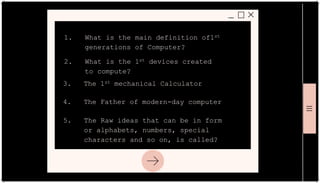
1. What is the main definition of1st
generations of Computer?
2. What is the 1st devices created
to compute?
3. The 1st mechanical Calculator
4. The Father of modern-day computer
5. The Raw ideas that can be in form
or alphabets, numbers, special
characters and so on, is called?
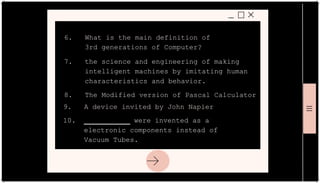
6. What is the main definition of
3rd generations of Computer?
7. the science and engineering of making
intelligent machines by imitating human
characteristics and behavior.
8. The Modified version of Pascal Calculator
9. A device invited by John Napier
10. ___________ were invented as a
electronic components instead of
Vacuum Tubes.
File
Social
Media
Edit Format View SIR MARK ROBERT DE JESUS’S CLASS
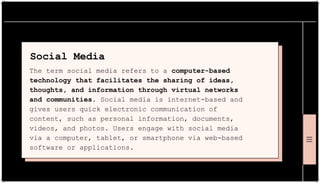
Social Media
The term social media refers to a computer-based
technology that facilitates the sharing of ideas,
thoughts, and information through virtual networks
and communities. Social media is internet-based and
gives users quick electronic communication of
content, such as personal information, documents,
videos, and photos. Users engage with social media
via a computer, tablet, or smartphone via web-based
software or applications.
Social Media
-There are more than 4.5 billion social
media users around the world.
-The largest social media networks include
Facebook, Instagram, Twitter, YouTube, and
TikTok.
-Social media typically features user-
generated content and personalized
profiles.
Social Media
Media has changed the way we give and
receive information, with the click of
a button, the world can see a picture
or video in a seconds. With such
information now capable of spreading
rapidly around the world, people are
informed.
Media Literacy and Information Literacy
Media Literacy – this skills
are defined as the abilities to
access, analyze, evaluate,
create, and act using all forms
of communications in Virtual
world.
Information literacy - forms the basis
for lifelong learning. It is common to
all disciplines, to all learning
environments, and to all levels of
education. It enables learners to master
content and extend their investigations,
become more self-directed, and assume
greater control over their own learning.
Media Literacy and Information Literacy
An information literate individual is able to:
• Determine the amount of information required.
• Get the information you need quickly and easily.
• Evaluate information and its sources critically
• Incorporate selected information into one’s
knowledge base
• Use information effectively to accomplish a specific
purpose
Digital Literacy
Is defined by the Colorado Department
of Education as the ability to
responsibly use appropriate
technology.
File
Types
of Media
Edit Format View SIR MARK ROBERT DE JESUS’S CLASS
Types of Media
Print Media
Is the oldest form of Medium, this
medium relies on the technology
involving the process of
transferring media text to paper in
large quantities.
Types of Media
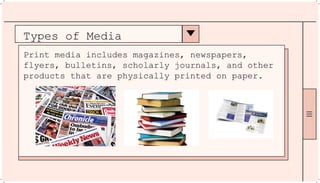
Print media includes magazines, newspapers,
flyers, bulletins, scholarly journals, and other
products that are physically printed on paper.
Types of Media
Broadcast Media
Can be defined as media that
distribute audio and video content
to a mass audience
Types of Media
Broadcast media refers to various media channels or
broadcasters such as television, the internet, audio
podcasts, video material, and so on. The basic goal of
broadcasting media is to communicate with the public.
Types of Media
New Media
Are those information and
entertainment providers accessed via
internet or through mobile
communications.
Types of Media
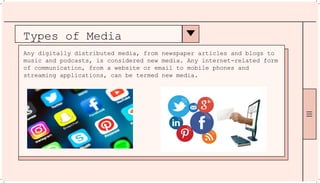
Any digitally distributed media, from newspaper articles and blogs to
music and podcasts, is considered new media. Any internet-related form
of communication, from a website or email to mobile phones and
streaming applications, can be termed new media.
Types of Media
Movies (Film)
They have been a popular
entertainment medium capable of
capturing life-like video style
images
Types of Media
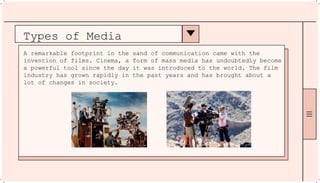
A remarkable footprint in the sand of communication came with the
invention of films. Cinema, a form of mass media has undoubtedly become
a powerful tool since the day it was introduced to the world. The film
industry has grown rapidly in the past years and has brought about a
lot of changes in society.
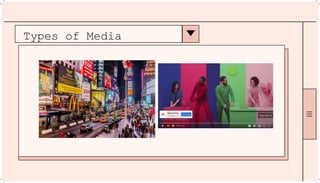
Types of Media
Advertising
is a means of communication with the
users of a product or service.
Advertisements are messages paid for
by those who send them and are
intended to inform or influence
people who receive them
Types of Media
File
Five Core
concepts of media
Literacy
Edit Format View SIR MARK ROBERT DE JESUS’S CLASS
Core Concepts of media
literacy
To be able to distinguish between different
media forms and know how to ask basic questions
about everything we see, read or hear, we need
to understand the five core concepts of media
literacy to help us learn how to deconstruct
and construct media message
Core Concepts of media literacy
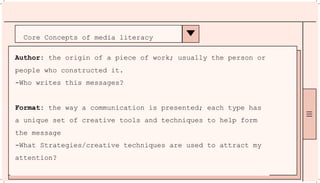
Author: the origin of a piece of work; usually the person or
people who constructed it.
-Who writes this messages?
Format: the way a communication is presented; each type has
a unique set of creative tools and techniques to help form
the message
-What Strategies/creative techniques are used to attract my
attention?
Core Concepts of media literacy
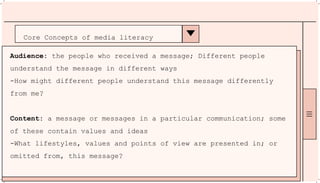
Audience: the people who received a message; Different people
understand the message in different ways
-How might different people understand this message differently
from me?
Content: a message or messages in a particular communication; some
of these contain values and ideas
-What lifestyles, values and points of view are presented in; or
omitted from, this message?
Core Concepts of media literacy
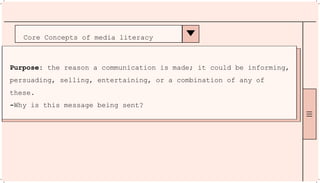
Purpose: the reason a communication is made; it could be informing,
persuading, selling, entertaining, or a combination of any of
these.
-Why is this message being sent?
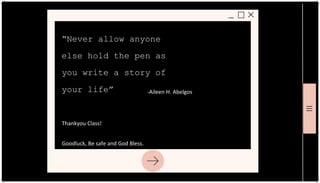
“Never allow anyone
else hold the pen as
you write a story of
your life” -Aileen H. Abelgos
Thankyou Class!
Goodluck, Be safe and God Bless.

TLE - ICT - 9 Media - and - Information (Q1)

  • 1.
    File Grace of ShekinahSchool Edit Format View SIR MARK ROBERT DE JESUS B I U Welcome to TLE 9
  • 2.
    OPENING PRAYER Let's bow ourheads and feel the presence of our Lord.
  • 4.
  • 5.
    1. What isthe main definition of1st generations of Computer? 2. What is the 1st devices created to compute? 3. The 1st mechanical Calculator 4. The Father of modern-day computer 5. The Raw ideas that can be in form or alphabets, numbers, special characters and so on, is called?
  • 6.
    6. What isthe main definition of 3rd generations of Computer? 7. the science and engineering of making intelligent machines by imitating human characteristics and behavior. 8. The Modified version of Pascal Calculator 9. A device invited by John Napier 10. ___________ were invented as a electronic components instead of Vacuum Tubes.
  • 7.
    File Social Media Edit Format ViewSIR MARK ROBERT DE JESUS’S CLASS
  • 8.
    Social Media The termsocial media refers to a computer-based technology that facilitates the sharing of ideas, thoughts, and information through virtual networks and communities. Social media is internet-based and gives users quick electronic communication of content, such as personal information, documents, videos, and photos. Users engage with social media via a computer, tablet, or smartphone via web-based software or applications.
  • 9.
    Social Media -There aremore than 4.5 billion social media users around the world. -The largest social media networks include Facebook, Instagram, Twitter, YouTube, and TikTok. -Social media typically features user- generated content and personalized profiles.
  • 10.
    Social Media Media haschanged the way we give and receive information, with the click of a button, the world can see a picture or video in a seconds. With such information now capable of spreading rapidly around the world, people are informed.
  • 11.
    Media Literacy andInformation Literacy Media Literacy – this skills are defined as the abilities to access, analyze, evaluate, create, and act using all forms of communications in Virtual world.
  • 12.
    Information literacy -forms the basis for lifelong learning. It is common to all disciplines, to all learning environments, and to all levels of education. It enables learners to master content and extend their investigations, become more self-directed, and assume greater control over their own learning.
  • 13.
    Media Literacy andInformation Literacy An information literate individual is able to: • Determine the amount of information required. • Get the information you need quickly and easily. • Evaluate information and its sources critically • Incorporate selected information into one’s knowledge base • Use information effectively to accomplish a specific purpose
  • 14.
    Digital Literacy Is definedby the Colorado Department of Education as the ability to responsibly use appropriate technology.
  • 15.
    File Types of Media Edit FormatView SIR MARK ROBERT DE JESUS’S CLASS
  • 16.
    Types of Media PrintMedia Is the oldest form of Medium, this medium relies on the technology involving the process of transferring media text to paper in large quantities.
  • 17.
    Types of Media Printmedia includes magazines, newspapers, flyers, bulletins, scholarly journals, and other products that are physically printed on paper.
  • 18.
    Types of Media BroadcastMedia Can be defined as media that distribute audio and video content to a mass audience
  • 19.
    Types of Media Broadcastmedia refers to various media channels or broadcasters such as television, the internet, audio podcasts, video material, and so on. The basic goal of broadcasting media is to communicate with the public.
  • 20.
    Types of Media NewMedia Are those information and entertainment providers accessed via internet or through mobile communications.
  • 21.
    Types of Media Anydigitally distributed media, from newspaper articles and blogs to music and podcasts, is considered new media. Any internet-related form of communication, from a website or email to mobile phones and streaming applications, can be termed new media.
  • 22.
    Types of Media Movies(Film) They have been a popular entertainment medium capable of capturing life-like video style images
  • 23.
    Types of Media Aremarkable footprint in the sand of communication came with the invention of films. Cinema, a form of mass media has undoubtedly become a powerful tool since the day it was introduced to the world. The film industry has grown rapidly in the past years and has brought about a lot of changes in society.
  • 24.
    Types of Media Advertising isa means of communication with the users of a product or service. Advertisements are messages paid for by those who send them and are intended to inform or influence people who receive them
  • 25.
  • 26.
    File Five Core concepts ofmedia Literacy Edit Format View SIR MARK ROBERT DE JESUS’S CLASS
  • 27.
    Core Concepts ofmedia literacy To be able to distinguish between different media forms and know how to ask basic questions about everything we see, read or hear, we need to understand the five core concepts of media literacy to help us learn how to deconstruct and construct media message
  • 28.
    Core Concepts ofmedia literacy Author: the origin of a piece of work; usually the person or people who constructed it. -Who writes this messages? Format: the way a communication is presented; each type has a unique set of creative tools and techniques to help form the message -What Strategies/creative techniques are used to attract my attention?
  • 29.
    Core Concepts ofmedia literacy Audience: the people who received a message; Different people understand the message in different ways -How might different people understand this message differently from me? Content: a message or messages in a particular communication; some of these contain values and ideas -What lifestyles, values and points of view are presented in; or omitted from, this message?
  • 30.
    Core Concepts ofmedia literacy Purpose: the reason a communication is made; it could be informing, persuading, selling, entertaining, or a combination of any of these. -Why is this message being sent?
  • 31.
    “Never allow anyone elsehold the pen as you write a story of your life” -Aileen H. Abelgos Thankyou Class! Goodluck, Be safe and God Bless.