+


    Tips for Teaching
    Digital Storytelling Projects
    Amy Goodloe
    Program for Writing & Rhetoric
    University of Colorado, Boulder
+
    Teach the genre, not the technology


       Focus on helping students:
           Understand how digital storytelling functions as a genre
           Develop and organize their ideas effectively
           Recognize and apply composing strategies appropriate to an
            audiovisual medium

       Let someone else teach the technology. Doing so:
           Helps students have clear expectations about your role and your
            area of expertise
           Avoids the problem of blaming the instructor for the students’ own
            issues with technology
           Encourages students to take ownership of their own tech learning
+
    Provide plenty of tech resources

        Invite academic technology experts to come to class to lead
         workshops and/or serve as mentors for students
        Share links to step-by-step instructions and screencasts that will
         help students with specific aspects of the composing process
            http://digitalwriting101.net
        Remind students how to make effective use of Google searches to
         find help
        Encourage tech-savvy students in the class to help others
            Organize workshop groups based on level of skill
            Devote some class time to letting students help each other
            Provide an out-of-class forum for students to use
+
    Clarify your expectations

        Show a range of sample projects
          Explain where each falls on the evaluation criteria

        Connect to learning goals
        Emphasize the use of narrative to communicate
          Goal is to expand range of options available for
           communication…
          … not to produce a slick short film for a film studies class

          A photo slideshow with a killer soundtrack won’t cut it
+
    Raise the stakes

       Use peer pressure to your advantage by arranging for every
        student’s project to be visible to the class (or a larger audience)
           Allot time for in-class showings
           Ask students to post projects on a class blog or wiki

       If your class time is limited, ask students to vote on their
        favorites and show the top 3 in class
+
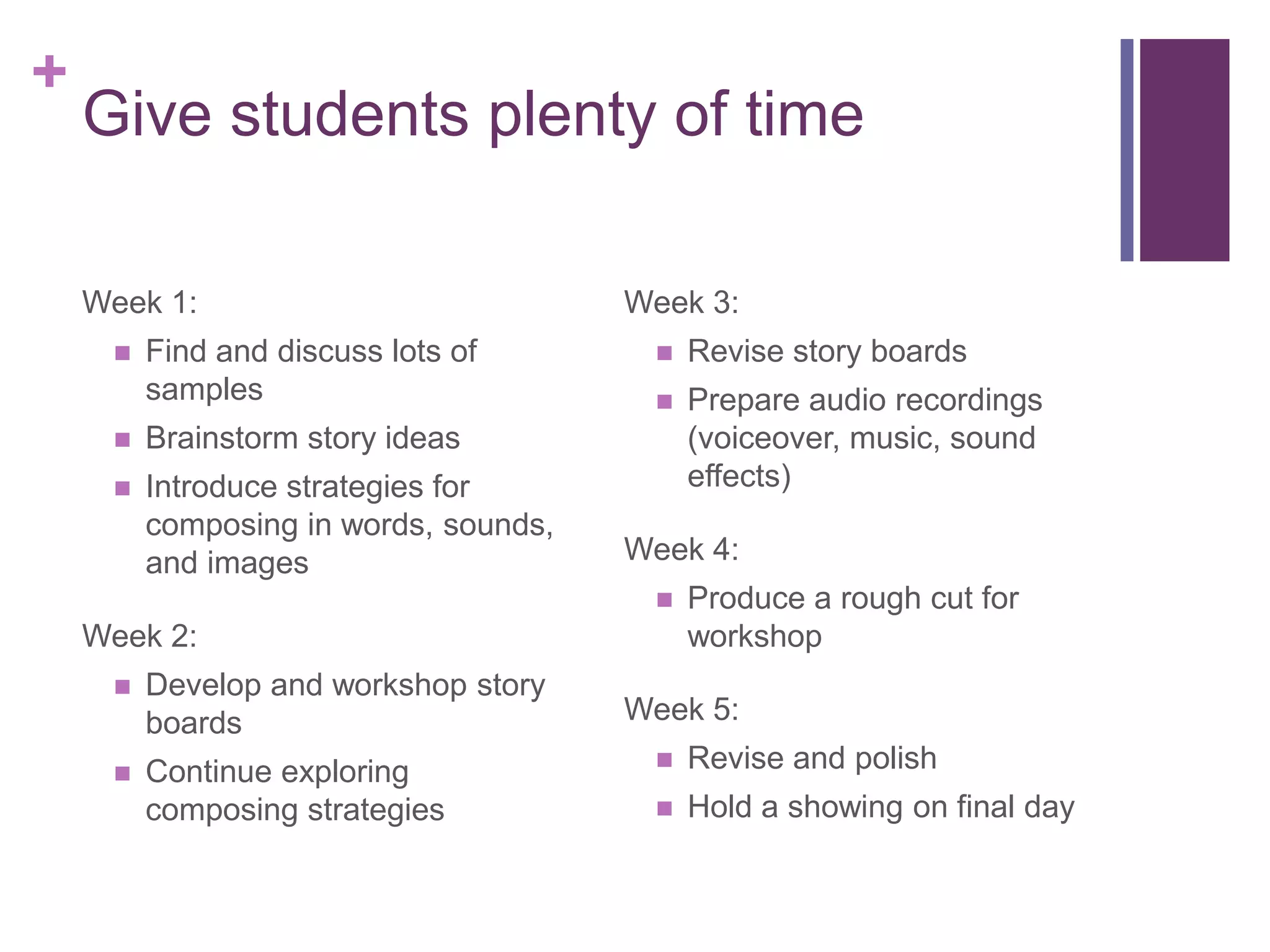
    Give students plenty of time

    Week 1:                            Week 3:
        Find and discuss lots of          Revise story boards
         samples                           Prepare audio recordings
        Brainstorm story ideas             (voiceover, music, sound
        Introduce strategies for           effects)
         composing in words, sounds,
         and images                    Week 4:
                                           Produce a rough cut for
    Week 2:                                 workshop
        Develop and workshop story
         boards                        Week 5:
        Continue exploring                Revise and polish
         composing strategies              Hold a showing on final day
+
    Be patient!

       Many of today’s college students grew up learning how to write,
        but this may be the first time they’ve been asked to compose a
        multimodal message

       They’ve likely had poor instruction in technology
           Perhaps due to the faulty assumption that they’re “digital natives”

       So keep your expectations realistic, especially for students who
        struggle to use computers
           Frequently remind students of the value of what they’re learning, to
            help them focus on the end goal and not their technology hassles
+
    Do it yourself first

       I highly recommend that instructors who want to ask students
        to produce digital storytelling projects go through the process of
        making one themselves first, ideally through a workshop.

       Until you’re confronted with the challenge of telling a brief
        narrative in a multimodal format yourself, you won’t be as well
        prepared to help students with the kinds of rhetorical and
        composition strategies available to them.

       You’ll also develop much more realistic expectations for what is
        and isn’t possible in this medium!

Tips on Teaching Digital Storytelling

  • 1.
    + Tips for Teaching Digital Storytelling Projects Amy Goodloe Program for Writing & Rhetoric University of Colorado, Boulder
  • 2.
    + Teach the genre, not the technology  Focus on helping students:  Understand how digital storytelling functions as a genre  Develop and organize their ideas effectively  Recognize and apply composing strategies appropriate to an audiovisual medium  Let someone else teach the technology. Doing so:  Helps students have clear expectations about your role and your area of expertise  Avoids the problem of blaming the instructor for the students’ own issues with technology  Encourages students to take ownership of their own tech learning
  • 3.
    + Provide plenty of tech resources  Invite academic technology experts to come to class to lead workshops and/or serve as mentors for students  Share links to step-by-step instructions and screencasts that will help students with specific aspects of the composing process  http://digitalwriting101.net  Remind students how to make effective use of Google searches to find help  Encourage tech-savvy students in the class to help others  Organize workshop groups based on level of skill  Devote some class time to letting students help each other  Provide an out-of-class forum for students to use
  • 4.
    + Clarify your expectations  Show a range of sample projects  Explain where each falls on the evaluation criteria  Connect to learning goals  Emphasize the use of narrative to communicate  Goal is to expand range of options available for communication…  … not to produce a slick short film for a film studies class  A photo slideshow with a killer soundtrack won’t cut it
  • 5.
    + Raise the stakes  Use peer pressure to your advantage by arranging for every student’s project to be visible to the class (or a larger audience)  Allot time for in-class showings  Ask students to post projects on a class blog or wiki  If your class time is limited, ask students to vote on their favorites and show the top 3 in class
  • 6.
    + Give students plenty of time Week 1: Week 3:  Find and discuss lots of  Revise story boards samples  Prepare audio recordings  Brainstorm story ideas (voiceover, music, sound  Introduce strategies for effects) composing in words, sounds, and images Week 4:  Produce a rough cut for Week 2: workshop  Develop and workshop story boards Week 5:  Continue exploring  Revise and polish composing strategies  Hold a showing on final day
  • 7.
    + Be patient!  Many of today’s college students grew up learning how to write, but this may be the first time they’ve been asked to compose a multimodal message  They’ve likely had poor instruction in technology  Perhaps due to the faulty assumption that they’re “digital natives”  So keep your expectations realistic, especially for students who struggle to use computers  Frequently remind students of the value of what they’re learning, to help them focus on the end goal and not their technology hassles
  • 8.
    + Do it yourself first  I highly recommend that instructors who want to ask students to produce digital storytelling projects go through the process of making one themselves first, ideally through a workshop.  Until you’re confronted with the challenge of telling a brief narrative in a multimodal format yourself, you won’t be as well prepared to help students with the kinds of rhetorical and composition strategies available to them.  You’ll also develop much more realistic expectations for what is and isn’t possible in this medium!