A P R E S E N T A T I O N O N :
B A R R I E R S T O
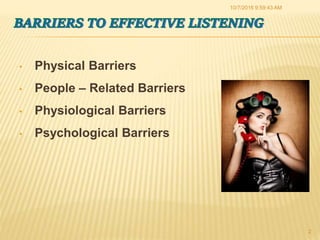
• Physical Barriers
• People – Related Barriers
• Physiological Barriers
• Psychological Barriers
10/7/2016 9:59:43 AM
2
P H Y S I C A L B A R R I E R S
• Noise
• Poor acoustics
• Defective mechanical devices
• Frequent interruptions
• Uncomfortable seating arrangements
• Uncomfortable environment
• Message overload
10/7/2016 9:59:43 AM
3
P H Y S I O L O G I C A L
B A R R I E R S
• State of Health – State of health of the listener
and the speaker affects the listening ability.
Fever, pain or any other form of bodily
discomfort makes it difficult for a person to
listen or speak comfortably.
• Disability – Hearing deficiencies may lead to
poor listening. Speaker’s accent may also make
it difficult for the listener to comprehend.
• Wandering attention – Human mind can
process words at the rate of about 500 per
minute, whereas a speaker speaks at the rate of
about 150 per minute. The difference between
the two leaves the listener with sufficient time to
let his mind wander.
10/7/2016 9:59:43 AM
4
P S Y C H O L O G I C A L
B A R R I E R S
• Being unsure of the speaker’s ability –
Based on past experience or inputs from
sources, the listener may have a preconceived
notion of the speaker’s ability.. Hence the listener
will not listen to what the speaker has to say.
• Personal anxiety – Sometimes the listener is
preoccupied with personal concerns and
anxieties. This makes it difficult to perceive what
is being said by the speaker.
• Attitude – The listener may be highly
egocentric with a “know it all attitude” and may
not listen as he feels that he already knows what
the listener has to say.
10/7/2016 9:59:43 AM
5
P S Y C H O L O G I C A L
B A R R I E R S
• Impatience – The listener may not have
patience to wait for the other person to finish
what he has to say. He may be intolerant or
may be eager to add his own points to the
discussion
• Emotional blocks – Our deep seated
beliefs in certain ideas may make it difficult
for us to listen to ideas which go against our
belief. We may hear such an idea wrongly or
it may get distorted in our mind to match our
perception or we may completely block it off
10/7/2016 9:59:43 AM
6
• Give your full attention
• on the person who is speaking. Don't look out the
window or at what else is going on in the room.
• Make sure your mind is focused.
• It can be easy to let your mind wander if you think you
know what the person is going to say next, but you
might be wrong! If you feel your mind wandering,
change the position of your body and try to
concentrate on the speaker's words.
• Let the speaker finish before you begin to talk.
• Speakers appreciate having the chance to say
everything they would like to say without being
interrupted. When you interrupt, it looks like you aren't
listening, even if you really are.
10/7/2016 9:59:43 AM
7
• Let yourself finish listening before you begin
to speak!
• You can't really listen if you are busy thinking
about what you want to say next.
• Listen for main ideas.
• The main ideas are the most important points
the speaker wants to get across. They may be
mentioned at the start or end of a talk, and
repeated a number of times.
• Ask questions.
• If you are not sure you understood what the
speaker has said, just ask.
10/7/2016 9:59:43 AM
8
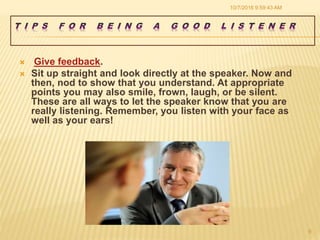
 Give feedback.
 Sit up straight and look directly at the speaker. Now and
then, nod to show that you understand. At appropriate
points you may also smile, frown, laugh, or be silent.
These are all ways to let the speaker know that you are
really listening. Remember, you listen with your face as
well as your ears!
10/7/2016 9:59:43 AM
9
10/7/2016 9:59:43 AM
10

TIPS FOR GOOD LISTENER

  • 1.
    A P RE S E N T A T I O N O N : B A R R I E R S T O
  • 2.
    • Physical Barriers •People – Related Barriers • Physiological Barriers • Psychological Barriers 10/7/2016 9:59:43 AM 2
  • 3.
    P H YS I C A L B A R R I E R S • Noise • Poor acoustics • Defective mechanical devices • Frequent interruptions • Uncomfortable seating arrangements • Uncomfortable environment • Message overload 10/7/2016 9:59:43 AM 3
  • 4.
    P H YS I O L O G I C A L B A R R I E R S • State of Health – State of health of the listener and the speaker affects the listening ability. Fever, pain or any other form of bodily discomfort makes it difficult for a person to listen or speak comfortably. • Disability – Hearing deficiencies may lead to poor listening. Speaker’s accent may also make it difficult for the listener to comprehend. • Wandering attention – Human mind can process words at the rate of about 500 per minute, whereas a speaker speaks at the rate of about 150 per minute. The difference between the two leaves the listener with sufficient time to let his mind wander. 10/7/2016 9:59:43 AM 4
  • 5.
    P S YC H O L O G I C A L B A R R I E R S • Being unsure of the speaker’s ability – Based on past experience or inputs from sources, the listener may have a preconceived notion of the speaker’s ability.. Hence the listener will not listen to what the speaker has to say. • Personal anxiety – Sometimes the listener is preoccupied with personal concerns and anxieties. This makes it difficult to perceive what is being said by the speaker. • Attitude – The listener may be highly egocentric with a “know it all attitude” and may not listen as he feels that he already knows what the listener has to say. 10/7/2016 9:59:43 AM 5
  • 6.
    P S YC H O L O G I C A L B A R R I E R S • Impatience – The listener may not have patience to wait for the other person to finish what he has to say. He may be intolerant or may be eager to add his own points to the discussion • Emotional blocks – Our deep seated beliefs in certain ideas may make it difficult for us to listen to ideas which go against our belief. We may hear such an idea wrongly or it may get distorted in our mind to match our perception or we may completely block it off 10/7/2016 9:59:43 AM 6
  • 7.
    • Give yourfull attention • on the person who is speaking. Don't look out the window or at what else is going on in the room. • Make sure your mind is focused. • It can be easy to let your mind wander if you think you know what the person is going to say next, but you might be wrong! If you feel your mind wandering, change the position of your body and try to concentrate on the speaker's words. • Let the speaker finish before you begin to talk. • Speakers appreciate having the chance to say everything they would like to say without being interrupted. When you interrupt, it looks like you aren't listening, even if you really are. 10/7/2016 9:59:43 AM 7
  • 8.
    • Let yourselffinish listening before you begin to speak! • You can't really listen if you are busy thinking about what you want to say next. • Listen for main ideas. • The main ideas are the most important points the speaker wants to get across. They may be mentioned at the start or end of a talk, and repeated a number of times. • Ask questions. • If you are not sure you understood what the speaker has said, just ask. 10/7/2016 9:59:43 AM 8
  • 9.
     Give feedback. Sit up straight and look directly at the speaker. Now and then, nod to show that you understand. At appropriate points you may also smile, frown, laugh, or be silent. These are all ways to let the speaker know that you are really listening. Remember, you listen with your face as well as your ears! 10/7/2016 9:59:43 AM 9
  • 10.