Coming of the
 Revolution
Proclamation
     of 1763
• To avoid farther conflict with Native
              Americans.

  • Band all settlement west of the
             Appalachian.

• Proclamation by Britain at the end
  of the French and Indian war that
  prohibited settlement by colonists
          on Indian territory.


                                          2
Sugar Act
       (1764)
        The three parts were:

1. It halved the duty on foreign-made
               molasses

2. It placed duties on certain imports

3. Strengthened the enforcement of
  the law allowing prosecutors to try
       smuggling cases in a vice-
    admiralty court rather than in a
   more sympathetic colonial court.


                                         3
Stamp Act
       (1765)
 It differed from earlier taxes because
   it directly taxed everyone. The tax
required colonists to purchase special
      stamped paper for every legal
      document, license, newspaper,
     pamphlet, and almanac. Every
colonists had to pay and take money
             out there pocket.


                                          4
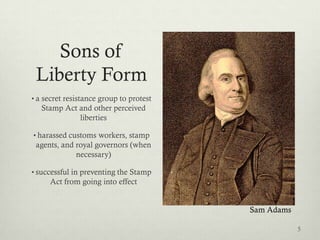
Sons of
 Liberty Form
• a secret resistance group to protest
   Stamp Act and other perceived
             liberties

• harassed customs workers, stamp
 agents, and royal governors (when
             necessary)

• successful in preventing the Stamp
     Act from going into effect


                                         Sam Adams

                                                     5
Stamp Act
      Congress
       Meets
• delegates from nine colonies met and
    issued Declaration of Rights &
             Grievances

 • announced Parliament lacked the
 power to tax the colonies because the
   colonists were not represented in
              Parliament

• conducted a boycott of British goods

 • Parliament repeals the Stamp Act,
             boycott ends


                                         6
Colonists
Boycott British
   Goods
• The refusal to purchase the products
   of an individual , corporation a
  nation as a way to bring economic
    pressure for social or political
               change.

  • How effective was it and why?:
  effective because merchants forced
 Parliament to repeal the Stamp Act.


                                         7
Declaratory
     Act
What the Declaratory Act said: It
gave the British rights to tax and
make decisions for the colonies.


                                     8
Townshend
      Acts
What was taxed? Tea, glass, lead,
          paper, paint

 Colonial Reaction: They revolted
and became enraged. They formed
    well organized resistances.


                                    Lord Charles Townshend


                                                             9
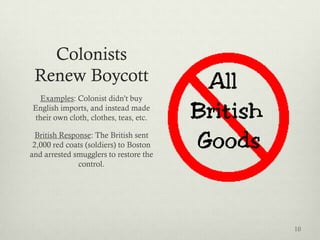
Colonists
 Renew Boycott
  Examples: Colonist didn’t buy
English imports, and instead made
their own cloth, clothes, teas, etc.

  British Response: The British sent
 2,000 red coats (soldiers) to Boston
and arrested smugglers to restore the
               control.


                                        10
Boston
     Massacre
The British attacked the colonists,
       five colonists died.

First shots fired of the American
            Revolution


                                      11
Committees of
Correspondence
To communicate with other colonists
about the Boston massacre and other
    threats to American liberties,
Massachusetts and Virginia were the
             two colonies.


                                      12
Boston Tea
      Party
   The tea act gave the British East
 India Company the right to ship tea
 to the colonies without paying most
  of the taxes usually placed on tea.
Because of the East India Company
 the colonists were mad because the
  East India tea was cheaper, giving
  the British company an advantage
over colonial merchants. A group of
colonists dressed as native Americas
dumped 342 chests of British tea into
            Boston harbor.


                                        13
Intolerable Acts
     (1774)
             4 Parts:

 1) Shut down Boston Harbor to
        American merchants.

  2) Established Quartering Act,
     requiring colonists to house
           British soldiers.

3) Appointed Thomas Gage, British
   military officer, new governor of
            Massachusetts.

   4) Gage placed Boston under
             martial law.
                                       14
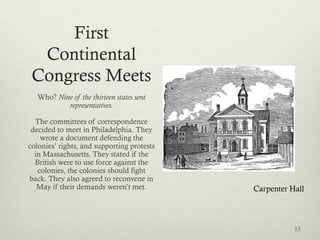
First
  Continental
 Congress Meets
   Who? Nine of the thirteen states sent
           representatives.

  The committees of correspondence
 decided to meet in Philadelphia. They
    wrote a document defending the
colonies’ rights, and supporting protests
  in Massachusetts. They stated if the
  British were to use force against the
   colonies, the colonies should fight
back. They also agreed to reconvene in
   May if their demands weren’t met.        Carpenter Hall


                                                       15
Lexington and
Concord (1775)
  Minutemen stockpiled firearms and
  gunpowder in Concord. British sent
    agents to investigate. The British
 soldiers went through Lexington and
 fighting broke out lasting 15 minutes.
 They then headed to Concord. Word
spread by Paul Revere who warned the
  colonist of the British. The soldiers
 were going to destroy the arsenals of
    weapons but they were too late.
 Minutemen open fired on the soldiers
as they were leaving and killed dozens
               of soldiers.


                                          16
Second
     Continental
      Congress
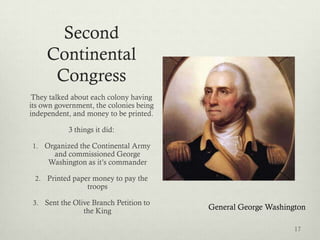
 They talked about each colony having
its own government, the colonies being
independent, and money to be printed.

           3 things it did:

 1. Organized the Continental Army
      and commissioned George
     Washington as it’s commander

 2. Printed paper money to pay the
                 troops

 3. Sent the Olive Branch Petition to
                the King                 General George Washington

                                                               17
Olive Branch
     Petition
   It is the urging of “the former
harmony” to return between Britain
  and the colonies. The king flatly
              rejected it.


                                      18
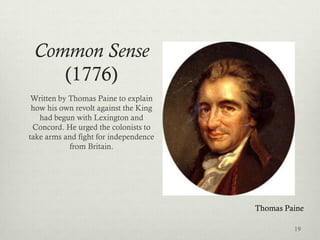
Common Sense
    (1776)
 Written by Thomas Paine to explain
 how his own revolt against the King
   had begun with Lexington and
 Concord. He urged the colonists to
take arms and fight for independence
            from Britain.


                                       Thomas Paine

                                                19

Coming of the American Revolution

  • 1.
    Coming of the Revolution
  • 2.
    Proclamation of 1763 • To avoid farther conflict with Native Americans. • Band all settlement west of the Appalachian. • Proclamation by Britain at the end of the French and Indian war that prohibited settlement by colonists on Indian territory. 2
  • 3.
    Sugar Act (1764) The three parts were: 1. It halved the duty on foreign-made molasses 2. It placed duties on certain imports 3. Strengthened the enforcement of the law allowing prosecutors to try smuggling cases in a vice- admiralty court rather than in a more sympathetic colonial court. 3
  • 4.
    Stamp Act (1765) It differed from earlier taxes because it directly taxed everyone. The tax required colonists to purchase special stamped paper for every legal document, license, newspaper, pamphlet, and almanac. Every colonists had to pay and take money out there pocket. 4
  • 5.
    Sons of LibertyForm • a secret resistance group to protest Stamp Act and other perceived liberties • harassed customs workers, stamp agents, and royal governors (when necessary) • successful in preventing the Stamp Act from going into effect Sam Adams 5
  • 6.
    Stamp Act Congress Meets • delegates from nine colonies met and issued Declaration of Rights & Grievances • announced Parliament lacked the power to tax the colonies because the colonists were not represented in Parliament • conducted a boycott of British goods • Parliament repeals the Stamp Act, boycott ends 6
  • 7.
    Colonists Boycott British Goods • The refusal to purchase the products of an individual , corporation a nation as a way to bring economic pressure for social or political change. • How effective was it and why?: effective because merchants forced Parliament to repeal the Stamp Act. 7
  • 8.
    Declaratory Act What the Declaratory Act said: It gave the British rights to tax and make decisions for the colonies. 8
  • 9.
    Townshend Acts What was taxed? Tea, glass, lead, paper, paint Colonial Reaction: They revolted and became enraged. They formed well organized resistances. Lord Charles Townshend 9
  • 10.
    Colonists Renew Boycott Examples: Colonist didn’t buy English imports, and instead made their own cloth, clothes, teas, etc. British Response: The British sent 2,000 red coats (soldiers) to Boston and arrested smugglers to restore the control. 10
  • 11.
    Boston Massacre The British attacked the colonists, five colonists died. First shots fired of the American Revolution 11
  • 12.
    Committees of Correspondence To communicatewith other colonists about the Boston massacre and other threats to American liberties, Massachusetts and Virginia were the two colonies. 12
  • 13.
    Boston Tea Party The tea act gave the British East India Company the right to ship tea to the colonies without paying most of the taxes usually placed on tea. Because of the East India Company the colonists were mad because the East India tea was cheaper, giving the British company an advantage over colonial merchants. A group of colonists dressed as native Americas dumped 342 chests of British tea into Boston harbor. 13
  • 14.
    Intolerable Acts (1774) 4 Parts: 1) Shut down Boston Harbor to American merchants. 2) Established Quartering Act, requiring colonists to house British soldiers. 3) Appointed Thomas Gage, British military officer, new governor of Massachusetts. 4) Gage placed Boston under martial law. 14
  • 15.
    First Continental Congress Meets Who? Nine of the thirteen states sent representatives. The committees of correspondence decided to meet in Philadelphia. They wrote a document defending the colonies’ rights, and supporting protests in Massachusetts. They stated if the British were to use force against the colonies, the colonies should fight back. They also agreed to reconvene in May if their demands weren’t met. Carpenter Hall 15
  • 16.
    Lexington and Concord (1775) Minutemen stockpiled firearms and gunpowder in Concord. British sent agents to investigate. The British soldiers went through Lexington and fighting broke out lasting 15 minutes. They then headed to Concord. Word spread by Paul Revere who warned the colonist of the British. The soldiers were going to destroy the arsenals of weapons but they were too late. Minutemen open fired on the soldiers as they were leaving and killed dozens of soldiers. 16
  • 17.
    Second Continental Congress They talked about each colony having its own government, the colonies being independent, and money to be printed. 3 things it did: 1. Organized the Continental Army and commissioned George Washington as it’s commander 2. Printed paper money to pay the troops 3. Sent the Olive Branch Petition to the King General George Washington 17
  • 18.
    Olive Branch Petition It is the urging of “the former harmony” to return between Britain and the colonies. The king flatly rejected it. 18
  • 19.
    Common Sense (1776) Written by Thomas Paine to explain how his own revolt against the King had begun with Lexington and Concord. He urged the colonists to take arms and fight for independence from Britain. Thomas Paine 19