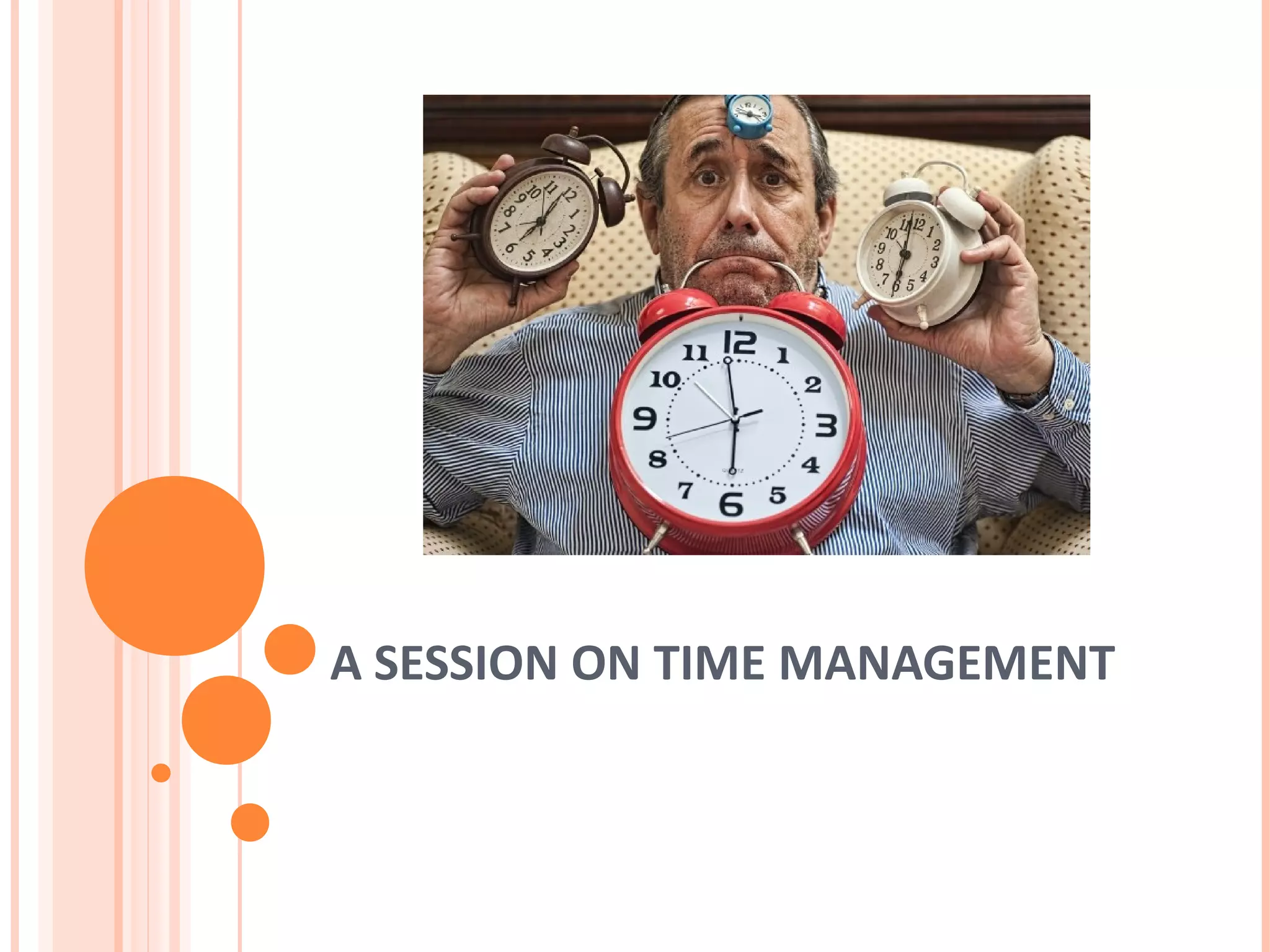
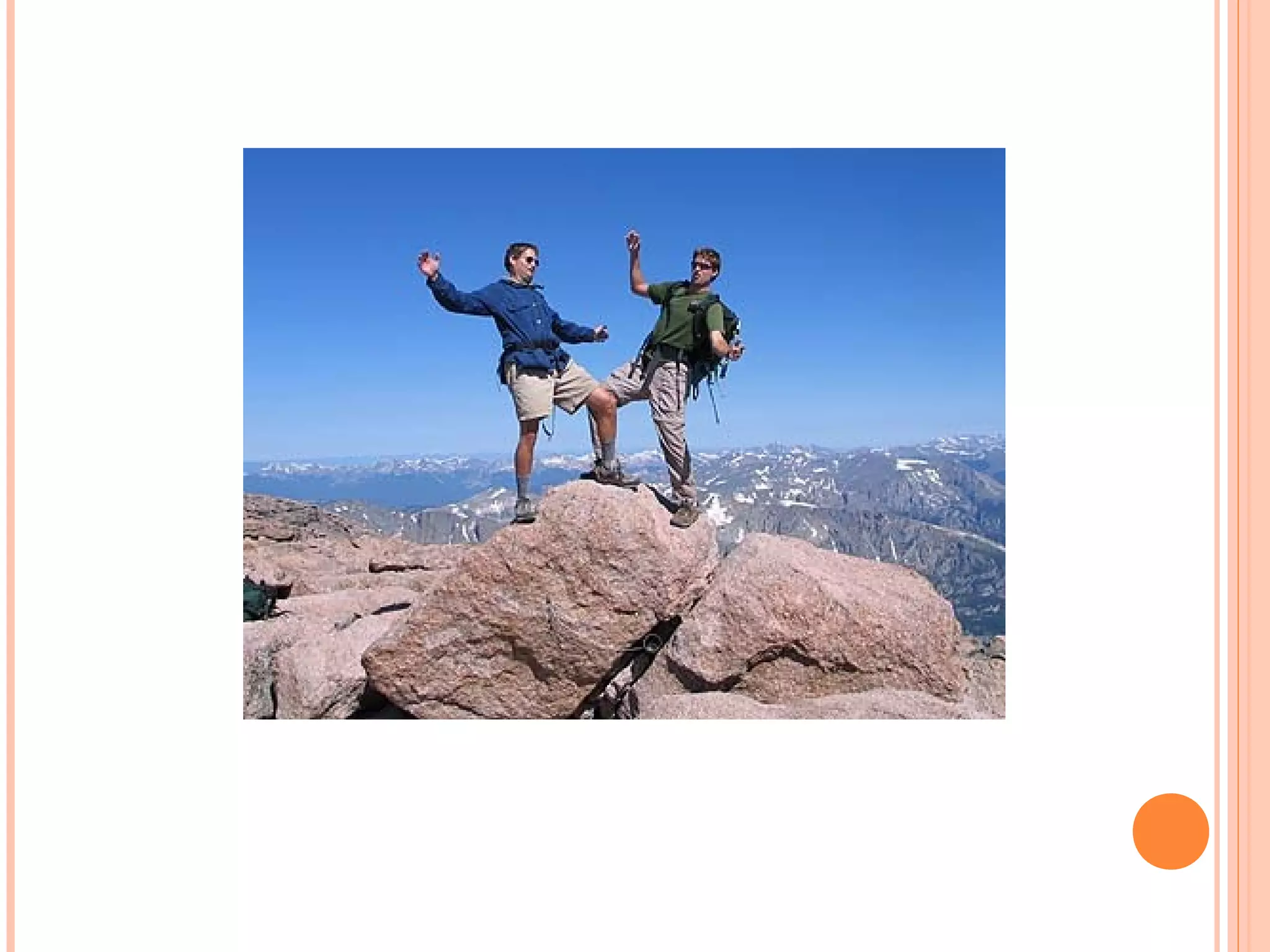
A SESSION ON TIME MANAGEMENT
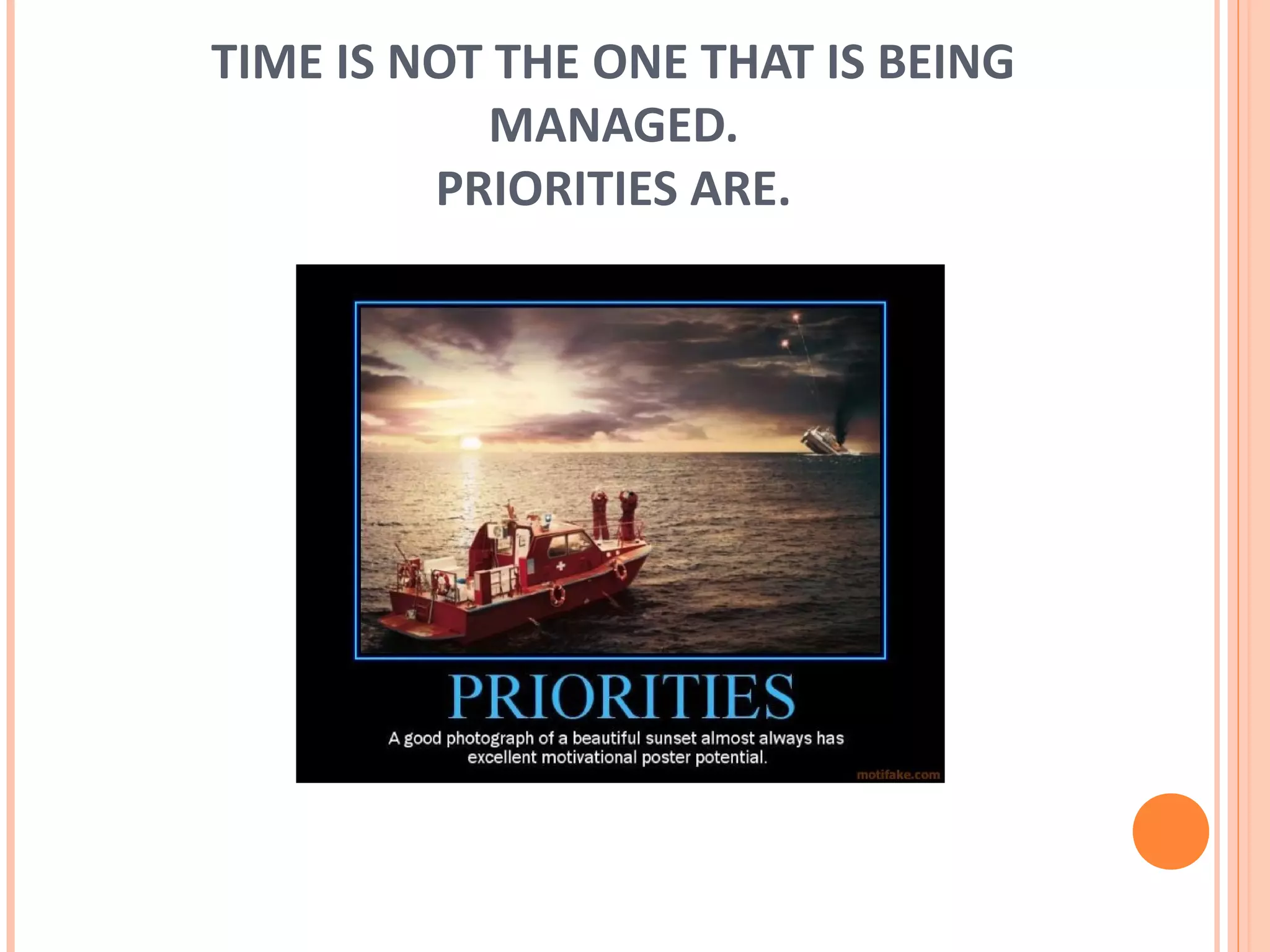
TIME IS NOT THE ONE THAT IS BEING
           MANAGED.
         PRIORITIES ARE.
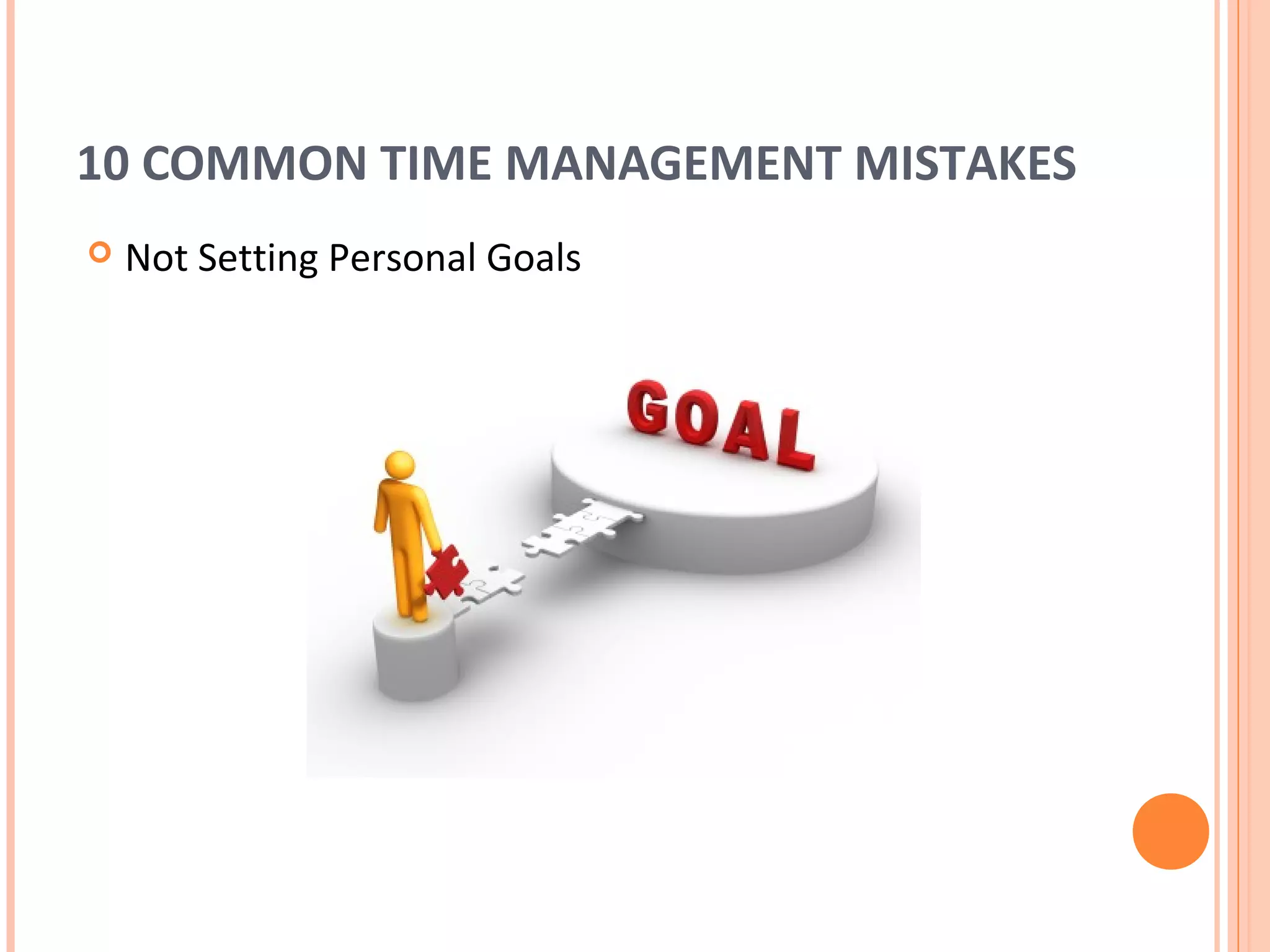
10 COMMON TIME MANAGEMENT MISTAKES
   Not Setting Personal Goals
10 COMMON TIME MANAGEMENT MISTAKES
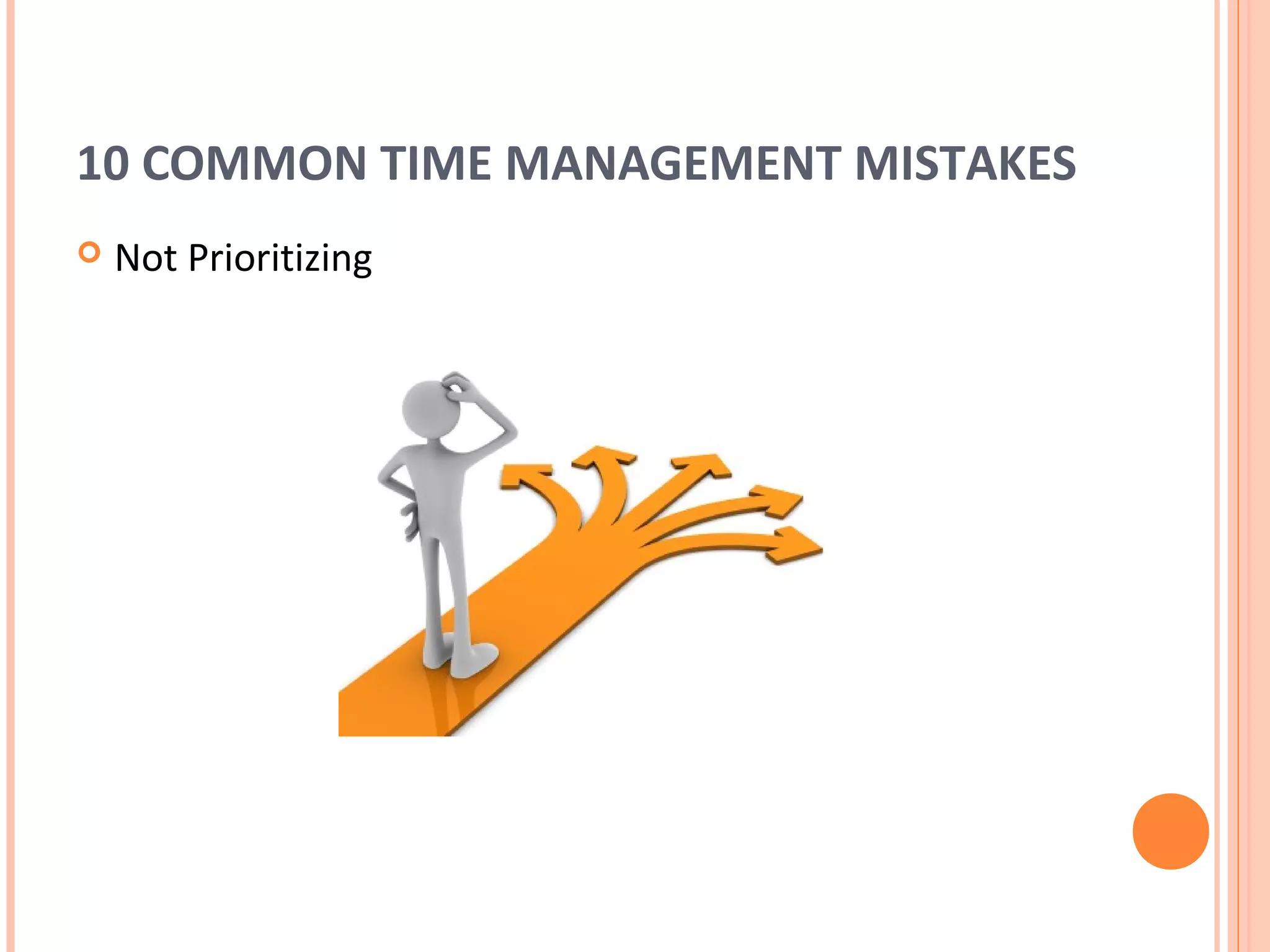
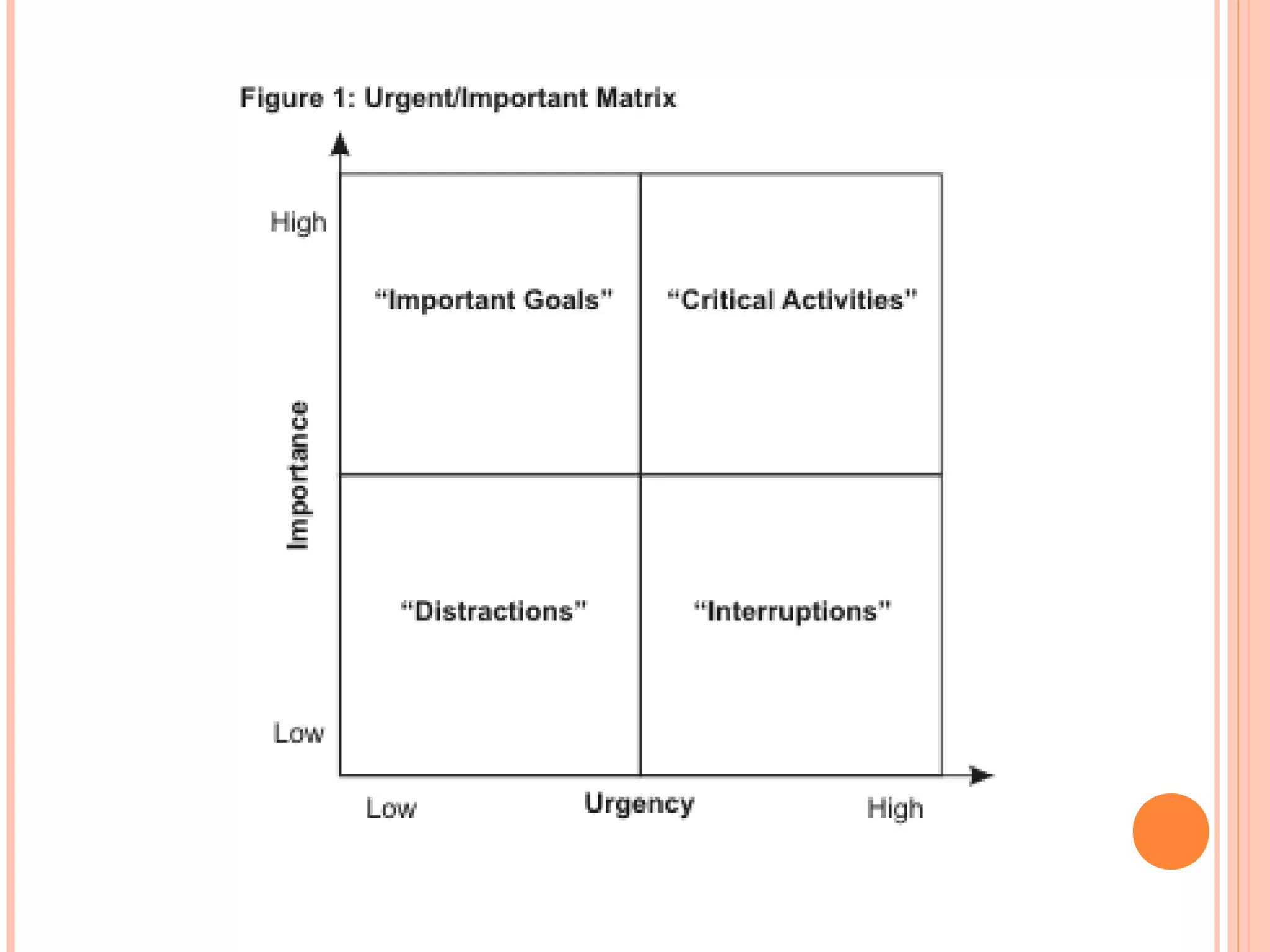
   Not Prioritizing
10 COMMON TIME MANAGEMENT MISTAKES
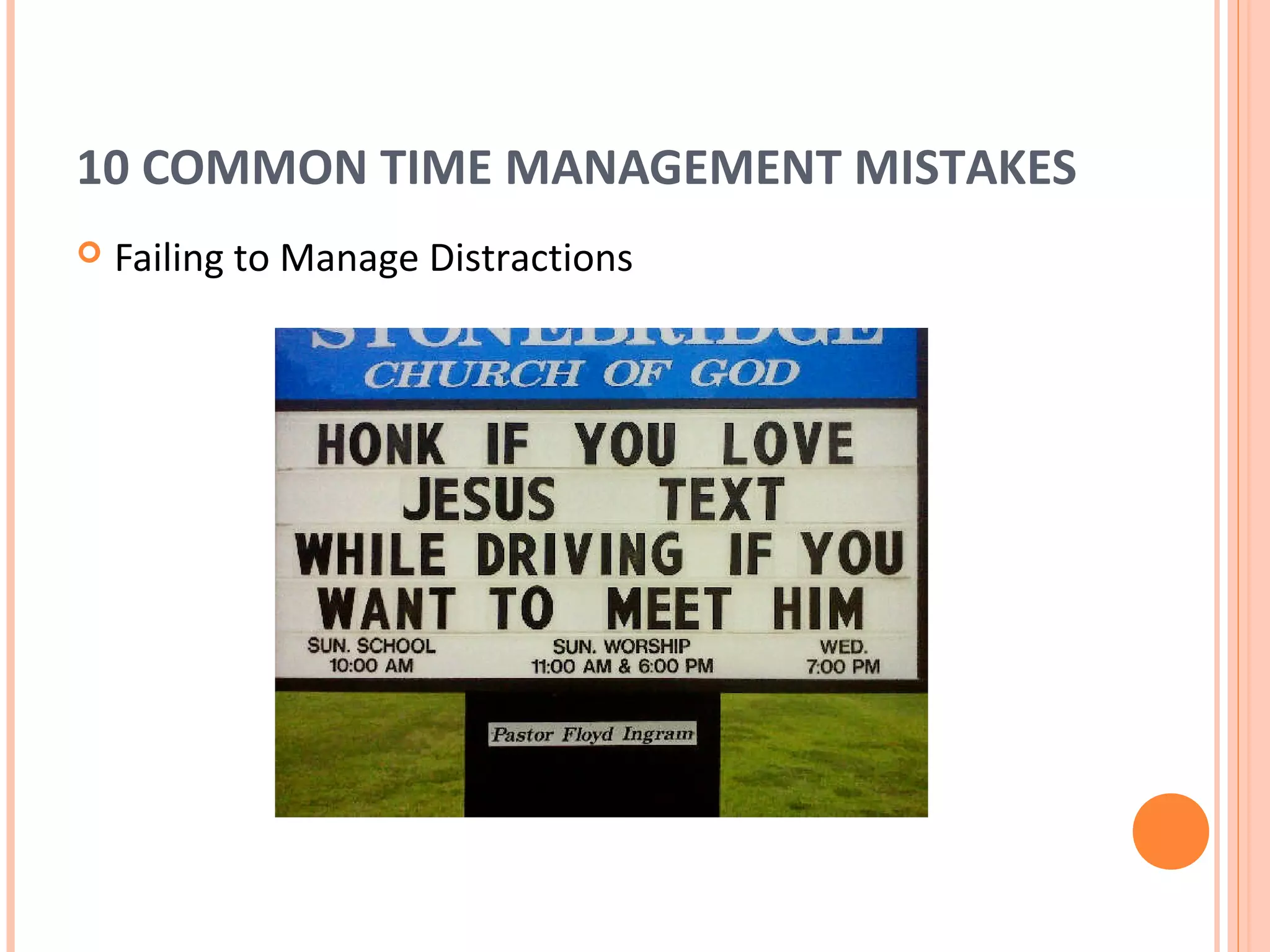
   Failing to Manage Distractions
10 COMMON TIME MANAGEMENT MISTAKES
   Procrastination
10 COMMON TIME MANAGEMENT MISTAKES
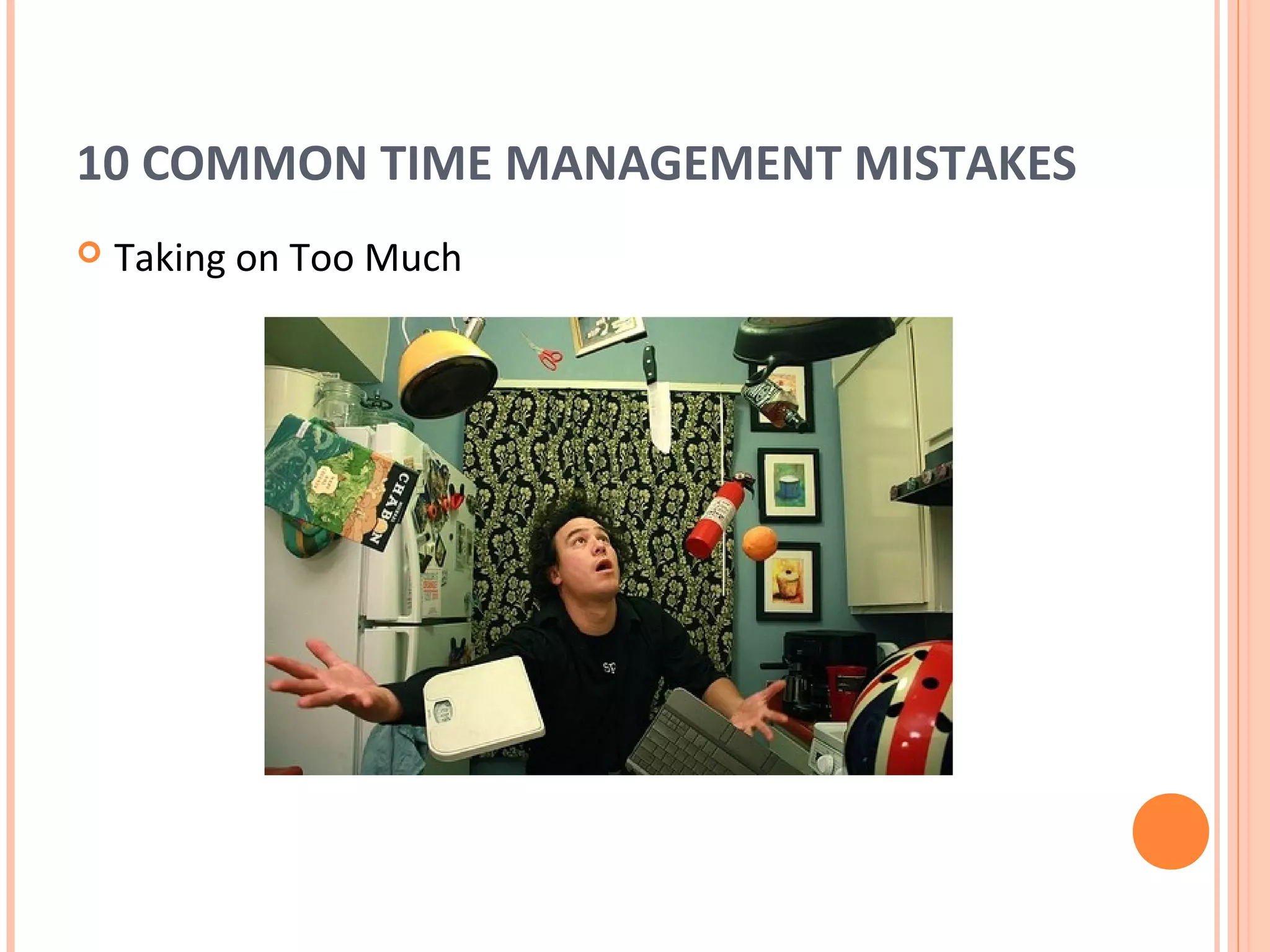
   Taking on Too Much
“Bright lights cast dark shadows when shone
from only one direction.”
10 COMMON TIME MANAGEMENT MISTAKES
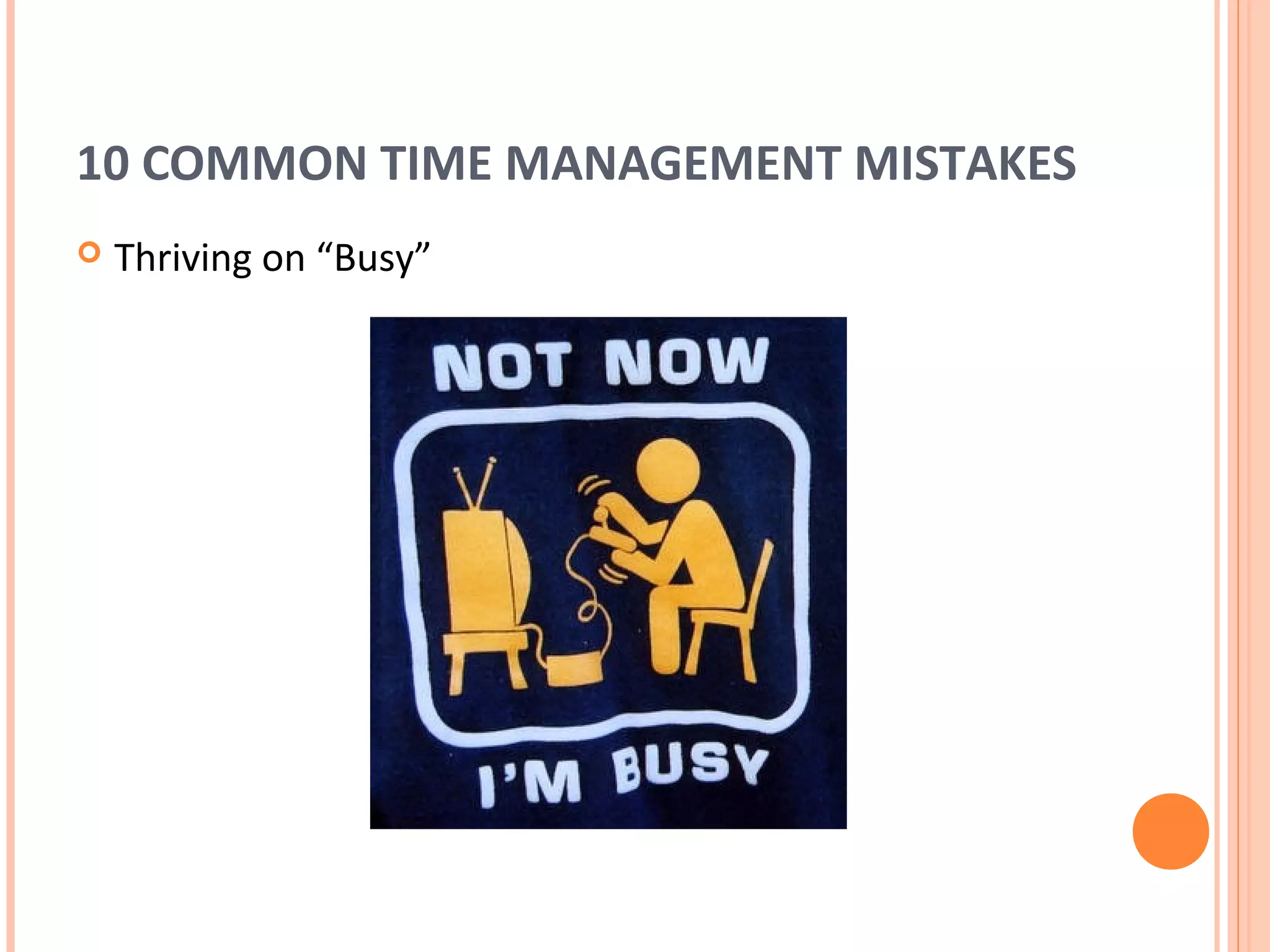
   Thriving on “Busy”
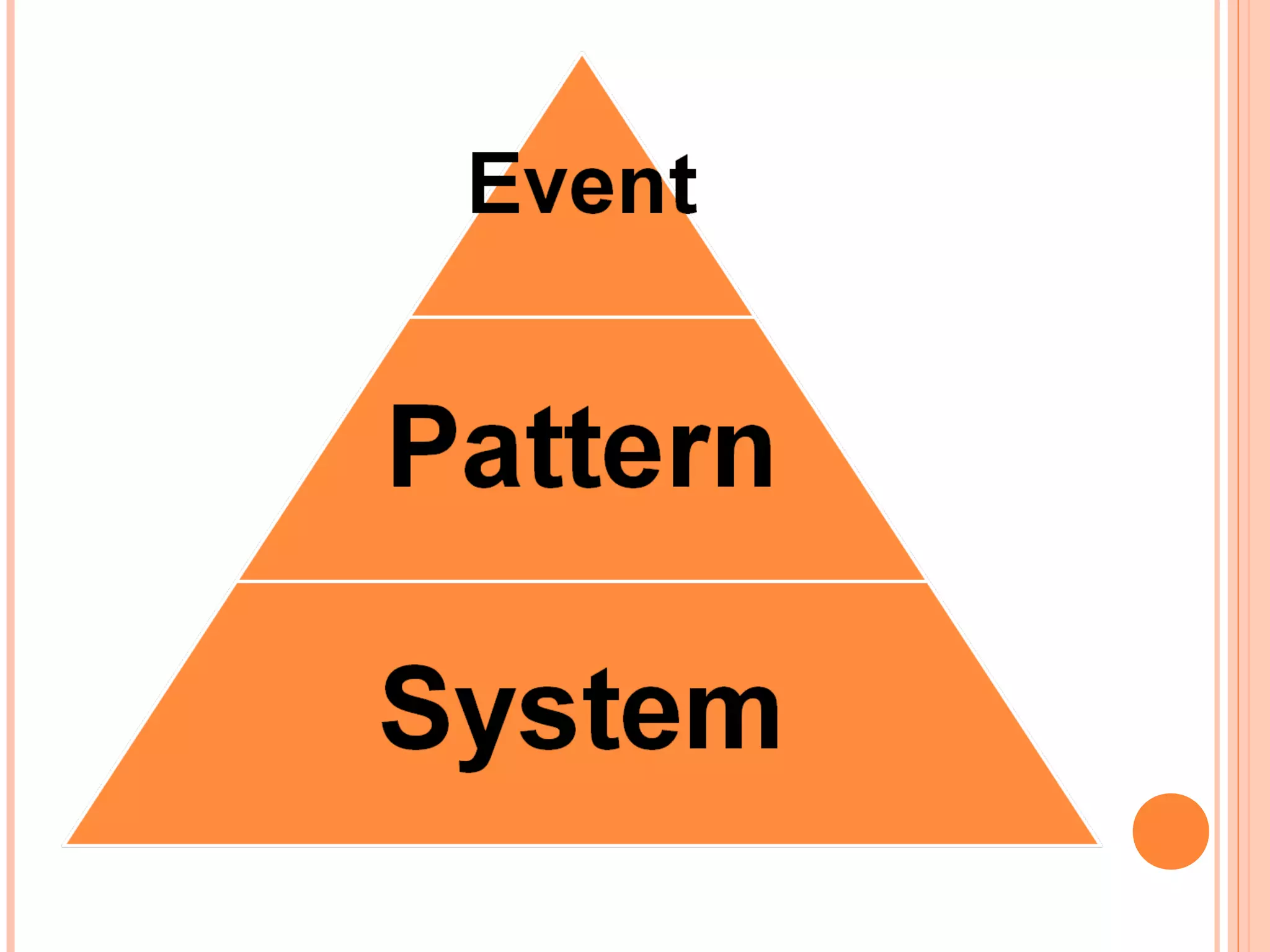
SYSTEMS THINKING
 Every system has a purpose within a larger system.
 All of a system’s parts must be present for the
  system to carry out its purpose optimally.
 A system’s parts must be arranged in a specific way
  for the system to carry out its purpose.
 Systems change in response to feedback.

 System maintain their stability by making
  adjustments based on feedback.
10 COMMON TIME MANAGEMENT MISTAKES
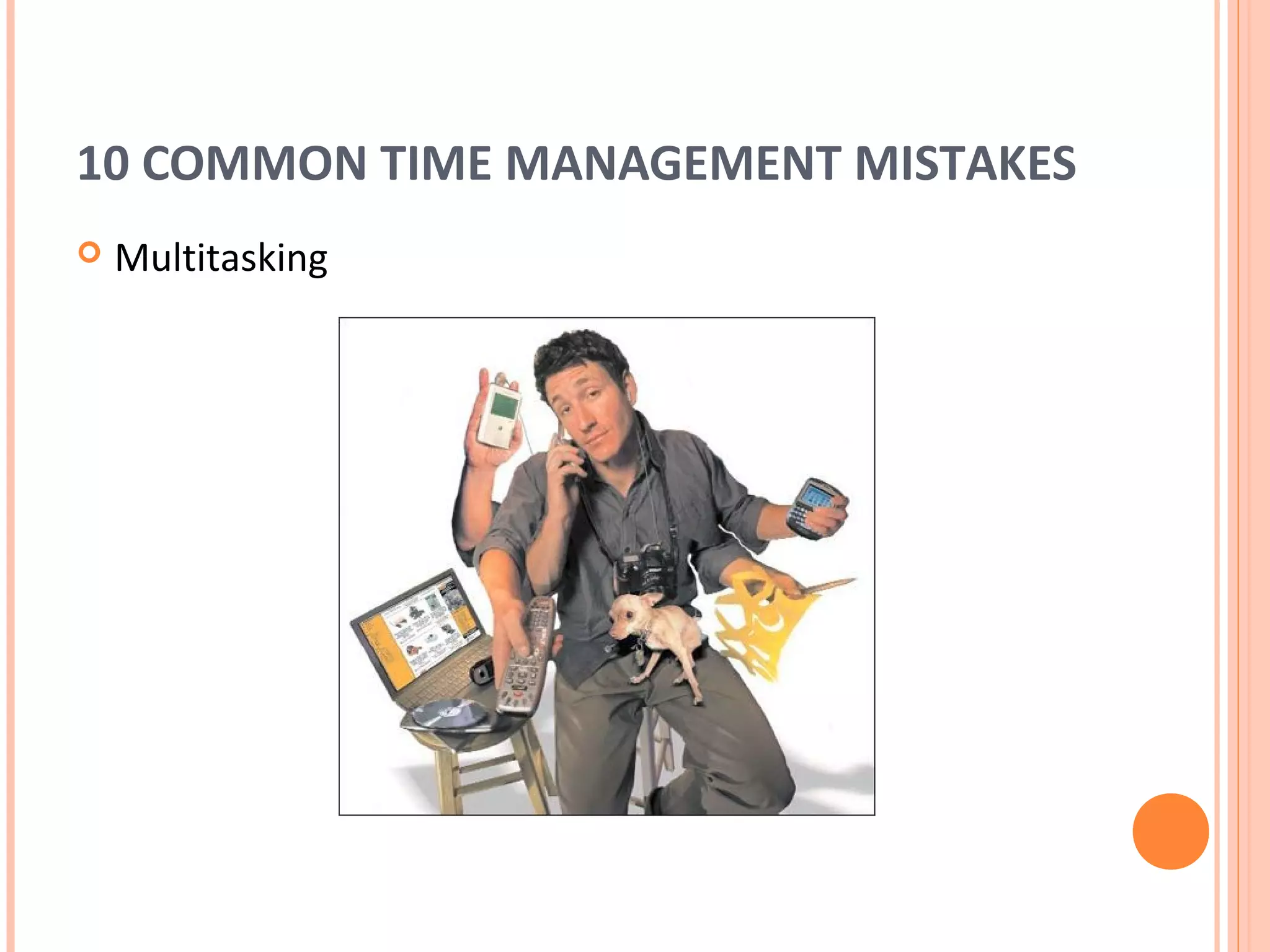
   Multitasking
10 COMMON TIME MANAGEMENT MISTAKES
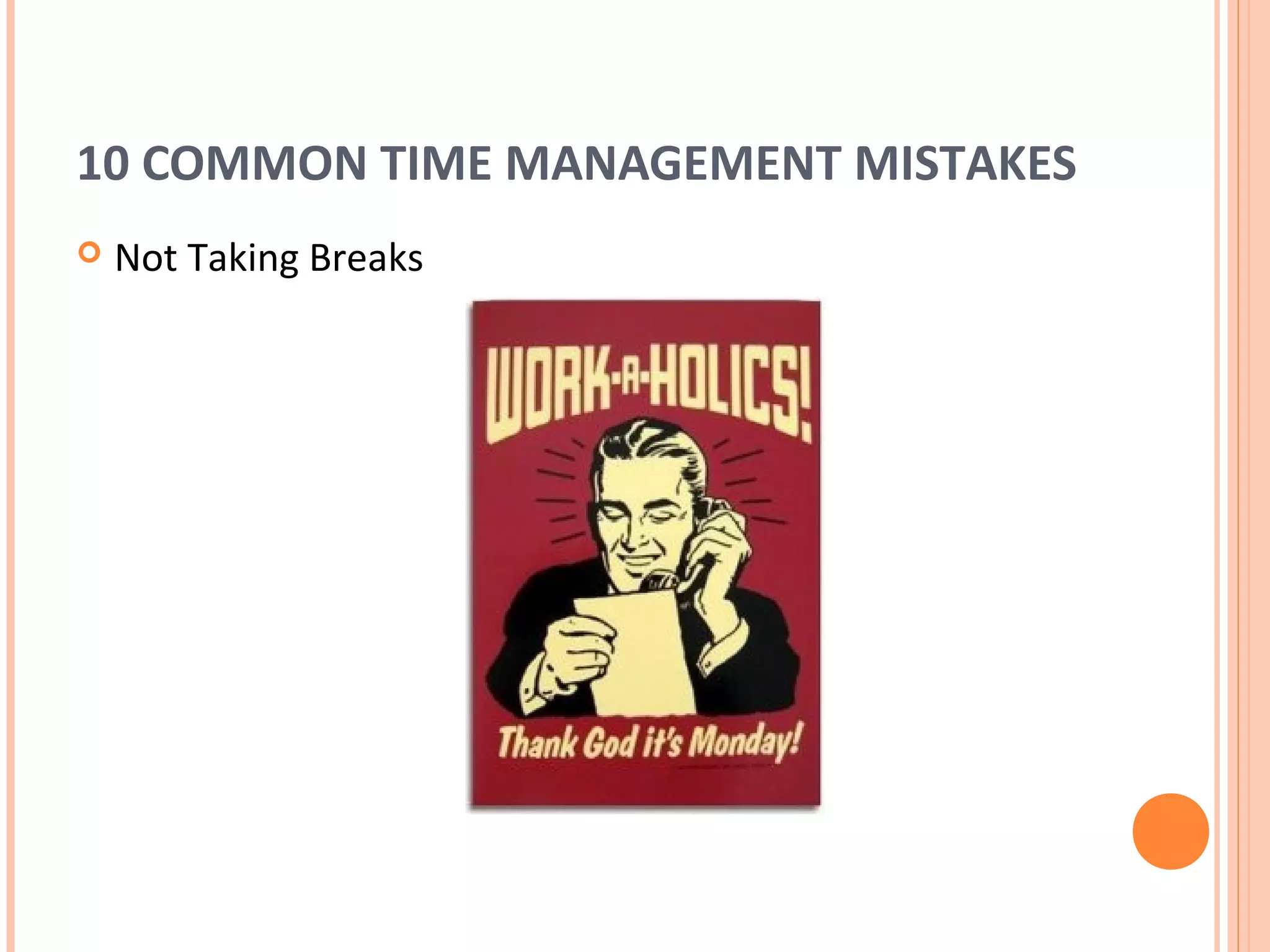
   Not Taking Breaks
10 COMMON TIME MANAGEMENT MISTAKES
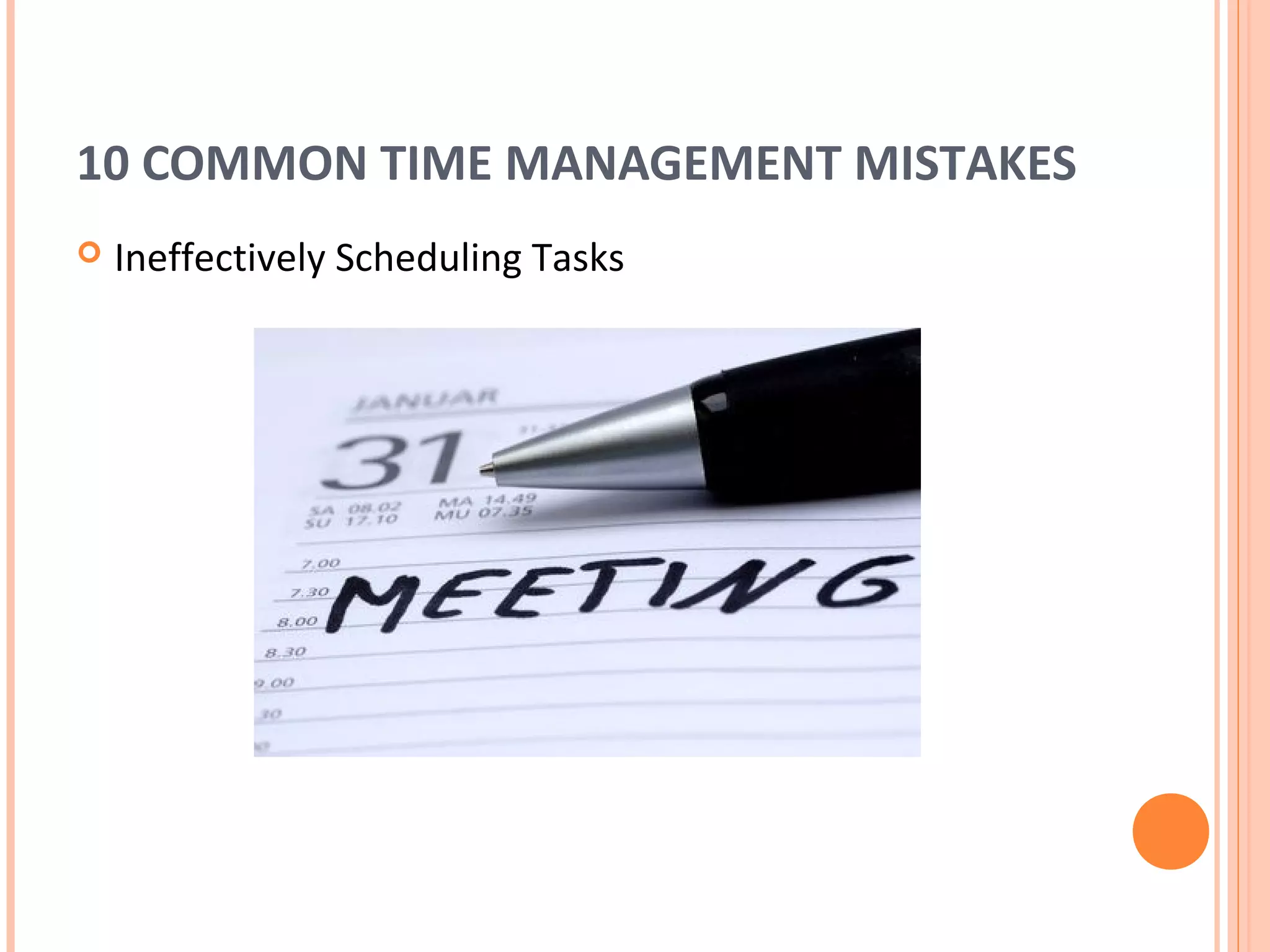
   Ineffectively Scheduling Tasks
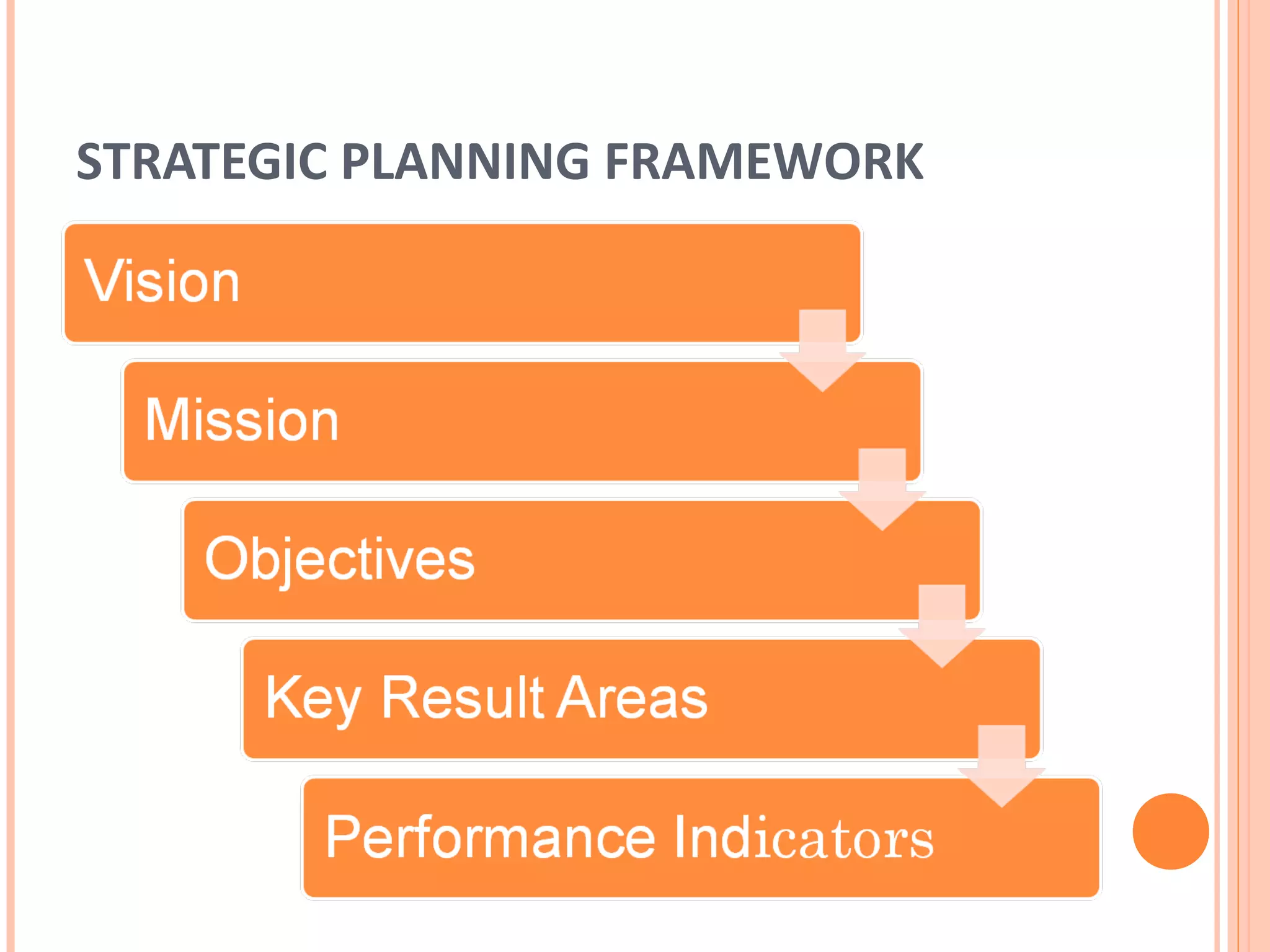
STRATEGIC PLANNING FRAMEWORK
10 COMMON TIME MANAGEMENT MISTAKES
 Failing to Keep a To-Do List
 Not Setting Personal Goals

 Not Prioritizing

 Failing to Manage Distractions

 Procrastination

 Taking on Too Much

 Thriving on “Busy”

 Multitasking

 Not Taking Breaks

 Ineffectively Scheduling Tasks
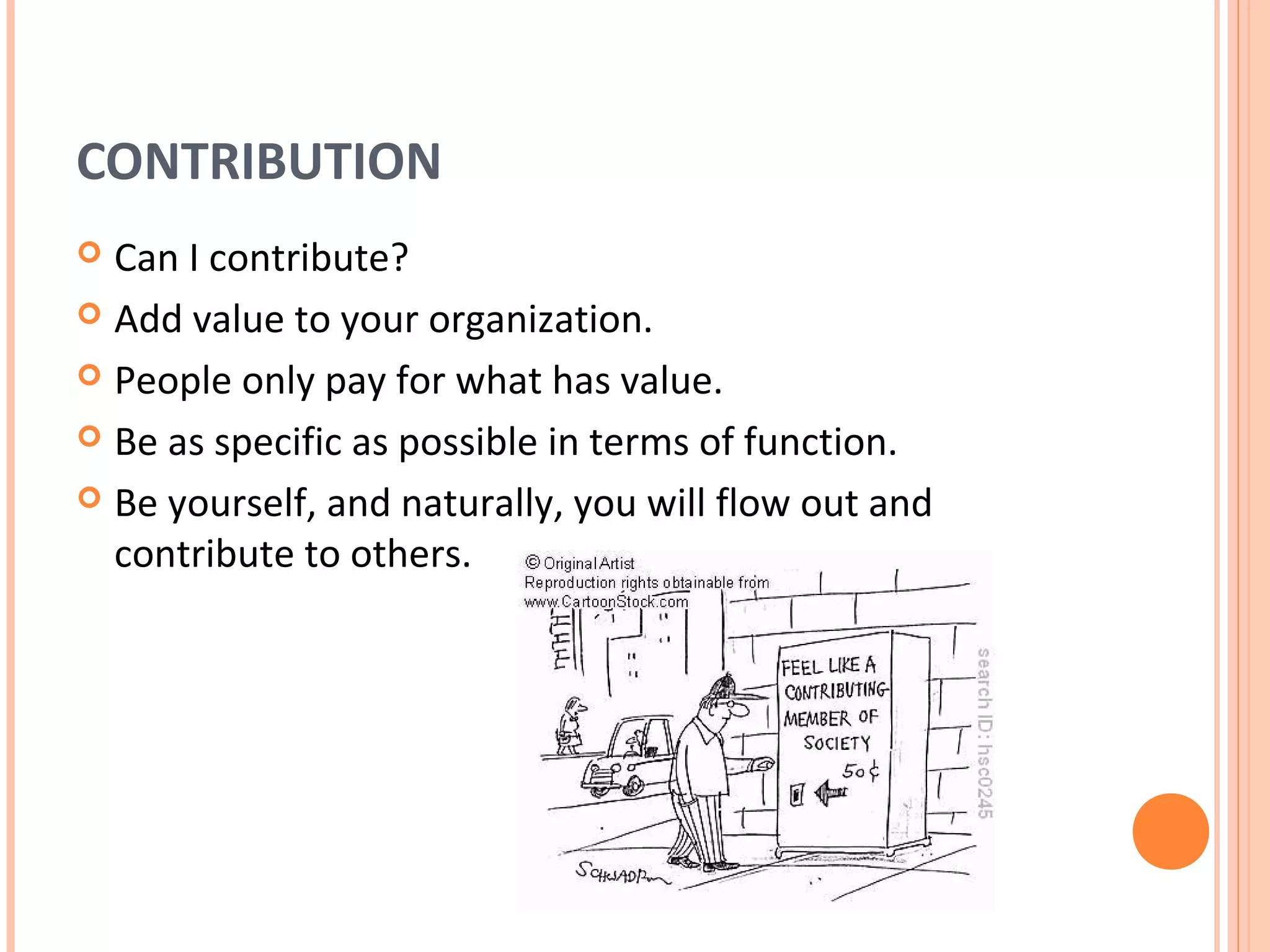
CONTRIBUTION
 Can I contribute?
 Add value to your organization.

 People only pay for what has value.

 Be as specific as possible in terms of function.

 Be yourself, and naturally, you will flow out and
  contribute to others.
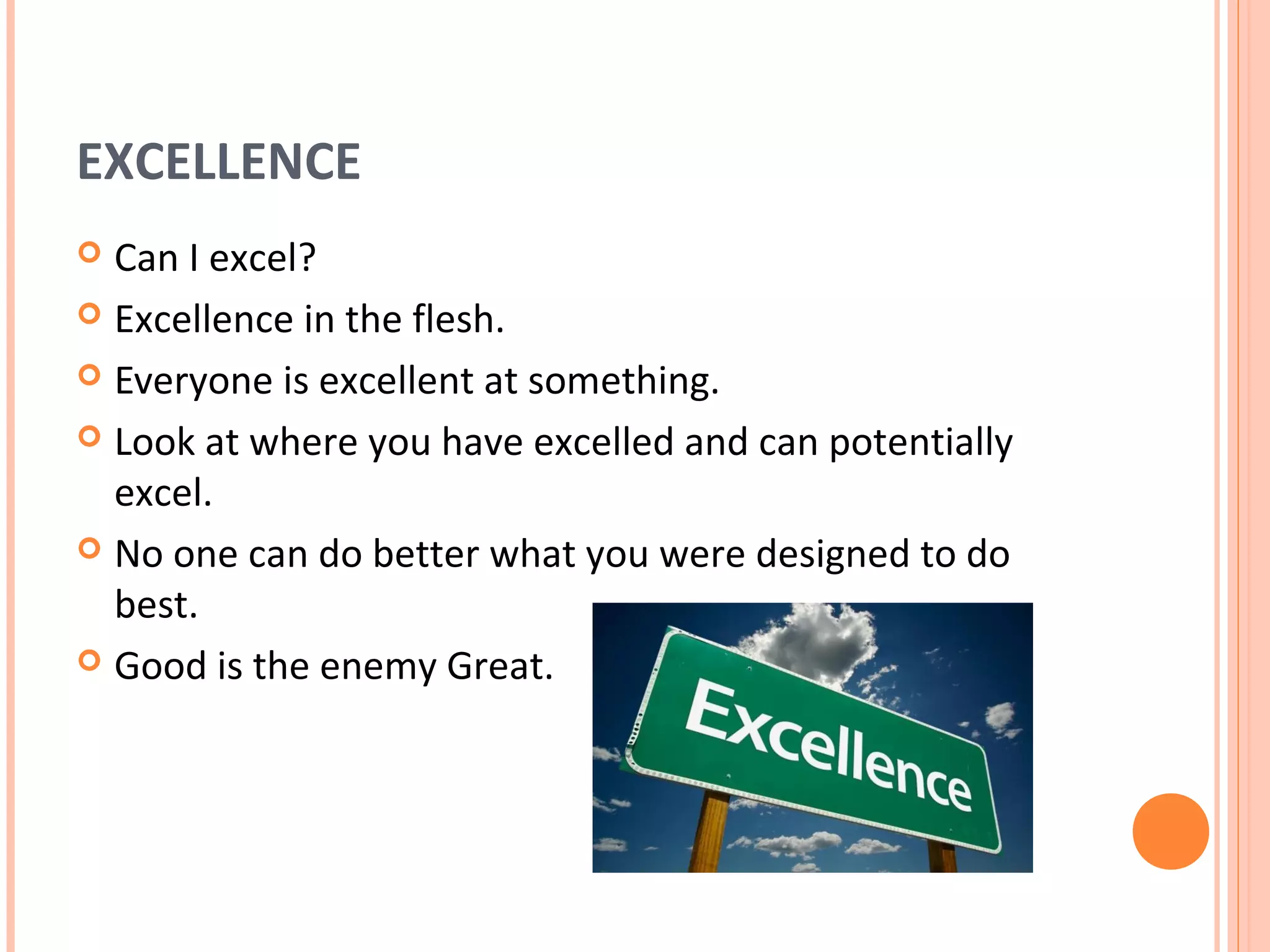
EXCELLENCE
 Can I excel?
 Excellence in the flesh.

 Everyone is excellent at something.

 Look at where you have excelled and can potentially
  excel.
 No one can do better what you were designed to do
  best.
 Good is the enemy Great.
NATURAL ABILITY
 Does the activity involve my natural ability?
 Winners focus, losers spray.

 Not all gifts were meant to be developed in the same
  intensity and depth.
 Find your area of gifting in any situation.
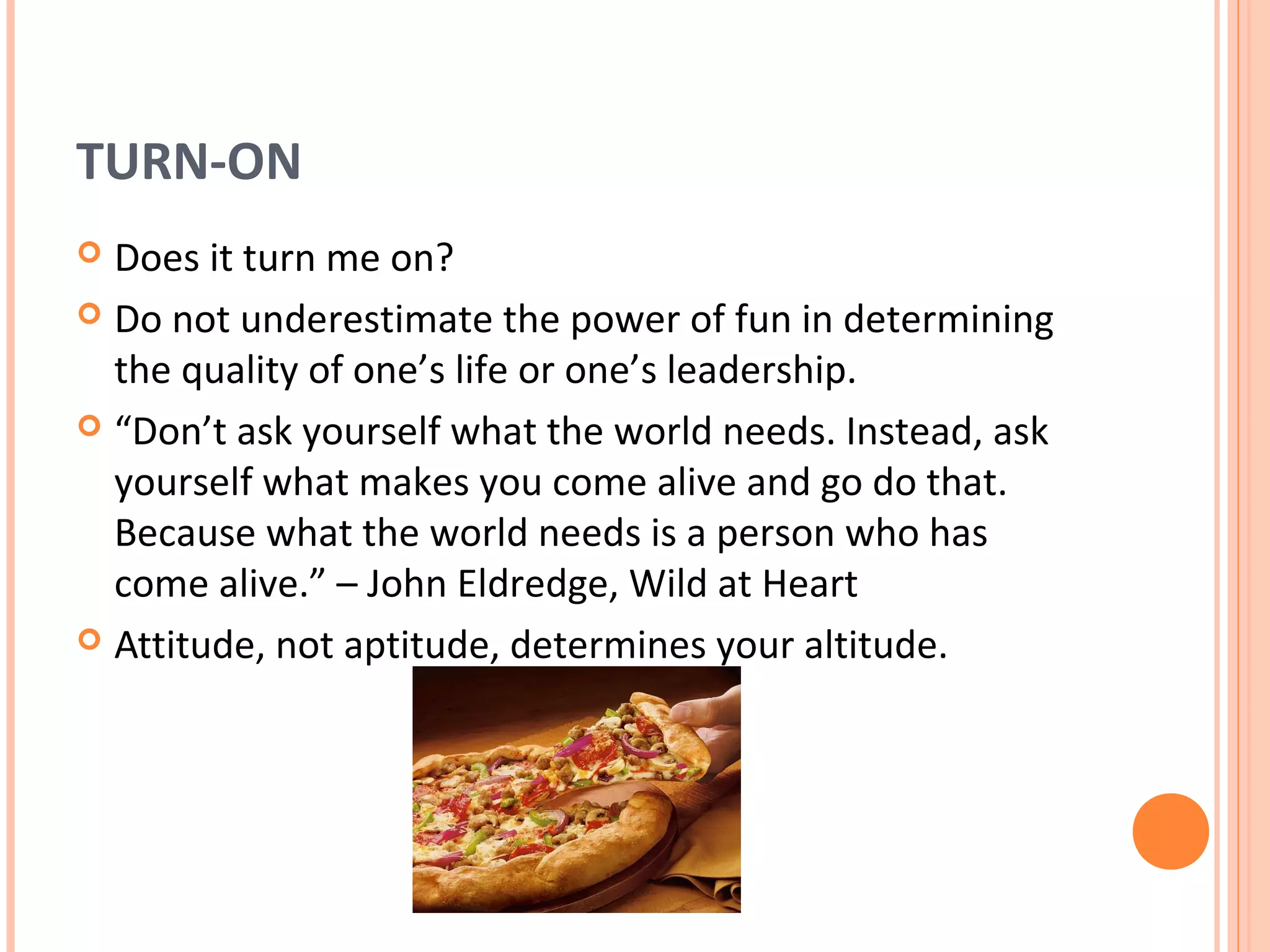
TURN-ON
 Does it turn me on?
 Do not underestimate the power of fun in determining
  the quality of one’s life or one’s leadership.
 “Don’t ask yourself what the world needs. Instead, ask
  yourself what makes you come alive and go do that.
  Because what the world needs is a person who has
  come alive.” – John Eldredge, Wild at Heart
 Attitude, not aptitude, determines your altitude.
SPIRIT-LEADING
 Is the Spirit within me leading me to accept this
  opportunity?
 If you feel that you have been in the wrong direction
  and are being led to move into a better way, don’t
  simply ignore that feeling because you have gone so far.
 Choose a decision of significance, not just of success.
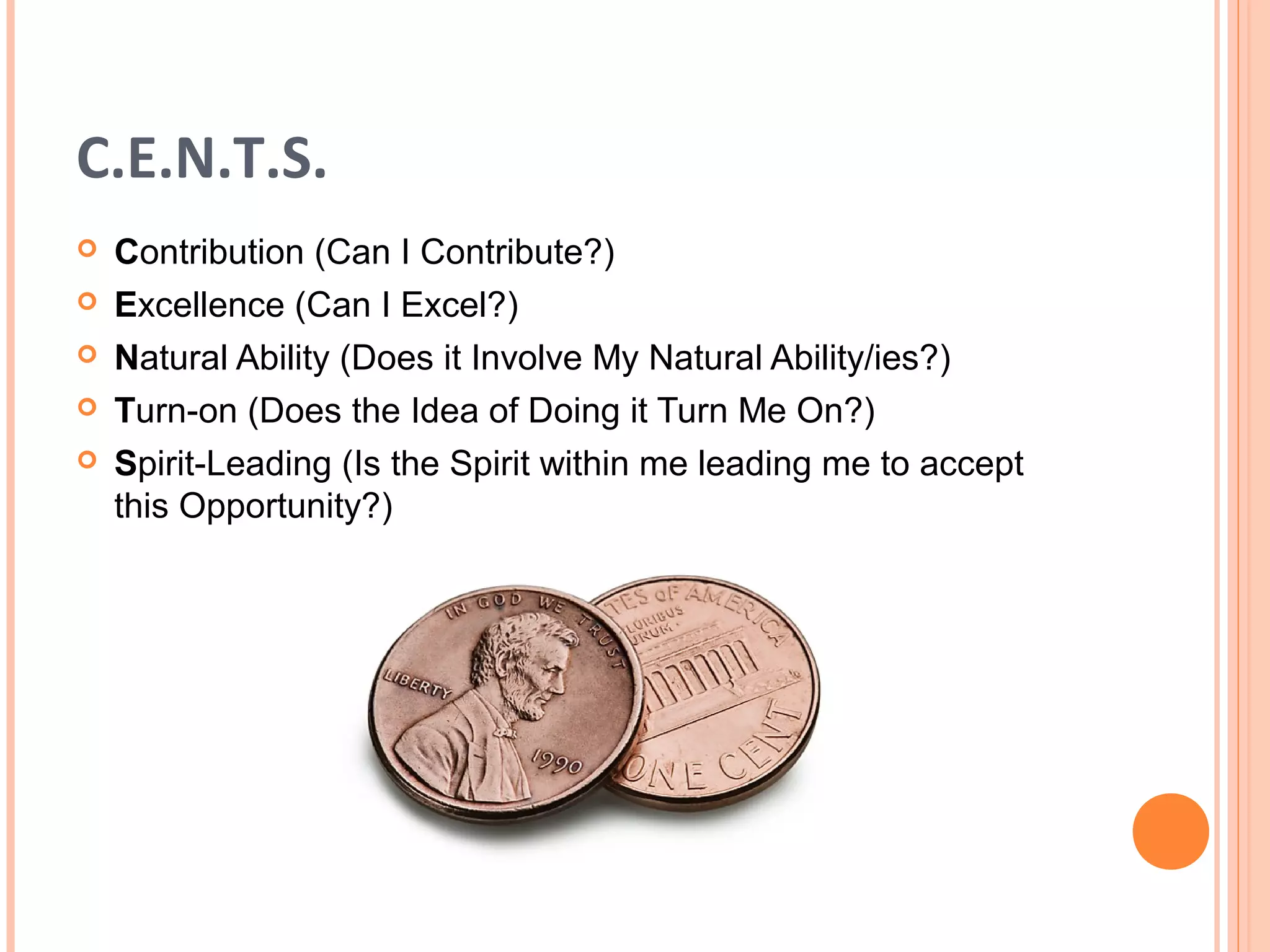
C.E.N.T.S.
   Contribution (Can I Contribute?)
   Excellence (Can I Excel?)
   Natural Ability (Does it Involve My Natural Ability/ies?)
   Turn-on (Does the Idea of Doing it Turn Me On?)
   Spirit-Leading (Is the Spirit within me leading me to accept
    this Opportunity?)
BOTTOMLINES
 Time can’t be managed. Only priorities.
 Count all your time as time to be used and make every
  attempt to get satisfaction out of every moment.
 Keep paper or a calendar with you to jot down the
  things you have to do or notes to yourself.
 Do first things first.

 Have confidence in yourself and in your judgment of
  priorities and stick to them no matter what.
 Concentrate on one thing at a time.

 Delegate responsibilities whenever possible.

 Get a life! Have fun!
WORKSHOP

Time Management

  • 1.
    A SESSION ONTIME MANAGEMENT
  • 4.
    TIME IS NOTTHE ONE THAT IS BEING MANAGED. PRIORITIES ARE.
  • 5.
    10 COMMON TIMEMANAGEMENT MISTAKES  Not Setting Personal Goals
  • 7.
    10 COMMON TIMEMANAGEMENT MISTAKES  Not Prioritizing
  • 9.
    10 COMMON TIMEMANAGEMENT MISTAKES  Failing to Manage Distractions
  • 11.
    10 COMMON TIMEMANAGEMENT MISTAKES  Procrastination
  • 14.
    10 COMMON TIMEMANAGEMENT MISTAKES  Taking on Too Much
  • 15.
    “Bright lights castdark shadows when shone from only one direction.”
  • 16.
    10 COMMON TIMEMANAGEMENT MISTAKES  Thriving on “Busy”
  • 17.
    SYSTEMS THINKING  Everysystem has a purpose within a larger system.  All of a system’s parts must be present for the system to carry out its purpose optimally.  A system’s parts must be arranged in a specific way for the system to carry out its purpose.  Systems change in response to feedback.  System maintain their stability by making adjustments based on feedback.
  • 20.
    10 COMMON TIMEMANAGEMENT MISTAKES  Multitasking
  • 22.
    10 COMMON TIMEMANAGEMENT MISTAKES  Not Taking Breaks
  • 24.
    10 COMMON TIMEMANAGEMENT MISTAKES  Ineffectively Scheduling Tasks
  • 26.
  • 27.
    10 COMMON TIMEMANAGEMENT MISTAKES  Failing to Keep a To-Do List  Not Setting Personal Goals  Not Prioritizing  Failing to Manage Distractions  Procrastination  Taking on Too Much  Thriving on “Busy”  Multitasking  Not Taking Breaks  Ineffectively Scheduling Tasks
  • 29.
    CONTRIBUTION  Can Icontribute?  Add value to your organization.  People only pay for what has value.  Be as specific as possible in terms of function.  Be yourself, and naturally, you will flow out and contribute to others.
  • 30.
    EXCELLENCE  Can Iexcel?  Excellence in the flesh.  Everyone is excellent at something.  Look at where you have excelled and can potentially excel.  No one can do better what you were designed to do best.  Good is the enemy Great.
  • 31.
    NATURAL ABILITY  Doesthe activity involve my natural ability?  Winners focus, losers spray.  Not all gifts were meant to be developed in the same intensity and depth.  Find your area of gifting in any situation.
  • 32.
    TURN-ON  Does itturn me on?  Do not underestimate the power of fun in determining the quality of one’s life or one’s leadership.  “Don’t ask yourself what the world needs. Instead, ask yourself what makes you come alive and go do that. Because what the world needs is a person who has come alive.” – John Eldredge, Wild at Heart  Attitude, not aptitude, determines your altitude.
  • 33.
    SPIRIT-LEADING  Is theSpirit within me leading me to accept this opportunity?  If you feel that you have been in the wrong direction and are being led to move into a better way, don’t simply ignore that feeling because you have gone so far.  Choose a decision of significance, not just of success.
  • 34.
    C.E.N.T.S.  Contribution (Can I Contribute?)  Excellence (Can I Excel?)  Natural Ability (Does it Involve My Natural Ability/ies?)  Turn-on (Does the Idea of Doing it Turn Me On?)  Spirit-Leading (Is the Spirit within me leading me to accept this Opportunity?)
  • 35.
    BOTTOMLINES  Time can’tbe managed. Only priorities.  Count all your time as time to be used and make every attempt to get satisfaction out of every moment.  Keep paper or a calendar with you to jot down the things you have to do or notes to yourself.  Do first things first.  Have confidence in yourself and in your judgment of priorities and stick to them no matter what.  Concentrate on one thing at a time.  Delegate responsibilities whenever possible.  Get a life! Have fun!
  • 36.