1
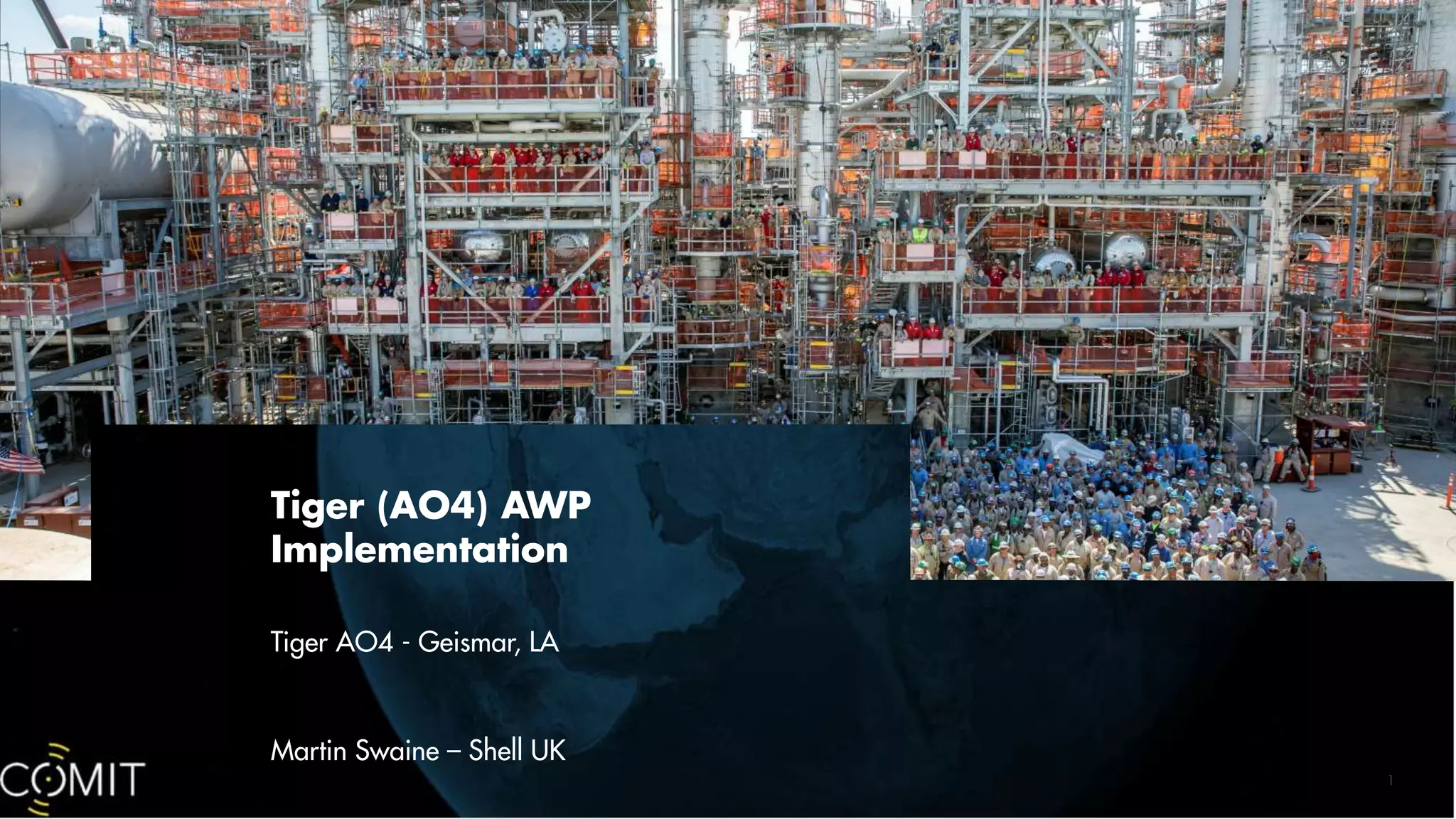
Tiger (AO4) AWP
Implementation
Tiger AO4 - Geismar, LA
Martin Swaine – Shell UK
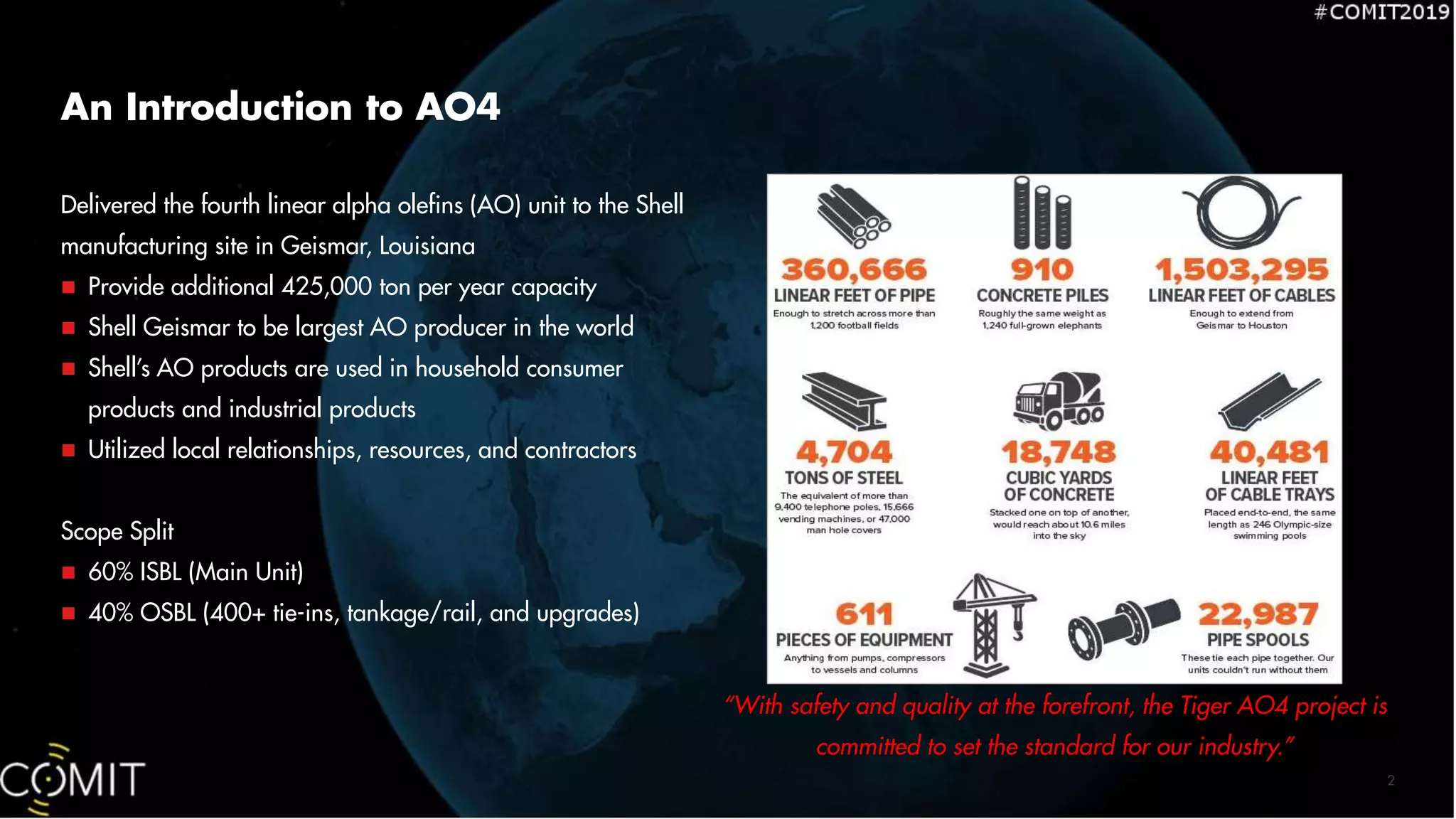
An Introduction to AO4
Delivered the fourth linear alpha olefins (AO) unit to the Shell
manufacturing site in Geismar, Louisiana
 Provide additional 425,000 ton per year capacity
 Shell Geismar to be largest AO producer in the world
 Shell’s AO products are used in household consumer
products and industrial products
 Utilized local relationships, resources, and contractors
Scope Split
 60% ISBL (Main Unit)
 40% OSBL (400+ tie-ins, tankage/rail, and upgrades)
2
“With safety and quality at the forefront, the Tiger AO4 project is
committed to set the standard for our industry.”
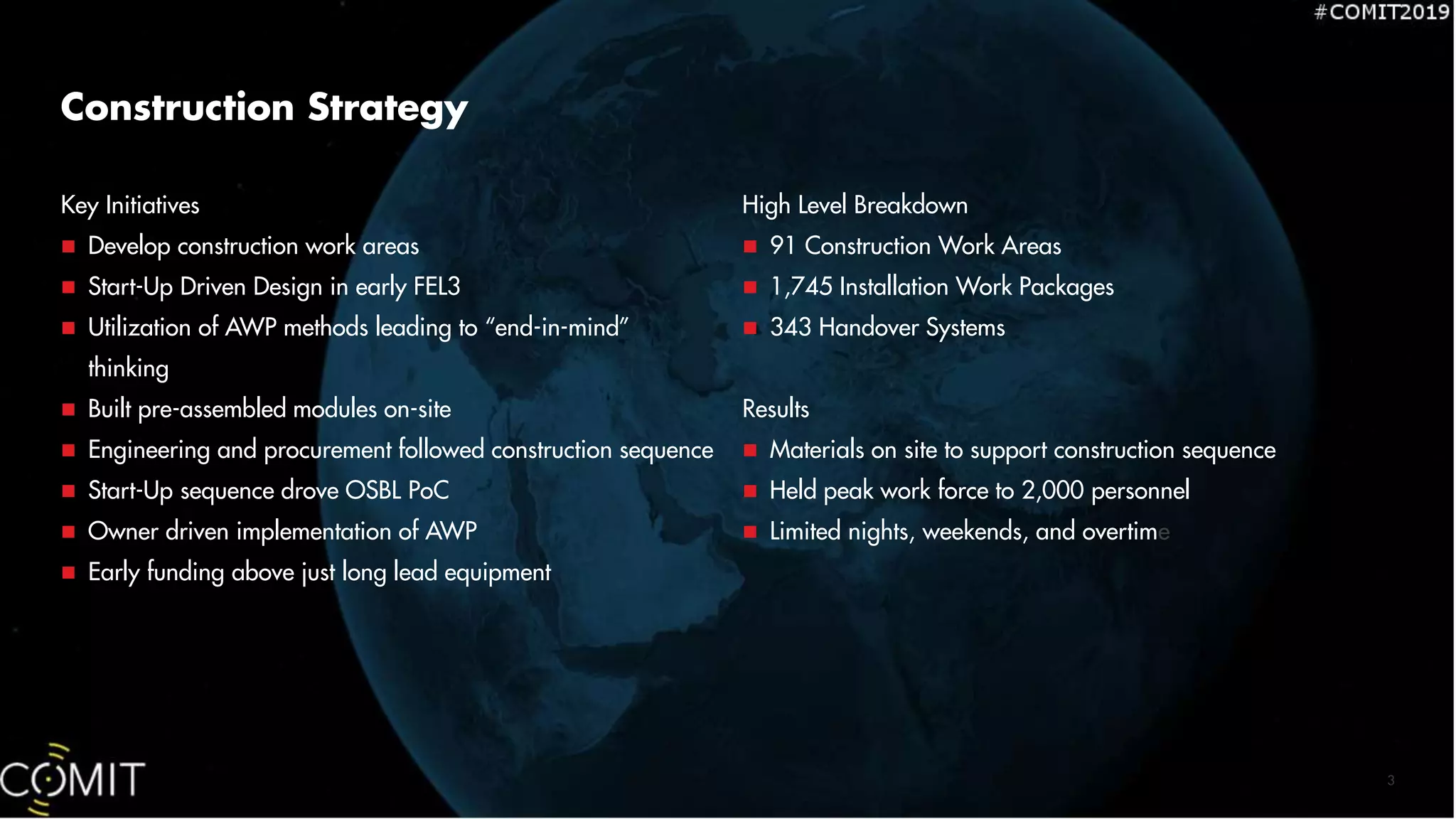
Construction Strategy
High Level Breakdown
 91 Construction Work Areas
 1,745 Installation Work Packages
 343 Handover Systems
Results
 Materials on site to support construction sequence
 Held peak work force to 2,000 personnel
 Limited nights, weekends, and overtime
Key Initiatives
 Develop construction work areas
 Start-Up Driven Design in early FEL3
 Utilization of AWP methods leading to “end-in-mind”
thinking
 Built pre-assembled modules on-site
 Engineering and procurement followed construction sequence
 Start-Up sequence drove OSBL PoC
 Owner driven implementation of AWP
 Early funding above just long lead equipment
3
4
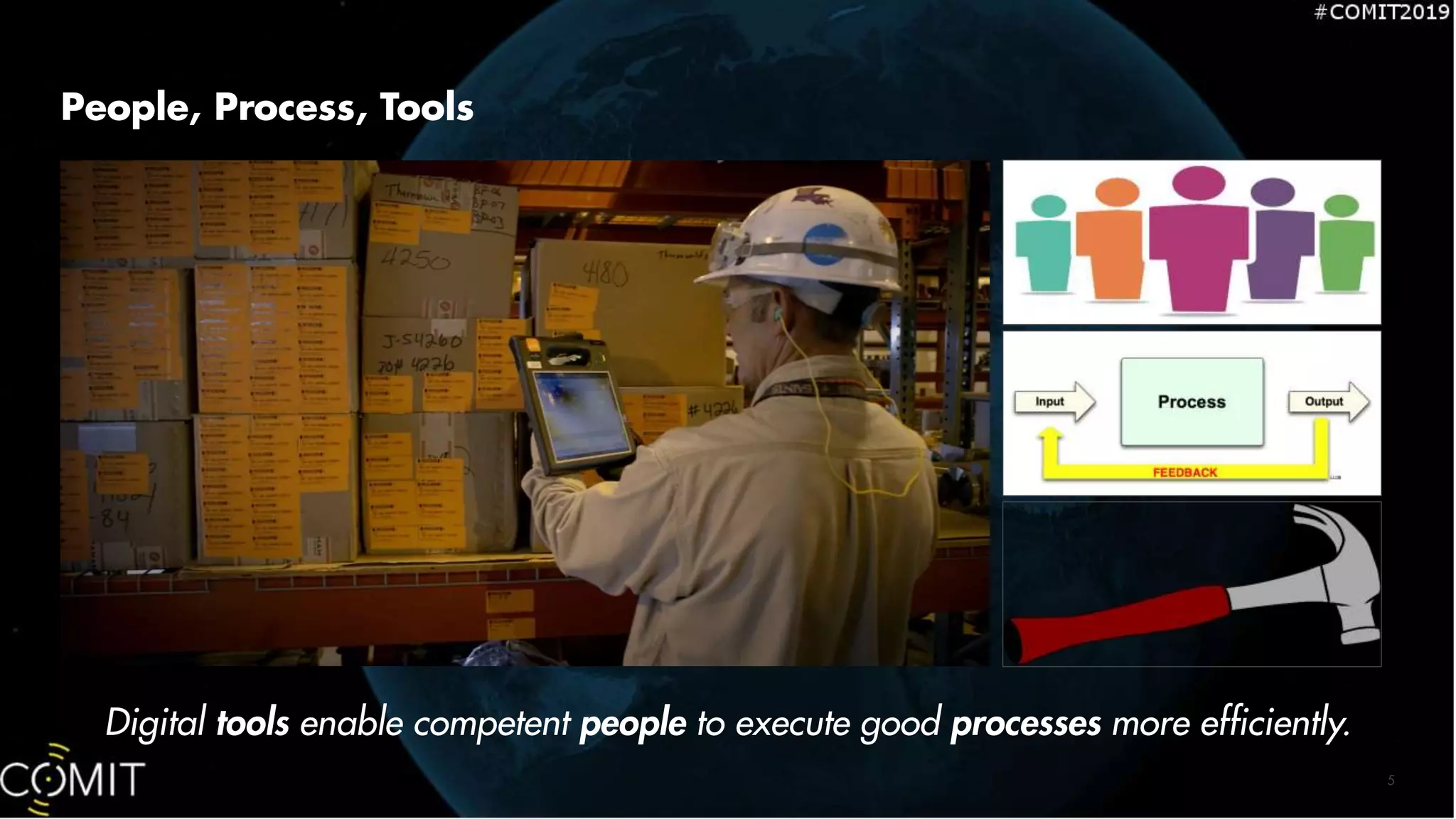
People, Process, Tools
5
Digital tools enable competent people to execute good processes more efficiently.
People, Process, Tools
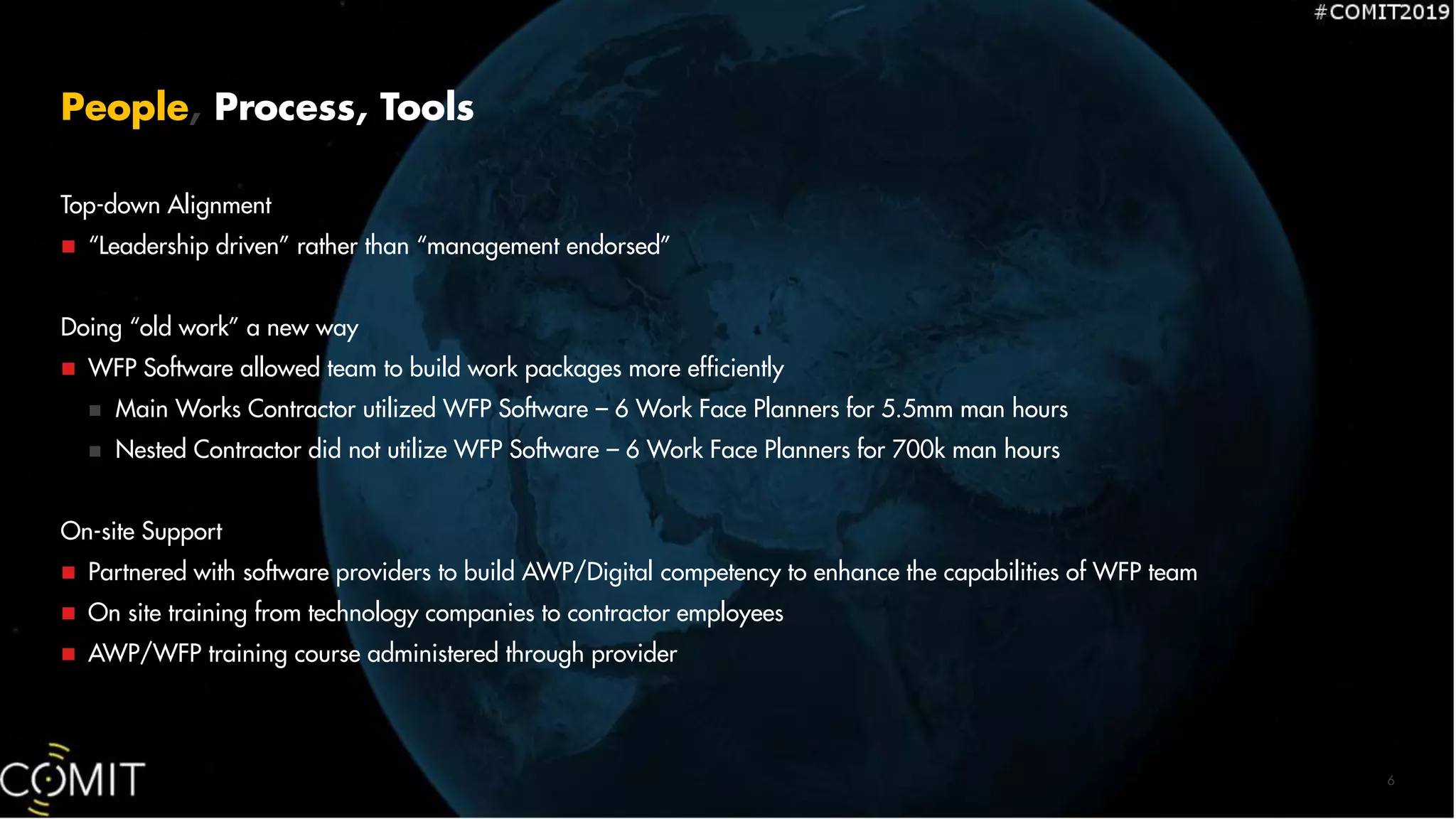
Top-down Alignment
 “Leadership driven” rather than “management endorsed”
Doing “old work” a new way
 WFP Software allowed team to build work packages more efficiently
 Main Works Contractor utilized WFP Software – 6 Work Face Planners for 5.5mm man hours
 Nested Contractor did not utilize WFP Software – 6 Work Face Planners for 700k man hours
On-site Support
 Partnered with software providers to build AWP/Digital competency to enhance the capabilities of WFP team
 On site training from technology companies to contractor employees
 AWP/WFP training course administered through provider
6
7
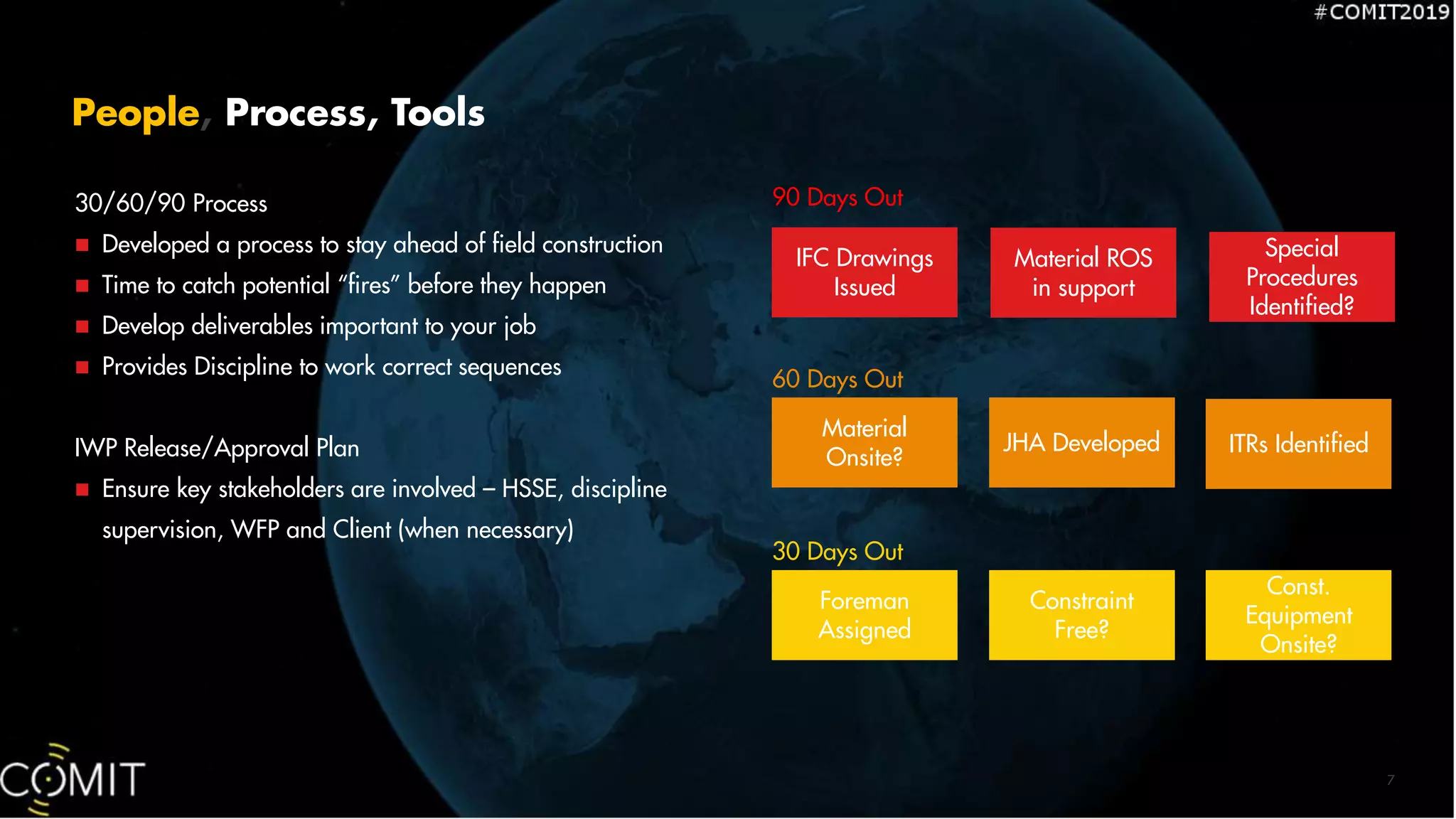
30/60/90 Process
 Developed a process to stay ahead of field construction
 Time to catch potential “fires” before they happen
 Develop deliverables important to your job
 Provides Discipline to work correct sequences
IWP Release/Approval Plan
 Ensure key stakeholders are involved – HSSE, discipline
supervision, WFP and Client (when necessary)
IFC Drawings
Issued
Material ROS
in support
Special
Procedures
Identified?
Material
Onsite?
JHA Developed ITRs Identified
Foreman
Assigned
Constraint
Free?
Const.
Equipment
Onsite?
90 Days Out
60 Days Out
30 Days Out
People, Process, Tools
8
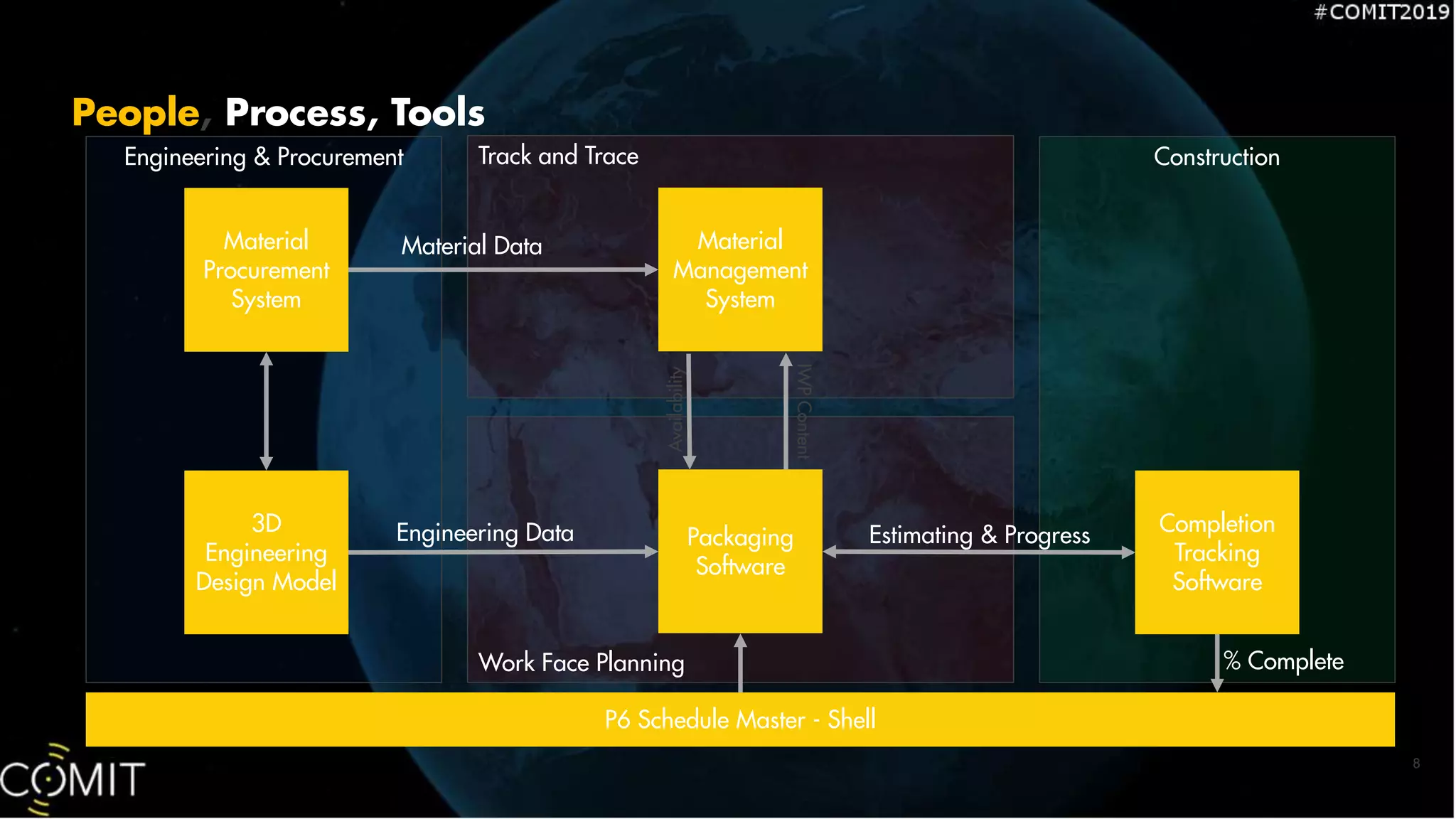
Construction
Work Face Planning
Track and TraceEngineering & Procurement
Packaging
Software
Material
Management
System
3D
Engineering
Design Model
Material
Procurement
System
Material Data
Engineering Data
IWPContent
Availability
P6 Schedule Master - Shell
Completion
Tracking
Software
Estimating & Progress
% Complete
People, Process, Tools
9
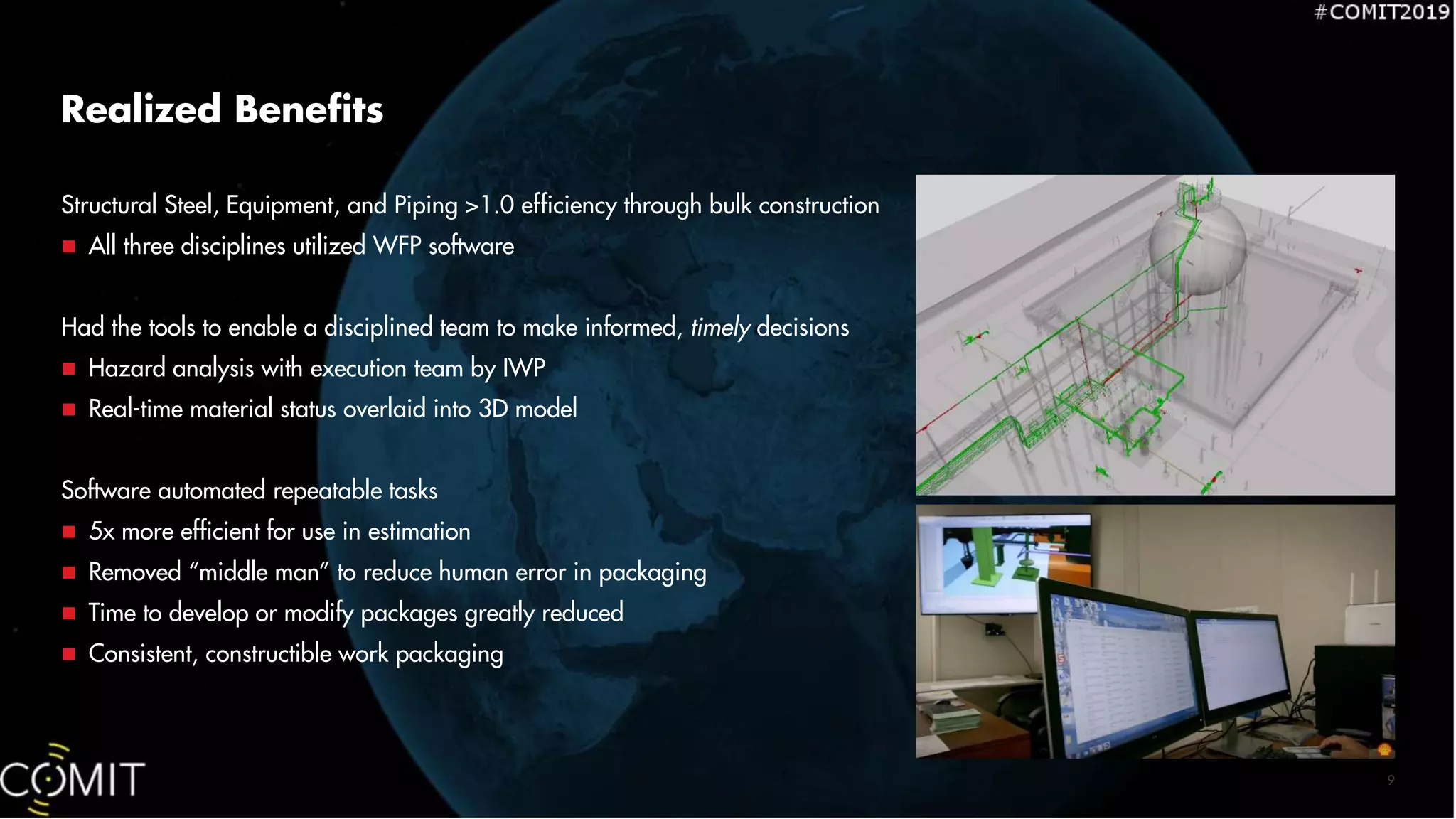
Structural Steel, Equipment, and Piping >1.0 efficiency through bulk construction
 All three disciplines utilized WFP software
Had the tools to enable a disciplined team to make informed, timely decisions
 Hazard analysis with execution team by IWP
 Real-time material status overlaid into 3D model
Software automated repeatable tasks
 5x more efficient for use in estimation
 Removed “middle man” to reduce human error in packaging
 Time to develop or modify packages greatly reduced
 Consistent, constructible work packaging
Realized Benefits
Lessons on Implementation
Data management is mandatory to avoid data integration issues affecting field productivity
 Establish the AWP procedure early (during FEED) to enable strategic planning to implement tools
 Integrating multiple software tools requires a strong data integrity plan
 Invest early in digital data exchange
Introducing new hardware/software is possible, but requires commitment
 Letting go of paper-based methods requires effort and time – start training early and often
 Immediately resolve data discrepancies to avoid distrust in the system
 Ensure the AWP process (and tools) have clear lines of accountability within the Owners team
Understanding the practicality of how and when to apply software solutions is difficult
 Applying technology earlier in the project lifecycle (i.e., barcodes applied at fabricator vs. on site) enables data visibility and
simplifies execution of new tools, but it can add cost
10
11
Tiger (AO4) AWP Implementation #COMIT2019

Tiger (AO4) AWP Implementation #COMIT2019

  • 1.
    1 Tiger (AO4) AWP Implementation TigerAO4 - Geismar, LA Martin Swaine – Shell UK
  • 2.
    An Introduction toAO4 Delivered the fourth linear alpha olefins (AO) unit to the Shell manufacturing site in Geismar, Louisiana  Provide additional 425,000 ton per year capacity  Shell Geismar to be largest AO producer in the world  Shell’s AO products are used in household consumer products and industrial products  Utilized local relationships, resources, and contractors Scope Split  60% ISBL (Main Unit)  40% OSBL (400+ tie-ins, tankage/rail, and upgrades) 2 “With safety and quality at the forefront, the Tiger AO4 project is committed to set the standard for our industry.”
  • 3.
    Construction Strategy High LevelBreakdown  91 Construction Work Areas  1,745 Installation Work Packages  343 Handover Systems Results  Materials on site to support construction sequence  Held peak work force to 2,000 personnel  Limited nights, weekends, and overtime Key Initiatives  Develop construction work areas  Start-Up Driven Design in early FEL3  Utilization of AWP methods leading to “end-in-mind” thinking  Built pre-assembled modules on-site  Engineering and procurement followed construction sequence  Start-Up sequence drove OSBL PoC  Owner driven implementation of AWP  Early funding above just long lead equipment 3
  • 4.
  • 5.
    People, Process, Tools 5 Digitaltools enable competent people to execute good processes more efficiently.
  • 6.
    People, Process, Tools Top-downAlignment  “Leadership driven” rather than “management endorsed” Doing “old work” a new way  WFP Software allowed team to build work packages more efficiently  Main Works Contractor utilized WFP Software – 6 Work Face Planners for 5.5mm man hours  Nested Contractor did not utilize WFP Software – 6 Work Face Planners for 700k man hours On-site Support  Partnered with software providers to build AWP/Digital competency to enhance the capabilities of WFP team  On site training from technology companies to contractor employees  AWP/WFP training course administered through provider 6
  • 7.
    7 30/60/90 Process  Developeda process to stay ahead of field construction  Time to catch potential “fires” before they happen  Develop deliverables important to your job  Provides Discipline to work correct sequences IWP Release/Approval Plan  Ensure key stakeholders are involved – HSSE, discipline supervision, WFP and Client (when necessary) IFC Drawings Issued Material ROS in support Special Procedures Identified? Material Onsite? JHA Developed ITRs Identified Foreman Assigned Constraint Free? Const. Equipment Onsite? 90 Days Out 60 Days Out 30 Days Out People, Process, Tools
  • 8.
    8 Construction Work Face Planning Trackand TraceEngineering & Procurement Packaging Software Material Management System 3D Engineering Design Model Material Procurement System Material Data Engineering Data IWPContent Availability P6 Schedule Master - Shell Completion Tracking Software Estimating & Progress % Complete People, Process, Tools
  • 9.
    9 Structural Steel, Equipment,and Piping >1.0 efficiency through bulk construction  All three disciplines utilized WFP software Had the tools to enable a disciplined team to make informed, timely decisions  Hazard analysis with execution team by IWP  Real-time material status overlaid into 3D model Software automated repeatable tasks  5x more efficient for use in estimation  Removed “middle man” to reduce human error in packaging  Time to develop or modify packages greatly reduced  Consistent, constructible work packaging Realized Benefits
  • 10.
    Lessons on Implementation Datamanagement is mandatory to avoid data integration issues affecting field productivity  Establish the AWP procedure early (during FEED) to enable strategic planning to implement tools  Integrating multiple software tools requires a strong data integrity plan  Invest early in digital data exchange Introducing new hardware/software is possible, but requires commitment  Letting go of paper-based methods requires effort and time – start training early and often  Immediately resolve data discrepancies to avoid distrust in the system  Ensure the AWP process (and tools) have clear lines of accountability within the Owners team Understanding the practicality of how and when to apply software solutions is difficult  Applying technology earlier in the project lifecycle (i.e., barcodes applied at fabricator vs. on site) enables data visibility and simplifies execution of new tools, but it can add cost 10
  • 11.