TIG Final Reports:
Demonstrating Accomplishments, Improving Services, and
Fostering Replication
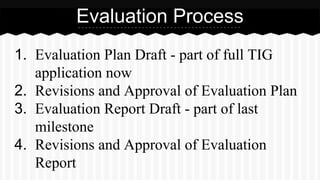
1. Evaluation Plan Draft - part of full TIG
application now
2. Revisions and Approval of Evaluation Plan
3. Evaluation Report Draft - part of last
milestone
4. Revisions and Approval of Evaluation
Report
Evaluation Process
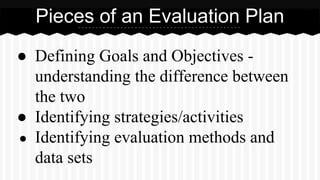
Pieces of an Evaluation Plan
● Defining Goals and Objectives -
understanding the difference between
the two
● Identifying strategies/activities
● Identifying evaluation methods and
data sets
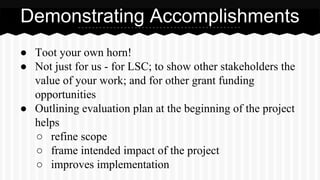
Demonstrating Accomplishments
● Toot your own horn!
● Not just for us - for LSC; to show other stakeholders the
value of your work; and for other grant funding
opportunities
● Outlining evaluation plan at the beginning of the project
helps
○ refine scope
○ frame intended impact of the project
○ improves implementation
● Translate data into impact
● What lessons were learned, and what do they
mean for the future?
● Generate data to identify value of the system for
improving program operations/client services
Improving Services
Fostering Replication
● Generate data to identify how/under what conditions the
system works and strategies needed to make it work
● Thoroughly explaining data and methodologies used
allows others to understand, replicate and improve upon
your project
● Analysis of Accomplishments, Major Lessons and
Recommendations help people understand why they
might want to replicate and build upon your project
Plan for the Report
● A thoughtful evaluation plan makes for a better report and project
● Evaluation Plan should be the foundation for your work plan
○ Milestones have a different purpose
● Refer to Evaluation Plan throughout implementation
● Keep an Evaluation Plan folder (or use metadata tags)
● Collect your data throughout the project
● Plan extra time at the end to collect more data and write the first draft
● Submit the first draft to LSC at least a month before it’s due
Kristin’s reflections
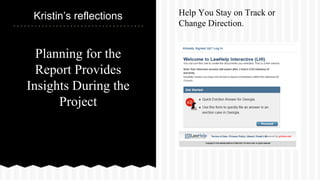
Planning for the
Report Provides
Insights During the
Project
Kristin’s reflections Help You Stay on Track or
Change Direction.
Technicalities
● Stay positive
● Major accomplishments - most important section
● Challenges and lessons - very close seconds
● Know that it’s public
● Follow directions: include all the necessary elements
● Make it easy to read
● Keep the substance in the body of the report
● Keep the details in attachments
● Look for insights
Kristin’s reflections
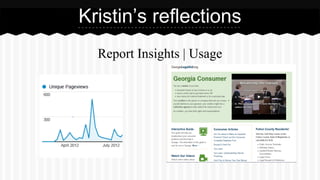
Report Insights | Usage
Kristin’s reflections
● Step back from the individual tools and see how they fit into
the big picture of the services you are providing
● Contemplate and articulate HOW document assembly
improves access to justice
● Can use it as a framework for evaluating all of your document
assembly projects, not just those funded by TIG
● Encouraged getting feedback from a wider audience
● Why are some interviews finished more often than others?
Angela’s reflections
● Make it meaningful.
● It’s all about that data, ‘bout that data.
● Be creative about data sources -- go beyond your evaluation
plan. Fine-grained is good.
● Pretend you’re talking to Congress or a major foundation
● Don’t be modest.
● Put your best points up front in the summary section.
● Be as brief as you can. Page maximums are not expectations!
Jonathan’s reflections
In addition to the tips already presented,
● Be reasonable in your expectations!
● Create your evaluation plan from the perspective of your future self
writing a final report: what information will you want to cite? (And be
able to produce?)
● Make sure there is enough time after project completion to gather enough
data for evaluation.
● Remember that your reports are public record
Tips for a Successful Report
Resources
● http://tig.lsc.gov/grants/evaluation-plans -
everything you need to know about the
evaluation plan process
● http://tig.lsc.gov/grants/final-reports - includes
final project report form template
● http://tig.lsc.gov/grants/replicable-projects -
samples of final reports of replicable projects
● Kristen Verrill, Practice Innovation Manager,
Atlanta Legal Aid Society
● Angela Tripp, Project Manager, Michigan Legal
Help Program
● Jonathan Pyle, Contract Performance Officer,
Philadelphia Legal Assistance
Thanks!

LSC Technology Initiative Grant Conference 2015 | Session Materials - Demonstrating Accomplishments, Improving Services, and Fostering Replication

  • 1.
    TIG Final Reports: DemonstratingAccomplishments, Improving Services, and Fostering Replication
  • 2.
    1. Evaluation PlanDraft - part of full TIG application now 2. Revisions and Approval of Evaluation Plan 3. Evaluation Report Draft - part of last milestone 4. Revisions and Approval of Evaluation Report Evaluation Process
  • 3.
    Pieces of anEvaluation Plan ● Defining Goals and Objectives - understanding the difference between the two ● Identifying strategies/activities ● Identifying evaluation methods and data sets
  • 4.
    Demonstrating Accomplishments ● Tootyour own horn! ● Not just for us - for LSC; to show other stakeholders the value of your work; and for other grant funding opportunities ● Outlining evaluation plan at the beginning of the project helps ○ refine scope ○ frame intended impact of the project ○ improves implementation
  • 5.
    ● Translate datainto impact ● What lessons were learned, and what do they mean for the future? ● Generate data to identify value of the system for improving program operations/client services Improving Services
  • 6.
    Fostering Replication ● Generatedata to identify how/under what conditions the system works and strategies needed to make it work ● Thoroughly explaining data and methodologies used allows others to understand, replicate and improve upon your project ● Analysis of Accomplishments, Major Lessons and Recommendations help people understand why they might want to replicate and build upon your project
  • 7.
    Plan for theReport ● A thoughtful evaluation plan makes for a better report and project ● Evaluation Plan should be the foundation for your work plan ○ Milestones have a different purpose ● Refer to Evaluation Plan throughout implementation ● Keep an Evaluation Plan folder (or use metadata tags) ● Collect your data throughout the project ● Plan extra time at the end to collect more data and write the first draft ● Submit the first draft to LSC at least a month before it’s due Kristin’s reflections
  • 8.
    Planning for the ReportProvides Insights During the Project Kristin’s reflections Help You Stay on Track or Change Direction.
  • 9.
    Technicalities ● Stay positive ●Major accomplishments - most important section ● Challenges and lessons - very close seconds ● Know that it’s public ● Follow directions: include all the necessary elements ● Make it easy to read ● Keep the substance in the body of the report ● Keep the details in attachments ● Look for insights Kristin’s reflections
  • 10.
    Report Insights |Usage Kristin’s reflections
  • 11.
    ● Step backfrom the individual tools and see how they fit into the big picture of the services you are providing ● Contemplate and articulate HOW document assembly improves access to justice ● Can use it as a framework for evaluating all of your document assembly projects, not just those funded by TIG ● Encouraged getting feedback from a wider audience ● Why are some interviews finished more often than others? Angela’s reflections
  • 12.
    ● Make itmeaningful. ● It’s all about that data, ‘bout that data. ● Be creative about data sources -- go beyond your evaluation plan. Fine-grained is good. ● Pretend you’re talking to Congress or a major foundation ● Don’t be modest. ● Put your best points up front in the summary section. ● Be as brief as you can. Page maximums are not expectations! Jonathan’s reflections
  • 13.
    In addition tothe tips already presented, ● Be reasonable in your expectations! ● Create your evaluation plan from the perspective of your future self writing a final report: what information will you want to cite? (And be able to produce?) ● Make sure there is enough time after project completion to gather enough data for evaluation. ● Remember that your reports are public record Tips for a Successful Report
  • 14.
    Resources ● http://tig.lsc.gov/grants/evaluation-plans - everythingyou need to know about the evaluation plan process ● http://tig.lsc.gov/grants/final-reports - includes final project report form template ● http://tig.lsc.gov/grants/replicable-projects - samples of final reports of replicable projects
  • 15.
    ● Kristen Verrill,Practice Innovation Manager, Atlanta Legal Aid Society ● Angela Tripp, Project Manager, Michigan Legal Help Program ● Jonathan Pyle, Contract Performance Officer, Philadelphia Legal Assistance Thanks!