Expert Systems
& Access to Justice
Michael Mills
President & Chief Strategy Officer
Neota Logic
WHAT IS AN EXPERT
SYSTEM?
An expert system is …
a mechanism with which to
acquire
expertise from one or more
experts and
deliver it to
many others
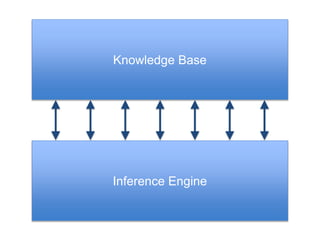
Knowledge Base
Inference Engine
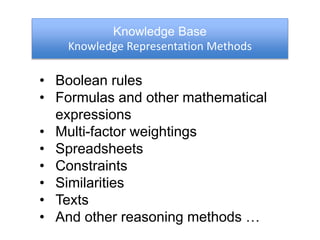
Knowledge Base
Knowledge Representation Methods
• Boolean rules
• Formulas and other mathematical
expressions
• Multi-factor weightings
• Spreadsheets
• Constraints
• Similarities
• Texts
• And other reasoning methods …
Inference Engine
• Automatically apply the relevant
reasoning
• Declarative rather than
procedural
• Backward & forward chaining
• Truth maintenance
• Drive interactions with users and
external systems
• Explain itself
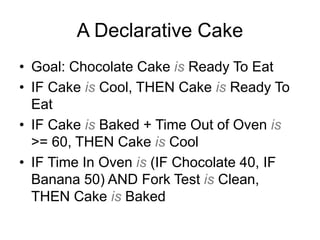
A Declarative Cake
• Goal: Chocolate Cake is Ready To Eat
• IF Cake is Cool, THEN Cake is Ready To
Eat
• IF Cake is Baked + Time Out of Oven is
>= 60, THEN Cake is Cool
• IF Time In Oven is (IF Chocolate 40, IF
Banana 50) AND Fork Test is Clean,
THEN Cake is Baked
Completing the Toolbox
• Editors
• Extractors
• Verification & validation
• End-user interfaces
• Integrations
THEY’RE EVERYWHERE!
HOW IS A SYSTEM BUILT?
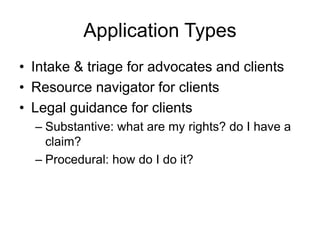
Application Types
• Intake & triage for advocates and clients
• Resource navigator for clients
• Legal guidance for clients
– Substantive: what are my rights? do I have a
claim?
– Procedural: how do I do it?
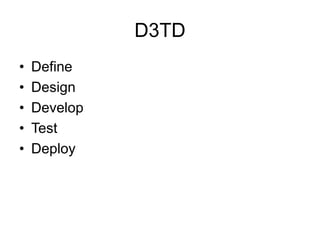
D3TD
• Define
• Design
• Develop
• Test
• Deploy
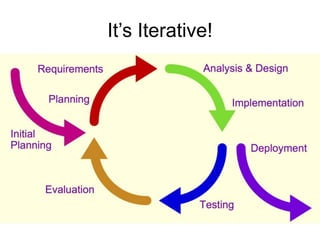
It’s Iterative!
EXPERT SYSTEMS
IN THE TECH LANDSCAPE
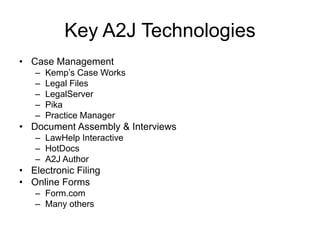
Key A2J Technologies
• Case Management
– Kemp’s Case Works
– Legal Files
– LegalServer
– Pika
– Practice Manager
• Document Assembly & Interviews
– LawHelp Interactive
– HotDocs
– A2J Author
• Electronic Filing
• Online Forms

– Form.com
– Many others
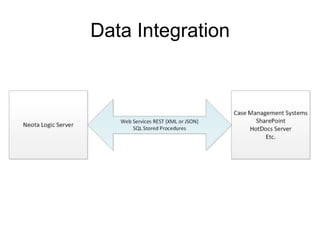
Data Integration
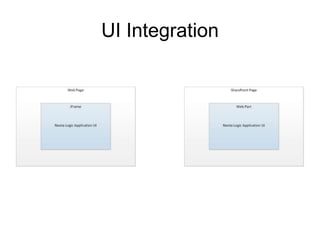
UI Integration
VLAS TRIAGE PROJECT
Goal: Improve Intake and Followup
Efficiency
Objectives:
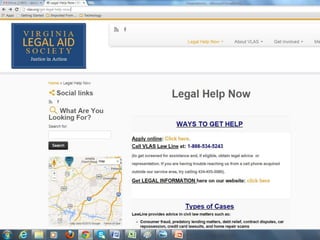
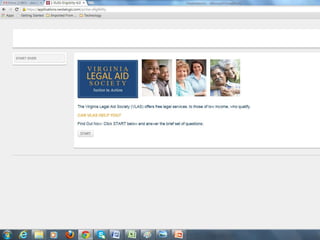
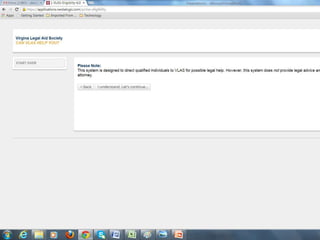
Automate triage online and by phone
Display existing applicant data to intake
workers
Communicate automatically with
applicants
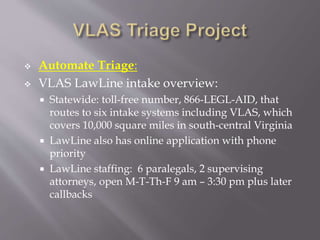
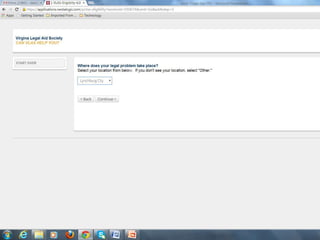
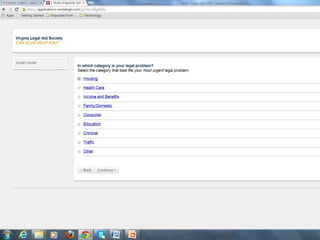
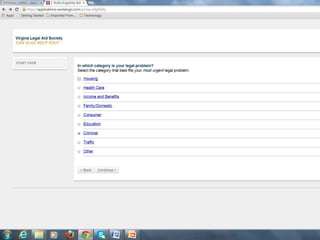
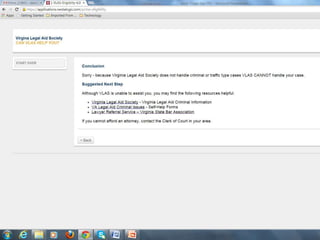
 Automate Triage:
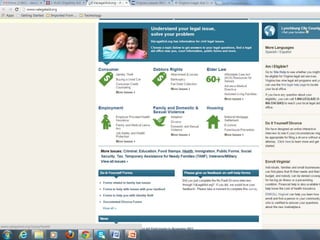
 VLAS LawLine intake overview:
 Statewide: toll-free number, 866-LEGL-AID, that
routes to six intake systems including VLAS, which
covers 10,000 square miles in south-central Virginia
 LawLine also has online application with phone
priority
 LawLine staffing: 6 paralegals, 2 supervising
attorneys, open M-T-Th-F 9 am – 3:30 pm plus later
callbacks
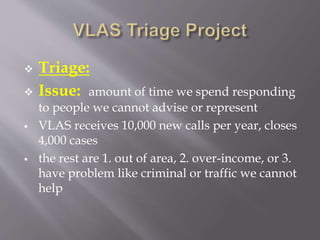
 Triage:
 Issue: amount of time we spend responding
to people we cannot advise or represent
 VLAS receives 10,000 new calls per year, closes
4,000 cases
 the rest are 1. out of area, 2. over-income, or 3.
have problem like criminal or traffic we cannot
help
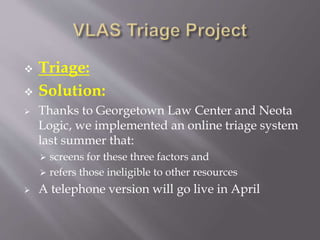
 Triage:
 Solution:
 Thanks to Georgetown Law Center and Neota
Logic, we implemented an online triage system
last summer that:
 screens for these three factors and
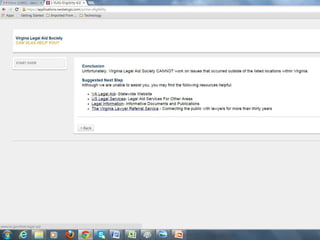
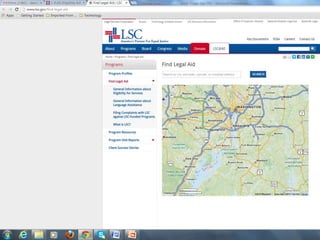
 refers those ineligible to other resources
 A telephone version will go live in April
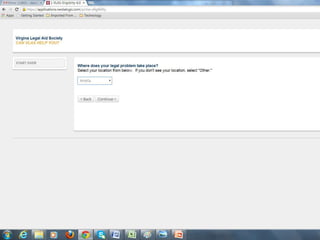
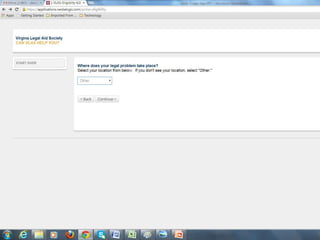
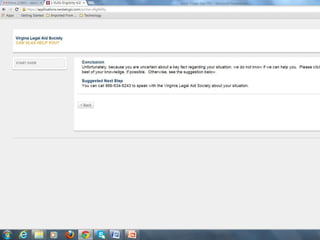
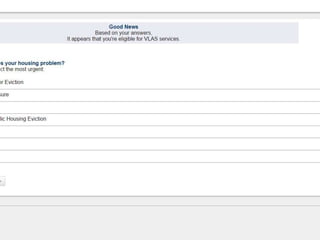
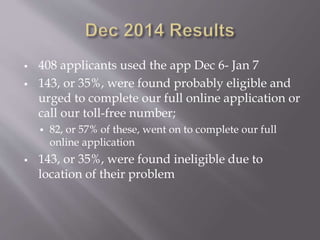
 408 applicants used the app Dec 6- Jan 7
 143, or 35%, were found probably eligible and
urged to complete our full online application or
call our toll-free number;
 82, or 57% of these, went on to complete our full
online application
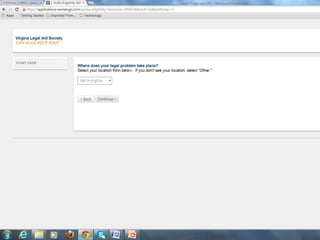
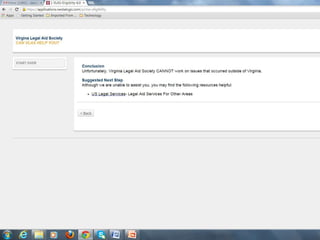
 143, or 35%, were found ineligible due to
location of their problem
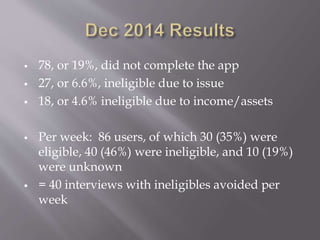
 78, or 19%, did not complete the app
 27, or 6.6%, ineligible due to issue
 18, or 4.6% ineligible due to income/assets
 Per week: 86 users, of which 30 (35%) were
eligible, 40 (46%) were ineligible, and 10 (19%)
were unknown
 = 40 interviews with ineligibles avoided per
week
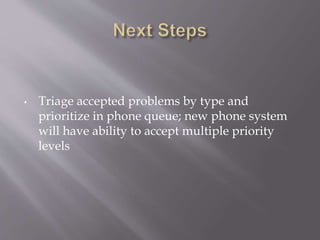
• Triage accepted problems by type and
prioritize in phone queue; new phone system
will have ability to accept multiple priority
levels
FMIC:
David Neumeyer
davidn@vlas.org
434-455-3090
Virginia Legal Aid Society

Expert systems

  • 1.
    Expert Systems & Accessto Justice Michael Mills President & Chief Strategy Officer Neota Logic
  • 2.
    WHAT IS ANEXPERT SYSTEM?
  • 3.
    An expert systemis … a mechanism with which to acquire expertise from one or more experts and deliver it to many others
  • 8.
  • 9.
    Knowledge Base Knowledge RepresentationMethods • Boolean rules • Formulas and other mathematical expressions • Multi-factor weightings • Spreadsheets • Constraints • Similarities • Texts • And other reasoning methods …
  • 10.
    Inference Engine • Automaticallyapply the relevant reasoning • Declarative rather than procedural • Backward & forward chaining • Truth maintenance • Drive interactions with users and external systems • Explain itself
  • 12.
    A Declarative Cake •Goal: Chocolate Cake is Ready To Eat • IF Cake is Cool, THEN Cake is Ready To Eat • IF Cake is Baked + Time Out of Oven is >= 60, THEN Cake is Cool • IF Time In Oven is (IF Chocolate 40, IF Banana 50) AND Fork Test is Clean, THEN Cake is Baked
  • 13.
    Completing the Toolbox •Editors • Extractors • Verification & validation • End-user interfaces • Integrations
  • 14.
  • 21.
    HOW IS ASYSTEM BUILT?
  • 22.
    Application Types • Intake& triage for advocates and clients • Resource navigator for clients • Legal guidance for clients – Substantive: what are my rights? do I have a claim? – Procedural: how do I do it?
  • 24.
    D3TD • Define • Design •Develop • Test • Deploy
  • 25.
  • 26.
    EXPERT SYSTEMS IN THETECH LANDSCAPE
  • 27.
    Key A2J Technologies •Case Management – Kemp’s Case Works – Legal Files – LegalServer – Pika – Practice Manager • Document Assembly & Interviews – LawHelp Interactive – HotDocs – A2J Author • Electronic Filing • Online Forms – Form.com – Many others
  • 28.
  • 29.
  • 30.
  • 31.
    Goal: Improve Intakeand Followup Efficiency Objectives: Automate triage online and by phone Display existing applicant data to intake workers Communicate automatically with applicants
  • 32.
     Automate Triage: VLAS LawLine intake overview:  Statewide: toll-free number, 866-LEGL-AID, that routes to six intake systems including VLAS, which covers 10,000 square miles in south-central Virginia  LawLine also has online application with phone priority  LawLine staffing: 6 paralegals, 2 supervising attorneys, open M-T-Th-F 9 am – 3:30 pm plus later callbacks
  • 33.
     Triage:  Issue:amount of time we spend responding to people we cannot advise or represent  VLAS receives 10,000 new calls per year, closes 4,000 cases  the rest are 1. out of area, 2. over-income, or 3. have problem like criminal or traffic we cannot help
  • 34.
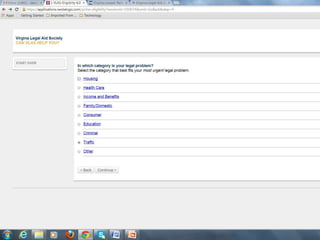
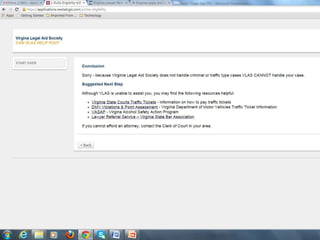
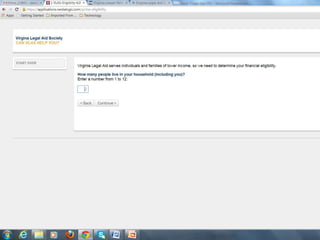
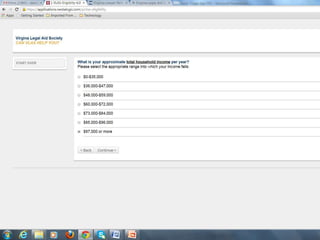
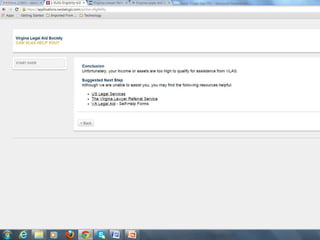
     Triage:  Solution: Thanks to Georgetown Law Center and Neota Logic, we implemented an online triage system last summer that:  screens for these three factors and  refers those ineligible to other resources  A telephone version will go live in April
  • 72.
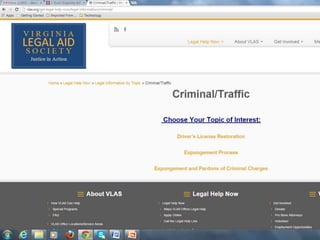
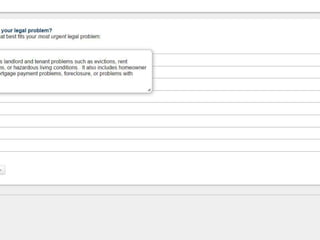
     408 applicantsused the app Dec 6- Jan 7  143, or 35%, were found probably eligible and urged to complete our full online application or call our toll-free number;  82, or 57% of these, went on to complete our full online application  143, or 35%, were found ineligible due to location of their problem
  • 73.
     78, or19%, did not complete the app  27, or 6.6%, ineligible due to issue  18, or 4.6% ineligible due to income/assets  Per week: 86 users, of which 30 (35%) were eligible, 40 (46%) were ineligible, and 10 (19%) were unknown  = 40 interviews with ineligibles avoided per week
  • 74.
    • Triage acceptedproblems by type and prioritize in phone queue; new phone system will have ability to accept multiple priority levels
  • 75.

Editor's Notes

  • #4 Because the title of this panel includes with the words “expert systems,” and this is a conference filled with both experts and systems, we thought we should start by explaining what we mean by those words. A mechanism With which one can acquire the expertise of one (or more) people who know a lot about a subject a/k/a experts about a subject matter or, to be fancy, a domain And deliver that expertise to other people (tens or thousands of them) who know less about the domain, but need a solution to a specific problem within the domain
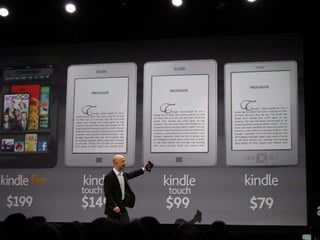
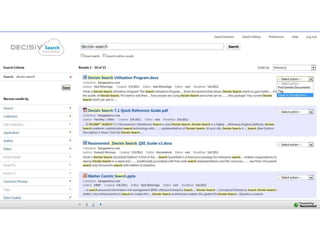
  • #5 Oh, you mean an e-book?
  • #6 Or a search engine?
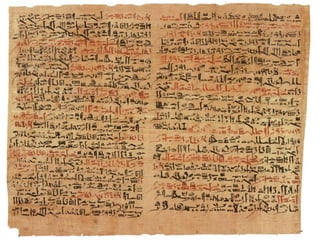
  • #7 Or the Edwin Smith papyrus, the oldest known medical diagnostic system? 1700 BC based on material 1000 years earlier Now we’re getting closer. Because if you happen to read hieratic, the Egyptian cursive form of hieroglyphics, you will discover in this 13-foot-long scroll a checklist of differential diagnosis, treatments, and prognosis, probably written for military surgeons. IF the wound is in the head AND has penetrated the bone AND there is bleeding, THEN apply meat to stop the bleeding AND then suture the wound.
  • #8 Let’s modernize this and write the diagnostic advice in a programming language. Your choice: PHP, C#, Java, Swift. Nope, still not an expert system. Why? Because the expert’s knowledge and the tools for working with it are all mushed together in code. And only a programmer can read this stuff, write it or, most important, update it.
  • #9 Instead, expert systems separate the knowledge and the tools into two parts: The Knowledge Base, which holds what the experts know, using a range of methods to represent The Inference Engine, which links together the various bits that the experts know and links those bits to the problems that users present.
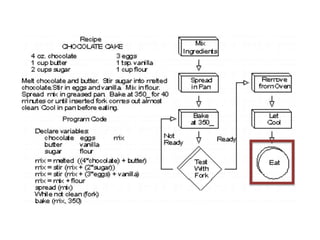
  • #12 To illustrate what I mean by “declarative,” here is a declarative cake recipe. Start at step 1, follow the instructions, move along, step by step. You’ll have a nice cake. Now, to make this declarative, let’s focus on the GOAL, which is to EAT the nice cake.
  • #13 Here we have a declarative cake recipe. The goal is a chocolate cake ready to eat. We build rules about cake cooking. We can’t eat if it’s too hot. So there’s a rule, IF cool, then ready to eat. And another rule about cooling time. And so on. Once we have all the rules, we tell the cake machine Go! — go get me a cake. The machine looks around for my goal, and then works backward from there to figure out what needs to be done and starts firing rules. Voila, a cake.
  • #14 To round out the expert systems toolbox, we need to add: Editors, for creating and modifying rules and other constructs. Extractors, to pull rules from Word, Excel and other sources. Verification & Validation tools, because experts, lawyers especially, want their systems to be truly expert, to be correct. And integrations so our expert systems can talk to other systems like document management and HR.
  • #15 Now that we know what the beast looks like, we should look up and around … expert systems are everywhere, as shown on the next few slides.
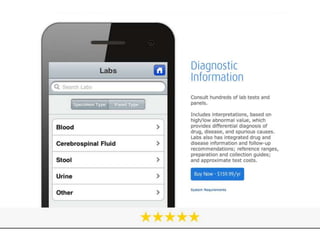
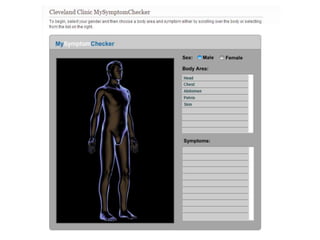
  • #16 Medical diagnostics, in the white-coat pockets of doctors
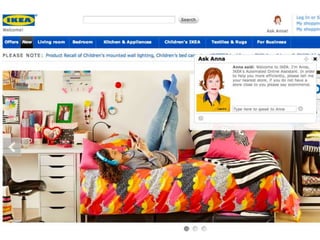
  • #18 Ask Anna, Ikea’s friendly assistant, has a chat interface but there’s NO ANNA, she’s an expert system, a collection of rules about Ikea products and what customers may want to do with them
  • #19 The IRS spent more than $10 million with Accenture and Oracle to build a suite of expert systems, The Interactive Tax Assistant, originally to help its telephone taxpayer service people give better answers orally. Then they opened it up to taxpayers.
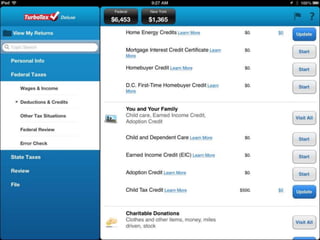
  • #20 And of course we all know TurboTax, which is a vast expert system incorporating the rules of federal and 50 state tax, not only to tell you what you owe but also to help you minimize that (legally … we’re talking about tax planning not evasion.)
  • #21 Richard Susskind, well known to all of us in the legal technology industry, wrote not one but two books about expert systems. The first, his Oxford PhD thesis. The second, about a system that he and a colleague at the law firm Masons built. The book, which I still have on my office shelf, came with a floppy disk (remember those?).
  • #24 Building expert systems requires people, in addition to the software. An expert, of course. Usually multiple experts, because in any complex and interesting domain, several heads are likely better than one.