Thyroid Hormones and Cardiovascular
Function and Diseases
Magdy El-Masry
Prof. of Cardiology
Tanta University
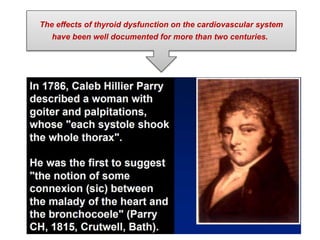
The effects of thyroid dysfunction on the cardiovascular system
have been well documented for more than two centuries.
Today’s talk will include:
Thyroid hormone system.
Thyroid hormone action on the CVS.
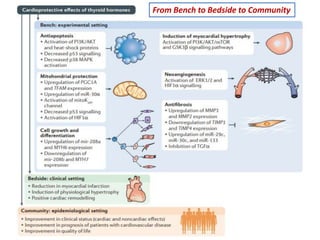
Thyroid hormones and cardioprotection.
How does thyroid disease affect the heart?
- Thyroid disease and CV risk factors.
- Thyroid dysfunction and CVD.
Thyroid hormones : a future therapeutic option?
New recommendations for a thyroid and CVD.
Thyroid and CV drugs.
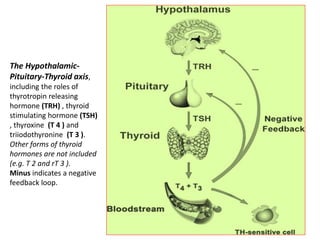
The Hypothalamic-
Pituitary-Thyroid axis,
including the roles of
thyrotropin releasing
hormone (TRH) , thyroid
stimulating hormone (TSH)
, thyroxine (T 4 ) and
triiodothyronine (T 3 ).
Other forms of thyroid
hormones are not included
(e.g. T 2 and rT 3 ).
Minus indicates a negative
feedback loop.
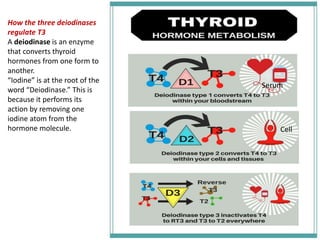
How the three deiodinases
regulate T3
A deiodinase is an enzyme
that converts thyroid
hormones from one form to
another.
“Iodine” is at the root of the
word “Deiodinase.” This is
because it performs its
action by removing one
iodine atom from the
hormone molecule. Cell
Serum
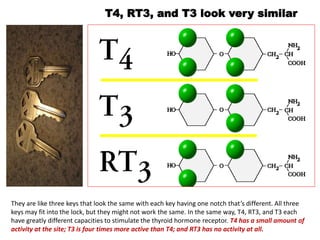
They are like three keys that look the same with each key having one notch that’s different. All three
keys may fit into the lock, but they might not work the same. In the same way, T4, RT3, and T3 each
have greatly different capacities to stimulate the thyroid hormone receptor. T4 has a small amount of
activity at the site; T3 is four times more active than T4; and RT3 has no activity at all.
T4, RT3, and T3 look very similar
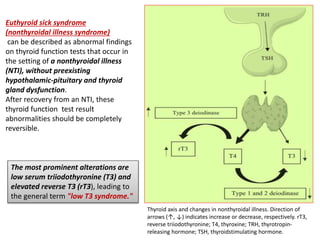
Thyroid axis and changes in nonthyroidal illness. Direction of
arrows (↑, ↓) indicates increase or decrease, respectively. rT3,
reverse triiodothyronine; T4, thyroxine; TRH, thyrotropin-
releasing hormone; TSH, thyroidstimulating hormone.
Euthyroid sick syndrome
(nonthyroidal illness syndrome)
can be described as abnormal findings
on thyroid function tests that occur in
the setting of a nonthyroidal illness
(NTI), without preexisting
hypothalamic-pituitary and thyroid
gland dysfunction.
After recovery from an NTI, these
thyroid function test result
abnormalities should be completely
reversible.
The most prominent alterations are
low serum triiodothyronine (T3) and
elevated reverse T3 (rT3), leading to
the general term "low T3 syndrome."
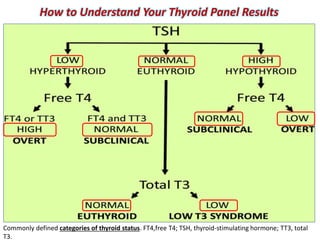
Commonly defined categories of thyroid status. FT4,free T4; TSH, thyroid-stimulating hormone; TT3, total
T3.
How to Understand Your Thyroid Panel Results
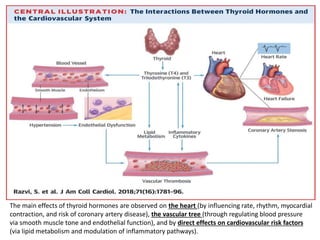
The main effects of thyroid hormones are observed on the heart (by influencing rate, rhythm, myocardial
contraction, and risk of coronary artery disease), the vascular tree (through regulating blood pressure
via smooth muscle tone and endothelial function), and by direct effects on cardiovascular risk factors
(via lipid metabolism and modulation of inflammatory pathways).
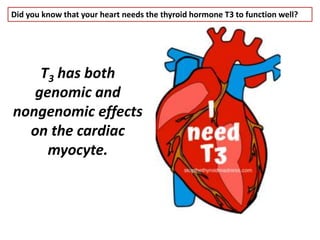
Did you know that your heart needs the thyroid hormone T3 to function well?
T3 has both
genomic and
nongenomic effects
on the cardiac
myocyte.
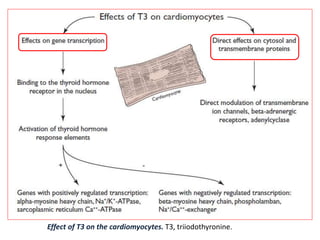
Effect of T3 on the cardiomyocytes. T3, triiodothyronine.
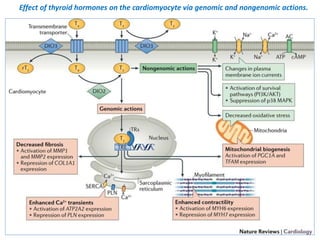
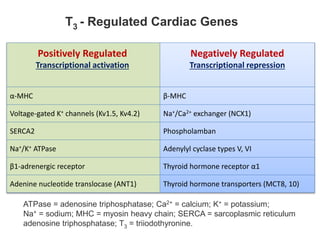
Effect of thyroid hormones on the cardiomyocyte via genomic and nongenomic actions.
Positively Regulated
Transcriptional activation
Negatively Regulated
Transcriptional repression
α-MHC β-MHC
Voltage-gated K+ channels (Kv1.5, Kv4.2) Na+/Ca2+ exchanger (NCX1)
SERCA2 Phospholamban
Na+/K+ ATPase Adenylyl cyclase types V, VI
β1-adrenergic receptor Thyroid hormone receptor α1
Adenine nucleotide translocase (ANT1) Thyroid hormone transporters (MCT8, 10)
T3 - Regulated Cardiac Genes
ATPase = adenosine triphosphatase; Ca2+ = calcium; K+ = potassium;
Na+ = sodium; MHC = myosin heavy chain; SERCA = sarcoplasmic reticulum
adenosine triphosphatase; T3 = triiodothyronine.
From Bench to Bedside to Community
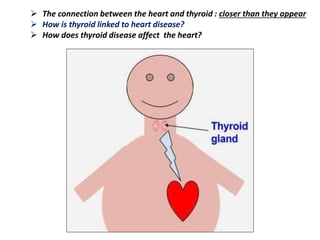
 The connection between the heart and thyroid : closer than they appear
 How is thyroid linked to heart disease?
 How does thyroid disease affect the heart?
Overt Hyperthyroidism and
Subclinical Hyperthyroidism
Overt Hypothyroidism and
Subclinical Hypothyroidism
Lipid parameters *Mild reduction *Increased total cholesterol
and LDL cholesterol
Hypertension *Systolic hypertension
*Wide pulse pressure
*Diastolic hypertension
Endothelial
dysfunction
*Excessive endothelial NO production
and exaggerated vascular reactivity
*Increased arterial stiffness and
carotid intima-media thickness in
longstanding untreated disease
*Impaired endothelial
dependent vasodilation
*Increased arterial stiffness
Thrombogenicity *Increased fibrinogen and vWF in
overt disease
*Unclear
Cardiac function *Increased risk of atrial arrhythmias
*Increased atrial size, LV mass, and
impaired diastolic function in
longstanding untreated disease
*LV systolic and diastolic
dysfunction at rest and
during exercise
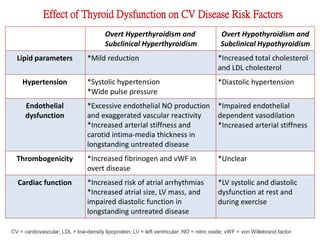
Effect of Thyroid Dysfunction on CV Disease Risk Factors
CV = cardiovascular; LDL = low-density lipoprotein; LV = left ventricular; NO = nitric oxide; vWF = von Willebrand factor.
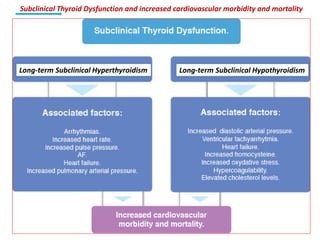
Subclinical Thyroid Dysfunction and increased cardiovascular morbidity and mortality
Long-term Subclinical Hyperthyroidism Long-term Subclinical Hypothyroidism
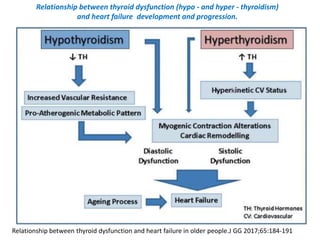
Relationship between thyroid dysfunction (hypo - and hyper - thyroidism)
and heart failure development and progression.
Relationship between thyroid dysfunction and heart failure in older people.J GG 2017;65:184-191
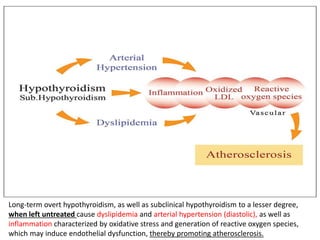
Long-term overt hypothyroidism, as well as subclinical hypothyroidism to a lesser degree,
when left untreated cause dyslipidemia and arterial hypertension (diastolic), as well as
inflammation characterized by oxidative stress and generation of reactive oxygen species,
which may induce endothelial dysfunction, thereby promoting atherosclerosis.
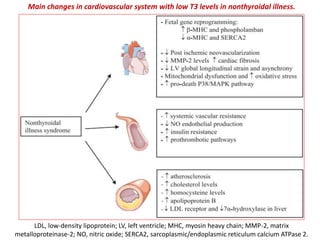
LDL, low-density lipoprotein; LV, left ventricle; MHC, myosin heavy chain; MMP-2, matrix
metalloproteinase-2; NO, nitric oxide; SERCA2, sarcoplasmic/endoplasmic reticulum calcium ATPase 2.
Main changes in cardiovascular system with low T3 levels in nonthyroidal illness.
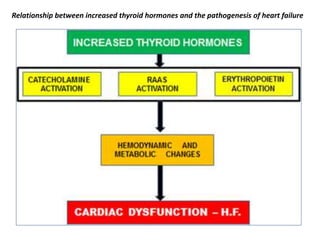
Relationship between increased thyroid hormones and the pathogenesis of heart failure
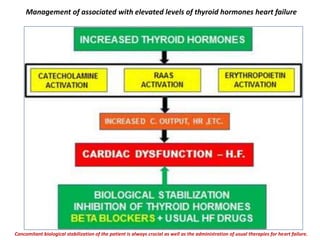
Management of associated with elevated levels of thyroid hormones heart failure
Concomitant biological stabilization of the patient is always crucial as well as the administration of usual therapies for heart failure.
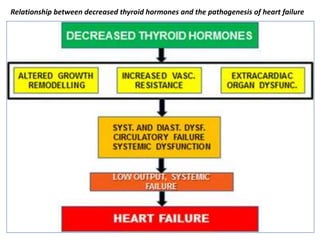
Relationship between decreased thyroid hormones and the pathogenesis of heart failure
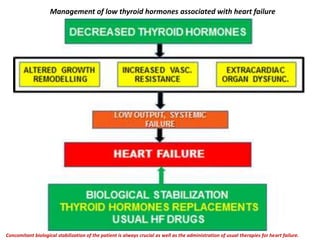
Management of low thyroid hormones associated with heart failure
Concomitant biological stabilization of the patient is always crucial as well as the administration of usual therapies for heart failure.
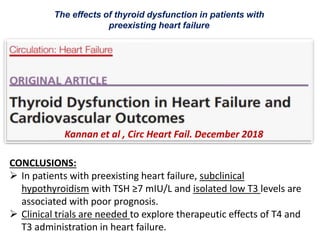
The effects of thyroid dysfunction in patients with
preexisting heart failure
Kannan et al , Circ Heart Fail. December 2018
CONCLUSIONS:
 In patients with preexisting heart failure, subclinical
hypothyroidism with TSH ≥7 mIU/L and isolated low T3 levels are
associated with poor prognosis.
 Clinical trials are needed to explore therapeutic effects of T4 and
T3 administration in heart failure.
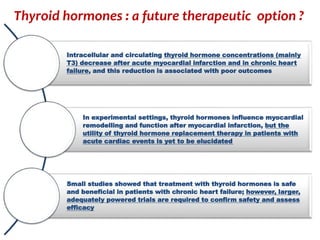
Intracellular and circulating thyroid hormone concentrations (mainly
T3) decrease after acute myocardial infarction and in chronic heart
failure, and this reduction is associated with poor outcomes
In experimental settings, thyroid hormones influence myocardial
remodelling and function after myocardial infarction, but the
utility of thyroid hormone replacement therapy in patients with
acute cardiac events is yet to be elucidated
Small studies showed that treatment with thyroid hormones is safe
and beneficial in patients with chronic heart failure; however, larger,
adequately powered trials are required to confirm safety and assess
efficacy
Thyroid hormones : a future therapeutic option ?
World Thyroid Day
Recognized Globally on May 25th
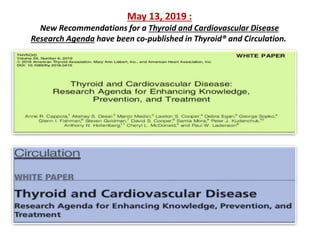
May 13, 2019 :
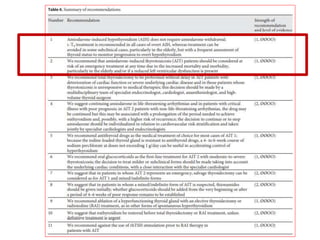
New Recommendations for a Thyroid and Cardiovascular Disease
Research Agenda have been co-published in Thyroid® and Circulation.
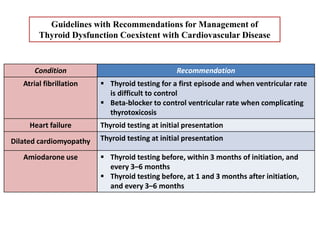
Guidelines with Recommendations for Management of
Thyroid Dysfunction Coexistent with Cardiovascular Disease
Condition Recommendation
Atrial fibrillation  Thyroid testing for a first episode and when ventricular rate
is difficult to control
 Beta-blocker to control ventricular rate when complicating
thyrotoxicosis
Heart failure Thyroid testing at initial presentation
Dilated cardiomyopathy Thyroid testing at initial presentation
Amiodarone use  Thyroid testing before, within 3 months of initiation, and
every 3–6 months
 Thyroid testing before, at 1 and 3 months after initiation,
and every 3–6 months
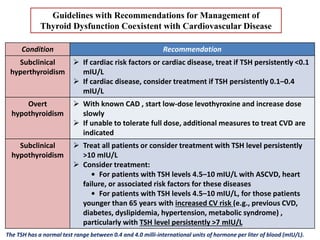
Guidelines with Recommendations for Management of Thyroid Dysfunction
Coexistent with Cardiovascular Disease
Condition Recommendation
Subclinical
hyperthyroidism
 If cardiac risk factors or cardiac disease, treat if TSH persistently <0.1
mIU/L
 If cardiac disease, consider treatment if TSH persistently 0.1–0.4
mIU/L
Overt
hypothyroidism
 With known CAD , start low-dose levothyroxine and increase dose
slowly
 If unable to tolerate full dose, additional measures to treat CVD are
indicated
Subclinical
hypothyroidism
 Treat all patients or consider treatment with TSH level persistently
>10 mIU/L
 Consider treatment:
• For patients with TSH levels 4.5–10 mIU/L with ASCVD, heart
failure, or associated risk factors for these diseases
• For patients with TSH levels 4.5–10 mIU/L, for those patients
younger than 65 years with increased CV risk (e.g., previous CVD,
diabetes, dyslipidemia, hypertension, metabolic syndrome) ,
particularly with TSH level persistently >7 mIU/L
Guidelines with Recommendations for Management of
Thyroid Dysfunction Coexistent with Cardiovascular Disease
The TSH has a normal test range between 0.4 and 4.0 milli-international units of hormone per liter of blood (mIU/L).
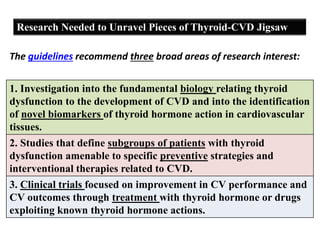
Research Needed to Unravel Pieces of Thyroid-CVD Jigsaw
The guidelines recommend three broad areas of research interest:
1. Investigation into the fundamental biology relating thyroid
dysfunction to the development of CVD and into the identification
of novel biomarkers of thyroid hormone action in cardiovascular
tissues.
2. Studies that define subgroups of patients with thyroid
dysfunction amenable to specific preventive strategies and
interventional therapies related to CVD.
3. Clinical trials focused on improvement in CV performance and
CV outcomes through treatment with thyroid hormone or drugs
exploiting known thyroid hormone actions.
A word (actually a few words) about
Modulation of thyroid
hormones levels by drugs and
its impact on CVS:
Propranolol
Amiodarone
Iodinated contrast media
Why propranolol is preferred to other beta-blockers in thyrotoxicosis or thyroid storm
In a clinical context, propranolol is favored over other betablockers in the management of
hyperthyroidism due to its nonselective b-blocking activity (to reduce systemic symptoms such as
tremor and anxiety) , membrane-stabilizing action, and reduction in serum T3 levels (20% to 30%,
depending on the dose).
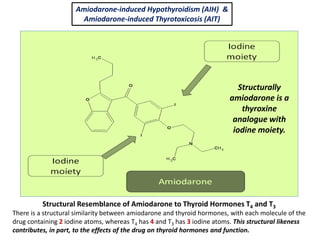
Structural Resemblance of Amiodarone to Thyroid Hormones T4 and T3
There is a structural similarity between amiodarone and thyroid hormones, with each molecule of the
drug containing 2 iodine atoms, whereas T4 has 4 and T3 has 3 iodine atoms. This structural likeness
contributes, in part, to the effects of the drug on thyroid hormones and function.
Structurally
amiodarone is a
thyroxine
analogue with
iodine moiety.
Amiodarone-induced Hypothyroidism (AIH) &
Amiodarone-induced Thyrotoxicosis (AIT)
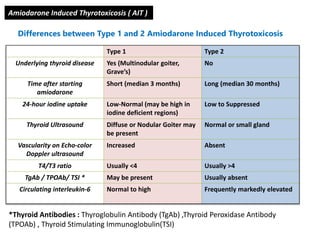
Type 1 Type 2
Underlying thyroid disease Yes (Multinodular goiter,
Grave’s)
No
Time after starting
amiodarone
Short (median 3 months) Long (median 30 months)
24-hour iodine uptake Low-Normal (may be high in
iodine deficient regions)
Low to Suppressed
Thyroid Ultrasound Diffuse or Nodular Goiter may
be present
Normal or small gland
Vascularity on Echo-color
Doppler ultrasound
Increased Absent
T4/T3 ratio Usually <4 Usually >4
TgAb / TPOAb/ TSI * May be present Usually absent
Circulating interleukin-6 Normal to high Frequently markedly elevated
Differences between Type 1 and 2 Amiodarone Induced Thyrotoxicosis
*Thyroid Antibodies : Thyroglobulin Antibody (TgAb) ,Thyroid Peroxidase Antibody
(TPOAb) , Thyroid Stimulating Immunoglobulin(TSI)
Amiodarone Induced Thyrotoxicosis ( AIT )
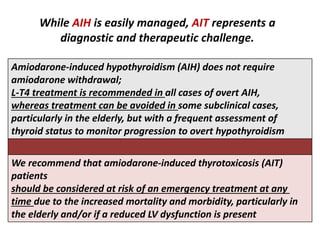
While AIH is easily managed, AIT represents a
diagnostic and therapeutic challenge.
Amiodarone-induced hypothyroidism (AIH) does not require
amiodarone withdrawal;
L-T4 treatment is recommended in all cases of overt AIH,
whereas treatment can be avoided in some subclinical cases,
particularly in the elderly, but with a frequent assessment of
thyroid status to monitor progression to overt hypothyroidism
We recommend that amiodarone-induced thyrotoxicosis (AIT)
patients
should be considered at risk of an emergency treatment at any
time due to the increased mortality and morbidity, particularly in
the elderly and/or if a reduced LV dysfunction is present
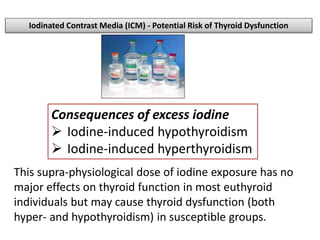
Consequences of excess iodine
 Iodine-induced hypothyroidism
 Iodine-induced hyperthyroidism
Iodinated Contrast Media (ICM) - Potential Risk of Thyroid Dysfunction
This supra-physiological dose of iodine exposure has no
major effects on thyroid function in most euthyroid
individuals but may cause thyroid dysfunction (both
hyper- and hypothyroidism) in susceptible groups.
Thank
You

Thyroid Hormones and Cardiovascular Function and Diseases

  • 1.
    Thyroid Hormones andCardiovascular Function and Diseases Magdy El-Masry Prof. of Cardiology Tanta University
  • 2.
    The effects ofthyroid dysfunction on the cardiovascular system have been well documented for more than two centuries.
  • 3.
    Today’s talk willinclude: Thyroid hormone system. Thyroid hormone action on the CVS. Thyroid hormones and cardioprotection. How does thyroid disease affect the heart? - Thyroid disease and CV risk factors. - Thyroid dysfunction and CVD. Thyroid hormones : a future therapeutic option? New recommendations for a thyroid and CVD. Thyroid and CV drugs.
  • 4.
    The Hypothalamic- Pituitary-Thyroid axis, includingthe roles of thyrotropin releasing hormone (TRH) , thyroid stimulating hormone (TSH) , thyroxine (T 4 ) and triiodothyronine (T 3 ). Other forms of thyroid hormones are not included (e.g. T 2 and rT 3 ). Minus indicates a negative feedback loop.
  • 5.
    How the threedeiodinases regulate T3 A deiodinase is an enzyme that converts thyroid hormones from one form to another. “Iodine” is at the root of the word “Deiodinase.” This is because it performs its action by removing one iodine atom from the hormone molecule. Cell Serum
  • 6.
    They are likethree keys that look the same with each key having one notch that’s different. All three keys may fit into the lock, but they might not work the same. In the same way, T4, RT3, and T3 each have greatly different capacities to stimulate the thyroid hormone receptor. T4 has a small amount of activity at the site; T3 is four times more active than T4; and RT3 has no activity at all. T4, RT3, and T3 look very similar
  • 7.
    Thyroid axis andchanges in nonthyroidal illness. Direction of arrows (↑, ↓) indicates increase or decrease, respectively. rT3, reverse triiodothyronine; T4, thyroxine; TRH, thyrotropin- releasing hormone; TSH, thyroidstimulating hormone. Euthyroid sick syndrome (nonthyroidal illness syndrome) can be described as abnormal findings on thyroid function tests that occur in the setting of a nonthyroidal illness (NTI), without preexisting hypothalamic-pituitary and thyroid gland dysfunction. After recovery from an NTI, these thyroid function test result abnormalities should be completely reversible. The most prominent alterations are low serum triiodothyronine (T3) and elevated reverse T3 (rT3), leading to the general term "low T3 syndrome."
  • 8.
    Commonly defined categoriesof thyroid status. FT4,free T4; TSH, thyroid-stimulating hormone; TT3, total T3. How to Understand Your Thyroid Panel Results
  • 9.
    The main effectsof thyroid hormones are observed on the heart (by influencing rate, rhythm, myocardial contraction, and risk of coronary artery disease), the vascular tree (through regulating blood pressure via smooth muscle tone and endothelial function), and by direct effects on cardiovascular risk factors (via lipid metabolism and modulation of inflammatory pathways).
  • 10.
    Did you knowthat your heart needs the thyroid hormone T3 to function well? T3 has both genomic and nongenomic effects on the cardiac myocyte.
  • 11.
    Effect of T3on the cardiomyocytes. T3, triiodothyronine.
  • 12.
    Effect of thyroidhormones on the cardiomyocyte via genomic and nongenomic actions.
  • 13.
    Positively Regulated Transcriptional activation NegativelyRegulated Transcriptional repression α-MHC β-MHC Voltage-gated K+ channels (Kv1.5, Kv4.2) Na+/Ca2+ exchanger (NCX1) SERCA2 Phospholamban Na+/K+ ATPase Adenylyl cyclase types V, VI β1-adrenergic receptor Thyroid hormone receptor α1 Adenine nucleotide translocase (ANT1) Thyroid hormone transporters (MCT8, 10) T3 - Regulated Cardiac Genes ATPase = adenosine triphosphatase; Ca2+ = calcium; K+ = potassium; Na+ = sodium; MHC = myosin heavy chain; SERCA = sarcoplasmic reticulum adenosine triphosphatase; T3 = triiodothyronine.
  • 14.
    From Bench toBedside to Community
  • 15.
     The connectionbetween the heart and thyroid : closer than they appear  How is thyroid linked to heart disease?  How does thyroid disease affect the heart?
  • 16.
    Overt Hyperthyroidism and SubclinicalHyperthyroidism Overt Hypothyroidism and Subclinical Hypothyroidism Lipid parameters *Mild reduction *Increased total cholesterol and LDL cholesterol Hypertension *Systolic hypertension *Wide pulse pressure *Diastolic hypertension Endothelial dysfunction *Excessive endothelial NO production and exaggerated vascular reactivity *Increased arterial stiffness and carotid intima-media thickness in longstanding untreated disease *Impaired endothelial dependent vasodilation *Increased arterial stiffness Thrombogenicity *Increased fibrinogen and vWF in overt disease *Unclear Cardiac function *Increased risk of atrial arrhythmias *Increased atrial size, LV mass, and impaired diastolic function in longstanding untreated disease *LV systolic and diastolic dysfunction at rest and during exercise Effect of Thyroid Dysfunction on CV Disease Risk Factors CV = cardiovascular; LDL = low-density lipoprotein; LV = left ventricular; NO = nitric oxide; vWF = von Willebrand factor.
  • 17.
    Subclinical Thyroid Dysfunctionand increased cardiovascular morbidity and mortality Long-term Subclinical Hyperthyroidism Long-term Subclinical Hypothyroidism
  • 18.
    Relationship between thyroiddysfunction (hypo - and hyper - thyroidism) and heart failure development and progression. Relationship between thyroid dysfunction and heart failure in older people.J GG 2017;65:184-191
  • 19.
    Long-term overt hypothyroidism,as well as subclinical hypothyroidism to a lesser degree, when left untreated cause dyslipidemia and arterial hypertension (diastolic), as well as inflammation characterized by oxidative stress and generation of reactive oxygen species, which may induce endothelial dysfunction, thereby promoting atherosclerosis.
  • 20.
    LDL, low-density lipoprotein;LV, left ventricle; MHC, myosin heavy chain; MMP-2, matrix metalloproteinase-2; NO, nitric oxide; SERCA2, sarcoplasmic/endoplasmic reticulum calcium ATPase 2. Main changes in cardiovascular system with low T3 levels in nonthyroidal illness.
  • 21.
    Relationship between increasedthyroid hormones and the pathogenesis of heart failure
  • 22.
    Management of associatedwith elevated levels of thyroid hormones heart failure Concomitant biological stabilization of the patient is always crucial as well as the administration of usual therapies for heart failure.
  • 23.
    Relationship between decreasedthyroid hormones and the pathogenesis of heart failure
  • 24.
    Management of lowthyroid hormones associated with heart failure Concomitant biological stabilization of the patient is always crucial as well as the administration of usual therapies for heart failure.
  • 25.
    The effects ofthyroid dysfunction in patients with preexisting heart failure Kannan et al , Circ Heart Fail. December 2018 CONCLUSIONS:  In patients with preexisting heart failure, subclinical hypothyroidism with TSH ≥7 mIU/L and isolated low T3 levels are associated with poor prognosis.  Clinical trials are needed to explore therapeutic effects of T4 and T3 administration in heart failure.
  • 26.
    Intracellular and circulatingthyroid hormone concentrations (mainly T3) decrease after acute myocardial infarction and in chronic heart failure, and this reduction is associated with poor outcomes In experimental settings, thyroid hormones influence myocardial remodelling and function after myocardial infarction, but the utility of thyroid hormone replacement therapy in patients with acute cardiac events is yet to be elucidated Small studies showed that treatment with thyroid hormones is safe and beneficial in patients with chronic heart failure; however, larger, adequately powered trials are required to confirm safety and assess efficacy Thyroid hormones : a future therapeutic option ?
  • 27.
    World Thyroid Day RecognizedGlobally on May 25th
  • 28.
    May 13, 2019: New Recommendations for a Thyroid and Cardiovascular Disease Research Agenda have been co-published in Thyroid® and Circulation.
  • 29.
    Guidelines with Recommendationsfor Management of Thyroid Dysfunction Coexistent with Cardiovascular Disease Condition Recommendation Atrial fibrillation  Thyroid testing for a first episode and when ventricular rate is difficult to control  Beta-blocker to control ventricular rate when complicating thyrotoxicosis Heart failure Thyroid testing at initial presentation Dilated cardiomyopathy Thyroid testing at initial presentation Amiodarone use  Thyroid testing before, within 3 months of initiation, and every 3–6 months  Thyroid testing before, at 1 and 3 months after initiation, and every 3–6 months
  • 30.
    Guidelines with Recommendationsfor Management of Thyroid Dysfunction Coexistent with Cardiovascular Disease Condition Recommendation Subclinical hyperthyroidism  If cardiac risk factors or cardiac disease, treat if TSH persistently <0.1 mIU/L  If cardiac disease, consider treatment if TSH persistently 0.1–0.4 mIU/L Overt hypothyroidism  With known CAD , start low-dose levothyroxine and increase dose slowly  If unable to tolerate full dose, additional measures to treat CVD are indicated Subclinical hypothyroidism  Treat all patients or consider treatment with TSH level persistently >10 mIU/L  Consider treatment: • For patients with TSH levels 4.5–10 mIU/L with ASCVD, heart failure, or associated risk factors for these diseases • For patients with TSH levels 4.5–10 mIU/L, for those patients younger than 65 years with increased CV risk (e.g., previous CVD, diabetes, dyslipidemia, hypertension, metabolic syndrome) , particularly with TSH level persistently >7 mIU/L Guidelines with Recommendations for Management of Thyroid Dysfunction Coexistent with Cardiovascular Disease The TSH has a normal test range between 0.4 and 4.0 milli-international units of hormone per liter of blood (mIU/L).
  • 31.
    Research Needed toUnravel Pieces of Thyroid-CVD Jigsaw The guidelines recommend three broad areas of research interest: 1. Investigation into the fundamental biology relating thyroid dysfunction to the development of CVD and into the identification of novel biomarkers of thyroid hormone action in cardiovascular tissues. 2. Studies that define subgroups of patients with thyroid dysfunction amenable to specific preventive strategies and interventional therapies related to CVD. 3. Clinical trials focused on improvement in CV performance and CV outcomes through treatment with thyroid hormone or drugs exploiting known thyroid hormone actions.
  • 32.
    A word (actuallya few words) about Modulation of thyroid hormones levels by drugs and its impact on CVS: Propranolol Amiodarone Iodinated contrast media
  • 33.
    Why propranolol ispreferred to other beta-blockers in thyrotoxicosis or thyroid storm In a clinical context, propranolol is favored over other betablockers in the management of hyperthyroidism due to its nonselective b-blocking activity (to reduce systemic symptoms such as tremor and anxiety) , membrane-stabilizing action, and reduction in serum T3 levels (20% to 30%, depending on the dose).
  • 34.
    Structural Resemblance ofAmiodarone to Thyroid Hormones T4 and T3 There is a structural similarity between amiodarone and thyroid hormones, with each molecule of the drug containing 2 iodine atoms, whereas T4 has 4 and T3 has 3 iodine atoms. This structural likeness contributes, in part, to the effects of the drug on thyroid hormones and function. Structurally amiodarone is a thyroxine analogue with iodine moiety. Amiodarone-induced Hypothyroidism (AIH) & Amiodarone-induced Thyrotoxicosis (AIT)
  • 35.
    Type 1 Type2 Underlying thyroid disease Yes (Multinodular goiter, Grave’s) No Time after starting amiodarone Short (median 3 months) Long (median 30 months) 24-hour iodine uptake Low-Normal (may be high in iodine deficient regions) Low to Suppressed Thyroid Ultrasound Diffuse or Nodular Goiter may be present Normal or small gland Vascularity on Echo-color Doppler ultrasound Increased Absent T4/T3 ratio Usually <4 Usually >4 TgAb / TPOAb/ TSI * May be present Usually absent Circulating interleukin-6 Normal to high Frequently markedly elevated Differences between Type 1 and 2 Amiodarone Induced Thyrotoxicosis *Thyroid Antibodies : Thyroglobulin Antibody (TgAb) ,Thyroid Peroxidase Antibody (TPOAb) , Thyroid Stimulating Immunoglobulin(TSI) Amiodarone Induced Thyrotoxicosis ( AIT )
  • 38.
    While AIH iseasily managed, AIT represents a diagnostic and therapeutic challenge. Amiodarone-induced hypothyroidism (AIH) does not require amiodarone withdrawal; L-T4 treatment is recommended in all cases of overt AIH, whereas treatment can be avoided in some subclinical cases, particularly in the elderly, but with a frequent assessment of thyroid status to monitor progression to overt hypothyroidism We recommend that amiodarone-induced thyrotoxicosis (AIT) patients should be considered at risk of an emergency treatment at any time due to the increased mortality and morbidity, particularly in the elderly and/or if a reduced LV dysfunction is present
  • 39.
    Consequences of excessiodine  Iodine-induced hypothyroidism  Iodine-induced hyperthyroidism Iodinated Contrast Media (ICM) - Potential Risk of Thyroid Dysfunction This supra-physiological dose of iodine exposure has no major effects on thyroid function in most euthyroid individuals but may cause thyroid dysfunction (both hyper- and hypothyroidism) in susceptible groups.
  • 40.

Editor's Notes

  • #10 The Interactions Between Thyroid Hormones and the Cardiovascular System Thyroid hormones (TH) have a complex relationship with the cardiovascular system through multiple mechanisms. The main effects of thyroid hormones are observed on the heart (by influencing rate, rhythm, myocardial contraction, and risk of coronary artery disease), the vascular tree (through regulating blood pressure via smooth muscle tone and endothelial function), and by direct effects on cardiovascular risk factors (via lipid metabolism and modulation of inflammatory pathways).
  • #13 Effect of thyroid hormones on the cardiomyocyte via genomic and nongenomic actions. T3 (triiodothyronine) enters the cardiomyocyte through membrane transporters and is also produced in the cell by the conversion of T4 (thyroxine) by type II iodothyronine deiodinase (DIO2). T3 binds to thyroid hormone receptors (TRs) in the nucleus, which in turn regulate transcription by bind to thyroid hormone response elements (TREs) present in regulatory regions of target genes. Thyroxine 5-deiodinase (DIO3) breaks down both T3 and T4 to terminate the action of thyroid hormones. Genes that are positively regulated by thyroid hormones include those that encode myosin heavy chain-α (MYH6) and sarcoplasmic/endoplasmic reticulum calcium ATPase 2 (ATP2A2). Genes that are negatively regulated include those that encode myosin heavy chain-β (MYH7) and phospholamban (PLN). Nongenomic actions of thyroid hormones include regulation of voltage-gated K+ channels, Na+/K+ ATPase, and the Na+/Ca2+ exchanger, and activation of survival pathways. AC, adenylyl cyclase; AKT, serine/threonine-protein kinase; MAPK, mitogen-activated protein kinase; PI3K, phosphatidylinositol 3-kinase; rT3, reverse T3; T2, diiodothyronine.
  • #15 Thyroid hormones and cardioprotection. Schematic representation of the translational potential of the cardioprotective effects of thyroid hormones, with examples of different mechanisms by which thyroid hormones are involved in cardioprotection (demonstrated in the experimental setting) and the potential effects of thyroid hormone replacement therapy for the management of patients with cardiovascular disease (both in the clinical and the epidemiological settings). AKT, serine/threonine-protein kinase; ERK1/2, extracellular signal-regulated kinases 1/2; GSK3β, glycogen synthase kinase 3β; HIF1α, hypoxia-inducible factor 1α; MAPK, mitogen-activated protein kinase; mir, microRNA; mitoKATP, mitochondrial ATP-sensitive potassium channel; mTOR, serine/threonine-protein kinase mTOR; PI3K, phosphatidylinositol 3‑kinase; TGFα, transforming growth factor‑α.