
Magdy El-Masry
Prof. of Cardiology
Tanta University
Linking HFpEF and CKD
What is the Link? Targets of Care?
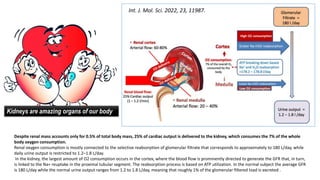
Despite renal mass accounts only for 0.5% of total body mass, 25% of cardiac output is delivered to the kidney, which consumes the 7% of the whole
body oxygen consumption.
Renal oxygen consumption is mostly connected to the selective reabsorption of glomerular filtrate that corresponds to approximately to 180 L/day, while
daily urine output is restricted to 1.2–1.8 L/day.
In the kidney, the largest amount of O2 consumption occurs in the cortex, where the blood flow is prominently directed to generate the GFR that, in turn,
is linked to the Na+ reuptake in the proximal tubular segment. The reabsorption process is based on ATP utilization. In the normal subject the average GFR
is 180 L/day while the normal urine output ranges from 1.2 to 1.8 L/day, meaning that roughly 1% of the glomerular filtered load is excreted .
Int. J. Mol. Sci. 2022, 23, 11987.
Kidneys are amazing organs of our body
“ Today we’ll be talking about Cardio-renal interactions ”
 Introducing nephro-cardiology
{ or cardio-nephrology }
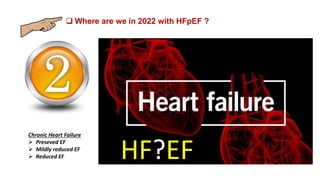
 Where are we in 2022 with HFpEF ?
 CKD in HFpEF
{ or HFpEF in CKD }
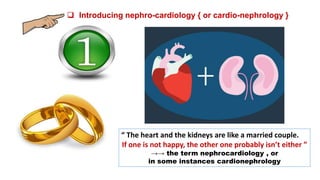
 Introducing nephro-cardiology { or cardio-nephrology }
“ The heart and the kidneys are like a married couple.
If one is not happy, the other one probably isn’t either ”
→→ the term nephrocardiology , or
in some instances cardionephrology
Cardiorenal Interactions : A Historical Note
In 1842, Carl Ludwig proposed the hypothesis that urine is
the result of a filtration process by the glomeruli promoted
by the force of blood pressure
[Ludwig, C. De Viribus Physicis Secretionem Urinae Adjuvantibus: Commentatio Quam Pro
Venia Legendi Gratioso Medicorum Marburgensium Ordini. Elwert. 1842. ]
Carl Ludwig
(1816–1895) ,
a pioneer of physiology ,
presented a new
concept of renal
function and cardiorenal
interaction.
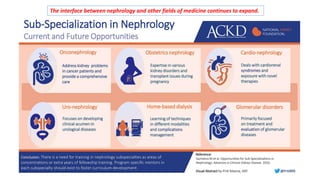
The interface between nephrology and other fields of medicine continues to expand.
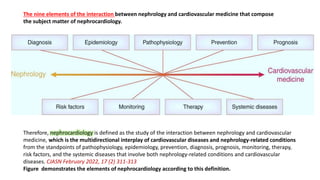
The nine elements of the interaction between nephrology and cardiovascular medicine that compose
the subject matter of nephrocardiology.
Therefore, nephrocardiology is defined as the study of the interaction between nephrology and cardiovascular
medicine, which is the multidirectional interplay of cardiovascular diseases and nephrology-related conditions
from the standpoints of pathophysiology, epidemiology, prevention, diagnosis, prognosis, monitoring, therapy,
risk factors, and the systemic diseases that involve both nephrology-related conditions and cardiovascular
diseases. CJASN February 2022, 17 (2) 311-313
Figure demonstrates the elements of nephrocardiology according to this definition.
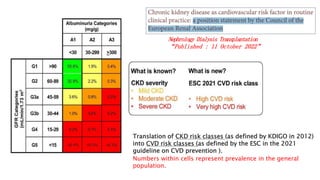
Nephrology Dialysis Transplantation
“Published : 11 October 2022”
Translation of CKD risk classes (as defined by KDIGO in 2012)
into CVD risk classes (as defined by the ESC in the 2021
guideline on CVD prevention ).
Numbers within cells represent prevalence in the general
population.
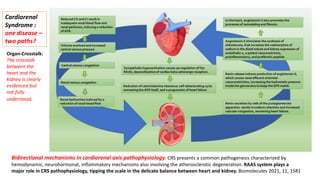
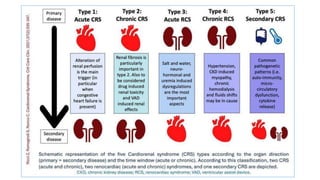
Bidirectional mechanisms in cardiorenal axis pathophysiology. CRS presents a common pathogenesis characterized by
hemodynamic, neurohormonal, inflammatory mechanisms also involving the atherosclerotic degeneration. RAAS system plays a
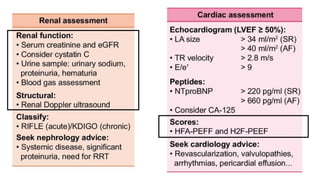
major role in CRS pathophysiology, tipping the scale in the delicate balance between heart and kidney. Biomolecules 2021, 11, 1581
Cardiorenal
Syndrome :
one disease –
two paths?
Organ-Crosstalk:
The crosstalk
between the
heart and the
kidney is clearly
evidenced but
not fully
understood.
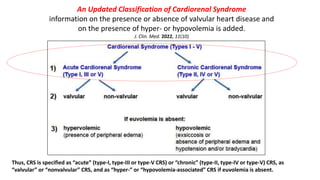
An Updated Classification of Cardiorenal Syndrome
information on the presence or absence of valvular heart disease and
on the presence of hyper- or hypovolemia is added.
J. Clin. Med. 2022, 11(10)
Thus, CRS is specified as “acute” (type-I, type-III or type-V CRS) or “chronic” (type-II, type-IV or type-V) CRS, as
“valvular” or “nonvalvular” CRS, and as “hyper-” or “hypovolemia-associated” CRS if euvolemia is absent.
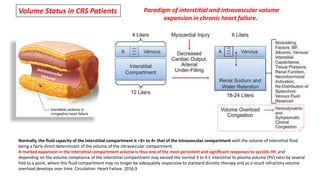
Paradigm of interstitial and intravascular volume
expansion in chronic heart failure.
Volume Status in CRS Patients
Normally, the fluid capacity of the interstitial compartment is ≈3× to 4× that of the intravascular compartment with the volume of interstitial fluid
being a fairly direct determinant of the volume of the intravascular compartment.
A marked expansion in the interstitial compartment volume is thus one of the most persistent and significant responses to systolic HF, and
depending on the volume compliance of the interstitial compartment may exceed the normal 3 to 4:1 interstitial to plasma volume (PV) ratio by several
fold to a point, where this fluid compartment may no longer be adequately responsive to standard diuretic therapy and as a result refractory volume
overload develops over time. Circulation: Heart Failure. 2016;9
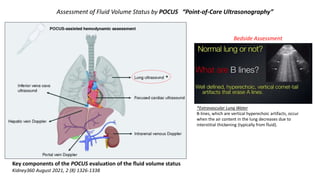
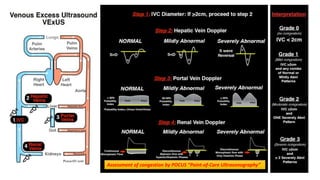
Key components of the POCUS evaluation of the fluid volume status
Kidney360 August 2021, 2 (8) 1326-1338
Assessment of Fluid Volume Status by POCUS “Point-of-Care Ultrasonography”
Bedside Assessment
*Extravascular Lung Water
B-lines, which are vertical hyperechoic artifacts, occur
when the air content in the lung decreases due to
interstitial thickening (typically from fluid).
*
Assessment of congestion by POCUS “Point-of-Care Ultrasonography”
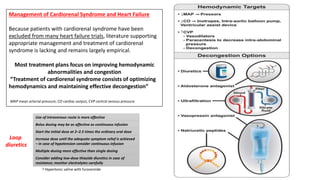
Management of Cardiorenal Syndrome and Heart Failure
Because patients with cardiorenal syndrome have been
excluded from many heart failure trials, literature supporting
appropriate management and treatment of cardiorenal
syndrome is lacking and remains largely empirical.
Most treatment plans focus on improving hemodynamic
abnormalities and congestion
“Treatment of cardiorenal syndrome consists of optimizing
hemodynamics and maintaining effective decongestion”
MAP mean arterial pressure, CO cardiac output, CVP central venous pressure
Use of intravenous route is more effective
Bolus dosing may be as affective as continuous infusion
Start the initial dose at 2–2.5 times the ordinary oral dose
Increase dose until the adequate symptom relief is achieved
– in case of hypotension consider continuous infusion
Multiple dosing more effective than single dosing
Consider adding low-dose thiazide diuretics in case of
resistance; monitor electrolytes carefully
Loop
diuretics
? Hypertonic saline with furosemide
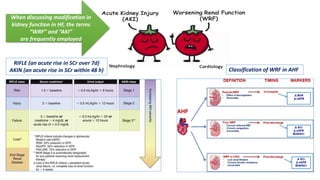
Classification of WRF in AHF
RIFLE (an acute rise in SCr over 7d)
AKIN (an acute rise in SCr within 48 h)
When discussing modification in
kidney function in HF, the terms
“WRF” and “AKI”
are frequently employed
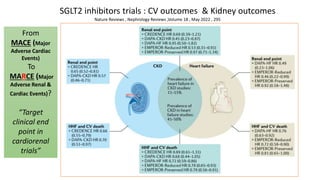
SGLT2 inhibitors trials : CV outcomes & Kidney outcomes
Nature Reviews , Nephrology Reviews ,Volume 18 , May 2022 , 295
From
MACE (Major
Adverse Cardiac
Events)
To
MARCE (Major
Adverse Renal &
Cardiac Events)?
“Target
clinical end
point in
cardiorenal
trials”
Ronco C, Ronco F, McCullough PA. A call to action to develop integrated curricula in cardiorenal medicine. Blood Purif. 2017;44:251–259. doi: 10.1159/000480318
From MACE to MARCE?
Given the importance of both sets of outcomes and the link between CV and renal, this makes sense!
 Where are we in 2022 with HFpEF ?
HF?EF
Chronic Heart Failure
 Preseved EF
 Mildly reduced EF
 Reduced EF
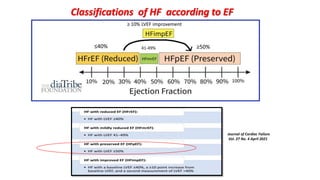
Classifications of HF according to EF
Journal of Cardiac Failure
Vol. 27 No. 4 April 2021
≤40% 41-49% ≥50%
≥ 10% LVEF improvement
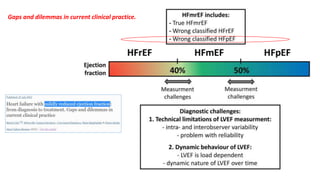
Gaps and dilemmas in current clinical practice.
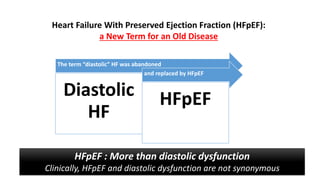
The term “diastolic” HF was abandoned
Diastolic
HF
and replaced by HFpEF
HFpEF
Heart Failure With Preserved Ejection Fraction (HFpEF):
a New Term for an Old Disease
HFpEF : More than diastolic dysfunction
Clinically, HFpEF and diastolic dysfunction are not synonymous
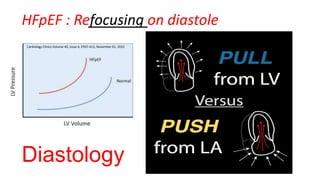
Diastology
HFpEF : Refocusing on diastole
Cardiology Clinics.Volume 40, Issue 4, P397-413, November 01, 2022
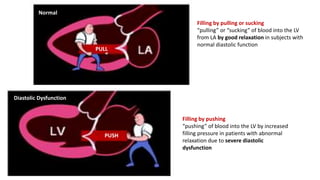
Filling by pulling or sucking
“pulling” or “sucking” of blood into the LV
from LA by good relaxation in subjects with
normal diastolic function
Normal
Diastolic Dysfunction
Filling by pushing
“pushing” of blood into the LV by increased
filling pressure in patients with abnormal
relaxation due to severe diastolic
dysfunction
PULL
PUSH
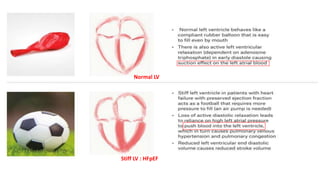
Normal LV
Stiff LV : HFpEF
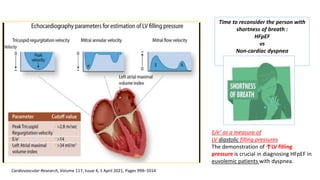
Cardiovascular Research, Volume 117, Issue 4, 1 April 2021, Pages 999–1014
Time to reconsider the person with
shortness of breath :
HFpEF
vs
Non-cardiac dyspnea
E/e’ as a measure of
LV diastolic filling pressures
The demonstration of ↑LV filling
pressure is crucial in diagnosing HFpEF in
euvolemic patients with dyspnea.
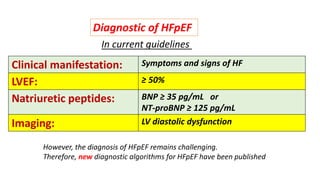
In current guidelines
Clinical manifestation: Symptoms and signs of HF
LVEF: ≥ 50%
Natriuretic peptides: BNP ≥ 35 pg/mL or
NT-proBNP ≥ 125 pg/mL
Imaging: LV diastolic dysfunction
However, the diagnosis of HFpEF remains challenging.
Therefore, new diagnostic algorithms for HFpEF have been published
Diagnostic of HFpEF
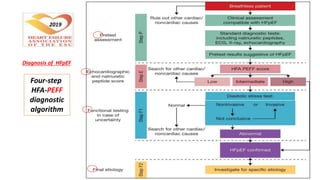
Four-step
HFA-PEFF
diagnostic
algorithm
2019
Diagnosis of HFpEF
HFA-PEFF diagnostic algorithm
HF heart failure, AF atrial fibrillation, CAD coronary artery disease, MetS metabolic syndrome, CKD chronic
kidney disease, COPD chronic obstructive pulmonary disease, SDB sleep-disordered breathing, NPs natriuretic
peptides, Hb hemoglobin, HbA1C hemoglobin A1C, Scr serum creatinine, eGFR estimated glomerular filtration
rate, ALT alanine aminotransferase, TSH thyroid stimulating hormone, LVEF left ventricular ejection
fraction, LVH left ventricular hypertrophy, LAE left atrial enlargement, 6MWT 6 min walk
test, CPET cardiopulmonary exercise testing, TR tricuspid regurgitation, PASP pulmonary artery systolic
pressure, GLS global longitudinal strain, LAVI left atrial volume index, LVMI left ventricular mass
index, RWT relative wall thickness, LV left ventricular, SR sinus rhythm, NT-proBNP N-terminal pro-B-type
natriuretic peptide, BNP B-type natriuretic peptide, LVEDP left ventricular end-diastolic
pressure, PCWP pulmonary capillary wedge pressure, CT computed tomography, PET positron emission
tomography, HCM hypertrophic cardiomyopathy, RCM restrictive cardiomyopathy, CHD congenital heart
disease, VHD valvular heart disease
Diagnostic of HFpEF
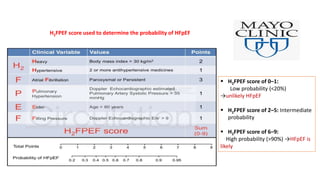
A group of experts from Mayo clinic → H2FPEF Score :
to estimate the probability of HFpEF
versus non-cardiac causes of dyspnea
Six clinical and echo variables : the H₂FPEF score
2018
 H2FPEF score of 0–1:
Low probability (<20%)
→unlikely HFpEF
 H2FPEF score of 2–5: Intermediate
probability
 H2FPEF score of 6–9:
High probability (>90%) →HFpEF is
likely
H2FPEF score used to determine the probability of HFpEF
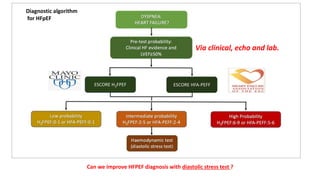
Diagnostic algorithm
for HFpEF
Via clinical, echo and lab.
Can we improve HFPEF diagnosis with diastolic stress test ?
Noninvasive
diastolic stress test
“echo”
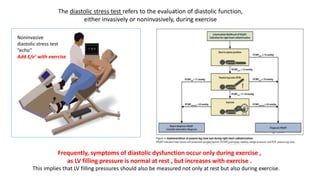
Add E/e’ with exercise
The diastolic stress test refers to the evaluation of diastolic function,
either invasively or noninvasively, during exercise
Frequently, symptoms of diastolic dysfunction occur only during exercise ,
as LV filling pressure is normal at rest , but increases with exercise .
This implies that LV filling pressures should also be measured not only at rest but also during exercise.
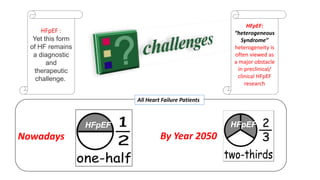
Nowadays
All Heart Failure Patients
By Year 2050
HFpEF HFpEF
HFpEF :
Yet this form
of HF remains
a diagnostic
and
therapeutic
challenge..
HFpEF:
“heterogeneous
Syndrome”
heterogeneity is
often viewed as
a major obstacle
in preclinical/
clinical HFpEF
research
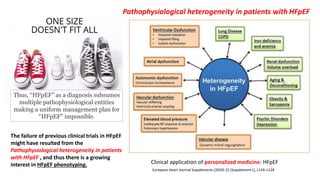
Clinical application of personalized medicine: HFpEF
European Heart Journal Supplements (2020) 22 (Supplement L), L124–L128
Pathophysiological heterogeneity in patients with HFpEF
The failure of previous clinical trials in HFpEF
might have resulted from the
Pathophysiological heterogeneity in patients
with HFpEF , and thus there is a growing
interest in HFpEF phenotyping.
Thus, “HFpEF” as a diagnosis subsumes
multiple pathophysiological entities
making a uniform management plan for
“HFpEF” impossible.
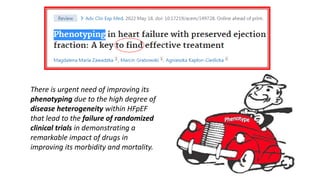
There is urgent need of improving its
phenotyping due to the high degree of
disease heterogeneity within HFpEF
that lead to the failure of randomized
clinical trials in demonstrating a
remarkable impact of drugs in
improving its morbidity and mortality.
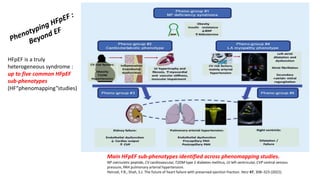
Main HFpEF sub-phenotypes identified across phenomapping studies.
NP natriuretic peptide, CV cardiovascular, T2DM type 2 diabetes mellitus, LV left ventricular, CVP central venous
pressure, PAH pulmonary arterial hypertension.
Heinzel, F.R., Shah, S.J. The future of heart failure with preserved ejection fraction. Herz 47, 308–323 (2022).
HFpEF is a truly
heterogeneous syndrome :
up to five common HFpEF
sub-phenotypes
(HF“phenomapping”studies)
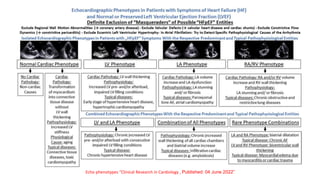
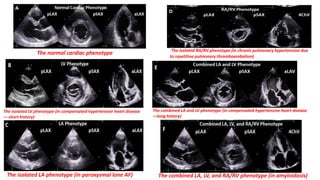
Echo phenotypes “Clinical Research in Cardiology , Published: 04 June 2022”
The normal cardiac phenotype
The isolated LV phenotype (in compensated hypertensive heart disease
— short history)
The isolated LA phenotype (in paroxysmal lone AF)
The isolated RA/RV phenotype (in chronic pulmonary hypertension due
to repetitive pulmonary thromboembolism)
The combined LA and LV phenotype (in compensated hypertensive heart disease
—long history)
The combined LA, LV, and RA/RV phenotype (in amyloidosis)
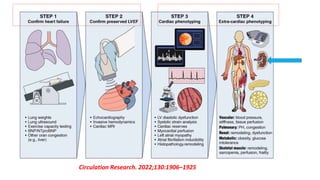
Circulation Research. 2022;130:1906–1925
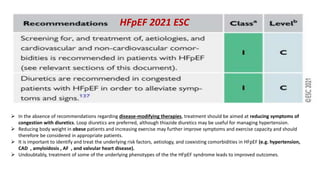
 In the absence of recommendations regarding disease-modifying therapies, treatment should be aimed at reducing symptoms of
congestion with diuretics. Loop diuretics are preferred, although thiazide diuretics may be useful for managing hypertension.
 Reducing body weight in obese patients and increasing exercise may further improve symptoms and exercise capacity and should
therefore be considered in appropriate patients.
 It is important to identify and treat the underlying risk factors, aetiology, and coexisting comorbidities in HFpEF (e.g. hypertension,
CAD , amyloidosis , AF , and valvular heart disease).
 Undoubtably, treatment of some of the underlying phenotypes of the the HFpEF syndrome leads to improved outcomes.
HFpEF 2021 ESC
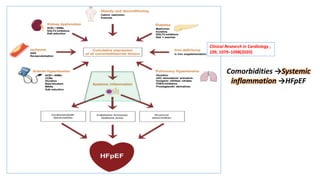
Clinical Research in Cardiology ,
109, 1079–1098(2020)
Comorbidities →Systemic
inflammation →HFpEF
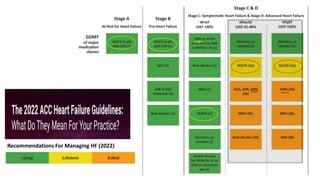
Recommendations For Managing HF (2022)
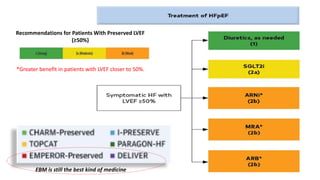
Recommendations for Patients With Preserved LVEF
(≥50%)
*Greater benefit in patients with LVEF closer to 50%.
EBM is still the best kind of medicine
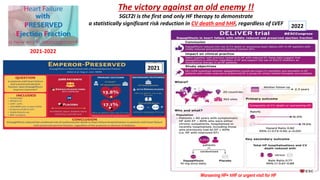
The victory against an old enemy !!
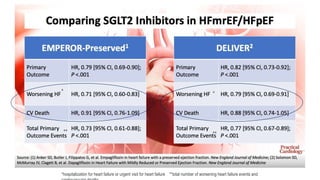
SGLT2I is the first and only HF therapy to demonstrate
a statistically significant risk reduction in CV death and hHF, regardless of LVEF
2021
2022
2021-2022
Worsening HF= hHF or urgent visit for HF
*hospitalization for heart failure or urgent visit for heart failure **total number of worsening heart failure events and
* *
** **
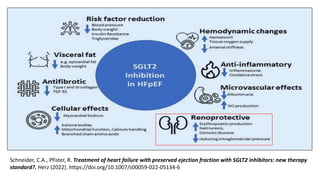
Schneider, C.A., Pfister, R. Treatment of heart failure with preserved ejection fraction with SGLT2 inhibitors: new therapy
standard?. Herz (2022). https://doi.org/10.1007/s00059-022-05134-6
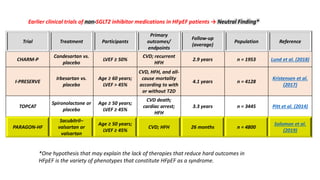
Trial Treatment Participants
Primary
outcomes/
endpoints
Follow-up
(average)
Population Reference
CHARM-P
Candesartan vs.
placebo
LVEF ≥ 50%
CVD; recurrent
HFH
2.9 years n = 1953 Lund et al. (2018)
I-PRESERVE
Irbesartan vs.
placebo
Age ≥ 60 years;
LVEF > 45%
CVD, HFH, and all-
cause mortality
according to with
or without T2D
4.1 years n = 4128
Kristensen et al.
(2017)
TOPCAT
Spironolactone or
placebo
Age ≥ 50 years;
LVEF ≥ 45%
CVD death;
cardiac arrest;
HFH
3.3 years n = 3445 Pitt et al. (2014)
PARAGON-HF
Sacubitril–
valsartan or
valsartan
Age ≥ 50 years;
LVEF ≥ 45%
CVD; HFH 26 months n = 4800
Solomon et al.
(2019)
Earlier clinical trials of non-SGLT2 inhibitor medications in HFpEF patients → Neutral Finding*
*One hypothesis that may explain the lack of therapies that reduce hard outcomes in
HFpEF is the variety of phenotypes that constitute HFpEF as a syndrome.
55
50
45
40
35
30
25
20
15
10
5
0
Mean
Cumulative
Events
per
100
patients
0
*Semiparametric LWYY method. CV,
cardiovascular; HF, heart failure
Solomon S, et al. N Engl J Med. 2019 (In press)
1 2
Years
3 4
Valsartan (n = 2389)
1009 events, 14.6 per 100 pt-years
Sacubitril/valsartan (n = 2407) 894 events,
12.8 per 100 pt-years
13% reduction in the risk of the primary endpoint
(rate ratio [RR]: 0.87; 95% CI: 0.75 to 1.005; p=0.058)
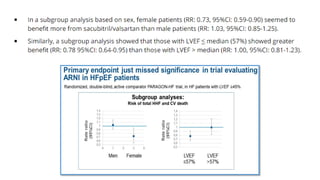
Primary endpoint: Recurrent event analysis of total HF hospitalizations and CV death*
Sacubitril–valsartan did not result in a significantly
lower rate of total hospitalizations for heart failure and
death from cardiovascular causes among patients with
heart failure and an ejection fraction of 45% or higher.
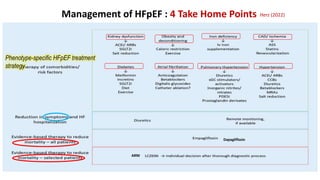
Management of HFpEF : 4 Take Home Points Herz (2022)
Dapagliflozin
ARNI
Phenotype-specific HFpEF treatment
strategy
 CKD in HFpEF {or HFpEF in CKD }
The CKD Phenotype of HFpEF
 HF is highly prevalent in patients with CKD, with HFpEF
accounting for half of these cases.
 CKD is independently associated with worse outcomes and
higher mortality rates in patients with HFpEF.
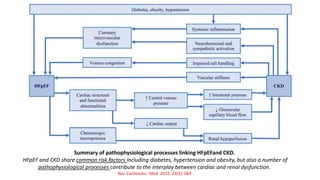
Summary of pathophysiological processes linking HFpEFand CKD.
HFpEF and CKD share common risk factors including diabetes, hypertension and obesity, but also a number of
pathophysiological processes contribute to the interplay between cardiac and renal dysfunction.
Rev. Cardiovasc. Med. 2022; 23(2): 069
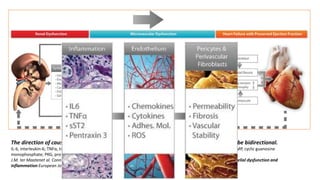
Proposed relationship between renal dysfunction and HFpEF.
The direction of causality may prove to be in the opposite direction and most probably will be bidirectional.
IL-6, interleukin-6; TNFα, tumour necrosis factor-α; sST2, soluble ST2; ROS, reactive oxygen species; NO, nitric oxide; cGMP, cyclic guanosine
monophosphate; PKG, protein kinase G; TGFβ, transforming growth factor-β.
J.M. ter Maatenet al. Connecting heart failure with preserved ejection fraction and renal dysfunction: the role of endothelial dysfunction and
inflammation European Journal of Heart Failure (2016)18, 588–598
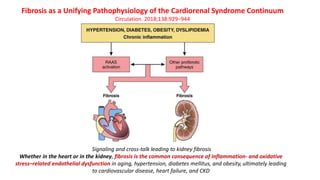
Signaling and cross-talk leading to kidney fibrosis
Whether in the heart or in the kidney, fibrosis is the common consequence of inflammation- and oxidative
stress–related endothelial dysfunction in aging, hypertension, diabetes mellitus, and obesity, ultimately leading
to cardiovascular disease, heart failure, and CKD
Fibrosis as a Unifying Pathophysiology of the Cardiorenal Syndrome Continuum
Circulation. 2018;138:929–944
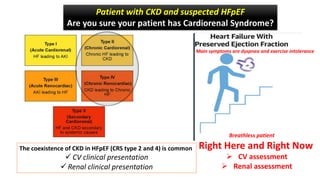
Patient with CKD and suspected HFpEF
Are you sure your patient has Cardiorenal Syndrome?
Right Here and Right Now
 CV assessment
 Renal assessment
Breathless patient
The coexistence of CKD in HFpEF (CRS type 2 and 4) is common
 CV clinical presentation
 Renal clinical presentation
Main symptoms are dyspnea and exercise intolerance
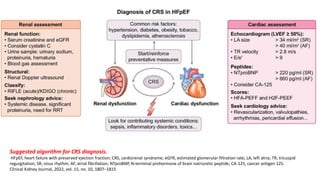
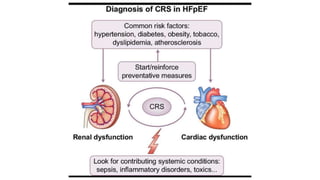
Suggested algorithm for CRS diagnosis.
HFpEF, heart failure with preserved ejection fraction; CRS, cardiorenal syndrome; eGFR, estimated glomerular filtration rate; LA, left atria; TR, tricuspid
regurgitation; SR, sinus rhythm; AF, atrial fibrillation; NTproBNP, N-terminal prohormone of brain natriuretic peptide; CA-125, cancer antigen 125.
Clinical Kidney Journal, 2022, vol. 15, no. 10, 1807–1815
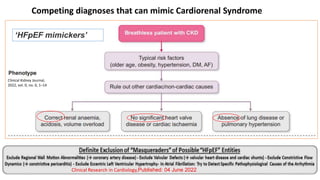
Competing diagnoses that can mimic Cardiorenal Syndrome
‘HFpEF mimickers’
Clinical Research in Cardiology,Published: 04 June 2022
Clinical Kidney Journal,
2022, vol. 0, no. 0, 1–14
HFpEF with CKD : How to Treat ?
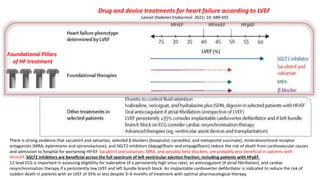
Drug and device treatments for heart failure according to LVEF
Lancet Diabetes Endocrinol. 2022; 10: 689-691
There is strong evidence that sacubitril and valsartan, selected β blockers (bisoprolol, carvedilol, and metoprolol succinate), mineralocorticoid receptor
antagonists (MRA; eplerenone and spironolactone), and SGLT2 inhibitors (dapagliflozin and empagliflozin) reduce the risk of death from cardiovascular causes
and admission to hospital for worsening HFrEF. Sacubitril and valsartan, MRA, and possibly beta-blockers, are probably also beneficial in patients with
HFmrEF. SGLT2 inhibitors are beneficial across the full spectrum of left ventricular ejection fraction, including patients with HFpEF.
12-lead ECG is important in assessing eligibility for ivabradine (if a persistently high sinus rate), an anticoagulant (if atrial fibrillation), and cardiac
resynchronisation therapy if a persistently low LVEF and left bundle branch block. An implantable cardioverter defibrillator is indicated to reduce the risk of
sudden death in patients with an LVEF of 35% or less despite 3–6 months of treatment with optimal pharmacological therapy.
Foundational Pillars
of HF treatment
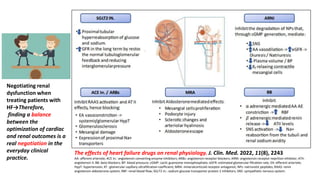
The effects of heart failure drugs on renal physiology. J. Clin. Med. 2022, 11(8), 2243
AA: afferent arteriole; ACE In.: angiotensin converting enzyme inhibitors; ARBs: angiotensin receptor blockers; ARNI: angiotensin receptor neprilisin inhibitor; ATII:
angiotensin II; BB: beta blockers; BP: blood pressure; cGMP: cyclic guanosine monophosphate; eGFR: estimated glomerular filtration rate; EA: efferent arteriole;
HypT: hypertension; Kf : glomerular capillary ultrafiltration coefficient; MRA: mineralcorticoid receptor antagonist; NPs: natriuretic peptides; RAAS: renin
angiotensin aldosterone system; RBF: renal blood flow; SGLT2 In.: sodium glucose transporter protein 2 inhibitors; SNS: sympathetic nervous system.
Negotiating renal
dysfunction when
treating patients with
HF→Therefore,
finding a balance
between the
optimization of cardiac
and renal outcomes is a
real negotiation in the
everyday clinical
practice.
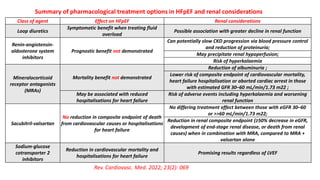
Summary of pharmacological treatment options in HFpEF and renal considerations
Class of agent Effect on HFpEF Renal considerations
Loop diuretics
Symptomatic benefit when treating fluid
overload
Possible association with greater decline in renal function
Renin-angiotensin-
aldosterone system
inhibitors
Prognostic benefit not demonstrated
Can potentially slow CKD progression via blood pressure control
and reduction of proteinuria;
May precipitate renal hypoperfusion;
Risk of hyperkalaemia
Mineralocorticoid
receptor antagonists
(MRAs)
Mortality benefit not demonstrated
Reduction of albuminuria ;
Lower risk of composite endpoint of cardiovascular mortality,
heart failure hospitalisation or aborted cardiac arrest in those
with estimated GFR 30–60 mL/min/1.73 m22 ;
May be associated with reduced
hospitalisations for heart failure
Risk of adverse events including hyperkalaemia and worsening
renal function
Sacubitril-valsartan
No reduction in composite endpoint of death
from cardiovascular causes or hospitalisations
for heart failure
No differing treatment effect between those with eGFR 30–60
or >>60 mL/min/1.73 m22;
Reduction in renal composite endpoint (≥50% decrease in eGFR,
development of end-stage renal disease, or death from renal
causes) when in combination with MRA, compared to MRA +
valsartan alone
Sodium-glucose
cotransporter 2
inhibitors
Reduction in cardiovascular mortality and
hospitalisations for heart failure
Promising results regardless of LVEF
Rev. Cardiovasc. Med. 2022; 23(2): 069
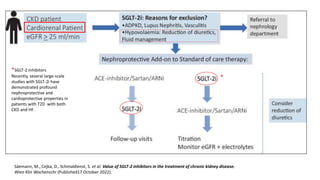
Säemann, M., Cejka, D., Schmaldienst, S. et al. Value of SGLT-2 inhibitors in the treatment of chronic kidney disease.
Wien Klin Wochenschr (Published17 October 2022).
*SGLT-2 inhibitors
Recently, several large-scale
studies with SGLT-2i have
demonstrated profound
nephroprotective and
cardioprotective properties in
patients with T2D with both
CKD and HF.
*
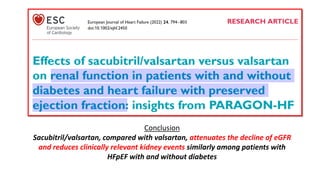
Conclusion
Sacubitril/valsartan, compared with valsartan, attenuates the decline of eGFR
and reduces clinically relevant kidney events similarly among patients with
HFpEF with and without diabetes
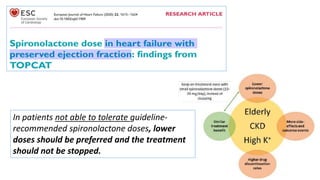
In patients not able to tolerate guideline-
recommended spironolactone doses, lower
doses should be preferred and the treatment
should not be stopped.
My Last Few Words Before I Leave
Research Gap
What-Why-How
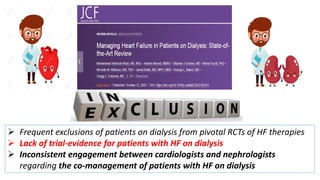
 Frequent exclusions of patients on dialysis from pivotal RCTs of HF therapies
 Lack of trial-evidence for patients with HF on dialysis
 Inconsistent engagement between cardiologists and nephrologists
regarding the co-management of patients with HF on dialysis
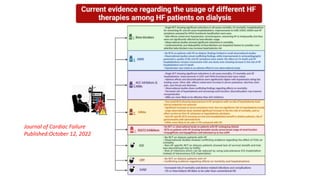
Journal of Cardiac Failure
Published:October 12, 2022
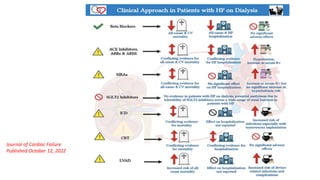
Journal of Cardiac Failure
Published:October 12, 2022
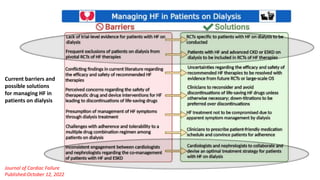
Current barriers and
possible solutions
for managing HF in
patients on dialysis
Journal of Cardiac Failure
Published:October 12, 2022
The key objective of the group is to highlight the important clinical overlap that exists between
patients presenting with a primary cardiovascular or renal problem.
Regular Semi-annual (i.e., every six months) Meeting
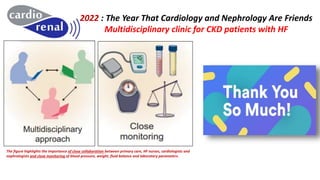
2022 : The Year That Cardiology and Nephrology Are Friends
Multidisciplinary clinic for CKD patients with HF
The figure highlights the importance of close collaboration between primary care, HF nurses, cardiologists and
nephrologists and close monitoring of blood pressure, weight, fluid balance and laboratory parameters.
Russian novelist & poet
[born 1818, died 1883]
The coexistence of CKD in HFpEF (CRS type 2 and 4) : Cardio-Renal Clinical Challenges

Linking HFpEF and Chronic kidney disease

  • 1.
    Magdy El-Masry Prof. ofCardiology Tanta University Linking HFpEF and CKD What is the Link? Targets of Care?
  • 2.
    Despite renal massaccounts only for 0.5% of total body mass, 25% of cardiac output is delivered to the kidney, which consumes the 7% of the whole body oxygen consumption. Renal oxygen consumption is mostly connected to the selective reabsorption of glomerular filtrate that corresponds to approximately to 180 L/day, while daily urine output is restricted to 1.2–1.8 L/day. In the kidney, the largest amount of O2 consumption occurs in the cortex, where the blood flow is prominently directed to generate the GFR that, in turn, is linked to the Na+ reuptake in the proximal tubular segment. The reabsorption process is based on ATP utilization. In the normal subject the average GFR is 180 L/day while the normal urine output ranges from 1.2 to 1.8 L/day, meaning that roughly 1% of the glomerular filtered load is excreted . Int. J. Mol. Sci. 2022, 23, 11987. Kidneys are amazing organs of our body
  • 3.
    “ Today we’llbe talking about Cardio-renal interactions ”  Introducing nephro-cardiology { or cardio-nephrology }  Where are we in 2022 with HFpEF ?  CKD in HFpEF { or HFpEF in CKD }
  • 4.
     Introducing nephro-cardiology{ or cardio-nephrology } “ The heart and the kidneys are like a married couple. If one is not happy, the other one probably isn’t either ” →→ the term nephrocardiology , or in some instances cardionephrology
  • 5.
    Cardiorenal Interactions :A Historical Note In 1842, Carl Ludwig proposed the hypothesis that urine is the result of a filtration process by the glomeruli promoted by the force of blood pressure [Ludwig, C. De Viribus Physicis Secretionem Urinae Adjuvantibus: Commentatio Quam Pro Venia Legendi Gratioso Medicorum Marburgensium Ordini. Elwert. 1842. ] Carl Ludwig (1816–1895) , a pioneer of physiology , presented a new concept of renal function and cardiorenal interaction.
  • 6.
    The interface betweennephrology and other fields of medicine continues to expand.
  • 7.
    The nine elementsof the interaction between nephrology and cardiovascular medicine that compose the subject matter of nephrocardiology. Therefore, nephrocardiology is defined as the study of the interaction between nephrology and cardiovascular medicine, which is the multidirectional interplay of cardiovascular diseases and nephrology-related conditions from the standpoints of pathophysiology, epidemiology, prevention, diagnosis, prognosis, monitoring, therapy, risk factors, and the systemic diseases that involve both nephrology-related conditions and cardiovascular diseases. CJASN February 2022, 17 (2) 311-313 Figure demonstrates the elements of nephrocardiology according to this definition.
  • 8.
    Nephrology Dialysis Transplantation “Published: 11 October 2022” Translation of CKD risk classes (as defined by KDIGO in 2012) into CVD risk classes (as defined by the ESC in the 2021 guideline on CVD prevention ). Numbers within cells represent prevalence in the general population.
  • 9.
    Bidirectional mechanisms incardiorenal axis pathophysiology. CRS presents a common pathogenesis characterized by hemodynamic, neurohormonal, inflammatory mechanisms also involving the atherosclerotic degeneration. RAAS system plays a major role in CRS pathophysiology, tipping the scale in the delicate balance between heart and kidney. Biomolecules 2021, 11, 1581 Cardiorenal Syndrome : one disease – two paths? Organ-Crosstalk: The crosstalk between the heart and the kidney is clearly evidenced but not fully understood.
  • 11.
    An Updated Classificationof Cardiorenal Syndrome information on the presence or absence of valvular heart disease and on the presence of hyper- or hypovolemia is added. J. Clin. Med. 2022, 11(10) Thus, CRS is specified as “acute” (type-I, type-III or type-V CRS) or “chronic” (type-II, type-IV or type-V) CRS, as “valvular” or “nonvalvular” CRS, and as “hyper-” or “hypovolemia-associated” CRS if euvolemia is absent.
  • 12.
    Paradigm of interstitialand intravascular volume expansion in chronic heart failure. Volume Status in CRS Patients Normally, the fluid capacity of the interstitial compartment is ≈3× to 4× that of the intravascular compartment with the volume of interstitial fluid being a fairly direct determinant of the volume of the intravascular compartment. A marked expansion in the interstitial compartment volume is thus one of the most persistent and significant responses to systolic HF, and depending on the volume compliance of the interstitial compartment may exceed the normal 3 to 4:1 interstitial to plasma volume (PV) ratio by several fold to a point, where this fluid compartment may no longer be adequately responsive to standard diuretic therapy and as a result refractory volume overload develops over time. Circulation: Heart Failure. 2016;9
  • 13.
    Key components ofthe POCUS evaluation of the fluid volume status Kidney360 August 2021, 2 (8) 1326-1338 Assessment of Fluid Volume Status by POCUS “Point-of-Care Ultrasonography” Bedside Assessment *Extravascular Lung Water B-lines, which are vertical hyperechoic artifacts, occur when the air content in the lung decreases due to interstitial thickening (typically from fluid). *
  • 14.
    Assessment of congestionby POCUS “Point-of-Care Ultrasonography”
  • 15.
    Management of CardiorenalSyndrome and Heart Failure Because patients with cardiorenal syndrome have been excluded from many heart failure trials, literature supporting appropriate management and treatment of cardiorenal syndrome is lacking and remains largely empirical. Most treatment plans focus on improving hemodynamic abnormalities and congestion “Treatment of cardiorenal syndrome consists of optimizing hemodynamics and maintaining effective decongestion” MAP mean arterial pressure, CO cardiac output, CVP central venous pressure Use of intravenous route is more effective Bolus dosing may be as affective as continuous infusion Start the initial dose at 2–2.5 times the ordinary oral dose Increase dose until the adequate symptom relief is achieved – in case of hypotension consider continuous infusion Multiple dosing more effective than single dosing Consider adding low-dose thiazide diuretics in case of resistance; monitor electrolytes carefully Loop diuretics ? Hypertonic saline with furosemide
  • 16.
    Classification of WRFin AHF RIFLE (an acute rise in SCr over 7d) AKIN (an acute rise in SCr within 48 h) When discussing modification in kidney function in HF, the terms “WRF” and “AKI” are frequently employed
  • 17.
    SGLT2 inhibitors trials: CV outcomes & Kidney outcomes Nature Reviews , Nephrology Reviews ,Volume 18 , May 2022 , 295 From MACE (Major Adverse Cardiac Events) To MARCE (Major Adverse Renal & Cardiac Events)? “Target clinical end point in cardiorenal trials”
  • 18.
    Ronco C, RoncoF, McCullough PA. A call to action to develop integrated curricula in cardiorenal medicine. Blood Purif. 2017;44:251–259. doi: 10.1159/000480318 From MACE to MARCE? Given the importance of both sets of outcomes and the link between CV and renal, this makes sense!
  • 19.
     Where arewe in 2022 with HFpEF ? HF?EF Chronic Heart Failure  Preseved EF  Mildly reduced EF  Reduced EF
  • 20.
    Classifications of HFaccording to EF Journal of Cardiac Failure Vol. 27 No. 4 April 2021 ≤40% 41-49% ≥50% ≥ 10% LVEF improvement
  • 21.
    Gaps and dilemmasin current clinical practice.
  • 22.
    The term “diastolic”HF was abandoned Diastolic HF and replaced by HFpEF HFpEF Heart Failure With Preserved Ejection Fraction (HFpEF): a New Term for an Old Disease HFpEF : More than diastolic dysfunction Clinically, HFpEF and diastolic dysfunction are not synonymous
  • 23.
    Diastology HFpEF : Refocusingon diastole Cardiology Clinics.Volume 40, Issue 4, P397-413, November 01, 2022
  • 24.
    Filling by pullingor sucking “pulling” or “sucking” of blood into the LV from LA by good relaxation in subjects with normal diastolic function Normal Diastolic Dysfunction Filling by pushing “pushing” of blood into the LV by increased filling pressure in patients with abnormal relaxation due to severe diastolic dysfunction PULL PUSH
  • 25.
  • 26.
    Cardiovascular Research, Volume117, Issue 4, 1 April 2021, Pages 999–1014 Time to reconsider the person with shortness of breath : HFpEF vs Non-cardiac dyspnea E/e’ as a measure of LV diastolic filling pressures The demonstration of ↑LV filling pressure is crucial in diagnosing HFpEF in euvolemic patients with dyspnea.
  • 27.
    In current guidelines Clinicalmanifestation: Symptoms and signs of HF LVEF: ≥ 50% Natriuretic peptides: BNP ≥ 35 pg/mL or NT-proBNP ≥ 125 pg/mL Imaging: LV diastolic dysfunction However, the diagnosis of HFpEF remains challenging. Therefore, new diagnostic algorithms for HFpEF have been published Diagnostic of HFpEF
  • 28.
  • 29.
    HFA-PEFF diagnostic algorithm HFheart failure, AF atrial fibrillation, CAD coronary artery disease, MetS metabolic syndrome, CKD chronic kidney disease, COPD chronic obstructive pulmonary disease, SDB sleep-disordered breathing, NPs natriuretic peptides, Hb hemoglobin, HbA1C hemoglobin A1C, Scr serum creatinine, eGFR estimated glomerular filtration rate, ALT alanine aminotransferase, TSH thyroid stimulating hormone, LVEF left ventricular ejection fraction, LVH left ventricular hypertrophy, LAE left atrial enlargement, 6MWT 6 min walk test, CPET cardiopulmonary exercise testing, TR tricuspid regurgitation, PASP pulmonary artery systolic pressure, GLS global longitudinal strain, LAVI left atrial volume index, LVMI left ventricular mass index, RWT relative wall thickness, LV left ventricular, SR sinus rhythm, NT-proBNP N-terminal pro-B-type natriuretic peptide, BNP B-type natriuretic peptide, LVEDP left ventricular end-diastolic pressure, PCWP pulmonary capillary wedge pressure, CT computed tomography, PET positron emission tomography, HCM hypertrophic cardiomyopathy, RCM restrictive cardiomyopathy, CHD congenital heart disease, VHD valvular heart disease
  • 30.
    Diagnostic of HFpEF Agroup of experts from Mayo clinic → H2FPEF Score : to estimate the probability of HFpEF versus non-cardiac causes of dyspnea Six clinical and echo variables : the H₂FPEF score 2018
  • 31.
     H2FPEF scoreof 0–1: Low probability (<20%) →unlikely HFpEF  H2FPEF score of 2–5: Intermediate probability  H2FPEF score of 6–9: High probability (>90%) →HFpEF is likely H2FPEF score used to determine the probability of HFpEF
  • 32.
    Diagnostic algorithm for HFpEF Viaclinical, echo and lab. Can we improve HFPEF diagnosis with diastolic stress test ?
  • 33.
    Noninvasive diastolic stress test “echo” AddE/e’ with exercise The diastolic stress test refers to the evaluation of diastolic function, either invasively or noninvasively, during exercise Frequently, symptoms of diastolic dysfunction occur only during exercise , as LV filling pressure is normal at rest , but increases with exercise . This implies that LV filling pressures should also be measured not only at rest but also during exercise.
  • 34.
    Nowadays All Heart FailurePatients By Year 2050 HFpEF HFpEF HFpEF : Yet this form of HF remains a diagnostic and therapeutic challenge.. HFpEF: “heterogeneous Syndrome” heterogeneity is often viewed as a major obstacle in preclinical/ clinical HFpEF research
  • 35.
    Clinical application ofpersonalized medicine: HFpEF European Heart Journal Supplements (2020) 22 (Supplement L), L124–L128 Pathophysiological heterogeneity in patients with HFpEF The failure of previous clinical trials in HFpEF might have resulted from the Pathophysiological heterogeneity in patients with HFpEF , and thus there is a growing interest in HFpEF phenotyping. Thus, “HFpEF” as a diagnosis subsumes multiple pathophysiological entities making a uniform management plan for “HFpEF” impossible.
  • 36.
    There is urgentneed of improving its phenotyping due to the high degree of disease heterogeneity within HFpEF that lead to the failure of randomized clinical trials in demonstrating a remarkable impact of drugs in improving its morbidity and mortality.
  • 37.
    Main HFpEF sub-phenotypesidentified across phenomapping studies. NP natriuretic peptide, CV cardiovascular, T2DM type 2 diabetes mellitus, LV left ventricular, CVP central venous pressure, PAH pulmonary arterial hypertension. Heinzel, F.R., Shah, S.J. The future of heart failure with preserved ejection fraction. Herz 47, 308–323 (2022). HFpEF is a truly heterogeneous syndrome : up to five common HFpEF sub-phenotypes (HF“phenomapping”studies)
  • 38.
    Echo phenotypes “ClinicalResearch in Cardiology , Published: 04 June 2022”
  • 39.
    The normal cardiacphenotype The isolated LV phenotype (in compensated hypertensive heart disease — short history) The isolated LA phenotype (in paroxysmal lone AF) The isolated RA/RV phenotype (in chronic pulmonary hypertension due to repetitive pulmonary thromboembolism) The combined LA and LV phenotype (in compensated hypertensive heart disease —long history) The combined LA, LV, and RA/RV phenotype (in amyloidosis)
  • 40.
  • 41.
     In theabsence of recommendations regarding disease-modifying therapies, treatment should be aimed at reducing symptoms of congestion with diuretics. Loop diuretics are preferred, although thiazide diuretics may be useful for managing hypertension.  Reducing body weight in obese patients and increasing exercise may further improve symptoms and exercise capacity and should therefore be considered in appropriate patients.  It is important to identify and treat the underlying risk factors, aetiology, and coexisting comorbidities in HFpEF (e.g. hypertension, CAD , amyloidosis , AF , and valvular heart disease).  Undoubtably, treatment of some of the underlying phenotypes of the the HFpEF syndrome leads to improved outcomes. HFpEF 2021 ESC
  • 42.
    Clinical Research inCardiology , 109, 1079–1098(2020) Comorbidities →Systemic inflammation →HFpEF
  • 43.
  • 44.
    Recommendations for PatientsWith Preserved LVEF (≥50%) *Greater benefit in patients with LVEF closer to 50%. EBM is still the best kind of medicine
  • 45.
    The victory againstan old enemy !! SGLT2I is the first and only HF therapy to demonstrate a statistically significant risk reduction in CV death and hHF, regardless of LVEF 2021 2022 2021-2022 Worsening HF= hHF or urgent visit for HF
  • 46.
    *hospitalization for heartfailure or urgent visit for heart failure **total number of worsening heart failure events and * * ** **
  • 47.
    Schneider, C.A., Pfister,R. Treatment of heart failure with preserved ejection fraction with SGLT2 inhibitors: new therapy standard?. Herz (2022). https://doi.org/10.1007/s00059-022-05134-6
  • 48.
    Trial Treatment Participants Primary outcomes/ endpoints Follow-up (average) PopulationReference CHARM-P Candesartan vs. placebo LVEF ≥ 50% CVD; recurrent HFH 2.9 years n = 1953 Lund et al. (2018) I-PRESERVE Irbesartan vs. placebo Age ≥ 60 years; LVEF > 45% CVD, HFH, and all- cause mortality according to with or without T2D 4.1 years n = 4128 Kristensen et al. (2017) TOPCAT Spironolactone or placebo Age ≥ 50 years; LVEF ≥ 45% CVD death; cardiac arrest; HFH 3.3 years n = 3445 Pitt et al. (2014) PARAGON-HF Sacubitril– valsartan or valsartan Age ≥ 50 years; LVEF ≥ 45% CVD; HFH 26 months n = 4800 Solomon et al. (2019) Earlier clinical trials of non-SGLT2 inhibitor medications in HFpEF patients → Neutral Finding* *One hypothesis that may explain the lack of therapies that reduce hard outcomes in HFpEF is the variety of phenotypes that constitute HFpEF as a syndrome.
  • 49.
    55 50 45 40 35 30 25 20 15 10 5 0 Mean Cumulative Events per 100 patients 0 *Semiparametric LWYY method.CV, cardiovascular; HF, heart failure Solomon S, et al. N Engl J Med. 2019 (In press) 1 2 Years 3 4 Valsartan (n = 2389) 1009 events, 14.6 per 100 pt-years Sacubitril/valsartan (n = 2407) 894 events, 12.8 per 100 pt-years 13% reduction in the risk of the primary endpoint (rate ratio [RR]: 0.87; 95% CI: 0.75 to 1.005; p=0.058) Primary endpoint: Recurrent event analysis of total HF hospitalizations and CV death* Sacubitril–valsartan did not result in a significantly lower rate of total hospitalizations for heart failure and death from cardiovascular causes among patients with heart failure and an ejection fraction of 45% or higher.
  • 51.
    Management of HFpEF: 4 Take Home Points Herz (2022) Dapagliflozin ARNI Phenotype-specific HFpEF treatment strategy
  • 52.
     CKD inHFpEF {or HFpEF in CKD } The CKD Phenotype of HFpEF  HF is highly prevalent in patients with CKD, with HFpEF accounting for half of these cases.  CKD is independently associated with worse outcomes and higher mortality rates in patients with HFpEF.
  • 53.
    Summary of pathophysiologicalprocesses linking HFpEFand CKD. HFpEF and CKD share common risk factors including diabetes, hypertension and obesity, but also a number of pathophysiological processes contribute to the interplay between cardiac and renal dysfunction. Rev. Cardiovasc. Med. 2022; 23(2): 069
  • 54.
    Proposed relationship betweenrenal dysfunction and HFpEF. The direction of causality may prove to be in the opposite direction and most probably will be bidirectional. IL-6, interleukin-6; TNFα, tumour necrosis factor-α; sST2, soluble ST2; ROS, reactive oxygen species; NO, nitric oxide; cGMP, cyclic guanosine monophosphate; PKG, protein kinase G; TGFβ, transforming growth factor-β. J.M. ter Maatenet al. Connecting heart failure with preserved ejection fraction and renal dysfunction: the role of endothelial dysfunction and inflammation European Journal of Heart Failure (2016)18, 588–598
  • 55.
    Signaling and cross-talkleading to kidney fibrosis Whether in the heart or in the kidney, fibrosis is the common consequence of inflammation- and oxidative stress–related endothelial dysfunction in aging, hypertension, diabetes mellitus, and obesity, ultimately leading to cardiovascular disease, heart failure, and CKD Fibrosis as a Unifying Pathophysiology of the Cardiorenal Syndrome Continuum Circulation. 2018;138:929–944
  • 56.
    Patient with CKDand suspected HFpEF Are you sure your patient has Cardiorenal Syndrome? Right Here and Right Now  CV assessment  Renal assessment Breathless patient The coexistence of CKD in HFpEF (CRS type 2 and 4) is common  CV clinical presentation  Renal clinical presentation Main symptoms are dyspnea and exercise intolerance
  • 57.
    Suggested algorithm forCRS diagnosis. HFpEF, heart failure with preserved ejection fraction; CRS, cardiorenal syndrome; eGFR, estimated glomerular filtration rate; LA, left atria; TR, tricuspid regurgitation; SR, sinus rhythm; AF, atrial fibrillation; NTproBNP, N-terminal prohormone of brain natriuretic peptide; CA-125, cancer antigen 125. Clinical Kidney Journal, 2022, vol. 15, no. 10, 1807–1815
  • 60.
    Competing diagnoses thatcan mimic Cardiorenal Syndrome ‘HFpEF mimickers’ Clinical Research in Cardiology,Published: 04 June 2022 Clinical Kidney Journal, 2022, vol. 0, no. 0, 1–14
  • 61.
    HFpEF with CKD: How to Treat ?
  • 62.
    Drug and devicetreatments for heart failure according to LVEF Lancet Diabetes Endocrinol. 2022; 10: 689-691 There is strong evidence that sacubitril and valsartan, selected β blockers (bisoprolol, carvedilol, and metoprolol succinate), mineralocorticoid receptor antagonists (MRA; eplerenone and spironolactone), and SGLT2 inhibitors (dapagliflozin and empagliflozin) reduce the risk of death from cardiovascular causes and admission to hospital for worsening HFrEF. Sacubitril and valsartan, MRA, and possibly beta-blockers, are probably also beneficial in patients with HFmrEF. SGLT2 inhibitors are beneficial across the full spectrum of left ventricular ejection fraction, including patients with HFpEF. 12-lead ECG is important in assessing eligibility for ivabradine (if a persistently high sinus rate), an anticoagulant (if atrial fibrillation), and cardiac resynchronisation therapy if a persistently low LVEF and left bundle branch block. An implantable cardioverter defibrillator is indicated to reduce the risk of sudden death in patients with an LVEF of 35% or less despite 3–6 months of treatment with optimal pharmacological therapy. Foundational Pillars of HF treatment
  • 63.
    The effects ofheart failure drugs on renal physiology. J. Clin. Med. 2022, 11(8), 2243 AA: afferent arteriole; ACE In.: angiotensin converting enzyme inhibitors; ARBs: angiotensin receptor blockers; ARNI: angiotensin receptor neprilisin inhibitor; ATII: angiotensin II; BB: beta blockers; BP: blood pressure; cGMP: cyclic guanosine monophosphate; eGFR: estimated glomerular filtration rate; EA: efferent arteriole; HypT: hypertension; Kf : glomerular capillary ultrafiltration coefficient; MRA: mineralcorticoid receptor antagonist; NPs: natriuretic peptides; RAAS: renin angiotensin aldosterone system; RBF: renal blood flow; SGLT2 In.: sodium glucose transporter protein 2 inhibitors; SNS: sympathetic nervous system. Negotiating renal dysfunction when treating patients with HF→Therefore, finding a balance between the optimization of cardiac and renal outcomes is a real negotiation in the everyday clinical practice.
  • 64.
    Summary of pharmacologicaltreatment options in HFpEF and renal considerations Class of agent Effect on HFpEF Renal considerations Loop diuretics Symptomatic benefit when treating fluid overload Possible association with greater decline in renal function Renin-angiotensin- aldosterone system inhibitors Prognostic benefit not demonstrated Can potentially slow CKD progression via blood pressure control and reduction of proteinuria; May precipitate renal hypoperfusion; Risk of hyperkalaemia Mineralocorticoid receptor antagonists (MRAs) Mortality benefit not demonstrated Reduction of albuminuria ; Lower risk of composite endpoint of cardiovascular mortality, heart failure hospitalisation or aborted cardiac arrest in those with estimated GFR 30–60 mL/min/1.73 m22 ; May be associated with reduced hospitalisations for heart failure Risk of adverse events including hyperkalaemia and worsening renal function Sacubitril-valsartan No reduction in composite endpoint of death from cardiovascular causes or hospitalisations for heart failure No differing treatment effect between those with eGFR 30–60 or >>60 mL/min/1.73 m22; Reduction in renal composite endpoint (≥50% decrease in eGFR, development of end-stage renal disease, or death from renal causes) when in combination with MRA, compared to MRA + valsartan alone Sodium-glucose cotransporter 2 inhibitors Reduction in cardiovascular mortality and hospitalisations for heart failure Promising results regardless of LVEF Rev. Cardiovasc. Med. 2022; 23(2): 069
  • 65.
    Säemann, M., Cejka,D., Schmaldienst, S. et al. Value of SGLT-2 inhibitors in the treatment of chronic kidney disease. Wien Klin Wochenschr (Published17 October 2022). *SGLT-2 inhibitors Recently, several large-scale studies with SGLT-2i have demonstrated profound nephroprotective and cardioprotective properties in patients with T2D with both CKD and HF. *
  • 66.
    Conclusion Sacubitril/valsartan, compared withvalsartan, attenuates the decline of eGFR and reduces clinically relevant kidney events similarly among patients with HFpEF with and without diabetes
  • 67.
    In patients notable to tolerate guideline- recommended spironolactone doses, lower doses should be preferred and the treatment should not be stopped.
  • 68.
    My Last FewWords Before I Leave Research Gap What-Why-How
  • 69.
     Frequent exclusionsof patients on dialysis from pivotal RCTs of HF therapies  Lack of trial-evidence for patients with HF on dialysis  Inconsistent engagement between cardiologists and nephrologists regarding the co-management of patients with HF on dialysis
  • 70.
    Journal of CardiacFailure Published:October 12, 2022
  • 71.
    Journal of CardiacFailure Published:October 12, 2022
  • 72.
    Current barriers and possiblesolutions for managing HF in patients on dialysis Journal of Cardiac Failure Published:October 12, 2022
  • 73.
    The key objectiveof the group is to highlight the important clinical overlap that exists between patients presenting with a primary cardiovascular or renal problem. Regular Semi-annual (i.e., every six months) Meeting
  • 74.
    2022 : TheYear That Cardiology and Nephrology Are Friends Multidisciplinary clinic for CKD patients with HF The figure highlights the importance of close collaboration between primary care, HF nurses, cardiologists and nephrologists and close monitoring of blood pressure, weight, fluid balance and laboratory parameters.
  • 75.
    Russian novelist &poet [born 1818, died 1883] The coexistence of CKD in HFpEF (CRS type 2 and 4) : Cardio-Renal Clinical Challenges

Editor's Notes

  • #12 Massive dehydration leads to exsiccosis.=volume depletion
  • #17 In patients with acute heart failure (AHF), we can discern between two distinct phenotypes: patients with baseline renal dysfunction, defined as CKD, and patients developing worsening renal function (WRF) during hospitalization [17]. A new classification of WRF has been proposed, according to the time frame resolution or persistence. The first clinical scenario was a patient with good renal function and occurrence of a “pseudo” WRF during hospitalization for acute HF, that was considered secondary to the decongestion therapy. The increase of in-hospital creatinine did not usually persist after discharge, without consequences for the prognosis if the patient was well treated, with efficient decongestion at discharge. The second scenario was a patient with true WRF due to congestion (increased renal venous pressure) and hypoperfusion (reduced arterial perfusion), in which renal deterioration persisted, with an increase in creatinine also in the post-discharge period and with a higher burden of HF re-hospitalization [18]. Finally, in the third scenario, WRF could occur in the presence of CKD related to reduced cortical blood flow and chronic glomerulosclerosis with reduced cortical wall. This subtype was common in older patients with several comorbidities, where WRF reflected the real deterioration of the renal function, with worse prognostic value. Current classification was uncompleted, because it did not account for serial kidney evaluation after discharge and the severity of an effective estimated glomerular filtration rate (eGFR) impairment (Table 1).
  • #36 Sarcopenia is the age-related progressive loss of muscle mass and strength.
  • #43 Cumulative expression of the shown comorbidities and risk factors can cause systemic inflammation which can then lead to development of HFpEF [2]. ACEI angiotensin-converting enzyme inhibitor, ARB angiotensin receptor blocker, CCB calcium channel blocker, MRA mineralocorticoid receptor antagonist, PDE5 hosphodiesterase-5, sCG soluble guanylate cyclase, SGLT2 sodium-glucose cotransporter-2.
  • #47 During a median of 2.3 (IQR, 1.7-2.8) years of follow-up, a primary outcome event was identified among 16.4% (n=512) of the dapagliflozin group and among 19.5% (n=610) of the placebo group (HR, 0.82 [95% CI, 0.73-0.92]; P <.001), with investigators noting similar results observed for those with an ejection fraction of less than 60% compared to those of the overall population (HR, 0.83 [95% CI, 0.73-0.95]; P=.009). When assessing individual components of the primary outcome, a reduction in rate of hospitalization for heart failure or urgent visit for heart failure (HR, 0.79 [95% CI, 0.69-0.91]) and cardiovascular death (HR, 0.88 [95% CI, 0.74-1.05]) was observed for the dapagliflozin group compared to the placebo group. Among secondary outcomes of interest, investigators highlighted a significant reduction in total number of worsening heart failure events and cardiovascular deaths with dapagliflozin use, with 815 such events occurring in the dapagliflozin arm and 1057 occurring in the placebo arm (HR, 0.77 [95% CI, 0.67-0.89]; P <.001). In safety analyses, serious adverse events, including death, were identified among 43.5% (n=1361) of the dapagliflozin group and among 45.5% (n=1423) of the placebo group, with investigators also noting discontinuation due to adverse events among 5.8% of the dapagliflozin group and 5.8% of the placebo group.
  • #66  Autosomal dominant polycystic kidney disease (ADPKD)