
Threading in Firebird and the Future 
Ann W. Harrison 
James A. Starkey
A Word of Thanks to our Sponsors
Why Threads? 
Improve multi-user performance 
Utilize multi-processor systems 
Databases are too easy to multi-thread
What are Atomic Instructions? 
Most machine instructions can be interrupted, allowing 
the world to change. 
Atomic instructions (e.g. CAS) run to completion. 
Essential for multi-thread performance.
Wasn’t Firebird Always Threaded? 
Earliest versions of shared server ran query for one 
user until it stalled before responding to next user. 
Not friendly. 
Multi-threaded server runs to the next wait or for a fixed 
period plus the time to make the database state 
consistent. 
Threads never run concurrently.
Firebird Classic 
Designed for VAX Clusters 
Multiple independent computers 
Shared intelligent disk controller 
Cluster-wide lock manager
Firebird Classic Multi-Processor 
Single Machine, Multi-Processor 
O/S schedules Firebird clients on processors 
Clients share 
Disk 
Lock manager 
Clients do not share 
Page Cache 
Metadata
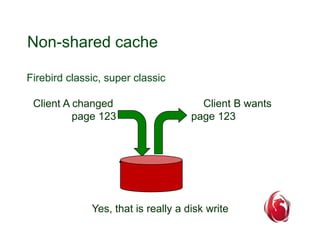
Non-shared cache 
Firebird classic, super classic 
Client B wants 
page 123 
Client A changed 
page 123 
Yes, that is really a disk write
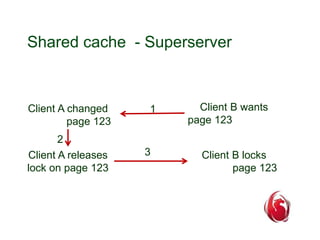
Shared cache - Superserver 
Client A changed 
page 123 
Client B wants 
page 123 
Client A releases 
lock on page 123 
Client B locks 
page 123 
1 
2 
3
Threading, 101 
Thread 
PC: Instruction stream of control 
Dedicated Stack (1 mb+) 
Thread specific data 
All threads share process memory 
Expensive to create, cheap to use 
(If you don’t thrash)
Threading 101 
Interlocked Instruction: Atomic compare and swap 
Compares given value to value at given address 
If equal, store new value at given address 
If not, fails and does nothing 
Interlocked instructions are the mortar of multi-threading
Threading 101 
Non-interlocked data structures 
Data structures managed only by interlocked 
instructions 
Completely non-blocking 
The fastest – and hardest – form of multi-programming
Threading 101 
RW-lock, aka SyncObject 
Can be locked for read/shared 
Can be locked for write/exclusive 
Blocks until access can be granted 
Monitor semantics: Thread doesn’t lock against itself 
Implemented with interlocked CAS
Threading 101 
Coarse grain multi-threading 
Single mutex controls an entire subsystem 
Individual data structures are not interlocked 
Fine grain multi-threading 
Individual RW-lock per data structure 
Allows many threads to share a subsystem
Threading 101 
Dedicated Thread 
Thread assigned specific task 
Garbage collector, network listener, etc. 
Client thread 
Thread executing user request 
Worker Thread 
Thread idle or executing user request 
Thread pool 
Manages worker threads
Threading Models 
Thread per connection 
Worker thread assigned at connection time 
Worker thread == Client thread 
Idle client threads consume resources 
Many connections => high contention
Threading Models 
Limited worker threads 
Limit active worker threads to approx. number of 
processors 
User requests queued until work thread becomes 
available 
If worker thread stalls (page read), thread pool can 
release next user request 
Utilizes processors without unnecessary contention
Threading Models 
Limited Worker Threads: 
Dedicated listener thread waits for readable socket 
Connection object (on listener thread) does socket 
read 
When packet is complete, connection object queue 
to thread pool 
When worker thread becomes available, connection 
object is executed
Threading Model 
Thread per connection is first step 
Limited worker threads is essential for scalability
Interbase Threads: The Beginning 
The concept of threads was known at the birth of 
Interbase, but no implementations existed on small 
machines. 
SMP didn’t exist in the mini or workstation world 
The initial version of Interbase used signals for 
communication 
User requests executed with “looper”; when a request 
stalled, another request could run
Interbase Theads: The V3 Disaster 
Apollo was the first workstation vendor with threads 
I implemented a VMS threading package 
Sun’s first attempt at threads didn’t even compile 
Interbase V3 was going to be mixed signals + threads 
Then disaster: Apollo Domain had unfixable 
architectural flaw mixing threads and signals 
A long slip ensued
Interbase Threads: V3 Reborn 
The engine was either threaded or signal based 
Dedicated threads for lock manager, event manager, 
etc. 
Server was thread per client 
Engine continued with coarse grain multi-threading
Firebird Threading: Vulcan 
Vulcan, now deceased, introduced limited fine grain 
multi-threading 
Threads synchronized with SyncObject: User mode 
read/write locks with monitor semantics 
SMP had arrived, followed shortly by processor based 
threads
Some Performance Lessons 
The goal is to saturate CPU, network, memory, and disk 
bandwidth simultaneously. 
There is no reason to run more worker threads than 
cores (and many reasons not to), but 
A stalled thread is an efficient way to maintain request 
state (death to “looper”!)
A Winning Architecture 
A single dedicated thread waiting for readable sockets 
Request starts are posted to thread manager for 
available worker thread 
When active worker threads drops below threshold, a 
pending request is assigned a worker thread 
A stalling thread checks in with thread manager to drop 
the number of active worker threads 
An unstalled request bumps the number of a.w.t.

Threading through InterBase, Firebird, and beyond

  • 1.
    Threading in Firebirdand the Future Ann W. Harrison James A. Starkey
  • 2.
    A Word ofThanks to our Sponsors
  • 3.
    Why Threads? Improvemulti-user performance Utilize multi-processor systems Databases are too easy to multi-thread
  • 4.
    What are AtomicInstructions? Most machine instructions can be interrupted, allowing the world to change. Atomic instructions (e.g. CAS) run to completion. Essential for multi-thread performance.
  • 5.
    Wasn’t Firebird AlwaysThreaded? Earliest versions of shared server ran query for one user until it stalled before responding to next user. Not friendly. Multi-threaded server runs to the next wait or for a fixed period plus the time to make the database state consistent. Threads never run concurrently.
  • 6.
    Firebird Classic Designedfor VAX Clusters Multiple independent computers Shared intelligent disk controller Cluster-wide lock manager
  • 7.
    Firebird Classic Multi-Processor Single Machine, Multi-Processor O/S schedules Firebird clients on processors Clients share Disk Lock manager Clients do not share Page Cache Metadata
  • 8.
    Non-shared cache Firebirdclassic, super classic Client B wants page 123 Client A changed page 123 Yes, that is really a disk write
  • 9.
    Shared cache -Superserver Client A changed page 123 Client B wants page 123 Client A releases lock on page 123 Client B locks page 123 1 2 3
  • 10.
    Threading, 101 Thread PC: Instruction stream of control Dedicated Stack (1 mb+) Thread specific data All threads share process memory Expensive to create, cheap to use (If you don’t thrash)
  • 11.
    Threading 101 InterlockedInstruction: Atomic compare and swap Compares given value to value at given address If equal, store new value at given address If not, fails and does nothing Interlocked instructions are the mortar of multi-threading
  • 12.
    Threading 101 Non-interlockeddata structures Data structures managed only by interlocked instructions Completely non-blocking The fastest – and hardest – form of multi-programming
  • 13.
    Threading 101 RW-lock,aka SyncObject Can be locked for read/shared Can be locked for write/exclusive Blocks until access can be granted Monitor semantics: Thread doesn’t lock against itself Implemented with interlocked CAS
  • 14.
    Threading 101 Coarsegrain multi-threading Single mutex controls an entire subsystem Individual data structures are not interlocked Fine grain multi-threading Individual RW-lock per data structure Allows many threads to share a subsystem
  • 15.
    Threading 101 DedicatedThread Thread assigned specific task Garbage collector, network listener, etc. Client thread Thread executing user request Worker Thread Thread idle or executing user request Thread pool Manages worker threads
  • 16.
    Threading Models Threadper connection Worker thread assigned at connection time Worker thread == Client thread Idle client threads consume resources Many connections => high contention
  • 17.
    Threading Models Limitedworker threads Limit active worker threads to approx. number of processors User requests queued until work thread becomes available If worker thread stalls (page read), thread pool can release next user request Utilizes processors without unnecessary contention
  • 18.
    Threading Models LimitedWorker Threads: Dedicated listener thread waits for readable socket Connection object (on listener thread) does socket read When packet is complete, connection object queue to thread pool When worker thread becomes available, connection object is executed
  • 19.
    Threading Model Threadper connection is first step Limited worker threads is essential for scalability
  • 20.
    Interbase Threads: TheBeginning The concept of threads was known at the birth of Interbase, but no implementations existed on small machines. SMP didn’t exist in the mini or workstation world The initial version of Interbase used signals for communication User requests executed with “looper”; when a request stalled, another request could run
  • 21.
    Interbase Theads: TheV3 Disaster Apollo was the first workstation vendor with threads I implemented a VMS threading package Sun’s first attempt at threads didn’t even compile Interbase V3 was going to be mixed signals + threads Then disaster: Apollo Domain had unfixable architectural flaw mixing threads and signals A long slip ensued
  • 22.
    Interbase Threads: V3Reborn The engine was either threaded or signal based Dedicated threads for lock manager, event manager, etc. Server was thread per client Engine continued with coarse grain multi-threading
  • 23.
    Firebird Threading: Vulcan Vulcan, now deceased, introduced limited fine grain multi-threading Threads synchronized with SyncObject: User mode read/write locks with monitor semantics SMP had arrived, followed shortly by processor based threads
  • 24.
    Some Performance Lessons The goal is to saturate CPU, network, memory, and disk bandwidth simultaneously. There is no reason to run more worker threads than cores (and many reasons not to), but A stalled thread is an efficient way to maintain request state (death to “looper”!)
  • 25.
    A Winning Architecture A single dedicated thread waiting for readable sockets Request starts are posted to thread manager for available worker thread When active worker threads drops below threshold, a pending request is assigned a worker thread A stalling thread checks in with thread manager to drop the number of active worker threads An unstalled request bumps the number of a.w.t.