THORACENTESIS
PREPARED BY :-MR NITHIN HIREMATH
DEFINITION :-
• Thoracentesis is a procedure to remove fluid from the space between the lungs and the
chest wall called the pleural space
• Thoracentesis is a percutaneous procedure during which a needle is inserted intothe
pleural space and pleural fluid is removed either through the needle or catheter
PURPOSE
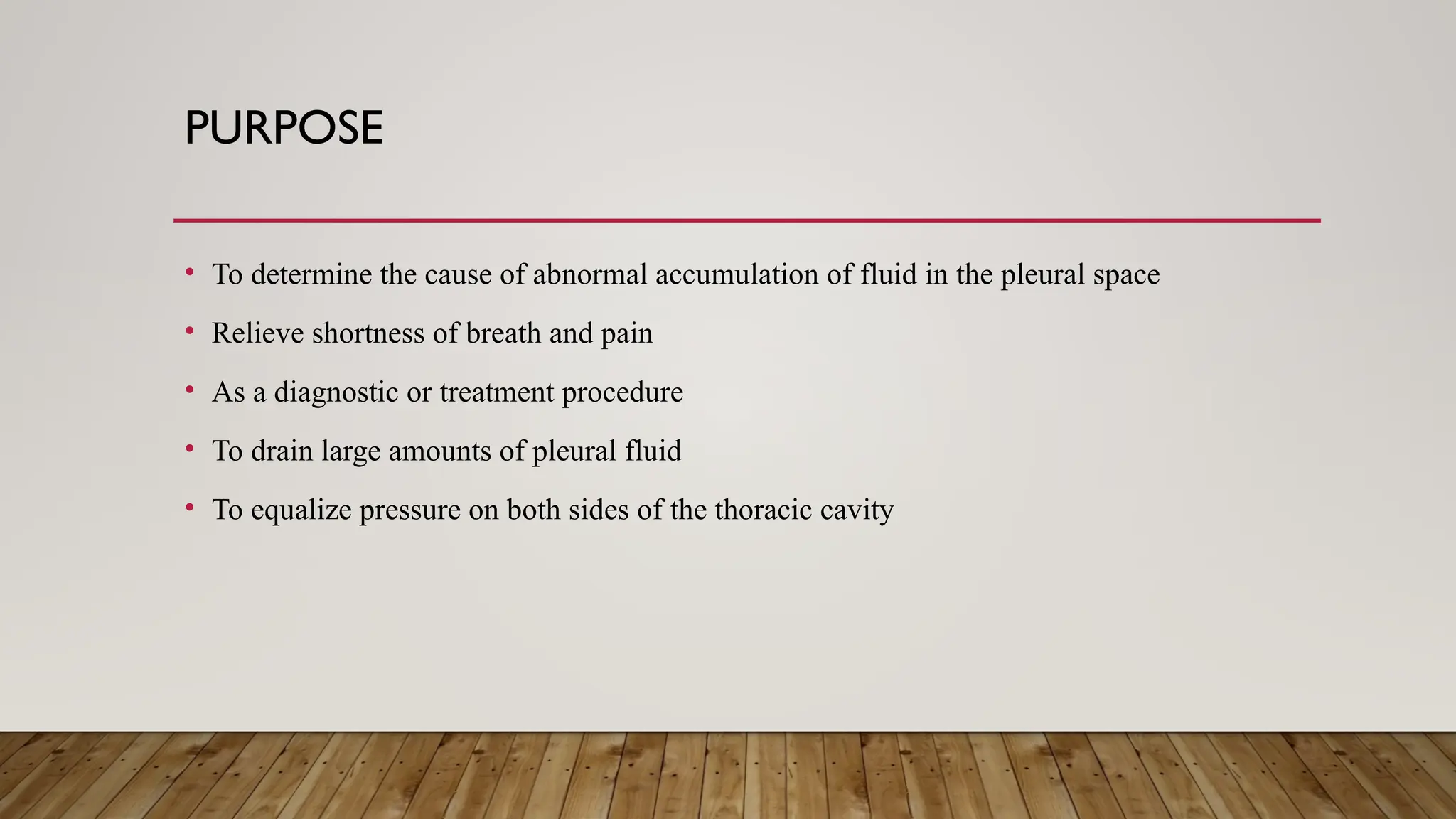
• To determine the cause of abnormal accumulation of fluid in the pleural space
• Relieve shortness of breath and pain
• As a diagnostic or treatment procedure
• To drain large amounts of pleural fluid
• To equalize pressure on both sides of the thoracic cavity
INDICATION :-
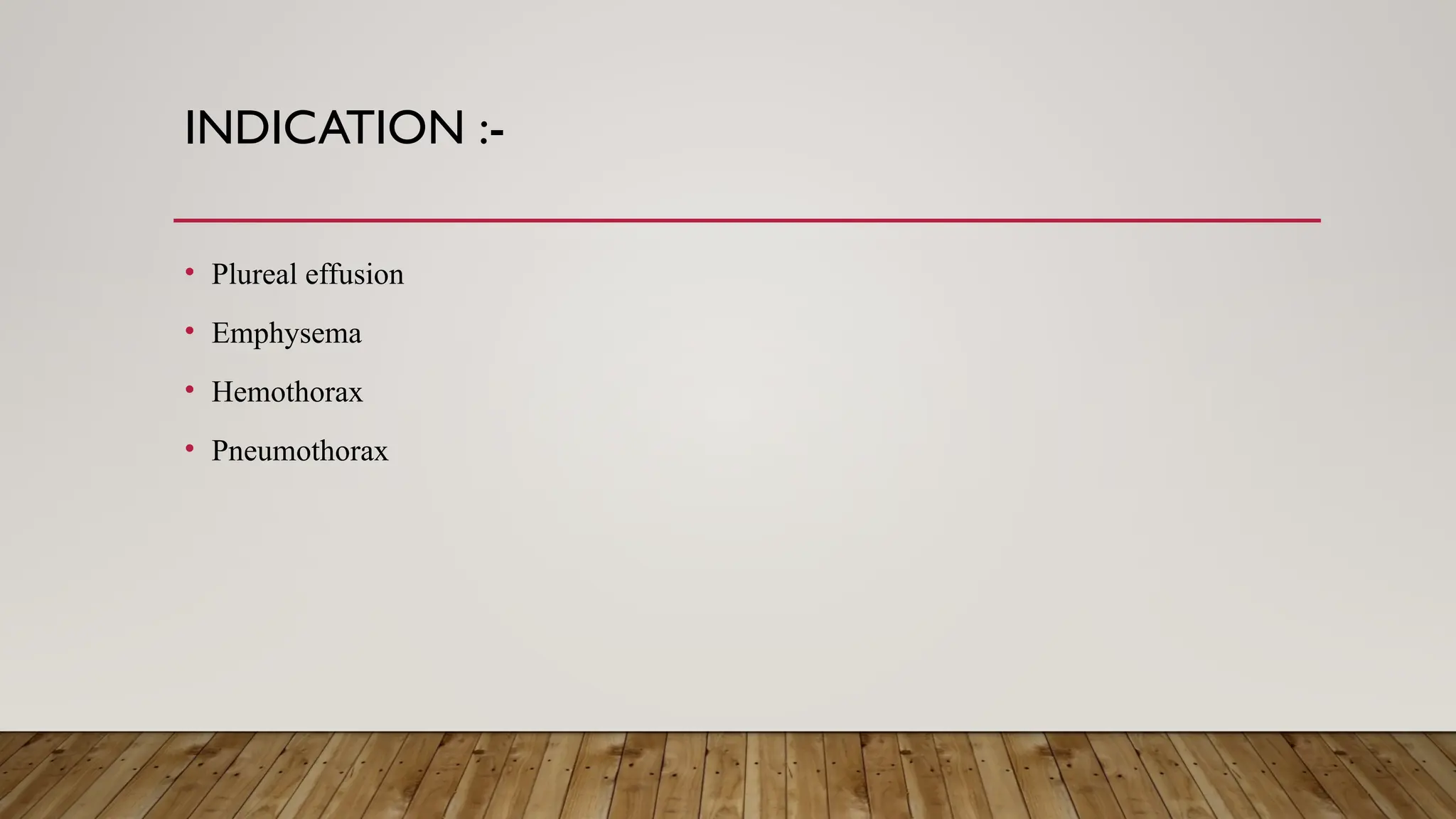
• Plureal effusion
• Emphysema
• Hemothorax
• Pneumothorax
PRE-PROCEDURAL NURSING RESPONSIBILITIES
• Explain Procedure to Patient: Purpose, risks, and how it will be done Obtain informed consent
• Check Investigations: Chest X-ray or ultrasound Coagulation profile (platelet count) to
minimize bleeding risk.
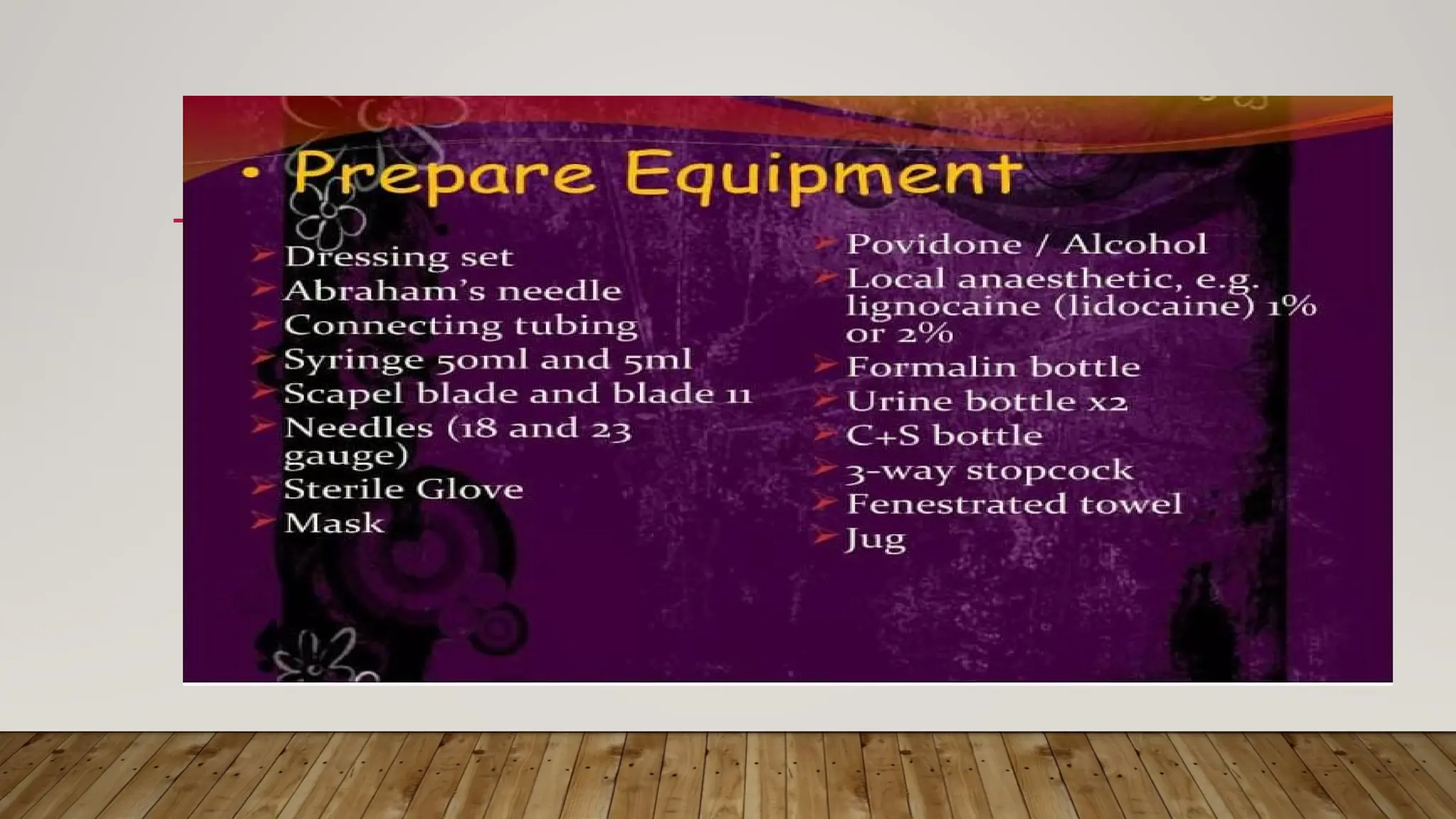
• Prepare Equipment: Sterile thoracentesis kit Antiseptic solution (chlorhexidine or povidone-
iodine)Local anesthetic (e.g., lidocaine)Syringes, needles, collection bottles, dressing materials
Oxygen if needed
• Position the Patient: Sitting upright with arms resting on an overbed table or pillow If unable
to sit: lateral decubitus position with affected side up
DURING THE PROCEDURE :-
• During the Procedure (Nursing Role)1. Assist Physician: Maintain sterile fieldhand over
instruments as needed Monitor vital signs and oxygen saturation
• Observe for Signs of Complications: Coughing, chest pain, dyspnea, hypotension Rapid
or irregular pulse
• Reassure and Comfort the Patient: Encourage slow, steady breathing Instruct to remain
still to avoid injury.
• Label specimen correctly and send them promptly to the laboratory for analysis.
POST-PROCEDURAL NURSING CARE :-
• Monitor Patient: Vitals every 15 minutes for first hour Respiratory rate, breath sounds,
oxygen saturation Observe for signs of pneumothorax or bleeding
• Send Samples to Lab: Label properly (cytology, microbiology, biochemistry)
• Apply Dressing: Sterile occlusive dressing at puncture site
• Post-Procedural Chest X-ray: To rule out pneumothorax or lung injury
• Documentation: Amount and type of fluid removed Patient's tolerance to procedure Any
complications Time and site of puncture

COMPLICATIONTOWATCH
• Pneumothorax
• Hemothorax
• Infection at puncture site
• Air embolism (rare)
CONTRAINDICATION :-
• pneumothorax
• Uncooperative patient
• Bleeding disorders or anticoagulant therapy
• Local infection at puncture site
• Pulmonary edema

THORACENTESIS and its procedure, purposes, indication, contraindications

  • 1.
  • 2.
    DEFINITION :- • Thoracentesisis a procedure to remove fluid from the space between the lungs and the chest wall called the pleural space • Thoracentesis is a percutaneous procedure during which a needle is inserted intothe pleural space and pleural fluid is removed either through the needle or catheter
  • 3.
    PURPOSE • To determinethe cause of abnormal accumulation of fluid in the pleural space • Relieve shortness of breath and pain • As a diagnostic or treatment procedure • To drain large amounts of pleural fluid • To equalize pressure on both sides of the thoracic cavity
  • 4.
    INDICATION :- • Plurealeffusion • Emphysema • Hemothorax • Pneumothorax
  • 7.
    PRE-PROCEDURAL NURSING RESPONSIBILITIES •Explain Procedure to Patient: Purpose, risks, and how it will be done Obtain informed consent • Check Investigations: Chest X-ray or ultrasound Coagulation profile (platelet count) to minimize bleeding risk. • Prepare Equipment: Sterile thoracentesis kit Antiseptic solution (chlorhexidine or povidone- iodine)Local anesthetic (e.g., lidocaine)Syringes, needles, collection bottles, dressing materials Oxygen if needed • Position the Patient: Sitting upright with arms resting on an overbed table or pillow If unable to sit: lateral decubitus position with affected side up
  • 8.
    DURING THE PROCEDURE:- • During the Procedure (Nursing Role)1. Assist Physician: Maintain sterile fieldhand over instruments as needed Monitor vital signs and oxygen saturation • Observe for Signs of Complications: Coughing, chest pain, dyspnea, hypotension Rapid or irregular pulse • Reassure and Comfort the Patient: Encourage slow, steady breathing Instruct to remain still to avoid injury. • Label specimen correctly and send them promptly to the laboratory for analysis.
  • 9.
    POST-PROCEDURAL NURSING CARE:- • Monitor Patient: Vitals every 15 minutes for first hour Respiratory rate, breath sounds, oxygen saturation Observe for signs of pneumothorax or bleeding • Send Samples to Lab: Label properly (cytology, microbiology, biochemistry) • Apply Dressing: Sterile occlusive dressing at puncture site • Post-Procedural Chest X-ray: To rule out pneumothorax or lung injury • Documentation: Amount and type of fluid removed Patient's tolerance to procedure Any complications Time and site of puncture
  • 10.
    COMPLICATIONTOWATCH • Pneumothorax • Hemothorax •Infection at puncture site • Air embolism (rare)
  • 11.
    CONTRAINDICATION :- • pneumothorax •Uncooperative patient • Bleeding disorders or anticoagulant therapy • Local infection at puncture site • Pulmonary edema