This I Believe
     Cultivating Students' Individual Voices through
     Digital Storytelling and Historical Research


a workshop for CAIS, March 2012 by Larisa Showalter and Sarah Clark, Windward School, Los Angeles
Academic             Creative and
                      VS.
       Voice                Personal Voice


CC photo from ibuch         CC photo from Nia [so let's go!]
Reflect on your experience as a student:
     1) What is an        2) What is an
     assignment you       assignment you
     remember caring      remember being
     about or that had    dreadful?
     personal meaning?     What did
                           you wish
                           your
                           teacher had
                           done
                           differently?


CC photo from ibuch          CC photo from Claudine Antonette Francisco
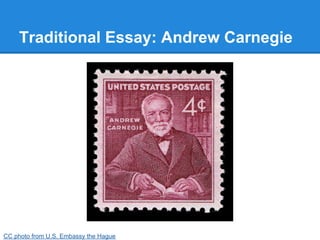
Traditional Essay: Andrew Carnegie


CC photo from U.S. Embassy the Hague
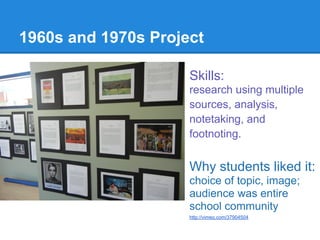
1960s and 1970s Project

                     Skills:
                     research using multiple
                     sources, analysis,
                     notetaking, and
                     footnoting.


                     Why students liked it:
                     choice of topic, image;
                     audience was entire
                     school community
                     http://vimeo.com/37904504
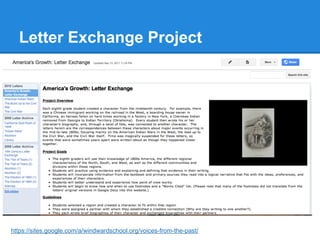
Letter Exchange Project


https://sites.google.com/a/windwardschool.org/voices-from-the-past/
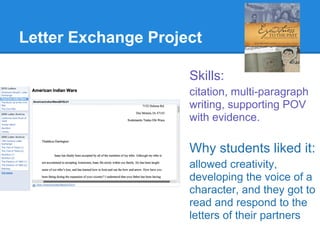
Letter Exchange Project

                     Skills:
                     citation, multi-paragraph
                     writing, supporting POV
                     with evidence.

                     Why students liked it:
                     allowed creativity,
                     developing the voice of a
                     character, and they got to
                     read and respond to the
                     letters of their partners
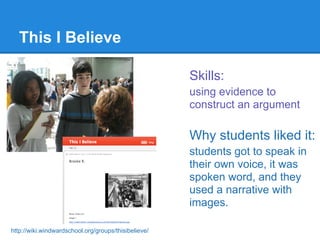
This I Believe

                                                      Skills:
                                                      using evidence to
                                                      construct an argument

                                                      Why students liked it:
                                                      students got to speak in
                                                      their own voice, it was
                                                      spoken word, and they
                                                      used a narrative with
                                                      images.

http://wiki.windwardschool.org/groups/thisibelieve/
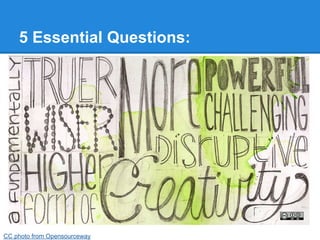
5 Essential Questions:


CC photo from Opensourceway
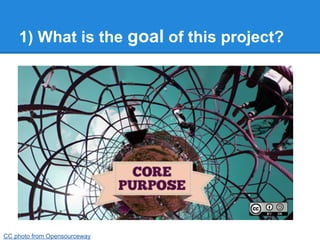
1) What is the goal of this project?


CC photo from Opensourceway
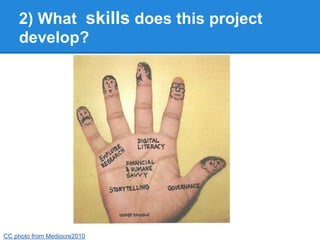
2) What skills does this project
    develop?


CC photo from Mediocre2010
3) Who is the audience for this
    work?


CC photo from Opensourceway
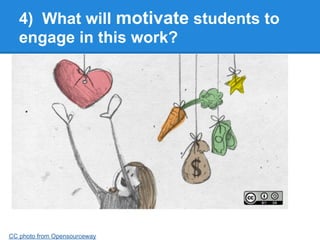
4) What will motivate students to
   engage in this work?


CC photo from Opensourceway
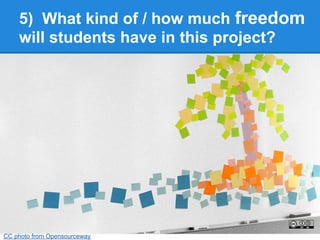
5) What kind of / how much freedom
    will students have in this project?


CC photo from Opensourceway
Finding the Balance


CC photo from Opensourceway
Before the Tuning

If you have brought a project or have one in mind-
 ● What are your goals for this project? Why are you
    dissatisfied with the project?

If you are not a classroom teacher or do not have a project in
mind--
 ● In the role of a consultant or a trusted peer, what
    questions do you want to add to the “Essential Questions”
    listed above in order to help someone who does have a
    project?
Tuning Protocol

● Presenter- briefly describe your project, explain the goals, discuss
  your dissatisfaction with it. (3 minutes)
● Trusted Peers- ask only clarifying questions about the project (3-5
  minutes)
  ○ Clarifying questions serve only to make sure you understand
     the project; they are brief, factual and non-judgmental (E.g.
     How long does this project take? When do you tell the
     students to start collecting data?)
● Trusted Peers- ask essential or probing questions to provoke
  deeper thought and further discussion. (5-10 minutes)
● Presenter- think aloud about what you’ve learned and what
  questions remain. (3 minutes)
● Repeat above for next presenter.
Next Steps and Reflection


1.   What did you learn?

2.   What might be your next steps?
Thank you!


 Download or view handout for this presentation: http://ow.ly/9siKB

 Find out more about Windward School:
 ctl.windwardschool.org
 www.windwardschool.org

This I Believe: Cultivating Students' Individual Voices through Digital Storytelling and Historical Research

  • 1.
    This I Believe Cultivating Students' Individual Voices through Digital Storytelling and Historical Research a workshop for CAIS, March 2012 by Larisa Showalter and Sarah Clark, Windward School, Los Angeles
  • 2.
    Academic Creative and VS. Voice Personal Voice CC photo from ibuch CC photo from Nia [so let's go!]
  • 3.
    Reflect on yourexperience as a student: 1) What is an 2) What is an assignment you assignment you remember caring remember being about or that had dreadful? personal meaning? What did you wish your teacher had done differently? CC photo from ibuch CC photo from Claudine Antonette Francisco
  • 4.
    Traditional Essay: AndrewCarnegie CC photo from U.S. Embassy the Hague
  • 5.
    1960s and 1970sProject Skills: research using multiple sources, analysis, notetaking, and footnoting. Why students liked it: choice of topic, image; audience was entire school community http://vimeo.com/37904504
  • 6.
  • 7.
    Letter Exchange Project Skills: citation, multi-paragraph writing, supporting POV with evidence. Why students liked it: allowed creativity, developing the voice of a character, and they got to read and respond to the letters of their partners
  • 8.
    This I Believe Skills: using evidence to construct an argument Why students liked it: students got to speak in their own voice, it was spoken word, and they used a narrative with images. http://wiki.windwardschool.org/groups/thisibelieve/
  • 9.
    5 Essential Questions: CCphoto from Opensourceway
  • 10.
    1) What isthe goal of this project? CC photo from Opensourceway
  • 11.
    2) What skillsdoes this project develop? CC photo from Mediocre2010
  • 12.
    3) Who isthe audience for this work? CC photo from Opensourceway
  • 13.
    4) What willmotivate students to engage in this work? CC photo from Opensourceway
  • 14.
    5) What kindof / how much freedom will students have in this project? CC photo from Opensourceway
  • 15.
    Finding the Balance CCphoto from Opensourceway
  • 16.
    Before the Tuning Ifyou have brought a project or have one in mind- ● What are your goals for this project? Why are you dissatisfied with the project? If you are not a classroom teacher or do not have a project in mind-- ● In the role of a consultant or a trusted peer, what questions do you want to add to the “Essential Questions” listed above in order to help someone who does have a project?
  • 17.
    Tuning Protocol ● Presenter-briefly describe your project, explain the goals, discuss your dissatisfaction with it. (3 minutes) ● Trusted Peers- ask only clarifying questions about the project (3-5 minutes) ○ Clarifying questions serve only to make sure you understand the project; they are brief, factual and non-judgmental (E.g. How long does this project take? When do you tell the students to start collecting data?) ● Trusted Peers- ask essential or probing questions to provoke deeper thought and further discussion. (5-10 minutes) ● Presenter- think aloud about what you’ve learned and what questions remain. (3 minutes) ● Repeat above for next presenter.
  • 18.
    Next Steps andReflection 1. What did you learn? 2. What might be your next steps?
  • 19.
    Thank you! Downloador view handout for this presentation: http://ow.ly/9siKB Find out more about Windward School: ctl.windwardschool.org www.windwardschool.org